
Hair color trends have split into two camps: the shades that look good for one afternoon, and the shades that still look good when your roots have grown half an inch.
The second camp is winning. Hard.
What people are asking for now is less about shock value and more about movement, shine, and dimension. A good root shadow, a soft money piece, a gloss that takes the edge off brass, a ribbon of warmth where the light hits — those details do more work than a flat all-over color ever will. And yes, the technical side matters too. A demi-permanent glaze behaves very differently from permanent dye, and that difference is the reason some colors fade gracefully while others turn muddy, striped, or weirdly orange.
Less brass. More gloss. That’s the mood.
1. Soft Cashmere Blonde
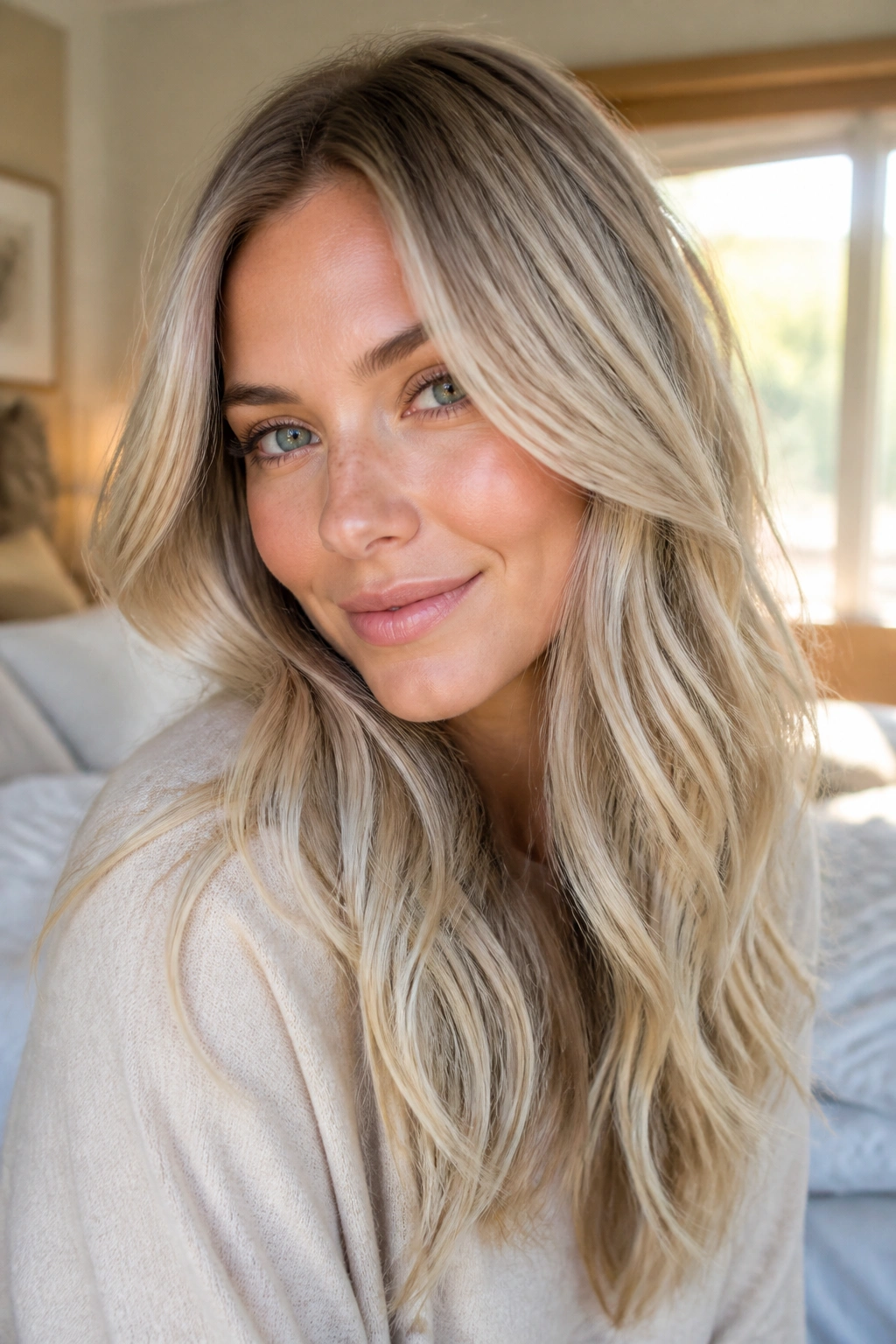
Soft cashmere blonde is the blonde people keep asking for when they’re tired of icy, high-drama color that feels brittle after three shampoos. It sits in that sweet spot between beige and creamy pearl, with just enough warmth to keep the hair looking healthy. No yellow helmet. No stark platinum shell.
Why It Feels More Wearable
The trick is contrast control. Instead of lifting every strand to the same pale level, a colorist usually leaves a little depth at the root and softens the ends with a beige toner. That gives the hair movement and keeps the tone from looking flat in daylight. It also grows out more cleanly, which matters more than people admit.
Ask for this mix:
- A level 9 to 10 blonde base with beige or neutral toner
- A soft root shadow 1 to 2 levels deeper than the ends
- Fine face-framing foils, not chunky stripes
- A glossy finish, not a dry, chalky one
Best for: people who want blonde that looks expensive without screaming for attention. It’s especially good if your natural color is light brown to dark blonde.
Skip the super-ashed toner unless your hair pulls warm fast. Too much ash can turn cashmere blonde dull. And dull is the enemy here.
2. Cherry Cola Brunette
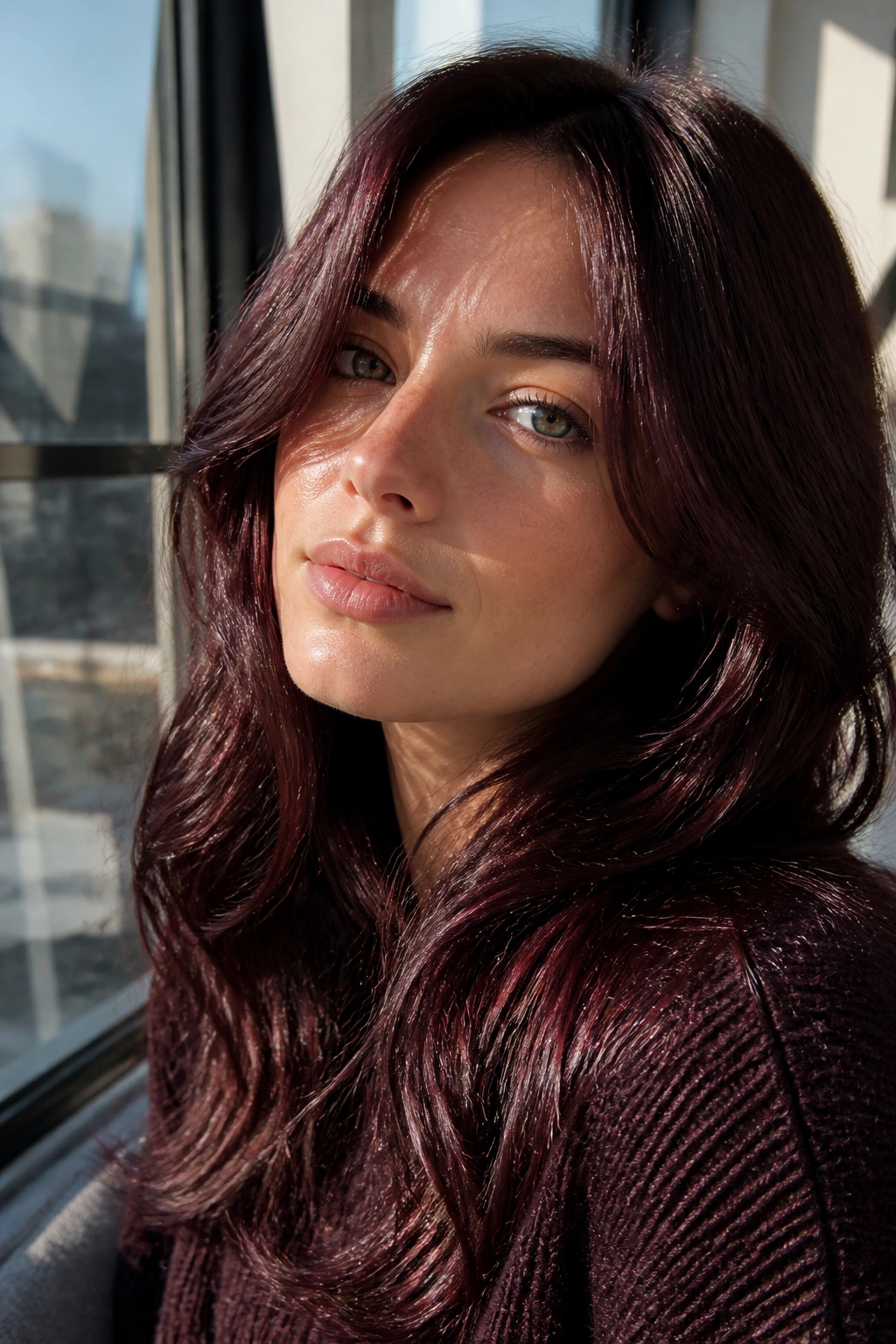
What makes cherry cola brunette so appealing is that it does two things at once. In shade, it reads like a deep brunette. In bright light, you catch that red-violet shimmer that makes the whole thing feel rich instead of basic. It’s not a fire-engine red. It’s more like the dark syrupy color at the bottom of a fancy soda glass.
That hidden ruby tone is the point. The color works because it never fully stops being brunette, so the look stays grounded even when the light catches the red. On layered cuts, it shows up in the movement and makes waves look denser. On straighter hair, the shine does most of the talking.
This shade is especially flattering when your hair needs a little life but you do not want to commit to obvious copper. Ask for a level 4 or 5 brunette with red-violet reflect, then keep the finish glossy with a color-safe shine product. A cool red mask can help between salon visits, but go easy. Too much pigment and the color turns wine-stain dark.
It’s moody. In a good way.
3. Melted Copper
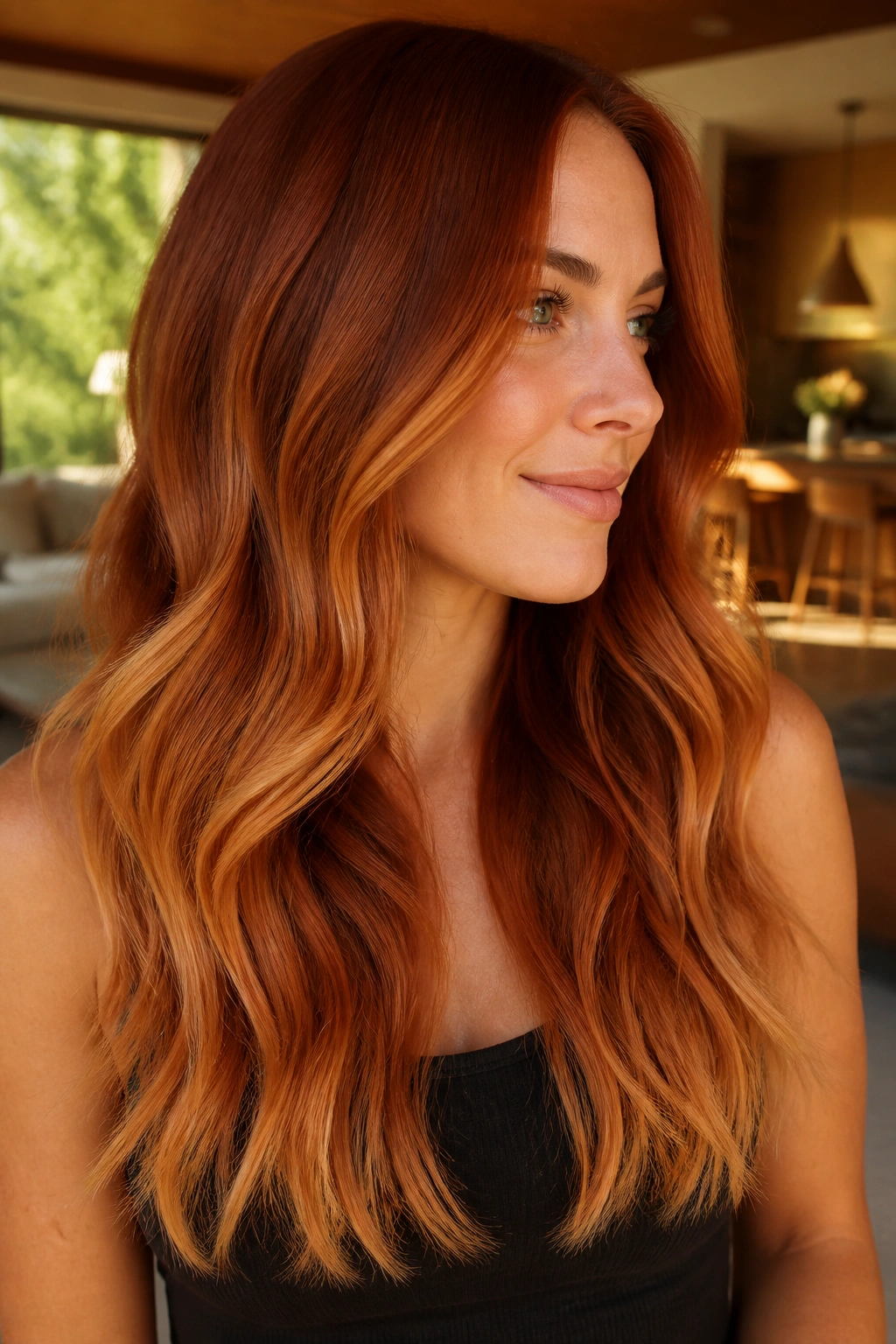
A lot of copper hair looks gorgeous for exactly twelve days, then starts fighting with every wash and every bright bulb in the room. Melted copper fixes that by spreading the warmth through the whole head instead of dumping it in one loud layer. The root stays a touch deeper, the mids carry the richest copper, and the ends get softened so the color feels like it slid together instead of being painted on.
How to Ask for It
Tell your colorist you want copper with a soft melt, not a blocky red. That usually means a deeper root, bright but not neon mids, and ends that are glazed to keep them from looking too orange.
- A level 6 or 7 copper base works well
- Add fine golden-copper ribbons through the front
- Keep the root shadow slightly brown for softness
- Use a sulfate-free shampoo so the tone does not rinse out fast
This is a strong pick if your skin has peach, gold, or freckled undertones. It also plays nicely with air-dried waves, where the color can break up a little and look lived-in instead of formal.
Copper can go brassy fast. That part is real. A copper conditioner once every week or two helps keep the good parts of the tone and cools down the loud ones.
4. Mushroom Brown
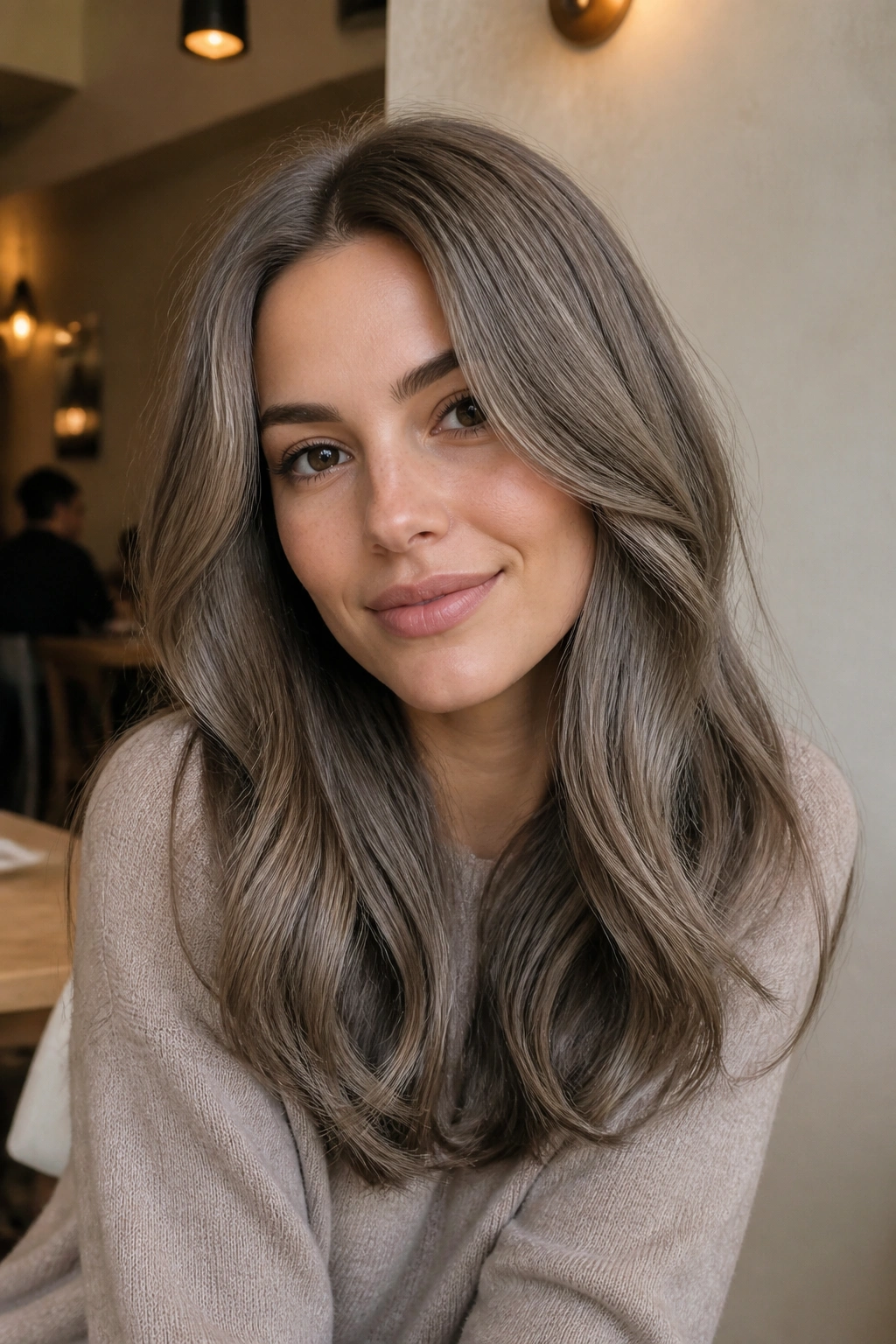
Mushroom brown is the answer for people who are done with warm brunette and tired of seeing orange sneak back in after every appointment. It’s a cool taupe brown — not gray, not mousy, not boring if it’s done right. Done well, it has this smoky, suede-like finish that looks calm and expensive without trying too hard.
A lot of guides get mushroom brown wrong because they make it too ash-heavy. Then the hair goes flat and a little green at the ends, which is not the point. The sweet spot sits in the middle: neutral base, cool beige ribbons, and just enough softness at the crown so the color still has life.
This shade loves waves and blunt cuts because the slight tonal shift shows up when the hair bends. If your hair tends to pull orange, mushroom brown is often a relief. Ask for a level 6 or 7 brown with cool beige lowlights and a soft gloss at the bowl stage. Keep the finish matte-satin, not shiny-shiny.
It’s understated. That’s the whole appeal.
5. Apricot Blonde
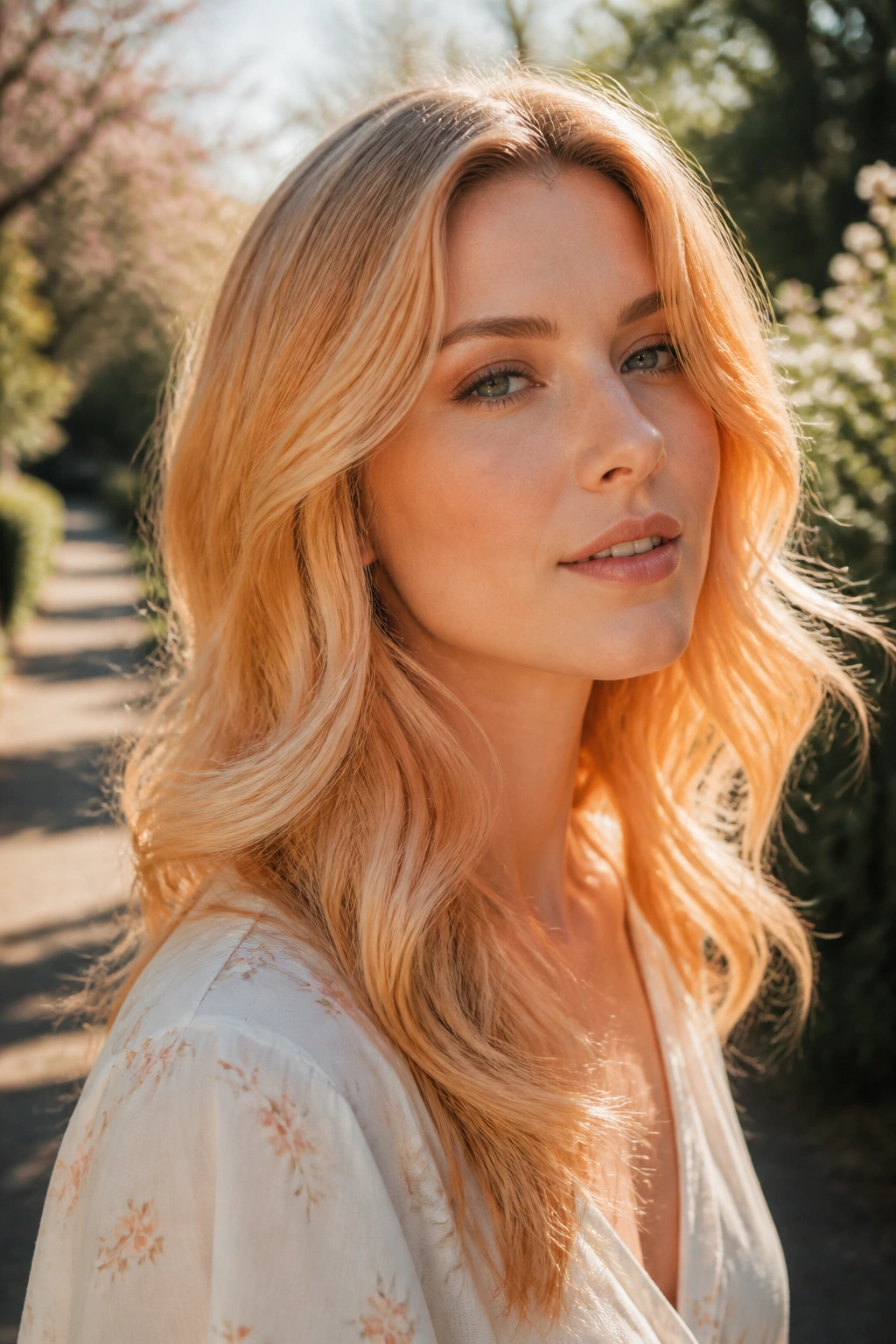
Apricot blonde smells like summer fruit salad in color form, except it looks better on hair than that sounds in writing. It sits between strawberry blonde and peach blonde, with a warm glow that’s softer than copper and more interesting than plain gold. Under indoor light it can look blondish; outside, the peach note wakes up.
What Makes It Work
The best apricot blonde has restraint. If the peach tone is too strong, the color looks costume-y. If it’s too faint, you lose the whole point and end up with warm blonde that could belong to anyone. The sweet spot is a blonde base that’s been glazed with peach-gold pigment, usually over pre-lightened pieces.
Try these details:
- Keep the base at level 8 or 9
- Use peach, apricot, or warm rose toner in a sheer formula
- Leave a few lighter ends so the color doesn’t turn opaque
- Pair it with a soft wave or a shaggy cut for movement
This one fades fast. That’s the trade-off. But when it’s fresh, it has a tender, almost luminous look that suits lighter eyes, pale skin, and anyone who wants warmth without leaning copper. It also looks unusually good with pink lipstick, which is a small thing until you notice it every single time.
6. Velvet Black
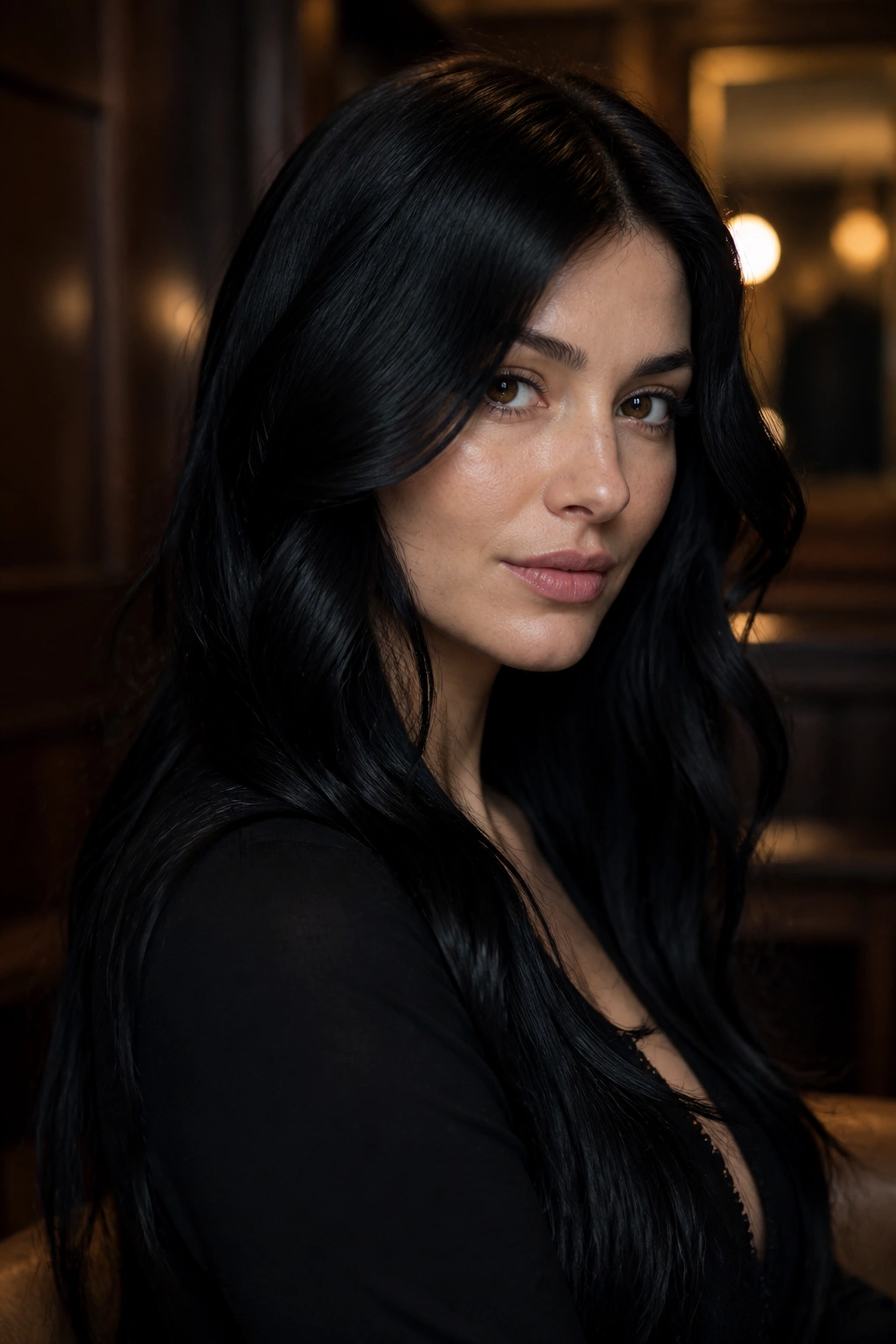
Velvet black is not the same thing as flat jet black. Flat black can look harsh, especially under bright light. Velvet black has a softer, deeper finish, almost like black silk compared with painted cardboard. You still get the drama, but the hair keeps a little dimension at the edges and around the face.
That dimension usually comes from tone rather than lightness. A blue-black or espresso-black formula, followed by a glossy topcoat, gives the hair that plush look. On healthy straight hair, it can be stunning. On curls, it makes the shape of the curl pattern look more defined, which is a nice bonus.
A lot of people worry that black hair will read too severe. Sometimes it does. The fix is subtle warmth at the brow line or tiny hint-of-brown lowlights near the ends. Not stripes. Not obvious highlights. Just enough variation to keep the color from swallowing the whole face.
Best for: anyone who wants strong contrast, strong shine, and low fuss between appointments.
Not great for: damaged hair that already looks dry. Black shows dryness fast.
And yes, shine oil matters here. A little. Not too much.
7. Cinnamon Ribbon Highlights
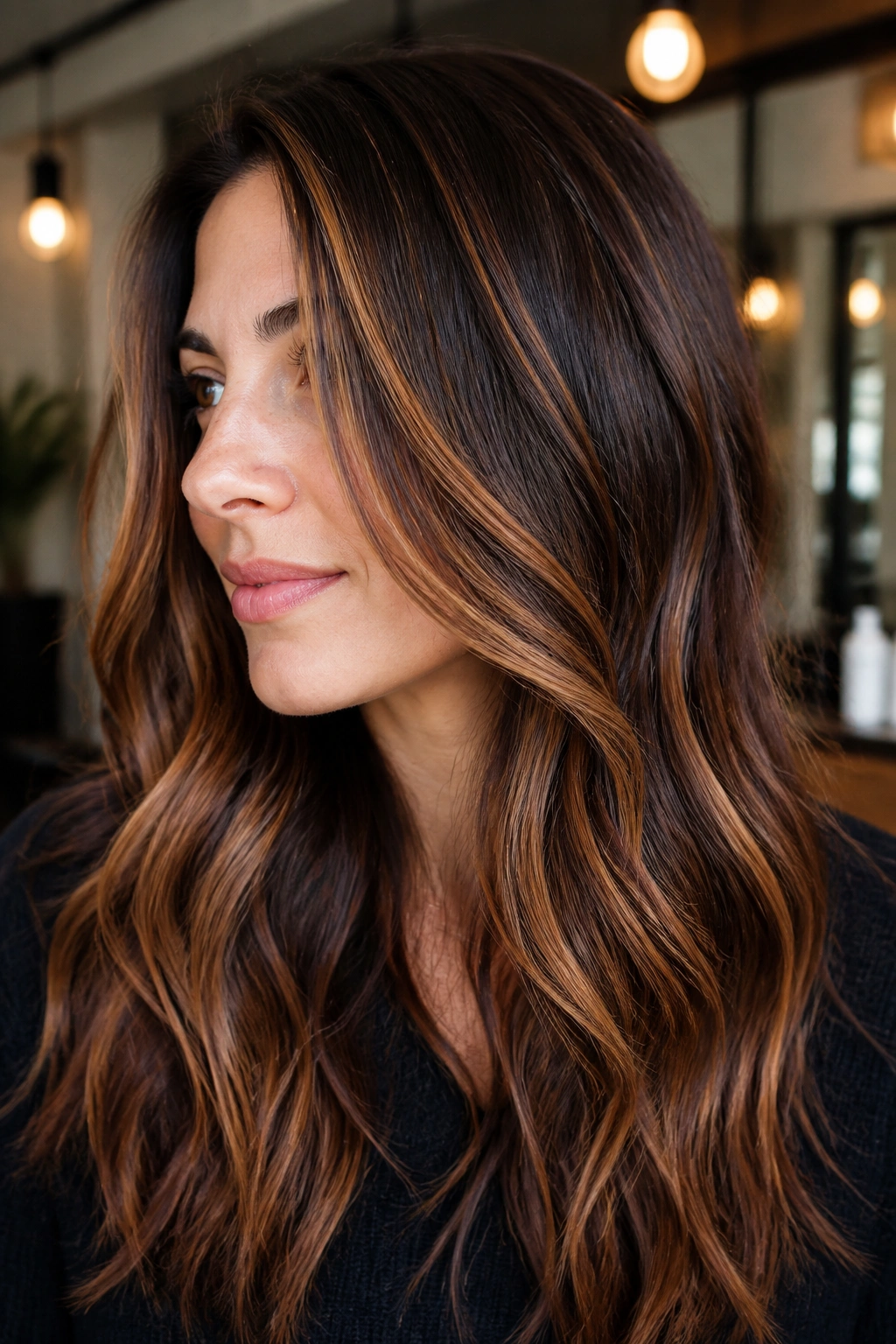
Imagine brunette hair that looks like it has been threaded with warm spice. That’s cinnamon ribbon highlights. They’re thinner than old-school chunky highlights, but warmer and more visible than a vague balayage blur. The effect is especially good on layered cuts, where the ribbons catch light at different spots instead of sitting in one strip.
Why Colorists Like This Placement
The best cinnamon ribbons follow the shape of the haircut. Around the face, the pieces can be a little brighter. Underneath, they can stay softer and deeper so the color doesn’t flatten out. That makes the whole head look fuller without making it look overdone.
A colorist might use a mix of fine foils and hand-painted sections to get this effect. That blend matters. Pure foils can look too neat; pure painting can lose contrast. The hybrid version gives you both control and softness.
Useful details to ask for:
- A brunette base at level 4 to 6
- Cinnamon, copper-brown, or toasted auburn ribbons
- Brighter placement around the front hairline
- A gloss to keep the warmth from turning rusty
This trend works especially well if you want movement but not a full blonde transformation. It’s warm, flattering, and a little more interesting than caramel.
8. Iced Mocha
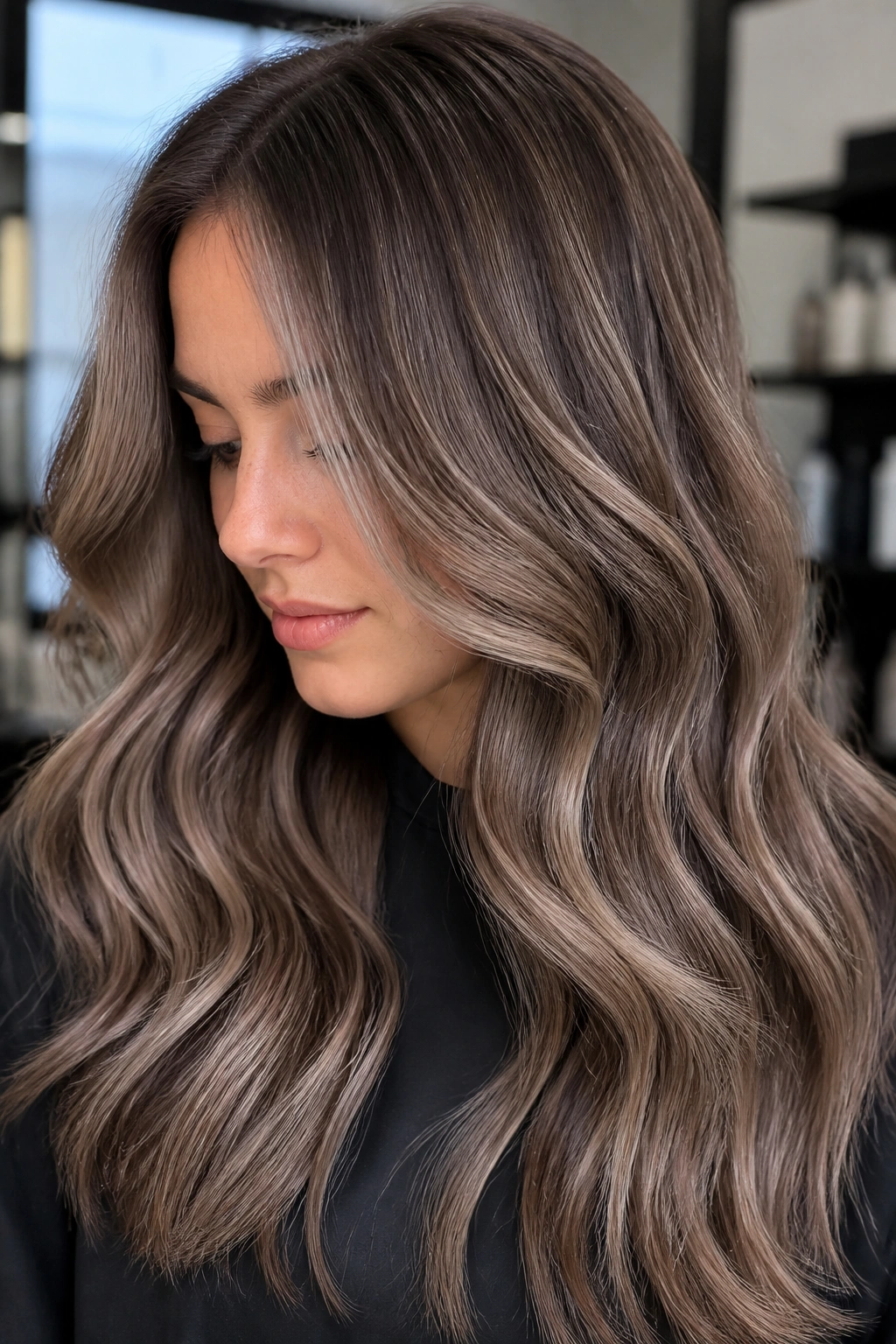
Iced mocha is what happens when brunette decides to put on a cooler coat. The base stays rich and dark, but the lighter pieces lean beige, pearl, or taupe instead of gold. The result feels clean and modern without looking icy in a way that fights your skin tone. It’s the color equivalent of a good wool sweater — calm, polished, and easy to wear.
The reason it looks good is contrast. Dark mocha underneath gives weight and depth. The lighter beige ribbons stop the hair from disappearing into one dark block. That balance is what keeps the color from feeling heavy on thicker hair.
This is one of my favorite options for people who always say, “I want dimension, but not warmth.” That request is common, and it’s fair. Warm brunette can turn orange on the wrong base, especially if your natural hair pulls copper at the ends. Iced mocha solves that by keeping the tone cooler from the start.
Ask for a cool brunette base with beige babylights and a neutral gloss. If your hair is porous, the toner may need a shorter processing time so it doesn’t go muddy. That little adjustment makes a huge difference.
9. Rosewood Red
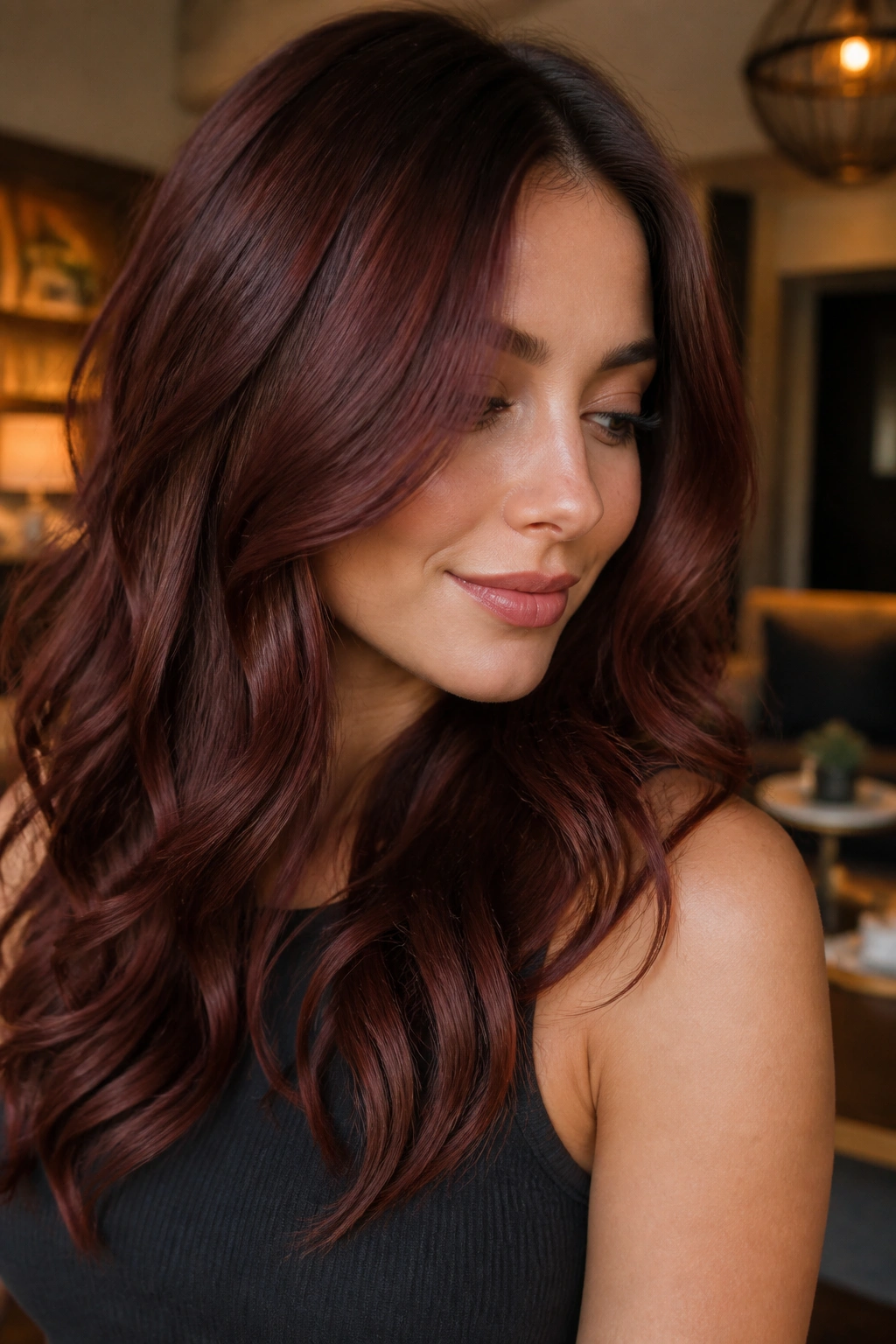
Rosewood red sits in a quieter place than copper. It has red in it, sure, but the red is softened by brown and a tiny hint of berry, so the finish feels plush rather than bright. Think dried rose petals, polished wood, or old velvet chairs in a good light. It’s romantic without being precious.
A Good Fit for People Who Hate Loud Red
If true red has always felt too much for you, rosewood is the version worth trying. The brown base keeps it wearable, and the muted rose tone makes the color shift gently from indoor to outdoor light. It looks especially nice on medium-length cuts with soft layers because the movement keeps the color from feeling heavy.
A gloss formula or demi-permanent color is usually the right call here. Permanent red can be stubborn in the wrong way — hard to remove, hard to correct, and annoying when it fades. Rosewood is better when it can be refreshed without drama.
- Ask for a level 5 or 6 brunette-red base
- Keep the red tone muted with berry or rose reflect
- Add a softer glaze at the ends
- Refresh with a color-depositing mask if the red starts fading flat
It’s a grown-up red. Not dull. Just controlled.
10. Golden Hour Bronde
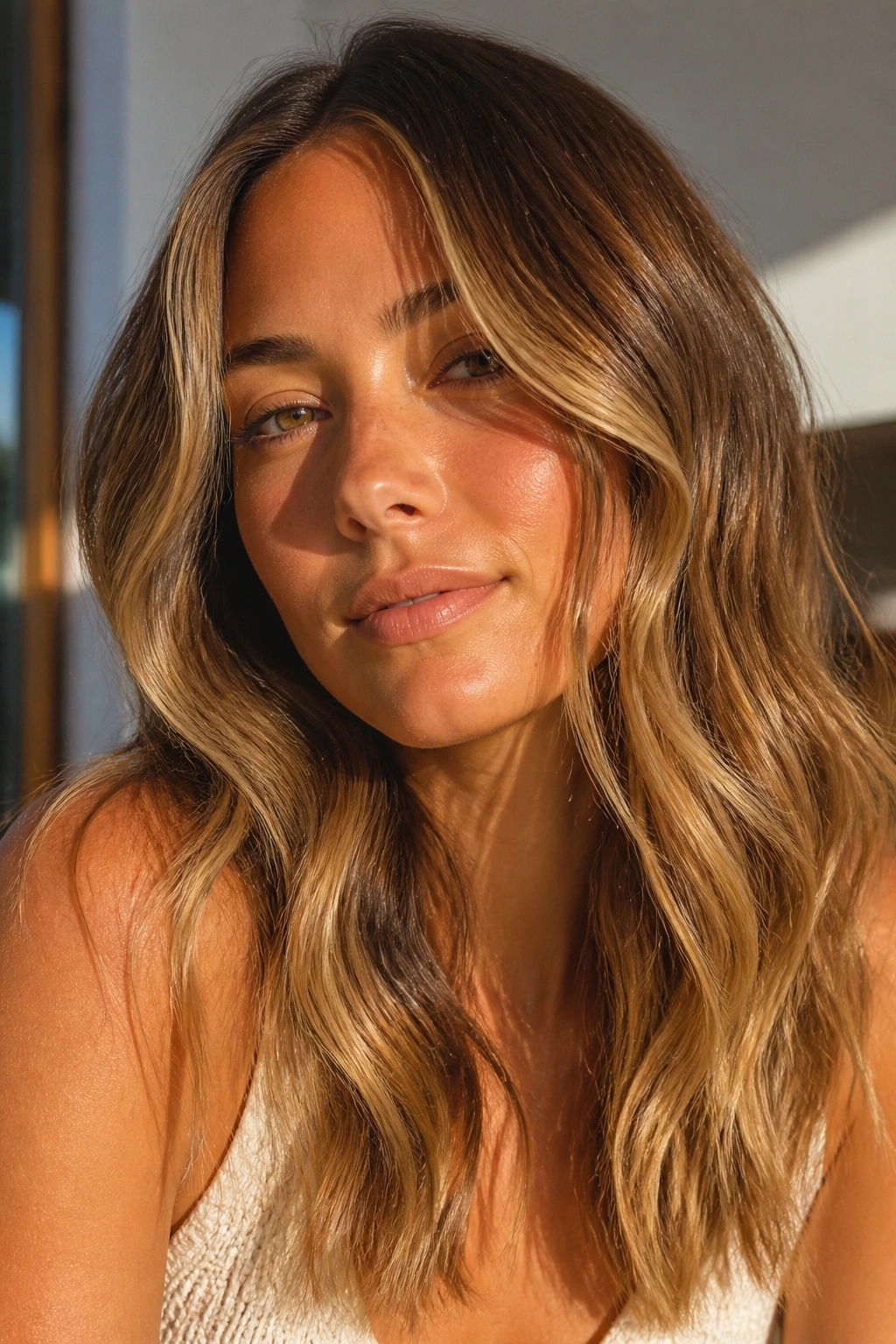
Golden hour bronde is still hanging around because it flatters so many people without asking for a huge commitment. Bronde sits between brown and blonde, and the golden-hour version leans warm in a way that mimics late-day sun. Not streaky. Not stripey. Just soft brightness where the eye wants it most.
What keeps this from looking generic is placement. The brightest pieces usually live around the face and through the upper layers, while the lower lengths stay a shade or two deeper. That gives the color a little shadow, which is what makes it look rich instead of washed out. If everything is the same brightness, bronde gets boring fast.
What to Ask For
- A brunette base with soft golden balayage
- Face-framing brightness around the money piece
- A root smudge to keep regrowth gentle
- Beige-gold toner, not yellow-gold
This color works on long waves, shoulder-length lob cuts, and even layered shags. It’s one of those shades that plays nicely with minimal styling — a few bends from a curling iron or a rough blow-dry are enough. The shine and placement do the heavy lifting.
If your hair gets brassy, ask for slightly cooler gold at the toner stage. That keeps the warmth nice instead of loud.
11. Denim Blue Peekaboo
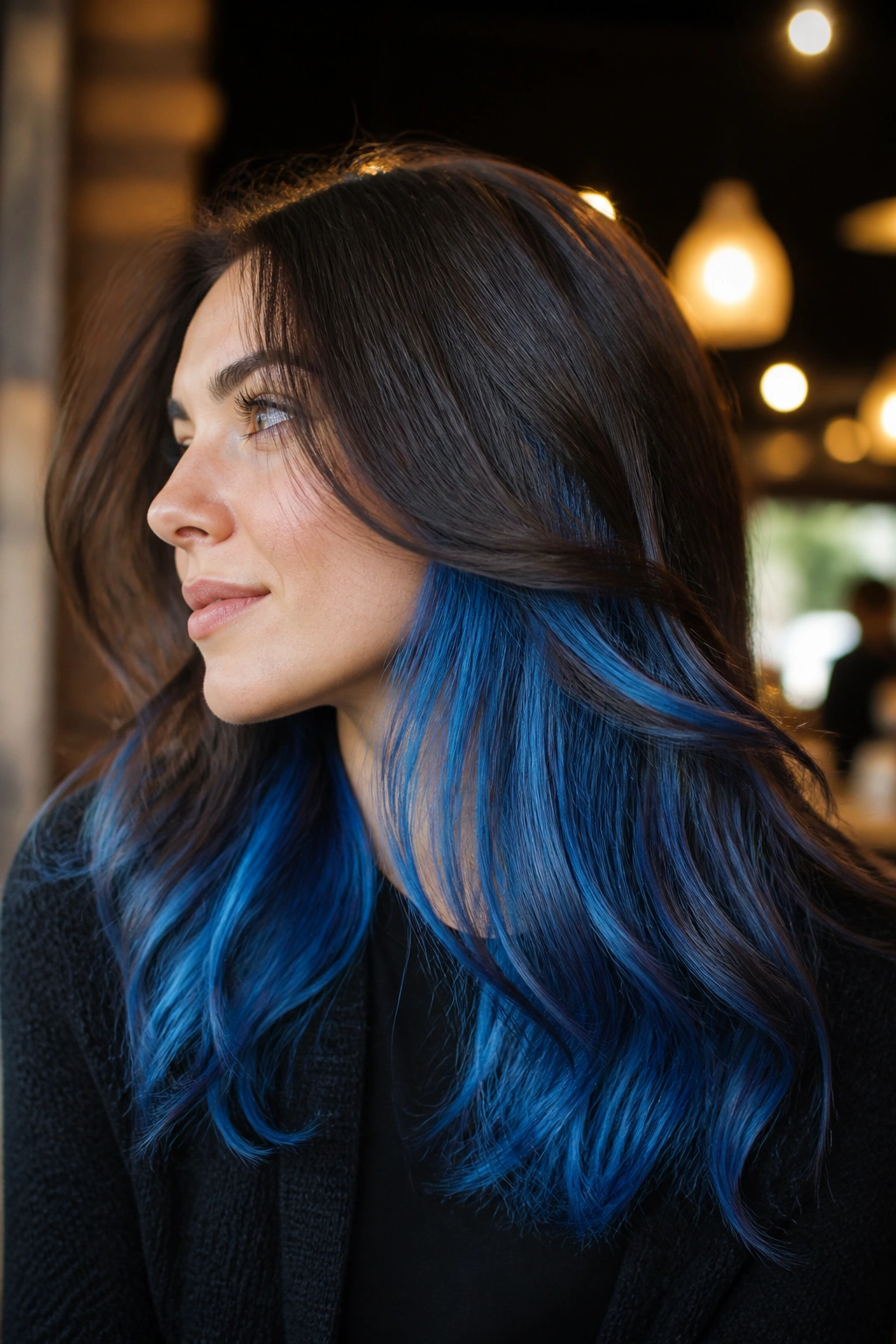
Denim blue peekaboo is for the person who wants color with a secret. The blue lives underneath the top layer, so you catch it when the hair moves, not every time you walk past a mirror. That makes it easier to wear in stricter workplaces or just in everyday life when you do not want a full fantasy-color head.
The base is usually dark blonde, brown, or black, with the blue painted onto pre-lightened sections below the top layer. The best version does not look cartoonish. It reads like faded denim, stormy blue, or the inside of a new pair of jeans. That softer tone matters because it lasts better as it fades.
You do need lightened hair for this to work well. If the canvas is too dark, the blue disappears. If the canvas is too yellow, the color can go green. That’s the boring technical part, but it’s the reason good peekaboo color looks intentional and cheap versions don’t.
Best for: layered cuts, bobs, and anyone who likes a little surprise in their hair.
Maintenance note: blue stain can cling to towels and pillowcases early on. Use darker ones for the first few washes.
12. Honeyed Auburn
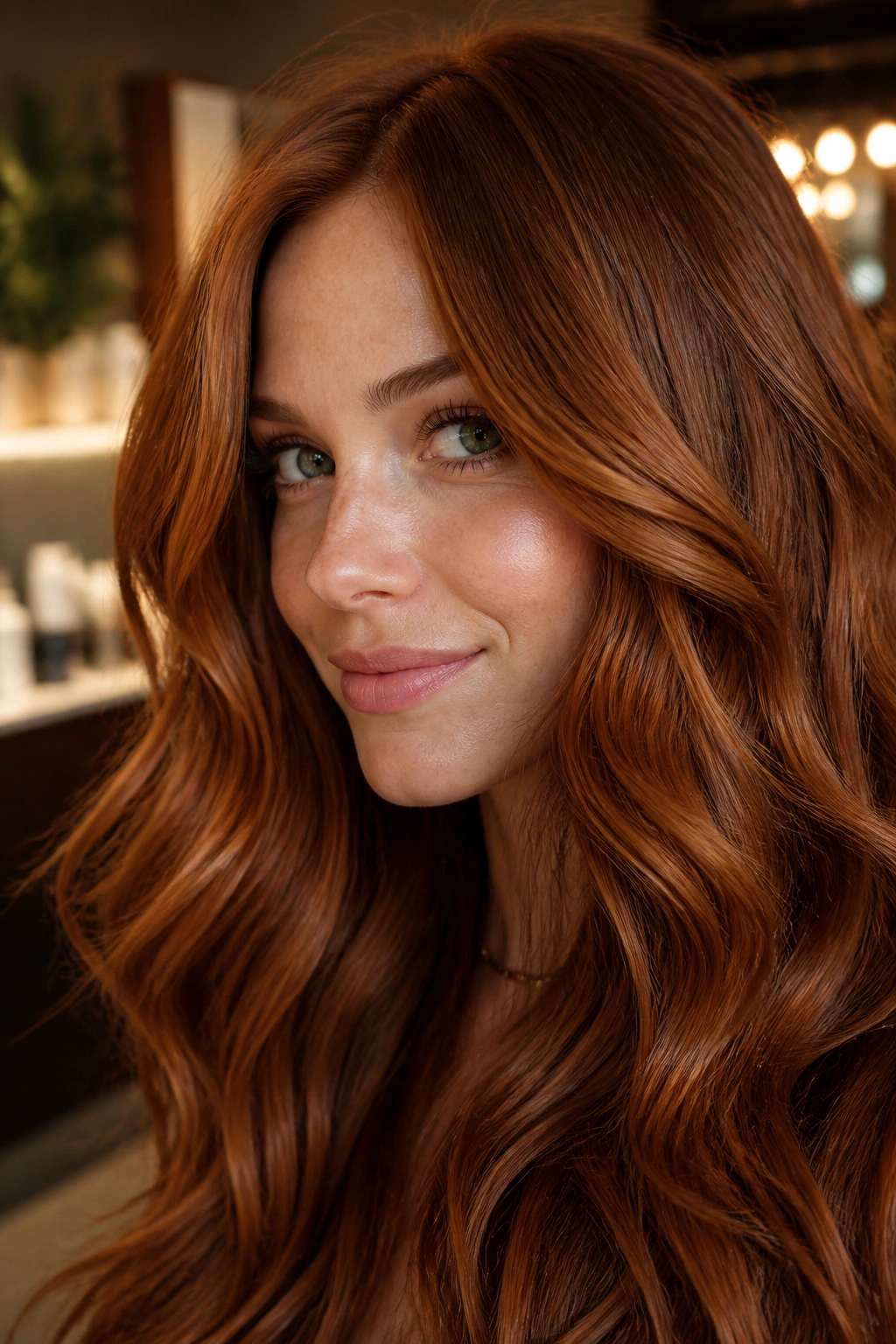
What makes honeyed auburn different from regular auburn is the gold. Not too much, not too shiny — just enough honey warmth to soften the red-brown base and keep the color from feeling flat. It’s friendlier than classic auburn and less intense than copper, which is why it works on more faces than people expect.
This shade does well when the color sits somewhere between level 5 and 7, depending on how bright you want it. The golden note stops the red from turning heavy, especially on hair that’s naturally dark. It also reflects light in a way that makes the surface look smoother, which is handy if your hair has a little frizz.
Quick Shape Notes
- On long layers, honeyed auburn looks soft and glossy
- On curls, it makes the curl pattern stand out more clearly
- On blunt cuts, it can look rich and polished rather than playful
- A warm gloss every few weeks keeps it from fading toward dull brown
If you like red but hate looking over-colored, start here. It’s one of the easier red-adjacent shades to live with because it doesn’t shout from across a room. It just quietly looks good.
13. Espresso Glaze
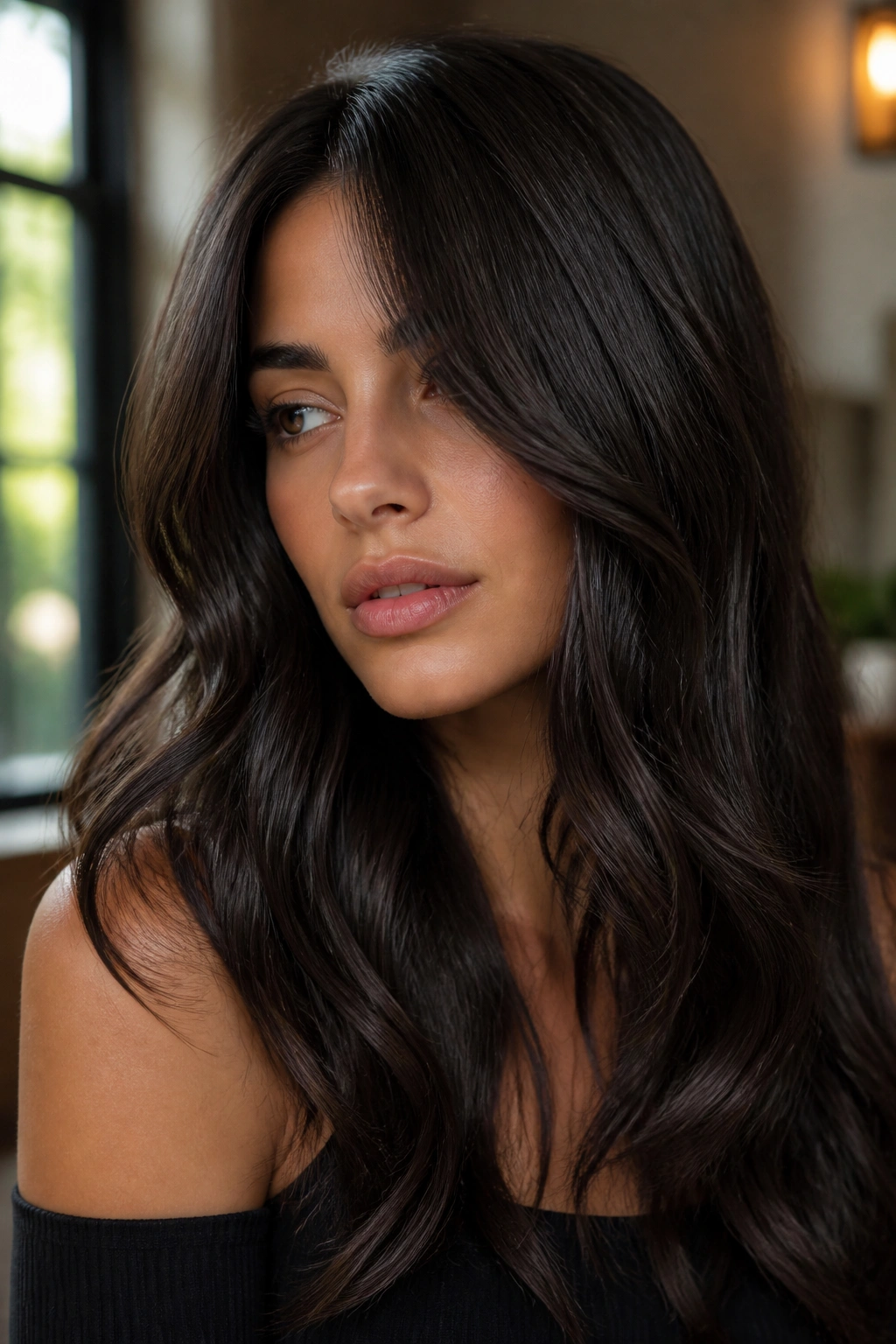
Espresso glaze is the shade for people who want their hair to look darker, richer, and shinier without changing the color story too much. It’s not about a dramatic lift or a bold new hue. It’s about depth. A good espresso glaze makes hair look like it has been polished.
The best version is usually a demi-permanent formula, because demi color deposits tone without fully committing the hair to a permanent dark result. That matters if you like to change shades later, or if your ends tend to grab color too deeply. The glaze can smooth out faded brown, add shine to dull dark hair, and tone down unwanted warmth in one appointment.
A tiny warning: espresso can look flat if you overdo it. The point is depth, not ink. Leaving a whisper of lighter brown through the mids keeps the result from swallowing the haircut. That subtle variation is what makes the color look expensive rather than heavy.
It’s also one of the easiest trends to maintain. A tinted conditioner, a sulfate-free wash, and less heat on the ends can keep the finish glossy for a long stretch. If your hair is naturally coarse, this color looks even better because the cuticle tends to reflect the gloss more clearly.
14. Cool Beige Money Piece
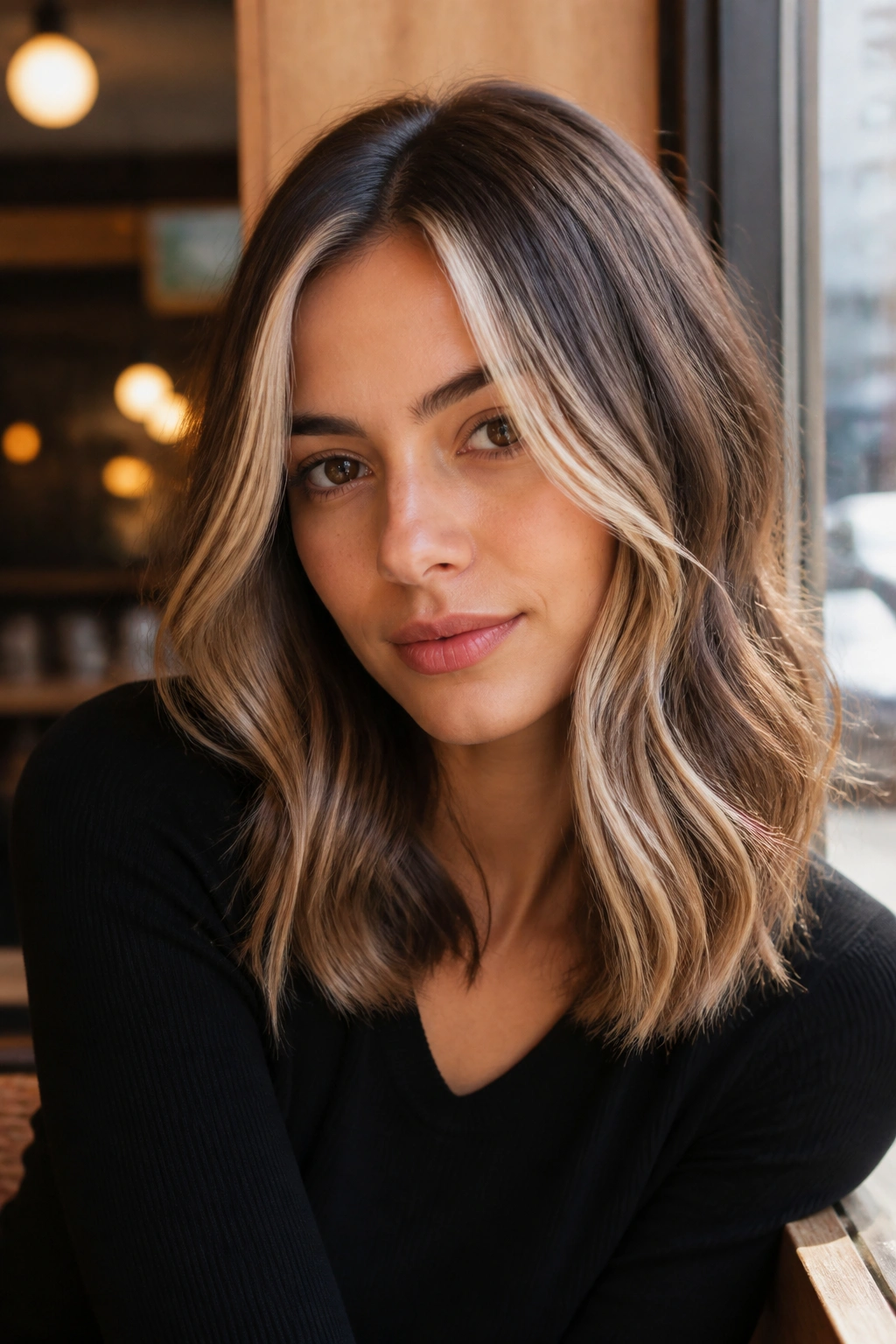
Cool beige money piece is the right kind of face-framing brightness: noticeable, but not loud enough to look like a stripe from the early highlight era. The pieces around the face are lifted a touch lighter and toned beige instead of gold, so they soften the features without pulling too yellow.
This works because the rest of the hair stays deeper. That contrast makes the front pieces pop, but the overall style still feels balanced. When people say they want to “brighten their face,” this is usually the move they’re circling around, even if they don’t have the words for it.
What Makes It Different
Unlike all-over blonde, the money piece leaves most of the hair untouched. That means less damage, less time in the chair, and less maintenance. It also grows out in a way that looks deliberate, because the brightness is meant to live at the hairline.
- Best on brunettes who want a quick lift
- Good with lob cuts, curtain bangs, and long layers
- Ask for beige, not yellow, toner
- Keep the back darker so the front contrast stays clean
It’s a simple idea, but simple is not the same as basic. Done well, this can wake up a haircut fast.
15. Sandstone Balayage
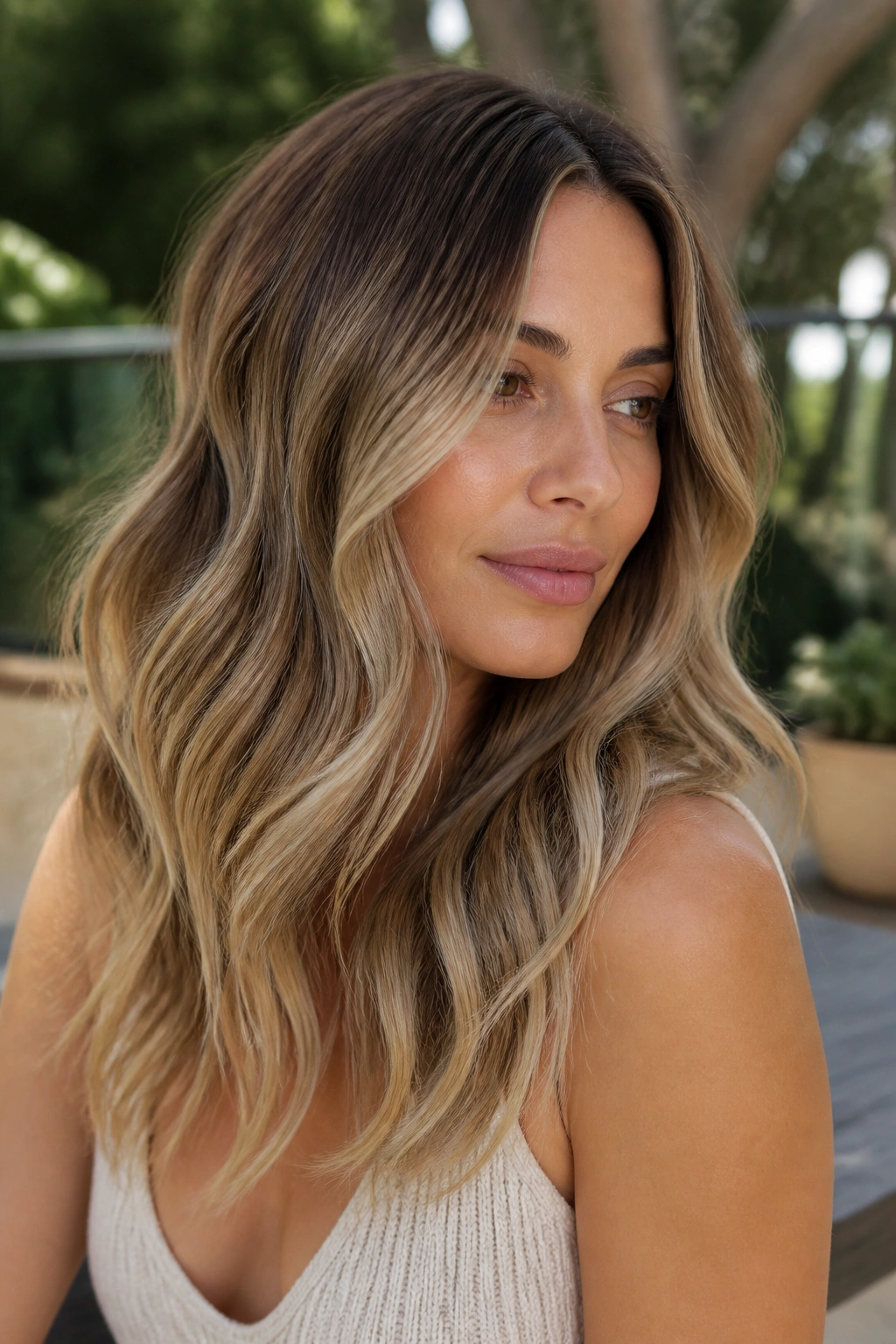
Sandstone balayage feels like the more grounded cousin of blonde balayage. The color sits in a beige-brown lane, with soft sandy ribbons painted through the lengths so the hair looks sun-kissed without looking blond-blond. It has warmth, but the warmth stays dusty and mineral-like rather than shiny and sweet.
A good sandstone balayage depends on freehand placement. The colorist paints where the light would naturally land — the outer layers, the bends of the hair, the face frame, the ends that would lighten outdoors first. That keeps the result from looking striped or too neat. The root area usually stays soft and shadowed so the grow-out line never gets harsh.
This shade is especially nice on medium to long cuts because there’s room for the tone to stretch. Short hair can wear it too, but the effect is more subtle. If you like loose waves, even better. The dimension shows up in the bends and feels very natural.
Ask for beige-bronze lowlift balayage with a soft root smudge. That wording helps separate this from brighter gold balayage, which can turn loud fast. Sandstone stays quieter.
16. Plum Wine Brunette
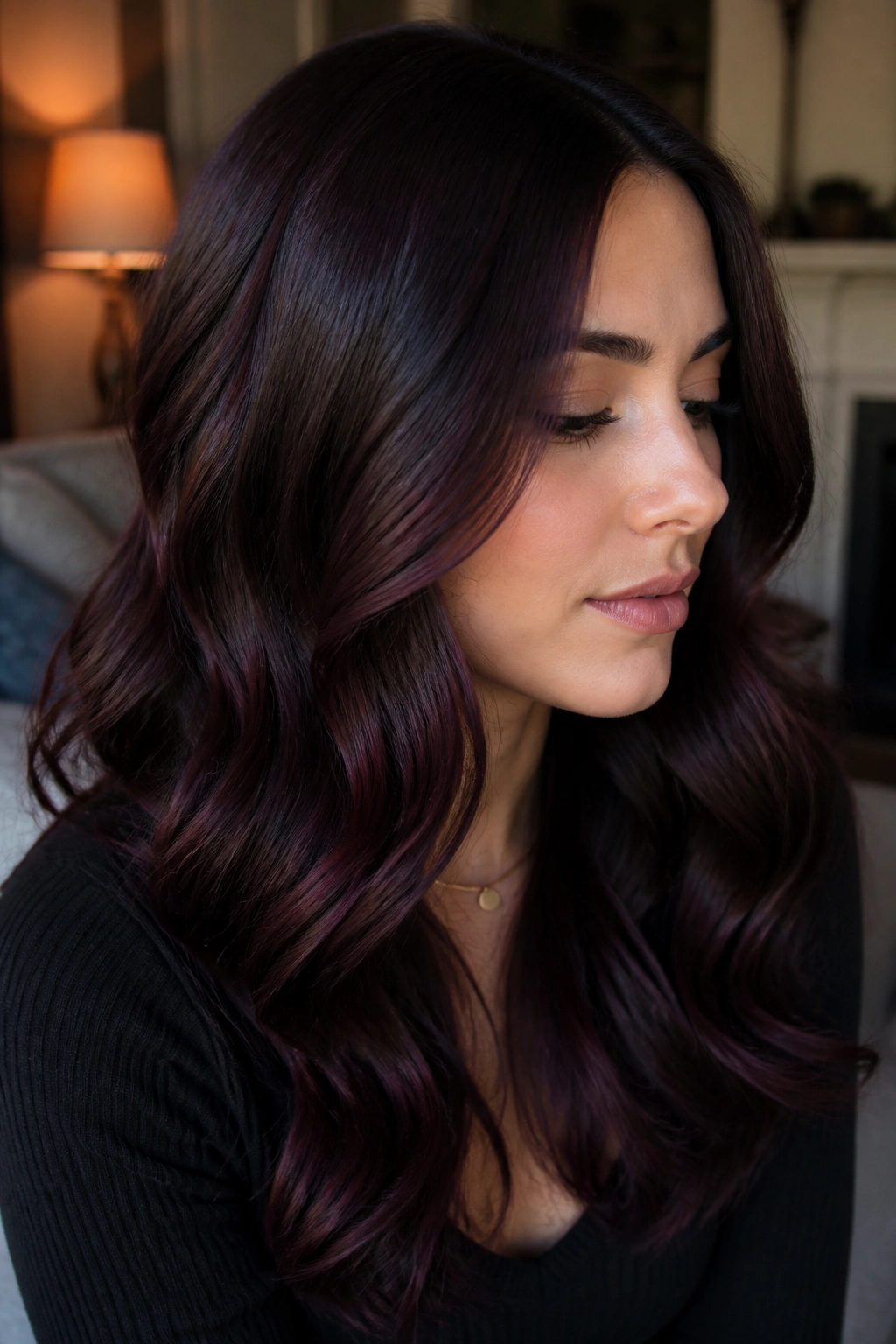
Plum wine brunette is dark hair with a hidden purple-red mood, and I mean that in the nicest way. In low light, it reads like a rich brunette. In sun or bright indoor light, the plum note wakes up and gives the color this cool, almost inky finish. It’s a strong choice if you want depth with a little edge.
The plum tone is useful because it cools down too much warmth in brunette hair without making the color flat. Red-violet reflects can make dark hair look fuller, too. That’s a small visual trick, but it matters on long straight hair that can otherwise look a little one-note.
A lot of people worry that plum will look theatrical. It can. The fix is restraint. Keep the plum deep and moody, not bright grape. A level 4 or 5 brunette base with plum glaze through the mids usually gives the right effect. On pre-lightened ends, the color reads more clearly; on darker hair, it stays subtler.
If you like jewel tones but need something wearable, this is a smart middle ground. It feels special without requiring a whole new wardrobe.
17. Periwinkle Pastel Streaks
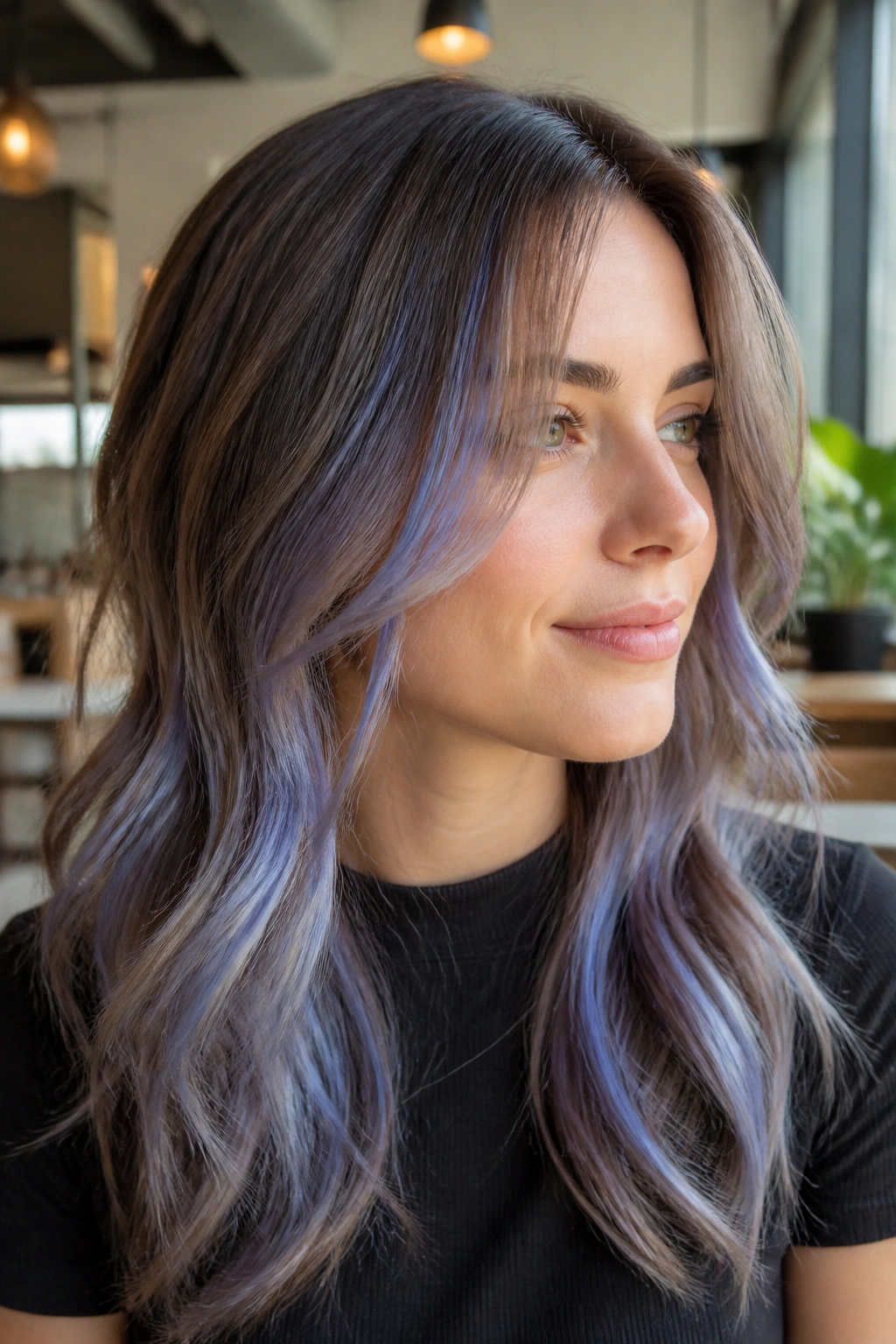
Can pastel hair still feel fresh? Periwinkle pastel streaks make a good case for yes. Periwinkle sits between blue and lavender, and when it’s placed in thin streaks instead of full saturation, the result looks airy rather than cartoonish. It’s soft enough to live inside a haircut instead of taking over the entire head.
Why Placement Matters More Than Pigment Here
Pastels fade fast by nature. That is not a flaw; it’s the deal. The trick is putting the color where it can still be seen after a few washes. Underlayers, face-framing streaks, and random surface ribbons all work better than one big block of pastel across the top.
- Requires a pale pre-lightened base
- Works nicely on bobs, shags, and layered pixies
- Needs cool-toned shampoo and cooler water to slow fading
- A color mask can help keep the shade from looking washed out
If your hair is fragile, this one asks for honesty. Bleach plus pastel is not a casual combo. The payoff is that the final look can be delicate and striking in a way deeper colors cannot quite copy. It’s a mood, not a maintenance-free one.
People who like subtle fantasy color tend to love this. People who hate upkeep should probably skip ahead.
18. Smoky Silver Blend
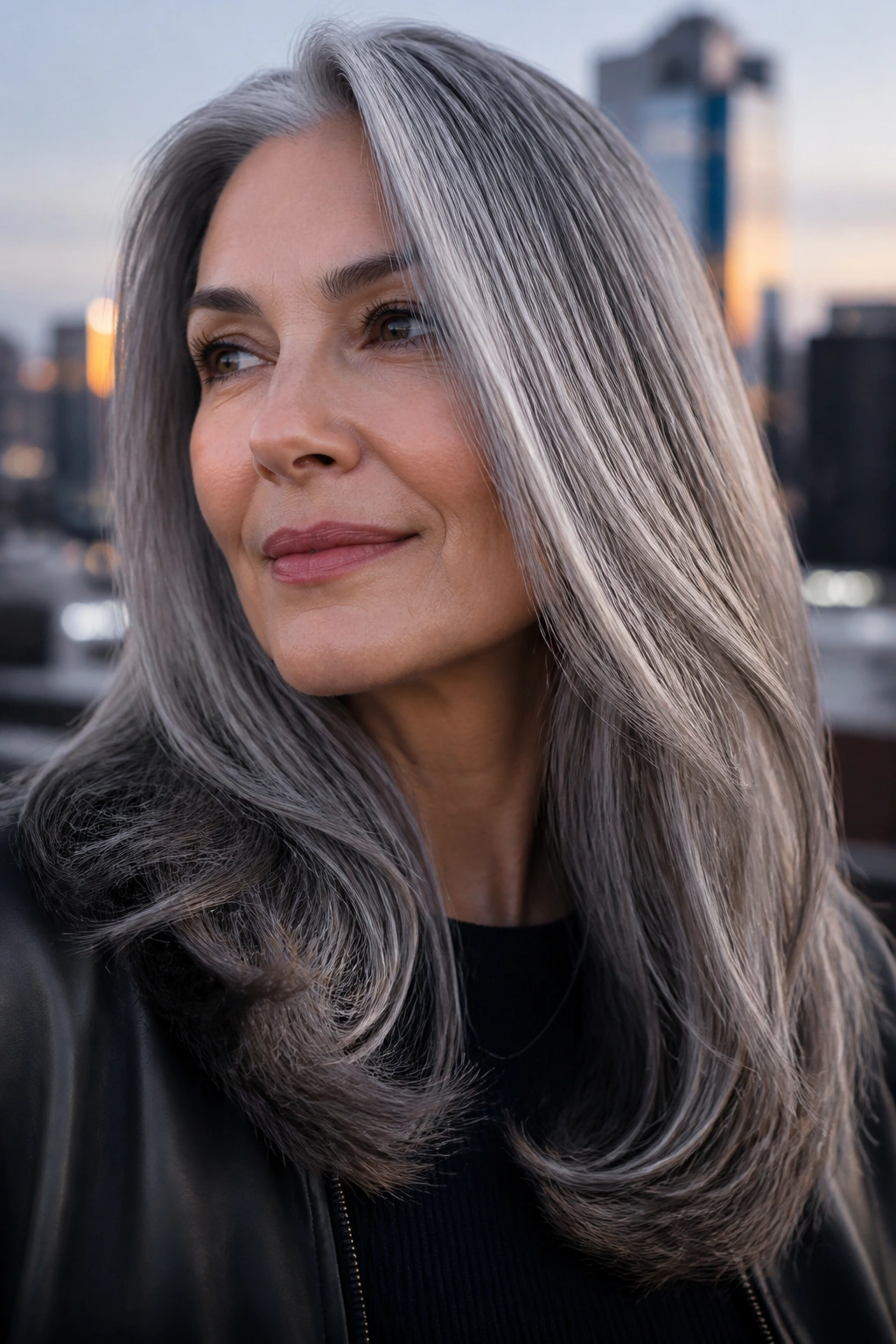
Smoky silver blend is one of the smartest ways to wear silver hair without making it look severe. Pure silver can be beautiful, but it can also look hard if every strand is lifted and toned the same way. Smoky silver keeps some graphite depth underneath, which softens the finish and makes the color feel dimensional.
This is a strong option for blending natural gray, by the way. Instead of fighting silver strands, the color works with them. That usually means leaving some silver at the crown, adding cool lowlights through the mids, and toning the lighter sections so they match the whole picture instead of standing alone. The effect is polished, not patchy.
It’s also a good choice if you like cooler shades but do not want them to look icy or blue. Smoky silver sits in a more neutral lane. The hair can still shine, but the shine has a steel-gray edge instead of a white-metal edge.
A purple shampoo helps, though not every wash. Too much and the silver can veer violet or dull. Once a week is usually enough for maintenance if the base is healthy.
19. Toasted Almond Blonde
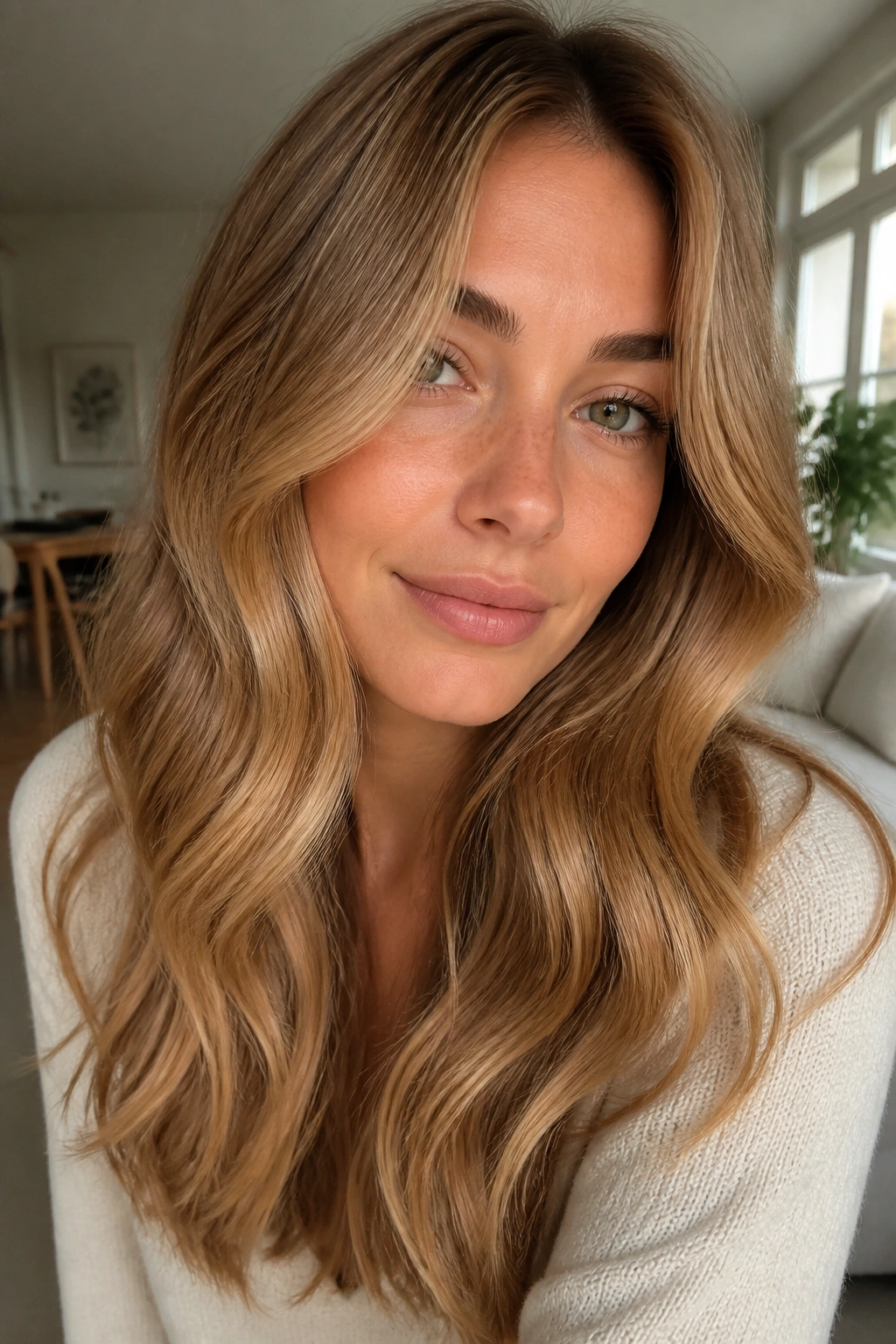
Toasted almond blonde is the blonde for people who are tired of brassy gold and tired of flat beige. It has a warm-neutral tone that feels soft, nutty, and a little richer than classic blonde. The “toasted” part matters. It keeps the color from looking washed out, while “almond” keeps it from drifting too orange.
The best version usually starts with a blonde base that has been toned just enough to remove yellow but not so much that it turns chalky. The result is a shade that sits beautifully on hair with movement. Waves, bends, and soft layers all help the tone show up more clearly, because the highlights and shadows can play off each other.
Good Places to Use It
- Long bobs that need depth
- Medium layers that can hold a wave
- Natural blondes who want a cleaner finish
- Light brunettes looking for a softer blonde shift
If your hair turns brassy quickly, this shade can still work. The trick is maintenance: a beige toner instead of purple overload, plus a gentle shampoo and a gloss refresh when the ends start to look dry. That keeps the almond note warm instead of muddy.
20. Soft-Growout Dimensional Color
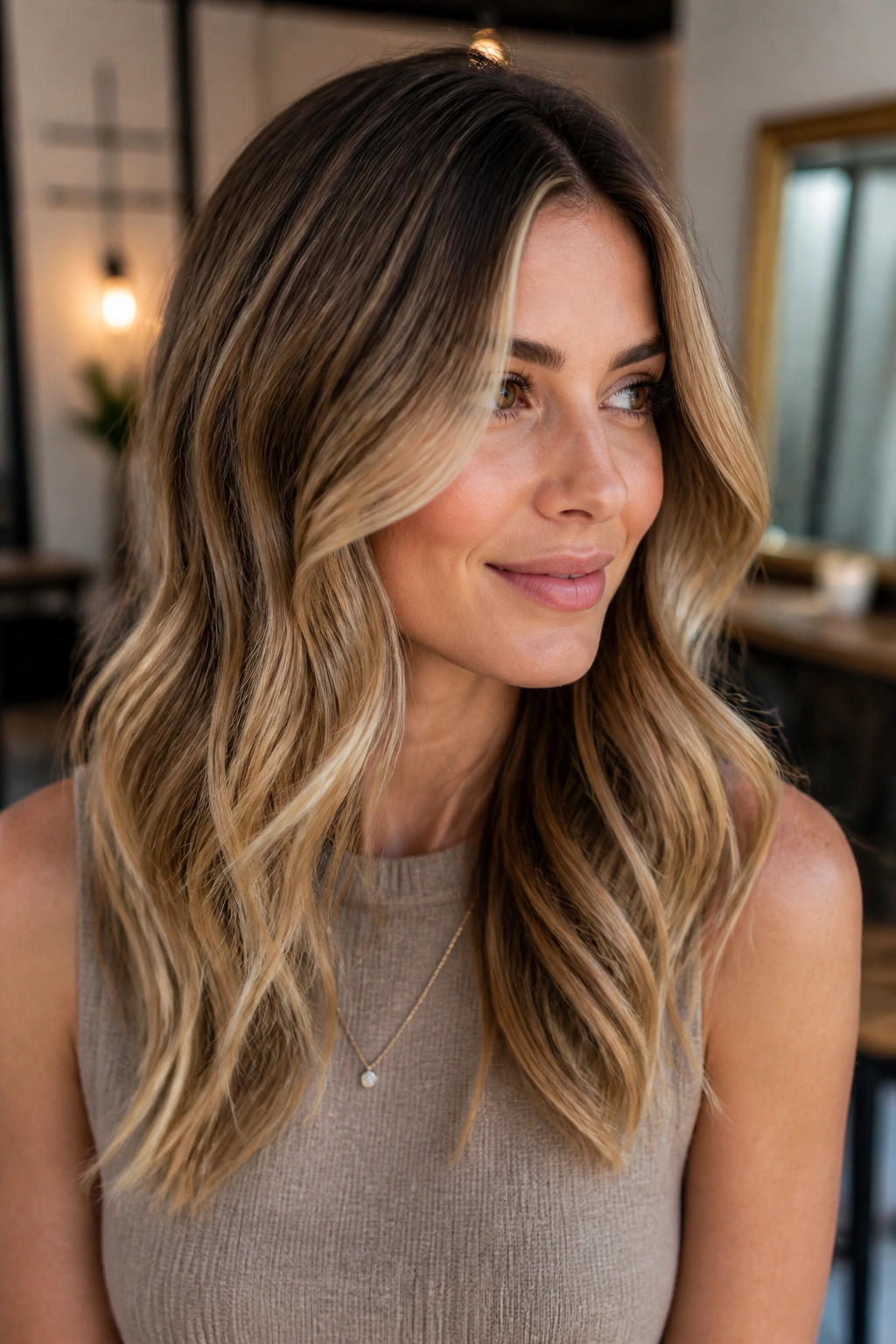
Soft-growout dimensional color is the trend that explains a lot of the others in this list. The point is not one exact shade. The point is a color job that still looks good when life happens — when you skip a blowout, when your part shifts, when your roots start to show. That sounds plain, but it’s the difference between hair that owns you and hair that behaves.
This approach usually combines a shadow root, babylights, a few brighter face-framing pieces, and a gloss over the mids and ends. The colors can be blonde, brunette, copper, red, or even fantasy shades. The structure stays the same. Depth at the root. Light where the eye wants it. Soft transitions everywhere else.
That structure matters because it gives you months of movement instead of a two-week peak. It also means the grow-out looks intentional, not abandoned. I like that part a lot. A color that still looks decent at week eight is worth more than one that looks great for six days and then starts fighting back.
If you only remember one thing from all twenty trends, make it this: soft contrast beats hard stripes. The shades may change, but the idea underneath them stays the same. Good hair color should move, age well, and keep its shape when you stop staring at it every morning.