



The best hairstyles that soften a strong jawline usually do one simple thing: they break up hard lines before the eye lands on the jaw. That can mean a deep side part, a soft fringe, waves that bend instead of hang straight, or layers that start higher on the face and move the focus upward.
A strong jawline is a good thing. It looks clean, defined, and memorable. But if you want a little softness around it, the wrong haircut can work against you fast. A blunt line that stops right at the chin or jaw tends to echo that shape, which is why some cuts feel sharp even when the styling is nice.
I’ve always liked hairstyles that create movement around the cheeks and temples. That area matters more than people think. A few inches of lift near the crown, a bend through the front pieces, or a fringe that lands at the cheekbone can change the whole read of a face without hiding anything.
Small shifts. Big difference. And the good part is that you do not need a dramatic chop to get there — the right shape, length, and part can do most of the work for you.
1. Deep Side Part with Long Waves for a Strong Jawline
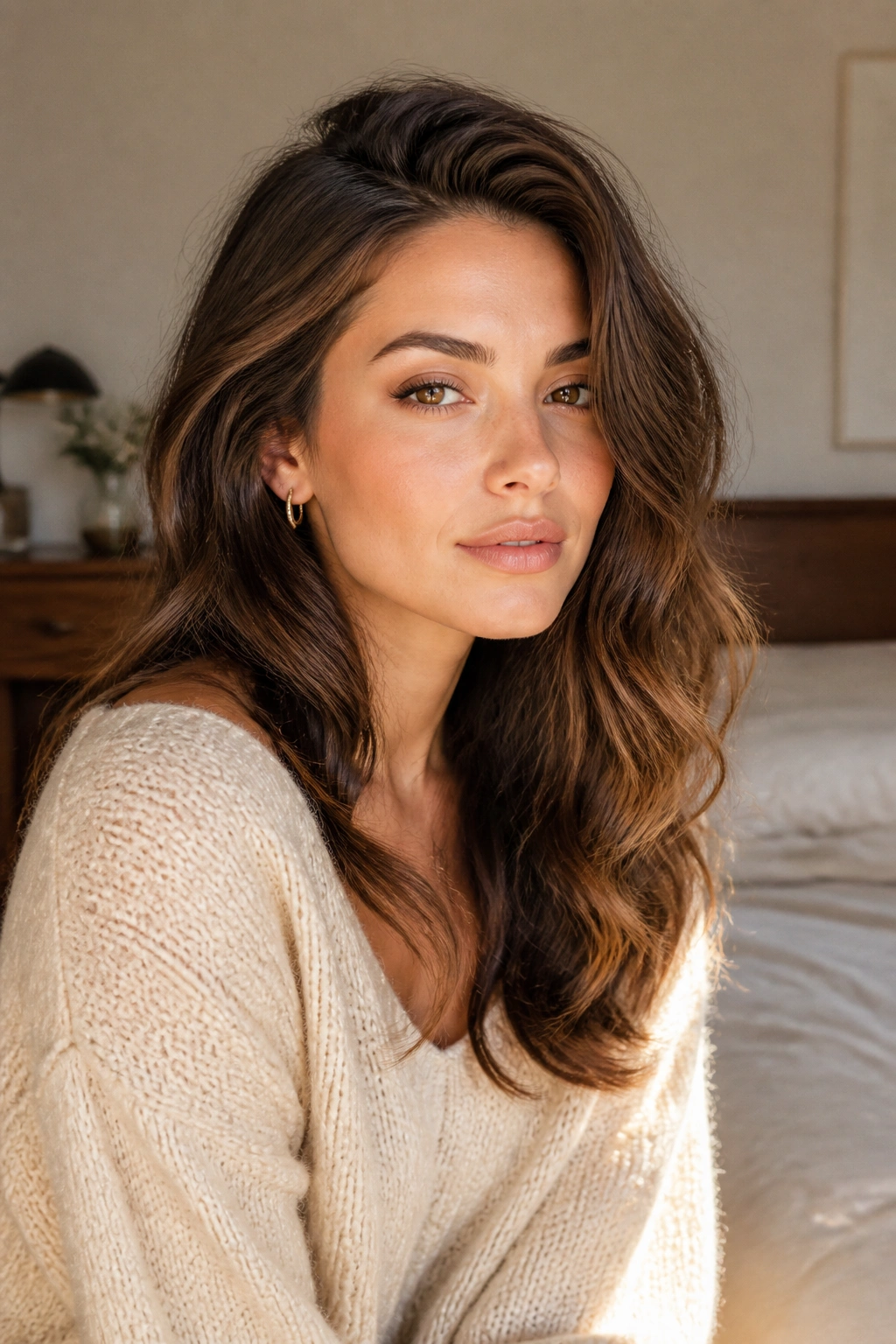
A deep side part is one of the easiest ways to soften a pronounced jaw because it immediately breaks the face into uneven planes. That diagonal line pulls attention upward and away from the lower edge of the face, which is exactly what you want when the jaw feels dominant.
Long waves help even more. Straight hair can look crisp and tidy, but crisp is not the same thing as soft. When the bend starts around the cheekbone and loosens toward the ends, the whole style feels less rigid. I like this look best when the hair falls below the collarbone; that extra length keeps the jaw from becoming the visual endpoint.
Why It Works
The shape is doing the talking here, not the curl pattern alone. A side part creates asymmetry, and asymmetry is your friend when the lower face already has strong lines.
- Move the part about 2 to 3 inches off center for the strongest effect.
- Start the wave below the cheekbone, not right at the roots.
- Leave the ends a little loose so they do not curl into a hard little hook.
- Use a light texturizing spray at the mid-lengths, not the roots, if your hair falls flat.
Best tip: keep the front wave slightly fuller on the side that opens your face. It sounds tiny, but tiny is the whole point here.
2. Curtain Bangs with Shoulder-Length Layers

Curtain bangs are sneaky in the best way. They look soft and casual, but they do serious work around a strong jawline because they redirect attention to the upper half of the face. The center split opens the forehead, while the longer sides fall into the cheek area and blur that straight jaw-to-chin line.
Shoulder-length layers keep the shape light. If the ends are all one length, the haircut can turn into a box. If the layers are too choppy, it can feel busy. The sweet spot is movement that starts around the cheekbone and drifts down toward the shoulders. That gives you softness without the haircut looking overworked.
I like curtain bangs on people who want a change but do not want to lose their hair into a pile of short pieces. They grow out well, too, which is one of the few reasons I think this style earns its reputation.
Keep them airy. That matters more than people admit.
When you style them, blow each side away from the face with a round brush and let the ends fall naturally instead of forcing them into a hard curve. If the shortest piece lands somewhere between the eyebrow and the cheekbone, you are in a good place. Any shorter and the fringe can start to feel heavy; any longer and you lose the soft frame that makes this cut work.
3. Collarbone Lob with Soft Bends

Can a lob soften a strong jawline without feeling fussy? Absolutely — if it sits at the collarbone and not right on the chin. That extra inch or two makes a huge difference because it changes where the eye stops. Instead of hitting the jaw and bouncing there, the hair moves lower and feels more relaxed.
The bend matters just as much as the length. A collarbone lob with loose, brushed-out bends feels softer than a pin-straight lob because the line keeps changing. The best version is not curled into perfect waves; it has a little give, a little swing, a little movement near the front.
How to Style the Bend
Use a 1-inch curling iron or wand and leave the last inch of the ends out. That keeps the finish from looking too done.
- Curl sections away from the face on both sides.
- Let the curls cool fully before brushing them out.
- Finish with a light hold spray, then rake through with your fingers.
- Tuck one side behind the ear if you want even more asymmetry.
A collarbone lob is one of those cuts that looks polished without acting precious. I like that a lot. It gives you shape, but not a helmet.
4. Face-Framing Layers for a Strong Jawline
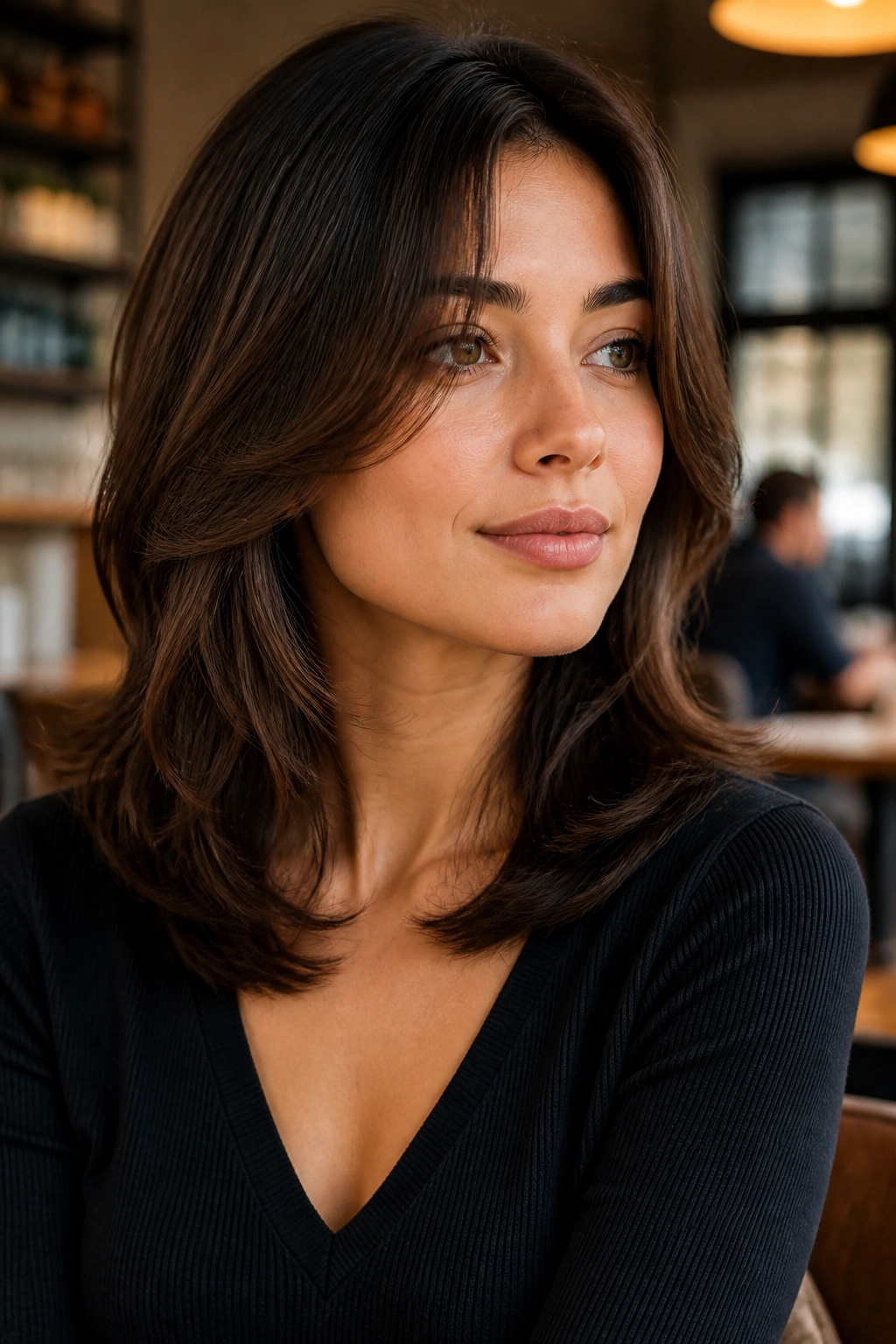
Picture long hair that hangs straight from the cheek to the shoulder. Clean, yes. Soft, not really. Face-framing layers fix that by taking weight away from the front and letting the hair curve around the face instead of dropping in one flat sheet.
The shortest layer is the one that does the job. If it starts at the cheekbone or just below the mouth, it helps break up the lower face without chopping directly into the jaw. I would not ask for a piece that ends exactly where the jaw starts. That can make the haircut echo the very line you are trying to soften.
What to Ask For
- Ask for soft face-framing layers, not choppy stair-step layers.
- Keep the shortest piece above the jawline.
- Let the longest front piece blend into the collarbone area.
- Style the front away from the face with a brush or a quick bend from a curling iron.
There is a weird little truth here: sometimes one good front layer does more than six layers scattered through the back. The front changes the whole read of the haircut. The back mostly changes the mood.
5. Textured Shag with Airy Ends

A shag is a bold choice, but it works beautifully on a strong jawline when the ends stay airy. The whole point is movement. If the haircut has too much weight at the bottom, it can pull the face down; if the layers are broken up properly, the eye keeps moving.
I like shag cuts most on hair that has some natural wave or a little bit of bend. Straight hair can wear it, too, but you need to style it with a bit of grit — a mousse, a diffuser, or a rough blow-dry with your hands. The softness comes from the layers floating around the cheeks and the crown, not from perfection.
A shag is not the same thing as a chopped mess. That’s the mistake people make. A good shag has a plan. The shortest pieces should live high enough to lift the face, while the longer pieces keep the outline from getting too severe.
The ends matter. If they are too blunt, the style goes hard. If they are too thinned out, it can look flimsy. Somewhere in the middle is where the magic is, and that middle tends to flatter a strong jaw better than a neat one-length cut ever will.
6. Off-Center Curls
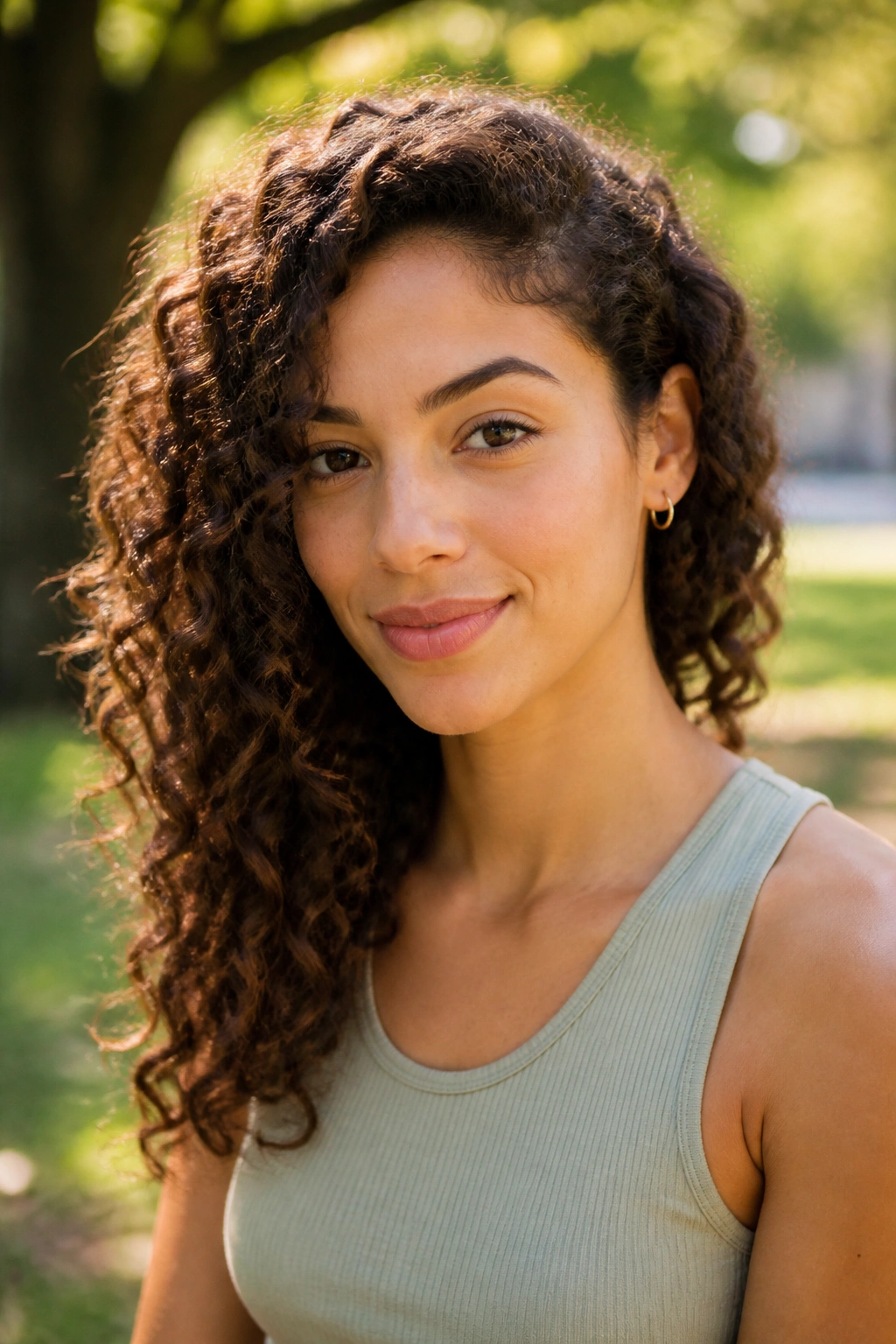
Unlike a center part, an off-center part creates a little tension in the shape of the face. That sounds technical, but it just means the style stops being symmetrical in a way that can make a square or angular jaw feel louder. The eye follows the curve of the curls instead of landing straight down the middle.
This is one of my favorite moves for curly hair because the curl pattern does half the work for you. The part does not need to be dramatic. Sometimes shifting it by an inch is enough. The fuller side should fall across the cheek, while the lighter side opens the face without exposing every sharp edge at once.
If your curls are tight, keep the front pieces a touch longer so they do not spring up above the cheekbone. If your waves are loose, you can get away with a shorter front because the shape stays soft. Either way, the goal is the same: let the curls create roundness where the jaw is strongest.
Best for people who want ease. If you hate fussing with heat tools, this one makes sense. Let the curl pattern breathe, separate it with your fingers, and move on with your life.
7. Feathered Mid-Length Blowout
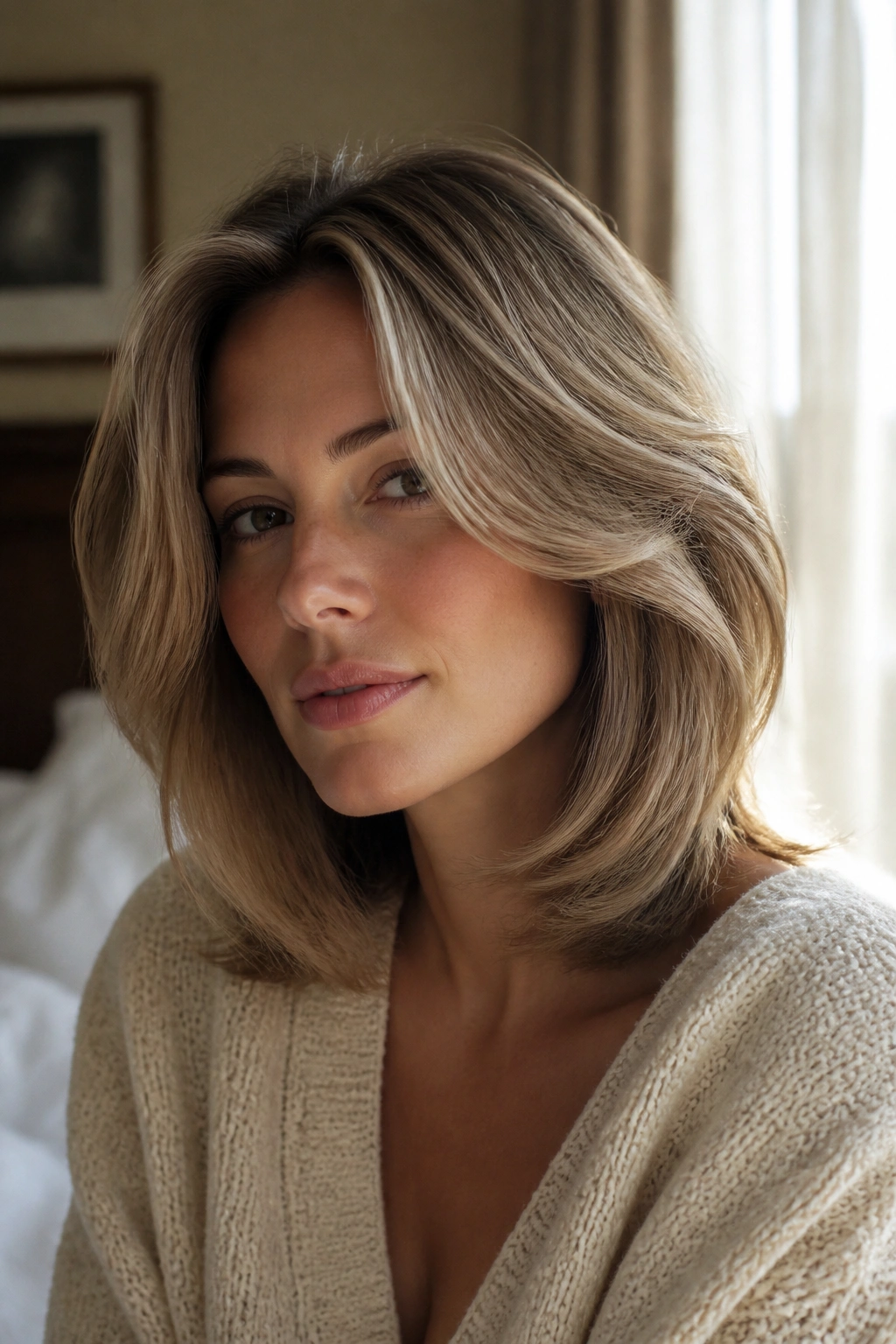
Feathered layers are old-school in the best sense. They bring that light, swung-out movement around the face that makes a strong jawline look less heavy, especially when the length falls between the chin and the shoulders. A mid-length blowout gives you lift at the roots and softness at the edges, which is a better combo than most people realize.
The trick is to keep the feathering controlled. You do not want the ends to look wispy all over. You want the front to curve away from the face, then settle lightly over the jaw area instead of stopping there like a ruler.
What to Ask For
- Ask for layering around the cheekbones and collarbone.
- Keep the perimeter soft, not blunt.
- Blow-dry with a large round brush to build bend, not curls.
- Finish with a flexible spray so the movement stays touchable.
This style works especially well if your hair has medium density. Thick hair can look gorgeous in it, but the layers need to be handled with restraint or the whole thing gets puffy. Fine hair can wear it too, as long as you do not over-layer the ends.
8. Wavy Bob with Piecey Ends
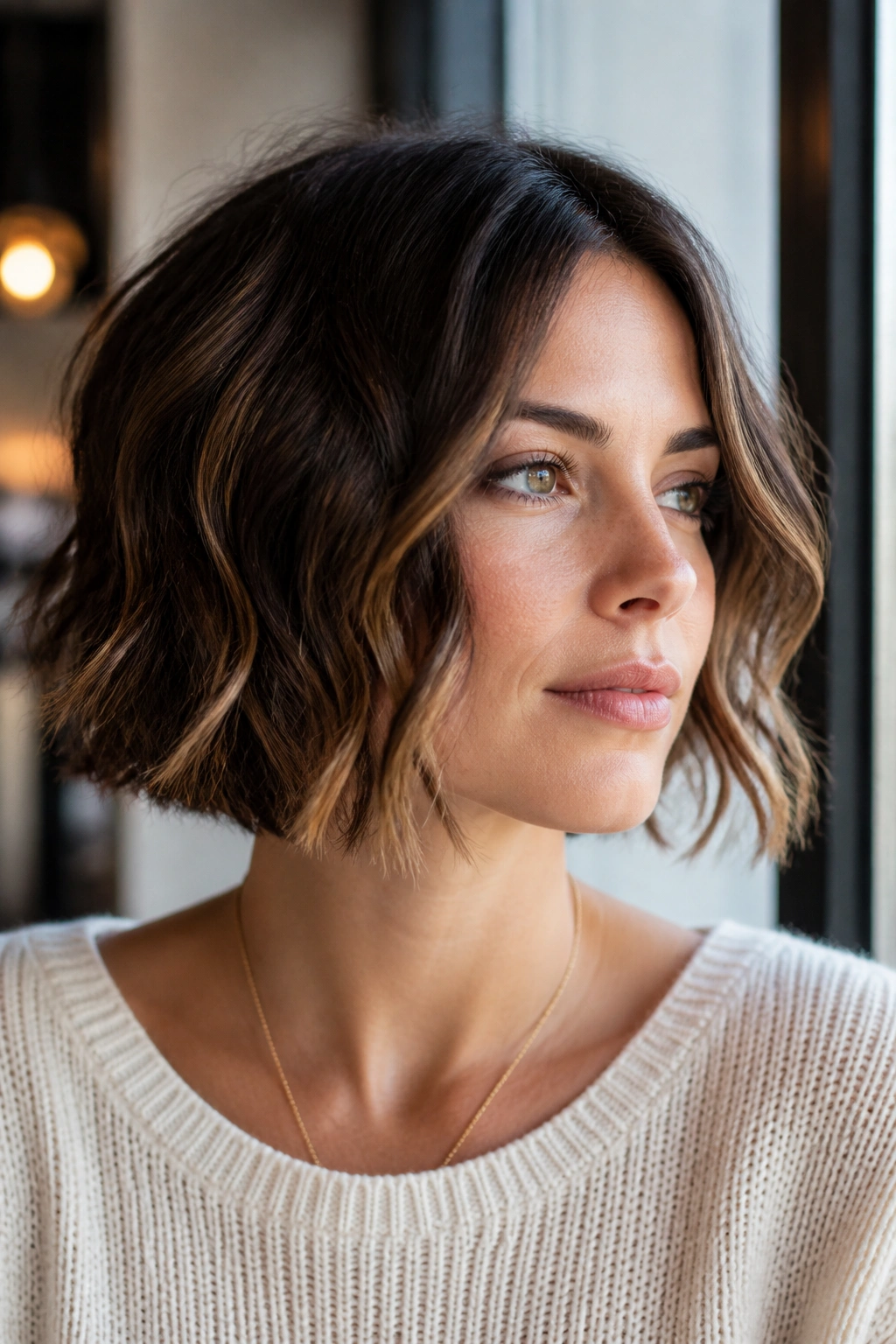
A wavy bob can be softer than long hair when the ends are done right. That surprises people, because bob cuts get blamed for being harsh around the jaw. The real issue is usually the length. If the bob lands exactly on the jaw, it can make the whole lower face feel boxed in. Drop it just below that line and add a little texture, and the shape changes fast.
Piecey ends are the difference between soft and stiff. They stop the bob from looking like a single block. I like this cut on hair that naturally bends, but it also works on straight hair if you use a flat iron to add a few tiny bends through the mid-lengths. Not curl. Bend. There’s a difference.
This is one of those styles that looks good a little imperfect. If one side flips more than the other, fine. If the front pieces tuck and the back doesn’t, also fine. The looseness is part of why it flatters a strong jawline.
If you want polish, keep the top smooth and let the ends do the softening. That balance keeps the bob modern without turning severe.
9. Soft Pixie with Side-Swept Fringe

Can a pixie soften a strong jawline? Yes, if you keep the fringe longer than the sides and let the top have a bit of movement. The mistake people make with short cuts is going too tight on the sides. That can make the lower face feel even more prominent. A soft pixie does the opposite. It adds texture up top and around the forehead, where the eye can rest.
The fringe is the hero here. A side-swept fringe that falls across the brow or just above the cheekbone pulls attention upward and sideways, which breaks up the hard line of the jaw. It also gives the cut a little swing, which is useful because short hair can turn severe fast.
How to Keep It Soft
- Keep the top around 2.5 to 4 inches, depending on your hair texture.
- Leave the fringe long enough to sweep, not stick up.
- Use a matte paste or cream, not a heavy gel.
- Avoid shaving the sides too close if your jaw is already strong.
I like this cut best on people who are comfortable with texture. It does not need to be perfect. It needs to move.
10. Butterfly Cut for a Strong Jawline

If your hair feels heavy through the lower half of your face, the butterfly cut is a smart fix. It gives you shorter layers around the crown and cheek area while keeping the length underneath, so the style feels lifted without losing that long-hair swing. That lift matters a lot when the jawline is pronounced.
The shortest layers should sit high enough to break up the face, but not so short that they bounce into the jaw. That’s the balance. The longer layers stay below, which keeps the perimeter soft and helps the hair fall in a more fluid shape.
What to Tell Your Stylist
- Ask for shorter layers that begin around the cheekbone.
- Keep the long layer intact through the lower half.
- Make sure the front pieces can tuck and swing.
- Style with a 2-inch round brush if you want the full blowout effect.
This cut is especially nice if you like volume. Not frizz — volume. The kind that lifts the head shape a little and makes the face feel less bottom-heavy. On thick hair, it can remove a lot of visual weight. On finer hair, it gives the illusion of fullness without making the ends feel sparse.
11. Cheekbone-Grazing Bangs with a Layered Cut
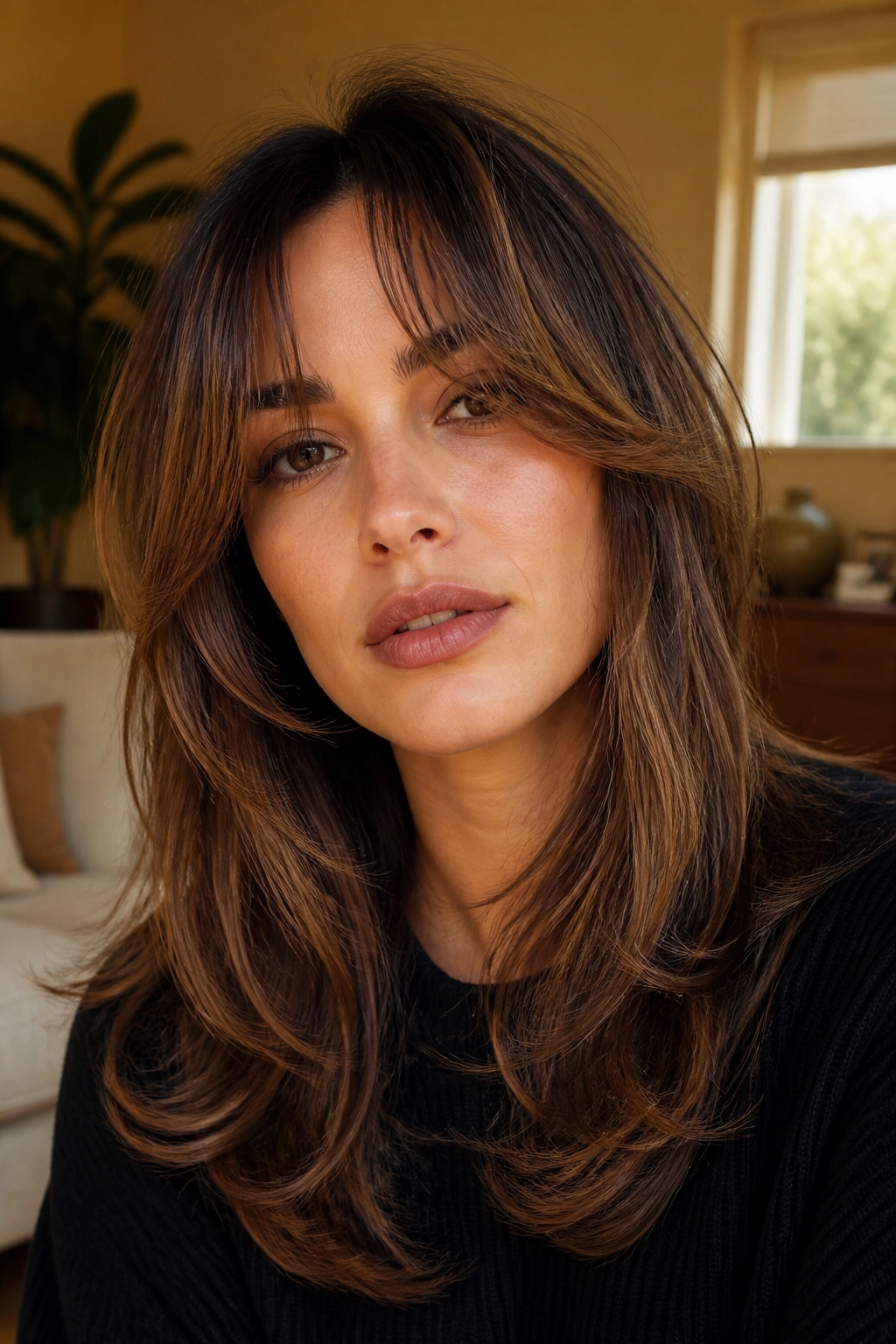
Cheekbone-grazing bangs sit in a useful little zone. They are long enough to feel soft, but short enough to pull the eye upward. That makes them a good match for a strong jawline because they interrupt the face before the jaw gets all the attention.
I like this fringe better than a heavy full bang when the goal is softness. Full bangs can work, but they can also make the face feel shorter and blocky if they are cut too dense. A cheekbone-grazing version moves. It brushes the temples, sits lightly over the brow, and blends into the layers around the face.
Maintenance matters here. These bangs need trims every 4 to 6 weeks if you want them to keep that sweet spot near the cheekbone. Let them get too long and they lose the framing effect. Cut them too short and they can stop feeling airy.
If your hair is wavy or curly, ask for them a little longer than you think you need. Texture always shortens the look once it dries. That little bit of extra length saves you from a bang that jumps too high and turns the whole face into a triangle.
12. Half-Up Style with Loose Tendrils
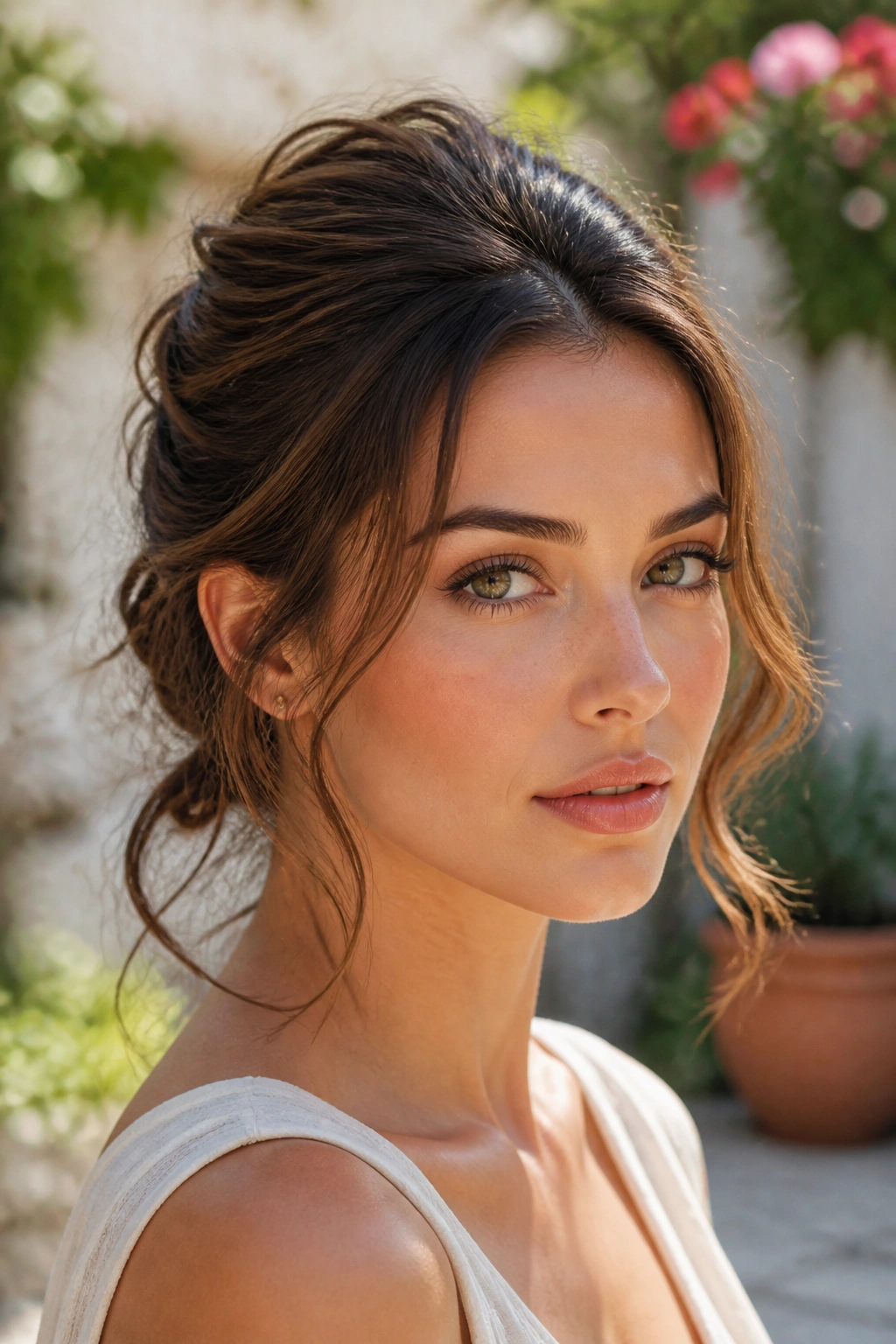
A full updo can make a strong jawline look sharper than you meant it to. A half-up style avoids that by keeping movement around the cheeks and neckline while still pulling some hair back from the face. The result feels open, but not severe.
Loose tendrils are the part that softens everything. Keep a couple of pieces around the temples and the front of the jaw, then curl them away from the face with a small iron — around 3/4-inch to 1-inch is usually enough. You do not want ringlets. You want a bend that falls in a lazy curve and breaks the line of the jaw.
Keep It Polished, Not Severe
- Place the half-up section at the crown, not too low at the back.
- Leave two face-framing pieces out on each side.
- Loosen the crown a little with your fingers after pinning it.
- Finish with a light mist of shine spray so the top stays smooth.
This style is useful on days when you want your hair off your neck but still want some softness in the front. Weddings, dinner, work, errands — it fits all of them without feeling overdone.
13. Long Layers with Tucked-Behind-Ear Volume

Tucking one side behind the ear seems almost too simple to matter. It matters. That small move opens one side of the face, changes the balance, and keeps the hair from sitting like a curtain over the jaw. When the other side keeps some volume and movement, the face reads softer and less boxed in.
Long layers help because they stop the ends from turning into one heavy sheet. The best version has fullness near the temples and cheekbones, then lighter movement from there down. If you have straight hair, a quick round-brush blow-dry at the front gives the style the curve it needs. If your hair is wavy, you can often get away with a touch of cream and air-drying.
Tiny Changes That Matter
- Create a slight off-center part for more lift.
- Tuck only one side behind the ear.
- Keep the front pieces long enough to skim the cheek.
- Use root spray at the part if your hair collapses fast.
This look is understated, but not plain. It is one of those styles people notice without being able to name why. The answer is shape. The hair bends before it meets the jaw.
14. Rounded Bob with Internal Layers

A blunt bob is a rough choice for a strong jawline. A rounded bob is the better move. The difference is in the silhouette: the rounded version curves softly under instead of stopping in a hard line, and internal layers remove some of the boxiness without wrecking the shape.
This cut works especially well on thick hair or straight hair that tends to sit flat. Internal layers lighten the inside of the bob, so the outer line can swing a little. You still get that clean bob shape, but it feels more fluid around the jaw and cheek area.
The length should be handled carefully. If it sits exactly on the jaw, the cut can look too square. If it drops just below, the edge softens. That half-inch matters more than it should, which is one reason I always tell people to check the length in a mirror before the final trim.
Use a round brush or a quick under-bend with a flat iron to keep the ends curved. Not curled under tightly. Curved. That little distinction keeps the bob from looking stiff or dated.
15. Sleek Low Bun with a Side Part and Face-Framing Pieces
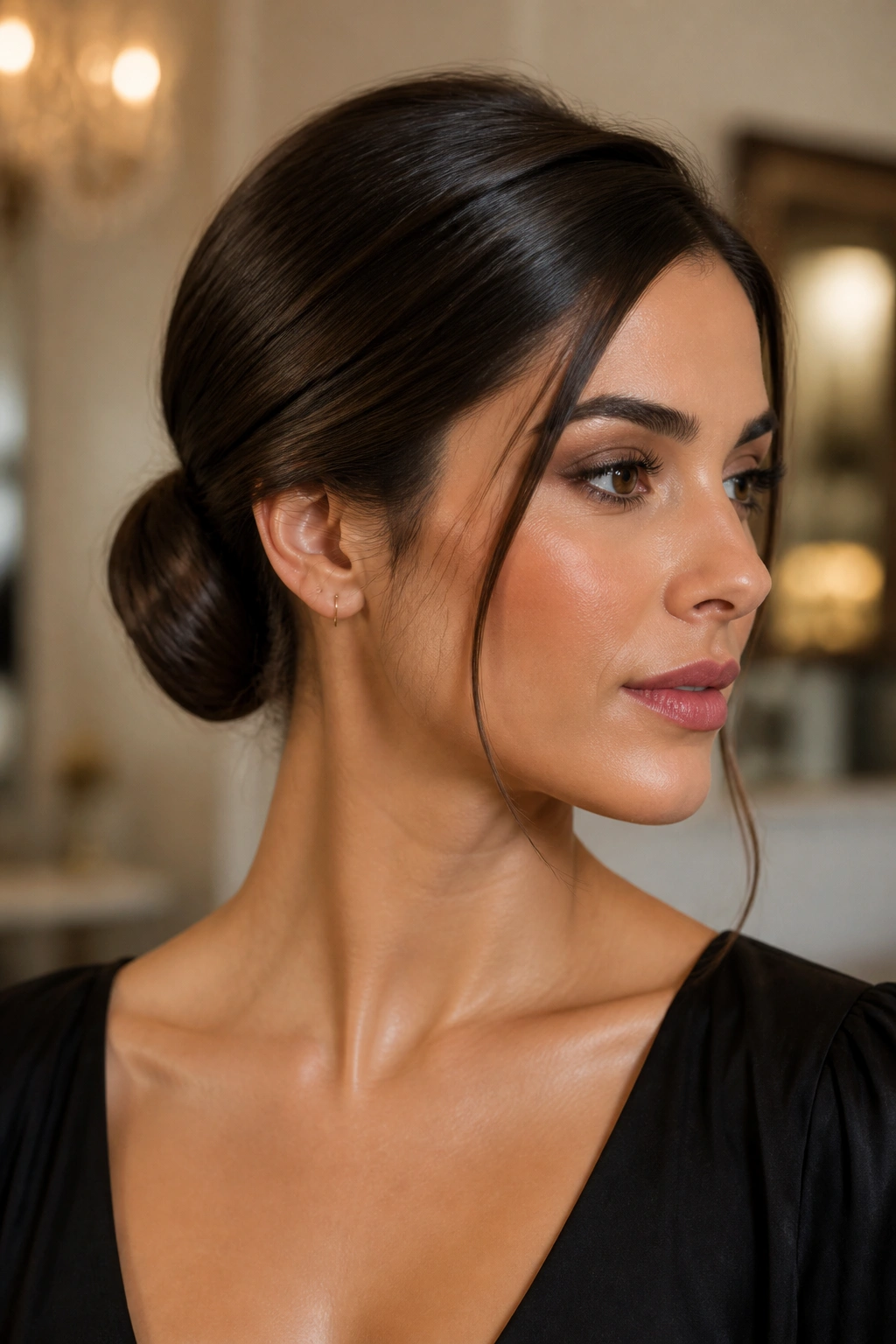
Need your hair up and still want softness? A sleek low bun with a side part is the answer I keep coming back to. A tight center-parted bun can make the jaw feel like the loudest thing in the room. A side part changes the balance right away, and the loose front pieces keep the look from feeling severe.
The bun should sit low at the nape, not up high on the back of the head. That placement keeps the silhouette long and smooth. Then you leave a couple of thin face-framing pieces out — not thick chunks, just enough to graze the temples and jaw. Curl them lightly so they bend instead of hanging straight.
What Makes It Work
- Part the hair 1 to 2 inches off center.
- Smooth the crown, but do not flatten it completely.
- Leave two slim tendrils around the face.
- Secure the bun low and tight enough to hold, loose enough to look soft.
This is a smart option for events, warm weather, or any day you want the jawline to take a back seat. It’s neat. It’s polished. It also knows when to step aside and let the face breathe.
Final Thoughts
Softening a strong jawline is mostly about breaking up straight lines. You can do that with a part, a fringe, a bend in the front pieces, or a cut that stops somewhere more forgiving than the chin.
The cuts that work best tend to share the same trick: they move the eye upward or outward before it settles on the jaw. That is why layers around the cheekbones, diagonal parts, and loose texture keep showing up here. They change the shape without fighting it.
If you are stuck between two options, pick the one with more movement around the cheeks and less weight right at the jaw. That one rule will save you from a lot of flat, boxy haircuts.
