



A big forehead is not a hair problem. It’s a shape problem, and hair is very good at shape. The right hairstyles for women with big foreheads don’t hide everything under a blanket of bangs; they shift the eye, break up the width at the top, and give the face a little more movement where it needs it most.
That is why some cuts look better on paper than in real life. A blunt center part with flat roots can make the forehead feel taller than it is. A deep side part, a soft fringe, or a cheekbone-length layer can change the whole read of the face without making you feel trapped in one look every morning.
Hair texture matters too. Straight hair needs a little bend or lift so the front does not sit like a curtain. Curly and coily hair usually need shape at the crown and around the sides, because volume in the wrong place can make the top of the face look longer. The good news is that there are plenty of ways to handle that, and most of them do not involve cutting off all your length.
1. Curtain Bangs and Long Layers

Curtain bangs are one of the easiest ways to soften a broader forehead because they open in the middle and fall away from the face instead of sitting straight across it. Paired with long layers, they give you movement around the cheekbones and jaw, which keeps the eye from parking right at the hairline.
Why It Works
The shape is doing the heavy lifting here. Ask for the shortest point to sit somewhere between the eyebrow and cheekbone, then let the sides blend into layers that start around the chin or collarbone. That gives you a soft frame without the hard stop that comes with a blunt fringe.
- Best on straight, wavy, or lightly curly hair
- Easy to grow out because the pieces blend into the rest of the cut
- Works well with a middle part or a slight off-center part
- Looks good with a round brush, a blow-dry brush, or even a quick twist at the front
Pro tip: blow the bangs away from your face first, then sweep them back toward the center while they cool. That tiny move keeps them from splitting weirdly down the middle.
2. Deep Side-Part Waves for Big Foreheads
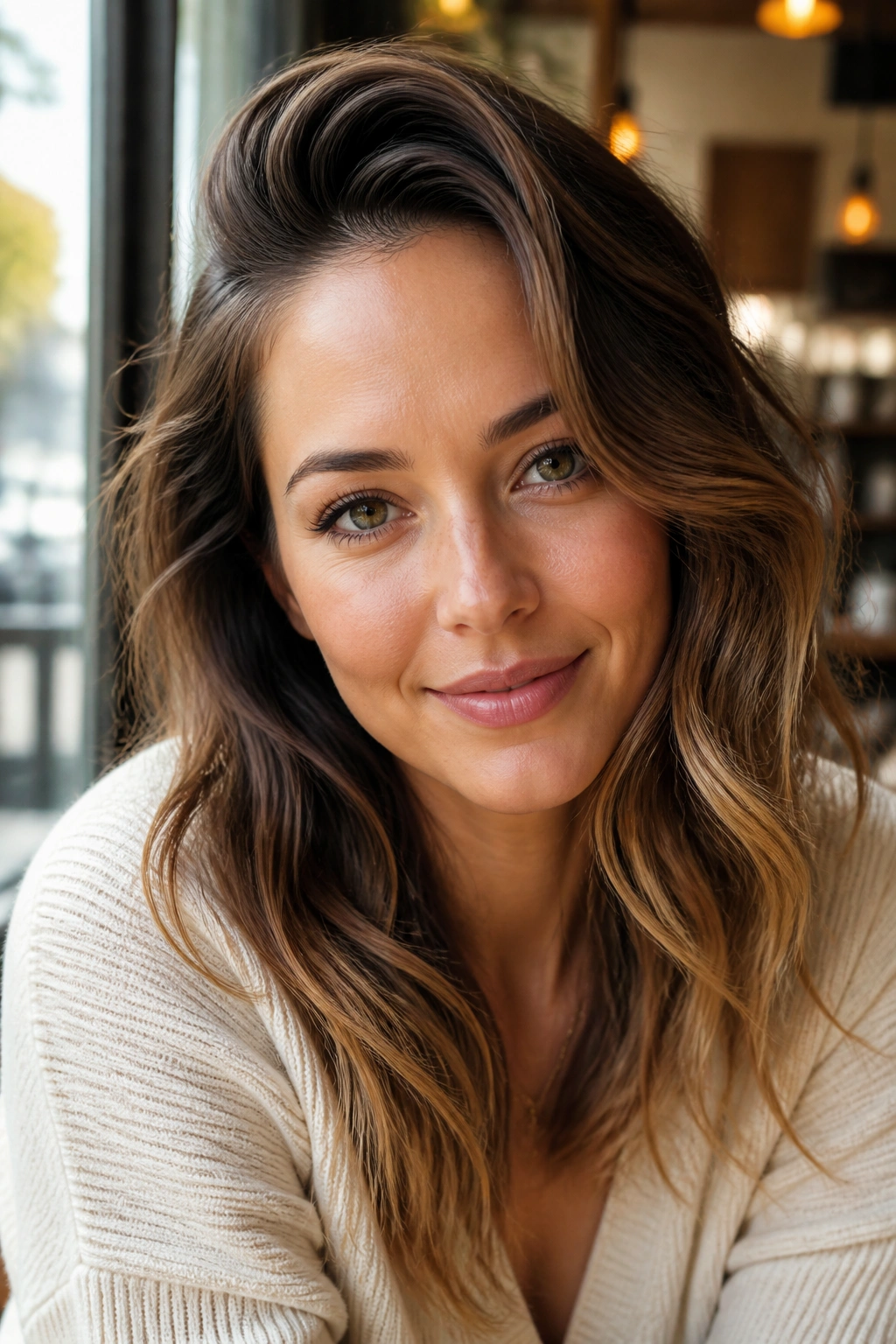
A deep side part can do more than bangs, and I mean that in the nicest possible way. It breaks the long vertical line of a big forehead and drops a chunk of visual weight to one side, which makes the face feel broader and softer without cutting anything off.
The trick is in the placement. Move the part about 2 to 3 inches off center, then build volume at the roots on the heavier side. A side part that sits too neatly flat against the scalp loses the whole effect. You want a little lift near the crown, then loose waves that bend away from the face and land somewhere around the cheek or collarbone.
A 1.25-inch curling iron works well on medium-length hair. Wrap sections away from the face, let them cool, then brush them out so the wave looks lived-in instead of helmet-like. If your hair is fine, a little mousse at the roots before drying helps the part hold shape. If it’s thick, dry shampoo at the crown keeps the top from collapsing by lunch.
3. Bottleneck Bangs With a Shag

Why do bottleneck bangs work so well on a larger forehead? Because they start narrow in the center and widen as they fall toward the temples. That shape softens the forehead without boxing your face in, which is exactly where a lot of straight-across fringe goes wrong.
The shag matters just as much as the fringe. Those choppy layers keep the whole cut from feeling heavy, and they stop the bangs from sitting like a solid wall. If your hair is thick, ask for internal layers so the front does not puff out too much. If your hair is fine, a shag gives you the kind of movement that makes the bangs feel airy instead of sparse.
How to Style It
- Rough-dry the bangs first with your fingers, then finish with a small round brush
- Use a pea-sized amount of lightweight cream only on the ends
- Add texture spray to the crown, not the fringe
- Keep the longest pieces around cheekbone level
The real charm here is that it looks a little undone on purpose. That helps a lot.
4. Side-Swept Bob With Cheekbone Pieces

If you want something crisp, a side-swept bob is one of the cleanest fixes for a big forehead. The diagonal line across the front cuts the height of the face visually, and the bob length keeps the overall shape compact and polished.
Picture this: the shortest side grazes the jaw, the longer side skims the chin, and a few front pieces fall over one cheekbone. That’s the zone you want. A blunt bob can work too, but the side-swept version feels softer because it gives the face somewhere to go instead of stopping right at the forehead.
- Ask for a bob that lands at chin to jaw length
- Keep one front panel longer by about 1 to 2 inches
- Style with a flat iron bend, not stiff pin-straight ends
- Tuck the shorter side behind the ear for a sharper line
That little tuck changes the whole balance. It sounds minor. It isn’t.
5. Wispy Brow-Skimming Fringe and a Lob

Wispy fringe is a good option when you want forehead coverage without committing to a heavy, solid bang. It sits lightly over the brows, leaves tiny gaps of skin showing, and keeps the face from feeling boxed in. On a lob, that softness works even better because the longer length below keeps the style from feeling too top-heavy.
The thing to watch is density. A fringe that is too thin can look scraggly, while one that is too packed in starts behaving like a blunt bang. You want that middle ground where the front pieces move when you turn your head. Fine hair usually needs a bit of dry texture spray to keep the fringe from separating too much. Thick hair needs the opposite: careful thinning so the bangs do not puff.
I like this cut on people who want structure but not drama. It grows out more politely than a strong full fringe, and it still gives you enough control over the forehead area to matter.
6. Textured Pixie With a Longer Top

A pixie can be very flattering on a big forehead, but only when the top has enough length to work with. A close crop with no lift can make the forehead feel exposed. A textured pixie with a longer top does the opposite — it adds height, direction, and a little softness around the temples.
The difference is not subtle. A short top that stands up in a choppy way can make the face look sharper. A top that falls forward or sweeps to the side gives the eye something to follow. Ask for length through the fringe area and around the crown, then keep the sides neat but not shaved down to nothing unless that’s your thing.
This is one of those cuts that looks better when it is finger-styled. A small dab of paste, rubbed between the hands and pushed through the top, is usually enough. If you want the forehead to feel less dominant, direct the front diagonally instead of straight up. Simple move. Big effect.
7. Blunt Bob With Soft Face-Framing Ends
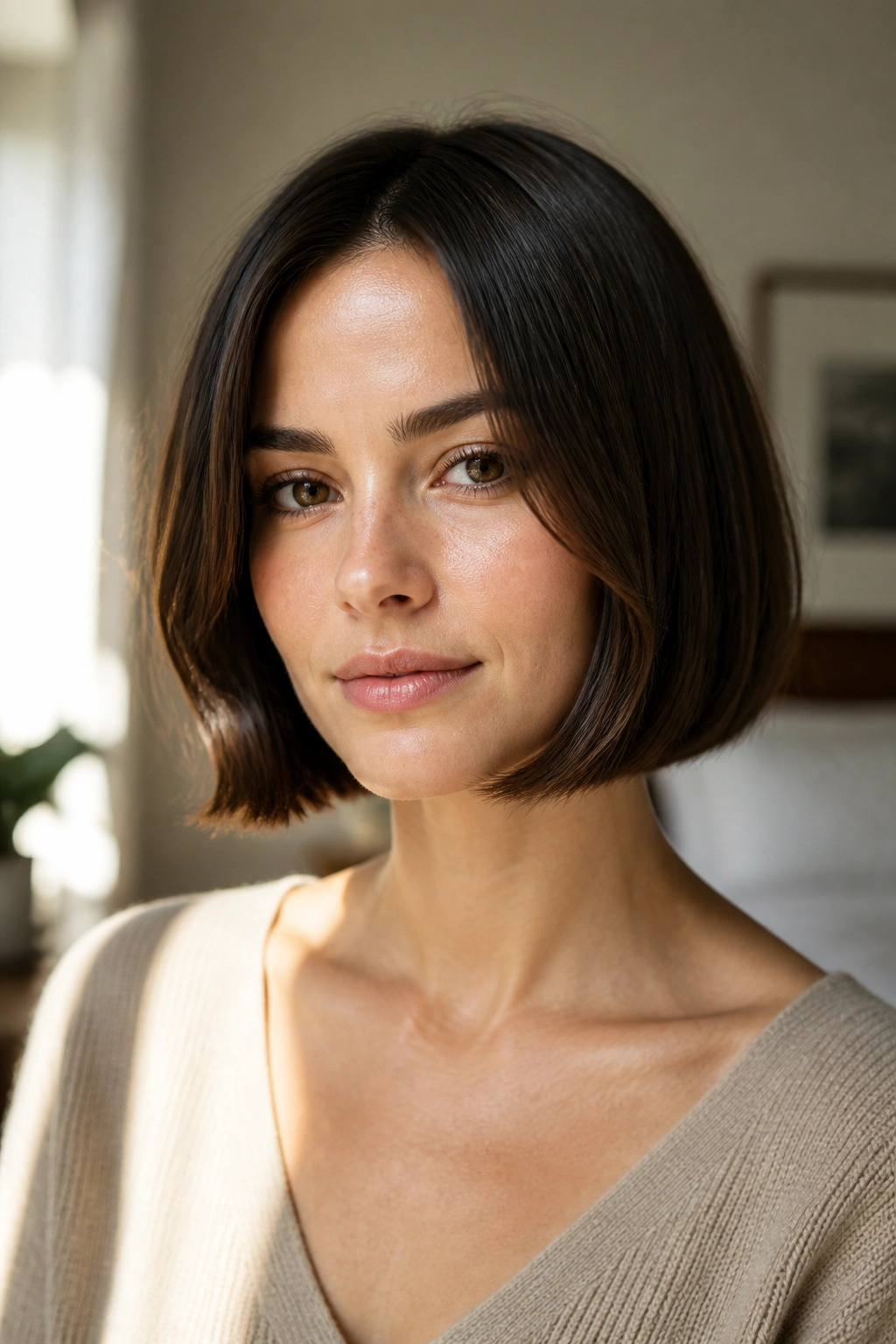
A blunt bob sounds severe, but the right version is not severe at all. The straight edge at the bottom gives the cut weight, while the soft ends around the face keep the forehead from feeling like the only thing people see. It’s a neat little balance, and I like it on straight or slightly wavy hair.
What makes this bob different is restraint. You do not need heavy layers all through it. In fact, too many layers can make the shape flip outward in a weird way and pull attention upward. Instead, keep the perimeter clean and let just the front pieces bend in toward the jaw. That creates a frame that sits lower than the forehead.
What to Ask For
- Chin-to-jaw length
- A blunt perimeter
- Slightly softened front corners
- Optional off-center part if your hairline feels high
Style it with a round brush or a flat iron turned just a touch under at the ends. The finish should feel smooth, not stiff.
8. High Ponytail With a Swooped Front Piece
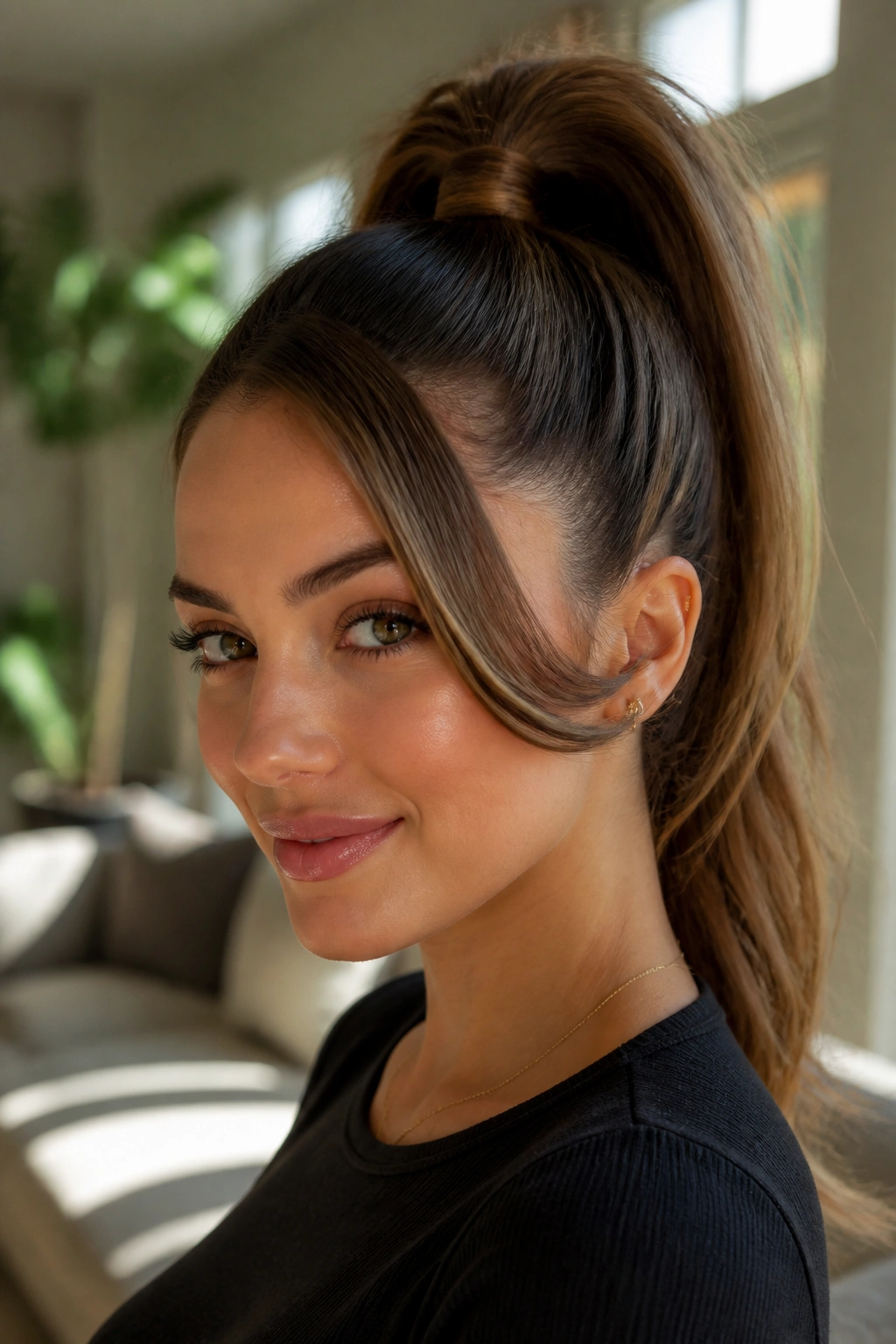
A ponytail can flatter a big forehead if you stop pulling every strand back. That is the whole trick. A high ponytail lifts the face and gives the style energy, but the front needs a little softness or the forehead will be front and center.
Leave a swooped section near the hairline, or pull out a longer front piece on one side and curl it away from the face. If your hair is fine, backcomb the crown just a little before you tie it off. If it’s thick, a firm elastic and a wrap-around strand will keep the base tidy without making the style feel overworked.
The ponytail can sit anywhere from the crown to just above it, depending on how much lift you want. A tiny bit of height near the root matters more than people think. It keeps the face from looking long and draws the eye upward in a more flattering way than a slick, tight pullback.
No need to make it perfect. A little looseness helps.
9. Low Messy Bun With Loose Tendrils for Big Foreheads

You know the bun that looks accidental but isn’t? That one. A low messy bun works because it keeps weight near the nape and leaves room around the temples, which softens the forehead without making the whole look feel fussy.
The placement matters. Sit the bun low, close to the base of the skull, and leave two or three face-framing pieces out before you pin anything down. If you part the hair slightly off center, the style usually looks less rigid. Straight hair may need a little bend through the front sections. Curly hair often looks best when the tendrils are left natural, not forced into perfect spirals.
- Keep the bun loose, not tight
- Pull a few pieces from the temples, not just the ends
- Use bobby pins in a crisscross pattern for hold
- Mist the roots lightly so the style does not collapse
The best version looks easy, but the shape is doing a lot of quiet work.
10. French Bob With Airy Fringe
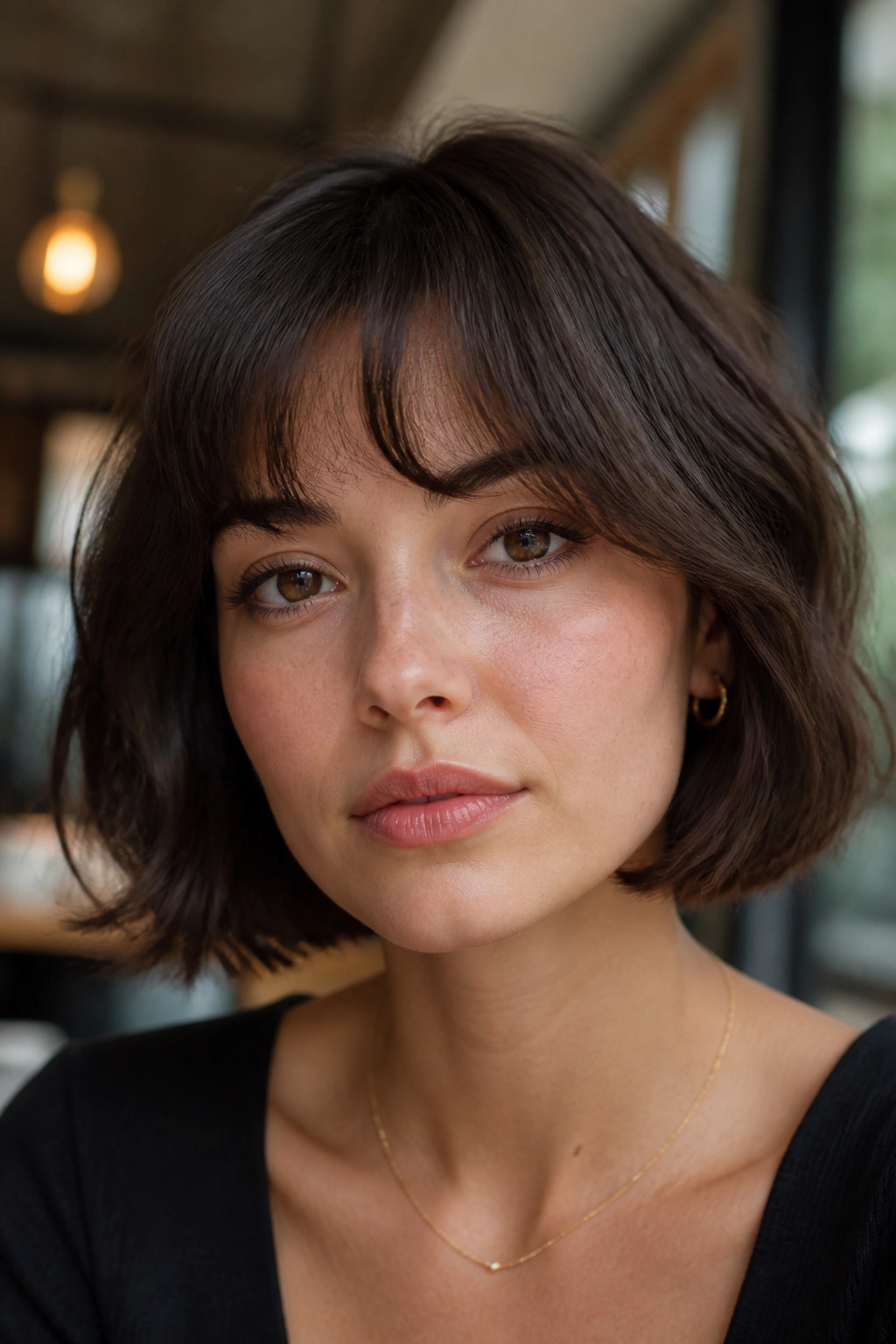
A French bob has enough personality to distract the eye from the forehead right away. The jaw-length cut creates a strong lower line, and the airy fringe gives you cover at the top without feeling heavy or serious. It is a small haircut with a big opinion.
This style likes a bit of texture. A perfectly smooth French bob can read a little too neat, while a slightly bent finish gives it life. The fringe should hover around the brows, not sit in a heavy curtain. That keeps the forehead from feeling boxed in and lets the eyes stay the main focus.
It’s also one of the more flattering short cuts for people who wear glasses. The fringe can sit just above or just behind the frame line, and the chin-length shape keeps the whole look balanced. If your hair is thick, ask for soft internal removal so the bob does not mushroom. If it’s fine, a root spray at the crown keeps the shape from falling flat.
11. Feathered Blowout With Lifted Roots

Feathered layers are old-school in the best way. They move away from the face, which means the forehead does not get trapped under a heavy curtain of hair, and they bring some lift through the crown without looking stiff. That’s a useful combo.
The look depends on direction. Blow-dry the front sections away from the face with a round brush, then turn the ends just a little so they feather out instead of sitting blunt. A 1.5-inch brush is handy for shoulder-length hair; a smaller one gives more bend on shorter layers. The roots should have lift, but not a giant teased bump. Nobody needs that.
A feathered blowout is especially good if your hair is straight or has a mild wave. It gives movement where flat hair can look severe. A light flexible hairspray at the very end keeps the front from separating, and a little shine serum on the mids keeps the layers from looking dry. It is polished, yes. Also a little soft. That’s the sweet spot.
12. Half-Up Style With Crown Volume
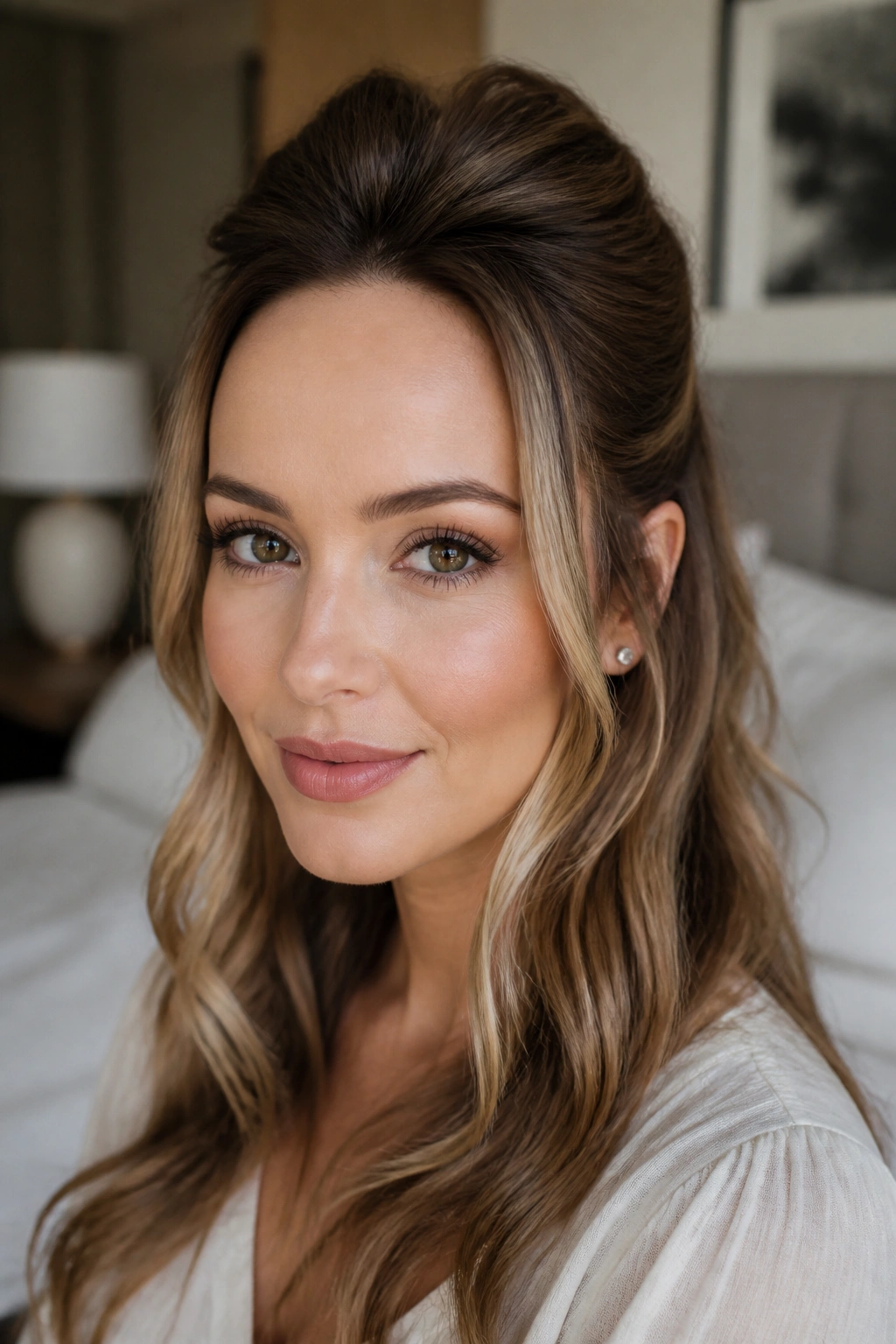
Half-up styles work because they leave some hair down to frame the face while still building a little height at the crown. For a big forehead, that balance matters. If everything goes straight back, the face can feel longer; if everything hangs loose, the top can feel flat. Half-up sits in the middle.
The main mistake is pulling the top section too tight. Lift the crown gently with your fingers before clipping or tying it back, and let a few front strands fall naturally. Those little loose pieces do more than they seem. They break the outline at the forehead and stop the style from feeling severe.
I like this one on second-day hair. The texture is already there, so the crown volume holds better, and the lower half gets to keep its movement. A claw clip can make it casual; a half-up ponytail can make it look sharper. Either way, the face frame is what keeps it flattering.
13. Side Braid With Face-Framing Strands

A side braid shifts the weight of the hair to one side, which softens the forehead area almost instantly. That’s the basic trick, and it works on straight, wavy, or curly hair. The braid can be loose and chunky or neat and polished; the shape matters more than the exact pattern.
A Dutch braid, a loose fishtail, or even a simple three-strand braid all work if they sit low enough and start with a side part. Pull out two slender face-framing strands before you braid so the forehead does not get fully exposed. Those front pieces should sit around the cheekbone or jaw, not cling to the temples.
Why It Helps
The diagonal line of the braid pulls attention away from the center of the face. That is especially useful if your forehead feels taller than your other features. You can also pancake the braid a little — gently widening each section after it’s tied — which gives the style a softer, fuller look.
Best move: keep the braid loose at the top and tighter through the ends. That keeps the crown from looking flat while still holding the style together.
14. Long Curls With an Off-Center Part

A side part matters more than curl size sometimes. Long curls with an off-center part give the face asymmetry, and asymmetry is one of the easiest ways to soften a larger forehead without changing the haircut itself.
If you curl your hair with a 1-inch iron, wrap each section away from the face, hold for about 8 to 10 seconds, and let the curl cool in your palm before dropping it. That cooling time matters. Warm curls fall faster, and the whole style can end up limp at the top. Once the hair is cool, rake through it with your fingers instead of brushing it hard. You want movement, not frizz.
Naturally curly hair can use the same idea. Move the part slightly off center and encourage the front curls to land forward and to the side. A little styling cream at the roots can help define the front pieces without clumping everything together. The forehead stays part of the story, but it does not get the only line.
15. Modern Mullet With Soft Fringe
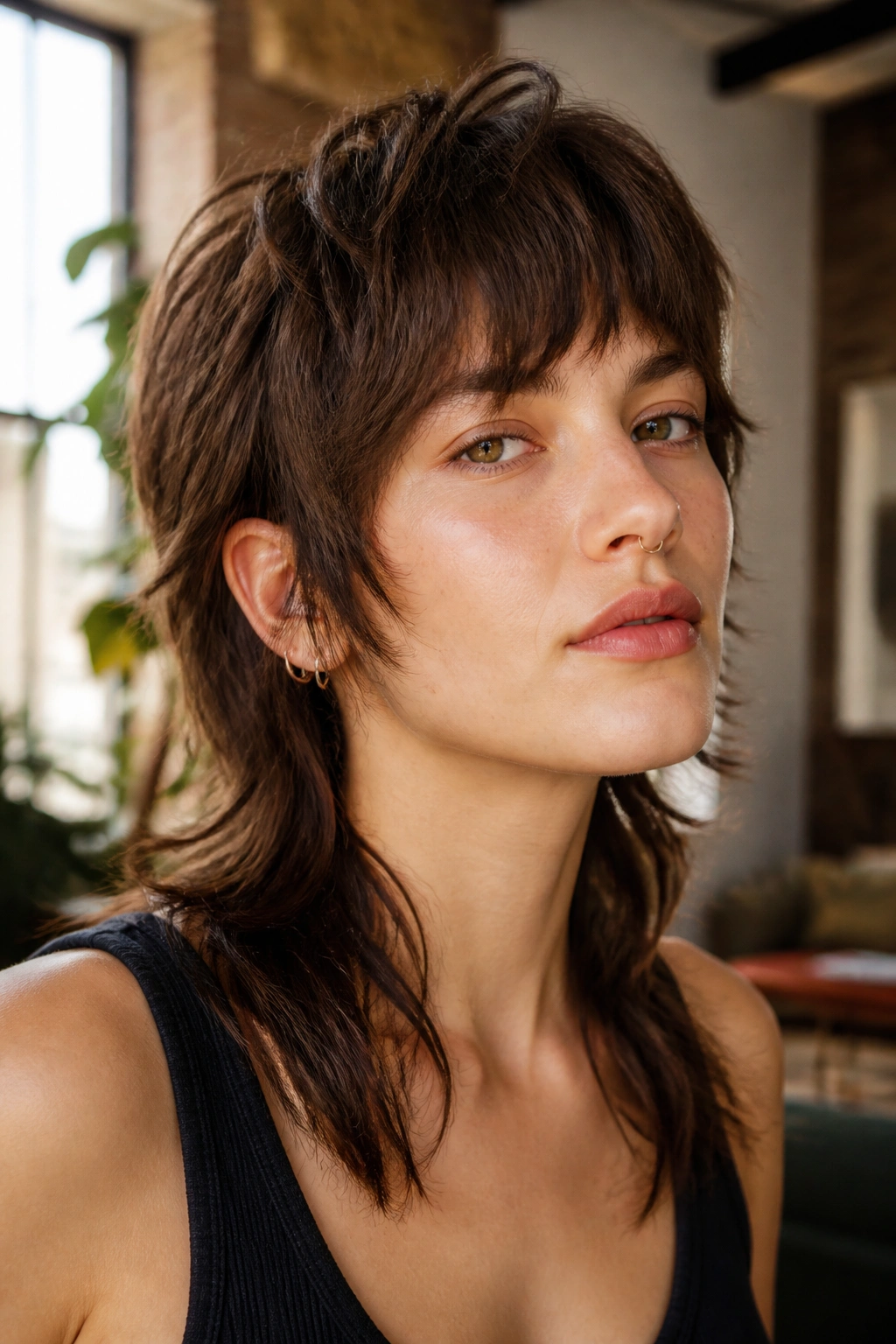
Can a mullet flatter a big forehead? Absolutely — if the fringe is soft and the shape has enough movement through the sides. A modern mullet is not the hard, shaggy version people picture from old photos. It is softer at the front, longer at the back, and much more wearable than it sounds.
The fringe is the key. Keep it feathered and broken up so it lands lightly over the forehead instead of sitting in a heavy block. The side sections should blend into cheekbone and jawline layers, which stops the top of the face from looking tall. If the cut is too choppy at the crown, it can get wild fast. That may be the point for some people. Not everyone wants that.
This is a good choice if you like texture and want a little edge. It is not the cut I’d hand to someone who wants quiet, low-visibility hair. It wants styling paste, a rough-dry, and a bit of attitude. If that sounds fun, it can be a strong match.
16. Sleek Chignon With Sculpted Edges

A sleek chignon is one of the cleaner formal styles for a big forehead because it lets you control exactly where the eye goes. The bun sits low at the nape, the part can stay off center, and the front can be softened with sculpted edges or a few thin pieces left out near the temples.
The danger with sleek styles is going too tight. When every strand is pulled back hard, the forehead gets all the attention. A softer side part, a bit of bend at the front, or a few carefully placed baby hairs around the hairline keeps the look elegant without turning severe. Shine serum helps here, but only a small amount. Too much and the roots can look greasy fast.
This style is excellent for weddings, dinners, or anything where you want the neck and shoulders to feel long and clean. It also works well with earrings because the open sides of the face give them room. The bun itself can be neat or slightly twisted. Either way, the face frame is the part that earns its keep.
17. Curly Afro With a Shaped Halo for Big Foreheads
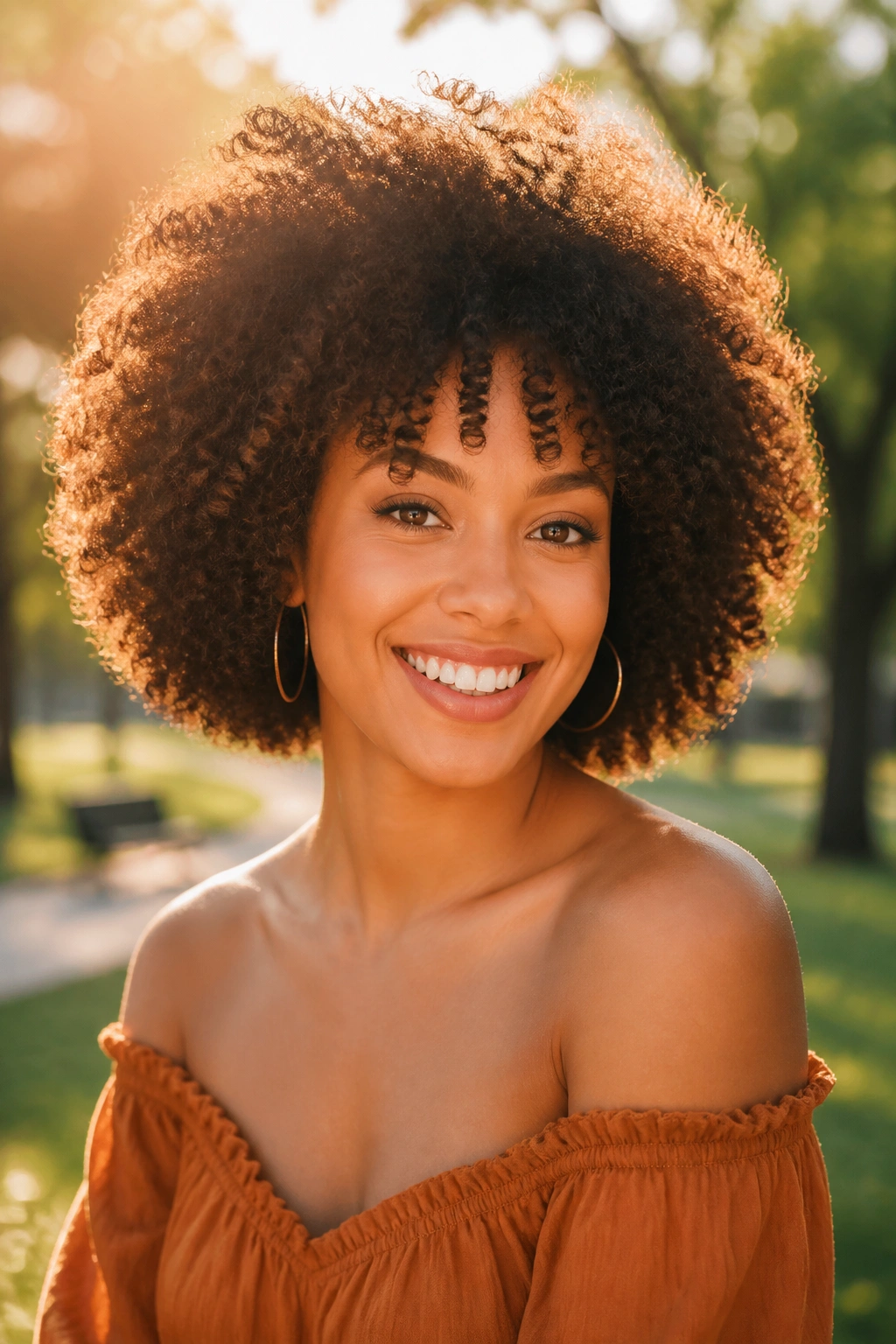
A curly afro does not need to hide the forehead to flatter it. In fact, a rounded halo shape can be one of the most balanced looks on a larger forehead because it adds width and height around the whole face instead of concentrating everything at the hairline.
The best version is shaped, not flattened. Ask for the sides to keep fullness around the temples and cheekbones, and let the crown rise naturally. If you want fringe, a curly fringe can sit a little forward and still keep the style airy. The point is to create a frame, not a curtain. A pick at the root can help lift the top without breaking the curl pattern, and a light curl cream keeps definition without that hard, crunchy feel.
This style has a real advantage: it lets the hair do what it already wants to do. You are not fighting the texture. You are steering it. That usually leads to better hair and less frustration, which is worth something.
18. Knotless Braids With a Deep Side Part

Knotless braids can be excellent for a big forehead when the part is placed with a little thought. A deep side part shifts the visual line, and that alone changes the balance at the top of the face. A center part can look clean too, but it keeps the eye in one straight lane. The side part feels softer.
Length matters here as well. Braids that land at collarbone length or below tend to weigh the style down in a flattering way, especially when the crown has a little lift. If you want extra softness, leave a few braids out around the front or ask for face-framing braids shorter than the rest. Thin baby hairs can help, but they do not need to be elaborate. A neat edge is enough.
The nice thing about knotless braids is movement. They swing. That movement keeps the style from feeling pasted to the scalp, which is helpful when you are trying to balance forehead length. If you like protective styling and want a sleek line without a hard frontal frame, this is a smart pick.
19. Twisted Crown Updo

A twisted crown updo gives you structure near the temples, which is exactly where a big forehead can use a little help. Two side sections are twisted back from the hairline and pinned to meet at the back, leaving a soft arc across the front instead of a flat pullback.
That arc matters. It creates a frame that sits just above the forehead, so the eye sees shape rather than open space. You can keep the twists loose for a romantic feel or pin them tighter for a cleaner finish. If your hair is fine, a bit of texturizing spray before twisting will help the sections grip. If it’s thick, a few hidden pins do more than one giant clip.
This style works for long hair, medium hair, and even shoulder-length hair with a little help. It looks especially good with earrings or a high neckline because the hair stays off the shoulders without exposing the face too much. A soft side part makes it feel a little less formal, which I prefer.
20. Asymmetrical Lob With a Long Front Panel

An asymmetrical lob is one of the cleanest ways to change forehead balance because the eye follows the longer side almost automatically. That diagonal line gives the face motion, and motion is your friend here.
Ask for one side to sit about 1 to 2 inches longer than the other, with the front panel on the longer side grazing the chin or collarbone. The shorter side can tuck behind the ear for a sharper shape. The cut works on straight hair, but it looks especially good when there is a slight wave or bend through the ends. Flat, poker-straight hair can make the asymmetry look harsher than it needs to.
This style has a nice built-in edge. It feels modern without screaming for attention, and it does not rely on bangs to do all the work. If you want something that feels polished on a weekday and still holds up when you dress it up, this is one of the better bets.
21. Wide Headband With Loose Bends

A wide headband is not the most glamorous answer, but it is one of the fastest. Put it on 1 to 2 inches back from the hairline, and it changes the proportion of the forehead right away by creating a visible horizontal line across the top of the face. That line matters more than people think.
The hair underneath should have some softness. Loose bends with a flat iron, a few natural waves, or even air-dried texture keep the look from feeling too pressed down. A shiny plastic band can look a little childish on some faces; a matte fabric, velvet, or satin band usually feels better. If you have bangs growing out, this is also one of the easiest ways to survive that awkward stretch without hating every mirror.
I like this option for days when you do not want a full styling session. It buys you time, keeps the forehead from dominating the look, and works with low buns, loose hair, or a ponytail. Not fancy. Very useful.
22. Hollywood Waves With a Diagonal Sweep
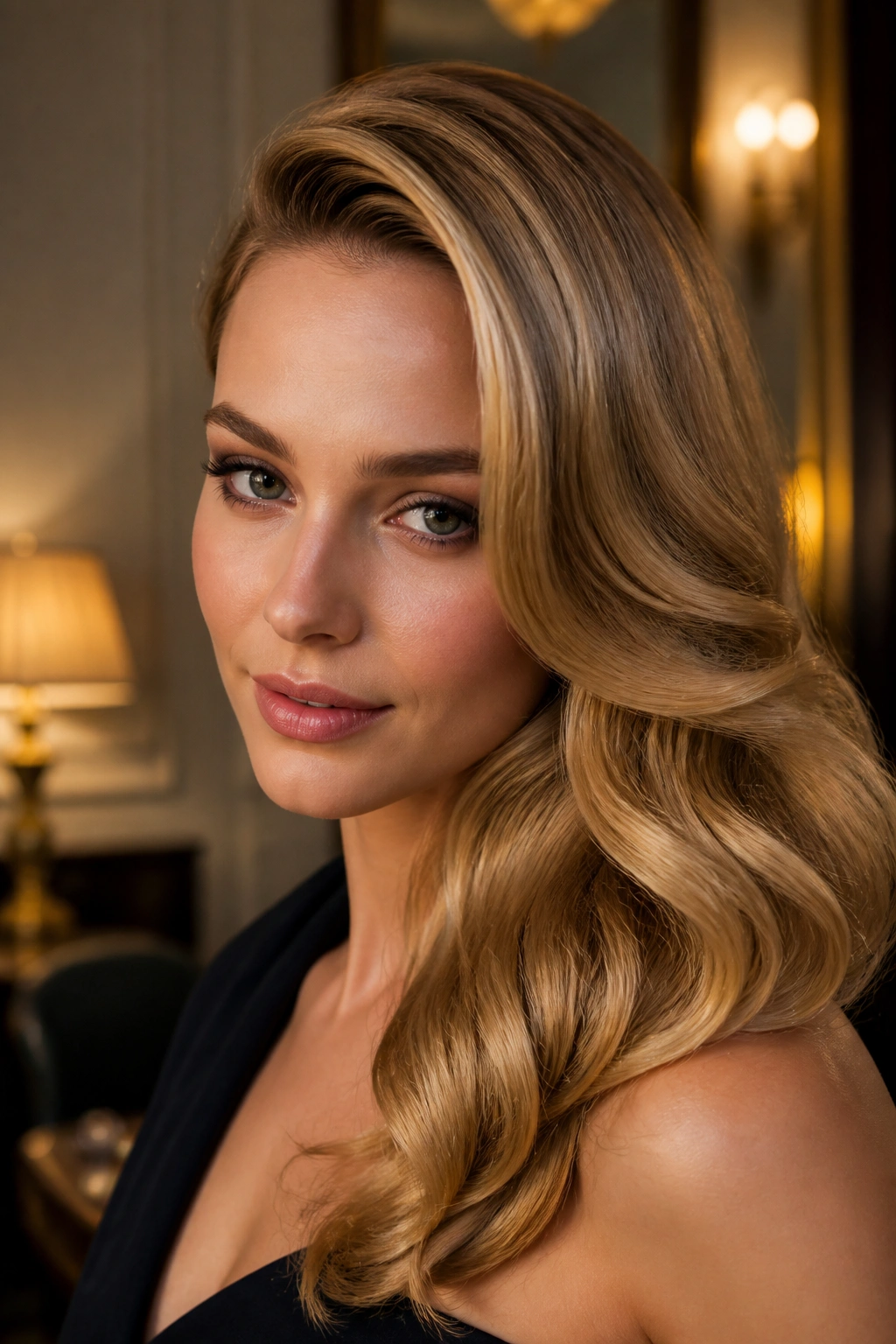
Hollywood waves are a strong finish because they bring shape, shine, and a clear direction across the face. The side sweep at the front softens the forehead, while the polished wave pattern gives the whole style enough structure that it does not fall flat by the end of the night.
The key is consistency. Curl every section in the same direction, let the curls cool completely, then brush them out into one smooth wave pattern. Clip the front section while it sets so it keeps that diagonal sweep instead of slipping back toward the middle. A flexible-hold hairspray is better than a stiff shell, because you want the wave to move a little when you turn your head. A hard helmet effect looks dated fast.
This style suits long hair and medium-long hair best, though shoulder-length cuts can fake it with enough bend. It’s a little dramatic, sure, but in a good way. If you want a style that feels finished and gives the forehead a softer frame without hiding your features, this one delivers the balance cleanly.
