



A square face can look sharp in the best way, but the wrong haircut can make the jaw do all the talking. The styles that flatter square face shapes usually do one of three things: soften the corners, create diagonal movement, or lift the eye upward so the whole silhouette feels a little longer.
I like square face shapes because they can take structure. They don’t need mushy, shapeless hair — that usually looks lazy, not flattering. What works is controlled softness: curtain bangs that split open at the center, layers that bend away from the cheekbones, waves that start below the ears instead of puffing out beside the jaw.
Some cuts are easy to live with. Others need a round brush, a curling iron, or five extra minutes in front of the mirror. That’s fine. The trick is choosing a shape that works with your bone structure instead of sitting right on top of it, and the styles below do that in different ways.
1. Long Layers With Side-Swept Bangs

Long layers with side-swept bangs are the safest place to start if you want movement without drama. The diagonal sweep breaks up the width of the forehead and jaw, and the layers keep the ends from hanging in one stiff block.
Why It Flatters a Square Jaw
The magic is in the angle. A side-swept fringe pulls the eye across the face instead of straight down, which softens that strong jawline without hiding it. Long layers also keep the hair from stopping right at the widest part of the face, which is where a lot of square face hairstyles go wrong.
Ask for bangs that begin around the eyebrow and sweep into the cheekbone, not a heavy chunk that sits flat across the forehead. The longest layers should fall below the collarbone so the ends move when you turn your head. That little bit of swing matters.
- Best hair types: Straight, wavy, and medium-thick hair
- Styling note: Use a 1.5-inch round brush at the front and bend the bangs away from the face
- Maintenance: Trim the fringe every 4 to 6 weeks if you want the shape to stay clean
Pro tip: Keep the layers soft, not choppy. Too many short pieces near the jaw can make the face look boxier, and that defeats the point.
2. Curtain Bangs With Shoulder-Length Waves

Curtain bangs do a lot of the heavy lifting here. They open the face at the center, then fall away in soft arcs that land around the cheekbones, which is exactly where a square face needs a little air.
Shoulder-length waves give the bangs a place to blend instead of stopping the eye at one hard line. That length is useful because it sits far enough below the jaw to soften the outline, but short enough to feel light and current. A blunt shoulder cut can feel too rigid; a waved one moves.
Shorter than cheekbone length, and the fringe can feel fussy.
I like this shape for people who want something easy to style on a weekday. Let the bangs dry with a round brush or a large roller, then wrap the mid-lengths around a 1-inch iron and brush the waves out once they cool. The result should feel loose and touchable, not set like a pageant curl.
3. Textured Lob With an Off-Center Part
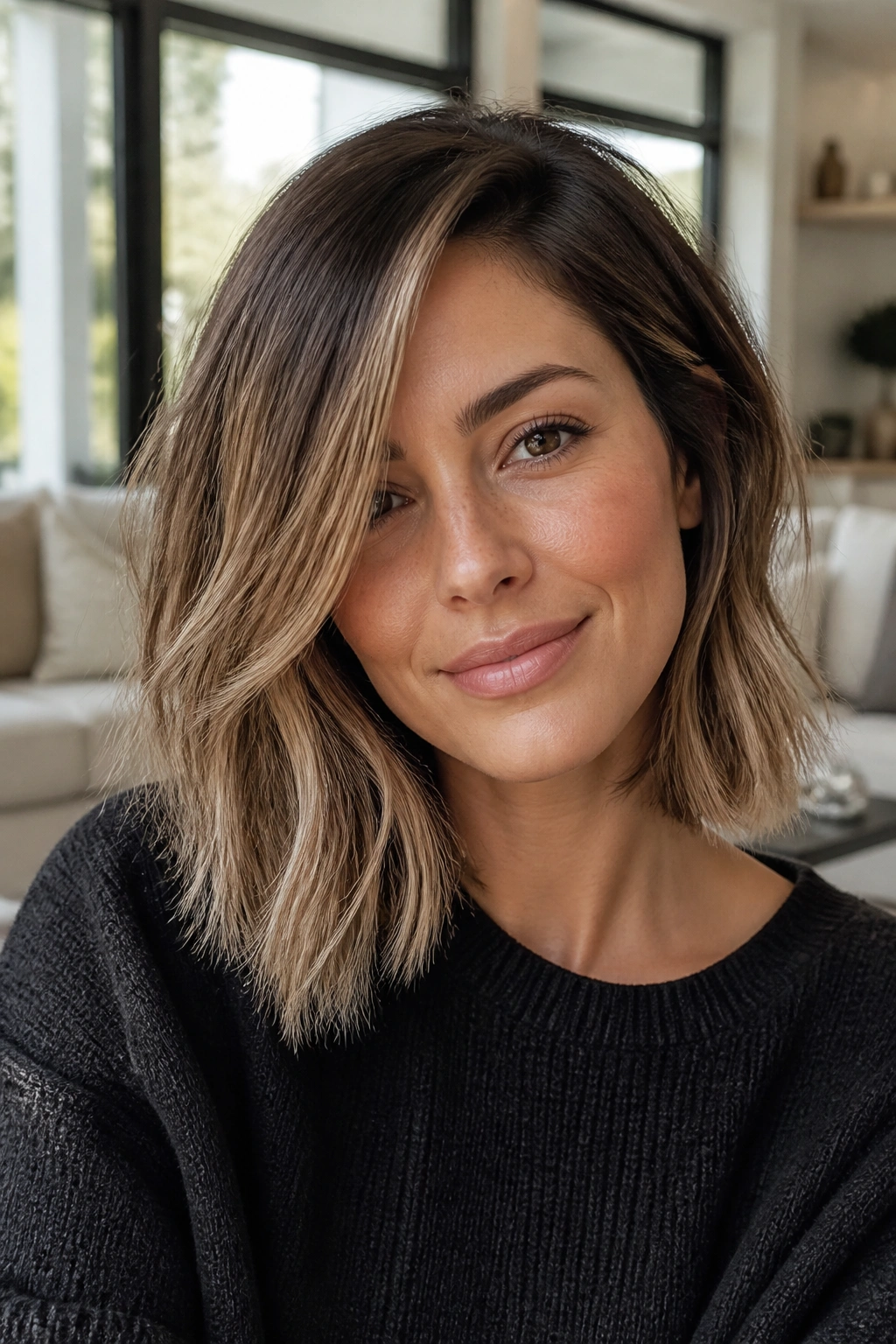
Why does a slightly off-center part matter so much? Because it breaks the symmetry that can make square face shapes look even wider than they are.
A textured lob — somewhere between chin and collarbone — is flattering when the ends are soft, not blunt and heavy. The off-center part shifts volume to one side, which gives the face a diagonal line and keeps the whole shape from feeling boxy. If your hair is fine, this cut can also fake a little more body at the roots.
How to Style It
Use a salt spray or lightweight mousse at the roots, then rough-dry the hair until it’s about 80 percent dry. Finish with a flat iron or curling iron on just the top few layers, bending them in alternating directions so the texture doesn’t look too perfect. Too much polish can make a lob feel severe.
This one works especially well if your hair falls flat when it’s all the same length. It’s neat, but not boring. That’s the sweet spot.
4. Soft Shag With Broken Ends
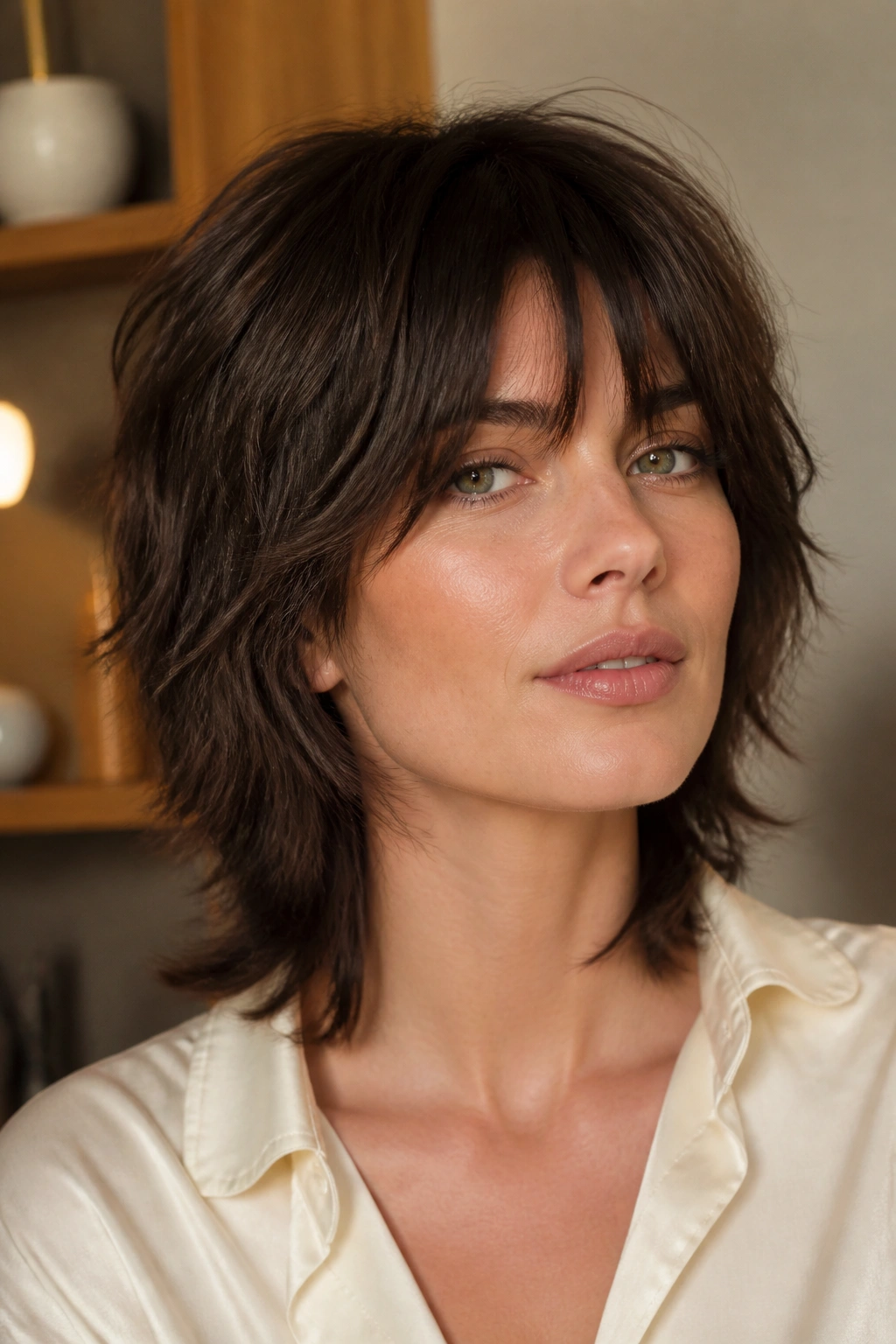
If your hair goes flat by lunch, a soft shag is worth a look. The choppy layers give the cut a little bite, but the “soft” part matters — you want broken ends around the cheekbones, not a harsh mullet shape that fights your face.
Square faces usually look better when the volume is lifted above the jaw and then allowed to taper. A shag does that nicely. The crown gets some height, the sides get movement, and the ends don’t sit like a shelf.
What to Ask For
- Shorter layers around the brow and cheekbone
- Longer pieces that graze the collarbone
- Point-cut ends instead of heavy, blunt snips
- A fringe that can be pushed to either side
The key is balance. If the shag is cut too short at the sides, the jaw looks louder. If it’s too tidy, it loses the whole point. A good version should feel a little undone in the best way.
5. Butterfly Cut With Face-Framing Pieces

The butterfly cut works because it gives you two jobs at once: volume at the crown and long movement through the lengths. On a square face, that combination is gold. The shorter front layers catch light and motion near the cheekbones, while the longer back layers keep the style from feeling too chopped up.
I’m partial to this cut on medium-to-long hair because it gives a blowout shape without needing a salon finish every day. The front pieces should start around the cheekbone or just below it, then taper into the rest of the hair. That keeps the eye moving downward in a soft line instead of stopping at the jaw.
It also grows out well. That’s underrated. A lot of layered cuts look great on day one and awkward three weeks later. This one tends to stay useful because the face-framing pieces keep doing their work even when the rest of the cut gets a little longer.
If you like big, airy hair that still feels feminine and controlled, this is an easy favorite.
6. Asymmetrical Bob
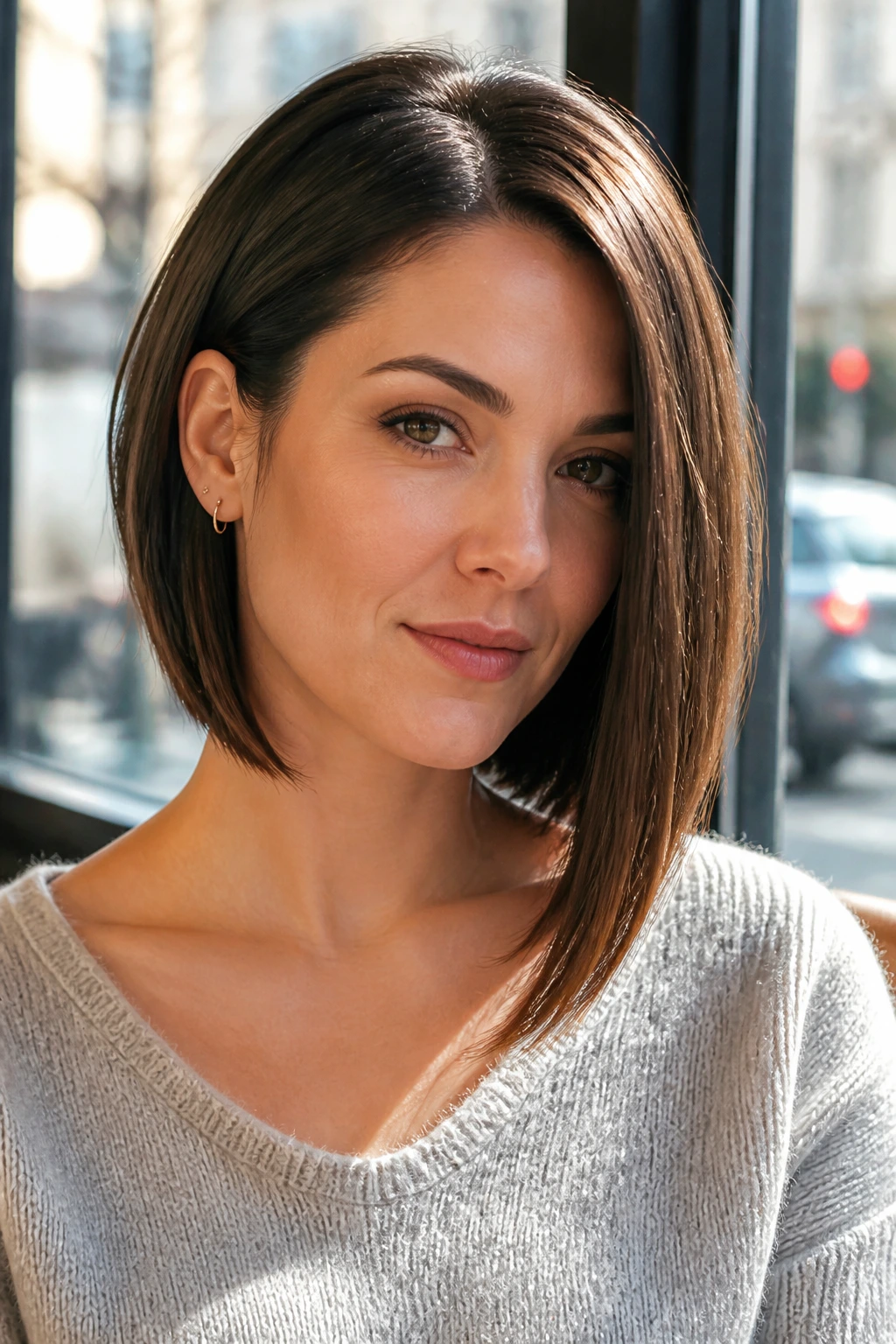
Unlike a blunt bob, the asymmetrical version tilts the eye sideways. That’s exactly why it flatters square face shapes so well. The line is there, but it’s not marching straight across the jaw.
The difference does not need to be dramatic. One side can be only half an inch to an inch longer than the other, and that small shift is enough to soften a strong lower face. Too much angle can start to look costume-y, which is a shame because the subtle version is genuinely elegant.
This cut looks best when the ends are beveled or lightly textured. A dead-straight, chin-grazing bob can make the widest part of a square face feel even more obvious. A slightly uneven hemline fixes that without needing layers everywhere.
It’s a good match if you like neat hair but want something less expected than a classic bob. Add a side part and tuck one side behind the ear. That little asymmetry does more than people think.
7. Swept-Back Pixie Cut
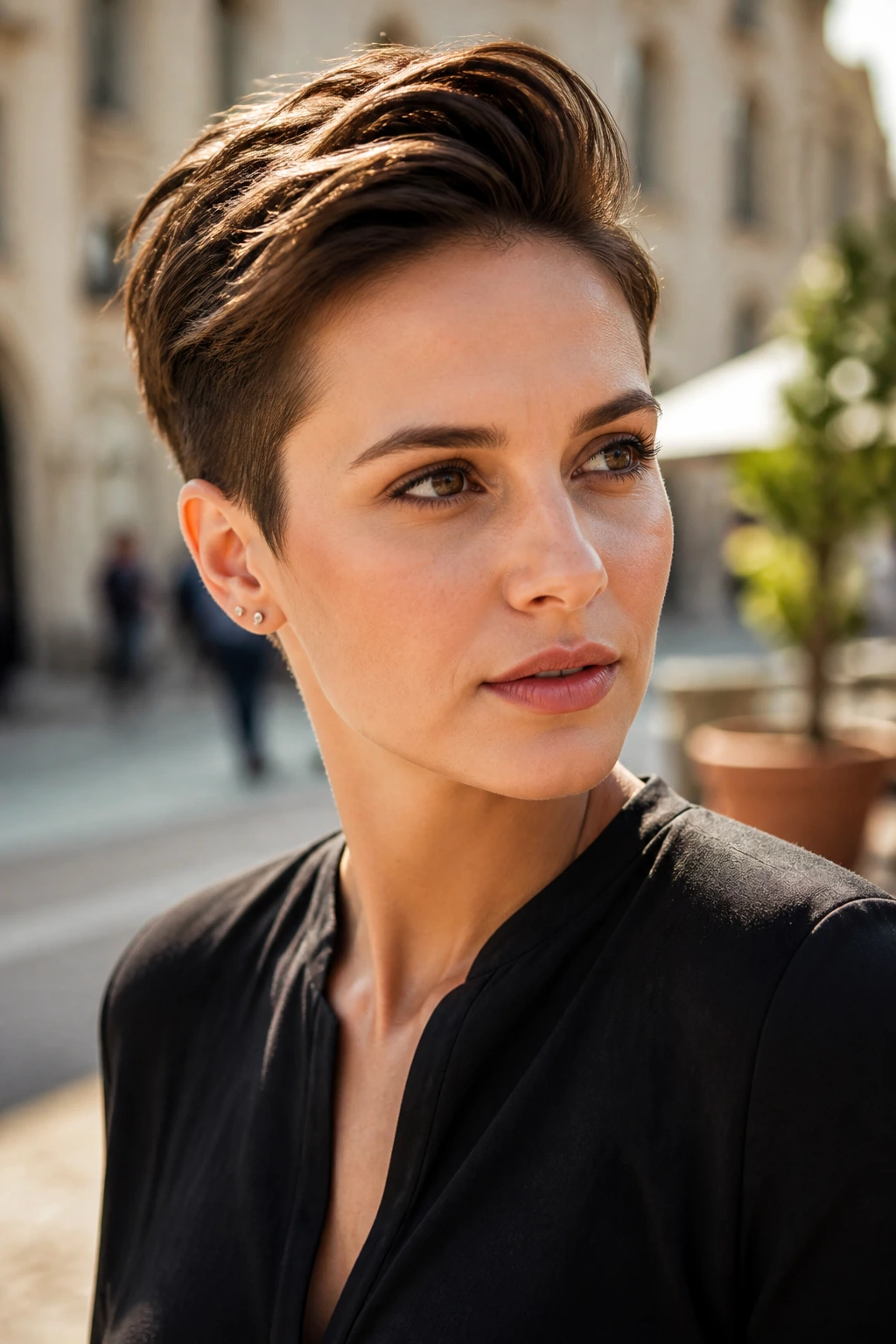
A pixie can flatter a square face better than a chin-length cut if the shape is handled with care. The short sides open the face, and the lifted top adds length through the silhouette, which is useful when the jaw is already strong.
The trick is to avoid anything too flat or too boxy. A helmet-like pixie with heavy edges can make the face look wider, not softer. Keep the top pieces a little longer — enough to sweep back with paste or lightweight wax — and let the sides hug the head without going skin-tight.
What to Keep Soft
- The hairline around the temples
- The area just above the ears
- The fringe, if you have one
- The crown, which should have a little lift
This cut has personality. It doesn’t hide the face, and that’s the point. If you want clean lines and low styling time, it’s one of the smartest square face hairstyles on the list.
8. Wispy Fringe With Long Hair
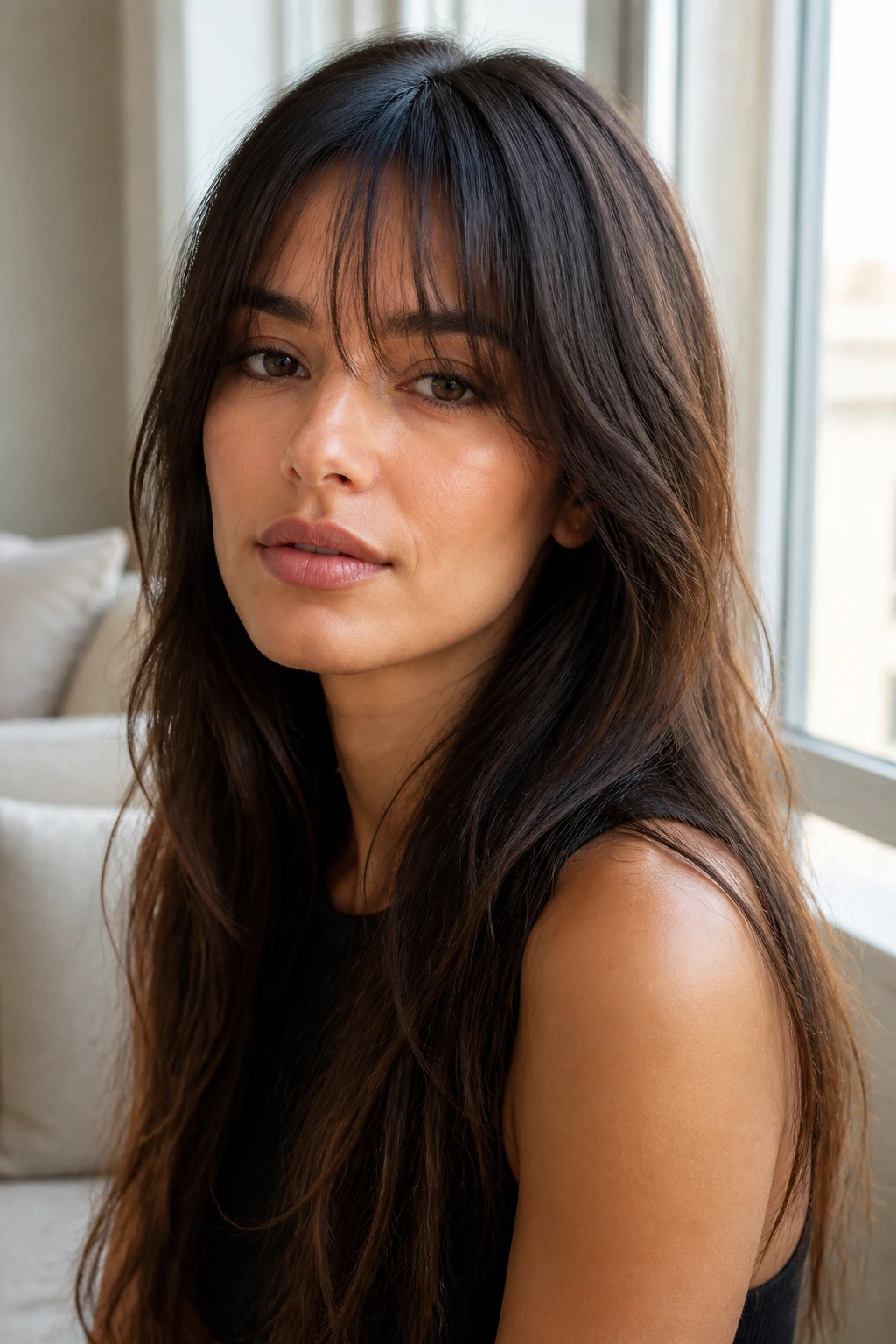
Some people want bangs without the helmet. That’s where wispy fringe comes in. It softens the forehead, lightens the front of the face, and leaves enough space around the temples that the cut never feels boxed in.
Long hair gives the fringe room to breathe. The hair beyond the shoulders keeps the overall line vertical, while the fringe breaks up the width at the top. I like this better than a blunt bang on square face shapes because it feels less severe the minute you move your head.
Ask for fringe that’s point-cut or thinned through the ends, not a thick, straight wall. The difference is huge. A wispy fringe should flutter a little when you blow-dry it, and it should be easy to split with your fingers on days when you want a softer look.
If your hair is very straight, a quick bend with a small round brush can keep the fringe from sticking flat. If it’s wavy, even better. The bend looks natural.
9. Loose Low Bun With Tendrils
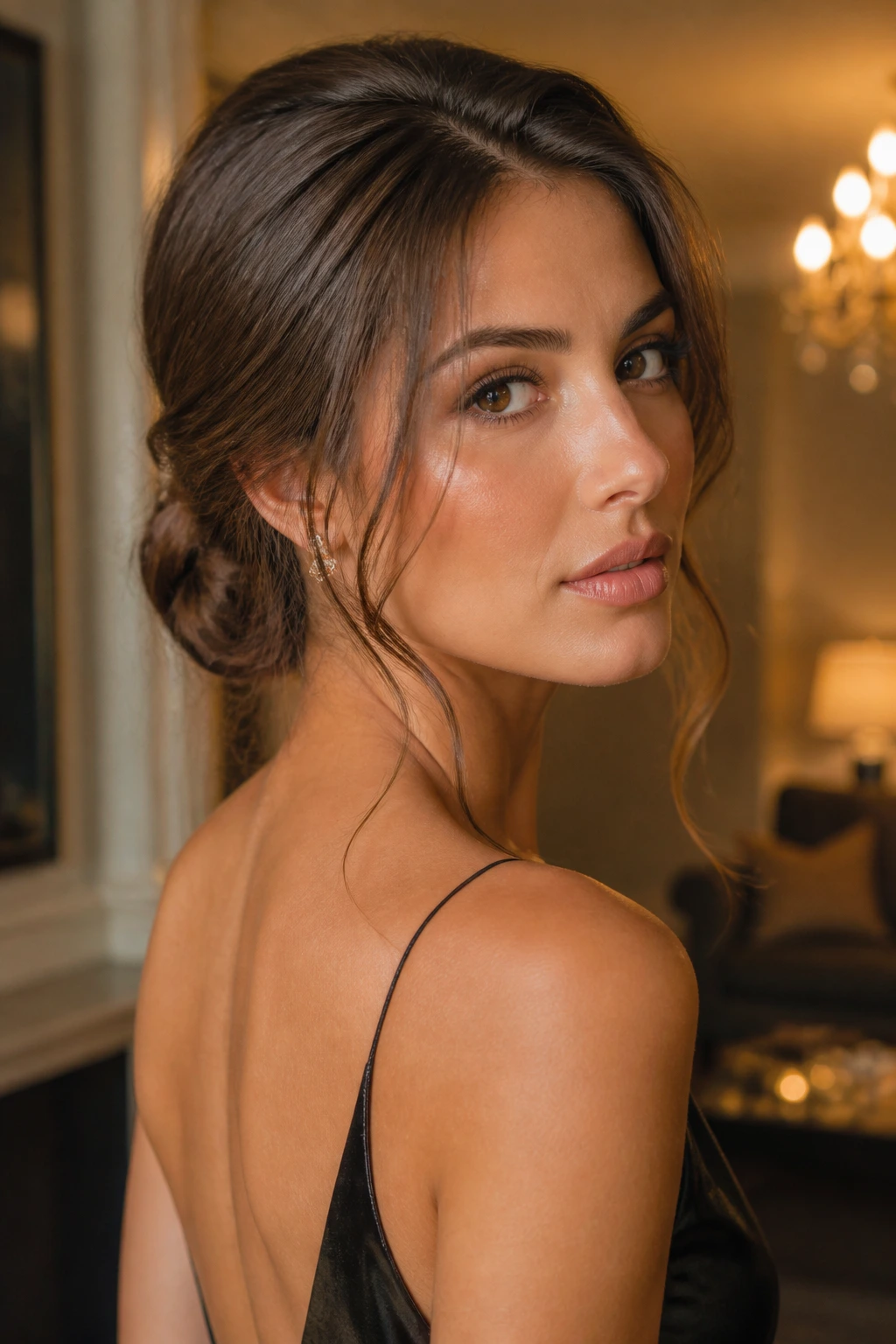
For evenings, a loose low bun is hard to beat. It sits below the jaw, which keeps the strongest part of the face from competing with the style, and the loose tendrils make the whole thing feel softer around the cheeks.
The bun should not be pinned into a tight little knot at the nape. That looks severe. Give it a little puff, pull it slightly off-center if you like, and leave 2 to 4 thin strands around the temples and jawline. Those pieces are doing real work.
Where the Tendrils Should Fall
- One strand just in front of each ear
- One soft piece around the cheekbone
- A few fine bits near the neck for movement
- Nothing so thick that it turns into curtain bangs in reverse
This style is lovely for formal events, but it also works on a regular day if you want your hair out of the way without looking stern. It’s one of those shapes that gets better when it’s a little imperfect.
10. High Ponytail With Crown Volume

A high ponytail can be excellent on square face shapes, but only if the crown has some lift. A tight, flat pony can make the face look shorter and the jaw more prominent. Add height at the top, and the whole thing changes.
The ponytail should sit high enough to lengthen the face without pulling every strand straight back. Leave two face-framing pieces if you want a softer look, or wrap a small section around the elastic so the finish feels polished. A little crown volume goes a long way.
Tease the roots at the crown with a fine-tooth comb, or lift them with a blow-dry before you tie it up. You only need an inch or two of extra height. More than that, and the style starts to look like it’s trying too hard.
This one is practical when you want hair off your neck but still want shape around the face. It’s neat, athletic, and sharp in a good way.
11. Low Chignon With a Deep Side Part
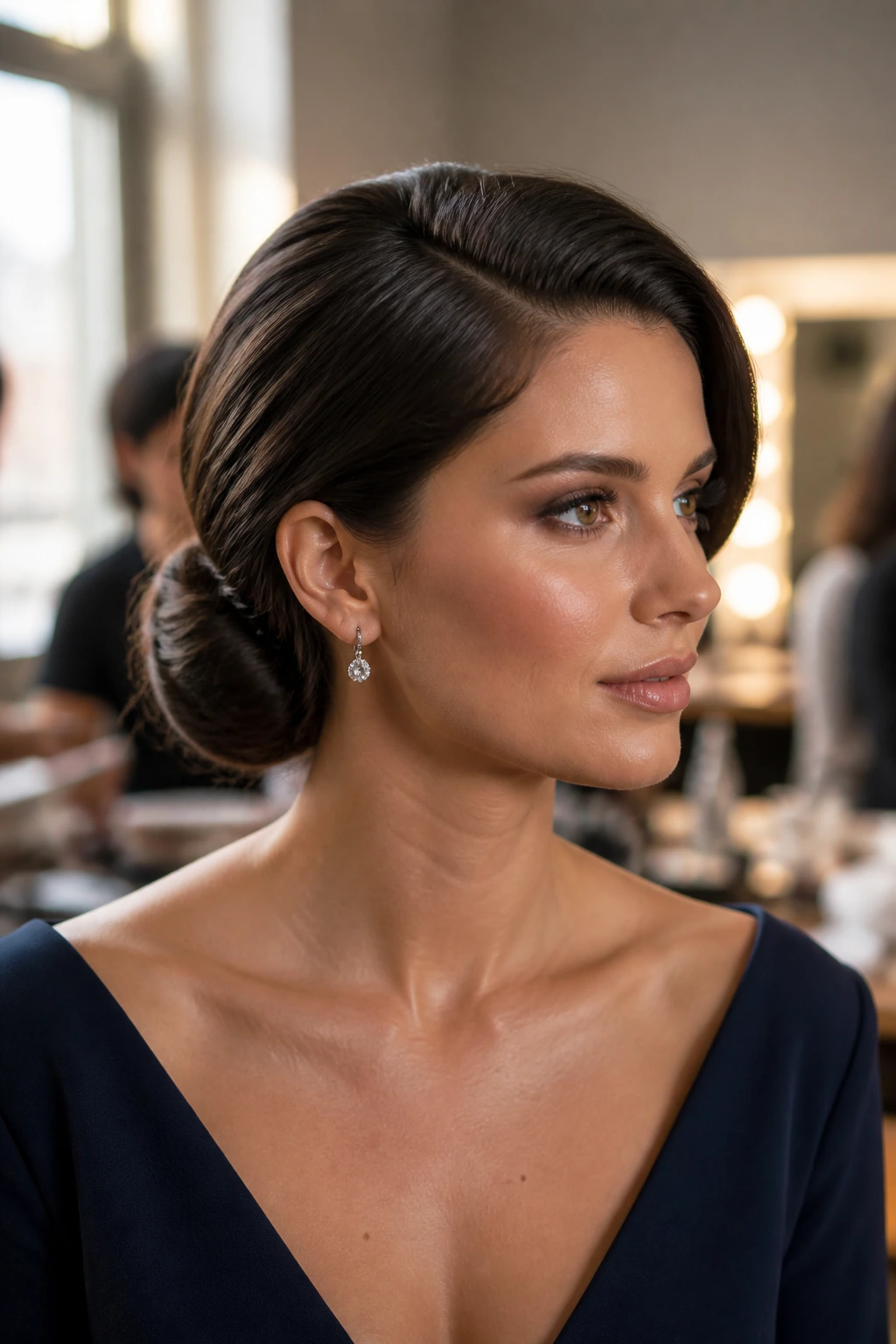
A low chignon is cleaner than a loose bun, and that’s why it works in a different way. The deep side part interrupts symmetry right away, while the chignon sits at the nape and keeps the jawline from becoming the main event.
The shape is more tailored, more formal, and a little less relaxed than the low bun above. That can be useful. If you’re wearing a structured neckline or a dress with strong shoulders, a chignon balances the outfit without adding bulk around the face.
I like a slight twist or tuck at the side rather than a perfectly round knot. It keeps the style from feeling too rigid. A dab of smoothing cream through the front sections helps, but don’t press every flyaway into submission. A few soft pieces around the temples stop the look from feeling severe.
This is the kind of style that photographs with a clean profile and still leaves the face looking gentle.
12. Beach Waves With a Middle Part

Can a middle part work on a square face? Yes, if the waves are loose enough. The middle line on its own can feel strong, but when the texture starts below the cheekbone, the effect becomes soft and easy.
The biggest mistake is adding too much volume right beside the jaw. You want the wave pattern to begin farther down, around the ears or lower, so the face stays open. Think bend, not curl. A relaxed wave is better than a chunky ringlet here.
If your hair is shoulder length or longer, wrap random 1-inch sections around a curling wand, leave the ends out on a few pieces, then brush it all through once it cools. The waves should fall like fabric, not like tubes. That matters more than people think.
This is a good choice if you like low-fuss hair that still feels done. It’s casual, but not lazy.
13. Rounded Curls at Collarbone Length
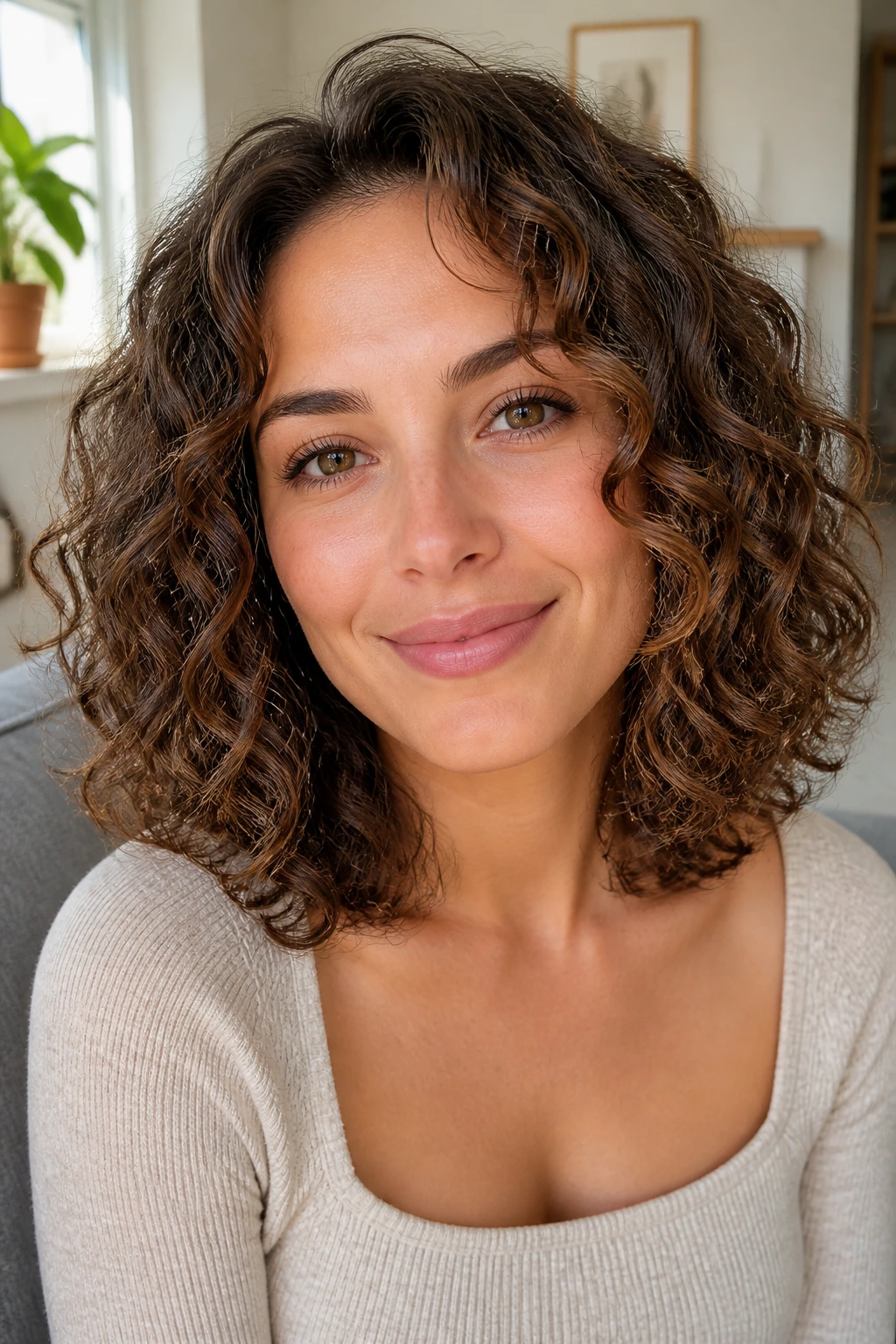
Rounded curls are one of the best answers for naturally curly and coily hair on square face shapes. The shape frames the face without creating a hard edge at the jaw, and collarbone length keeps the silhouette soft.
What you want here is a round perimeter, not a wide triangle. If the curls balloon out at the sides, the face can look broader. If they stack too tightly at the head, the shape loses life. The sweet spot is a gentle halo that tapers at the ends.
What to Tell Your Stylist
- Keep the front pieces a little longer than the back
- Shape the curls so they fall below the jaw
- Avoid a heavy line at chin level
- Use internal layers only where the hair needs movement
A diffuser on low heat helps, but I’d avoid over-touching the curls once they’re dry. The less you disturb them, the nicer the shape stays. Curly hair has its own opinion anyway.
14. Feathered Mid-Length Cut

This is the cut for people who hate “done” hair. Feathering takes weight out of the ends and lets the layers swing away from the face, which can make square face shapes look lighter and less rigid.
The mid-length range is useful because it sits below the jaw but doesn’t disappear down the back. That gives the feathering room to show. You should see movement around the cheekbones and a soft taper near the collarbone, not a blocky wall of hair.
It’s also a friendly cut for fine to medium hair. The layers build the illusion of body without forcing you into heavy styling. A round brush can polish the front in a few minutes, but the shape should still look good if you air-dry and rough it up a bit with your fingers.
It looks airy, not fussy. That’s exactly why it works.
15. Long Straight Hair With Beveled Ends

Straight hair is not the problem. A blunt, heavy finish is. Long straight hair can flatter square face shapes when the ends are beveled and the front pieces soften the line around the jaw.
The beveled finish keeps the hair from hanging like a curtain. A stylist can do this with a slight inward angle at the ends, or you can fake it with a flat iron by turning the last inch of hair under or away from the face. The point is to keep the bottom edge from feeling too hard.
A few invisible layers starting below the chin help too. They give the hair enough movement that the length doesn’t just sit there. On thick hair, that can be the difference between sleek and boxy.
If you like polished hair and don’t want waves every day, this is a sensible choice. It’s calm, easy to wear, and more flattering than people often expect.
16. Half-Up Half-Down With Soft Volume

Half-up styles are underrated for square faces. They lift the hair away from the temples and cheekbones while leaving some softness around the jaw, which gives you shape without full exposure.
The best version is not pulled tight. Lift the top section gently, leave a little puff at the crown, and let the lower section stay loose and textured. If you want extra softness, pull a few front strands free and bend them with a curling iron so they curve away from the face.
- Good occasions: Work, date nights, casual events
- Best hair length: Shoulder length and longer
- Key detail: Keep the top section about 1 to 2 inches above where a ponytail would normally sit
- Style cue: The bottom half should still move
This one is easy to underestimate. Done well, it gives you the lift of an updo with the softness of worn-down hair. That combination suits square faces especially well.
17. Side-Swept Glam Waves
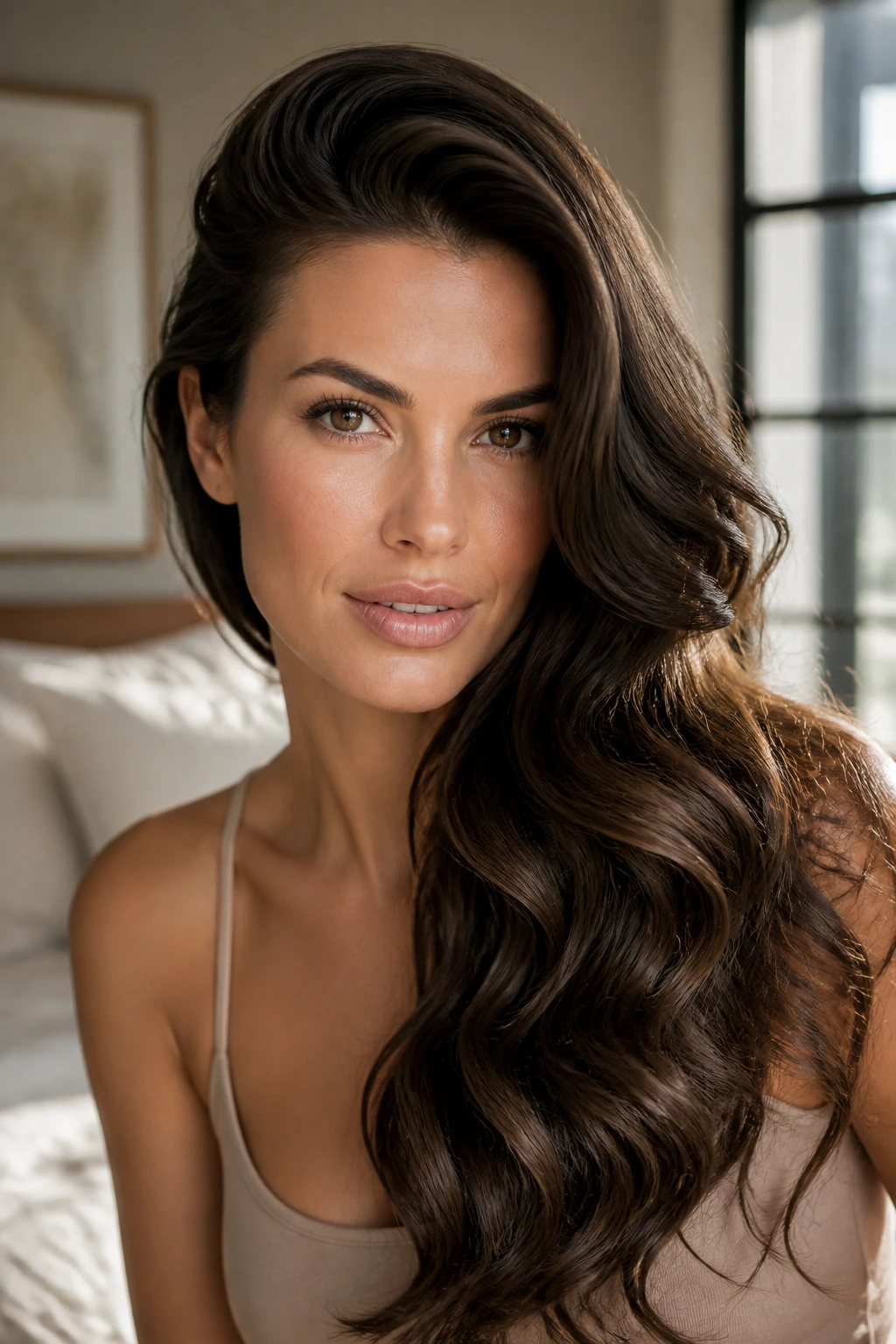
Side-swept glam waves are dramatic in a controlled way. All the motion falls diagonally over one shoulder, which softens the jaw and gives the face a long, elegant line. If you want a style that shows off cheekbones, this is one of the strongest options.
The set matters. Use a 1.25-inch iron, curl the hair away from the face in large sections, pin them to cool, then brush the waves into one unified shape. That cooling step is not extra fuss. It keeps the wave from collapsing before you leave the house.
I also like this style because it gives square face shapes a little asymmetry without needing a haircut to do all the work. The part can be deep, the wave can sweep low, and the whole look feels deliberate. Not stiff. Deliberate.
If you’re dressing up, this is the style that makes the profile look especially clean from the side.
18. Braided Crown With Loose Strands
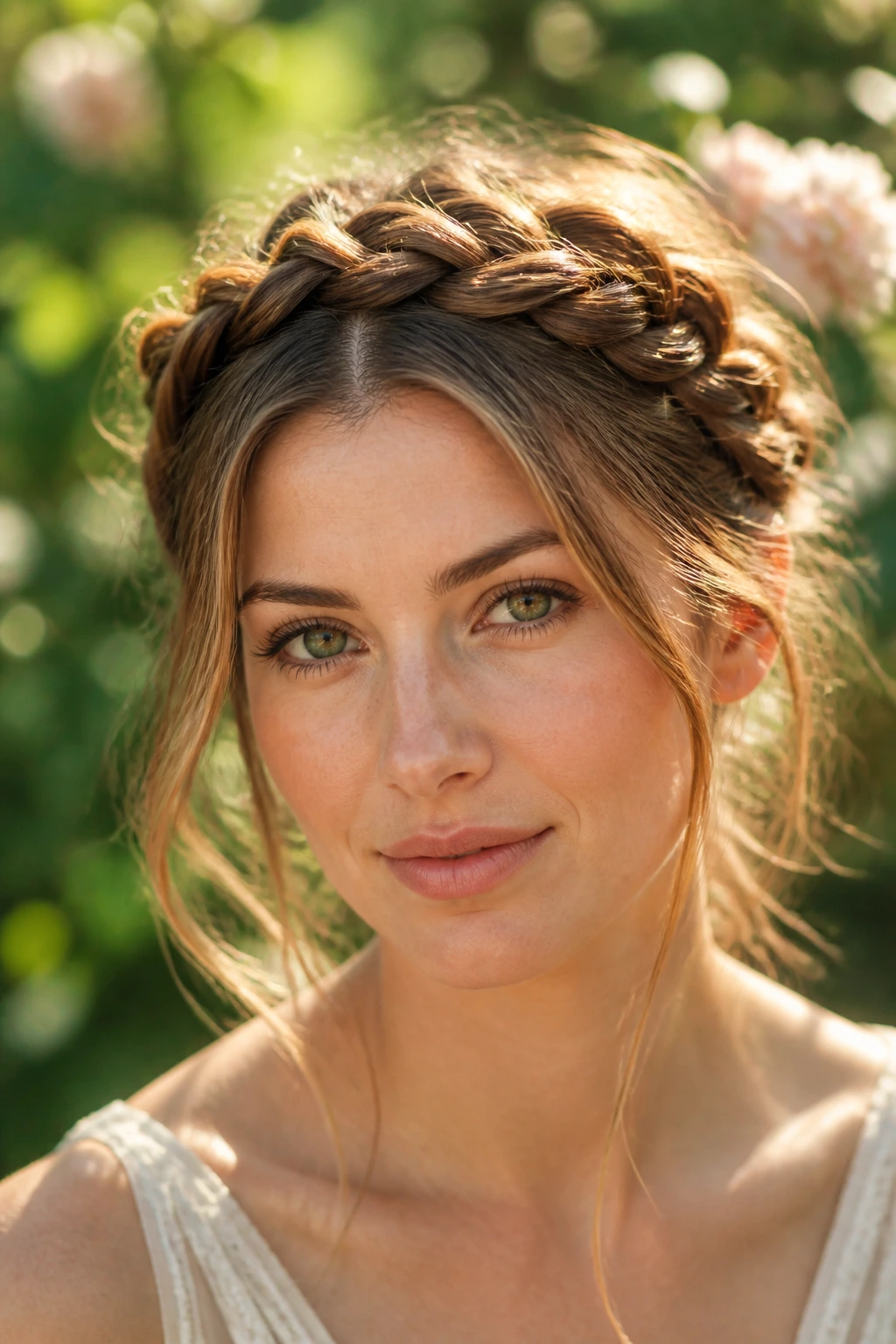
A braided crown can look severe if it’s pulled too tight. On a square face, that’s not what you want. The braid should be airy, a little loose, and softened with a few pieces left around the face and ears.
The reason this works is simple: the braid frames the head without drawing a hard line across the jaw. It also adds texture near the temples, which keeps the face from feeling overly angular. A loose crown braid is romantic without getting sugary.
How to Keep It Soft
- Braid from a 1.5-inch section, not tiny strands
- Loosen the braid after securing it
- Pull out 3 to 5 face-framing pieces
- Let the braid sit slightly above the hairline instead of hugging it tightly
This style is more forgiving than it looks. If a few strands slip out, good. That usually helps the shape. Too neat, and it loses the softness square faces need.
19. Shoulder-Grazing Flip Cut
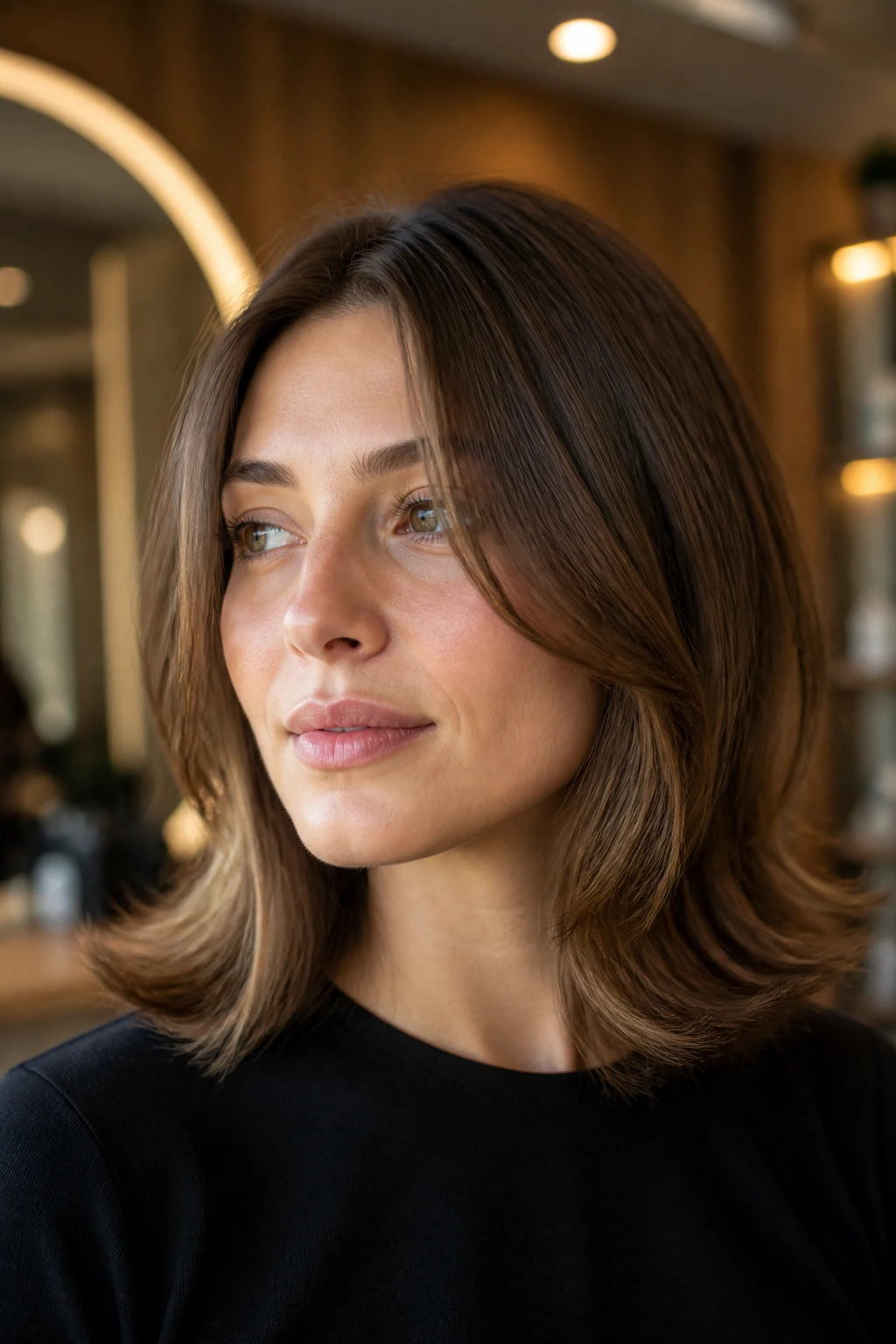
A shoulder-grazing flip cut gives you movement without committing to a full layered shag. The ends flick outward around the shoulders, which keeps the hemline from feeling straight and boxy.
That outward bend matters. A cut that lands exactly at the shoulder can sometimes bounce in a way that makes the face feel wider, especially if the ends sit close to the jaw. The flip takes care of that by adding a little lift and direction at the bottom.
It’s also easier to style than people expect. A medium round brush or a flat iron with a slight outward turn at the ends is enough. You do not need perfect curls; you just need the bottom to move away from the neck.
If you like a retro nod without a heavy blowout, this one is worth trying. It feels lively, not fussy.
20. Soft Mullet With Length Around the Jaw

Yes, a mullet can work on a square face. The key word is soft. A harsh, spiky version will fight the jawline, but a softer cut with wispy crown layers and longer side pieces can actually make the whole face look more balanced.
The reason is the same as with the shag: lift at the top, movement at the sides, and length that doesn’t stop dead at the jaw. If the front pieces skim the cheekbones and the back stays a little longer, the face reads as more open and less boxy. That’s the version worth trying.
A soft mullet also suits people who want edge without giving up flexibility. You can wear it messy, blown out, tucked behind the ears, or a little piecey at the front. It has range. That’s not something every square-face haircut can claim.
If you want the shortest answer, choose the style that breaks the jawline in the most natural way. Square face shapes usually look best when the hair moves — not when it sits in one hard line.
