



A diamond face shape can be a gift and a nuisance at the same time.
Those cheekbones do a lot of heavy lifting. They give the face structure, drama, and that sharp, photogenic outline people pay for with filler and contour. The catch is that the same bone structure can make certain cuts look severe, especially when hair is too flat at the sides or too blunt right across the widest point.
The best hairstyles for diamond face shapes do one of three things: they soften the cheekbone line, add a little width where the face narrows, or pull the eye downward so the whole shape feels more balanced. That usually means movement near the jaw, some softness around the temples, and smart parting choices. Not random volume everywhere. That never helps for long.
A lot of flattering cuts for this face shape look easy, but they are usually doing very specific work. A collarbone lob that skims past the cheekbone. A side part that shifts the visual weight. Curtain bangs that open the face without boxing it in. Small details. Big difference. And yes, texture matters just as much as length.
1. The Collarbone-Length Layered Lob
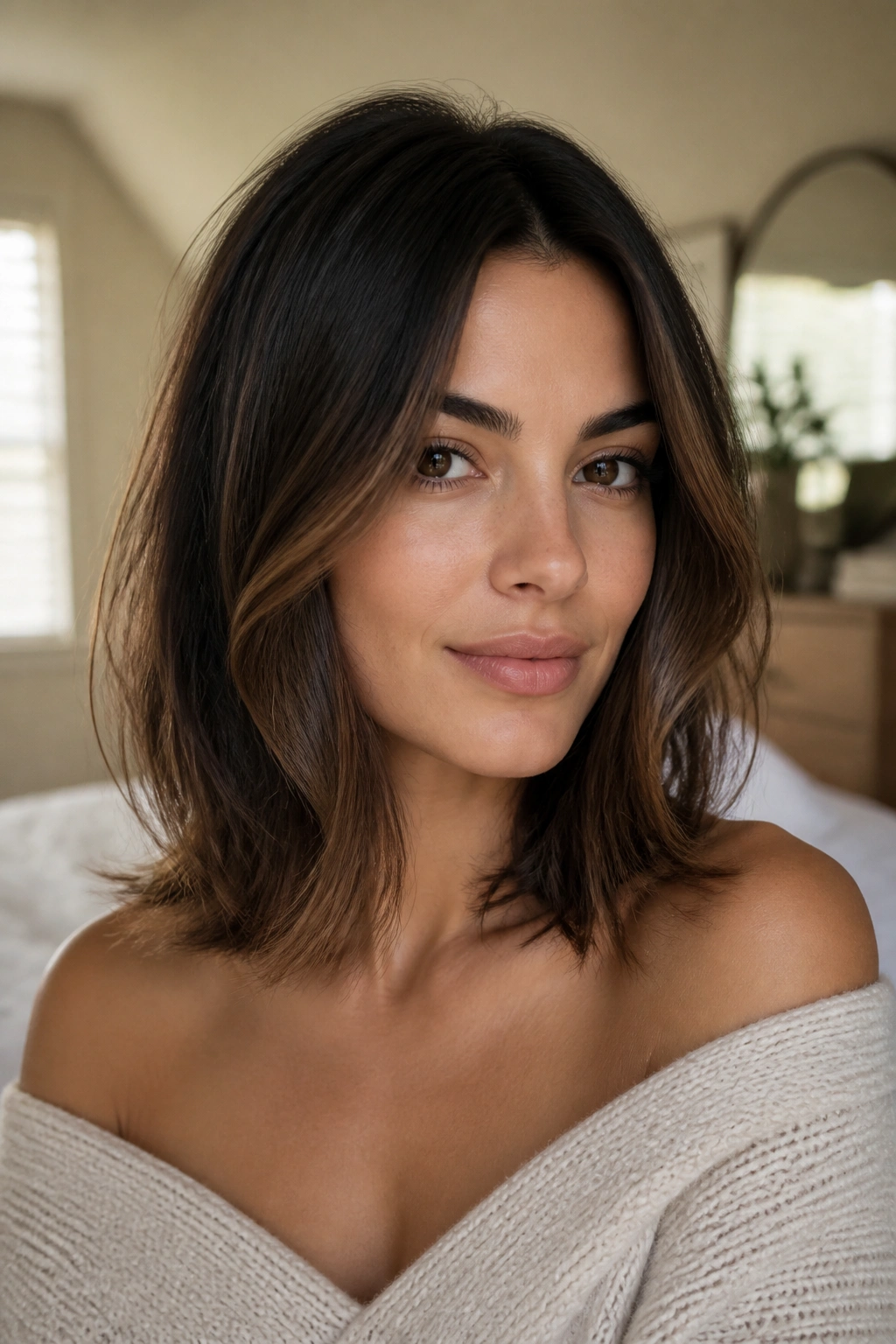
A collarbone-length lob is one of the safest bets for a diamond face shape, and I mean that in the best way. It lands below the cheekbones, which keeps the widest part of the face from feeling boxed in, while the ends add a little softness around the jaw.
Why It Flatters a Diamond Face Shape
The collarbone is a useful stopping point because it gives the face room to breathe. A cut that ends right at cheekbone height can feel sharp on a diamond face, but a lob that drops a few inches lower creates a gentler line. That small difference matters more than people think.
Layers help, too. Keep them soft and mobile, not chopped up into short, jumpy bits. You want the hair to move around the face, not stick out from it like a triangle.
How I’d Style It
- Ask for light, face-framing layers that start around the lips or chin.
- Use a 1.25-inch curling iron and bend only the mid-lengths and ends.
- Leave the roots straighter for a cleaner line.
- Tuck one side behind the ear for a little asymmetry.
- Finish with a light texture spray, not a crunchy one.
Best tip: If your hair is fine, keep the layers longer. Too many short layers can make the ends look wispy fast.
2. Long Layers for Diamond Face Shapes
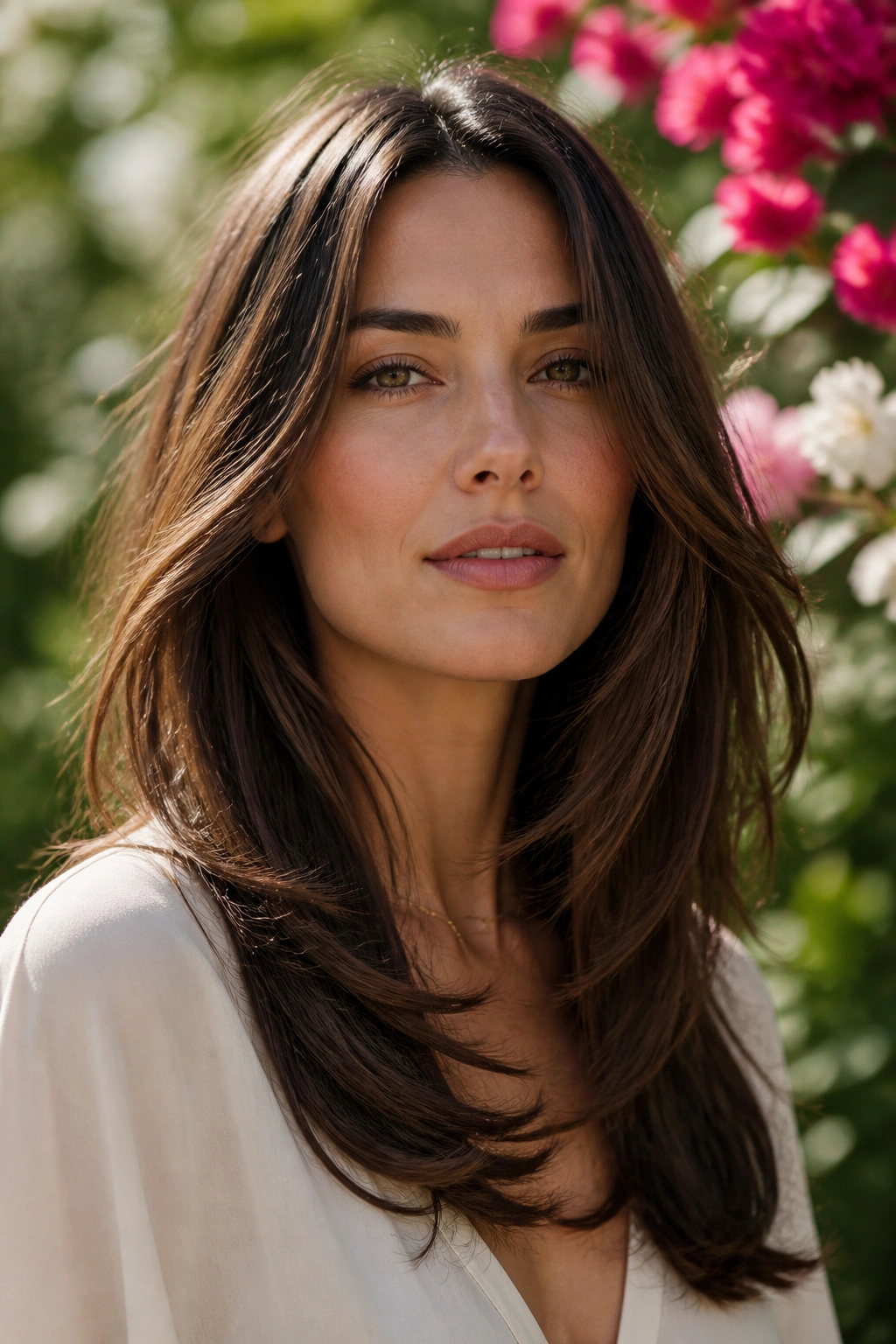
Long hair can work beautifully on diamond face shapes, but only when the layers are placed with some care. A single curtain of heavy hair can drag the face down in an unhelpful way, while long layers soften the cheekbones and keep the style from looking flat and severe.
The sweet spot is usually layered movement that begins below the cheekbone and above the collarbone. That gives you lift without putting the widest part of the haircut right across the widest part of the face. It sounds fussy. It is a little fussy. Haircuts often are.
What I like about long layers is that they can be worn sleek, waved, or air-dried, and the face still looks open. Keep the front pieces a little shorter than the rest so they drape toward the jaw instead of stopping at the cheekbone. That’s the part many stylists get right, and it’s the part that makes the cut feel expensive instead of accidental.
If your hair is thick, long layers remove bulk without making the shape puffy. If it’s fine, ask for internal layers rather than big visible chops. You still want weight at the ends. Too much thinning at the top can make a diamond face look longer than it needs to.
3. Side-Swept Bangs and Shoulder-Length Cut
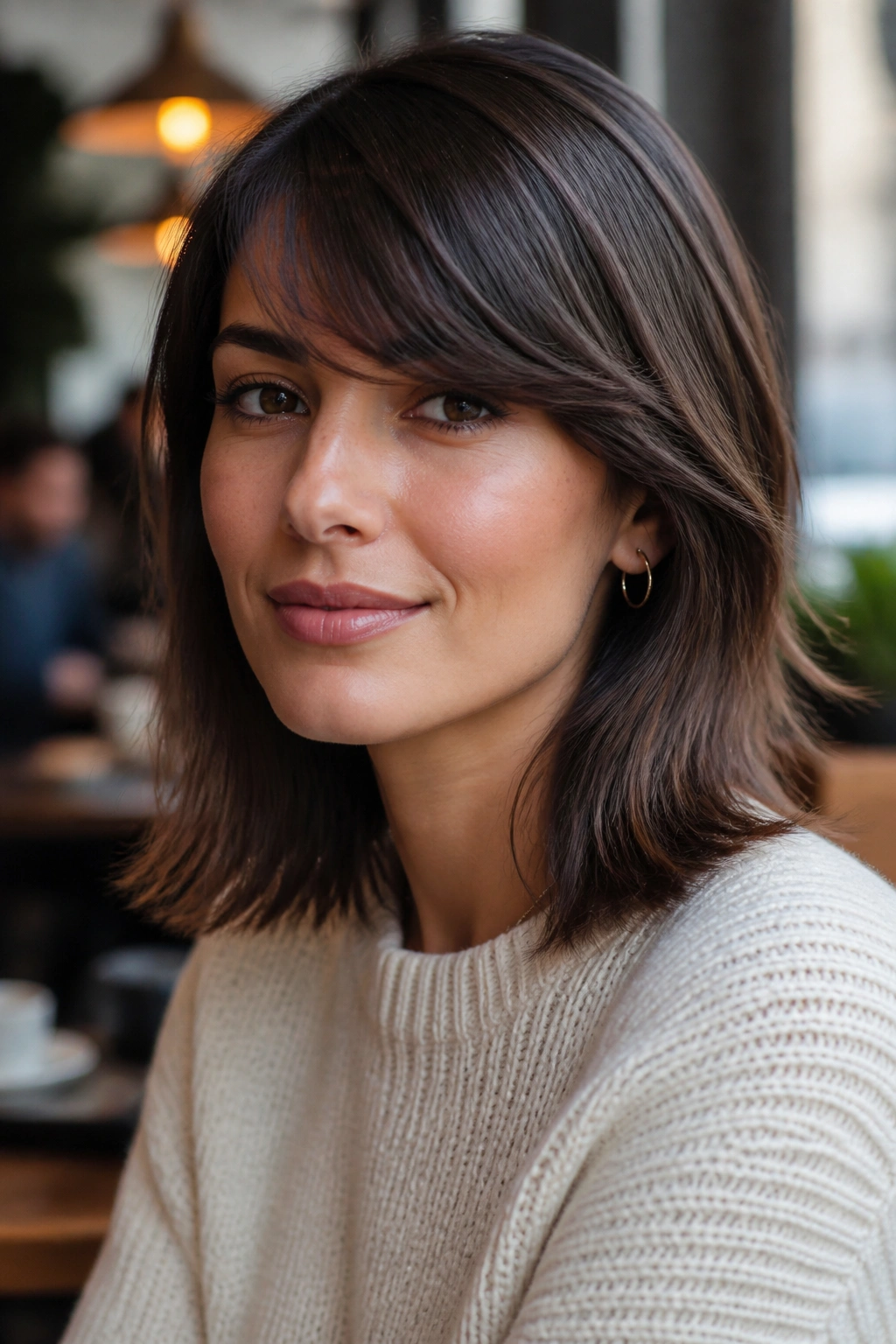
Why do side-swept bangs work so well here? Because they break up the widest part of the face without covering it completely.
A shoulder-length cut gives the bangs somewhere to land, and that matters. If the bangs are too short, they can make the upper half of the face feel crowded. If they’re too heavy, they can sit like a curtain and flatten everything out. Side-swept bangs sit in the middle: soft, angled, and a little bit forgiving.
The part that matters most
The part line is doing more work than people realize. A deep-ish side part, even if it’s not dramatic, shifts the eye off the center of the face and gives the forehead a little breathing room. The bangs should skim across the brow and then fall toward the cheek, not sit in one solid block.
Shoulder length keeps the overall shape easy to style. You can blow it smooth, add a bend, or let it dry with natural texture and still look finished. That flexibility is one reason this cut hangs around salons year after year.
How to wear it
- Dry the bangs first so they don’t separate weirdly later.
- Use a small round brush and roll the fringe away from the face.
- Ask for a bang length that ends somewhere between the brow and the top of the cheekbone.
- Keep the rest of the cut blunt or lightly layered.
- Use a pea-sized amount of styling cream, not a heavy balm.
It’s a quiet cut. That’s the appeal.
4. Textured Chin-Length Bob

A chin-length bob can be tricky on a diamond face shape, and I’m not going to pretend otherwise. When it lands too sharply at the widest part of the cheekbone, it can feel severe. When it’s textured and a little broken up, though, it becomes a very clean way to balance the face.
The trick is to keep the ends soft enough that they don’t draw a hard line across the cheeks. Ask for point-cut ends or very light layering. You want the shape to curve, not sit like a ruler. That subtle bend gives the jaw more presence, which is useful when the cheekbones already dominate.
If you like a neat bob, this is the one to try. It looks sharp in a good way. But it needs movement, even if the movement is tiny.
What to ask for
- A cut that grazes the bottom of the chin rather than stopping at the cheekbone.
- Soft, beveled ends instead of blunt ones.
- A side part or off-center part to keep the face from looking too symmetrical.
- Loose wave styling with a flat iron bend or small iron.
The shape works best on straight to wavy hair. Super-curly hair can do it too, but the length needs to be adjusted carefully so the bob doesn’t spring up too high.
5. Curtain Bangs for Diamond Face Shapes
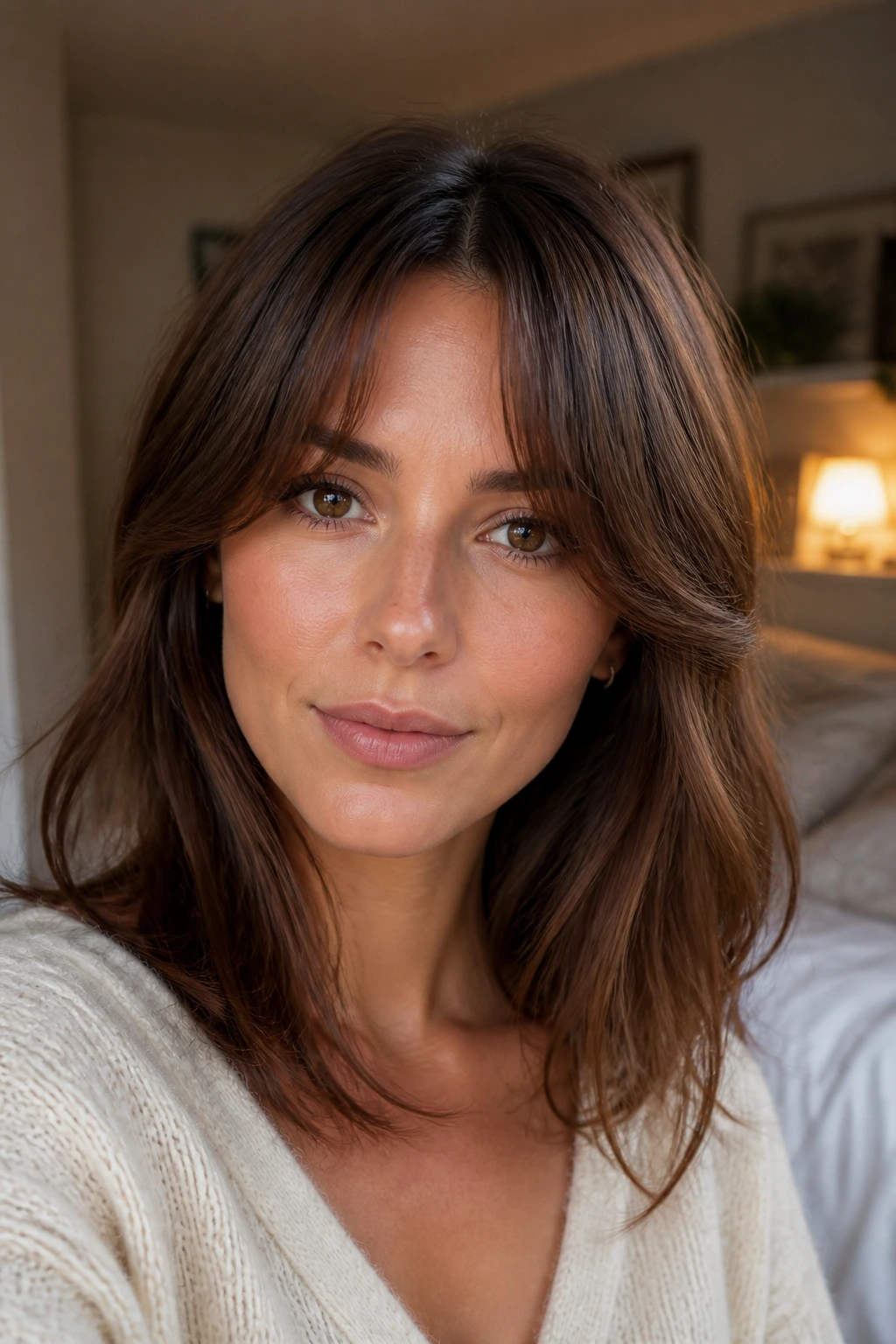
Curtain bangs are one of those cuts that people keep coming back to because they do a lot without looking needy. On a diamond face shape, they’re especially useful because they open the forehead area and pull attention away from the cheekbones without hiding the face.
What makes them so wearable is the way they fall. A good curtain bang starts shorter in the center, then sweeps longer toward the cheekbones. That diagonal line softens the widest part of the face and gives the eye a path to follow. Straight-across bangs can feel blunt on a diamond shape. Curtain bangs feel easier.
They also grow out in a civilized way, which I appreciate. Not every haircut needs to be a dramatic event every six weeks. These can be worn with long hair, a lob, or even a shaggy shoulder cut, and they still make sense. That versatility comes from the shape, not from luck.
The best version is lightly parted at the center, then brushed outward with a round brush and dried so the ends bend away from the face. If they flip too sharply, they can look old-school in a way you may not want. A soft bevel is the better move.
One more thing: if your forehead is short, keep the shortest part a little longer. If your forehead is taller, you can go shorter in the middle and let the sides cascade.
6. The Pixie With Height at the Crown
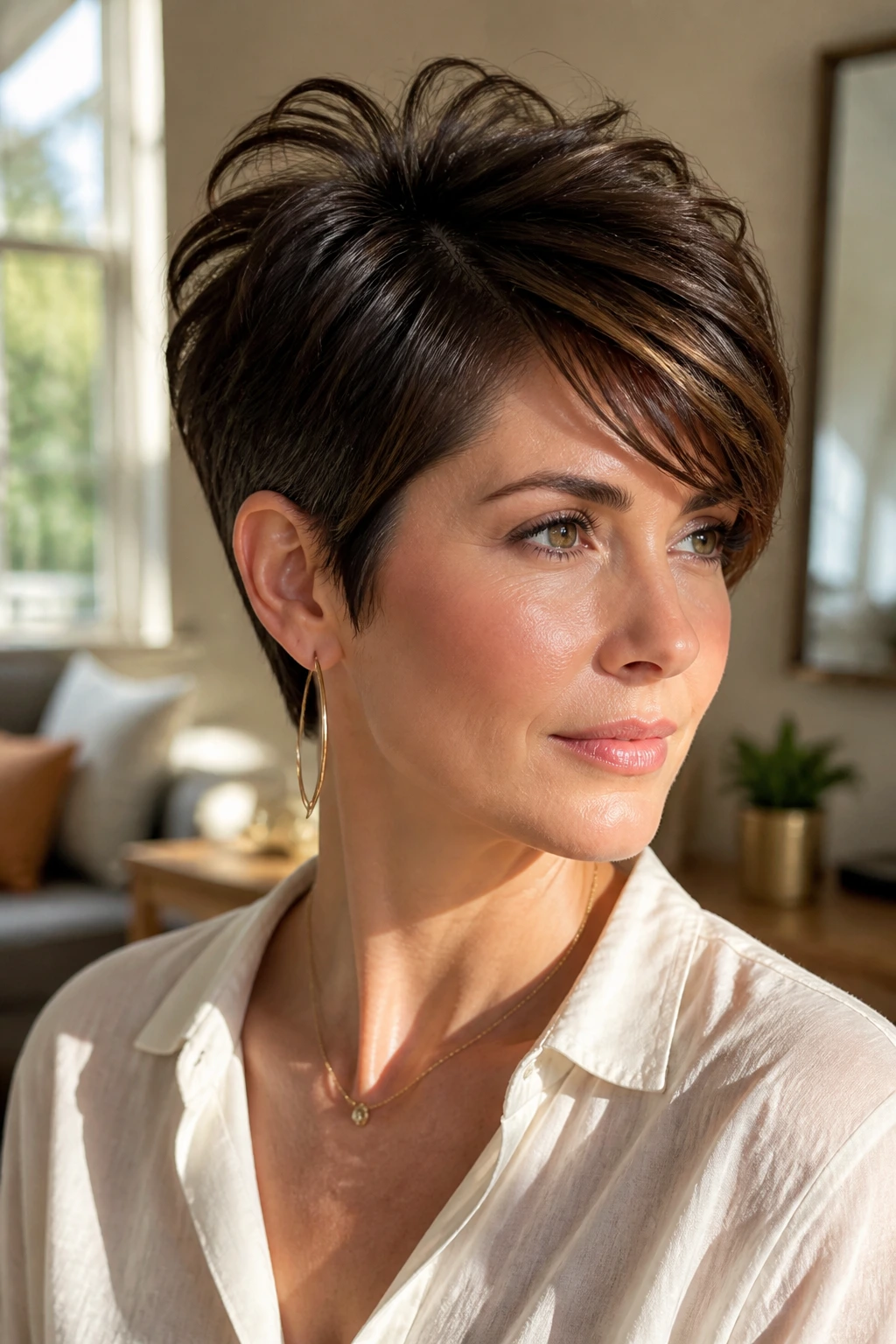
A pixie can flatter a diamond face shape beautifully when the sides stay soft and the top has some lift. A flat pixie, though? Not my favorite on this face shape. It can make the cheekbones look too dominant and leave the upper face feeling pinched.
The good version uses height at the crown to stretch the silhouette upward while the sides are kept piecey, not tight. That little lift at the top helps balance the narrow forehead and jaw. It also makes the face look a bit more oval, which is usually the goal with this shape.
What keeps it balanced
A side-swept fringe helps a lot. So does keeping the temples from being shaved too close. You want softness around the edges, not a helmet effect. The pixie should feel airy, not severe.
This cut suits people who like to style their hair with a little product and a few minutes of work. If you want wash-and-go and nothing else, be honest with yourself. Some pixies are low maintenance. This one is not one of them.
A matte paste or light wax works better than a glossy pomade here. Gloss can make the hair cling to the head and cancel out the lift you worked for. That would be a waste.
7. Deep Side Part and Soft Curls
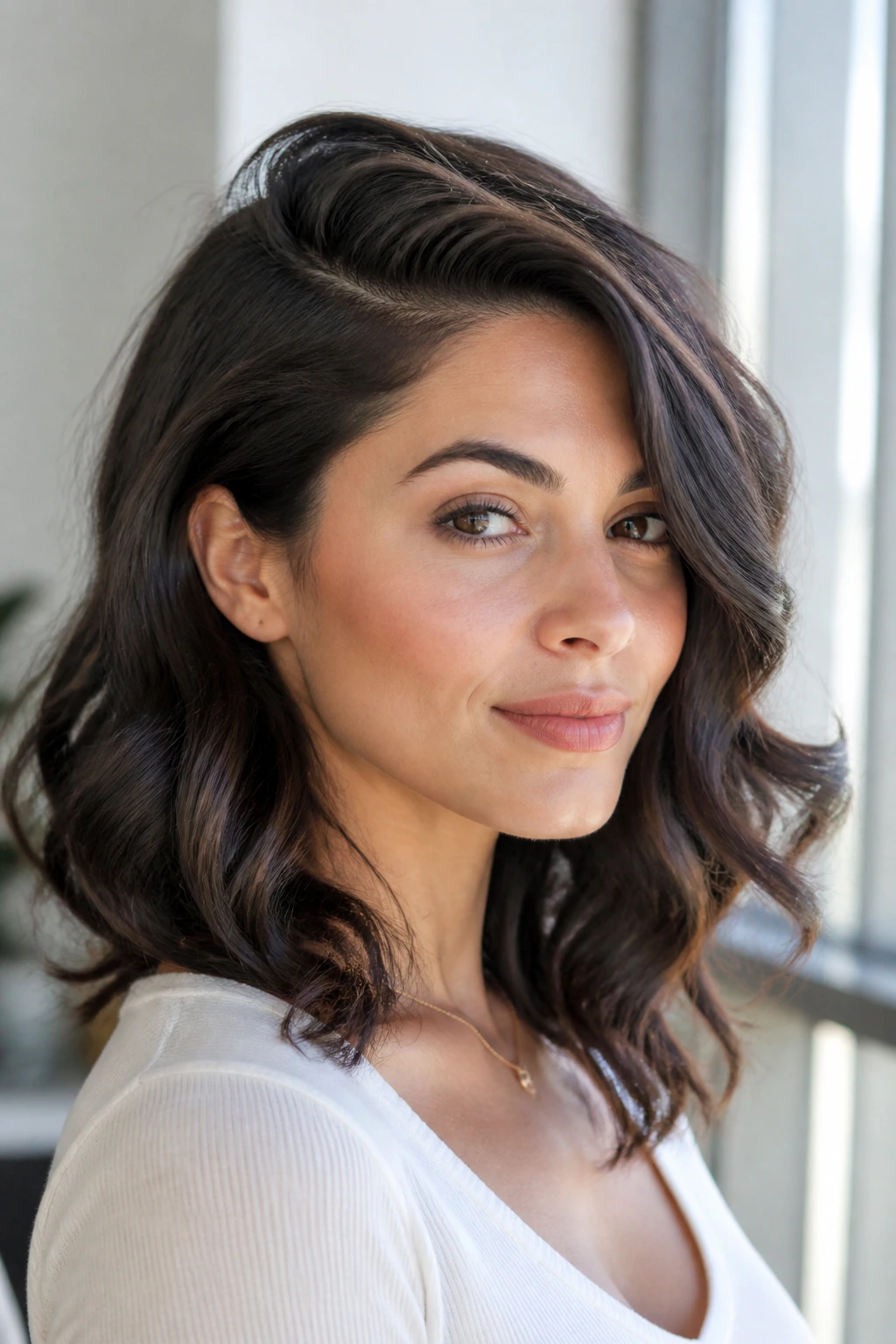
A deep side part can rescue a diamond face shape faster than a lot of people expect. It shifts the visual center of the face and pulls some attention away from the cheekbones, which is exactly where too much emphasis can turn harsh.
Soft curls do the rest. Not tight ringlets. Not stiff waves. Just a bend that widens the jawline a little and keeps the style from sitting flat against the head. When curls are brushed out gently, they create a wider, softer outline through the lower half of the face.
How to get the most from it
- Start the part just above the arch of one eyebrow.
- Curl the hair away from the face on both sides.
- Let the curls cool completely before touching them.
- Brush only the mid-lengths, not the roots.
- Use a flexible hold spray so the shape stays touchable.
This style works especially well for medium to long hair. If the hair is very short, the part can look a little too aggressive. If it’s very long, the curls should begin below the cheekbones so you don’t create extra width in the wrong place.
My favorite thing about this look: it doesn’t fight the face. It redirects it.
8. Half-Up Style With Volume at the Crown
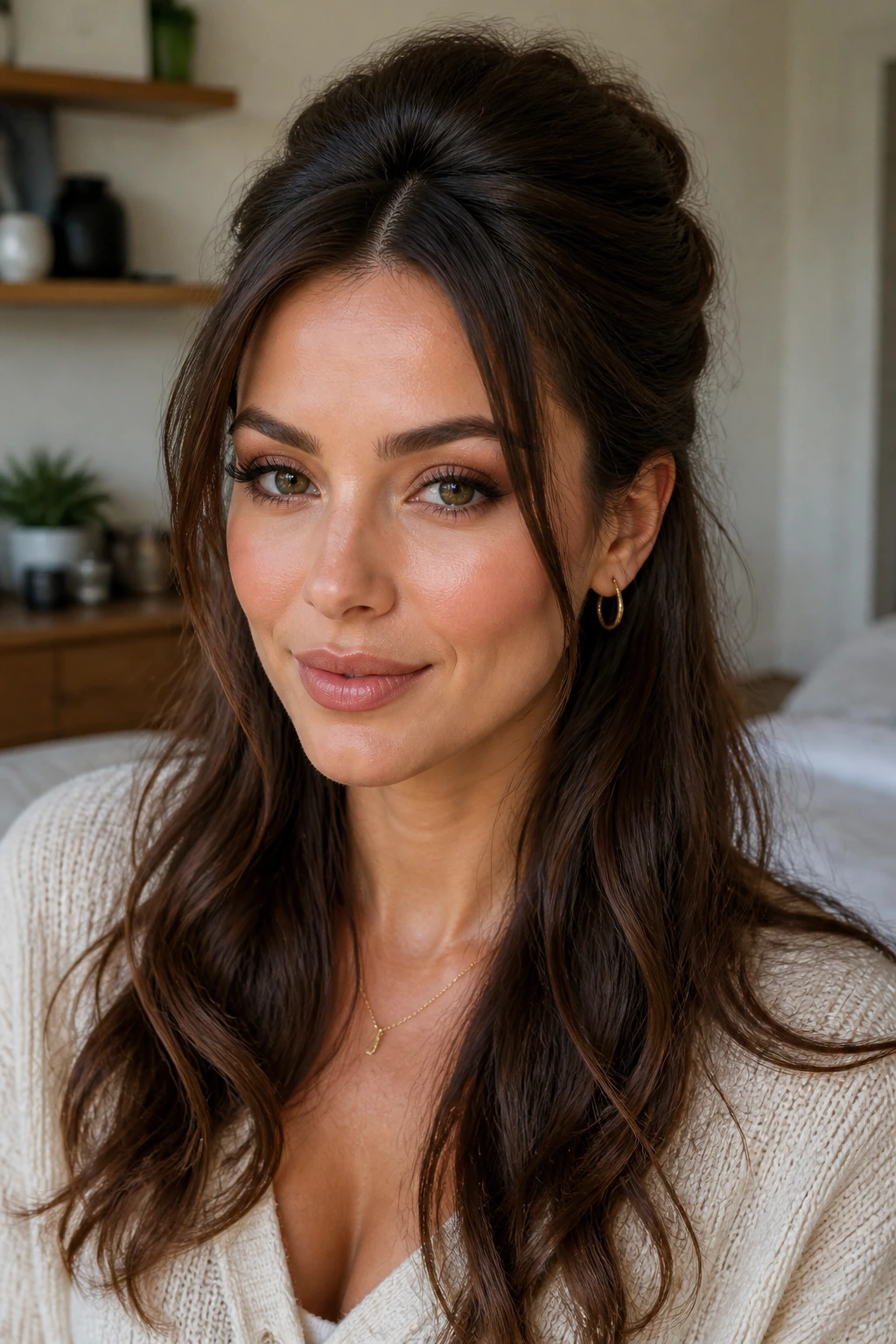
Half-up styles can be a trap on diamond face shapes if they’re pulled tight. That makes the upper half of the face feel even narrower and turns the cheekbones into the loudest thing in the room. Add volume at the crown, though, and the whole look changes.
The lift at the top creates balance, while the loose hair below adds width where the face needs it most. It’s a simple fix, but simple does not mean basic. A half-up style with a little height can be one of the most flattering options for long hair, especially if you want the face open without wearing everything down.
Keep the pulled-back section soft. A small bump at the crown is enough. Then leave a few face pieces out, especially if your cheekbones are strong. Those pieces break up the line and make the style feel less rigid.
If you want the half-up look to feel polished, wrap a small section of hair around the elastic. If you want it to feel more lived-in, twist the top half loosely before pinning it back. Either way, the tension should stay light. Tight half-up styles age the face in a way that soft versions do not.
9. Tousled Shag With Face-Framing Pieces
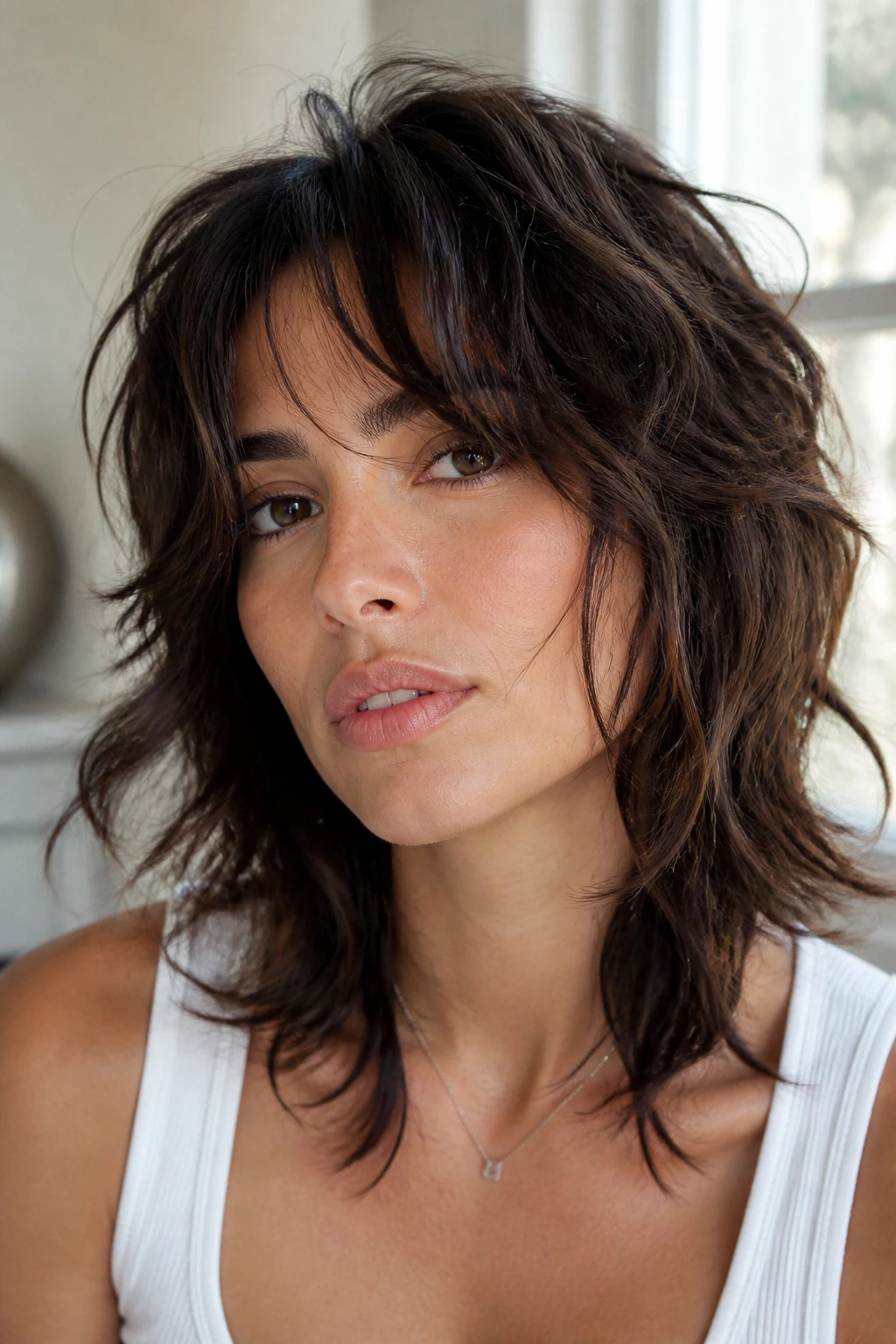
Why does the shag keep showing up for diamond face shapes? Because it breaks up all the hard lines.
A shag adds movement around the sides of the head, which matters when the cheekbones already create a strong horizontal point. The face-framing pieces soften that area and spread the visual weight around instead of stacking it all in one place. That’s the real job here.
How to keep it soft
The shag works best when the layers are tailored, not sprayed out into a giant cloud. You want texture, but you do not want the crown to get so tall that the face looks longer. The best versions keep most of the volume in the mid-lengths and around the jaw.
A bit of mousse at the roots and a diffuser can make the shape look deliberate rather than messy. Air-dried shags can be lovely too, especially on wavy hair, but they need some definition at the front pieces. Otherwise, the haircut can get lost.
This is a good choice if you like hair that looks a little undone. It is not the right cut if you love crisp edges and exact lines. Different moods. Different results.
10. Sleek Shoulder-Length Blowout
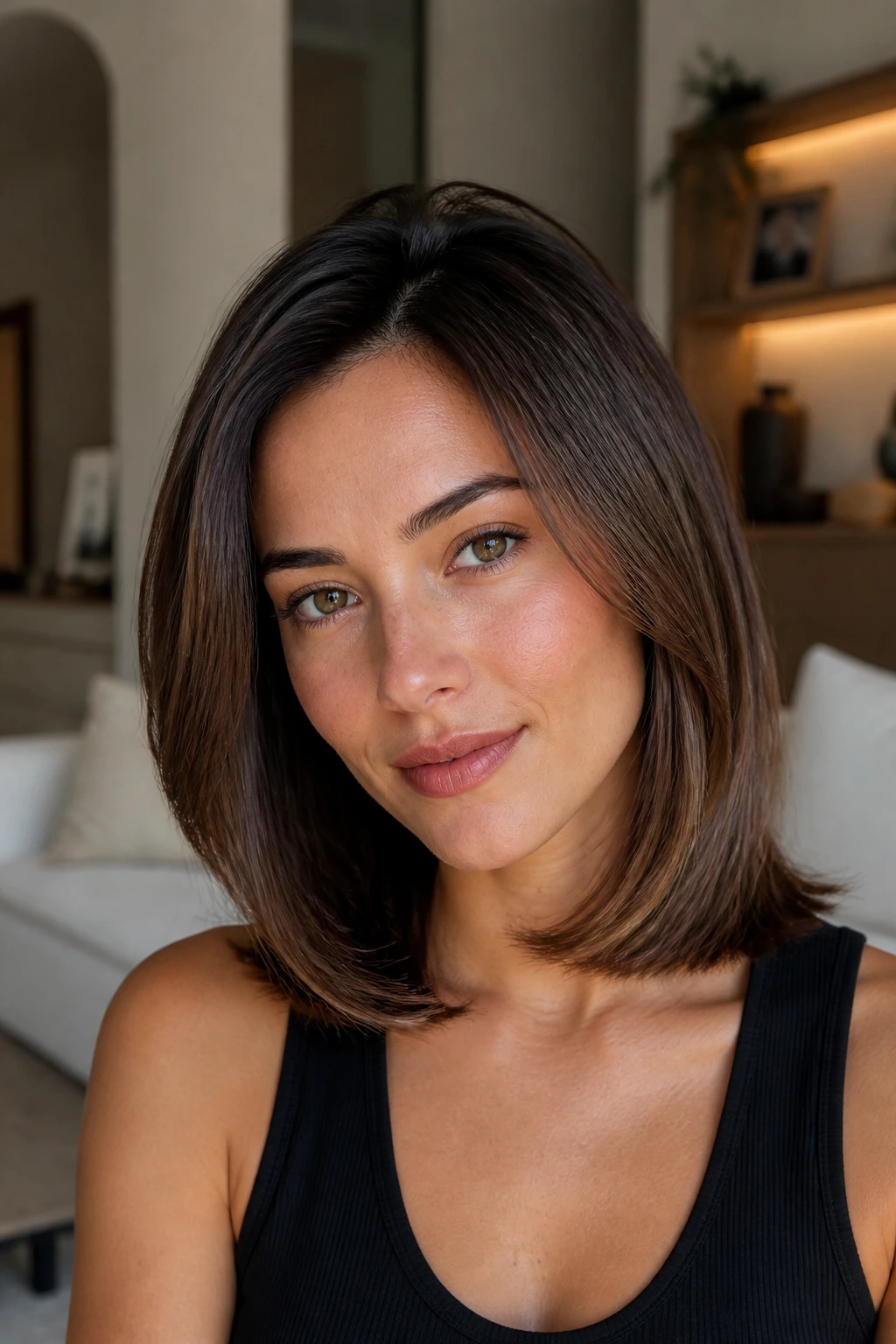
A sleek shoulder-length blowout can look almost too polished on a diamond face shape, which is why it works. The smoothness shows off the bone structure without letting the cheekbones take over the whole scene.
The important part is the curve at the ends. If the hair hangs dead straight, the face can look long and angular. If the ends turn under just a little, or flick away softly, the style gets enough softness to balance the shape. That small bend at the bottom is doing a lot of work.
You also want some root lift. Not giant volume. Just enough to keep the hair from lying flat against the head. A round brush and a dryer nozzle can do that job without much drama. Blow the hair away from the face at the cheekbone area so the sides don’t hug too tightly.
What I’d use
- A heat protectant spray
- A medium round brush
- A smoothing cream for the mids and ends
- A cool shot at the end of drying
- A light serum only on the very tips
If you like a cleaner look for work or events, this is one of the most dependable hairstyles for diamond face shapes. It feels controlled, but not stiff.
11. Loose High Ponytail With Soft Pieces
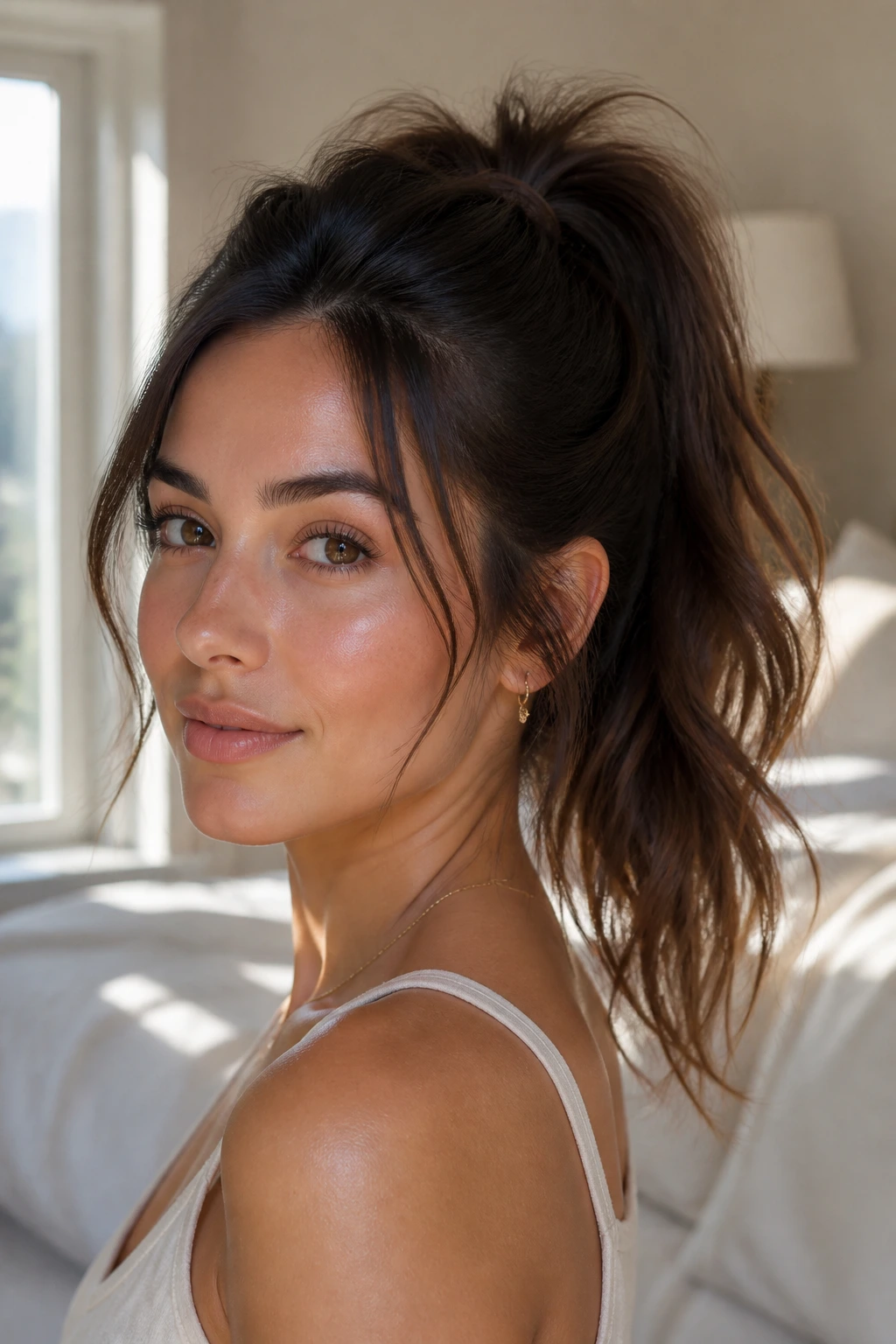
A high ponytail can go wrong fast on this face shape if it’s slicked tight and placed too high. Then the face looks longer, the temples look bare, and the cheekbones start doing all the talking. A loose version is much better.
The trick is to place the pony slightly above the crown rather than way up top, then keep a little softness at the hairline. Those loose pieces around the temples and ears make a huge difference. They soften the narrow points of the face and stop the style from feeling severe.
Volume at the base helps too. Teasing the crown a little before tying the ponytail gives the whole look balance. You do not need a nest. A small lift is enough. Keep the tail itself polished or gently waved, depending on how formal you want it to feel.
This style is a nice option when you want the face open and the neck visible, but you still want the hair to have shape. It works well with hoop earrings, a sharp neckline, or a little makeup. That said, if your hair is very fine, you may need a texturizing mist first so the ponytail doesn’t slip flat by midday.
12. Long Bob That Balances a Diamond Face Shape

Unlike a blunt jaw-length bob, a long bob gives you room to soften the face in more than one way. You can wave it. You can tuck one side. You can wear it with a side part and keep the ends calm instead of boxy.
That flexibility is why I like it on a diamond face shape. The length usually sits between the collarbone and upper shoulder, which is low enough to ease the cheekbone emphasis but short enough to keep the haircut feeling fresh. It does not crowd the face. That’s the whole point.
If you want this cut to do real balancing work, keep the layers light. Too many layers can make the shape puffy around the sides, which is the opposite of what you want. A slightly blunt perimeter with a few soft internal layers usually works best.
Best for
- Medium to thick hair that needs shape without bulk
- Fine hair that needs a stronger outline
- People who want a cut that can go straight or wavy
My recommendation: ask for the front to hit just below the collarbone and the back to stay a touch shorter. That tiny difference gives the lob movement without dragging the face downward.
13. Shoulder-Skimming Cut With Micro Layers
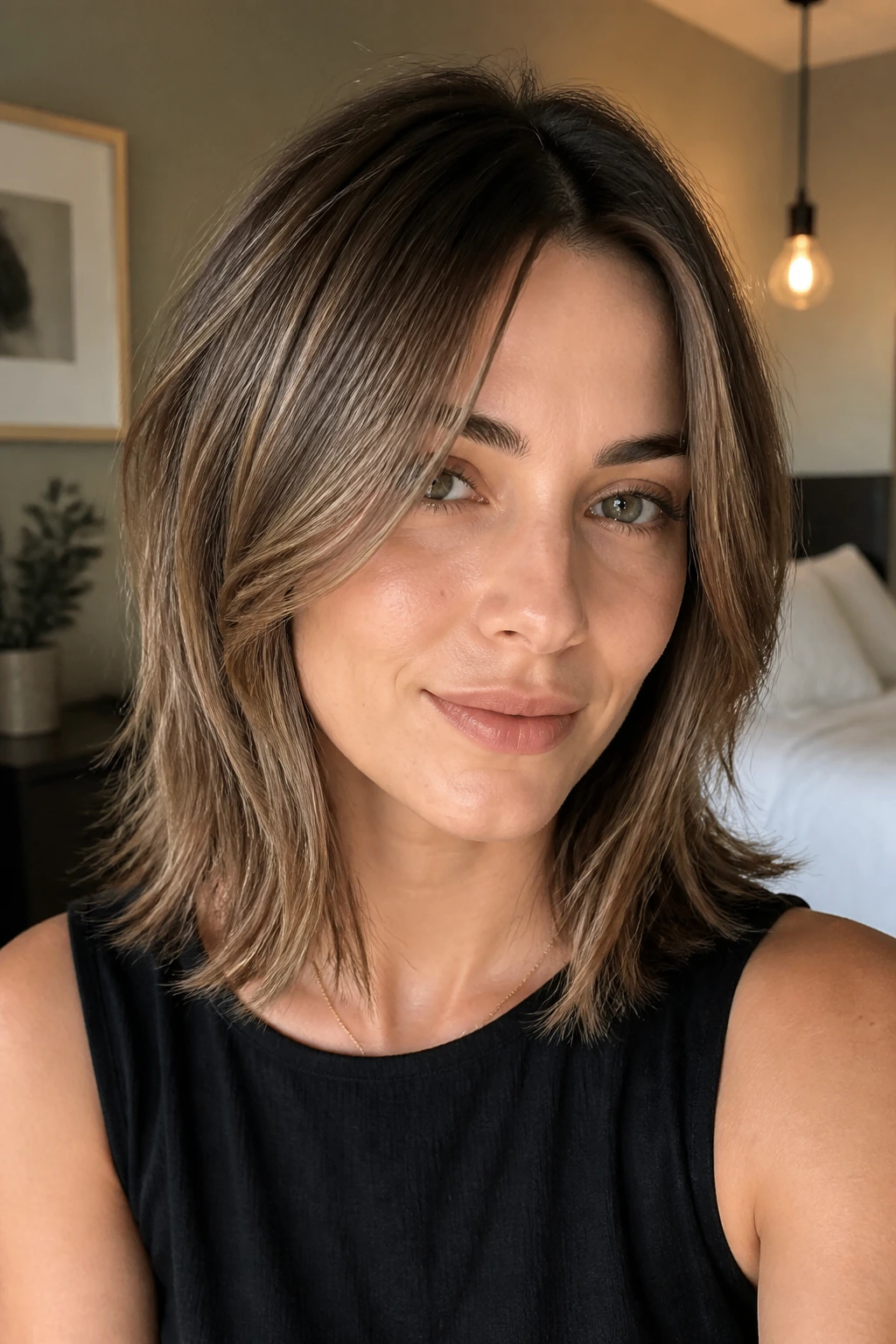
A shoulder-skimming cut with micro layers is one of the most underrated choices for diamond face shapes. It sounds plain at first. It isn’t.
The shoulder line gives the face a stable frame, while the micro layers stop the hair from sitting like one heavy sheet. That matters on a diamond face because you want softness around the cheekbones without creating a big puff of width at the wrong spot. Small layers keep everything moving in a controlled way.
Why micro layers matter
Micro layers are short, subtle layers that barely announce themselves when the hair is dry. They help thick hair drop better and keep wavy hair from collapsing into a triangle. On a diamond face, they create a little space around the sides without chopping away too much length.
The best version is usually cut with a slight off-center part and ends that brush the shoulders. If the cut is too short, the face can feel boxed in. If it’s too long and heavy, the crown may flatten. Shoulder-skimming length is the middle ground.
- Good for hair that grows out slowly and needs shape
- Better with soft styling than with pin-straight flatness
- Easy to tuck behind the ear for asymmetry
- Works with both air-dry and blowout routines
One caution: if your hair is very fine, don’t let the layers get too aggressive. You want movement, not gaps.
14. Braided Crown With Soft Tendrils
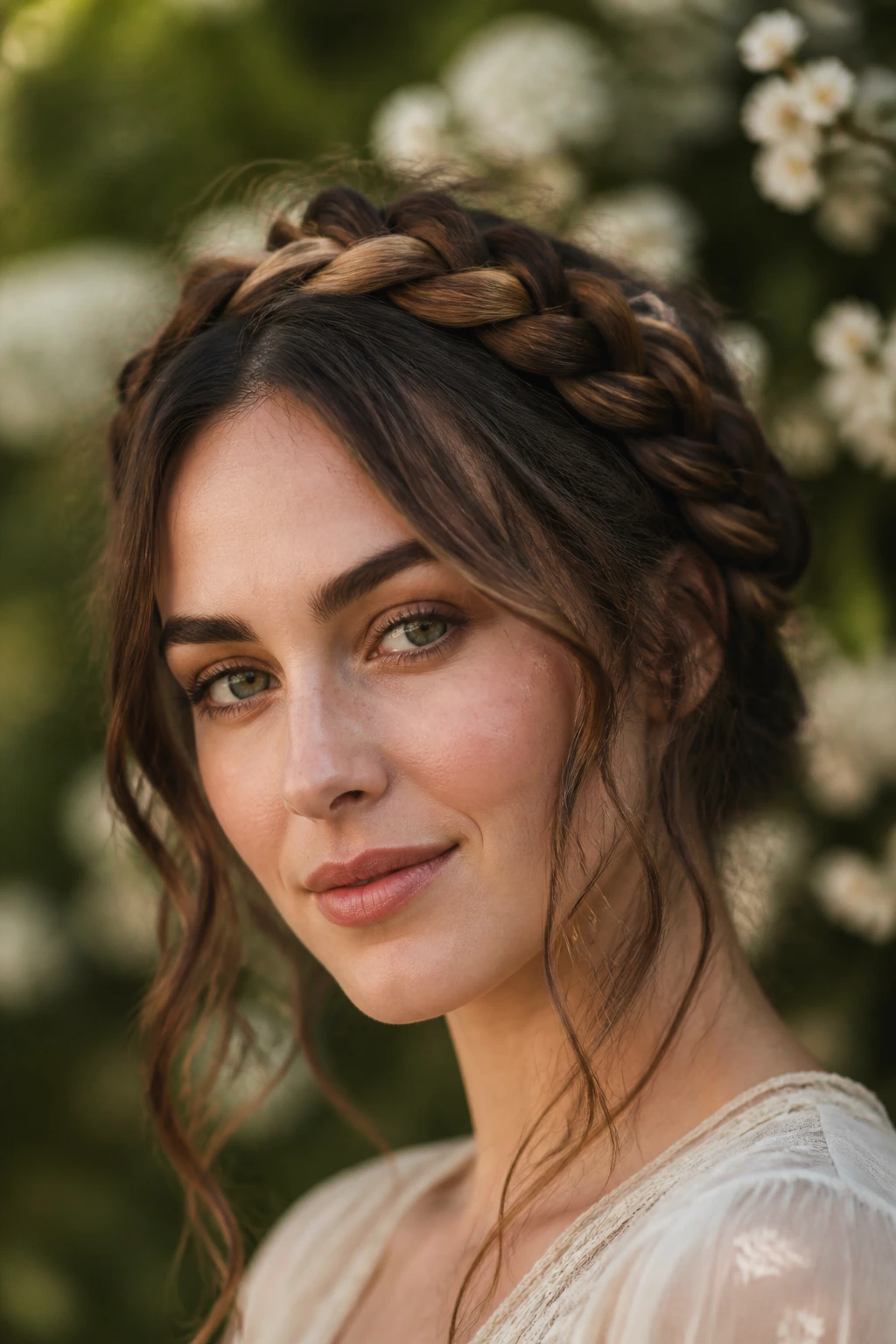
A braided crown can look severe on a diamond face shape if every strand is pulled tight. Tight braids show off the cheekbones and narrow the temples, which is not always the look you want. A softer version changes the whole mood.
Leave tendrils around the face. Loosen the braid slightly after it’s secured. Let a bit of volume stay at the crown instead of flattening everything. Those small choices keep the face from looking too long and angular.
This style works especially well for long hair, but medium-length hair can do it too if the braid is kept loose and pinned carefully. It’s a smart option for weddings, dinners, or any day when you want hair off your neck without losing softness. The braid itself gives structure; the loose bits keep it human.
I also like this style because it doesn’t fight the bone structure. It frames it. That’s a better move on diamond faces than trying to hide the cheekbones completely. You’d lose the best part of the face if you did that.
15. Low Bun With Side Sweep

Can a low bun work on a diamond face shape? Absolutely, as long as it does not sit too tight and too centered.
The style gets its shape from the side sweep at the front. A deep or off-center part softens the forehead, while a little volume near the temples keeps the face from looking pinched. The bun itself should sit low at the nape, with enough looseness that it feels soft around the jaw. A severe ballerina bun is the wrong mood here. A relaxed chignon is the better cousin.
If you want the look to stay flattering, keep a few face pieces loose and let them skim the cheekbones. Not every strand needs to be obedient. In fact, the stray pieces are doing the balancing work. A smooth bun with a soft front gives you the clean neckline people love, but it avoids the sharpness that can happen when everything is pulled straight back.
This is one of those styles that looks formal without getting stiff. It works for interviews, events, dinners, or any day you want your features to look clean and lifted. And if you only remember one thing from all these hairstyles for diamond face shapes, make it this: softness near the cheekbones usually wins.
A diamond face does not need to be hidden. It needs a frame that knows when to back off. That is the difference between a haircut that fights your face and one that quietly makes it look better.
