



A round face can be a gift in a haircut chair—until the cut lands in the wrong place and makes your face look wider than it really is. The best medium short haircuts for round faces don’t try to hide your features. They build a longer line, add a little angle, and keep the fullness where it helps instead of where it fights you.
That usually comes down to placement. A lob that grazes the collarbone behaves differently from one that stops at the jaw. So does a side part, a curtain bang, or a soft layer that starts below the cheekbone instead of right at it.
Texture matters too. Fine hair needs lift without puffiness. Thick hair needs weight removed in the right spots, or it balloons outward. Wavy hair can look gorgeous on a round face, but only when the shape is intentional and the widest part of the cut doesn’t sit right beside the cheeks.
Some haircuts make round faces look even rounder. Others add structure without turning the whole thing stiff or severe. These 15 do the second job better than most.
1. Collarbone-Length Layered Lob
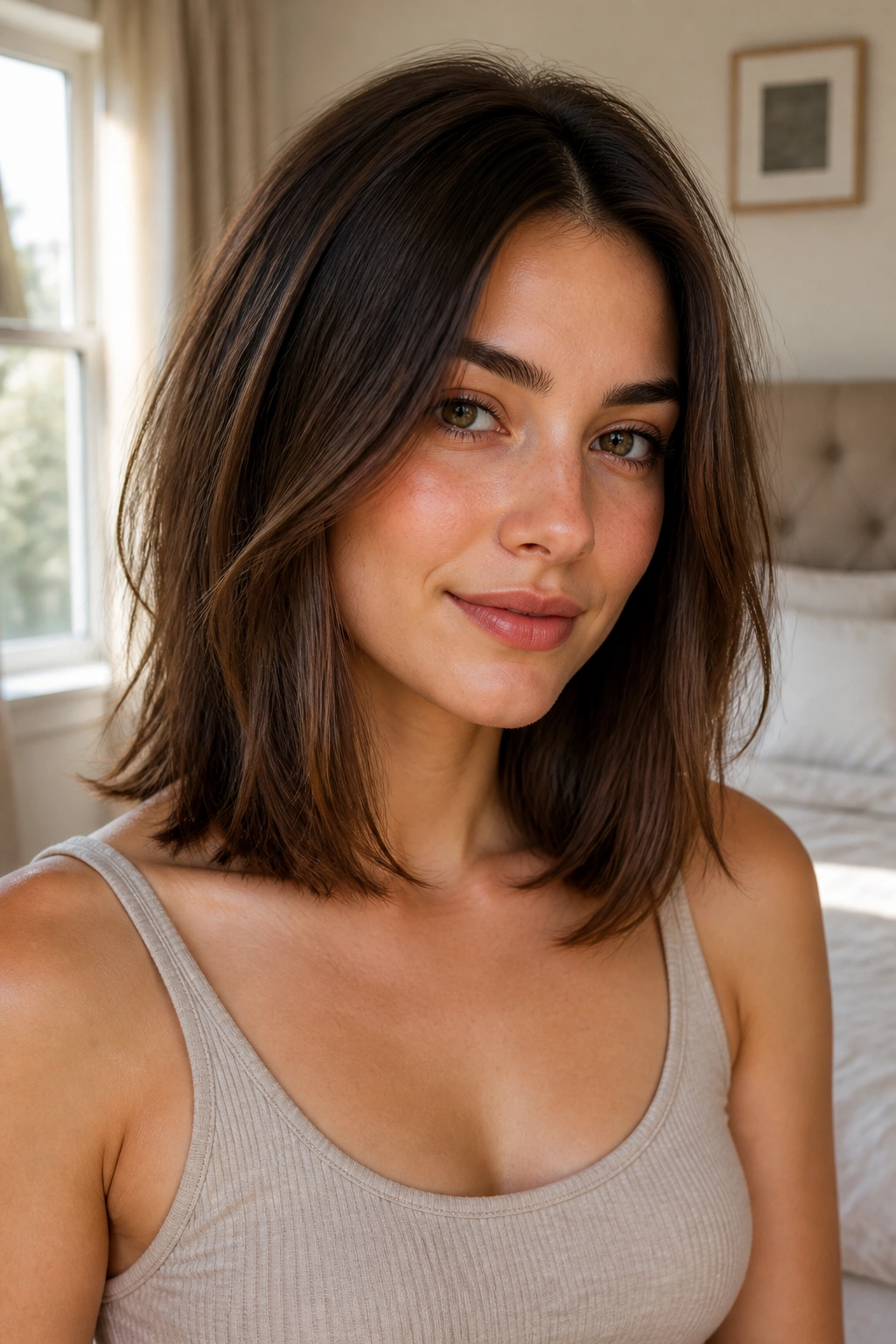
If you want one of the safest medium short haircuts for round faces, start here. A collarbone-length layered lob gives you movement without bringing the eye straight back to the cheeks, and that little bit of extra length makes a big difference.
Why It Works
The collarbone is a useful landing spot because it sits below the jaw and below the widest part of the face. That means the hair creates a vertical line before it fans outward, which is exactly what round faces tend to need. Ask for long layers that begin around the mouth or chin area if your hair is thick, or even lower if your hair is fine and tends to collapse.
Keep the front pieces longer than the back by a small amount. Nothing dramatic. A difference of about 1 to 2 inches is enough to shift the eye downward without making the cut feel sharp.
- Best for: straight, wavy, or lightly curly hair
- Styling sweet spot: a loose bend from a 1¼-inch iron or a round brush
- What to avoid: short layers that pop out near the cheekbones
- Salon language to use: “collarbone length, soft long layers, no bulk at the sides”
My favorite part: it grows out gracefully. That matters more than people admit.
2. Angled A-Line Bob
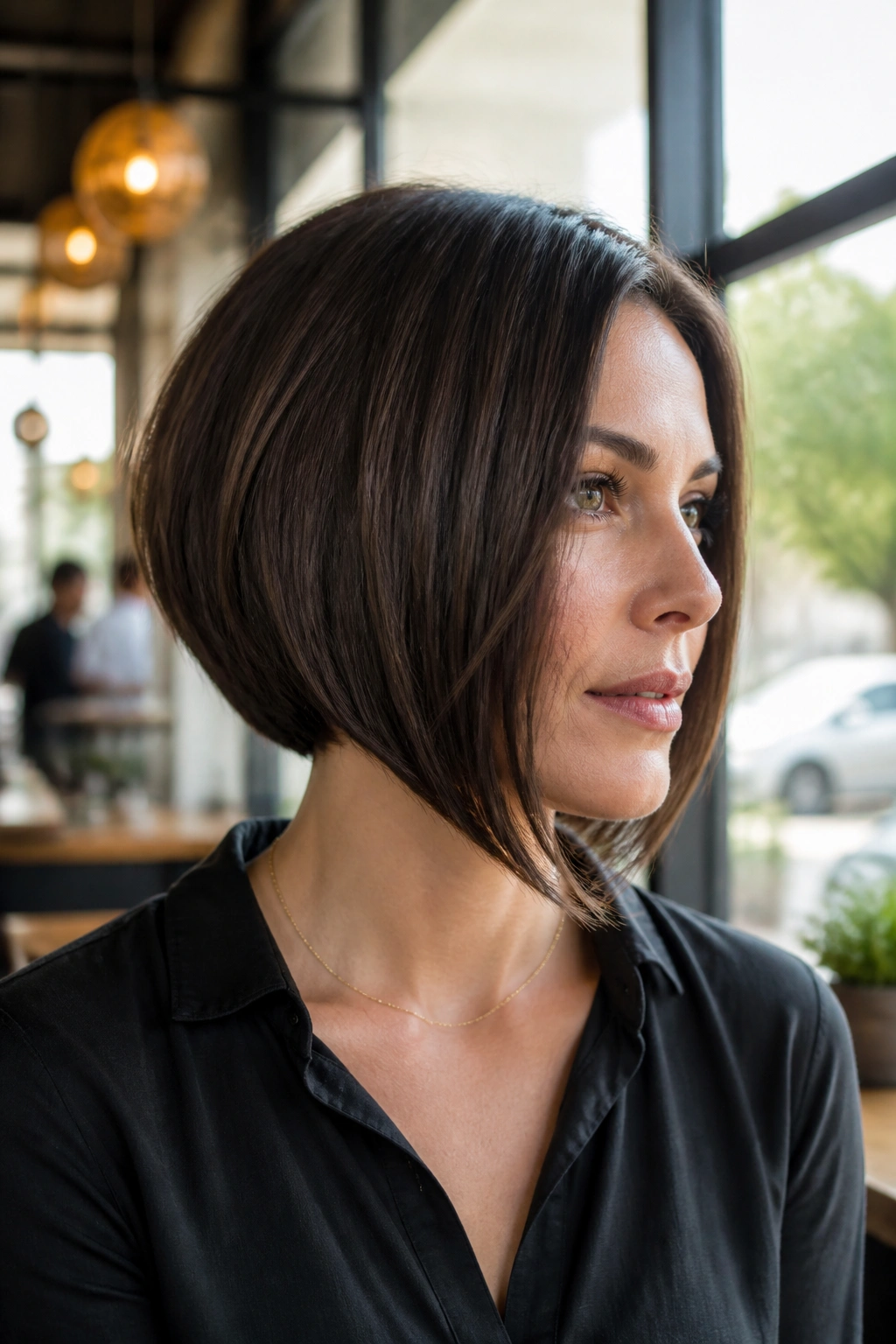
A strong A-line bob can make a round face look longer in one move. The shape is simple: shorter at the back, longer in the front, with the front pieces angled down toward the collarbone or just below the chin. That diagonal line gives the face direction instead of width.
The cut works best when the back stays neat and close to the nape, but not so stacked that it balloons out. Too much volume in the back can make the head look wider from the side, and that’s not the effect you want. Keep the angle clean, and let the front sit just long enough to skim the face instead of wrapping around it.
Straight hair shows off the line best, though a soft wave can make it feel less severe. If your hair is thick, ask for internal weight removal instead of choppy top layers. If it’s fine, keep the ends blunt enough to look full.
This is a cut for someone who likes a tidy shape. Not fussy. Not flat. Just crisp enough to draw a better frame around the face.
3. Curtain Bang Lob
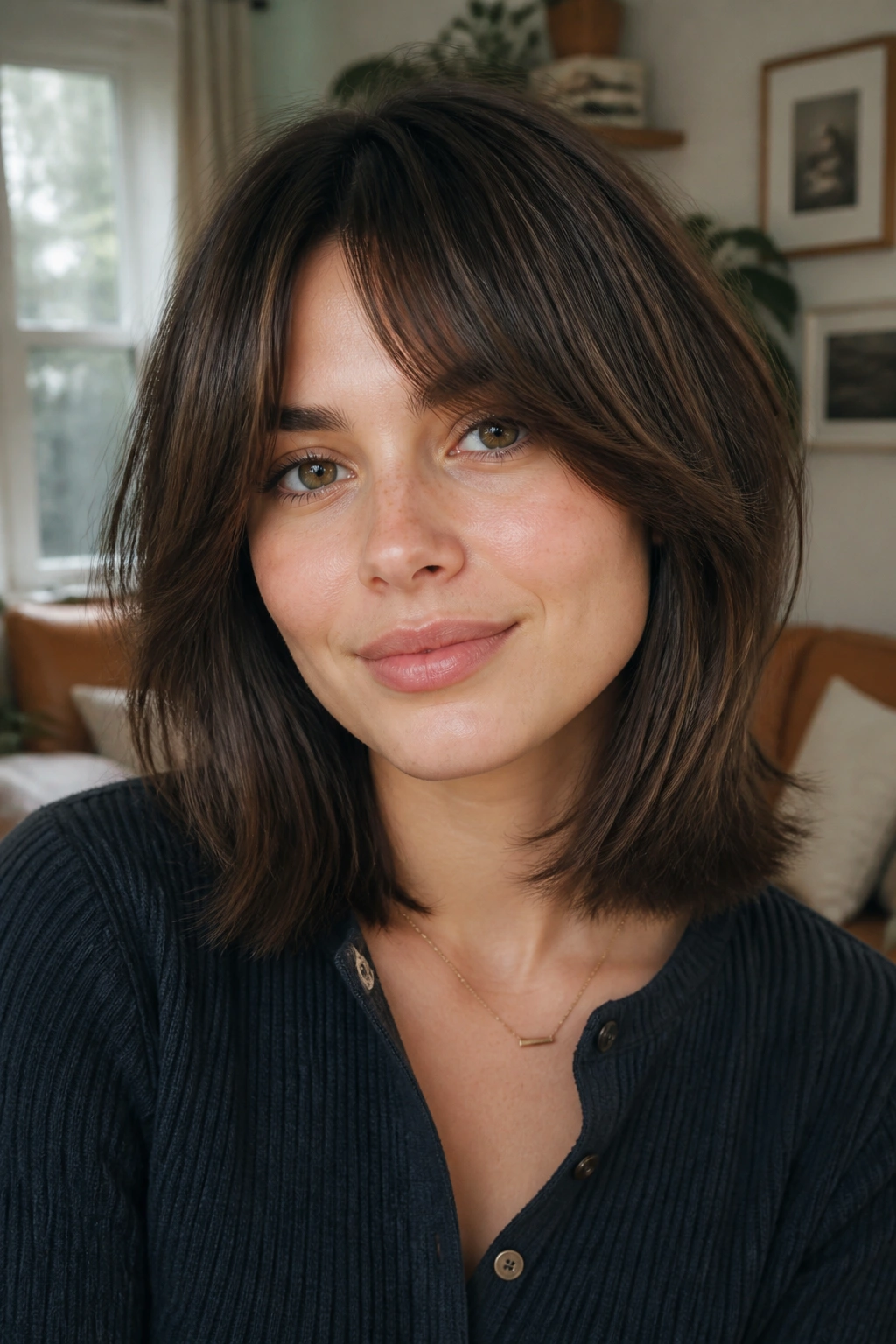
Can bangs work on a round face? Absolutely—if they break up the forehead and sweep outward instead of sitting like a shelf. Curtain bangs paired with a lob are one of the easiest ways to soften a round face without losing length.
The key is placement. You want the shortest point of the fringe to hit around the brow or just below it, then angle the pieces down toward the cheekbones. That creates a gentle V-shape through the front, which helps the face read a little longer. Heavy, blunt bangs that stop straight across the forehead can do the opposite. Skip those unless you want a stronger, fashion-forward look and you’re happy to style them daily.
Curtain bangs also give you flexibility. Wear them parted in the middle for a softer frame, or sweep them to one side when you want more lift. The lob underneath should stay around shoulder length or just above it, with soft ends that move rather than kick out.
How to Style It
Blow-dry the bangs forward first, then bend them away from the face with a round brush or a large Velcro roller. A tiny bit of root lift at the crown keeps the whole cut from falling flat.
A round face usually looks best when the fringe opens the face instead of closing it in. This does exactly that.
4. Textured Shag Lob
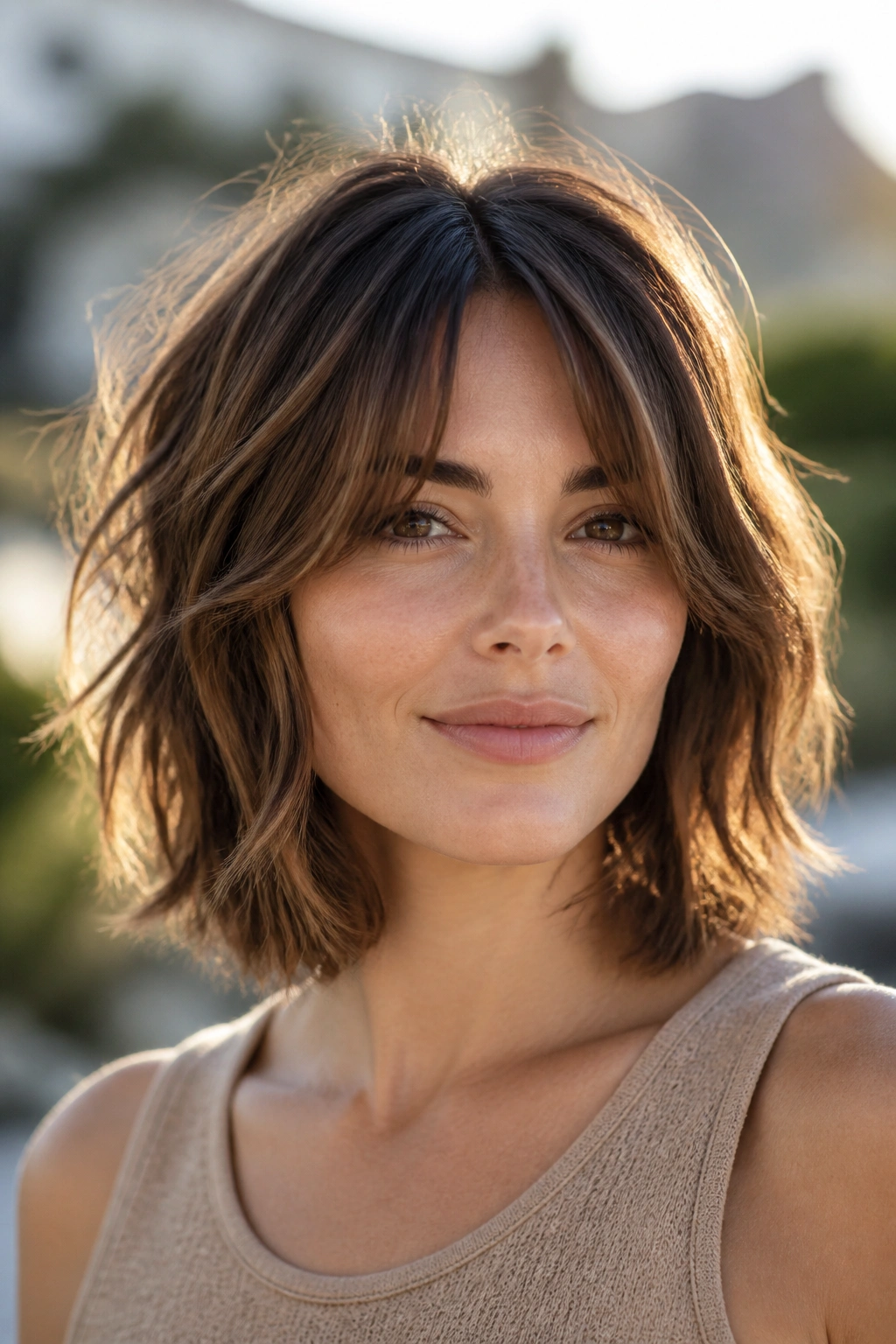
Air-dried hair that turns into a triangle by lunchtime? A textured shag lob fixes that better than a lot of blunt cuts. The layers take out weight, and the broken-up ends keep the style from feeling boxy around the cheeks.
The trick is restraint. A shag can go wrong fast on a round face if the shortest layers land right at the widest part of the face. Ask for the movement to start lower—around the lips, chin, or even a little below—so the texture works with your shape instead of against it. You want lift at the crown, not fluff at the sides.
- Good ask at the salon: “soft shag layers, longer face-framing pieces, keep the widest layers below the cheekbones”
- Best styling products: lightweight mousse, sea-salt spray in small amounts, or a curl cream if your hair is wavy
- Works especially well for: thick hair that needs debulking
- Less ideal for: very fine hair that loses shape quickly
The shag lob has a little attitude. That’s part of the appeal. It looks better when it’s not too polished, which is useful if you hate spending 20 minutes trying to make every strand behave.
5. Long Pixie Bob
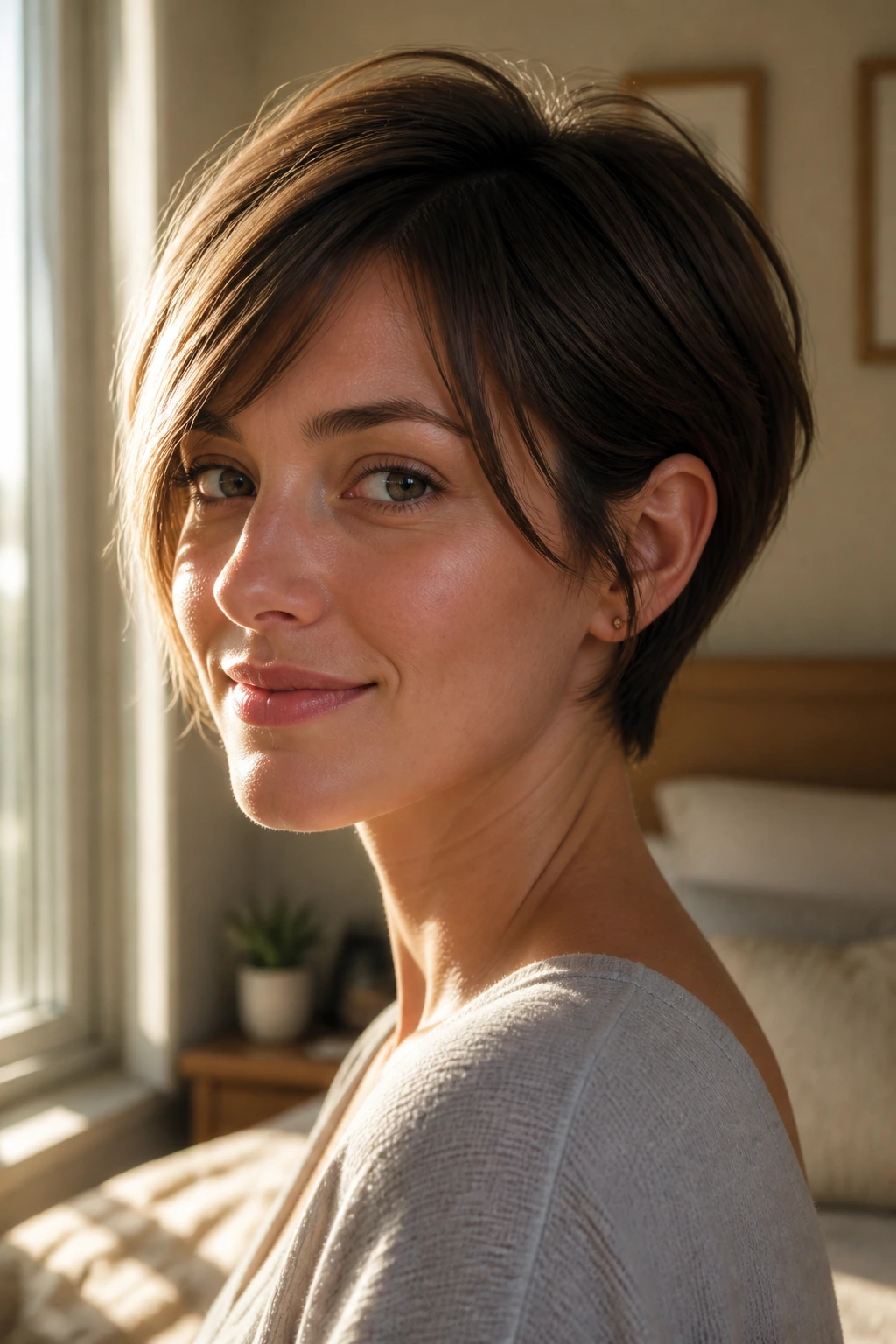
A long pixie bob sits in that nice middle zone between a cropped pixie and a soft bob. For round faces, the appeal is the shape: the nape stays short and neat, the top has enough length to create lift, and the sides don’t need to puff out near the cheeks.
This cut is especially good if you want short hair without going all the way in. The top can be styled forward, side-swept, or tucked behind the ear, and that little bit of flexibility stops the style from feeling severe. Keep the length around the cheekbone or just below the ear in the front, then let the crown stay slightly fuller so the eye moves upward.
It also works well on finer hair because the shorter structure gives it body. Thick hair can wear it too, but the bulk needs to be removed carefully. Too much density around the temples makes the whole thing feel heavy.
I like this cut on people who want a crisp outline but still want some softness. It’s neat. It’s not precious. And it does not ask you to fight your hair every morning.
6. Side-Part Blunt Lob
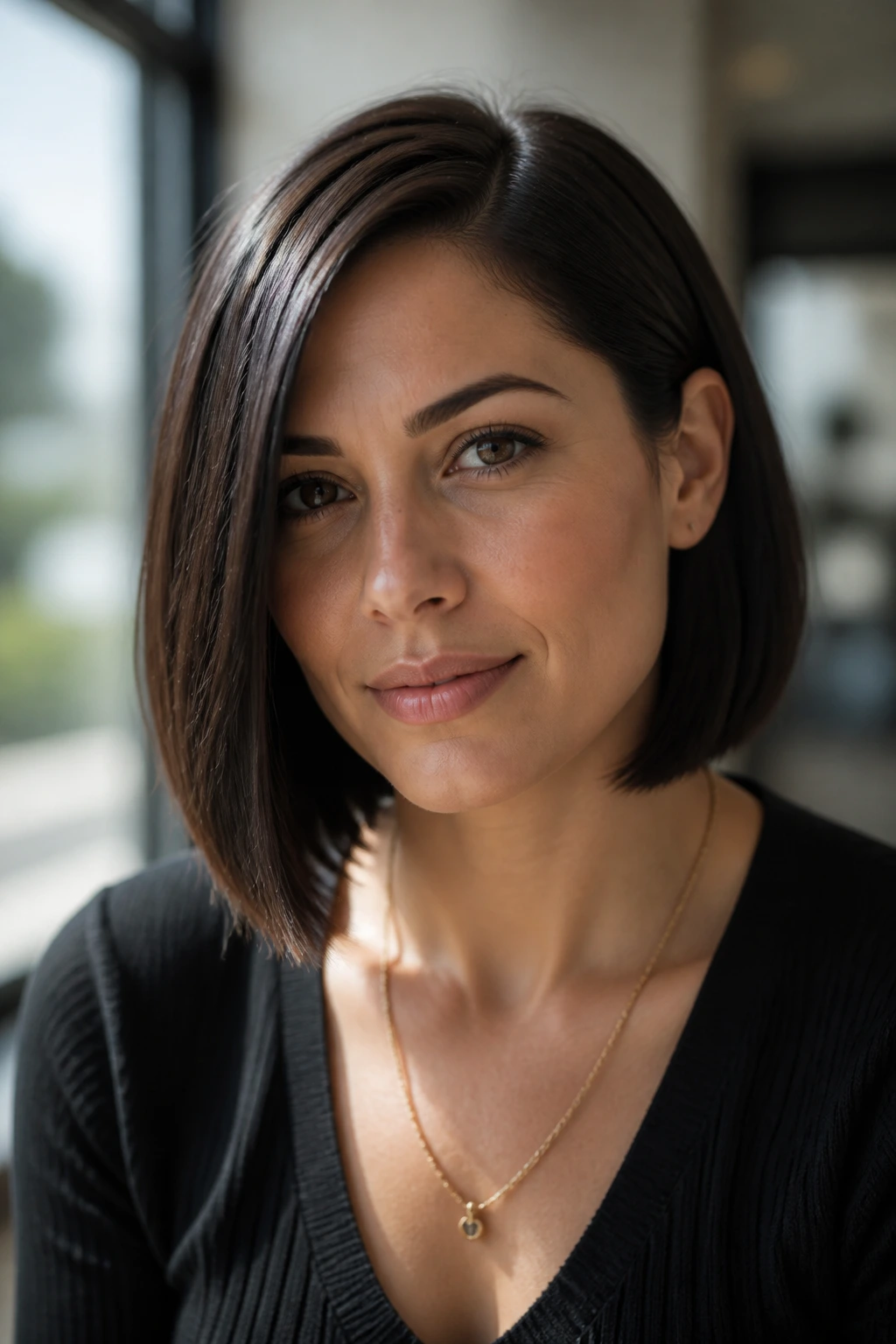
Unlike a center-parted lob, a side-part blunt lob shifts the visual weight away from the middle of the face. That sounds minor. It isn’t. On a round face, even a small off-center part can stop the style from reading as evenly wide.
The blunt edge gives the cut structure, which is useful if your hair is fine or limp. You get a cleaner line, more visual density at the ends, and a shape that looks deliberate rather than over-layered. The catch is placement. If the lob hits right at the jaw, it can widen the face. Keep it at least an inch below the chin, and longer if your cheekbones are very full.
This version works well when you want something polished but not severe. It’s also a nice option if you wear glasses, because the side part keeps the top of the face from feeling crowded. A little root lift at the crown helps, but don’t overdo it. The cut should look smooth, not puffy.
If you’ve tried a blunt lob before and felt too round in it, the part was probably part of the problem. Or the length. Usually both.
7. Wavy Shoulder-Length Cut
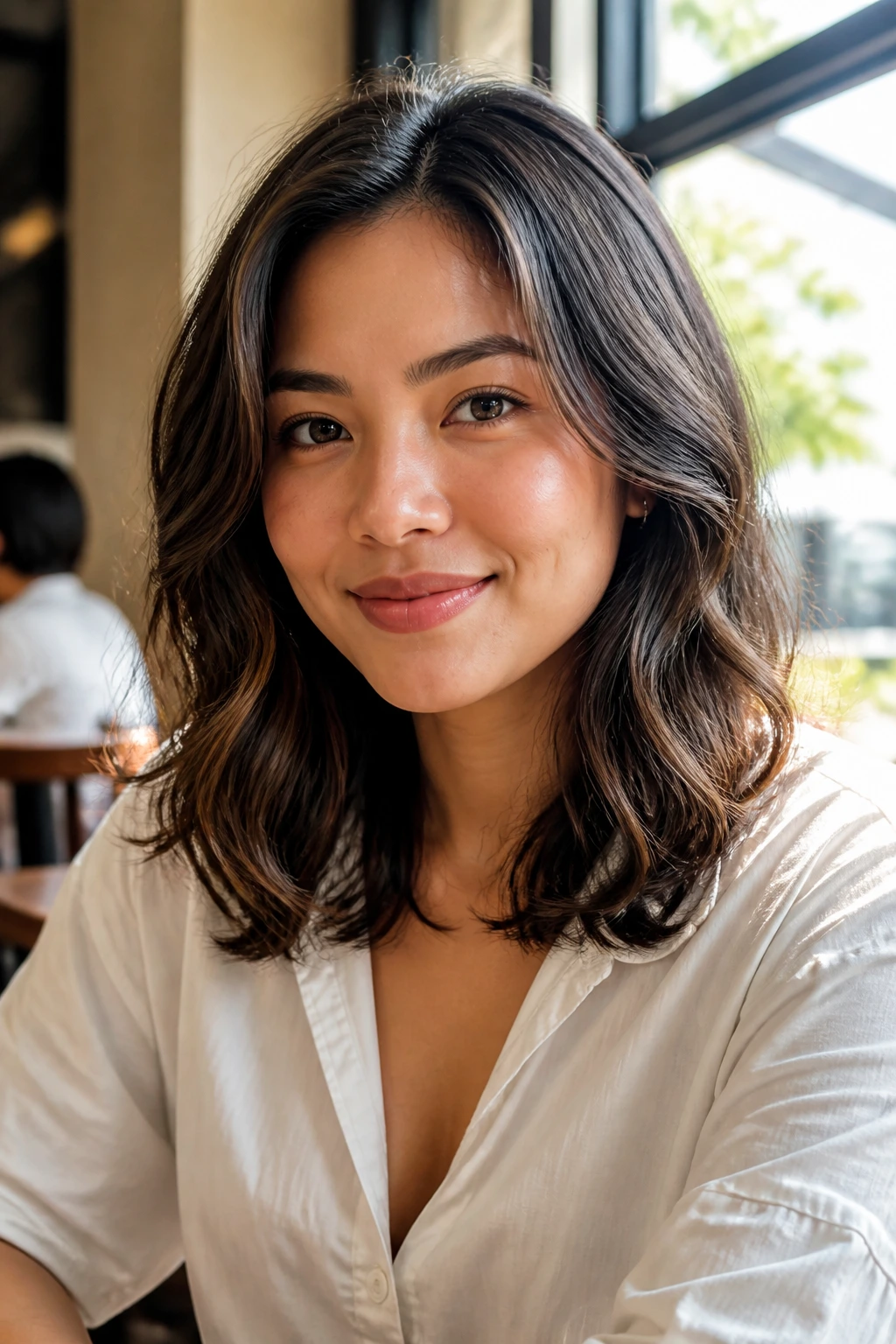
Loose waves that fall past the shoulders can make a round face look softer without making it look wider. The important detail is where the wave sits. If the bulk of the curl lands beside the cheeks, the face can feel fuller. If the movement starts lower, around the mouth and collarbone, the whole shape opens up.
This is one of those cuts that looks easy when it’s done right and a little too casual when it isn’t. Ask for a shoulder-length base with minimal layering through the top and more shaping through the bottom half. That keeps the line long while still giving the hair a bit of bounce. For a round face, bounce is good. Puffiness is not.
A 1-inch curling iron gives a cleaner wave than a big loose barrel if your hair is naturally straight. Wrap sections away from the face, leave the last inch out, and brush lightly once it cools. That keeps the wave soft instead of springy.
This cut is a solid choice if you like air-dried texture, touchable ends, and a style that doesn’t demand perfection. It looks even better when the movement is slightly imperfect.
8. Face-Framing Layers with Soft Ends
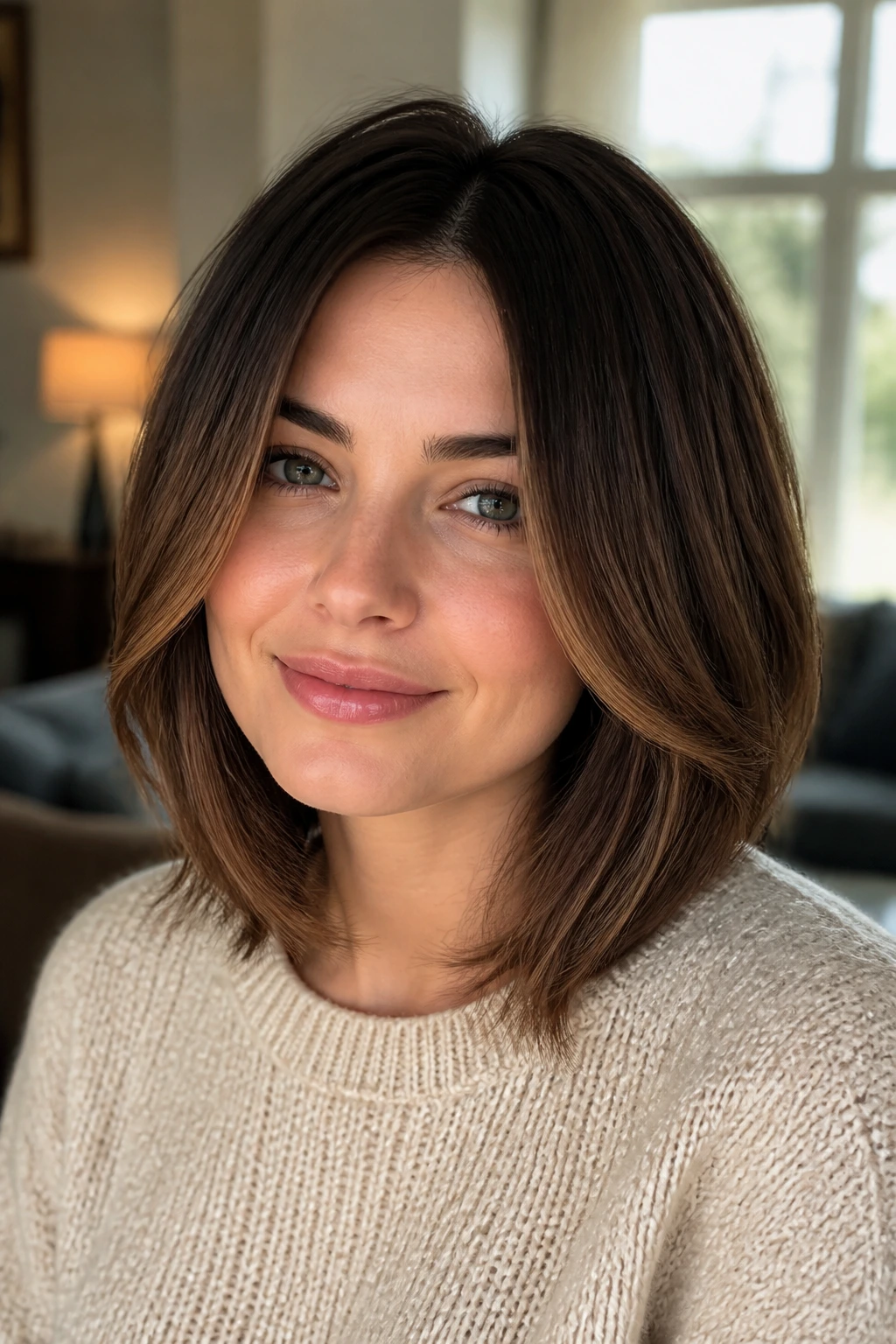
Face-framing layers can be brilliant on a round face, but only when they start in the right place. The goal is not to carve hard lines into the cheeks. The goal is to guide the eye downward and keep the width from sitting right at the face’s broadest point.
Where the Layers Should Start
Ask for the shortest pieces to begin around the mouth or lower cheekbone, not the temples. That small shift matters. Layers that start too high can spread the hair out around the face and make it feel wider, especially if you already have full cheeks or a lot of hair.
What to Avoid
Hard, chunky layers can look dated fast and grow out awkwardly. Soft ends are better. They move better too. A rounded or lightly beveled finish keeps the cut from looking choppy, which is useful if your hair is thick or naturally puffy.
- Ask for: long face-framing layers, soft ends, and minimal bulk through the sides
- Avoid: short, choppy pieces that stop at the cheekbone
- Style with: a round brush or blow-dry brush, turning the front away from the face
- Best on: medium-density hair that holds shape without fighting back
This cut is subtle, which is why it works. It doesn’t scream for attention. It quietly fixes proportions.
9. Modern Midi Shag
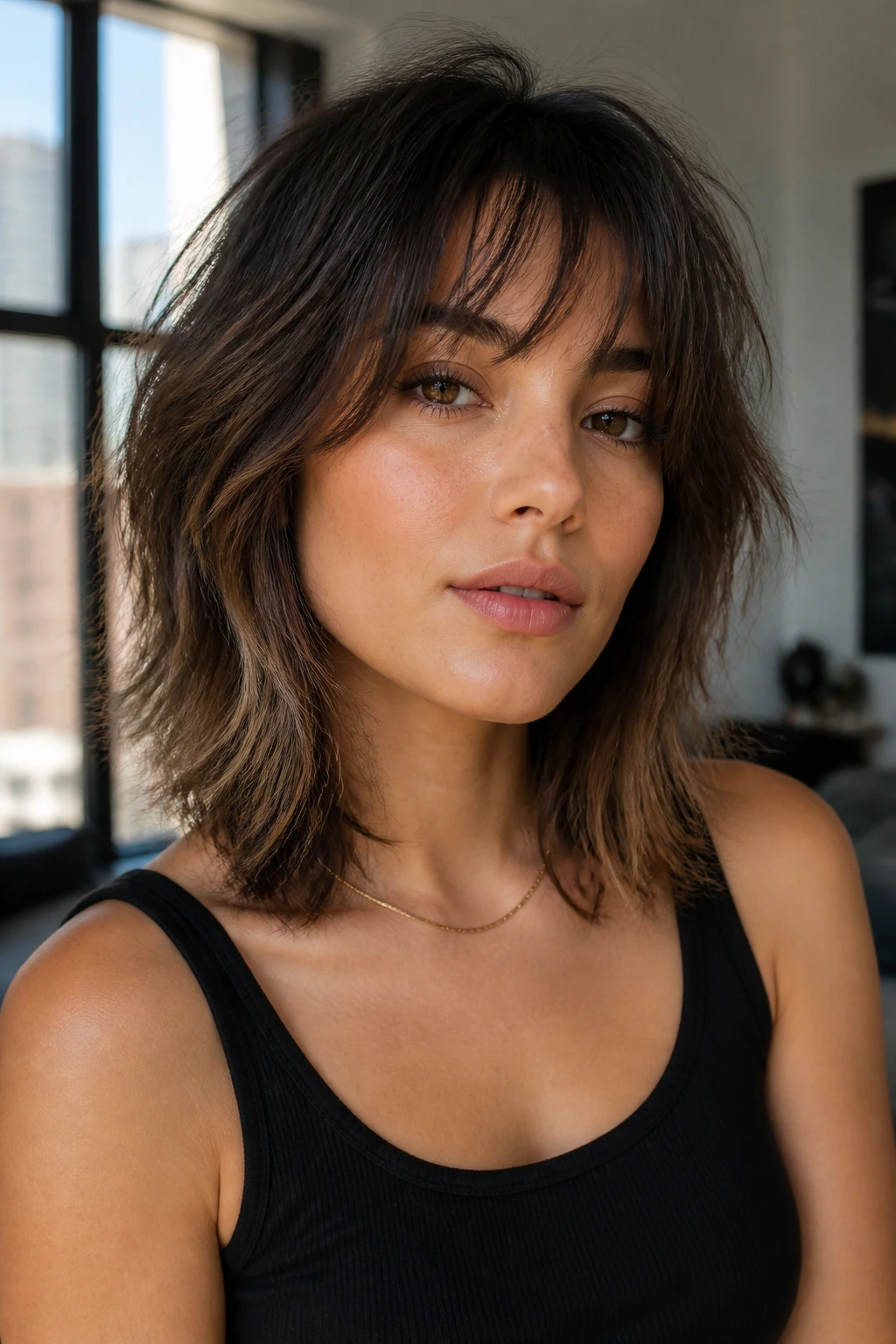
Why do midi shags work so well on round faces? Because they add movement without letting the width build in the wrong place. The crown gets a little lift, the ends stay light, and the face frame can be adjusted so the hair falls below the cheeks instead of beside them.
The modern version of the shag is softer than the old-school one. Think less rock-star chaos, more controlled texture. The layers are still obvious, but they are not so short that the style stands out like a helmet. On a round face, that matters. You want softness with direction.
This cut is especially useful if your hair has a natural wave. A touch of mousse, a diffuser, and a little scrunching at the ends can give you shape in ten minutes or less. Fine hair can wear it too, though it needs less layering so the ends do not disappear.
How to Wear It
- Scrunch in a small amount of mousse at the roots
- Dry with a diffuser or air-dry to about 80%
- Twist a few front pieces away from the cheeks
- Finish with a light cream on the ends, not the roots
The result is relaxed, but not sloppy. That’s the line to aim for.
10. Asymmetrical Bob
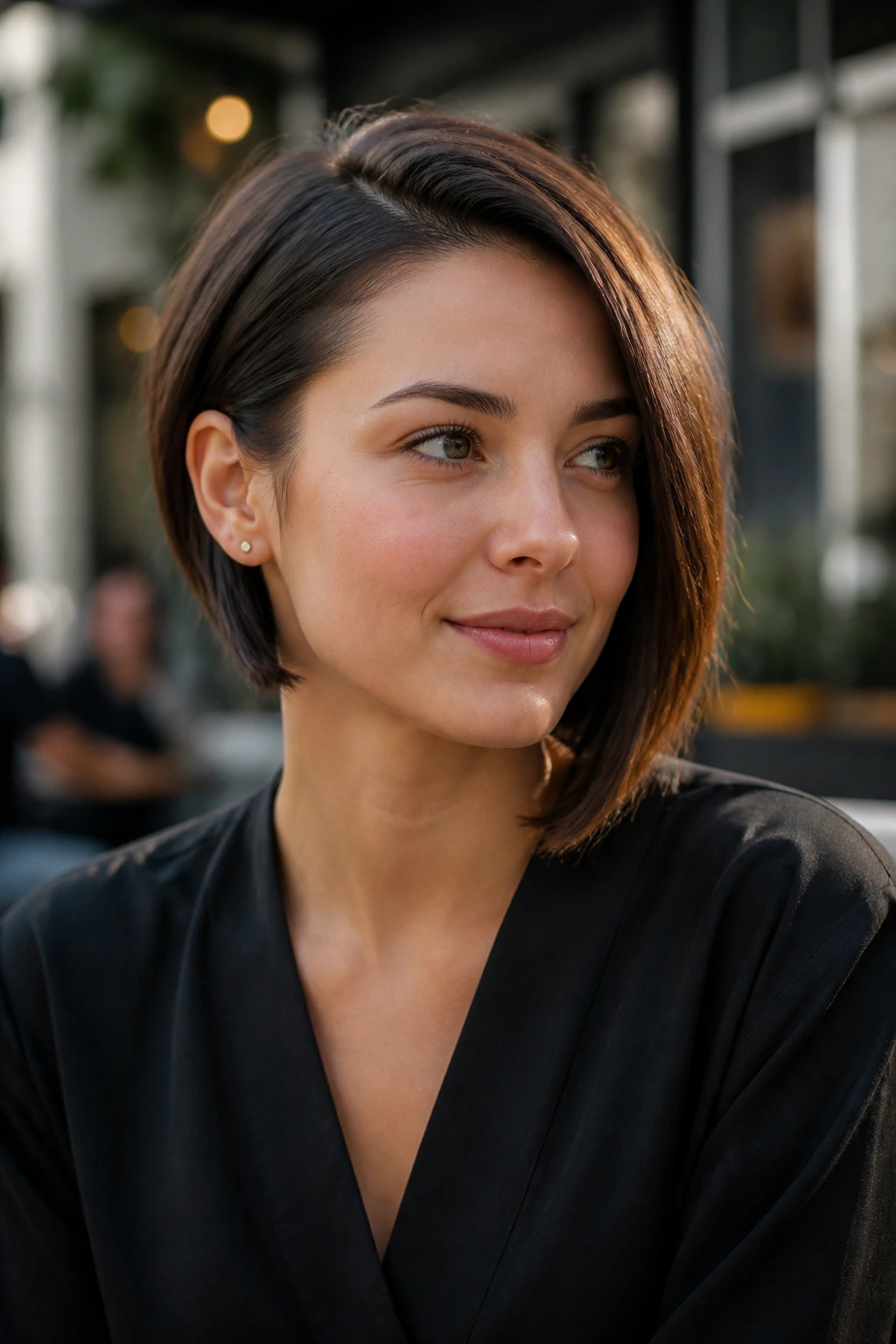
A slight asymmetry can be a gift for a round face. One side sits a touch longer, the line moves diagonally across the face, and the eye stops reading the shape as perfectly circular. That little break in symmetry is doing more work than most people realize.
Keep the difference subtle. One side longer by 1 to 2 inches is enough. Go too dramatic and the cut becomes the whole conversation, which is fun for about a week and annoying after that. A gentle asymmetrical bob still feels wearable. It just has enough edge to make the face look less wide.
This cut is best when the shorter side tucks neatly behind the ear and the longer side skims the jaw or collarbone. If your hair is thick, the asymmetry can remove bulk in a smart way. If it’s fine, the shape gives the illusion of density without needing a lot of styling.
I like this one on people who want something a little sharper than a classic lob. It has personality. It also knows when to stop.
11. Deep Side-Part Bob with Crown Volume
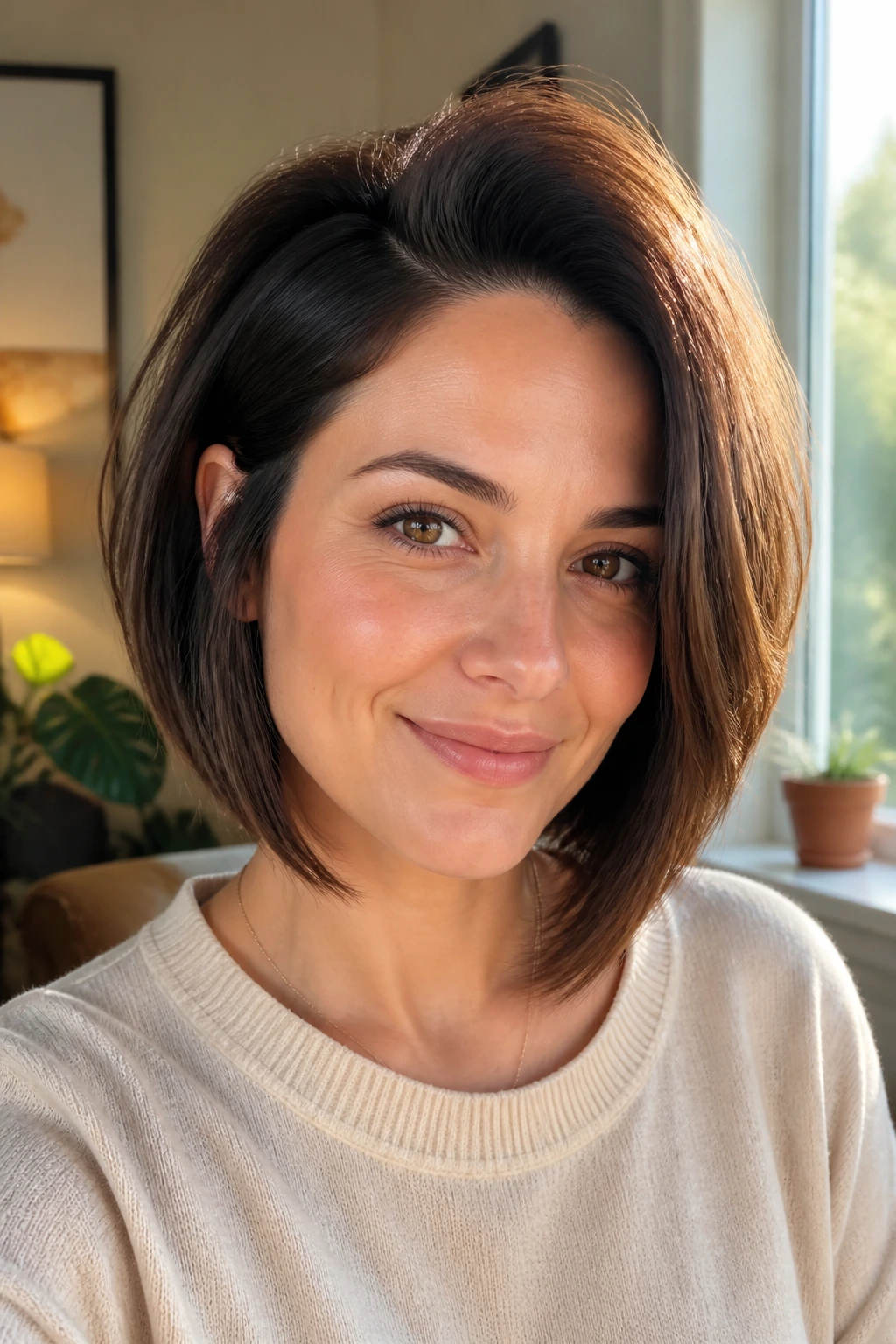
If your face looks widest at the cheeks, crown height beats cheek width every time. A deep side-part bob uses that principle well. The part shifts volume upward and off-center, which helps create a longer line through the face without needing a ton of length.
The bob itself should land below the jaw or just at the upper neck, not right at the widest part of the face. That part matters. A jaw-length bob can be tricky on a round face unless the ends are sharp and the top is controlled. With a deep side part, the style feels more lifted and less square.
Root lift is the whole game here. Blow-dry at the roots with a nozzle, lift the top section with a round brush or a vent brush, and pin the heavier side for a few minutes while it cools. That tiny bit of setting makes the part stay where you want it.
This cut suits anyone who wants a neat shape but not a flat one. It’s especially good for evenings, interviews, or days when you want your hair to look deliberately styled without looking frozen in place.
12. Choppy French Lob
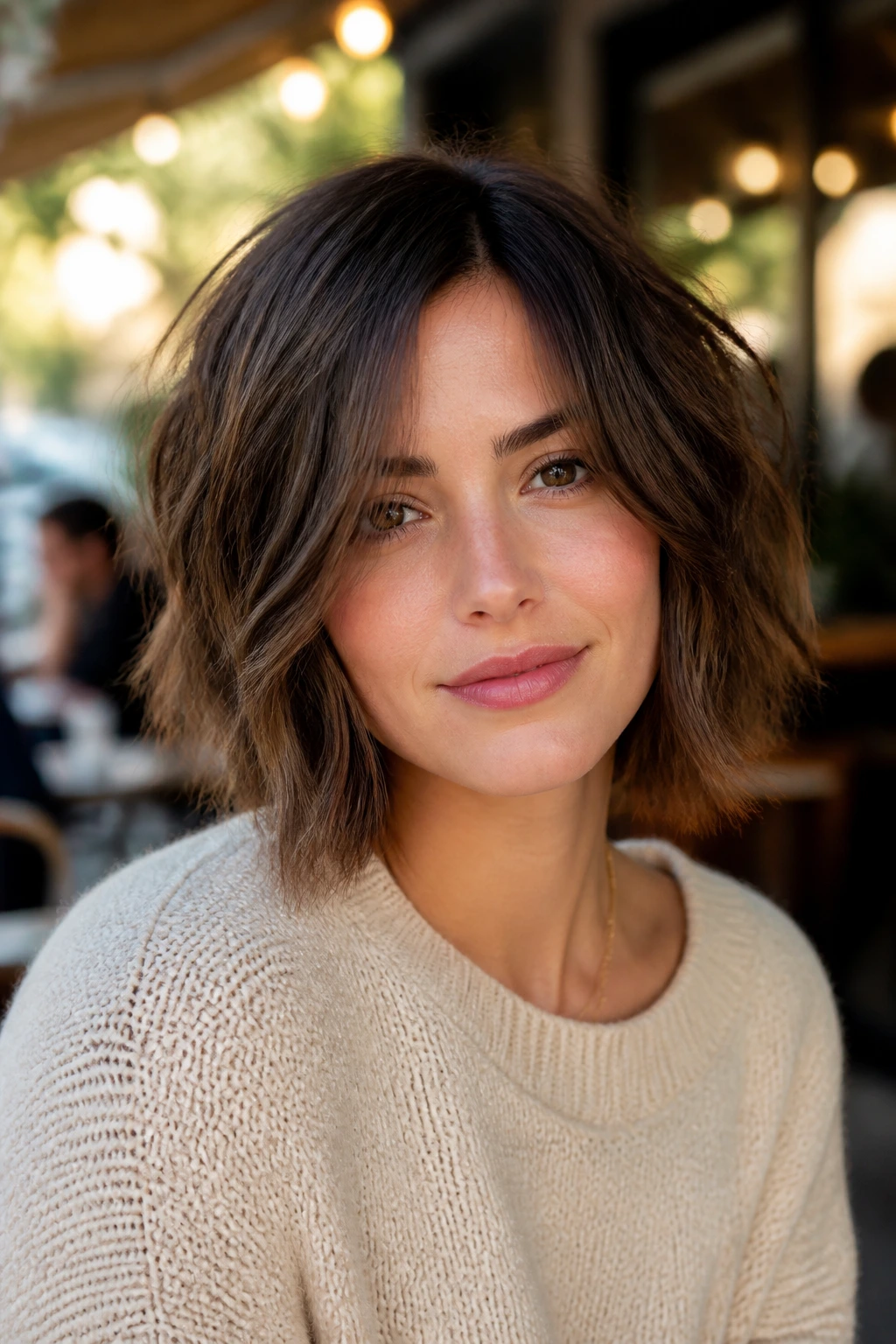
A choppy French lob has that easy, slightly undone feel that never seems to try too hard. On a round face, the charm is in the broken texture. Instead of one heavy curtain of hair sitting at the cheeks, you get pieces, movement, and a line that stays airy.
The cut usually lands somewhere between the chin and collarbone, with ends that look lightly sliced rather than blunt. That gives the hair a bit of lift, especially if you style it with a bend instead of a tight curl. The French version tends to be softer than a classic shag and less polished than a blunt lob. That middle ground is what makes it useful.
This style is kind to fine hair because it keeps the shape from feeling heavy. Thick hair benefits too, but only if the layers are internal and not too short. A heavy fringe can overwhelm a round face, so if you want bangs, keep them wispy or side-swept.
The cut looks best when the finish is touched, not overworked. A little bend near the ends. A little mess near the crown. Enough polish to look intentional, not enough to look stiff.
13. Sleek Straight Lob
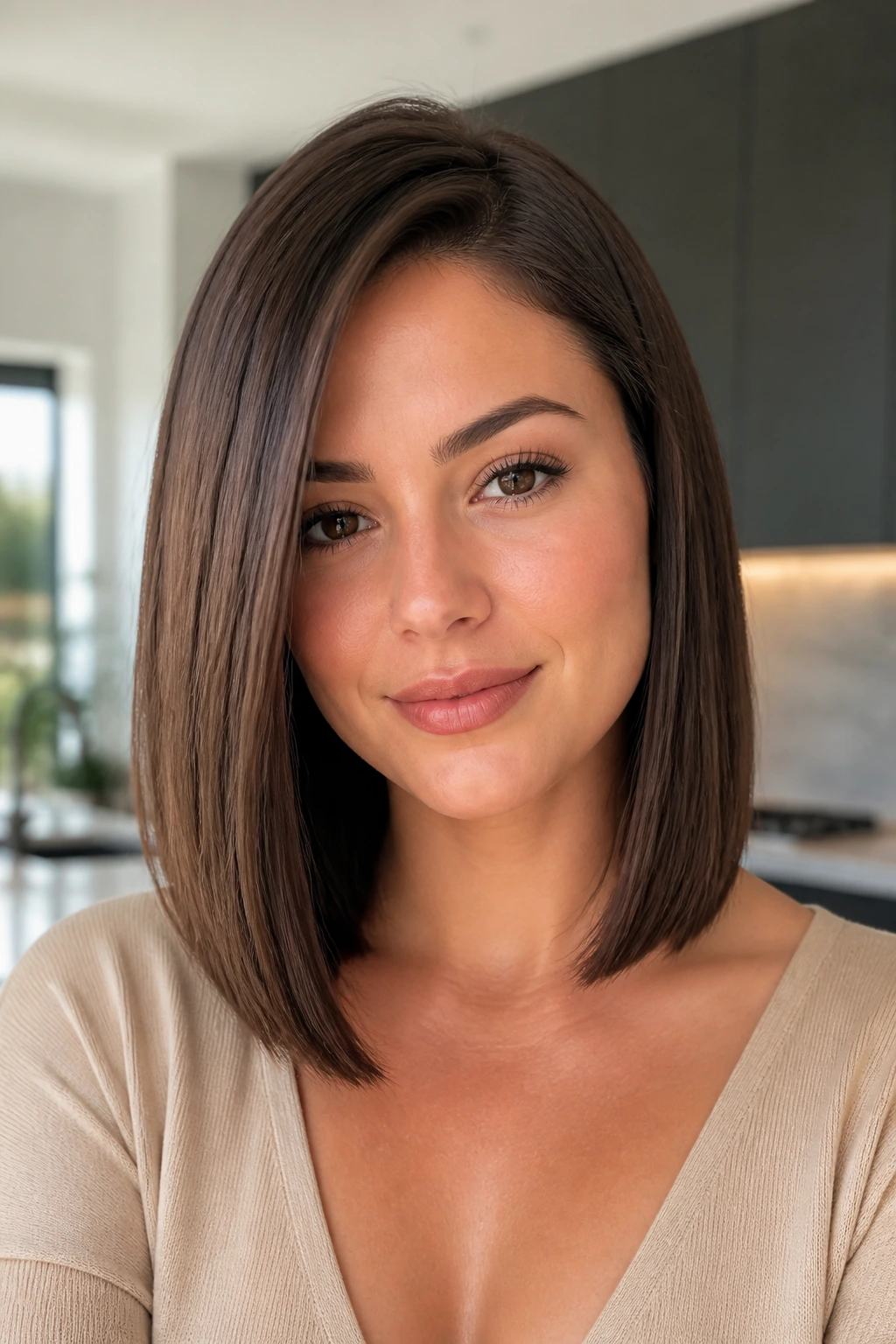
Can a sleek cut work on a round face? Yes, if the length is right and the part is not dead center. A straight lob with a slight off-center part can make the face look longer and cleaner, especially if the ends fall below the chin.
How to Keep It from Widening the Face
Use a flat iron to smooth the mid-lengths, then give the ends the smallest inward bend. Not a curl. Just a soft curve so the line stays controlled. A blunt, straight-across finish at the jaw can add width, so let the lob sit lower and use the part to break up symmetry.
The shine matters here too. A glossy finish pulls the eye down the length of the hair. Dry, fluffy ends do the opposite. Heat protectant is not optional, and neither is a smoothing serum if your hair frizzes.
- Best for: straight, fine, or medium hair
- Parting choice: slightly off-center, not perfectly middle
- Styling tool: flat iron set to medium heat, around 300°F to 350°F depending on hair type
- Salon request: “keep it sleek, but not too blunt at the jaw”
This is the haircut for someone who likes order. Clean lines. Easy mornings. Less fuss.
14. Soft Wolf Cut for Medium Short Hair
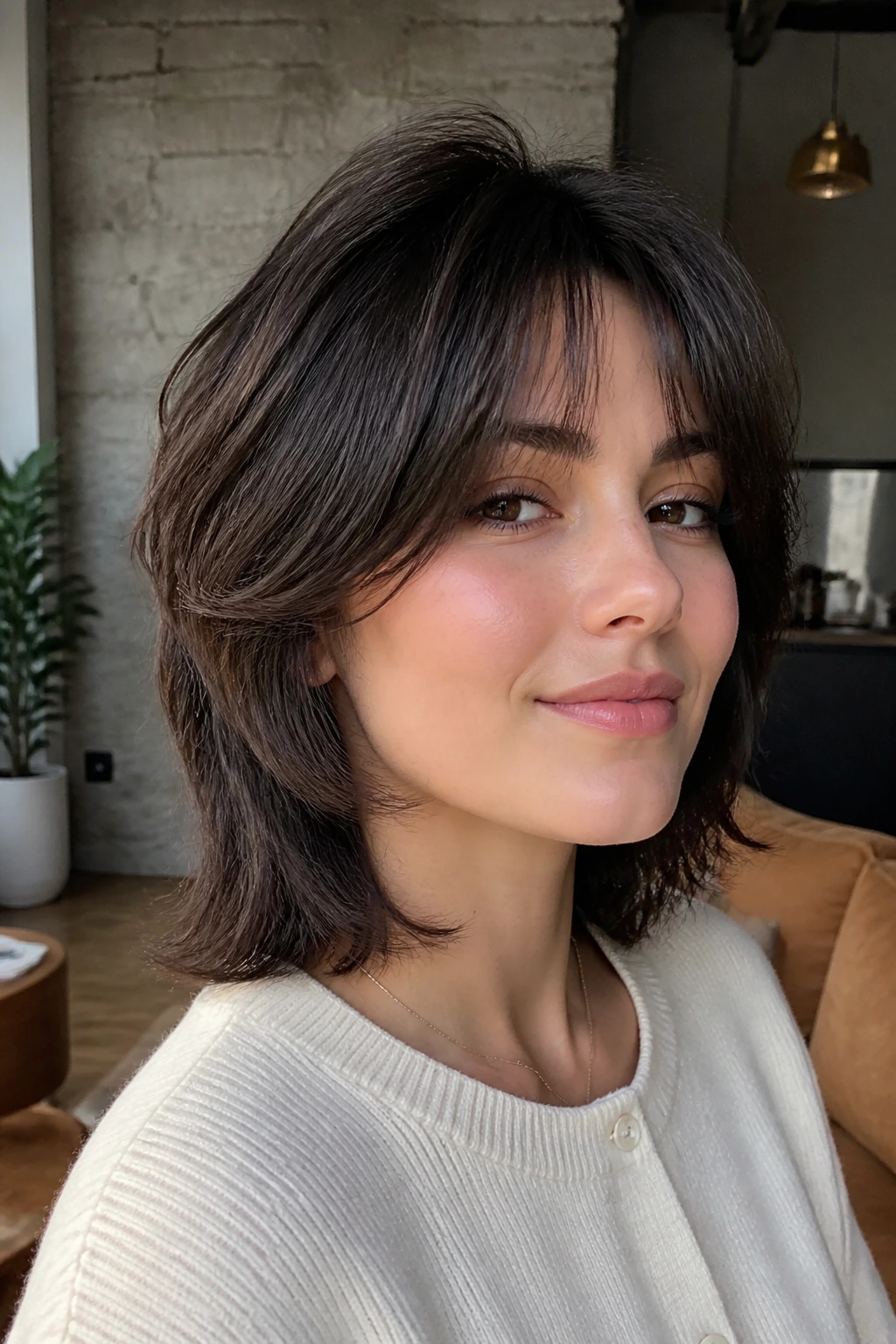
A wolf cut can work on a round face, but only when the top stays controlled. That’s the part people get wrong. Too much volume at the sides turns the cut into a puffball. Too much choppiness around the cheeks does the same thing. The soft version keeps the shape airy and the length moving downward.
A good wolf cut for round faces keeps the shortest layers higher on the head and the longest layers below the jaw. That creates lift where you want it and extension where you need it. The face frame should be gentle, almost broken up, not sharp. If you have waves or curls, this can look very cool with minimal styling. Straight hair can wear it too, but it needs a bit more product to stop the ends from separating in a weird way.
This is not the cut for someone who wants neat and quiet. It has bite. It has texture. It also asks for some maintenance, because the line can get shaggy in a way that stops looking intentional if you ignore it for too long.
A good soft wolf cut feels modern without feeling flimsy. That balance is harder than it looks.
15. Bouncy Midi Cut with Bottleneck Bangs

Want softness without a full fringe? Bottleneck bangs are the smart answer. They stay narrow in the middle, then open out toward the temples and cheekbones, which gives a round face some shape without boxing it in.
The cut underneath should stay in midi territory—usually between the shoulder and collarbone—with movement in the lower half rather than heavy layering all over. That keeps the style from puffing around the face. The bangs do the framing work up top while the length keeps the face looking a little longer.
How to Ask for It
Tell your stylist you want bangs that are shorter in the center and blend longer toward the sides. Mention that you want them to sit softly, not bluntly, and that the longest pieces should merge into the front layers around the cheekbone or just below.
For styling, dry the bangs first with a small round brush, aiming them slightly away from the face. A light mousse at the roots can help the whole cut hold lift without getting crunchy. If your hair is thick, ask for internal debulking below the crown so the top doesn’t spread out.
This one is especially good if you want movement up front but still want the safety of some length around the shoulders. It feels feminine, but not fussy. That’s a nice place to be.
Final Thoughts
The best medium short haircuts for round faces do one job well: they make the face feel a little longer, a little cleaner, and a little less wide at the cheeks. That can happen through length, through angle, through parting, or through the way the layers fall.
If you want the safest bet, the collarbone lob and the side-parted shapes are hard to beat. If you want more personality, go for the shag, the asymmetry, or the wolf-inspired cut with softer edges. The trick is not chasing volume everywhere. It’s placing it where it helps.
Bring photos to your stylist, but point out the details you actually want: where the front ends land, how much lift you want at the crown, and whether the layers should start above or below the cheekbones. Those little specifics matter more than the name of the haircut.
