



A good bob after 40 should not fight your hair. It should meet it where it lives — at the crown, at the nape, at the part line — and make the whole head look cleaner with less bargaining in front of the mirror.
These 15 classic bobs for women over 40 work for a simple reason: they are built for real hair, not magazine hair. Fine strands that have lost a little bulk, thick hair that wants to puff at the sides, gray regrowth that needs a crisp edge, a cowlick that insists on having an opinion — all of that changes how a bob sits. A smart cut takes those things into account instead of pretending they do not exist.
I like bobs that still look sharp on day three, not only when you walk out of the salon with fresh blow-dry heat in your hair. I also like cuts that let you keep some personality: a side part, a little curve, a fringe that does not sit there like a wall. The right bob can do that. The wrong one can look like it was cut with a ruler and then left alone.
The best part is that the options are not all the same haircut in different shoes. Some lift the face. Some make fine hair look fuller. Some calm thick hair down. Once you know what each shape actually does, the choice gets easier. The first one is the one I reach for most often.
1. Chin-Length Blunt Bob

A chin-length blunt bob is the cleanest place to start if you want a haircut that looks deliberate the second it settles.
Why It Flatters
The blunt edge gives the eye one solid line to follow, and that matters more than most people think. Hair that lands right at the jaw can sharpen the face a little, which is useful if your features have softened over time or if you want your cheekbones to show up more clearly. It also gives fine hair a denser look because the ends all land together instead of feathering out.
This is the bob I like for straight to softly wavy hair when you want polish without a lot of styling drama. Blow-dry it with a paddle brush or a small round brush, tuck the ends under by a quarter inch, and stop there. Too much curve can make the cut feel fussy.
Quick Facts
- Best for: Fine to medium hair, oval faces, heart-shaped faces.
- Ask for: A perimeter that hits the chin, with only light beveling at the ends.
- Styling time: About 10 to 15 minutes if your hair already dries smooth.
- Watch for: Over-texturizing, which can make the outline look thin and shaky.
Tip: Keep the perimeter blunt. If the ends get thinned out too much, the whole cut loses its point.
2. Collarbone Lob with Soft Ends

If you want the ease of a bob but you are not ready to give up length, the collarbone lob is the safest bet in the room.
It brushes the shoulders instead of stopping above them, which means you still get movement when you tuck it behind one ear, pull it into a low clip, or leave it down under a blazer collar. That extra inch or two also helps if your hair has started to feel less forgiving than it used to. There is more hair to work with, so the style does not collapse as quickly.
The soft ends matter here. A collarbone lob looks best when the bottom line is gentle, not chopped. Ask for the front to land around the collarbone and for the ends to be softened just enough to move. You want the shape to bend, not flap.
This cut suits women who like a low-maintenance shape but still want room to experiment. One day it can be sleek. Another day it can be loose and a little undone. That flexibility is the whole point.
3. French Bob with a Soft Fringe

Why does the French bob keep coming back? Because it does a lot with very little length.
It usually sits somewhere between the cheekbone and the jaw, with a fringe that grazes the brows or skims just above them. That little bit of fringe changes the whole mood. It pulls attention upward, softens the forehead area, and makes the haircut feel finished even when the rest of your styling is plain. On women over 40, I like it especially when the hairline needs a little framing or when the face looks better with a bit of softness near the eyes.
How to Style the Fringe
The fringe should move first. If you wait until the rest of the hair is dry, the front will set in a weird bend and then you will spend the next ten minutes trying to correct it.
- Blow-dry the fringe while it is still damp, using a small round brush or your fingers.
- Aim the airflow downward so the fringe does not puff up at the roots.
- Stop drying when the fringe is only about 90 percent dry; the last little bit falls into place on its own.
- If you have a cowlick, dry the fringe in the opposite direction for 10 seconds, then switch back.
A French bob is not shy. It is neat, a little cheeky, and far more forgiving than people expect when the length is right.
4. A-Line Bob
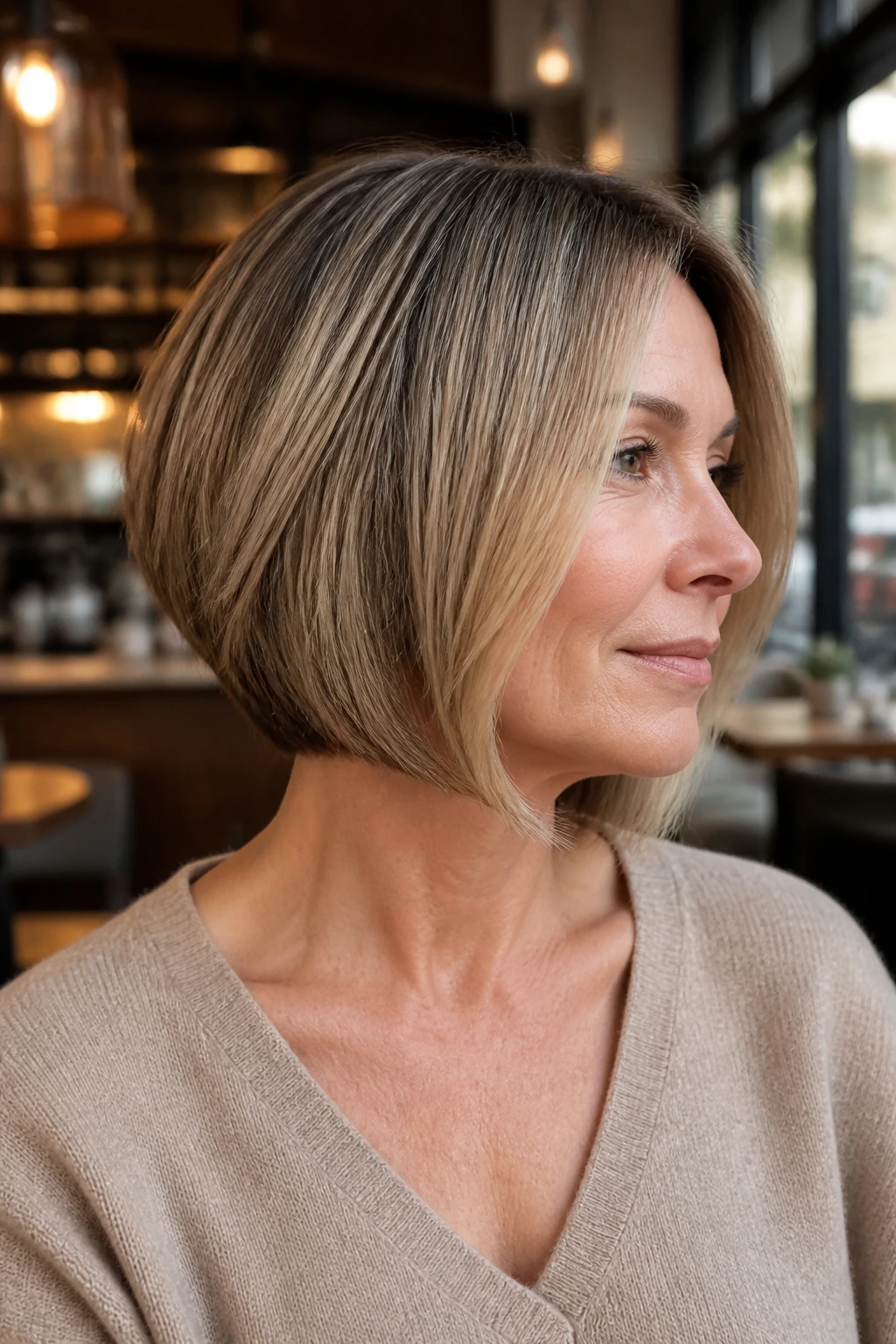
Picture a bob that sits shorter in the back and stretches a little longer toward the front. That small shift changes the whole profile.
The A-line shape lifts the nape and gives the front pieces room to frame the face without feeling bulky. If your hair is thick, this is useful because the back stops sitting like a block. If your hair is fine, the angle can still help, as long as it is not exaggerated. The trick is restraint. A good A-line bob should swing when you turn your head, not scream from across the room.
I especially like this cut for women who wear collars, scarves, or jackets that tend to crowd the neckline. The back stays neat, while the front keeps a little length where you want it. That balance makes the haircut easy to live with in real life, not just in the salon chair.
What to Ask For
- Keep the back about 1 to 2 inches shorter than the front.
- Let the front land near the jaw or just below it.
- Ask for a soft angle, not a steep one.
- Blow-dry with tension from side to side so the line stays smooth.
A subtle A-line has more staying power than a dramatic one. It looks intentional on day one and still looks like a haircut, not a compromise, when it grows out.
5. Rounded Bob with a Deep Side Part
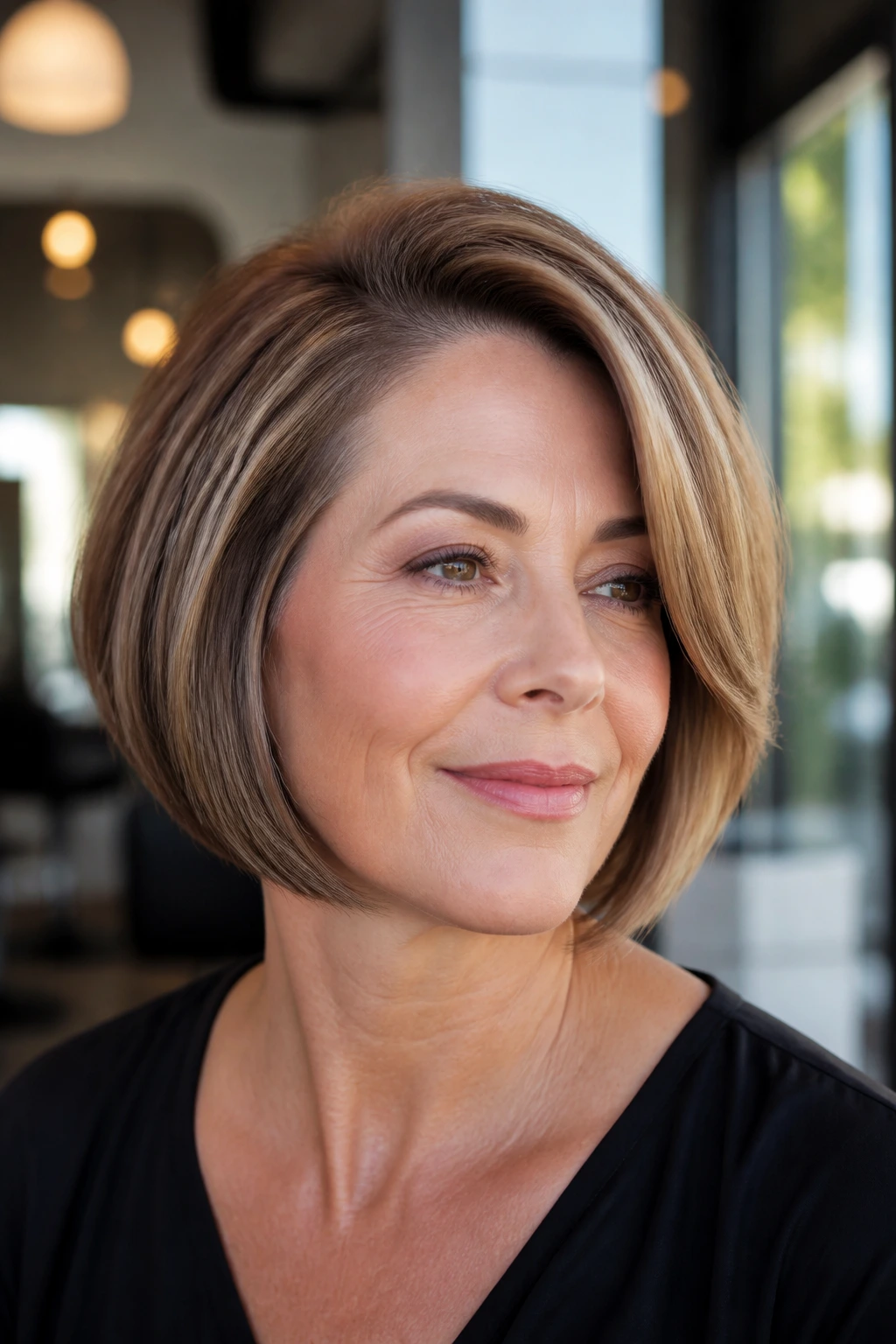
A rounded bob has that soft curve that hugs the head instead of kicking out at the sides, and a deep side part gives it a little lift where most people need it most.
That curve is doing quiet work. It smooths the silhouette around the ears and jaw, which can be flattering if you want the cut to feel polished rather than hard-edged. The deep side part breaks up symmetry just enough to keep the style from reading flat. It also helps if one side of your hair naturally sits a little lower or if your crown needs extra height.
This is one of those cuts that looks calm on the surface but does a lot underneath. On silver hair, it shows off the shape nicely. On darker hair, it gives the outline some weight and depth. Either way, the side part keeps it from feeling too severe.
I would call this a good choice for women who want a bob that behaves. It does not need much more than a round brush and a small amount of smoothing cream. That is the appeal. It looks put together without asking for a full morning routine.
6. Layered Bob for Fine Hair
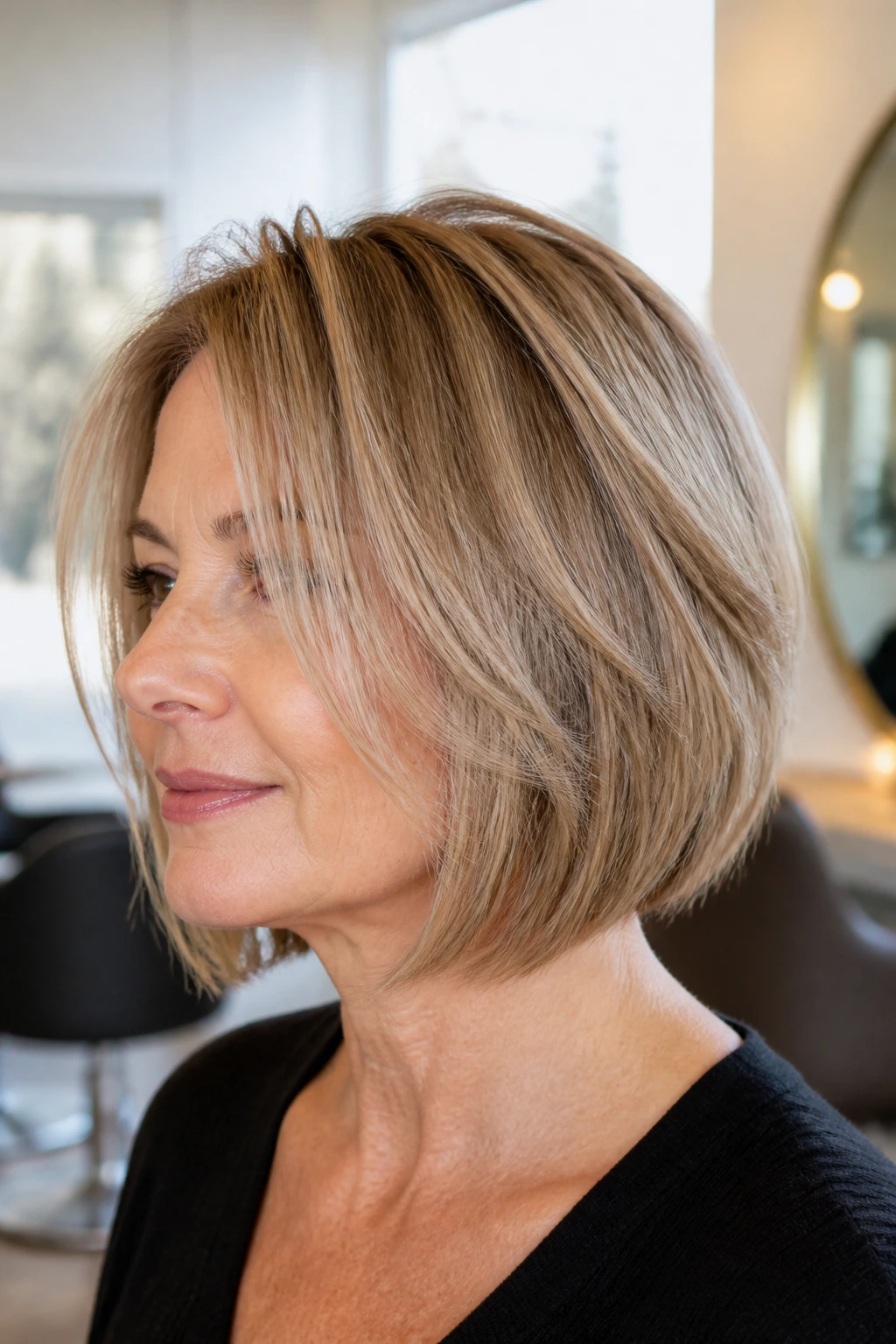
Unlike a blunt bob, a layered bob gives fine hair a little breathing room.
That does not mean you should ask for a pile of short layers. Too many layers on fine hair can make the ends look see-through, and then the whole cut loses body fast. What you want is a few long internal layers that create movement while keeping the outer line solid. Think of it as light support, not a total rebuild.
What Makes It Different
The best layered bob for fine hair usually keeps the perimeter honest. The line at the bottom still matters. The layers live inside the shape, where they lift the crown a touch and stop the haircut from falling limp by lunchtime.
- Ask for long, soft internal layers rather than short choppy ones.
- Keep the ends full so the bob still looks thick from the front.
- Use a lightweight mousse at the roots, not heavy oil near the scalp.
- Dry the crown first, lifting it with a brush or your fingers.
If your hair tends to lie flat against your head, this is the cut that gives you a little more shape without making you fight it every day. It is a practical haircut. Not flashy. Very useful.
7. Sleek Center-Part Bob
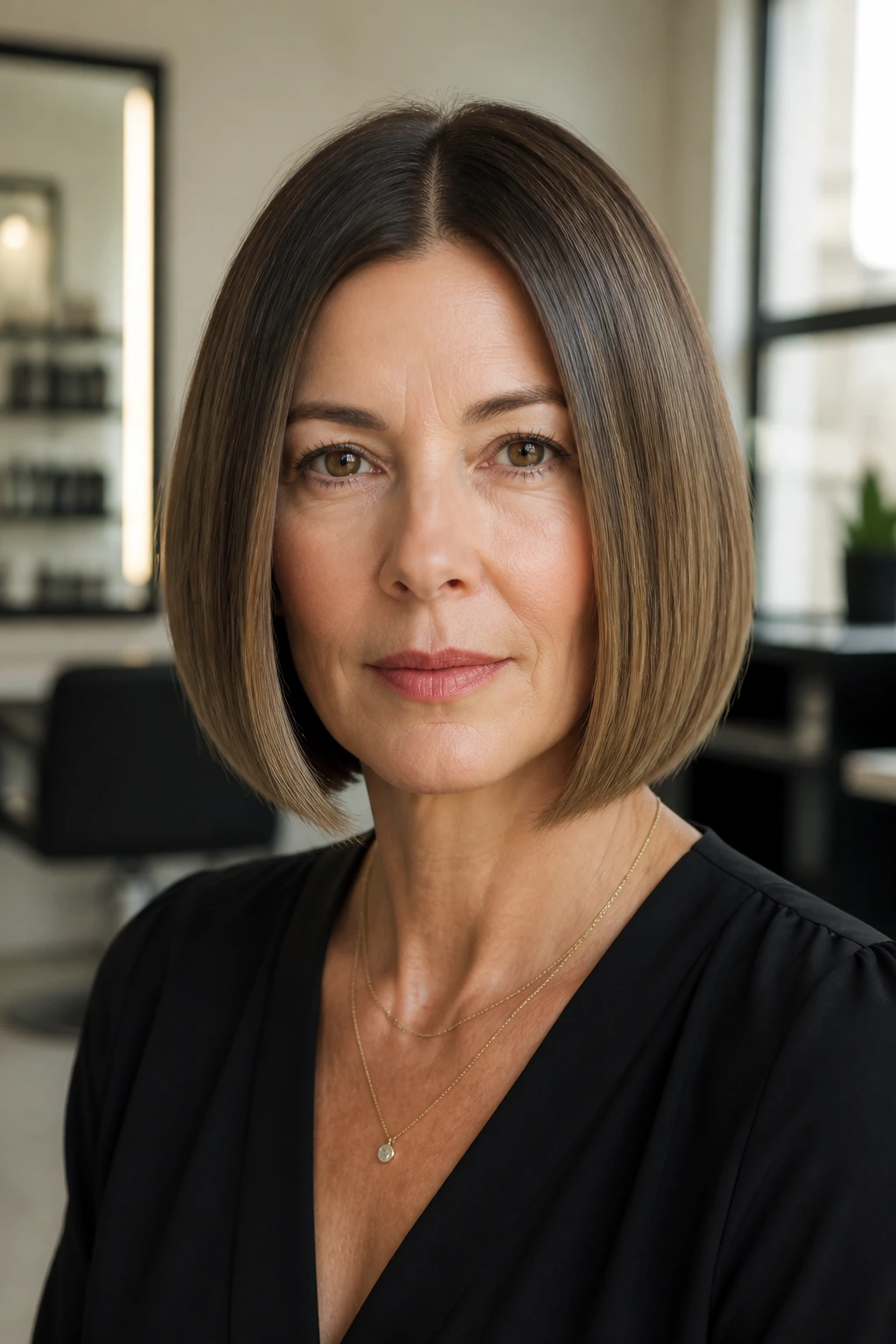
A center part can make a bob look sharper and cleaner than almost anything else.
That surprise comes from symmetry. When the cut is even, the center part shows it off instead of hiding it. It draws a straight line down the face and lets the ends do the talking. If your hair is naturally straight or only lightly wavy, the effect can be elegant in a plain, unfussy way. I happen to like that look a lot.
But there is a catch. A center part will also expose every little inconsistency near the crown, and if your hair has an uneven growth pattern or a stubborn cowlick, you will know it within five seconds. Do not force it. A slightly off-center part can do the same job with less hassle.
This bob suits women who want a tidy profile and do not mind a little precision. It works well with minimal layers, a smooth finish, and ends that sit just below the chin or at the jaw. If the cut is clean, the part does most of the styling for you.
8. Stacked Bob at the Nape
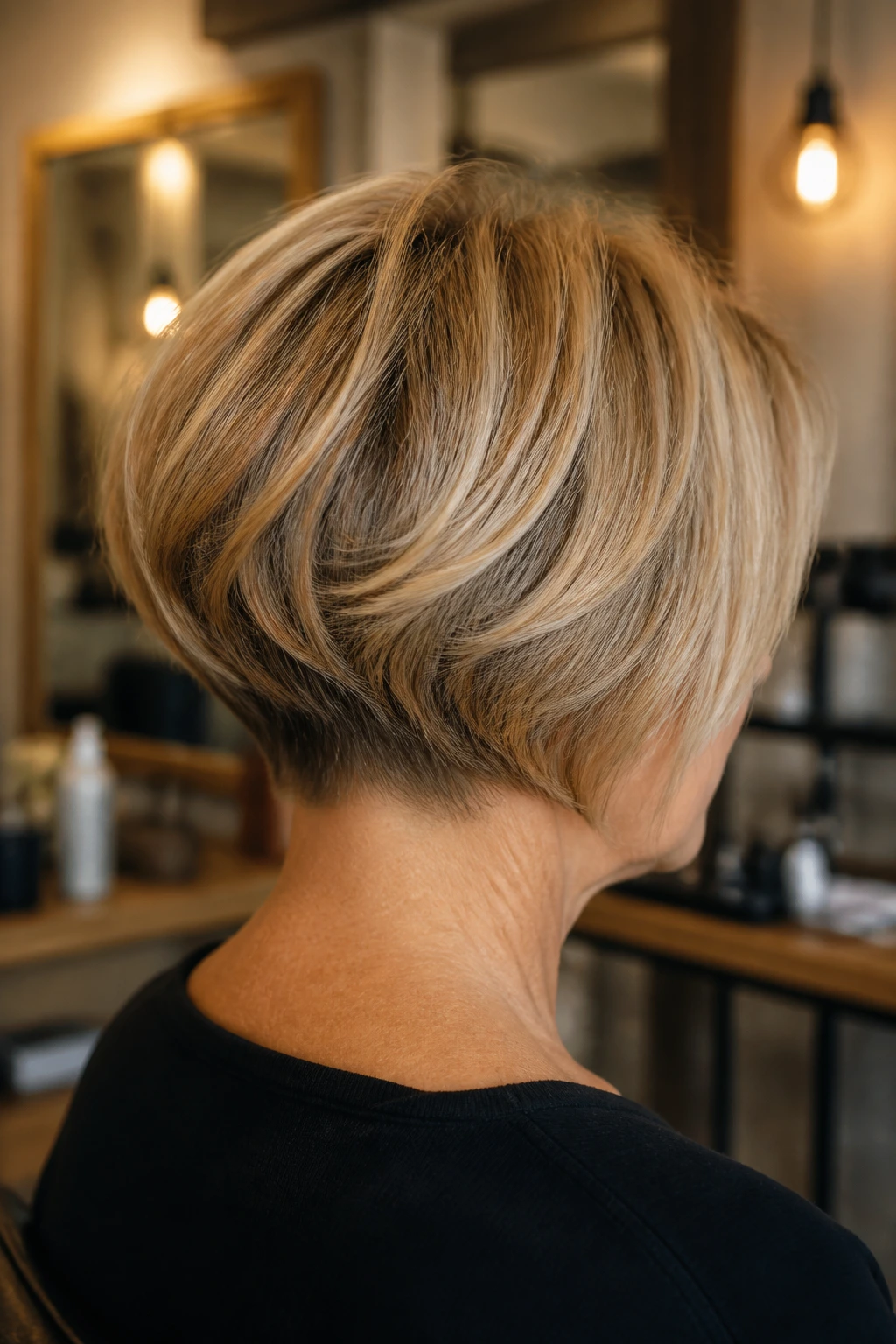
If the back of your hair feels like it is carrying extra weight, a stacked bob can change that fast.
The stacking happens at the nape, where the hair is cut in short, layered sections that build a small amount of lift at the back of the head. Done well, it trims bulk and gives the cut shape without making it puffy. Done badly, it can look dated in a hurry. That is why the softness matters. You want controlled graduation, not a hard shelf.
This style is especially useful for thick hair, because thick hair likes to hide its own shape. A stacked bob brings the shape back. It makes the neckline look clean and helps the rest of the cut sit closer to the head.
Key Details to Ask For
- Keep the stack soft and blended.
- Leave enough length on top so the crown does not go flat.
- Keep the outline at the sides smooth, not choppy.
- Plan on trims every 6 to 8 weeks if you want the shape to stay crisp.
A subtle stacked bob feels modern without trying too hard. That is the version I trust.
9. Wavy Bob with Air-Dried Texture

Do you need to flat-iron a bob to make it look finished? No.
If your hair has natural wave, a bob that lets that wave stay visible can be far more flattering than one that tries to iron it into submission. The shape should sit a little longer than you think, because wavy hair springs up once it dries. If you cut it too short, you end up with a puffier silhouette than you planned for.
The best version of this cut is soft at the ends and easy around the face. A small amount of layering can help the wave move, but the perimeter still needs enough weight to keep the whole thing from turning fluffy. That balance is the difference between tousled and messy. It is a thin line.
How to Keep the Wave Soft
- Apply a light curl cream to soaking-wet hair.
- Scrunch with a microfiber towel instead of rubbing with a regular bath towel.
- Diffuse only until the hair is about 80 percent dry.
- Break any crunchy cast with one or two drops of serum in your hands.
This is the bob for women who want texture without a lot of polish. It is honest hair. I like that.
10. Tucked-Behind-the-Ears Bob

Unlike a bob that hangs heavy around the cheeks, this one opens the face right up.
The tucked-behind-the-ears bob is partly a cut and partly a habit. The shape needs to be just long enough to slide behind the ears without fighting you, but not so long that it collapses into your neck. When it lands at the right spot, the effect is clean and easy. It makes room for glasses, earrings, and a jawline that deserves to be seen.
Best for Glasses and Earrings
If you wear glasses, this cut solves a small daily irritation. Hair that sits too high near the temples tends to push against the frames. A slightly longer bob keeps the sides neat while still leaving enough room to tuck pieces back. Hoop earrings also look better when the hair stays out of the way.
This cut is a good choice for rounder faces because it creates a vertical line along the cheeks. It also works for women who want a style that can go from polished to casual in ten seconds. Tuck it back and it looks sharp. Let it fall forward and it softens again.
Keep the front just below the jaw, and ask the stylist not to make the sides too bulky. That is the whole trick.
11. Curved Bob with Face-Framing Pieces

This is the bob I recommend when a blunt edge feels too hard.
The curve gives the ends a soft bend under the chin or near the cheekbone, and the face-framing pieces take a little pressure off the jawline. That makes it a nice choice for square faces, heart-shaped faces, or anyone who wants movement near the front without losing the clean outline that makes a bob feel like a bob.
The face-framing pieces should not be so short that they turn into layers around the cheek. That mistake happens a lot. Keep them long enough to skim the mouth or chin, then let the rest of the cut stay tidy. A little bevel at the ends helps the shape fold inward instead of kicking out.
This one works especially well if your hair is straight or lightly wavy and you like a softer finish. You can wear it with a side part or a loose center part. Either way, the curve keeps the haircut from feeling severe. It is a small detail, but it changes the mood more than people expect.
12. Soft Asymmetrical Bob

A little asymmetry can make a classic bob feel personal without turning it into a fashion haircut.
The key word there is little. I mean one side slightly longer than the other — maybe half an inch to an inch, not a dramatic angle that announces itself before you do. That small offset can flatter a strong jaw, balance a face that feels wider on one side, or simply make the cut look less expected. It is a quiet change, which is why it works.
A soft asymmetrical bob also plays nicely with side parts. The longer side can sweep toward the cheekbone, while the shorter side keeps the neck line clean. If you like earrings, this shape gives you one side that feels open and one that feels a touch more sculpted. That contrast can be useful.
The downside is obvious: it grows out unevenly. So if you like to stretch salon visits, keep the asymmetry subtle. Otherwise it starts to look like an accident instead of a decision.
13. Graduated Bob for Thick Hair

What do you do when the real problem is bulk, not length? You take weight out in the right place.
A graduated bob is built to do that. It removes mass through the back of the head while keeping the perimeter strong enough to hold its shape. That makes it different from a stacked bob, which usually shows a more obvious rise at the nape. A graduated bob feels smoother and a little more controlled. It is a good fit for thick or coarse hair that tends to puff out around the sides.
How to Ask for It
Tell the stylist you want the back to be shorter and the weight removed underneath, but not over-thinned through the top. That matters. Too much thinning can leave the ends wispy and the crown oddly flat. You want the cut to sit close to the head while still looking full from the front.
- Keep the weight line near the jaw or slightly below.
- Ask for soft graduation through the back, not chunky layers.
- Leave enough length in the front to keep the face framed.
- Plan a blow-dry with tension so the cut lies smooth.
This is the bob I would hand to someone with dense hair who is tired of the back ballooning out by midday. It solves a real problem.
14. Long Blunt Bob with Minimal Layers
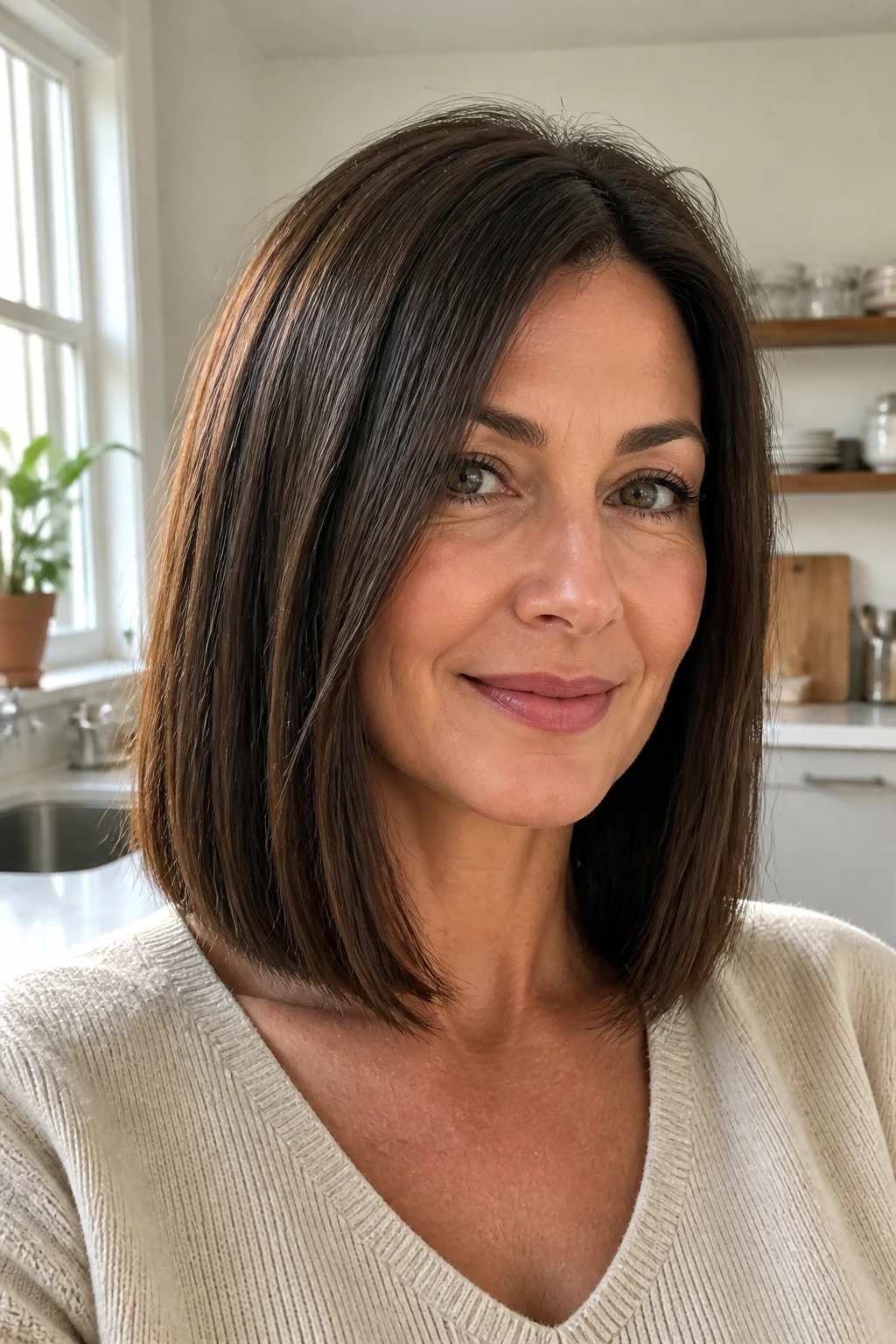
If you like movement to come from styling instead of from the cut itself, the long blunt bob keeps things calm.
The shape usually lands somewhere between the chin and the collarbone, but the perimeter stays clean. That means the haircut still has a strong line, even if it is longer than a classic jaw-length bob. I like it for women who want their hair to look expensive in a plain way, not because of a lot of layers or texture tricks. It just sits well.
This cut is especially good for straight hair, but loose waves can work too. The lack of heavy layering helps the ends look thicker, which is useful if your hair has started to feel a little finer than it used to. You can wear it tucked, loose, or with a soft bend from a flat iron. None of those things are required, which is the part I like.
A paddle brush, a touch of smoothing cream, and a pass along the ends are usually enough. If you want hair that looks controlled but not stiff, this is a very smart place to land.
15. One-Length Jawline Bob

There is a reason stylists keep returning to the one-length bob.
It is the cleanest of the classics. The line sits right at the jaw, the ends are even all the way around, and the haircut does not ask for much explanation. That simplicity is its strength. Gray hair looks especially crisp in this shape because every strand contributes to the line instead of disappearing into layers. Fine hair also benefits, since the blunt edge creates the impression of more density.
This bob suits women who like a straightforward shape with a little structure. It is neat with glasses, strong with a blazer, and flattering when you want your features to do the work. If you wear makeup, the cut does something nice there too: it gives brows, cheekbones, and lipstick a cleaner frame.
The only real caution is volume. If your hair is very thick, ask for a tiny bit of internal removal so the shape does not sit like a box. If your hair is very fine, keep the ends blunt and skip aggressive thinning. That is the whole game.
If you want one haircut that still looks like a decision on day five, this is the one.
