



Wavy hair and a bob can be a sharp little bargain. You get movement without the weight that drags waves flat, but only if the layers are cut with restraint.
Too many snips in the wrong place, and the shape turns puffy at the sides or flips out at the ends. Too few, and the bob sits there like a helmet. The sweet spot lives somewhere between those two extremes, and it changes depending on whether your wave pattern is loose, bendy, or close to curly.
What makes layered bob haircuts for wavy hair worth the trouble is that they can do two jobs at once: keep the outline clean and give the wave room to move. A good cut lets the ends look airy while the body still has enough weight to fall into shape after a quick scrunch, a bit of leave-in cream, and five minutes with a diffuser or an air-dry.
The trick is not chasing layers for the sake of layers. It’s choosing where the weight comes out, where it stays, and how short you’re willing to go around the jaw. That is where the good cuts live.
1. Layered Bob Haircuts for Wavy Hair: Chin-Length Curve

A chin-length bob has a nice side effect on waves: it makes them look deliberate. The ends land right where the jaw changes direction, so the hair bends with the face instead of hanging past it and losing its shape.
Why It Works on Wavy Hair
The cut is short enough to keep wave definition visible, but not so short that every bend turns into a poof. Ask for soft interior layers, not a heavily razored finish. You want movement inside the shape, not shredded ends at the perimeter.
- Best for 2B to 2C waves that already form a loose bend.
- Ask for the longest pieces to graze the chin.
- Keep the outer line slightly blunt so the bob still reads as a bob.
- Style with a light mousse and scrunch from the ends upward.
Pro tip: if your waves swell in humidity, keep the front a touch longer than the back. It balances the shape fast.
2. Collarbone Lob with Invisible Layers

This is the safest cut if you want movement and you’re nervous about losing length. A collarbone lob gives wavy hair room to swing, and the “invisible” layers live mostly underneath, where they can lighten the bulk without changing the outline too much.
That means the top layer still looks full when your hair dries, which is the whole point. Too many visible layers on medium-length waves can make the ends look thin before you’ve even left the house. This cut avoids that problem.
It also grows out well. That matters more than people admit. A lob that lands on the collarbone can keep working for months as it softens, especially if the layers start below the cheekbone instead of right at it. If you like tucking one side behind your ear and letting the other side fall forward, this shape does that beautifully.
3. French Bob with Airy Interior Layers

Why does a French bob look so good on wavy hair? Because it leans into a little imperfection. The length usually sits between the mouth and the chin, and the shape is compact enough that natural waves don’t get dragged down by extra weight.
A good version has airy interior layers, not a choppy mess. The inside of the cut should feel lighter when you run your fingers through it, but the outer edge still needs enough density to keep the bob from looking fuzzy. If you add a fringe, keep it soft and flexible. Hard bangs with a French bob can be gorgeous, but they do ask for more upkeep.
How to Style It
Dry it with a diffuser on low heat, or air-dry until it’s about 80 percent dry and then twist a few face-framing pieces with your fingers. A pea-size amount of styling cream is plenty. More than that can make the finish limp.
4. Stacked Bob with a Tapered Nape
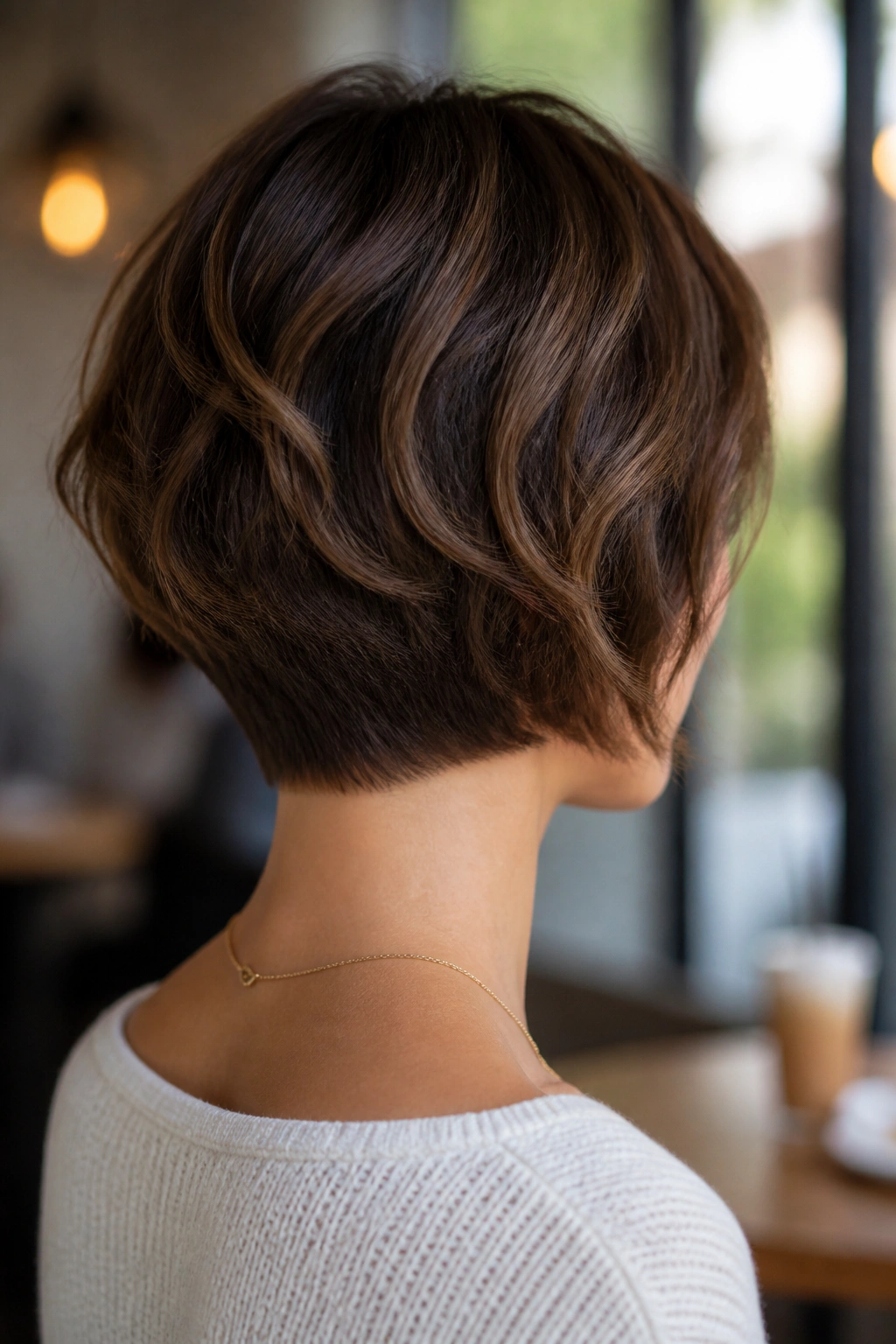
If the back of your bob goes flat by lunch, this shape is the fix. A stacked bob builds short layers in the nape so the hair lifts away from the neck and creates that rounded shape at the back of the head.
It works especially well when waves collapse at the crown but puff out at the sides. The stack gives the cut some backbone. Just don’t let it get too steep unless you want a very old-school silhouette.
- Ask for the shortest layers to sit just above the nape.
- Keep the front a little longer so the shape doesn’t look boxy.
- Use a root lift spray only at the crown.
- Skip heavy creams near the back; they flatten the stack fast.
A tapered nape also makes a bob feel neat without looking severe. That’s a nice line to live on.
5. Shaggy Bob with Choppy Ends

A shaggy bob is for people who want their waves to look a little wild on purpose. The cut has choppy ends, face-framing pieces, and enough texture to keep the shape from feeling polished in a stiff way.
It can be a lifesaver for thick hair that swells when it dries. The uneven bits break up the bulk, and the bob sits with more air between the strands. Still, the cut needs some discipline. If the layers are cut too high, the shape can turn into a puffball. If they’re too soft, you lose the edge that makes it interesting.
It should look touched, not overworked. That’s the sweet spot.
A tiny bit of mousse in damp hair, then a quick scrunch with your hands, usually does more than a drawer full of products. If your waves have a mind of their own, let them. The whole point is to look like you know exactly what your hair does and you’re not fighting it.
6. Asymmetrical Bob with Long Front Pieces

Unlike a straight-across bob, an asymmetrical shape pulls the eye diagonally. That matters more than it sounds. A longer front piece can stretch a round face, sharpen soft features, or simply make wavy hair look more intentional when one side has a stronger bend than the other.
The cut works best when the difference between sides is noticeable but not cartoonish. Think about a front that drops an inch or two longer on one side, not a dramatic chin-to-shoulder plunge. Wavy hair already brings movement, so the angle can stay clean and still feel lively.
This is the bob I’d pick for someone who likes a little edge but still wants the hair to tuck behind the ear, wear a jacket collar well, and behave in real life. If you want symmetry, skip it. If you like hair that looks a little more alive in motion, this one has teeth.
7. Rounded Bob with Face-Framing Pieces
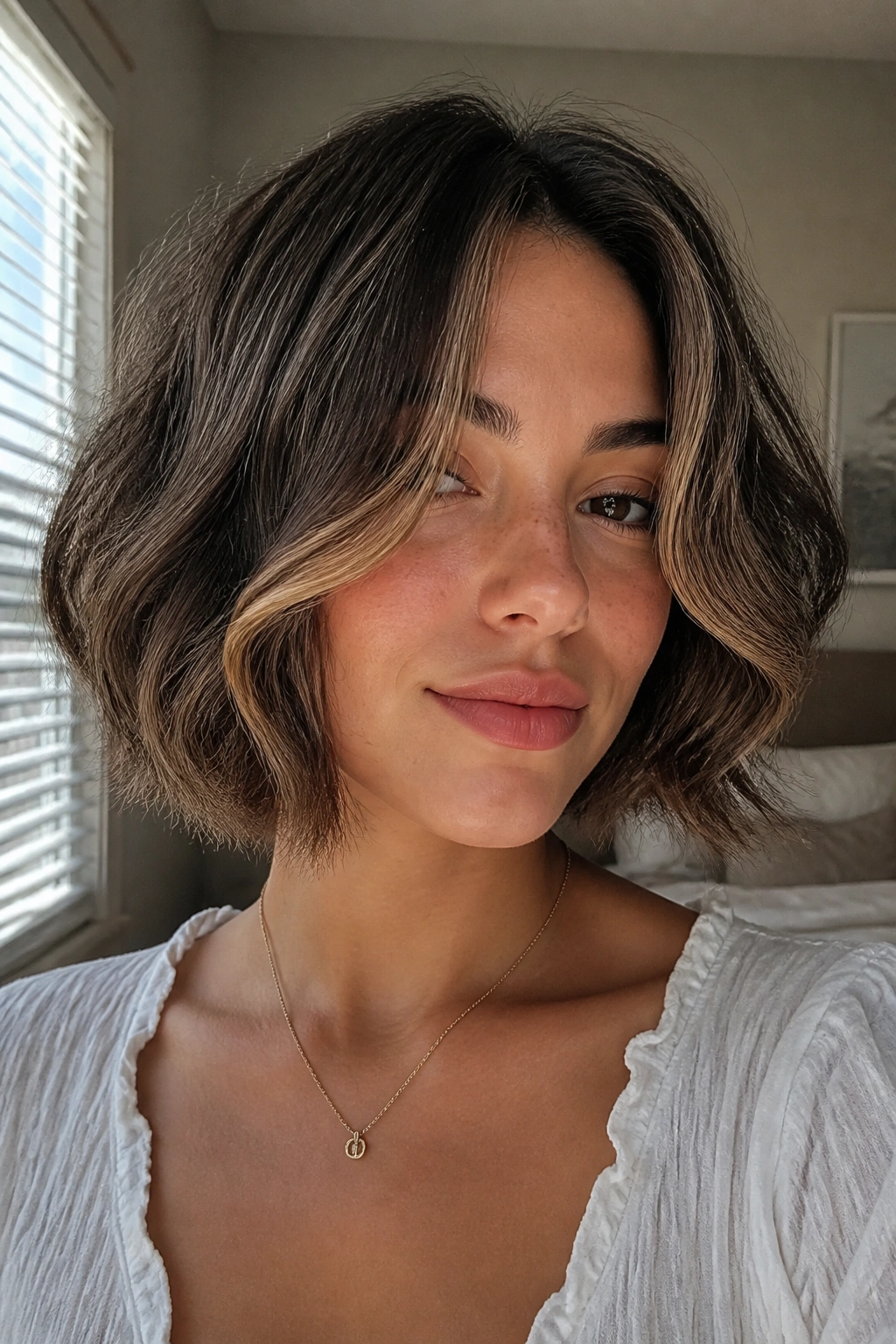
A rounded bob has a softer shape than a blunt cut, and that’s a gift for waves that bend in different directions. The perimeter curves gently inward, so the hair follows the head shape instead of pushing out at the corners.
Where the Shape Matters
The face-framing pieces should start around the lip or chin, not halfway up the cheek. That keeps the front from turning into a triangle. Too-short framing on wavy hair can balloon fast, especially if the hair is dense.
- Best for oval and heart-shaped faces.
- Ask for a curved line through the back and side.
- Keep the face frame long enough to tuck behind the ear.
- Style with your fingers, not a brush, once the hair starts drying.
The rounded bob is one of those cuts that looks calm even when the texture isn’t. That calm matters.
8. Jaw-Length Bob with Micro Layers
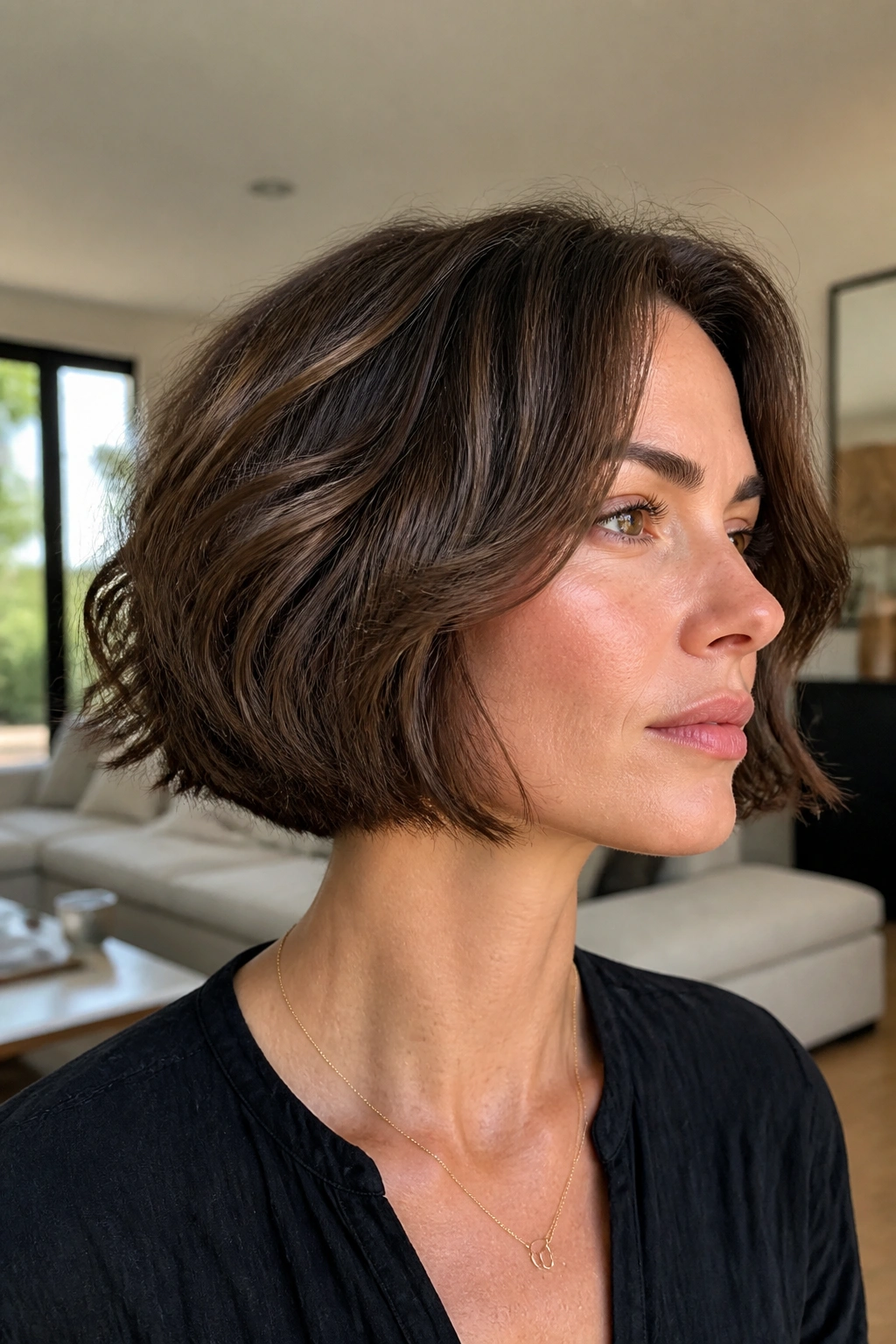
Shorter bobs can look elegant on wavy hair, but only when the layers are tiny. A jaw-length bob sits close to the face and shows off the wave pattern fast, which is lovely if your hair has a compact bend and not much frizz.
Micro layers help the cut move without breaking the outline apart. Think quarter-inch to half-inch adjustments near the crown and sides, not big lifted sections that expose too much scalp. You still want the bottom line to read as solid. That’s what keeps the cut from looking wispy.
This shape can be a little bold if your hair is coarse or very expanded when dry. In that case, ask for more weight at the perimeter and less texturizing inside. Short bobs are unforgiving when they’re over-cut. They do not hide bad choices.
9. Wavy Bob with Curtain Fringe

Can curtain bangs work with a bob? Yes, and they often work better than straight-across bangs because they can bend with the wave instead of fighting it.
The fringe should open at the center and taper toward the cheekbones. That shape gives you softness near the face while leaving enough length to tuck the bangs into the rest of the cut. On wavy hair, that blending is the whole point. A blunt fringe against a bob can look heavy fast, especially if the hair dries in a strong bend.
How to Keep It from Splitting Weirdly
Dry the fringe forward first, then split it only after the roots are dry. If you part curtain bangs too early, they can separate in a way that looks accidental. A tiny round brush can help at the roots, but only if you want that polished bend.
The rest of the bob can stay loose and air-dried. Let the fringe do the work.
10. Layered Bob Haircuts for Wavy Hair With a Side Part

A side part gives wavy hair instant lift at the crown. That alone can change the entire feel of the bob. The cut looks fuller on top, the face opens up more on one side, and the wave pattern gets a chance to fall in a less predictable way.
If your roots flatten easily, shift the part just off center and blow-dry the root area in the opposite direction for a minute or two. Then let it fall back. That tiny move creates a bend at the base that lasts longer than people expect. The layers don’t need to be dramatic here; they just need to support the part instead of fighting it.
This style is also smart if one side of your hair grows flatter than the other. A side part hides that unevenness without turning the whole haircut into a rescue project.
11. Graduated Bob with Sweeping Movement
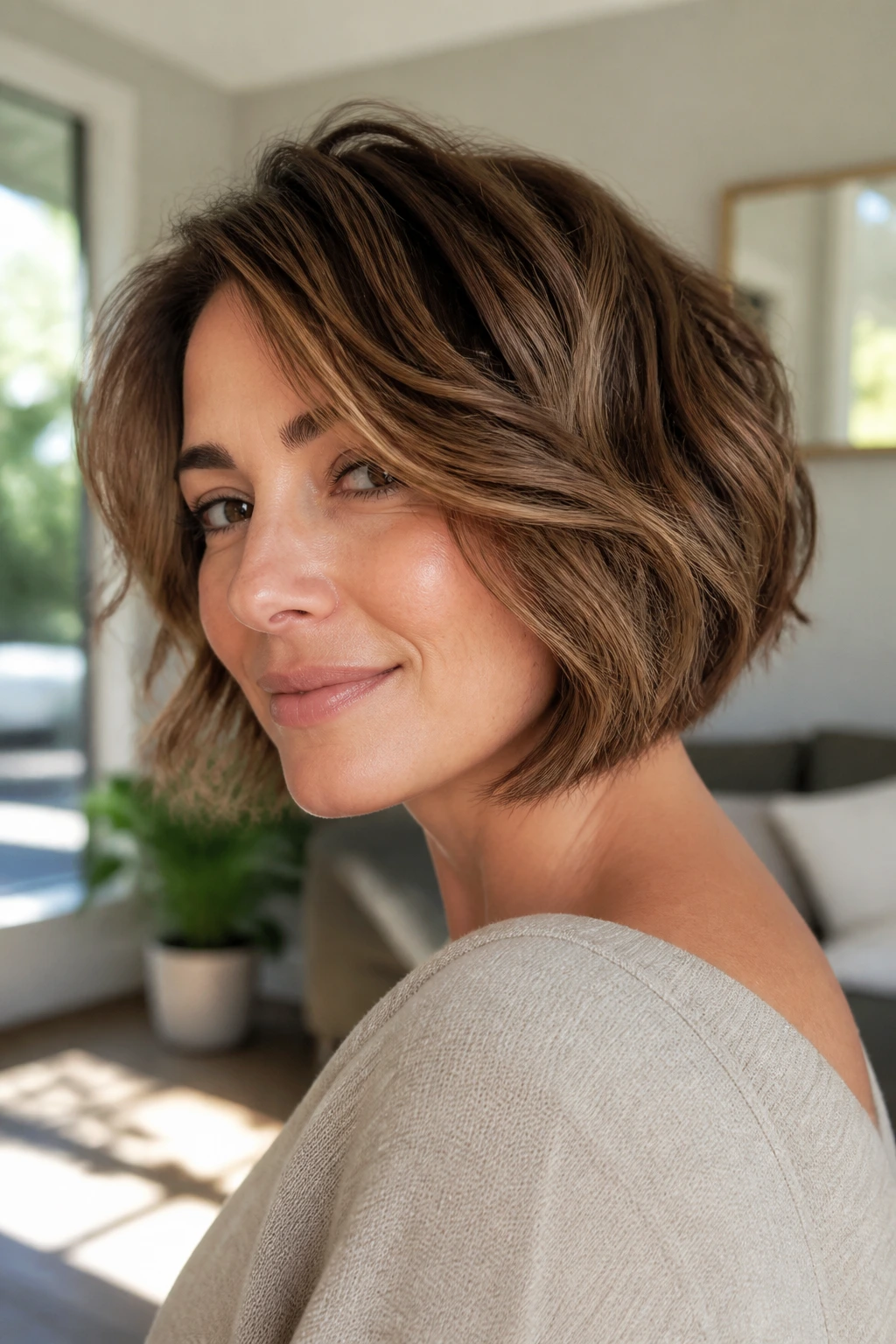
A graduated bob is a softer cousin of the stacked bob. The back is shorter, yes, but the shift is smoother and less abrupt, so the whole shape feels more fluid on wavy hair.
Picture hair that sweeps from the nape into longer sides in one clean curve. That’s the appeal. It gives you lift where the head needs it and length where the face can use it. When the graduation is done well, the bob looks almost like it’s folding around the jaw.
Ask for the graduation to follow the head shape, not to sit in a hard shelf. A shelf in a wavy bob is rarely flattering. It can look bulky, then suddenly thin. The sweeping version stays softer and is easier to live with when you’re not styling every strand.
12. Textured Bob with Razored Ends

A textured bob with razored ends can be a smart move, but only if your hair can take it. A razor removes weight and gives the ends a looser, more frayed edge, which can be lovely on medium-density waves that need airiness.
The downside is real: on coarse, dry, or fragile hair, too much razor work can make the ends feel rough. You might see more frizz, especially along the outer layer where the weather hits first. That is why some stylists prefer point cutting with scissors instead. It’s slower and gentler.
If you do go razor-light, keep the shape compact and the layers controlled. The texture should look lived-in, not chewed up. That distinction matters more in person than it does in photos.
13. Blunt Bob with Hidden Layers
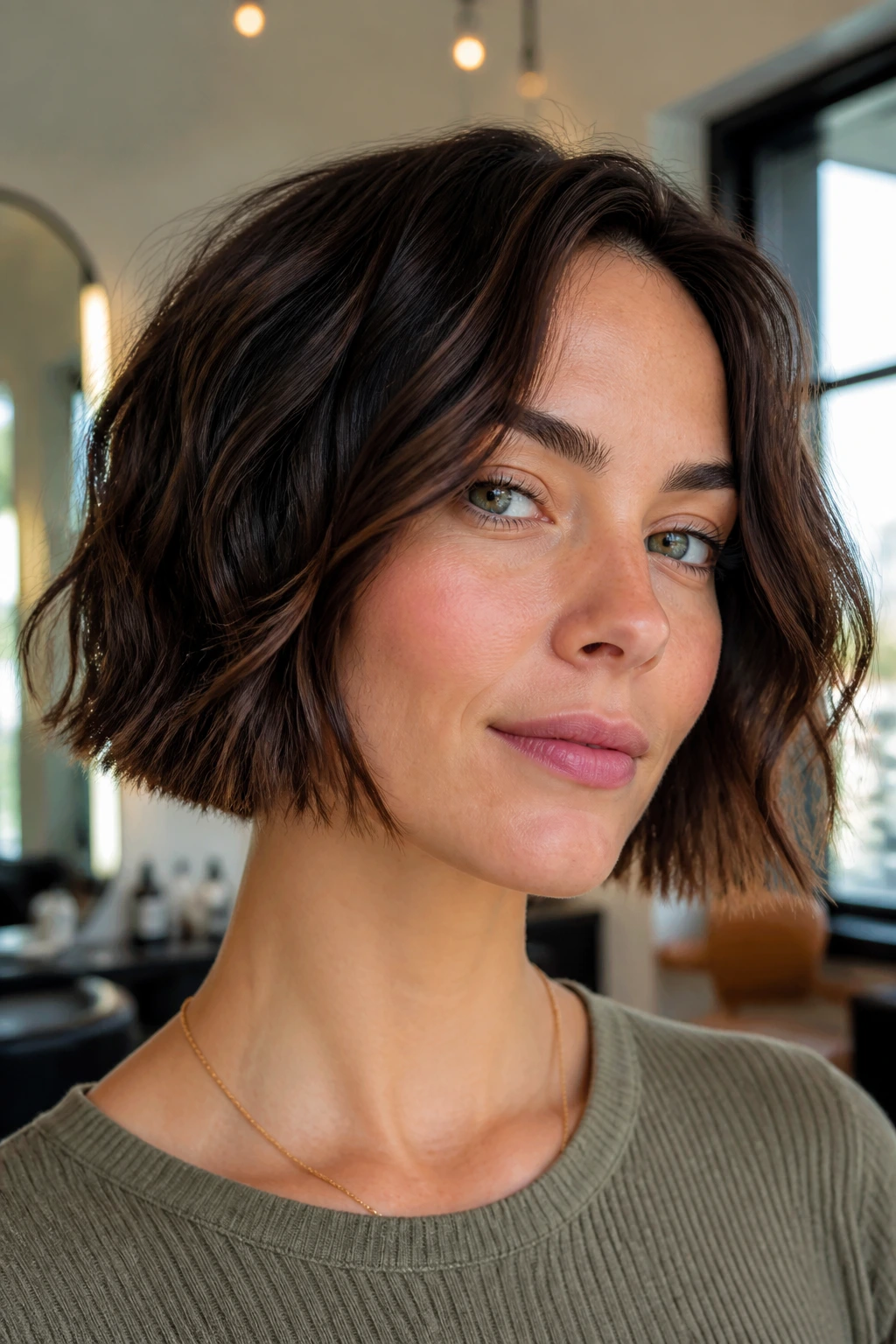
A blunt bob is not the enemy of wavy hair. In fact, it can be one of the best shapes when your waves are dense and you want the cut to look full rather than fluffy.
The trick is hiding the layers inside. The outside line stays crisp, while the underneath sections lose enough weight to keep the bob from flipping out at the sides. That gives you a cleaner finish without turning the haircut into one of those over-thinned, see-through bobs that collapse in a breeze.
What Makes It Different
The visible outline looks simple. The internal work is doing the heavy lifting.
This style suits someone who wants a stronger, more polished shape and doesn’t mind a little styling with a brush or diffuser. If your hair has enough bend to move on its own, the blunt edge will keep it from spreading out too much.
14. Beachy Bob with Piecey Ends

A beachy bob is not about pretending you just came from somewhere warm. It’s about separation. The strands should sit in small groups, with the ends broken up enough to show the wave pattern clearly.
That piecey finish works best when the cut is not over-layered. If you remove too much weight, the hair can look stringy instead of beachy. A little fullness underneath keeps the style from falling apart. And no, you do not need three different sprays to get there.
How to Get the Piecey Look
- Work a light mousse through damp roots.
- Add a small amount of cream through the mid-lengths.
- Scrunch, then let the hair dry halfway before touching it again.
- Finish with a dab of oil on the last inch only.
The last step matters. Too much oil kills the separation fast.
15. Deep Side-Part Bob with Volume Crown

If your hair lies flat at the top and puffs below, a deep side part can rebalance the whole head shape. It shifts the volume to one side, which makes the crown look taller and the bob look fuller without extra bulk.
This is the cut I think of when someone says their hair “sits too close” on top. A deep part, placed near the arch of the brow, can lift the roots enough that the bob doesn’t feel collapsed. Pair it with soft layers around the temples, and the effect is even better.
A quick root-dry with a round brush or a clip at the crown for ten minutes can help train the lift. That’s not a trick you need every day, but it does rescue the shape when the weather is doing too much.
16. Bob with Bottleneck Bangs

Bottleneck bangs are a good match for wavy hair because they open gently at the center and stay narrower near the bridge of the nose before widening toward the cheekbones. That shape softens the forehead without cutting the face in half.
With a bob, the bangs should blend into the sides instead of sitting like a separate section. The connection is what makes the haircut look expensive in the plainest sense of the word: it looks considered. If the bangs are too thick, they compete with the bob. If they’re too sparse, they disappear.
A light blow-dry with the bangs directed forward first usually gives the best shape. Then split them with your fingers. That tiny bit of control is enough.
17. Tousled Italian Bob

The Italian bob has a little more body than the French version, and that’s part of its charm. It usually sits near the jaw or just below it, with enough weight to swing and enough layering to keep the ends from feeling blunt in a hard way.
Compared with a shag, this cut keeps more polish. Compared with a classic bob, it has more movement. That middle ground suits wavy hair that wants to look soft but not messy. The hair should bend around the face and skim the neck, not fan out at the sides.
If you want a touch of glamour without a lot of fuss, this is a strong choice. Air-dry it with a cream that has a little hold, then tuck one side behind the ear. Done.
18. Grown-Out Bob with Soft S-Curve Layers
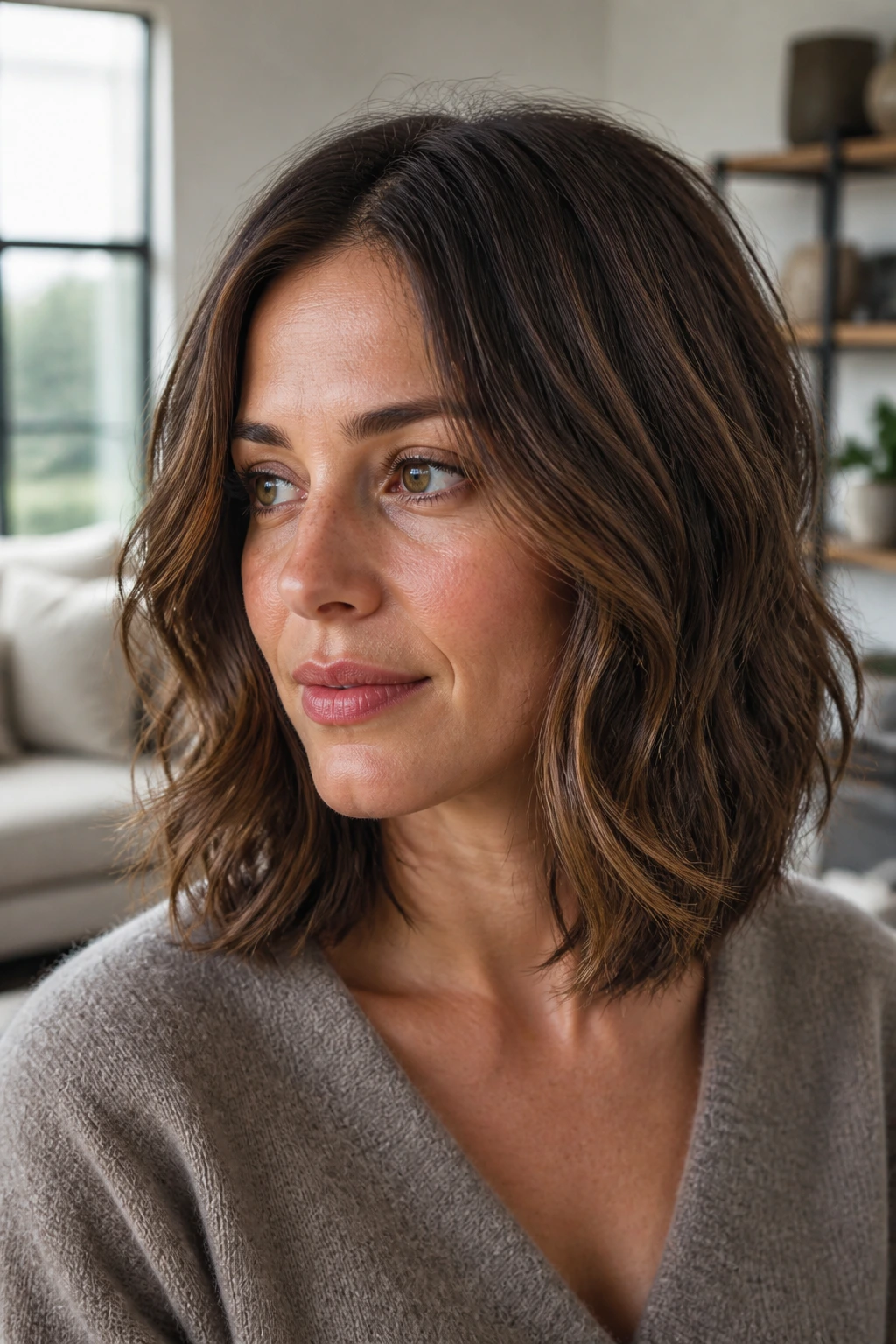
This is the bob for people who hate salon-perfect hair. The grown-out version works because the layers are soft, long, and placed low enough that the cut still looks good a few weeks past a trim.
The S-curve comes from waves that bend at the mid-lengths and turn again near the ends. Long layers help that shape show up instead of getting chopped apart. If the cut is too short in the interior, the wave can splinter and puff. Leave the movement where it wants to happen.
It’s also one of the easier cuts to live with if you wear your hair tucked, clipped, or half-pulled back. The shape does not need daily perfection. A trim every six to eight weeks keeps the ends from looking tired, but even between cuts it tends to hold together well.
19. Curly-Wave Hybrid Bob

What if your hair is too wavy to act straight but not curly enough to form ringlets? Then the hybrid bob makes sense. It works for mixed texture, where some pieces bend into loops and others just make an S.
The cut should respect the strongest pattern in the hair. That means the stylist has to look at how the hair dries in different areas, not just assume the whole head behaves the same. Layers that are too high can make the curlier sections spring up while the flatter pieces fall away. The result is uneven in a bad way.
Watch the Dry Length
Cutting this shape when the hair is fully dry, or at least checking it dry before the final snip, helps a lot. Shrinkage can be sneaky. A bob that looks just right wet can sit three quarters of an inch shorter once the wave wakes up.
20. Inverted Bob with Long Front Pieces
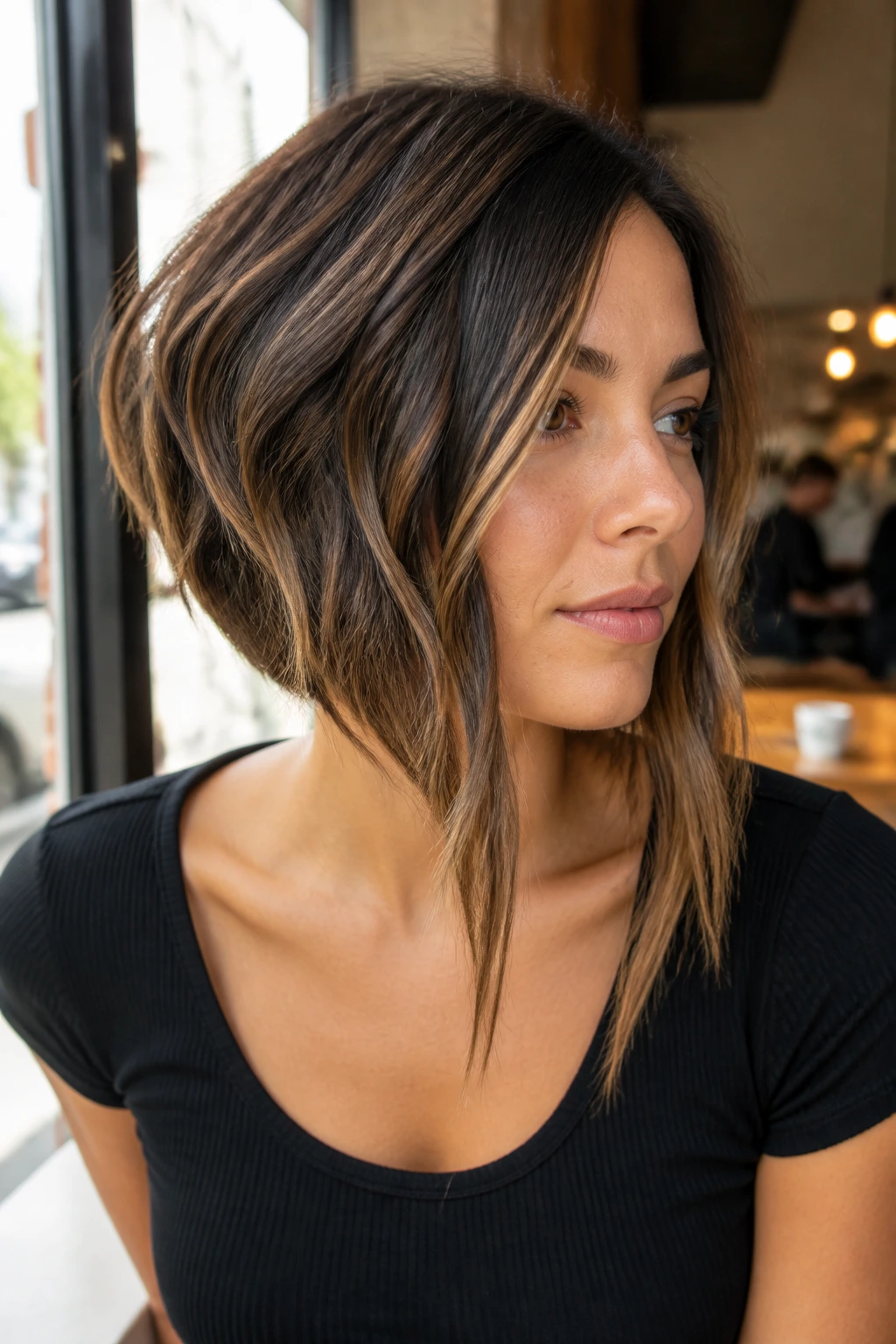
If you like a little drama, the inverted bob delivers it. The back hugs the neck more closely while the front stays longer, which creates a clean angle that works well with wavy texture.
The front pieces matter most here. They should lengthen enough to skim the jaw or even the top of the collarbone, depending on how much contrast you want. Wavy hair softens the angle, which is nice. It keeps the cut from looking too severe, even when the shape is sharp.
This style can be a good fit if you wear earrings, glasses, or structured clothes. The haircut holds its own. It does ask for a little maintenance, though. If the back gets too soft, the angle disappears and the whole point goes missing.
21. Neck-Length Bob with Internal Layers

Unlike face-framing cuts, this one hides most of the structure inside the haircut. The perimeter lands at the neck, which keeps the shape easy to wear, while the internal layers stop the bulk from sitting like a block.
That makes it a strong option for thick waves that want to spread wide. The outside still looks neat, but the inside has enough space to move. I like this shape for people who want something tidy that doesn’t feel stiff. It can be tucked, clipped, or left loose without much drama.
Ask for weight removal under the top layer rather than across the whole bob. That one detail keeps the ends from getting wispy. It also helps the cut grow out in a cleaner way, which is always a win.
22. Soft A-Line Bob with Airy Weight

A soft A-line bob angles forward just enough to give the hair direction, but not so much that the cut screams geometry. The front is a little longer than the back, and the slope helps wavy hair fall forward in a flattering way.
The best part is how forgiving it is. Uneven wave days still look intentional because the angle gives the eye a path to follow. If the sides are a touch fuller one day and flatter the next, the shape still reads well.
This is a very practical cut for work, errands, and everything in between. It doesn’t ask for a lot. A touch of cream, a quick dry, and you’re out the door.
23. Choppy Bob with Disconnected Layers

A choppy bob with disconnected layers is for thick or stubborn waves that need some attitude. The layers are not meant to blend perfectly. They’re meant to create movement in chunks, which can make the haircut feel looser and more modern.
What Disconnected Layers Do
They break up density in a way that’s visible. You see the texture, not just the outline. That can be a gift if your hair has too much weight in the middle and too little life at the ends.
- Ask for longer face-framing pieces to keep the shape grounded.
- Keep the crown layers soft so the top does not frizz up.
- Use a small amount of texture spray only on dry hair.
- Avoid over-brushing; it erases the separation.
This cut can look edgy fast, so it suits people who like a little roughness in their finish. Clean, glossy hair is not the goal here.
24. Bob with Subtle Undercut
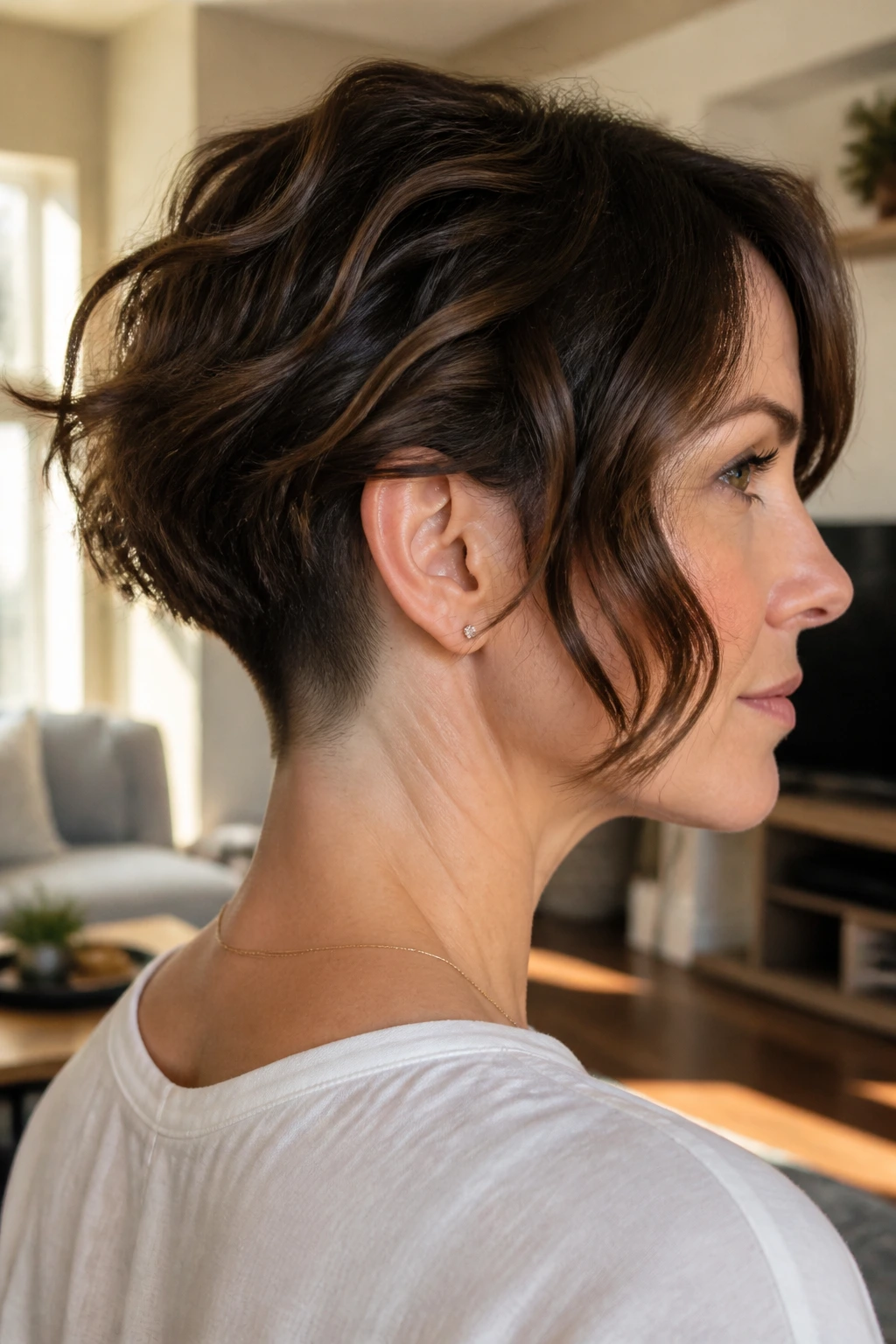
Sometimes the smartest layer is the one nobody sees. A subtle undercut removes bulk from the nape or behind the ears, which helps very thick wavy hair sit closer to the head.
That can be a relief if your bob keeps feeling bulky at the back no matter what you do. The surface still looks like a regular bob. The difference lives underneath. This is especially useful when the outer layer is healthy and full, but the lower sections create too much volume.
The trade-off is upkeep. You’ll need clean-up trims to keep the undercut from growing into the shape. Still, if you fight bulk every day, that maintenance is often worth it.
25. Center-Part Bob with Balanced Layers

Does a center part flatten a wavy bob? Only if the layers are lazy. When the cut is balanced, a center part can look polished and calm, and it lets the waves fall in a mirror-like way on both sides.
The key is symmetry in the framing pieces. Both sides should start around the same point, usually somewhere between the lip and the chin. That keeps the face from looking lopsided. A center part also shows off the natural bend of the wave more clearly, which some people love and others hate. Fair enough.
How to Keep It from Looking Stiff
Dry the roots with your fingers, lifting them straight up for a moment before letting the hair fall back. That tiny bit of lift keeps the part from looking pasted on. If one side collapses faster, clip it at the crown for a few minutes while it cools.
26. Layered Bob Haircuts for Fine Wavy Hair
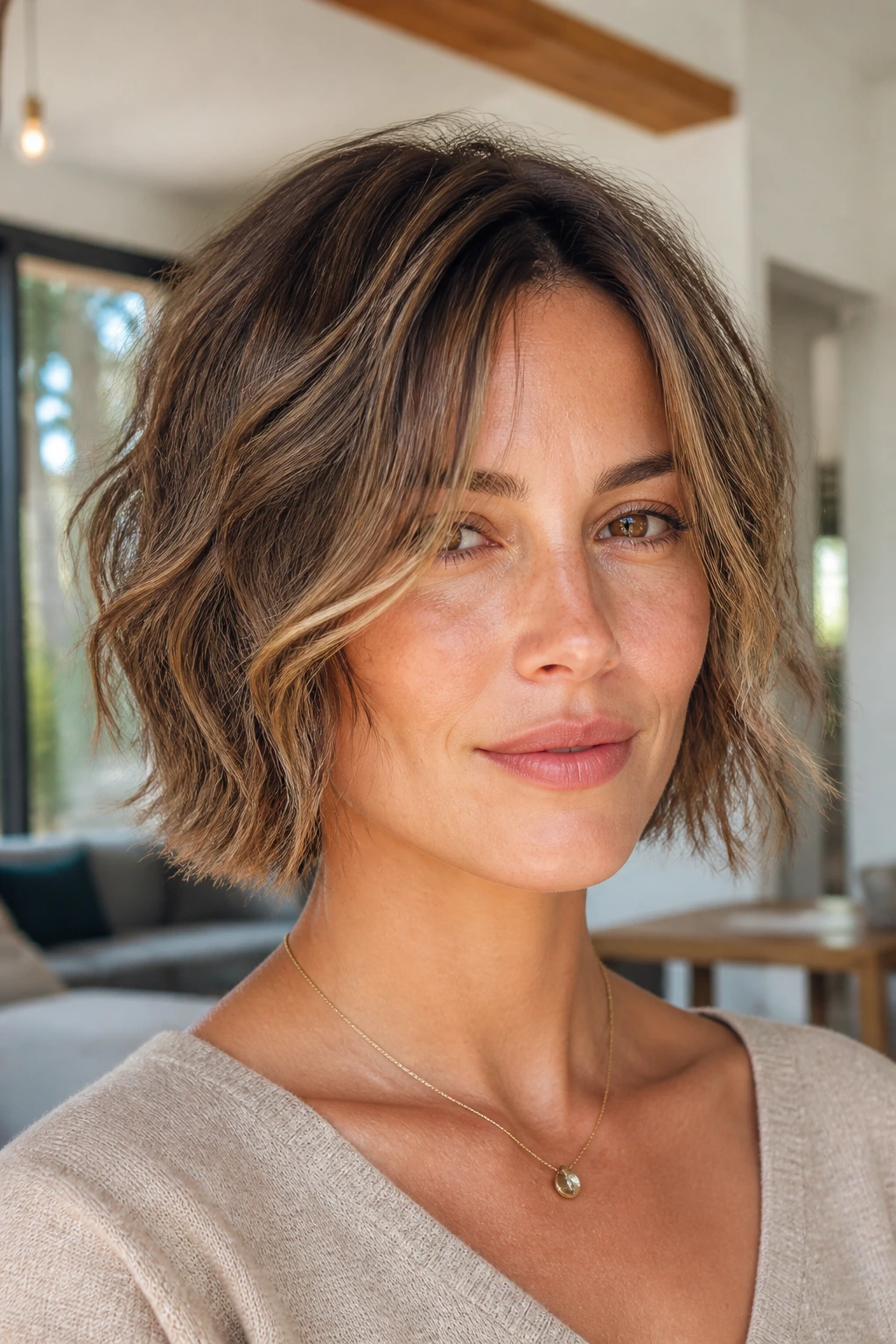
Fine wavy hair needs a lighter hand than most people think. Too many layers can make it look thin at the ends and frizzy everywhere else, which is a lousy trade for a little movement.
For this texture, the best layered bob haircuts for wavy hair usually stay closer to the collarbone or just under the chin, with minimal interior shaping. You want enough lift to keep the waves alive, but not so much that the hair loses its shape after a day of wear. A blunt edge with a few face-framing pieces often works better than a heavily textured cut.
Skip aggressive thinning shears. They can leave fine hair looking airy in the wrong way. A cleaner perimeter keeps the line stronger and the bob fuller.
27. Layered Bob Haircuts for Thick Wavy Hair
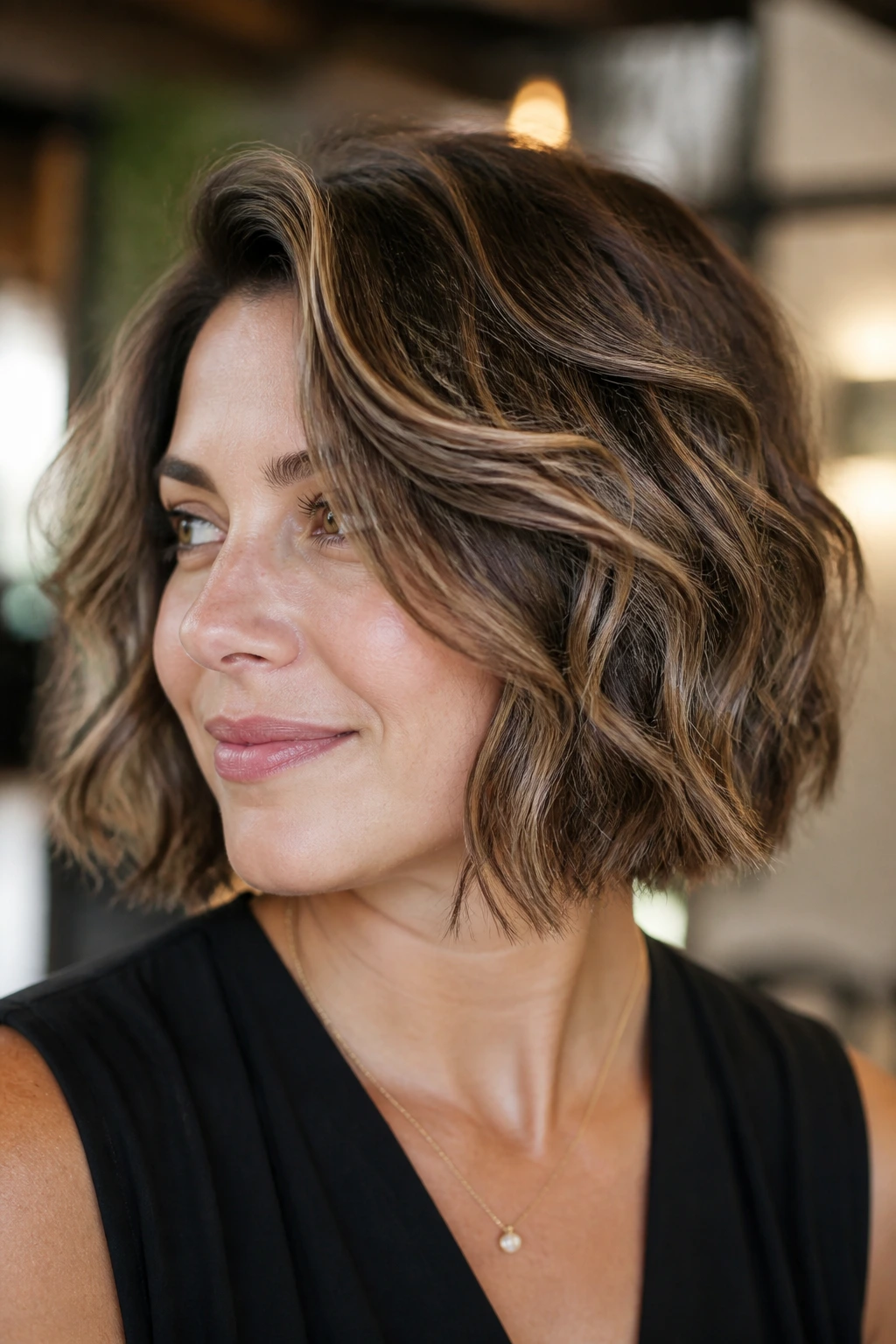
Thick waves can eat a bob alive if the cut is too blunt. The shape balloons, the ends kick out, and the whole thing starts to feel wider than you meant it to be.
That’s why the best layered bob haircuts for wavy hair with thick density usually use long internal layers and a slightly lighter perimeter. You want the cut to lose bulk where the hair stacks up, not at the very edge. If the outer line gets too thin, the bob can turn fuzzy instead of controlled.
A little extra length in the front helps, too. It gives the waves room to fall without standing away from the face. Ask for a dry check at the end of the cut if your wave pattern changes a lot when it’s fully dry. Thick hair can hide a mistake while it’s wet. Not forever.
28. Low-Maintenance Wavy Bob

If you want the version that asks for the least effort, this is the one to ask about first. Keep the length somewhere between the chin and the collarbone, add soft layers that start below the ears, and leave enough weight at the bottom for the shape to hold.
That combination does a lot. It lets waves dry naturally, it grows out in a decent way, and it doesn’t need daily heat to look finished. A little mousse at the roots, a small amount of cream through the mid-lengths, and a fast scrunch are usually enough. If your hair hates too much handling, this cut will probably make your mornings easier.
The real lesson with layered bob haircuts for wavy hair is simple: the cut should support the wave, not wrestle it. Keep the outline strong, keep the layers where they earn their place, and don’t let anyone thin the life out of the ends. A bob that works with your texture is a lot more useful than one that only looks good in the mirror for five minutes.
