



Bob hairstyles for women over 40 work best when they do two jobs at once: give the hair shape and make mornings easier. A good bob can sharpen the jaw, open the neck, and make fine hair look denser without asking for a full styling ritual.
What changes after 40 is usually not the face itself but the hair around it. Density can drop a little, gray strands can feel wirier, and a cut that once behaved can suddenly kick out at the ends or collapse at the crown. That is why the right bob matters more than a dramatic length change.
Flat ends age a cut fast.
The modern versions are kinder. They can be blunt, soft, tucked, angled, shaggy, rounded, or a little messy, and the best ones look deliberate even when they are easy to wear. The trick is choosing a shape that works with your hair texture instead of fighting it, because fighting your hair is how you end up in the bathroom with a round brush and bad attitude.
Some cuts build lift at the crown, some frame the cheekbones, and some make silver strands look expensive rather than accidental. The details are where the difference lives, and the first cut sets the tone.
1. Chin-Length Bob with a Soft Side Part
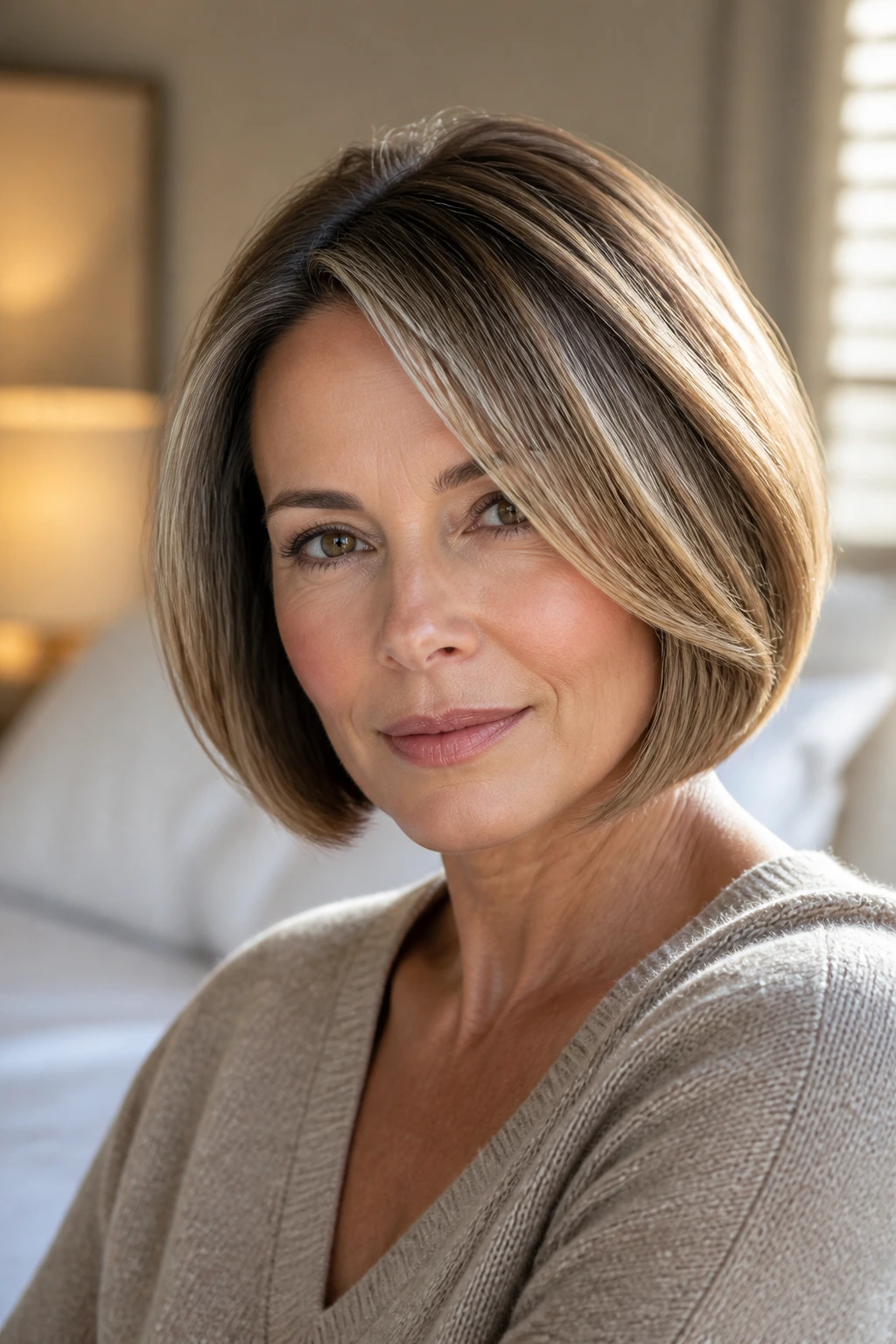
A chin-length bob hits that sweet spot where the jaw gets a frame and the neck still looks long. On women over 40, that matters because a little lift near the face can make the whole haircut feel brighter and more awake.
Why It Works
The soft side part is doing more than people think. It shifts weight away from the center, which helps if one side of your hair always lies flatter or if your crown is a little sparse. Keep the ends slightly beveled, not carved into a hard shelf, and the cut stays easy instead of severe.
Ask your stylist for the length to land between the chin and the top of the neck, with the front just a touch longer than the back. That tiny difference matters. It gives the bob movement without turning it into a full angled cut.
- Keep the perimeter clean, but not razor sharp.
- Ask for a side part that starts just off the center, not far over.
- Blow-dry the front away from the face with a small round brush.
- Use a pea-sized amount of cream on the ends so they do not puff out.
My take: This is one of the easiest bob hairstyles for women over 40 because it does not need a perfect blowout to look finished.
2. French Bob with Brow-Skimming Bangs
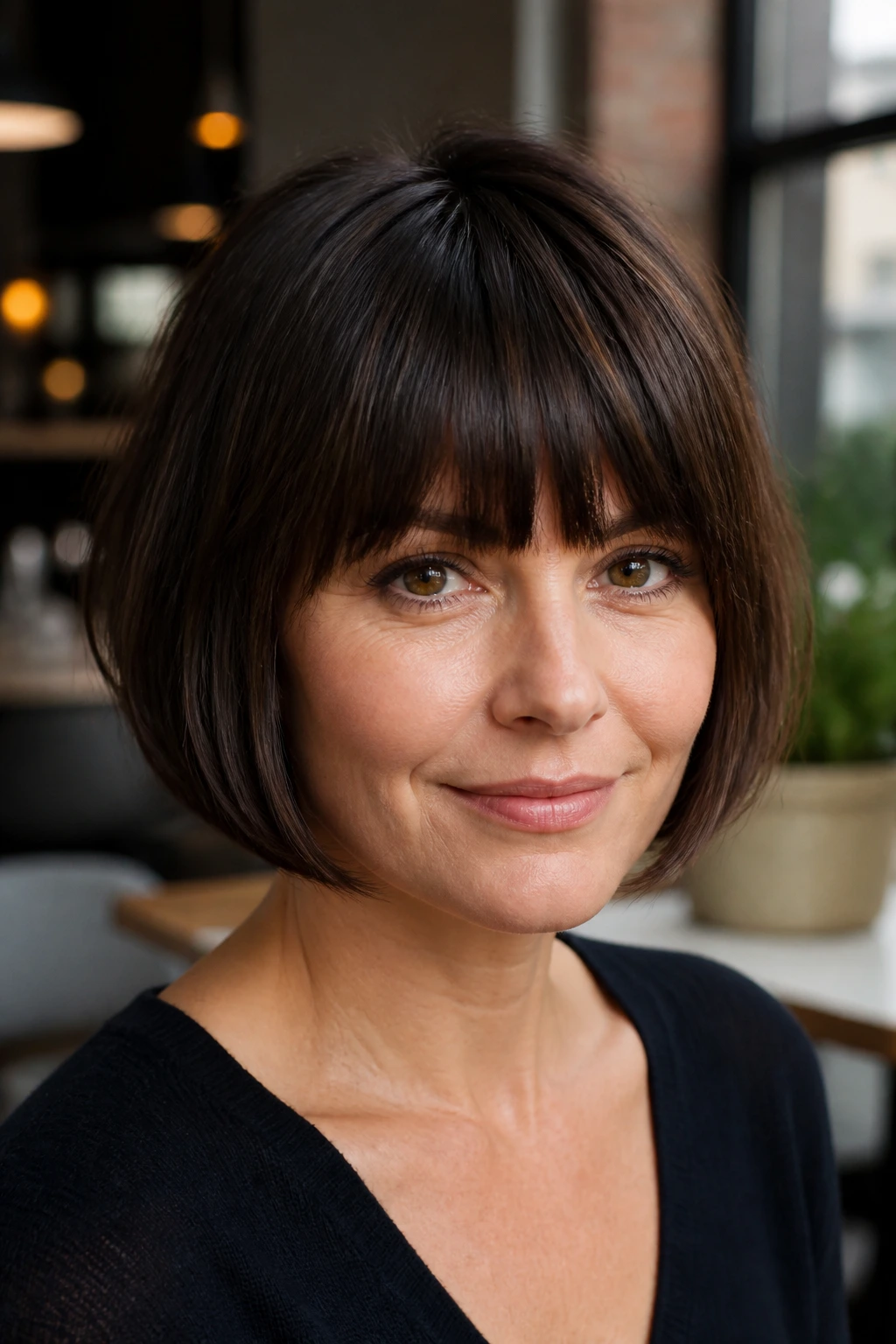
A French bob can look chic on real hair, which is why I keep recommending it. The cut sits shorter, usually around the mouth to chin, and the bangs brush the brows instead of sitting in a blunt wall. That softness is the whole trick.
The fringe should move. If it looks too rigid, the style starts feeling costume-y fast, which is the last thing most people want from a short bob haircut. A little bend at the ends keeps it modern and keeps it from fighting your glasses, your makeup, or your forehead shape.
This cut works especially well on hair that has a natural wave or a bit of body, because you do not need a ton of styling to make it look alive. A quick rough dry, a touch of mousse at the roots, and a finger-combed fringe are usually enough.
I like this one on people who want a short haircut with a little attitude. It looks polished, but not precious.
3. Blunt Collarbone Bob
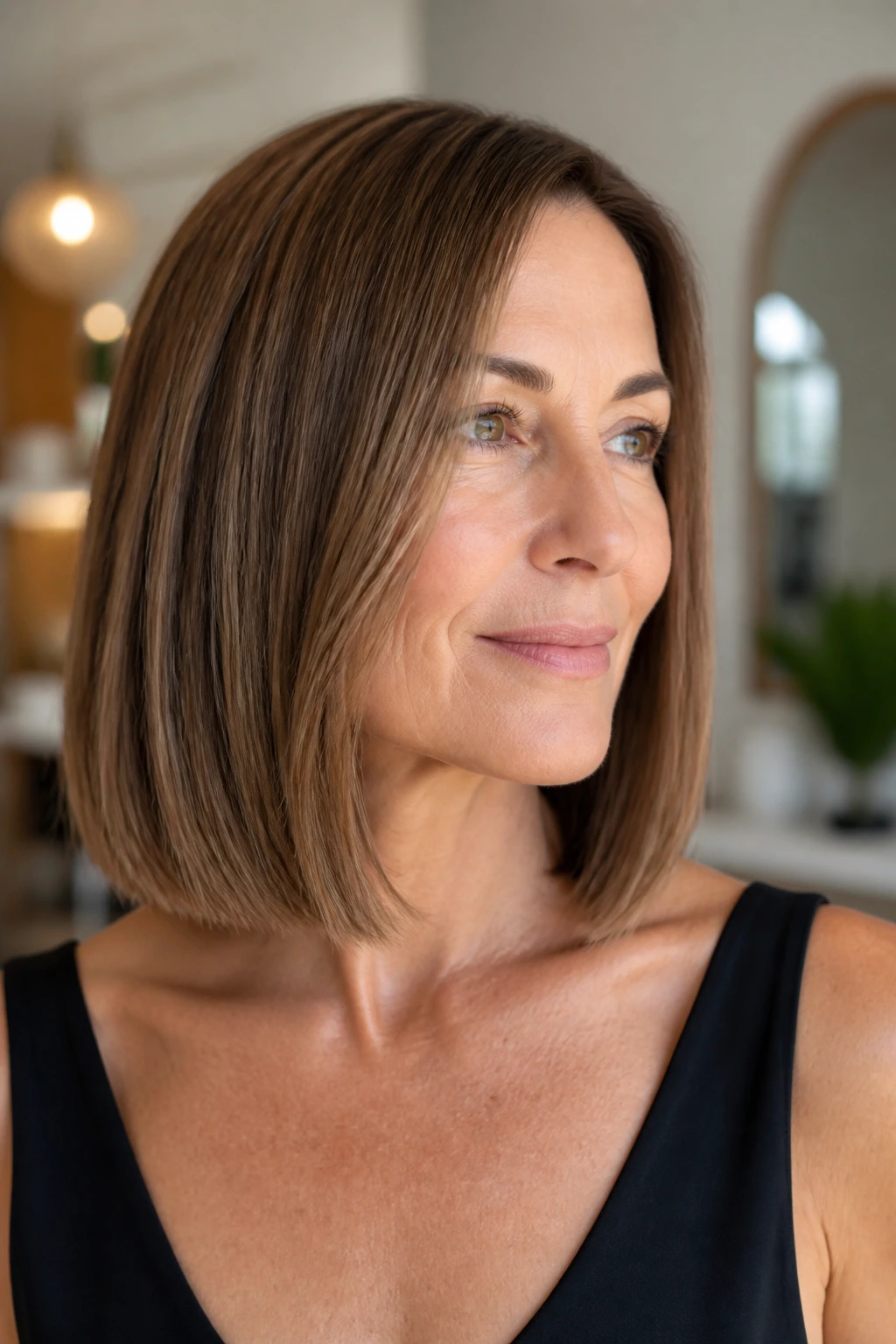
Want hair that still feels like hair, not a helmet? A blunt collarbone bob gives you that middle ground between long and short without losing the clean edge that makes a bob look sharp.
The length matters more than people expect. If it lands just at the collarbone, the ends can flick outward or tuck under depending on the brush work. If it falls too far below, it starts behaving like an indifferent lob with no shape at all. Keep the line heavy and the perimeter even, and the cut gets that dense, expensive look that fine hair loves.
How to Ask for It
Tell your stylist you want a one-length bob that skims the collarbone and keeps the front only slightly longer than the back. That small shift stops the cut from feeling boxy. If your hair is thick, ask for a tiny bit of internal weight removal, not visible layers.
This is one of the best bob hairstyles for women over 40 if you still want to pull your hair back on busy days. It gives you structure down, then enough length to tuck, clip, or wave when you want a softer feel.
4. Layered Bob for Fine Hair
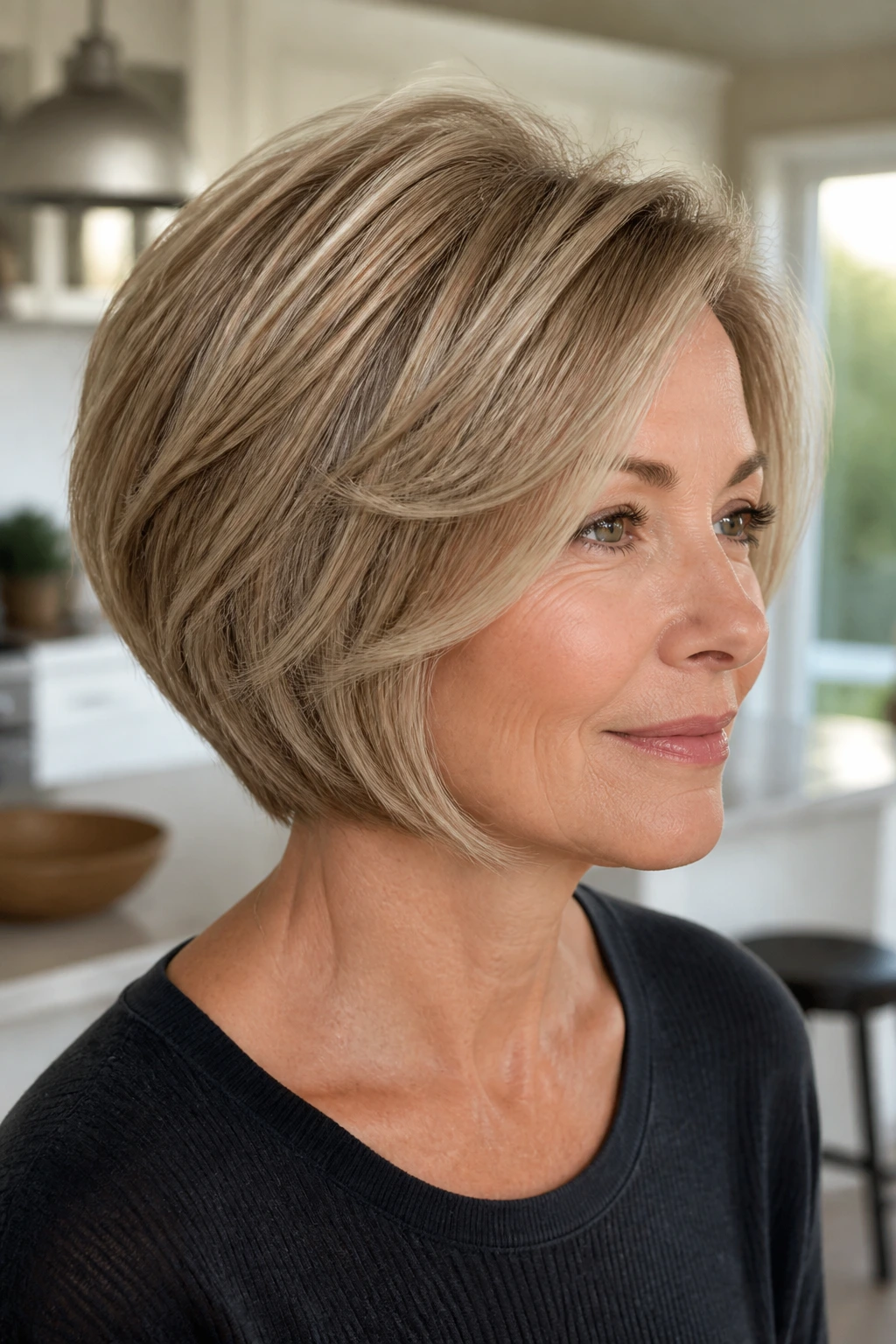
A fine-hair bob fails when the layers are too eager. You get a see-through middle, ends that flip apart, and a shape that feels tired before lunch. The better version keeps the perimeter fuller and lets the layers live inside the cut where they can build lift without thinning the outline.
I keep coming back to this shape for hair that collapses at the roots. A few well-placed layers, especially around the crown and upper back, can make the head look like it has more hair than it does. The key is restraint. Tiny, invisible layers give movement; choppy, aggressive ones just make the ends look wispy.
- Ask for internal layers, not a shaggy outer edge.
- Keep the bottom line blunt enough to hold weight.
- Use a root-lifting mousse on damp hair.
- Dry the crown first so the lift stays in place.
A layered bob like this is a quiet fix, which is often the best kind.
5. Stacked Bob with a Lifted Nape
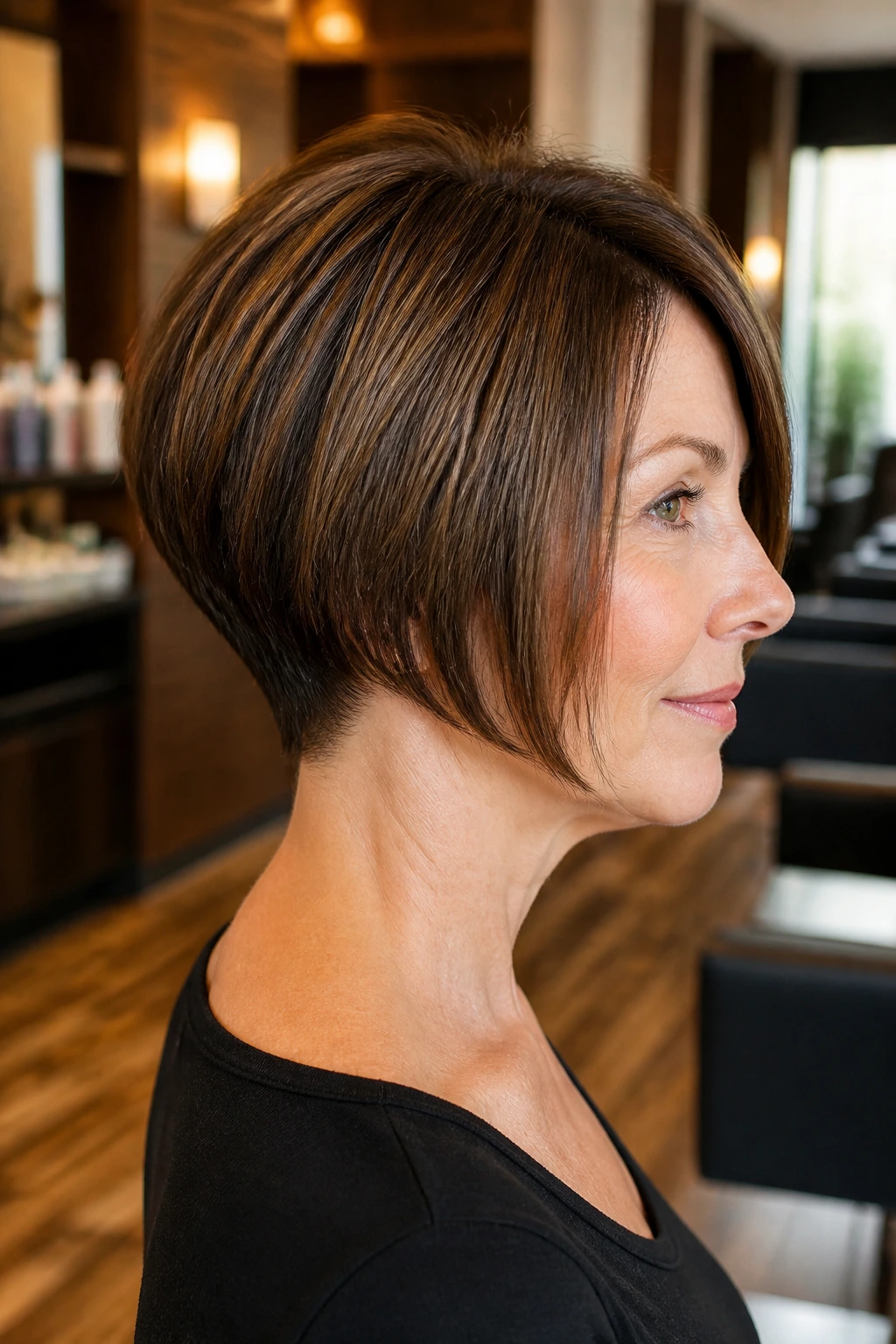
A stacked bob does one thing better than almost any other short cut: it builds shape at the back of the head. The nape sits closer to the neck, the crown gets a little lift, and the whole haircut looks more intentional from behind than most people expect.
This cut is at its best when the stacking is subtle. Too much and it starts reading like a haircut from a different decade. Keep the layers short enough to create roundness at the back, but not so short that the profile gets puffy or overbuilt. A good stacked bob should hug the head, not sit on top of it.
The maintenance is real. Trims every 6 to 8 weeks help the line stay crisp, especially if your hair grows fast or sticks out at the neck. That said, the payoff is obvious. The hair feels lighter, the crown sits higher, and you do not need much product to make it hold.
I like this one for straight or slightly wavy hair that tends to go flat at the crown by midday.
6. A-Line Bob with a Clean Angle
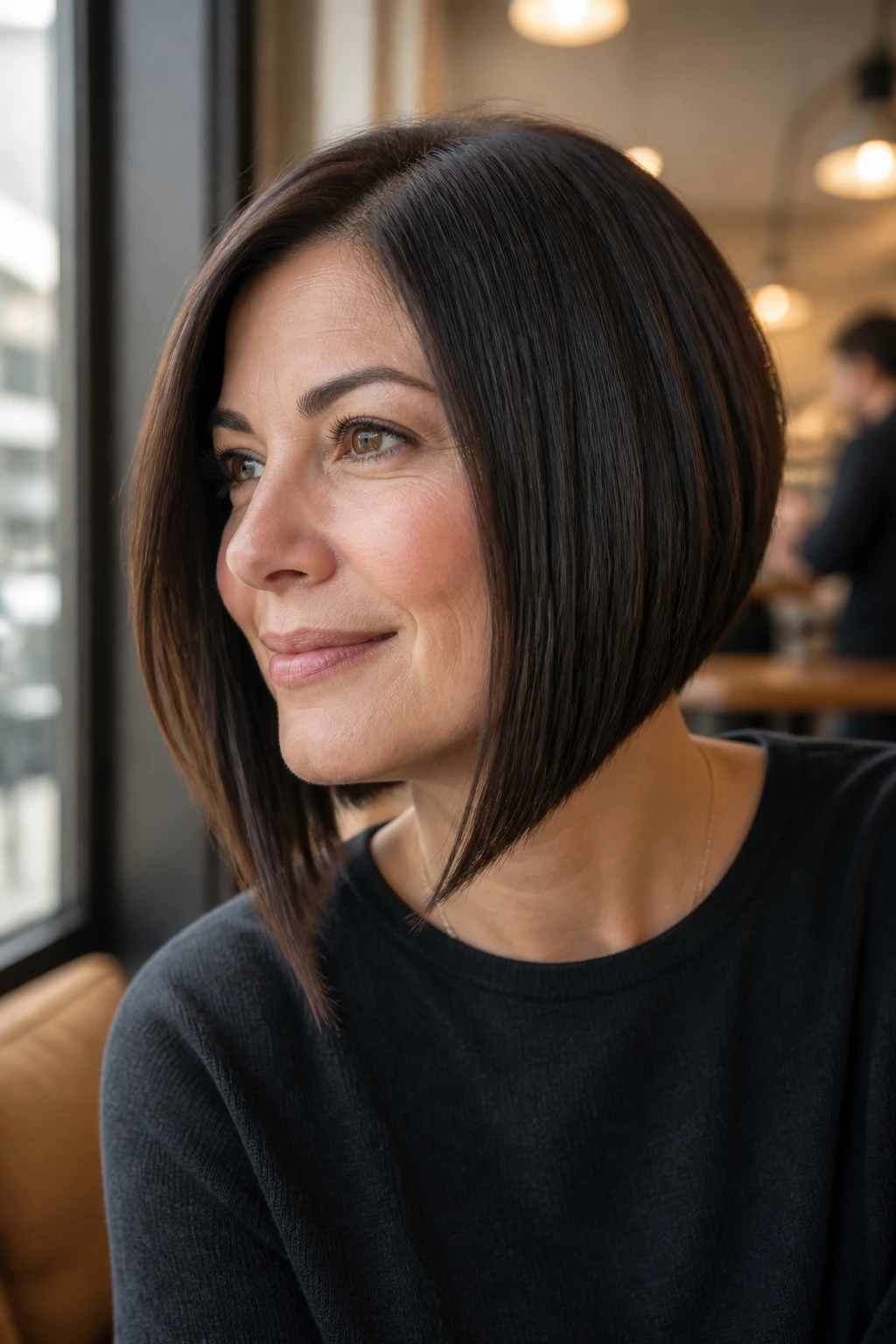
Unlike a blunt bob, the A-line bob gives you a little drama without asking for a loud haircut. The front pieces fall longer, the back sits shorter, and the line creates a gentle angle that can make the neck look longer and the jaw look cleaner.
The angle should be readable, not sharp enough to shout. A difference of about 1 to 2 inches from back to front is usually enough. Any more, and you start sliding into a very specific look that can feel hard to wear unless you love that edge every single day.
This shape does nice things for rounder faces and for hair that needs a bit of structure to stop it from puffing outward. It also grows out well, which matters if you do not want a haircut that looks broken after four weeks.
If you like a cut that looks polished with a simple tuck behind one ear, this one earns its keep. It feels modern without being fussy.
7. Wavy Bob with Air-Dried Texture
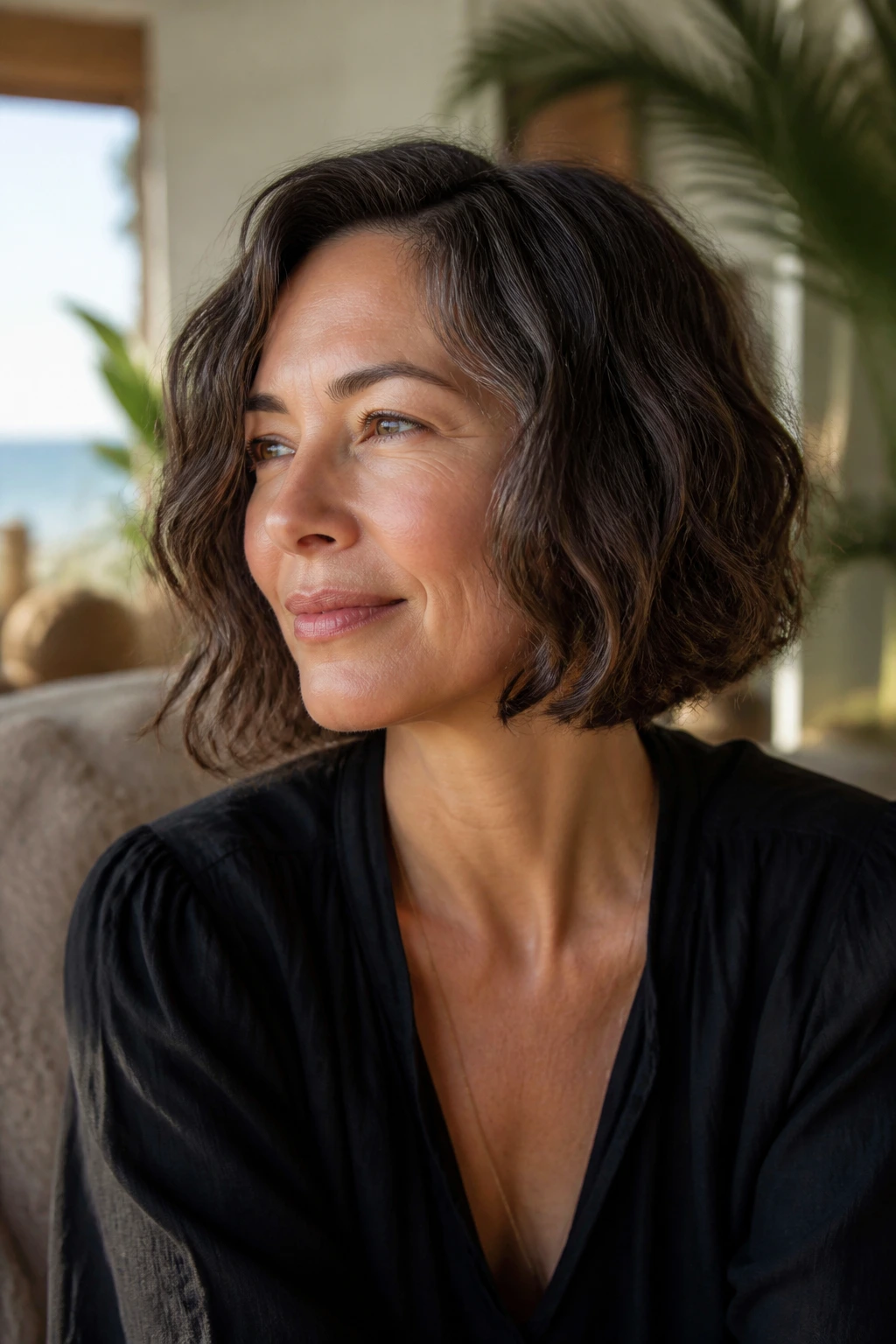
A wavy bob works because it lets the hair keep some of its own shape. The cut should follow the bend instead of forcing every strand into the same line, and that makes it feel relaxed rather than overworked.
The best version has ends that curl under a little, then loosen into soft bends as they dry. If you already have wave, keep the layers long enough to hold the pattern. If your wave is faint, a light mousse and a quick scrunch on damp hair can bring it out without making it crunchy.
What to Use
- A leave-in conditioner on the mid-lengths and ends.
- A golf-ball-sized amount of mousse through the roots.
- A diffuser on low heat if you need a faster dry.
- A tiny bit of cream on the ends after drying.
This bob is for people who like movement more than precision. It has a lived-in feel, but not the sloppy kind.
8. Curly Bob with a Rounded Shape

Why do so many curly bobs go triangular? Usually because the cut ignores shrinkage and leaves too much weight at the bottom. A rounded curly bob fixes that by shaping the curl pattern instead of trying to flatten it.
The length can sit anywhere from chin to just below the jaw, depending on how much your curls spring up. A good stylist will often cut curls dry or nearly dry, because wet curls lie. They stretch out and hide the real shape, which is how people end up with a haircut that surprises them later.
How to Keep It from Puffing Out
The widest part of the curl needs the most attention. If that area is around the cheek, the shape should open there. If it sits lower, keep the bulk lower too. That kind of mapping sounds picky, but it saves you from a haircut that looks round in the wrong place.
This is a strong choice if your curls need room to breathe but still need a clean outline.
9. Bob with Curtain Bangs

Curtain bangs are one of those changes that can soften a bob without making the haircut feel heavy. They split at the center, sweep toward the cheekbones, and give the face a little frame without locking you into a full fringe.
They work especially well when the bob itself has some movement. A blunt, stiff cut with curtain bangs can feel disconnected, but a softly layered bob lets the fringe melt into the sides. That blend is what makes the haircut look expensive in a quiet way.
The trimming schedule matters. Bangs grow fast, and curtain bangs lose shape once they drop into the eyes. A small trim every 3 to 5 weeks keeps them sitting right, especially if your hair grows quickly around the forehead.
I like this style for anyone who wants softness near the eyes and cheekbones but still wants the option to pin the front back on lazy mornings.
10. Shaggy Bob with Choppy Ends
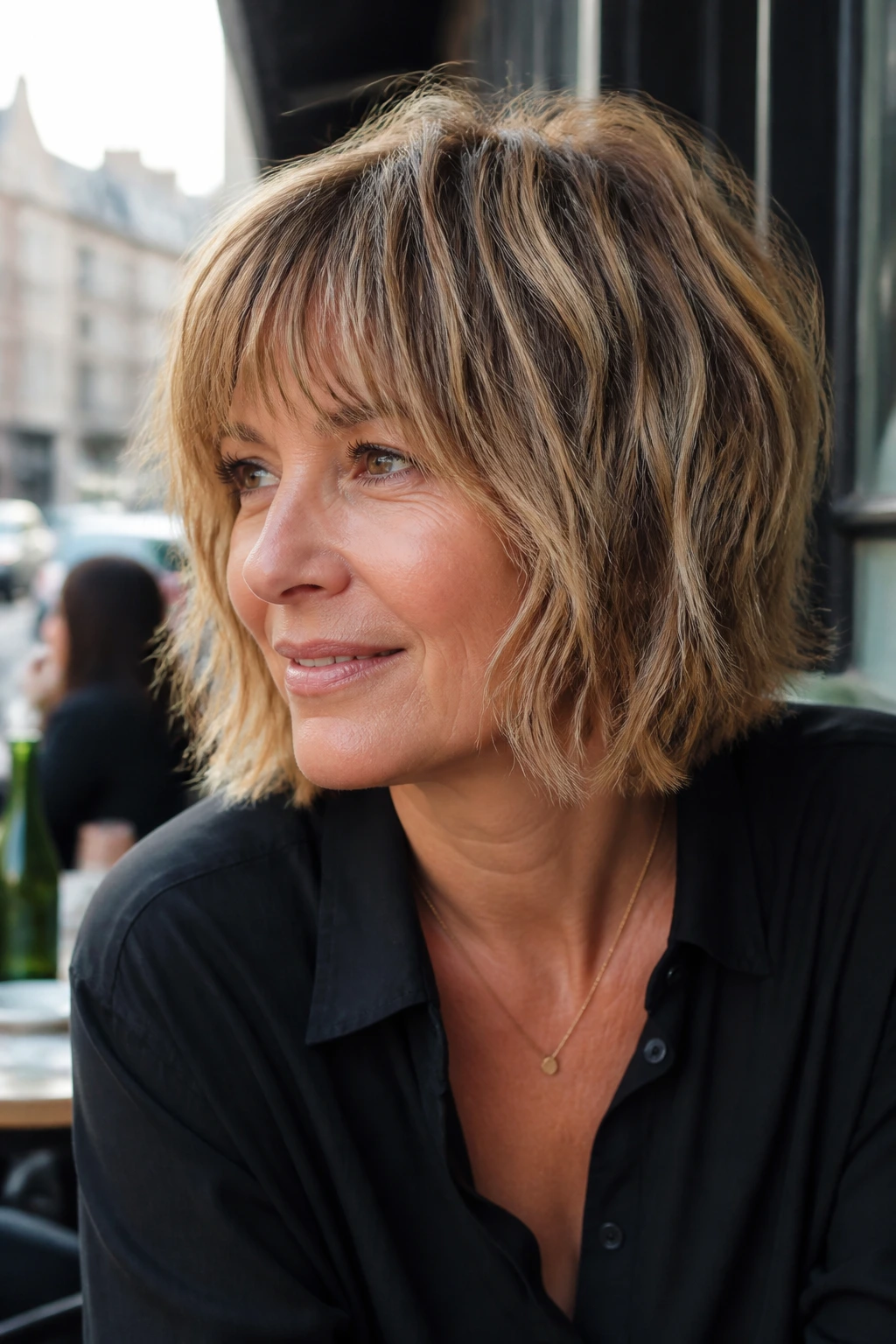
This is the bob for women who want movement more than polish. A shaggy bob with choppy ends gives hair a little grit, a little edge, and enough looseness that it never feels too arranged.
The layers should be visible, but not jagged. Think of them as pieces that break up the line, not chunks that swallow the shape. That distinction matters, because too many short layers can leave the hair frizzy around the crown and hollow at the bottom.
A matte paste or light texturizing spray works better here than heavy cream. You want separation, not a sticky helmet. Drying the hair upside down for a minute or two can help lift the roots, then you can shake it out with your fingers and let the ends do their own thing.
This cut suits thicker hair especially well. It removes some of the bulk and leaves you with a bob that moves when you walk.
11. Sleek Glass Bob

A sleek glass bob is all about precision. The ends are crisp, the surface is smooth, and the shine does a lot of the talking. It sounds severe on paper, but on the right hair it looks elegant, clean, and oddly easy to wear.
This cut works best when the hair is naturally straight or only lightly wavy. If your texture fights hard against smoothness, you will spend too much time wrestling it. On cooperative hair, though, a heat protectant, a flat brush, and a single pass with a flat iron can create a finish that looks polished without looking stiff.
The trim has to stay fresh. Split ends show up fast on a blunt, glossy bob, and a rough outline breaks the whole illusion. Even a tiny bend at the bottom can throw off the sharpness, so keep the perimeter clean.
I think this is one of the strongest modern bob hairstyles for women over 40 when you want a haircut that feels neat, not soft.
12. Textured Lob with a Side-Swept Fringe
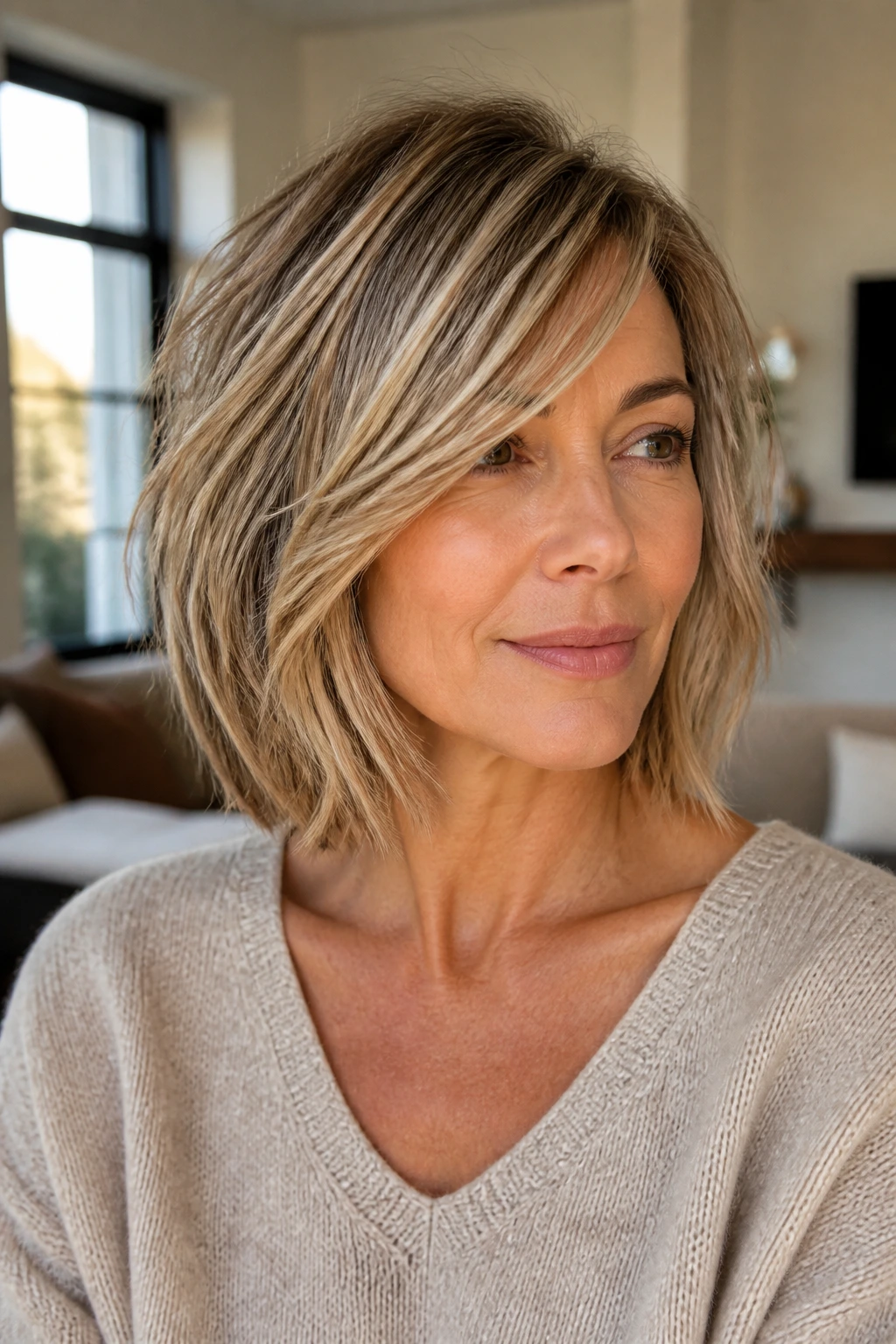
A textured lob with a side-swept fringe gives you a little more room to play than a shorter bob. The length sits around the collarbone, which is long enough to tuck behind the shoulders and short enough to keep the shape obvious.
Compared with a blunt collarbone bob, this one feels looser. The fringe sweeps across the forehead instead of splitting in the middle, and that side movement can soften a strong brow or draw attention toward the eyes. It also works well if you do not want a fringe that needs constant middle-part babysitting.
This style is smart for busy mornings because it forgives small mistakes. A few bends from a curling iron, a rough blow-dry, or even a braid left in for a while can give it enough texture to look finished. You are not trying to make every strand behave.
If you want a bob that can be office-clean one day and a little undone the next, this is one of the easiest places to start.
13. Understated Inverted Bob
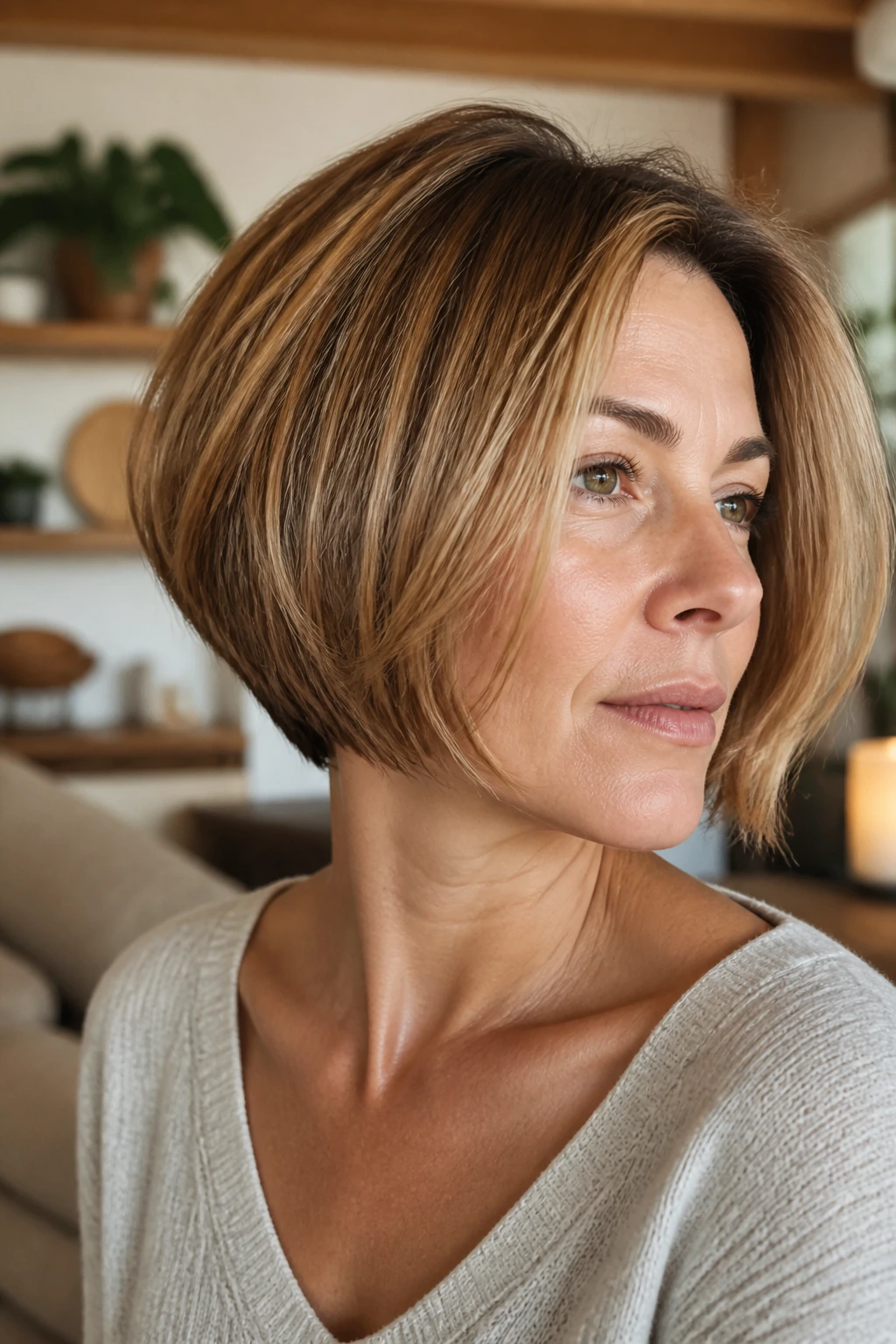
Do you want lift without the drama of a steep A-line? The understated inverted bob keeps the shape modern by making the back a touch shorter than the front, but it stops short of a sharp angle.
That small difference is the reason it feels wearable. You get a little movement around the jaw and a bit of built-in volume near the nape, yet the cut still reads as calm. On straight hair, it looks tidy. On wavy hair, it gives the front enough length to swing without dragging down the face.
The best version uses a difference of maybe half an inch to an inch between the back and front. More than that can feel obvious in a bad way, especially if your hair is thick. Less than that, and the shape loses the point.
I like this for anyone who wants a bob that looks polished from the side without announcing itself from across the room.
14. Face-Framing Layers Around the Cheekbones

A good face-framing bob can do more for the face than a dramatic chop. The shortest pieces should land around the cheekbones or just below them, because that is where the eye naturally goes first. Put the shortest layer too low and the face gets dragged downward. Put it too high and the cut can start to feel choppy.
This style is especially kind to women who wear glasses, since the front pieces can soften the frame without getting trapped in it. It also works well if you want to bring attention upward instead of letting the whole cut sit heavy at the jaw.
Where the Shortest Piece Should Land
- Around the cheekbone for a lifted look.
- At the jaw if you want a softer outline.
- Below the mouth corners if you want less maintenance.
- Keep the back fuller so the cut does not thin out at the ends.
The magic here is balance. A few face-framing pieces can change the whole read of the haircut.
15. Salt-and-Pepper Bob

Salt-and-pepper hair looks better when the cut has discipline. A clean bob gives those mixed silver and darker strands a place to live, instead of letting them spread out in a shape that feels vague or tired.
I have a soft spot for this one because it does not try to hide the gray. It uses it. The contrast in the strands can look richer when the ends are blunt enough to make the color variation obvious. Too many layers blur the effect and can make the whole head look frayed.
A soft gloss or a shine spray can help if the silver pieces feel dull, but the haircut itself is doing most of the work. Keep the line neat and the color reads on purpose, not like an accident of lighting.
This is a strong choice for women who are growing out color or simply want a style that makes natural gray look crisp rather than apologetic.
16. Tucked-Behind-the-Ear Bob
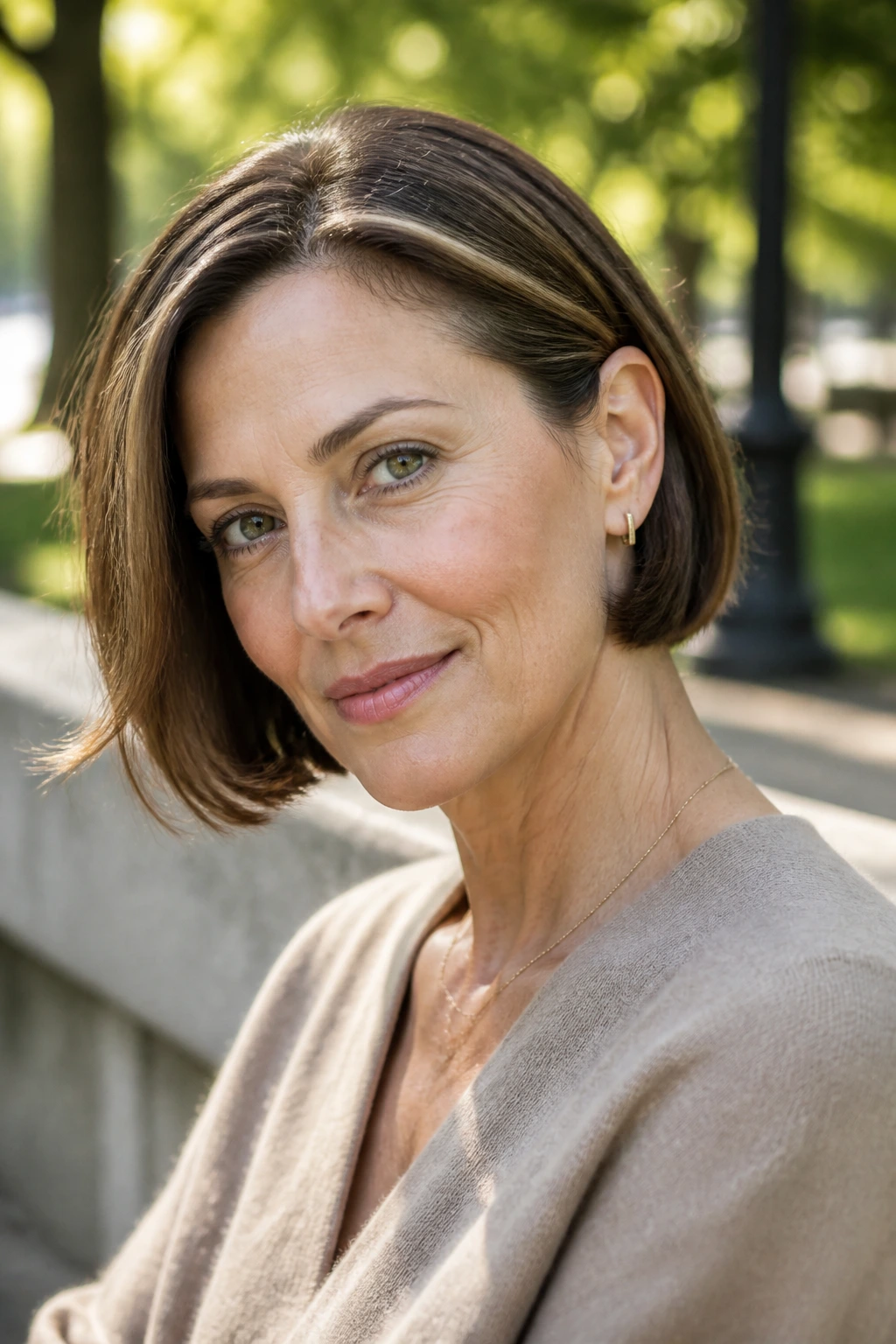
A tucked-behind-the-ear bob is part haircut, part styling trick, and that is exactly why it works. One side stays clean and close to the face, the other side can keep a little movement. The result feels relaxed but still sharp enough to wear with a blazer, hoop earrings, or nothing at all.
The length should be short enough to stay put when tucked, usually somewhere between the cheekbone and the jaw. If it is too long, the tuck fights the weight of the hair. If it is too short, you lose the line that makes the style interesting.
Styling Notes
- Smooth a tiny bit of pomade over the side you plan to tuck.
- Blow-dry the opposite side with a round brush for movement.
- Leave a little bend in the ends so the tuck does not feel stiff.
- Use an ear-sized drop of shine serum if your hair frizzes around the temple.
It is a small styling choice, but it changes the whole mood of the haircut.
17. Asymmetrical Bob

A little imbalance can make a bob feel alive. An asymmetrical bob puts one side longer than the other, usually by half an inch to 2 inches, and the change is enough to create movement without turning the haircut into a stunt.
The best asymmetry looks intentional the moment you see it. The longer side should flow, not drag. If the difference gets too dramatic, the cut starts competing with your face instead of framing it. Keep the shape clean and the lines crisp, and the style feels modern rather than edgy for the sake of being edgy.
This cut suits straight and slightly wavy hair best, because the difference in length shows more clearly. It also works well if you part your hair the same way every day and want a haircut that leans into that habit.
I would recommend this for someone who wants a little tension in the shape, not a complete reinvention.
18. Feathered Bob with Soft Ends

Feathered sounds old-school until you see the updated version. The modern feathered bob uses softness around the edges and light movement through the mid-lengths, not those stiff, blown-out layers people remember from older salon magazines.
The point is to reduce heaviness without stripping the cut bare. Feathering around the face can soften the cheek line, while a little lift through the crown keeps the shape from sitting flat. The ends should still have enough weight to hold the bob together. That balance is what keeps it fresh.
What to Ask For
Ask for feathering around the front and upper sides, not all the way through the perimeter. If the stylist gets too aggressive with thinning shears, the bob loses its body and starts looking frizzy at the edges. A dry finish with a round brush usually shows the shape best.
This cut is a good fit if your hair feels heavy but you do not want a choppy shag.
19. Tousled Bob with a Deep Side Part

A deep side part gives a bob instant lift. The roots on the heavier side get a little push, the shorter side opens the face, and the whole haircut gets that easy asymmetry people notice without quite knowing why.
The tousled part matters too. You do not want beach-wave chaos. You want loose bends, a little root volume, and ends that move when you turn your head. A 1-inch curling iron or even a flat iron used for soft bends can make that happen. Wrap the sections away from the face, leave the last inch out, and rake the hair apart once it cools.
This style helps fine hair look fuller because the side part creates height where the hair usually falls flat. It also works for thicker hair if you want the density broken up a little.
A dusting of texturizing spray at the roots is enough. Too much and the softness disappears.
20. The Bixie-Bob Blend
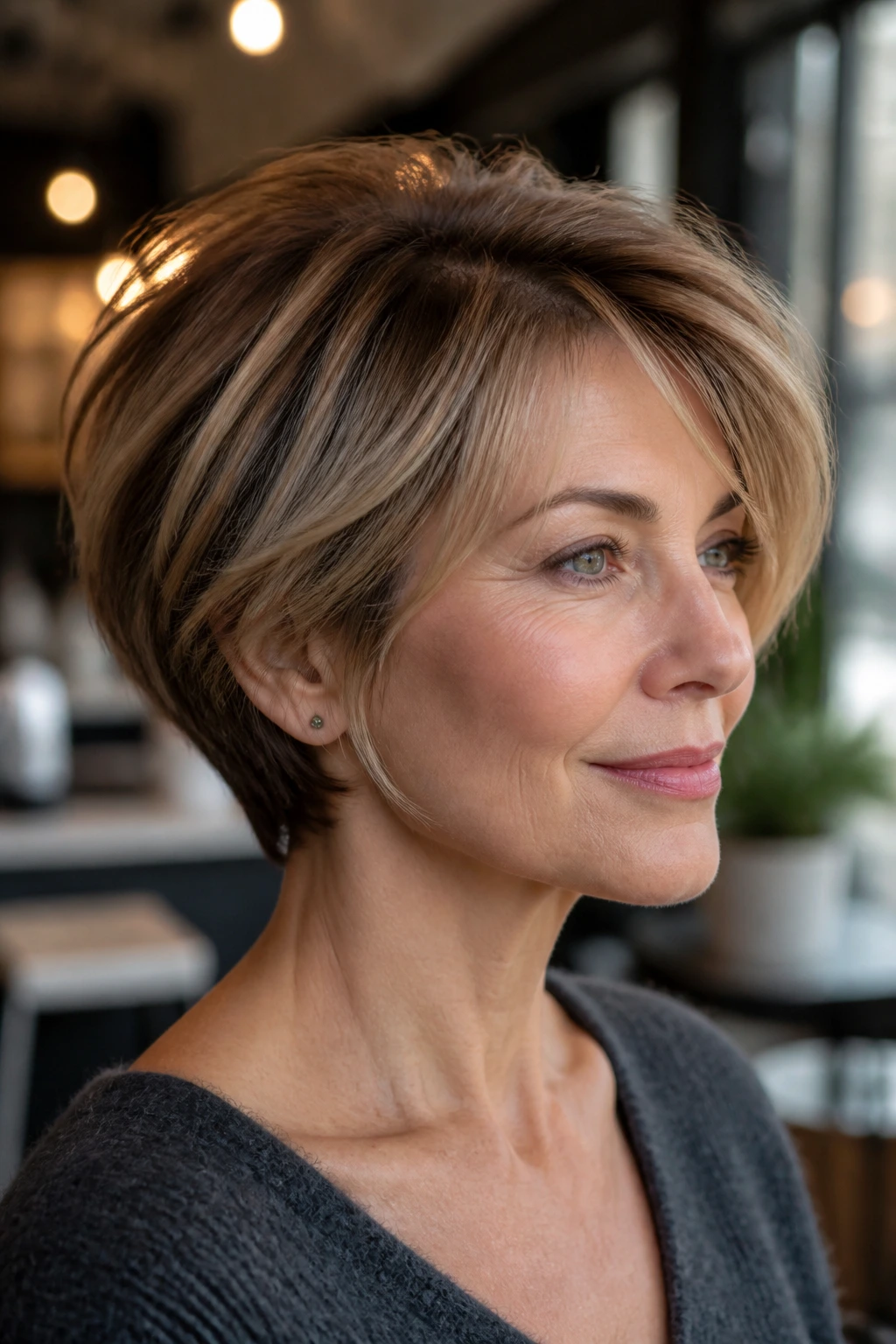
If you want short hair but not a full pixie, the bixie-bob blend sits in a useful middle zone. The nape stays close, the top keeps enough length to play with, and the sides can skim the ears without feeling severe.
What makes it feel modern is the contrast. You get the ease of a cropped cut with just enough bob shape to keep it feminine, though I dislike that word when it gets used lazily. More honestly, it gives you movement, lift, and less hair to fight with in humid weather or busy mornings.
It suits people who are ready for something lighter but not ready to go ultra-short. The crown can be brushed forward, lifted, or separated with a bit of paste, and the whole thing grows out with less awkwardness than a sharper pixie cut.
A trim every 5 to 7 weeks keeps the shape clean. Let it go too long and the proportions blur fast.
Final Cut
A good bob after 40 is not about hiding anything. It is about giving the hair a shape that behaves well and still looks like you made a choice. That is the real difference between a haircut that just sits there and one that quietly does its job.
Bring photos, sure, but bring a little honesty too. Tell the stylist how much time you actually spend styling, whether your hair poofs, falls flat, or frizzes at the first sign of humidity, and where you want the weight to live. Those details matter more than a glossy photo ever will.
The best bob is the one that still looks decent on day three, with dry shampoo at the roots and one side tucked behind your ear. That is the cut that earns its place.
