



Ear-length bobs are merciless in the best possible way. A cut that lands just a touch too high can feel boxy. A cut that hangs a half-inch too low can lose its snap. That tiny gap is where the whole style lives, and it is why short bob hairstyles at ear length can look razor-sharp on one person and a little awkward on another.
The sweet spot sits around the earlobe or just below it, with enough room for movement but not enough length to drape into a shoulder-length shape. That makes the cut feel neat, deliberate, and a little bit daring. It also means the line of the haircut matters more than most people think. One blunt edge, one bent-under finish, one side part, and the entire mood changes.
I’ve always liked this length because it does two jobs at once. It can make fine hair look denser, and it can pull thick hair back into shape without making it feel heavy. It can read polished, messy, retro, sleek, or soft, depending on where the weight sits and how much texture you leave in the ends.
And that is really the point. The best ear-length bob is not the shortest one, or the fanciest one, or the one with the most layers. It is the one that matches your hair’s natural behavior before you even pick up a brush.
1. The Blunt Ear-Length Bob That Makes Hair Look Thicker
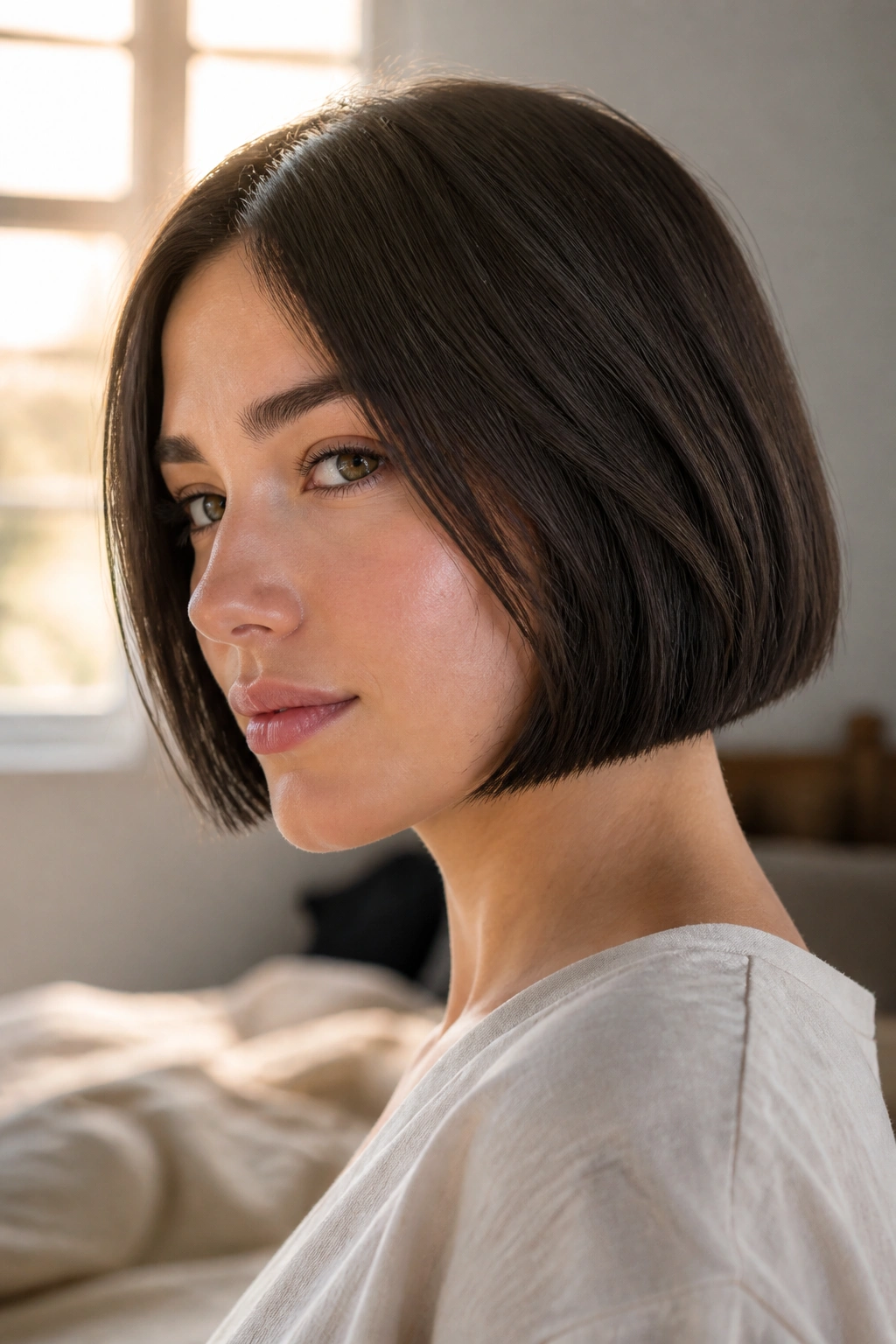
A blunt ear-length bob is the one I reach for when someone wants their hair to look fuller without asking for a lot of styling gymnastics. The line is clean, the ends are solid, and the whole shape feels honest. No fuss. No frills. Just a sharp edge that gives fine hair a little backbone.
What to Ask Your Stylist
Ask for one length with a dense perimeter and keep the interior layers to a minimum. The goal is weight at the bottom, not wispy ends that disappear by lunchtime. If your hair tends to kick outward, a slight forward angle can help the shape sit closer to the face.
A middle part makes this cut look crisp. A side part makes it feel softer. Either way, the blunt line does the heavy lifting.
- Cut at the earlobe to just below the ear
- Keep the ends full and square, not thinned out
- Blow-dry with a flat brush or paddle brush for a smoother finish
- Skip aggressive razor work if your hair is already fine
My favorite detail: leave the very tips a touch heavier than you think you need. That extra weight keeps the bob from looking see-through.
2. The Tucked-Under Bob With a Clean, Polished Bend
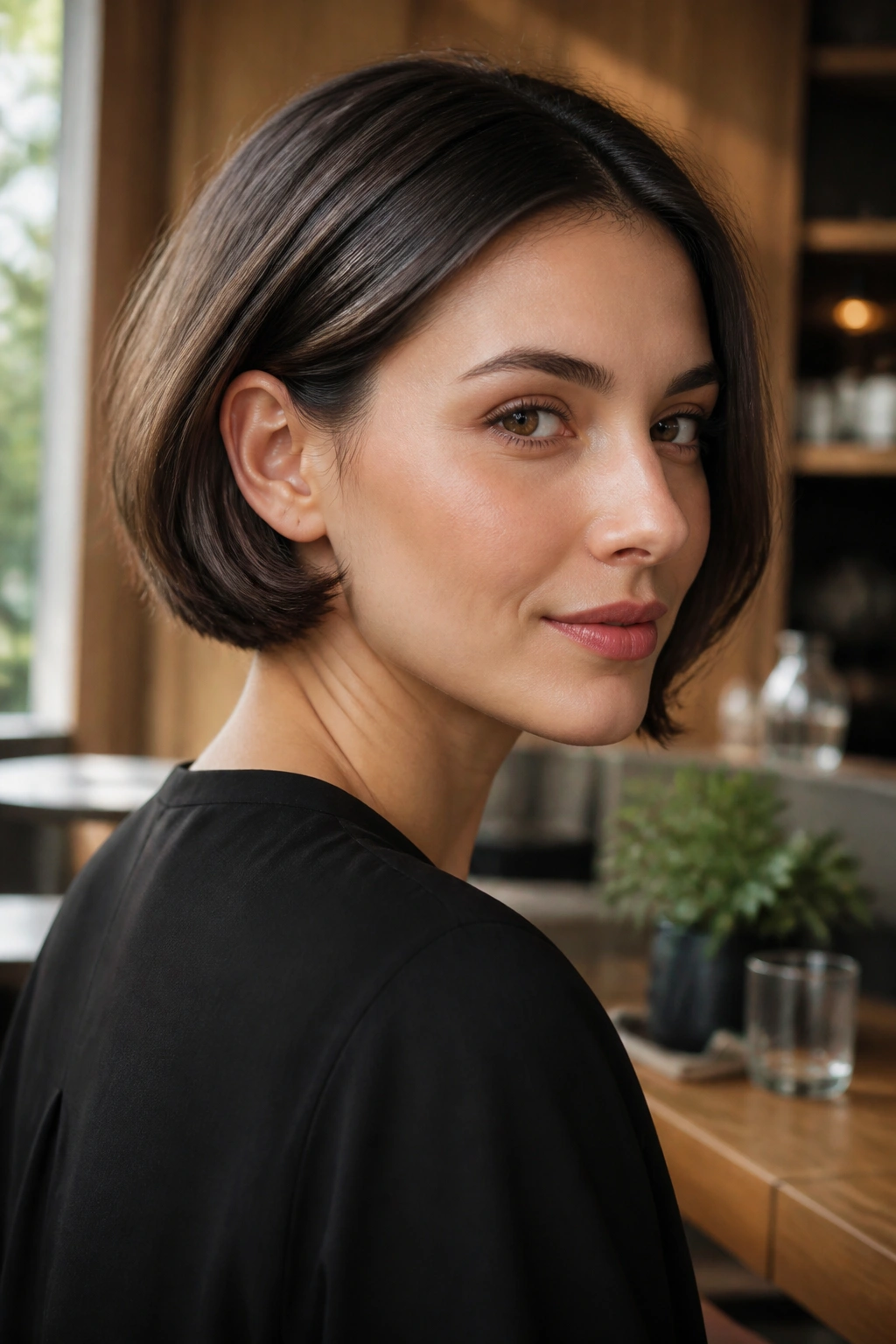
This is the cut that looks like it was styled on purpose, even when it was not. The ends curve inward just enough to skim the jaw, and that tiny bend changes everything. It keeps the silhouette neat, which is useful if your hair likes to flare out at the sides.
The tucked-under bob works especially well on straight or slightly wavy hair that needs shape more than texture. A round brush, a quick blow-dry, and a cool shot at the end are usually enough. The trick is not making the bend too dramatic. You want a soft hook under the ear, not a little helmet.
It also plays nicely with sharp collars and simple earrings. The haircut creates its own frame, so you do not need much else. That’s one reason I like it for people who want a short bob that feels put-together without leaning fussy.
If your hair is coarse, this shape can feel almost tailored. If it’s fine, the tuck gives the illusion of density without needing heavy product. Either way, the finish is clean. Almost severe, in a good way.
3. The French Bob With Micro Bangs

What makes a French bob feel so direct? The answer is the balance between short length and tiny fringe. At ear length, the cut sits high enough to show the neck and jaw, but the micro bangs or short browskimming fringe pull all the attention upward. It has attitude without trying to be loud.
This version works best when the texture is a little imperfect. Perfectly pin-straight hair can make it feel stiff, while a slight bend or soft wave gives it life. The fringe matters more than people expect. Too thick, and it turns heavy. Too wispy, and the whole thing loses its point.
How to Style It
Rough-dry the bangs first, then shape the rest with your fingers or a small brush. A pea-sized amount of styling cream is usually enough. If you flatten the top with too much product, the cut loses that airy French feel fast.
- Best on fine to medium hair
- Needs regular fringe trims, often every 3 to 4 weeks
- Looks strongest with a slight side bend in the front
- Use a light cream or soft wax, not a sticky gel
This is one of those cuts that looks casual, but it is not lazy. The shape is precise. The finish can be relaxed. There’s a difference.
4. The Side-Parted Ear-Length Bob With Soft Layers
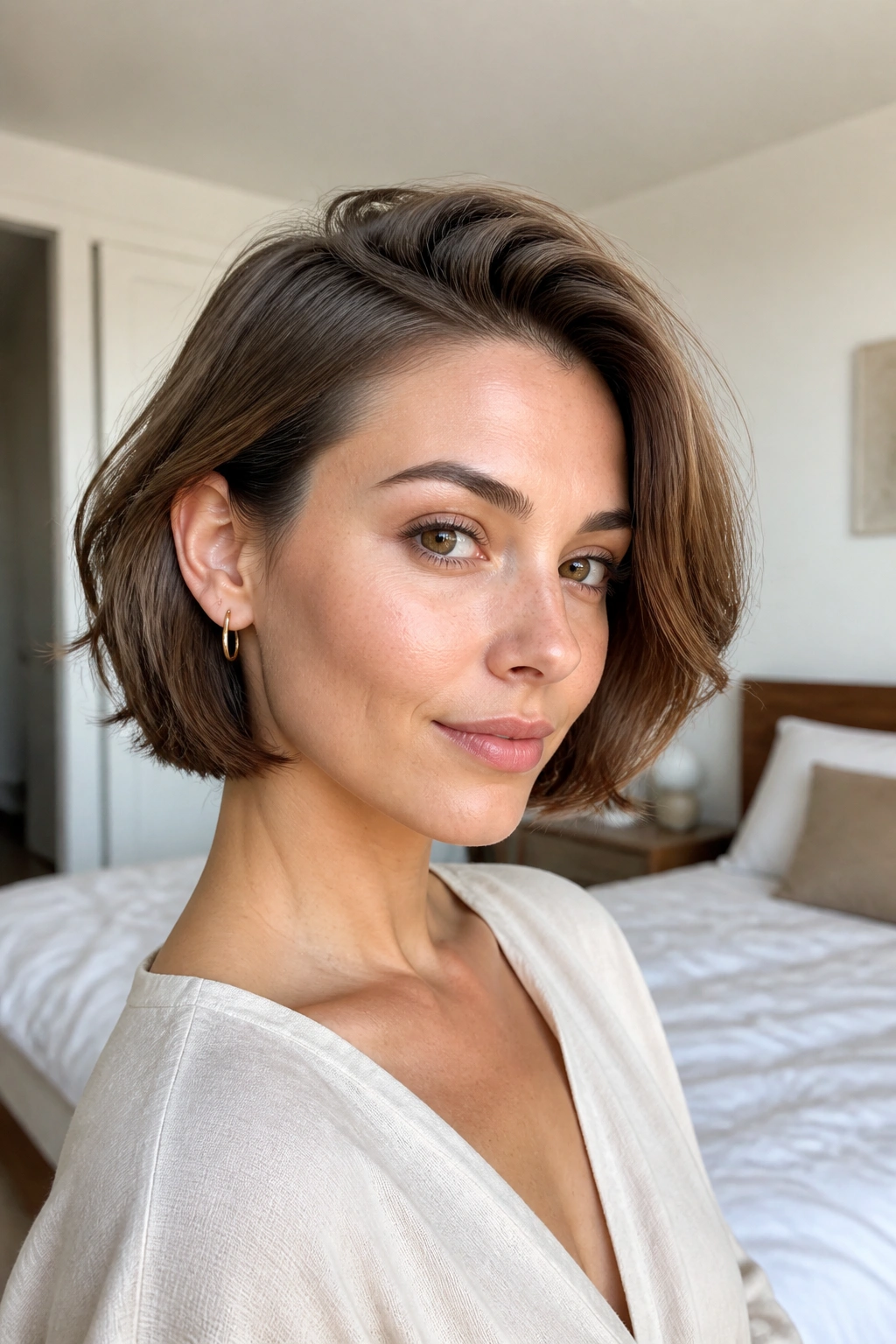
If one side of your hair always falls flatter than the other, a side-parted ear-length bob can turn that problem into the cut’s whole personality. The side part creates lift where you need it, and the soft layers stop the shape from feeling too boxy around the cheeks. It’s a smart cut for people who want movement without obvious choppiness.
I like this version on hair that has a little body but not enough to hold a big blowout for long. A deep part gives the roots a chance to rise, especially if you direct the hair away from the scalp while drying. The layering should stay subtle. You want enough internal movement to stop the bob from sitting like a cap, but not so much that the ends turn stringy.
This cut also softens strong features in a useful, practical way. The side sweep breaks up the line around the forehead, and the extra swing at the front pulls the eye diagonally instead of straight across. That sounds small. It is not. Small shifts matter in short hair.
A quick mist of root spray at the part can change the whole read of the haircut. Same bob, different structure.
5. The Curved Bob That Skims the Jaw

The curved bob is one of those cuts that looks simple until you try to grow it out. Then you notice how much work that shape was doing. At ear length, the curve follows the jawline and gives the face a tidy frame without hard corners. It feels softer than a blunt bob, but more controlled than a shaggy one.
What I like about this cut is the way it uses shape instead of obvious layering. The front pieces can be a hair longer than the back, and that slight difference helps the bob swing in a smooth arc. It is especially good if you want your jaw to look a little more defined without drawing a box around it.
The styling is not difficult, which is part of the appeal. Blow-dry the front sections with a round brush, then turn the brush inward only at the last inch or so. That small bend keeps the curve believable. If you curl the whole section under, the style starts to look dated. A tiny arc is enough.
This is also a very forgiving cut for people who do not want daily flat ironing. The curve still reads if the hair air-dries with a bit of natural movement. It just looks better when the ends are guided, not forced.
6. The Glass-Sleek Center-Part Bob
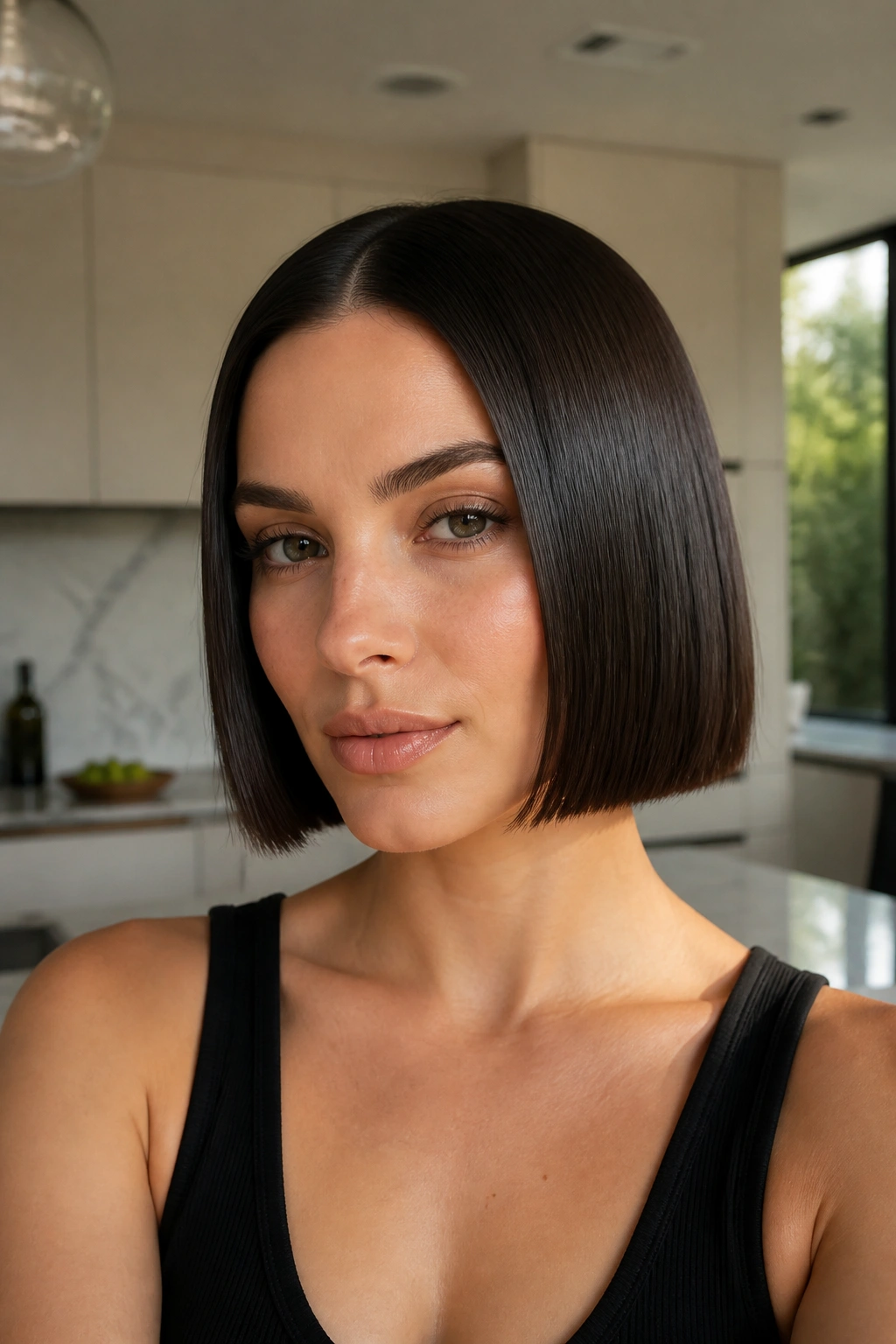
A glass-sleek bob is the sharpest-looking version on this list, and I mean that literally. The surface should look smooth enough that you can see the line of the cut before you notice the texture. At ear length, that polish turns the haircut into a clean shape rather than a casual one.
Compared with textured bobs, this version needs more discipline. Heat protectant, a flat brush, a fine-tooth comb, and a serum that does not weigh hair down all matter here. If your hair frizzes easily, you will need to work in small sections. Big sections leave little bumps, and little bumps show.
The center part gives the cut symmetry, which is part of the appeal. It frames the face in a straight line and makes the ear-length shape feel modern in the plainest, strongest sense of the word. No softening tricks are needed. The sleekness is the point.
This is the style I’d choose if your hair is naturally straight or if you already like a polished blow-dry. It is less friendly to high humidity than some of the other options, so I would not call it low-maintenance. But when it is done well, the result is crisp and expensive-looking without needing extra decoration.
7. The Piecey Textured Bob With Airy Ends

A piecey ear-length bob is what you want when you like hair that moves a little instead of sitting in one solid block. The ends are softened just enough to break up the outline, but the shape still stays short and visible. It’s the opposite of helmet hair. Thank goodness.
Why It Works
The trick is removing bulk in small, careful amounts. Too much thinning and the ends start to look shredded. Too little and the texture disappears. A good version of this cut keeps the perimeter visible while letting the top layer fall in loose pieces.
That balance is useful for hair that feels heavy at the sides. It also keeps the bob from widening out around the ear, which is the exact spot where short cuts can go wrong.
How to Wear It
- Scrunch in a light mousse before drying
- Use a diffuser if your hair has wave or bend
- Finish with a dry texture spray at the mid-lengths
- Keep the ends soft, not choppy and broken
This is one of my favorite short bob hairstyles at ear length for people who do not want a strict finish. It looks good a little messy. It looks good tucked behind one ear. It even looks better the second day, when the texture settles down and stops trying so hard.
8. The Stacked Ear-Length Bob With a Lifted Back
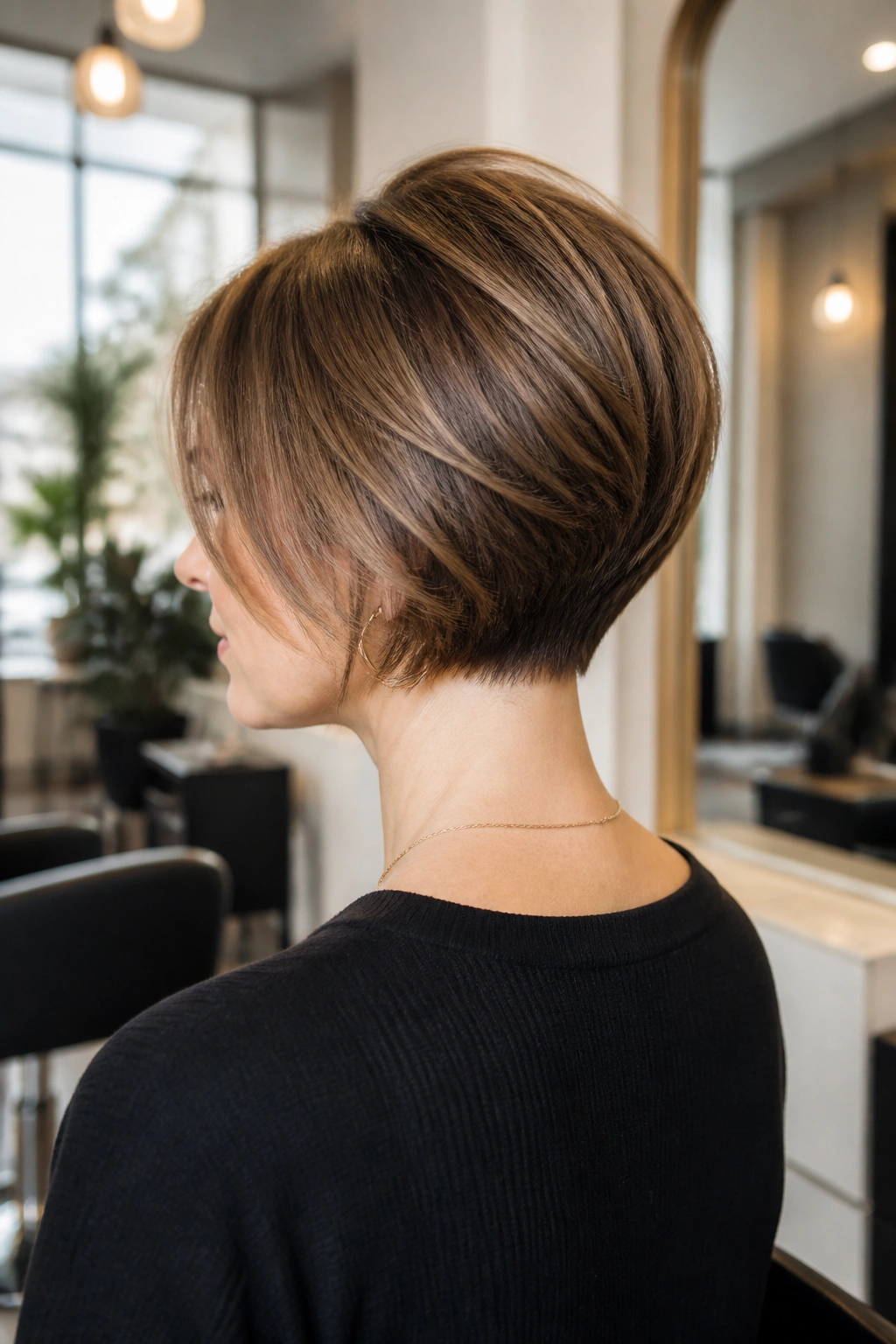
A stacked bob is all about the back view. The nape sits closer to the head, the crown carries a little lift, and the front keeps enough length to balance the shape. At ear length, the result is compact and tidy, which is exactly why it works so well on straight hair that tends to go flat.
This cut has a strong silhouette from the side. That matters more than most people admit. If you want a bob that looks finished from every angle, stacking gives the haircut structure without needing a lot of product. The back does the work. The front simply follows.
I’d call this a good choice for people who like regular trims and do not mind a shape that needs maintenance. The stacked line grows out with a clear edge, so it can start to lose its shape if you leave it alone too long. That is not a flaw. It’s just the nature of the cut.
If your neck is one of the parts of your body you actually like to show off, this style is a nice fit. It clears the nape, keeps the outline neat, and gives earrings a little room to breathe.
9. The Curly Ear-Length Bob That Lets Texture Lead
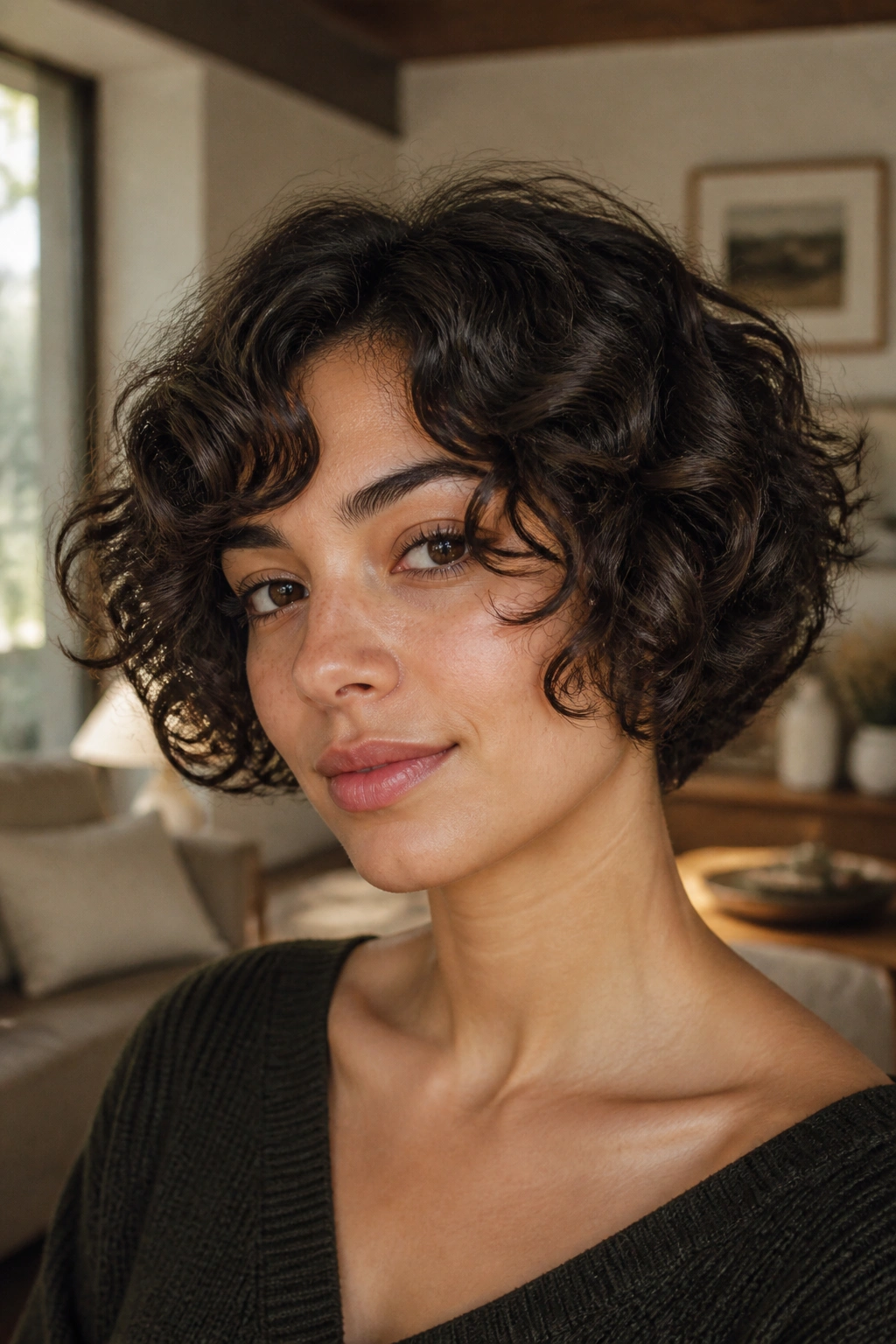
Can curls sit at ear length without puffing out into a triangle? Yes, if the cut respects the curl pattern instead of fighting it. That means dry cutting, or at least cutting with the curl’s spring in mind, so the shape lands where you want it once the hair dries.
A curly ear-length bob looks best when the perimeter is a bit longer in the front and the internal shape is light enough to move. Heavy layers can make curls spring too high at the sides. Too little shape can leave the cut boxy. The middle ground is where the good stuff happens.
What to Tell a Curl Specialist
Ask for a cut that keeps the curl pattern balanced at the cheek and jaw. If your curls are tighter, the ear-length shape may need a little extra length to avoid shrinking too much. If they’re looser, the cut can sit closer to the ear and still keep shape.
Products matter here, but not in a fussy way.
- Use a curl cream for slip and shape
- Add a light gel if you need hold
- Diffuse on low heat
- Do not rough-towel the curls after washing
This style is lovely when the curl pattern is strong and healthy. It is also honest. The haircut shows exactly what your curls do, which can be freeing if you’ve spent years forcing them into longer styles.
10. The Wavy Bob With Invisible Layers

A wavy ear-length bob can turn sloppy in a hurry if the ends are too blunt or the inside has too much weight. Invisible layers fix that. They remove just enough bulk to let the wave bend naturally, while keeping the outside line smooth enough to read as a bob and not a shag.
Picture a cut that air-dries with some shape even if you do nothing dramatic to it. That is the goal. The layers sit underneath the top section, so you get movement without those obvious shorter bits that stick out at random. It is a tidy trick, and it saves the haircut from looking bulky at the sides.
This version is especially good if your hair bends but does not curl. A 1.25-inch wand can help define the wave on days when you want more shape, but you do not need to style every strand. A few bends around the face and a little lift at the crown go a long way.
I like this cut because it doesn’t argue with the hair. It works with it. That alone puts it ahead of a lot of over-layered bobs that look lively in the chair and annoying at home.
11. The Side-Swept Bob With a Long Fringe

The side-swept bob is the one I suggest when someone wants short hair but still wants a bit of softness around the face. The fringe carries the style. It slides from the temple across the forehead, then blends into the ear-length shape without looking chopped off.
That longer front piece changes the whole mood. It draws attention to the eyes and cheekbones, and it gives the haircut a diagonal line that feels easier than a straight-across edge. If your forehead feels wide to you, or your face shape reads longer than you’d like, this is the kind of small adjustment that makes a real difference.
The styling is not hard, but it does need direction. Blow the fringe from the opposite side first, then sweep it back across once it has some lift at the root. That keeps it from lying flat and splitting apart. A light cream or a tiny bit of styling paste helps the front stay together without turning crunchy.
This is one of the better choices if you like a bob that can be worn a few different ways. Pin the fringe back and it changes. Let it fall and it softens. That flexibility is worth something.
12. The Razor-Cut Bob With Feathered Ends

A razor-cut bob has a different feel from a scissor-cut blunt bob. The ends look lighter, the perimeter feels softer, and thick hair loses some of its bulk without becoming a cloud. At ear length, that feathered finish can make a strong haircut feel airy instead of heavy.
What Makes It Different
Razor cutting is useful when the hair is dense and wants to sit in a block. The blade softens the line enough that the ends move. It also breaks up the edge in a way scissors do not, which can be helpful if the hair has a stubborn, heavy texture.
That said, I would not send every head of hair toward a razor. Fine, fragile strands can fray if the cut is too aggressive. You want feathered ends, not shredded ones.
Who Should Skip the Razor
- Very fine hair that already looks sparse at the ends
- Hair that breaks easily when brushed dry
- Anyone who wants a strict, geometric line
- Curls that need a dry, curl-specific shape
For thick hair, though, this can be a lifesaver. It removes that blunt heaviness around the ear and lets the cut breathe. The result feels lighter in movement, not shorter in a harsh way. That distinction matters.
13. The Rounded Bob With Crown Volume
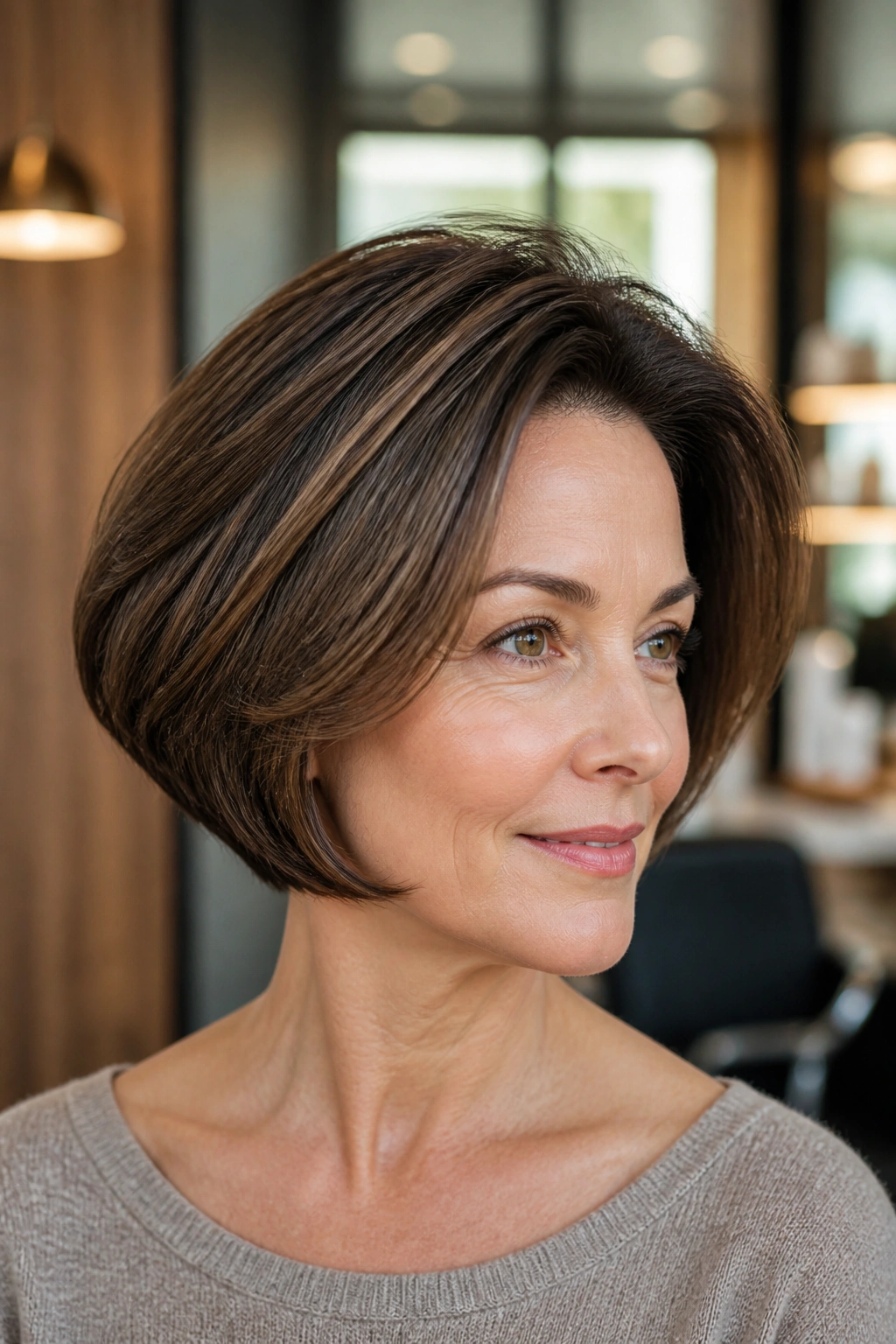
A rounded bob can look old-school in the best possible way. The top has lift, the sides taper gently, and the curve wraps around the head instead of sticking out at the corners. At ear length, that shape is compact but not severe.
The crown volume is what keeps it from going flat. You can build that with a round brush, a little root mousse, and a blow-dry that lifts hair up and back before guiding the ends under. If you skip the lift and just dry the hair straight down, the rounded shape loses its shape fast.
How the Shape Is Built
The cut usually keeps the back shorter and the crown slightly fuller, with the sides curved to follow the head. It is not a stacked bob, though people mix those up all the time. The stacked version is sharper at the nape. The rounded one is softer, with more of a dome-like silhouette.
This cut is especially good for narrower faces or anyone who likes a little fullness near the temples. It also pairs well with neat earrings and high necklines. There is something clean about the whole setup.
I would not choose this if you hate blow-drying. The structure depends on a bit of styling. But if you like a polished finish that looks intentional without being stiff, this one is worth the effort.
14. The Asymmetrical Ear-Length Bob
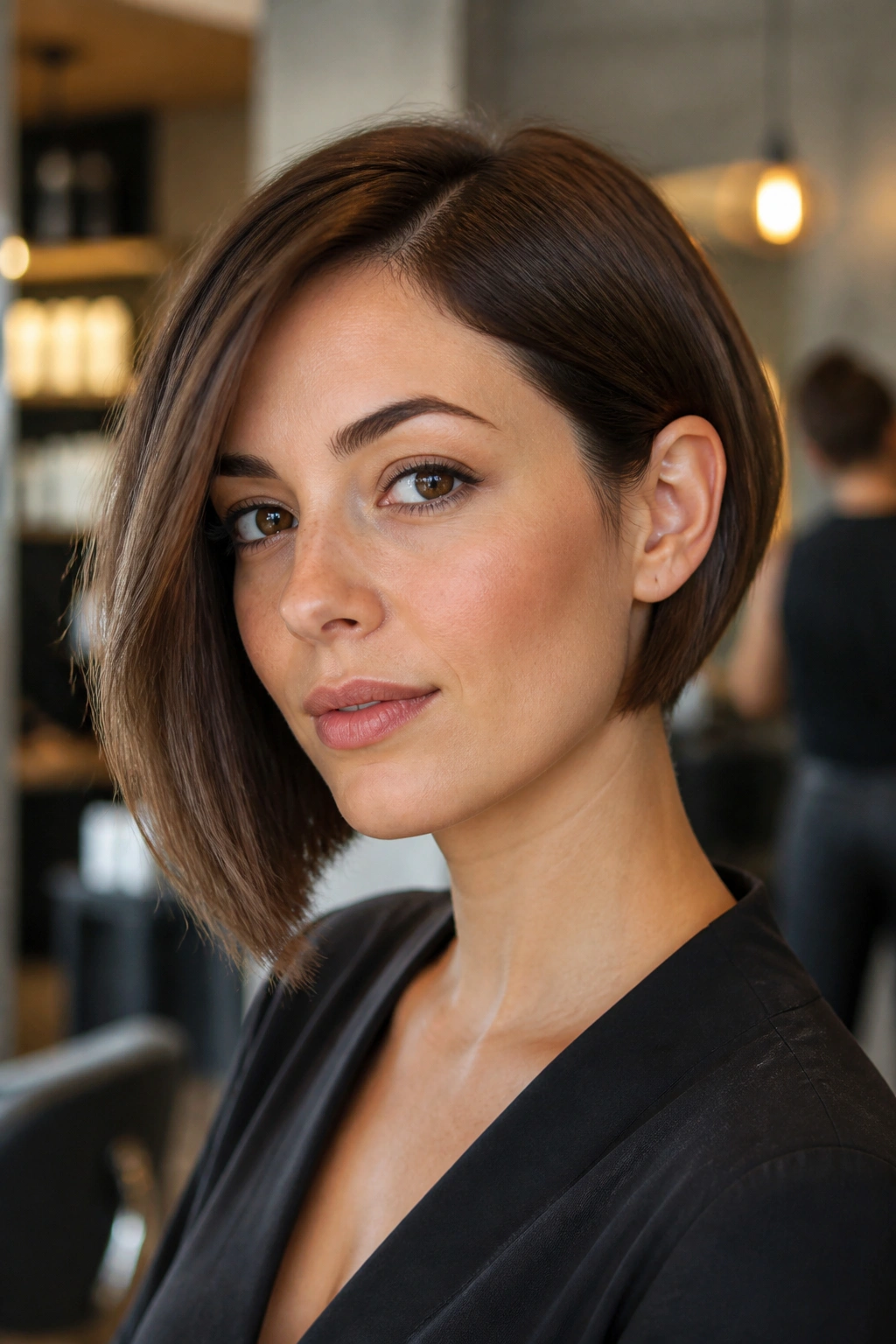
A slight asymmetry can do more than a dramatic one. One side just a touch longer than the other is enough to make an ear-length bob feel modern and a little sharper than the classic version. The difference does not have to shout. In fact, a quiet asymmetry often looks better.
This cut works well when the hair naturally falls to one side anyway. Instead of fighting that habit, the shape uses it. The longer side can soften the jaw or skim the neck, while the shorter side opens up the face. If the cut is done well, the imbalance feels deliberate rather than accidental.
I like this on straight or lightly wavy hair because the line stays visible. On very curly hair, the difference can disappear once the curls spring up, so the cut needs more planning. That is not a dealbreaker. It just means the asymmetry has to be subtle enough to survive texture.
A small side note: this is a nice cut if you wear earrings often. The uneven length can frame one ear in a way that makes the shape feel styled even when the rest of the hair is minimal.
15. The Soft Feathered Bob That Fits Almost Anyone
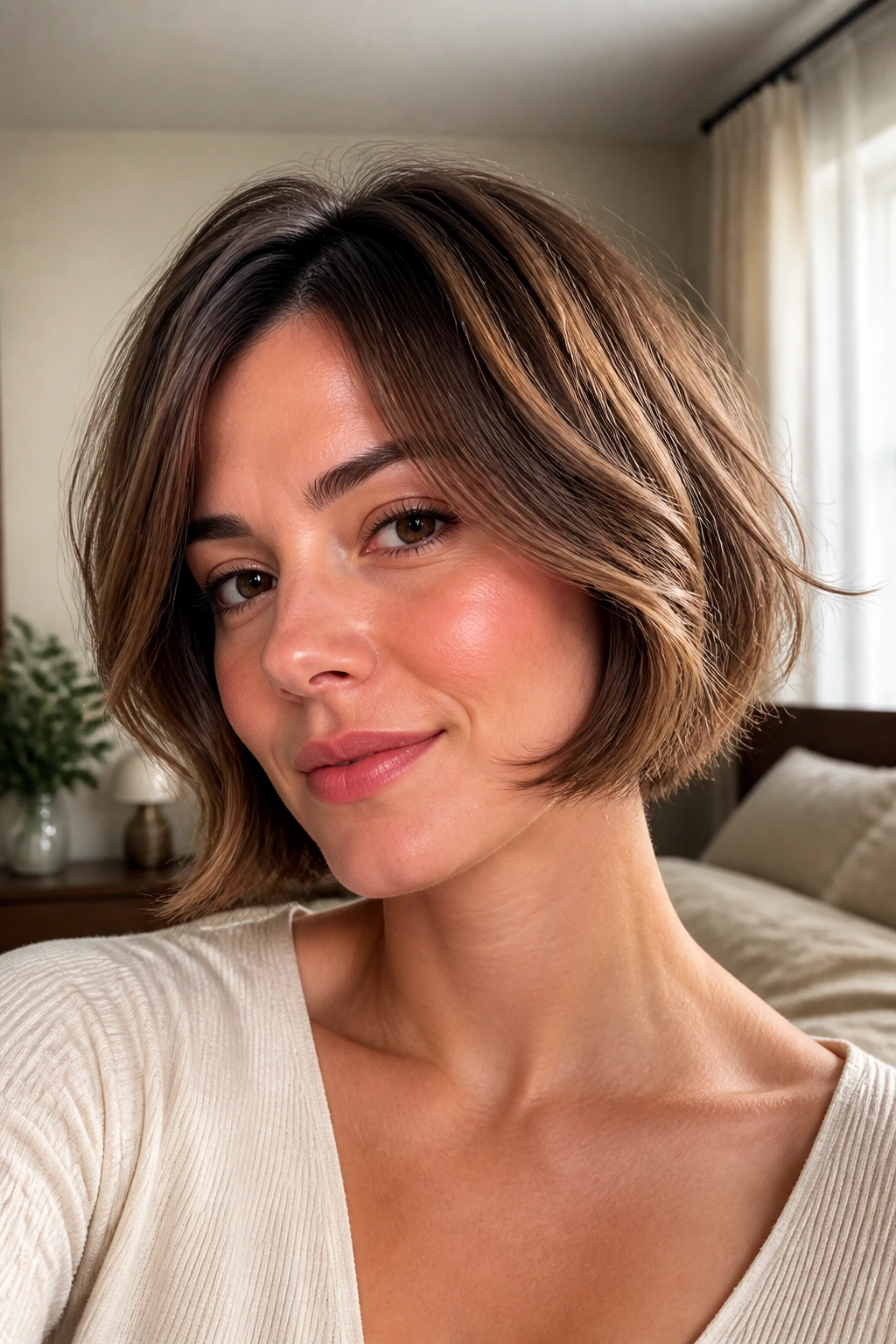
If someone asked me to name the most forgiving of the short bob hairstyles at ear length, I’d point to the soft feathered bob first. It keeps the outline short, but it softens the ends enough that the haircut can be worn polished, loose, or tucked back without falling apart. That flexibility is rare.
The shape sits between blunt and layered. Enough edge to count as a bob. Enough softness to move. That middle ground is why it works on so many hair types. Fine hair gets air without losing too much body. Thick hair gets lightness without looking chopped to bits. Wavy hair gets room to bend. Even straight hair can use it if you want the cut to feel less formal.
Why It’s the Most Forgiving Option
The feathering should happen mostly near the ends and around the front, where the face needs the most softness. Keep the crown controlled. If the upper layers are too short, the whole cut can puff out in the wrong place. You want the movement low, not high.
A little cream, a quick blow-dry, and a finger-comb can take this cut far. On days when you want it cleaner, a round brush will sharpen the line without making it stiff. That range is the reason I keep coming back to it.
If you want one ear-length bob that can live with you instead of bossing you around, this is the one I’d pick first. It gives you shape without trapping you in one styling routine, and that is often the difference between a haircut you admire and one you actually enjoy wearing.
