



A French bob can do a lot with very little. It clears the neck, opens the face, and still looks like you made an actual choice instead of just letting your hair happen to you.
French bob haircuts for women over 60 work so well because they lean on shape, not fuss. The cut usually sits around the chin or jaw, has a little softness around the edges, and leaves room for movement. That matters more than people think. Hair often gets finer at the temples, drier at the ends, and a bit more stubborn at the crown over time, so a cut that looks strong without looking stiff is worth its weight in gold.
I also like that the French bob does not try to erase age. Bad haircuts do that. Good ones pay attention to the face you actually have now, the glasses you wear, the neck you want to show off, the cowlick that insists on having opinions. A French bob can handle all of that, which is why it keeps showing up in salons again and again.
The trick is picking the right version. A blunt jaw-length bob is a different animal from a soft curly bob, and a short fringe can either sharpen the whole look or make it feel too precious. The 18 styles below give you real options, not just the same haircut in slightly different lipstick.
1. Chin-Length French Bob With Wispy Bangs
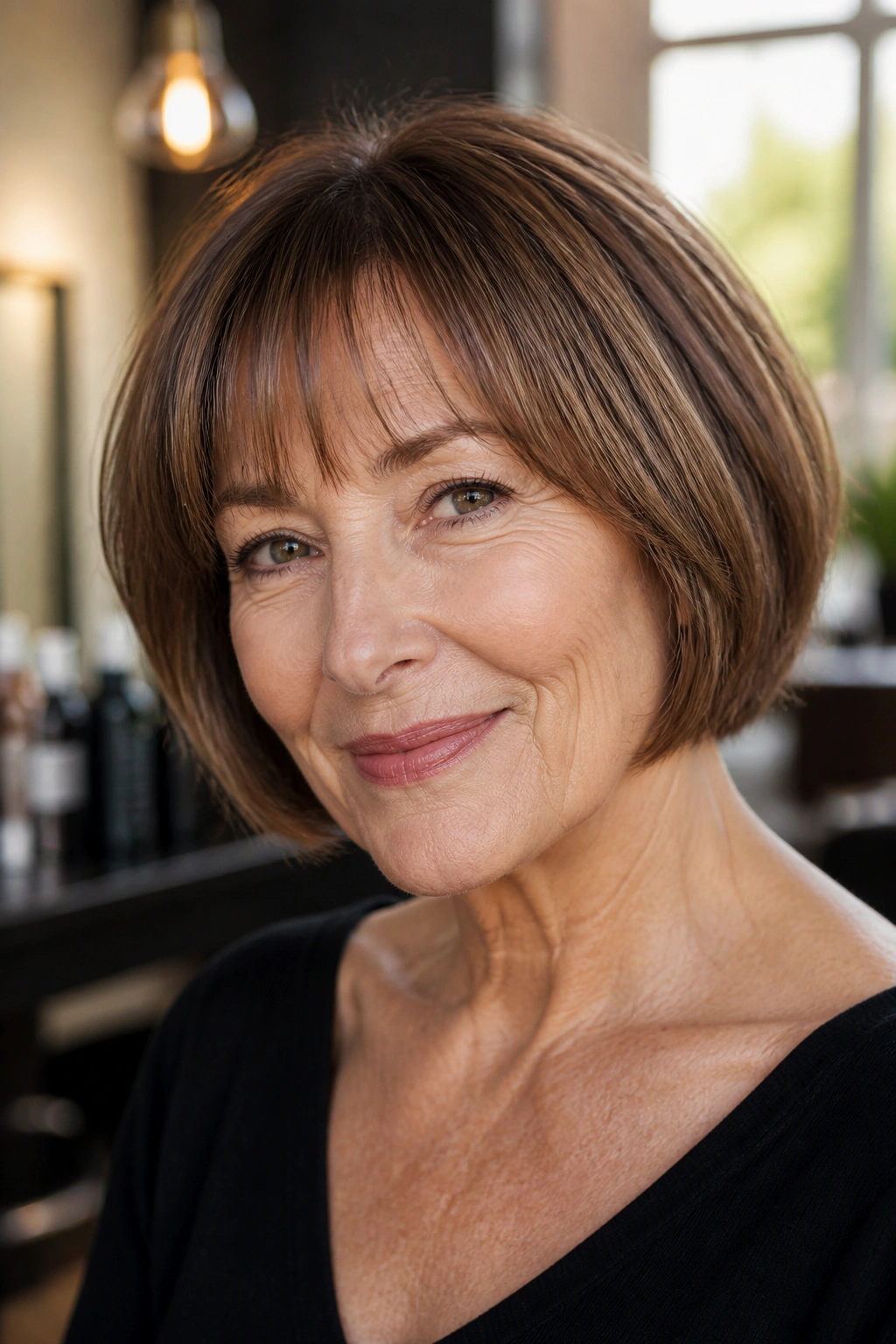
This is the version I reach for first when someone wants a French bob without much drama. The cut lands right around the chin, which is a smart spot because it gives the jawline shape without crowding the neck. Wispy bangs keep the front light, so the whole haircut feels airy instead of boxy.
Why It Flatters So Well
The chin is one of those points on the face where hair can either help or fight you. A bob that stops here makes the face look framed, not hidden. Soft bangs also take the edge off a higher forehead, and they work well if your hair has a little bend but not a ton of density.
Ask for the bangs to be slightly longer at the temples. That small detail keeps them from looking chopped off across the front. A little point-cutting through the fringe helps, too. Blunt bangs can be chic, but on this shape, a soft finish usually wears better day to day.
Styling Notes That Matter
- Dry the bangs first with a small round brush or a vent brush.
- Keep the ends loose, not curled under too hard.
- Use a pea-size amount of light styling cream on the mid-lengths only.
- If your hair is fine, keep the layers minimal so the outline stays full.
Best tip: blow the bangs side to side as they dry. It keeps them from sticking flat against the forehead.
2. Sleek Jaw-Length French Bob With a Clean Center Part
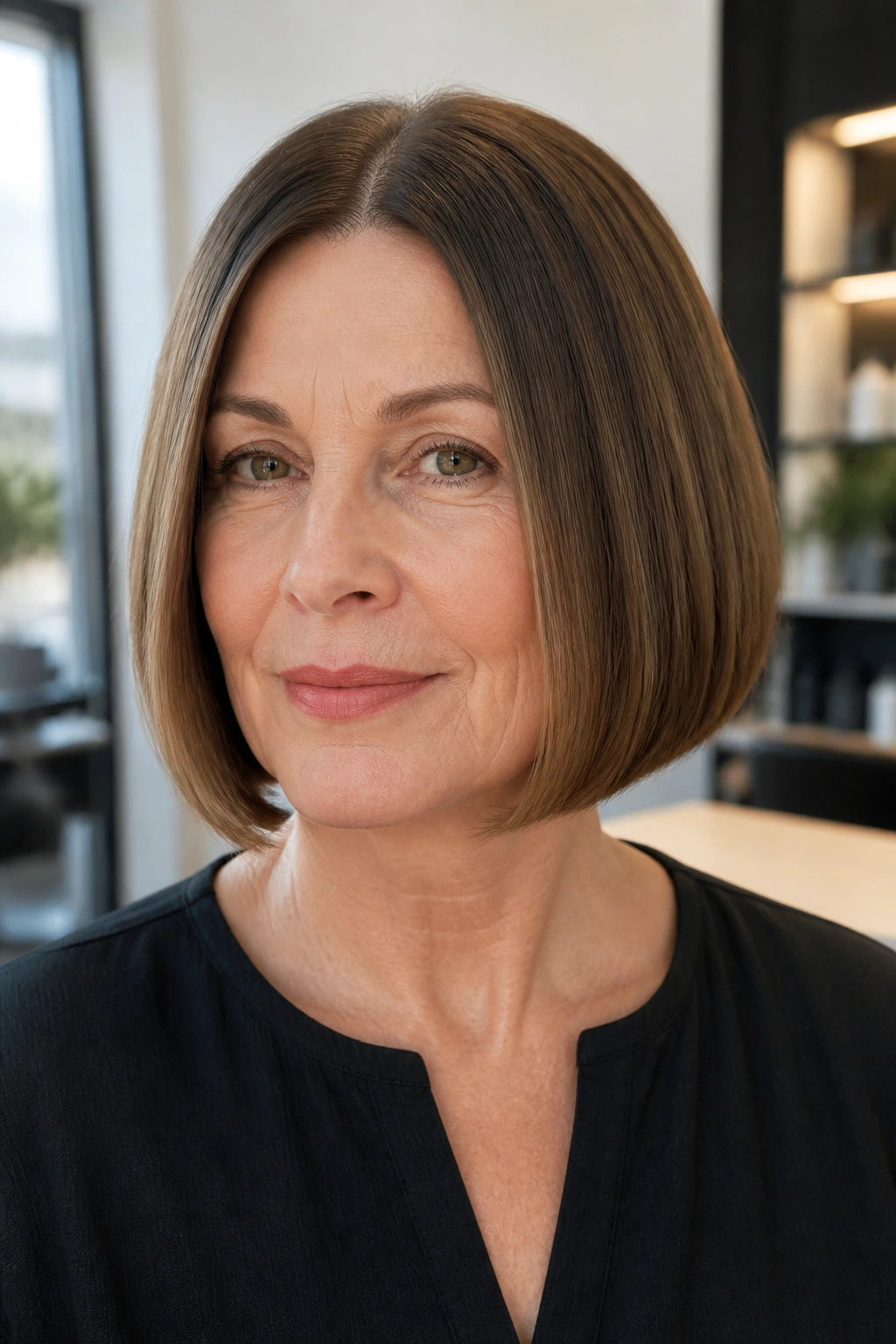
Want a bob that looks crisp instead of fussy? This is the one. A jaw-length French bob with a clean center part has a sharp little line to it, but it still feels easy because the length stays compact and the surface stays smooth.
The clean part does a lot of work here. It makes the haircut look deliberate, and it can give the face a longer line if you want a little more length in the profile. I especially like this version on straight hair or hair that smooths out quickly with a blow-dryer and a paddle brush.
What keeps it from looking severe is the softness at the ends. You do not want a helmet. You want a neat edge with a faint bend inward, so the hair moves when you turn your head. That tiny bend is the difference between “good salon bob” and “too flat to matter.”
For silver or white hair, this style has a clean, polished look that can be stunning in real life. It does not need much else. A little shine spray, a middle part, and a tidy neckline are enough.
3. Soft Curly French Bob That Lets Natural Texture Lead
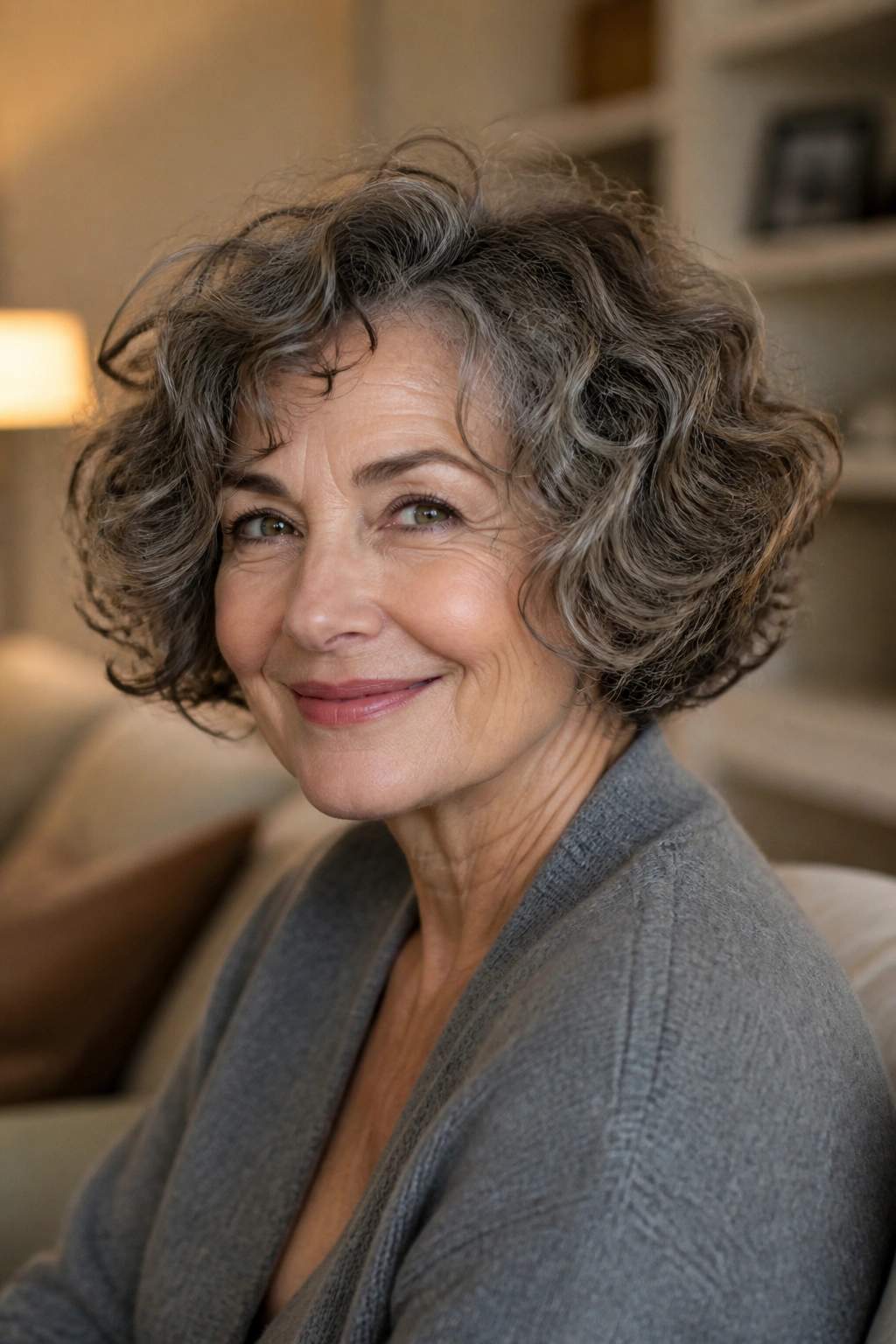
Curly hair and French bobs get along better than people think, but only when the cut respects the curl pattern. If your hair bends into loose curls or springy waves, a bob that follows that movement will look far better than one that fights it. The shape ends up lively, not puffy.
What to Ask the Stylist
Dry cutting is often the smarter choice for curls, because the hair shows its real length and shrinkage. You want the ends to sit somewhere between the cheekbone and the chin when dry, not when wet. That matters a lot. Wet curly hair can fool everybody.
How to Wear It
- Use a curl cream or light gel on soaking-wet hair.
- Scrunch with a microfiber towel or cotton T-shirt.
- Diffuse on low heat if you want more lift.
- Leave a few pieces looser around the front so the shape does not turn into a round puff.
This version is especially good if you are done spending forever on your hair. It has personality built in. On a good day, you can air-dry it and walk away. On a not-so-good day, a little water on the hands and a few scrunches are enough to wake it up again.
4. Feathered French Bob for Fine Hair
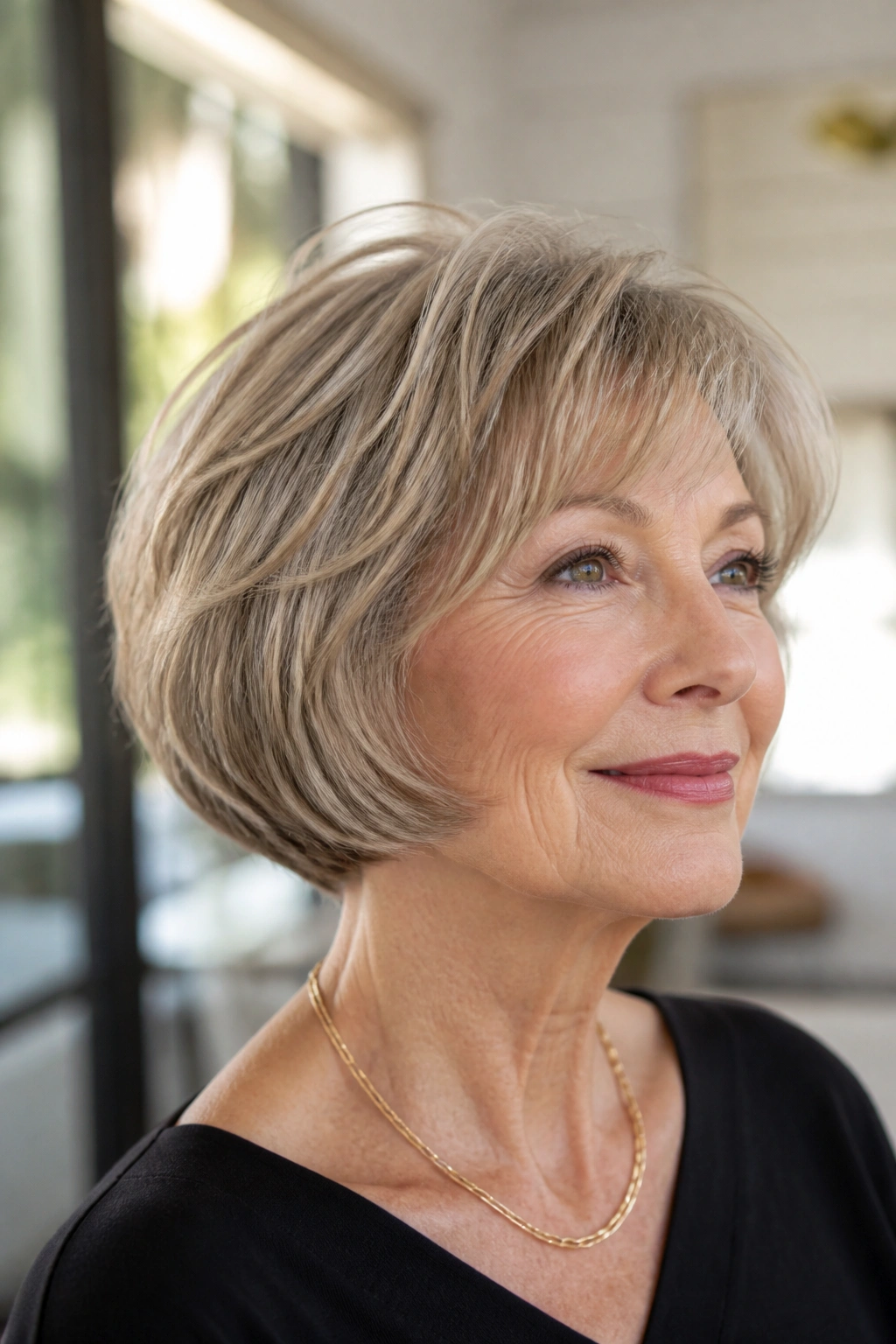
Fine hair does not need a thousand layers. It needs a smarter outline. That’s why a feathered French bob can work so well: it gives the cut movement without stripping the ends bare.
The feathering should live near the top and around the crown, not all through the bottom. If the stylist over-thins the sides, the bob starts to look wispy in the wrong way. A good feathered cut keeps the perimeter fairly solid while softening the inside so the hair can move.
I like this shape for women whose hair feels flatter at the roots but still has a little life in the front. The bob gives the illusion of more hair because the line stays clean. Add a root-lifting mousse before blow-drying, and the whole cut reads fuller than it is.
A small round brush is enough. No need to wrestle the hair into submission. The goal is a soft lift at the crown and a neat edge at the jaw, not a stiff blowout that collapses by lunch.
5. French Bob With Side-Swept Fringe and Glasses

If you wear glasses, the fringe matters more than most people admit. A side-swept bang can slide around the frames instead of fighting them, which makes the whole haircut look calmer and more lived-in. That little diagonal line also softens the face without hiding it.
The best part is how easy this version is to wear. It gives you a front shape, but it does not demand perfect placement every morning. A side-swept fringe can be coaxed into place with your fingers, a quick brush, or a blast of warm air from the dryer. Easy hair has a way of aging well.
When the bangs skim across one eyebrow and stop before the frame, the face stays open. That’s the sweet spot. Too short, and they bounce awkwardly above the glasses. Too long, and they end up sitting in your eyes by midafternoon.
This cut also plays nicely with oval, heart, and long faces. The diagonal line breaks up length and gives the haircut some motion without making it feel busy.
6. Salt-and-Pepper French Bob With a Blunt Edge
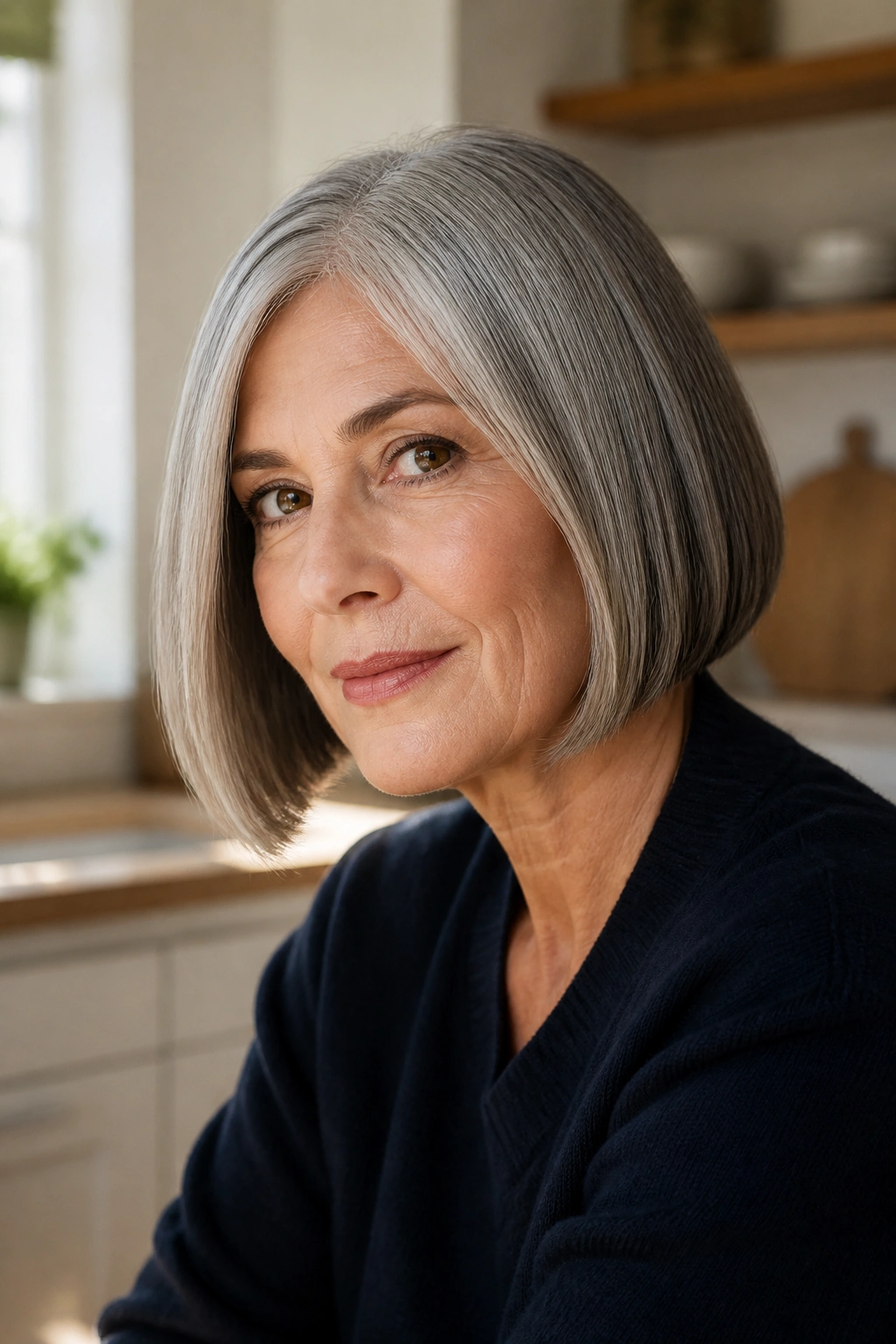
Gray hair can look thin when the ends are ragged. A blunt edge fixes that fast. It gives the salt-and-pepper color a solid border, which makes the whole head of hair look denser and more expensive, frankly.
Why the Blunt Line Works
Unlike overly layered cuts, this one keeps the weight where you want it: at the perimeter. That matters for hair that has changed texture over the years and lost some fullness at the bottom. The blunt line helps the cut hold its shape even on days when you do very little styling.
What to Tell Your Stylist
- Keep the length at the jaw or just below it.
- Avoid heavy layers through the bottom third.
- Ask for a dry finish check, because gray hair can spring up differently once it dries.
- Leave the fringe soft if you want the look to stay modern rather than severe.
There is something clean and honest about this version. It does not try to hide the silver. It lets the color do its own thing and gives it a tidy frame. If you like hair that looks sharp with almost no effort, this is a very good lane.
7. Choppy French Bob With Piecey Ends
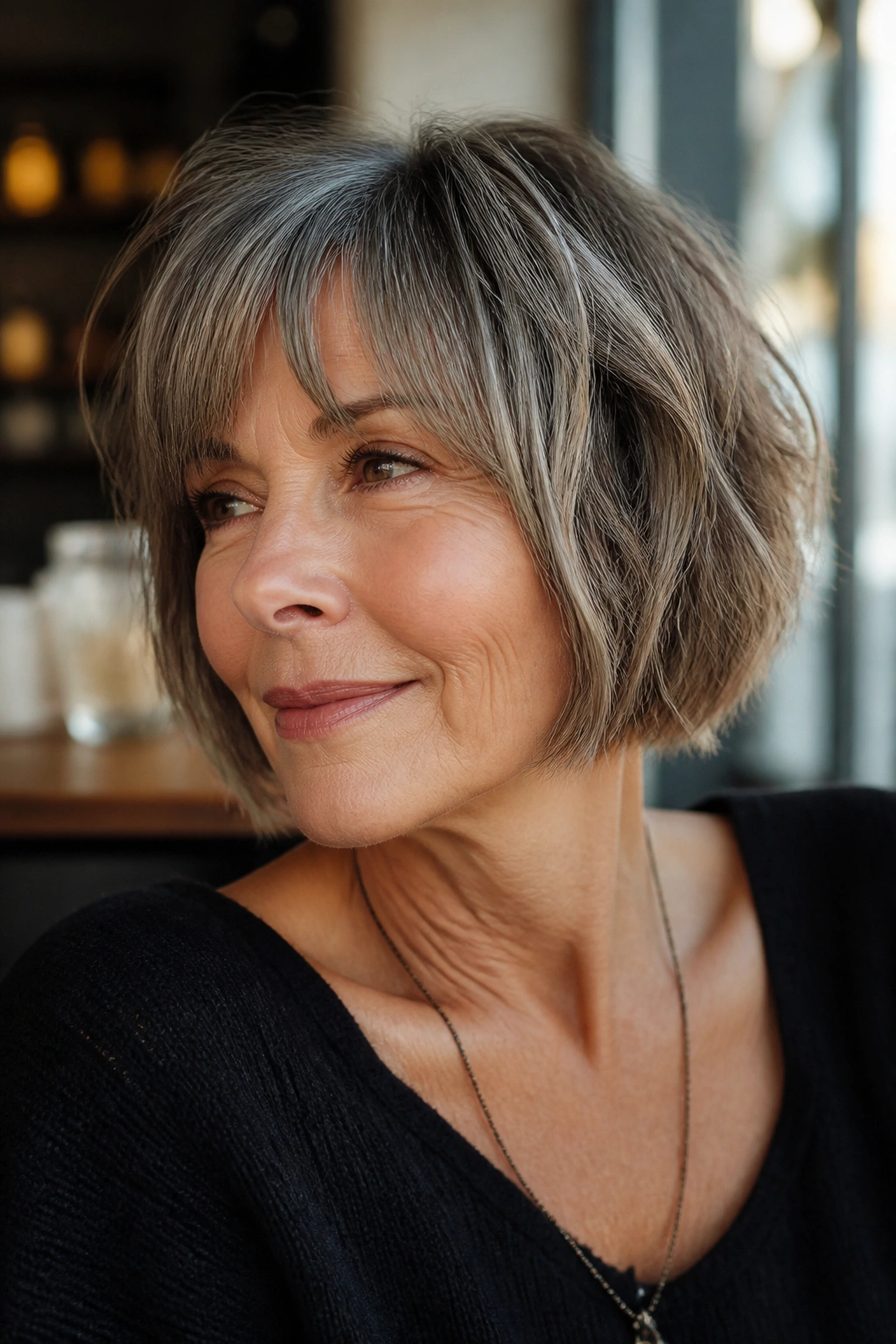
A choppy French bob is for women who do not want their hair to look too finished. The ends get a bit of texture, the shape gets a little edge, and the whole cut feels light on its feet. It’s less polished, more relaxed.
I like this one for hair that has a slight wave or a bit of body but gets bulky when left in one solid block. The choppy ends break up the weight without turning the cut into a shag. There’s a difference. A shag is all about layers. This bob keeps the strong outline and just roughs up the finish a bit.
A tiny bit of texturizing spray goes a long way here. So does a touch of styling paste rubbed between the palms and skimmed over the ends. You want separation, not crunch.
If your mornings are rushed, this is an easy haircut to live with. The imperfect pieces are the point. A little movement near the front makes the whole style feel fresh, even when the rest of your outfit says “I had coffee and moved on.”
8. Rounded French Bob With Tucked-In Sides
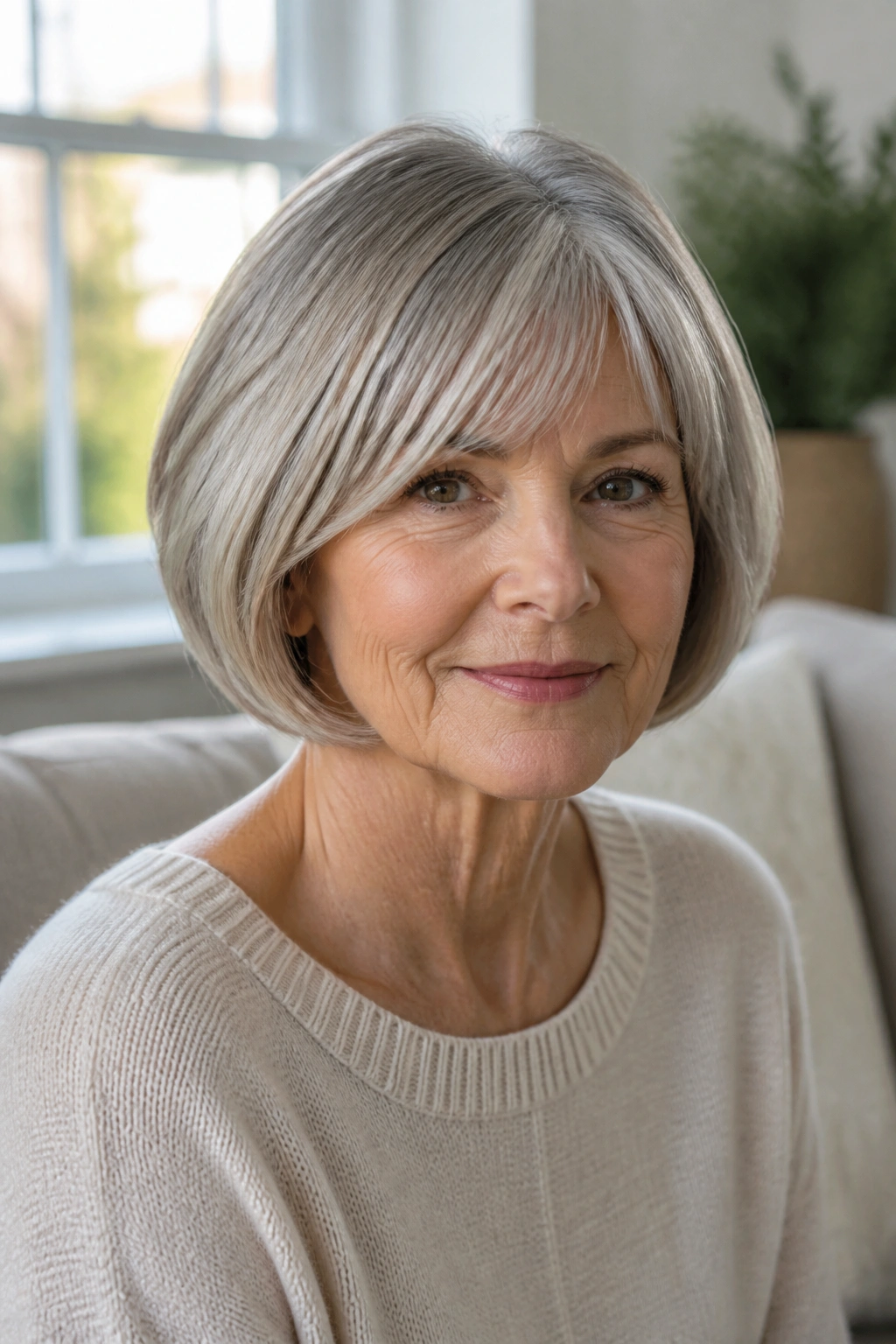
A rounded French bob gives you that old salon-blowout shape, but softened. The sides curve inward near the cheeks, which can make the face look lifted without doing anything flashy. It’s neat, tidy, and a little bit elegant in a very normal-person way.
What It Does for the Face
The curve around the sides helps soften stronger jaws and flatter broader cheeks. It also keeps the silhouette compact, which is useful if your hair has a habit of puffing out at the ends. A rounded shape reins that in. Not by force. By structure.
How to Style It
Use a medium round brush and direct the hair slightly under as it dries. Stop before the ends curl too much. You want a bend, not a tight flip. A light mist of heat protectant and a quick pass with a dryer nozzle usually does the job.
This is a good choice if you like your hair to look neat but not stiff. It holds up well in everyday life, especially if your hair gets frizzier in humidity or after a long day. The shape stays readable even when the styling gets a little loose around the edges.
9. Collarbone-Grazing French Bob for Women Who Want a Little Length
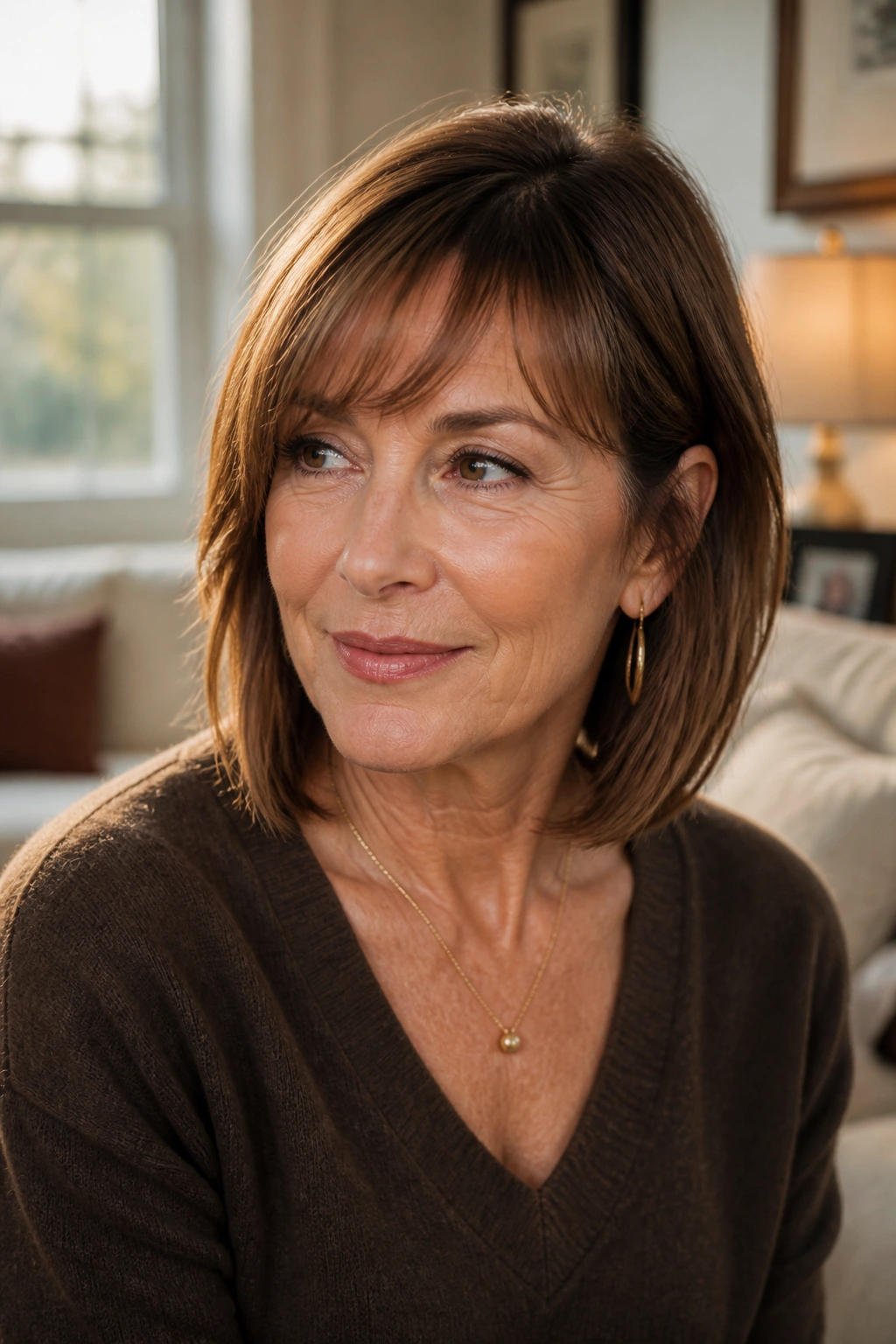
Who says a French bob has to sit right at the jaw? A longer version that brushes the collarbone gives you the same softness and movement, just with a little more room to tuck behind the ears or clip back on busy days.
This is a smart middle ground for women who are easing into shorter hair. The length still frames the face, but it doesn’t feel as abrupt as a shorter cut. If you wear earrings, this length shows them off nicely. If you prefer to pull one side back, it gives you that option without wrecking the shape.
The key is restraint. Keep the outline clean. Do not let the cut drift into an ordinary long bob with no opinion. A French bob still needs a clear shape and a little swing at the ends, even when it’s a touch longer.
It also plays well with soft waves. A 1-inch curling iron, used only on the front sections, can give the hair some bend without turning it into a formal style. Leave the ends loose. That’s where the charm lives.
10. French Bob With Micro Fringe and Strong Shape
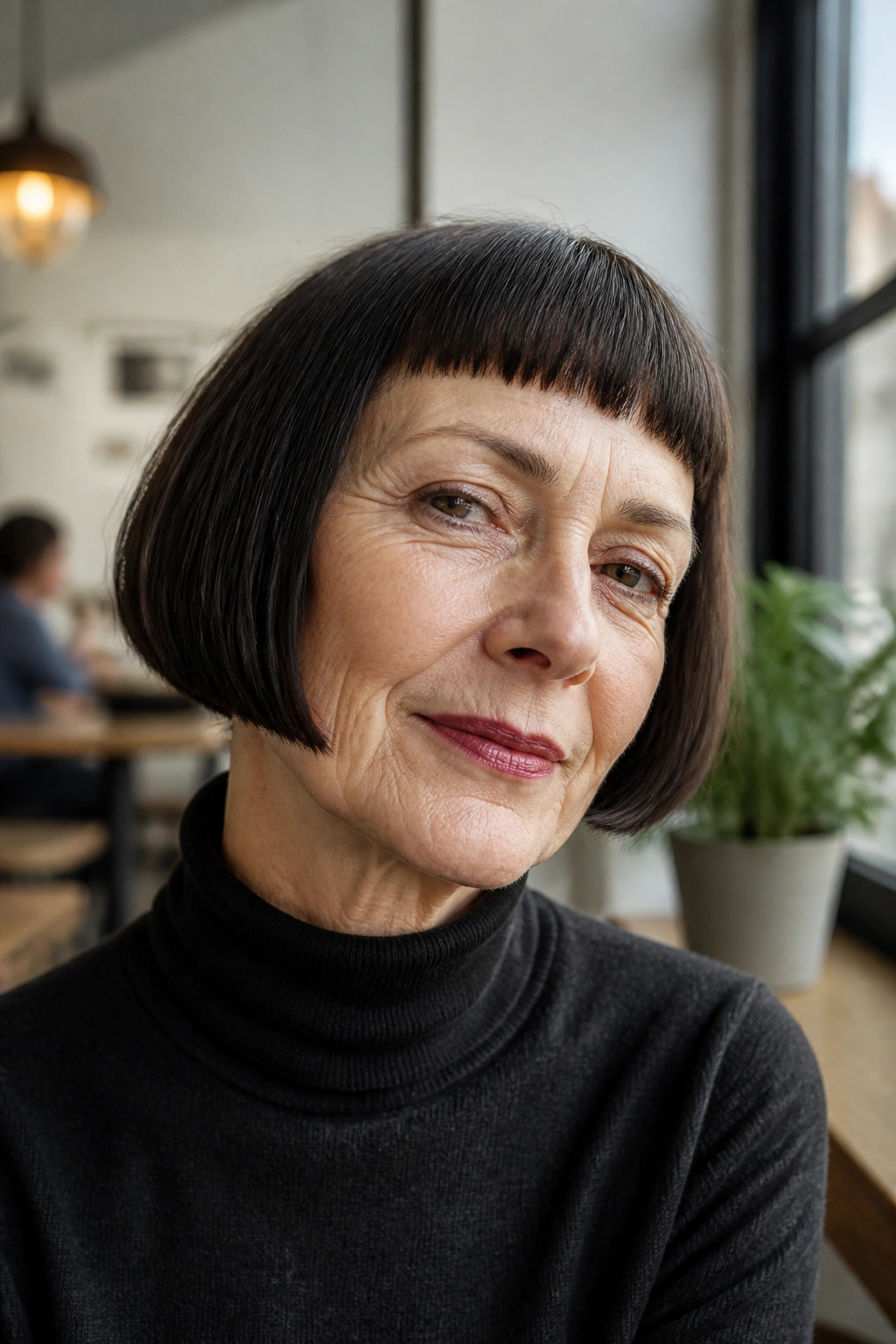
A micro fringe is not shy. It sits high on the forehead, so the rest of the haircut has to carry the look with confidence. When paired with a French bob, though, it can be striking in a very clean, graphic way.
Who Should Try It
This version suits someone who likes strong lines and does not mind showing a bit more forehead. It works well on straight or slightly wavy hair and on faces that can handle a shorter fringe without feeling crowded. If your brows are part of your look, this cut puts them front and center.
What to Watch For
- Keep the bob itself simple and compact.
- Do not over-layer the sides, or the whole style gets busy.
- Trim the fringe often so it stays intentional, not accidental.
- Use a tiny amount of smoothing cream to keep the bangs from separating too much.
The appeal here is the contrast. Short fringe, neat bob, clean neck. That pairing gives the haircut a little attitude, which can be refreshing if you’re tired of softer, more expected shapes. It is not the easiest maintenance cut on this list, but it has a strong payoff when it’s done well.
11. Wavy French Bob With Air-Dried Movement
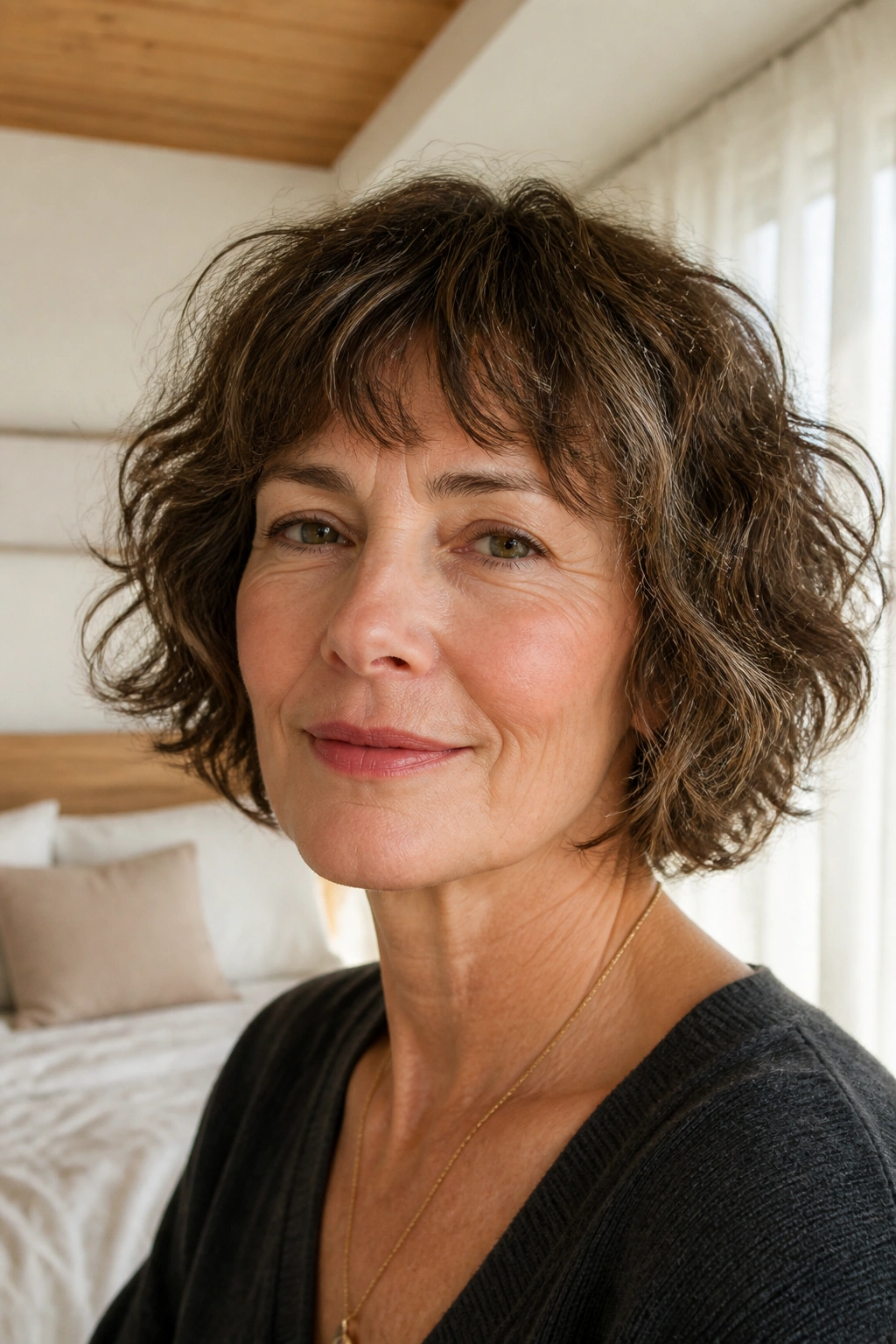
Some hair looks better when you stop trying to control it so hard. A wavy French bob is one of those cuts. It gives natural movement a place to land, so the hair can dry into shape instead of puffing out or going limp.
This version works especially well if your hair bends into loose S-waves on its own. You can add a small amount of mousse or wave cream, then let the hair dry with the part you want. Fingers only. Brushing it once it starts to set usually creates more frizz than shape.
I’d keep the ends slightly uneven on purpose. Nothing ragged. Just enough softness so the wave pattern can breathe. A blunt edge can look too stiff on wavy hair, while a little looseness keeps the cut from reading like a hard block.
If your days are busy, this is a kind cut. Not lazy — kind. It gives you a style that looks like hair, not a project. And honestly, that’s a nice thing to have.
12. Angled French Bob With a Longer Front
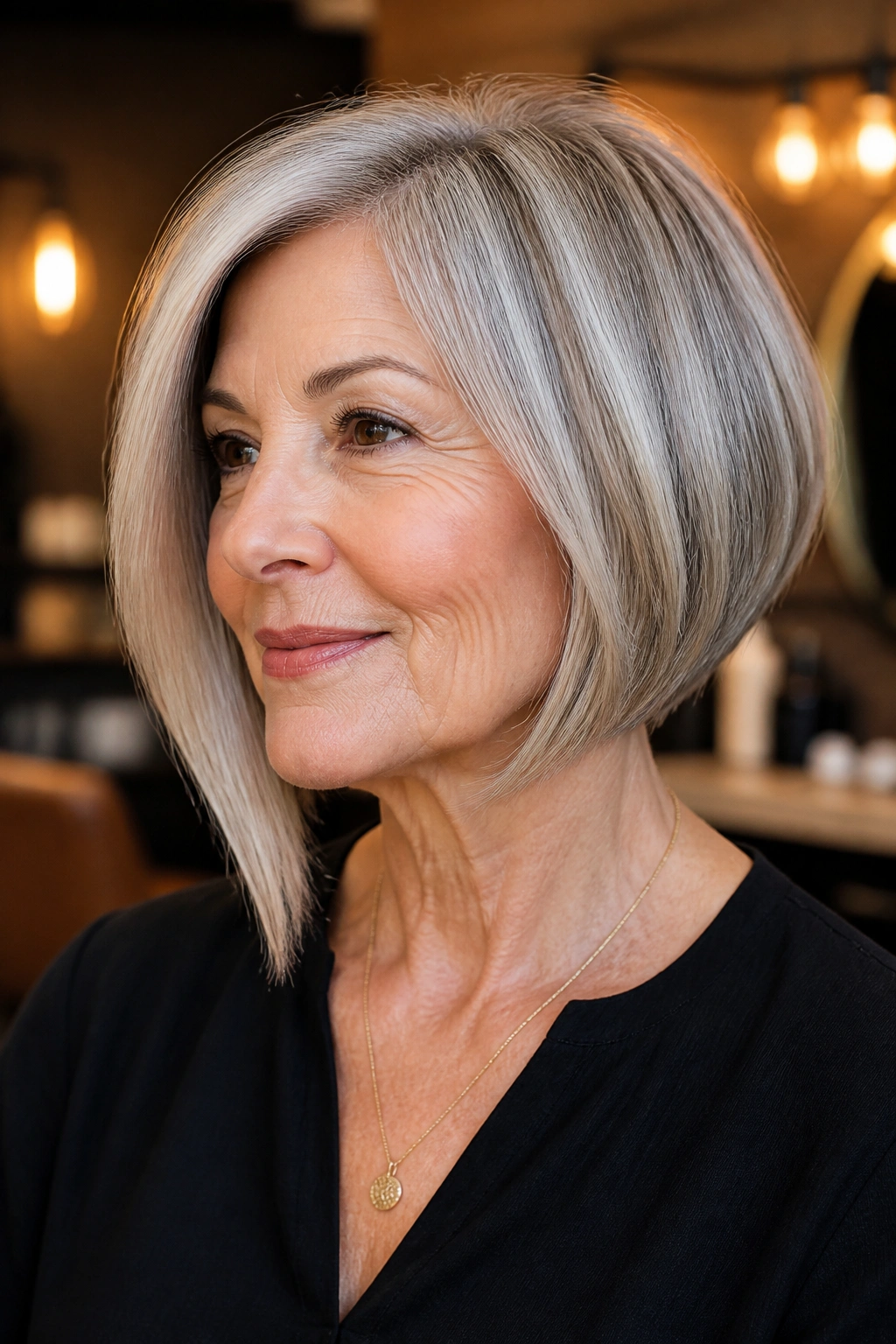
An angled French bob has a little more length in the front than in the back, which gives the face a slim, lifted look. It is subtle, not dramatic. You should notice the shape more than the angle itself.
Why the Angle Helps
That slight forward length can soften the neck and bring attention toward the cheekbones. It also helps if you want your hair to sit a bit below the jaw without feeling heavy all the way around. The back stays tidy, the front gets a little sweep, and the profile looks refined.
Best Styling Move
A flat brush and a smooth blow-dry are enough for most days. If the ends kick out too much, wrap them around a medium brush for the last 20 seconds of drying. Do not overdo the angle. Too much difference between front and back can make the cut feel dated fast.
This shape is good when you want a little movement but still want the neatness of a classic bob. It gives you room to tuck one side behind the ear, which is a small thing, but it changes the whole mood of the haircut.
13. Layer-Light French Bob for Thick Hair
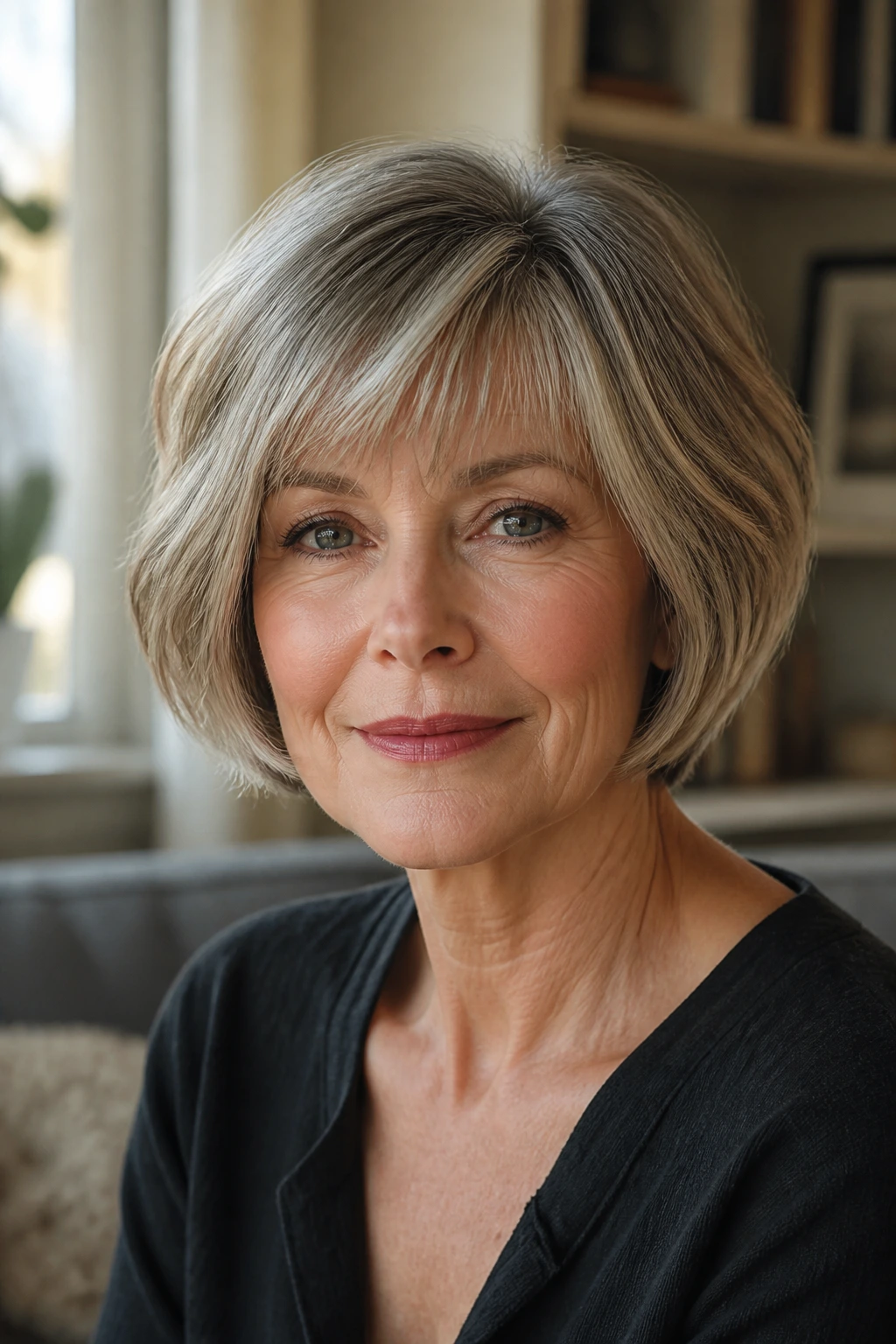
Thick hair can turn into a triangle if the wrong layers are cut into it. A layer-light French bob avoids that trap. It keeps the shape clean and removes bulk from the inside, not the edges, so the haircut still has a line.
That difference matters. A lot. If the ends get too thinned out, thick hair goes from full to frizzy fast. A smarter cut preserves weight around the perimeter while creating enough movement through the interior for the hair to lie down neatly.
The Better Approach
- Ask for internal debulking, not choppy top layers.
- Keep the nape tidy so the cut doesn’t balloon.
- Use a cream or serum sparingly; thick hair usually needs less than people think.
- Blow-dry with tension, using a paddle brush or a large round brush.
This is one of those haircuts that rewards a good stylist. When it’s done well, thick hair looks controlled but not flat. That’s a hard line to walk, and I’ve seen plenty of versions get too fluffy at the sides. The lighter inside, heavier outside approach usually wins.
14. French Bob With Face-Framing Curves
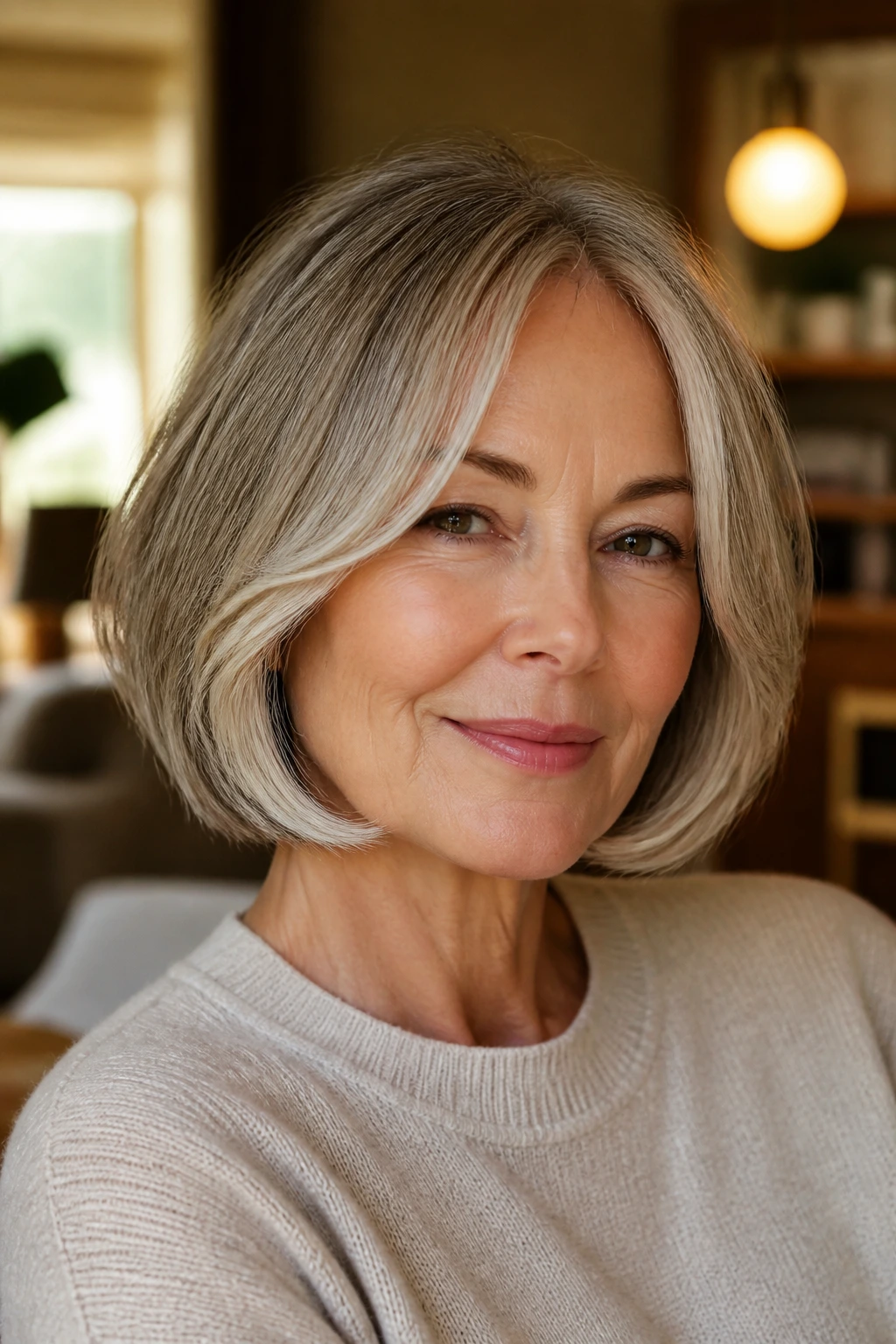
Not every French bob has to look straight and sharp. A face-framing version softens the front with gentle curves that slide along the cheeks and chin. It keeps the bob shape, but it rounds off the edges in a more flattering, forgiving way.
The Soft Curve Around the Cheeks
The front pieces should not hang in a straight line. They need a little inward turn, almost like the hair is choosing to sit near the face instead of floating away from it. That small move can make a big difference if you want the haircut to feel gentle rather than severe.
Why It Works for Real Life
This cut is friendly to glasses, earrings, scarves, and all the little things people actually wear. It also grows out gracefully because the front keeps some shape even after a few weeks. That is useful if you do not want a salon visit every month on the dot.
A round brush is enough to style it, but you can also let the front air-dry and then tuck the ends under with your hands. It does not need perfection. It needs direction.
15. Low-Maintenance Airy French Bob for Active Days

Some cuts look good only when you treat them like a second job. This is not one of those. A low-maintenance airy French bob keeps the outline simple, the ends light, and the styling short. That makes it a strong pick for women who want hair that behaves.
I like this version with a soft side part and minimal layers. It lets the hair fall where it wants, but still gives enough shape to avoid looking sloppy. If you walk a lot, travel, garden, or simply do not want to spend 25 minutes in front of the mirror, this kind of cut pulls its weight.
A little leave-in conditioner at the ends and a quick blow-dry at the roots are usually enough. On dry days, you may not need much else. On humid days, tuck one side behind the ear and let the rest be a little imperfect. That actually suits the French bob better than over-styling ever does.
There’s a reason this cut keeps getting pulled back into fashion. It does not punish you for living your life.
16. Polished French Bob With Soft Volume at the Crown
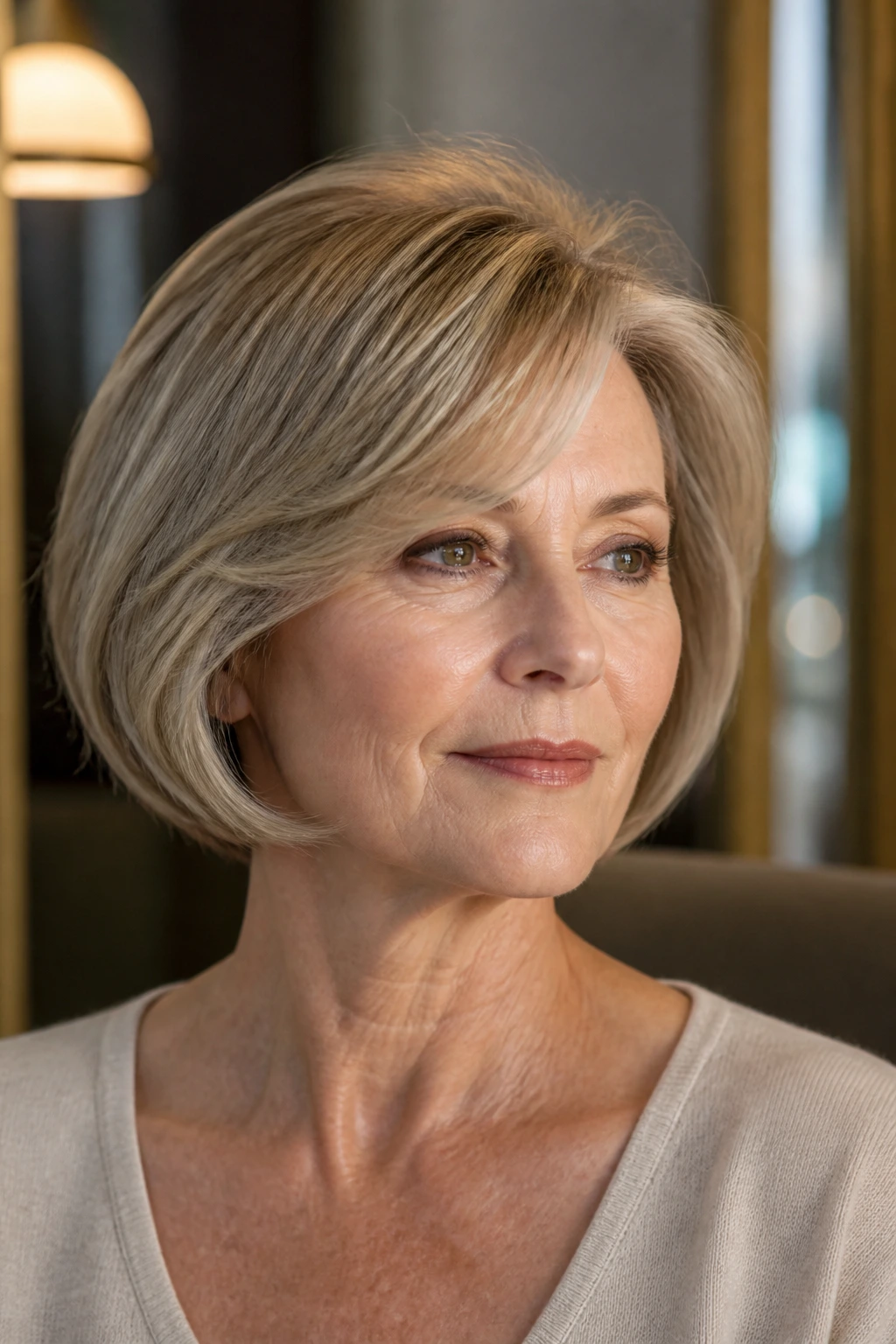
Can a bob have lift without teasing? Yes. It just needs a smarter root pattern. A polished French bob with soft crown volume gives the top a little rise, which is useful when hair has gotten flatter over time.
How to Build the Lift
Start with a root-lifting spray or light mousse on damp hair, but keep it at the crown and upper sides. Then direct the hair upward and slightly back as you dry. A round brush helps, though a vent brush can do plenty if your hair is short and cooperative.
The volume should feel soft, not puffed up. Think “raised” more than “big.” Too much height at the top can make the face look longer than you want. A little lift, though, opens everything up.
This version is good if you like your hair to look polished for dinner, church, a meeting, or any setting where you want a tidy profile. It has presence. Quiet, but present.
17. French Bob With a Deep Side Part and Lift
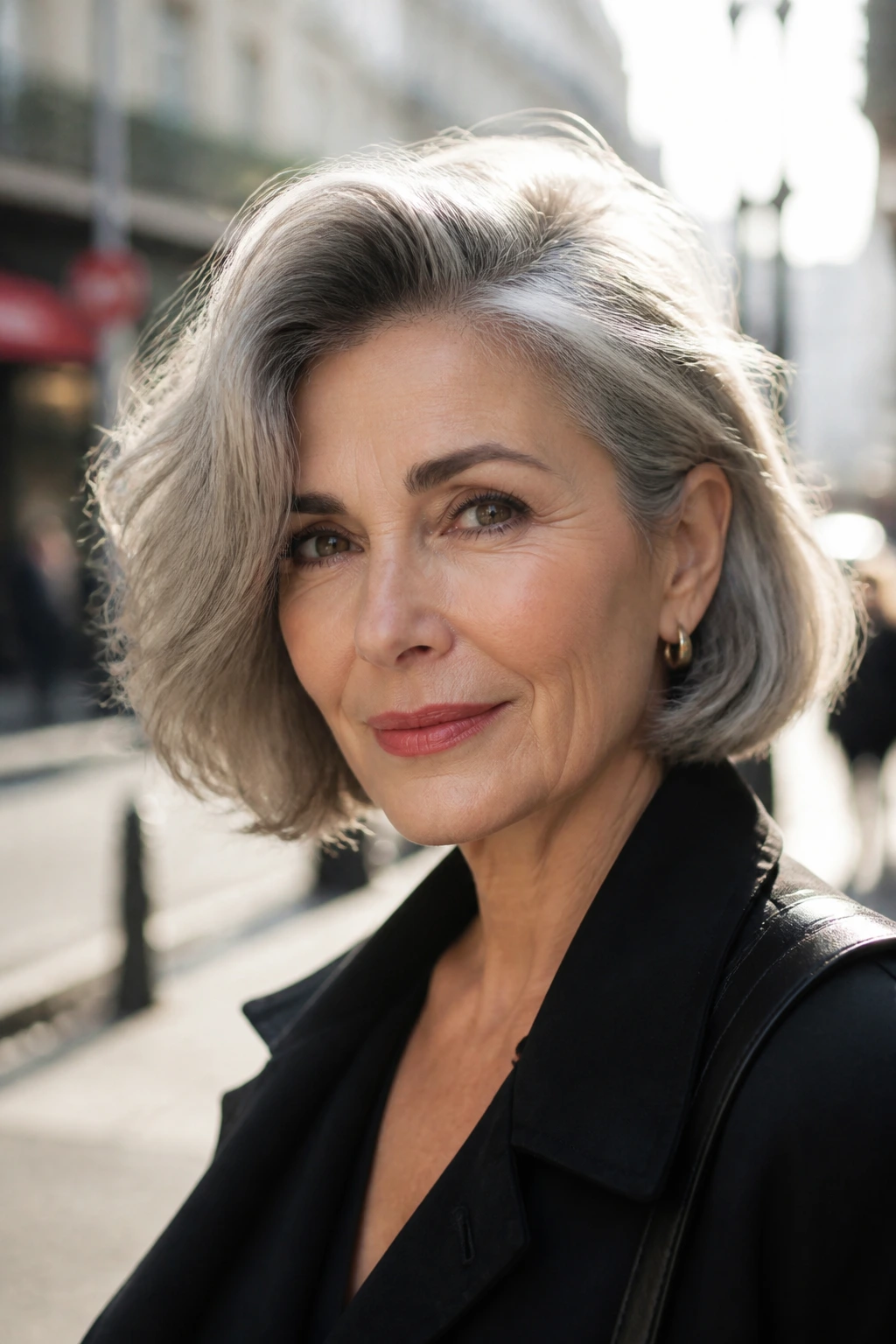
A deep side part changes the whole attitude of a French bob. It brings instant asymmetry, which can be useful if one side of your hair lies flatter than the other or if you want a little more shape around the eyes.
Why the Side Part Helps
The side part creates a natural sweep across the forehead and gives the front more lift. It can also soften a strong center line if that ever feels too plain. For women with finer hair, this move can make the top look fuller without adding more length or layers.
Quick Styling Details
- Blow-dry the roots in the opposite direction first.
- Clip the heavier side up for 3 to 5 minutes while the hair cools.
- Finish with a small brush to guide the front pieces into a soft curve.
- Keep the lower half of the bob neat so the volume stays up top, not everywhere.
The result is elegant without feeling formal. It is a very good choice if you want the haircut to do a little face-lifting work on its own, because the part and the bend at the front naturally draw the eye upward.
18. Classic French Bob With Subtle Underflip Ends
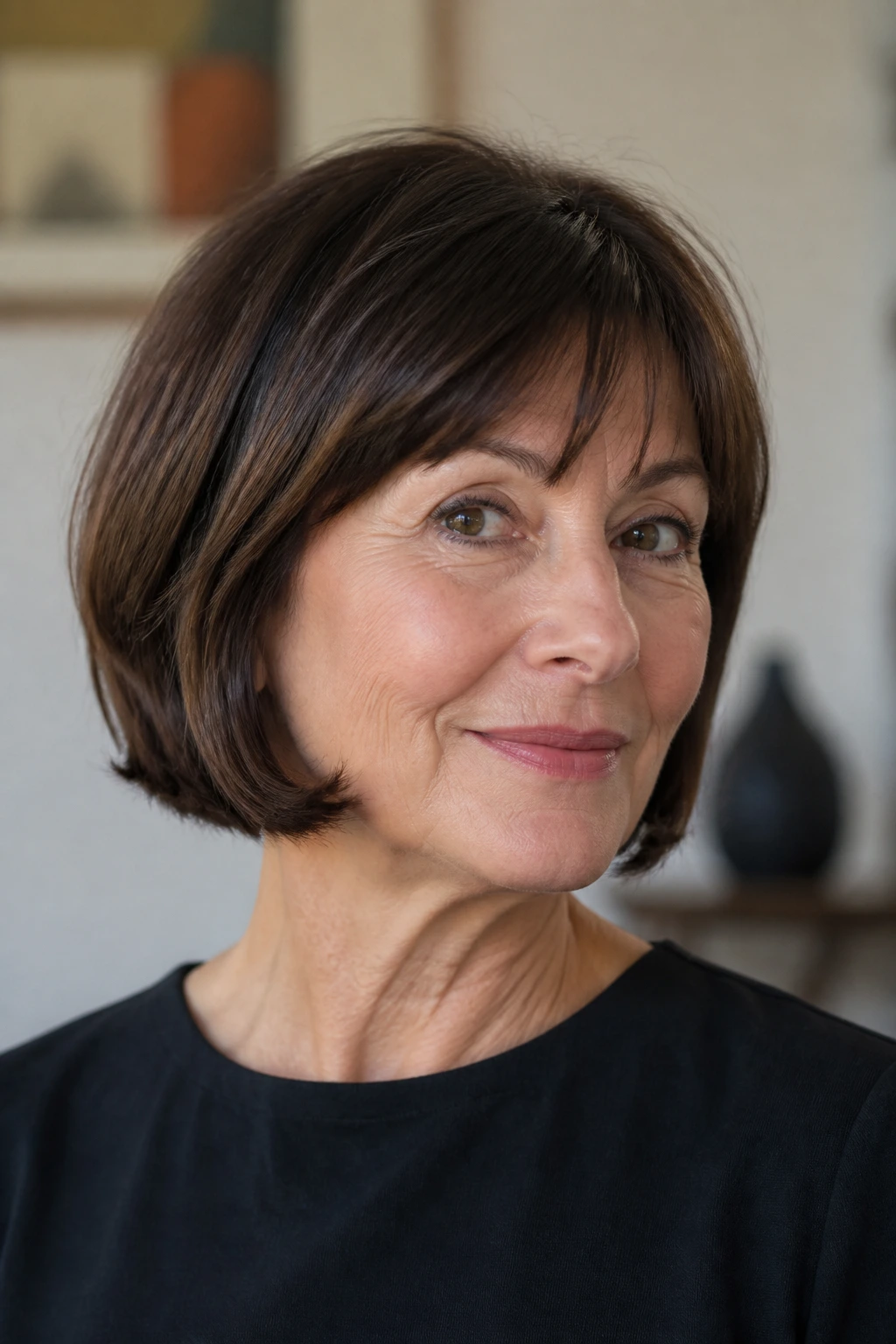
A little underflip at the ends can make a French bob feel finished without looking frozen. The trick is subtlety. You want the ends to turn under just enough to catch the jawline, not curl into a retro helmet.
This is the cut I think of when someone wants the clean, iconic version of the French bob. Shortish. Tidy. Slightly playful. It holds a shape that feels familiar, but it still looks current because the finish is soft and the edges are not overworked.
The underflip works especially well on straight to slightly wavy hair. A round brush or a quick pass with a flat iron, turned inward at the very last inch, can create the bend. That last inch matters more than people realize. If the turn starts too high, the whole cut can look stiff. If it starts low, the line stays modern.
It’s a small thing, really. But small things are what make a bob sing.
Final Thoughts
The best French bob for women over 60 is the one that respects your hair’s texture and your daily routine. Not every face needs the same fringe. Not every head of hair wants the same amount of layering. The cut works when the shape is clean and the finish feels like you, only neater.
I’d also keep one practical rule in mind: bring a photo, but be ready to talk about glasses, cowlicks, and how much styling you actually do. Those details matter more than buzzwords ever will. A good French bob should look good on a normal Tuesday, not only after a salon blowout.
And that’s the part I like most. When the cut is right, it does not shout. It just makes the rest of your features feel more awake.
