



Texturizer styles for natural 4c hair work best when they respect the coil pattern instead of fighting it.
That sounds obvious, but plenty of styling advice still pretends 4c hair should behave like loose curls, silk press hair, or something in between. It shouldn’t. Once you’ve got tight coils, and especially if your hair has been texturized, the sweet spot is usually a style that gives shape without asking the strands to do three jobs at once: stretch, smooth, and hold tension.
Tension is the enemy.
A mild texturizer can soften shrinkage and make some styles fall a little more easily, but it also changes how the hair reacts to moisture, parting, and pulling. That means the styles that last longest are usually the ones with tucked ends, clean sections, and enough stretch to keep the hair from shrinking into a puff the minute you step outside.
Some of the styles below are full protective styles. Others are low-manipulation looks that give your hair a break without burying it under extensions. All of them work with 4c texture instead of arguing with it, which is the whole point if you ask me. The first one is the easiest place to start.
1. Texturizer-Friendly Two-Strand Twist-Out
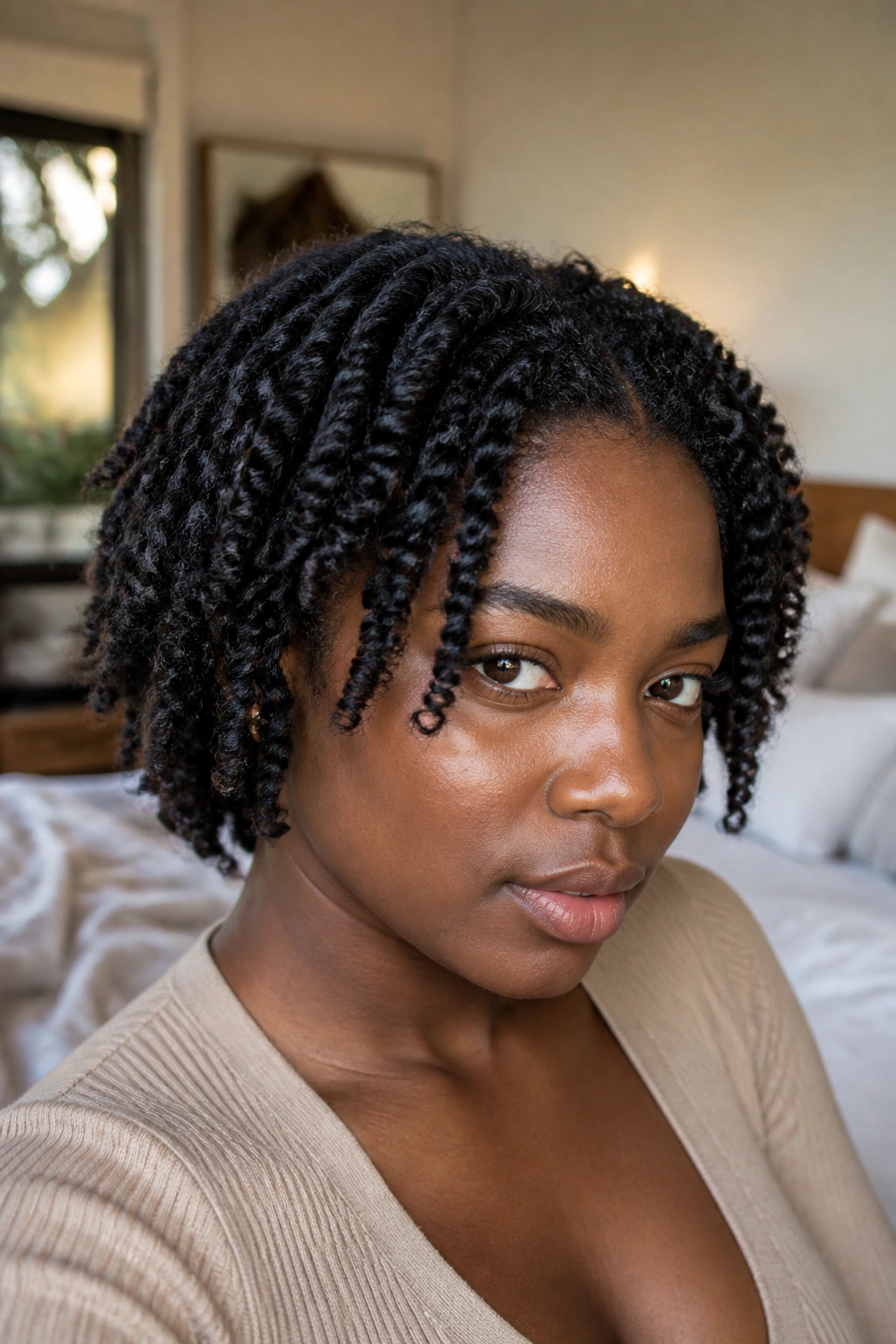
A two-strand twist-out is the style I’d hand to almost anyone who wants definition without a lot of scalp drama. On 4c hair, it gives you a soft, full shape that looks intentional even when shrinkage kicks in hard. If your hair is texturized, the twist-out often falls a little faster and feels a little looser, so the set itself matters more than the fluff at the end.
Why It Works on Coily Hair
Two-strand twists create a tighter curl pattern than a loose braid, which helps the hair remember the shape once it dries. That matters on 4c hair, because the coil pattern can go from neat to fuzzy fast if the sections are too big or the hair is still damp when you take it down.
Use ½-inch to 1-inch sections if you want definition. Go larger only if you want a puffier, more rounded finish. And please, do not unravel the twists while they still feel cool at the center. That cool feeling usually means moisture is hiding inside.
- Best base: freshly washed or lightly misted hair
- Best product combo: leave-in conditioner, a cream, then a light oil on the ends
- Drying time: overnight or under a hooded dryer until fully dry
- Wear time: usually 3 to 5 days with a satin bonnet at night
Tip: If your roots are soft from texturizer, twist them a little tighter at the base and looser through the mid-lengths. That keeps the style from collapsing too fast.
2. Flat-Twist Crown with Tucked Ends

A flat-twist crown keeps the hairline neat and the ends hidden, which is exactly what a lot of texturized 4c hair needs on a busy week. It has polish, but it doesn’t look stiff. The shape sits close to the head, so you get a clean line without having to slick your roots into submission.
That close fit matters. Hair that has been texturized can slip out of heavy styles if the base is too slippery, and a crown of flat twists spreads the weight across the scalp instead of loading one section with all the pulling. The result is calmer edges and fewer sore spots behind the ears.
I like this style when the hair is stretched from a banding session or a quick blow-dry on cool air. You can pin the crown into a halo, tuck the ends under, and leave a little softness around the temples if you want it to feel less formal. It looks good with earrings, headwraps, and honestly even a plain T-shirt.
One-sentence style note: Keep the twists medium-sized; tiny ones can feel fussy, and huge ones lose the crown shape fast.
3. Mini Braids on Stretched 4c Hair
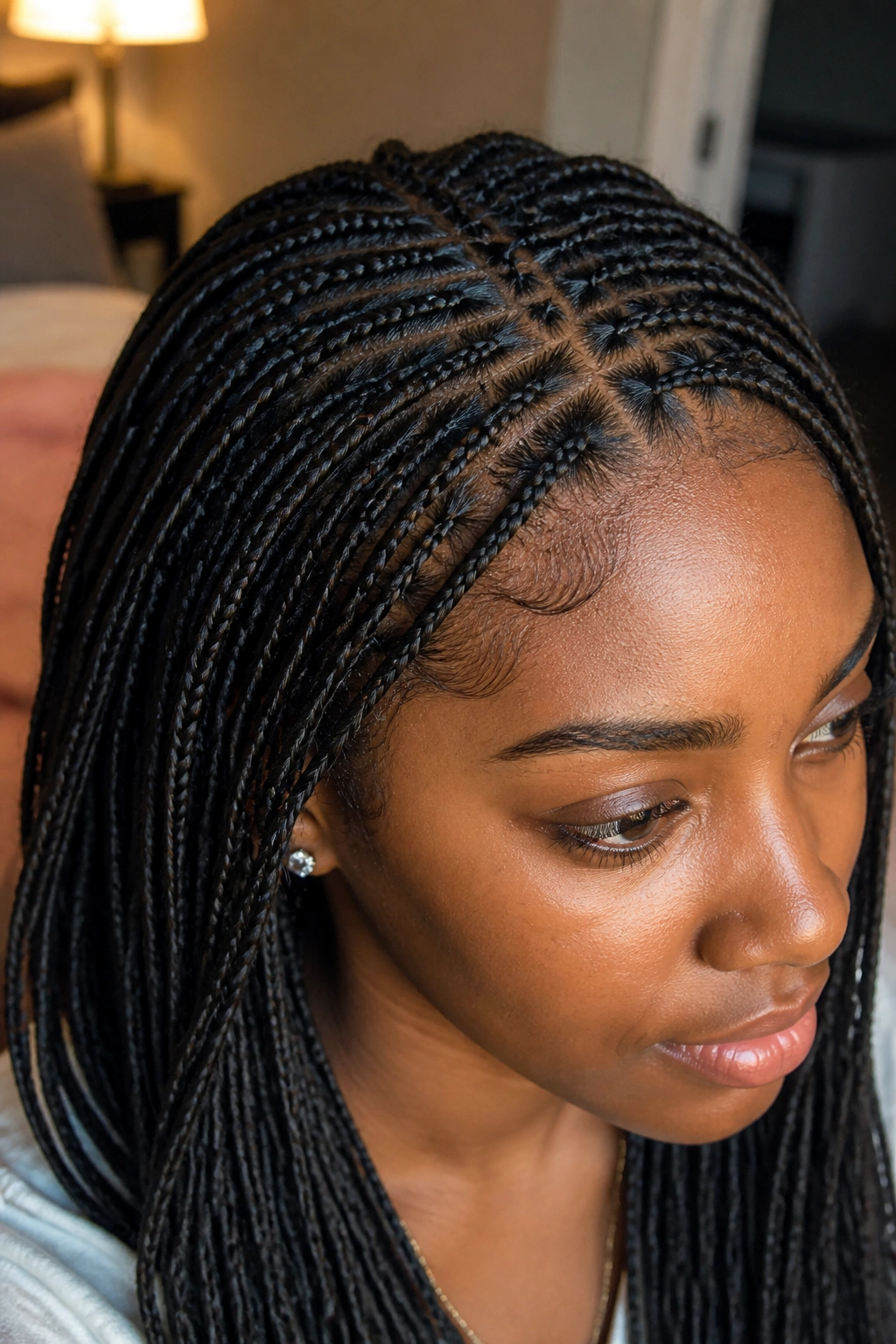
Why do mini braids last longer than a lot of other styles on texturized 4c hair? Because they don’t ask the hair to be perfect every morning. Once the braids are in, the style can breathe a little, frizz a little, and still look put together for days. That makes them a strong choice if you want low-manipulation styling with less daily fuss.
Mini braids also work well when the hair is already stretched. Stretched roots make parting easier, and the braids hang cleaner without fighting the shrinkage that 4c hair brings the second humidity shows up. If your hair is texturized, keep the braids just loose enough at the scalp to avoid a tight, grid-like look that can pull.
How to Wear It
A braid size close to a pencil thickness is a good starting point. Smaller braids last longer, but they take more time and can feel heavy if you overdo the number of parts.
- Part the hair in clean rows with a rat-tail comb.
- Add a small amount of mousse or setting foam before braiding.
- Oil the ends lightly, not the entire strand.
- Re-braid the front edges only if they start to fray.
This style is especially useful if you like wearing your hair down but hate how much daily detangling comes with loose styles. The braids move. They don’t collapse. That’s the whole appeal.
4. Braid-Out with Soft Definition
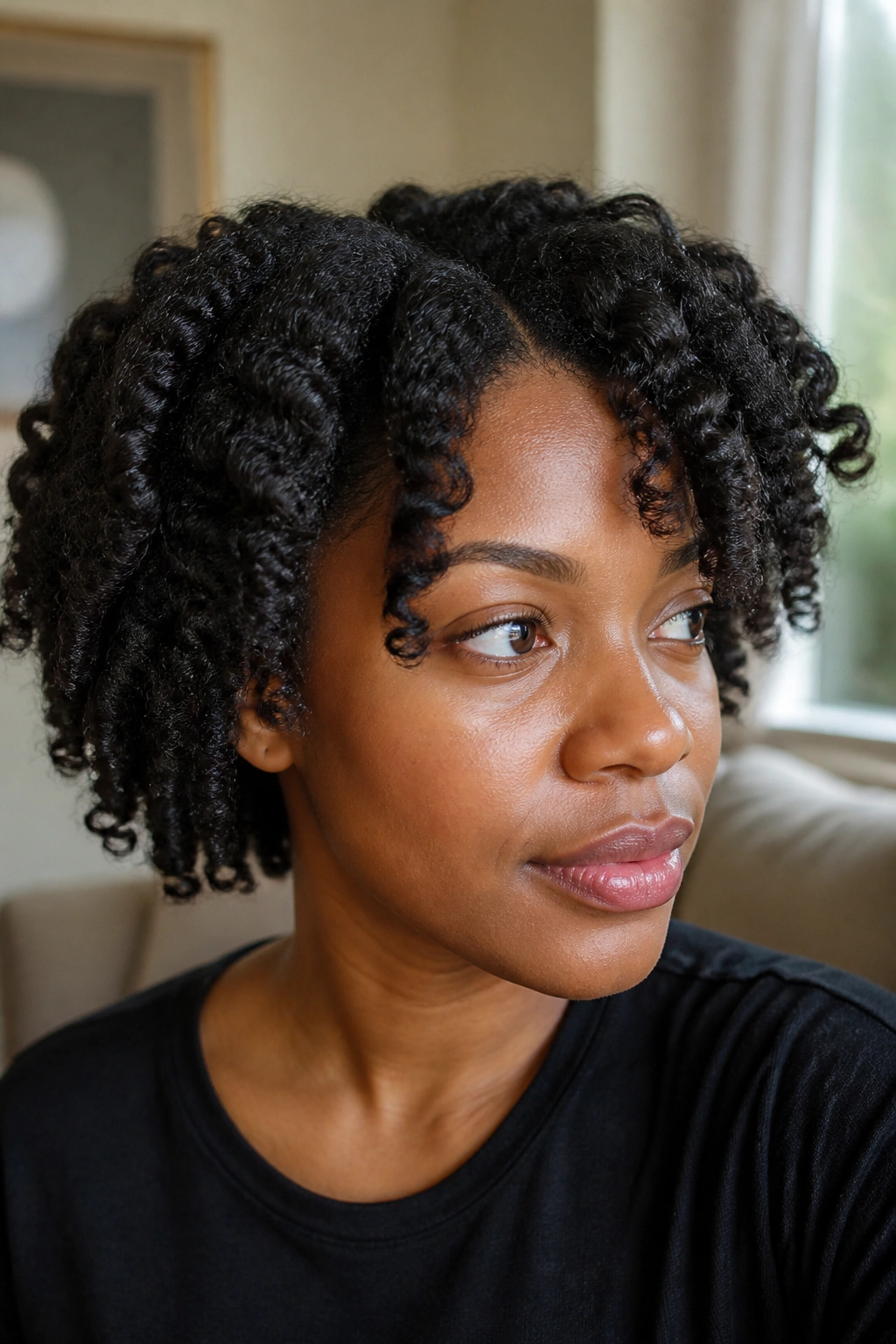
If your braid-out looks good at first and turns fuzzy by lunchtime, the problem is usually the base, not the braid itself. A braid-out on 4c hair can give you soft waves with a little body at the roots, and on texturized hair it often falls with a looser, smoother pattern that feels easy to wear. The trick is setting the braids with enough tension to define, but not enough to crease.
Four to eight braids usually make sense, depending on length and density. Fewer braids give you bigger waves and more volume. More braids create a tighter pattern, though they also take longer to dry. I prefer medium-sized sections when the goal is shape rather than curl precision.
- Braid on damp hair, not wet hair.
- Stretch the roots first if your shrinkage is strong.
- Let the hair dry completely before taking it down.
- Separate once or twice, not five times.
Do not rush the takedown. Damp braid-outs frizz fast, and on texturized 4c hair that frizz can make the style lose its structure before the day is half over.
5. Bantu Knot Set for Short to Medium Hair

Bantu knots have a way of making 4c hair look deliberate even when the texture is doing its own wild thing. On short or medium-length hair, they create neat little coils that can be worn as-is or unraveled into a tight knot-out with tons of lift. If your hair is texturized, the set can look softer and a little more stretched, which is nice when you want definition without a crunchy finish.
The real strength of Bantu knots is control. Each section gets its own shape, so the ends stay protected and the overall style looks tidy from every angle. That is useful on 4c hair because the hair’s natural shrinkage can make some styles look unfinished unless you pin or tuck the ends somewhere.
Small knots, big payoff.
The only part people often get wrong is the base. If the knots are wound too tightly at the scalp, you can end up with little ridges that stay visible after you take the style down. I prefer twisting the section first, then wrapping it into the knot with just enough tension to hold. On damp hair, that usually gives the cleanest result.
Patience matters here. If the knots still feel cold or clammy inside, leave them alone.
6. Texturizer-Friendly Flexi Rod Curls

Unlike a braid-out, flexi rod curls give you a rounder, springier shape that starts higher on the strand. On texturized 4c hair, that difference matters because the hair often needs help holding a curl pattern that isn’t too tight, too flat, or too frizzy. Flexi rods are a smart pick when you want a dressed-up finish without heat.
Larger rods create a softer bend and more movement. Smaller rods make the curl tighter and shorter-looking, which can be useful if your hair is shoulder length and you don’t want it to swing into your face. I usually reach for ⅜-inch to ¾-inch rods depending on the length and how tight I want the end result.
What Makes It Different
Flexi rods work especially well on the ends, which are usually the driest part of 4c hair. They smooth the tips while letting the rest of the strand keep some body. That is a nice compromise when the hair is texturized and the curl pattern at the ends needs more help than the roots do.
Use mousse or a light setting foam, then roll the hair on clean, damp sections. Air drying is fine if you have time, but a hooded dryer makes the finish neater and cuts down on soft, fluffy ends. When the rods come out, separate gently and stop before you turn the curls into cotton candy.
Recommendation: if your hair tends to lose curl overnight, wrap the set with a satin scarf and sleep on a bonnet. That extra layer makes a bigger difference than most people expect.
7. Flat-Twist Updo with a Low Bun

A flat-twist updo with a low bun is the sort of style that works for work, church, weddings, and those days when you want your hair to look like you planned ahead. It stays close to the scalp, which helps 4c hair keep its shape without fighting gravity all day. The bun at the nape keeps the ends tucked away, and tucked ends are usually happier ends.
This style also handles texturized hair well because the flat twists create enough grip for the bun to hold without excessive pins. You can make the front crisp or keep it a little soft around the hairline. Either way, the silhouette stays clean.
How to Keep the Crown Neat
- Start with stretched hair for cleaner parting.
- Make each flat twist the same width so the bun sits balanced.
- Use 4 to 8 bobby pins, tucked under the bun instead of over it.
- Finish with a small amount of gel only at the edges if needed.
I like this look because it doesn’t collapse into itself the way some quick updos do. There’s shape. There’s control. And the scalp gets a break from constant restyling.
8. Cornrow Ponytail with Curly Ends
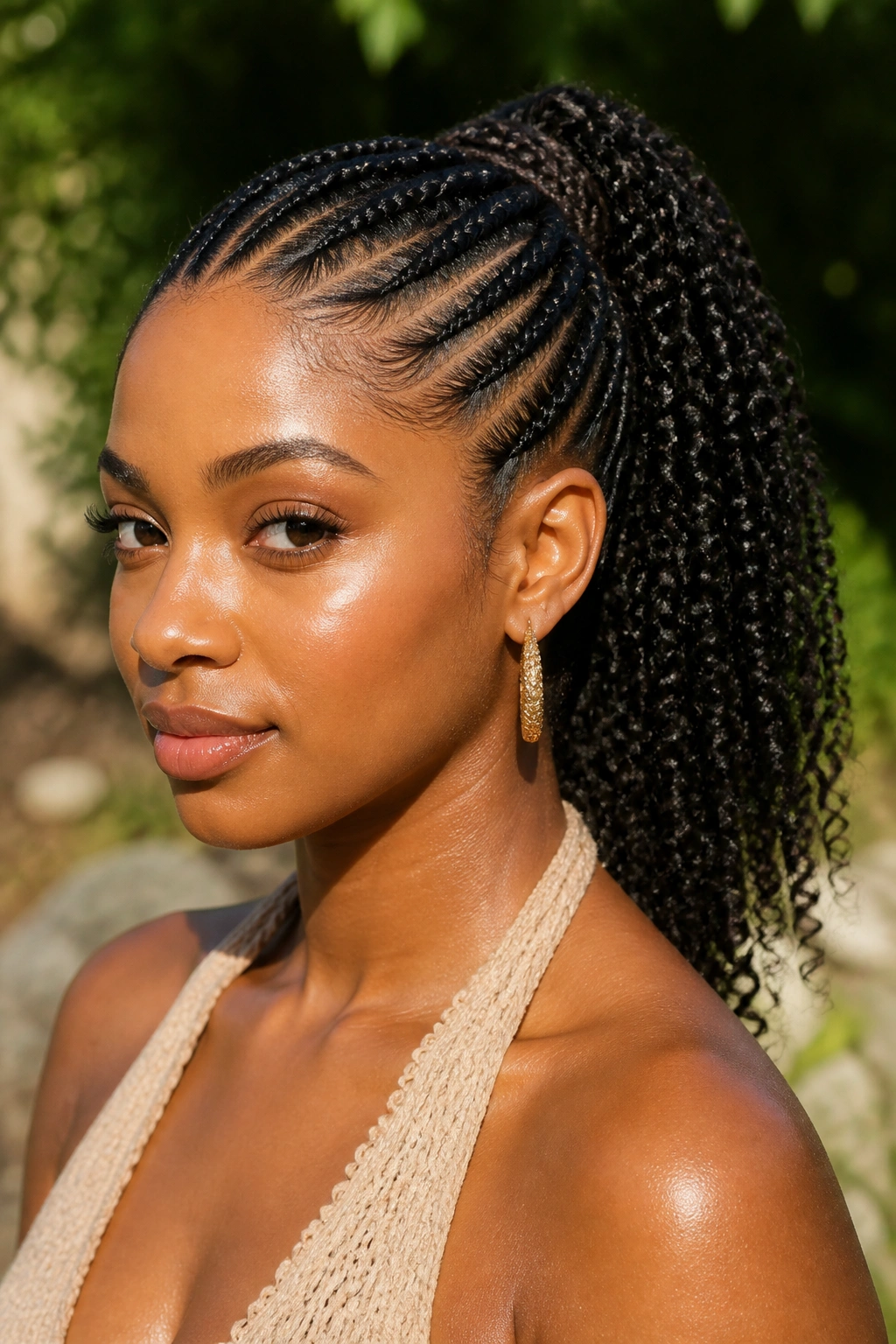
A cornrow ponytail is one of the cleanest ways to protect 4c ends while still letting the style move a little. The front stays braided and tidy, the back gathers into a ponytail, and the ends can be left curly, braided, or set on rods if you want more polish. It’s sharp without feeling severe.
The main reason this style works on texturized hair is simple: the braid base holds the shape, so the finer details at the ends matter less. That gives you freedom to wear your natural texture in the ponytail without forcing every strand to behave. If your hair is softer from texturizing, the cornrows may actually lie flatter with less product buildup, which is handy.
Keep the front sections medium-sized and the tension light around the temples. Tight cornrows look neat for about five minutes and then start feeling expensive in the worst way. A better ponytail has a small cushion of give at the scalp.
If you want the ends curly, use two or three perm rods or flexi rods on the tail before drying. If you want a puffier finish, let the tail dry loose and separate it once. Either way, the style gives you a little height and a lot of order.
9. High Puff with a Clean Side Part

What if you want lift without hiding your texture? The high puff answers that better than most styles. It gathers 4c hair upward, shows off density, and keeps the back off your neck. On texturized hair, it can sit a little smoother at the base while still giving you that full, cloud-like shape at the top.
The side part makes the puff feel more polished. It also lets you control where the hair lays so the front doesn’t puff out in every direction at once. I like this style when the hair has been stretched with a banding method or a few loose twists overnight, because a little stretch gives the puff more height and less bulk at the roots.
How to Get the Puff to Sit High
- Brush or smooth the perimeter with a soft brush, not a hard one.
- Use a satin or elastic puff band that won’t dig into the scalp.
- Position the band two to three inches above the crown for real height.
- Fluff the puff upward with your fingers after the band is secure.
The edges do not need to be laid into submission. If the style already has a clean part and a balanced shape, a light touch works better. A hard gel crust is usually more trouble than it’s worth.
10. Side-Part Frohawk with Pinned Sides

Picture hair that looks sharp from the front and soft from the top. That’s the frohawk’s whole personality. It gives 4c hair a strong center ridge while the sides are pinned down or braided close to the scalp, which makes the shape feel bold without adding extensions or extra weight.
This style is one of my favorites for second-day hair, especially if the roots have already been stretched a little and the curls aren’t trying to spring every direction at once. Texturized hair can make the center section easier to sculpt, and the contrast between pinned sides and a full middle strip keeps the style from looking flat.
Key Details That Matter
- Make the side part clear and deep enough to show intent.
- Pin the sides with long bobby pins or small snap clips.
- Use a little cream on the center section so it doesn’t look dry.
- Keep the volume centered at the crown, not the forehead.
A frohawk can be soft or dramatic. I prefer soft. The hair should look like it has shape, not like it’s been wrestled into a pose for a photo. If the pins are visible, that is fine. Hidden isn’t always better.
11. Halo Braid with a Tucked Nape
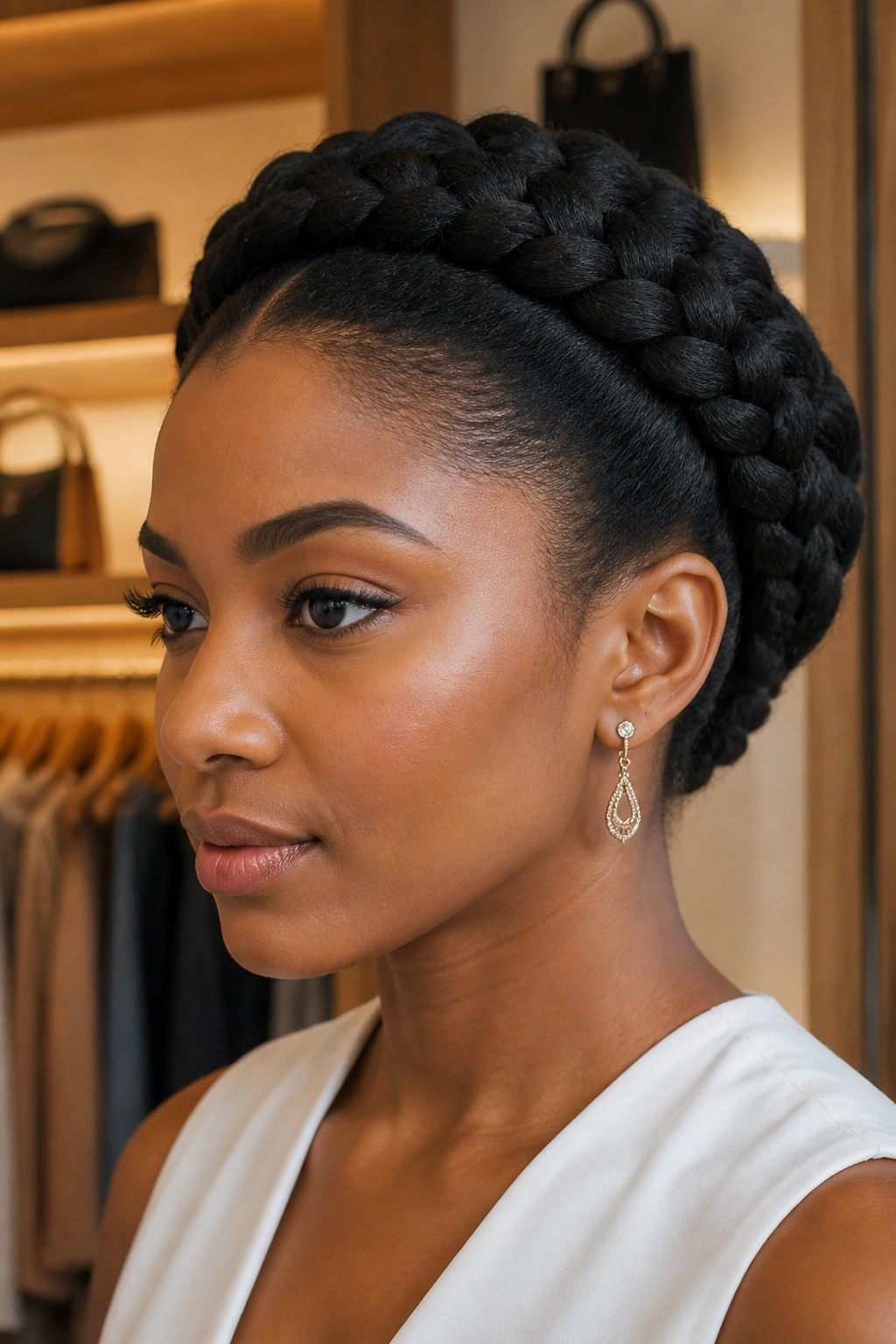
A halo braid wraps around the head like a crown and keeps the nape tucked away, which is a useful trick when you want your hair protected but still visible. On 4c hair, it creates a smooth outline that works especially well when the hair has a little stretch and the sections are clean. If your hair is texturized, the braid usually lies a bit flatter, which can make the whole shape easier to build.
There’s something nice about a style that keeps the sides quiet and the shape close. The halo braid does that. It frames the face without needing a lot of extra decoration, though a side pin or a small accessory can help if you want it to feel dressed up.
The nape is the part I watch most closely. That’s where styles get sloppy fast. Tucking the ends under and pinning them flat keeps the back neat, which matters because a messy nape can ruin an otherwise polished braid.
One small warning: if your hair is very soft from a texturizer, the braid may slip a little more than you expect. A few discreet pins solve that. No drama needed.
12. Texturizer-Friendly Perm Rod Set for Short 4c Hair
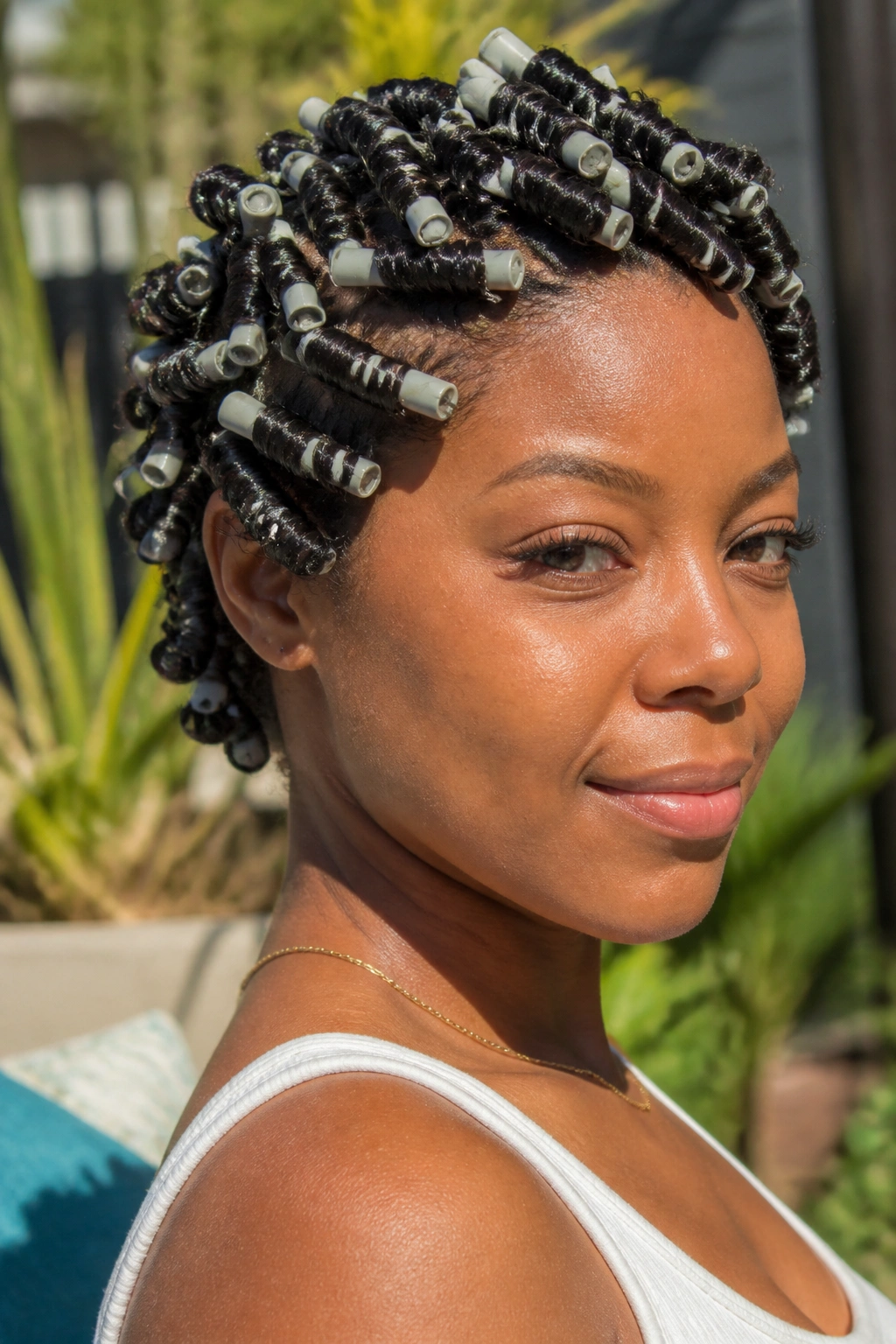
Unlike flexi rods, perm rods sit tighter against short hair and make a compact curl that holds up well on a tapered cut or a teeny weeny afro. That tighter shape is useful when your hair doesn’t have enough length to wrap around a larger rod without slipping. On texturized 4c hair, the set often comes out neat, springy, and just a little glossy at the ends.
The shorter the hair, the more important the sectioning becomes. A rod set on short 4c hair needs small, even parts so the curls dry in the same direction. If one section is thicker than the next, it usually shows in the final shape. And yes, that little mismatch bugs me too.
Who It Suits Best
- Hair that is chin length or shorter.
- Tapered cuts that need definition on the top.
- Coils that hold moisture well but lose curl fast without a set.
- People who want a soft, dressed-up finish without heat.
Pick a rod size that matches the curl you want, not the one that looks cute in the jar. A smaller rod gives more lift and more shrinkage. A medium rod gives a calmer, fuller curl. Either way, wait until the hair is fully dry before taking the rods down, because soft rods on damp hair create flattened bends instead of curls.
13. Chunky Rope Twists
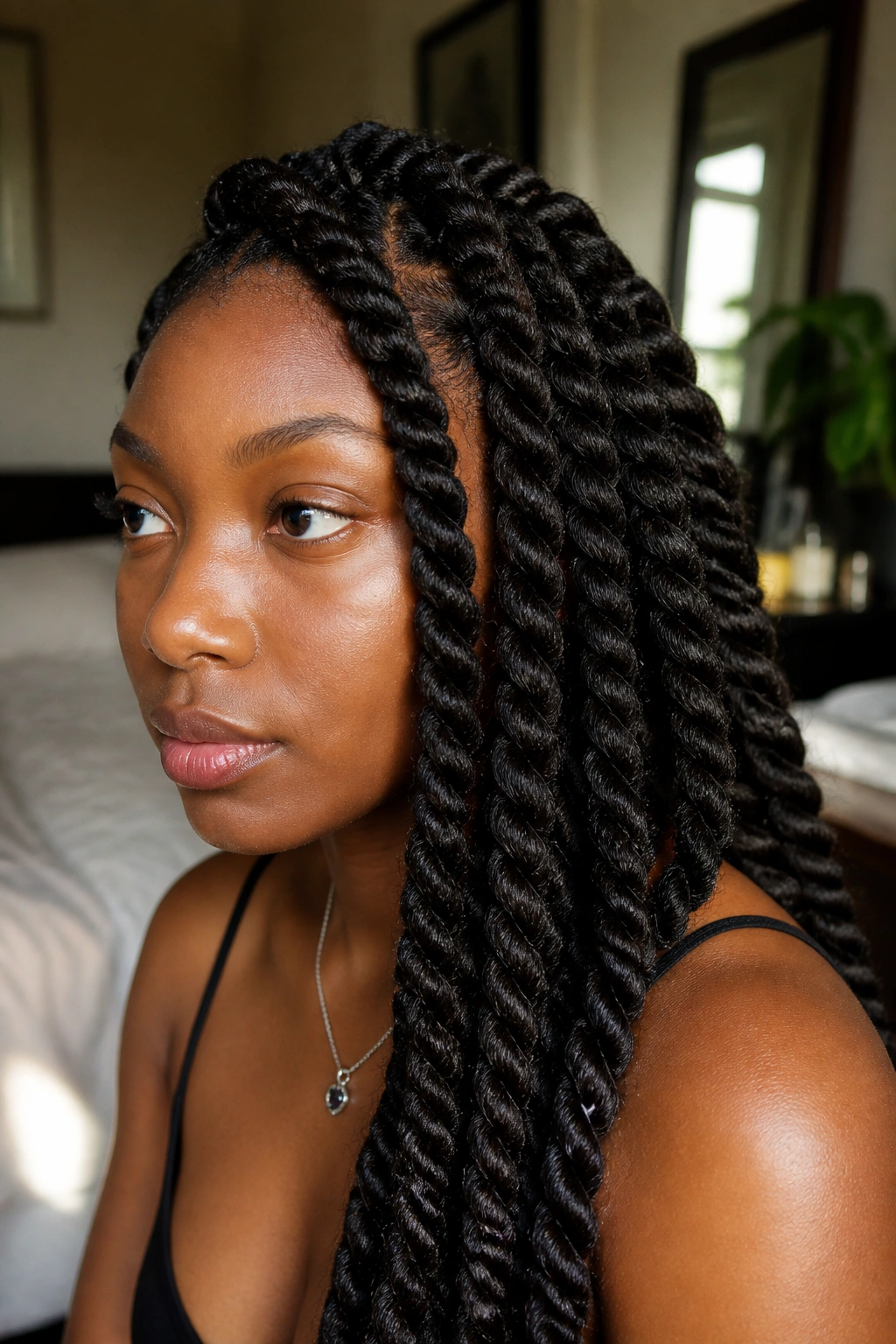
Chunky rope twists are one of the easier styles to live in when you want your hair protected but not hidden. They create a thick, rope-like pattern that works beautifully on dense 4c hair because the size of the twist shows off the natural texture instead of compressing it. On texturized hair, they often fall with a softer outline, which can look elegant without trying too hard.
Why They’re Kinder to Fragile Ends
The ends stay tucked into the twist instead of rubbing loose against your clothes, your pillow, or your hands all day. That reduces the dry, frayed look that can show up quickly on 4c hair, especially if the hair has already been chemically softened.
- Use two clean sections of hair per twist.
- Smooth each section with a light cream, not a heavy butter.
- Twist away from the face for a neater fall.
- Seal the ends with a tiny bit of oil.
Chunky rope twists also make a good base for later styling. You can wear them as-is, pin them into a low bun, or take them down after a few days for a fuller twist-out. I like that kind of flexibility. It saves time without making the hair feel trapped.
14. Feed-In Braids into a Braided Bun

Feed-in braids are one of the few braided styles that can feel light at the scalp while still looking finished and intentional. The braid starts small near the hairline, then gradually picks up hair as it moves back, which helps keep the front from feeling bulky. For natural 4c hair, that gradual build is a gift. It spreads the tension out instead of grabbing everything at once.
A braided bun gives the style a clean end point. You can keep the bun low and neat or raise it slightly for a sharper profile. If you’re using added braiding hair, the style becomes more dramatic and lasts longer. If you want to stay fully natural, keep the feed-ins shorter and tuck the ends into the bun without extension hair.
The whole point is control. Feed-ins work because the braid line looks smooth, the bun keeps the ends safe, and the style can be worn for days with almost no touch-up. That is not a small thing when your hair tends to shrink, puff, or frizz the second you start sweating.
Tip: keep the braid base snug enough to hold, but never tight enough to tug at the hairline when you smile or raise your brows.
15. Low Twisted Chignon with Tucked Ends
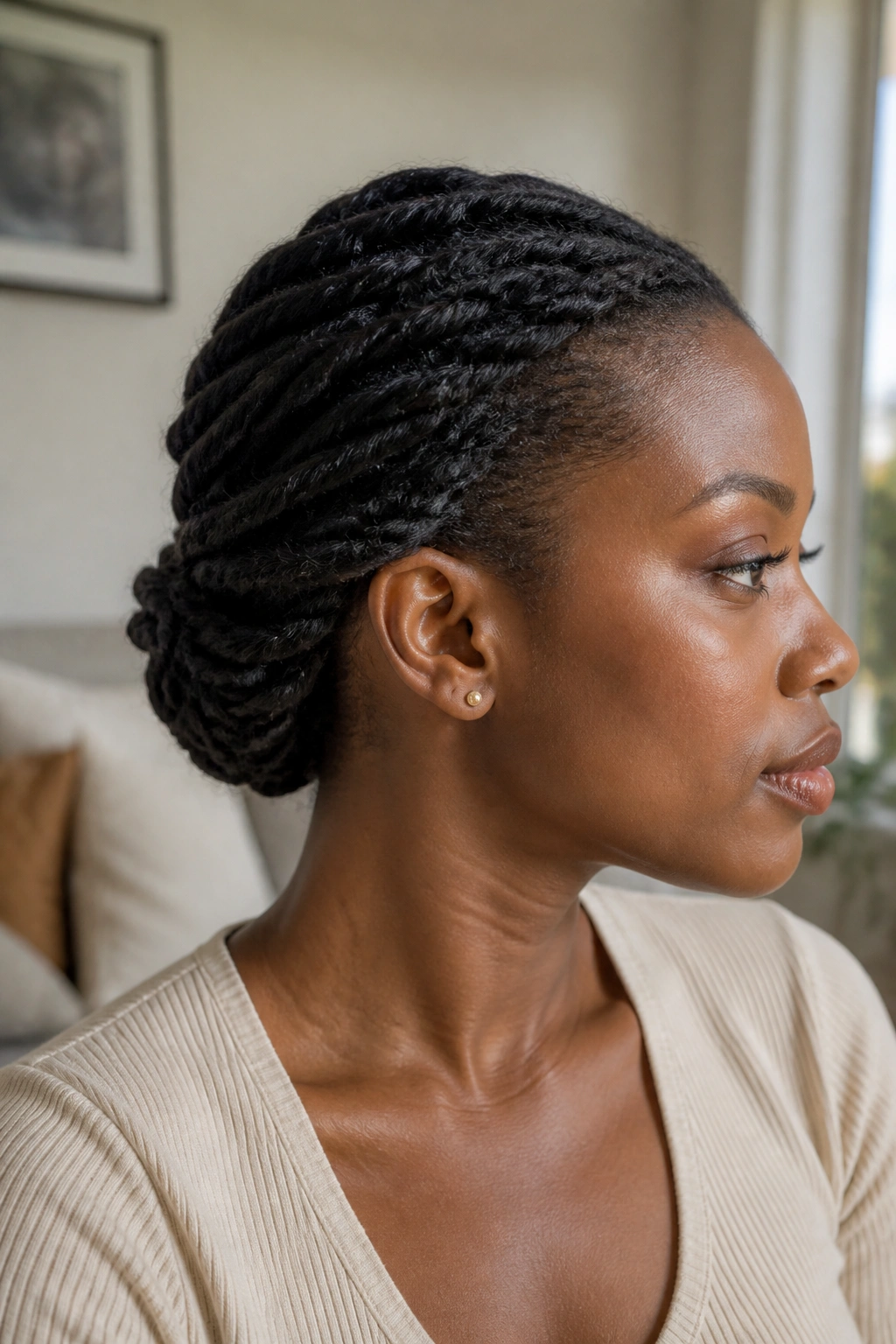
Why does a low twisted chignon stay elegant even when the rest of your hair feels plain? Because it puts the shape where the eye wants it: low at the nape, smooth through the center, and tidy around the ends. On 4c hair, that can be a lifesaver when you want a style that looks finished without forcing the hair into a hard shell.
The chignon is also kinder to growing-out texturizer lines than a lot of high-tension styles. New growth and texturized ends do not always behave the same, and a low twist lets both textures sit in the same shape without fighting each other all day. The back of the head does most of the work, so the front can stay soft.
How to Wear It
- Stretch the hair first if you want a cleaner twist.
- Split the hair into two or three large sections.
- Twist each section toward the nape, then wrap it into a low bun.
- Pin the bun flat with 4 to 6 bobby pins, hiding the ends underneath.
This is a style I’d pick for days when the hair needs to look calm. Not flat. Calm. There’s a difference. The chignon doesn’t shout, which is part of why it works so well on natural 4c hair with or without a texturizer. It protects the ends, keeps the outline neat, and leaves you room to move through the day without thinking about your hair every ten minutes.
