



Feed-in braid styles for Black women work because they give you that crisp, close-to-the-scalp look without making the front of the braid feel bulky from the first inch. The hair is added little by little, so the braid sits flatter, moves cleaner, and usually looks softer around the hairline. That matters more than people admit. A style can look stunning from across the room and still be miserable to wear if the base is too tight.
The real trick is choosing the version that fits your life. A straight-back set of feed-ins can look sharp and disciplined; a side part changes the whole mood; a high ponytail brings drama fast. Then there are the styles with beads, curls, zig-zag parts, or a braided bun when you want the look to stay put and stay neat.
A good feed-in braid style should feel intentional from the front and calm at the scalp. Snug, yes. Painful, no. If your braider has to wrestle the first few rows into place, that is usually a sign to speak up before the rest of the style gets locked in. The best versions leave room for a clean part, a rested edge, and a head that does not feel tapped out by day two.
There’s also a lot more room here than people think. Feed-ins can be polished enough for work, playful enough for a weekend, and tidy enough to stretch between wash days without looking ragged. The 15 styles below cover the classics, the bolder parting tricks, the updos, the ponytails, and the ones that bring in beads or curls without losing that neat braided base.
1. Straight-Back Feed-In Braids

Straight-back feed-in braids are the style I point people to when they want something clean, low-drama, and easy to live with. The rows run straight from the front hairline to the back, which gives the whole head a neat, orderly look. That shape is part of the appeal. It does not shout, but it never looks unfinished either.
Why Straight-Back Rows Stay So Popular
The beauty of straight-back feed-ins is that they work on a lot of different hair lengths and densities. If your hair is thick, the rows hold their shape well. If your hair is finer, the gradual feed-in method helps keep the braid from starting too bulky at the root. That flatter base is the whole point.
They also sit nicely under scarves, hats, and hoodies, which sounds small until you wear braids for more than a few days. Small details matter. A straight-back set makes it easier to wrap your hair at night and easier to oil the scalp between parts without fighting a messy pattern.
What I Like Most About Them
- Best for a clean, classic look that works in almost any setting.
- Easy to dress up with gold cuffs, a few beads, or wrapped ends.
- Kind to busy mornings because the style already looks finished.
- A smart choice for medium to long wear when you want order, not fuss.
Pro tip: Ask for rows that follow the shape of your head instead of forcing dead-straight lines if your scalp is sensitive. That small adjustment can make the whole style feel better by day three.
2. Center-Part Feed-In Braids

A center part changes everything. Even when the braids themselves are simple, the line down the middle gives the style a more balanced, almost tailored look. It frames the face evenly, and that symmetry can be especially nice if you like styles that feel neat without looking severe.
The center part also works well with both long and shoulder-grazing braid lengths. Long braids create that smooth, drawn-out line from forehead to ends. Medium-length braids feel lighter and easier to toss into a half-up moment if you need a break from having hair on your shoulders.
One thing I always notice: a center part makes the front rows look more deliberate. That can be a blessing or a curse. If the part is crisp and the rows are clean, the whole style looks expensive in the best sense of the word. If the part wanders even a little, your eyes go right to it.
And that is why this style rewards a patient braider. The parts need to be measured carefully, especially around the crown, because any wobble shows more quickly than it would in a side-part style. It is not the hardest feed-in style to wear, but it does demand a steady hand at the start.
I like this one for people who want a look that feels balanced and tidy without a lot of extra decoration. Let the part do the work. You do not need much else.
3. Side-Part Feed-In Braids

Want something softer without losing that polished braid line? A side-part feed-in style does that job well. The off-center part changes the angle of the braids, and the whole look feels less rigid right away. It is one of those small shifts that has a big payoff.
Side parts can be especially flattering if you like braids that sweep across the forehead a little before dropping back. They soften sharper features, and they can make the front of the style feel less flat. If your center part has never felt quite right on you, this is usually the first alternative I would try.
The part itself does not need to be dramatic. A slight shift can be enough. In fact, a deep side part can look a little heavy if the braids are very thick, so a medium part with medium-size rows often lands in the sweet spot.
I also like side-part feed-ins for people who wear their hair over one shoulder a lot. The way the braids fall feels more natural that way. You get movement without losing structure, and the style still holds up when you tuck it behind your ear or pin one side back for a cleaner shape.
There’s a quiet confidence to this one. It does not try too hard. It just lands well.
4. High Feed-In Ponytail Braids

A high feed-in ponytail changes the mood fast. The braids are pulled up toward the crown, which lifts the whole face and gives the style some height right where it counts. If you want a braided look that feels sharp, energetic, and a little more dressed up, this is the one.
The high placement gives you room to show off the parting at the front, which I like. It makes the front rows matter more, and it lets the ponytail itself become the main event. You can keep the braids long and sleek, or let them cascade down your back in a thick tail that swings when you move.
What to Ask For at the Chair
- A secure base without tugging at the edges.
- Smooth rows that feed neatly into the ponytail point.
- A ponytail height that feels right for your head shape, not just for a photo.
- Lightweight extensions if you know your neck gets tired easily.
High ponytail braids look best when the scalp is calm and the tension is controlled. That is the catch. A style this lifted can become uncomfortable if the perimeter is pulled too hard, so the front rows should feel snug, not strained.
I like this style for a night out, a special event, or any time you want the kind of braid style that announces itself immediately. It has presence. Just make sure the style is strong for the right reason, not because your scalp had to pay for it.
5. Low Feed-In Ponytail Braids
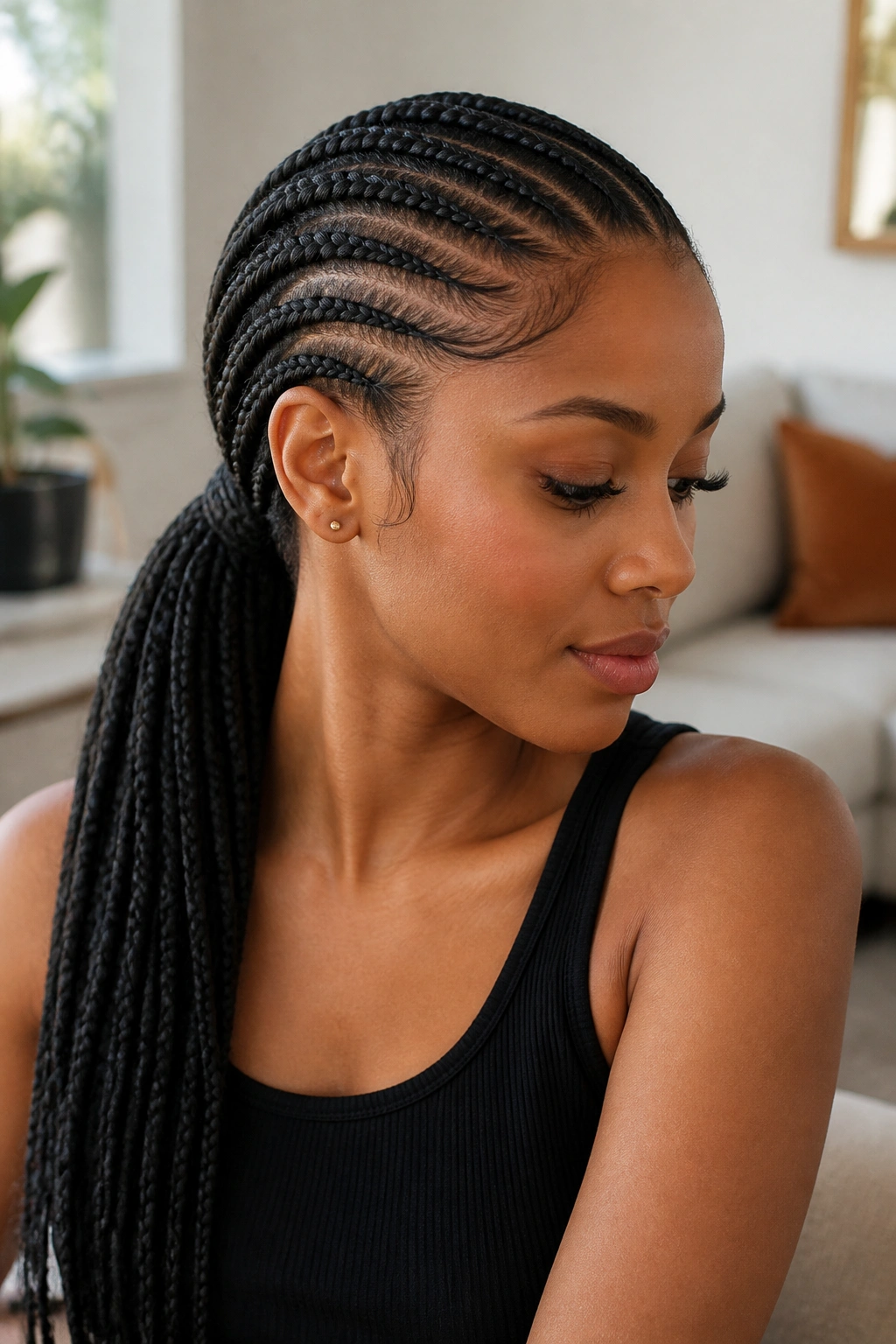
Low ponytails are the quiet workhorse of feed-in braid styles. They sit lower on the head, usually near the nape or just above it, and that lower placement gives you a smoother, more relaxed feel than a high ponytail. The shape is still neat. It just breathes a little more.
This is the version I lean toward when someone wants polish without the extra pull of a high base. The weight sits lower, which can feel easier on the scalp and neck, especially if the braids are long. It also tends to look good for longer stretches because the base does not have to fight gravity as much.
A low feed-in ponytail can be as plain or as dressed up as you want. Leave it sleek and simple, and it reads clean and professional. Wrap the base with a braid, add a few cuffs, or tie in a few strands of colored hair, and the whole thing changes mood without needing a full rebraid.
It also works nicely when you want your face and earrings to stay visible. High ponytails can pull the eye up too much. A low one keeps the focus balanced. There’s a reason people keep coming back to it.
If you want a style that feels settled, not stiff, this is a smart choice.
6. Feed-In Braids with Beads

The first time beads hit the ends, the style gets a little music in it. That is the best way I can put it. Beads change the feel of feed-in braids immediately, adding sound, weight, and a bit of movement that plain ends do not have. Even a small row of beads can shift the whole look.
The trick is not to overdo them. A few well-placed beads can feel elegant and playful at the same time. Too many heavy ones near the roots, though, and the style starts pulling where it should not. I always prefer beads at the ends or lower on the braid rather than stacked too close to the scalp.
What Beads Change
- Wood beads feel lighter and softer for long wear.
- Clear or gold beads give a cleaner finish if you want something polished.
- Chunky beads look bold, but they can add drag if the braids are fine.
- Small bead clusters work better on medium braids than oversized sets.
There’s also a practical side here. Beads can make your braids feel longer and fuller without actually adding much extra hair. That can be handy if you want a little personality without turning the style into a full costume moment.
I think beads work best when the braid pattern is already clean. Let the base do the talking first. The beads are the punctuation, not the sentence.
7. Feed-In Goddess Braids with Curls
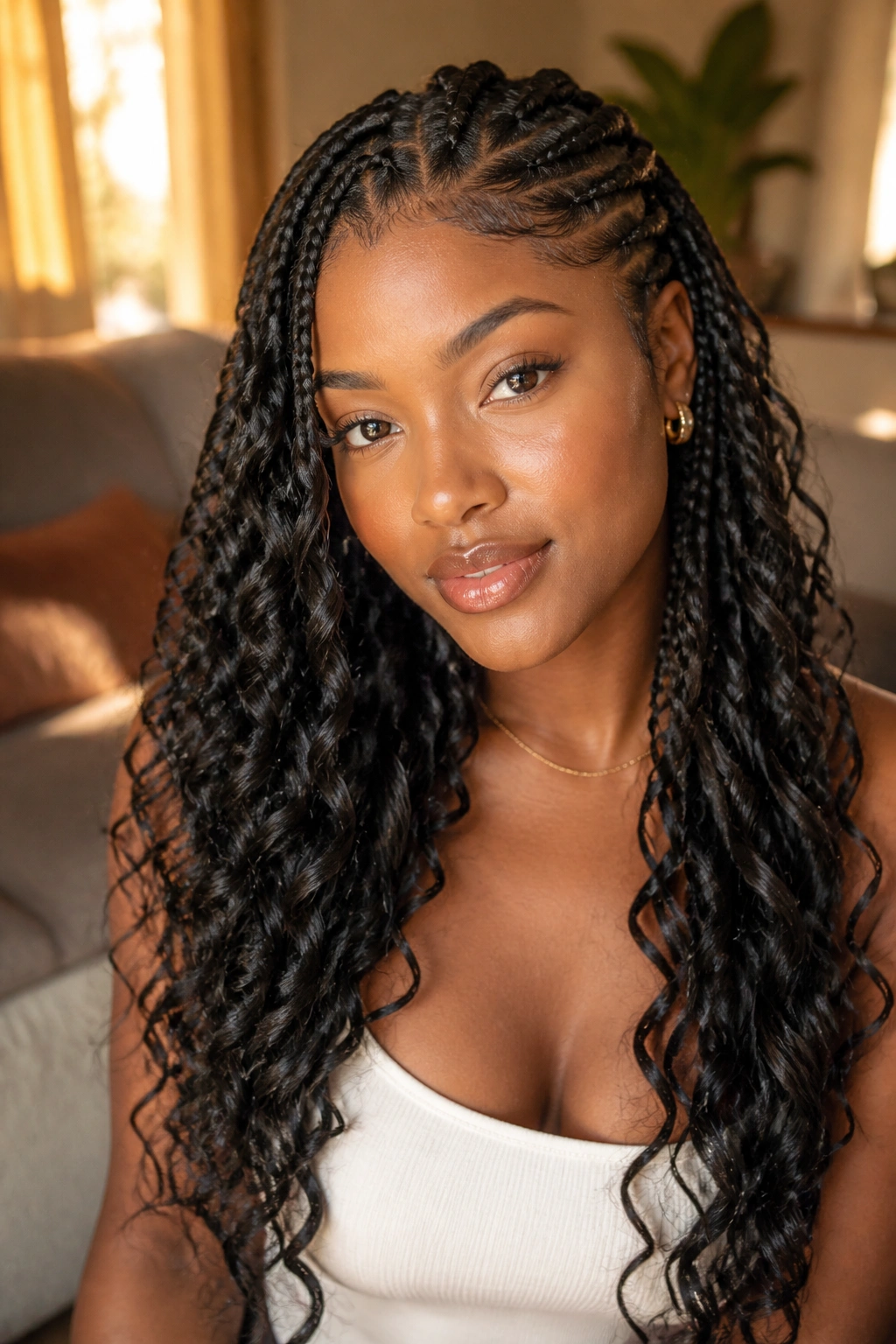
What if you want the braid base and a softer finish? Goddess braids answer that neatly. They usually keep the feed-in cornrow or braid foundation close to the scalp, then add curls somewhere along the length or at the ends. The result feels less severe and more fluid.
That curl piece matters more than people think. A braided style with curls can soften a sharp jawline, break up a long braid line, and give the style movement even when the braids themselves are very structured. It also reads less formal than a straight-end style, which is useful if you like braids but do not want the look to feel stiff.
How to Keep the Curls Fresh
- Use a light mousse to smooth the curled pieces without soaking them.
- Sleep in a satin scarf or bonnet so the curls do not catch and frizz overnight.
- Avoid heavy oils on the curls because they can weigh the ends down fast.
- Separate the curls with your fingers, not a brush, if you want them to stay full.
Goddess braids can be a little more work than plain feed-ins. The curls need care, and they do not stay pretty by accident. Still, the payoff is real. There is a softness here that plain braids do not always give you.
This style is a good fit if you like braided structure but still want some movement around your face and shoulders. It feels feminine without getting fussy. That balance is hard to fake.
8. Tribal Feed-In Braids
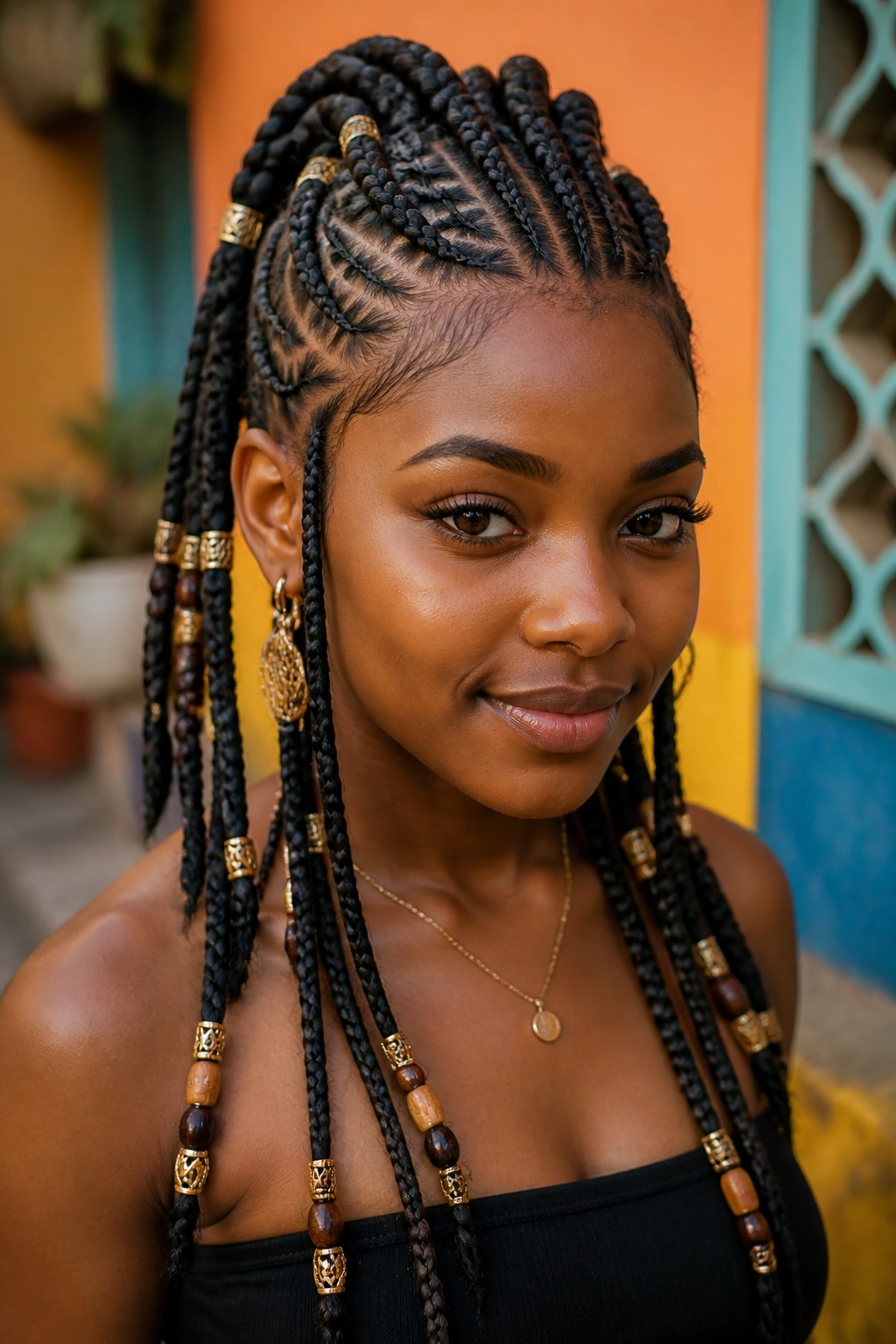
Tribal braids are the style you choose when one braid language is not enough. You get a mix of scalp braids, hanging braids, and decorative touches that turn the head into a full pattern rather than a single braid set. The look feels layered and intentional, which is a big part of its appeal.
I like tribal feed-ins because they give you room to play with shape. You might see a central braid running forward, smaller side braids, and a few longer braids dropping from the back. Add beads or cuffs and the style starts to feel even more detailed, but it still has structure underneath.
This is one of those styles where the parting matters almost as much as the braids themselves. Clean lines keep it from looking crowded. If the sections are too busy, the style loses the rhythm that makes it work in the first place.
There is also a cultural side to this style, and I think it deserves respect. Tribal-inspired braids are not just decoration. They carry history, identity, and a sense of styling that has been passed through generations. If you wear them, wear them with care and with a stylist who understands the shape, not just the photo.
Not every tribal set has to be loud. Some of the best ones are surprisingly restrained, with one strong center element and just enough detail to keep your eye moving.
9. Zig-Zag Part Feed-In Braids

A zig-zag part can rescue a style that would otherwise feel ordinary. The braids may still follow a feed-in pattern, but the parting line breaks the predictability. Instead of a straight row, you get a jagged path that adds motion before the braids even start moving.
The style works best when the scalp is clean and the sectioning is precise. Zig-zag parts show every little wobble, so this is not the place for rushed hands or a braider who is guessing their way through the grid. The payoff is worth it when the lines are crisp, though. It looks intentional from every angle.
It also does a nice job of making a simple braid pattern feel custom. You do not need ten different braid sizes or a bunch of extras for this style to stand out. The part itself does enough. That is the charm.
What Makes Zig-Zag Parts Work
- They add movement before the length even begins.
- They look best on neat, dry, well-parted hair.
- They can make ponytails and buns look more interesting from the front.
- They need a patient stylist, because the pattern has to stay even all the way across.
I would not call this a low-effort style, but it is a rewarding one. If you like a little edge in your braid pattern without going full dramatic, zig-zag parts give you that middle ground.
10. Criss-Cross Feed-In Braids

Criss-cross feed-in braids bring a stronger geometric feel to the head. You see braids crossing over one another near the crown or front, and the whole style gains some tension and shape from that overlap. It is a good choice when you want something that looks engineered, not just neatly braided.
The style can be done in a few ways, but the shared idea is the same: sections overlap in a way that creates a visible pattern. That pattern is the hook. Plain rows can be lovely, sure, but criss-cross braids give the eye something to follow. They make the front look more complex without needing a full head of extra decoration.
This one asks a lot of the parting. The crossings have to be balanced or the whole thing slips into chaos fast. That is why I think it looks best when the braids themselves are medium-sized. Very small braids can get lost in the pattern, and very large ones can make the crossovers feel clunky.
There is also a practical upside. Criss-cross sections can hold well in styles that get pulled back into a ponytail or bun later. The design remains visible even when the rest of the hair is gathered up, which is useful if you want the front to stay interesting all week.
It is a bold look, but not a loud one. That’s a nice line to walk.
11. Heart-Part Feed-In Braids
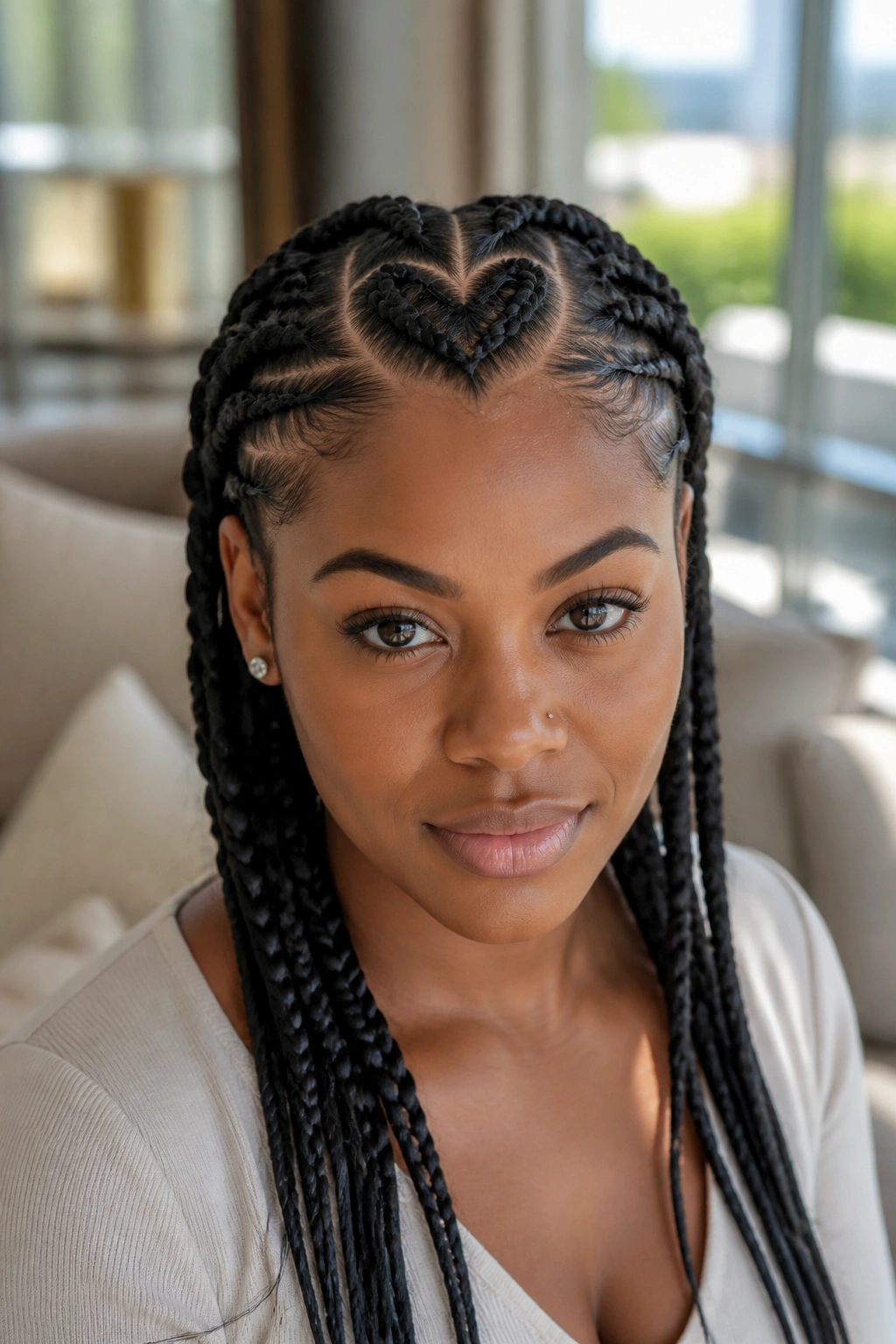
Tiny detail. Big personality. A heart part can change the whole front of a feed-in braid style, especially when the heart is cleanly shaped and set into an otherwise simple braid pattern. It is playful without being childish, which is a harder balance to hit than people think.
I like heart parts best when they are not trying to dominate the whole head. Put the heart where it can be seen, then let the rest of the braids stay orderly. That contrast matters. If everything is decorative at once, the heart loses its punch.
This style works especially well with medium-size braids because the part can still be seen clearly from the front and from above. Tiny braids can make the heart disappear into the noise. Large braids can crowd the shape. The middle ground usually wins.
A heart part can also be a good choice if you want your braids to feel a little more personal. It tells people that the style was chosen on purpose, not just requested from a menu. That sounds small, but it changes how the whole look lands.
Keep the rest of the styling simple if you want the heart to stand out. A few cuffs, maybe. Heavy accessories can compete with the part and make the whole front feel busy. Less usually wins here.
12. Feed-In Braided Bun

A braided bun is what happens when feed-ins decide to behave. The braids are gathered into a bun, usually high, low, or right at the crown, and that tucked shape gives you a very neat finish. It is one of the easiest ways to make braids feel pulled together without cutting off the style’s personality.
What I like about this look is how useful it is. It keeps hair off the neck, keeps the ends under control, and can feel especially good when you are tired of long braids brushing your shoulders all day. The bun also works beautifully with clean parting in the front, because the front rows still get to show off.
A low braided bun feels calmer and more refined. A high one has more lift and drama. Either way, the bun can make feed-ins feel dressy without turning them into a special-occasion-only style. I have always thought that mattered. Hair should be able to show up in regular life, not only in photos.
One thing to watch is pin placement. If the bun is pinned too tightly or the base is too heavy, you can end up with a headache that follows you around for hours. The bun should feel secure, not welded to your scalp.
This is the style for people who like their braids tucked, tidy, and out of the way. It stays in its lane, which is part of why it works so well.
13. Stitch Feed-In Braids

Why do stitch braids look so sharp? Because the parting does half the work before the braid even begins. Stitch feed-in braids use clean, segmented lines along the scalp, so the base looks almost drawn on. The effect is crisp and structured, and when it is done well, it has a very deliberate finish.
The style can be worn straight back, curved, or shaped into a ponytail, but the stitch line is the star. That line needs control. It usually takes more gel or mousse than a softer feed-in set, but too much product can leave the hair stiff or flaky, so there is a balance to keep. Clean scalp, clear sections, and a light hand at the end usually do more good than loading the hair with product.
How to Keep the Stitch Line Crisp
- Start with dry, detangled hair so the parts stay visible.
- Use a small amount of styling product and smooth it only where needed.
- Ask for even spacing between each stitch line so the rows do not collapse into one another.
- Protect the front at night with a silk scarf to keep the lines from puffing up.
I like stitch braids for people who enjoy definition. The style has edges, shape, and a little attitude. It also photographs well from the front and side, which makes sense given how much the parting does.
If you are someone who gets bored with soft, rounded braid patterns, this is the one that snaps you out of that. It looks clean in a way that feels almost architectural.
14. Fulani-Inspired Feed-In Braids
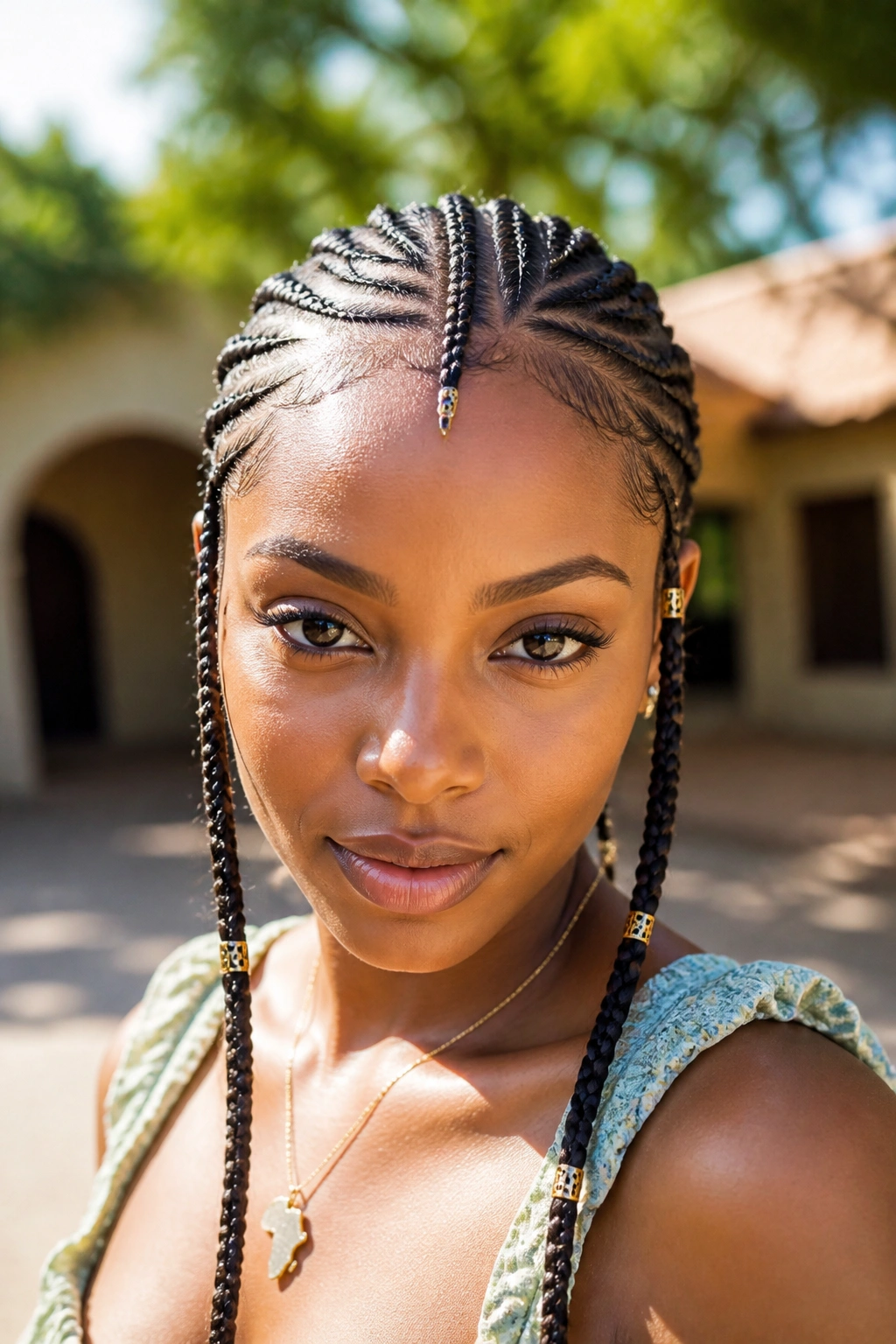
Fulani-inspired feed-in braids carry a look that is instantly recognizable: a central braid or braids down the middle, side braids that frame the head, and often accessories like beads or cuffs. The overall effect is balanced and detailed, but it never needs to feel crowded when the sections are planned well.
This style has roots that deserve respect. It is not just a pretty braid pattern to borrow for a weekend and forget about after that. The shape and adornment connect back to tradition, which is part of why the style feels so strong when it is done with care. A good stylist will know how to keep the look rooted and wearable at the same time.
Fulani-inspired feed-ins can be surprisingly versatile. Keep the beads minimal and the finish sleek if you want something understated. Add more accessories and the style becomes more expressive, though I still think restraint usually looks better than piling on everything at once.
What to Request for a Clean Fulani Look
- A clear center braid or central parting line.
- Slim side braids that frame the face without crowding it.
- Accessories placed with purpose, not sprinkled everywhere.
- Enough length to let the pattern breathe, especially near the crown.
The nicest version of this style has rhythm. Your eye can follow it from front to back without getting lost. That balance is what makes it so easy to admire.
15. Feed-In Braids with Layered Ends
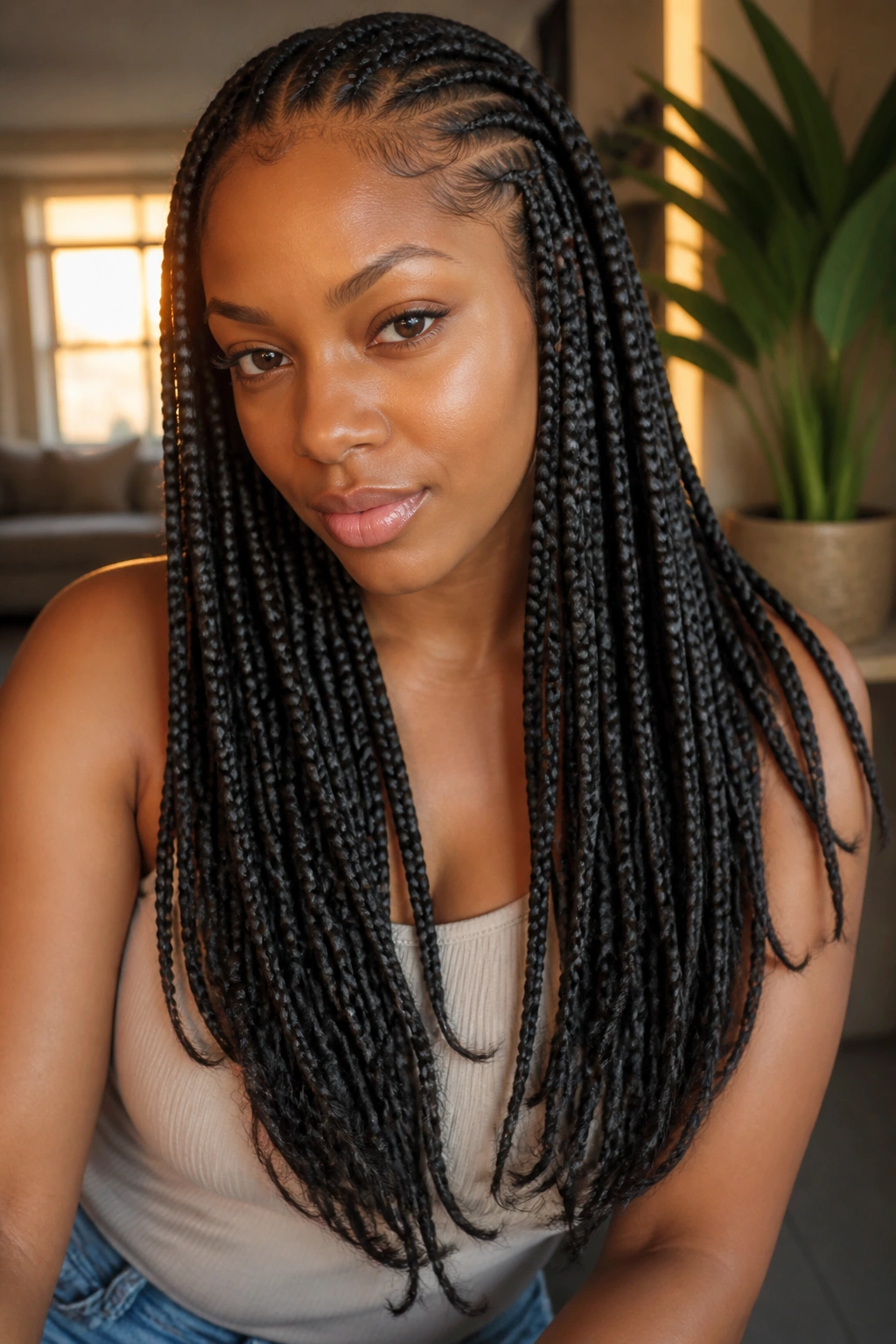
If long braids feel heavy on you, layered ends are the fix. Instead of every braid falling to the same length, the braids are cut or finished at different points so the overall shape feels lighter and more fluid. You still get length. You just do not get that solid wall of hair all at once.
I like layered feed-in braids because they move better. One row might hit the chest, another the ribs, another the upper back. That staggered finish keeps the style from looking too blocky, especially when the braids are thick or the hair is naturally dense. It also makes the whole head feel a little more dimensional without needing curls or beads.
This is a smart choice if you love long braids but hate the feeling of all that weight hanging in the same place. A layered finish can take some pressure off the neck and give the style a softer drop. It also works well with side parts and center parts, which means you are not locked into one face frame.
One thing I would ask for here is a clear plan before the braider starts trimming or finishing. Layering should look deliberate, not accidental. If the lengths are chopped without shape, the style can get messy fast. If the layers are mapped out ahead of time, though, the result feels polished and easy to wear.
This is the style I’d pick for someone who wants movement first and drama second. It looks full. It feels lighter. That is a good trade.
The best feed-in braid style is the one that fits how you actually move through your days. Some people want the stillness of straight-back rows. Others want the lift of a high ponytail, the softness of curls, or the little surprise of a heart part under the front rows.
Pick the shape that matches your scalp, your schedule, and your patience. A braid style should look good on day one, but it should still make sense when you are tired, busy, and not in the mood to fuss with it. That is the real test.
