



French bobs without bangs have a neat little trick: they make hair look finished in about ten minutes, even when the rest of your morning is a small disaster. The forehead stays open, the line stays visible, and the cut has to do more of the talking. That is exactly why these haircuts can look so crisp. There is nowhere for a bad shape to hide.
That clean look can go one of two ways. Done well, the result feels sharp, airy, and deliberate. Done badly, it turns boxy or oddly heavy, like the cut lost interest halfway through. A half-inch matters here. So does the part, the edge at the jaw, and whether the ends curve under or sit dead straight.
Hair texture changes everything, too. Fine hair likes a blunt edge. Thick hair usually needs a little internal weight removal so the sides do not puff out. Curly hair can look fantastic in a French bob without bangs, but only if the length is placed with some care — too short and it balloons, too long and it drags. The best version is the one that works with your hair, not the one that happens to look good in a perfectly lit salon mirror.
Start with the shape that matches your texture and how tidy you like your hair to feel on an ordinary Tuesday. A clean bob is not about trying hard. It is about a line that sits in the right place and keeps its nerve.
1. Classic Chin-Length French Bob Without Bangs

This is the French bob most people picture when they want something sharp but easy. The length sits right around the chin, maybe a touch above it, and the edge stays blunt enough to look intentional. No fringe. No extra fuss.
Why It Stays So Clean
The chin-length line does a lot of work on its own. It opens the face, shows off the jaw, and keeps the cut from slipping into awkward bob-limbo. If the ends are softly beveled under with a round brush, the whole style looks polished without feeling stiff.
A small detail makes a big difference here: the line should sit where your face naturally narrows, not where a ruler says it should. On some people, that is right at the chin. On others, it’s a hair above it. That tiny shift changes the whole mood.
- Best for straight or softly wavy hair
- Easy to tuck behind one ear
- Looks neat with a center part or a soft side part
- Needs regular trims to keep the edge sharp
Best move: ask for a blunt perimeter with just enough bend at the ends to keep it from looking helmet-like.
2. Jaw-Skimming French Bob

Why does a cut that barely touches the jaw look so deliberate? Because it frames the face at the exact point where the eye usually lands first. That one-inch zone around the jawline can either sharpen your features or make them feel blurred, and this length usually sharpens them.
A jaw-skimming French bob works well when you want the clean look, but you do not want the chin-length version to feel too compact. It gives a little more air between the ends and the neck, which helps if you wear collars, jackets, or high necklines a lot. The result is tidy, not severe.
I like this one on faces that need a little vertical lift. Round faces often gain structure here, especially if the front pieces are left a touch longer than the back. Square faces can wear it too, but the ends should be softened just enough so the jaw does not look boxed in.
A half-inch matters. Seriously. Move the line too low and the cut starts to drift toward a lob; move it too high and the whole thing can feel clipped. The sweet spot is right where the jaw turns, and that is a prettier place than people expect.
3. Rounded French Bob With Curved Ends

I keep coming back to this version when someone wants softness instead of edge. The shape is still compact, but the ends curve under in a way that feels tidy and friendly, not strict. It has that old French salon feeling — not fussy, just considered.
What Makes the Curve Work
The curve matters more than the length here. Even a blunt bob can look gentle if the ends follow the shape of the jaw and turn inward by a quarter inch or so. A round brush, a hot brush, or a quick bend with a flat iron can all do the job.
This is the version that saves people who think short hair has to look harsh. It doesn’t. The curve adds a bit of movement around the mouth and cheeks, which makes the cut easier to wear when your face feels tired or your styling time is short.
- Ask for a rounded perimeter, not heavy layers
- Keep the curve subtle, not curled
- Best when the nape is neat and close
- Works well with a center part if you want symmetry
Small warning: if the curve gets too round, the bob can tip into “bubble” territory, and that is not the clean look anyone wants.
4. Blunt French Bob With a Center Part
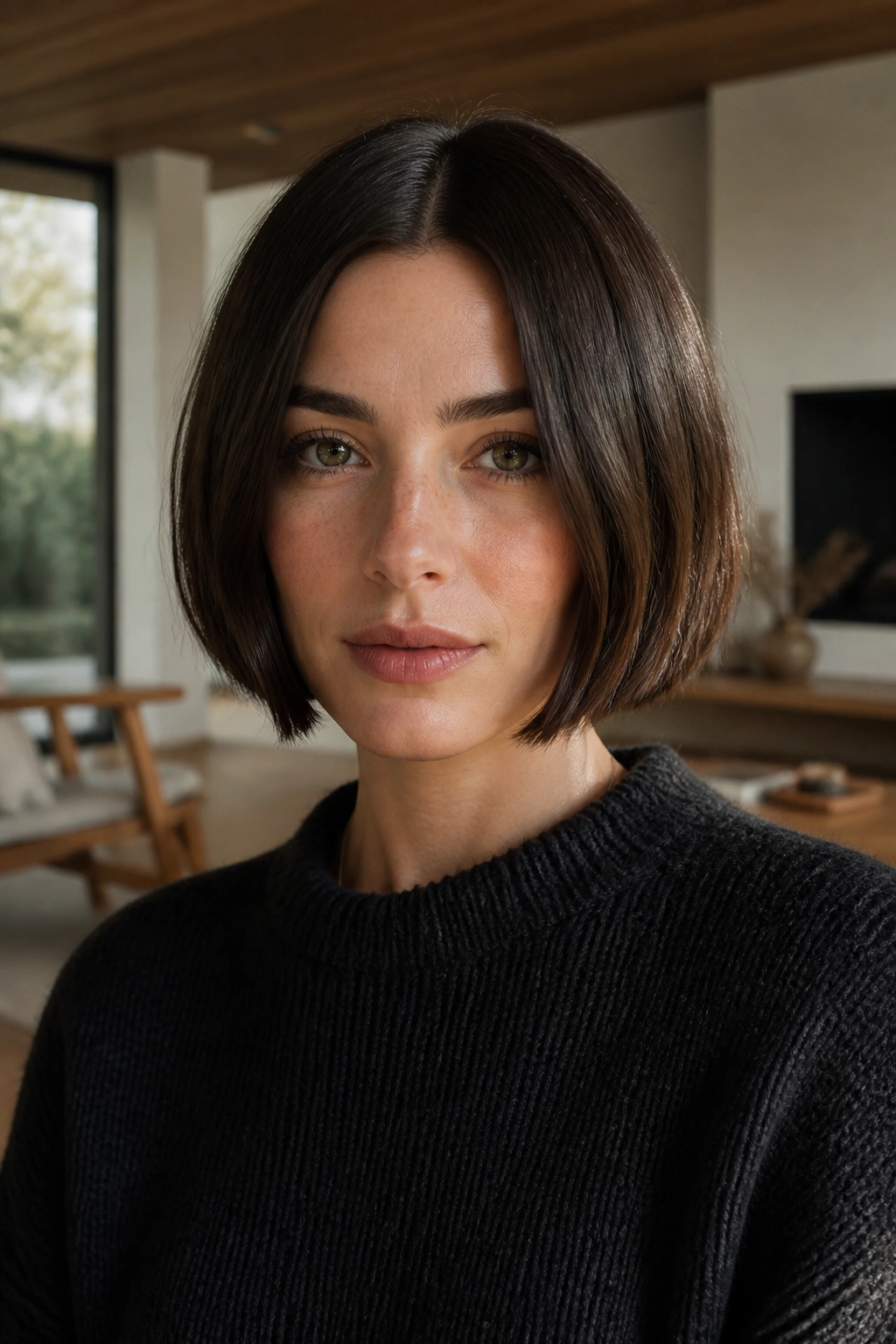
A blunt center part is the least fussy way to make a French bob look clean. The symmetry does half the styling for you. The haircut feels calm, clear, and a little severe in the good way — the kind of severe that makes earrings, makeup, or a strong brow look sharper.
Unlike a layered lob, this cut relies on one solid edge. That’s the whole point. The center part keeps the weight balanced, and the blunt line keeps the shape from wandering. If you like neat outlines and no visual noise, this is a strong one.
It does ask for honesty from the hair. Cowlicks at the hairline can push the part off center, and very flat roots may need a bit of lift at the crown so the style doesn’t collapse into the face. But when the hair cooperates, the result looks expensive in the plainest sense of the word: clean, direct, and not overworked.
Where It Gets Tricky
If your face is very short or very round, the middle part can feel too rigid unless the length sits just below the jaw. A slightly longer front softens that. Tiny adjustment, big payoff.
5. Soft A-Line French Bob

A little extra length in front changes everything. The soft A-line French bob keeps the back tidy and close, then lets the front drift a bit longer toward the collarbone. It still feels like a bob, but it has more glide in profile.
That longer front gives the face a quiet frame. It also keeps the neck area from looking too exposed if you are not the type who loves very short hair. I reach for this shape when someone wants a clean line without the compact feeling of a pure chin bob.
The beauty of the A-line version is that it grows out gracefully. A straight bob can look blunt-fast, which is great until it isn’t. The slight angle here buys you a little more time between trims, and the haircut stays readable even when it softens.
This is also the version I’d point to if your hair has a natural bend. The front pieces can swing in a way that feels casual, while the back stays neat enough to keep the style from looking messy. That balance is the whole charm.
It’s not loud. It doesn’t need to be.
6. Air-Dried Textured French Bob

If your hair has a wave of its own, this version is the least needy. The air-dried textured French bob works with your natural pattern instead of fighting it, which means the clean look comes from shape, not polish. That makes a difference on busy mornings.
The Rough-Dry Rule
Start with damp hair, not dripping hair. Scrunch in a light mousse or a cream that gives hold without stiffness, then push the roots in the direction you want them to dry. If you want the bob to feel more open, lift the crown slightly with your fingers and leave the ends alone.
- Use a pea-sized amount of cream for fine hair
- Use mousse for more body and grip
- Twist 1-inch sections around your fingers for a softer bend
- Stop touching it once it starts to set
A lot of people ruin this style by trying to make it perfect. Don’t. A little unevenness is the point, but the perimeter still needs to look intentional. The haircut should have a shape even when the styling is loose.
The cleanest air-dried versions usually have one thing in common: the ends are controlled. They may be soft, but they are not random. That is the difference between “easy” and “I gave up.”
7. Sleek French Bob Tucked Behind the Ears

The finish is all about touch: smooth roots, a clean side line, and ears left visible on purpose. That tucked-behind-the-ears move sounds tiny, but on a short bob it changes the whole attitude. The face opens up. The neck looks longer. The haircut stops feeling enclosed.
This style works best when the surface of the hair is smooth but not plastered down. A light serum or cream on the mid-lengths is enough. Too much product and the shape starts to look greasy, which kills the clean look fast.
I like this version for people who wear glasses or small earrings. Both can get lost in a heavier bob, but here they have room. There is also something practical about it: the tuck keeps hair off the face without needing a clip or a barrette, which is useful when you want the haircut to look controlled without looking styled to death.
- Blow-dry the front pieces away from the face first
- Use a flat brush to keep the top smooth
- Tuck one side only if you want a softer line
- Finish with a light mist, not a heavy spray
The whole thing should look like it stayed put on its own.
8. Deep Side-Part French Bob

Why does a deep side part make a short bob feel softer? Because it breaks the symmetry just enough to keep the haircut from feeling severe. A blunt French bob can look very architectural with a center part, and that is fine. A side part changes the mood fast.
This version is good when you want a little lift at the crown and more shape through one side of the face. It can make fine hair look fuller, too, because the heavier side creates the illusion of more body. That’s not magic. It is just geometry doing its job.
How to Wear It
Keep the part low enough that one side falls in a clean arc across the forehead, even without bangs. The shorter side can skim the cheekbone, while the heavier side swings toward the jaw. That contrast gives the bob some motion without turning it into a layered mess.
A deep side part also helps if one side of your hair is stronger than the other. Everyone has that problem. One side listens, the other side has opinions. This cut gives both sides a role.
9. Micro-Layered French Bob
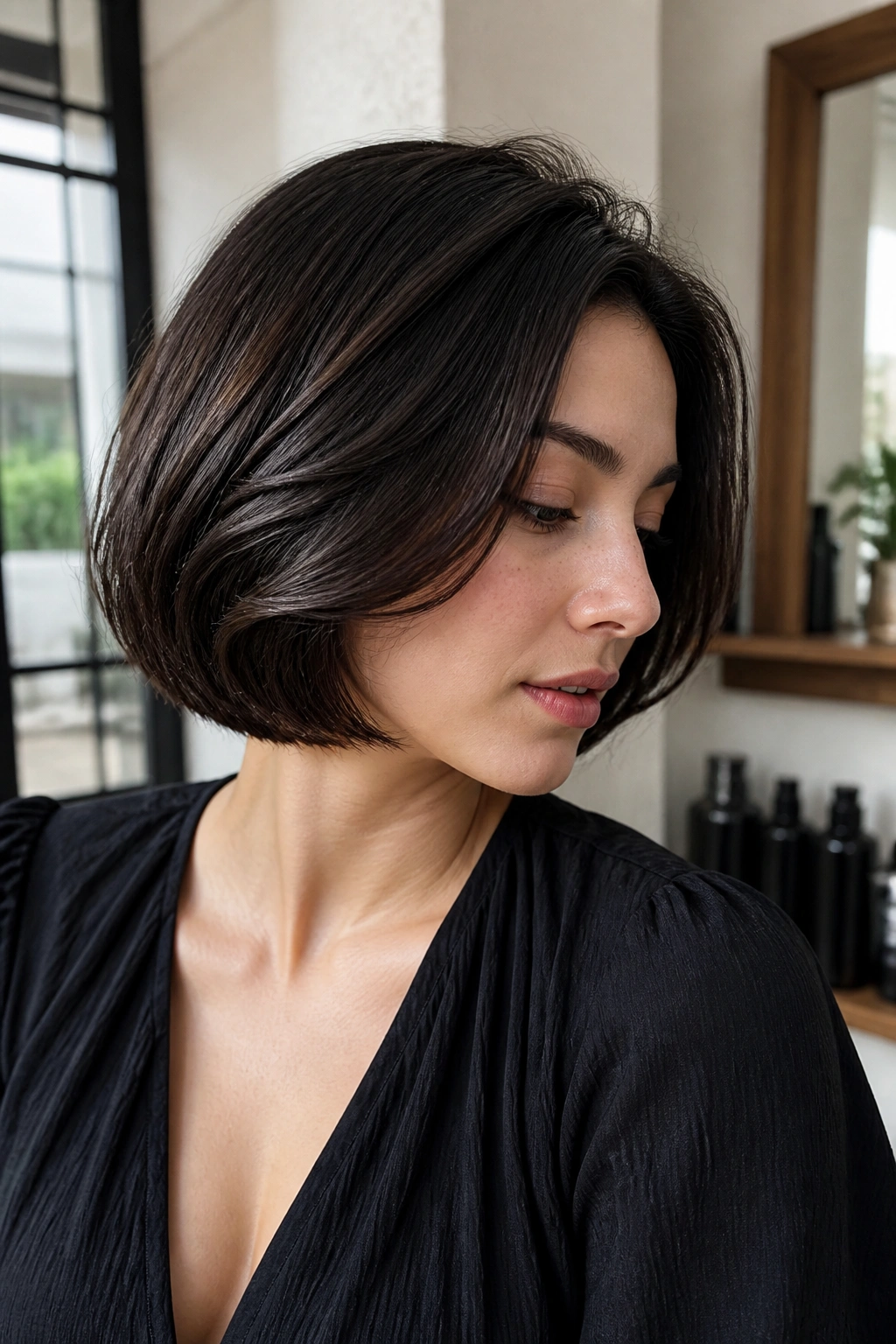
A client with heavy hair and a clean-bob photo usually ends up here. The micro-layered French bob keeps the outer line blunt, but it sneaks tiny layers inside the shape so the bulk does not balloon out. The outside still looks neat. The inside behaves better.
That hidden structure is the part most people never see, but they feel it every time they style the hair. A bob that looks thick at the ends can suddenly sit closer to the head, swing better, and dry faster. You still get the solid outline. You just lose the helmet effect.
What the Tiny Layers Do
- Remove weight without breaking the edge
- Let thick hair bend under more easily
- Keep the crown from puffing up too much
- Make the nape feel lighter and cooler
The trick is restraint. Too many layers and the bob starts to fray at the outline, which is the opposite of a clean look. Too few and the haircut may sit too wide. The sweet spot is usually invisible in the chair and obvious the first time you dry it.
This is one of those cuts that looks simple from the outside and slightly clever underneath.
10. Curly French Bob Without Bangs

Curly hair can look fantastic in a French bob without bangs, but only if the shape is cut for the curl pattern instead of around it. The forehead stays open, which means the bob has to carry the style from the cheeks down. That is where the balance lives.
A dry cut often makes sense here, because curls bounce up more than straight hair and shrink differently from section to section. If the stylist cuts it wet and guesses wrong, the bob can land too short or tilt funny at the sides. That is not a curl problem. It is a cutting problem.
The cleanest curly French bob usually sits around the chin or a touch below it, with the edges rounded enough to let the curls stack without going wide. A tighter curl may need more length than you think. Loose waves can take less. Either way, the shape should look deliberate even when the curls are doing their own thing.
Shape first, polish second. That is the rule.
You do not want a curly bob that looks like it was forced into a straight-haired idea of neatness. You want a line that lets the curls spring, then settles back into a tidy outline when they dry. That is a much better haircut. Also, a lot less annoying.
11. Fine-Hair French Bob With a Blunt Line

Fine hair needs a blunt line more than it needs a lot of layers. That is the honest answer. Layers can make fine strands look wispy fast, and once the ends go see-through, the whole French bob loses its clean edge.
A blunt perimeter gives the illusion of density because the eye reads one strong shape instead of a soft, broken one. If you want movement, keep it small and controlled — a little bevel at the ends, maybe a soft side part, but not so much slicing that the haircut starts to look thin at the bottom.
This version is especially good if your hair goes flat at the crown and you want a bob that still looks full by noon. A light root-lift mousse, applied at the scalp and blow-dried in with a round brush, can help. So can moving the part a half-inch off center. Small things, but they matter with fine hair.
The mistake I see most often is over-texturizing. It seems like a smart fix in theory. In practice, it just steals the very thickness you were trying to keep.
12. Thick-Hair French Bob With Internal Weight Removal

Thick hair and a French bob can be a gorgeous match, but the cut has to be handled with care. Unlike the fine-hair version, this one needs weight removed from the inside, not hacked away from the outside. If the outline gets too shredded, the bob puffs. Fast.
A good thick-hair French bob keeps a crisp perimeter while clearing out the bulk underneath. That way the shape hugs the head better and the ends can bend instead of jutting out. The result feels cleaner, cooler, and easier to manage, especially if your hair has a lot of natural body.
What to Ask the Stylist
- Keep the outline blunt at the bottom
- Remove bulk from the interior, not the edge
- Leave enough weight at the sides so the bob does not flare
- Avoid over-thinning near the crown, which can make the top collapse
If your hair is dense, this is the version that prevents the “triangle” effect. You know the one. Short at the top, wide at the bottom, and mysteriously larger than it should be. A proper thick-hair French bob should sit close, move cleanly, and still feel full. That balance takes a hand that understands where to cut and, more important, where to stop.
13. Off-Center Part French Bob

Why does a slightly off-center part feel friendlier than a strict middle part? Because it softens the symmetry without losing the clean line. The haircut still looks orderly, but the face gets a little more movement and less of that hard split-down-the-middle feeling.
This is a smart choice if your hairline has a stubborn bend or if one side of your face naturally looks stronger. Most people do not have a perfectly even hairline, and trying to force one is often what makes a bob feel awkward. A part that shifts half an inch or an inch off center can fix that in a hurry.
The off-center version is also quietly good for growing out a French bob. The part gives the cut some slack, so as the ends soften, the haircut still has shape. I like that. A lot. It feels more lived-in without turning lazy.
No bangs needed here. The part carries the face-framing work, and the ends do the rest.
14. Wavy French Bob With S-Bends
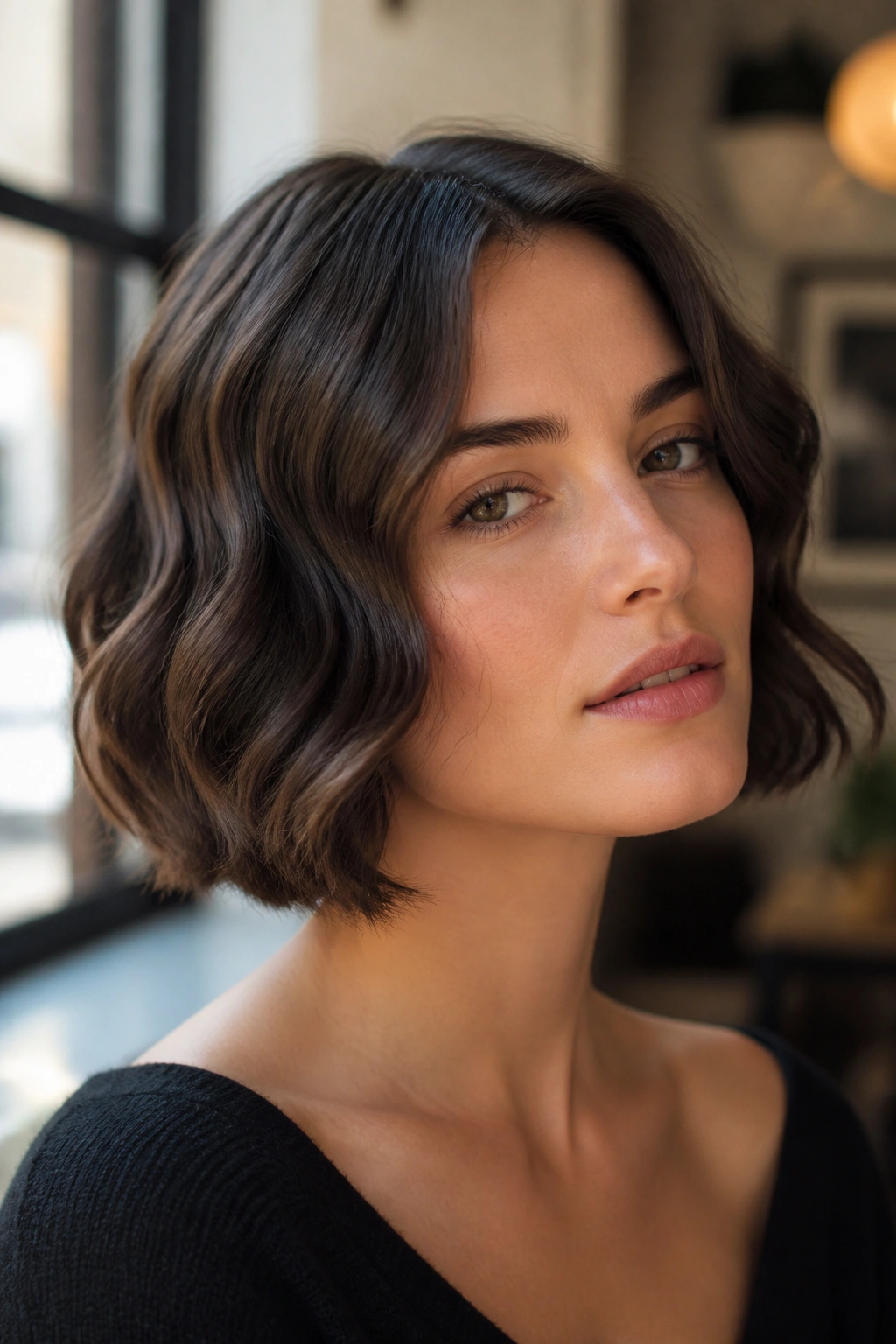
A soft wave can make a French bob look relaxed without losing its shape. The key is an S-bend, not a full curl. That means the hair moves in gentle shifts instead of spirals, which keeps the outline readable and the finish clean.
A one-inch flat iron or a small curling iron can both do the job. Bend the hair in alternate directions, then brush it out lightly once it cools. You want enough motion to keep the cut from sitting flat, but not so much that the bob starts looking like it forgot its own plan.
This version works especially well when your hair already has a little body. The wave hides tiny uneven pieces and makes the cut look expensive in a practical way — like it has been styled, but not fussed over. That balance is hard to fake. It is one of the reasons this shape keeps showing up on people who want a clean look without a strict finish.
- Use heat protectant before any iron
- Keep the bends loose at the front
- Leave the ends straighter than the mid-lengths
- Finish with a light mist, then stop
The best S-bend French bob still looks touchable.
15. Grown-Out Collarbone French Bob

The grown-out collarbone version is for anyone who likes the French bob idea but hates frequent trims. It keeps the clean line, but it gives you more room at the neck and shoulders. That extra length makes the style easier to live with, especially if you tie your hair back sometimes or don’t want a trim every few weeks.
What keeps this one feeling like a French bob is the shape, not the exact length. The ends still need a blunt edge or a softly beveled finish, and the part should stay simple. If the hair gets too layered, the style starts to drift away from the bob family and into something looser. Fine if that is what you want. Not fine if you want that crisp, tidy outline.
This is also the version I’d point to for someone nervous about going short. It gives you the clean look without the sharp jump. The collarbone length feels easier with coats, scarves, and high necklines, and it usually grows out in a way that does not demand constant correction.
If you want one French bob without bangs that can survive a busy week and still look deliberate, this is the one I would pick first. The line stays readable. The maintenance stays sane. And the whole cut keeps its shape long enough to stop feeling precious, which is exactly the point.
