



Easy maintenance haircuts for busy women are not about giving up style. They’re about buying back time on weekday mornings without ending up with hair that looks accidental.
The best cuts do a sneaky thing: they look finished even when you barely touch them. A good perimeter, the right amount of movement, and a shape that matches your texture can save you from the whole round-brush drama. That matters when your day starts with coffee in one hand and a half-packed bag in the other.
Short hair isn’t automatically easy. Long hair isn’t automatically hard. I’ve seen waist-length cuts that practically style themselves and chin-length bobs that demand a blowout every time they meet humidity. The real difference is structure.
What follows is a mix of cuts that grow out well, dry faster, and forgive a rushed morning. Some are sharp and polished. Some are softer and a little messy on purpose. All of them are the sort of haircut that keeps working after the salon chair is long behind you.
1. Easy Maintenance Haircuts for Busy Women: The Collarbone Lob

A collarbone lob earns its keep because it sits in that sweet spot between short and long. It’s long enough to tuck behind the ears, clip up for errands, or toss into a low ponytail, but short enough to dry faster than longer hair. That alone makes it one of the easiest easy maintenance haircuts for busy women to live with.
The cut works best when the line lands right at the collarbone or just below it. That length gives hair a little swing, but not so much that the ends drag and look tired by the end of the day. If your hair is thick, ask for a tiny bit of internal removal near the bottom. If it’s fine, keep the perimeter blunt so it looks fuller.
What to ask for
- A clean line that hits at the collarbone
- Soft face-framing pieces that start around the chin
- Minimal layering unless your hair is heavy
- A center part if you want a more modern feel, or a side part if you need volume at the front
The grow-out is the real gift here. A lob can go 8 to 10 weeks before it starts looking shaggy, which is far kinder than a cut that loses its shape after three weeks. A quick bend with a flat iron or a rough dry with a round brush is usually enough.
2. The Blunt Bob That Always Looks Intentional
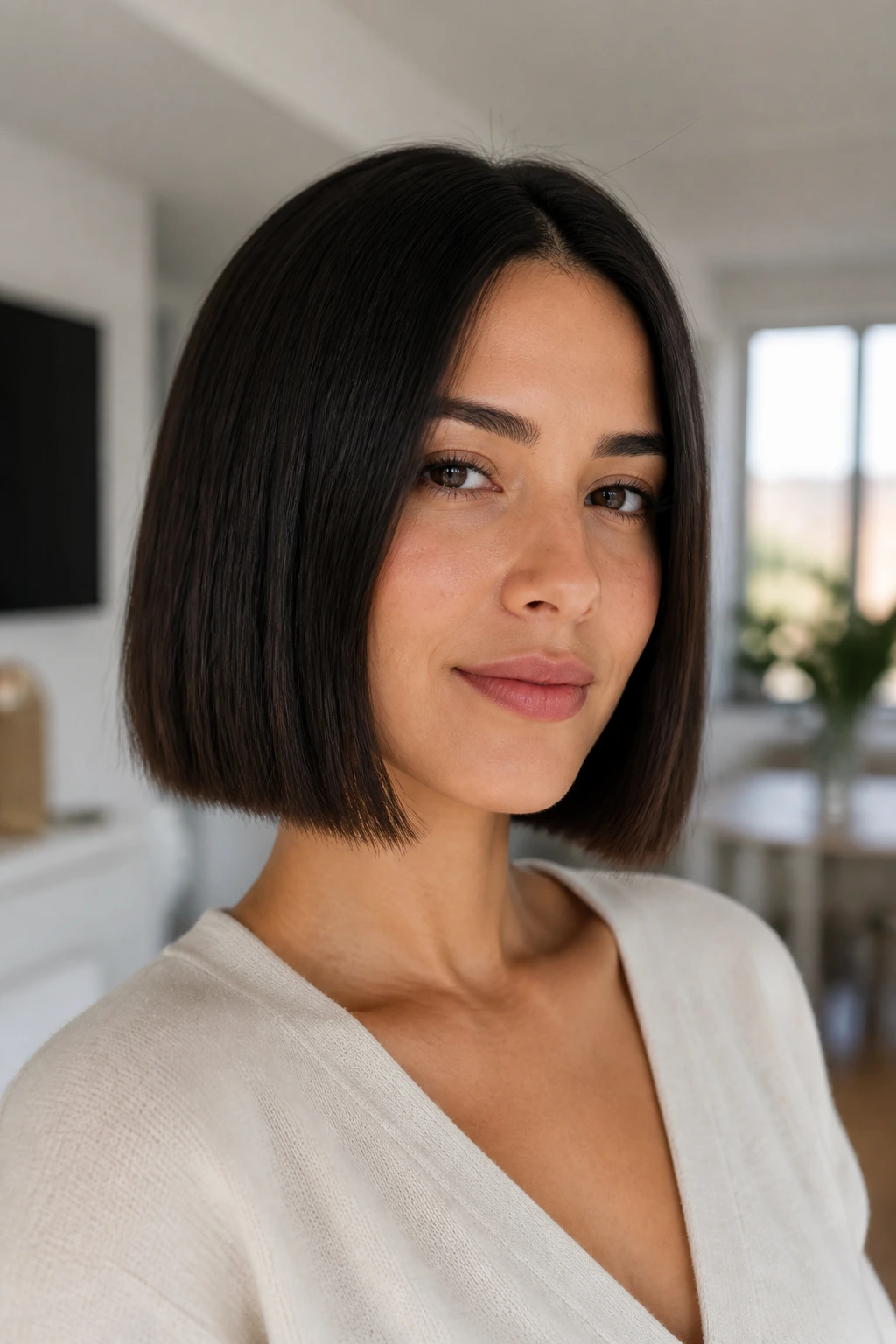
Why does a blunt bob keep showing up in salons? Because the cut does half the styling for you. The straight edge makes the hair look denser, neater, and more deliberate, even on days when you do almost nothing to it.
This is the bob I recommend to women who want hair that doesn’t turn into a project. It sits somewhere between the jaw and the top of the shoulders, depending on how much length you want to keep. The trick is the line: crisp enough to look fresh, soft enough at the ends that it doesn’t feel severe.
A blunt bob is especially good if your hair tends to frizz at the edges or lose shape fast. A little serum through the ends and a quick blow-dry with a paddle brush is often enough. No one needs to stand in front of a mirror with a hot tool for 25 minutes every morning.
The catch? You do need trims. Every 6 to 8 weeks keeps the line sharp. Let it grow too long and the whole point fades. Still, if you like a haircut that looks expensive without asking much of you, this one has real staying power.
3. Long Layers With Face-Framing Pieces
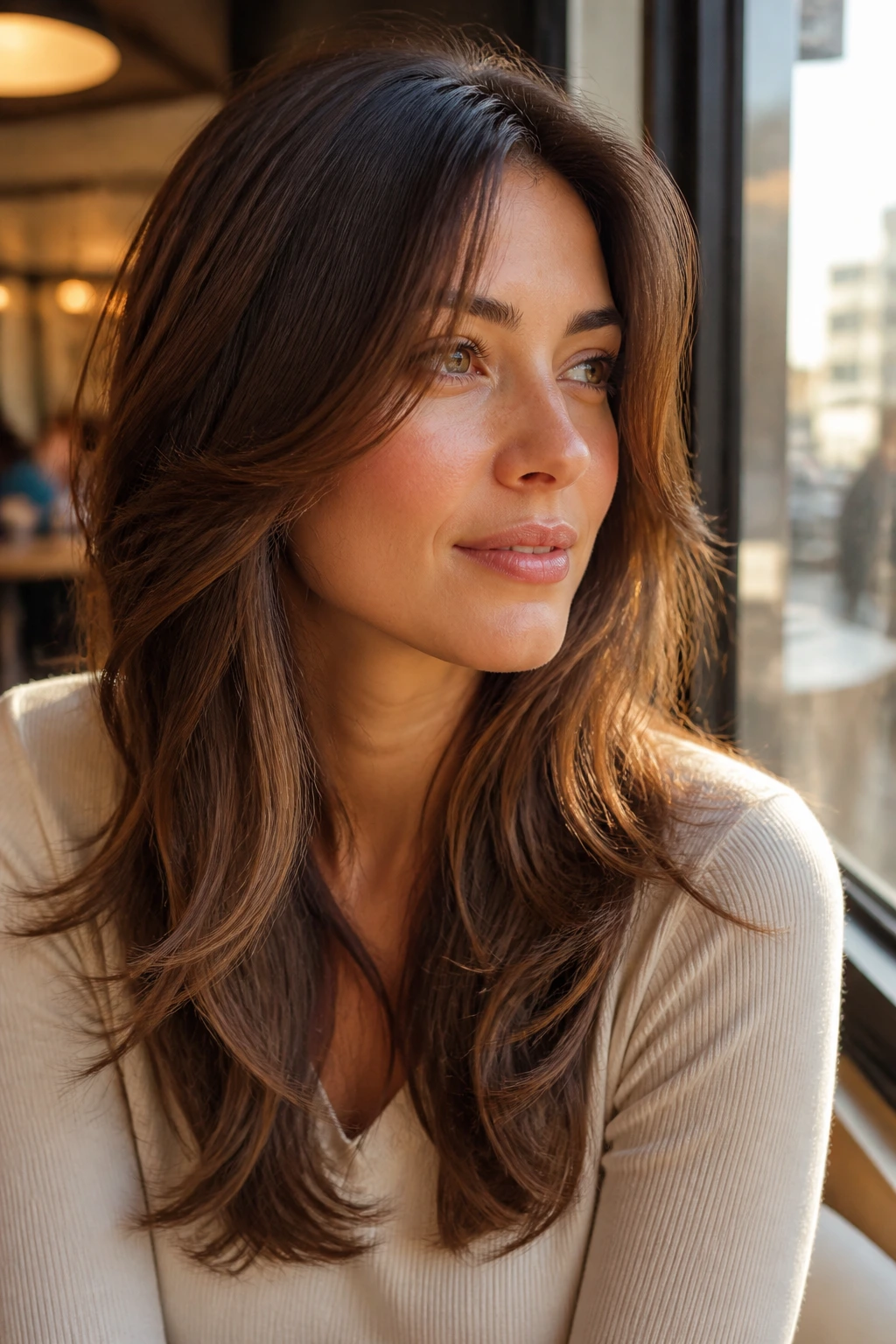
If your mornings are a blur of coffee, keys, and a bag that still needs packing, long layers make sense. They give movement without asking you to restyle your whole head, which is exactly why they belong on any real list of easy maintenance haircuts for busy women.
The best version is not over-layered. That’s where people go wrong. Too many short pieces near the crown can create frizz, especially on thick or wavy hair, and then you’re back to fighting the shape every day. Better to keep the longest layer strong and add just enough face-framing around the front to soften the line.
Why it works
The front pieces can be curled in 30 seconds, tucked behind the ears, or left alone and still look intentional. The rest of the hair can air-dry with a little cream or blow-dry with a large brush if you have 10 minutes to spare.
What to ask for
- Long layers that begin near the collarbone or chest, not up by the cheekbones
- Face framing that opens around the chin
- A soft U-shape or gentle curve in the back
- No heavy layering at the top unless your hair is thick and bulky
A cut like this grows out with grace. That matters. When you miss a trim by a few weeks, you do not suddenly look like you lost control of your life.
4. The French Bob That Works With Air-Drying

A French bob is not the fussy, high-drama haircut people make it out to be. In the right hands, it’s one of the smartest short cuts for women who want style without a long styling session.
The length usually sits at or just above the chin, which means the hair still moves but doesn’t get stuck in that awkward shoulder-flip zone. That little detail matters more than people think. Hair that grazes the shoulders can kick outward or curl under in weird ways. A French bob skips that problem.
This cut looks especially good with a soft bend, not a stiff curl. A bit of mousse at the roots, a quick blow-dry with your fingers, and maybe a touch of cream on the ends can be enough. If your hair is naturally straight, a slight inward tuck at the bottom keeps it from looking boxy. If it’s wavy, the shape gets even better as it dries.
The one thing I would not do is pile on too much fringe. A full blunt bang can turn the whole haircut into a commitment. A light brow-grazing piece, or no fringe at all, keeps the cut easier to manage.
5. A Soft Shag With Enough Movement

A good shag should look like it has already lived a little. That’s the charm. It’s relaxed, a touch messy, and far less precious than a polished one-length cut that needs perfect behavior every day.
This version works best when the layers are soft and the perimeter still holds a shape. You do not want a hacked-up look. You want movement around the face, some texture through the mids, and ends that land cleanly enough to tie back if needed. The whole haircut should feel airy, not choppy for the sake of it.
Why it saves time
A shag is one of those cuts that tends to look better after a little sleep, a little humidity, and a little product. That is not a flaw. It’s the point. A dab of wave cream or a small spray of salt mist can bring it back to life without heat.
How to wear it
- Scrunch it and let it dry if your hair waves on its own
- Rough-dry the roots if you need lift
- Use a diffuser on low heat if your curls need help
- Keep trims around 8 to 10 weeks so the layers don’t turn fluffy
It’s best on women who don’t want sleek perfection every morning. If you like a bit of edge and don’t mind hair that looks better with texture than with ironing, this one is hard to beat.
6. The Bixie for Days When You Want Less Hair to Deal With

Half pixie, half bob. That is the whole appeal.
The bixie sits between a short bob and a grown-out pixie, which makes it a clever choice if you want more freedom than a bob but not the full commitment of a super-short cut. It also grows out more gracefully than many short styles, which is a relief when you cannot make it back to the salon the second the nape starts puffing up.
The best bixies keep the top a little longer so you can sweep it to one side or tousle it with your fingers. The sides and back stay shorter, but not shaved. That keeps the cut soft and easy to live with, not overly sharp.
Best for
- Fine hair that needs a fuller shape
- Wavy hair that falls into place with a little cream
- Women who want short hair without a severe look
- Anyone who wants a 5-minute styling routine
A bixie needs regular trims, usually every 5 to 7 weeks, but daily styling is light. A pea-sized amount of mousse or styling paste is usually enough. Too much product weighs it down fast, and then the whole thing looks greasy instead of chic.
7. Easy Maintenance Haircuts for Busy Women: The Curtain-Bang Lob

Two face-framing pieces can do more than a full fringe if you do not want to wrestle with bangs every morning. That’s why the curtain-bang lob has become such a useful option for women who want softness without a lot of upkeep.
The lob gives you length and flexibility. The curtain bangs add shape around the face without boxing you into a high-maintenance fringe schedule. Keep the bangs long enough to split naturally at the center and they’re far easier to handle than a blunt bang that needs daily brushing.
How to keep the bangs from becoming a chore
- Ask for the shortest point to hit around the cheekbone
- Let the outer edges blend into the rest of the cut
- Blow-dry only the front pieces if you have time
- Use a small round brush or a velcro roller for 2 to 3 minutes
That tiny bit of styling goes a long way. You don’t need a full blowout. Just a bend at the front so the pieces sweep away from the eyes instead of clinging to the forehead.
The downside is honest and simple: bangs need trims. If you hate salon appointments, keep the curtain pieces a little longer so they still tuck back on lazy days. That small adjustment makes the whole cut easier to wear.
8. The One-Length Midlength Cut

I trust a one-length midlength cut the way I trust a white button-down shirt. It’s tidy, it works with almost anything, and it never acts like it needs a whole production around it.
This is the cut for women who want to tie their hair back, wear it straight, or let it air-dry without a lot of shape fuss. The line usually falls between the shoulders and the upper chest. No layers means fewer odd flip-outs at the ends and less chance of the shape breaking apart as it grows.
A blunt one-length cut is especially helpful for fine hair. It makes the ends look fuller and gives the whole head a denser look. On thicker hair, it can feel heavy unless the stylist removes a little weight underneath. That is a small adjustment, but it changes everything.
If you want hair that can go from loose to clipped up to braided without losing its shape, this cut is a quiet workhorse. It does not beg for attention. It just behaves.
9. The Pixie With a Longer Top
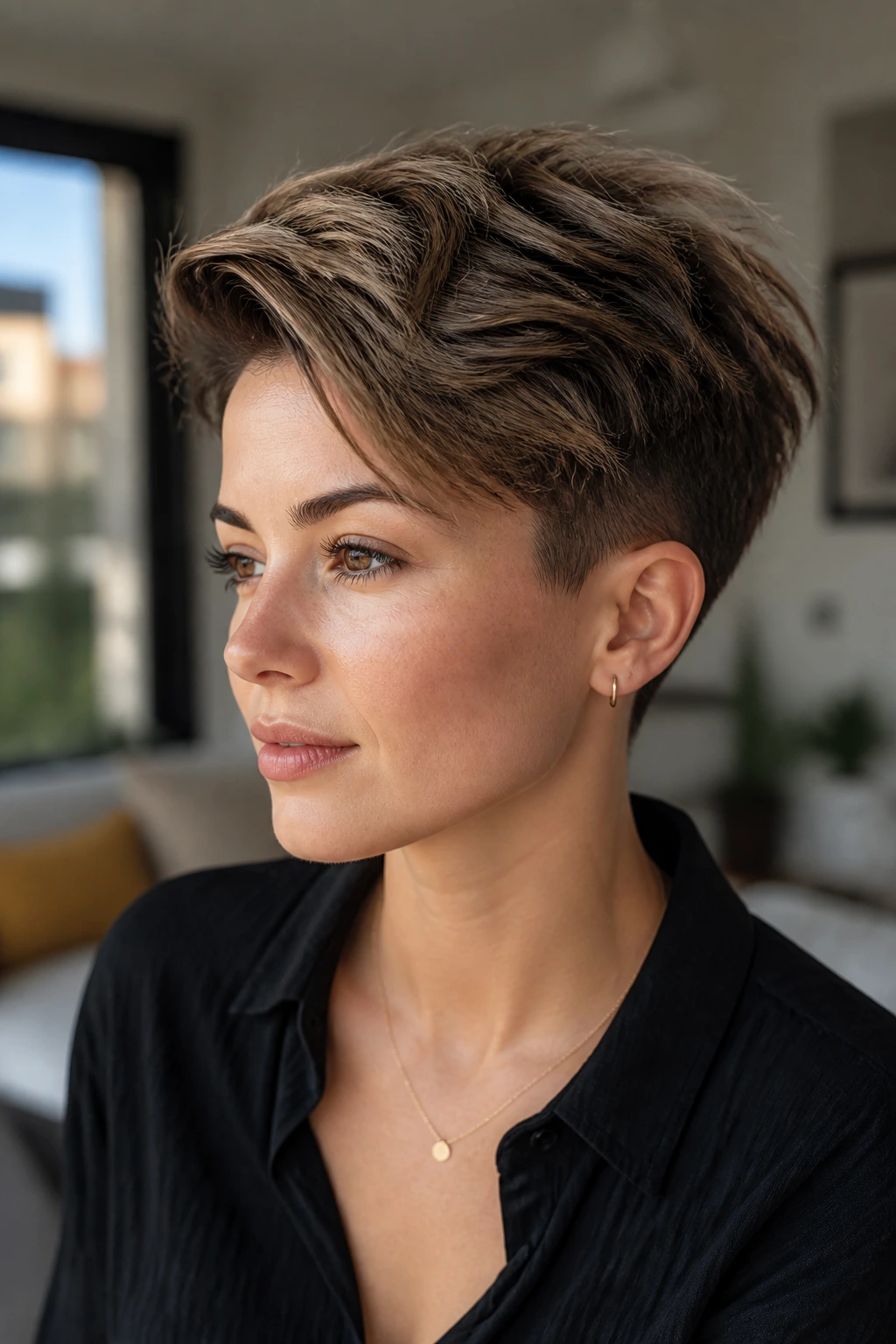
A pixie is the most freeing haircut on this list, but only if the top has enough length to move. A super-short crop can be sharp and beautiful, sure, but it also demands more frequent trim appointments and a bit more precision in the morning.
The version I like best keeps the sides and back close while leaving the top around 2 to 4 inches long. That little extra length lets you sweep, spike, or finger-comb the front without making it look stiff. It also grows out better than a too-tight crop.
What to know before you go short
- Shorter sides need maintenance every 4 to 6 weeks
- The top should have enough length to lift or lay flat
- A tiny amount of styling paste is usually enough
- Dry shampoo helps on day two, but don’t drown the roots in it
A pixie is not for everyone. If you love pulling your hair into a bun, you may miss the flexibility. But if you want to wash, rough-dry, and leave the house in under 10 minutes, this cut is one of the fastest fixes you can choose.
One more thing: the neckline matters. A clean nape line keeps the whole cut looking fresh. Let that area grow too long and the style stops looking intentional.
10. The U-Shaped Long Cut
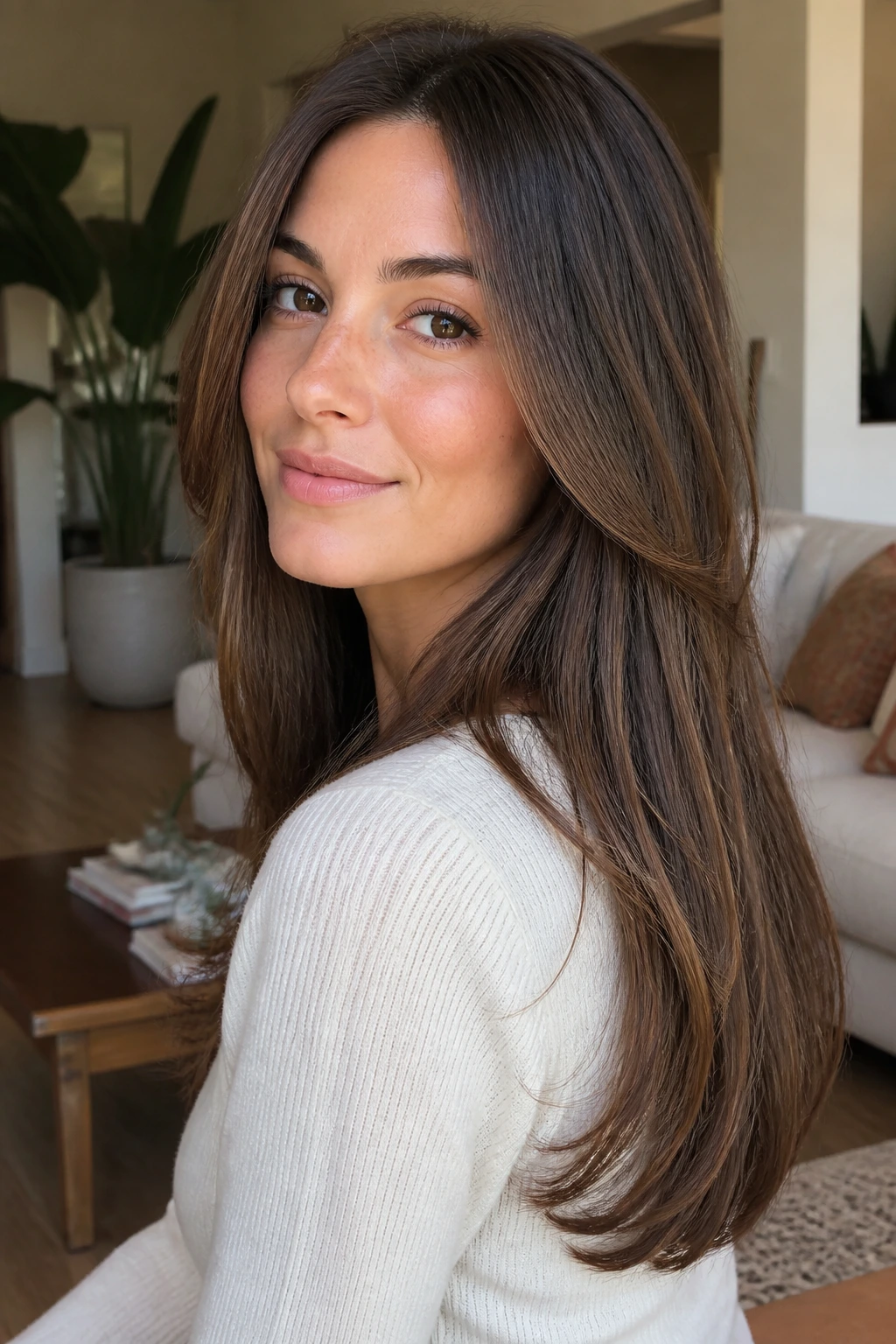
Do you want to keep your length but lose the heaviness that makes long hair feel like a blanket? The U-shaped cut is a good answer.
Instead of cutting the hair straight across the back, the stylist leaves the center slightly longer and angles the sides up a little. That creates a soft curve and keeps the ends from looking blocky. On thick hair, it removes enough weight to help the hair move. On fine hair, it keeps the length from looking too sparse at the ends.
This is not a haircut that begs for daily heat styling. A little leave-in conditioner, a wide-tooth comb, and maybe a quick bend through the front sections can be enough. It’s also one of the easiest long cuts to braid, clip, or twist back when your day gets busy.
The shape tends to grow out nicely, too. That matters if you are trying to stretch the time between appointments. A U-shape can usually go 10 to 12 weeks before it starts losing its clean outline.
11. Invisible Layers for Straight Hair

A straight-haired head can go flat fast, and invisible layers fix that without looking chopped up. That’s the magic here. You get movement, but the outer line still looks smooth and clean.
The layers are cut inside the hair, so they help remove bulk or create lift without making the ends look thin. If your hair falls heavy at the bottom, this is a better move than obvious layers that show every step. The haircut still reads as polished when it air-dries, which is exactly what makes it useful.
What to ask for
- Internal layers only, not short pieces all over the surface
- A blunt outer edge
- Weight removal focused through the mids and lower back
- A finish that still allows a ponytail or clip
This cut is quietly good on women who wear their hair down 70 percent of the time and tie it back the rest of the week. It doesn’t punish you for skipping a blowout. A quick pass with a paddle brush or a smooth air-dry is enough for most days.
The big mistake is asking for too much texturizing. That can make straight hair look wispy and weird at the ends. Less is more here, and I mean that in the most practical sense.
12. The Shoulder-Skimming Wolf Cut

The wolf cut gets blamed for being too much, and that criticism is fair when the layers are too high and too broken up. A softer shoulder-skimming version is a different animal.
This cut keeps the general shag-wolf feel — texture, lift, a little edge — but lets the length stay useful. The layers are concentrated enough to lighten thick hair and help waves move, yet the perimeter still lands at the shoulders so the haircut doesn’t collapse into fluff. If you’ve got hair that gets heavy by lunchtime, that balance can matter a lot.
What to avoid
- Layers that start too high on the head
- Too much razor cutting if your hair frizzes easily
- A top section that’s so short it won’t tuck back
- Over-styling that fights the lived-in shape
The best version is air-dry friendly. A little mousse at the roots, a bit of cream on the ends, and a quick scrunch is often enough. If you want sleek hair every day, this is not your haircut. If you like texture and can live with a little softness around the edges, it’s a good fit.
It’s especially forgiving on wavy hair that hates being forced into a polished blowout. The cut lets the wave pattern do what it wants, which is usually the easiest route.
13. The Rounded Curly Cut
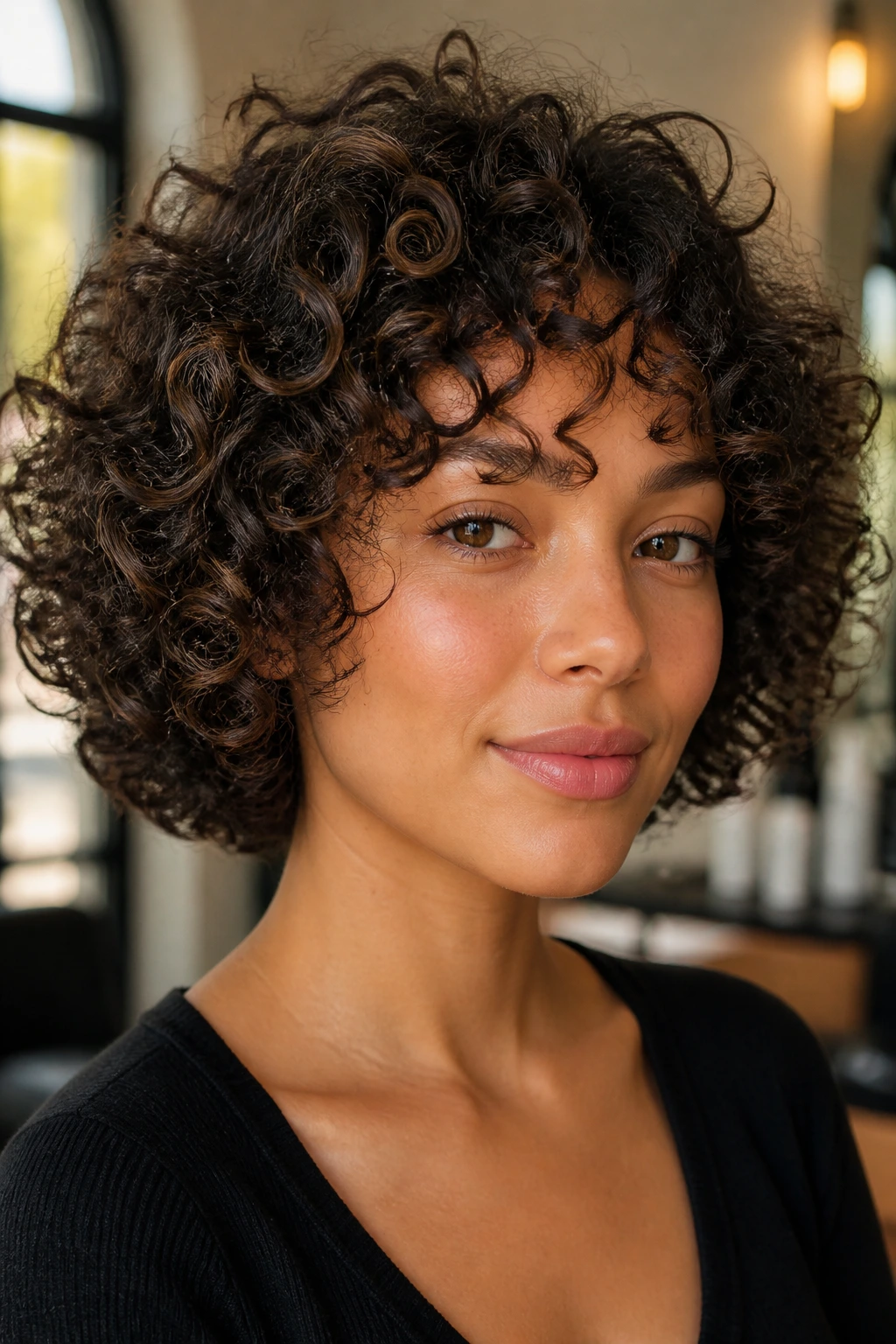
Curly hair should spring, not hang. A rounded curly cut gets that right by shaping the hair to follow its own curl pattern instead of treating it like straight hair with ambition.
The silhouette is what makes it easy. Longer curls sit where they should, shorter curls lift the crown, and the whole shape stays balanced as it dries. A dry cut or curl-by-curl shaping can make a huge difference because the stylist sees the real length and volume, not the stretched-out version that exists when hair is wet.
The styling part that actually helps
- Use a leave-in on soaking-wet hair
- Follow with a gel or curl cream, depending on how much hold you need
- Scrunch with a microfiber towel or T-shirt
- Refresh the next day with water and a small dab of product
That routine sounds detailed, but it’s quick once it becomes habit. Most of the work happens in the cut. A good rounded shape means you spend less time pinning down odd corners or trying to fake volume where there isn’t any.
This is a smart option if your curls shrink a lot. A haircut that respects shrinkage saves a surprising amount of frustration. No one wants to get home from the salon and realize the shape only looked right when it was wet.
14. The Tapered Cut for Coily Hair
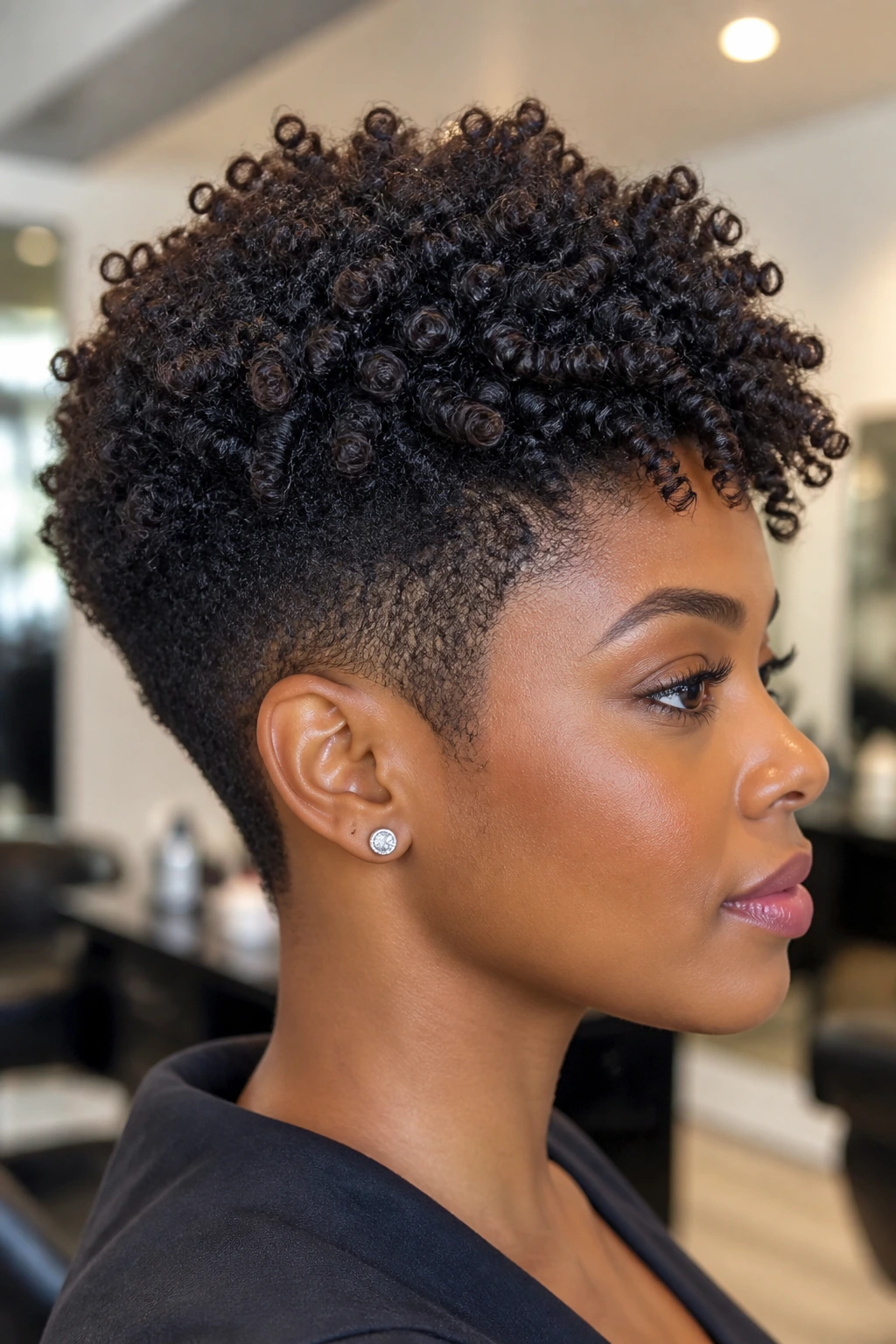
Shape matters here. A lot.
A tapered cut gives coily hair a clean outline at the nape and sides while leaving length and fullness where it’s wanted on top. That keeps the head shape balanced and makes the style easier to wear every day. It also cuts down on bulk where it tends to puff out first, which means less wrestling with the mirror in the morning.
This style can be short and sharp or a little softer and rounded. The key is that the haircut respects the natural shrinkage and doesn’t rely on heat to make it look finished. When the coils are cut well, they stack in a way that looks intentional from every angle.
A few things that help
- Ask for the cut to follow the natural curl pattern
- Keep the neckline clean so the outline stays neat
- Use a cream or butter that gives hold without crust
- Recut the shape every 6 to 8 weeks if you want it crisp
A tapered cut works especially well for women who want to protect their hair and spend less time styling it. If your current routine involves a lot of stretching, twisting, or heat, this can be a relief. The cut itself does some of the visual work.
And that is the whole point. Less fuss. Better shape.
15. Easy Maintenance Haircuts for Busy Women: The Air-Dry Bob for Wavy Hair

Can a bob really be low-effort if your hair is wavy? Yes, if the shape is cut to meet the wave where it lives instead of where a photo says it should be.
An air-dry bob usually sits somewhere between the chin and the shoulders, with enough room for the wave to bend naturally. Too short and it can puff. Too long and it starts to drag. The middle ground is where the sweet spot sits. A tiny bit of texture through the ends, not too much, keeps it from looking helmet-like.
This cut shines when you want a routine that takes minutes, not half your morning. Leave-in conditioner, a small amount of mousse, scrunch, and go. If one side dries flat, a quick mist of water can wake it back up. A diffuser helps on days when you want a little extra lift, but you do not need to use heat every time.
The best low-upkeep haircuts are the ones that match your texture instead of fighting it. That is the quiet lesson running through all 15 of these styles. Pick the shape that behaves when life gets busy, and the haircut starts paying rent.
