



Long hair can look polished in a second and heavy in a blink. The best Asian hairstyles for women with long hair usually solve that problem by moving the weight to the right place — a tucked side here, a face-framing layer there, a braid that keeps the ends from swallowing the whole look.
Flat roots are not a flaw.
Heavy length needs shape.
That shape can be clean and sleek, soft and romantic, or practical enough to survive a long commute and still look decent when you get to dinner. The trick is picking styles that work with your texture instead of fighting it. Some of these look best on pin-straight hair. Some come alive when the hair has a little wave or grip. A few need a good claw clip and about five minutes, which is my favorite kind of beauty math.
1. Sleek Middle Part and Glass-Length Straight Hair
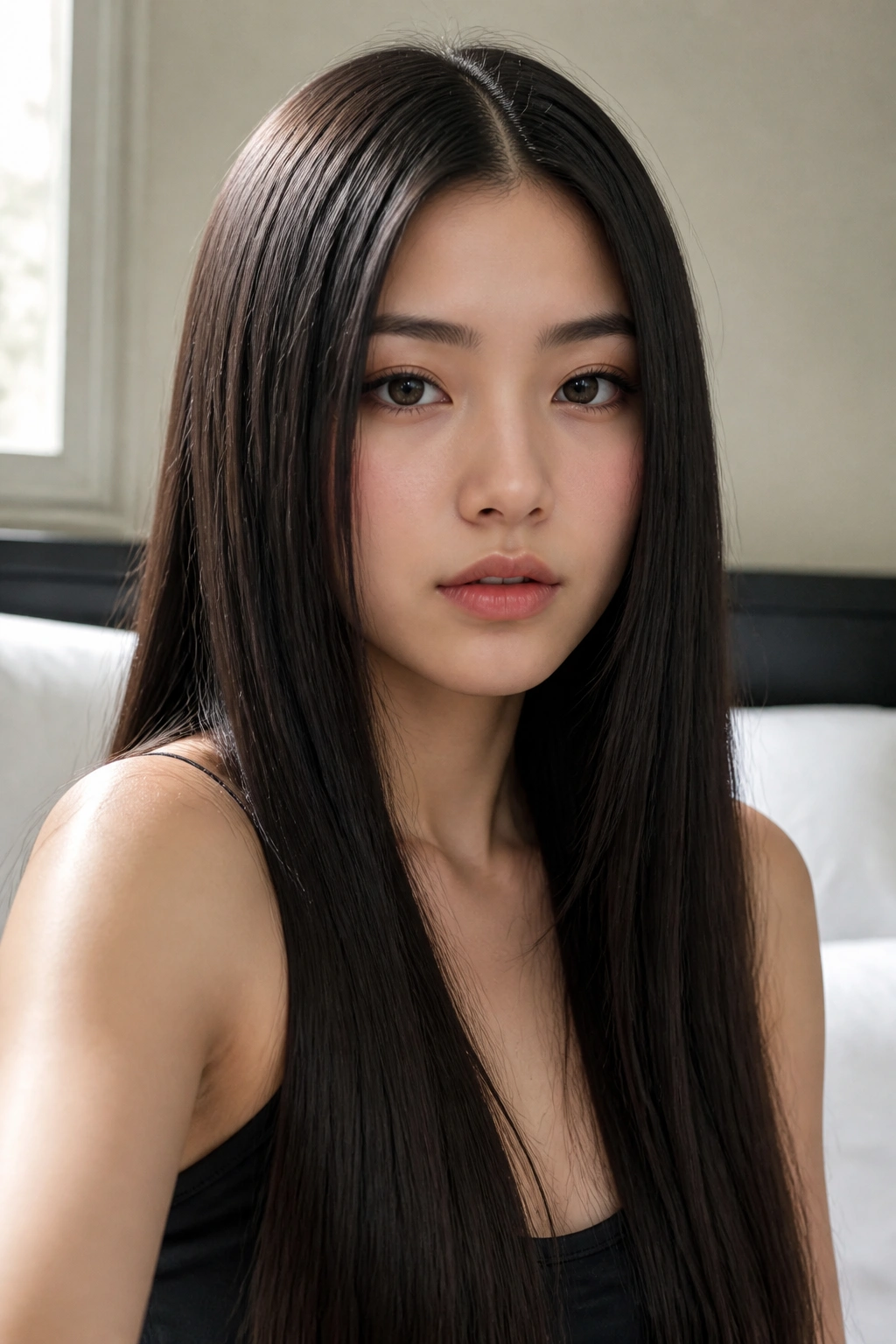
Sleek hair gets written off as “simple” way too fast. On long hair, a precise middle part and a smooth finish can look sharper than any elaborate braid, especially when the length is healthy and the ends are trimmed blunt.
Why It Flatters Long Hair
The clean center line gives the eye somewhere to land, which keeps very long hair from reading as one huge sheet. That matters with naturally straight or slightly wavy Asian hair, because the texture often falls neatly anyway; you are working with that instead of forcing volume where it does not belong.
A little shine serum goes a long way here. Use it only from the middle of the hair down, and keep the crown light so the part stays crisp rather than greasy. If your ends flip out, bend them under with a flat iron instead of chasing bone-straight perfection. That tiny curve looks softer in real life.
- Best for straight, smooth, or medium-density hair
- Use a heat protectant and a flat iron set around 300°F to 375°F, depending on your texture
- Keep the part exact with a tail comb
- Finish with a drop or two of serum on the last 2 inches
Tiny tip: tuck one side behind the ear. It breaks up the length and shows off your cheekbone without trying too hard.
2. Soft Curtain Bangs and Long Face-Framing Layers

These layers are the quickest fix for hair that feels too heavy at the sides. Curtain bangs open the face, while the longer pieces around the cheekbones keep the cut from turning choppy or dated.
A good version of this style starts lower than people expect. The shortest bits should hit somewhere between the cheekbone and jawline, not hover high on the forehead like a blunt fringe. That gives the style room to grow out cleanly, which is why it stays flattering for so long between trims.
Blow-dry the bangs away from the face with a round brush, then switch directions for the final few seconds so they fall in a soft bend. If your hair is thick, keep the layers long and gradual. If it is fine, ask for less weight removal so the ends do not look wispy and thin.
This one works because it changes the silhouette, not the length. You still get the drama of long hair, but the front has a little breathing room.
3. Half-Up Knot with Loose Length
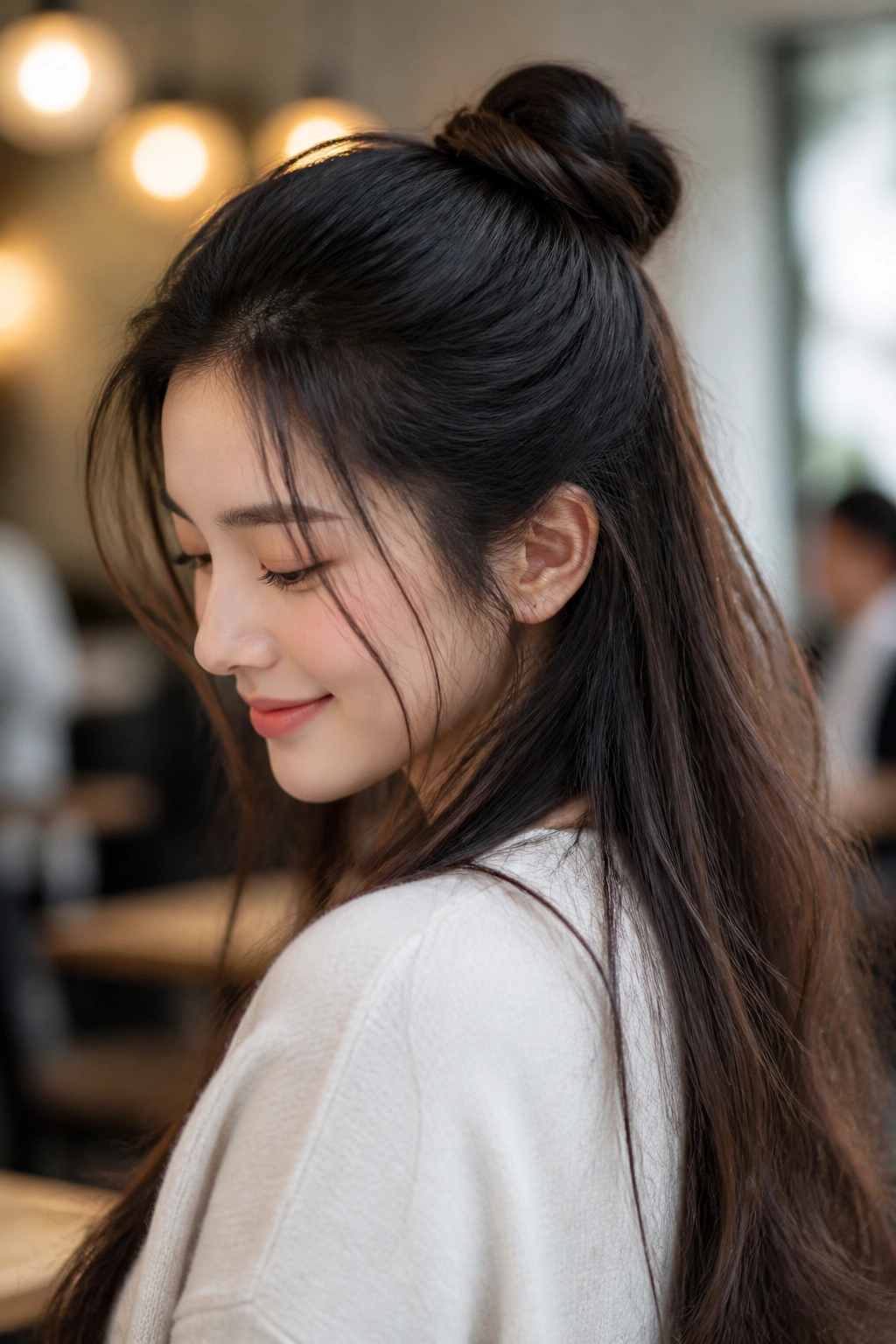
Why does this style keep showing up in real life? Because it solves the annoying part of long hair without taking away the good part. You get the lift at the crown, the hair off your face, and the swishy length still down your back.
How to Wear It
Pull the top section from the temples back to the crown, twist it into a small knot, and secure it with a slim elastic or a tiny claw clip. Keep the knot compact. If it spreads too wide, the whole thing starts looking sloppy instead of effortless.
- Leave the lower length straight for a clean look
- Add loose waves if you want the knot to feel softer
- Pinch a few strands loose around the temples if your face needs a little framing
- Use a matte clip if your hair is slippery; glossy clips slide
This style is especially good on day-two hair, because the knot hides a little root flatness and a little bend in the ends. It also works when you want something casual but not boring. That’s the sweet spot.
4. Low Chignon with a Center Part

Picture this: a clean center part, hair brushed smooth behind the ears, and a low bun sitting right at the nape. It is the sort of style that looks calm before anyone even says a word.
The center part gives the chignon its structure. Without it, the bun can feel a little too loose or bridal, which is not always the look you want. With it, the whole style reads a bit more modern and a lot more deliberate.
The Details That Matter
- Keep the bun low and flat, not rounded high on the head
- Twist the length before wrapping so the bun holds its shape
- Secure with bobby pins in an X pattern
- Mist the surface with flexible hold spray, not a stiff shell
If you have thick hair, do not try to cram every strand into a tiny knot. Make the bun a little wider and flatter. That feels more balanced and keeps the style from pulling at your scalp by the end of the night.
5. Loose Romantic Waves with Long Layers

Loose waves are what long hair does when it wants to look softer without losing its shape. They are also one of the easiest styles to wear with Asian hair that tends to fall straight, because the wave adds bend where the eye needs it most — around the shoulders and collarbone.
A 1.25-inch curling iron is a good starting point for this. Wrap sections away from the face, leave the last inch or so out, and alternate directions through the back so the waves do not clump into one obvious curl pattern. Then let the hair cool before you brush it out. That cooling step matters more than people think.
I like this style best when the waves are loose enough to move. Not pageant curls. Not tight spirals. Just enough bend that the hair catches light and falls in a soft line when you turn your head.
A little texture spray at the mid-lengths helps, especially on fine hair. If your hair is thick, work in smaller sections so the wave holds instead of collapsing after an hour. It’s a simple style, but not a lazy one.
6. Bubble Braid with Ribbon or Scrunchie Accent
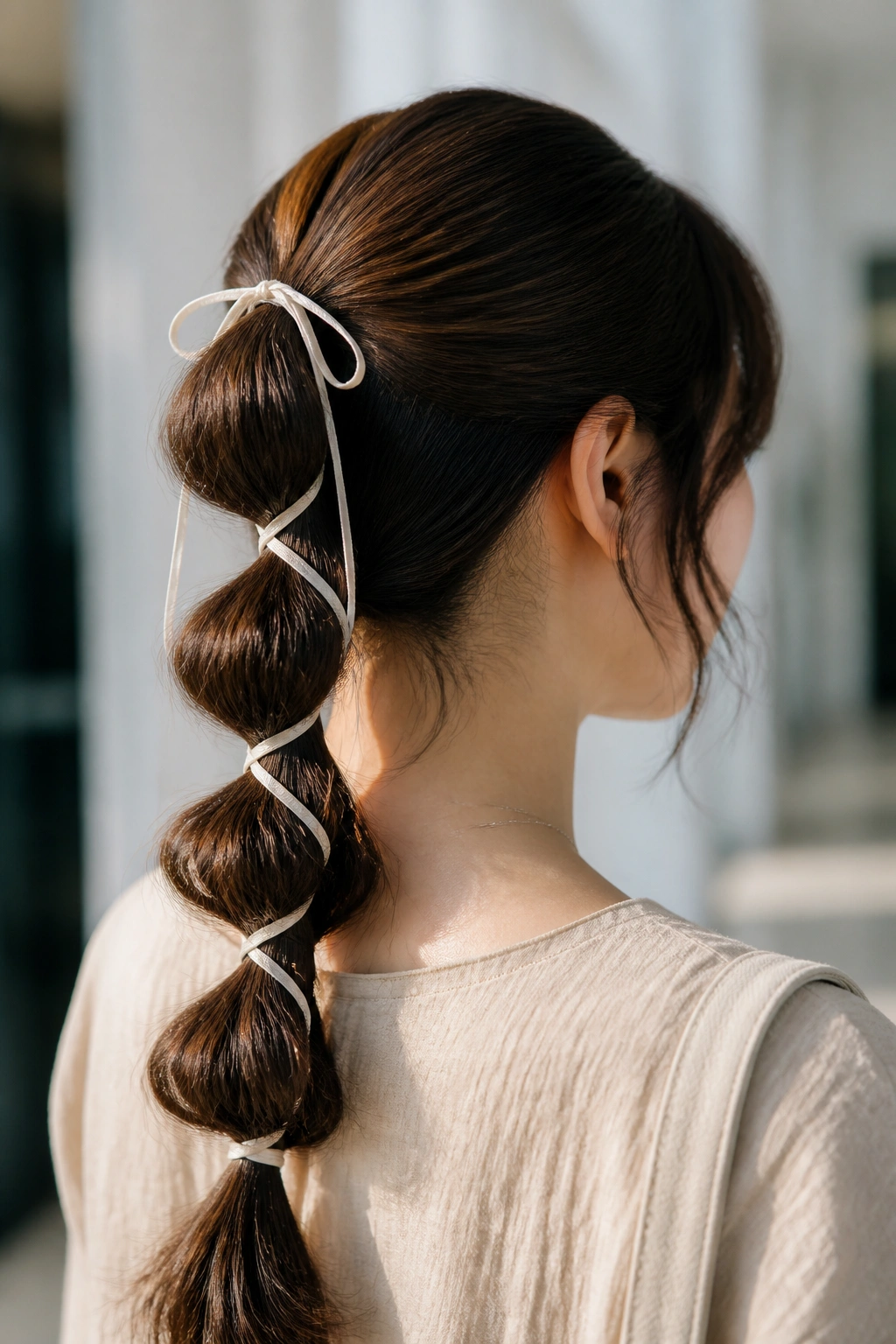
Unlike one long braid, a bubble braid keeps thick hair from collapsing into a heavy rope. That is why it looks so good on very long hair: the shape stays readable, even when the hair itself is dense and smooth.
The trick is spacing. Tie the ponytail every 2 to 3 inches, then gently tug each section outward so it looks round instead of flat. If you skip that part, it just turns into a series of awkward lumps. The pulled-out sections are the whole point.
A ribbon or silk scrunchie can make the style feel softer, but it does not need extra decoration to work. On dark hair, a narrow ribbon gives the braid a clearer outline. On highlighted hair, the bubbles already show off the color shifts on their own.
This is a smart pick for humid days, travel, or anything that involves being outside for hours. It keeps the length under control without pretending your hair is shorter than it is.
7. Claw-Clip French Twist for Long Hair

A good claw-clip twist beats a fussy updo when you need your hair off your neck fast. Long hair gives you enough length to twist cleanly, and the clip holds the whole shape with almost no effort if you place it well.
Start by gathering the hair at the nape, twist upward, and fold the length back toward the crown. Then clip across the twist, not just over the top of it. That crosswise grip is what keeps the style from sliding out halfway through the day.
What Makes It Hold Better
- Use a medium-to-large claw clip, around 4 to 5 inches for very long hair
- A matte clip grips better than a slick plastic one
- Leave the ends tucked for a neat finish, or let them spill slightly for a softer look
- Add a little styling cream before twisting if your hair is too silky
This style is one of those quiet winners. It looks polished enough for a blazer, but you can also throw it on with a T-shirt and still look put together.
8. Side-Swept Hollywood Waves

Why do side-swept waves still work on long hair? Because they make the hair look intentional in a way that straight length sometimes does not. One deep side part and a strong wave pattern can change the whole mood of the face.
Use a larger barrel iron, usually around 1.5 inches, and set the curl direction so the front pieces fall away from the face. After curling, pin the waves while they cool. That keeps the shape soft instead of stretched out by gravity before it has time to set.
Then brush the hair into one smooth wave line and sweep the heavier side over one shoulder. The style is dramatic, yes, but not stiff. It has movement, which matters. Without movement, long hair can start looking like a curtain with good intentions.
This is the one I’d pick for formal dinners, but it is also good for plain black outfits, off-shoulder tops, or any time you want your hair to do the talking for once.
9. High Ponytail with Wrapped Base
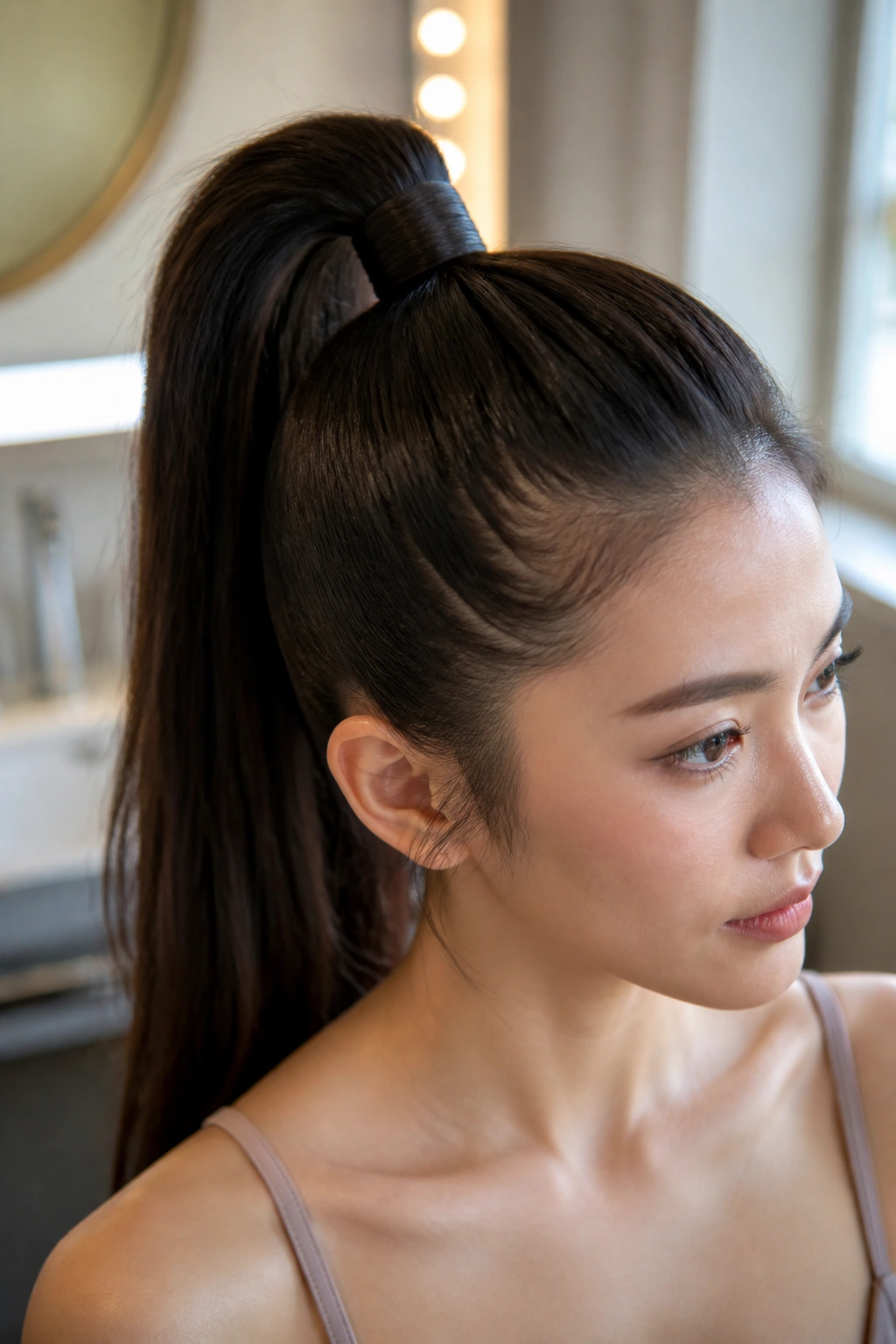
A high ponytail can look sporty, sharp, or dressed up, depending on where you place it and how smooth the top is. On long hair, the height matters. Too low and the length just drags; too high and it starts to look cartoonish. The sweet spot sits just above the crown.
Small Details That Change the Whole Look
- Brush the top section back with a fine-tooth comb for a clean surface
- Secure with two elastics if your hair is heavy
- Wrap a small strand around the base to hide the tie
- Use a little root powder if the crown tends to fall flat
If your hair is very thick, keep the ponytail sleek at the scalp and let the tail stay full. That contrast looks better than trying to flatten all of it. For fine hair, tease the underside at the crown for a bit of lift before tying.
The wrapped base is worth the extra ten seconds. It turns a regular ponytail into something that feels finished. Small move. Big difference.
10. Braided Crown with Loose Back Length
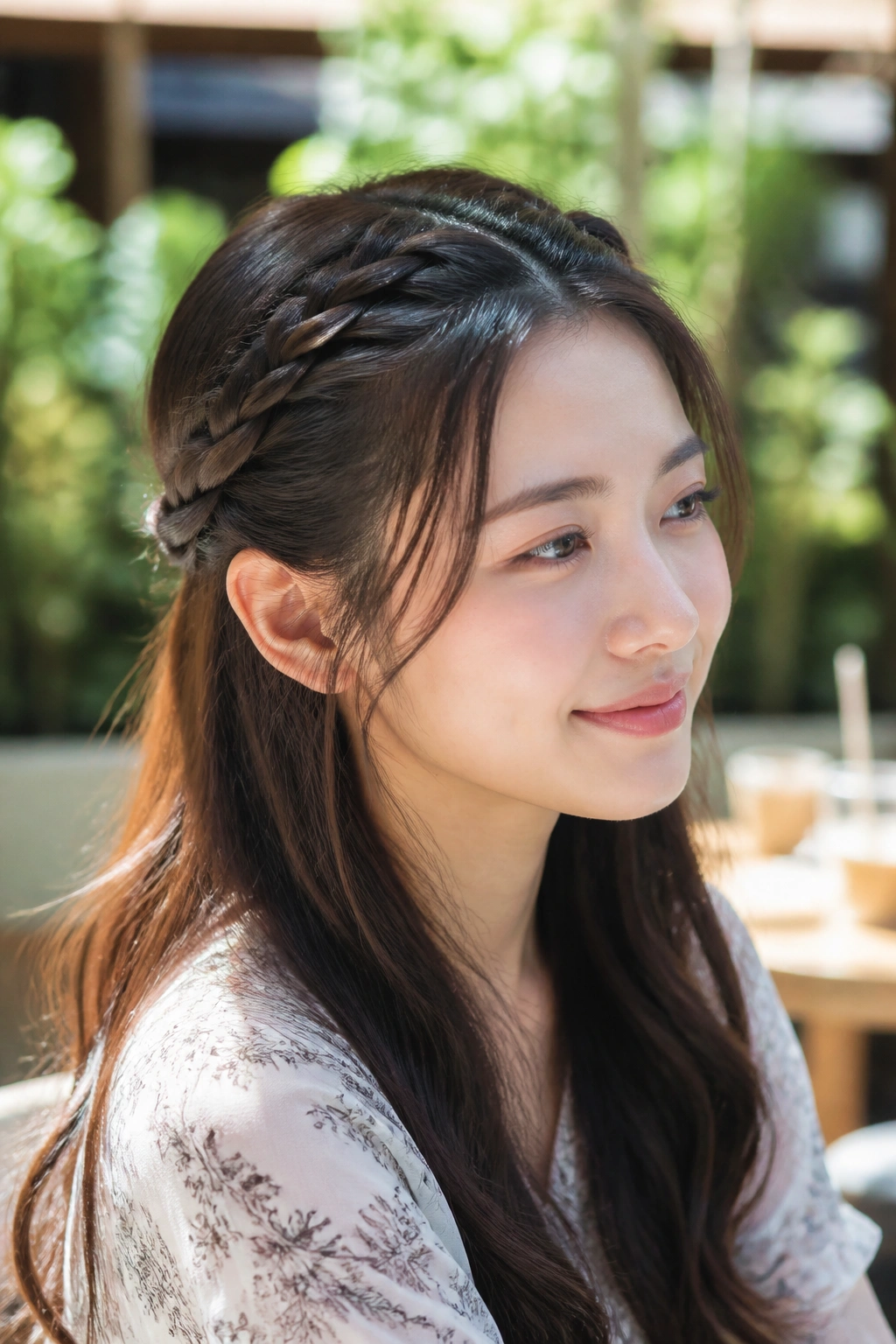
A crown braid does not have to look formal or bridal. When it is done with slimmer braids and paired with loose length in back, it feels softer and a lot more wearable for everyday long hair.
The easiest version starts with two small braids near the temples. Bring them back, pin them across the crown, and let the rest of the hair fall loose underneath. That keeps the shape light instead of bulky. With thick hair, this matters a lot, because an oversized crown can start to feel heavy fast.
Best Ways to Keep It Clean
- Braid only the top layer if your hair is dense
- Hide the pins under the crossing point
- Curl the loose back section lightly for extra texture
- Use clear elastics at the braid ends if you want the finish to disappear
This style is nice when you want your hair partly up but not pinned completely away. It also frames the face gently, which is useful if you want a romantic look without turning the whole thing into a formal updo.
11. Hime Cut with Long Straight Ends
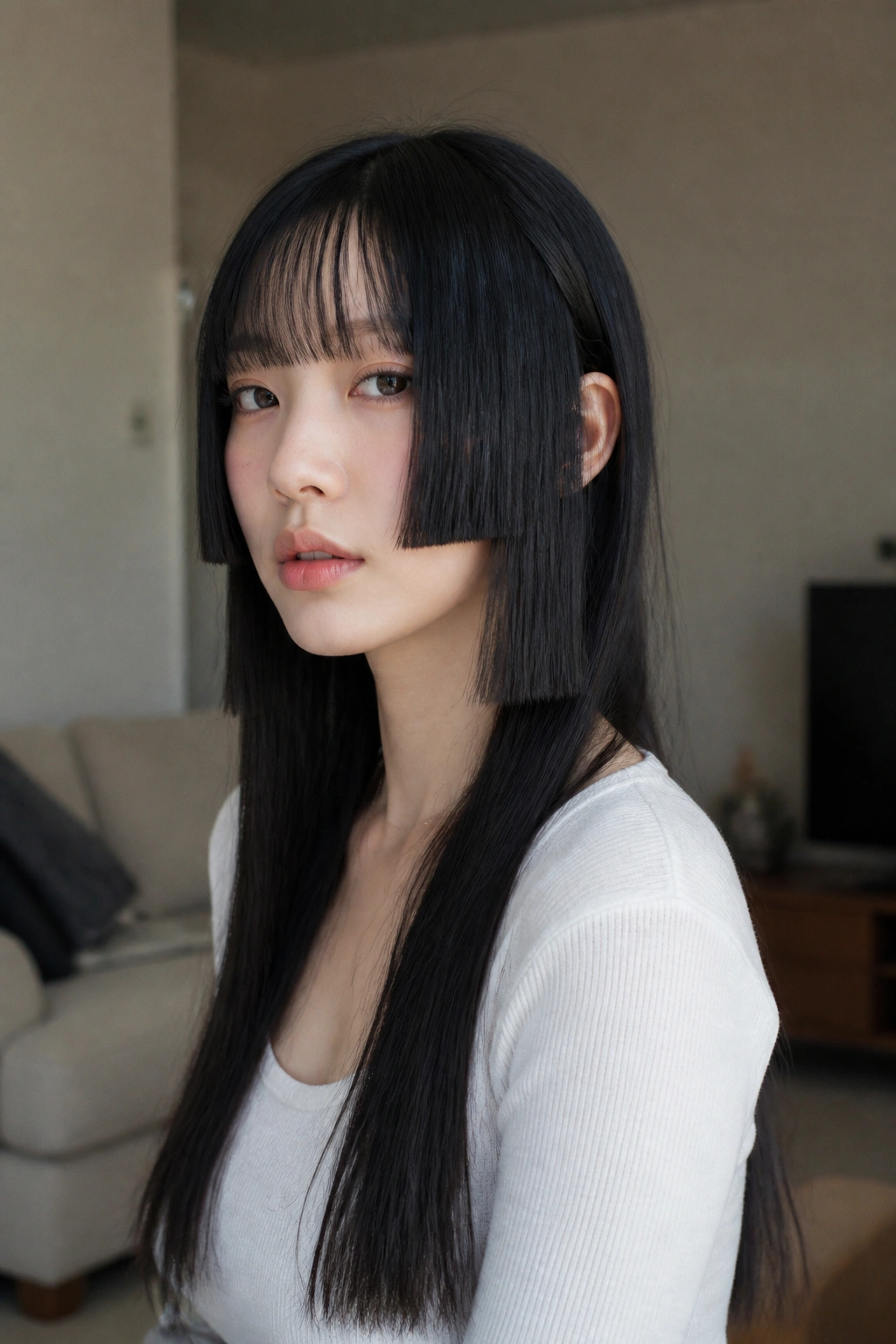
Sharp lines, clean edges, and that very specific frame around the face. The hime cut is not subtle, and that is exactly why it works so well on long, straight hair.
The look usually has shorter side pieces cut around the cheekbone or jaw, with the rest of the hair left long and even. That contrast is the whole point. Without the clear difference in length, it turns into ordinary layers and loses its edge. With it, the style feels graphic and precise.
It is a good choice if you like hair that looks deliberate even when you have not styled much else. A flat iron and a good trim are usually enough. The side pieces need upkeep, though. If they grow out too far, the shape gets muddy fast.
This is not the easiest style for every face or every texture, and that’s fine. It works best on people who like a strong outline and are willing to keep the cut clean.
12. Soft Wolf Cut with Long Layers

If your long hair goes flat by noon, the wolf cut gives it a backbone. The layers sit shorter through the crown and longer around the perimeter, so the shape keeps some lift even when the hair itself is heavy.
It is often confused with a shag, but the wolf cut is rougher and a touch more untamed. The crown has more height, the ends feel feathered, and the whole thing likes texture products more than polished blowouts. That makes it a strong fit for wavy or thick hair that wants movement without looking too styled.
Straight hair can wear it too. It just needs a little help — a round brush at the roots, a soft bend at the ends, maybe a bit of mousse before air-drying. If the layers are cut too short, though, the style can turn fluffy in a bad way. Ask for softness, not choppiness.
This cut is for the woman who wants her long hair to move when she walks. That’s the short version.
13. Double Braids into a Single Plait

Why stop at one braid when long hair can handle more structure? Two braids feeding into one single plait at the back keeps the length under control and looks more interesting than a standard three-strand braid.
Start with two braids from the front or upper sides, then join them at the nape and continue down as one. The join is where this style earns its keep. It keeps the front neat while letting the back stay long and tidy. For very long hair, that matters because the braid can get heavy fast.
How to Wear It Well
- Keep the two front braids close to the head so they do not puff out
- Secure the join with a strong elastic before finishing the tail
- Tug the braid edges slightly if you want a fuller shape
- Use texturizing spray on slippery hair before you braid
This is a good gym style, travel style, or weekend style when you want your hair off your neck but still want something prettier than a basic ponytail. It also wears well under a hat, which is a small thing until you need it.
14. Sleek Low Bun with Hair Stick
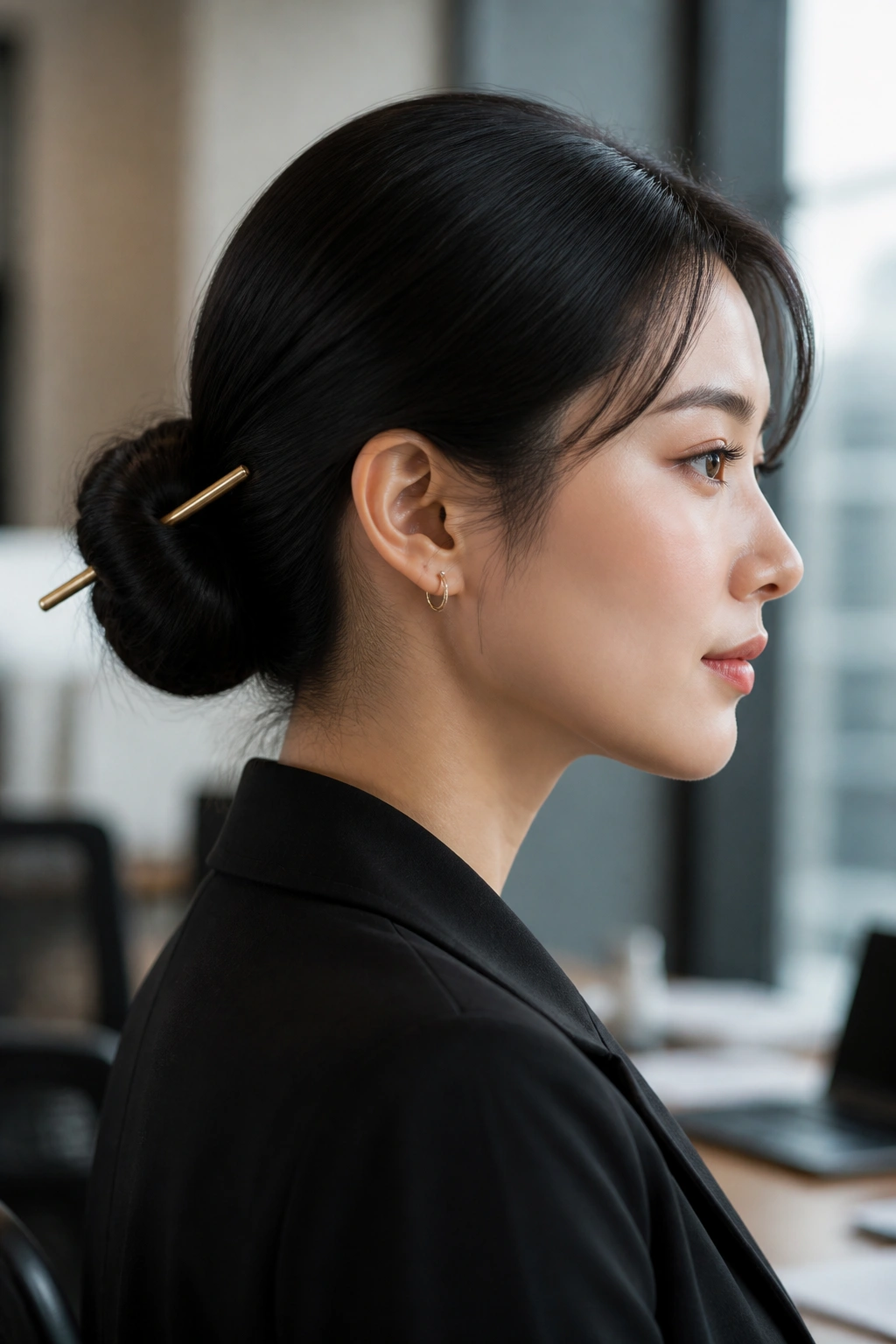
Office at 9, dinner at 7, and no time to redo your hair. A sleek low bun with a hair stick solves that problem without looking rushed.
The style starts with a smooth nape ponytail or a loose twist, then the length gets coiled into a bun and secured with one stick pushed through the center. The stick does two jobs at once: it holds the shape and gives the bun a cleaner line than a bunch of bobby pins would.
A little styling cream helps here, especially if your hair frizzes around the hairline. Keep the surface neat, but do not overdo the product or the bun can look wet in a way that feels accidental. A soft sheen is enough.
This is one of those styles that looks more difficult than it is. That’s part of the appeal. The shape is calm, the neck stays cool, and the whole thing works with earrings, high collars, and any outfit that needs a steady frame.
15. Waterfall Braid Over Waves
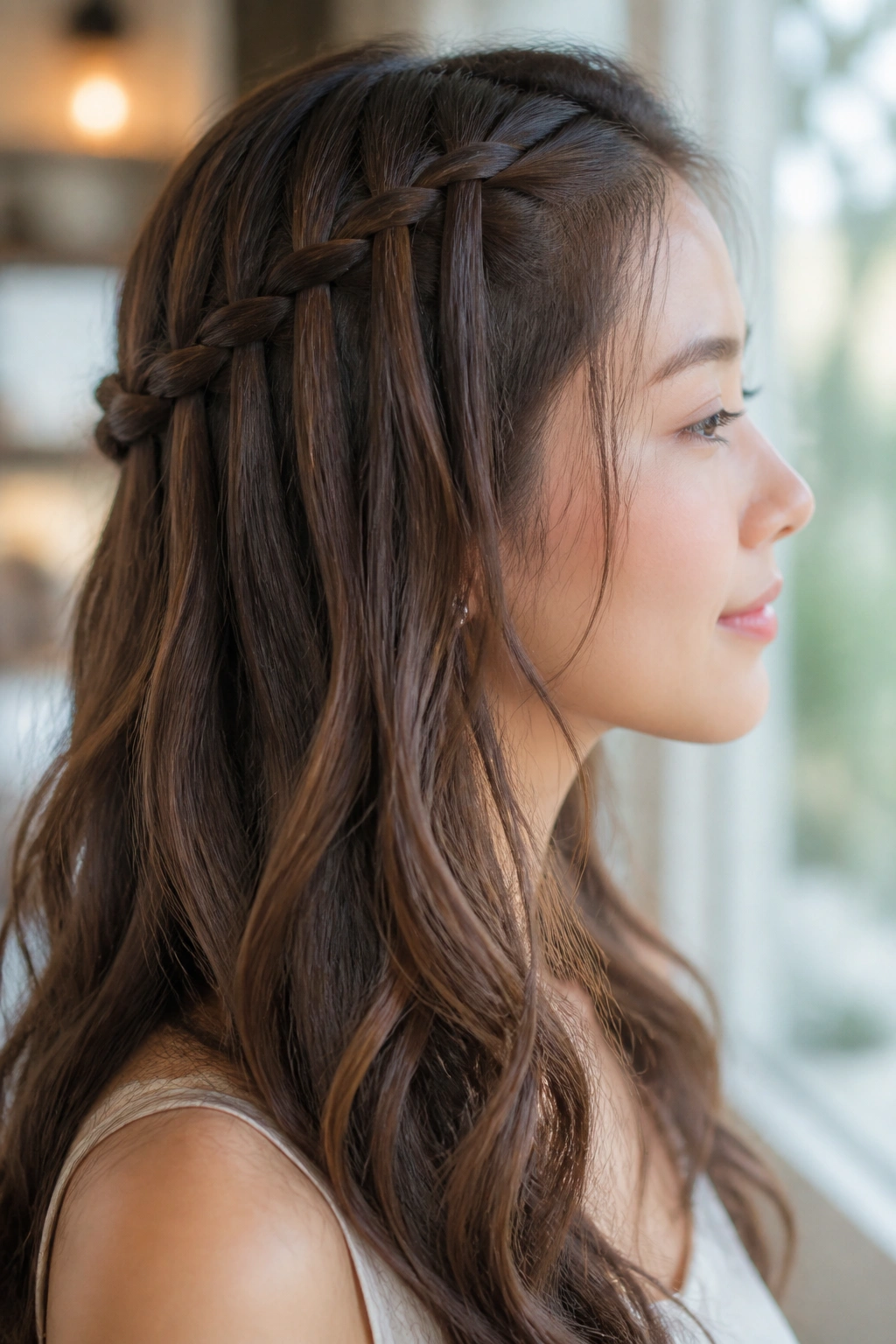
A waterfall braid looks intricate, but the braid itself is forgiving. That is the part people miss. You only need a clean section across the top and a few drops that fall through while the rest of the length stays loose.
The braid works best over soft waves, because the open sections blend into the texture instead of standing out too sharply. On ultra-sleek hair, it can look a bit graphic, which is fine if that is what you want. On looser hair, it feels softer and more romantic.
Where It Shines
- Wear it on one side only for an asymmetrical look
- Start above the temple and angle the braid slightly back
- Keep the dropped strands the same size so the pattern stays even
- Use day-old hair if your hair slips too much when freshly washed
I like this style for long events, because it stays pretty in photos without being frozen in place. That is a nice balance. Hair should still look like hair, not a helmet.
16. Long Shag with Airy Bangs

If you want your hair to move instead of hanging in one sheet, the long shag is the answer. It keeps the length, but the layers are cut to remove bulk and make the ends swing a little when you walk.
Airy bangs change the whole feel. They sit lighter than a blunt fringe and soften the front without covering too much of the face. On long hair, that matters because heavy bangs can fight the rest of the cut. These do not. They sit there quietly and make the style feel alive.
The cut suits thick hair especially well. Thick strands get shape without looking stuffed into one block, and natural wave gets room to show itself. Fine hair can wear it too, but the layers should stay longer so the ends do not thin out too much.
This is one of the few styles on this list that gets better when it is slightly undone. A neat shag looks fine. A little mess in the layers looks better.
17. Twisted Half-Up with Pearl Pins
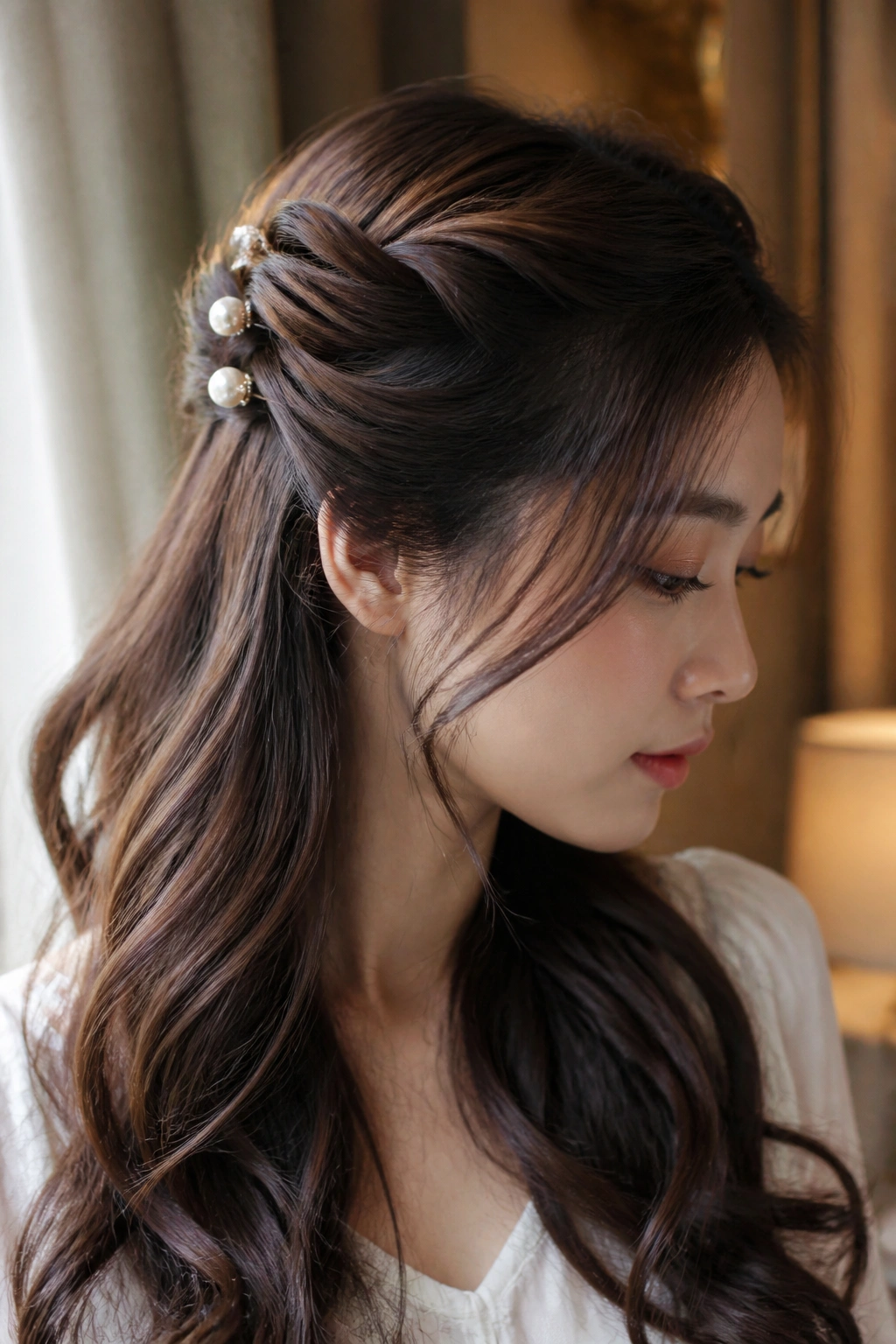
Two twists and a pair of pearl pins can make plain length look deliberate fast. That is the whole appeal of this style. It gives you a dress-up look without forcing the entire head into an updo.
Take small sections from each side of the face, twist them back, and pin them together at the center or just off-center. Leave the rest of the hair straight, waved, or lightly curled. The contrast between the pinned top and the loose length is what makes it interesting.
What To Keep in Mind
- Use 2 to 4 pins, not a whole cluster
- Pick pins that grip the hair instead of sliding off the surface
- If your hair is very silky, add a little texture spray before twisting
- Keep the twists loose enough that they do not pull the front hairline
Pearl pins work because they add a small point of shine without taking over the look. You could swap them for simple gold pins or matte silver if that fits your clothes better. The shape stays the same. The mood changes.
18. Low Ponytail with a Scarf Tie

Why bring in a scarf when a hair tie already works? Because a scarf changes the line of the hairstyle. It breaks up the long vertical fall and makes the ponytail feel styled instead of accidental.
A low ponytail at the nape is already easy to wear. Wrap a silk or satin scarf around the base, tie it off to one side, and let the tails hang down beside the hair. The scarf gives the style a little movement and color without demanding much else from the rest of the look.
Picking the Right Scarf
- Thin silk or satin stays neat and sits flat
- A square scarf should be folded into a band first
- Strong prints work best when the rest of the outfit is plain
- Keep the knot low so it does not compete with the ponytail shape
This is a nice style for long straight hair that needs a soft edge. It also hides a plain elastic, which is a small kindness on mornings when you do not want to think hard.
19. Deep Side Part with Tucked Waves

Some days, all you need is a different part and one tucked side. That shift can make long hair feel completely new without a cut, a tool, or much time at all.
A deep side part pushes more hair across one side of the face, which instantly changes the balance. Add loose waves, then tuck the smaller side behind the ear and pin it if needed. The exposed ear line gives the style a bit of structure and makes space for earrings, which is half the fun.
This works especially well if your hair is long enough to drape naturally over one shoulder. The front pieces should stay soft, not hard-curled. If they are too stiff, the side part starts looking costume-like. Keep the wave pattern broad and brush it out lightly.
There is a reason this style keeps showing up on red carpets and in real life. It is fast, flattering, and does not ask your hair to become something else.
20. U-Shaped Layers with Polished Straight Length

Long hair does not have to be one flat curtain. A U-shaped cut keeps the length full in the middle while softening the edges toward the sides, which makes the whole shape feel lighter without losing that long, dramatic fall.
This is one of the most useful long-hair shapes for women who like to wear their hair down most of the time. It still works in a ponytail, still moves in waves, and still looks tidy when you leave it straight. If your hair is naturally heavy or sticks to the sides of your face, the U-shape gives it a little lift where it needs it.
For many Asian hair textures, that balance is the whole game. The cut respects the length, but it stops the hair from reading as too blunt or too dense at the bottom. That matters whether you wear it in a middle part, a side part, or pulled back.
If you want one haircut to support the rest of these styles, this is a smart place to start. It is calm, flexible, and easy to live with, which is more useful than any flashy trick.
