



A good work hairstyle has one job: stay neat when the day gets messy. Coffee runs happen. Headsets pinch. A damp commute can flatten the crown before you even reach your desk. The best hairstyle ideas for work don’t fight those realities — they work with them, which is a much better strategy than spending twenty minutes on a style that collapses by 10:30.
There’s also a quiet difference between hair that’s styled and hair that looks fussed over. Office hair usually lands best when the lines are clean, the shape is clear, and there’s one small detail that makes it feel intentional. A wrapped elastic. A deep side part. A braid tucked low at the neck. Nothing dramatic. Just enough.
Hair length matters, but texture matters more than people admit. Fine hair tends to need lift or grip. Thick hair needs containment. Curly hair usually looks sharper when you respect its shape instead of flattening it into something it was never going to be. That’s why the best work hairstyles are less about chasing one perfect look and more about having a few dependable options ready.
Some of the styles below take five minutes. Others need a brush, a few pins, and a little patience. All of them can look clean, professional, and human — which, honestly, is the point.
1. Sleek Low Bun
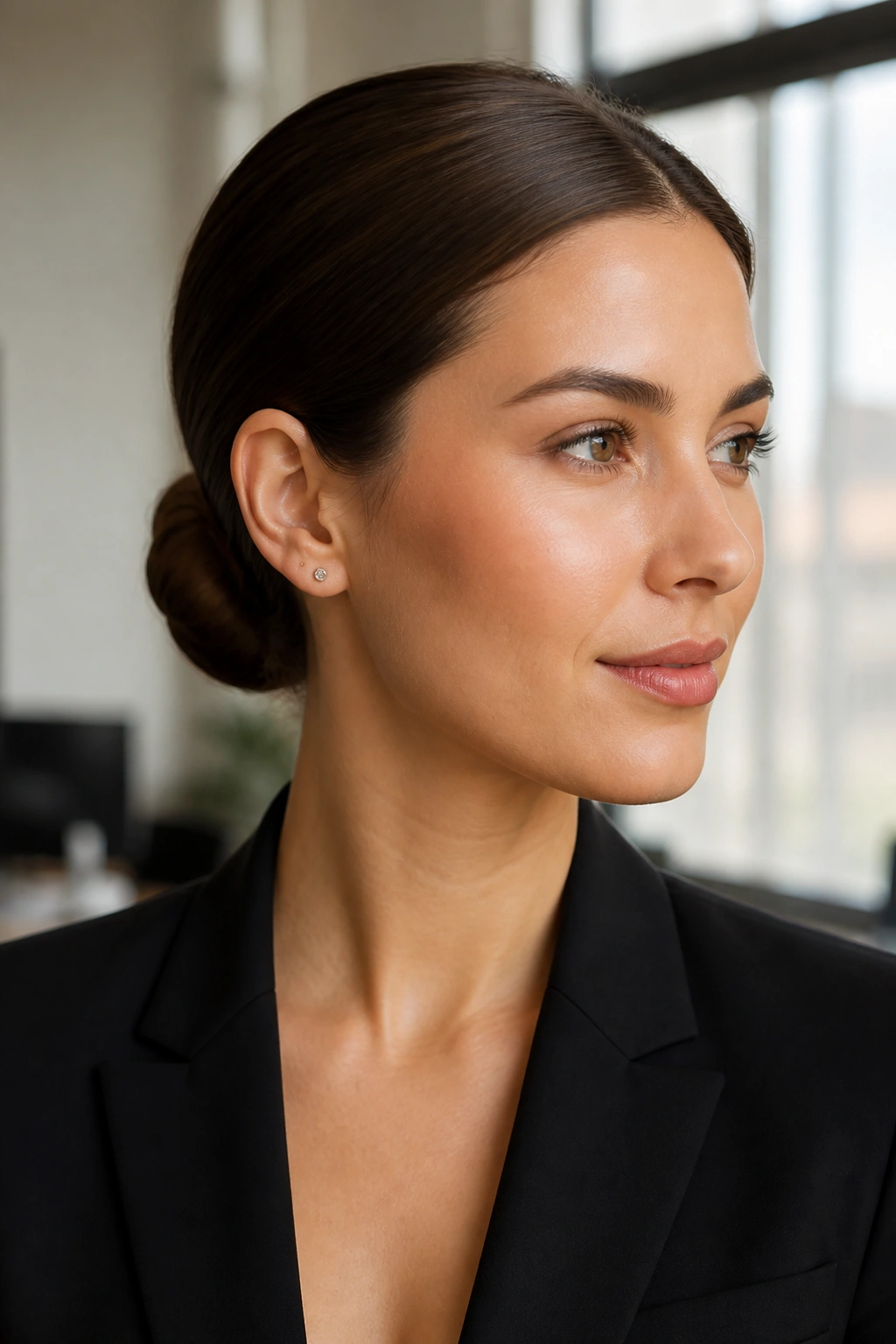
A sleek low bun is the office equivalent of a crisp white shirt. It looks calm, tidy, and deliberate, even when the rest of your morning feels chaotic.
The sweet spot is the nape of the neck, not the back of the head. Keep the bun low enough that it doesn’t fight your collar or headset, and smooth the top with a soft brush or a fine-tooth comb. If your hair is clean and slippery, a pea-sized amount of styling cream at the crown helps more than another round of hairspray.
Why It Works So Well
The low bun keeps hair off your face, your shoulders, and your keyboard. That sounds basic, but it matters on long workdays. It also works with blazers, knit tops, and anything with a structured neckline.
A tiny bit of softness around the hairline keeps it from looking severe. Leave one narrow piece loose near the temples if you want a gentler finish, or keep it fully tucked if you like a sharper look.
- Brush hair into a low ponytail at the nape.
- Twist the length into a coil and wrap it around the base.
- Secure with 2 to 4 bobby pins crossed over each other.
- Mist the top lightly with flexible-hold spray.
Best for: medium to long hair, second-day hair, and days when you need your style to stay put for hours.
2. Low Ponytail With a Wrapped Base

A low ponytail can look plain fast. Wrap the base, though, and it suddenly reads as polished instead of rushed.
Start with a clean center part or a side part, depending on what flatters your face and feels easier to maintain. Brush the hair back at the crown, but do not pull so hard that the style looks tight. That pulled-back shine should stop at the top; the lengths can stay soft and natural.
Wrap a small strand of hair around the elastic to hide it. Pin the wrapped section underneath with one small bobby pin, and you’ve already lifted the whole style a notch.
The real trick is balance. If the top is sleek, let the tail have movement. If the tail is very straight, give it a slight bend with a flat iron or a large-barrel iron, just enough to keep it from hanging limp.
Works especially well for: long straight hair, blow-dried hair, or wavy hair that you want to keep controlled without pinning everything up.
3. Soft Blowout With a Deep Side Part

Can loose hair be office-ready? Absolutely, if the finish looks controlled instead of sleepy.
A deep side part gives instant shape, and it’s one of the easiest ways to make down hair look intentional. The trick is volume at the crown, smoothness through the top layers, and movement through the ends. If the roots fall flat, the whole style can look like you forgot to finish your hair.
Use a round brush or a large velcro roller at the front sections while the hair cools. That little bit of lift keeps the shape from collapsing by lunch. A 1.25-inch curling iron can also help if you want a soft bend rather than a full curl.
Humidity is the annoying part. A light heat protectant and a small amount of anti-frizz cream on the mid-lengths will save you more than a heavy spray ever will. Heavy products near the roots are where things go wrong.
This style works best when the ends are polished and the top looks smooth. Messy roots make it feel accidental.
4. French Twist

If you have a presentation, an interview, or one of those days where you want to look like you have your life in order, the French twist is hard to beat.
It sounds formal because it is formal, but it does not need to be stiff. A modern version can be soft at the sides and slightly undone at the top while still holding its shape. That little looseness is what keeps it from looking dated.
How to Keep It From Feeling Fussy
The backbone of a good French twist is grip. Hair that is too freshly washed can slip, so a bit of texture spray at the roots helps. Gather the hair low, twist it upward, and tuck the ends inward as you pin.
- Use 5 to 7 bobby pins, depending on thickness.
- Pin vertically along the twist, not randomly.
- Tuck the ends fully so nothing pokes out at the base.
- Finish with a light mist from about 10 inches away.
The style works best on medium to long hair with a little natural texture. If your hair is pin-straight and slippery, prep matters. A lot.
5. Half-Up Twist
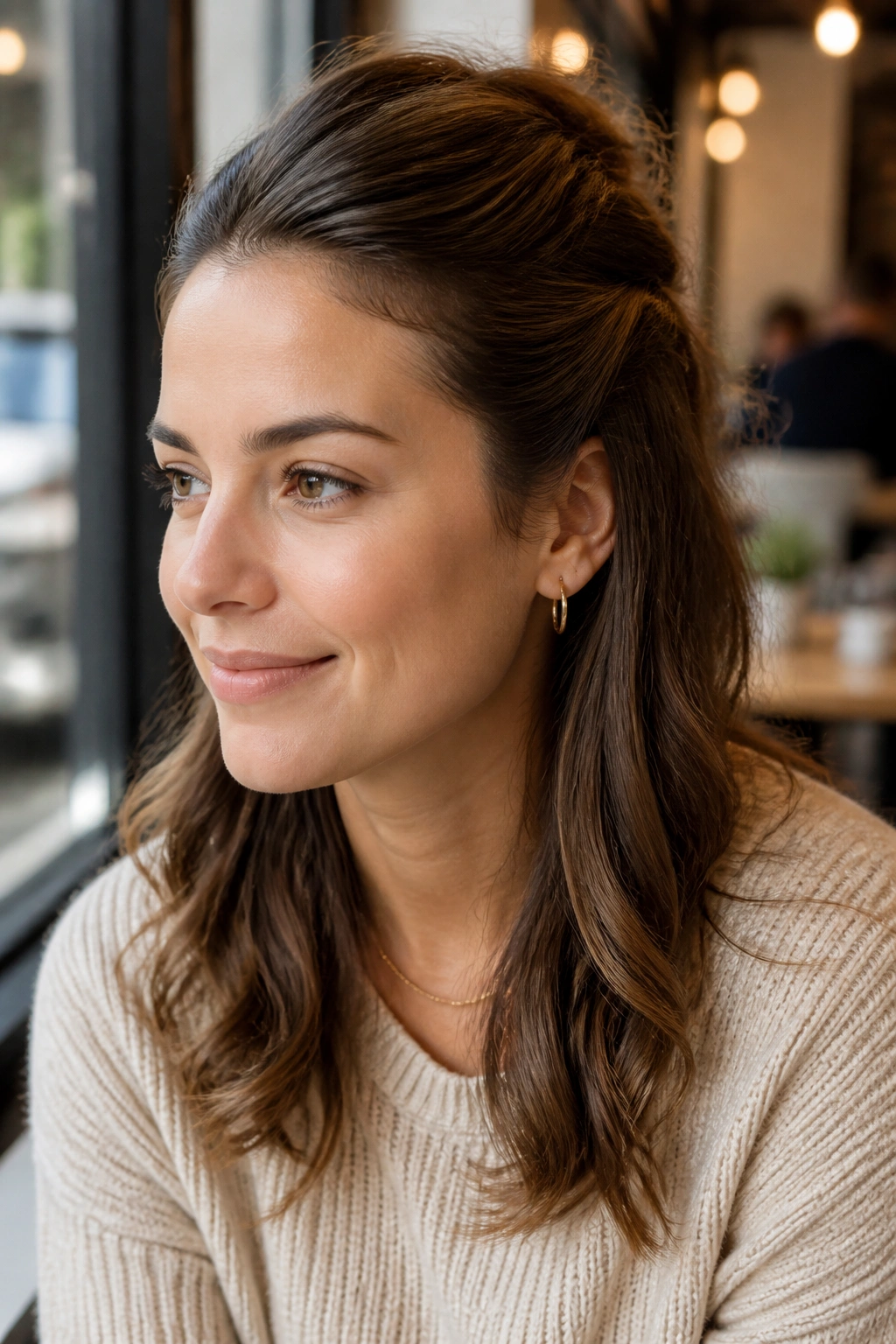
A half-up twist is the hairstyle version of saying, “I made an effort, but I did not make a production out of it.”
It keeps the front sections off your face, which is handy when you’re reading notes, talking on camera, or moving through a day with too many quick head turns. At the same time, it leaves the length down, so the whole look stays softer than a full updo.
You can make it with two small sections from each temple, twist them back, and secure them at the back of the crown. A small claw clip works if you want a less formal finish. Bobby pins work better if you want the twist to sit flatter.
Best Way to Wear It
This style shines on hair with layers, waves, or loose curls. Straight hair can look fine too, but it needs a bit of texture first or the twists may slide. A tiny amount of dry shampoo at the roots gives you grip without making the hair feel dusty.
One useful detail: the lower you place the join, the more relaxed it looks. The higher you place it, the more lifted and dressed up it feels.
6. Braided Crown

A braided crown keeps the hairline under control in a way that a simple ponytail never quite manages. That is why it’s a smart choice for long workdays, humid commutes, and office settings where you want your hair to stay put without looking severe.
Unlike a single braid down the back, a crown braid frames the face and keeps the top sections from breaking apart by noon. It also hides greasy roots better than loose styles do, which is useful on second-day hair. If you have layered hair, a touch of texturizing spray before you braid makes the strands easier to handle.
What to Watch For
The braid should sit close enough to the head to feel secure, but not so tight that it pulls at the temples. Tight temple tension can give you a headache by late afternoon. No thanks.
- Start braiding just above one temple.
- Follow the hairline toward the back of the head.
- Keep the braid even, but do not panic if it’s not perfect.
- Tuck the tail under the braid and pin it flat.
This style is a little more time-consuming than the others, but it pays off when you need hair that will not move much. That’s the whole point.
7. Claw Clip Twist
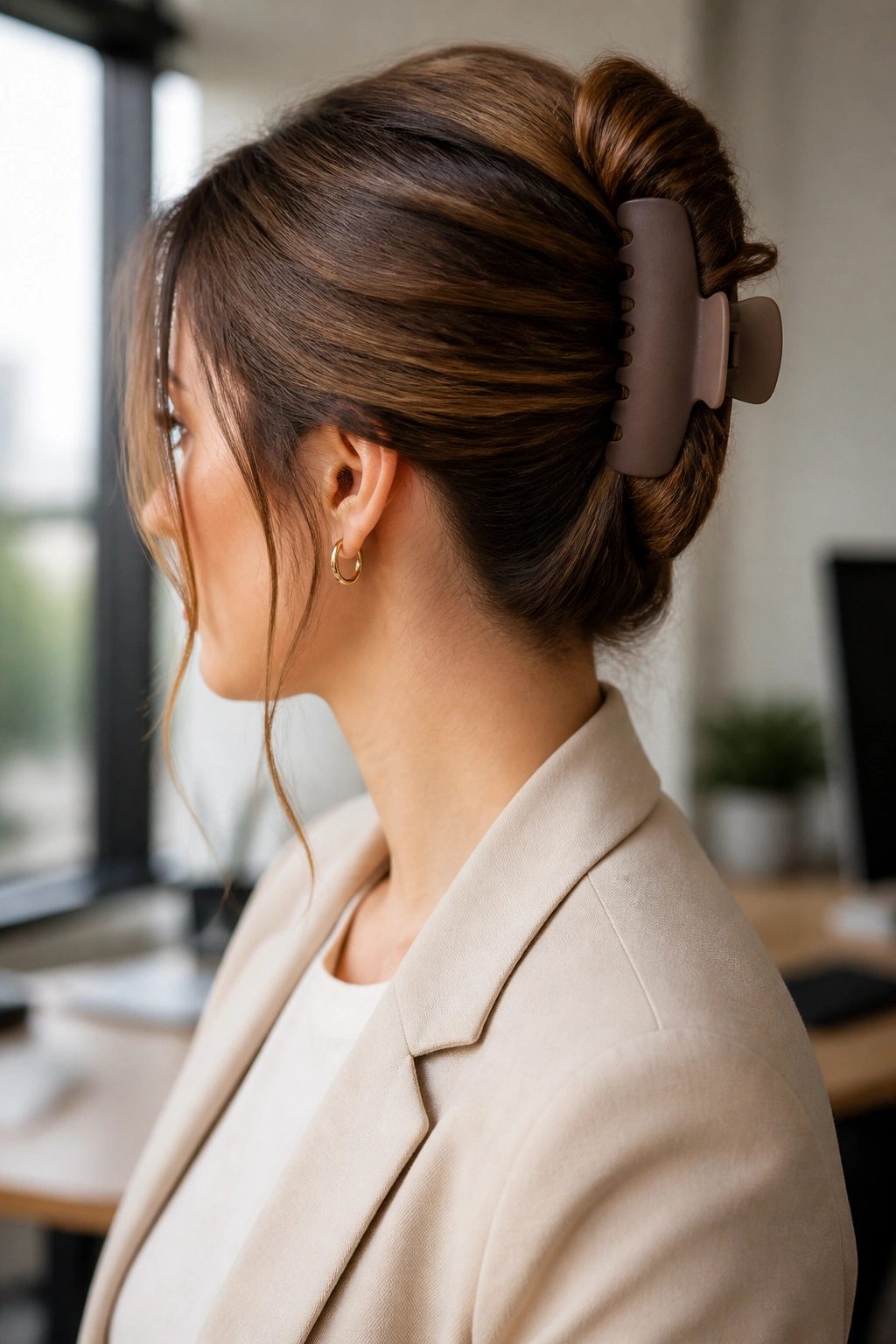
The claw clip got a bad reputation because people used the wrong clip. A flimsy little plastic one on thick hair is a joke. A sturdy clip with enough teeth, though, can hold a work-friendly twist all day.
Gather the hair low, twist it upward, and fold the length into the clip so the ends stay tucked. The result is tidy, fast, and less severe than a bun. It works especially well if you want your hair up but not tight against the scalp.
The finish matters. Matte clips look cleaner than glossy novelty ones, and a clip that matches your hair color tends to blend better. If your hair is very thick, use one larger clip or add two hidden pins under the twist so the weight doesn’t pull everything loose.
This is the kind of style that makes sense on mornings when you are already late. It still looks deliberate, which is the key.
8. Polished Bob With a Tucked Side
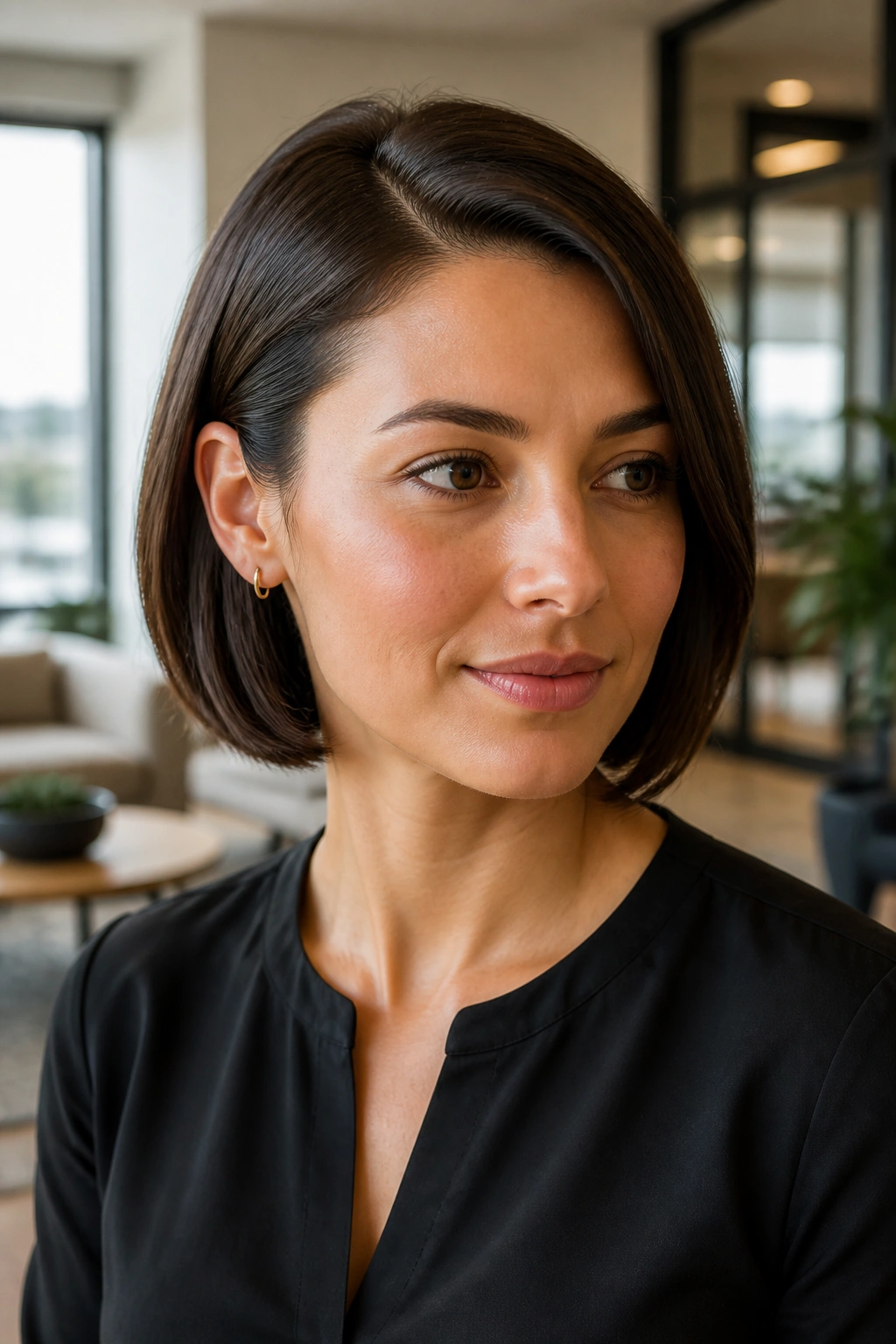
A bob should swing, not puff. That’s the first thing to remember if you want short hair to look sharp at work.
A smooth bob with one side tucked behind the ear is simple, but it has real structure. The tuck keeps the face open, and the clean line at the jaw gives the style shape. If your bob is at chin length or just brushing the shoulders, this one is especially easy to wear.
Use a blow dryer with a nozzle or a flat brush to keep the ends bent under instead of flipping out in random directions. A tiny amount of lightweight cream on the ends helps the shape stay smooth without flattening movement.
Small Details That Matter
One barrette can change the whole look. A slim metal clip or a plain tortoiseshell pin keeps the tucked side in place and stops it from sliding loose halfway through the morning.
If your hair has a lot of volume, aim the dryer downward at the top layers. That reduces the fuzzy halo effect that short cuts can get after a commute. Small move. Big difference.
9. Loose Waves With Face-Framing Pieces
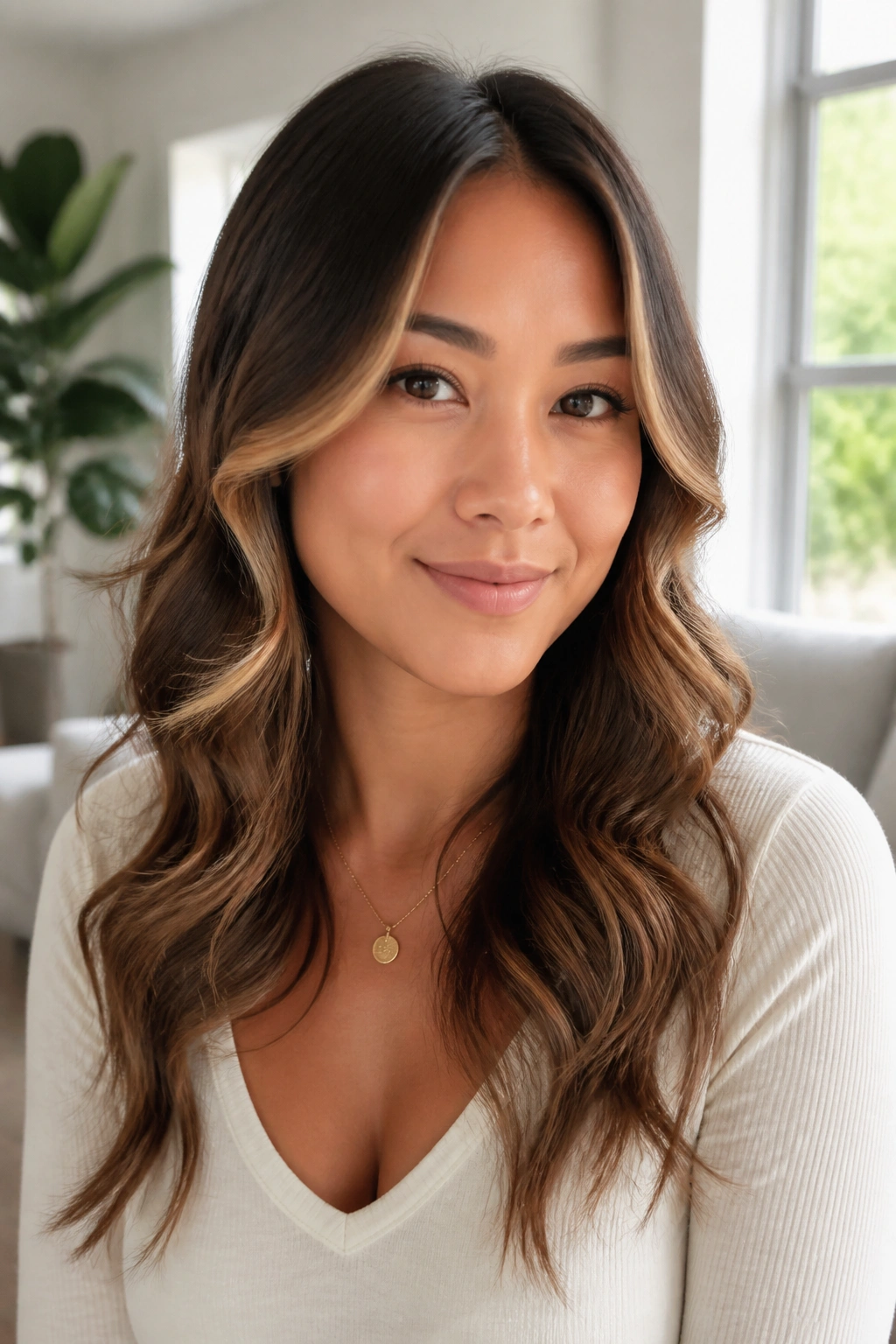
Loose waves can be work-appropriate when they look finished, not beachy and half-done.
The easiest way to get there is to curl or wave the hair with a 1.25-inch iron, alternate the curl direction as you move through the back, and leave the ends a little straighter. Once the waves cool, brush them through so they soften into a smoother shape. That keeps the texture from turning crunchy or overstyled.
What makes this version work for the office is the face-framing. Two slim pieces near the front can be curled away from the face and left soft enough to move. They lighten the style without making it fussy.
Humidity can flatten this look faster than you’d like, so a light anti-frizz spray goes farther than a thick mousse. Also, don’t overload the roots. Root-heavy waves start to look puffy instead of polished.
This is one of the easiest hairstyle ideas for work if you like wearing your hair down but still want it to look thought-out.
10. High Ponytail With a Smooth Crown

A high ponytail is not automatically sporty. If you smooth the crown and place it well, it can look strong, clean, and sharp.
The trick is placement. Too low, and it falls flat. Too high, and it can look like a gym style. The sweet spot is high enough to lift the face without sitting on the very top of the head. Use a boar-bristle brush or a smoothing brush to keep the crown sleek, then secure the tail firmly.
A wrapped elastic helps here too. It hides the band and gives the ponytail a finished edge. If you want a little more polish, take a thin section from underneath, wrap it around the elastic, and pin it below the base.
- Prep with a light smoothing serum on the top only.
- Brush hair upward in sections so you don’t miss any bumps.
- Secure tightly, then adjust the height before the elastic is fully fixed.
- Add a light bend to the tail if you want movement.
This style is a favorite for long workdays because it keeps your hair off your neck and still reads as intentional.
11. Low Chignon

When a low bun feels too casual, the chignon steps in.
It sits at the nape like a compact knot or coil, usually smoother and a bit more refined than a messy bun. The shape is flatter, which makes it a good fit for jackets, collars, and formal meetings where you want the hair to disappear neatly rather than sit on top of your outfit.
A good chignon starts with a clean base. Part the hair where you normally wear it, gather it low, and twist the length before tucking it under itself. Secure it with pins that cross in an X, which gives the bun more hold than straight pins alone.
Where It Makes the Most Sense
This one is excellent for interviews, client meetings, and days when you want a more structured finish than a ponytail gives you. It also helps if your hair is thick, because the tucked shape contains volume instead of letting it spread out.
A bit of shine serum on the ends makes the style look cleaner. Don’t use much. Too much product near the bun can make it look greasy by the end of the day.
12. Rope Braid Ponytail

A rope braid ponytail looks more intricate than it is. That’s part of its appeal.
Unlike a classic three-strand braid, a rope braid uses two sections twisted around each other. That means fewer moving parts, faster styling, and less chance of the braid going lopsided when you’re doing it in a hurry. It’s also a good choice for slippery hair because the twist gives the lengths a bit more grip.
Start with a low or mid-height ponytail, split it into two equal pieces, twist each section in the same direction, then twist those sections around each other in the opposite direction. If you reverse the direction by accident, the braid loosens. It happens. Redo it.
Best Way to Wear It
This style is smart for long commutes, office days with a lot of movement, or hair that refuses to stay braided. It holds up well with a thin elastic at the end and a small mist of spray to keep the rope from unraveling.
If your hair is layered, pull the braid a little tighter near the top and looser through the tail. That keeps the shorter pieces from sticking out in every direction.
13. Half-Up Barrette Style
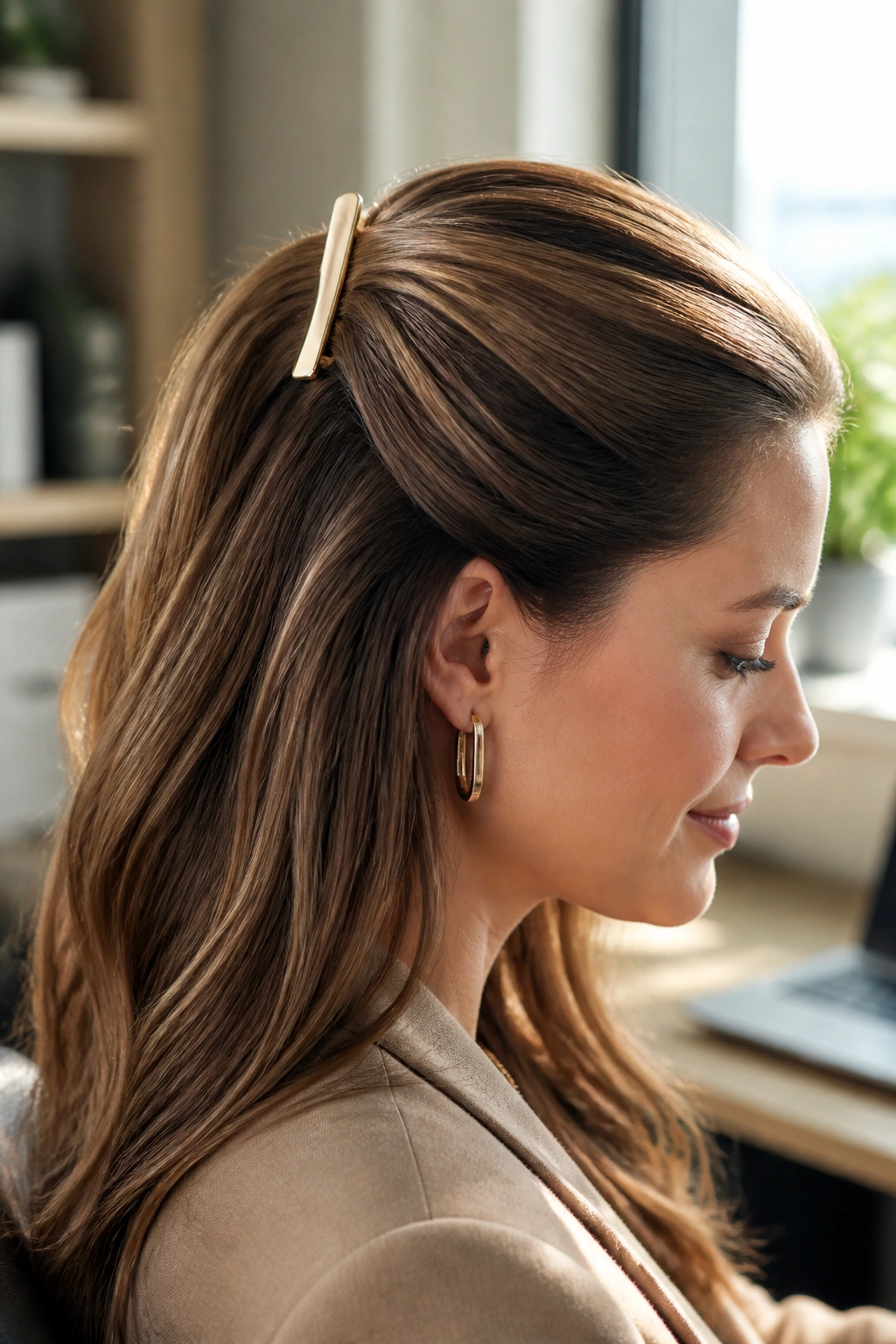
A half-up barrette style is one of those low-effort looks that still reads as tidy.
Take the top third of the hair, smooth it back, and secure it with a strong barrette or French clip. The rest stays down, so the hair still has movement, but the front sections are out of the way. That balance makes it useful for desk work, quick errands, and days when you want something easy that still feels considered.
Fine hair does well here if you add a touch of volume at the crown first. A little dry shampoo or a soft backcomb at the root gives the barrette something to hold onto. Thick hair needs a larger clip with a sturdier closure so it doesn’t slide out after an hour.
The nicest thing about this style is how flexible it is. You can place the barrette low for a relaxed look or higher for more lift. A plain metal barrette feels sharp. A resin one feels softer. Either way, the structure does the heavy lifting.
14. Textured Pixie or Crop
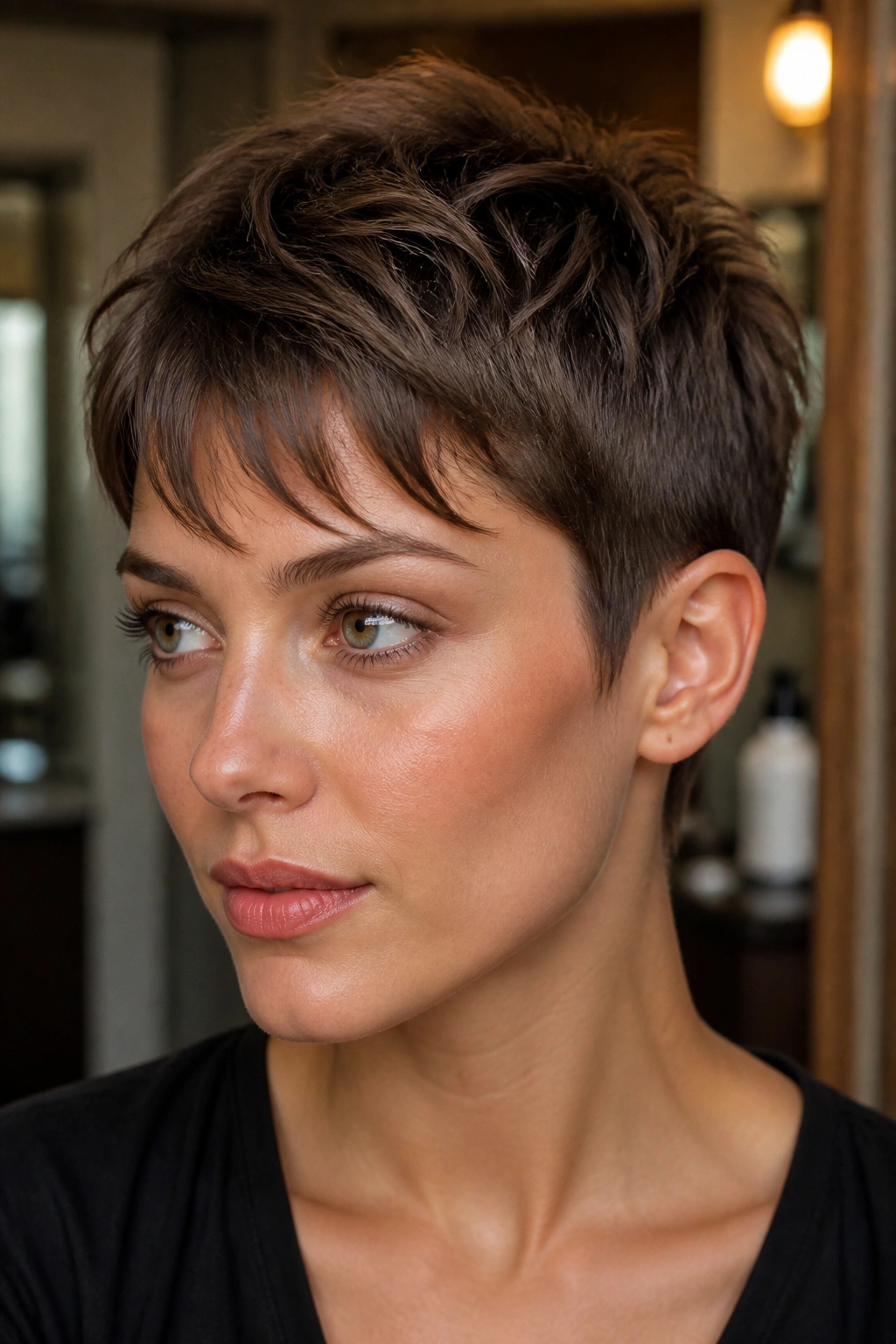
Short hair can be the easiest work hair of all — if you stop trying to make it behave like long hair.
A pixie or close crop looks best when the shape is clean and the texture is deliberate. That usually means a pea-sized amount of matte paste or wax worked through dry hair, not wet. Start at the back and sides, then pinch the top pieces into place with your fingers. A comb can help, but fingers usually keep it from looking too stiff.
How to Keep It Crisp
The sides should stay tidy. The top can have some movement. That contrast is what makes the cut look sharp instead of flat.
- Use a small amount of product so the hair keeps natural movement.
- Push the top slightly forward or to the side.
- Tuck one side behind the ear if you want a softer line.
- Trim the neckline often enough that the shape stays clean.
Short hair is forgiving in the morning, but it still needs regular shaping from a barber or stylist. When the outline gets fuzzy, the whole cut loses its edge fast. Clean lines are doing most of the work here.
15. Bubble Ponytail
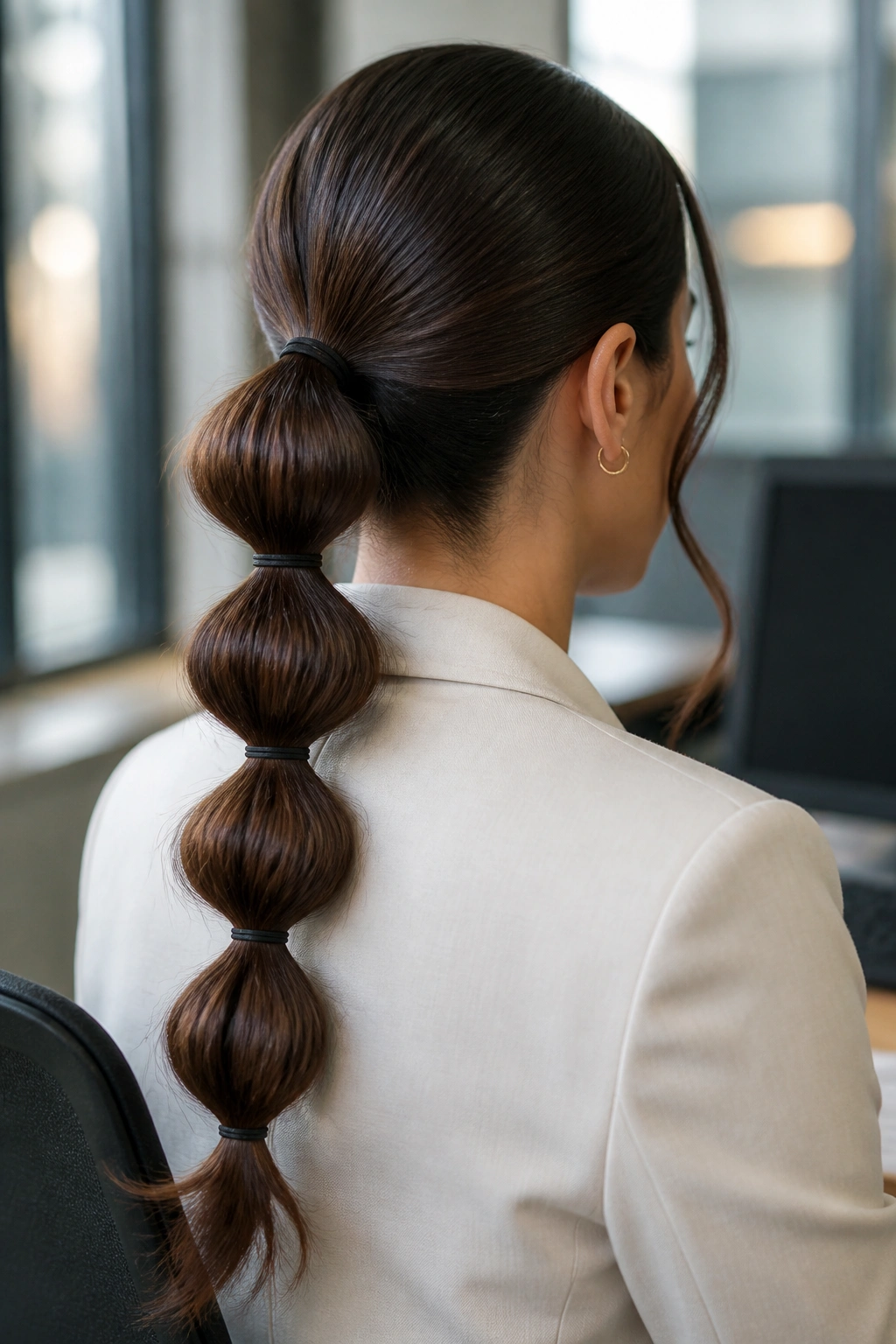
A bubble ponytail is the one work style on this list that still has a little personality, and that is a good thing.
Tie the hair into a low or mid ponytail, then add small elastics every 2 to 3 inches down the length. Gently pull each section outward so it forms a rounded “bubble.” You do not need huge volume; even small bubbles create enough shape to make the style feel intentional.
It works on long straight hair, smooth waves, and thicker textures that need a bit of structure. If your hair is fine, the bubbles look fuller when you tug them lightly after each elastic is in place. If your hair is thick, keep the sections smaller so the tail doesn’t turn bulky and awkward.
This is a good option for days when you want something tidy but not boring. It holds up well, it photographs cleanly on video calls, and it keeps length under control without looking severe. If your office style leans creative, this one fits right in. If your office is more traditional, keep the bubbles smaller and the crown smoother, and it stays on the right side of polished.
