



Short hair changes personality fast. One tiny shift in length, fringe, or weight placement can move a cut from crisp to cute, from severe to soft, from plain to polished. That is why Korean style short haircuts for women have held such staying power: they are built around shape, not noise. The line can be simple. The effect is not.
What makes these cuts stand out is the way they treat the face. A good Korean-inspired short cut usually keeps the edges neat, then softens the front with see-through bangs, cheekbone pieces, or inward-curving ends. It does not shout. It frames. And that framing matters a lot when your hair is above the shoulders, because every inch is doing a job.
Another reason they work so well is daily life. A lot of these styles can be blow-dried in ten minutes with a round brush, tucked behind one ear and still look intentional, or left with a little natural bend and not fall apart. The trick is choosing the right silhouette for your hair density, your forehead, your jawline, and how much styling you actually want to do before coffee.
Some of these cuts lean sweet. Some are sharper. A few have a little edge. All of them have one thing in common: the shape looks deliberate, even when the styling is easy. That is the sweet spot, and it starts with the first cut below.
1. Korean Style Chin-Length Bob with See-Through Bangs

This is the haircut many people picture first when they think of Korean style short haircuts for women. The length lands close to the chin, which keeps the jawline visible, while the see-through bangs stop the forehead from feeling boxed in. The result is tidy, light, and a little youthful without looking childish.
Why It Works
The thin fringe matters more than people think. Instead of sitting in one solid block, it breaks up the front just enough to soften a broad forehead or a strong brow line. The rest of the bob stays clean, so the haircut still has structure. That balance is the whole point.
- Ask for the bob to sit right at the chin or 1/2 inch below it.
- Keep the bangs airy, with more space in the center and a softer edge at the sides.
- Style the ends inward with a 1-inch round brush or a small flat iron bend.
- Trim the fringe every 3 to 4 weeks so it does not drop into your eyes.
Tip: If your hair puffs up when it dries, have the stylist cut the bangs a touch longer than you think you need. Wet hair lies.
2. Sleek C-Curl Bob with Inward Ends

If you want a neat haircut that still feels soft, this is one of the easiest wins. The C-curl bob keeps the outline tidy, then turns the ends inward just enough to make the shape feel finished. It is one of those styles that looks expensive even when the styling took ten minutes.
The magic is in the bend at the hemline. Straight hair can make a chin-length bob look hard and flat, but a tiny inward curve changes the whole mood. The ends no longer sit like a shelf. They tuck. That matters.
This cut suits women who want short hair that behaves in humid weather and still looks controlled after a full day. A little blow-dry cream, a round brush, and a quick roll under at the ends are usually enough. If your hair is thick, ask for light internal weight removal only. Too much thinning makes the curl collapse. Too little leaves the bob bulky.
3. Hush Cut Bob with Face-Framing Layers

What happens when a bob needs movement but you do not want it to look choppy? You get the hush cut bob. It borrows the soft layering idea from the hush cut trend, then keeps the overall length short enough to stay fresh and neat.
The front pieces are the part to watch. They usually start around the cheekbone or just below it, then drift into the rest of the bob without a hard line. That makes the cut feel airy, not heavily layered. Good for fine hair. Good for thick hair too, if the stylist keeps the bottom edge clean.
How to Style It
Use a light mousse at the roots, then blow-dry the face-framing pieces away from the face for a second before curling them back in. That tiny movement gives the haircut life. A 26 mm curling iron also works if you want the ends to flick instead of bend. Keep the layers soft, though. If they get too broken up, the cut loses its calm shape.
4. Rounded Cloud Bob with Soft Crown Volume
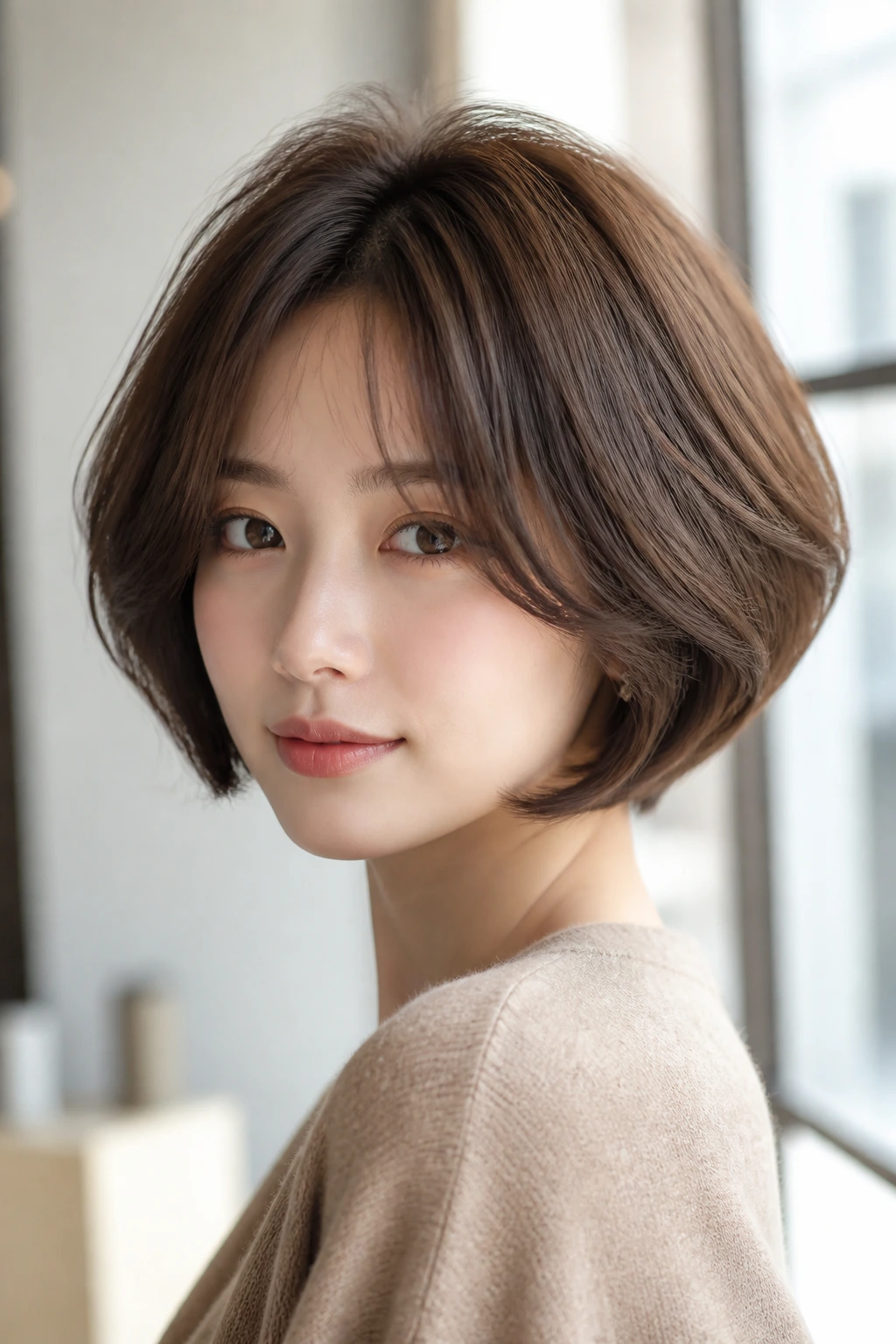
You know the bob that looks fuller on top without puffing out at the sides? That is the rounded cloud bob. It has a little lift at the crown, a smooth curve through the body, and ends that stay tucked instead of spreading wide.
This shape is lovely on hair that tends to lie flat at the roots. The crown gets a gentle lift from the cut itself, not from teasing or a mountain of spray. That means the style still moves when you turn your head. Small detail. Big difference.
- Best for fine to medium hair that needs a little height.
- Ask for soft layering at the crown, not choppy layers all over.
- Keep the perimeter rounded at the jaw so the shape does not flare out.
- Dry the roots upward with the brush, then turn the ends under.
A lot of people overdo volume and end up with a puffy triangle. This cut avoids that. It stays round, which is why it feels so easy to wear.
5. Tucked Pixie Bob with Long Sideburns
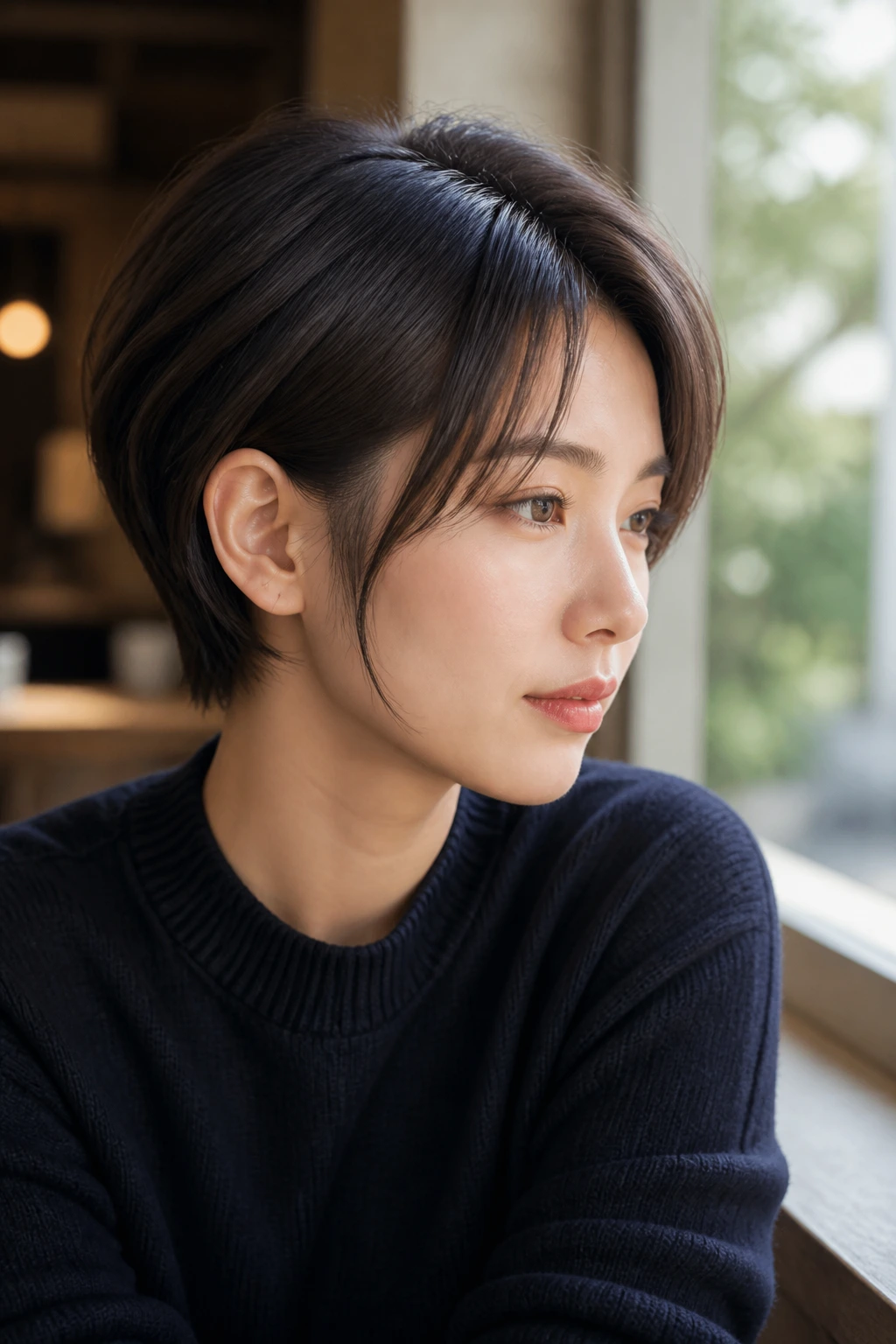
A tucked pixie bob looks almost understated until you tuck one side behind the ear and notice how sharp the whole face looks. The long sideburns are the quiet hero here. They soften the temple area and keep the cut from feeling too exposed.
This style sits between a pixie and a bob, which makes it useful if you want short hair but are not ready for a full crop. The nape stays neat, the top has enough length to sweep over, and the side pieces give you options. Wear it tucked. Wear it loose. Pull it back with a pin. It all works.
The key is not to cut the sideburns too short. They should skim the jaw or the top of the neck, not disappear into the haircut. That detail adds shape and keeps the style from looking boxy. It also gives you a little grace as the cut grows out, which is one reason stylists like this shape for people who want easy maintenance.
6. Hime Bob with Softened Front Pieces

The classic hime cut can look severe if the lines are too hard. The Korean version softens that edge. The short side pieces usually land around the cheekbone, the back stays bob-length, and the front is refined enough to feel modern instead of costume-like.
This is a strong choice if you like contrast. The haircut has two stories at once: the neat bob base and the shorter framing pieces at the front. Done well, it makes the cheekbones stand out and gives the face a little architecture. Done badly, it can look chopped up. So the length matters.
I prefer this cut on straight to slightly wavy hair, because the geometry reads best when the strands lay flat. If your hair is thick, ask for the front pieces to be softened with point cutting. That keeps the ends from looking blunt in a harsh way. The result feels fashion-forward without tipping into drama.
7. Korean Style Bixie Cut with a Tapered Nape

The bixie is what happens when a bob and a pixie have a useful middle ground. It is short at the back, longer through the crown, and soft around the sides, which gives you a little edge without losing shape.
What Makes It Different
A lot of short cuts rely on one visible line. The bixie does not. It uses layers to move the eye from the nape to the cheekbones, so the haircut feels alive even when you let it air-dry. That is why it works so well on women who want short hair but hate the helmet feeling some cuts create.
- Ask for the nape to be tapered close.
- Keep enough top length for a side sweep or a soft lift.
- Leave the side sections long enough to tuck behind the ears.
- Use a pea-sized amount of styling cream, not a heavy paste.
Good fit: round faces, fine hair, and anyone who wants a short cut that grows out without looking messy too quickly.
8. Korean Style Short Wolf Cut with Wispy Layers

A wolf cut does not have to look wild. The Korean-style short version keeps the shaggy energy, then softens it so the haircut feels wearable. Think of it as a textured bob with a little attitude, not a full rock-and-roll chop.
The layers usually start high enough to show movement around the crown and cheekbones, but they do not need to be dramatic. The ends stay a little wispy, which gives the hair swing when you walk. Nice effect. Easy to live with. Not every layered cut has that kind of balance.
How to Keep It Soft
Ask for the top layers to be lightly feathered rather than heavily razored. Heavy razor work can make the ends fray, and that is not the same thing as movement. If your hair is thick, keep the interior pieces a little longer so the shape does not mushroom out. If your hair is fine, a loose bend from a blow-dryer brush can make the layers show up without forcing them.
9. Jaw-Length Blunt Bob with Clean Edges
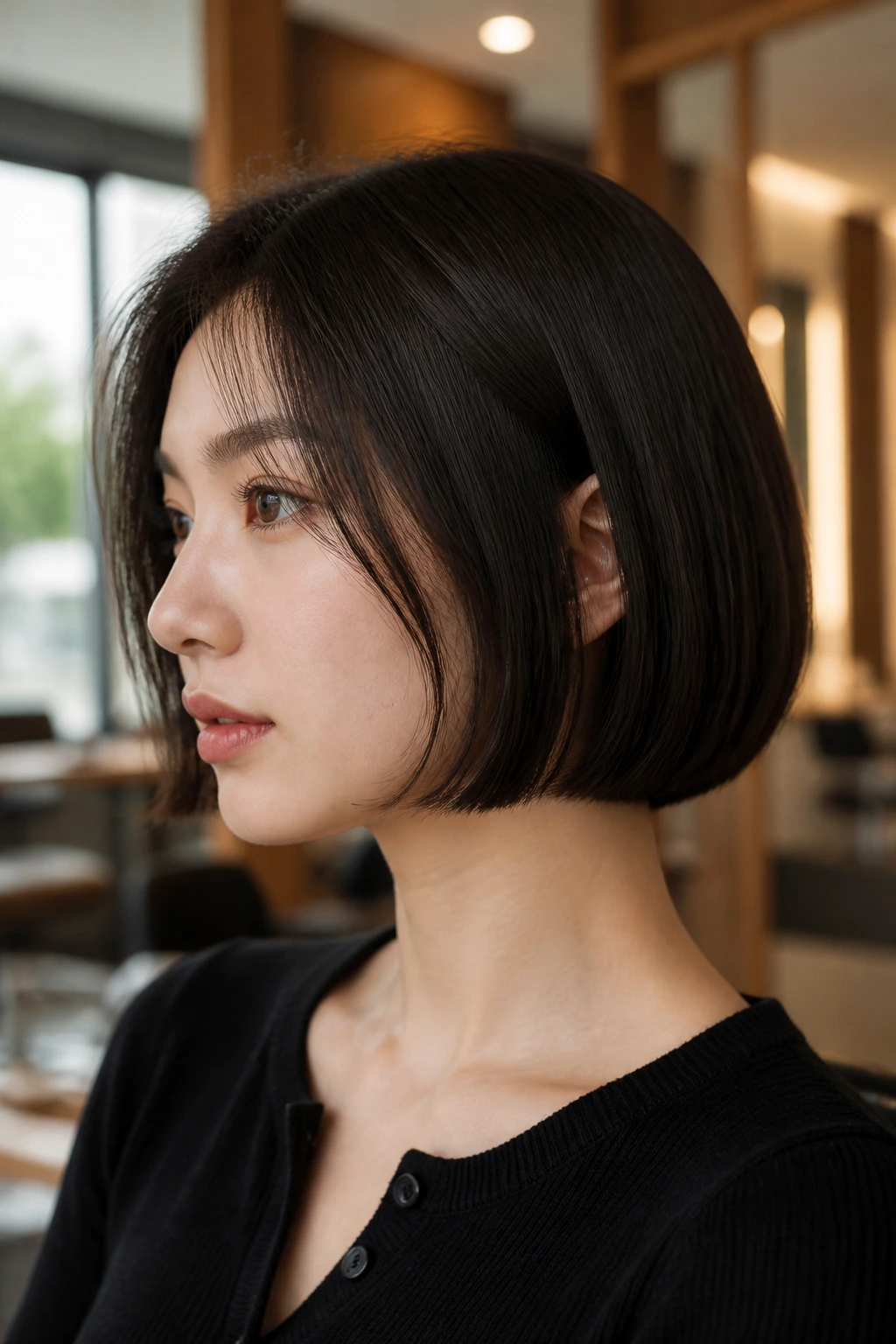
There is no pretending with a blunt bob. It is honest. The line sits at the jaw, the ends are even, and the whole haircut says exactly what it is. That can be a great thing, especially if you want a short style that looks neat even when you do very little to it.
The Korean version usually softens the bluntness a touch. Not by destroying the line, but by keeping the weight healthy at the perimeter and avoiding over-thinning. That is why the cut feels expensive in real life. It has density where it needs it.
This shape is especially good if your face already has soft curves and you want the haircut to sharpen them a little. It also plays well with glasses. The frame, the jaw, and the straight edge of the bob all make sense together. Too much layering would ruin this cut. It needs clean ends, a little sheen, and discipline.
10. Mushroom Bob with Airy Crown Layers
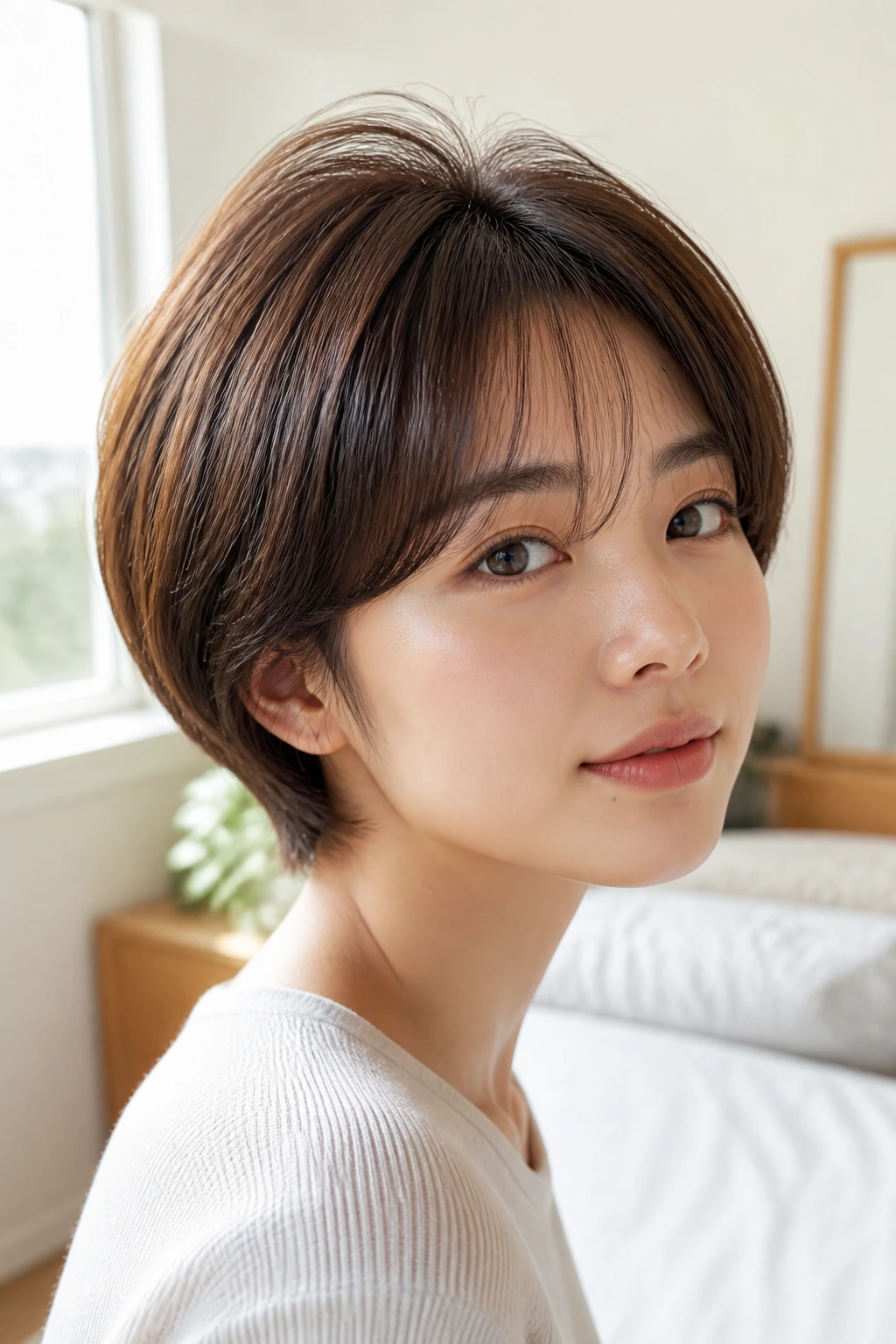
What stops a mushroom bob from looking like a helmet? Air. More precisely, crown lift and softened sides. The Korean take on this cut keeps the rounded silhouette but avoids the heavy, bowl-like feeling people worry about.
The top layers sit a little higher, then taper down toward the sides. That lets the haircut hold shape without collapsing flat against the head. The outline still reads rounded, which is the whole point, but it does not feel stiff.
How to Avoid the Helmet Look
- Keep the crown layers light and internal, not chopped bluntly.
- Leave a small amount of softness around the ear area.
- Ask for the bottom edge to curve inward at the neck.
- Dry the roots forward and upward, then brush them into place.
This cut suits women with narrower faces or those who want more width near the cheekbones. It can also make very straight hair feel fuller without piling on product. A little restraint here goes a long way.
11. Feathered Short Shag with Broken Ends
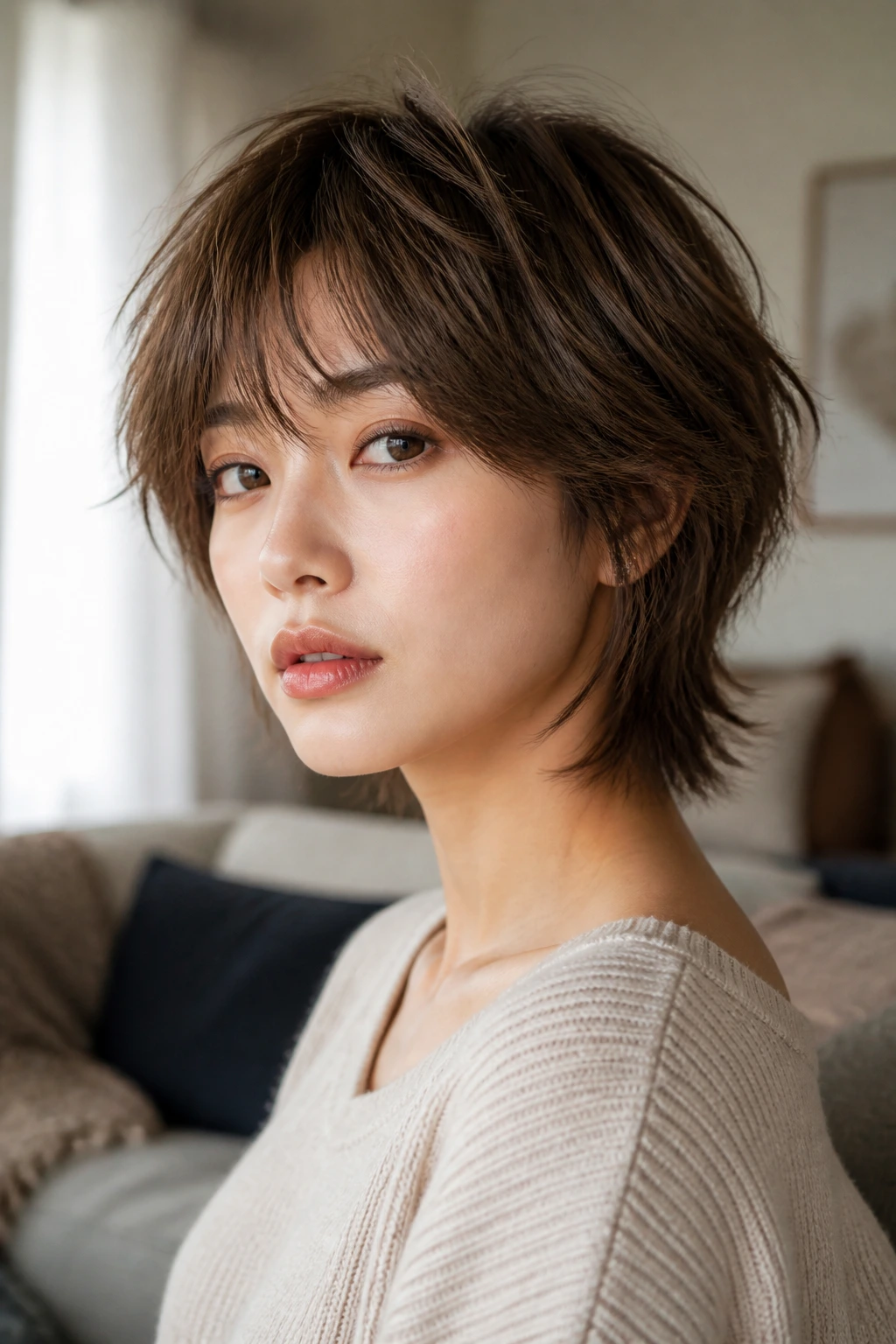
A friend once asked for a short cut that looked “lived-in, but not messy.” That phrase could have been written for the feathered short shag. It has movement, but the movement is controlled. The broken ends keep it from feeling too polished, and that makes the whole cut breathe.
The beauty of this style is that it does not rely on one perfect styling method. You can rough-dry it, use a small diffuser, or bend a few pieces with a flat iron. It still looks like the same haircut. That is rare.
I like this cut on hair that has a little natural wave, because the texture helps the layers separate on their own. Fine straight hair can wear it too, but the layers need to stay soft. If the shag gets overcut, it starts looking wispy in a tired way rather than a chic one. Not the goal. Keep the ends feathered, not shredded, and the shape holds much better.
12. Asymmetrical Bob with a Long Side Fringe
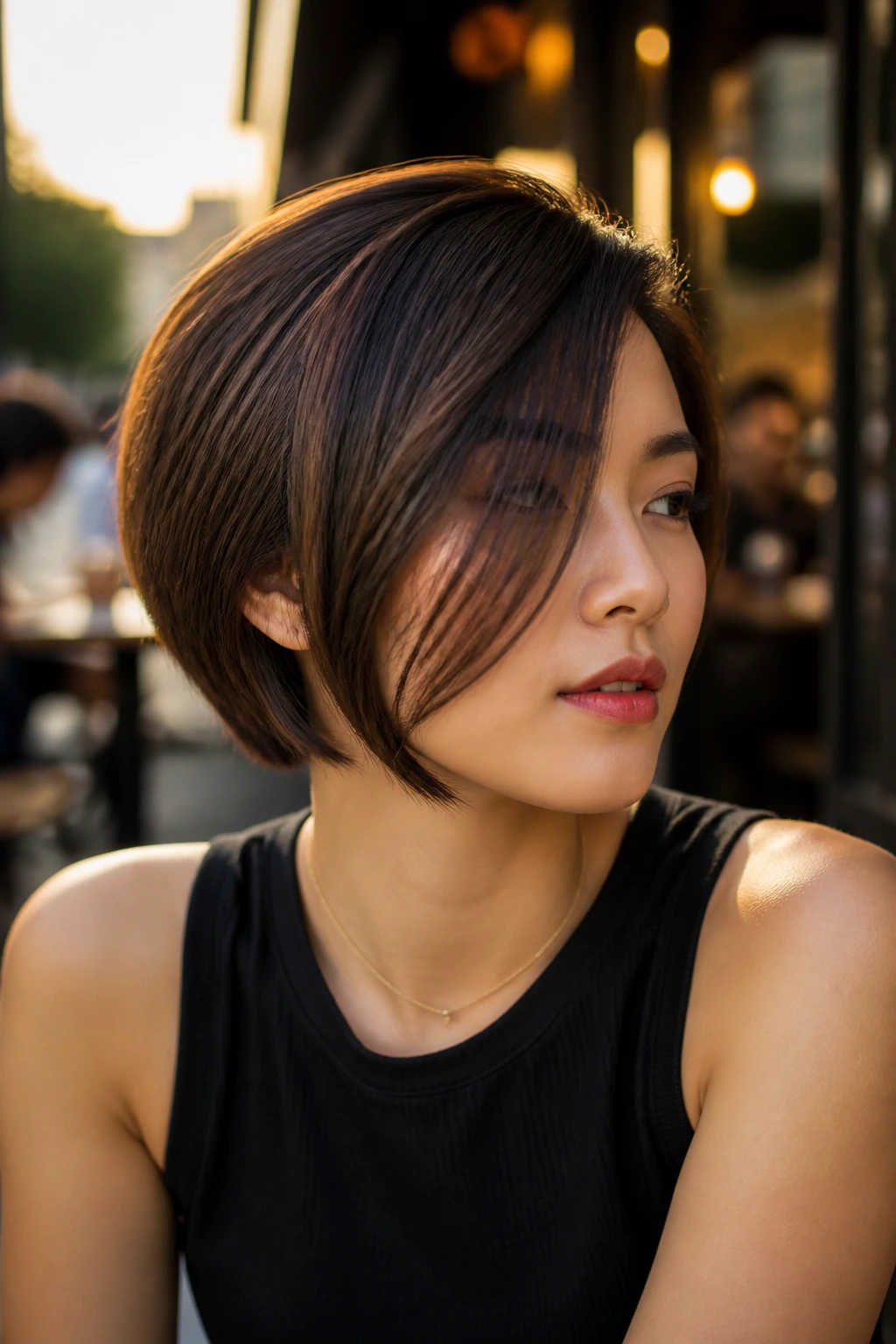
A tiny length difference can do a lot. That is the whole story with the asymmetrical bob. One side sits a little longer, the fringe sweeps across the forehead, and the haircut suddenly has movement even when the rest of it is simple.
This style is smart if one side of your face feels stronger than the other or if you want to visually narrow a wide jaw. The longer fringe draws the eye diagonally, which softens the face without hiding it. The cut still feels short. It just has a bit more angle.
Keep the difference subtle. A full, dramatic asymmetry can be hard to wear every day. A gap of about 1 to 1.5 inches between sides is enough for most people. You want the shape to whisper, not shout. If the angle is too extreme, the haircut starts running the show.
13. Air-Perm Bob with Loose S-Waves
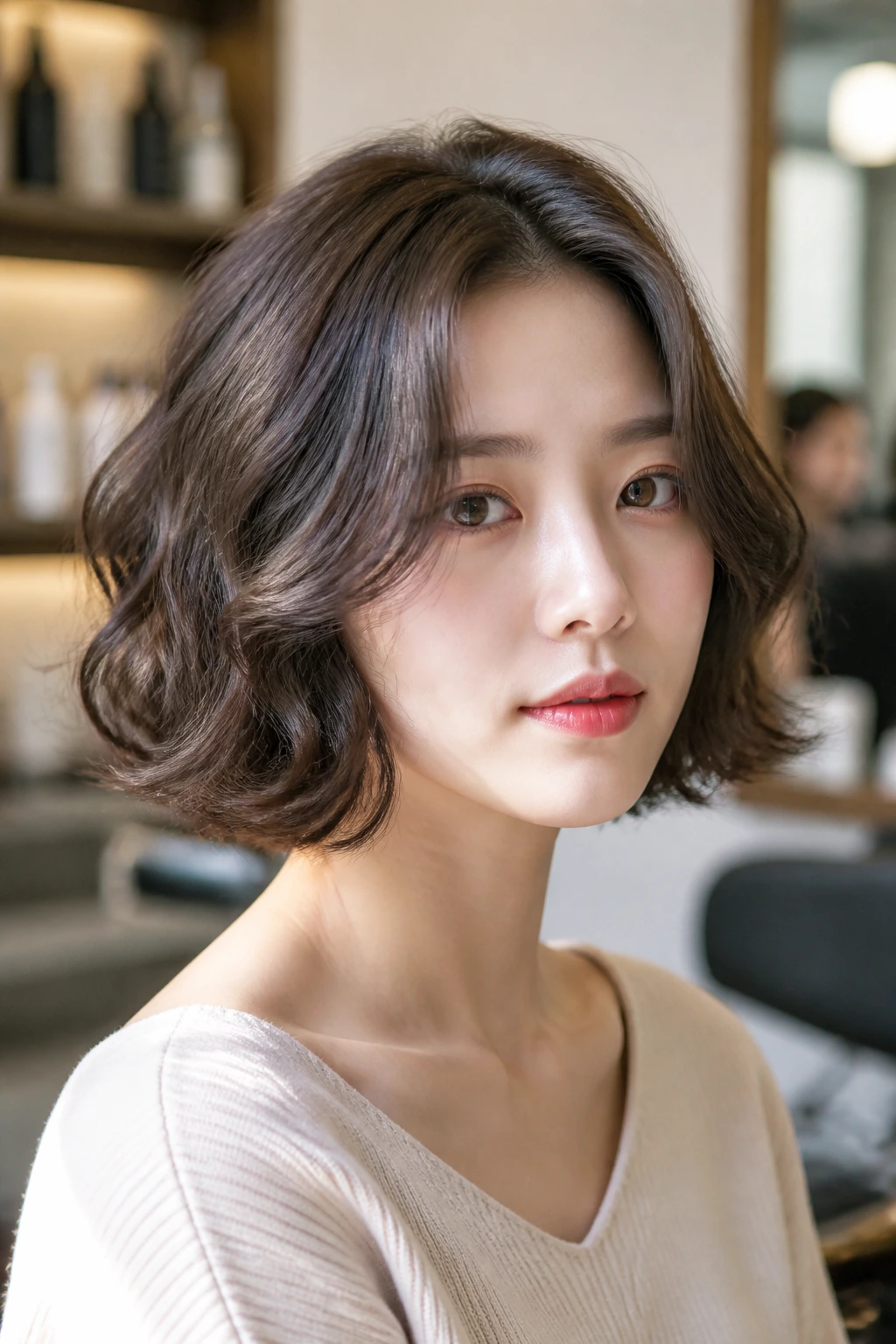
The air-perm bob is the cut people reach for when straight hair feels too flat but tight curls would be too much. Unlike a strong perm, this version keeps the wave loose and soft. It bends the hair instead of turning it into a ringlet.
That softer wave works beautifully on a bob because it adds width where the hair usually needs it most: around the mid-lengths and ends. It also keeps the style from clinging to the head. If your hair is fine, this is one of the easiest ways to fake fullness without a lot of daily work.
Who It Suits
- Straight hair that falls limp by lunchtime.
- Thick hair that needs some shape around the ends.
- Faces that look better with a bit of width near the cheekbones.
- Anyone willing to use a light wave spray or a hot tool on the lowest useful setting.
The important part is keeping the wave relaxed. If the curl is too tight, the haircut loses that airy Korean feel and starts looking dated. Loose is the rule here.
14. Curtain Bang Crop with a Soft Neckline
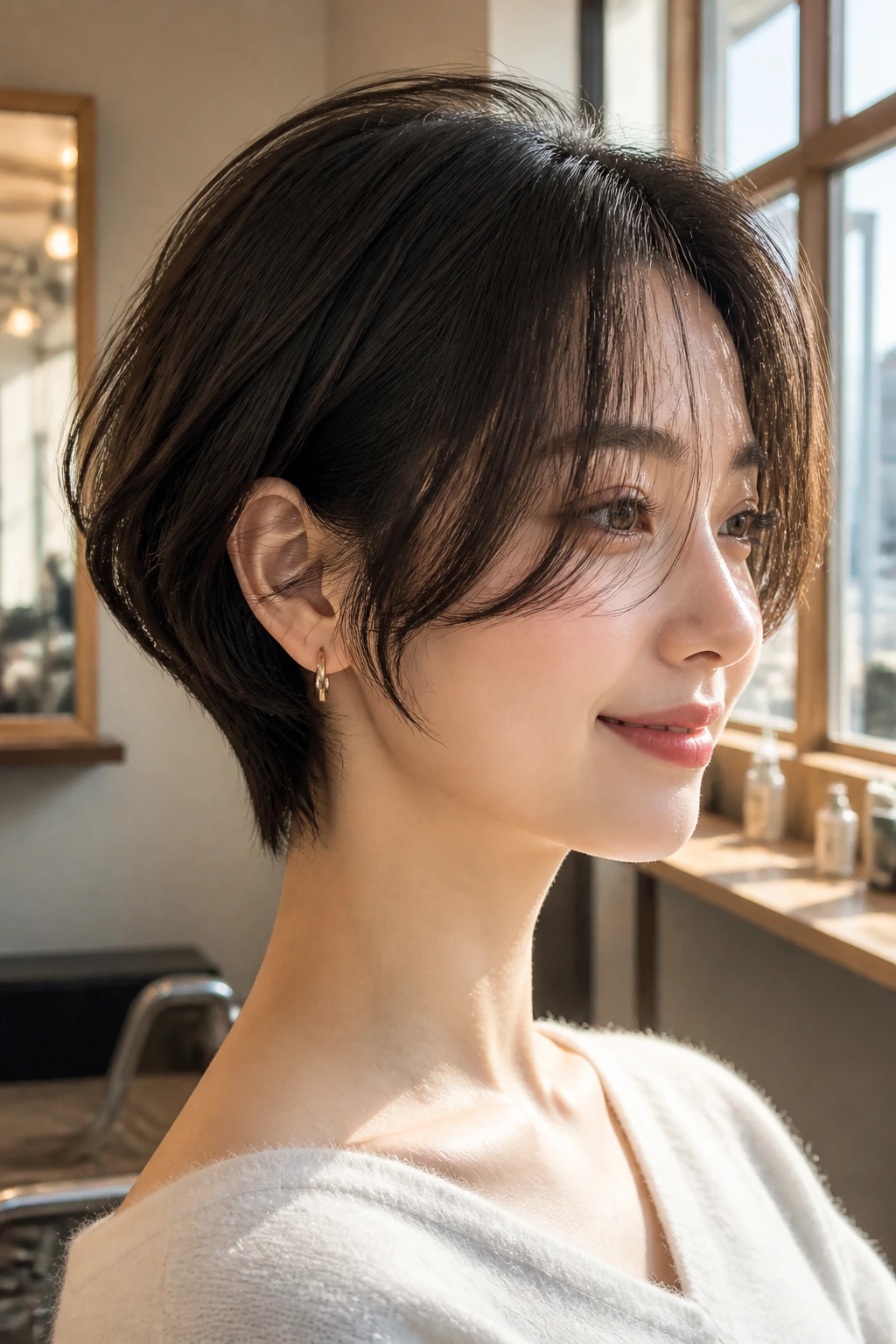
Can a very short haircut still feel feminine and soft? Yes, if the bangs do enough work. The curtain bang crop keeps the sides and back short, then opens the front with a parted fringe that falls away from the face.
How to Ask for the Fringe
Ask for the shortest part of the bangs to sit somewhere between the brows and the upper lash line when dry. Then have the stylist angle the pieces longer toward the cheekbones. That keeps the front from becoming a solid block. The crop underneath can stay neat and close.
This cut is useful if you like short hair but want a little movement around the eyes. It also helps if your forehead is broader or your face looks best when there is some softness at the top. The neckline should stay clean, not shaved too high, because the contrast between the airy front and the neat back is what makes the haircut feel balanced.
15. Layered Micro Bob for Fine Hair
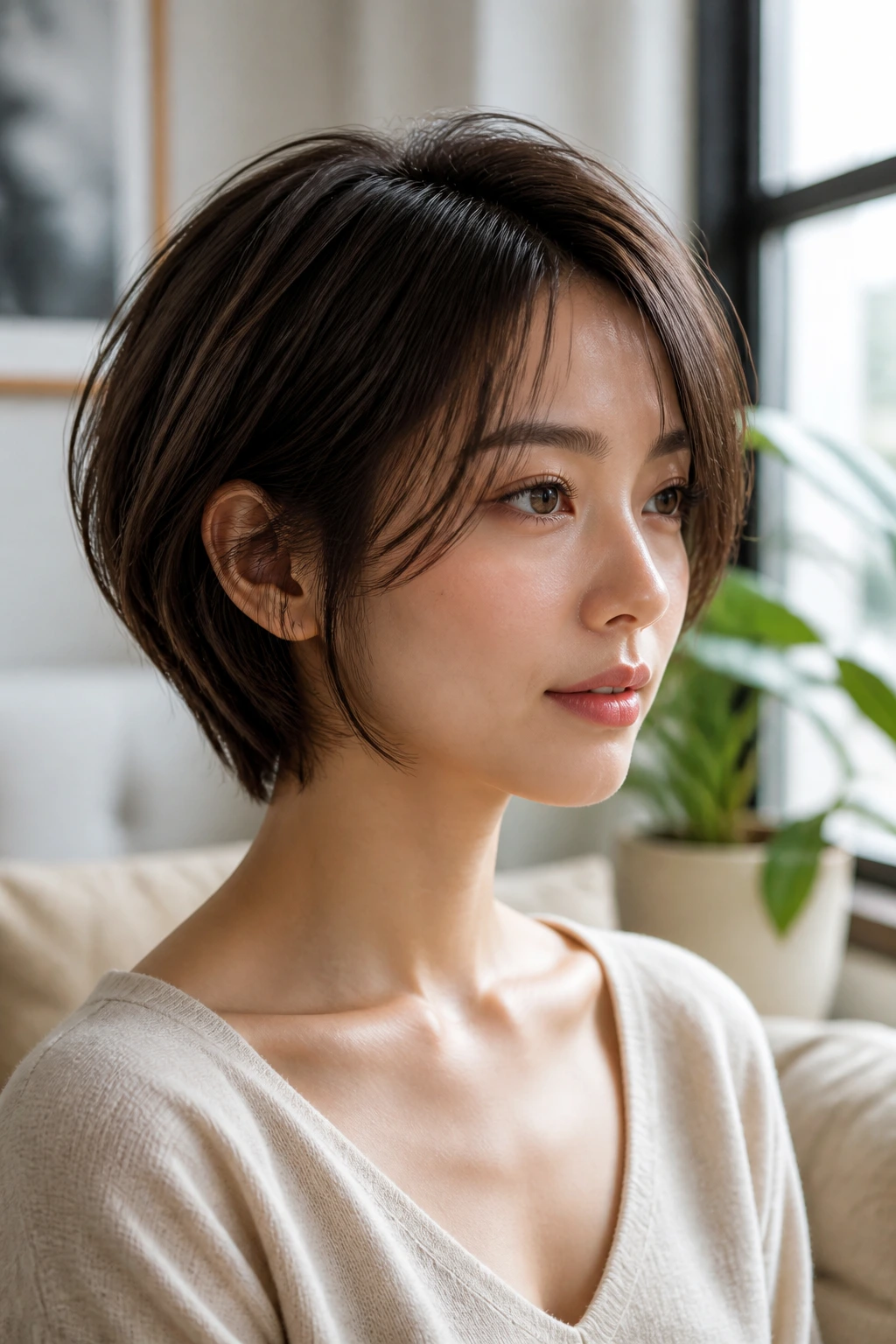
Fine hair can look thinner than it is when it gets cut too blunt at the wrong length. The layered micro bob solves that by keeping the base short and adding just enough internal layering to make the hair move.
The best version is not heavily thinned. That is where people go wrong. A micro bob needs body at the perimeter, or the ends start looking see-through. The layers should lift the crown and create soft movement through the middle, while the bottom edge stays tidy.
- Keep the length around the ear to jaw zone.
- Ask for interior layers that do not remove too much weight.
- Use a lightweight volumizing spray at the roots.
- Finish with a quick bend at the ends using a small brush or flat iron.
This cut shines when you want short hair that still looks full in daylight. It is small, neat, and a little cheeky.
16. Nape-Tapered Crop with Longer Top Layers
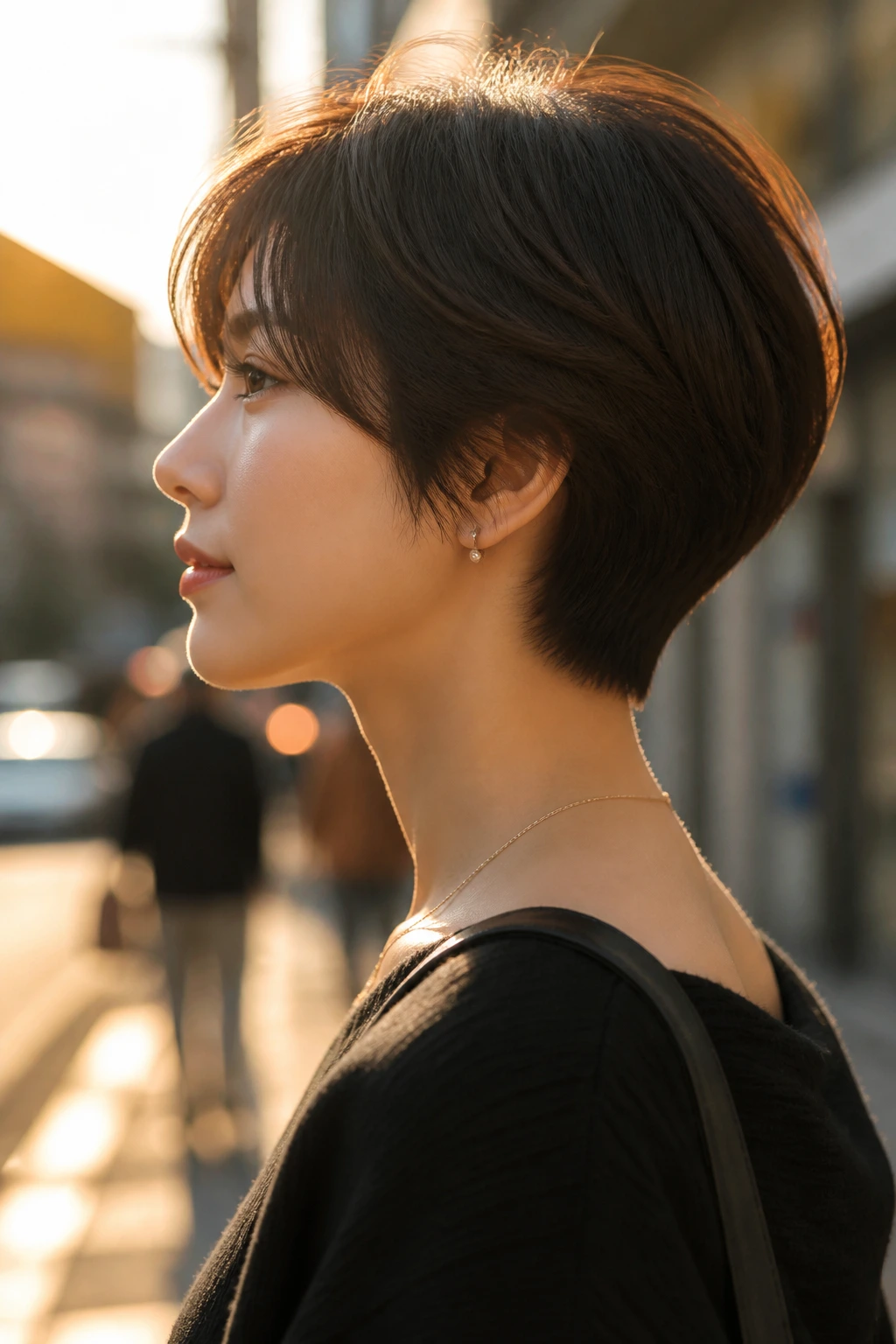
The nape-tapered crop is one of those cuts that looks simple from the front and quietly clever from the side. The back hugs the neck more closely, while the top layers stay longer, so the whole shape keeps a soft sweep instead of going flat.
That contrast matters. If the top and back are the same length, the haircut can lose energy. A tapered nape creates lift where the head naturally curves, which makes the profile cleaner. It also keeps the neck visible, which can make jewelry, collars, and earrings stand out in a nice way.
I like this style for people who want short hair but do not want a pixie that exposes too much. It sits in a useful middle ground. The top still has enough length to flip, part, or tuck. The back stays neat enough that you do not spend all morning fixing it. Low fuss, decent shape, good grow-out. That is the appeal.
17. Side-Swept Pixie with Gentle Texture

A pixie does not have to look boyish. That is the mistake people make when they picture very short hair. The side-swept version keeps the crop short, then pushes the top forward or across the forehead so the cut reads soft instead of harsh.
What the Side Sweep Changes
The sweep creates a diagonal line across the face, which is flattering on almost everyone because it breaks up vertical space. It also gives the forehead and temples a little cover, which helps if you prefer a less exposed look. The texture should stay gentle. Not spiky. Not crunchy.
This cut works best when the top is long enough to move with your fingers. The sides can stay close, but the crown needs a little body. Use a light cream or paste, then rough the top over with your hands and stop. That is enough. If you keep fiddling, the shape turns stiff, and the whole point of this cut is ease.
18. Face-Framing Mini Wolf Bob
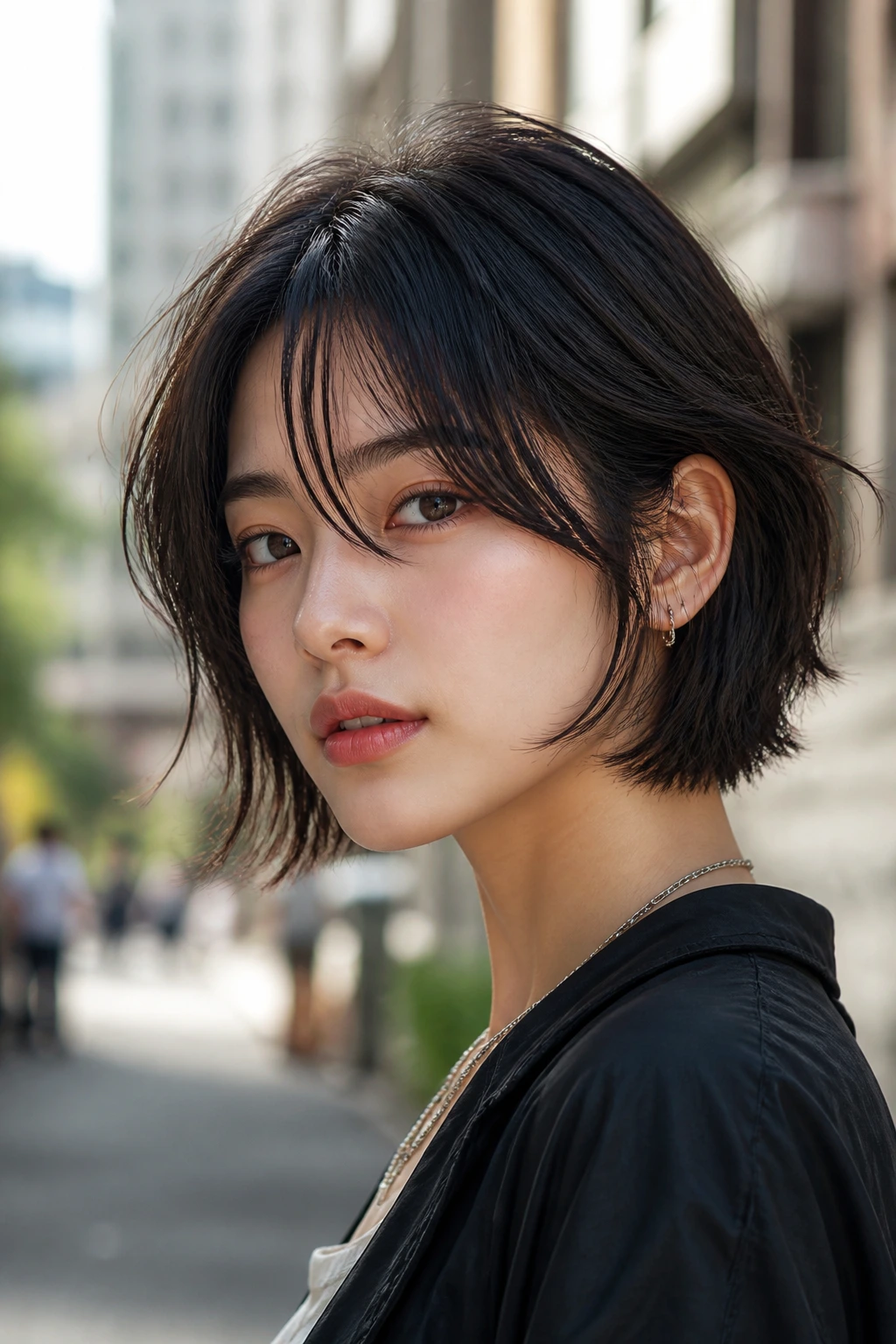
If you like the energy of a wolf cut but want something shorter and neater, the mini wolf bob is the compromise. It keeps the face-framing layers, trims the length to bob territory, and leaves enough roughness at the ends to keep the haircut from feeling flat.
The front pieces usually start around the cheekbones, then soften down toward the jaw. That gives the face shape without the heavy front curtain some layered cuts can create. The back remains compact enough to wear with a coat collar or a scarf and not get swallowed.
- Ask for soft layers, not harsh steps.
- Keep the front pieces long enough to tuck behind the ears.
- Let the ends stay slightly uneven for movement.
- Style with a round brush only where the hair needs direction.
This one suits women who want a little edge but still need a haircut that can survive a regular week.
19. Grown-Out Pixie Bob with Soft Ends
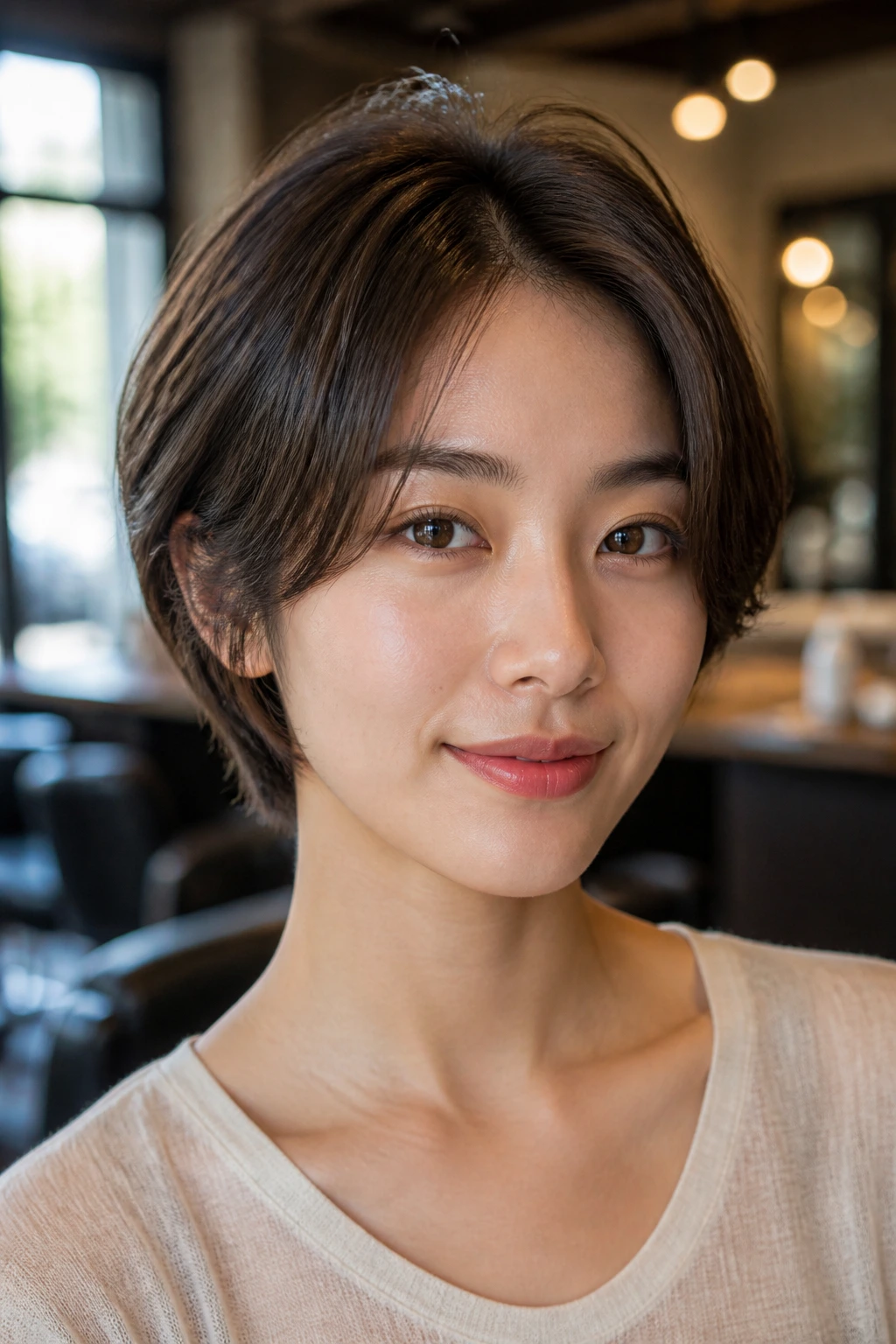
There is a reason grown-out pixie cuts become this shape so often. The transition from pixie to bob naturally creates a short bob with softness around the ears and nape, and if the cut is handled well, it can look intentional rather than awkward.
Unlike a strict pixie, this version keeps enough length at the sides to frame the face. Unlike a full bob, it stays light at the back. That makes it a good bridge for anyone growing out very short hair, or for anyone who wants something that sits between polished and playful.
The ends should be softened, not jagged. A little point cutting helps, but the outline still needs weight. If the hair becomes too wispy, the cut loses its shape by the second week. A tidy grow-out is the goal here. That usually means a trim every 5 to 7 weeks and a stylist who knows when to leave length alone.
20. Soft Rounded Pixie Bob for Easy Grow-Out

The smartest short Korean cuts share the same idea: they keep enough structure to look neat, then soften the face so the haircut never feels rigid. This rounded pixie bob does exactly that. The back is short enough to stay clean, the sides curve gently around the cheekbones, and the top has just enough length to bend or sweep.
If you are torn between short and shorter, this is a very practical place to land. It grows out well. It styles quickly. It does not demand a full hair routine every morning. And if you want to change it later, the shape gives you room to move into a bob or a longer pixie without an awkward in-between stage.
Bring photos to the salon, yes, but bring side and back views too. That matters more than people think. A short cut lives or dies by its outline from the ear back, and that is where a lot of inspo photos fail you. The front sells the dream. The side tells the truth.
A good Korean short haircut should feel like it already belongs on your head the second you leave the chair. That is the real test. Not whether it looks dramatic on a feed. Whether it still looks right when you tuck it behind one ear, catch it in bad light, and go on with your day.
