



Fine hair has one annoying habit: it collapses faster than the rest of us would like. A cut can help more than a can of mousse ever will. That is the part people miss.
The right shape gives you body before you even pick up a round brush. The wrong shape does the opposite. Long, heavy ends can drag fine strands down, while too much feathering can leave the bottom looking scraggly and thin. The sweet spot is usually somewhere in the middle—clean lines, smart layering, and a little movement where it counts.
There’s also a big difference between fine hair and thin hair. Fine means each strand is small in diameter. Thin usually means there aren’t many strands on your head. You can have fine hair with a ton of density, and you can have fine hair that’s sparse and delicate. The haircut that flatters one won’t always flatter the other, which is why cookie-cutter advice falls apart so fast.
What works best for haircuts for fine hair that add body is usually pretty simple: keep weight at the perimeter, build lift at the crown without shredding the ends, and choose lengths that don’t fight gravity all day. A good stylist can make that look effortless. A bad one can make fine hair look tired before you even leave the salon.
1. Blunt Chin-Length Bob
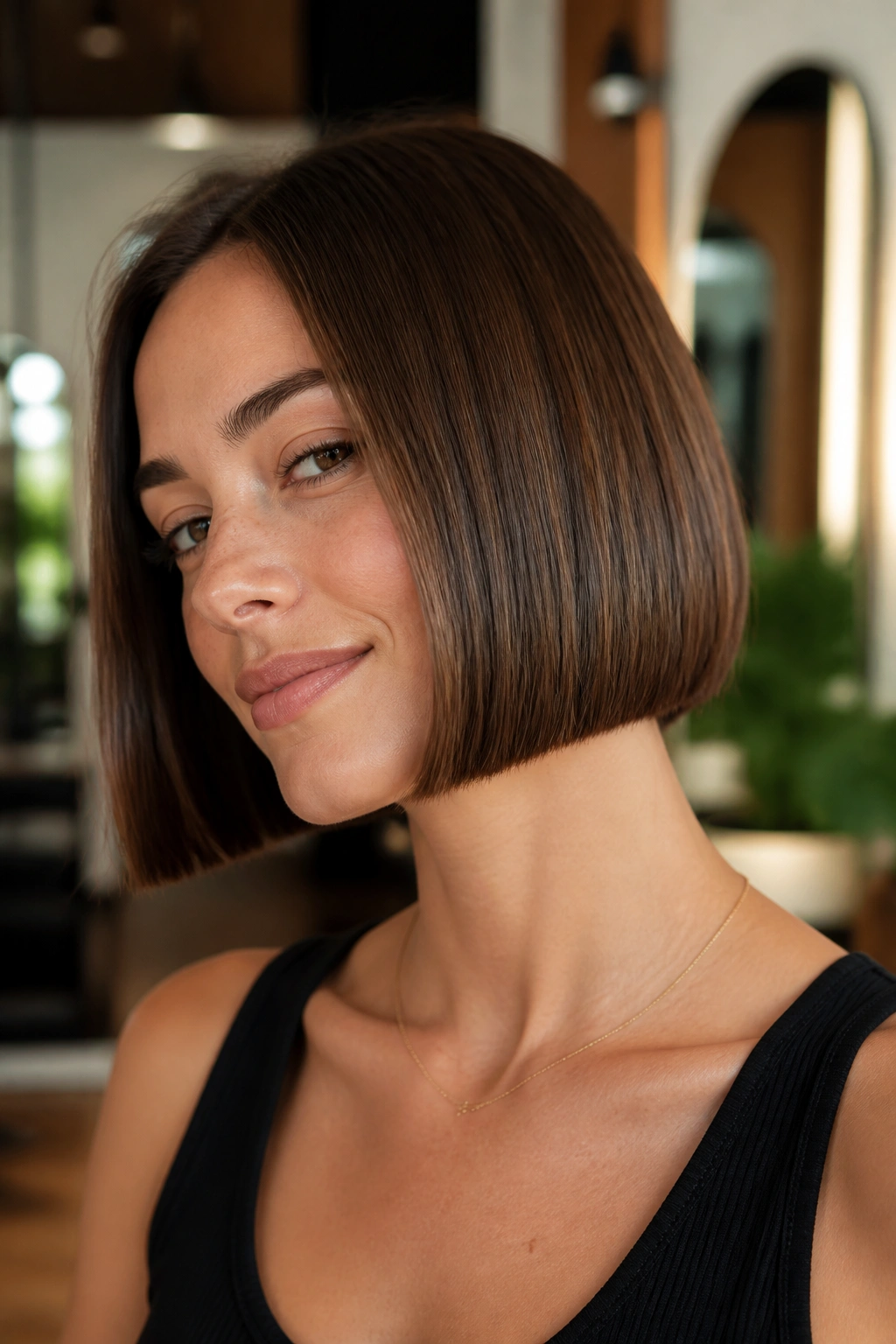
A blunt chin-length bob is the easiest haircut to trust when your hair needs a thicker-looking edge. It lands right at the jaw or just below it, and that hard line makes the ends look denser than they really are. There’s no mystery here. That’s the point.
Why the blunt line matters
Fine hair tends to look wispy when the bottom is too soft. A clean, one-length edge gives the eye something solid to read, so the whole style looks fuller. If your strands skim the neck and stop, they also bounce a little instead of hanging like wet ribbon.
Ask for the perimeter to stay sharp, with only a tiny bit of internal cleaning if needed. Not slicing. Not heavy texturizing. A good blunt bob should feel tidy and a little architectural, which is exactly what fine hair often needs.
- Best length: jawline to just under the chin
- Best part: slight off-center or deep side part
- Best styling move: 1.5-inch round brush at the ends only
- Avoid: thinning shears through the bottom half
Tip: If your hair bends out at the neck, ask for the nape to be cleaned up dry so the line sits flat.
2. The Italian Bob
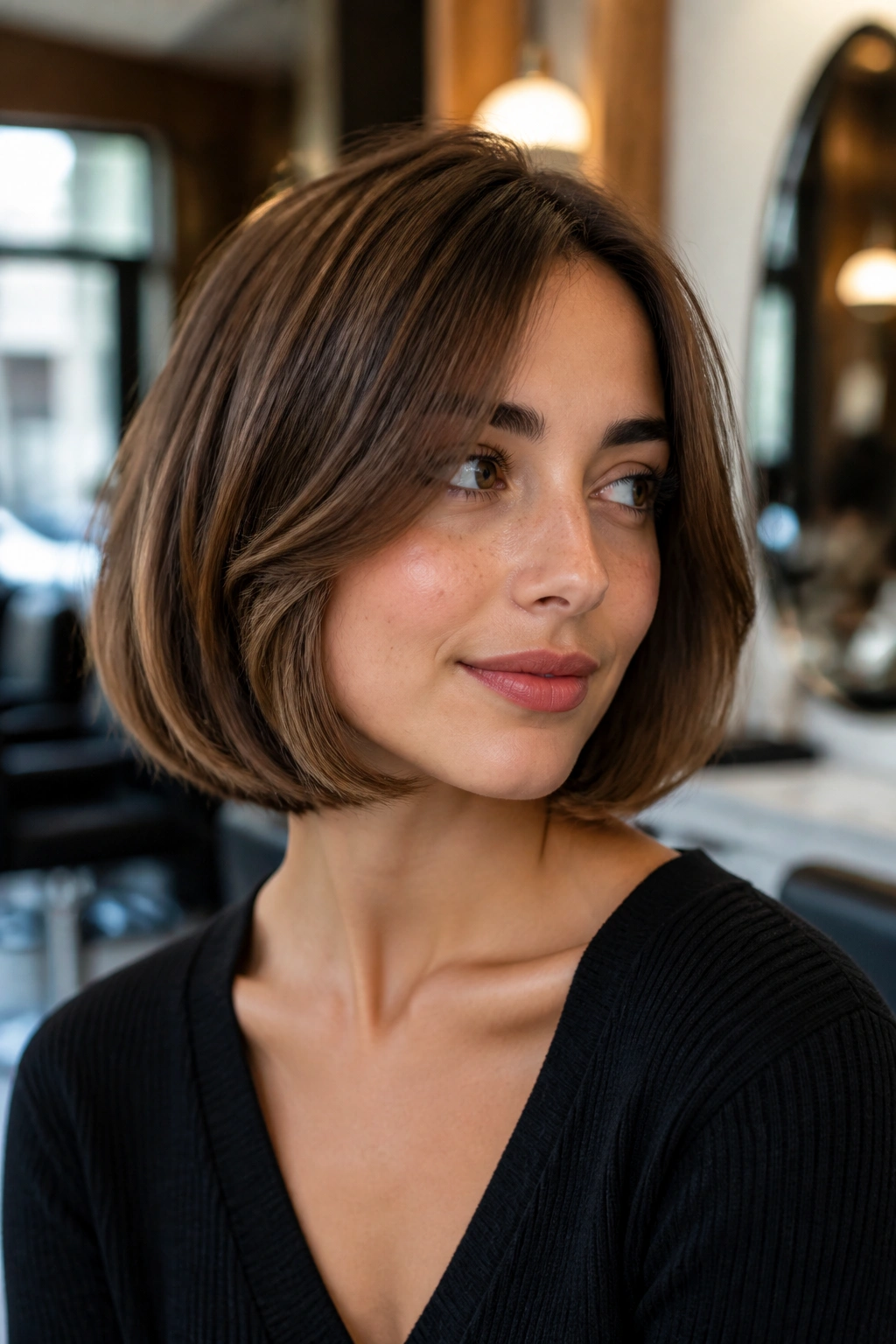
The Italian bob has a little more swing than a classic blunt bob, and that’s why it works so well on fine hair. It usually sits between the jaw and the collarbone, with just enough width through the sides to make the style feel plush. Think polished, not stiff.
What I like about this cut is that it doesn’t beg for volume. It already has shape. The ends are full, the silhouette is rounded enough to avoid looking severe, and the length gives you room to tuck one side behind the ear without the whole thing losing its balance.
Fine hair that goes flat in humid air often behaves better with this cut than with long layers. There’s less weight dragging the root down, but enough length left to keep it from feeling too short. That balance matters. Too short can feel puffy; too long can feel tired.
Blow it out with a medium round brush and a pea-sized amount of mousse at the roots. Keep the mids light. Heavy cream is a fast way to turn an Italian bob into a sad little sheet.
3. French Bob with Soft Fringe

Can a French bob work on fine hair? Absolutely—if you keep the fringe soft and the base blunt. A harsh, over-cut fringe can expose every weak spot in the hairline. A softer one slips in a little easier and gives the face some lift.
This cut usually sits at cheekbone to jaw level, which means it brings attention upward. That’s useful when the ends of your hair need a thicker edge and your crown needs a little visual lift. It also has a casual feel that suits fine hair better than something over-structured. Fine strands often look better with a touch of looseness.
How to style it
Dry the fringe first, side to side, with a small round brush or even your fingers. You want it to bend, not sit like a helmet. Then rough-dry the rest until it’s about 80% dry before smoothing the ends with a brush.
A French bob is a good choice if you like hair that looks deliberate but not too polished. It can feel chic. It can also feel a little unforgiving if your stylist cuts the fringe too short, so ask for eyebrow-grazing length first. You can always shorten it later.
4. Angled Bob

An angled bob gives fine hair a built-in lift because the back sits a little shorter than the front. That forward slope creates motion even when the hair itself is flat. It’s a small trick, but it works.
Picture this: hair that usually clings to the head suddenly has a shape that pushes the eye forward and down, so it reads fuller from the side. That’s why angled bobs look especially good on straight fine hair. The cut does some of the styling for you.
What to ask for
- Back length that hits 1 to 1.5 inches shorter than the front
- A clean, beveled line rather than a stacked, chunky back
- Minimal layering near the face so the front keeps its weight
- A slight side part to help the longer front pieces fall with purpose
The one catch is that a steep angle can look dated fast if it’s too dramatic. Keep it soft. You want a slope, not a triangle. And if your hair is very fine, avoid over-texturizing the front pieces; that only makes the longer side look stringy.
5. Stacked Bob
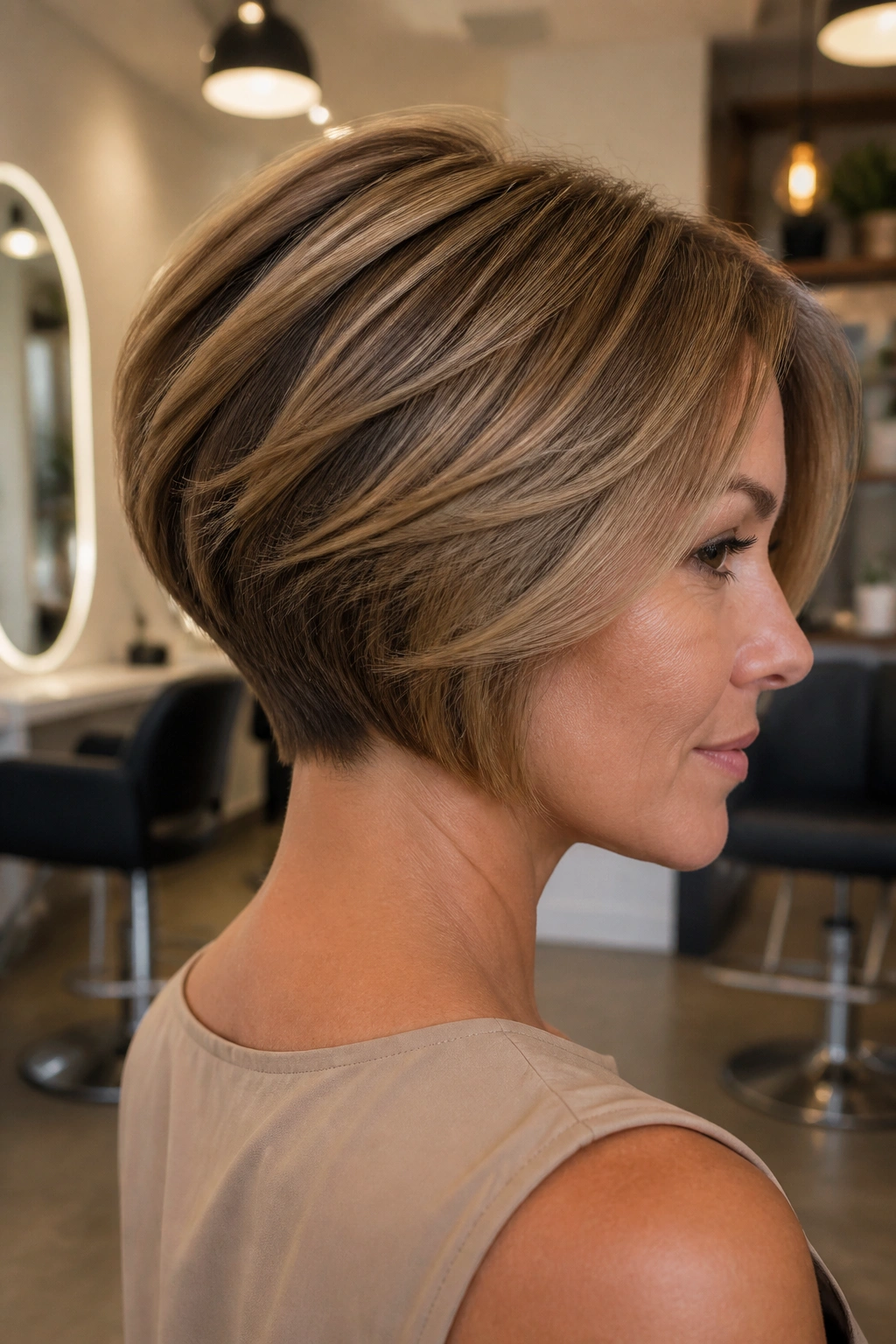
A stacked bob is the haircut I reach for when someone says, “My hair lies flat at the back of my head no matter what I do.” It builds volume exactly where fine hair needs a little help: the occipital area, just below the crown. The graduation at the nape creates a lift from underneath instead of depending on product.
That lift can be a lifesaver, especially if your hair is straight and stubborn. The shape gives the illusion of density at the back while keeping the outline neat. It also keeps the neckline tidy, which matters more than people think. A fluffy, unfinished nape makes fine hair look thinner.
But here’s the catch: too much stacking can turn soft hair into a helmet. Keep the graduation subtle and ask for smooth blending through the back. A stacked bob should look supported, not piled up.
A quick root clip at the crown while your hair cools can make the shape hold longer. Small clips. 10 minutes. That’s often enough.
6. Rounded Wedge Bob

Unlike a shaggy cut, the rounded wedge bob keeps the body concentrated in the middle and back of the head, which is exactly where a lot of fine hair starts to fall apart. It curves in a soft arc, hugging the head without flattening it. That shape looks tidy in a way that helps fine strands read as thicker.
This cut is especially smart if your hair is straight or only slightly wavy. It gives the illusion of control. You can wear it sleek and still have a little lift at the crown, which is a hard thing to fake with products alone.
A rounded wedge bob is best for someone who wants shape without fuss. If you hate endless curling and spraying, this is a friendly option. It also grows out neatly, which is useful because awkward grow-out on fine hair can happen fast.
Keep the ends blunt and the back softly graduated. If the stylist starts carving into it with lots of razor work, the neat shape disappears. And that’s the whole point of this cut.
7. One-Length Lob

A one-length lob can be a secret weapon for fine hair because it keeps all the weight at the bottom where you need it. It sits around the collarbone, sometimes a touch higher, and the straight perimeter gives the impression of more substance than layered mid-length hair usually does.
The cut is boring in the best way. No weird ends. No broken-up layers. Just a clean line that holds itself together. If your hair is fine but you still want some length, this is one of the safest bets.
I like this shape for people who air-dry more than they blow-dry. It settles naturally and doesn’t demand a lot of coaxing. Add a deep side part, tuck one side behind the ear, and you’ve got enough asymmetry to keep it from looking too plain.
It helps to bevel the ends just a little with a brush or flat iron. Not a curl. Just a soft bend so the perimeter doesn’t look stiff. That tiny curve makes the whole cut feel less flat.
8. Collarbone Cut with Invisible Layers

A collarbone cut with invisible layers is the answer when you want movement without losing density. The layers are tucked so low that they’re almost not visible, which means the top can stay smooth and the ends still look full. Fine hair often likes that kind of restraint.
The trick is where the layers begin. If they start too high, the hair starts to whisper at the ends and the whole thing goes sparse. If they start below the chin, the hair keeps its body and still gets a little swing when you move.
This is a smart cut for people who wear their hair both up and down. The length can go into a clip or low bun, but when it’s down, it doesn’t hang like a curtain. It has some life. That matters more than length alone.
Ask your stylist for this
- Layers that start below the chin
- A collarbone-grazing perimeter
- Light face-framing only around the front
- No aggressive razoring through the lower third
If you like a soft blowout, this shape holds it nicely. If you air-dry, it still works. Not every haircut can say that.
9. Curtain-Bang Lob
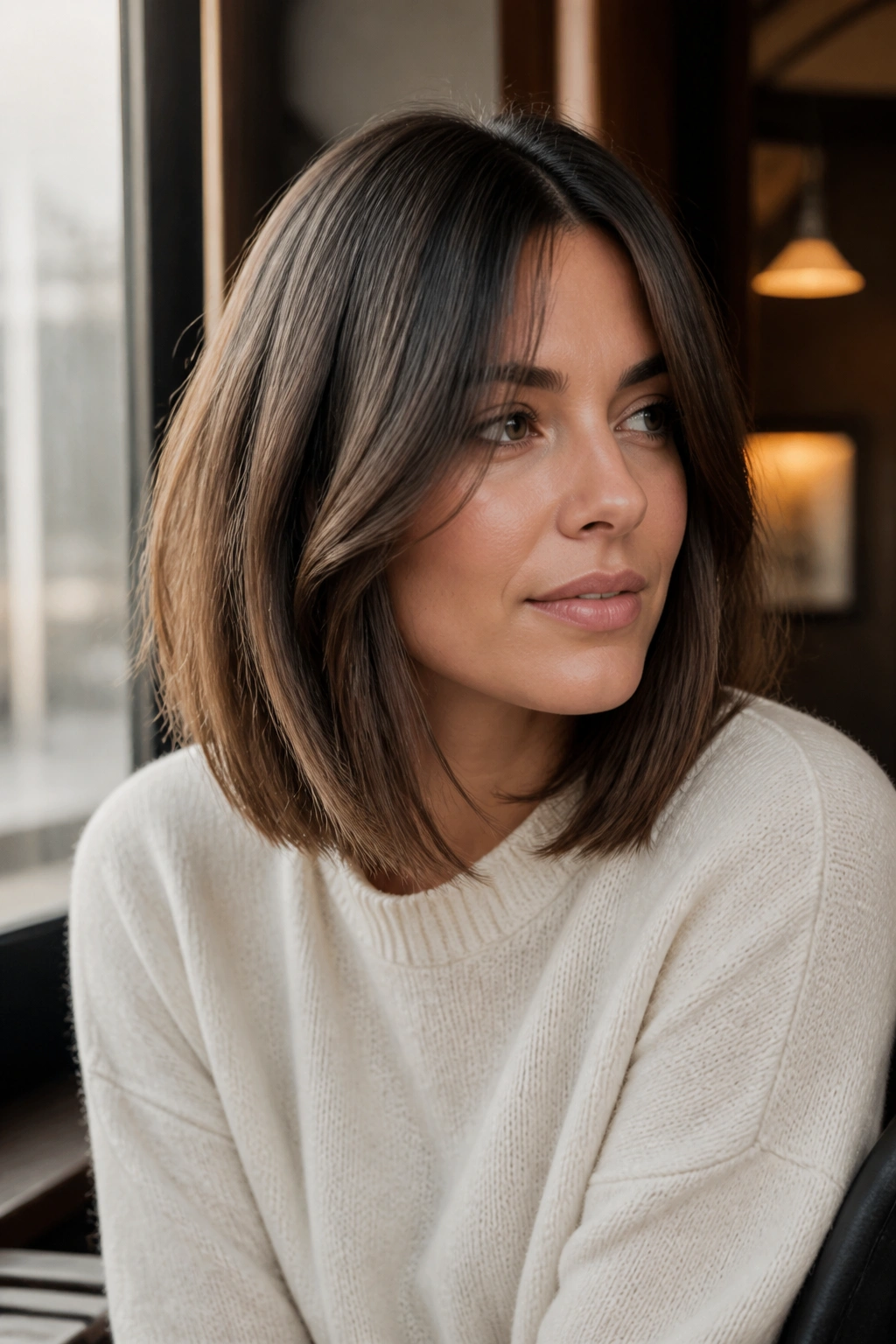
Curtain bangs can be a gift for fine hair when they’re cut with enough softness to move. Pair them with a lob and you get width at the face, which helps the rest of the hair look fuller by comparison. The eye goes to the fringe first. Smart, really.
The bangs should graze the cheekbones and part naturally in the middle or just off-center. Too short, and they lose that easy drape. Too thin, and they separate into scraps. You want enough hair in the fringe to read as a shape, not a few stray pieces pretending to be bangs.
This cut works well if your hair is flat around the front hairline. Curtain bangs fill that gap. They also let you cheat a bit on volume without teasing the crown to death, which I appreciate. Teasing is fine in theory. In practice, most people overdo it.
How to style it
Use a small round brush and direct the bangs away from the face, then let them cool before you touch them again. That cooling step matters. It helps the bend hold. For the rest of the lob, a loose wave through the mids is enough. Keep the ends out a little straighter so the cut still looks full.
10. Side-Part Shoulder Cut
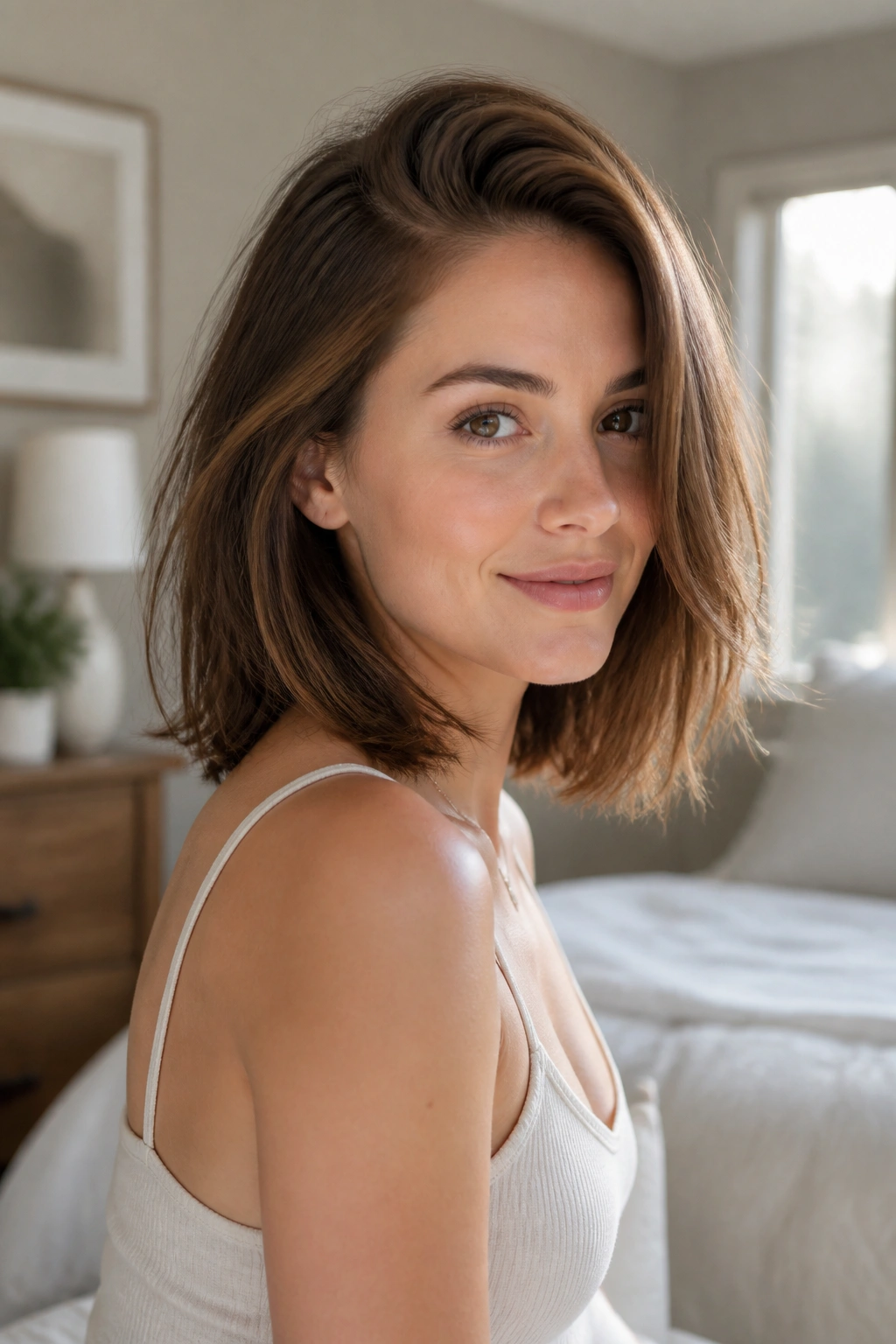
A side part can do more for fine hair than a drawer full of volume products. It shifts the weight, lifts the root on one side, and gives the whole cut a better shape at the crown. A shoulder-length cut paired with a deep side part often looks fuller than the same cut worn dead center.
This is one of those quiet fixes that feels almost too simple. It isn’t. Fine hair often lies too evenly when it’s split down the middle, which makes the top look wider and flatter at the same time. A side part breaks that up fast.
The shoulder length gives enough swing to avoid the “too short, too puffy” problem, while the part gives lift where you need it. If your hair is straight, the change can be dramatic. If it’s wavy, even better.
Use a wide-tooth comb while the hair is damp, then flip the part before drying. That little change in direction helps the root remember the lift. And yes, the root remembers more than people think.
11. Long Blunt Cut with Face-Framing Pieces
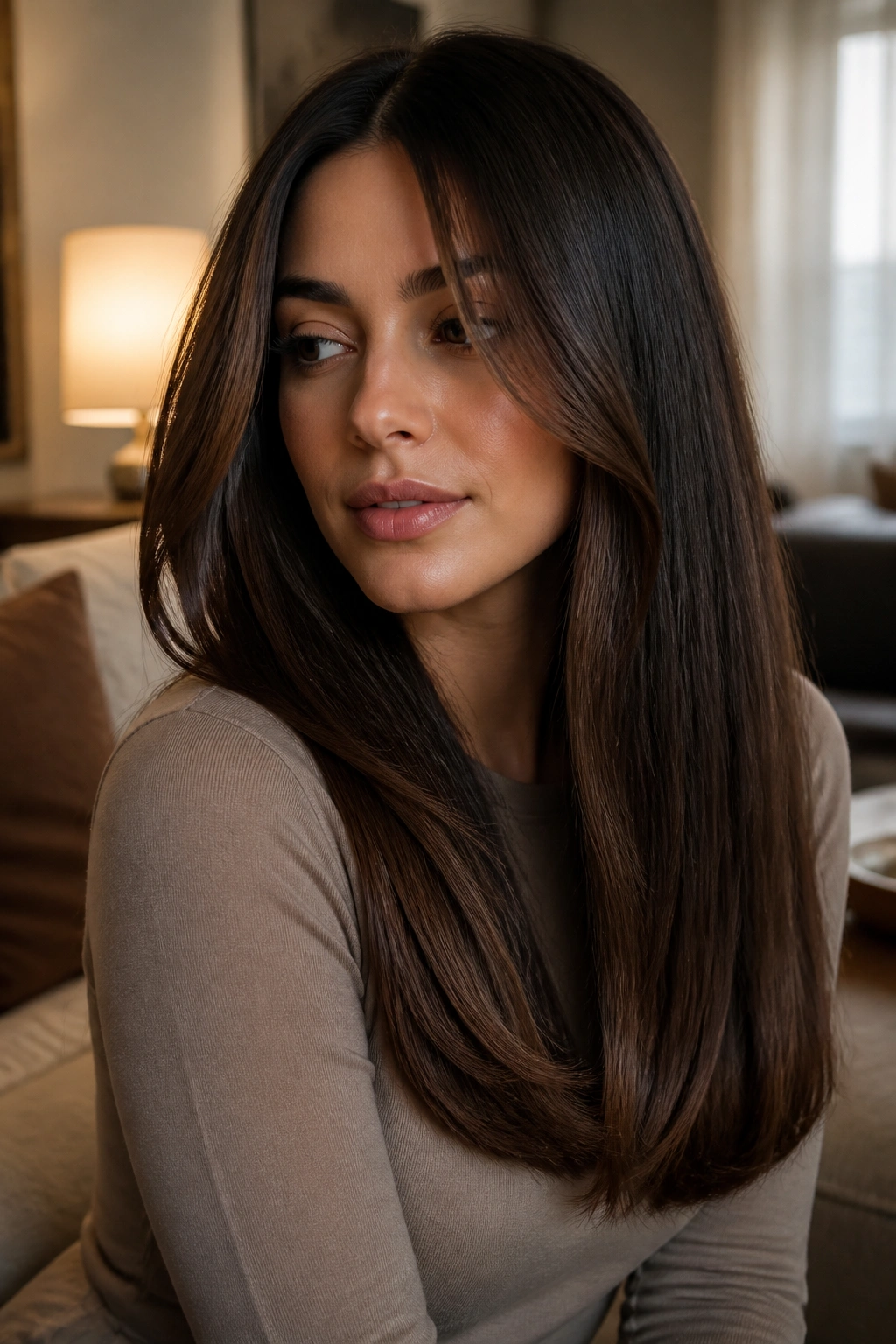
If you refuse to go short, a long blunt cut with a few face-framing pieces is the most honest compromise. The blunt ends keep the tail of the hair looking thick, while the lighter pieces around the face stop the style from feeling boxy. It’s a clean, flattering shape for fine hair that still wants length.
What I like here is the restraint. Too many long layers on fine hair can look beautiful for about six minutes, then they start to fray. A blunt line keeps the bulk where it matters. The face-framing pieces add movement without stripping away the bottom half.
This cut is best if your hair is fine but relatively healthy and you are willing to trim it regularly. Long fine hair without trims starts looking see-through fast. Every 8 to 10 weeks is a good rhythm if you want the edge to stay clean.
A soft bend at the ends helps a lot. So does a center-to-slight-off-center part, which keeps the front from collapsing into your face. Small changes. Big payoff.
12. Soft Shag
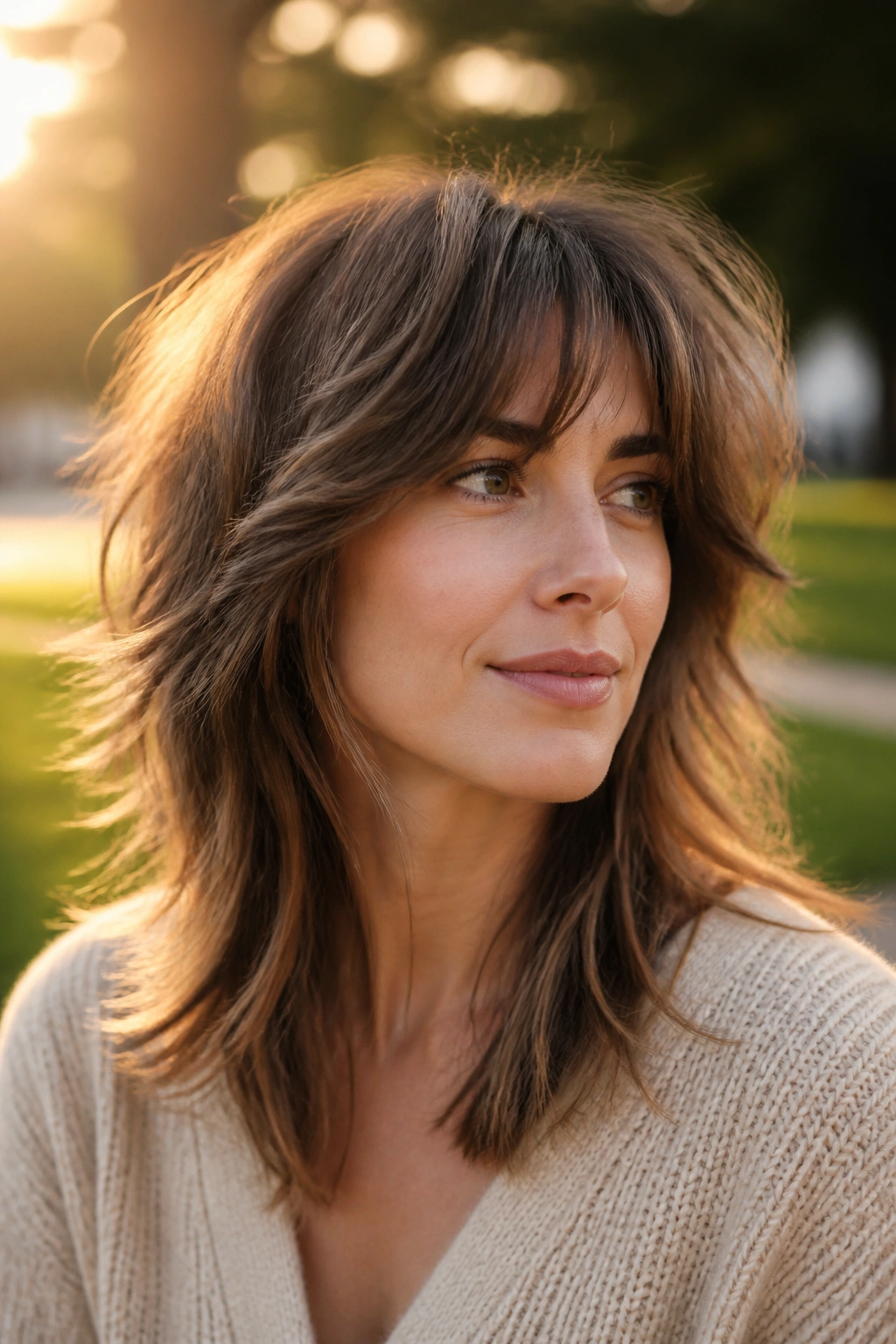
A soft shag is not the same thing as a razor-heavy, chopped-up mess. Fine hair needs the gentle version. The layers should begin low enough to keep the ends from disappearing, but high enough to add some movement through the crown and sides.
The reason this works is simple: the shag builds a sense of fullness through texture rather than weight. That helps if your hair is fine but naturally wavy, because the shape lets the wave do half the job. Straight fine hair can wear it too, but it usually needs more styling.
Compared with a blunt bob, the soft shag feels looser and more casual. Compared with a wolf cut, it’s less wild and easier to live with. That makes it a good middle ground for people who want body without a big style leap.
Keep the layers soft around the cheekbones and collarbone. If the shortest layers land too high, the cut can start looking piecey in a bad way. Nobody wants that.
13. Modern Wolf Cut with Soft Crown
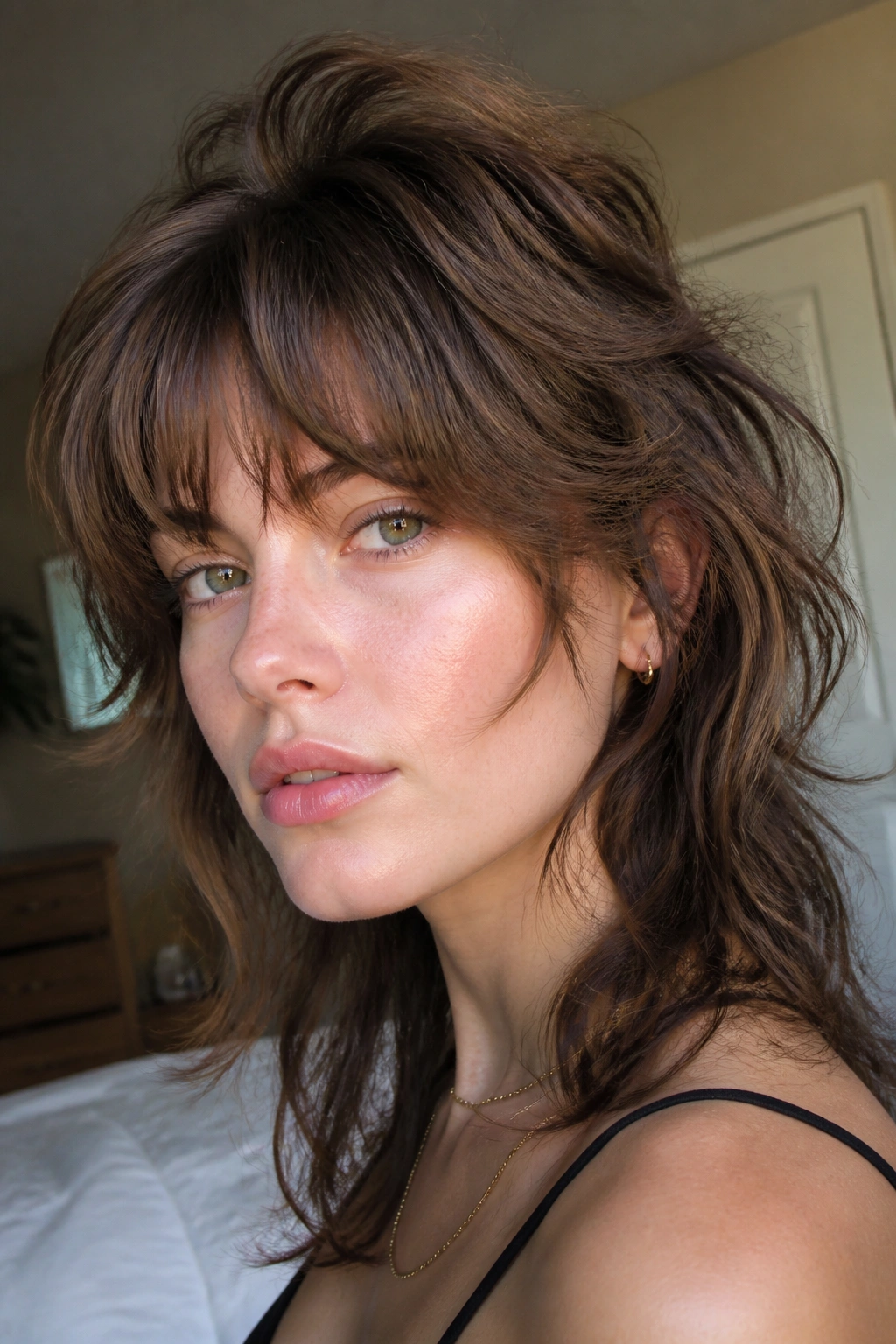
A wolf cut on fine hair has to be handled with care, or it can go from edgy to stringy in one bad snip. The version that works keeps softness at the crown and avoids shredding the ends into nothing. You still get the lifted, airy shape, but the cut keeps enough bulk to look intentional.
This is a good match for fine hair that has some natural bend or wave. The layers can create movement that straight hair doesn’t give you on its own. If you like a bit of mess and don’t want your hair to look too precious, this shape has real appeal.
The crown should be elevated, yes, but not over-carved. You want a little height, not a gap. The back can sit slightly longer to give the style a tail, which helps the cut feel balanced instead of top-heavy.
Diffusing can make a big difference here. Use low heat, a medium-speed airflow, and scrunch just enough to set the layers. Fine hair responds better to gentle drying than to aggressive blasting. It stays softer that way.
14. Bixie Cut

The bixie is what happens when a bob and a pixie have a sensible conversation. It’s short enough to feel light, but there’s still enough length at the crown and sides to make fine hair look fuller than a super-short crop would. That little bit of extra length matters.
What makes the bixie so useful is the movement. The cut usually has a bit of softness around the ears and a little lift on top, so the shape never sits flat against the scalp. Fine hair loves that kind of built-in air.
It’s also a friendly cut for people who want shorter hair but not a severe pixie. You get facial framing, a bit of sweep, and a shape that can be worn sleek or mussed up in under five minutes. That’s hard to beat.
Ask for texture that’s concentrated through the top and sides, not thinned through the bottom. A bit of styling cream on damp hair and a quick finger-dry is often enough. Too much product weighs it down fast. One pump, maybe less.
15. Pixie Cut with a Longer Top
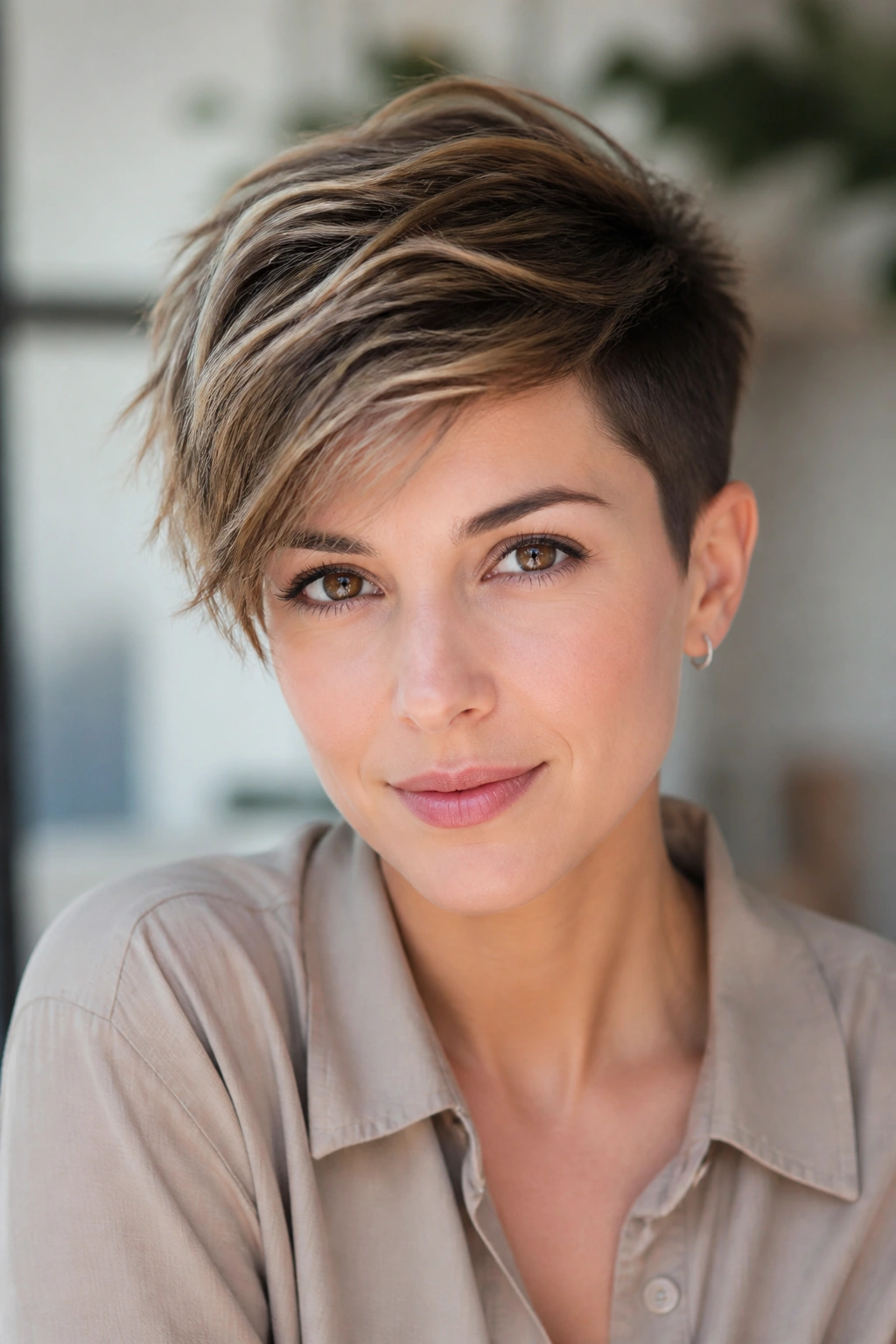
Does a pixie make fine hair look thinner? Only when it’s cut too evenly. A pixie with a longer top fixes that by keeping the crown and fringe long enough to create height and direction. The short sides reduce bulk, while the top gives you places to build shape.
This is one of the most practical cuts on the list if you are tired of hair that falls flat by noon. Short hair dries fast, lifts fast, and doesn’t need much product to look alive. The trick is keeping some length on top—usually 2 to 3 inches—so the style doesn’t cling to the head.
A side-swept fringe works well here because it creates a line across the forehead and gives the haircut a little movement. Fine hair can look extra airy with a feathered fringe, but keep it thick enough to show up in real life, not just in photos.
A tiny bit of root powder at the crown can help, but the cut should do most of the work. If it doesn’t, the shape needs adjusting.
16. Tapered Crop with Soft Fringe

A tapered crop is neat at the nape, short around the ears, and a little longer through the fringe. On fine hair, that taper can make the head look balanced instead of flat. It’s especially good if your hair grows out in a weird, fuzzy shape around the neckline.
The soft fringe keeps the cut from feeling too severe. It can be wispy, but not see-through. That difference matters more than people think. A fringe that’s too sparse just makes fine hair look like it ran out of steam halfway through the cut.
This style likes a bit of lift at the roots and a little piecey separation in the fringe. You can get there with a dab of lightweight paste worked through the ends, then a quick lift at the crown with your fingers. No need to overthink it.
I’d pick this cut for someone who wants structure without looking overstyled. It has a nice clean shape. It also grows out in a decent way, which saves you from awkward months of regret.
17. Feathered Midi Cut

A feathered midi cut sits in that medium-length zone that many people keep trying to make work. The difference here is the feathering is used sparingly, so the hair still looks thick at the ends. That’s the part that matters most with fine strands.
The mids and lower layers get a little movement, which keeps the shape from feeling boxy. At the same time, the perimeter stays strong enough to hold its line. That balance is better than the old-school “layer everything” approach, which can leave fine hair looking airy in all the wrong places.
This cut suits someone who likes a blowout. A large round brush—2 to 3 inches, depending on your hair length—works nicely for shaping the ends under. The result feels soft and full without being overdone.
One small warning: if your ends are dry, feathering can expose that fast. Keep the trim line clean, or the whole style loses its polish. A feathered cut asks for healthy ends. It does not forgive split ones.
18. Mixie Cut

The mixie is the rebellious cousin in this group. It blends the short crown and fringe of a pixie with a little extra length through the back and sides, so the silhouette has movement and a slight tail. Fine hair can handle this shape better than many people expect, because the cut builds lift without relying on density.
What makes it work is the contrast. Shorter sections give the top some life, while the back keeps enough length to avoid looking clipped too close to the head. That contrast can make fine hair look fuller because the eye sees layers of shape instead of one flat line.
It’s a good cut if you like texture and do not mind a little attitude. A mixie is not shy. It looks best when the top has some separation, the fringe is a touch piecey, and the neck area is clean. Too much bulk in the back ruins the whole idea.
Use a tiny amount of matte paste and work it through dry hair. Then push the top up with your fingers. Done. Fast hair can be nice hair.
19. Textured Crop with Side-Swept Bangs

A textured crop with side-swept bangs is a smart short cut for fine hair because the bangs draw attention diagonally across the face while the crop keeps the crown from falling limp. The diagonal line gives the style motion. Motion reads as body.
This one works best when the texture is controlled, not shredded. I mean that. A few soft pieces are fine. Too many chopped bits make the haircut look broken, and broken is the last thing fine hair needs. Keep the top layered enough to move, but not so much that it disappears.
Side-swept bangs are especially useful if your forehead is narrow or your hairline sits high. They soften the front and keep the style from looking too severe. If you wear glasses, this cut can be especially nice because the bangs help the frames sit inside the shape.
A quick blow-dry with a paddle brush at the roots and fingers through the ends is enough for most days. Save the heavy round-brush work for when you want a smoother finish. You probably will not need it often.
20. U-Shaped Cut with Blunt Ends
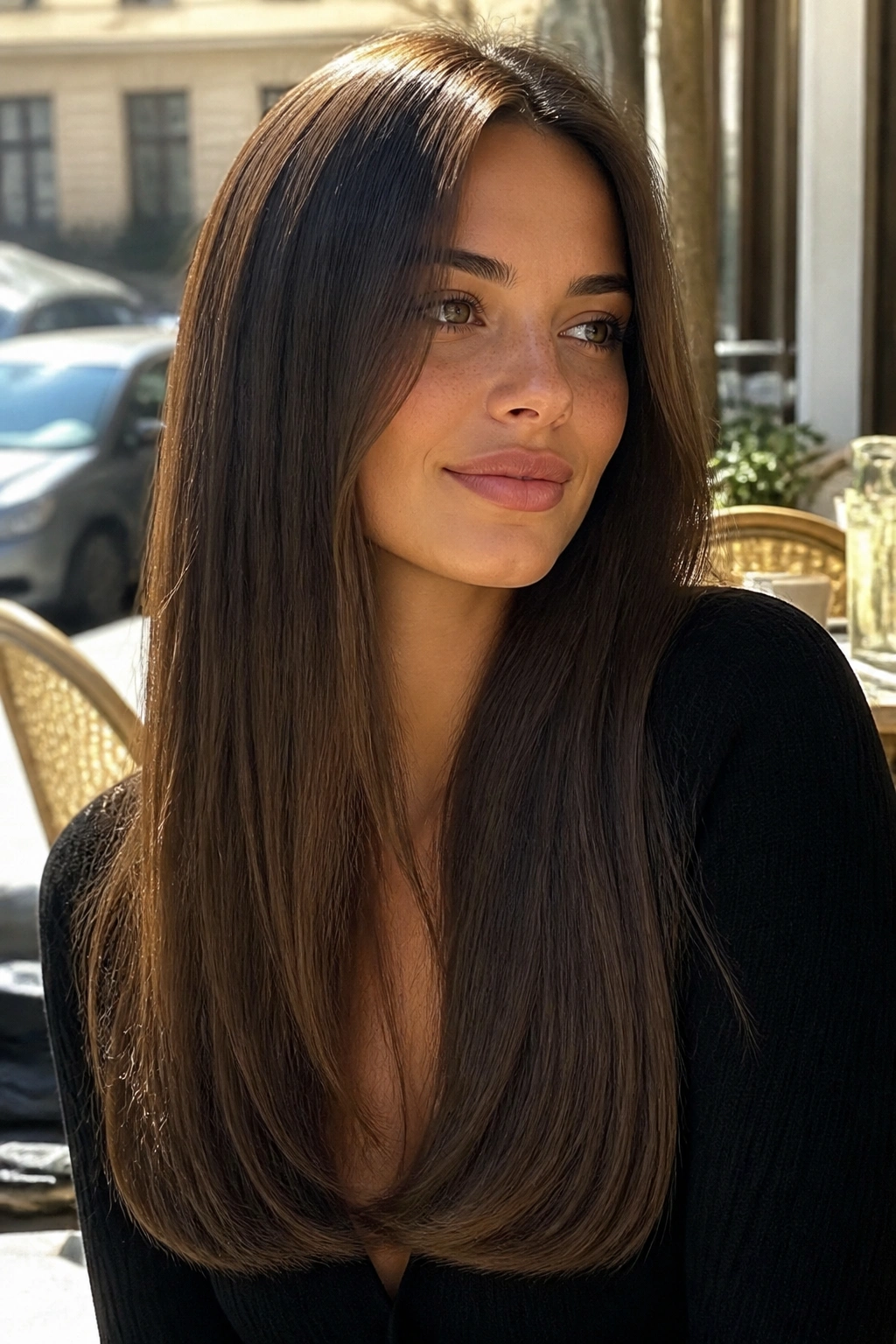
A U-shaped cut is one of the best ways to keep longer fine hair from looking boxy while still protecting the fullness at the bottom. The curve is subtle, not dramatic. The ends stay blunt, which keeps the perimeter thick, and the soft U prevents the hair from hanging in one rigid curtain.
This is a good choice if you want movement but you are nervous about layers. It gives just enough shape to keep long hair from feeling static, while leaving the lower edge solid. That lower edge matters more than most people realize. It’s what makes long fine hair look cared for instead of stringy.
If you have a naturally straight texture, this cut behaves nicely with a center or slight off-center part. If your hair bends, the U shape still works, though it may need a light bend with a flat iron or blow-dry brush to show clearly.
Ask for the face-framing to stay subtle and the ends to be cut bluntly, not wispy. A little shape at the front is enough. Too much creates see-through layers, and that is not the goal here.
Final Thoughts
Fine hair usually does better with a haircut that knows when to stop. That’s the real trick. You want shape, not overwork. You want enough movement to keep the hair alive, but not so much carving that the ends start looking tired.
If you like the cleanest look, choose a blunt bob, Italian bob, or one-length lob. If you want more lift and you do not mind texture, a soft shag, bixie, or mixie can give you a lot more personality. The best cut is the one that matches how much styling you’ll actually do on a Tuesday morning.
Bring photos, yes. Bring two if you can—one for length and one for shape. That makes the conversation with your stylist a lot easier, and for fine hair, the details are where the win lives.
