



A fresh haircut can change the mood of your whole face faster than makeup or a new jacket. The best girl haircut ideas do not just look cute in a mirror; they make sense when you brush them at 7 a.m. and again when the day has been rough.
That is the part people miss. A haircut has to live with you. A blunt bob can look sharp on one head of hair and boxy on another. Curtain bangs can feel sweet and easy, then sit in your eyelashes for three straight weeks if the cut is too heavy.
Hair texture matters more than a lot of salon photos admit. Fine hair needs a different kind of layering than thick hair, curls need room to spring, and straight hair can take a crisp line that wavy hair will soften on its own.
The 15 ideas below lean on shape, movement, and a clean grow-out. Some are sharp. Some are soft. A few are bold enough to make you look twice in the mirror, which is sometimes exactly the point.
1. Chin-Length Blunt Bob
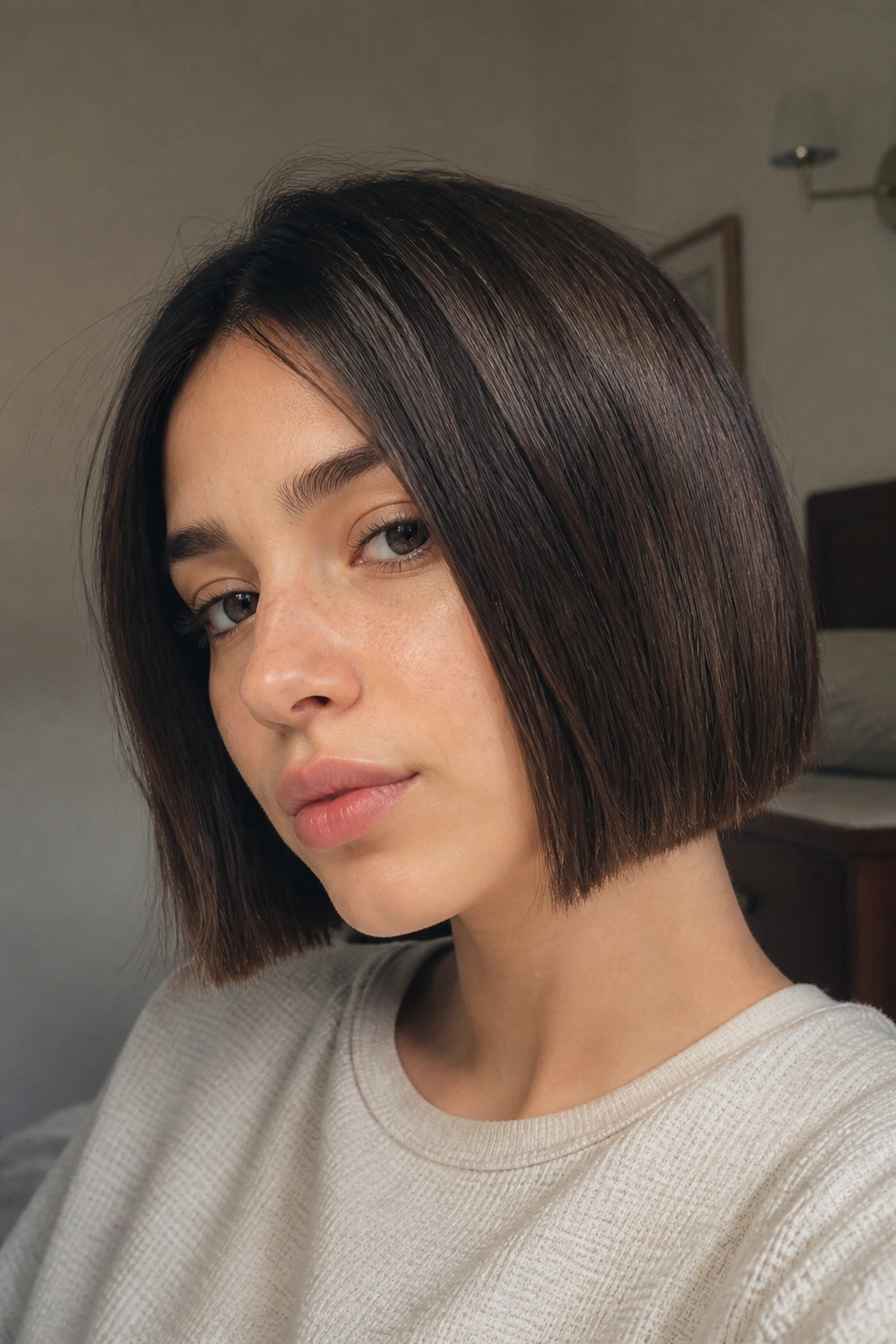
A chin-length blunt bob has a way of making hair look deliberate even when you did almost nothing to it. It sits close to the jaw, which gives the whole face a cleaner outline, and the blunt edge makes ends look fuller than they are.
Why It Works
This cut is a strong pick for hair that tends to go flat at the bottom. The straight perimeter gives the eye a clear line to follow, so the haircut looks neat even when you air-dry it and let it do its own thing.
I also like it for people who want short hair without losing all their length. It still tucks behind the ears. It still works with clips. But it feels lighter the second you take the last inch off the ends.
- Best for: fine to medium hair, straight hair, and soft waves that settle easily
- Styling time: about 5 to 10 minutes with a smoothing cream or a quick blow-dry
- Salon note: ask for the ends to stay blunt, not feathered out
- Grow-out: tidy enough to hold shape for a while, which matters more than people think
Tip: If your hair flips hard at the neck, ask for the back to be left a touch longer than the front. Small change. Big difference.
2. Soft Layered Lob

A soft layered lob is the haircut I suggest when someone wants change without the nervous, “what have I done?” feeling. It lands around the collarbone, which gives you enough length to tie back, but not so much that it drags down the shape.
The magic is in the layers. Not the choppy, overworked kind. The soft kind that takes weight out of the ends and lets the hair move when you turn your head. On thick hair, that movement keeps the cut from feeling heavy. On fine hair, long layers stop the length from looking stringy.
I’m a fan of this one because it plays well with both air-drying and blowouts. If you want sleek, a paddle brush and a little heat protectant do the job. If you want texture, a bit of mousse at the roots and a few scrunches is enough. It does not demand a perfect finish, which is why so many people end up wearing it for longer than they planned.
3. Curtain Bangs With Long Layers
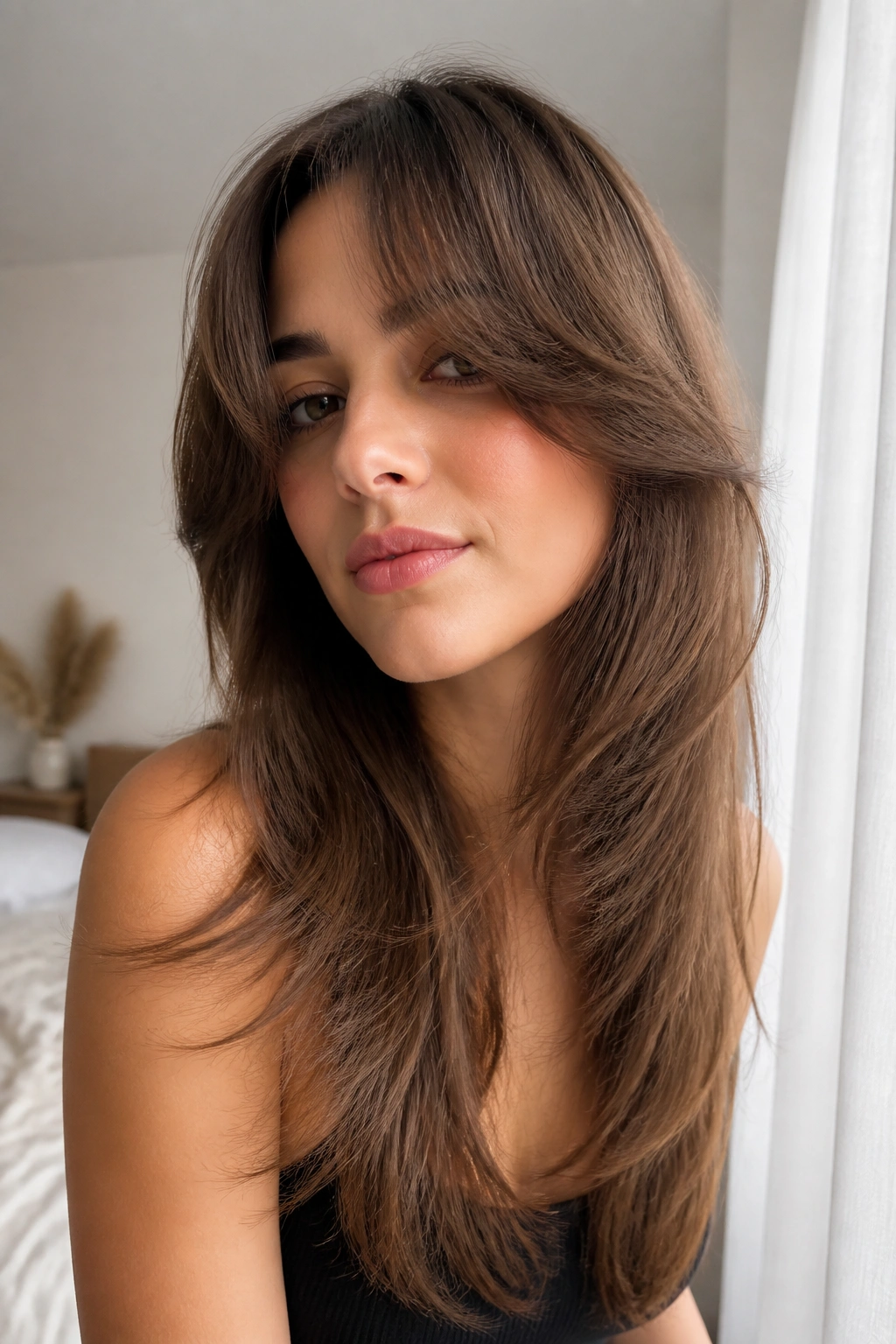
Want face framing without a blunt fringe sitting squarely on your forehead?
Curtain bangs are the answer when you want movement near the face but not the full commitment of straight-across bangs. They part in the middle, sweep out around the cheekbones, and blend into long layers so the haircut feels open rather than sealed shut.
The cut works best when the bang section is kept light. Too much hair in the fringe and it turns into a heavy curtain that needs constant brushing. Too little and it disappears. The sweet spot is a soft frame that starts near the cheekbone and tapers into the jaw.
How to Wear It
Dry the bangs first. That matters. If they dry in the wrong direction, they can split in weird ways and sit there all day looking half-hearted. A small round brush or a flat brush with a slight lift at the roots usually does the trick.
If you prefer low effort, twist the damp fringe away from the face and clip it for a few minutes while the rest of your hair dries. That gives the shape a bend without a full blowout. Curtain bangs are also one of the easier bang styles to grow out, which is half the appeal.
4. Textured Pixie Cut
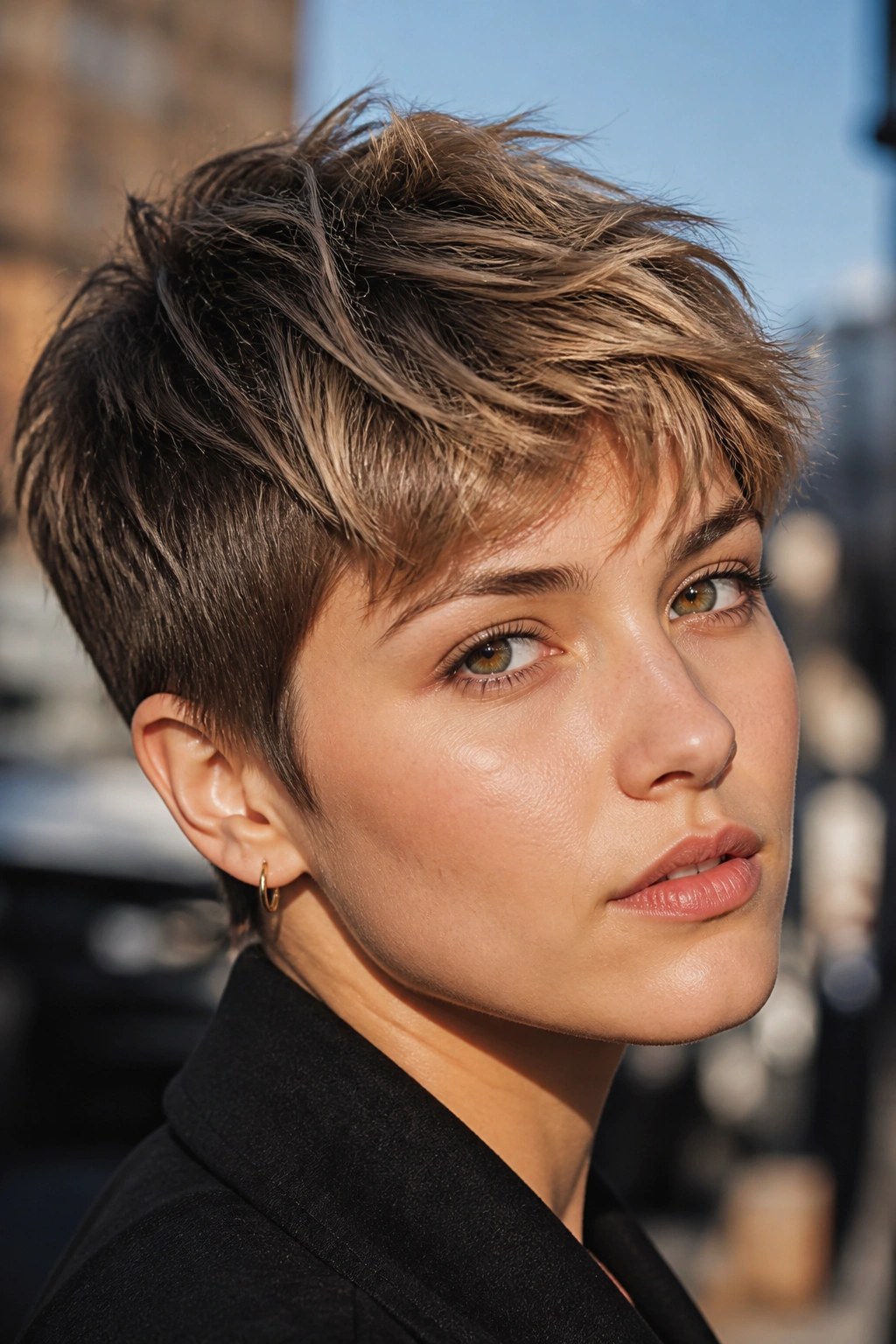
A good pixie cut is what you choose when you are tired of wrestling your hair into a ponytail and pretending that counts as styling. It shows off the eyes, the brows, the ears, all of it. And if the texture is done right, it looks light instead of severe.
The trick is keeping enough length on top to move. If everything is cut too close, the whole style can feel flat and hard. Leave some softness through the crown and fringe area, then go shorter at the sides and back so the shape feels clean. A little mess is part of the point here.
- Best for: people who like quick styling and regular trims
- Ask for: soft scissor work around the ears and a longer top section, usually around 1.5 to 3 inches
- Product to use: matte paste, light wax, or a pea-size amount of styling cream
- Watch out for: very tight cowlicks at the front, which can fight the shape if the fringe is cut too short
Tip: Leave a touch more length near the hairline than you think you need. That softness saves the cut from looking too hard.
5. Feathered Shag
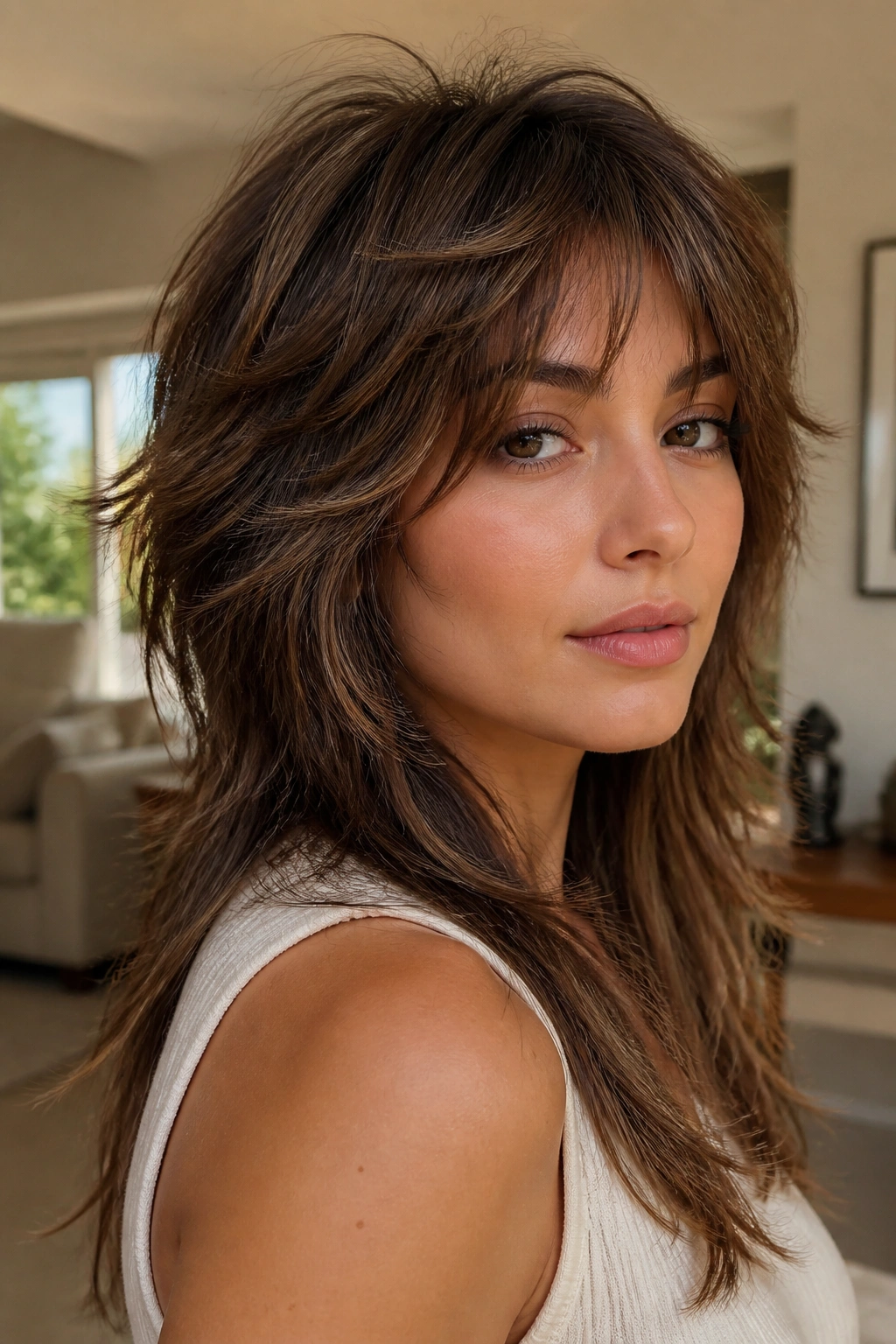
The feathered shag has a bit of attitude, but not the kind that feels costume-y. It is built from layers that start higher around the crown and taper down in soft pieces, so the hair lifts instead of hanging in one flat sheet.
That shape is doing real work. On wavy hair, it keeps the texture from looking blunt. On thicker hair, it removes weight without making the ends look thin. And on finer hair, it can add a feeling of air around the face if the layers are kept longer and not carved too aggressively.
I like this cut because it forgives a less-than-perfect styling day. A little mousse, a rough blow-dry, maybe a diffuser if your hair is wavy or curly, and you’re done. It looks better when it is not too polished. That is the fun of it. The cut has movement built in, so you are not starting from zero every morning.
If your hair is pin-straight and fine, ask for a softer version with fewer short pieces at the crown. Too many layers can make it look wispy fast.
6. U-Shaped Long Cut
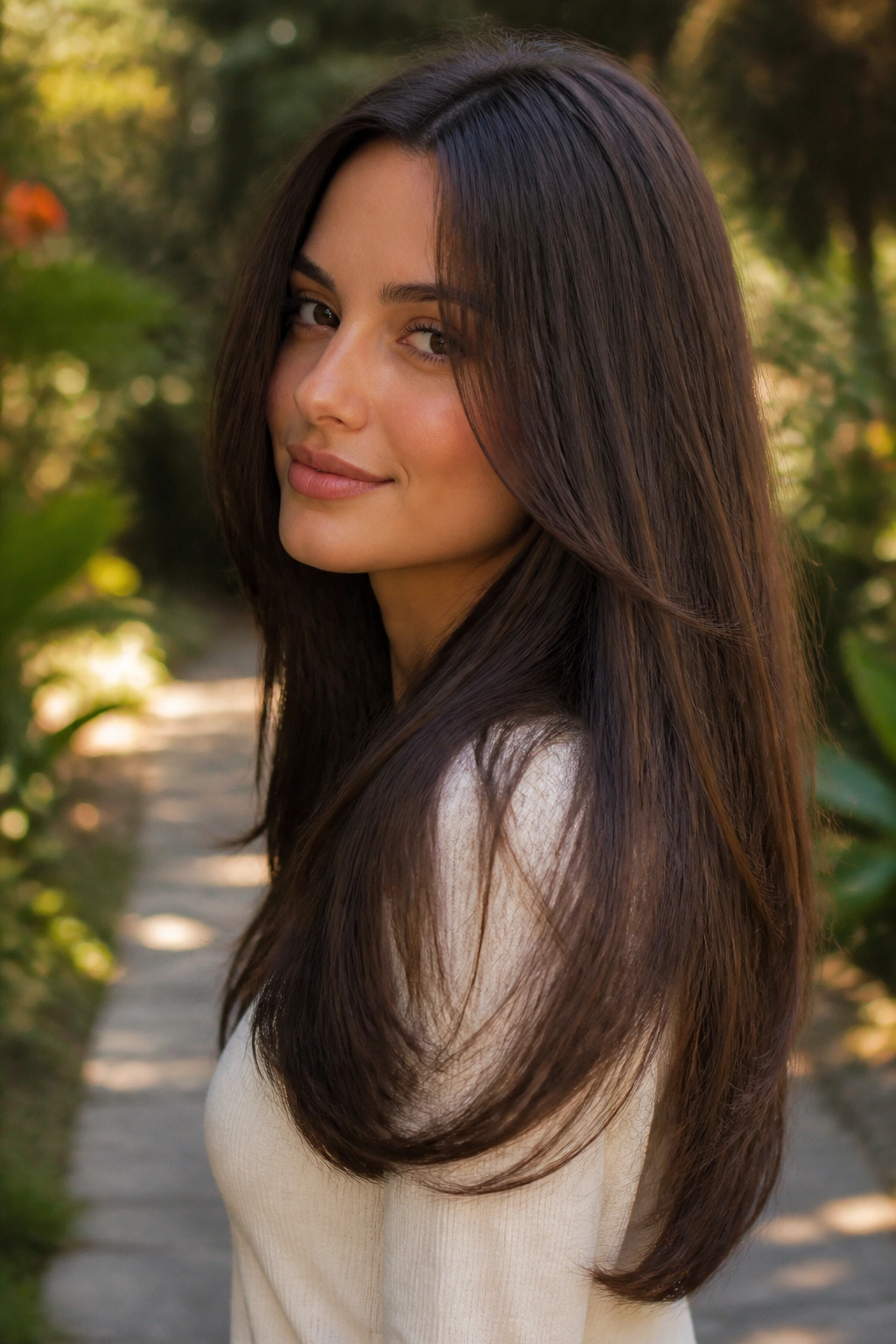
Unlike a blunt trim that hangs like one heavy curtain, a U-shaped long cut keeps the length but softens the outline. The center back stays slightly longer, while the sides dip down in a curve that makes the whole head of hair feel less blocky.
That curve matters more than it sounds like it should. Long hair can start to feel thick and static when every strand ends at the same spot. A U-shape gives it a little contour, which helps the back fall better in a braid, a low ponytail, or just over the shoulders on its own.
This is the cut I’d point to if you like long hair but hate the feeling that the ends are clinging to your back like a blanket. It also helps if your hair is dense and you want movement without giving up length. Ask for the shortest front pieces to stay only a little above the back length — not a steep angle, not a dramatic staircase. Just a gentle curve that keeps the silhouette soft.
7. French Bob With Fringe

A French bob is short in a way that feels sure of itself. It usually sits somewhere between the lip and the cheekbone, and the fringe can be soft and airy rather than heavy and rigid. The whole cut has a certain easy shape to it.
Why It Feels Different
The beauty of this cut is that it does not need to look perfect. A bit of bend in the ends makes it better, not worse. A little wave gives it that lived-in feel people chase in salon photos, but the cut still works if your hair dries straighter.
I’d call this one especially good for straight or softly wavy hair that naturally falls into place. If your hair is very thick, a French bob can look a little bulky unless the inside is trimmed with care. If it is fine, the clean outline helps it appear denser at the ends.
- Length: usually jaw grazing or just below
- Fringe: soft, piecey, or slightly see-through
- Styling: rough-dry with your fingers, then tuck one side back if you want a looser finish
- Maintenance: tidy trims keep the line sharp; once it gets too long, the shape loses its punch
Tip: Keep the fringe airy. A heavy block bang changes the whole mood of the cut.
8. Wolf Cut With Soft Ends
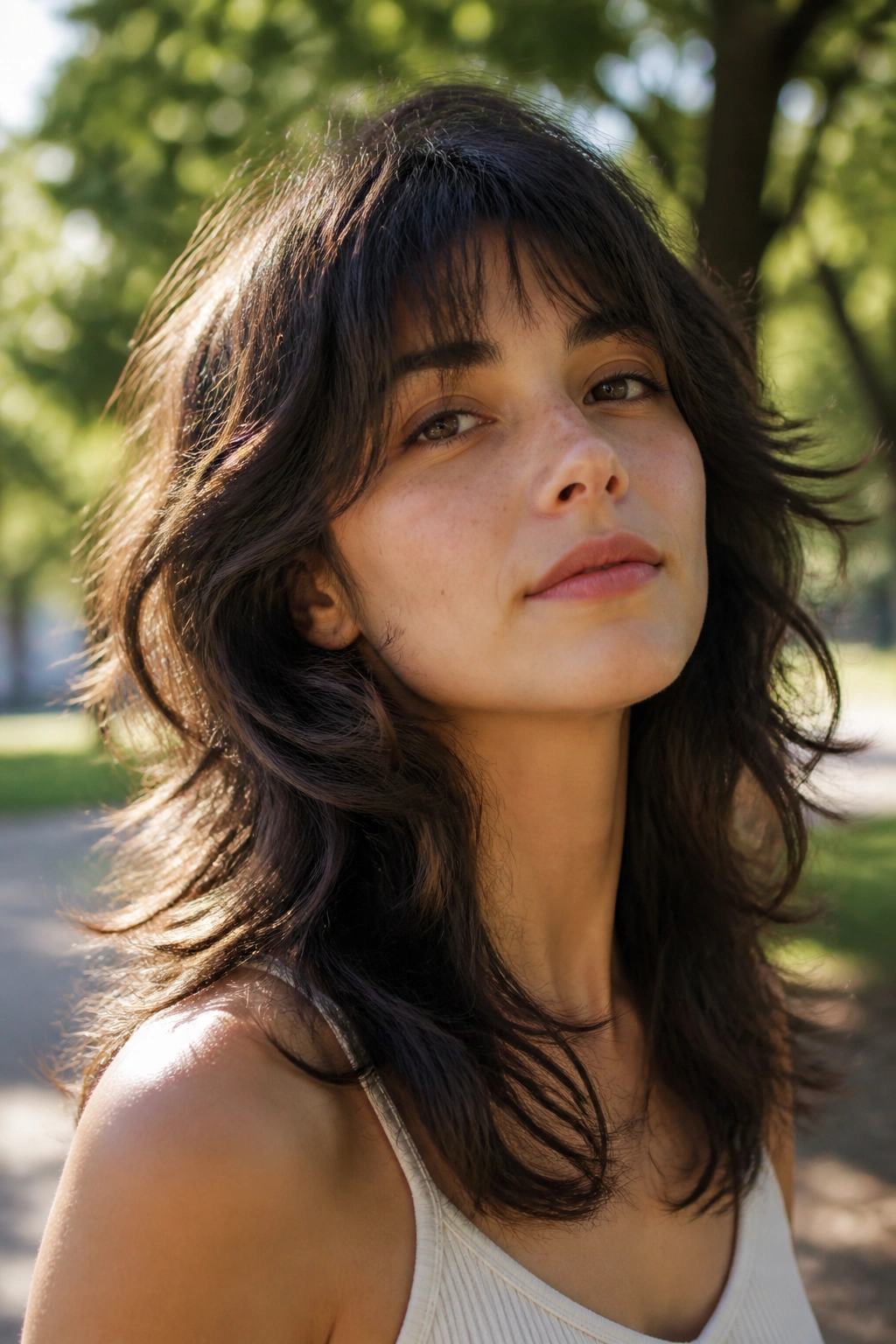
A wolf cut works when you want hair with attitude and you do not mind a little styling effort. It borrows from the shag and the mullet, but the softer versions keep the edges blurry so it does not look harsh.
The shape usually has volume through the top and crown, then looser, longer layers below. That contrast is the whole point. It can make thick hair feel lighter and give waves a place to sit instead of collapsing into a triangle. The hard part is knowing when to stop. Too many short layers, and the cut starts to feel chopped up. Soft ends keep it wearable.
I like this cut most on wavy or curly hair, where the texture gives the layers some shape of their own. Straight hair can wear it too, but it often needs more styling to keep the crown from falling flat. A little texturizing spray at the roots and a loose bend through the ends is usually enough. If you want something neat and polished every day, this one may annoy you. If you like hair that looks a bit wild in the best way, it makes sense.
9. Butterfly Cut
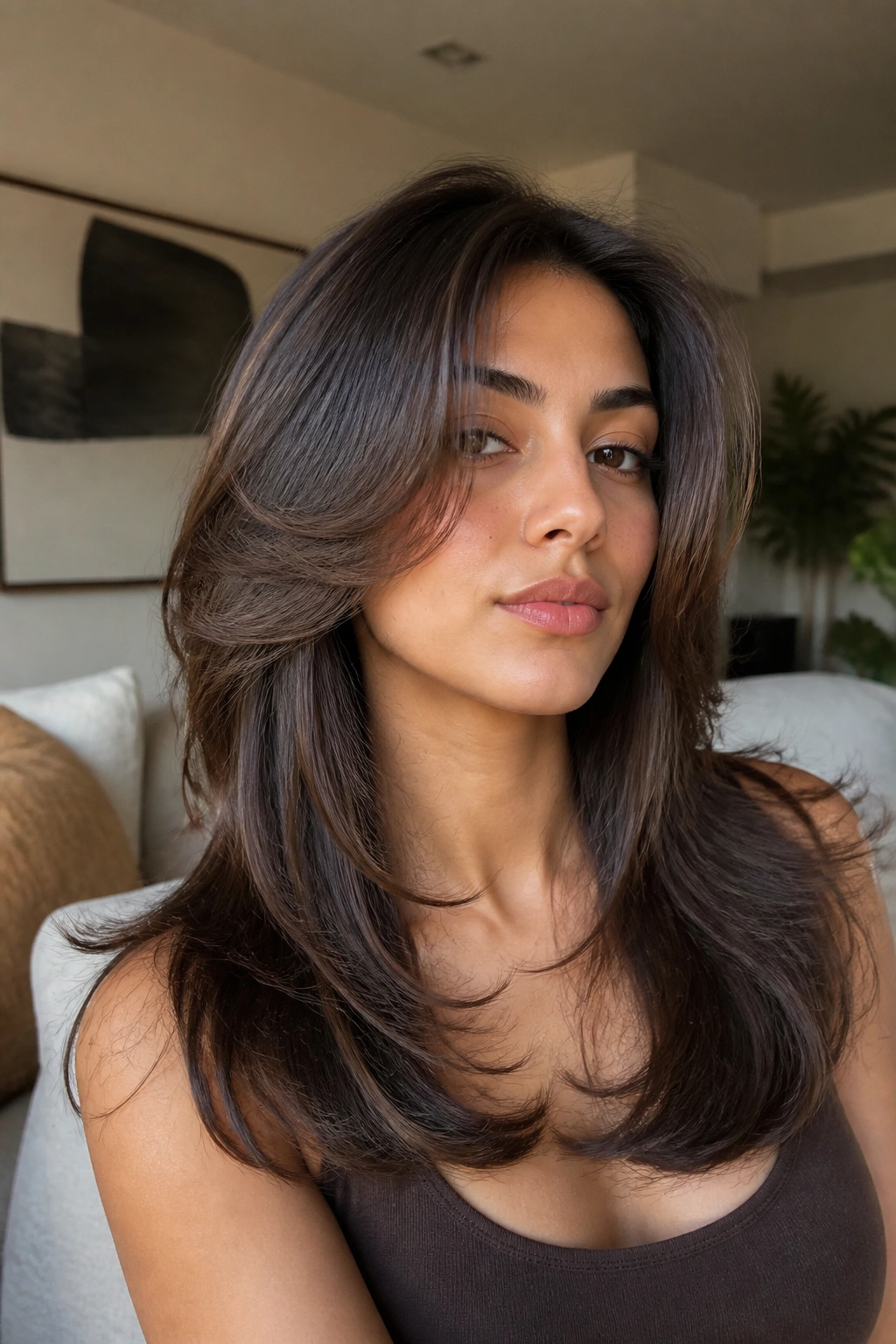
Why does the butterfly cut keep showing up in long-hair inspiration? Because it gives you two different feelings in one cut. The shorter face-framing layers lift the front, while the longer bottom section keeps the length people do not want to lose.
That contrast is what makes it useful. Long hair can feel heavy when it all hangs in one straight line. The butterfly shape breaks that up, so the hair moves around the face without sacrificing the long look in the back. It is a smart cut if you like to wear half-up styles, since the shorter layers create volume around the crown when you pull some pieces back.
How to Wear It
A round brush blowout brings out the shape fast. The front layers can be swept away from the face, and the longer section can stay smooth underneath. If you wear your hair wavy, keep the layers soft and avoid overloading the front with too much chop.
This is a nice option if you want something that still feels feminine and full. It is not a drastic cut, which is part of why people keep coming back to it after one trim.
10. Bixie Cut
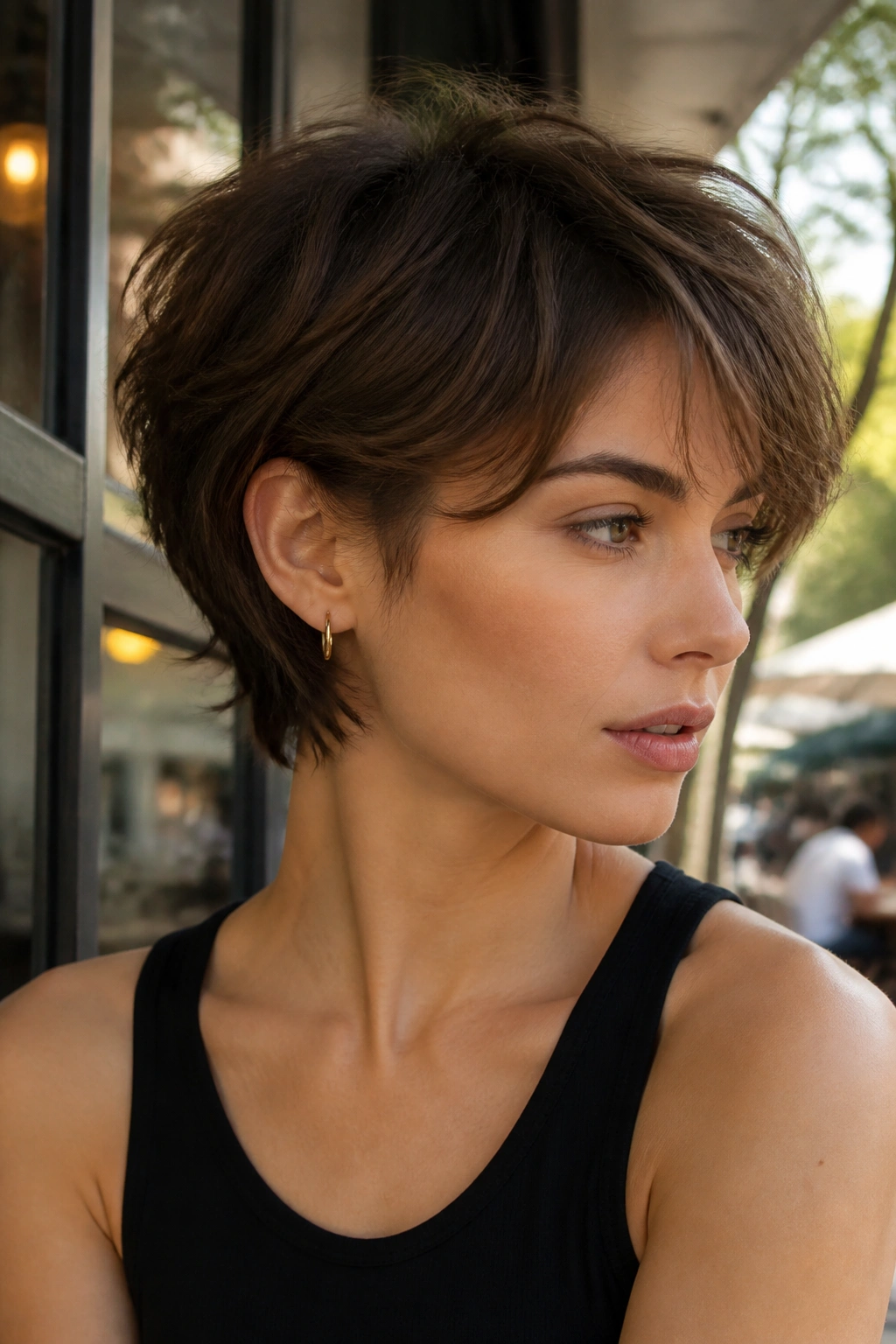
If a pixie feels too short and a bob feels too safe, the bixie sits right in the middle. That is the whole charm of it. You get the shorter back and sides of a pixie, but with enough length on top and around the face to keep some softness.
The shape usually works best when the top has a little room to move. Not helmet hair. Not a flat cap. A bit of lift through the crown and some softness near the temples make it feel current without trying too hard. I like this cut for people who want to tuck hair behind the ears one day and wear it messier the next.
- Best for: straight, wavy, and lightly curly hair
- Salon ask: shorter in the nape, longer around the front, with soft edges instead of one hard line
- Styling: cream or light wax, then finger-comb for shape
- Grow-out: easier than a super short crop because the top length buys you time
Closing thought: The bixie looks best with a bit of bend, not a perfectly ironed finish. That little looseness keeps it from feeling too stiff.
11. Side-Swept Bangs With Collarbone Length
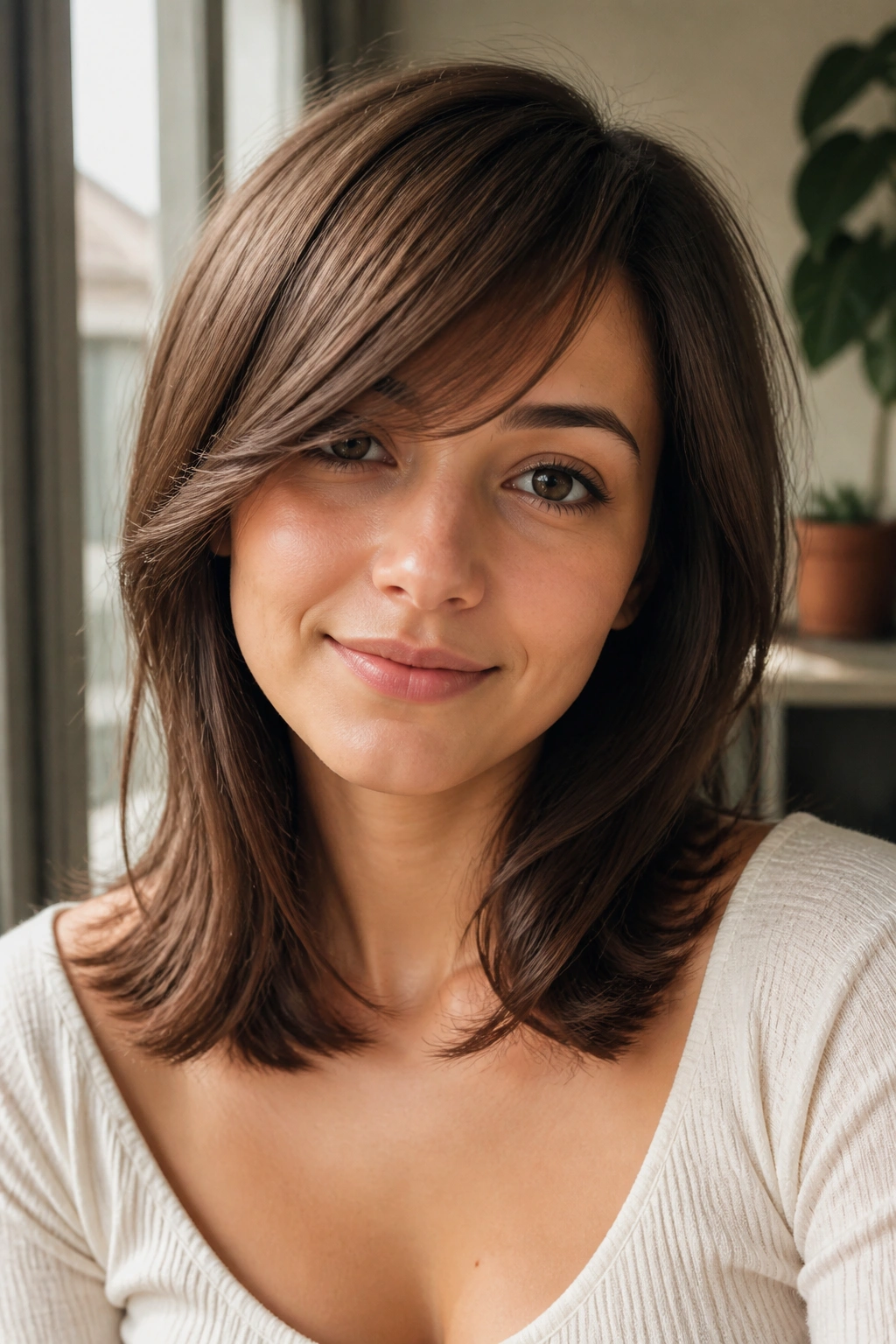
Side-swept bangs are for the person who wants a change near the face but does not want bangs sitting in the middle of their forehead every day. Paired with collarbone-length hair, they give the whole cut a softer angle.
The diagonal line matters. It pulls the eye across the face instead of straight down, which makes the haircut feel lighter and less blocky. It also gives you options. You can wear the bangs deeper to one side, split them a little more evenly, or pin them back when you want the front clear.
I find this cut especially useful for people easing into bangs for the first time. It is less committal than a blunt fringe and more forgiving when you skip a wash day. The collarbone length helps, too, because it keeps enough weight in the body of the hair so the fringe does not float away from the rest of the shape.
If your hair is very fine, ask for a lighter bang section. Too much fringe can collapse fast and stick to the forehead in the wrong way. A softer sweep keeps the style moving.
12. Rounded Curly Shape
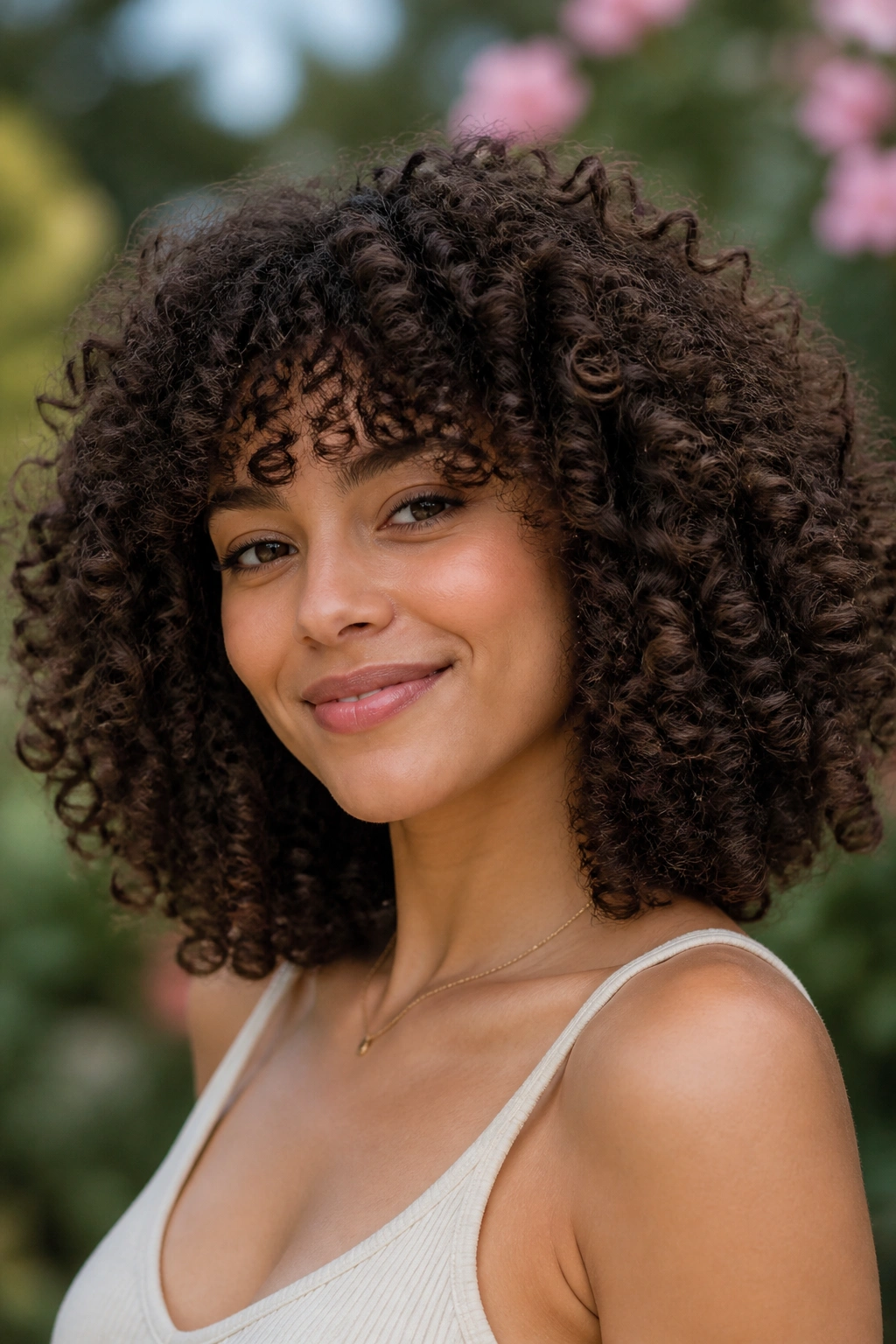
A rounded curly shape is one of the smartest girl haircut ideas for curls and coils because it respects what the hair already wants to do. Instead of leaving the sides boxy, the shape curves outward a little around the head so the silhouette feels balanced.
That sounds simple, but it solves a common problem. Curls shrink. A lot. If the cut is made in a straight line and then dries, the ends can bunch up and the shape goes triangular fast. A rounded outline gives the curls room to spring without building too much width at the bottom.
The best version is usually cut dry or at least with the curl pattern visible, so the stylist can see where each curl falls when it dries. That matters because curls do not behave like straight hair. A strand that looks long when wet can end up much shorter once it bounces up. Ask for the shape to follow the curl pattern, not a ruler-straight guide.
This cut is one of those things that looks better when the stylist respects the natural texture instead of fighting it. That part is non-negotiable.
13. Sleek Box Bob

A sleek box bob is sharp in the good way. The line sits clean, usually around the jaw or just below it, and the ends are cut blunt enough that the whole shape looks dense and polished.
Why It Works
The boxier outline gives the hair a heavier-looking edge, which is useful if your hair tends to look thin at the bottom. It also makes straight hair look extra neat with less daily effort. A smooth finish and a crisp shape do most of the work for you.
I like this cut on medium to thick hair because the density helps the blunt line stay strong. On very fine hair, it can still work, but the ends need careful trimming so they do not look sparse. A tiny bend under the edge keeps the line from feeling stiff. Not a curled-under pageboy look. Just a soft touch at the bottom.
- Best for: straight hair, medium-thick hair, and anyone who likes a tidy outline
- Styling: blow-dry with a paddle brush or flat iron only the outer inch of hair
- Maintenance: trims every 5 to 7 weeks keep the line clean
- Salon note: ask for a strong perimeter with minimal layering inside
Tip: Keep the ends glossy, not fried. Dry, fuzzy ends break the whole effect.
14. Long Razor Layers

Razor layers can rescue long hair that feels heavy, but only when the cut is handled with care. A razor does not just thin things out; it can soften the edge of each layer so the hair moves more freely.
That softness is the upside. On thick or wavy hair, razor work can take away some bulk and make the length feel less dragging. It also helps long hair fall in a more broken-up way, which can be useful if the ends tend to bunch together. But here’s the catch: if the hair is already dry or damaged, a razor can make the ends look frayed fast. I would not choose this method on fragile hair that splits easily.
The best razor layers start lower down, usually below the chin, so the shape keeps its length. They should look like movement, not slices. If your hair is straight and strong, this can be a nice way to keep length without that thick, blocky finish. If your hair is delicate, scissors are safer. That’s the honest answer.
15. Modern Mullet With Soft Edges

Want something sharper than a shag but less rigid than a bob?
The modern mullet has become interesting because it no longer has to look loud or extreme. The best versions keep the top and crown a little shorter, leave more length through the back, and blur the edges so the cut feels soft rather than harsh. It is still bold. Just less costume-like than people expect.
How to Style It
Dry the roots with your fingers first, then use a small round brush or just a bend from your hands to shape the front pieces. A little cream on the ends keeps them from flying apart. If your hair is curly or wavy, this cut can be very alive with almost no effort. If it is straight, the shape usually needs some texture spray or a light bend from heat tools.
I’d recommend this cut for someone who likes earrings, strong collars, and hair with a little edge around the face. If you prefer everything soft and tidy, skip it. That is fine. The modern mullet is not trying to please everybody.
Final Cut
The best girl haircut ideas are the ones that match your actual life, not just your saved folder. If you never heat-style your hair, do not pick a cut that needs a round brush every morning. If you love a quick blowout, choose something with a clean line that shows it off.
Bring two photos to the salon when you can. One should show the length you want. The other should show the texture you want. That small habit saves a lot of awkward guessing.
And if you are stuck between two cuts, pick the one that still looks good a month later. Hair spends most of its life between trims. That is where the real answer lives.
