



A butterfly bob haircut lives or dies by movement. Too blunt, and it turns into a boxy bob. Too thinned out, and it starts looking wispy at the ends, which is a shame because the whole point is that soft, lifted swing around the cheeks and jaw.
The shape sits in a sweet spot between a classic bob and a longer layered cut. The shortest pieces open up the face, the longer front sections keep some length, and the internal layers do the heavy lifting without shouting about it. When the cut is done well, it looks airy from the front and fuller from the back — not flat, not fluffy, just alive.
That’s why the butterfly bob haircut works across so many hair types. Fine hair can use the lift. Thick hair can use the lightness. Curly hair can use the shape control. And if your styling routine is more “quick blow-dry and leave” than “round brush, clips, and a prayer,” there are still versions that make sense.
The trick is picking the version that suits your texture, your face shape, and your patience level. Start there, and the rest gets much easier.
1. Chin-Length Butterfly Bob With Curtain Bangs
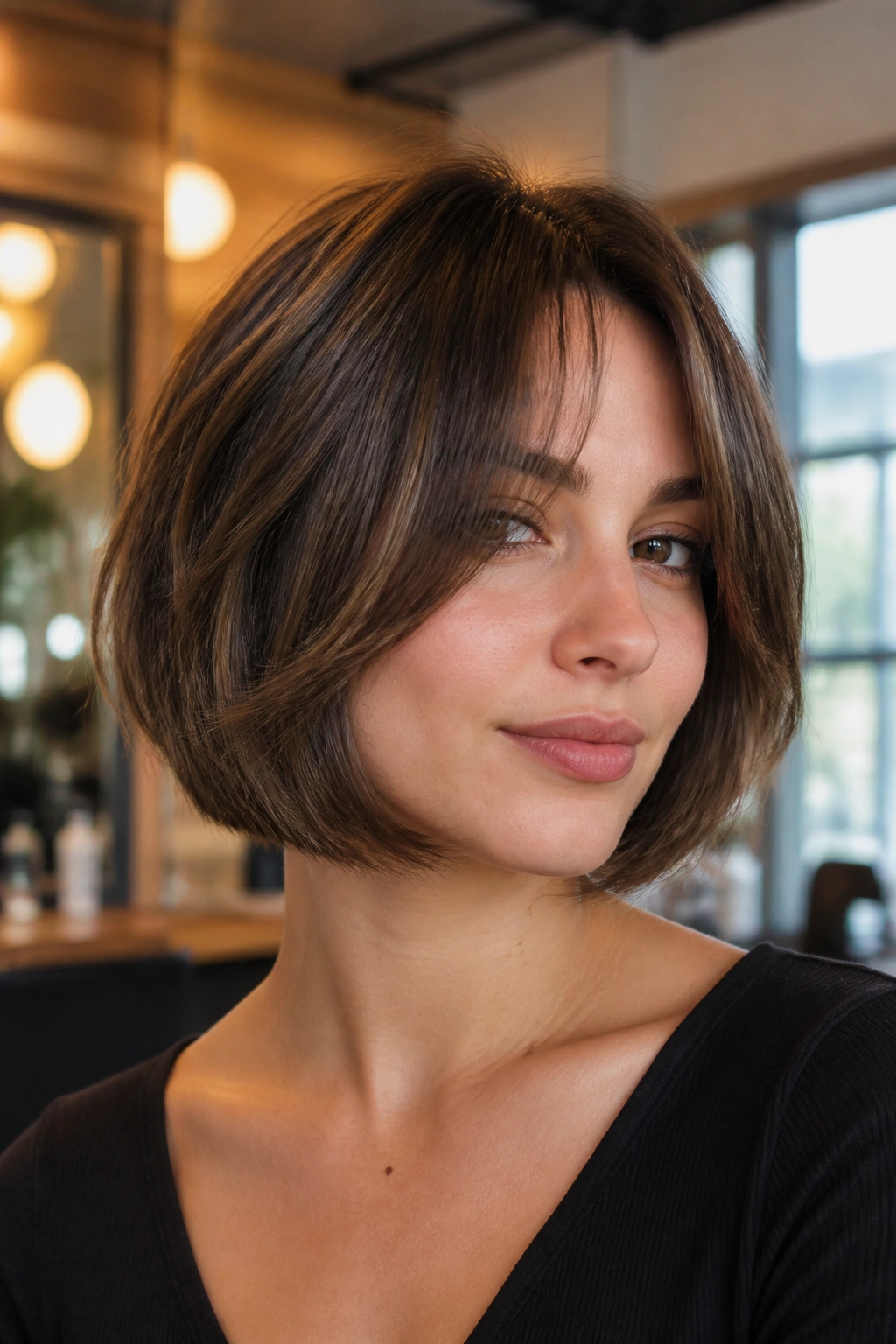
This is the cleanest way to wear the butterfly bob haircut if you want the face-framing effect without losing the crispness of a bob. The cut usually sits right around the chin, with soft curtain bangs that split away from the center and blend into cheek-grazing layers. That combination gives you lift at the top and softness where your face needs it most.
Why It Works Near the Face
The chin length matters more than people think. It keeps the shape compact, so the layers do not drift into lob territory, and that makes the whole cut feel sharper. Curtain bangs pull attention upward, while the shorter side pieces add that fluttery, slightly undone feel that gives the butterfly bob its name.
Ask for the bangs to start a little below the brow or right at brow level if you want room to grow them out. The shortest face-framing pieces should hit around the cheekbone, not the jaw, if you want the eyes to pop.
A few good details to bring to the salon:
- Length: chin to just below the chin
- Layers: soft internal layers, not choppy steps
- Bangs: curtain fringe that opens in the middle
- Finish: rounded ends with a gentle bend, not a hard curl
Pro tip: keep the perimeter clean. If the bottom gets too shredded, the whole cut loses its shape fast.
2. Collarbone Butterfly Bob With Feathered Ends

This is the version I would point most women toward if they want the butterfly bob haircut to grow out gracefully. The collarbone length gives you a little extra room, which means the cut feels less strict and a lot easier to live with between trims. Feathered ends keep the outline soft, so the style moves when you turn your head.
The nice thing about this shape is that it does not demand perfect styling. A rough blow-dry can still look intentional because the layers are doing enough work on their own. That is worth something. Not every haircut should require a 45-minute round-brush session.
Feathered ends are especially useful if your hair tends to puff out at the bottom. Instead of a thick shelf, you get a taper that bends in and out a little, which makes the whole silhouette look lighter. The cut feels modern without turning harsh.
If you like a bob but sometimes miss your longer hair, this one gives you a decent compromise. You still get the lift around the face, but you keep enough length to tuck it behind your ears, clip it back, or wear it half-up on busy days.
3. Wavy Butterfly Bob With Hidden Layers

Can a butterfly bob haircut keep wave pattern from collapsing into a triangle? Yes, if the layers are placed with restraint. Hidden layers are the trick here. They remove bulk from inside the shape without breaking up the outside line too much, so the wave still has a clean edge.
How to Style the Bend
Wavy hair usually looks best when the cut works with the bend already in the hair, not against it. A little mousse at the roots, a diffuser on low heat, and a scrunching motion with your hands can be enough. If you run a brush through it while it is half dry, the wave can stretch out too much and start to frizz at the ends.
What to Ask For
Tell the stylist you want softness around the face, but you do not want the ends hacked apart. That part matters. Hidden layers should start around the cheekbone or just below it, where they can create lift without making the bottom fray.
A good wavy version usually has:
- a center or soft off-center part
- layered face-framing pieces that sit near the cheekbones
- a perimeter that still reads as a bob, not a shag
- movement through the mid-lengths, not just the ends
It is a cut that looks a little different every day, and that is part of the appeal. Some mornings it lands polished. Some mornings it looks like you slept on a hotel pillow and won. Fine either way.
4. French-Girl Butterfly Bob With Soft Curls

Picture a bob that looks like it dried in a café breeze, except the curl pattern is planned. That is the energy here. The French-girl version of the butterfly bob haircut leans on soft curls, a little bend at the ends, and face-framing layers that sit easy rather than fussy.
The trick is not to make the curls too round or too uniform. You want the front pieces to curve away from the cheekbones, while the back stays loose and touchable. If everything is curled the same way, the shape gets stiff. If you alternate directions and then loosen the curls with fingers, it starts to look lived in.
This cut suits women who like their hair to feel done but not overdone. It also works well if you have a fine or medium texture and want the illusion of more body without piling on layers that break the outline.
A few details make the difference:
- Curl size: use a 1-inch to 1¼-inch iron for soft, bendy curls
- Parting: center or slightly off-center
- Finish: rake through with fingers, not a brush
- Product: a light cream or flexible spray, not a crunchy one
The point is movement that reads as natural. Not messy. Natural. There’s a difference, and it matters.
5. Sleek Butterfly Bob With Razor Ends

A sleek butterfly bob haircut can look sharper than people expect, and I mean that in a good way. The layers still do their job, but the finish is smoother, so the face-framing pieces read almost like ribbons. Razor ends can help if your hair is naturally straight and you want the cut to feel lighter at the bottom.
This version is not the one I would choose for damaged hair that already looks dry through the ends. Razor cutting can make brittle ends look even thinner. On healthy hair, though, it creates a nice taper and keeps the silhouette from feeling too heavy.
The styling is straightforward. Blow-dry with a paddle brush, then use a flat iron to add a very slight inward curve at the bottom. That tiny bend changes everything. If the ends point too straight down, the whole cut loses life. If you over-curl them, it starts to feel dated.
Sleek butterfly bob styles work especially well with a sharp middle part and a clean neckline. They also hold up nicely in humid weather because the shape is simple. No fluff. No fight.
And if you like jewelry, this is the cut that lets a pair of hoops or a strong necklace do a lot of the talking.
6. Inverted Butterfly Bob With Longer Front Pieces
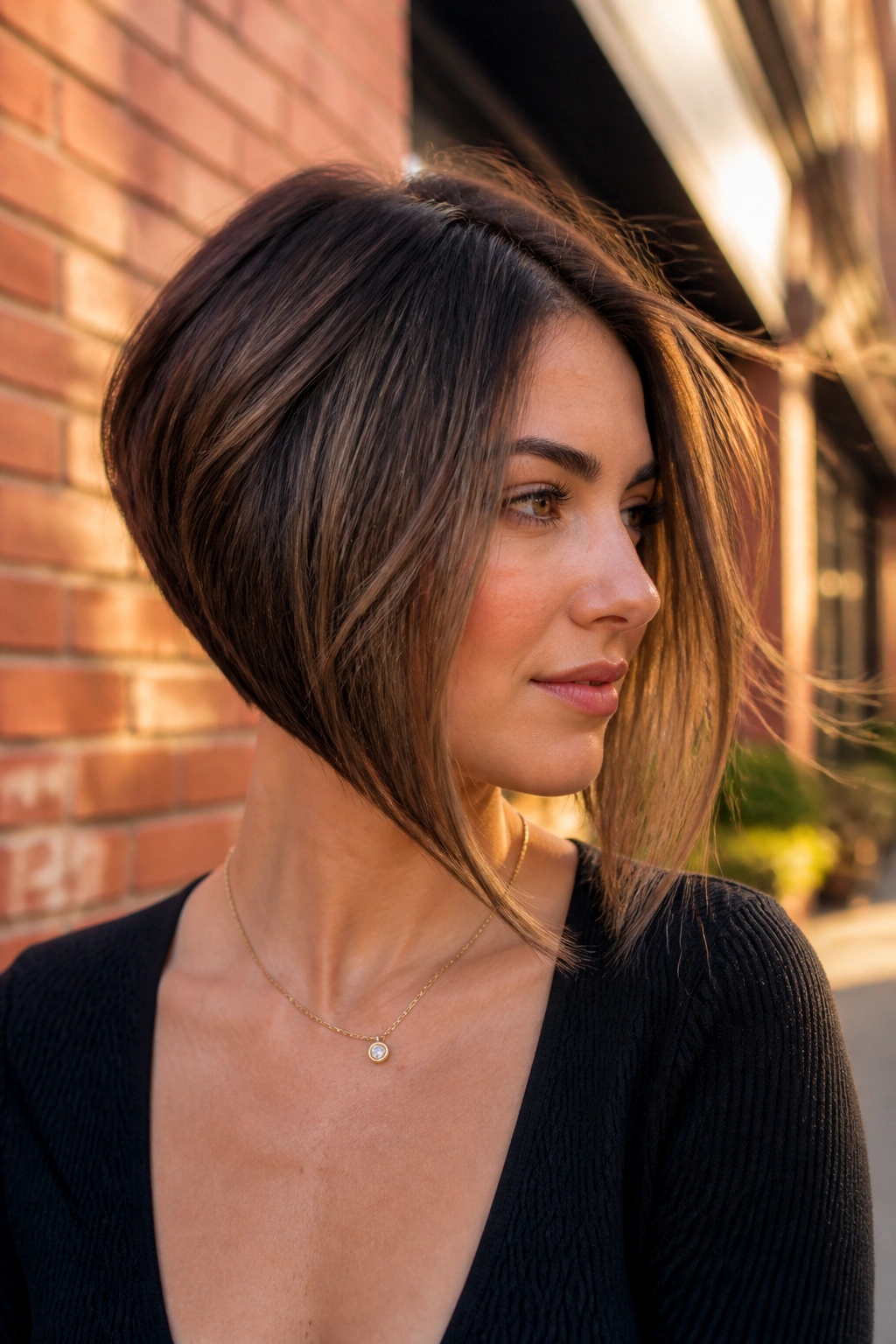
The inverted shape gives the butterfly bob haircut a more dramatic profile. Shorter in the back, longer in the front. That old-school geometry still works, especially when the front pieces are feathered instead of blunt. You get a little built-in angle, which can make the neck look longer and the jawline look cleaner.
Cut Details That Matter
A bad inverted bob can look stacked in the wrong way. A good one has a smooth slope from back to front, with no hard shelf at the crown. The layers should lift the top, not puff it up like a helmet. That’s where the butterfly part comes in — the front pieces soften the angle so the haircut does not feel severe.
This version is smart for women with round or square faces because the longer front sections help stretch the outline. It also suits people who like a bit of drama without a lot of styling fuss. Once the shape is cut in, the angle does a lot of the work.
Bring this note to the salon:
- keep the back shorter, but not stacked too high
- let the front hit around the jaw or slightly below
- blend the layers through the cheek area
- avoid over-thinning the ends
The result is tidy, sure, but not boring. There is some edge to it.
7. Curly Butterfly Bob For Natural Texture

Curly hair changes the math. Always has. A butterfly bob haircut on curls needs room for shrinkage, a cleaner dry shape, and layers that respect the curl pattern instead of forcing it into a straight-haired mold. If the cut is done wet without enough planning, the finished shape can land way shorter than expected.
What to Tell Your Stylist
Ask for a dry cut if your curls are loose to medium, or at least ask the stylist to check length in the dried state before making the final shape. The shortest layers should help the curls spring up around the face, not stand out in awkward little points.
You also want the perimeter to stay strong enough to hold the bob shape. Too many short pieces can make curly hair explode outward. Too few, and you get a heavy triangle. Neither is flattering.
How to Style at Home
Use a leave-in conditioner first, then a curl cream or light gel. Scrunch, diffuse on low heat, and do not touch the hair until it is almost dry. That last part is annoying, I know, but it saves definition.
A curly butterfly bob works best when the front curls open up the face and the back keeps a rounded base. That contrast is the whole point. Let the texture do the showy part.
8. Butterfly Bob With Side-Swept Fringe
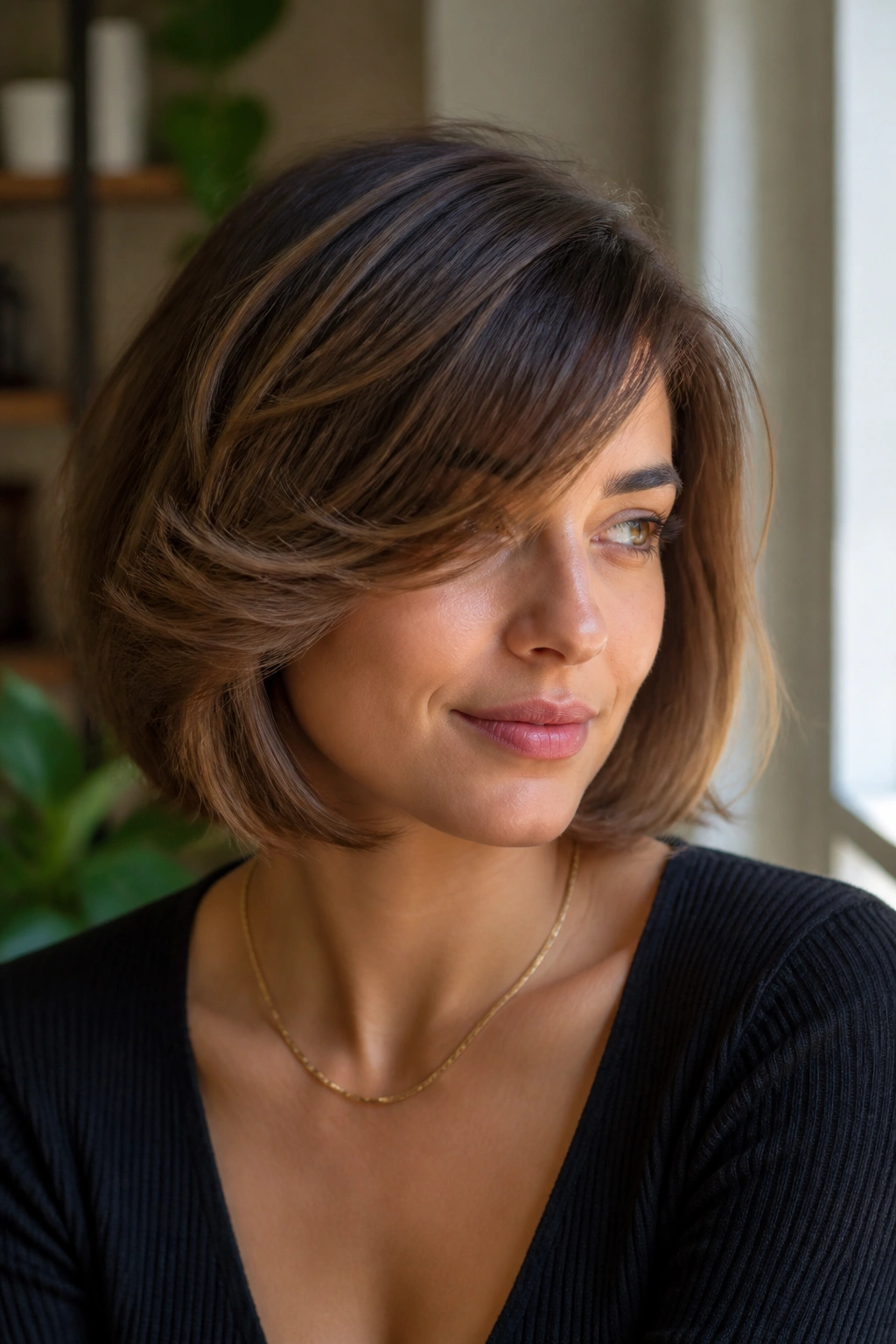
The first thing you notice is the sweep across the forehead. A side-swept fringe changes the whole feel of the butterfly bob haircut, making it softer and a little more romantic than a strict center-part version. It also helps if you do not love hair falling straight down the middle of your face.
This cut is especially kind to longer foreheads, strong brows, or faces that need a bit of diagonal movement. The fringe guides the eye to one side, while the layers around the cheekbones keep the rest of the shape light. You end up with motion from the front, not just the ends.
A side-swept fringe can also be easier to style on low-effort mornings. Blow it in the opposite direction first, then bring it across. That small trick gives the fringe some bend and keeps it from clinging flat to the scalp.
A few useful cues:
- part the hair slightly off-center
- keep the fringe long enough to tuck behind the ear
- use a round brush only at the front section
- finish with a soft spray, not heavy wax
Short bangs can get finicky. This version stays kinder as it grows out.
9. Shaggy Butterfly Bob With Piecey Texture
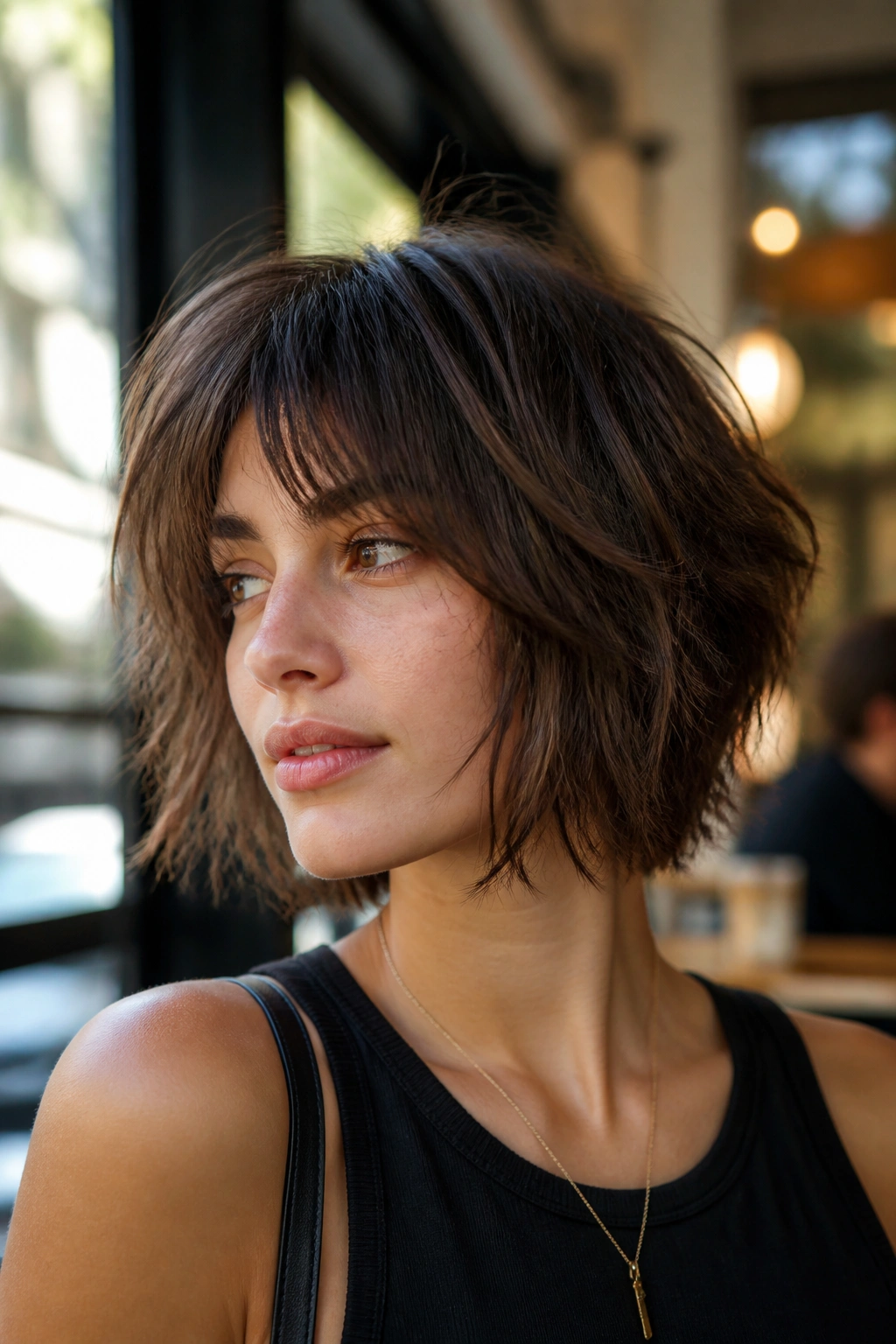
Messy. In a controlled way.
That is the whole mood of a shaggy butterfly bob haircut. The ends are broken up a little more, the layers are more visible, and the finish has that piecey texture that looks best when it is not too polished. If you love hair that has some grit and air in it, this one makes sense.
The shag influence gives the cut a looser personality, but the bob shape keeps it from running wild. That balance is what makes it wearable. You still get the flutter around the face, just with more edge and less softness than the curtain-bang versions.
I would not push this shape on hair that is already frizzy and porous unless you are willing to smooth the surface with cream or a light oil. Too much roughness can make the layers look disconnected. But on hair with decent texture, it can look fantastic with a quick scrunch and a bit of dry shampoo at the roots.
What to Watch For
- keep the layers choppy, not shredded
- use texture spray sparingly
- avoid over-brushing once it is dry
- ask for a soft perimeter so the bottom does not look ragged
It has a little attitude. That is the point.
10. Butterfly Bob With Deep Side Part

A deep side part can make the butterfly bob haircut feel instantly more lifted at the roots. It shifts the weight of the hair to one side, which gives you volume at the crown and a strong sweep through the front. If your hair tends to lie flat, this is one of the easiest fixes.
Why the Part Matters
The part changes the way the layers fall. Instead of splitting the face evenly, the side part lets the longer front section drape across one cheek while the shorter side opens up the other. That asymmetry creates shape before you even pick up a brush.
This version is especially useful for women who want the cut to look a little dressier without adding more length. It can make a simple bob read more styled, even on a casual day. A bit of root lift powder or mousse at the heavier side helps the shape hold.
You can ask for the shortest face-framing layer to start on the side with less hair. That keeps the sweep from looking too heavy. The back should still stay clean and compact, or the part becomes the only thing you notice.
Try this if you like a haircut with some motion and don’t mind flipping your part now and then. It keeps the style from going stale.
11. Butterfly Bob With Balayage Highlights
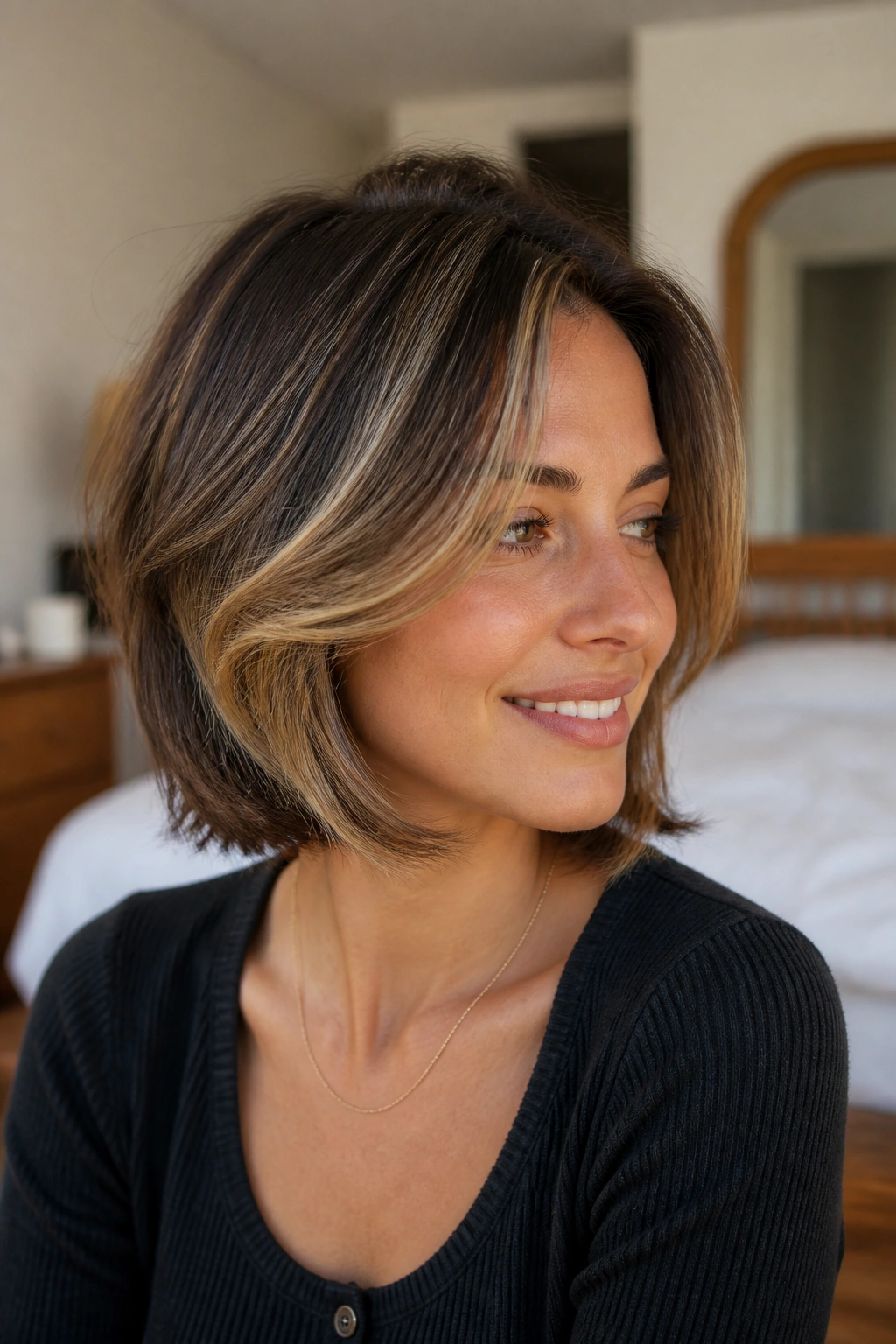
Color can make a butterfly bob haircut look deeper and more layered even when the cut itself is fairly simple. Balayage works especially well because the hand-painted placement can follow the face-framing layers and the crown lift. The result is movement you can see before the hair even moves.
Where the Color Should Sit
The brightest pieces should live around the front, usually starting near the cheekbone and fading through the ends. That draws attention to the lift in the cut. If the highlights are too low, they disappear. If they are too chunky, the whole thing can look stripy and dated.
A softer root shadow helps the layers show up without making regrowth obvious in a harsh line. That matters if you do not want to be at the salon all the time. It also gives the cut a little depth at the scalp, which is useful if your hair is fine.
Good placement ideas:
- lighter pieces around the money-piece area
- softer ribbons through the top layers
- a few brighter strands at the ends to show off the shape
- a root shade that is no more than one or two levels deeper than the mids
Color and cut should talk to each other. When they do, the layers look expensive without looking fussy.
12. Layered Butterfly Lob For Growing Out Length

Maybe you are not ready to give up length entirely. Fair enough. The layered butterfly lob keeps the spirit of the butterfly bob haircut while letting the hair sit a little longer, usually around the collarbone or just below it. That extra length is useful if you like being able to tie your hair back without a fight.
This version is also the safest entry point if you are nervous about short hair. The face-framing layers still create the fluttering effect, but the bottom line stays long enough to feel familiar. It is the haircut I would suggest to someone who wants a change and still wants options.
The lob shape grows out well, which is the part people forget. You are not trapped between salon visits. The front pieces can be trimmed separately, and the rest of the cut will still read as intentional while it gets longer.
A layered lob like this suits straight, wavy, and loose-curly hair because the extra length gives the layers room to sit. If you want movement but not too much maintenance, this is the version to watch.
13. Butterfly Bob For Fine Hair With Root Lift
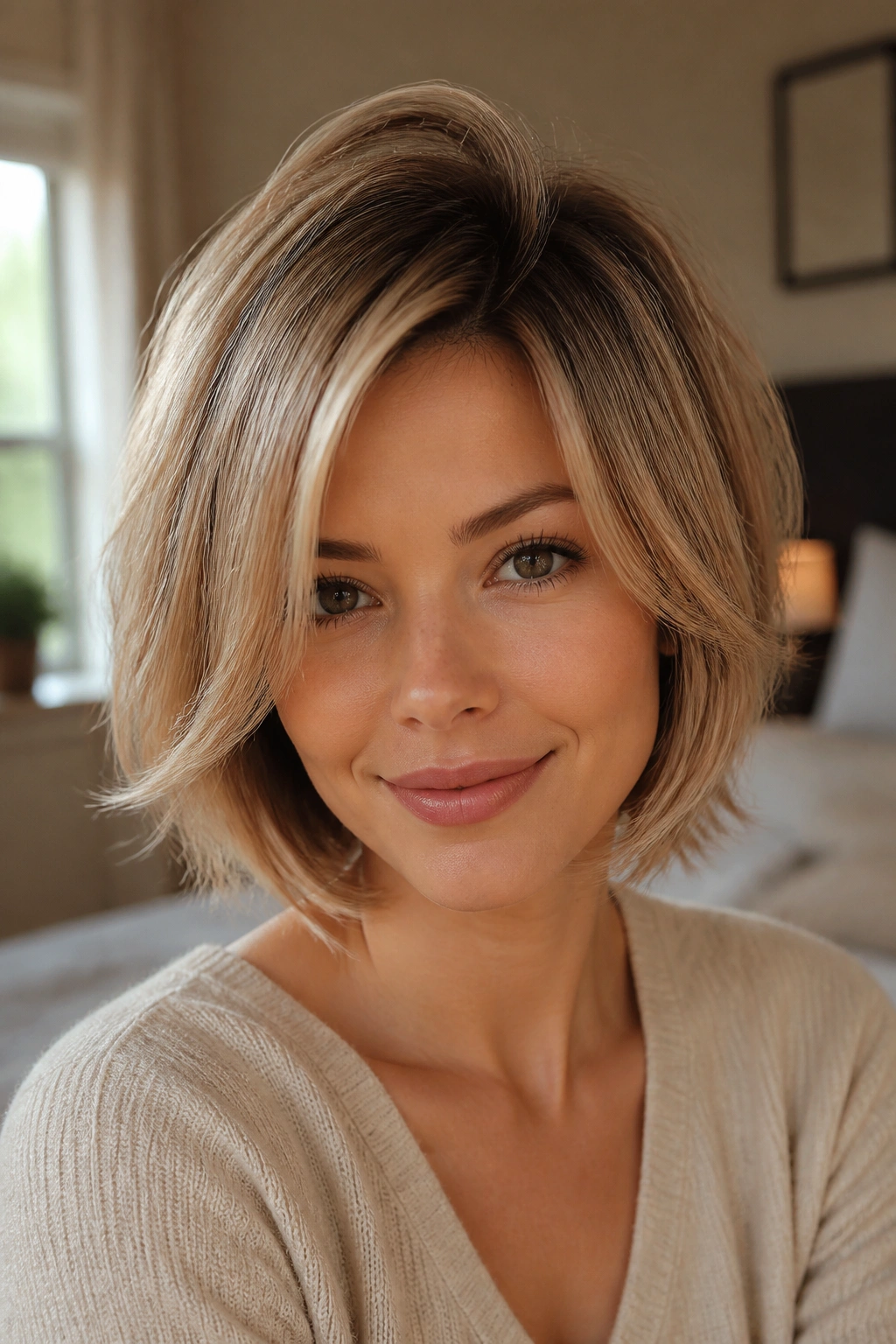
Fine hair needs a careful hand. Too much layering and it goes see-through. Too little and it falls flat by lunch. A butterfly bob haircut for fine hair should keep some weight at the bottom while building lift at the crown and around the face.
That usually means internal layers rather than aggressive thinning. The perimeter can stay a little blunt, which helps the ends look fuller. Then the face-framing pieces open things up without making the whole cut collapse.
Root lift matters more here than on thicker textures. A small amount of mousse at the roots, blown in with a round brush or vent brush, can change the silhouette by a surprising amount. You do not need a mountain of product. Too much only makes fine hair look stringy.
What Works Best
- keep the shortest layers around cheek level
- avoid over-razoring the ends
- ask for a soft blowout shape, not a choppy finish
- use a lightweight volumizing spray at the roots
This version works because it respects the hair you actually have. That sounds obvious. It is also where a lot of bad cuts go wrong.
14. Butterfly Bob For Thick Hair With Debulked Ends
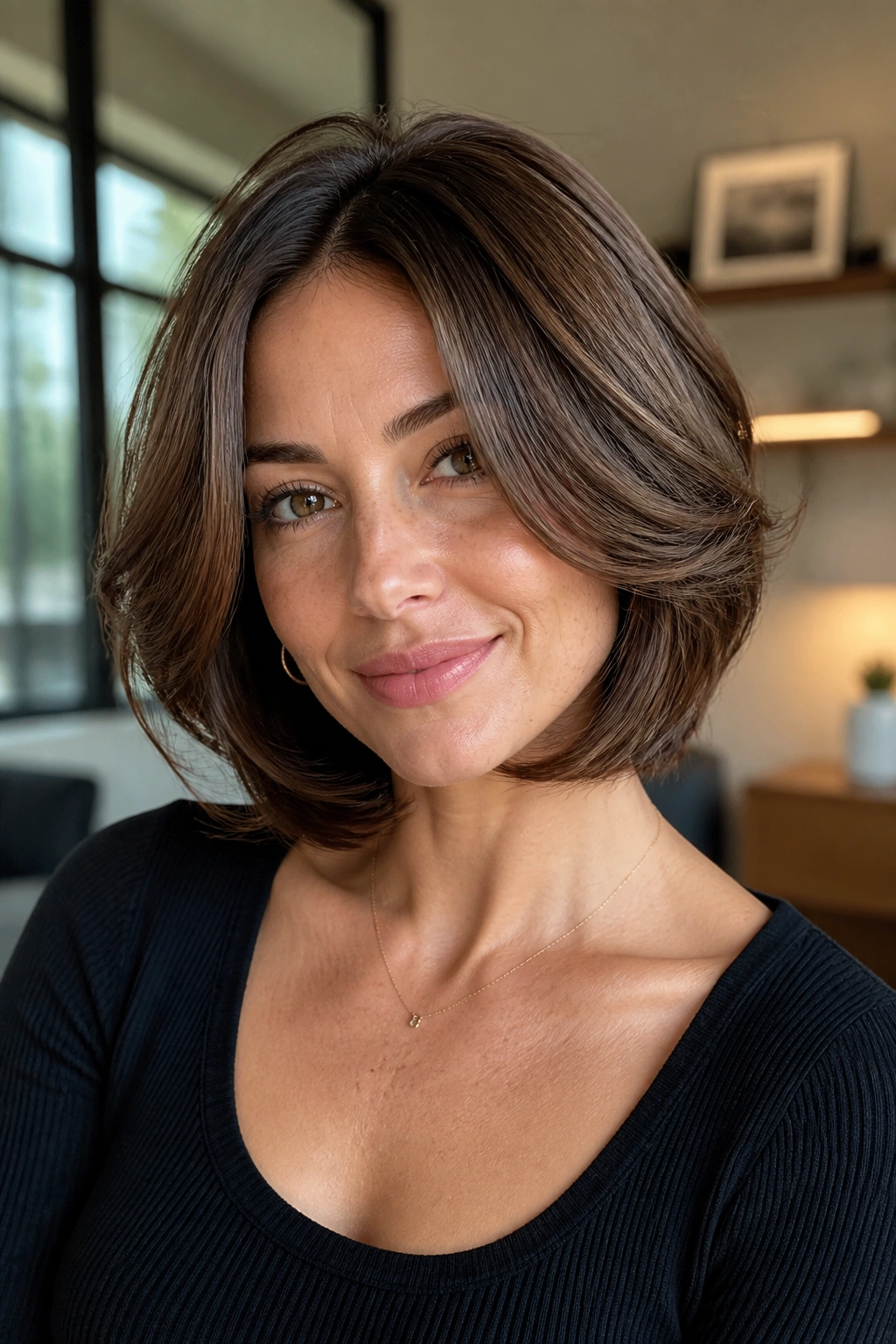
Thick hair can carry a butterfly bob haircut better than most styles, but only if the weight is removed in the right places. The goal is not to thin everything out until it frizzes. The goal is to reduce bulk where it piles up and leave enough body so the cut still feels solid.
How the Shape Should Be Cut
Ask for internal layers, point cutting, and careful debulking through the mid-lengths. The ends should not be shredded to bits. Thick hair often needs a cleaner bottom line than people expect, or the whole shape starts to look puffy. A softly rounded perimeter keeps it under control.
This cut also buys you some drying time. Thick hair can take forever when it is all one length. Once the weight is released in the right spots, the blow-dry goes faster and the hair sits closer to the head instead of ballooning out.
The best styling move is usually a smoothing cream on damp hair, then a rough dry to about 80 percent before using a brush. That sequence keeps the shape from getting too wide at the sides.
If your hair is dense and you hate that heavy helmet feeling, this is the one to show your stylist.
15. Butterfly Bob With Flipped-Out Ends
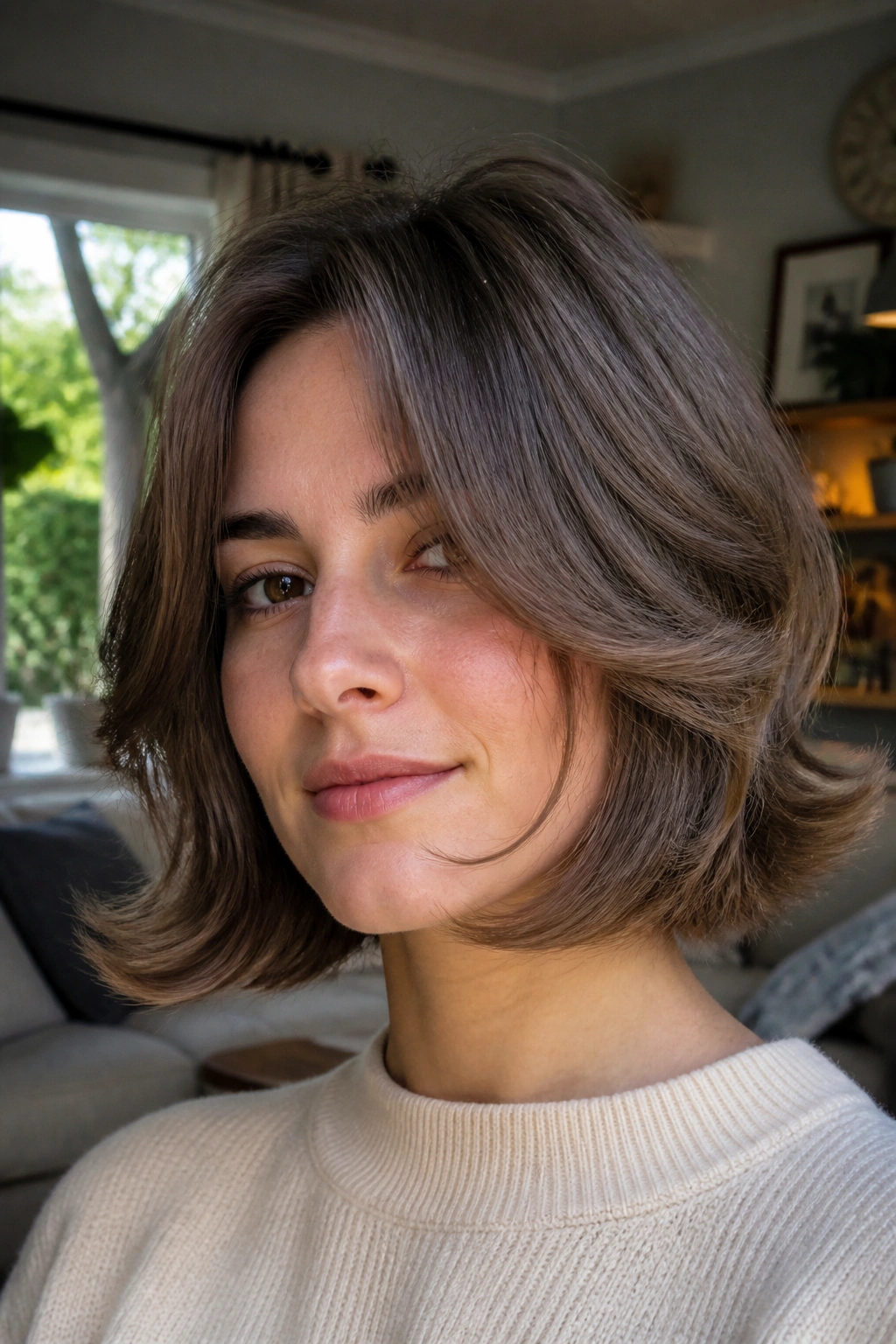
A little flip at the ends can make the butterfly bob haircut feel fresh again. The shape still stays soft and layered, but the bottom kicks outward instead of curling under. That tiny change gives the cut a playful edge and keeps it from looking too neat.
This version works well with a round brush, a medium-barrel curling iron, or even just a few bends from a flat iron if you know what you’re doing. The flip should stay light. You want movement, not a hard retro curl that takes over the whole style.
It is also a smart choice if your hair tends to sit flat around the jaw. The outward bend opens up the lower half of the cut and makes the face-framing layers look more alive. On straight hair, it can make the style feel almost airy. On wavy hair, it adds a little swing.
How to Style the Flip
Start by drying the hair with a brush until it is mostly smooth. Then turn the ends out for the last inch or so, not the whole length. A touch of lightweight spray at the finish keeps the bend in place without making the ends stiff.
If you like a haircut with a bit of personality, this one has it.
Final Thoughts
The smartest butterfly bob haircut is the one that matches your hair’s natural behavior, not the one that looks the prettiest in a single photo. Fine hair usually wants lift and restraint. Thick hair wants smart debulking. Curly hair wants respect for shrinkage and shape.
Bring a few details to the salon, not just a picture. Length, part, finish, and how much styling you are willing to do all matter. A cut that lands at the chin will feel very different from one that brushes the collarbone, even if both are called a butterfly bob.
And if you are still undecided, start with the version that keeps the most flexibility. That usually saves you from haircut regret, which is a very real thing and a very annoying one.
