



A good French bob does not try hard.
That is the whole point, really. The cut has that clean, Paris-street kind of confidence: short enough to feel sharp, soft enough to avoid looking severe, and blunt enough to make your eyes and cheekbones do some work. A French bob haircut can look expensive with almost no visible effort, which is exactly why people keep coming back to it.
The trick is that “French bob” is not one haircut. It’s a family of shapes. Some versions sit right at the jaw and swing when you turn your head. Some come with brow-grazing bangs. Some are airy and wavy, some are glossy and straight, and some are so short they flirt with pixie territory. The right one depends on your hair density, your face shape, and how much time you want to spend with a round brush.
If your hair has ever felt too heavy, too flat, too puffy, or too plain to cooperate with a shorter cut, that does not rule this shape out. It just means the details matter: the line, the fringe, the bevel, the weight at the perimeter. Those little choices change everything.
1. The Jaw-Length Classic French Bob

The classic version is the one most people picture first: a blunt, jaw-skimming bob with just enough softness at the ends to keep it from looking boxy. It lands right near the face’s strongest line, which is why it feels crisp without screaming for attention.
Why It Works
This shape gives you the cleanest read on your features. The line sits where the jaw starts to narrow, so the haircut frames the face instead of swallowing it. If your hair is straight or only slightly wavy, it falls into place fast. If your hair has a bend to it, even better — that little bit of movement keeps the cut from feeling stiff.
A classic French bob also buys you time in the morning. You can rough-dry it, tuck one side behind the ear, and go. Or you can smooth it with a 1-inch brush and get a more polished finish. The cut does not need much help.
- Length: Usually sits between the chin and the jawline.
- Line: Blunt through the ends, with minimal layering.
- Best for: Oval, heart, and square faces.
- Maintenance: Trim every 5 to 7 weeks to keep the edge clean.
Pro tip: Ask for the front pieces to graze the jaw while the back stays just a touch shorter. That tiny slope keeps the whole thing from looking like a box.
2. The Full-Bang French Bob
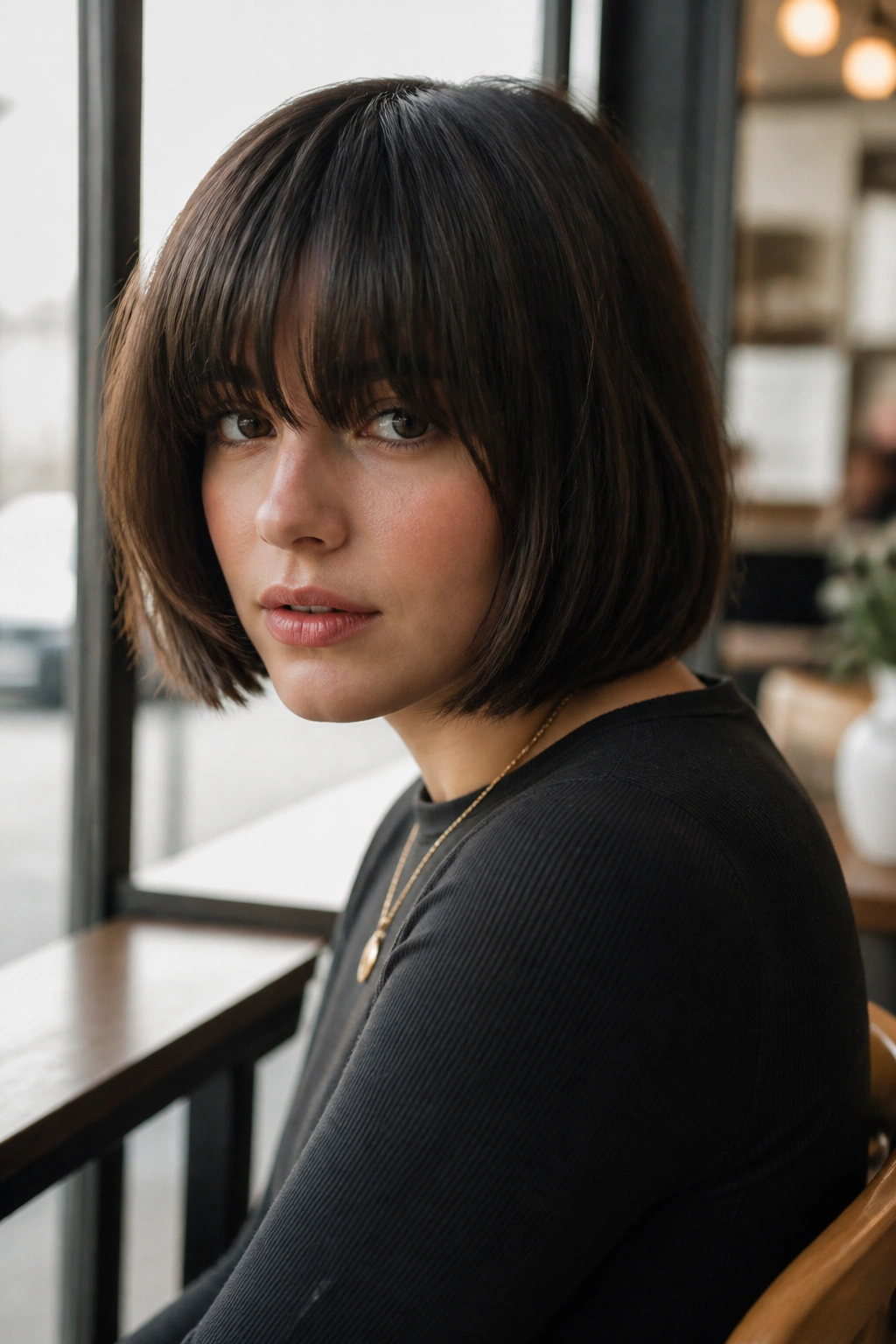
Full bangs change the mood fast. Add them to a French bob and the cut goes from neat to unmistakably styled, even when the rest of your hair is barely dry. It is one of those combinations that looks like you made a deliberate choice, which people tend to notice.
The blunt fringe works especially well when you want the eyes to be the star. It draws attention upward and makes the bob feel tighter around the face. On straight hair, the line looks almost graphic. On wavier hair, the bangs bring a little softness back into the shape, which can be a nice balance.
The only catch is upkeep. Bangs do not wait around for you. They separate, puff up, or sit too high if you neglect them, so this version asks for more commitment than the classic jaw-length cut. Still, the payoff is worth it if you like a haircut with a little attitude.
Wear it with a middle part if you want a sharper read, or push the fringe slightly off-center when you want it to look less severe. That small move matters more than people think.
3. The Soft Rounded French Bob

What if you want the French bob shape, but you do not want the edges to feel too blunt? Then the soft rounded version is the one to look at. It keeps the short length and the face-framing feel, but the perimeter curves in just enough to soften the whole silhouette.
How It Differs
This cut is kinder to thick hair, because the rounded shape removes some of the visual heaviness at the sides. It also works nicely for people whose faces feel a little too angular with a straight line at the jaw. The curve gives the cut a quieter finish.
A medium round brush is usually enough to make it behave. Lift the roots at the crown, bend the ends under gently, and stop before the shape becomes puffy. You want a smooth arc, not a pageant curl.
How to Style It
- Blow-dry the front section away from the face first.
- Use a light mousse at the roots if your hair goes flat fast.
- Aim the dryer nozzle downward on the ends so the curve stays neat.
- Finish with a pea-sized amount of cream through the tips only.
Worth noting: this is one of the few short bobs that can look a little better on day two. The curve loosens slightly, and that often helps.
4. The Wavy, Undone French Bob

A wavy French bob feels like it was cut for hair that has opinions. It works best when the bend in the hair is allowed to show instead of being flattened into submission. The result is casual, a little louche, and far more relaxed than a polished bob.
Picture damp hair, a bit of mousse, and a quick diffuse. The ends dry with a soft flip, the crown keeps a touch of lift, and the whole shape looks as if it settled on its own. That is the charm here. It does not need every strand to behave.
- Best texture: Natural waves, loose bends, or fine hair that frizzes into movement.
- Styling tool: Diffuser or air-drying with a light scrunch.
- Product move: A walnut-sized amount of mousse from roots to mid-lengths.
- Watch for: Too much oil. It can collapse the wave pattern fast.
If your wave pattern is uneven, do not fight it with a straightener. The slight irregularity is part of the appeal. A wavy French bob looks best when it feels lived-in, not lacquered.
5. The Micro French Bob

The micro French bob is for people who like a haircut with nerve. It sits higher than the classic version, often around the cheekbone or just below it, and that shorter length makes the whole face feel more open. There is no hiding behind this one.
It can be a brilliant choice if your hair is very fine and tends to lose shape when it gets too long. Shorter length means less drag, so the ends stay lifted. It also suits strong features because the cropped line leaves the face mostly bare. You see the neck. You see the jaw. You see the earrings, which is half the fun.
The downside is obvious: it grows out fast and needs regular trimming if you want the shape to stay intentional. There is a narrow window where it looks crisp. Miss it, and the style starts to feel less like a bob and more like an awkward in-between cut.
Still, when it is right, it is really right. The micro French bob has that cool, slightly rebellious edge that works best on people who don’t mind a haircut that makes the statement for them.
6. The Side-Swept Fringe French Bob
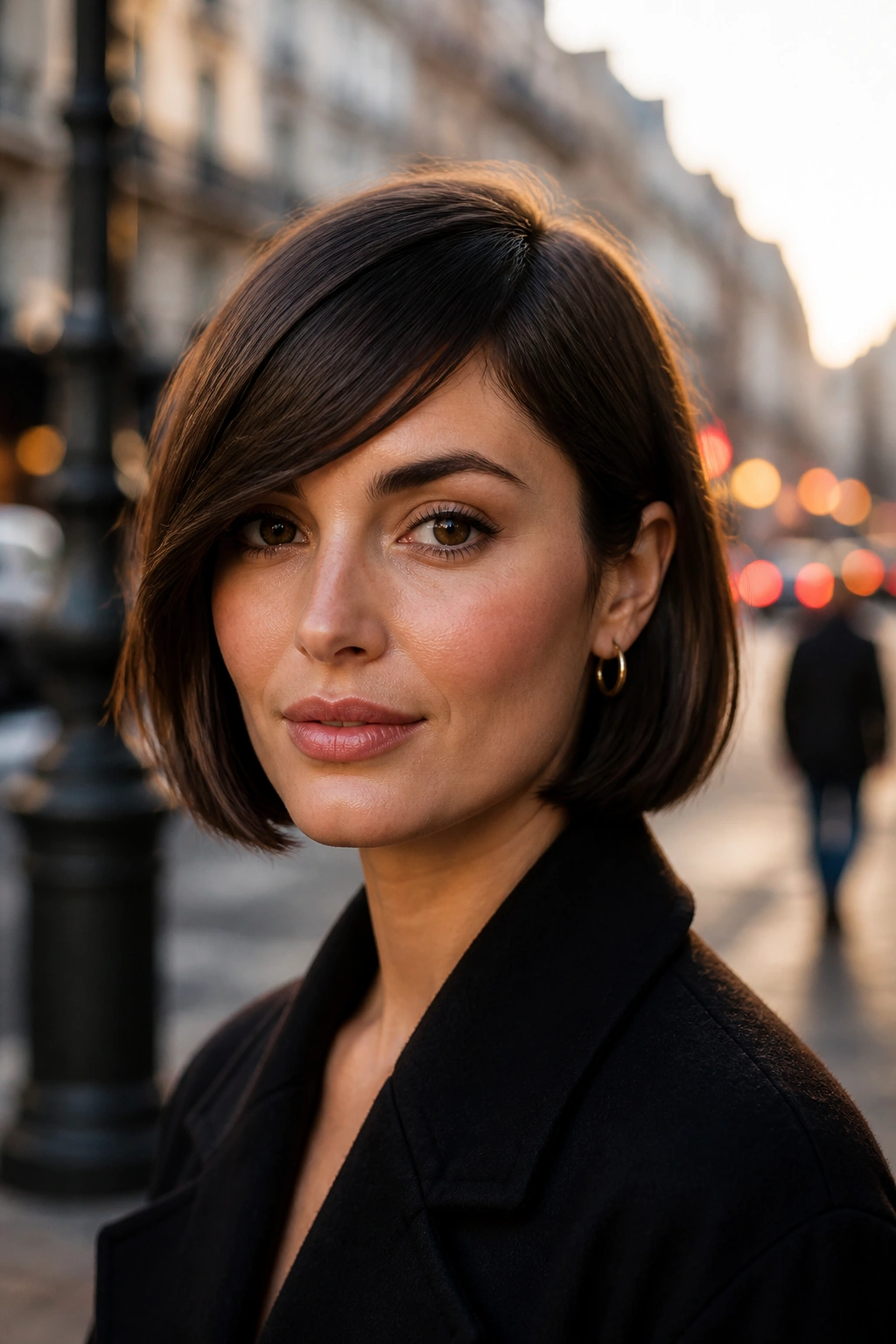
Unlike full bangs, a side-swept fringe gives the French bob a gentler read. It keeps the face framed, but it opens one side a little more, which can be useful if you want movement without committing to a heavy fringe.
This version is especially good when your hair grows out in a stubborn direction or when your forehead feels too exposed in a blunt-bang style. The side sweep breaks the symmetry, and that tiny shift softens the whole cut. It also helps if your face is rounder and you want the front to create more of a diagonal line.
Ask for the fringe to start around eyebrow level and taper toward the cheekbone. That gives you enough length to tuck it behind one ear on busy days. It also means the style survives a windy commute without looking like a battle scene.
A side-swept fringe French bob is one of those cuts that looks casual but still put together. Not fussy. Not plain either.
7. The Curly French Bob
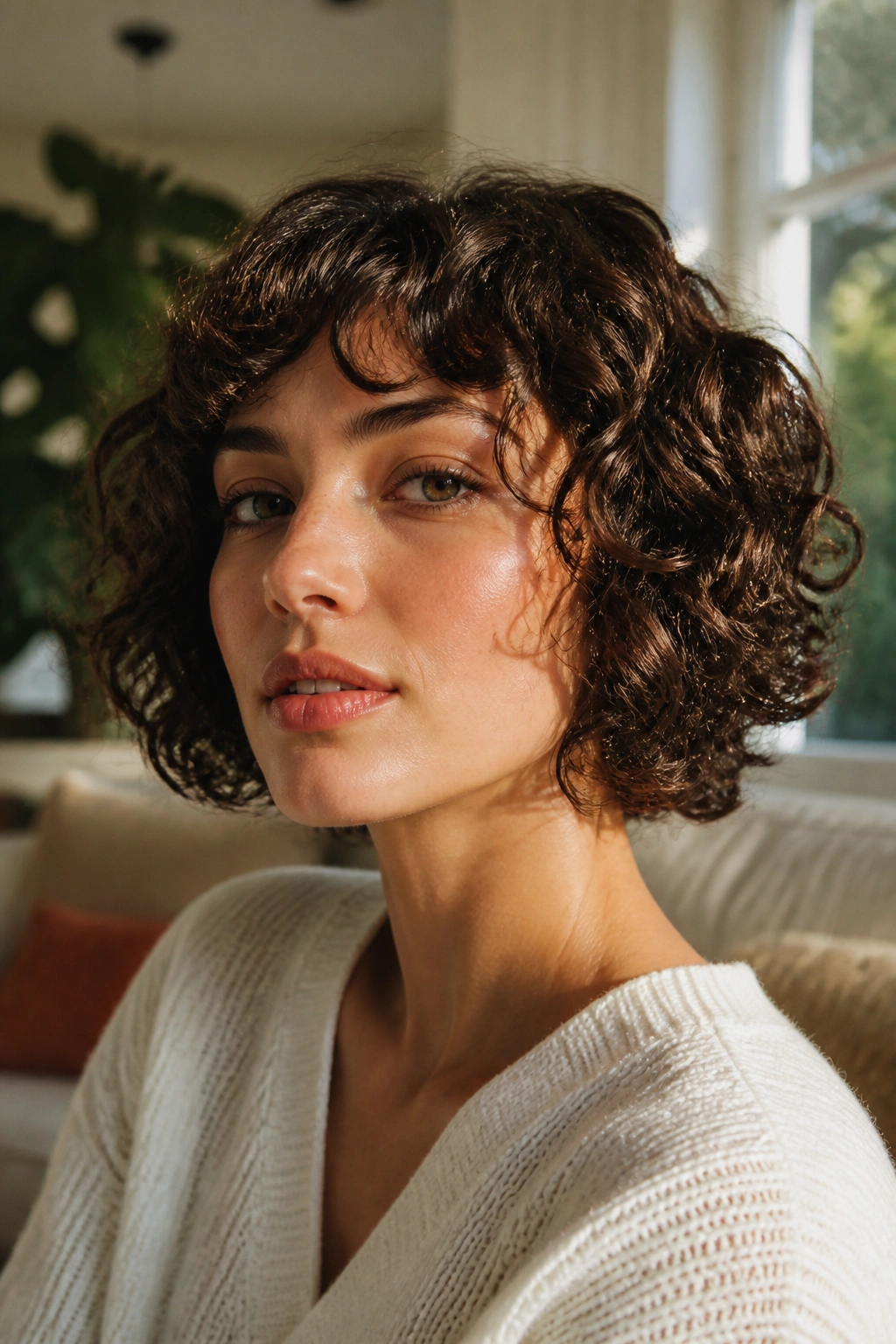
A curly French bob is proof that this haircut is not only for straight hair. In curls, the shape gets softer and fuller, and the jaw-length perimeter creates a lovely frame that lets the curl pattern do the talking.
What Makes It Work
The main thing is leaving enough length for the curls to spring without ballooning. If the cut is too short, you lose the shape. Too long, and the French bob silhouette disappears. A good curly bob usually lands a touch longer than you think you need, because curls shrink once they dry.
This version tends to look best when the stylist cuts it dry or dries it enough to see how the curl falls. Wet curls lie. They stretch, they hide volume, and they can make a clean bob turn into a guessing game. Dry cutting takes more time, but it saves you from a bad surprise.
What to Ask For
- A perimeter that respects your curl pattern.
- Minimal thinning near the top.
- A gentle shape around the face, not a triangle.
- Length adjusted for shrinkage, not straight-hair measurements.
The curly French bob can be a little wild on wash day. That is part of its personality. Let it be.
8. The Curtain Bang French Bob

Curtain bangs bring a softer, cooler kind of framing to the French bob. They split at the center or just off-center and fall along the cheekbones, which makes them a smart choice if you want movement without committing to a full fringe.
The nice thing about this combo is how forgiving it feels. Curtain bangs grow out cleanly, they work with waves, and they make the bob look less severe on longer face shapes. If a full bang feels too heavy, this is the easier road.
The cut has to balance two moving parts: the bob line and the face-framing fringe. If one is too heavy, the other gets lost. That is why this style looks best when the bangs are kept a little airy and the bob itself stays fairly clean at the ends.
You can style the fringe with a round brush, but even a quick blow-dry with your fingers can be enough. The goal is a soft bend, not a shell. That part matters.
9. The Layered French Bob for Fine Hair

Fine hair and short hair often get discussed like they are enemies. They are not. A layered French bob can give fine hair the lift it usually lacks, as long as the layers stay subtle and the perimeter keeps enough weight to hold the shape.
This is one of the easiest ways to avoid a flat, see-through bob. A little internal layering removes bulk from the middle while leaving the outline clean. The result is movement at the ends and a little air at the crown, which fine hair usually needs.
Too many layers can backfire. The cut starts to fray. The ends get wispy. The whole thing loses that elegant, blunt-read French finish. So the goal is not lots of layers. It is smart layering.
A root-lifting spray at the crown and a quick round-brush bend through the front are often enough. Fine hair does not need a ten-step routine here. It needs structure, not fuss.
10. The Sleek Polished French Bob
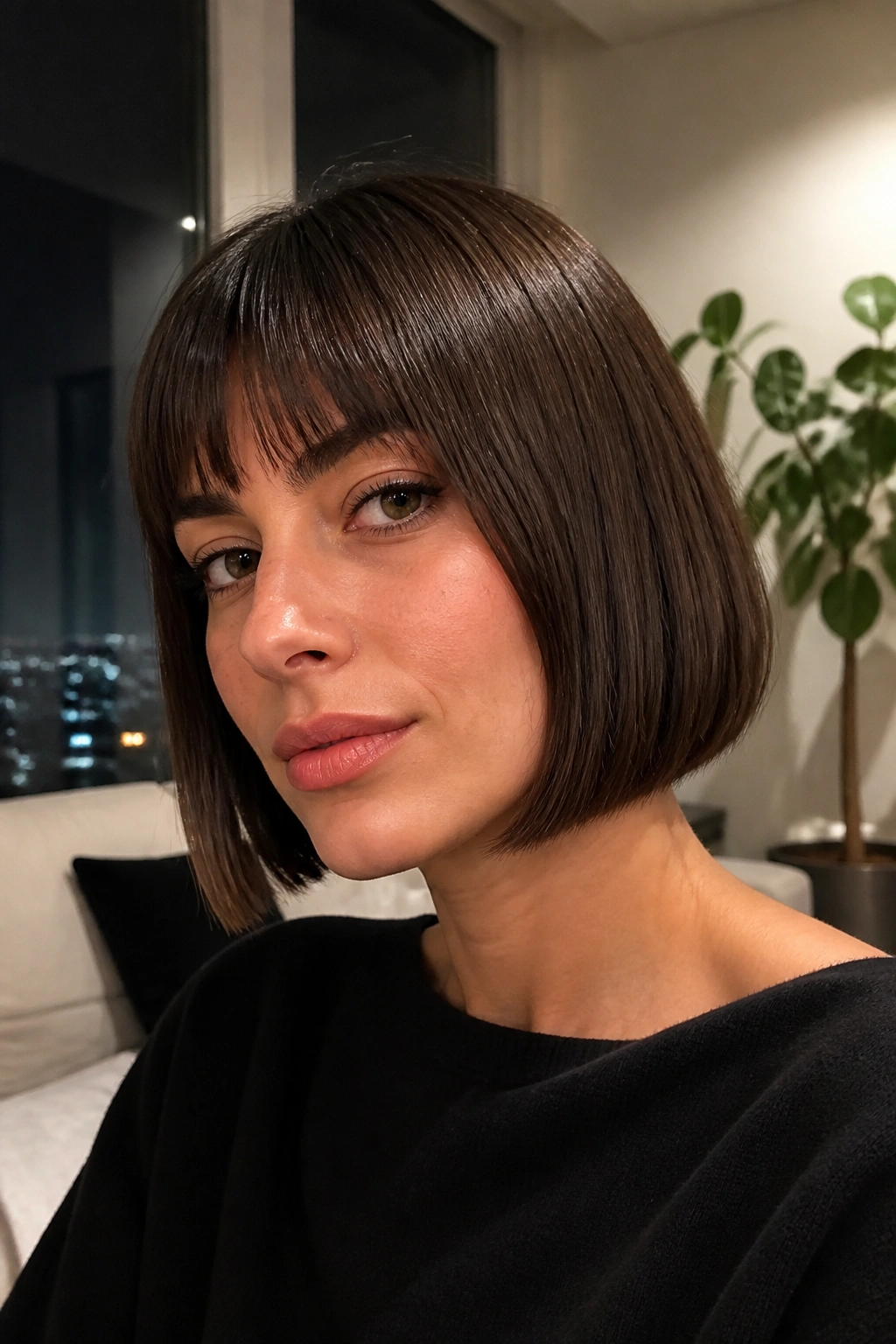
A sleek French bob is the version people choose when they want the cut to look exact. No fuzz. No beach texture. No soft fray at the ends. Just a clean line, a controlled finish, and a shape that sits close to the head.
Compared with a tousled version, this one feels more tailored. It works beautifully on naturally straight hair, especially if the strands are medium to thick and can hold a smooth edge. A flat brush, a blow-dryer nozzle, and a tiny amount of smoothing cream go a long way.
The key is not to overdo the shine. You want the hair to look healthy and controlled, not slicked to the skull. If the roots are too flat, the whole thing can look a little severe. A small bit of lift at the crown prevents that.
This cut pairs well with earrings, strong brows, and simple clothes. That is the funny thing about polished hair: it makes everything else feel more considered without making a show of itself.
11. The Piecey French Bob With Textured Ends
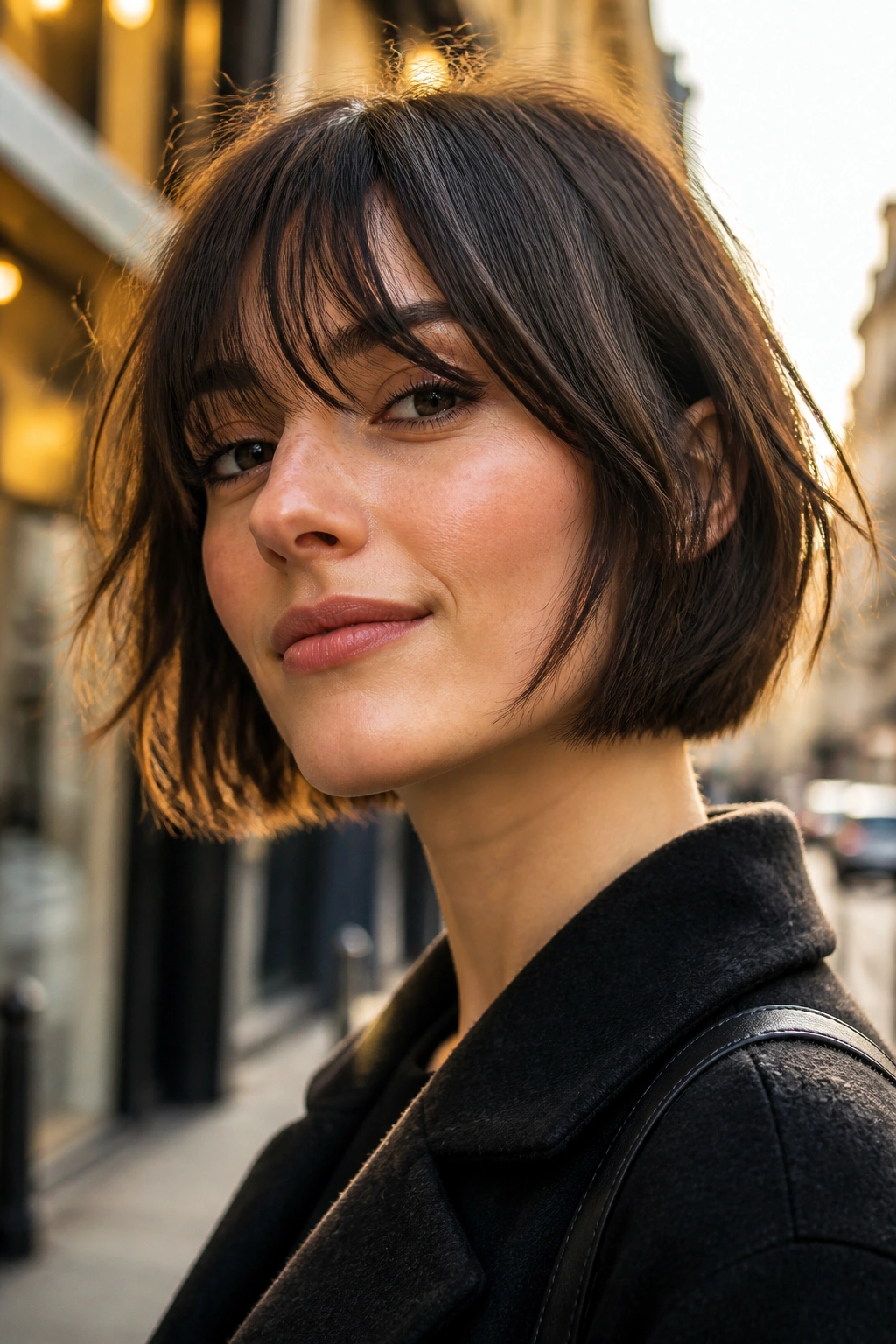
A piecey French bob lives in that middle space between neat and messy. The ends are broken up just enough to keep the cut from looking one-note, and the texture gives you a little separation around the jaw. It feels modern without becoming shaggy.
What It Looks Like in Real Life
Think of hair that has been lightly rough-dried, then touched with a small amount of paste or texture cream at the ends. The pieces are visible, but not spiky. You can still see the shape of the bob, which is the part that matters.
This version is useful when your hair has medium density and tends to look heavy in a blunt cut. Textured ends remove some of the weight while keeping the outline intact. That balance is harder to pull off than people think. Too much texture and the bob loses its polish. Too little and you are back to a plain blunt cut.
- Good products: Matte cream, lightweight paste, or a dry texture spray.
- Best drying method: Hands first, brush second.
- Avoid: Heavy serums near the roots.
- Why it works: It keeps the bottom edge from looking too dense.
The piecey version is not precious. That is why it works.
12. The Slight A-Line French Bob

A slight A-line French bob is one of the smarter choices if you want the back to feel lifted and the front to skim the face. The angle is subtle — not dramatic, not stacked, just enough to make the front lengths feel a touch longer than the nape.
That little angle helps if your hair sits flat in the back or if you want a bit more movement near the chin. It also gives the cut a longer visual line, which can be flattering on round or square faces. The front pieces draw the eye downward in a clean way.
The mistake here is making the angle too obvious. Once it gets steep, you lose the French feel and end up with something more technical looking. The best versions are almost sneaky. You notice the shape only when the hair moves.
If you wear jackets, scarves, or collars a lot, this cut can be especially useful. It stays readable even when the nape is tucked under fabric. A straight bob sometimes disappears there. This one keeps its shape.
13. The Asymmetrical French Bob

A French bob does not have to be polite. The asymmetrical version proves it. One side sits a little longer than the other, and that tiny imbalance creates tension in the shape without turning the haircut into a full avant-garde moment.
Why bother? Because asymmetry gives the cut a built-in point of interest. You do not need huge texture or loud bangs to make it feel different. The eye notices the uneven line right away, and the rest of the bob can stay simple.
Best Ways to Wear It
- Keep the difference subtle, usually under 1 inch.
- Pair it with a side part if you want the effect to read clearly.
- Use a flat iron only on the longer side if it needs a small bend.
- Let the shorter side tuck behind the ear for a cleaner contrast.
This version suits people who like sharp lines but do not want a haircut that looks standard from every angle. It is a small move. Small, but not boring.
14. The Baby Bang French Bob
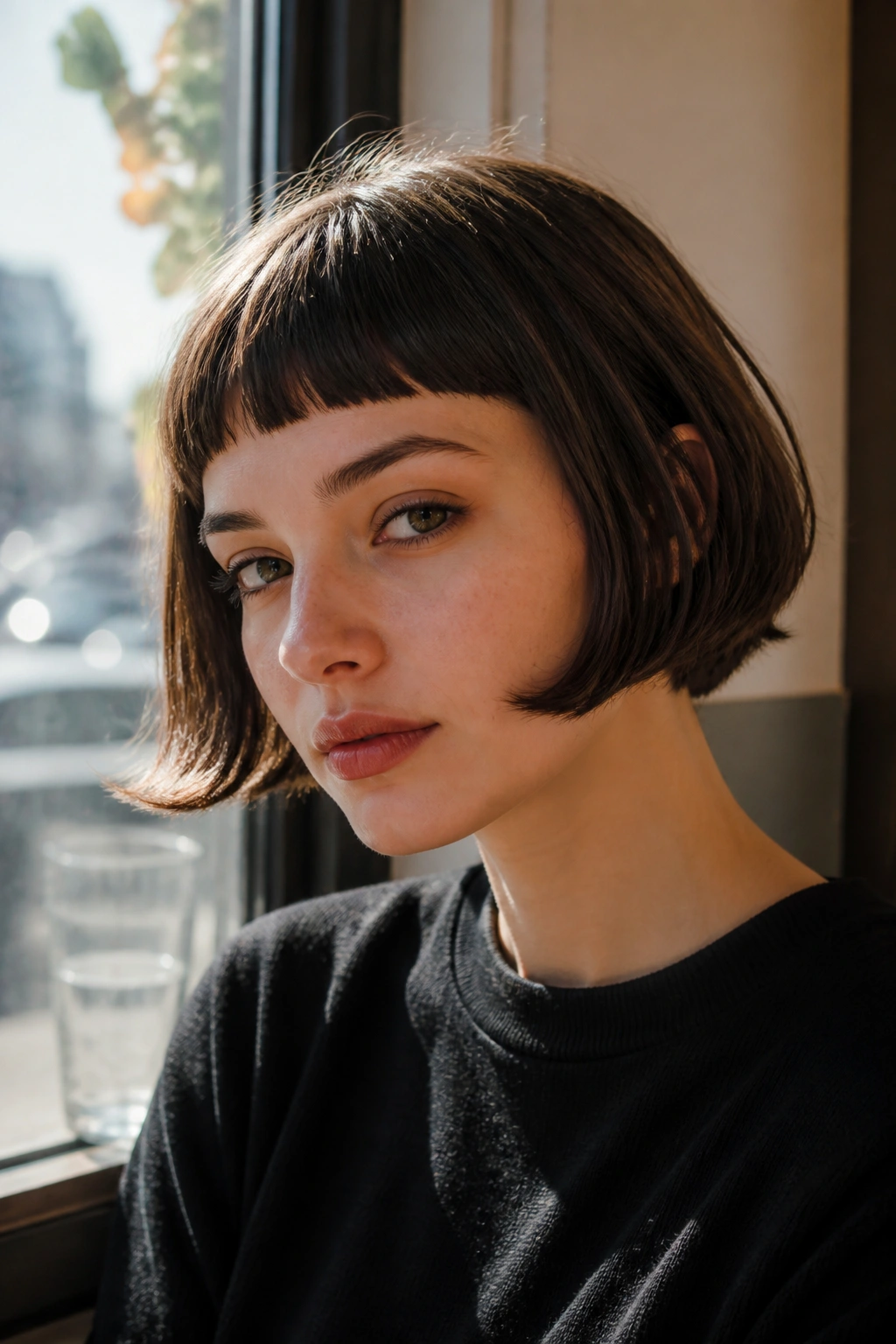
Baby bangs make a French bob feel instantly more graphic. They sit well above the brows, often cutting across the forehead in a short, crisp line that changes the whole face. It is a bold look, and pretending otherwise would be silly.
The charm is in the contrast. The bob itself can be soft and jaw-length, but the fringe is short enough to look a little surprising. That mix keeps the haircut from feeling too sweet. If you want something that reads playful but still sharp, this is a strong candidate.
How to Wear It Without Regret
Start with the fringe slightly longer than you think you want. Seriously. Short bangs look cute on the day of the cut and then become complicated if they are taken too far. A quarter-inch matters here.
The rest of the bob should stay fairly simple. Too many layers or too much texture in the haircut can make the baby bangs look disconnected. Let the fringe be the headline and keep the shape clean underneath it.
This is not a cautious haircut. That is why some people love it.
15. The Bixie-Leaning French Bob
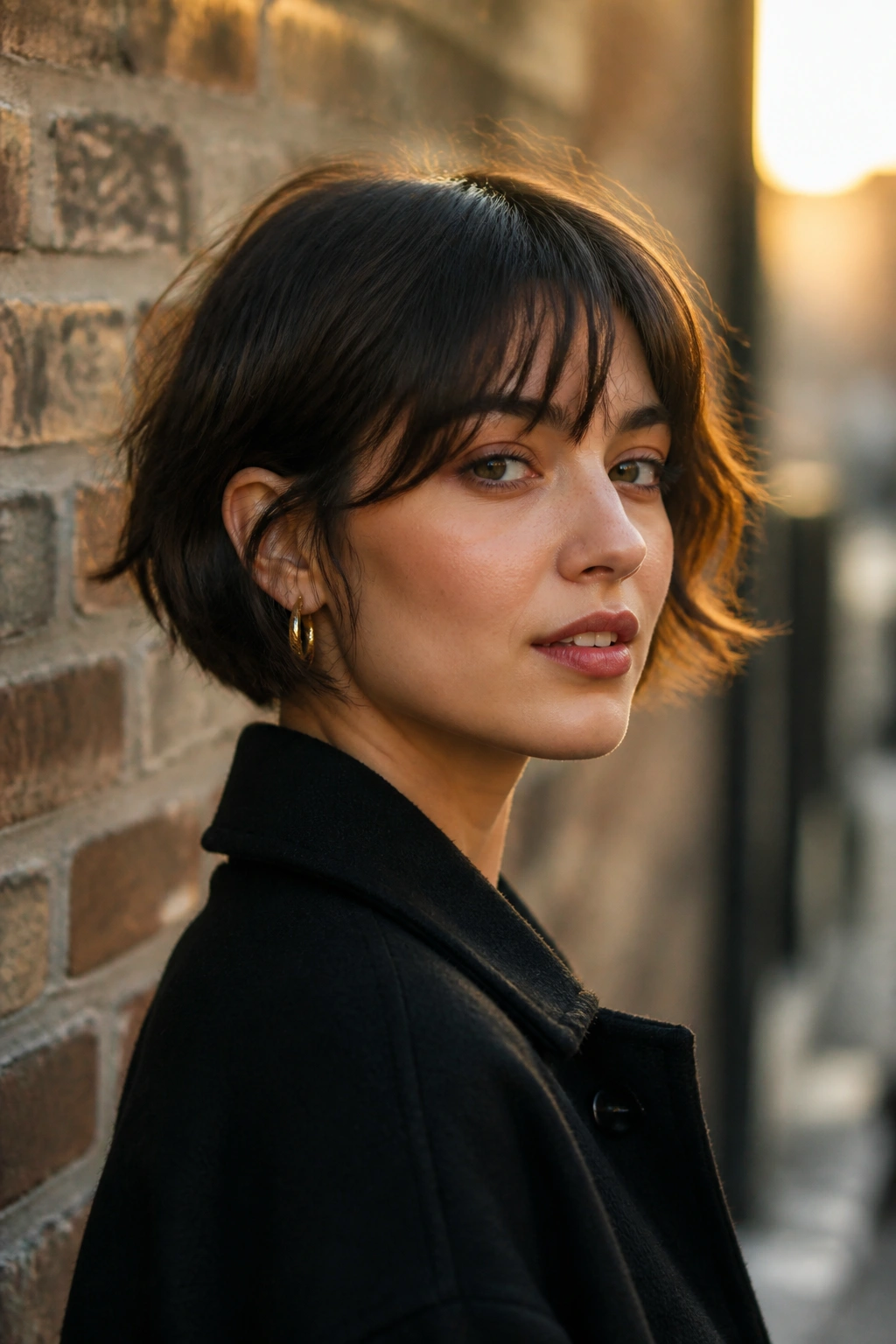
If you like short hair but do not want to go full pixie, the bixie-leaning French bob is the sweet spot. It keeps more length than a pixie, but the layers and softness borrow just enough from a bixie to make the cut feel light and a little airy.
Compared with a blunt French bob, this version has more movement around the ears and crown. It works well if your hair is thick and you want to remove some weight without losing too much shape. It also suits people who want a short cut that grows out gracefully.
The important part is not letting it become vague. A bixie can drift into “I meant to cut my hair, but not that short” territory if the perimeter is not handled carefully. Keep some structure around the jaw or cheekbones so the French bob influence stays visible.
This is a good option if you want short hair with edge, but you still like the idea of a real bob line. A little rebellion. Not chaos.
16. The Long Face-Framing French Bob

A longer French bob with face-framing pieces is a smart compromise for anyone who wants the look without losing too much length. The main body still reads as a bob, but the front sections are left a bit longer so they graze the chin or even skim just below it.
That extra length does useful work. It softens strong jaws, lengthens round faces, and gives you more room to tuck hair behind the ear without the whole cut collapsing. It is also easier to grow out than a very tight bob, which matters if you like changing your mind.
A Few Practical Notes
- Ask for the front to sit about 1 to 2 inches longer than the back.
- Keep the layers minimal so the shape stays clean.
- Blow-dry the front away from the face, then curve it back with a brush.
- A light serum on the mid-lengths can keep the front from puffing out.
This version is the sensible one. Not dull. Just sensible.
17. The Air-Dried Natural-Texture French Bob

Some cuts beg for a blowout. This is not one of them. The air-dried French bob is built for hair that already has body, bend, or curl and looks better when it is left a little imperfect.
The appeal is easy to understand. You wash your hair, work in a small amount of leave-in or curl cream, and let the shape settle on its own. The ends dry into whatever movement they already want, and the bob ends up looking relaxed instead of styled to death.
The trick is resisting the urge to touch it too much while it dries. Hands can break up the pattern in weird ways, especially if the hair is fine or frizz-prone. Put the product in, shake the roots a little, and leave it alone.
This version is a favorite for people who are tired of chasing smoothness every morning. It asks for a decent cut, not a perfect blowout. That is a relief.
18. The Deep Side-Part French Bob
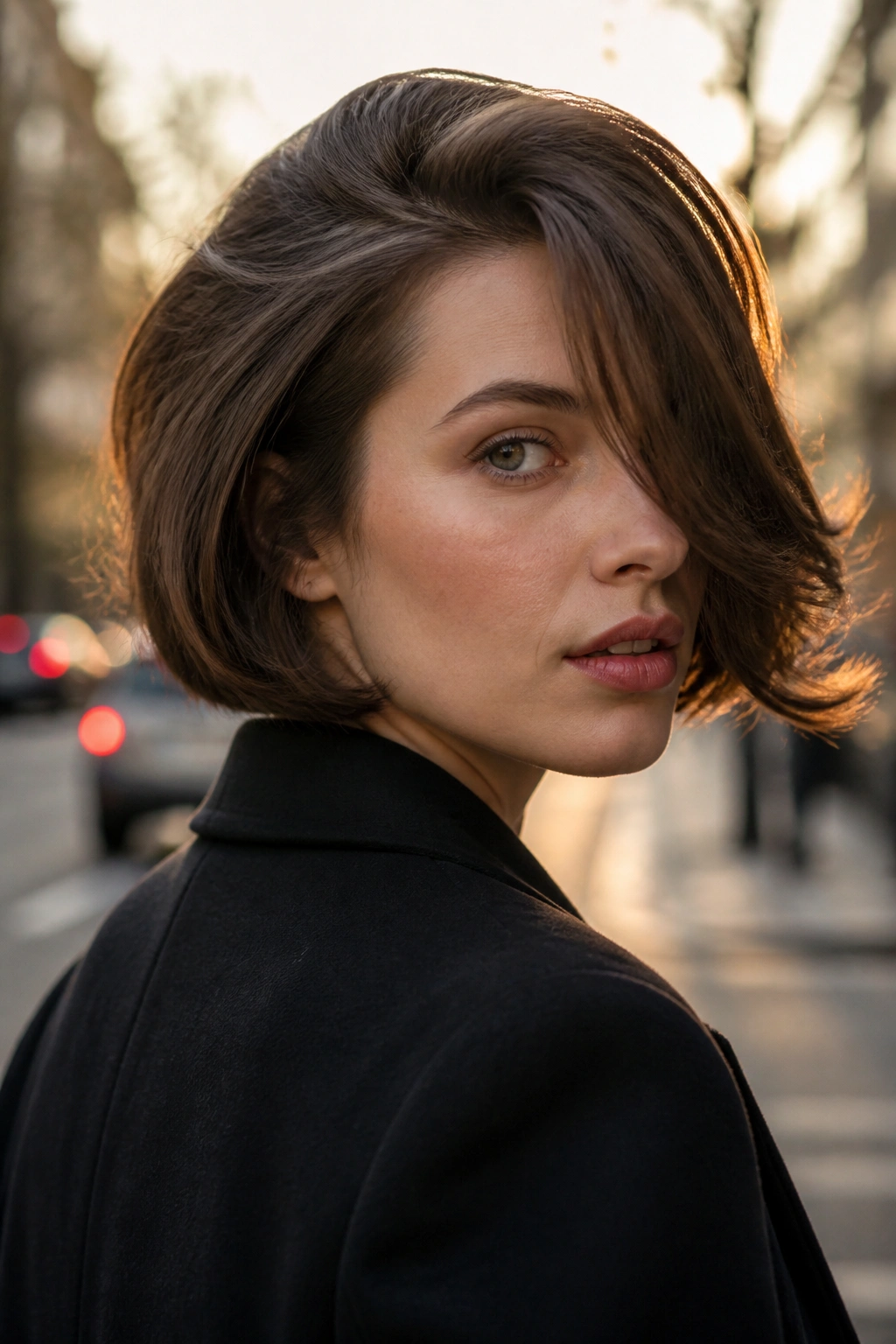
A deep side-part French bob changes the whole face with one move. Shift the part far over, and the hair suddenly gains lift at the crown, drama at the fringe, and a little sweep across the forehead that feels more sculpted than center-parted versions.
This shape works well on hair that tends to lie flat on top, because the deep part creates instant volume at the roots. It also helps soften a strong forehead or balance features that feel too symmetrical with a middle part. The cut itself can stay simple. The part does most of the talking.
If your hair has a stubborn cowlick, this version can either solve it or expose it. That depends on where the growth wants to go. Sometimes you have to let the cowlick win a little and build the part around it. Fighting it all day is a waste of time.
A deep side part gives the French bob a little old-school glamour without making it fussy. That’s a good trade.
19. The Tapered-Nape French Bob
A tapered nape French bob feels neat from the back and light around the neck, which is a smart move if you hate bulk under collars. The hair is kept a bit shorter at the nape and gradually filled out toward the sides, so the cut sits close where you want it and fuller where you need it.
Why People Choose It
The taper makes the bob feel lighter, especially on thicker hair. It also helps the neckline stay clean when the hair grows out, which buys you a little extra time between trims. That matters more than people admit. A bob can go from sharp to sloppy fast if the back gets too heavy.
This version is usually best when the stylist pays attention to the nape area instead of just the front. The back view matters. A lot. If the neckline is bulky or uneven, the whole cut loses its edge the minute you turn around.
- Best for: Thick, straight, or slightly wavy hair.
- Styling note: A quick brush-under at the nape keeps the line neat.
- Good bonus: Less hair sitting against the neck in warm weather or under scarves.
- Maintenance: Shape-up trims keep it from growing into a triangle.
It is a small detail. It changes the whole cut.
20. The Heavy-Perimeter French Bob
A heavy-perimeter French bob is for people who want the line to feel dense, grounded, and a little dramatic. The ends carry more weight, which gives the haircut a stronger outline and makes the bob look fuller from every angle.
This version is useful if your hair is fine but plentiful enough to support a solid edge, or if you have thick hair and want the base to feel substantial rather than fluffy. The heaviness at the bottom gives the cut a little swagger. It also makes straight styling look extra clean, because the perimeter reads as one strong line.
The catch is that it can feel too blunt if the face-framing is neglected. A heavy edge works best when the front is slightly softened near the cheek or jaw. That stops the cut from turning into a block.
If you love crisp outlines, this is the one that scratches the itch. It looks best when the hair is healthy, well-conditioned, and cut with real precision. No fuzzy ends. No half-measures.
Final Thoughts
The French bob keeps working because it is adaptable without losing its point of view. Short, blunt, soft, wavy, polished, cropped, or fringed — each version changes the mood, but the shape still says the same thing: clean, intentional, slightly cool.
The best choice usually comes down to texture first, then maintenance, then how much forehead or jawline you want to show. Start there, and the rest gets easier fast. A bob that suits your hair will look styled even on a lazy day, which is the real prize.
And honestly, that is why this haircut never gets old. It does not need to shout.
