



Bob braids have a way of looking polished even when the rest of your week is a mess. They pull the hair off your neck, tuck the ends away, and still leave room for parting, shape, accessories, and a little personality.
That’s why they work so well as a protective style. A good bob braid install does more than look neat. It keeps your ends hidden, reduces daily manipulation, and gives you a shorter shape that feels lighter than waist-length braids without losing the braided look people want in the first place.
The details matter, though. A chin-length knotless bob feels different from a blunt box-braid bob. A deep side part changes the whole mood. Add beads, cuffs, curls, or colored extensions, and the style shifts again.
So I’d treat bob braids the way a good stylist would: start with the shape, then build the attitude around it. The ideas below cover clean and classic, soft and romantic, bold and edited, and a few in-between looks that are easy to wear without fussing over them all day.
1. Chin-Grazing Knotless Bob Braids
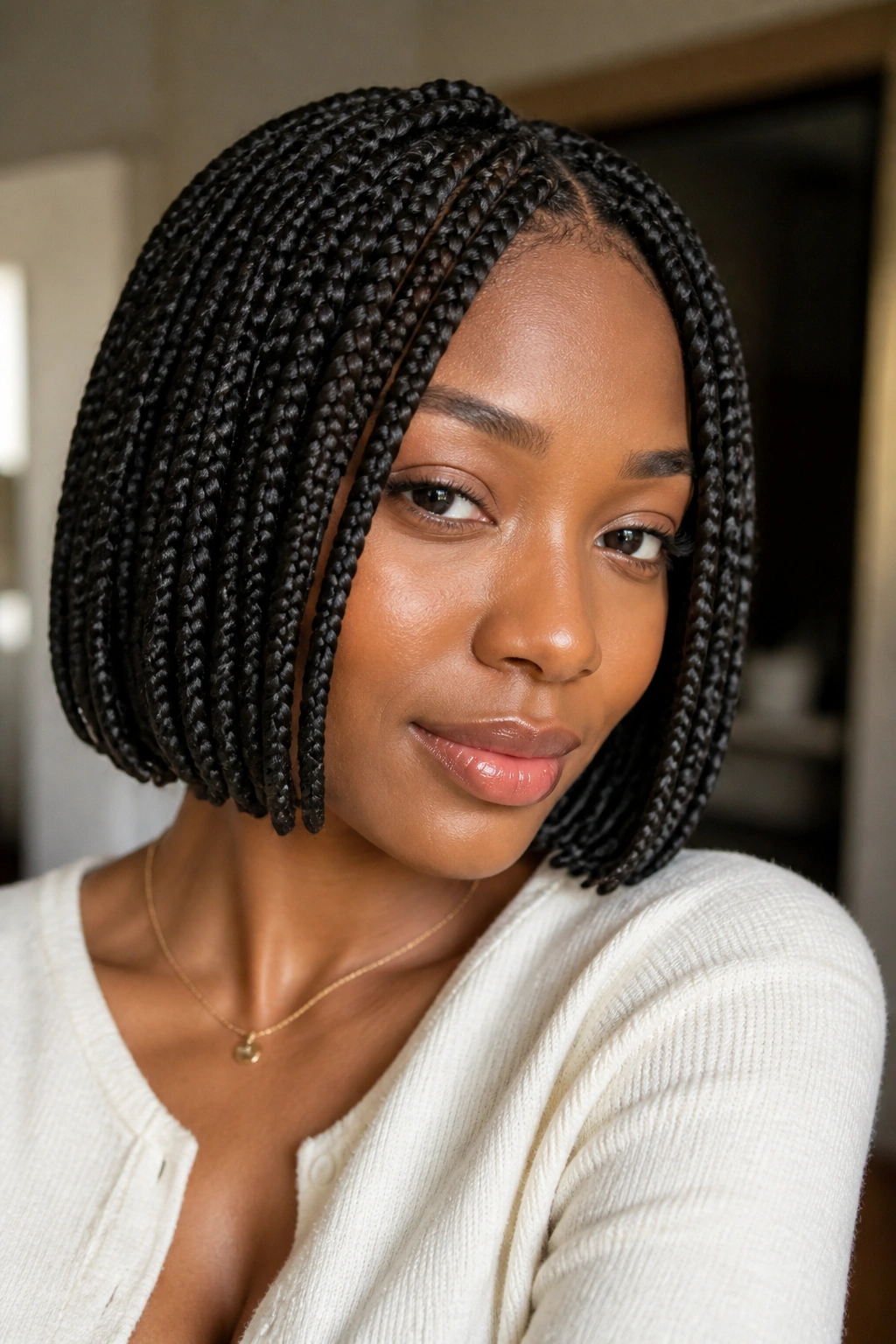
A chin-length knotless bob is the version I reach for when someone wants their braids to feel light from the start. The knotless base takes some of the bulk off the roots, and that matters more than people think when the style sits right at the jawline.
Why the Length Works
The shorter length keeps the braids from swinging into your shoulders every time you move. That sounds minor. It is not. Less rubbing means less frizz at the ends and less irritation around the neckline, which is one reason this shape stays comfortable for long wear.
I also like this cut because it frames the face without swallowing it. If you have strong cheekbones or a narrow chin, the line of the bob can sharpen your features in a clean way. If your hair is dense, ask for the ends to be cut blunt and even so the shape reads intentional instead of accidental.
- Best for people who want low weight at the scalp
- Works well with medium-size knotless braids
- Looks tidy with or without accessories
- Easier to sleep in than longer braided styles
Pro tip: ask your braider to keep the ends sealed at the same point instead of staggering them too much. A slightly blunt line gives the bob its edge.
2. Deep Side-Part Bob Braids
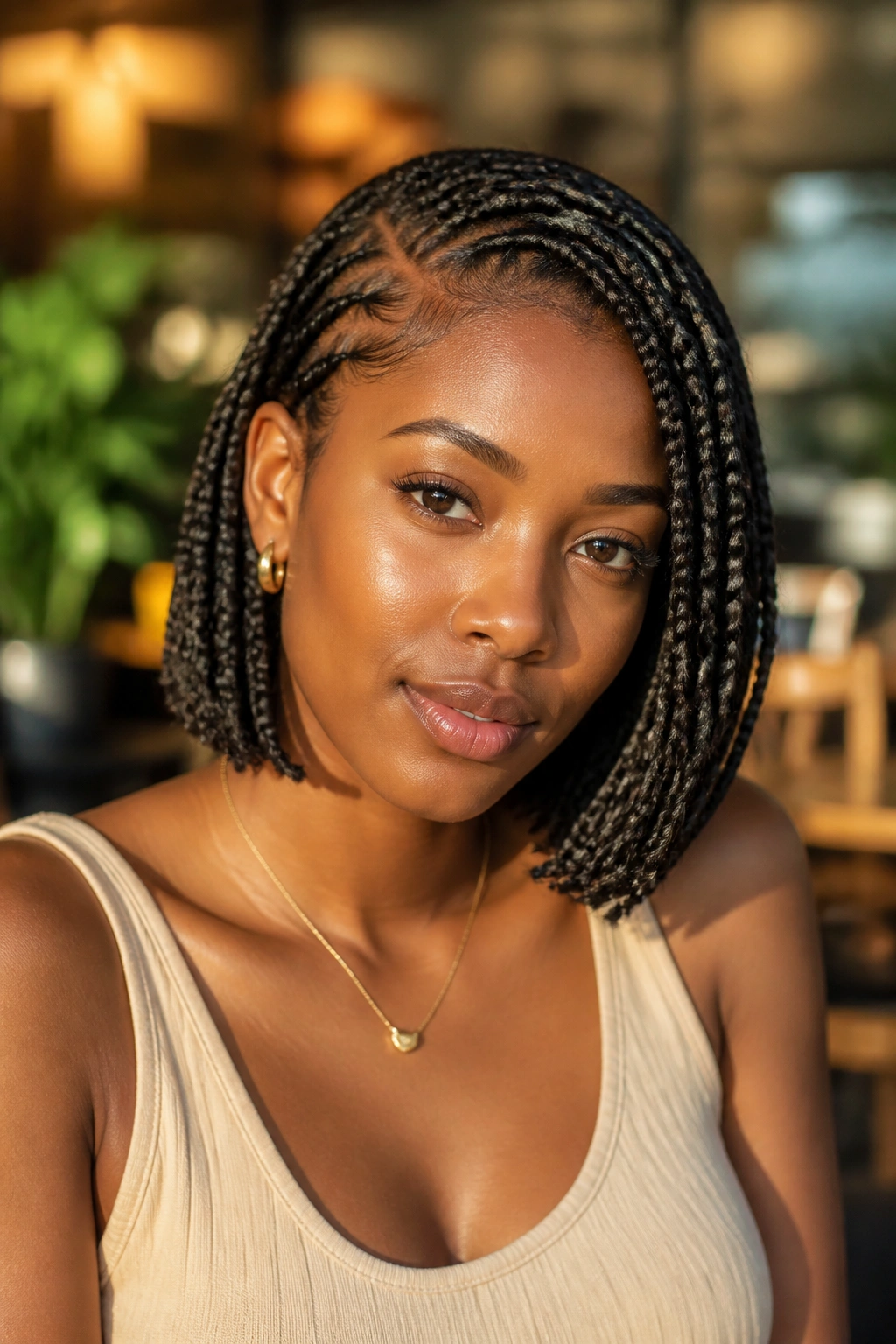
A deep side part can make a simple bob look far more styled than it has any right to. That is the whole trick. You are not adding more braids or more length; you are shifting the whole visual weight of the style to one side.
The part itself should sit about 3 to 4 inches off center, not so far over that the braids fall into your eye every ten seconds. When it’s placed well, the sweep softens the forehead and gives the bob a little movement, even when the braids are fixed in place.
I like this one on days when a center part feels too exact. The side part makes the style look relaxed, but not lazy. Use a light mousse at the roots and a scarf for 15 minutes if you want the part to stay crisp overnight.
The payoff is small and obvious at the same time. The whole style reads more dressed up.
3. Triangle-Part Bob Braids
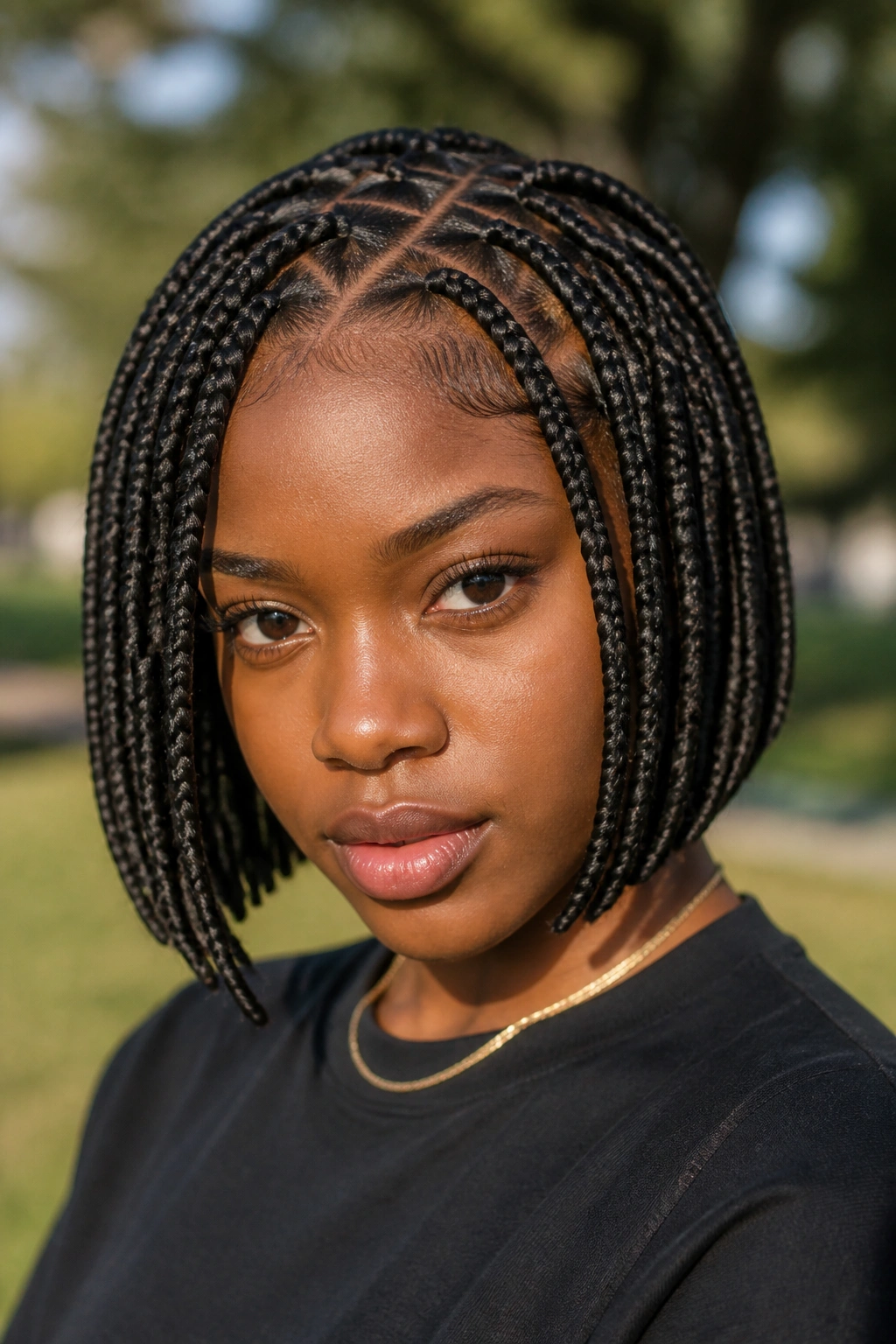
Why do triangle parts work so well? Because they break the grid. Straight box parts can look neat, but triangle sections give the scalp a less rigid pattern, and that tiny shift changes the whole vibe of a braided bob.
This style looks especially good when the braids are medium-sized and the length sits around the mouth or chin. The geometric parting shows up most clearly at the crown, so the style has a little visual surprise before the braids even start moving.
How to Wear It
If you want the parts to stay visible, keep the braids tight enough at the root to hold the shape but not so tight that the scalp feels pulled. That balance matters more here because triangle parts lose their edge when the braid base bulges.
A rat-tail comb and clean sectioning are doing most of the work, honestly. Once the parts are laid well, you do not need heavy accessories. A plain braid set with triangle parts already looks considered.
This is one of those styles that reads quiet at first and sharper the longer you look at it.
4. Beaded Bob Braids with Clean Ends
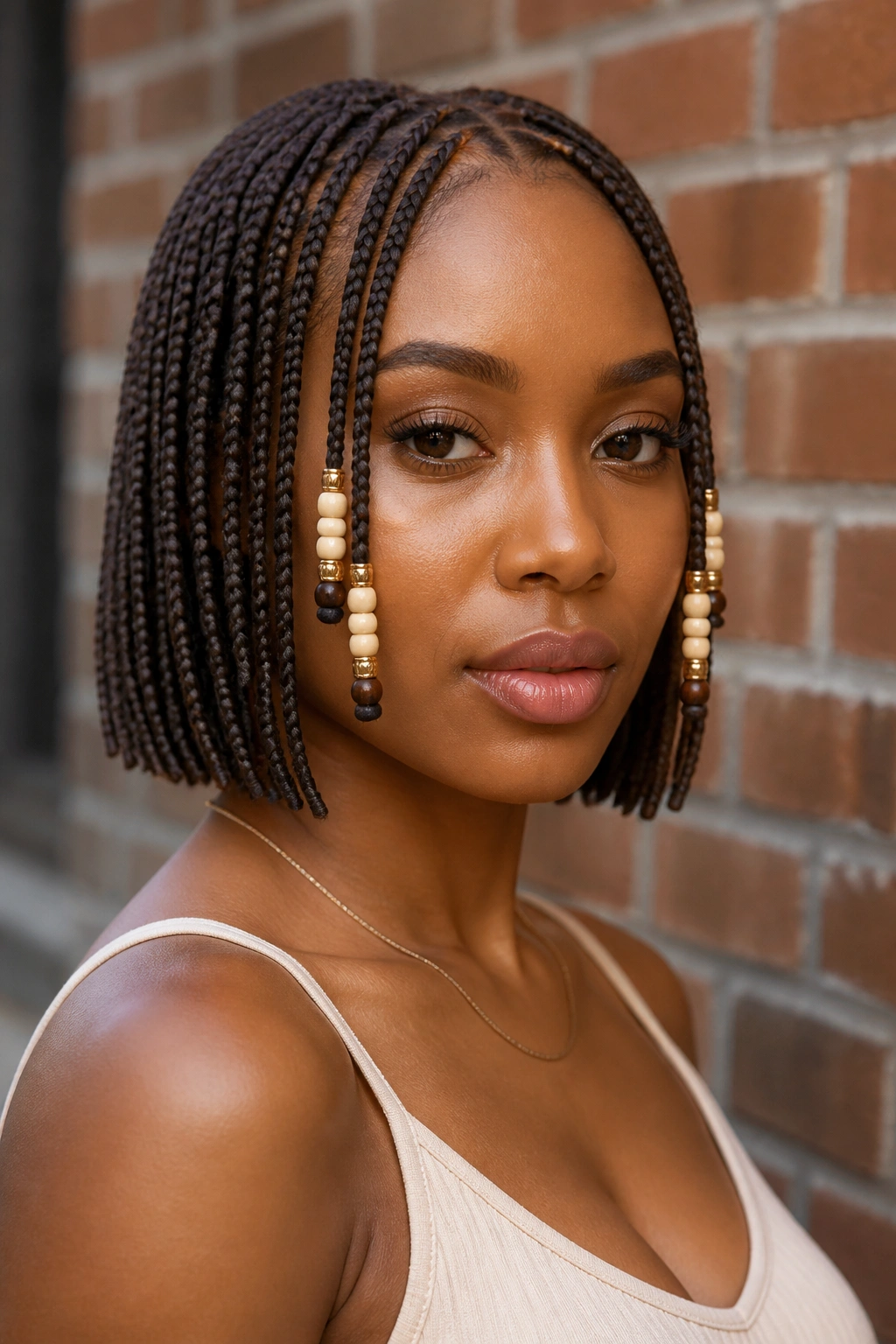
If you grew up hearing beads knock together in the hallway, this one probably pulls a little nostalgia out of you. Beads on a bob braid set can feel playful, but they can also look very grown if you keep the color palette tight and the placement controlled.
The trick is not to load every braid with hardware. That gets noisy fast. I prefer beads on the front rows, or just at the ends of a few face-framing pieces, so the shape stays clean and the sound stays subtle. Four to eight beads on each side is usually enough for a short style.
- Choose lightweight acrylic or wooden beads
- Place them near the front or lower half of the bob
- Match bead colors to your outfit wardrobe, not just one shirt
- Seal the ends well so the beads do not snag
A bob like this works when you want the braid set to feel finished without looking too serious. The bead placement does the talking.
5. Fulani-Inspired Bob Braids
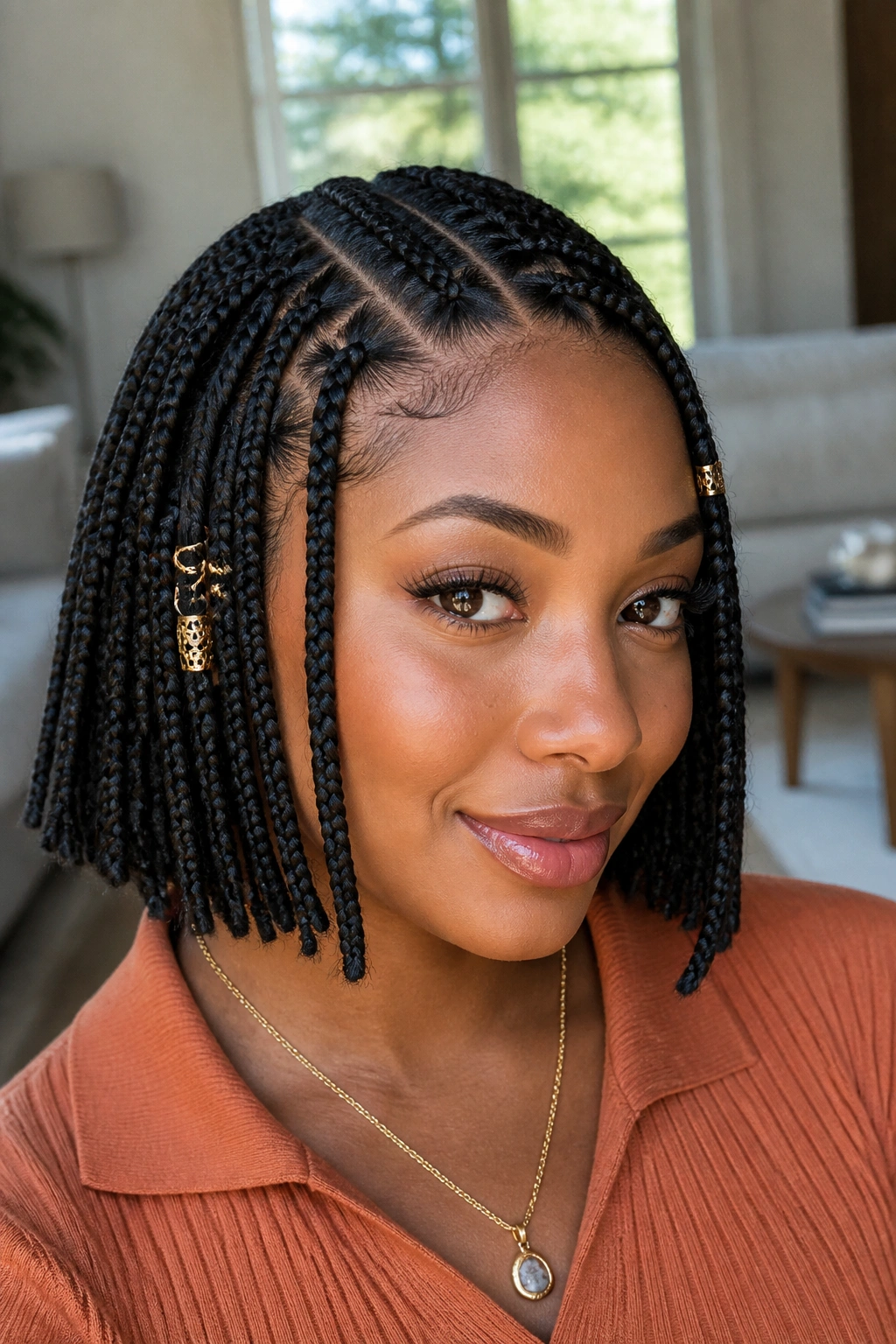
Fulani-inspired bob braids have a different kind of energy. They usually start with a braid or two in the middle, then add side braids and small accent pieces near the temples, which gives the style a framed, face-forward look that plain box braids do not have.
I like this version when the goal is detail without bulk. The pattern draws the eye inward, then the bob length keeps everything from feeling heavy. On a shorter cut, the design can feel almost tailored, which is a nice change from styles that rely on length for drama.
There is also room to play with beads, cuffs, or a single braided wrap around the crown. You do not need all of those at once. Honestly, too many accessories can drown out the parting work, and the parting is the best part.
A good Fulani-inspired bob sits flat at the scalp and moves softly through the ends. It feels deliberate. That is the word.
6. Curled-End Bob Braids
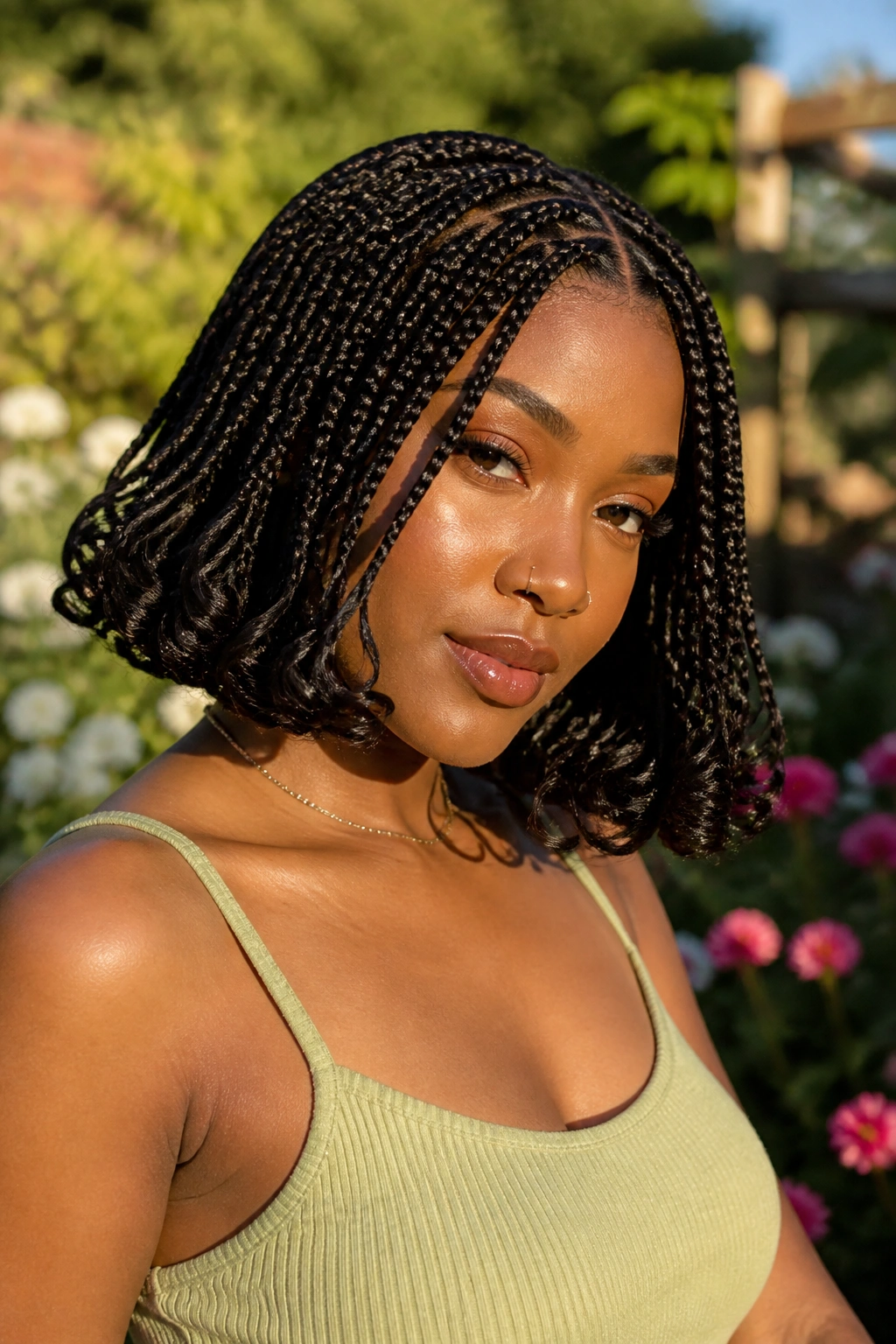
Unlike a blunt-ended bob, curled-end braids soften the whole style from the bottom up. The curl adds a little bounce, which keeps short braids from looking too stiff or boxy.
This works especially well if you like a braided bob but do not want the ends to stop dead at one line. A curl gives the cut more motion, and the shape looks less severe around the jaw. If your face is round or square, that softer finish can make the style sit easier.
For the ends, small perm rods or rods set before the hot-water dip usually give the neatest result. Keep the curl tight enough to hold, but not so tight that it turns into a springy little coil unless that is the look you want.
I’d choose this version for anyone who wants the bob to read a little more romantic. It is a small change. It makes a real difference.
7. Boho Bob Braids with Loose Pieces
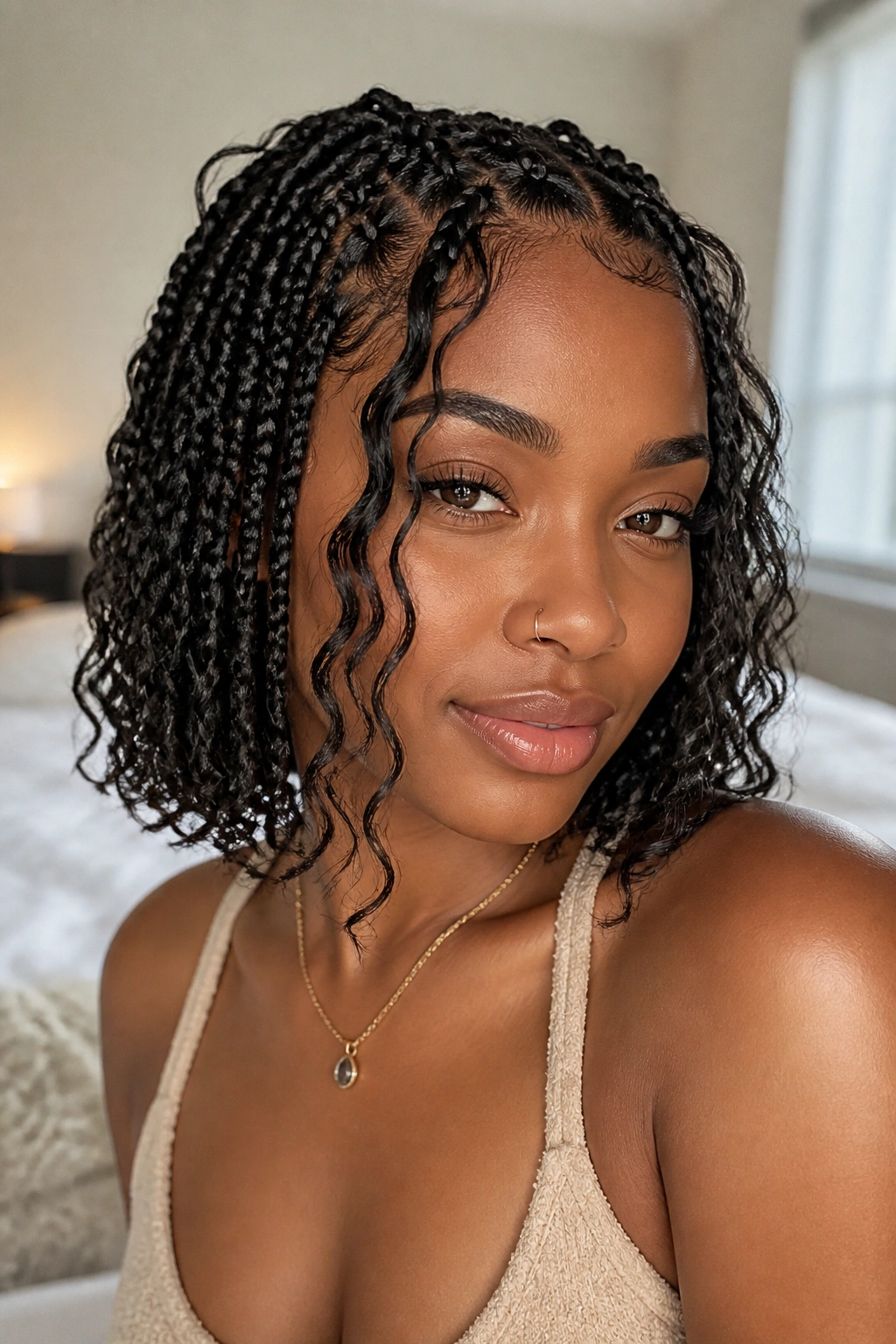
Boho bob braids are for the person who likes a braid set with a little movement and a little mess in the right places. The loose curly pieces break up the clean braid line, which keeps a short style from looking too severe.
The best versions are controlled, not chaotic. A few curly strands throughout the bob can look airy and textured. Too many, and the style starts to tangle faster than you want, especially at the nape where shirts and collars keep rubbing.
What Makes It Different
The loose pieces create softness around the face and give the bob a bit of lift when it moves. That matters on shorter braids because the shape can sometimes sit too still. Here, the curly strands catch the eye first, then the braid pattern comes into focus.
- Add curls to every third or fourth braid
- Keep the loose pieces shorter than the braid length
- Use mousse lightly so the texture stays defined
- Trim frizzy ends early instead of waiting too long
This is the style I’d call easygoing, but not sloppy. That distinction matters.
8. Jumbo Bob Braids for a Faster Install
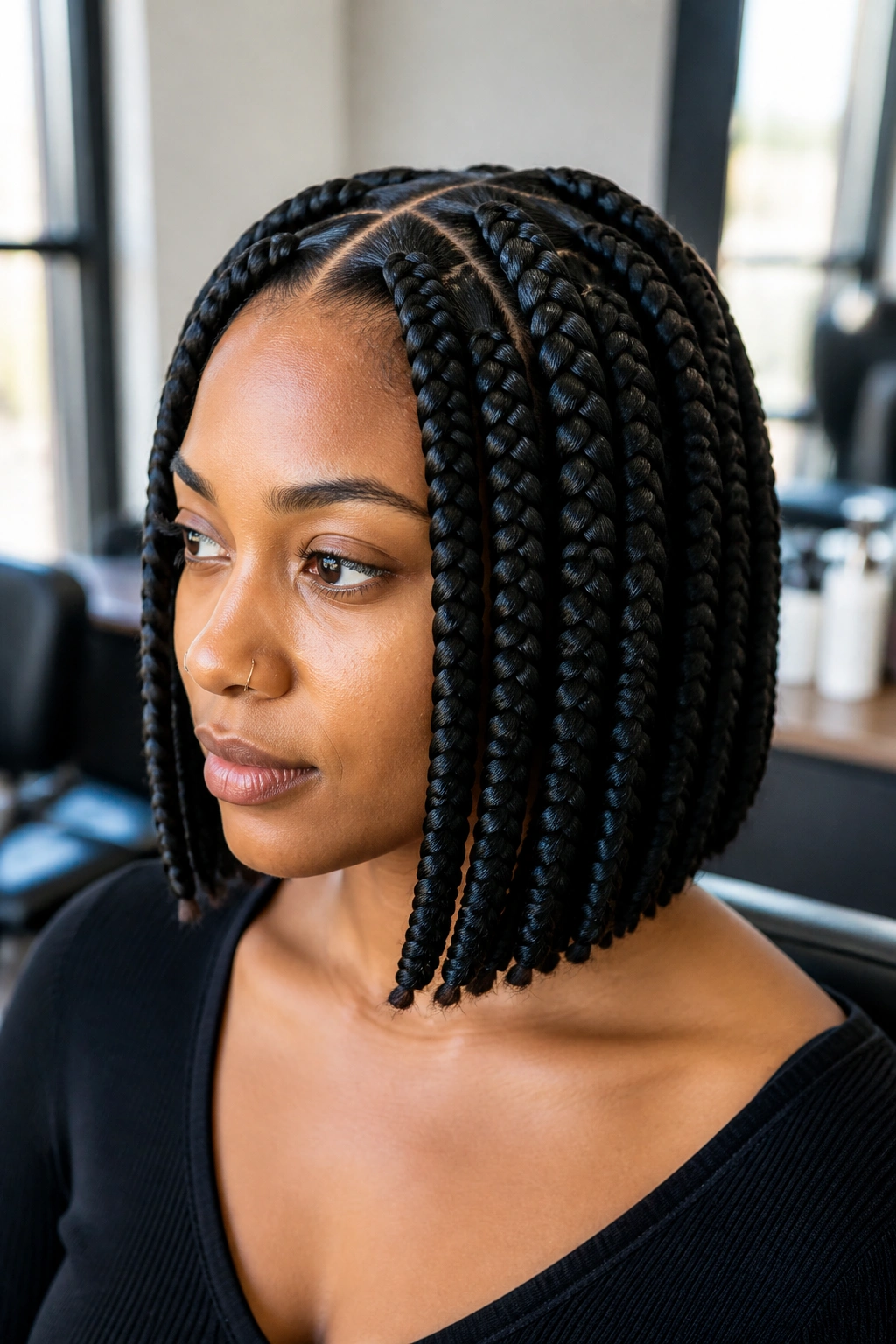
Jumbo bob braids are the honest shortcut. If you want the bob shape without spending forever in the chair, bigger braids cut the install time and still give you that protective tucked-away finish.
The style works best when the sections are clean and the braids are not too heavy at the roots. Bigger does not mean sloppier. A few large braids at chin length can look chic if the parting is crisp and the ends are trimmed evenly.
There is also a practical upside: fewer braids usually mean less overall tension, as long as the braids are not oversized for your hair density. If the braid feels thick but the section underneath is tiny, that is a red flag. Your scalp will tell you.
I like jumbo bob braids on days when you want the look to feel bold and low-effort at the same time. Not lazy. Just efficient.
9. Micro Bob Braids
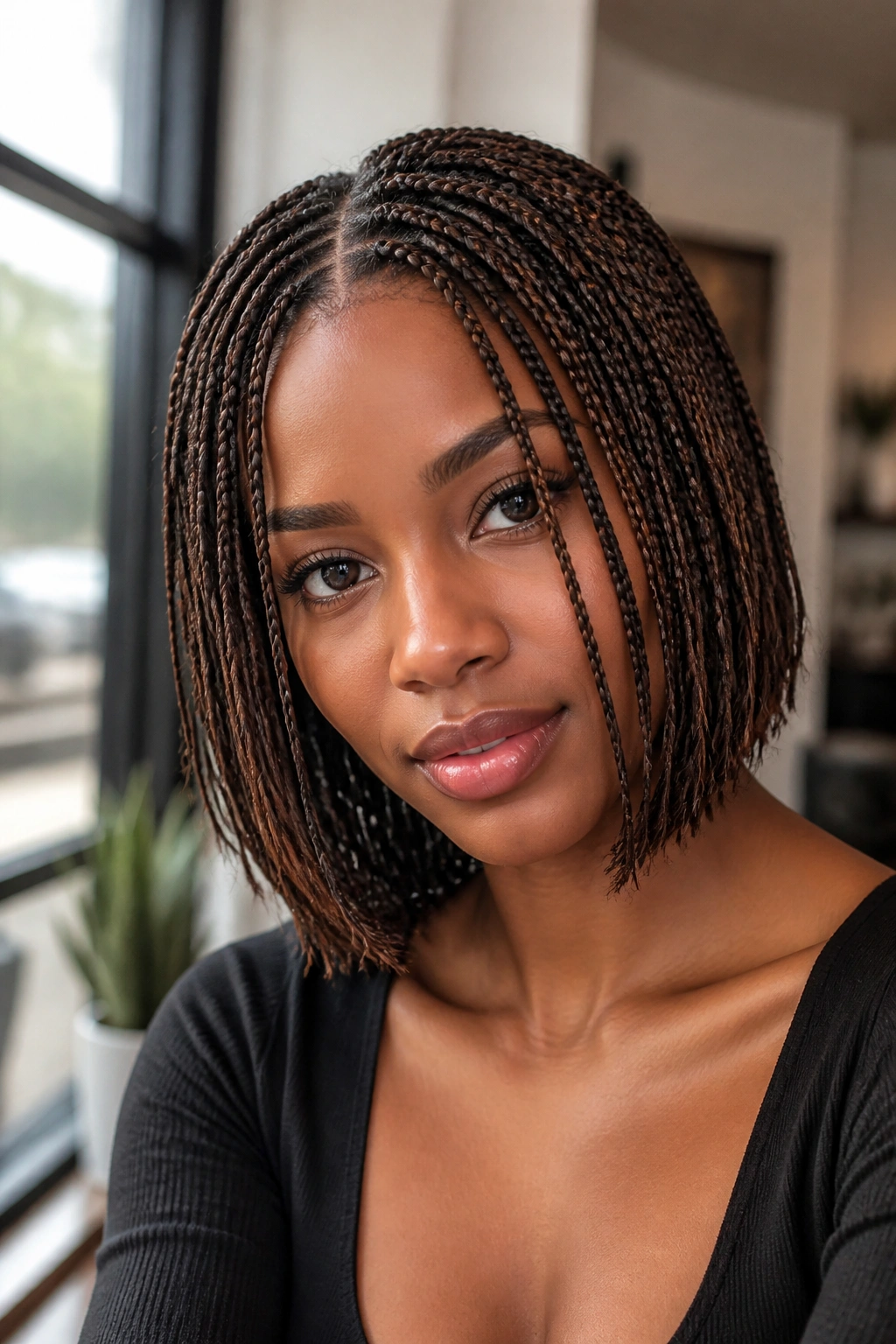
Can tiny braids work in a short bob? Absolutely. They create a softer, fuller curtain around the face, and the movement is different from a chunky braid set. Micro bob braids feel almost feathered at the ends.
The tradeoff is time. They take longer to install, and the upkeep matters because small braids can frizz at the roots if the scalp gets too dry. Bob length helps, though. You do not have the same drag or weight you get with waist-length micros, which is why this version is easier to wear than people assume.
How to Get the Most From It
Keep the braid count high enough for fullness, but not so high that the roots feel packed. That balance is the whole game. A mid-density install usually gives the most movement without turning the scalp into a grid of tension.
A micro bob also looks good with a simple center part and no extras. The braid texture becomes the main detail, which is enough.
10. Angled Bob Braids with Longer Front Pieces
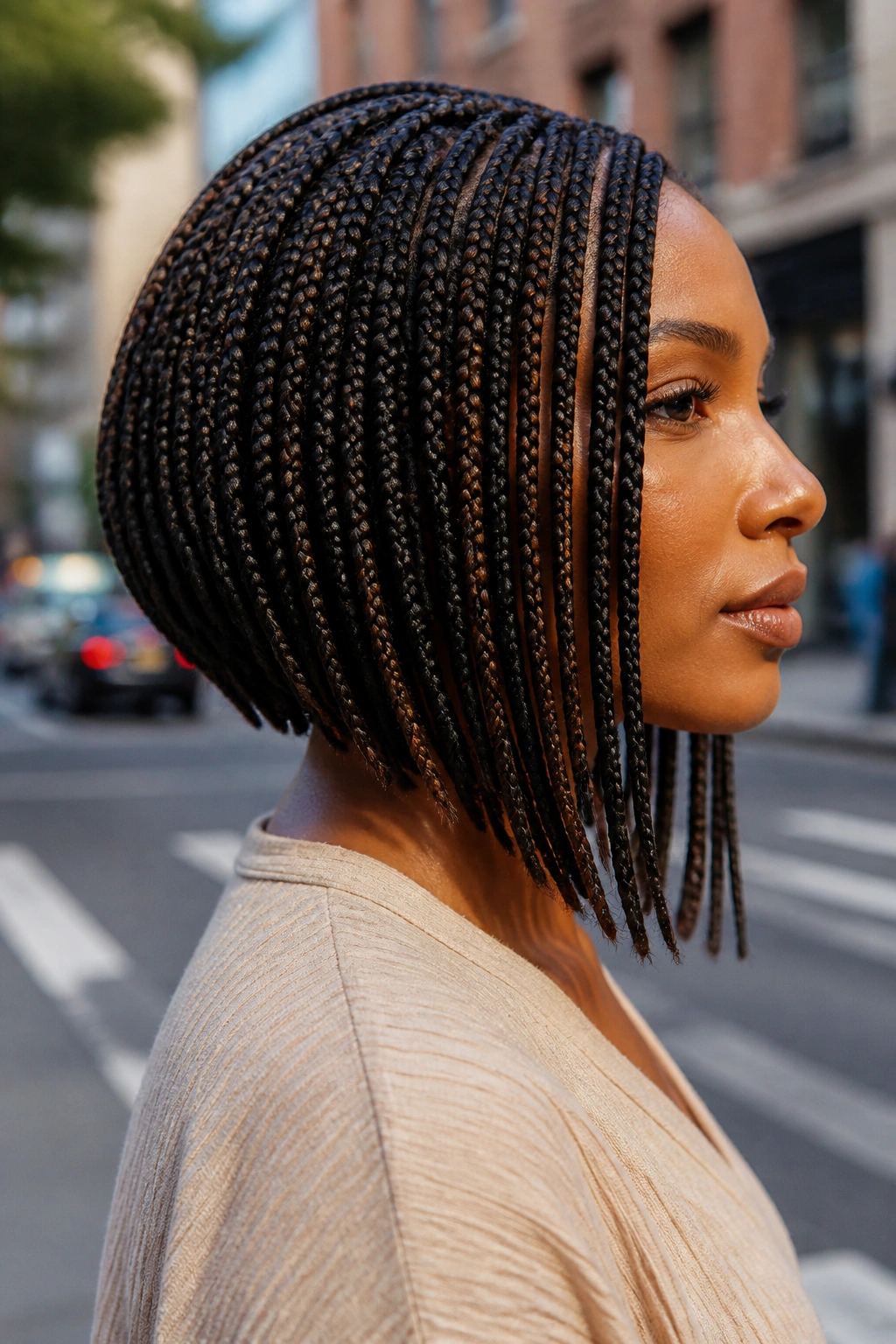
An angled bob changes the silhouette fast. The back sits shorter, and the front pieces fall a little longer, which gives the style a clean slope instead of a flat line all the way around.
That angle is useful if you want a sharper profile around the jaw and neck. The front pieces frame the face, while the shorter back keeps the style from feeling bulky at the nape. It is one of those cuts that looks more intentional than a blunt bob, even if the braid pattern is simple.
A small difference in length goes a long way here. You do not need a dramatic swing from front to back. An inch or two is enough to make the shape noticeable without turning it into a full asymmetrical cut.
This one suits people who like clean lines but want a bit of edge. It has a little attitude. Not too much.
11. Half-Up, Half-Down Bob Braids
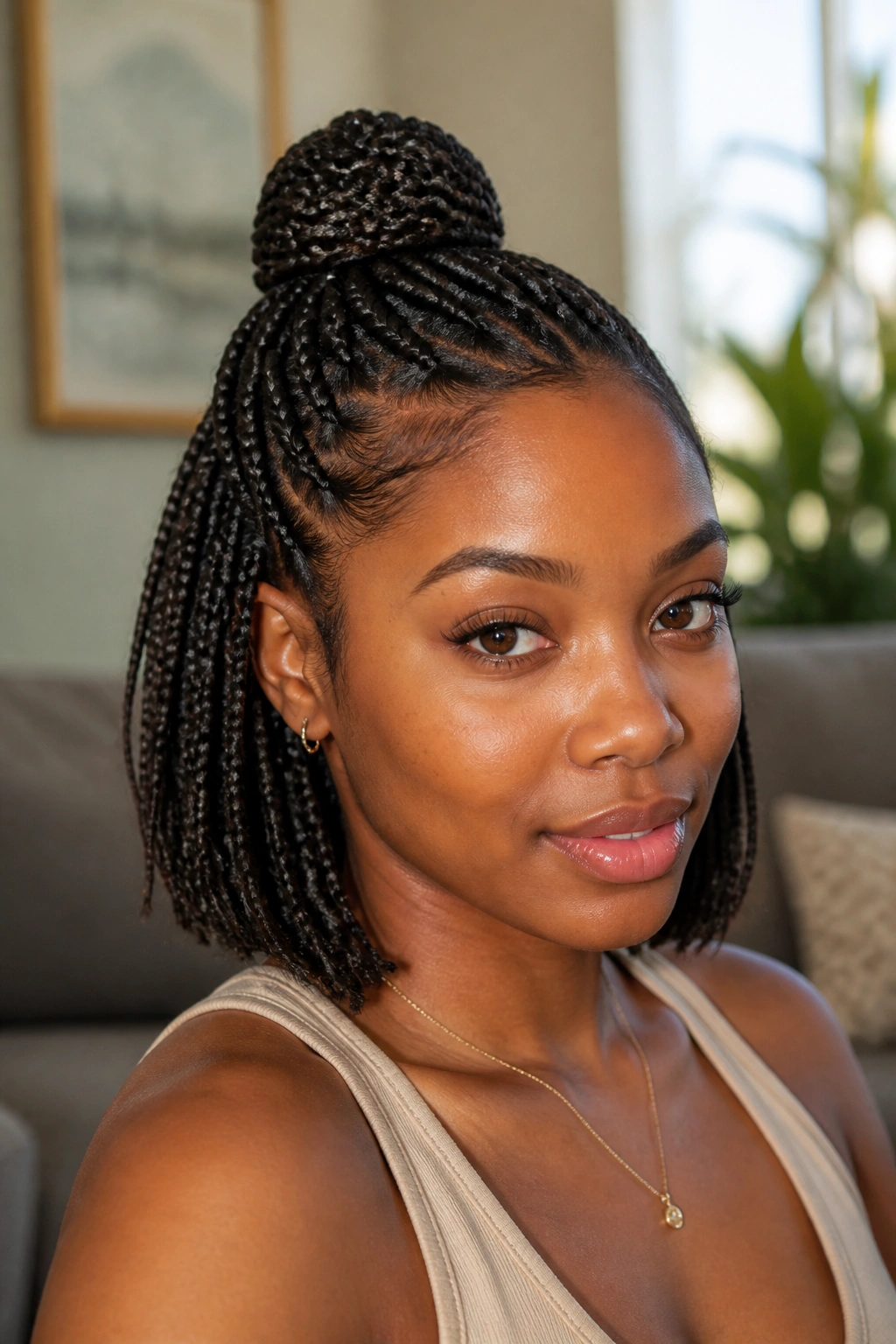
Half-up, half-down bob braids give you a second look inside one style. Pulling the top half up keeps hair off the face, while the bottom section still gives you that short braided frame around the neck and shoulders.
I reach for this shape when I want a bob to feel less static. A tiny bun at the crown, a braided knot, or even a simple clipped-up top section changes the whole mood. It also helps on busy days, since the front stays out of the way and the back does the rest.
The shorter length makes the half-up style sit better than it does on long braids. You get height without a heavy mass dragging the roots down. That matters more than people admit.
If you like styles that can move from casual to dressed up without a full restyle, this is a smart choice. It bends easily.
12. Gold-Cuff Bob Braids
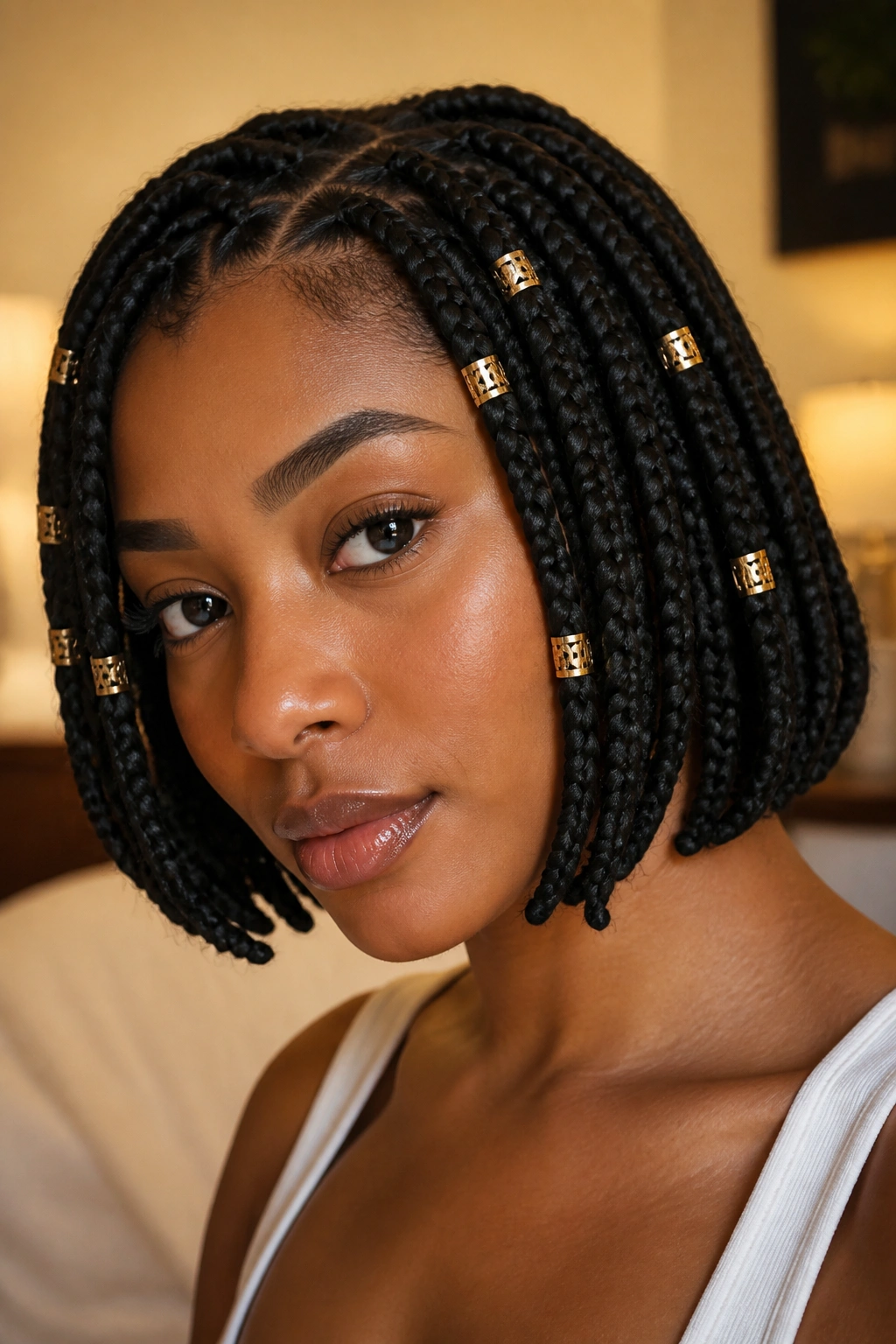
Gold cuffs give bob braids a sharper finish than most people expect. A few well-placed cuffs can make a short braid set look polished without turning it into costume territory.
Unlike beads, cuffs stay quieter visually. They sit on the braid, catch the eye for a second, and then let the braid texture take over again. That makes them ideal for shorter braids, where too much decoration can crowd the shape.
What Makes It Different
Cuffs work best when they are used in small doses. Put them on the outer rows, or near the face, where the light hits first. One cuff at the end of every braid is too much for a bob unless you are going for a very specific look.
- Use 2 to 6 cuffs, not a whole stack
- Place them on face-framing braids
- Match gold tones to your jewelry if you want the style to feel cohesive
- Keep the braid parts neat so the accessories look intentional
I like this style because it gives you shine without weight. That is rare.
13. Feed-In Bob Braids with a Sleek Hairline
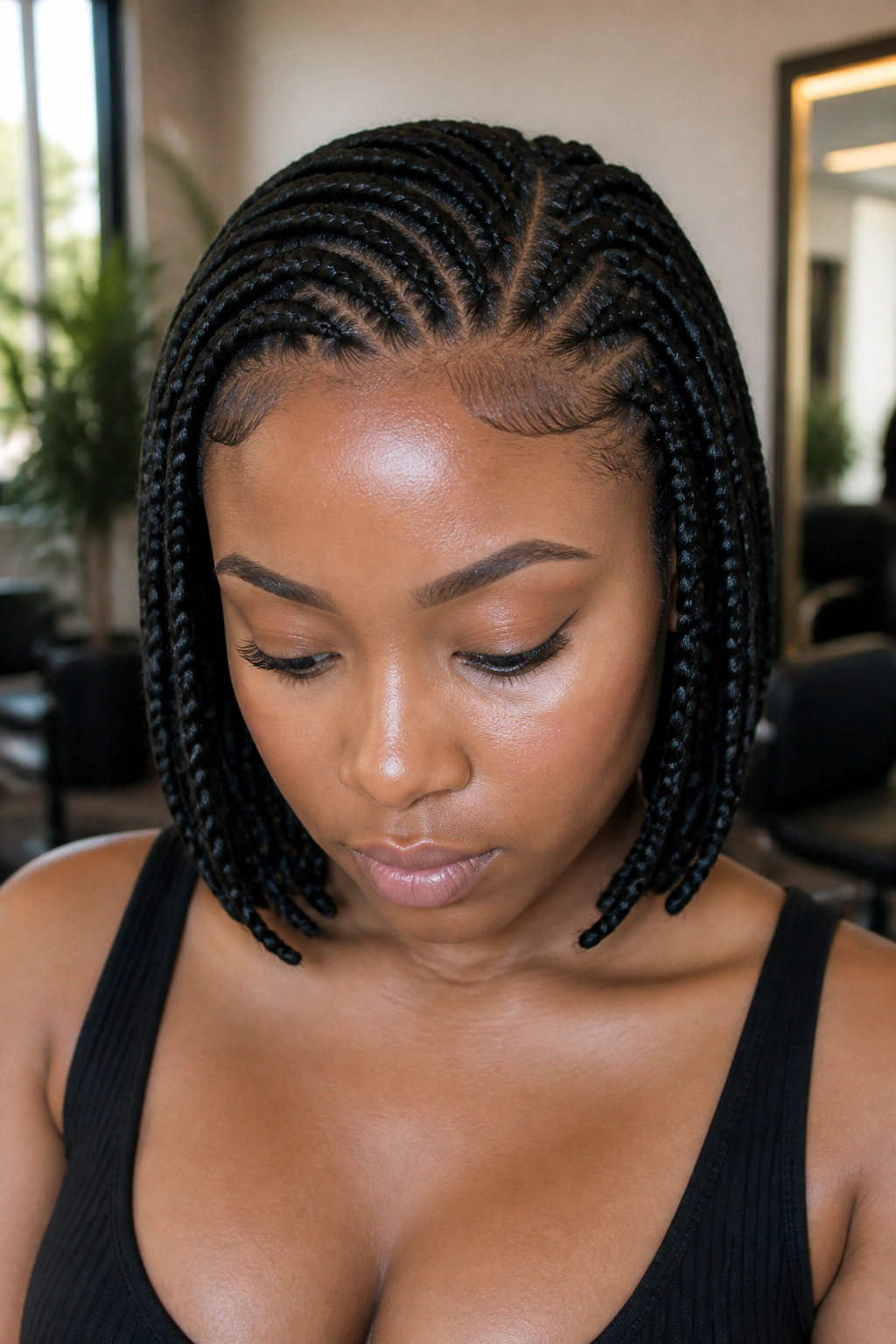
Feed-in bob braids are all about that flat, polished base. The extensions are added gradually, so the braid starts slimmer at the scalp and grows fuller as it moves down the strand. The result feels clean and smooth instead of bulky.
That matters in a bob because the cut is short enough that every little bump shows. A feed-in base lays flatter, and the hairline looks tidy without needing a mountain of edge control. You still want the hairline to be neat, though. Slathering on too much product just gets sticky.
How to Wear It
Ask for a few medium feed-in braids around the crown, then let the rest of the set hang in a bob shape. That gives you structure up top and movement at the bottom. If your hair is fine or easily weighed down, this is a kind choice for the scalp.
I’d pick this style when the goal is sleek, not fluffy. It has a clean finish that reads very put-together without feeling fussy.
14. Colored Bob Braids with a Natural Base
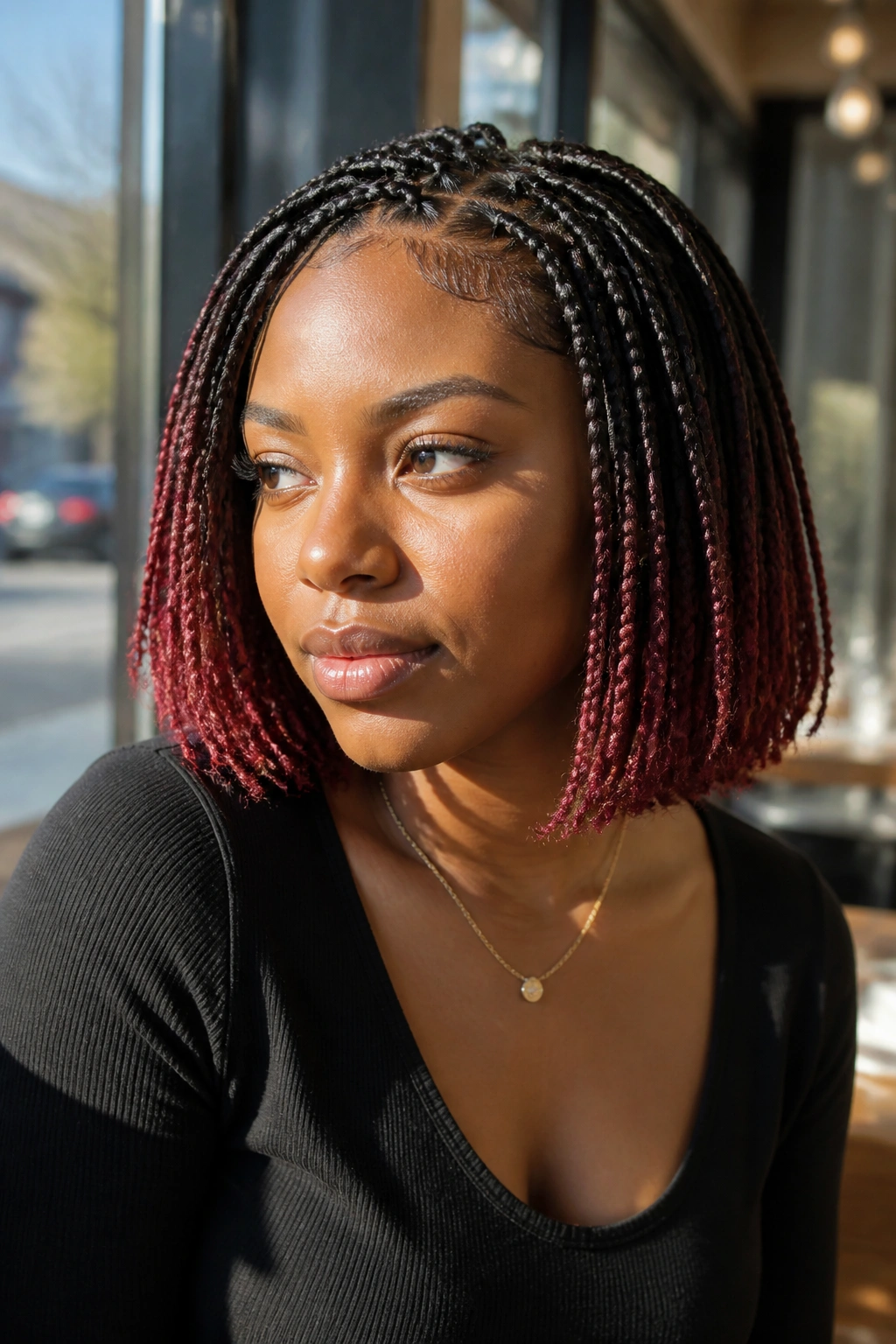
A colored bob can be bold, but the smartest versions usually keep the base close to your natural hair color and let the color show in the middle or at the ends. That way the grow-out looks softer, and the style does not scream at you after two weeks.
Warm browns, honey tones, auburn, copper, and soft blonde pieces all work well in bob braids because the shorter length keeps the color close to the face. If you go very bright, the shape has to stay neat or the color starts doing too much of the work.
I prefer this style when the hair needs a little energy. It can brighten the whole face without changing the structure of the cut. That is the nice thing about a bob: the color has nowhere to hide.
If you are trying color for the first time, keep most of it under the surface or around the lower half of the braids. It is easier to live with, and easier to remove later if you get tired of it.
15. Layered Bob Braids with Stacked Lengths
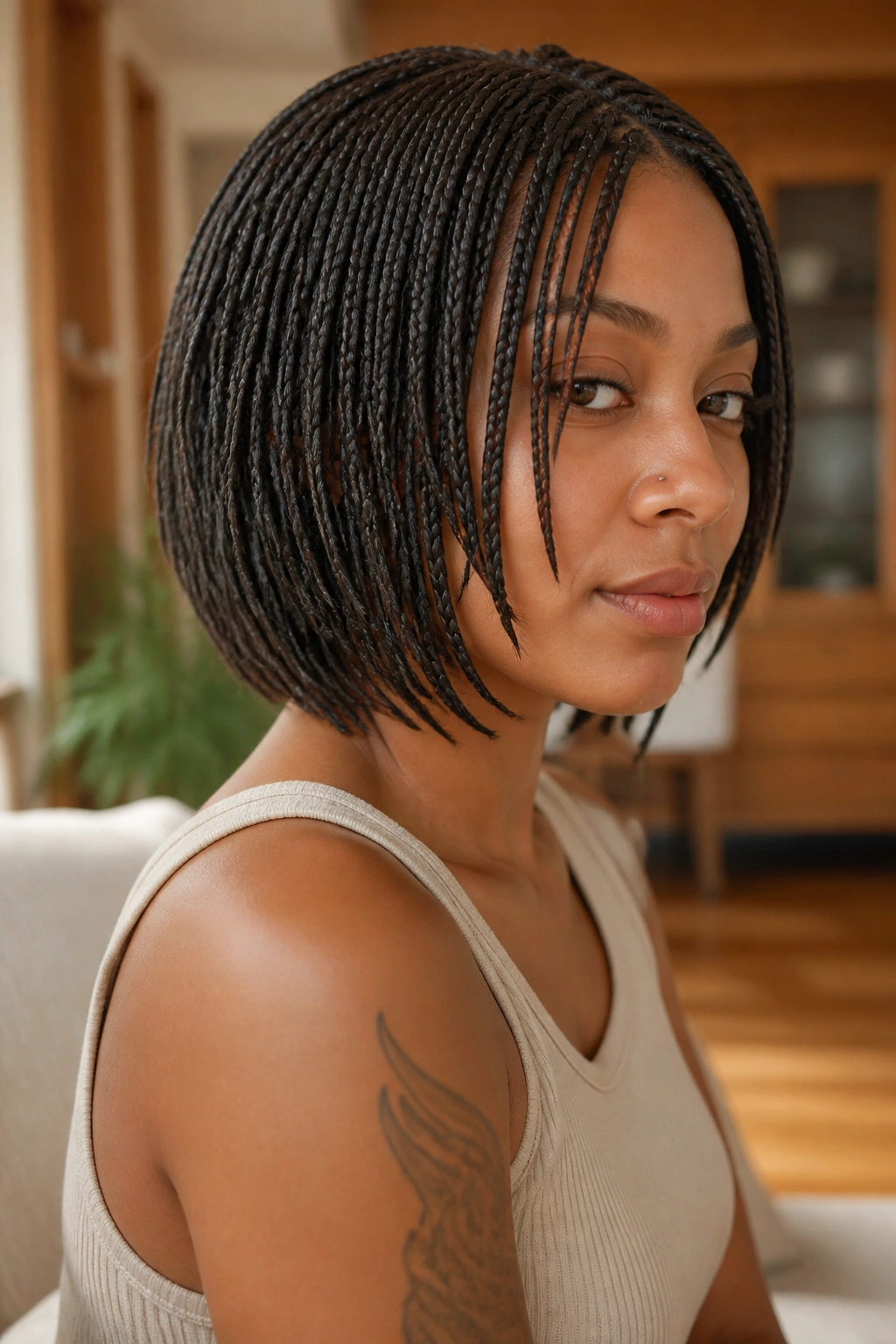
Can braids look layered? Yes, and the effect is sharper than people expect. A layered bob uses braid lengths that vary just enough to create depth, so the style does not sit like one flat shelf around the face.
This works best when the back is a touch shorter and the front pieces build out in soft steps. You still get the protective benefit of the braid set, but the silhouette feels lighter. If your hair is thick, layered lengths help keep the shape from becoming too square.
How to Get the Most From It
Ask your braider to leave small differences in length around the face and nape rather than cutting everything at exactly one point. A difference of even half an inch can change how the bob settles.
This style is a good pick if you want movement without curls, accessories, or color. The cut does the work.
16. Zigzag-Part Bob Braids
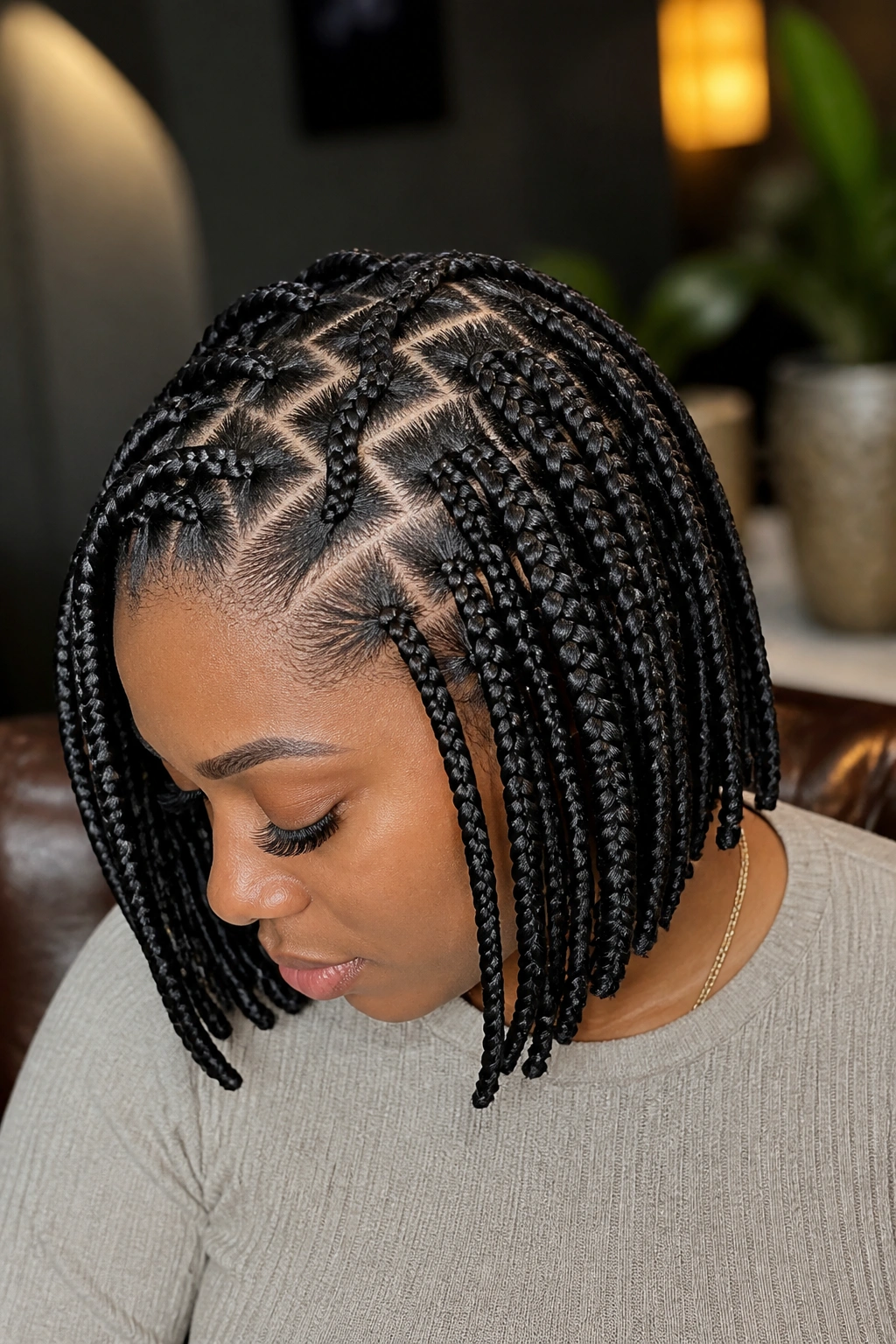
A zigzag part sounds playful, and it is, but the real reason it works is structure. The parting line adds visual interest before the braids even begin, which means you do not need to pile on extra detail.
The shape looks best when the braids are medium-sized and the parts are crisp. If the sections are sloppy, the zigzag can get lost. Clean lines matter here. A rat-tail comb and a steady hand are doing more than any accessory could.
- Best on short to medium bob lengths
- Looks neat with box braids or knotless braids
- Pairs well with simple ends and no extras
- Needs a little extra patience at install time
I like zigzag parts because they feel edited. Not loud. Just different enough to catch the eye.
17. Faux Loc Bob Cut at the Chin
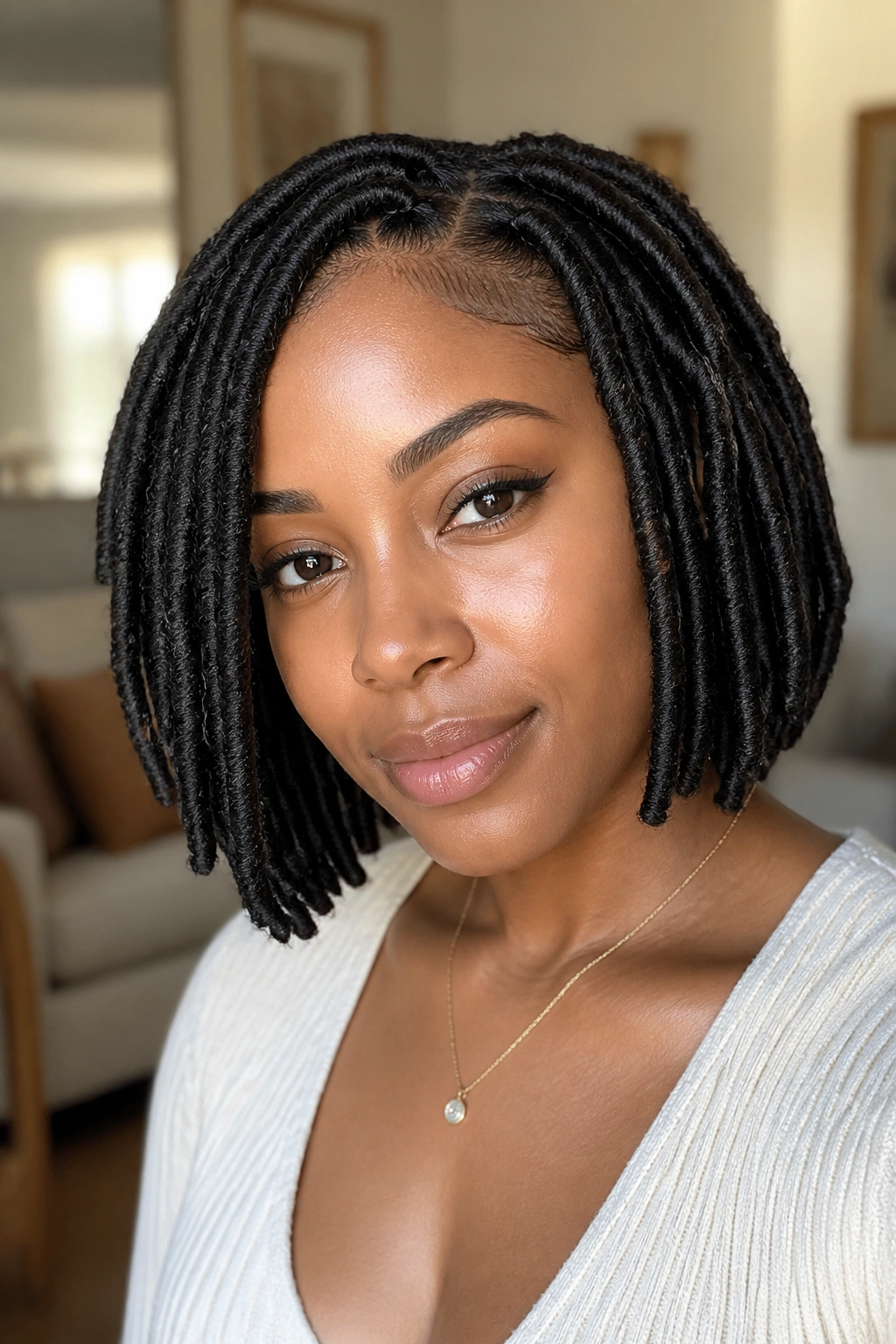
A faux loc bob gives you texture that braids cannot quite mimic. The wrapped, rope-like finish makes the style feel fuller, and the chin-length cut keeps the weight under control.
This is a smart choice if you want a protective style with more body and less swing. Faux locs can get heavy when they are long, but a bob keeps them manageable. The ends look neat, the silhouette stays compact, and the overall feel is a little more grounded than silky braid styles.
The texture is what sells it. It hides frizz well, and it gives the hair a matte, slightly worn-in look that I think suits a bob better than people expect. There is something good about a style that does not need to look shiny to look finished.
If you like your braids with more grip and less gloss, this one is worth a serious look.
18. Wrapped-Ends Bob Braids
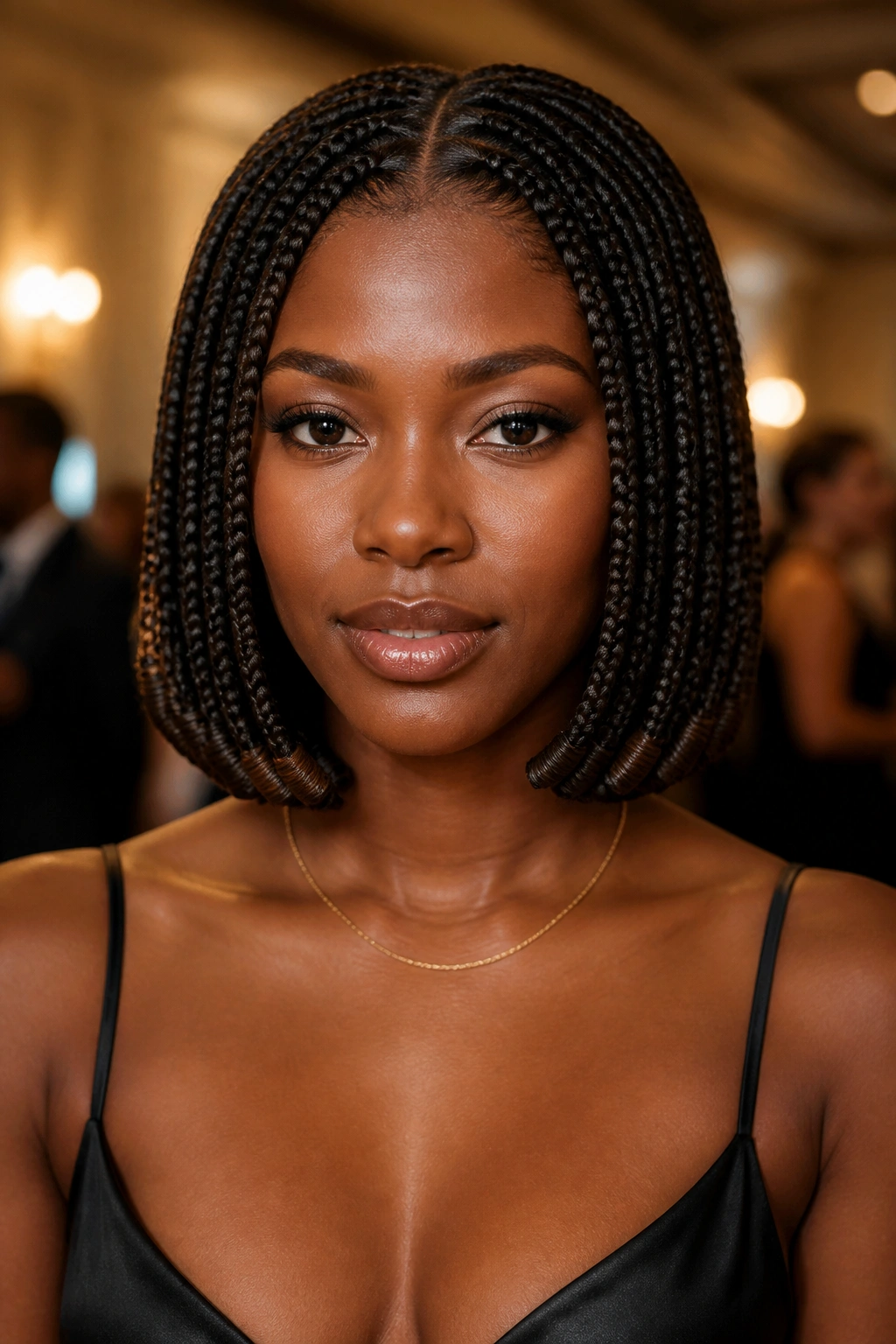
Wrapped ends change the mood of a bob more than you might think. Instead of leaving the braid ends loose or hot-water sealed into a blunt finish, you wrap the last inch or so so the bottom looks cleaner and more sculpted.
Compared with plain ends, the wrapped finish feels more dressed up. It also helps disguise frayed extension hair, which is useful if you wear your braids for several weeks and want the bottom to stay neat. The style works especially well on colored braids, where the wrap can either match the shade or stand out on purpose.
The best version is restrained. Wrap too much, and the ends get bulky. Keep it to a narrow band at the bottom, and the bob stays sharp.
I’d use this style for special events, photo days, or any time you want the braid set to look a little more finished than everyday braids usually do.
19. Collarbone-Skimming Bob Braids
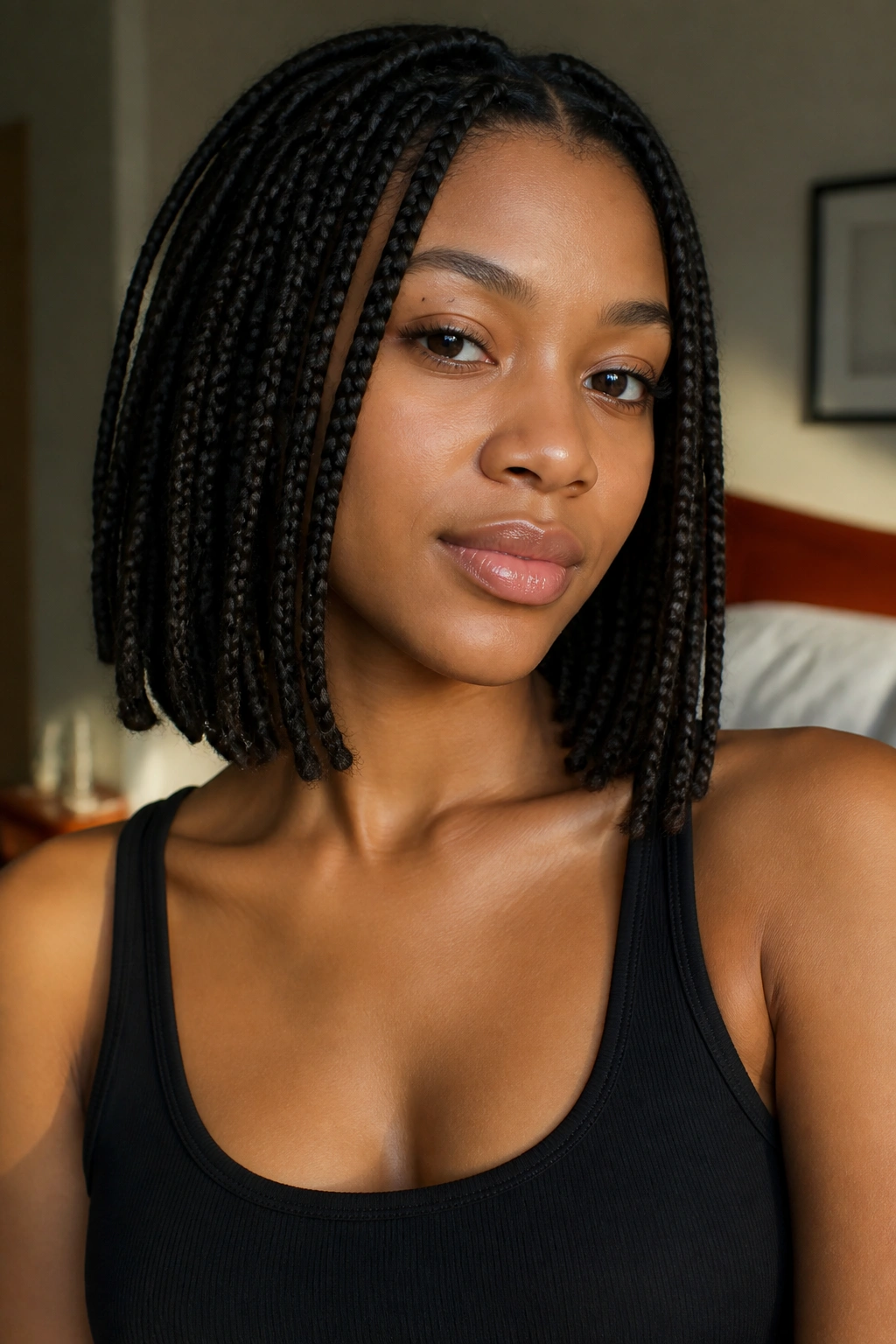
If a true chin-length bob feels too short, the collarbone-skimming version gives you some breathing room. It still reads as a bob or lob, but the extra length softens the cut and makes it easier to wear with sweaters, jackets, and scarves.
That little bit of extra length changes the movement a lot. The braids swing instead of just sitting, and the shape has a more relaxed drop through the shoulders. I like this one for people who want the short-braid feel without giving up a bit of coverage around the neck.
Why It’s Easier to Live In
A collarbone cut gives you more options for pinning, tying, or sweeping one side back. It also tends to feel less abrupt if you are moving down from longer braids and do not want a huge visual shock.
- Gives a softer transition from long styles
- Easier to tuck behind the ears
- Works well with center or side parts
- Leaves more room for a low ponytail or half-up knot
This is the bob I’d tell cautious people to start with. Safer, but not dull.
20. Classic Center-Part Bob Braids
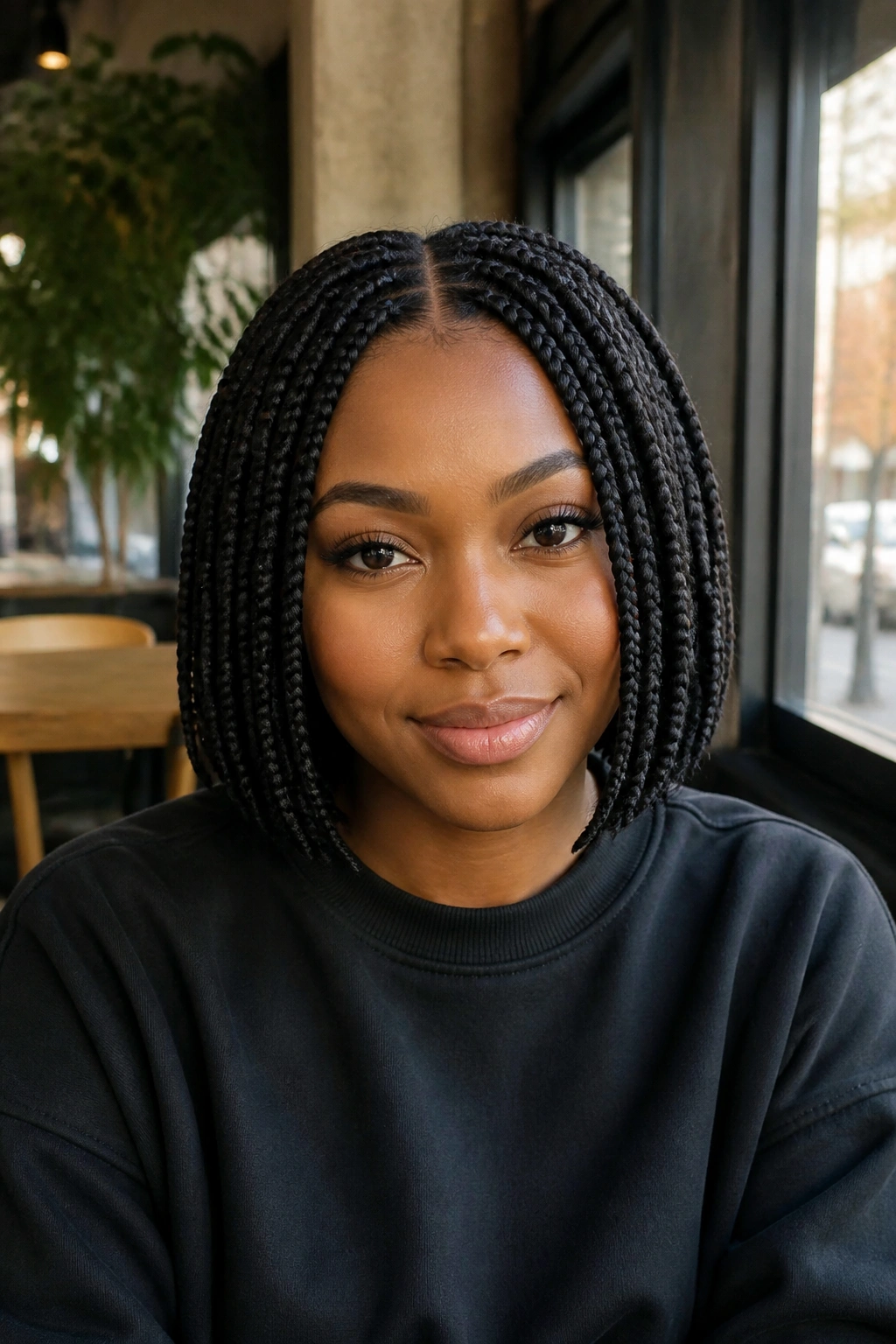
There is a reason the center part keeps showing up in braided bobs. It brings symmetry to the face and lets the bob length do the framing without extra tricks. If your braids are clean and your ends are even, you do not need much more.
The center part works best when the scalp line is neat and the braids fall evenly on both sides. It gives the style a calm, balanced feel that pairs well with sharp edges or a blunt finish. I like it on days when you want the hair to look tidy without feeling overworked.
A center-part bob is also the easiest version to maintain if you like predictability. Wash day is straightforward. Sleeping is easier. The braid shape stays readable longer because the style does not depend on a dramatic sweep or a lot of decoration.
If you want one bob braid idea that can hold up in almost any setting, this is the one I’d hand you first. Clean, short, and steady. Hard to beat.
