



Box braid hairstyles for Black women can look soft, sharp, bold, or plain practical, and the difference usually comes down to parting, length, and how much weight you’re asking your scalp to carry. A clean mid-back set feels very different from waist-length braids with beads, even when the braid size is the same.
I’m picky about that part. If the base is too tight, the style stops feeling protective and starts feeling like a headache with pretty hair attached.
The good styles do two jobs at once. They give you shape and presence, but they also let you live your life — tie them up, sleep on them, sit through a long day, and still look pulled together when you walk out the door.
What makes box braids worth the time is the range. You can go neat and classic, add a little drama, or keep things playful with cuffs, curls, or color. The 25 looks below lean hard on that range, with the practical details that matter when you actually wear braids instead of just saving them to a mood board.
1. Classic Mid-Back Box Braids
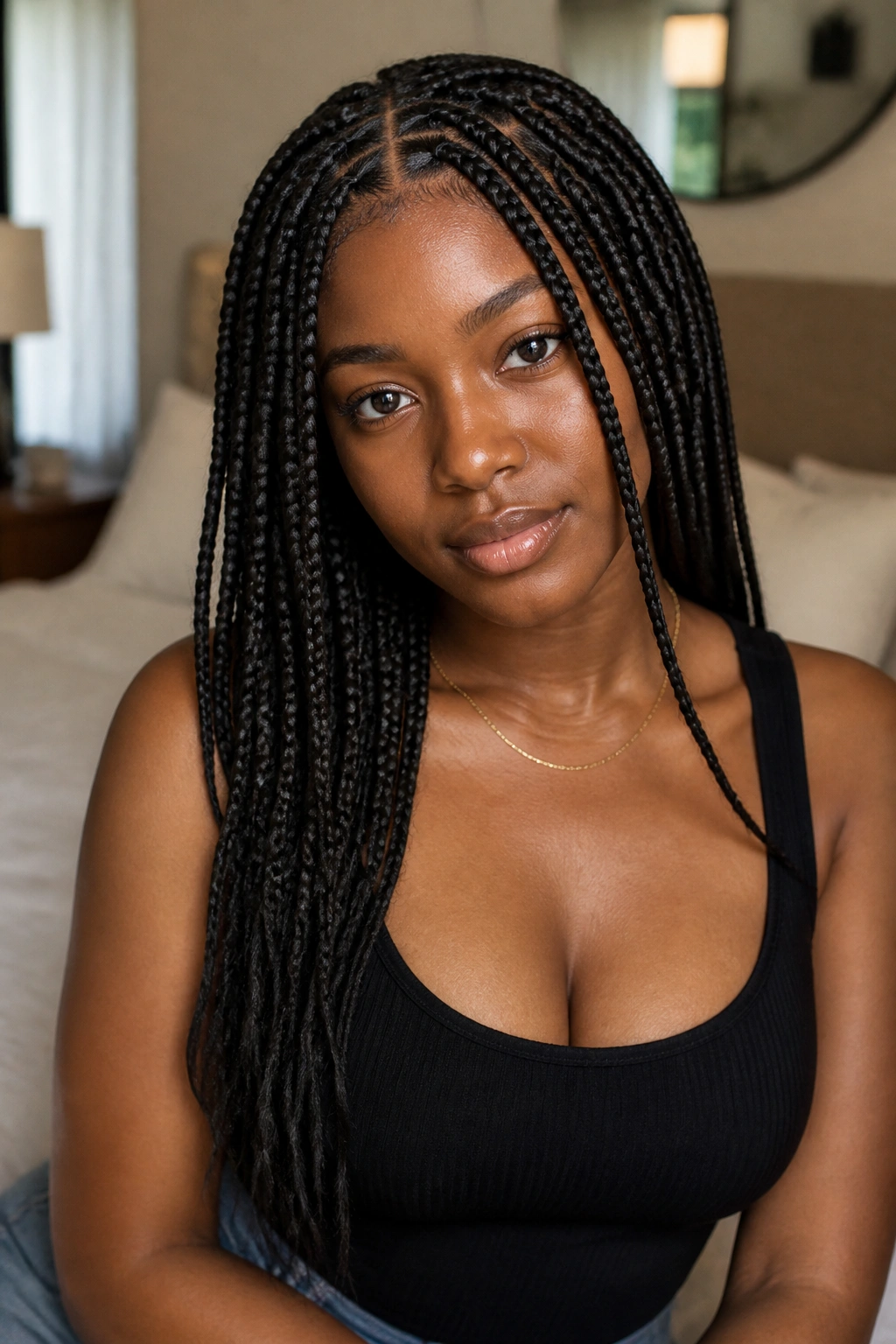
Mid-back braids are the style I point to when someone says they want box braids but does not want a lot of fuss. The length lands in that useful middle ground: long enough to pull back, short enough to handle without wrestling your hair every five minutes.
The other thing I like here is the shape. Medium parts, clean sections, and blunt or lightly sealed ends keep the whole style looking neat without trying too hard. If you’re getting braids for the first time, this is the version that usually feels easiest to live with.
Why It Holds Up So Well
- Ask for medium-sized parts if you want a balanced look that does not feel too heavy.
- Keep the ends even and tidy so the style stays polished for longer.
- Use a satin scarf or bonnet every night; mid-back length tangles faster than people expect.
My honest take: if you only wear one braid length for a long stretch, this is the one that causes the fewest headaches.
2. Knotless Box Braids

Knotless braids sit flatter at the scalp, and that matters more than people think. The feed-in start takes some of the bulk off the root, so the braids feel lighter and move a little more like your own hair.
If your edges are tender, or if you hate that stiff “helmet” feeling in the first few days, knotless is the safer bet. The install usually takes longer, though. No way around that. You trade chair time for comfort, and I think that trade makes sense for a lot of people.
The style also works well when you want a smoother line around the hairline. It looks clean in a ponytail, looks clean down, and does not shout for attention unless you want it to.
3. Jumbo Box Braids

Why do jumbo braids keep showing up in braid chairs? Because they do a lot with less time. Fewer sections means a faster install, and the bigger plaits make even a simple shape feel bold.
They are also a smart choice if you want your scalp to breathe a bit more between parts. The warning is obvious but worth saying anyway: do not let jumbo turn into too jumbo. Oversized braids get heavy fast, especially at the nape.
What to Watch For
A good jumbo set still has clear parting and a clean base. If the rows are sloppy, the size only makes the mess more visible.
Ask for braids that feel full, not bulky. There’s a difference. One looks intentional; the other looks like too much hair was stuffed into too few sections.
4. Small Box Braids

You know the look. Thin braids, tight parts, lots of movement when you turn your head. Small box braids give you that fine, detailed finish that looks neat from every angle, which is part of why people keep coming back to them.
The catch is time. Small braids take patience to install, and they take patience to take down. But they also give you more styling options later, especially if you like buns, ponytails, or half-up styles that need a little extra flexibility.
- Great when you want more braid movement and less chunkiness.
- Not ideal if you want a quick chair time.
- Easier to stack into updos than jumbo braids.
One thing I’d never skip: wrap them at night before they start fuzzing at the crown.
5. Medium Box Braids

Medium box braids are the practical middle child, and I mean that in the nicest way. They are not as heavy as long, thick braids, and they are not as time-consuming as micro braids. That balance is why they stay in heavy rotation.
They also suit almost any routine. You can wear them down, split them into two ponytails, tuck them behind the ear, or gather them into a low bun when you need your hands free. They hold shape well without feeling stiff.
If you are unsure where to start, start here. Medium braids are the style that lets you see what you like before you commit to more length, more size, or more ornament.
6. Bob-Length Box Braids

A box braid bob has a sharp little confidence to it. It keeps the braids off your shoulders, which sounds small until you spend a day in a jacket, a scarf, or a hot car.
The best bobs have clean ends and a shape that sits around the jaw or collarbone. Some are blunt. Some have a little curve at the ends. Either way, the shorter length gives the face more room, and that can be a nice reset if you’re tired of long hair getting in the way.
This cut also makes wash day and drying easier. Less length means less water holding in the braids, and that alone can make a huge difference.
7. Shoulder-Grazing Box Braids

Shoulder-grazing braids are the no-drama option I recommend to people who want movement without a lot of weight. They hit that sweet spot where you still get length, but the braids do not keep sliding down your back all day.
Why It Works
The length is long enough for half-up styles, low ponytails, and loose hanging braids, but short enough to stay manageable in a coat or blazer. That matters more than it sounds like it should. Hair that fights your clothing gets annoying fast.
Shoulder length also suits braids with a slight curve at the ends. The shape lands softly, and you do not need extra fluff or decorations to make the style feel finished.
8. Waist-Length Box Braids

Waist-length braids bring drama, and they know it. They swing, they move, and they make even a simple T-shirt look styled. If you like length, this is the version that gives you the full effect.
The trade-off is weight and day-to-day handling. Long braids take more care when you sit, tie them up, and sleep. You also need to be a little more aware of how much synthetic hair is packed into each section. Too much bulk in a long braid gets old fast.
I like waist-length braids when the parting is neat and the ends are sealed well. The whole style feels expensive in the old-fashioned sense — not fancy, just complete.
9. Triangle-Part Box Braids

Triangle parts are one of those small changes that make a big visual difference. The braids still read as box braids, but the parting adds a sharper, more graphic feel.
This style is especially good when you want the scalp pattern to be part of the look. Straight rows can be lovely, but triangle sections give your braider room to play with the geometry. It looks deliberate even when the braid itself is simple.
The trick is clean corners. Sloppy triangles lose the whole point. Ask for crisp sections around the front and crown, then let the braids themselves stay classic. That contrast is what makes it work.
10. Zigzag-Part Box Braids

Zigzag parts are for anyone tired of straight lines but not interested in turning their head into a craft project. The pattern is playful, yes, but it also gives the roots a more relaxed, less rigid feel.
A zigzag part looks especially nice around the front hairline and crown. You do not need the whole head to be complicated. A few visible zigzag sections are enough to make the style feel fresh.
This is one of those styles that looks better the neater the parting is. If the zigzags blur together, the effect disappears. Clean lines matter here more than extra length or extras.
11. Middle-Part Box Braids

Middle parts are the easy classic. They split the face evenly, pull the braids into a clean curtain on both sides, and make the whole style feel orderly without being stiff.
I like middle parts for people who wear their braids down most of the time. The symmetry does a lot of work on its own. You can wear them loose, throw them into a low ponytail, or tuck one side behind the ear and still keep the shape.
When I’d Choose It
- You want a straightforward, polished look.
- You wear glasses and need the braids to sit evenly.
- You prefer styles that are easy to part and easy to refresh.
It’s a simple choice, but simple is not the same thing as boring.
12. Side-Part Box Braids

What if you want the face to feel softer right away? A side part does that without needing curls, layers, or extra hair accessories.
The shift to one side changes the whole mood. It makes the braids fall with a little more movement, and it gives you a built-in shape around the forehead and cheek. If you like tucking hair behind one ear, this part works hard for you.
How to Wear It
Ask for the part to start cleanly near the arch of the brow, then keep the braid rows even as they move back. That keeps the part from looking like an afterthought.
A side part also works well with braids of almost any length, which is part of why it stays so useful.
13. Deep Side-Part Box Braids
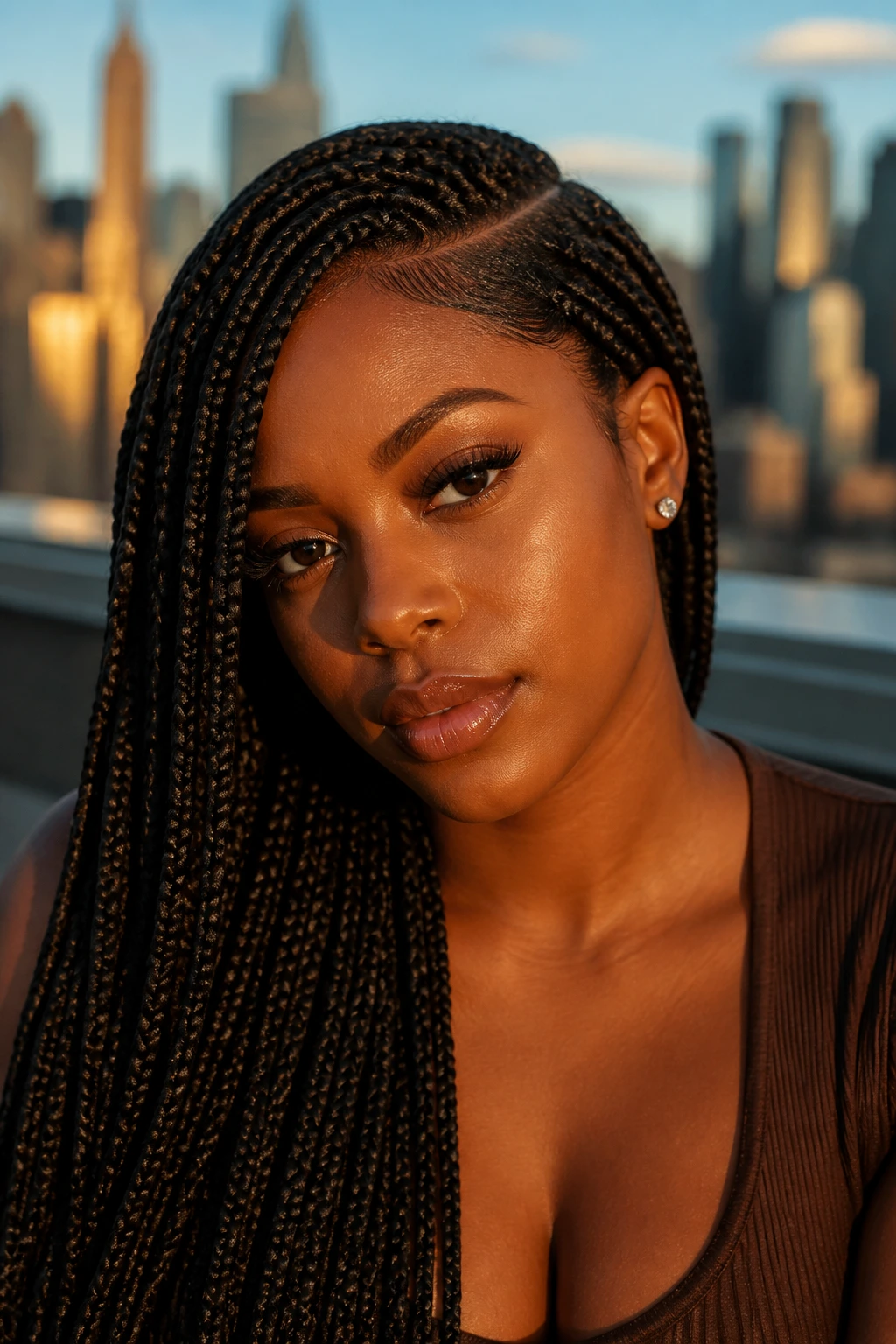
A deep side part has more attitude than a regular side part, and I mean that in the best way. The sweep of hair is stronger, the face gets more drama, and the whole style feels a little dressed up even when you are wearing a plain top.
This version is especially nice with long braids, because the heavier side creates a real shape instead of just a slight shift. It also lets you play with volume at the root, which can be useful if you want the braids to look fuller near the front.
The catch is balance. If the part goes too far over, the style can feel lopsided in a bad way. Keep the sweep strong, but not accidental.
14. Half-Up Half-Down Box Braids

Half-up half-down braids are what I reach for when I want length but do not want all of it sitting on my neck. You get the swing of the loose braids and the lift of a tied-up crown, which is a pretty useful combination.
The top section can be gathered into a puff, a bun, or a simple ponytail. Keep the tie secure but not brutal. A thick scrunchie or a braid-friendly elastic is better than anything that bites into the hairline.
The style works especially well with braids that have a bit of movement at the ends. If the loose half hangs cleanly, the whole thing reads as intentional instead of thrown together.
15. High Ponytail Box Braids
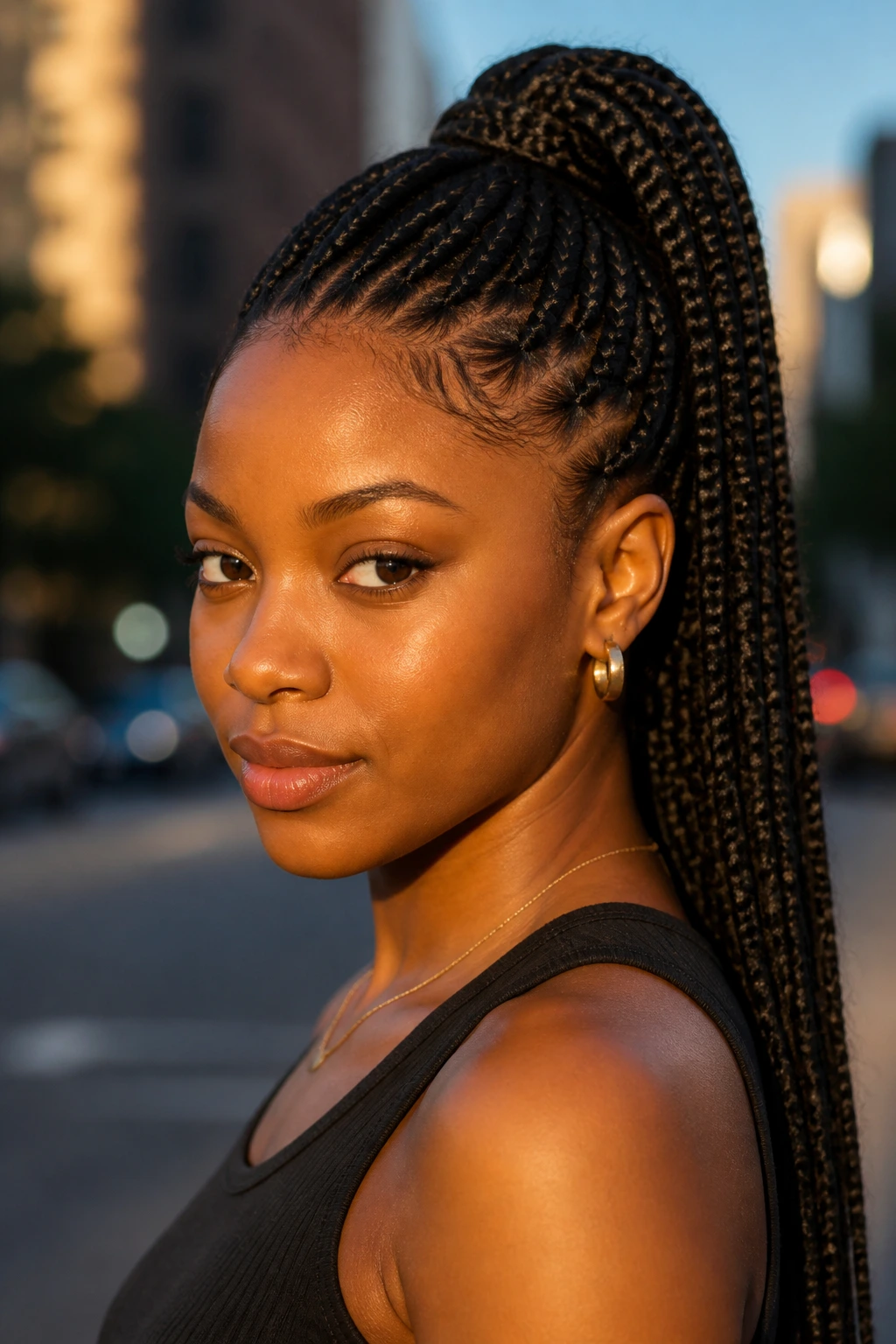
A high ponytail changes the posture of the whole style. The braids lift the face, clear the shoulders, and give you that pulled-up look that works just as well for errands as it does for going out.
The real job here is protecting the roots. A high ponytail can tug if you stack all the braids too tightly, so keep the base secure but not strained. Wrap one braid around the elastic to hide it, and stop there. No need to overcomplicate it.
This style is strongest when the braids are medium or small. Very heavy braids can fight the lift and drag the ponytail downward before the day is over.
16. Low Ponytail Box Braids
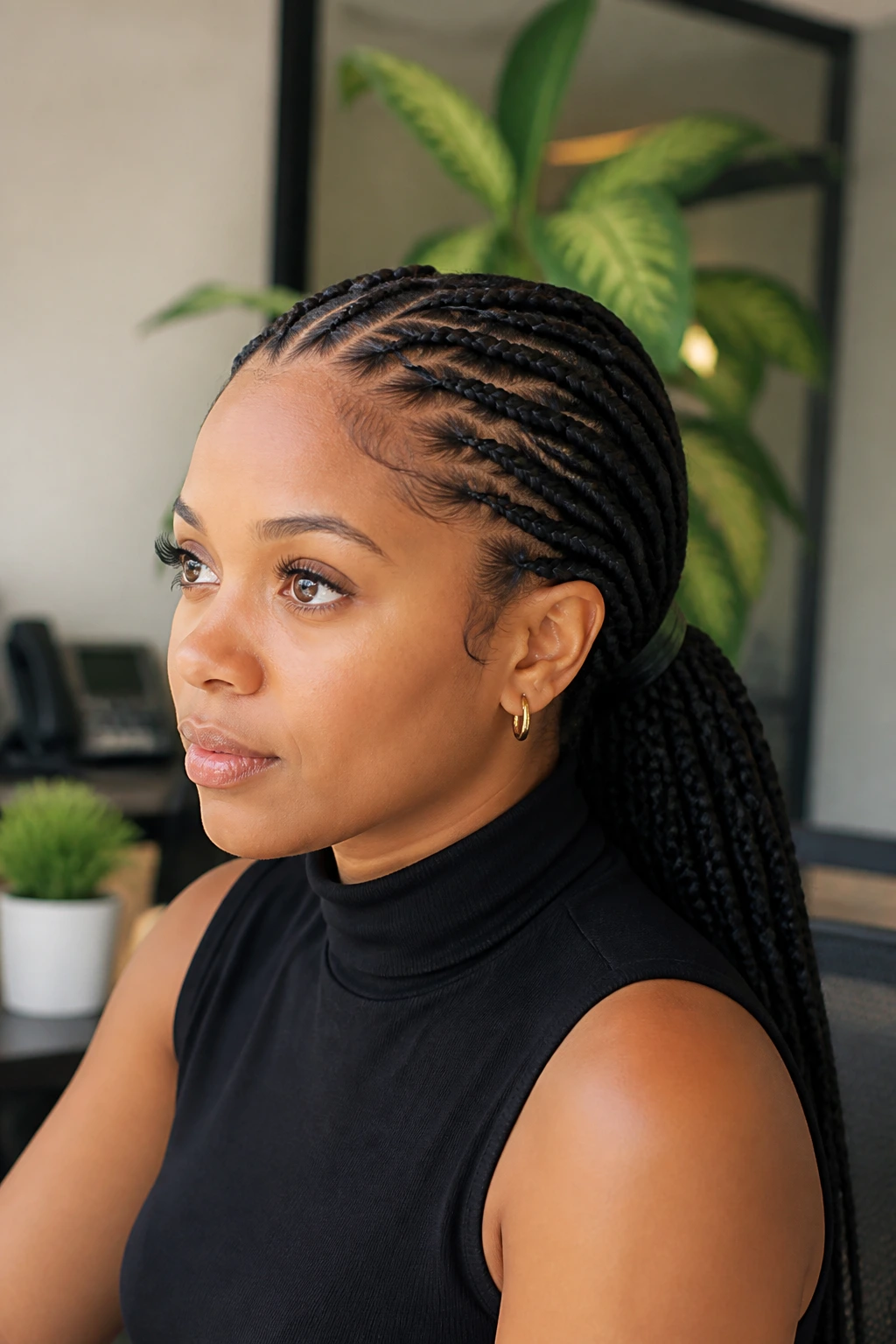
Low ponytails are calm in the best way. They sit at the nape, keep the braids neat, and leave the front of the face open. If a high ponytail feels too sporty or too tight, this is the softer move.
The style looks especially good when the parts at the front are crisp. A clean middle or side part, plus a smooth low tie, gives the whole look a finished feel without extra effort.
Good Places for It
- Office days
- Dinner plans
- Long car rides
- Days when you want your neck free but still want the braids controlled
It’s one of those styles that never looks like an afterthought.
17. Top Knot Box Braids

A top knot is the quickest way to get the braids off your face and still keep the shape looking neat. It works best when the braids are long enough to wrap once or twice without fighting the knot.
I like this style for busy mornings. Gather the braids high, twist them into a bun, pin or tuck the ends, and leave it there. If the bun looks slightly full, that is fine. It should look like braids, not a polished donut.
The one thing to watch is tension at the crown. If the knot feels like it is pulling upward, loosen it. A top knot that gives you a headache is not worth the clean silhouette.
18. Space Buns Box Braids

Two buns are a different mood from one. Space buns make box braids feel playful and a little cheeky, but they still keep the hair controlled, which is why the style works across ages and settings.
Best Part of the Style
The symmetry is the draw. Once the braids are split cleanly down the middle, each side can be wrapped into a bun with a few pins or an elastic. Smaller braids sit more evenly here, so the buns do not turn lumpy.
Space buns are also a good answer when you want your hair up but do not want the severity of a single top knot. The look has movement even when everything is tied back.
19. Braids with Curly Ends

Curly ends soften box braids in a way that feels almost unfair. Straight, sealed ends give a neat line, but curls bring bounce and break up the hard edge at the bottom.
You can get this look with pre-curled extension hair or with a rod-set finish, depending on the hair being used. The important part is that the ends hold their shape without looking stiff. If the curls fall flat by day two, the style loses the point.
This is a good choice when you want length but still want the braids to feel airy. It adds movement without needing to cut the braids shorter, which is a nice trade.
20. Boho Box Braids

Boho braids are for people who like their style to look a little lived-in. Loose curly strands get mixed into the braids, and the whole finish feels softer, lighter, and more textured than a standard install.
The style does need more care. Those loose strands frizz faster, especially if you keep touching them, so I would not recommend boho braids for someone who wants a set-it-and-forget-it look. They are prettier when they look a bit undone, but there is a line between undone and messy.
A light misting and gentle finger separation usually work better than a comb. The whole point is movement, not perfection.
21. Layered Box Braids

Layered box braids change the silhouette more than people expect. Instead of one blunt curtain of length, the braids fall in steps, which lifts the face and keeps the style from feeling heavy.
This works especially well if you want long braids without that same-long-everywhere look. A skilled braider can shape the cut so the front pieces skim the cheekbone and the back lands lower. It feels more tailored, even if the braid pattern itself stays simple.
- Best with medium to long lengths
- Works with straight or curled ends
- Ask for the layering after the braids are complete, not before
Layering is one of the few braid choices that can make long hair feel lighter without removing much of the length.
22. Box Braids with Beads

Beads bring sound, shine, and movement. They also change how the braids hang, which is why placement matters so much more than people think.
I like beads at the ends of a few face-framing braids, not all over the head. A little goes a long way. If every braid is weighted down, the style can feel noisy and busy, especially when you turn your head or sleep on it.
Where They Work Best
Put beads on braids that already have a clean, even finish. The ends should be secure first. Then choose beads that sit well without sliding around too much.
Wood, clear acrylic, and matte finishes all give a different feel. Pick the one that matches your clothes and jewelry, because beads can easily tip the whole look one way or another.
23. Box Braids with Gold Cuffs

Gold cuffs do something useful: they make a simple braid look finished. You do not need many of them. In fact, too many can make the style feel cluttered.
A few cuffs placed mid-length or near the ends give the braid a small flash of shine every time it moves. That works especially well with black hair, deep brown hair, or warm-toned extensions, because the metal stands out without needing much else.
Where to Place Them
Start with the braids closest to the face, then maybe one or two toward the outer edges. Skip the urge to cover every braid. The restraint is what makes the cuffs look polished instead of loud.
If you like jewelry, this is the braid version of wearing one good bracelet instead of five that fight each other.
24. Colored Box Braids

If you want box braid hairstyles for Black women that change the whole mood without changing the braid pattern, color is the move. Burgundy, copper, honey blonde, blue-black, even soft brown blends can shift the style from quiet to noticeable in a second.
The good thing about color is that it can do the heavy lifting for you. A simple middle part looks different in warm blonde than it does in jet black. The braid shape stays the same, but the finish reads in a new way.
Picking a Shade That Feels Right
- Burgundy and wine tones give depth without looking too bright.
- Honey blonde and caramel warm up the face.
- Copper and auburn stand out without being harsh.
- Blue-black and deep brown keep things sleek and clean.
Choose a shade that works with your wardrobe, not just your skin tone. You’ll wear it longer that way.
25. Braided Crown Updo
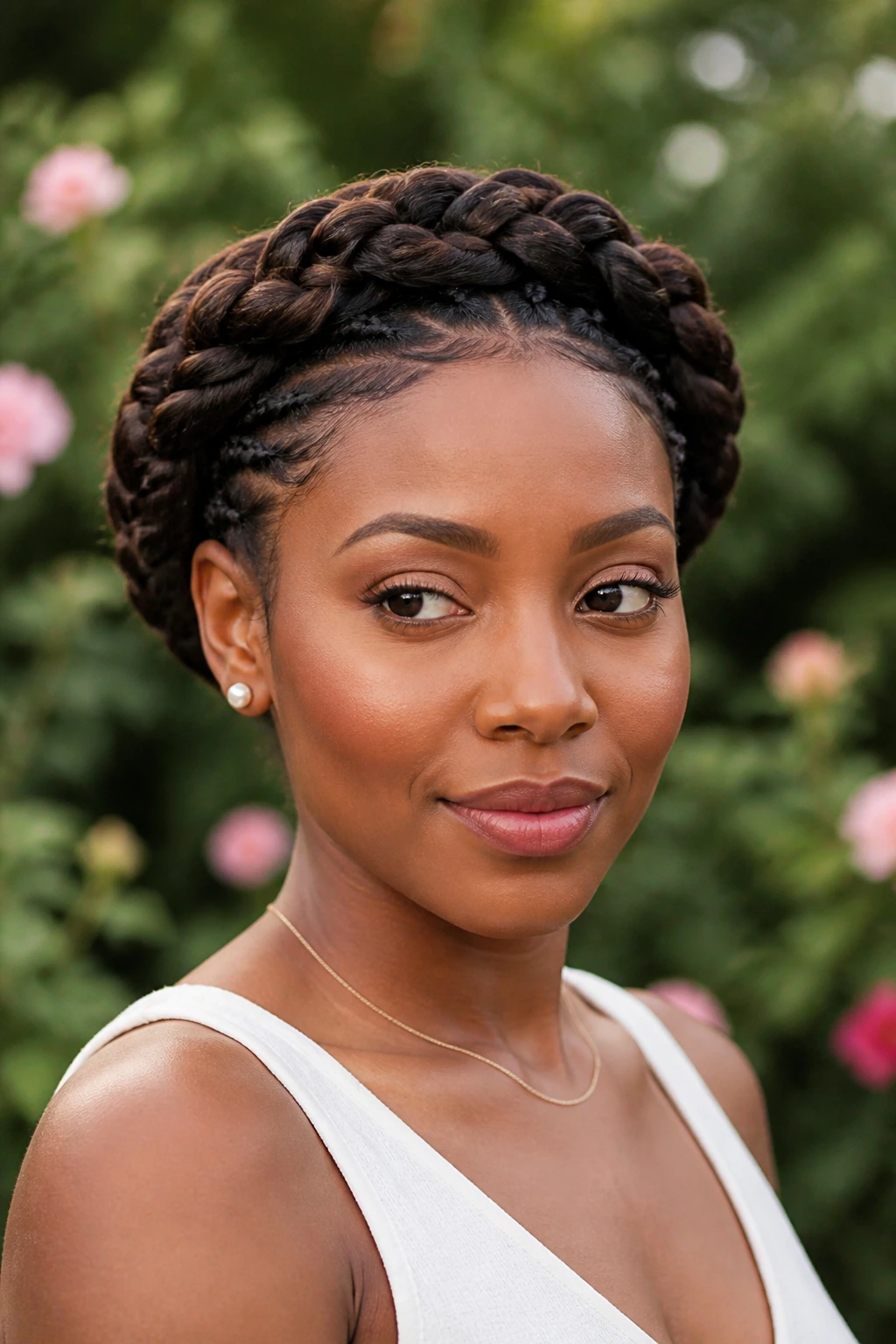
A braided crown updo turns box braids into a shape that sits around the head like a halo, only less delicate and more practical. It keeps the neck clear, shows off the parting, and gives the style a formal edge without asking for extra hair.
I like this look for events, hot days, and any moment when you want the braids to feel controlled from every angle. A few pins, a smooth wrap, and a tidy base are all it needs. If you want a softer finish, leave out one or two face-framing braids so the style does not feel too strict.
It is a strong ending because it proves the point of box braids in the first place: they can be protective, expressive, and easy to wear in the same week.
