



A layered bob at medium length can do what a blunt cut usually can’t: it can move, lift, and still give you enough hair to tuck behind an ear.
That balance is why layered bob styles for medium length hair keep showing up in salon chairs. They can soften thick ends, wake up fine hair, and keep the shape from feeling boxy around the jaw.
But the cut only works when the layers are placed with a purpose. Too high, and you get fluff. Too low, and the shape reads heavy and a little sleepy.
The good versions have rhythm: shorter bits where you need lift, longer pieces where you want swing, and enough length left at the perimeter so the whole thing still feels like a bob, not a grow-out accident.
One detail matters more than people think. The same cut can look polished on one head of hair and completely wrong on another just because the weight was removed in the wrong place, so the order of the layers matters almost as much as the cut itself.
1. Soft Feathered Bob for Medium Length Hair
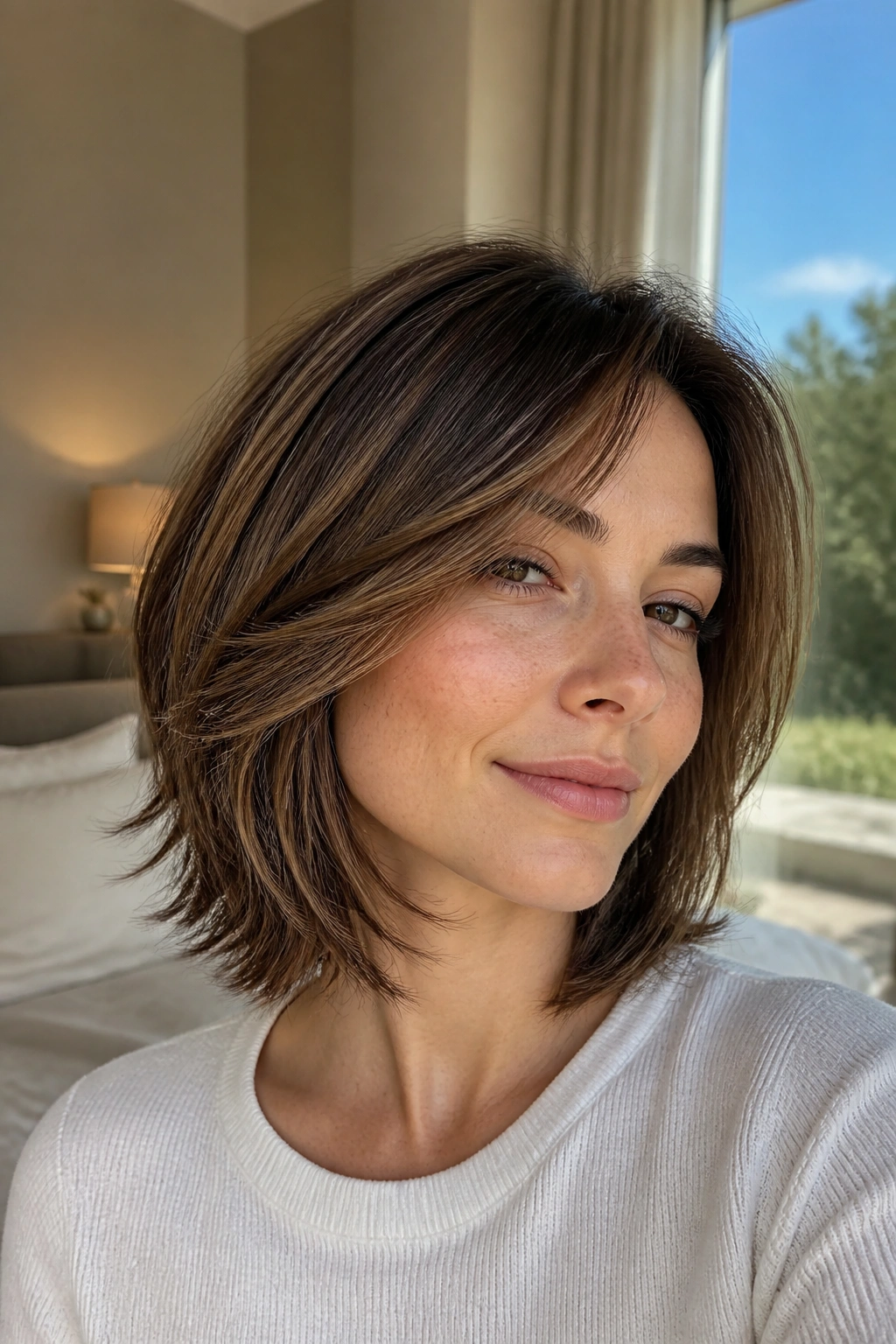
Feathering is what turns a plain bob into something that actually moves when you turn your head.
This version sits around the collarbone or just above it, with ends that are softened by point cutting or light razor work. The shape still has a perimeter, which keeps it from looking wispy, but the layers are sliced in a way that lets the hair flick instead of hang in one heavy line.
Why It Works
Feathered layers are especially useful if your hair feels bulky at the ends or goes flat near the roots. The cut removes just enough weight to keep the shape from puffing out at the bottom, which is the mistake that makes many medium bobs look triangular.
It also behaves well on straight hair that needs some life without a lot of daily styling. If your hair already has a soft bend, this shape picks that up and makes it look intentional instead of random.
- Ask for layers that start around the cheekbone if you want movement near the face.
- Keep the perimeter long enough to skim the collarbone so the cut does not lose its bob shape.
- Blow-dry with a 1.5-inch round brush, rolling only the last 2 inches of the ends.
- Finish with a pea-size amount of lightweight cream or serum, not a heavy oil.
Best tip: keep the back slightly fuller than the front. That tiny bit of weight stops the cut from looking airy in a bad way.
2. Stacked Bob with a Lifted Nape

If your hair collapses at the crown, stacking in the back fixes more than product ever will.
A stacked bob uses shorter graduation at the nape so the back hugs the head and builds a little lift right where the skull curves. The top remains longer, so the shape still reads medium length, but the silhouette gets a cleaner, more sculpted line.
It is the cut I think of for thick hair that grows outward instead of down. The shape feels sharper from the side, and the back has a tidy bend that makes the whole cut look deliberate even when you air-dry it a little rough.
The catch is simple: this is not the best choice if you want to tie your hair back often. It also needs regular trims to keep the stack visible and the back from turning soft and shapeless.
The silhouette changes immediately.
3. Inverted Lob with Longer Front Pieces
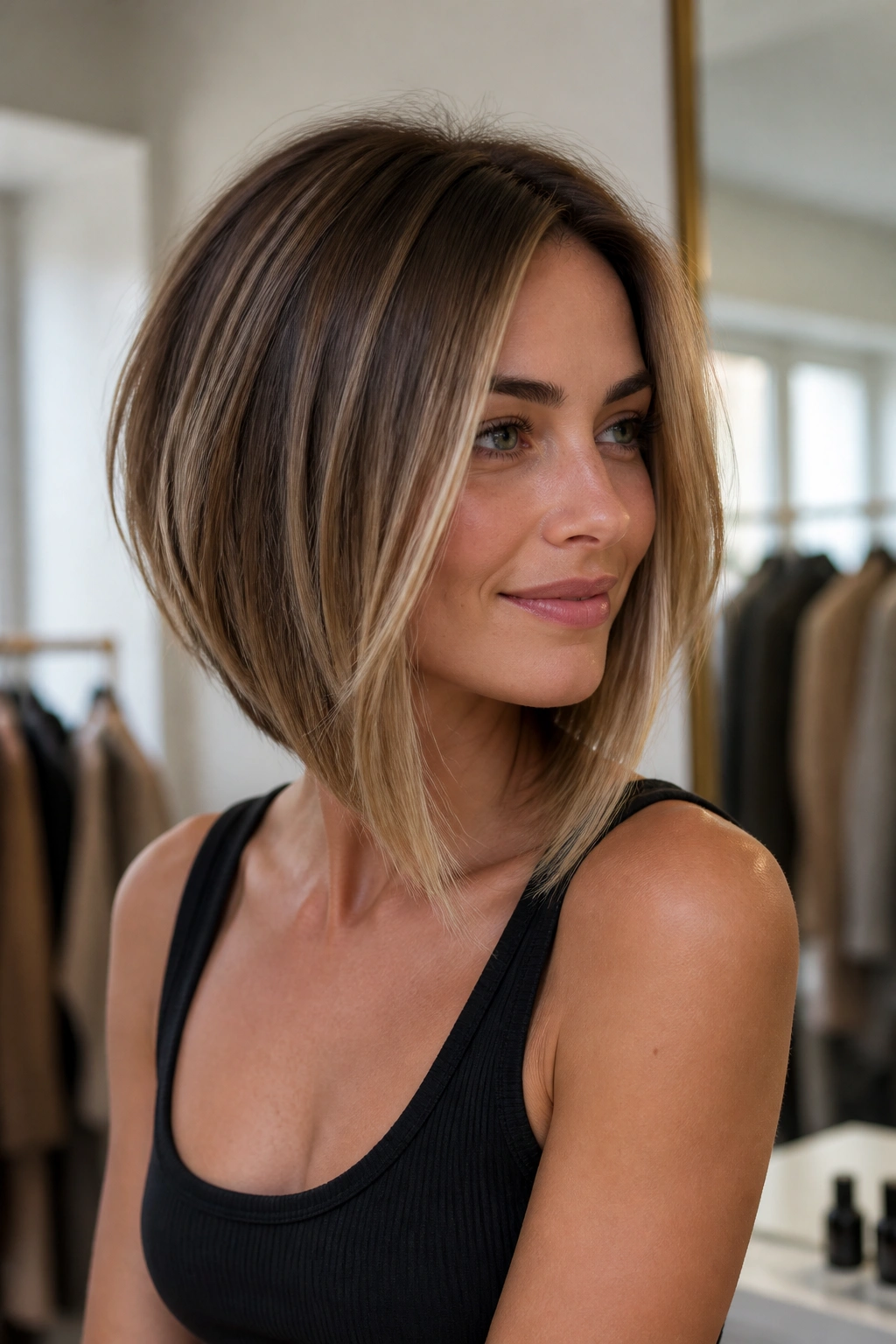
Why does an inverted lob make the neck look longer without cutting off your length? Because the eye follows the angle.
The back is shorter, sometimes only by an inch or two, and the front drapes forward in a longer line that usually lands near the collarbone or a little below it. That contrast creates movement even when the hair is straight, which is why this cut looks so clean with a blowout.
What to Ask for at the Salon
- Keep the back at the nape or just above it if you want a clear inverted shape.
- Let the front pieces stay 2 to 3 inches longer than the back for a softer angle.
- Ask for a rounded blend, not a hard step, unless you want the geometry to show.
- Decide where you want the front to land: jaw, collarbone, or just brushing the shoulder.
The styling part is easier than it looks. A round brush gives the front pieces their curve, while a flat iron can polish the angle if you want the ends to bend under slightly. This cut is a good pick when you want shape without the choppy feel of a shag.
4. Shaggy Lob with Curtain Bangs

Your hair dries with a little wave, then goes flat by lunch. This cut is for that exact problem.
A shaggy lob uses layered lengths throughout the midsection and face, then pairs them with curtain bangs that open around the cheekbones. The result is looser and more lived-in than a classic bob, with pieces that fall in separate sections instead of one smooth sheet.
Styling Notes That Matter
- Use a small dollop of mousse at the roots before blow-drying.
- Wrap the face-framing pieces around a 1-inch round brush or a medium barrel wand.
- Let the curtain bangs dry side to side so they do not split awkwardly in the center.
- Skip heavy creams near the roots; they make the shape collapse.
This is one of those cuts that actually improves when it is not overworked. If you like a neat, tucked, polished finish every morning, you may find it too relaxed. If you like texture that looks a little messy in a good way, it earns its keep fast.
5. Face-Framing Layers for Medium Length Hair
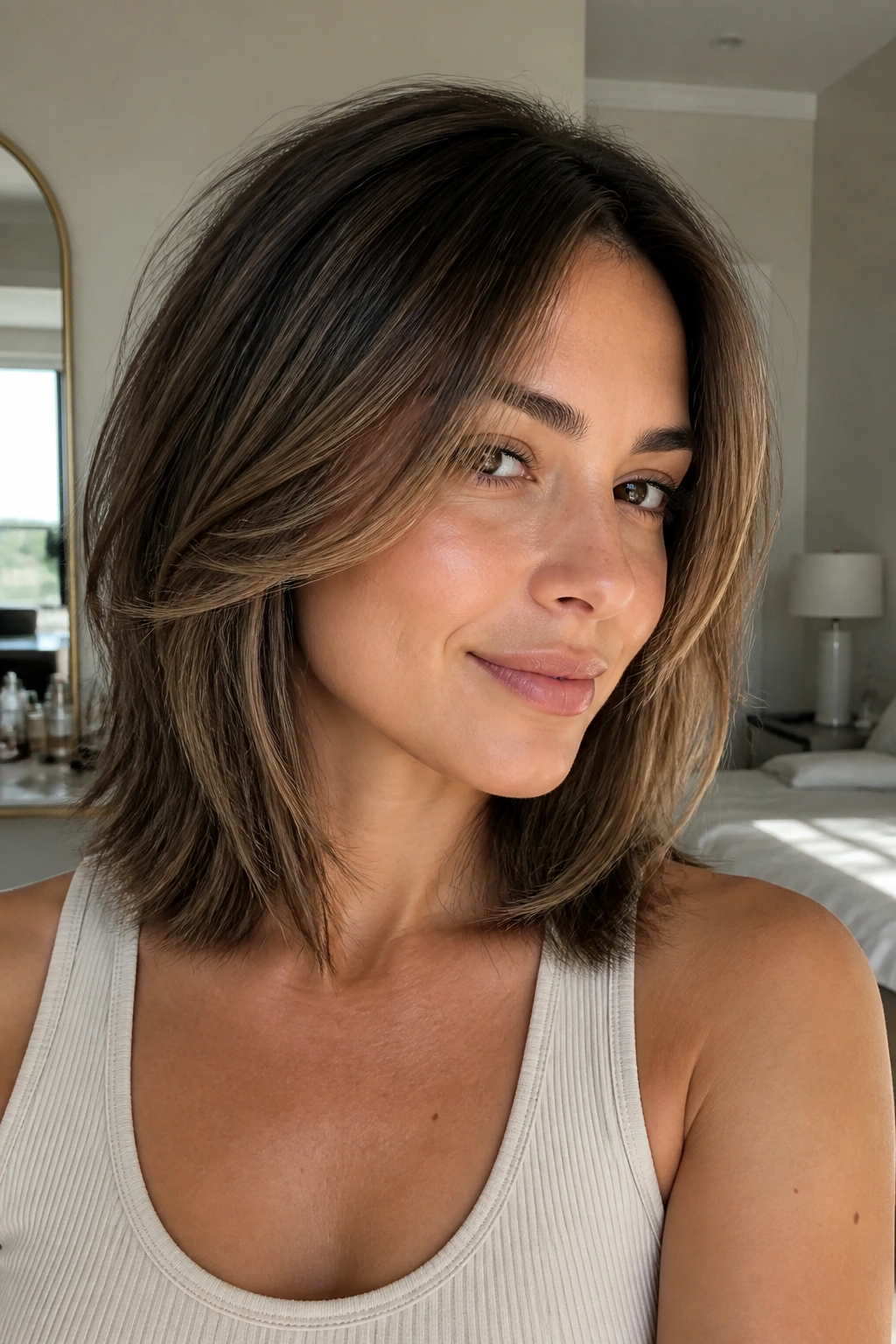
Face-framing layers can do more for a haircut than another inch of length ever will.
The trick is where they start. A good version usually begins near the cheekbone or jaw, depending on what you want to soften, and then tapers down into the rest of the cut so the front does the talking while the back keeps the weight. That keeps the look light around the face without stripping the body from the rest of the style.
The back stays honest.
That matters because a lot of layered cuts overdo the front and leave the hair looking stringy behind the ears. If you have rounder cheeks, those front pieces can carve out space. If your jaw is the part you want to soften, longer face-framing layers that graze the chin do the job without stealing too much length.
This style also grows out well. Even when the layers start to settle, the front still falls in a flattering way, which makes it easier to stretch time between trims if that matters to you.
6. Choppy Textured Bob

Unlike feathered softness, this cut shows the pieces.
A choppy textured bob is built on separation. The ends are cut in a way that makes them look lived-in and slightly broken up, which gives the hair a more graphic shape and a little edge. It tends to suit straight or slightly wavy hair best, because those textures show off the definition without fighting it.
If you like a neat outline, this may feel too rough around the edges. If you want hair that looks a bit undone even after a quick finger-style, it’s one of the easiest shapes to live with.
The real move here is restraint. Use a matte paste the size of a pea or a few sprays of texturizing spray, then scrunch the ends instead of combing everything smooth. You want pieces, not frizz, and that line can blur fast if you pile on too much product.
This is the bob for people who like a little grit in their hair.
7. Curly Layered Bob for Medium Length Hair

Curly hair needs layers, but it needs the right kind of layers.
A curly layered bob works because it lets curls stack without crushing the shape into a triangle. The best versions keep the longest curls near the collarbone and build movement higher up with careful interior layering, often checked dry so the stylist can see how each curl settles in real life.
What Makes the Shape Behave
When curls are cut wet and left to dry on their own, the result can surprise you in the wrong way. Hair shrinks, curls spring differently, and what looked balanced in the chair can turn lopsided once it dries. A dry check, or at least a final dry refinement, helps catch that.
- Ask for curl-by-curl shaping if your pattern is tight or uneven.
- Keep the top layers longer if your hair springs up a lot.
- Diffuse on low heat and low speed until the curls feel set, not crunchy.
- Use a cream-gel combo rather than a heavy butter if your curls need bounce.
The best curly bob looks soft around the edges and full through the middle. Too many layers, and it turns fuzzy. Too few, and the curls stack into a heavy block.
8. Beachy Wavy Lob

A beachy lob is basically movement without effort, at least if your hair already likes a bend.
The shape usually sits between the jaw and collarbone, with long layers that let waves fall in loose arcs rather than a stiff curl pattern. It is one of the easiest ways to make medium length hair look fuller without making the ends feel chopped up.
The styling trick is not to curl everything the same way. Wrap one section away from the face, the next toward it, and leave the last inch out of the iron so the ends stay a little straighter. That keeps the finish from looking too perfect.
A 1.25-inch curling iron is the sweet spot for most shoulder-length bobs. Smaller barrels can make the wave too tight, which is not the point here. Finish with a mist of salt spray at the mid-lengths and a drop of oil on the ends, and stop before it turns crunchy. The goal is bend, not ringlets.
9. Side-Swept Layered Bob

Why does a side part change the whole haircut? Because it shifts the weight.
A side-swept layered bob uses that shift on purpose. The front is cut to fall across the face in a long diagonal, while the opposite side gets a little lift at the root and a cleaner line around the cheek. That movement can make fine hair look fuller, and it gives straight hair a softer, less flat finish.
How to Wear It
- Blow-dry the hair against your part first to build root lift.
- Clip the crown for a few minutes while it cools if your roots are stubborn.
- Tuck the heavier side behind one ear for a sharp, easy shape.
- Use a light mist of hairspray only at the part line, not all over.
This cut is also forgiving if you are growing out bangs. The side sweep blends them into the rest of the haircut instead of letting them sit there as a separate problem. If you have a strong cowlick, though, the part may fight you a little. That is not a dealbreaker, just something to plan around.
10. Razor-Cut Bob

You can feel the difference with this one before you even see it.
A razor-cut bob has ends that feel soft and light in the fingers, almost like the weight has been thinned out by air rather than scissors. The style works by removing bulk from the ends and mid-lengths in a way that creates a looser edge than a straight shear line can give.
That softness comes with a catch. A razor is best on hair that is in decent shape, because it can make dry or frayed ends look worse if the cut is too aggressive. On healthy hair, though, it gives movement that feels less stiff than a blunt finish and less choppy than a heavily textured one.
- Ask for razor work mainly through the mid-lengths and ends.
- Avoid over-razoring the top if your hair is fine and fragile.
- Use a light serum after styling to keep the ends from puffing.
- This is a better fit for wavy to straight hair than for damaged, porous hair.
The whole point is air, not thinning for the sake of thinning.
11. Blunt Bob with Hidden Internal Layers

The outside looks serious. The inside does the work.
A blunt bob with hidden internal layers keeps the perimeter clean and even, which gives you that crisp line people notice first. Underneath that line, though, the stylist removes weight in the interior so the hair does not sit like a helmet at the bottom. It is a smart move for medium length hair that wants structure but hates bulk.
This cut is a favorite when you want to look tidy without looking stiff. It also holds shape well on second-day hair, especially if you blow-dry with a paddle brush and put a slight bend through the ends. The blunt edge keeps the outline sharp, while the internal layers stop the whole thing from feeling too dense.
The key is not to over-thin it. If the interior gets stripped too much, the ends start to look hollow. A good version still looks thick at the perimeter and only reveals the layering when the hair moves.
That quiet balance is the whole appeal.
12. Asymmetrical Layered Bob

A little imbalance can make a haircut feel sharper.
An asymmetrical layered bob keeps one side longer than the other, usually by a modest amount, and then uses layers to keep the shape from looking accidental. The contrast gives the cut personality, but the layers stop it from feeling like a hard-edged fashion statement unless that is what you want.
This style works especially well with a deep side part or a tuck behind one ear. One side gets a clean line along the jaw or collarbone, while the other side shows off the length difference in a way that feels intentional. If you want the effect to stay wearable, keep the length difference under 2 inches. Bigger than that, and the shape starts to dominate everything else.
It suits people who like a little edge but still need their hair to function at work, school, or anywhere else where a dramatic cut would feel out of place. Add soft layering through the ends, and the whole look stays light.
13. French Bob with Soft Fringe

The French bob gets softer when it moves into medium length territory.
Instead of sitting very short and crisp, this version grazes the jaw or just below it, then keeps a soft fringe that opens around the eyes. The layers are subtle, not chopped up, which is part of the appeal. You get shape, line, and a little swing, but the haircut still feels easy rather than fussy.
How It Wears in Real Life
- Keep the fringe around brow to upper-lash length if you want it to sweep naturally.
- Ask for soft internal shaping rather than heavy layering at the ends.
- Blow-dry the fringe from side to side so it does not split in the middle.
- Use a tiny bit of cream or pomade on the fringe ends if they fray.
This cut can be a dream on fine hair because it builds the illusion of density without a lot of bulk. On thicker hair, the fringe and perimeter need careful blending so the shape does not box out at the sides. A good French bob looks relaxed, not sleepy.
14. Crown-Volume Layered Bob for Medium Length Hair
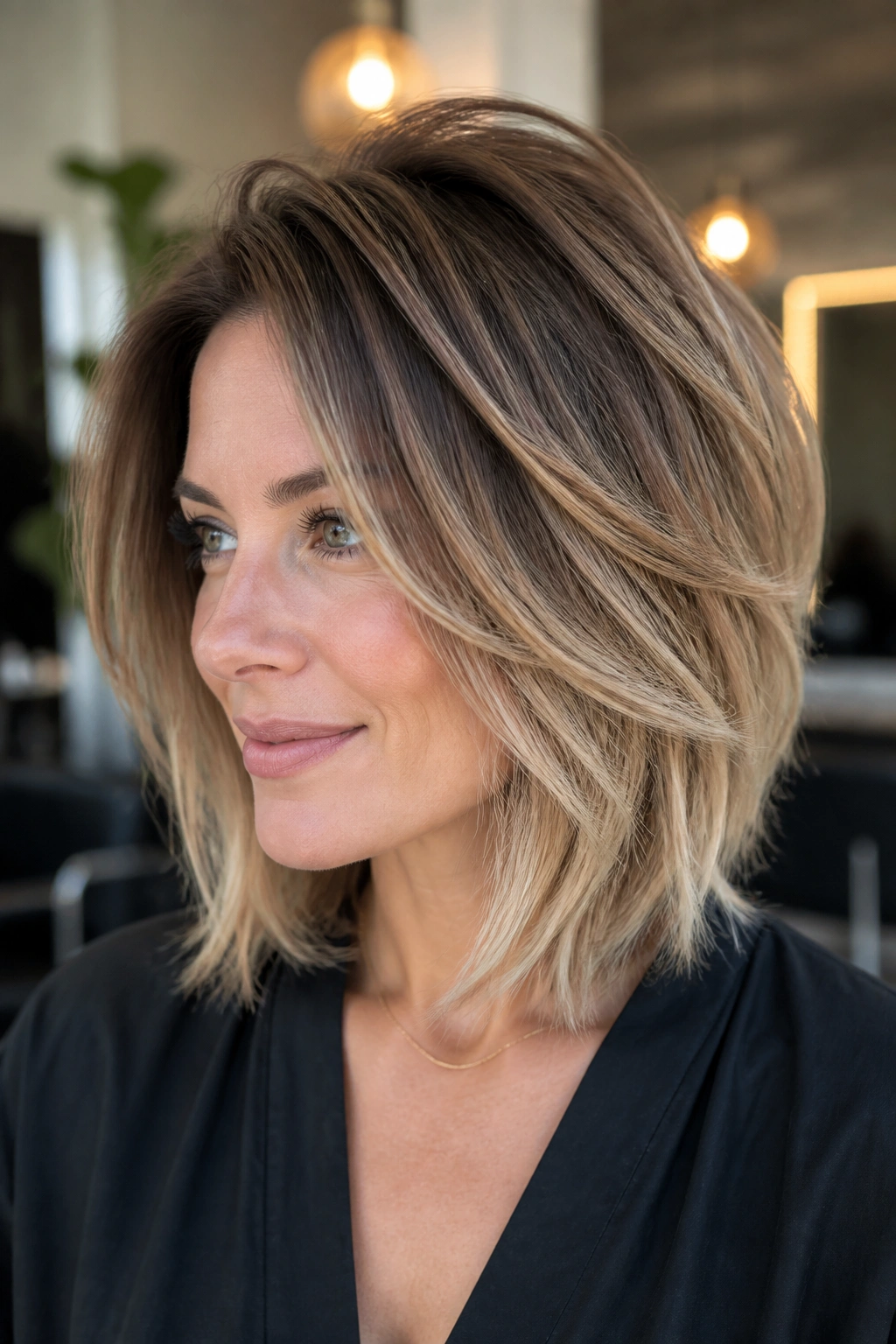
If your roots go flat fast, volume belongs at the crown, not piled into the ends.
This layered bob keeps the lower half fairly controlled while taking weight out of the top few inches so the crown can lift. The shape works especially well on medium length hair that falls close to the head at the roots and then flares at the bottom, because it redirects the bulk upward where you actually want it.
The styling is a little more specific than people expect. Blow-dry the roots upward with a round brush, pulling sections away from the scalp at a 90-degree angle before you let them cool. If your hair resists lift, a few root clips at the crown for 10 minutes can help set the shape without needing a mountain of spray.
This is not the same thing as stacking in the back. Stacking changes the silhouette from behind; crown volume changes the profile from the side and front. They can overlap, but they do different jobs.
The best version makes the head look taller and the ends look lighter, which is a nice trade.
15. U-Shaped Layered Lob
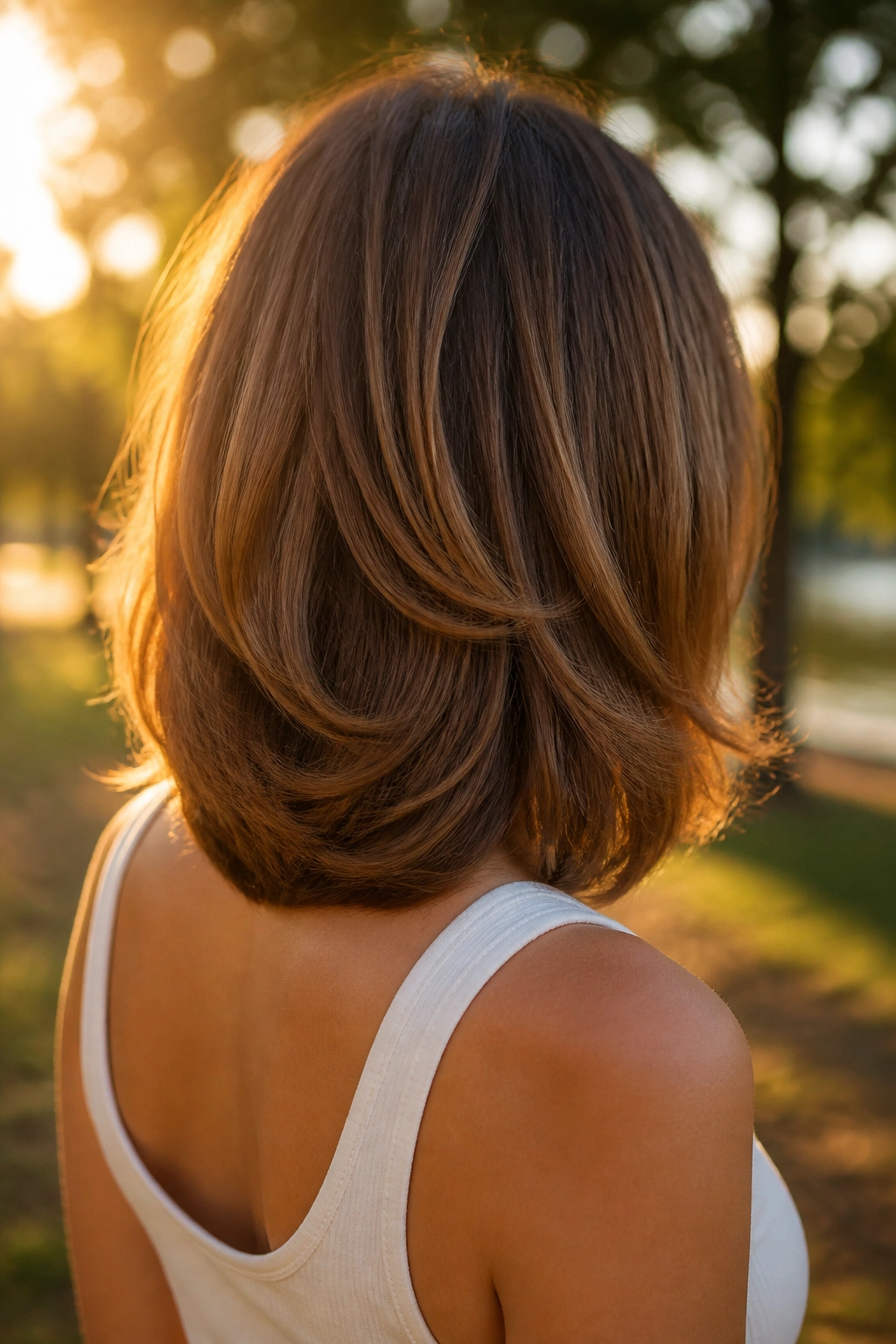
Why does a U-shape feel softer than a straight line? Because the eye follows the curve.
A U-shaped layered lob keeps the back a little shorter in the middle and longer at the sides, which creates a rounded hem instead of a hard shelf. On thick hair, that shape helps the ends fall in a smoother line. On wavy hair, it gives the front pieces a place to drape without dragging the whole cut down.
When It Beats a Straight Line
A straight perimeter can look crisp, but it can also sit heavy if your hair has a lot of density. The U-shape eases that pressure without making the cut feel heavily layered. It is a good choice if you want length around the face and a bit of swing at the shoulders.
One nice detail: it grows out in a forgiving way. The curve softens as the hair gets longer, so the cut often stays attractive between trims instead of turning into a blunt block. Ask the stylist to keep the curve gentle, though. Too much of a U can start to read dated fast.
16. Graduated Bob with Piecey Ends
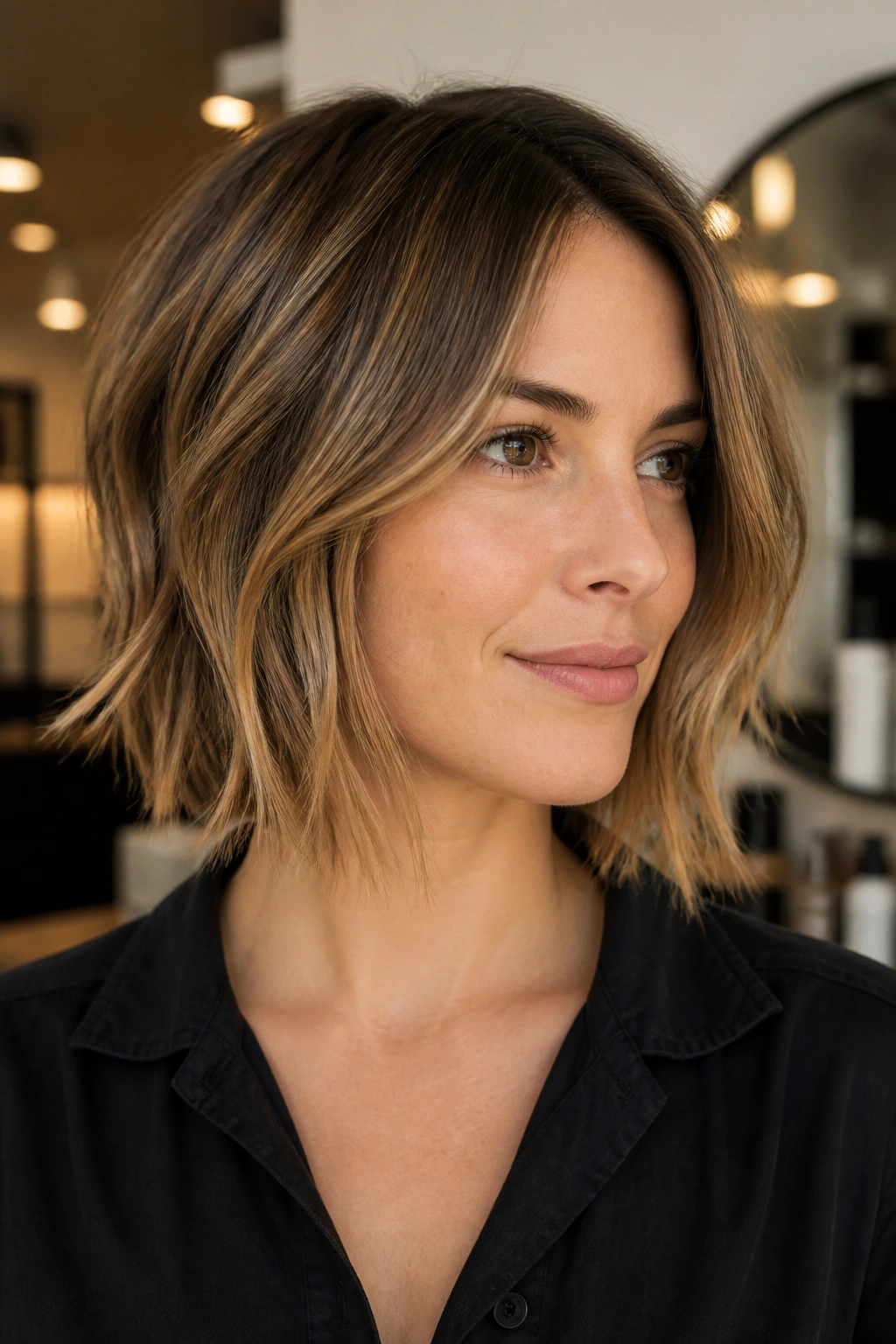
You want structure, but not a helmet.
A graduated bob with piecey ends gives you both. The back is subtly shorter and lifted through the nape, while the ends are sliced or point-cut so they separate into distinct pieces instead of sitting as one dense line. It is a strong choice for medium length hair that needs shape but also wants movement at the ends.
- Ask for controlled graduation at the back, not a dramatic stack.
- Keep the ends piecey, not shredded.
- Style with a small dab of paste or wax at the ends only.
- Use a flat brush or paddle brush if you want the outline to stay neat.
This cut is especially useful if your hair is coarse and tends to puff at the bottom. The graduation helps control the silhouette, while the piecey finish keeps it from feeling too formal. If you have very fine hair, though, too much slicing can make the ends look thin. A little goes a long way.
The balance is tidy, but not fussy.
17. Layered Bob with a Subtle Undercut
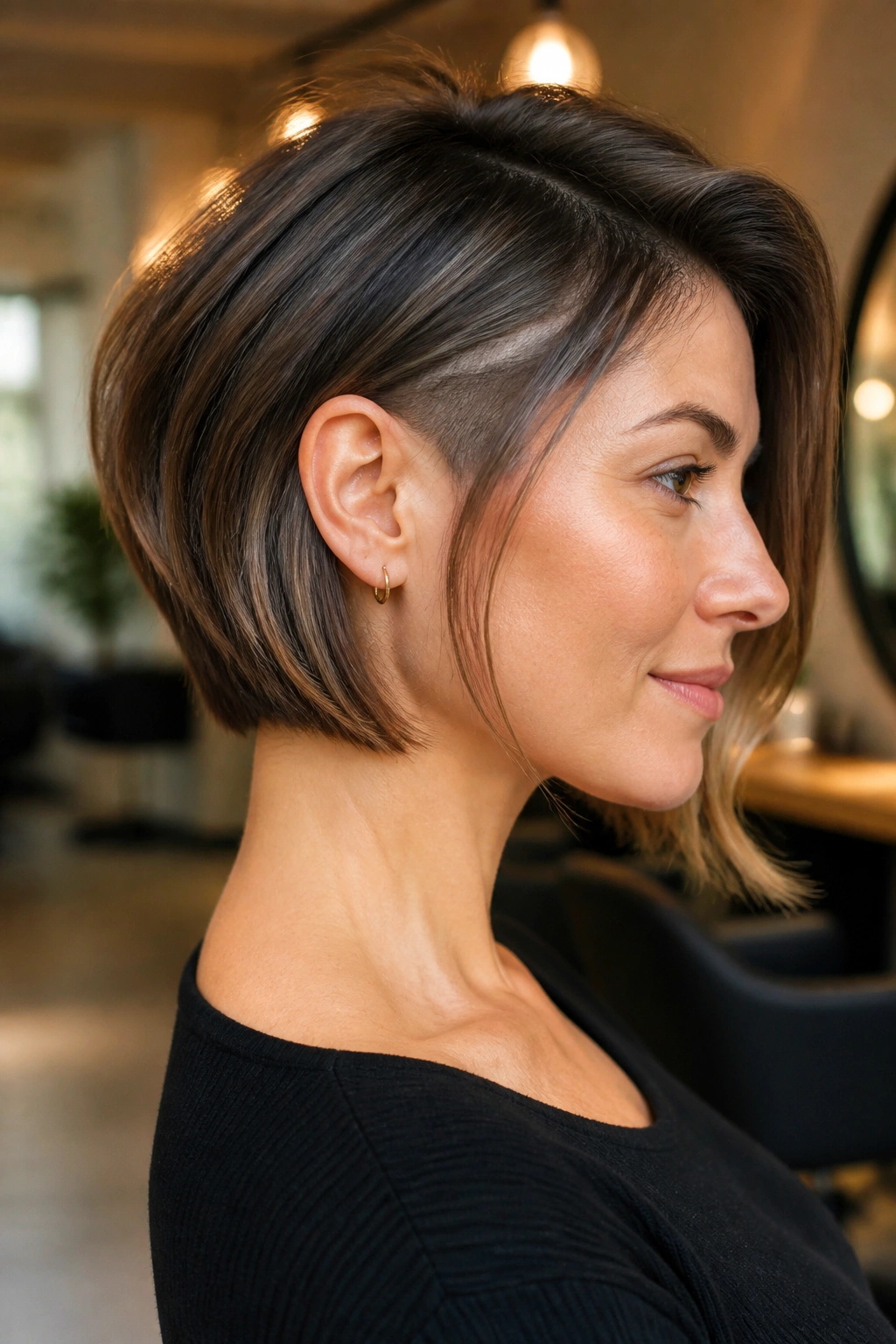
A hidden undercut is the haircut equivalent of removing a heavy coat from the inside of a jacket.
The top and outer layers still read as a medium-length bob, but some bulk is removed underneath the surface, usually at the nape or behind the ears. That keeps thick or coarse hair from ballooning outward, especially in humid weather or when you wear the hair down for long stretches.
This is the style for someone who has tried everything else and still feels like their hair carries too much weight. It also helps if your head gets hot fast or your hair takes forever to dry. Just be careful with the blend. A sloppy undercut can grow out in a strange way, while a careful one disappears into the rest of the shape and quietly does its job.
It is not a loud cut. That’s the point.
Final Thoughts
The best layered bob is the one that solves a real problem on your head, not just in a photo. Maybe you need lift at the crown. Maybe you want less bulk at the nape. Maybe you want the ends to move instead of sitting there like a shelf.
Bring a picture, sure. Bring a more honest piece of information too: how much styling you will actually do in the morning. A layered bob that needs twenty minutes of hot tools every day is not a great haircut for somebody who wants to rough-dry and leave.
Medium length gives you room to work. Enough hair to shape, enough length to tuck, and enough movement to make the layers matter. That is why these cuts keep their appeal.
