



A bob can be magic on a round face — or it can sit right at the cheeks and make everything feel wider than it needs to. The bob haircuts for round faces that slim are the ones that build a longer line, usually by dropping the front, shifting the part, or keeping the bulk away from the widest part of the face.
Length matters. So does angle.
A cut that stops dead at the jaw with no shape can feel boxy. A chin-grazing or collarbone-skimming bob with a little movement tends to do the opposite: it draws the eye down, gives the cheek area some breathing room, and keeps the silhouette from spreading out at the sides. Stylists usually talk about this in practical terms — where the weight sits, how much the front is extended, and whether the back is tucked in or left full. That’s the real game.
I always trust a bob that has a plan.
If you’re choosing between two similar cuts, pick the one that puts its widest point below the widest point of your face. That single idea does more work than a dozen vague “face-framing” promises, and it’s the thread running through every shape below.
1. Chin-Length A-Line Bob

The A-line bob is the classic move when you want structure without harshness. The back sits a touch shorter, the front drops forward, and that diagonal line does a lot of quiet work on a round face.
Why this shape works
The front pieces should land about 1 to 2 inches below the chin so the cut reads as longer, not wider. That small extension changes the whole look, especially if your hair has a little natural bend.
Ask for the nape to stay neat and the front to keep its length. You do not want a flat, blunt shelf across the cheeks.
Styling notes
- Blow-dry with a small round brush and turn the ends under just slightly.
- Keep the part half an inch to 1 inch off center if your face feels especially full through the middle.
- Use a light smoothing cream only on the mid-lengths and ends. Too much near the roots makes the shape collapse.
Best for: straight to softly wavy hair that needs a clean edge.
2. Deep Side-Part French Bob

A side part does more than people give it credit for. It breaks the face’s symmetry and shifts the eye upward and across, which is handy when you want the cheeks to feel less dominant.
The French bob version works best when it stays just under the cheekbone rather than cutting straight across the widest part of the face. Keep the fringe airy, not thick and heavy. A soft eyebrow-skimming piece can look lovely here, but a dense blunt bang is a different story.
The charm is in the imbalance. One side gets a little more sweep, the other side drops away, and the whole cut feels sharper without looking severe. It’s one of those styles that looks easy until you try to explain why it works.
3. Collarbone Lob with Long Layers

Want the safest bet if you’re nervous about going short? A collarbone lob is hard to beat. It gives you the shape of a bob without parking the ends right at the cheek line.
How to wear it
- Keep the length at the collarbone or just below it.
- Add long layers that start around the lower cheek or upper lip, not near the cheek’s fullest point.
- Style with a loose bend rather than a big wave.
The longer line does the slimming work, but the layers stop the cut from hanging like a curtain. A single blunt sheet of hair can make a round face look shorter. This cut avoids that problem by keeping the eye moving.
If you like to tuck one side behind the ear, this length gives you room to do it without losing the shape.
4. Stacked Bob with a Tapered Nape

Picture a back that hugs the neck and a front that glides forward a little longer. That’s the stacked bob, and on a round face it can be sharp in the best way when the stacking stays controlled.
The trick is not to build too much bulk at the sides. That’s where people go wrong. You want lift at the crown and a narrower line through the back, not a puffed-out mushroom shape that widens everything.
What to ask for at the salon
- Shorter layers in the nape for a clean, tucked-in back.
- Front pieces that graze the jaw or just below it.
- Soft graduation, not a hard shelf.
- Minimal fullness at the side panels.
This cut can look especially good on fine to medium hair because the stacked shape gives the illusion of thickness without adding width at the cheeks. It’s tidy. A little sharp. Very flattering when the angles are kept precise.
5. Asymmetrical Bob with One Longer Side
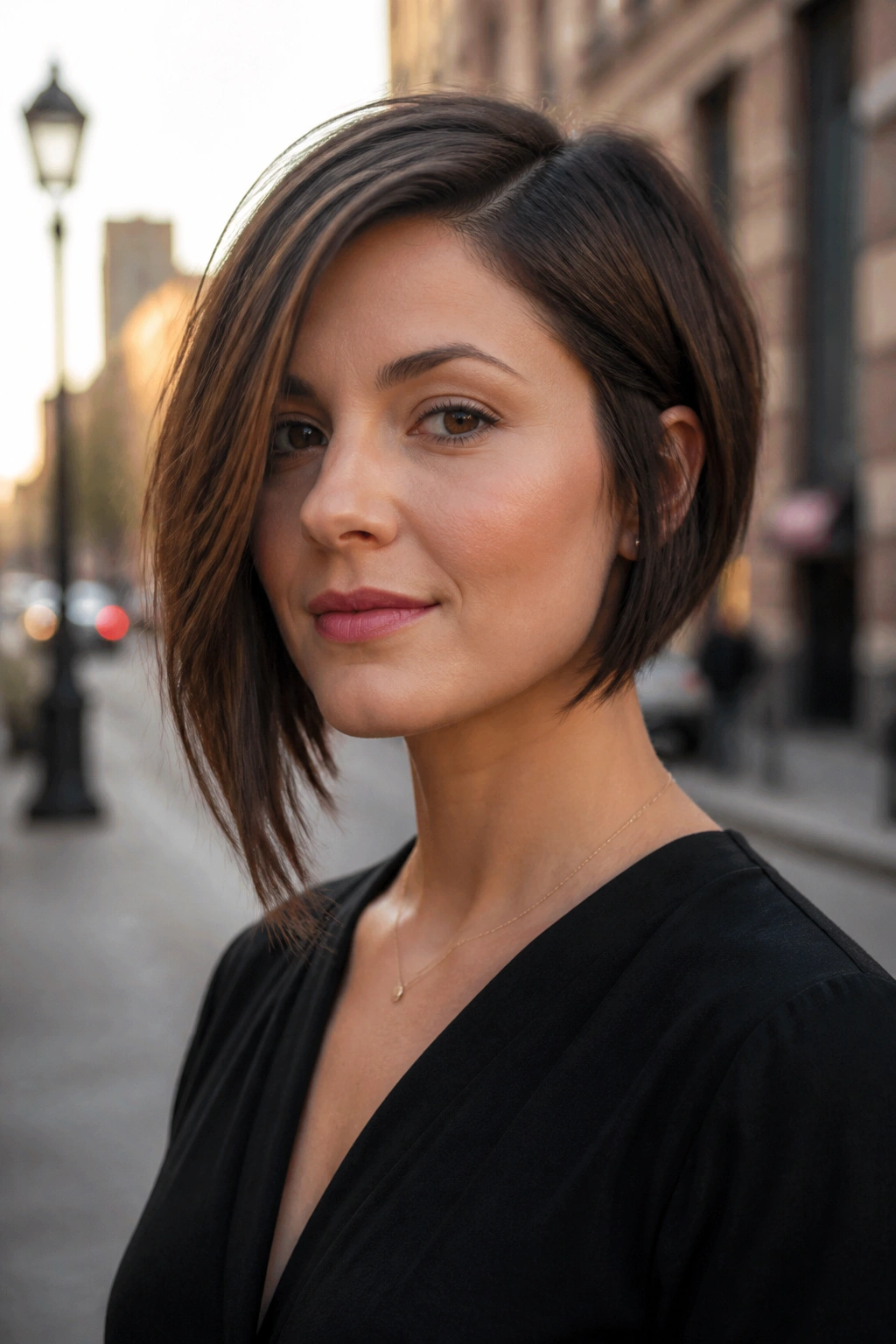
A little asymmetry goes a long way. Even a difference of 1 to 2 inches between sides can make the face feel longer and less circular.
The longer side creates a diagonal line that keeps the eye moving. That matters more than people think, because a round face benefits from movement that doesn’t stop at the cheeks. The shape can be subtle or dramatic, but subtle usually ages better and looks easier to wear.
This is the cut for someone who likes a bob with a small edge. Not a full scene-stealer. Just enough shape to feel intentional.
One side can be tucked behind the ear while the longer side stays loose, and that little asymmetry helps the face feel narrower from the front. It’s also one of the best choices if you wear statement earrings, since the cut gives them room instead of swallowing them.
6. Curtain-Bang Lob

A curtain-bang lob can soften a round face without making it look shorter, which is the balancing act that keeps this cut so useful.
The bangs split at the center and fall away from the face, usually somewhere between the eyebrow and cheekbone. That open shape draws attention to the eyes and brow while leaving the middle of the face less boxed in. The rest of the lob should sit near the collarbone, where it stretches the line down instead of stopping too early.
What makes it different
Curtain bangs are not the same as heavy fringe. Heavy fringe can chop the face in half. Curtain bangs create a frame that opens outward, and that little opening helps the cheeks feel less prominent.
This cut likes a soft bend at the ends. Too much wave and the sides puff out; too little and the shape can fall flat. A medium round brush and a quick bend at the front pieces usually do the job.
7. Deep Side-Swept Bob
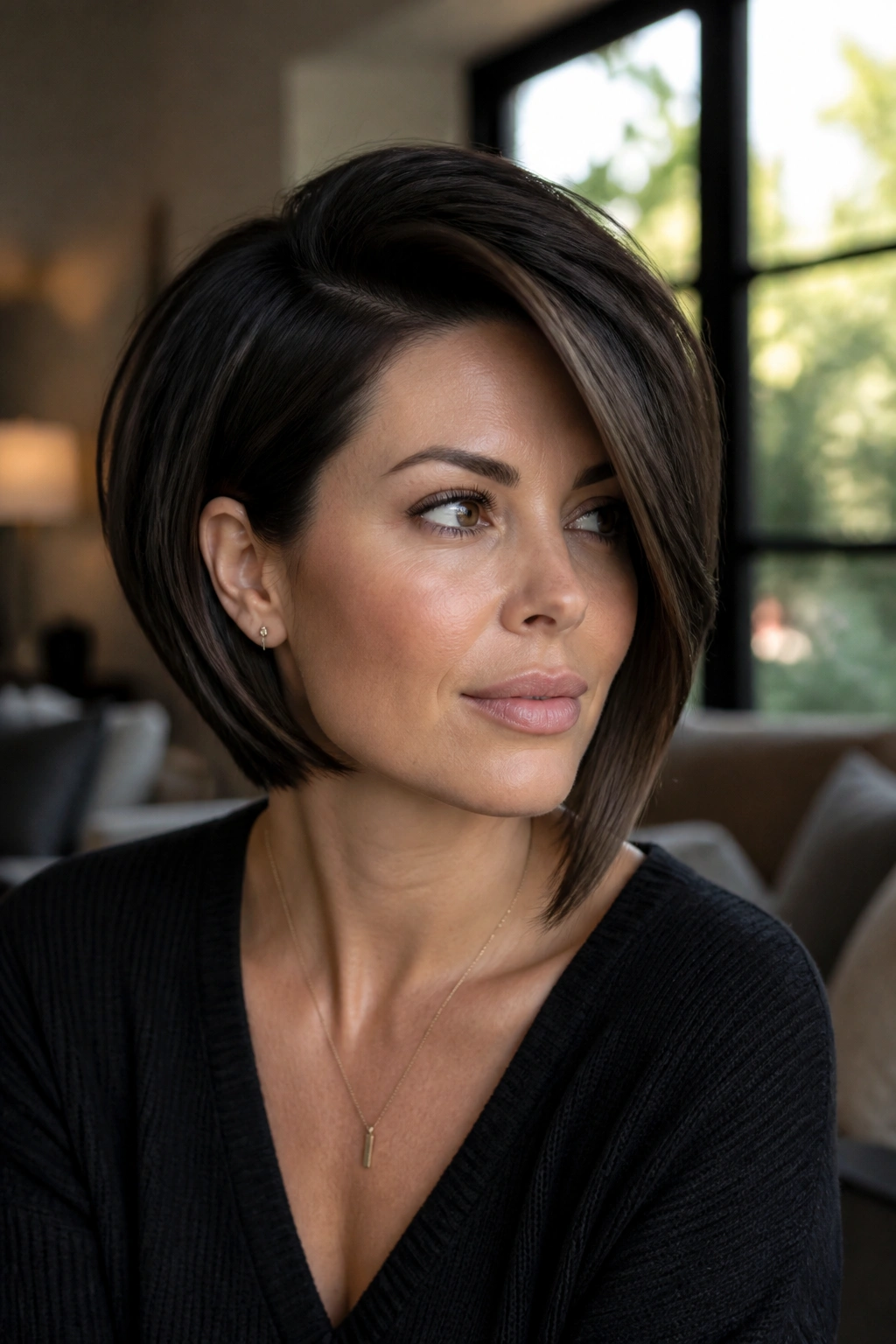
Put volume at the crown, not the cheeks.
That’s the whole point of a deep side-swept bob, and it’s a useful rule to remember if your hair tends to balloon at the sides. The side-swept front creates height, the off-center part breaks the roundness, and the rest of the cut stays close enough to the head to keep the silhouette lean.
Styling it without overdoing it
- Work a pea-size amount of mousse into damp roots.
- Blow-dry with the nozzle pointed downward along the sides.
- Flip the part over by 2 inches or so for a stronger side sweep.
- Finish with a light mist of flexible spray, not a crunchy shell.
The result is soft but not wide. That’s the sweet spot.
If your hair falls flat at the crown, this cut gives you structure without asking for much. If it’s thick, ask your stylist to thin the side panels a little so the sweep does not turn bulky.
8. Sleek Blunt Bob Below the Jaw
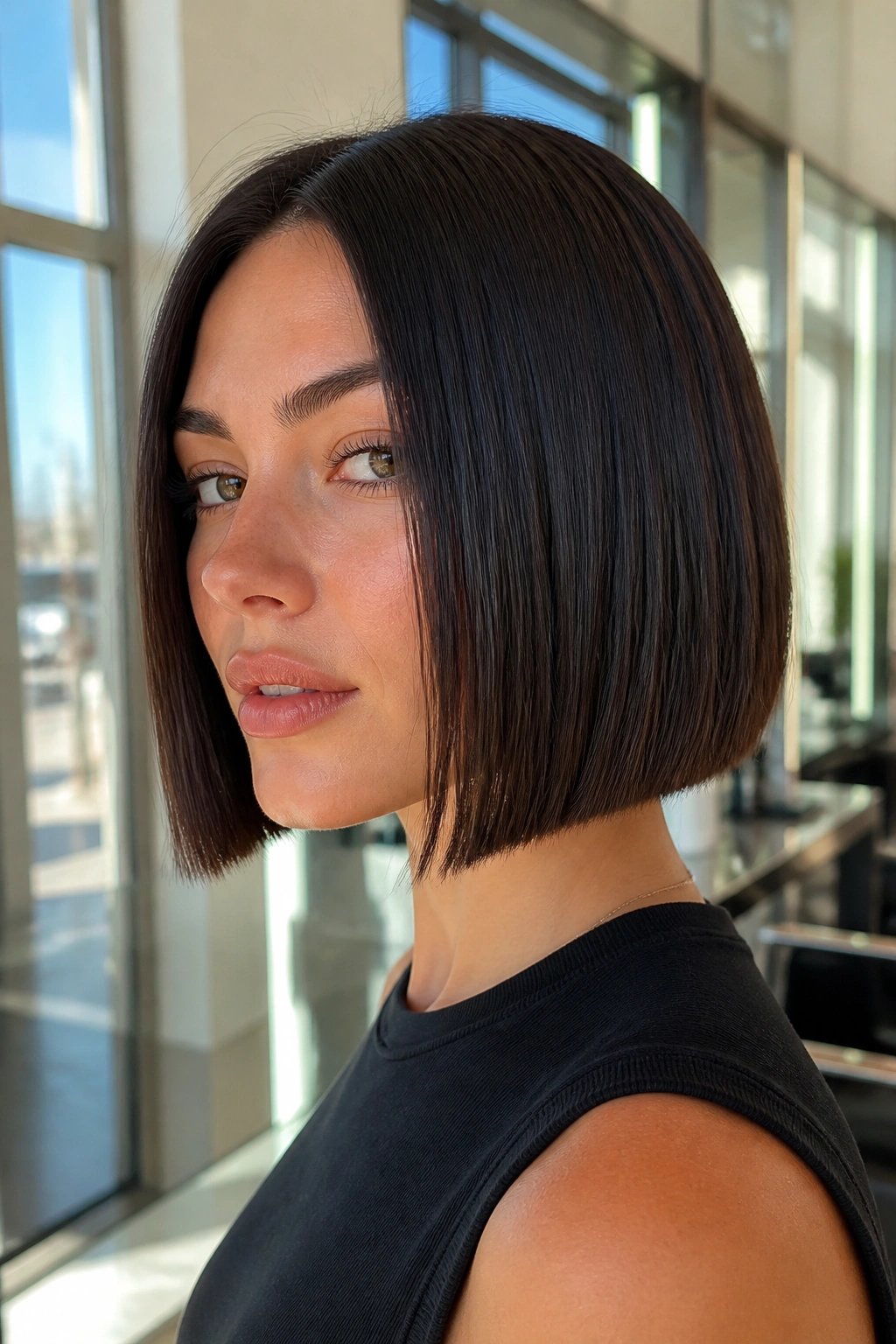
Can a blunt bob work on a round face? Yes — if it sits low enough and stays clean.
The mistake is cutting it right at the jawline with no movement. That can make the face look fuller. A better version drops the edge just below the jaw and keeps the line smooth, almost glassy, so the eye reads length before it reads width. Interior weight removal helps too; the outside stays blunt, but the inside does not feel like a brick.
This style suits straight hair beautifully, especially if you like a polished finish. It also works when your hair is fine, because the blunt edge makes the ends look denser.
The key is restraint. No puffy roots. No over-curled sides. A flat iron pass or a careful blow-dry can keep the line sleek, and that sleekness is what makes the face feel longer.
9. Soft Wavy Bob with Broken Texture

Soft waves are good. Puffy waves are not.
The difference is placement. A round face does better when the bend starts lower — around the lips or chin — and then flows down. If the wave begins at the cheeks, it can widen the center of the face. That’s the part to avoid.
I like this shape on hair that has some natural texture already. It does not need to be perfect. It needs to move in a loose, broken way, almost like the hair bent naturally after a long day out. A 1-inch wand works well, but leave the last inch or so straighter so the shape stays light at the ends.
The final look should feel relaxed, not fluffy. That’s the whole trick.
10. Choppy Piecey Bob
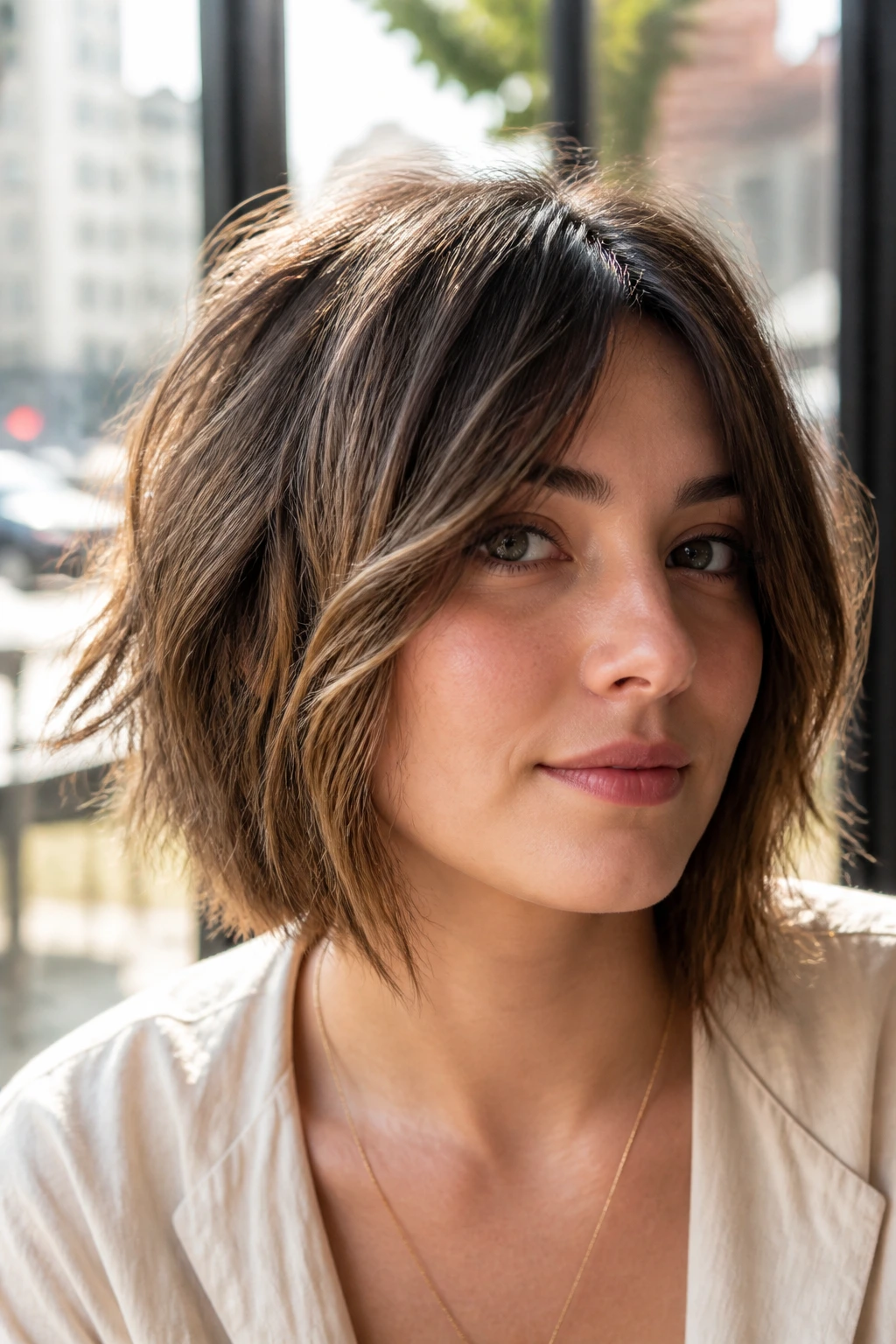
Choppy ends break up a round shape better than a smooth, heavy line. They keep the cut from sitting like one solid block around the face.
What to ask for
- Point-cutting at the ends instead of a blunt scissor line.
- Light internal texture, especially through the lower half.
- Pieces that hit below the cheekbone, not right across it.
- A styling finish with dry texture spray or a tiny bit of wax.
This cut has a little attitude, which is part of why it works. The uneven pieces interrupt the circle of the face and give the eye more places to land. It’s a good choice if your hair gets bulky fast and you don’t want to fight it every morning.
The one thing to watch: too much choppiness can turn wispy in fine hair. If your hair is delicate, ask for soft choppiness, not shredded ends.
11. Tucked-Behind-Ear Bob

A tucked bob changes the whole mood.
One side tucked behind the ear exposes the cheekbone and jawline, and that little reveal helps a round face feel less enclosed. The other side can stay loose, so the cut doesn’t turn into a severe half-up style. It’s casual, but not sloppy.
This works best when the bob sits at the jaw or just below it. If the cut is too short, the tuck can make the face feel broader. If it’s too long, the effect gets lost. Somewhere around the chin-to-collarbone zone is the sweet spot.
A flat side part or a soft off-center part helps keep the shape open. Add a barrette if your hair slips out constantly. No shame in that. Hairpins exist for a reason.
12. Inverted Bob with Long Front Corners
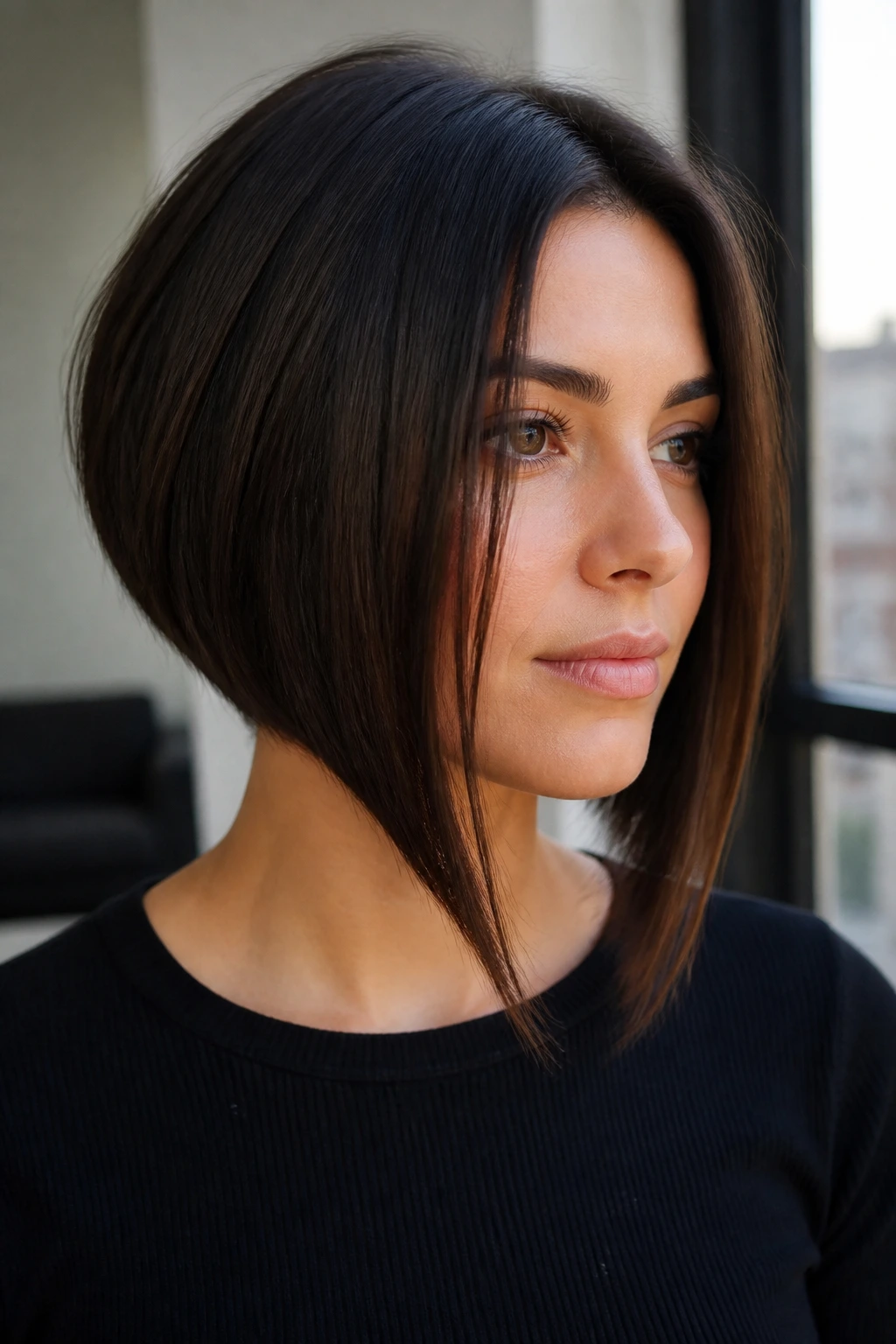
A strong inverted bob can do a lot for a round face because it narrows the back and keeps the front corners long enough to elongate the face.
The angle is the whole story here. The back should stay cropped and neat, while the front drops toward the jaw or even the upper neck. That diagonal edge draws the eye downward instead of outward. It also gives the profile a clean line, which matters if your hair tends to puff out near the sides.
The shape in plain terms
The front corners should feel deliberate, not droopy. Aim for a gentle slope from the back to the front, not a dramatic cliff.
This cut is especially useful if you like structure. It has backbone. It also plays nicely with straight styling, because the angle shows up best when the hair lies smooth and the front pieces stay sharp.
13. Layered Bob with Face-Framing Pieces
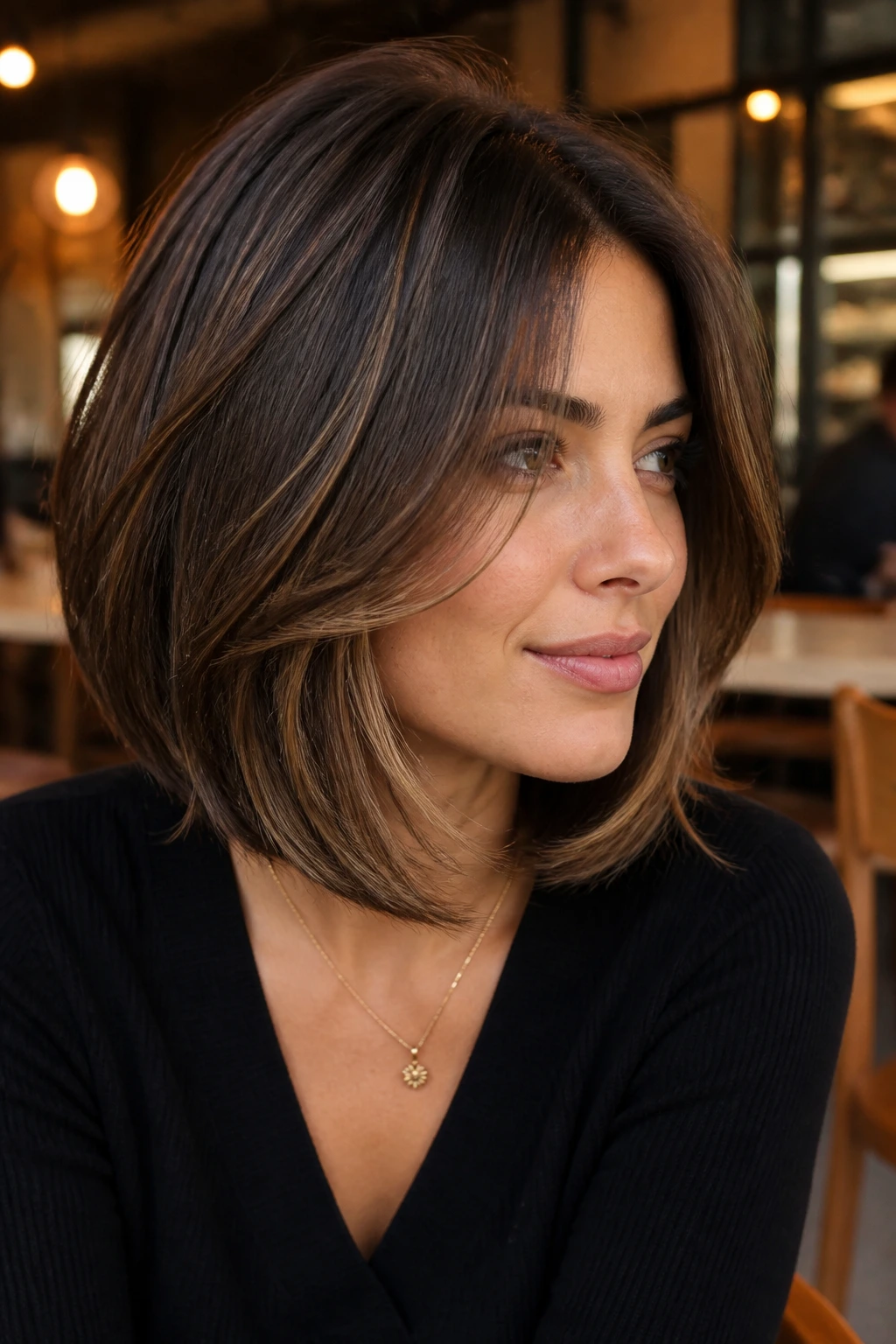
Which layers actually flatter a round face? The ones that start lower than you think.
Where the first layer should fall
- Around the lower cheek, mouth, or chin.
- Not at the widest part of the cheek.
- Long enough to move, short enough to bend inward.
That placement matters because layers that begin too high can explode out around the face. I see this mistake all the time, and it’s an easy one to fix with a clear salon note.
A layered bob with face-framing pieces should feel feathered, not chopped into bits. The front pieces need enough length to slide past the cheeks, then turn back in toward the jaw. That inward movement is what keeps the face from looking wider.
This is one of the most forgiving options for wavy hair. The layers bring shape without demanding a lot of styling, and the front pieces do the work of softening the face without hiding it.
14. Curved Chin-Length Bob

A bob that curves inward under the chin sounds simple, but the effect is cleaner than a straight line. The curve gives the face a gentle frame and keeps the ends from jutting outward at the cheeks.
This shape likes a round brush and a careful blow-dry. Pull the ends under only a little — just enough to suggest a bend, not a curl. If the curve gets too round, the whole cut can turn too sweet and lose its edge.
The crown should stay a little softer than the ends. That balance keeps the focus moving down the face instead of clustering around the sides.
I’d call this one quietly flattering. It does not shout. It just makes the face look a bit longer and the jaw a bit cleaner, which is often exactly what people want from a bob anyway.
15. French Bob with Airy Fringe

The blunt, very short French bob gets a lot of attention, but on a round face it needs a little editing.
A better version keeps the length a touch lower and the fringe lighter. Think airy, not dense. The bangs can brush the brows or split just enough to show a sliver of forehead, which helps the face avoid that boxed-in look. The ends should also sit softly, not flare out.
The style still keeps the French bob’s charm — that neat, cheeky shape around the mouth and jaw — but it gives the face more vertical space. That’s the difference between cute and flattering. Tiny change. Big payoff.
If your hair is thick, ask for the fringe to be thinned carefully so it does not sit like a shelf. If it’s fine, the softer fringe gives you movement without stealing too much density from the rest of the cut.
16. Razor-Cut Bob for Thick Hair

Unlike a blunt scissor cut, a razor-cut bob softens the perimeter and keeps thick hair from looking heavy around the face. That matters a lot on a round face, because thick sides can make the whole silhouette feel wider than it is.
A razor cut works best when the hair is healthy enough to take it. If your ends are dry or frizzy, too much razor work can make them look wispy in a bad way. But on dense hair with a good cuticle layer, the razor can carve out movement that a scissor sometimes misses.
The shape should still keep some weight at the bottom. You don’t want it feathered into nothing. You want the ends to move while the body of the bob stays controlled.
This is a smart choice if your hair feels too heavy by midday. The razor removes that thick, blocky feeling and gives the face a cleaner frame.
17. Bob with an Invisible Undercut

A hidden undercut can be a lifesaver if your hair grows out wide at the sides.
It sounds dramatic, but it usually isn’t visible when the hair is down. The stylist removes bulk underneath the top layers, which helps the bob sit closer to the head and keeps the side profile slimmer. On a round face, that reduction in width matters a lot. It stops the cut from ballooning right at cheek level.
This is especially useful for very thick or coarse hair. You get the shape without the helmet effect.
The catch is upkeep. A hidden undercut grows fast enough that you’ll notice the bulk returning before the top layers do. If you hate salon maintenance, skip this one. If you want a bob that behaves, it’s worth the trade.
18. Side-Swept Textured Lob

A lob can look plain if the texture sits in the wrong place. A side-swept version fixes that fast.
The off-center sweep gives the face a longer line, and the texture should stay loose from mid-length down. That keeps the eye moving past the cheeks instead of stopping there. A little mousse at the roots and a bend made with a flat iron or large barrel iron usually does the job.
What to ask for
- A side part that sits 1 to 2 inches off center.
- Soft layers that start below the cheekbone.
- Texture that stays broken, not fluffy.
- Length that brushes the collarbone.
This one is good for people who want something easy to wear and easy to grow out. It doesn’t have the sharpness of an inverted bob, but it gives you more softness and still keeps the face looking longer.
19. Soft Flipped-End Bob

A slight flip at the ends can work on a round face when the flip is controlled and the length sits low enough.
I’m not talking about a big retro bend that fans out at the cheeks. That would do the wrong thing. I mean a small outward flick at the very ends, usually below the jaw, so the silhouette feels light and the neckline opens up a little. It adds motion without widening the middle of the face.
This cut looks especially nice when the top stays smooth and the movement lives only at the bottom third of the hair. The contrast helps. A round brush or a quick pass with a flat iron can create that little turn.
If your face feels shorter than it is, this shape can be a nice way to add energy without piling volume on the sides.
20. Jawline Bob with Internal Layers
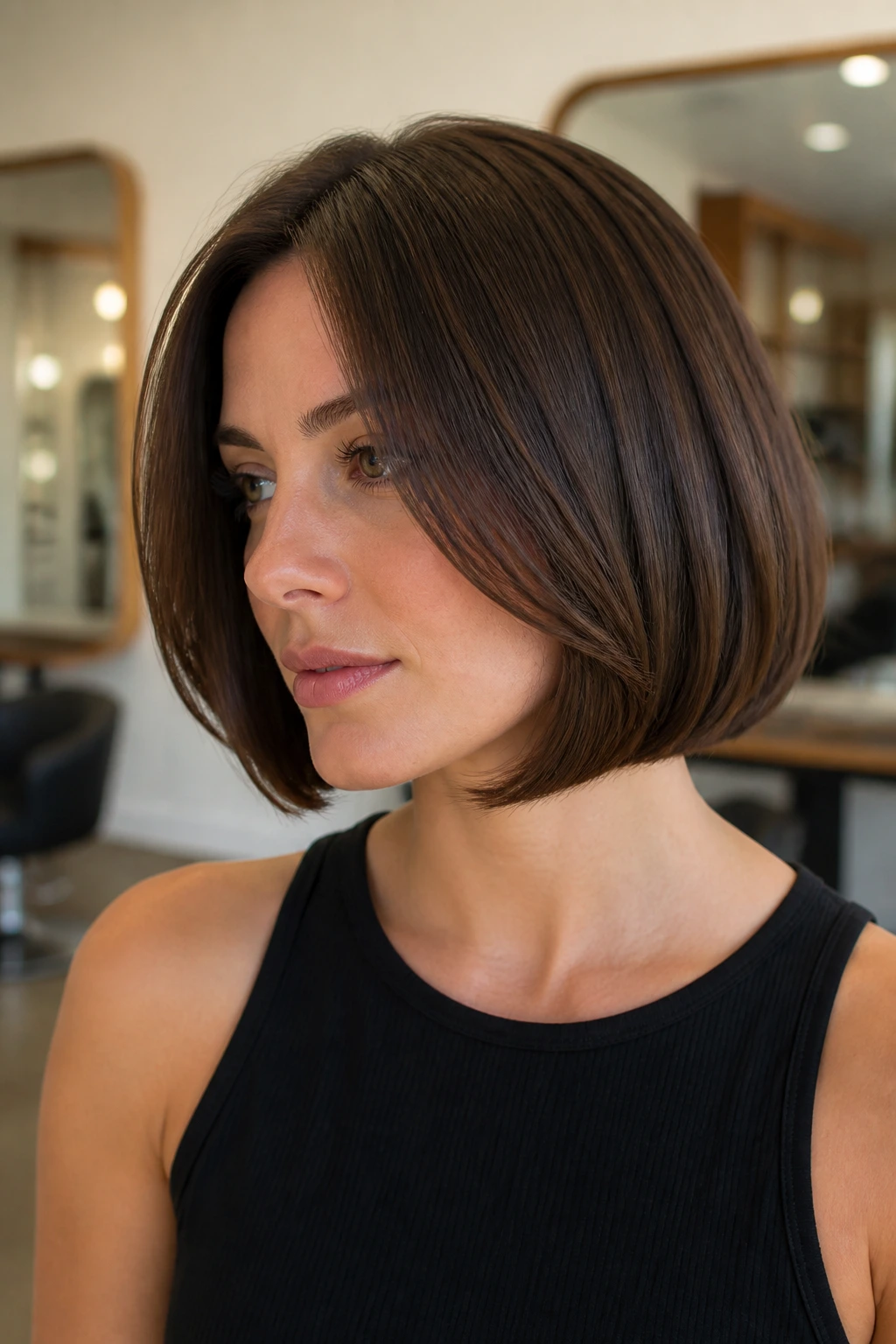
If you want the shortest bob that still plays nicely with a round face, this is the one I’d start with. The length hits around the jawline, but the inside of the cut is softened so the hair does not puff out in one solid shape.
Internal layers are the quiet hero here. They let the bob move without turning fluffy, and they keep the outline from reading as one blunt circle. The front should stay a touch longer than the back, or at least curve inward a little, so the jaw gets a clean frame.
For styling, keep the roots smooth and give the ends a slight bend under. That’s enough. If you add too much wave, the roundness comes back fast.
A good bob on a round face is rarely about hiding the face. It’s about giving it better lines. Pick the cut that keeps the width below the cheeks, leaves some space around the jaw, and does not fight your natural texture. That’s the part that matters, and it’s the reason some bobs feel instantly right while others never quite settle.
