



Fine hair can collapse in minutes. A good stacked shape fixes that with structure, not teasing, and that’s why stacked bob haircuts for fine hair keep coming back as a smart choice for people who want lift without piling on a lot of fuss.
The trick is in the cut line. Keep the nape snug, let the back rise in a controlled way, and the hair suddenly looks like it has more body than it really does. Too much thinning goes the other direction fast. You end up with see-through ends, and nobody wants that.
The 22 styles below all play with that same idea in different ways. Some are sharp and polished. Some are soft and a little airy. A few work better if your hair falls flat at the crown, while others are better if you want length around the face but still want the back to sit close to the head.
Small details matter here. The exact angle of the stack, where the part sits, how much weight stays in the ends — those choices change everything. And if you’ve ever left a salon with a bob that looked cute for two days and then started flipping out at the sides, you already know why that matters.
1. Classic Stacked Bob Haircut for Fine Hair
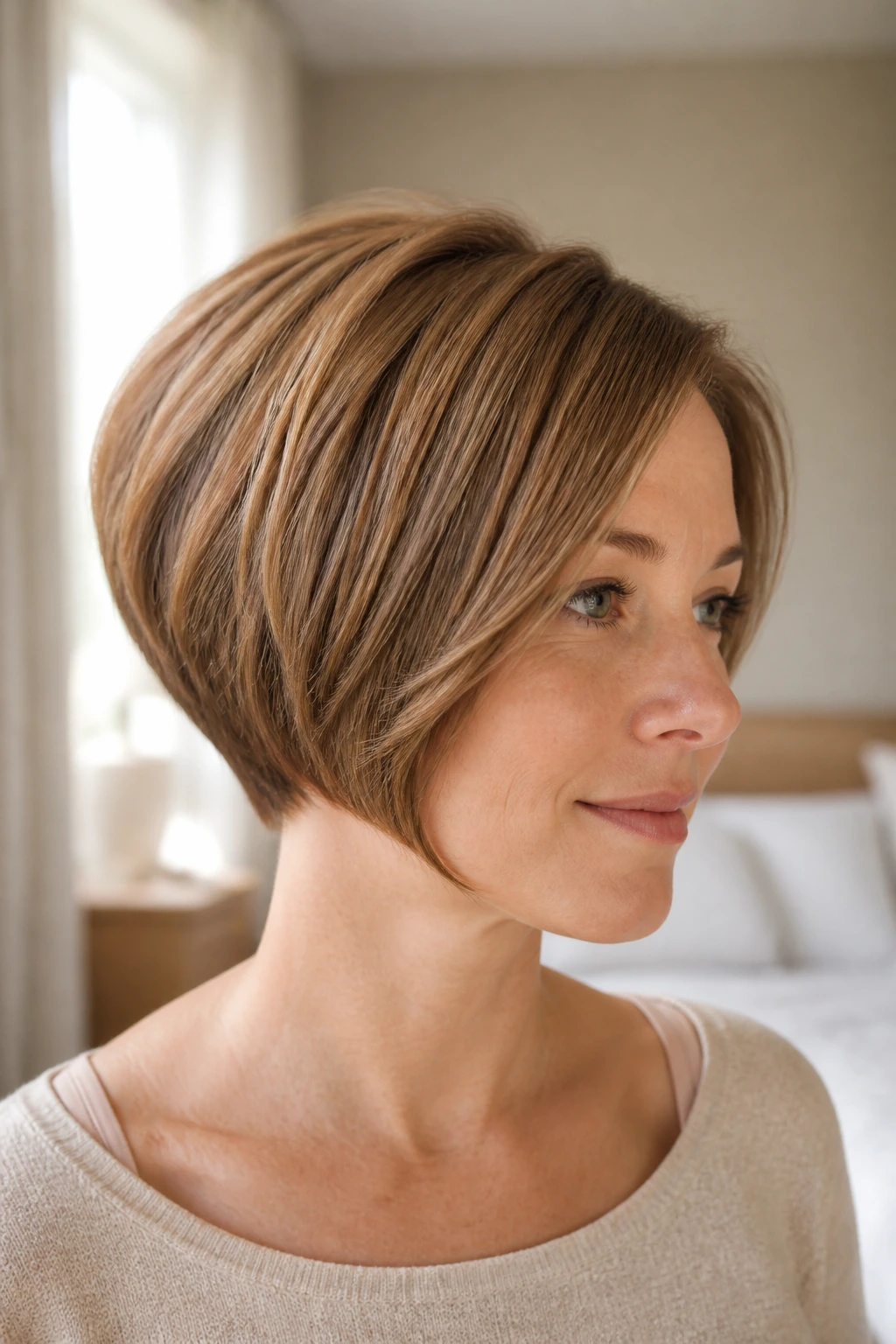
A classic stack is the dependable one. The back sits short and neat at the nape, then graduates upward in a smooth curve so the crown gets a little lift without looking overdone. On fine hair, that shape does a lot of the heavy lifting for you.
Why the stack helps
The shorter back gives the hair somewhere to stand up instead of falling straight down. That tiny bit of structure can make the whole cut look denser.
- Keep the nape compact, with the shortest pieces hugging the neck.
- Ask for soft graduation, not harsh steps.
- Leave the outer line clean so the ends still read as thick.
Best move: blow-dry the roots up and forward first, then round the ends under with a 1-inch or 1.25-inch brush.
2. Jaw-Skimming A-Line Stack
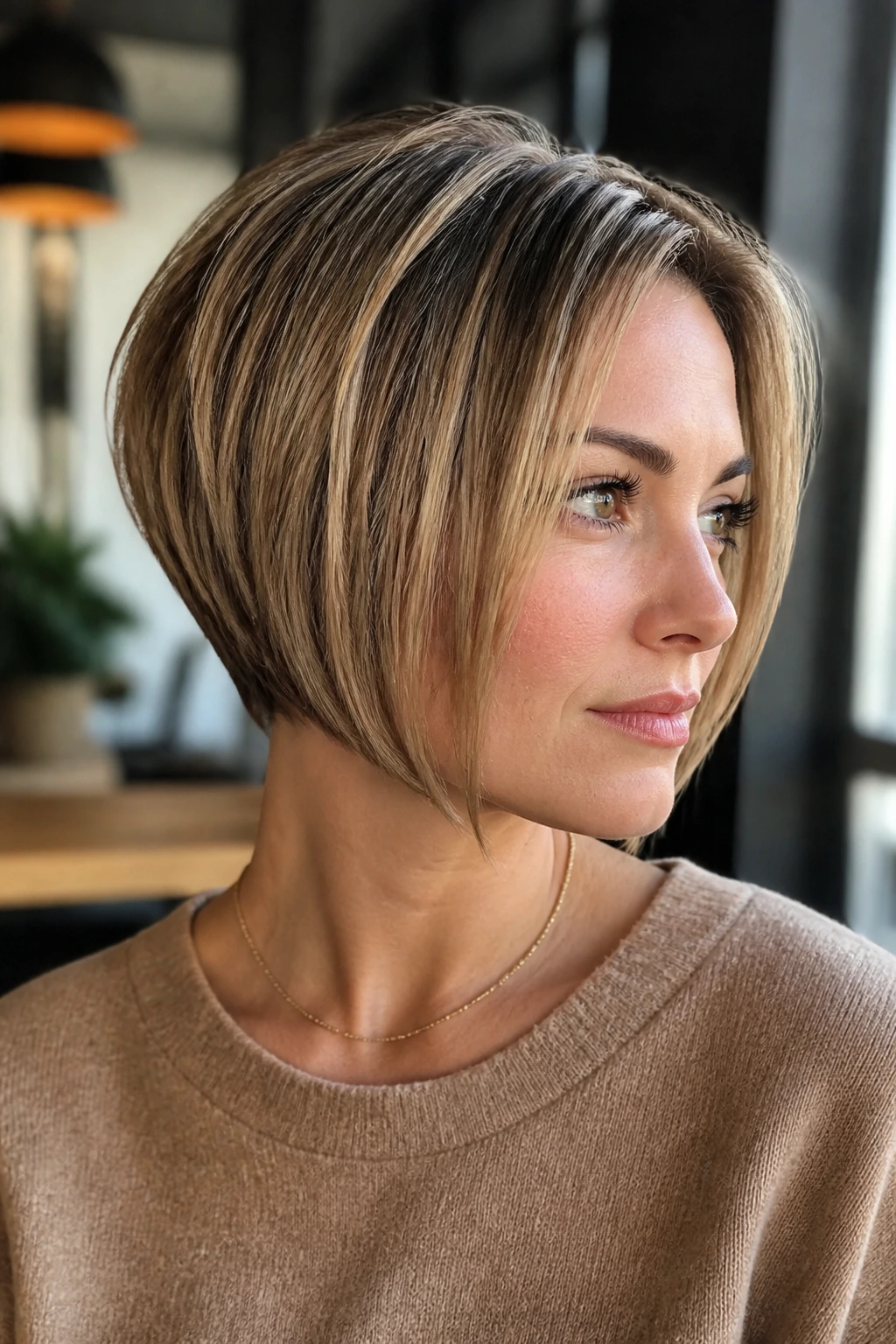
A jaw-skimming A-line stack makes fine hair look sharper, not thinner. The back stays shorter and the front gets a bit more length, usually enough to hit the jaw or just below it. That longer front line keeps the cut from feeling too exposed.
It also gives you a nice little swing when you turn your head. Fine hair likes that. The movement distracts from any flatness at the crown and keeps the silhouette from looking pinned down.
If your hair grows fast at the neck, this cut behaves well between trims because the front still holds the shape. Tell your stylist you want a clean back with a gradual angle, not a dramatic swoop. You want the front to frame, not drag.
3. Softly Graduated Bob With Feathered Crown

Why does a softly graduated crown help more than a bunch of short layers? Because fine hair needs support, not holes. A feathered crown adds a little air at the top, but the edges still need enough weight to look like hair instead of wisps.
That balance is the whole point. The graduation should be gentle, with the shorter pieces blending into the longer ones so the top doesn’t separate into little strings.
How to ask for it
Tell the stylist you want movement through the crown, not obvious slicing. Keep the shortest layers in the back of the head, then let the top curve over them.
If your hair is very soft, this is one of the safest choices in the stacked bob family. It adds lift without making the ends look tired.
4. Side-Swept Stacked Bob With a Light Fringe
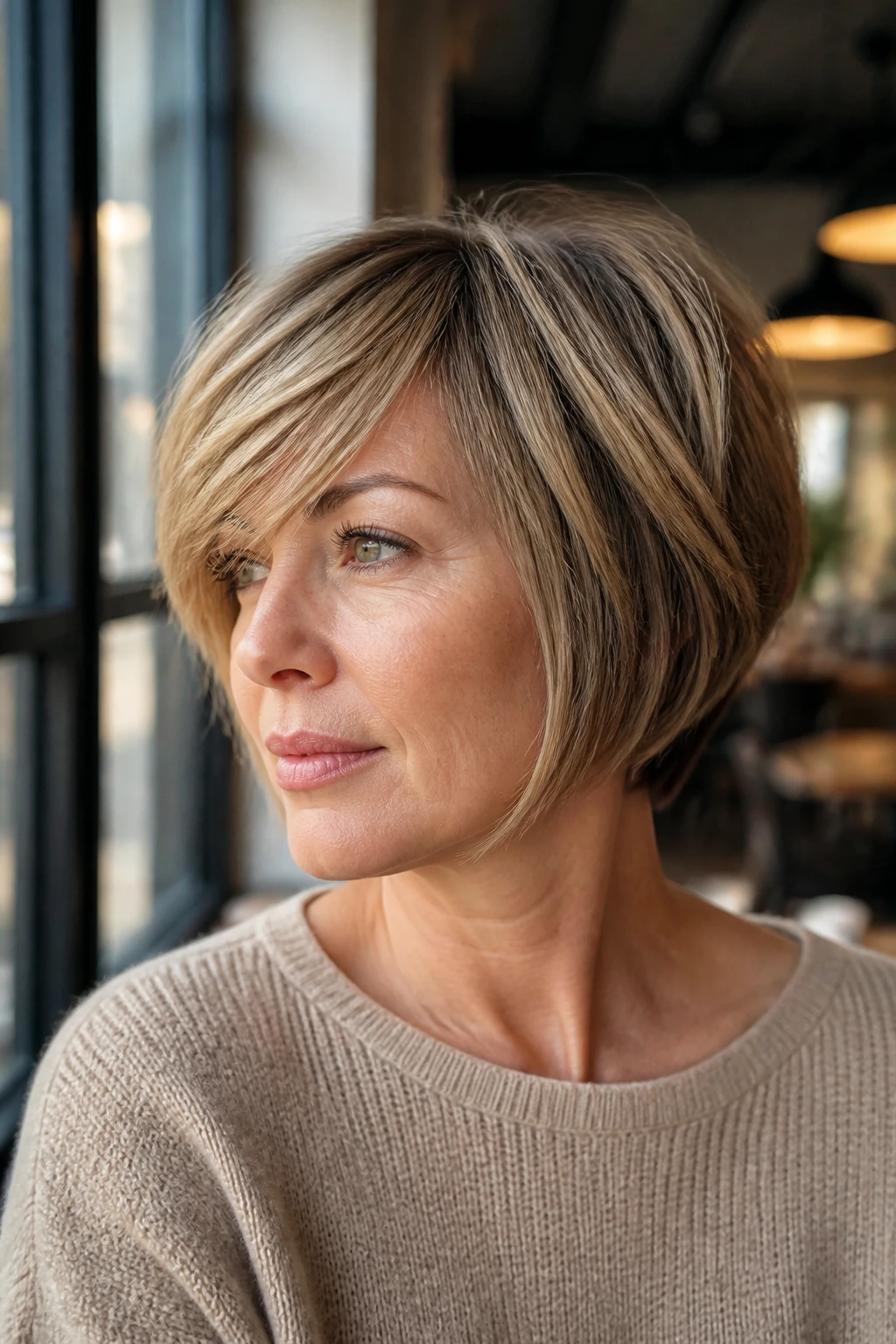
A side-swept fringe can save a bob that feels too open in front. I’ve seen this a hundred times: the back has a nice stack, the crown is fine, and then the front just hangs there with no frame. A soft side fringe fixes that fast.
The fringe should start around the brow arch and sweep toward the cheekbone, not disappear into the temple. That keeps the front from looking heavy.
- Ask for the shortest front pieces to sit just below the brow.
- Keep the back stacked close so the cut still feels lifted.
- Part slightly off center if you want extra height.
Watch this: if your fringe gets too wispy, it stops helping the cut. It needs enough density to read as a shape.
5. Angled Stacked Bob With a Clean Nape
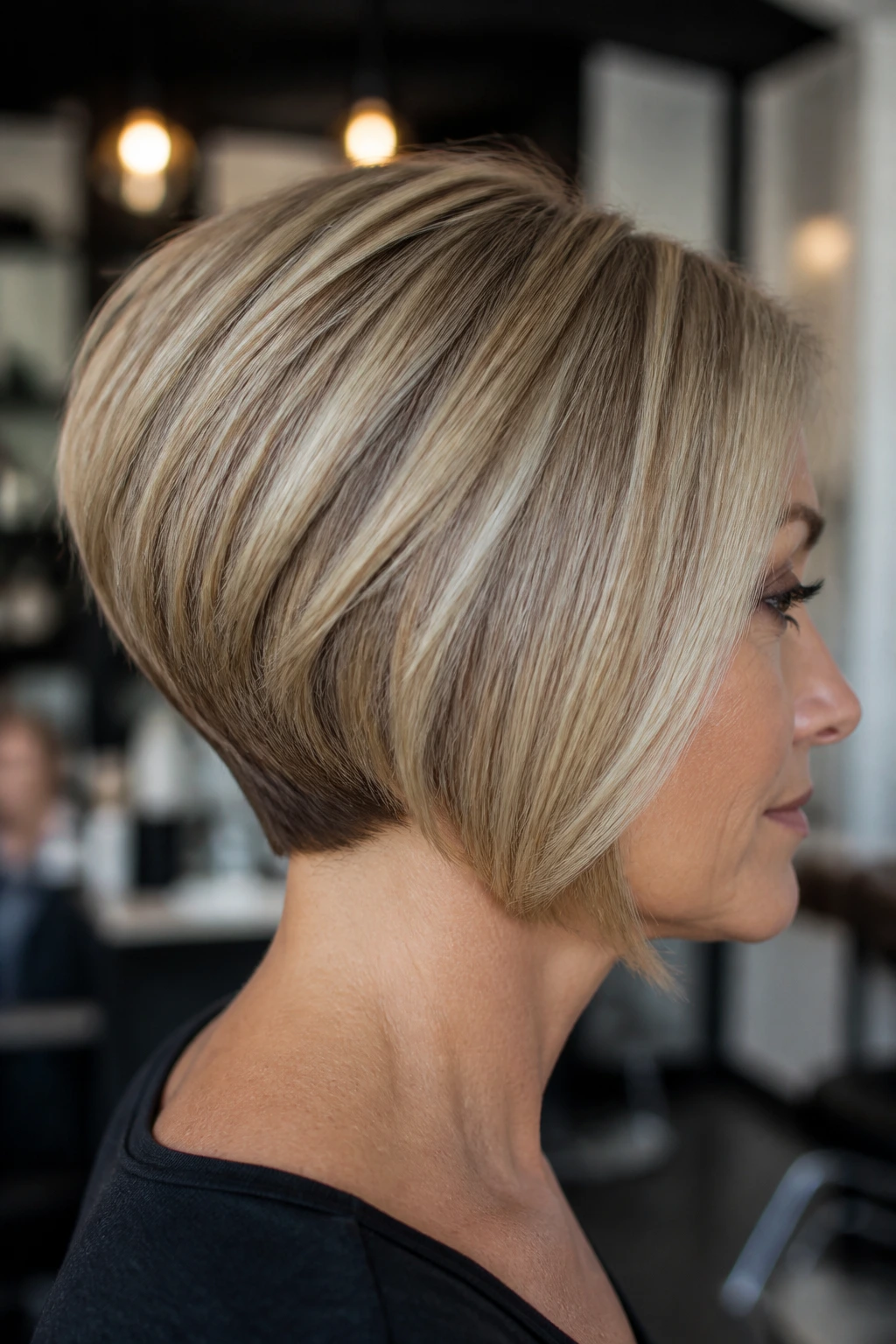
A clean nape is not fussy. It’s smart. When the back of a bob hugs the neck neatly, fine hair looks more controlled and the whole cut feels more finished. The angle from back to front keeps the style from turning boxy.
This version works especially well if you like a trim outline and you don’t want a lot of loose ends hanging around your jaw. The front can still touch the chin, but the back stays close enough to create that lifted look.
It also grows out in a tidy way. That matters more than people admit. A bob with a clean nape keeps its shape longer because the outline stays clear, even after a few weeks.
Ask for a narrow, curved stack at the back and a gentle forward angle at the sides. Too much angle makes fine hair look stringy. Too little makes it look bulky.
6. Textured Stacked Bob With Piecey Ends
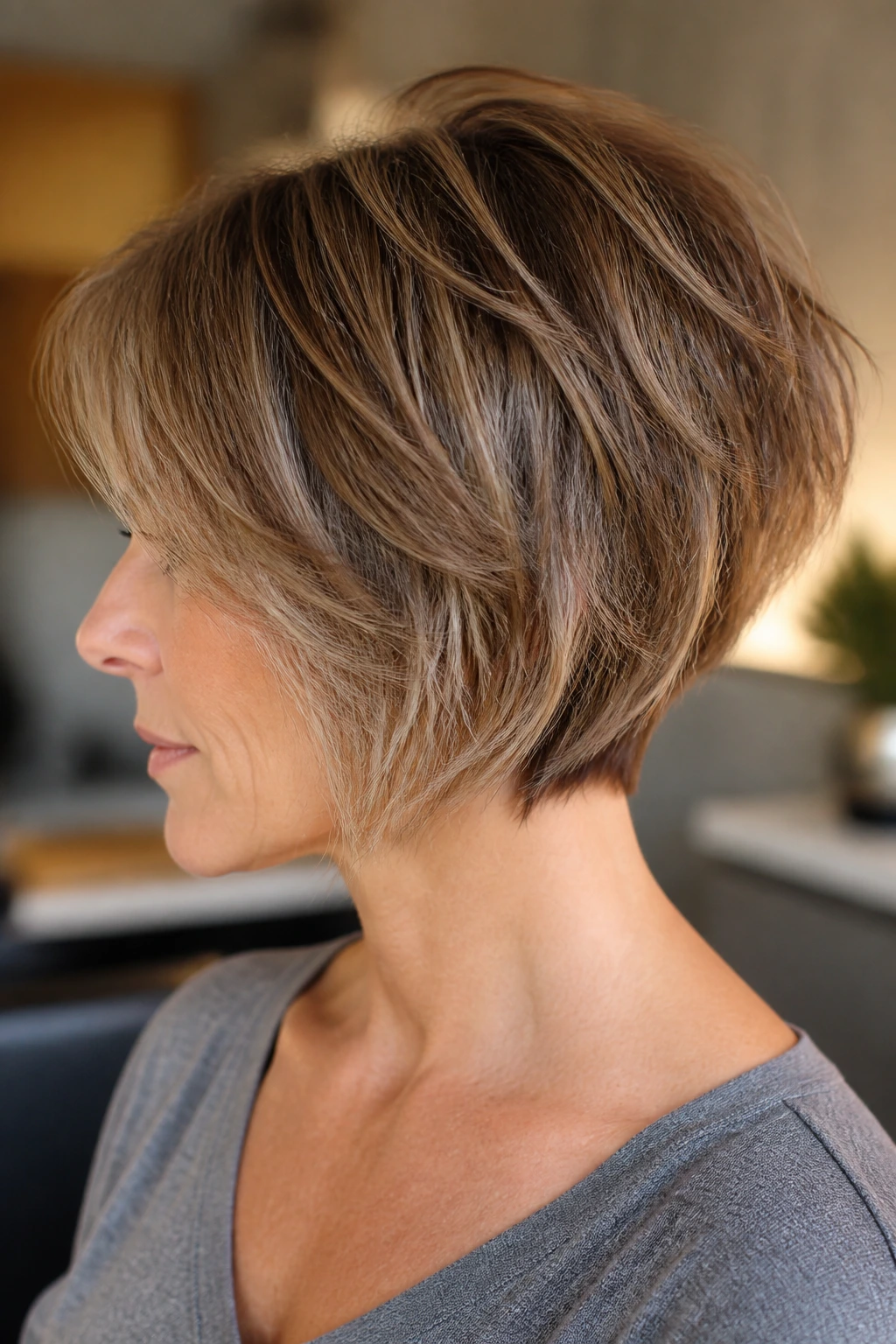
Unlike a glossy bob that depends on smoothness, this one uses a bit of roughness on purpose. The ends are lightly point-cut or softened so they separate into small pieces, which gives fine hair a little grit and movement.
That said, this is not the cut to over-texturize. A razor taken too far will chew up the ends and make them look thinner than they are. I’d keep the texture focused near the perimeter, not all through the whole head.
This style suits hair that already has a slight bend or wave. If your hair dries pin-straight and lies flat no matter what, a textured version can still work, but it needs styling — usually a small amount of mousse at the roots and a few bends with a flat iron.
7. Blunt Fringe Stacked Bob
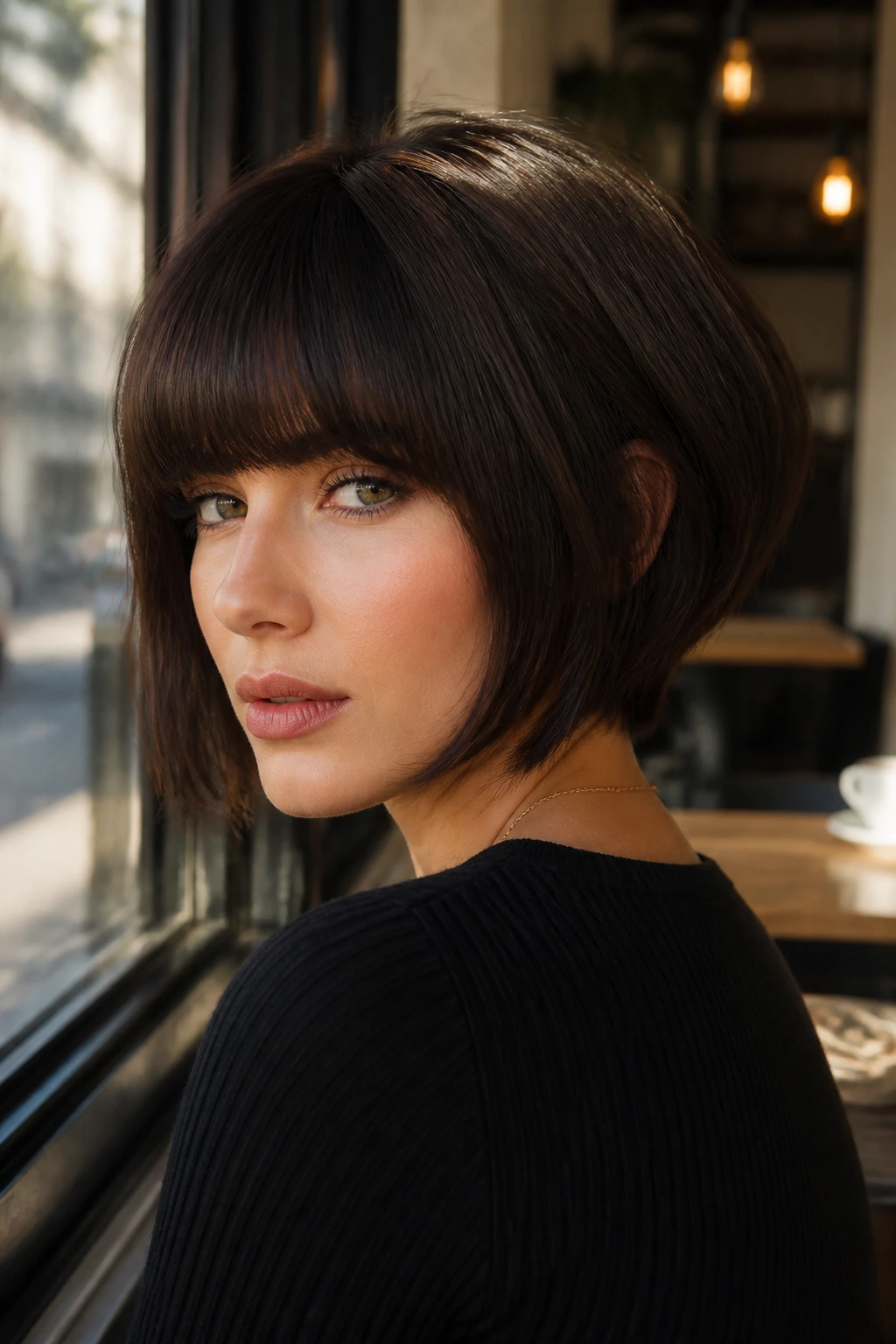
A blunt fringe does one job very well: it puts density back at the front. Fine hair often needs that because the face can start to feel too open when the crown is stacked and the rest is kept short.
The fringe should be full enough to sit as one clean line. Not heavy. Just thick enough that it doesn’t split the second you move. Keep the ends blunt and let the stack do the visual lifting behind it.
What to watch for
- Ask for the fringe to sit at or just above the brows.
- Keep the sides soft so the front doesn’t turn boxy.
- Blow-dry the fringe forward first, then sweep it into place.
A blunt fringe is a commitment, though. If you hate trimming your bangs every few weeks, choose a side-swept version instead.
8. Rounded Bob With Soft Crown Layers
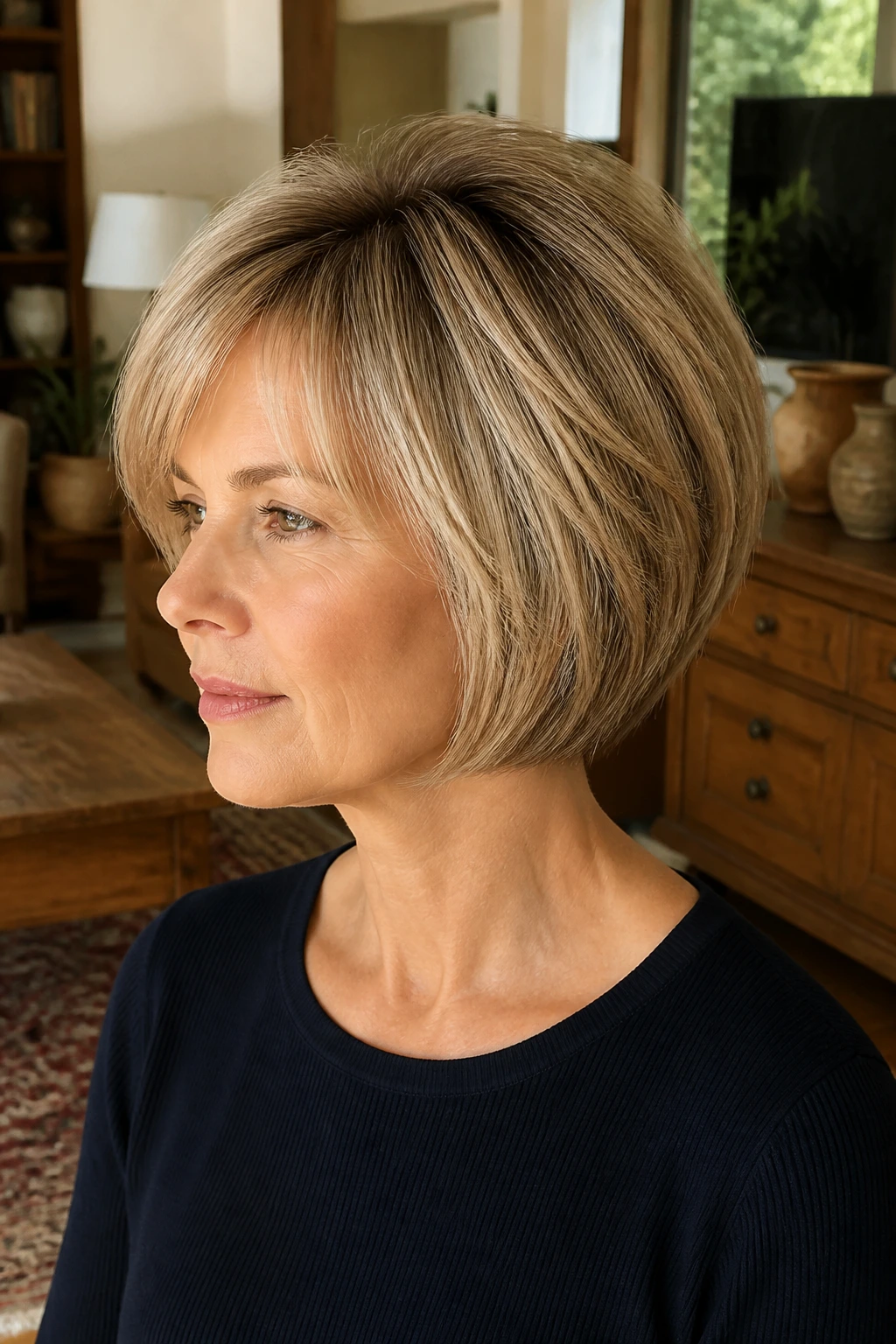
A rounded outline often makes fine hair look fuller than a broken, uneven one. The shape curves inward around the head, which gives the illusion of thickness because the ends stay together instead of spreading out.
Soft crown layers help here, but only if they’re kept subtle. You want a little lift at the top and a nice curved finish at the sides. That’s all. No shredded pieces. No random short bits floating around the back.
This cut likes a round brush and a little patience. Dry the roots first, then roll the sides under so the silhouette stays smooth. If the hair flips out at the ends, the whole effect is lost, and the cut starts looking older than it is.
9. Sleek Stacked Bob Haircut for Fine Hair
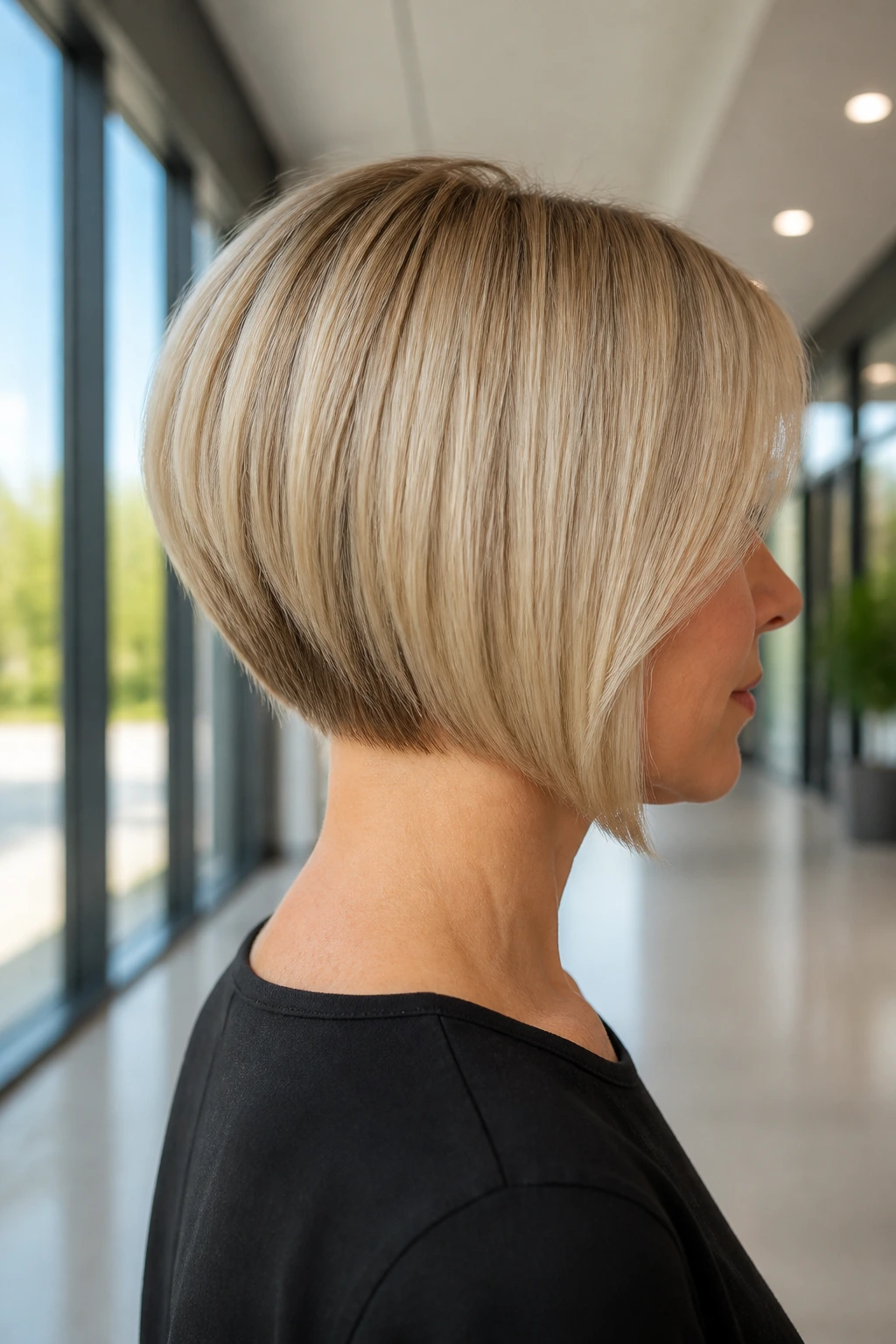
Can a sleek cut still look full? Yes, if the shape underneath is strong. A sleek stacked bob depends on precise graduation at the back and a crisp outer line, so the finish looks polished instead of limp.
The key is not to drown it in product. Fine hair doesn’t need a heavy cream sitting on top of it. A small amount of root-lifting spray at the crown and a smoothing lotion through the mids is enough.
How to style it
- Blow-dry in sections with a nozzle.
- Use a paddle brush near the crown and a round brush at the ends.
- Flat iron only once per section, around 300°F / 150°C.
Keep the finish smooth, but not stuck to the head. There’s a difference, and it matters.
10. Collarbone-Grazing Long Stacked Bob
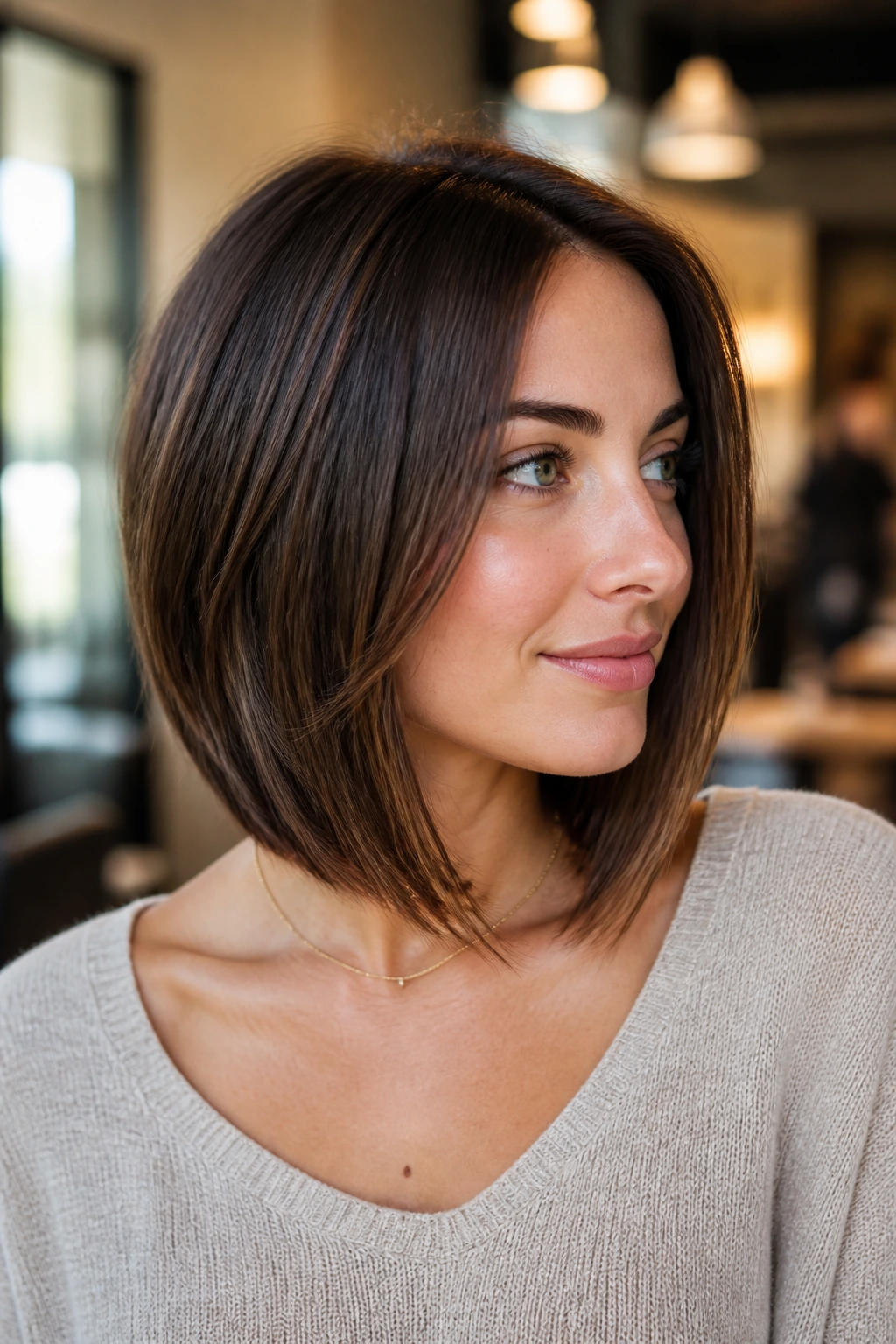
Not everyone wants to lose much length. A collarbone-grazing stack keeps the lower edge longer while still building lift through the back, which is useful if your hair is fine but you still like to tuck it behind your ears or clip it up.
This version has an easier grow-out than a chin-length bob, which I think matters more than people admit. The shape stays softer as it lengthens, so it doesn’t turn into a weird triangle so fast.
- Best for hair that tangles when it’s too short.
- Good if you like a little shoulder movement.
- Useful when you want a bob, but not a sharp chop.
Tell the stylist to keep the stack subtle and the front long enough to skim the collarbone. That balance keeps the haircut from disappearing.
11. Inverted Bob With a Deep Side Part
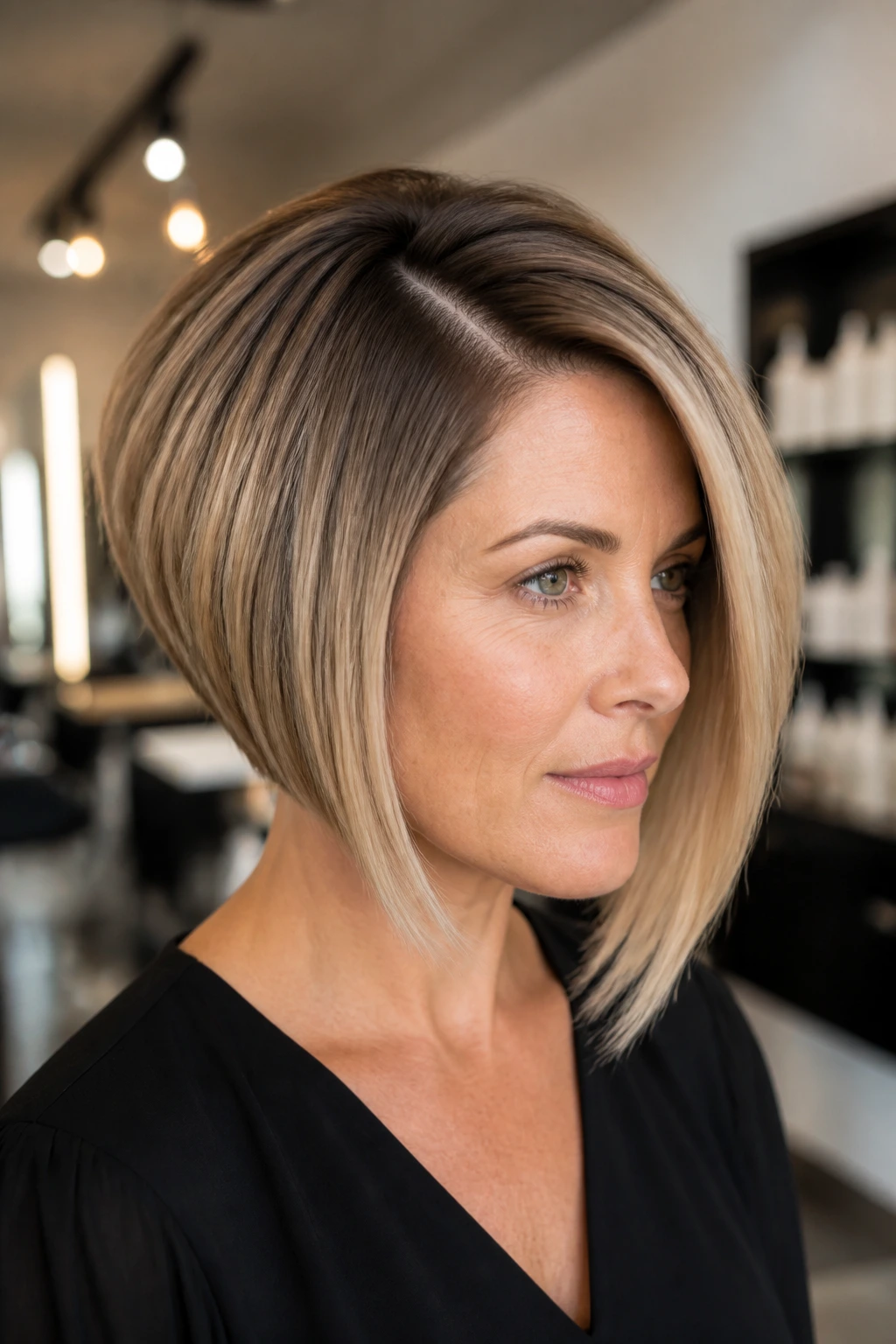
A deep side part can give fine hair instant lift, but only if the cut supports it. The inverted bob does that by keeping the back short and compact while leaving the front longer, so the heavier side falls with purpose instead of collapse.
The parting creates a strong visual line right away. One side gets volume at the root; the other side lies smoother and helps show off the angle. It’s a nice trick for hair that goes flat at the crown and separates near the front.
The catch is that the part can’t be too deep if your hair is sparse. Go a little off center first, then push it farther only if the hair holds. A root spray at the top helps, but the real work happens in the cut.
12. French Bob With a Compact Stack

The French bob is softer than the sharper stacked shapes, and that’s part of the appeal. It usually sits around the jaw or a touch above it, with a compact back and a little movement at the front. For fine hair, that restrained stack can be a gift.
Unlike a hard-edged bob, this one doesn’t ask for a lot of polishing. It can air-dry with a slight bend and still look intentional. The shape is small, close to the head, and usually a bit effortless in the best sense of the word — not messy, just relaxed.
It suits someone who likes a shorter cut but hates a stiff finish. Ask for soft edges, a narrow nape, and a fringe or front piece that sits close to the brow line. A dab of styling cream is enough. Too much product kills the movement.
13. Invisible-Layer Stacked Bob
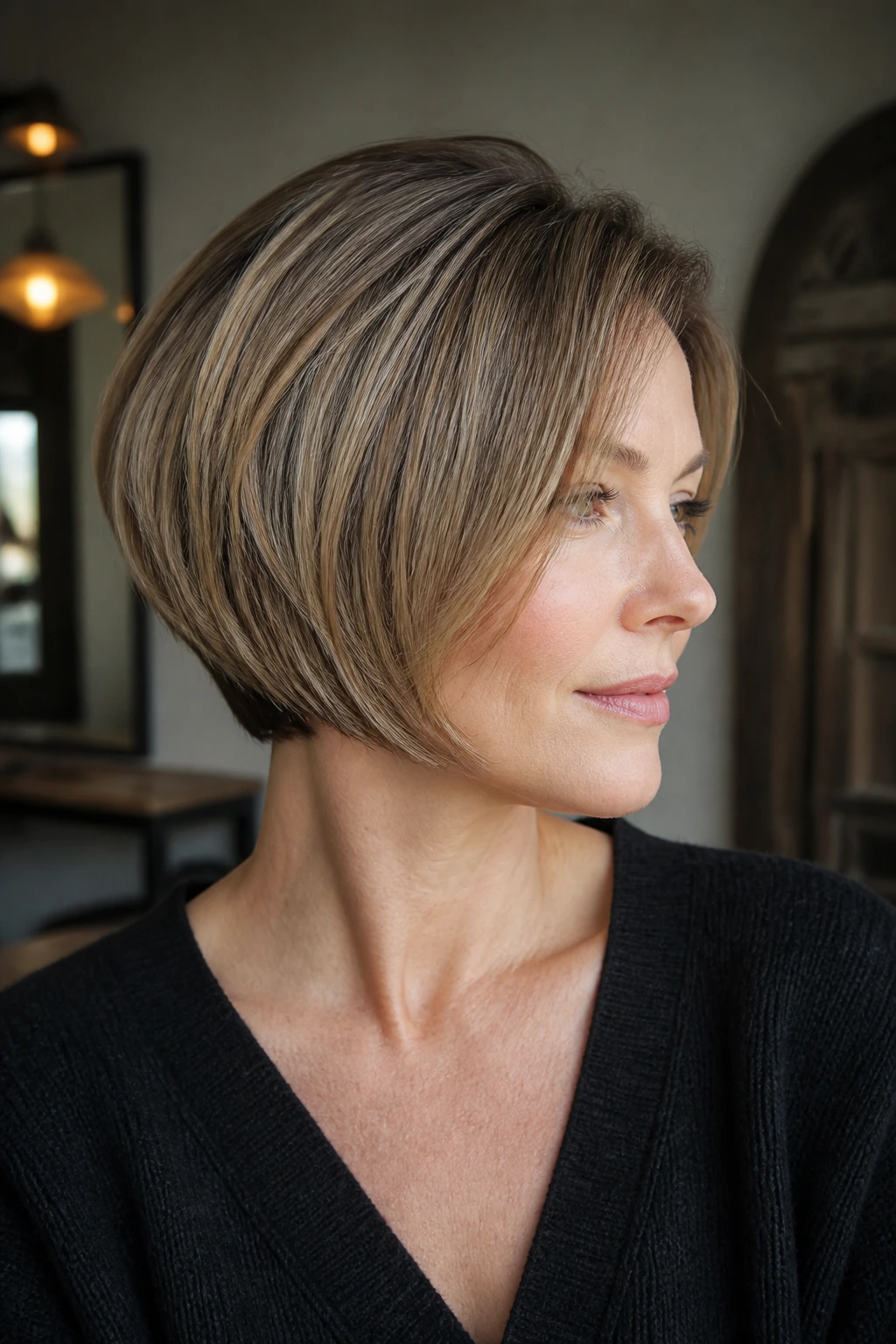
Invisible layers are one of those details that sound boring until you see what they do. The surface stays full, but the inside of the cut loses enough weight to let the back rise. Fine hair gets movement without looking shredded.
Why hidden layers matter
The top layer keeps the look dense. The underlayer gives the hair a place to fold and bend.
- Keep the outer line blunt enough to hold shape.
- Remove weight only inside the cut.
- Avoid over-thinning the last half inch.
My strong opinion: if your hair is very fine, ask for less visible layering than you think you need. Hidden support beats obvious texture almost every time.
This shape grows out quietly, too. That’s a small thing, but small things are what make a bob livable.
14. Nape-Undercut Stacked Bob
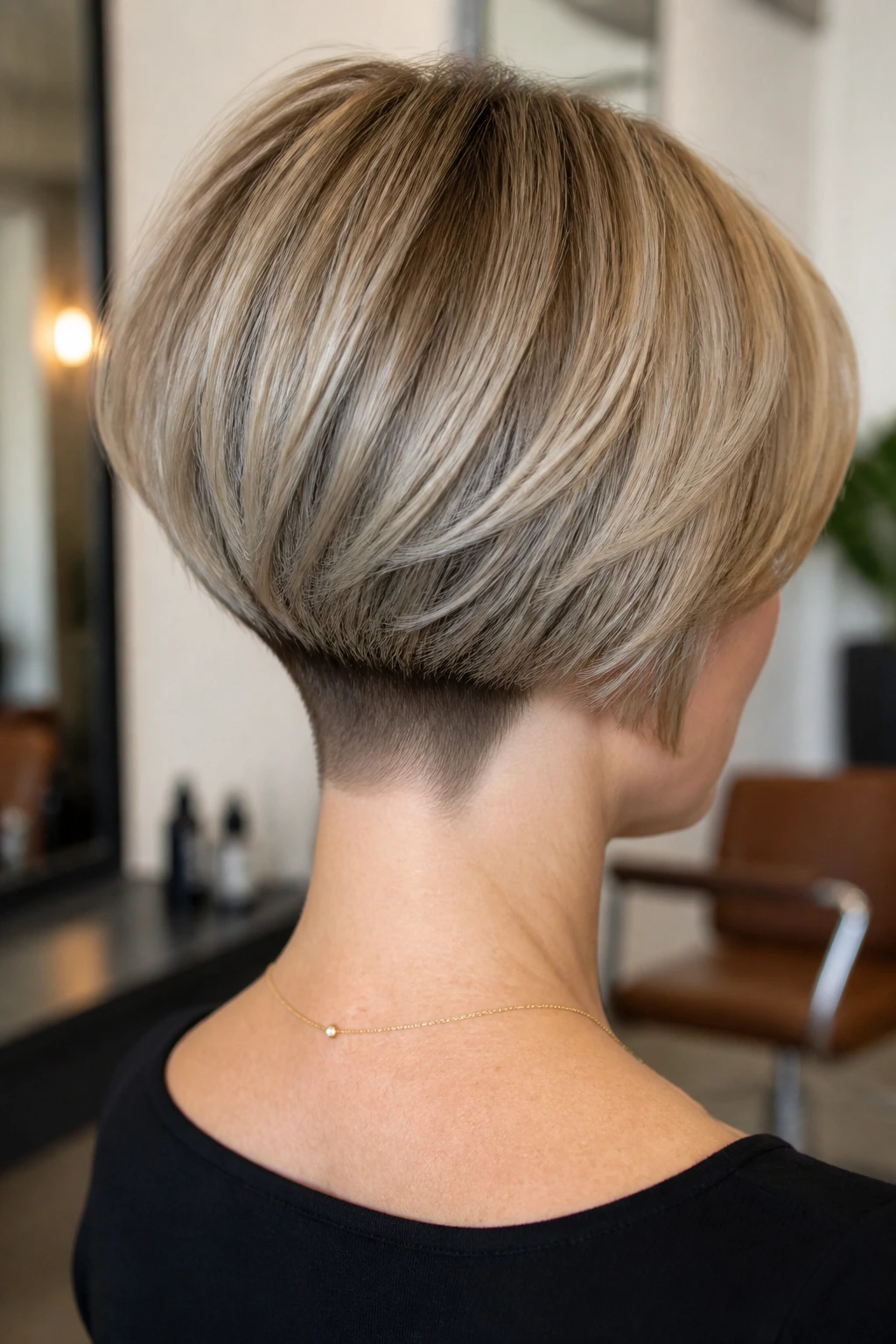
A nape undercut can rescue fine hair that balloons at the neck. By removing a thin strip of bulk right at the hairline, the back lies flatter and the stacked shape becomes cleaner. The result is a bob that sits close to the head instead of puffing out at the base.
Used carefully, it’s a sharp, useful detail. Used carelessly, it’s a mess. If the undercut goes too wide, fine hair can start to look patchy from behind, and the grown-out line is annoying to deal with.
I’d keep the undercut narrow and hidden, with the rest of the bob still holding enough weight to read as full. This version is for someone who likes precision and doesn’t mind regular touch-ups. It’s not the easiest road, but it solves a specific problem well.
15. Choppy Razor Stacked Bob
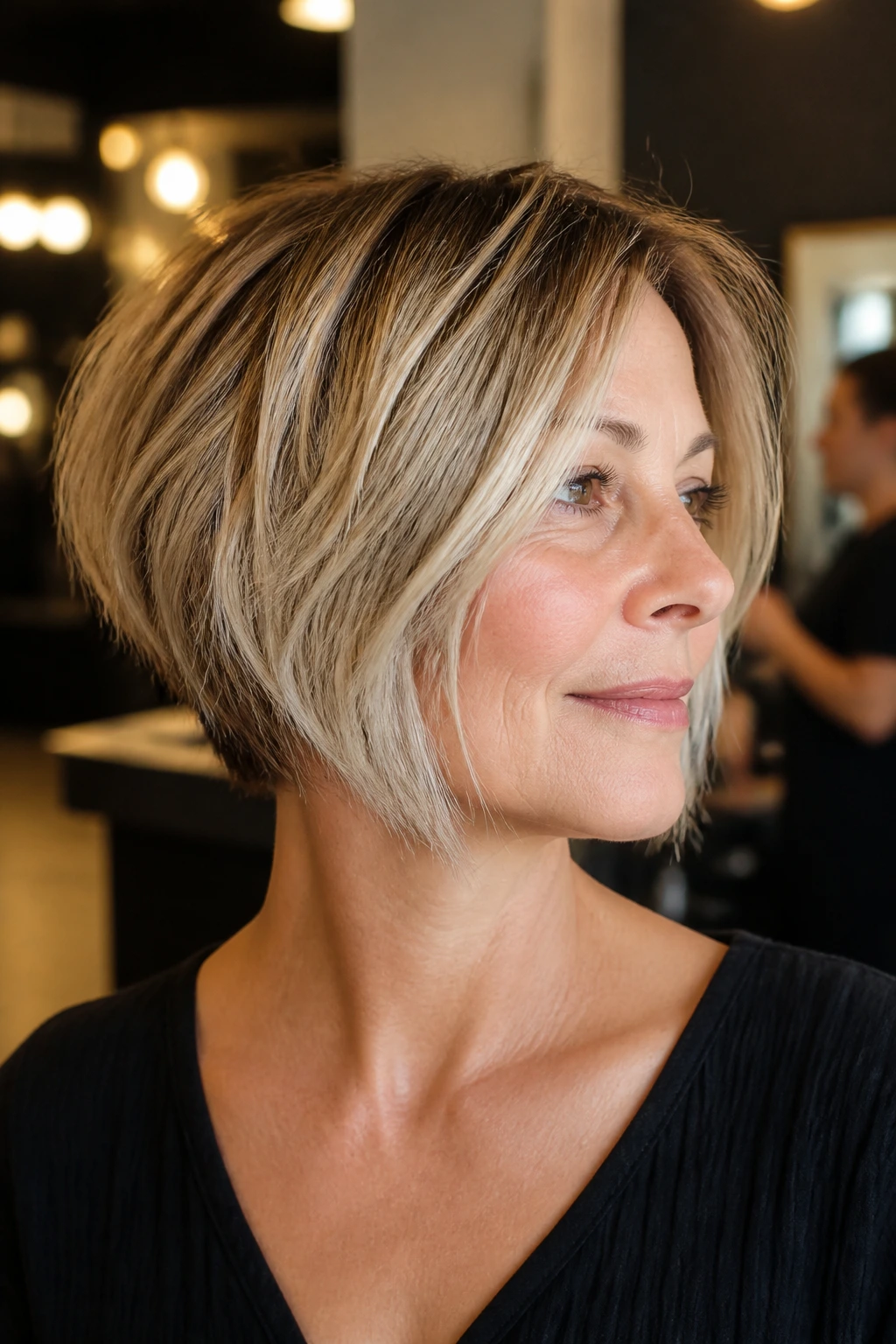
Does a razor ruin fine hair? Not if it’s used with restraint. The right razor cut can make the ends feel lighter and a little more alive, which helps a stacked bob avoid that stiff, helmeted look.
The trick is to keep the razor away from the whole head. Use it on the lower edges, maybe through the front pieces, and stop before the strands turn fuzzy. Fine hair needs crispness at the base and a bit of movement at the tips — nothing more.
How to ask for it
Tell your stylist you want light razor work, not a shredded finish. Ask them to keep the crown dense and the perimeter readable.
This cut usually looks best when the hair has a slight bend, because the chopped ends separate in a nice way. Straight, slippery hair can still wear it, but it needs a little mousse or texture spray.
16. Face-Framing Stacked Bob
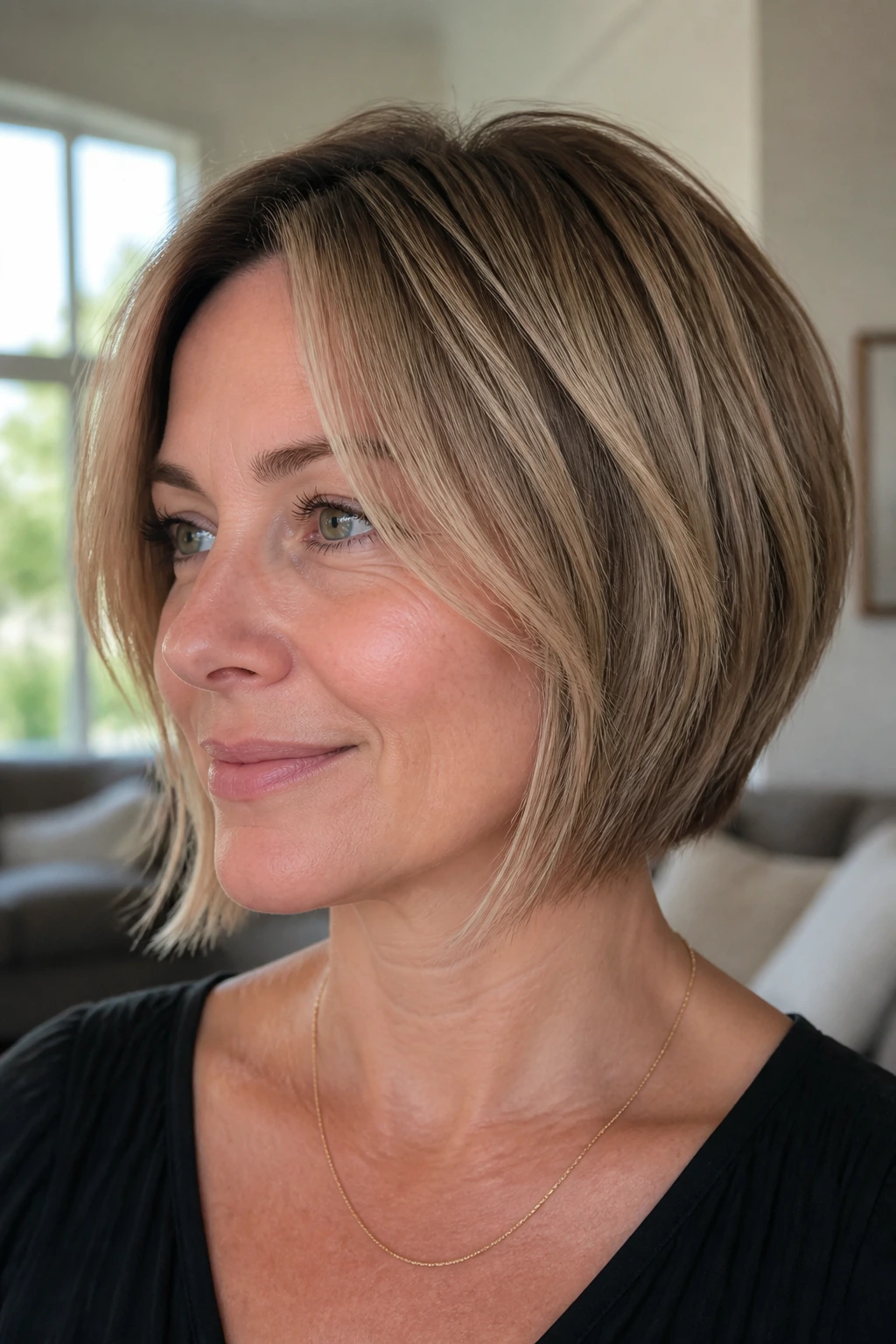
A face-framing stack is a good choice when you want the back short but you do not want the front to feel severe. The longer pieces around the face soften the outline and pull attention forward, which can be helpful if fine hair tends to sit flat near the temples.
The front frame can start at the cheekbone, jaw, or even a bit lower, depending on how much length you want to keep. Shorter face-framing pieces add lift. Longer ones stretch the shape. That choice changes the whole feel of the haircut.
- Cheekbone pieces brighten the face.
- Jaw-length pieces soften a strong chin.
- Collarbone pieces give the cut more swing.
Keep the stack in the back compact so the framing pieces don’t get lost. A bob like this needs contrast.
17. Choppy Stacked Bob Haircut for Fine Hair
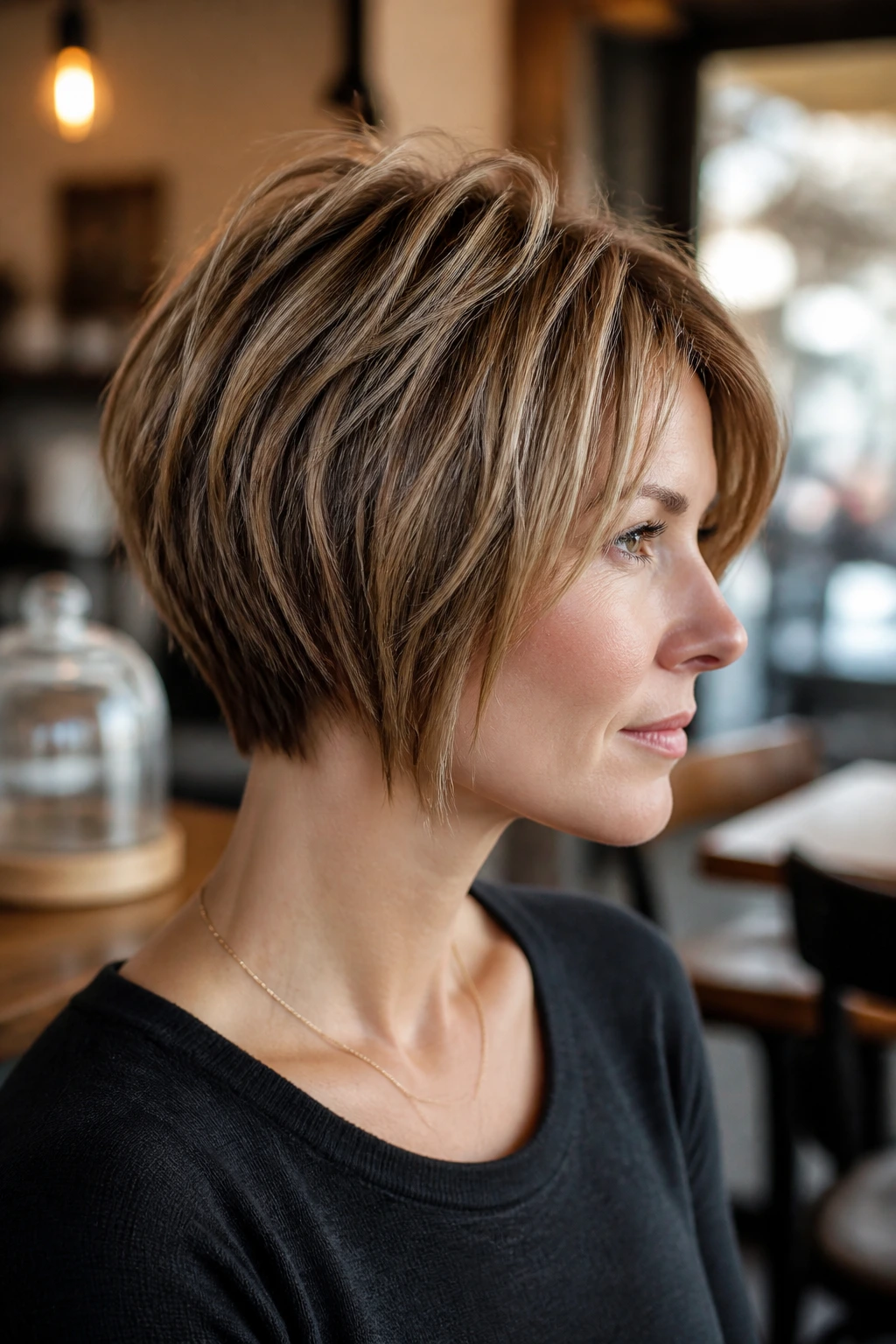
Choppy does not have to mean thin. In fact, when the pieces are cut in the right places, a choppy stacked bob haircut for fine hair can look fuller because the eye reads texture as density. The problem starts when every section gets the same rough treatment. Then the haircut loses its backbone.
I prefer choppiness around the crown and sides, with a cleaner perimeter underneath. That way the ends still look solid. If the whole cut is razor-thin, the shape disappears the second the hair settles.
This style works well on hair that already has a little movement, or hair that can take a small bend with a brush or iron. A light texturizing spray at the roots helps, but only a little. Too much and the hair feels dry by noon.
18. Boxy Bob With Minimal Stacking
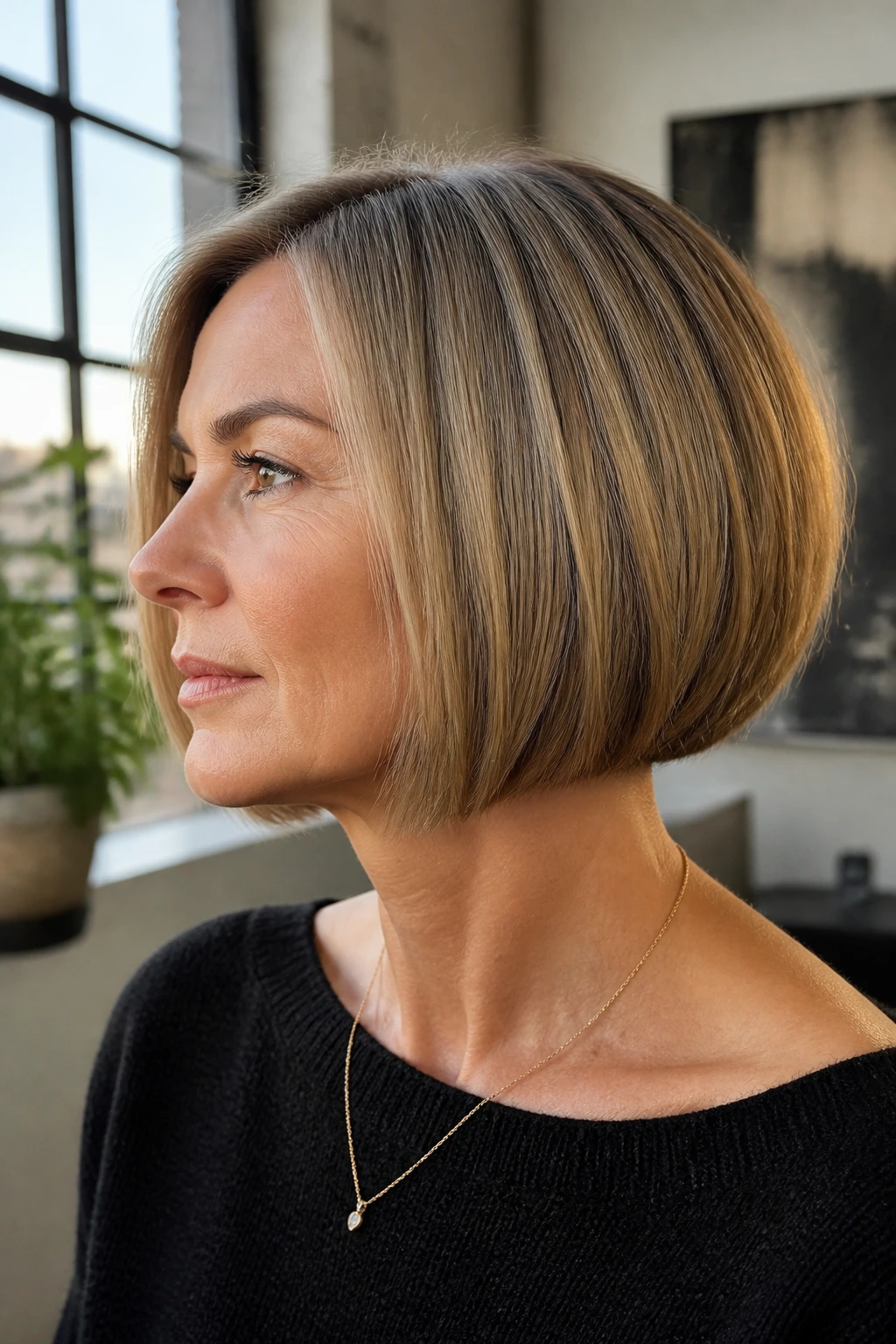
A boxy bob sounds blunt, and that’s the point. It leans on a clean perimeter and only a small amount of graduation in the back, which makes it useful for very fine hair that gets frayed fast when too many layers are cut in.
Unlike the choppy versions, this one keeps the line strong. The shape is more compact, more graphic, and a bit more rigid. That may sound severe, but on straight fine hair it often reads as denser and healthier.
It suits people who want a sharp look with not much styling time. A quick blow-dry and a smoothing serum are often enough. If your hair is wavy or puffy, though, this cut can fight you. Then again, not every haircut needs to be easy for every head of hair.
19. Asymmetrical Stacked Bob With a Longer Front
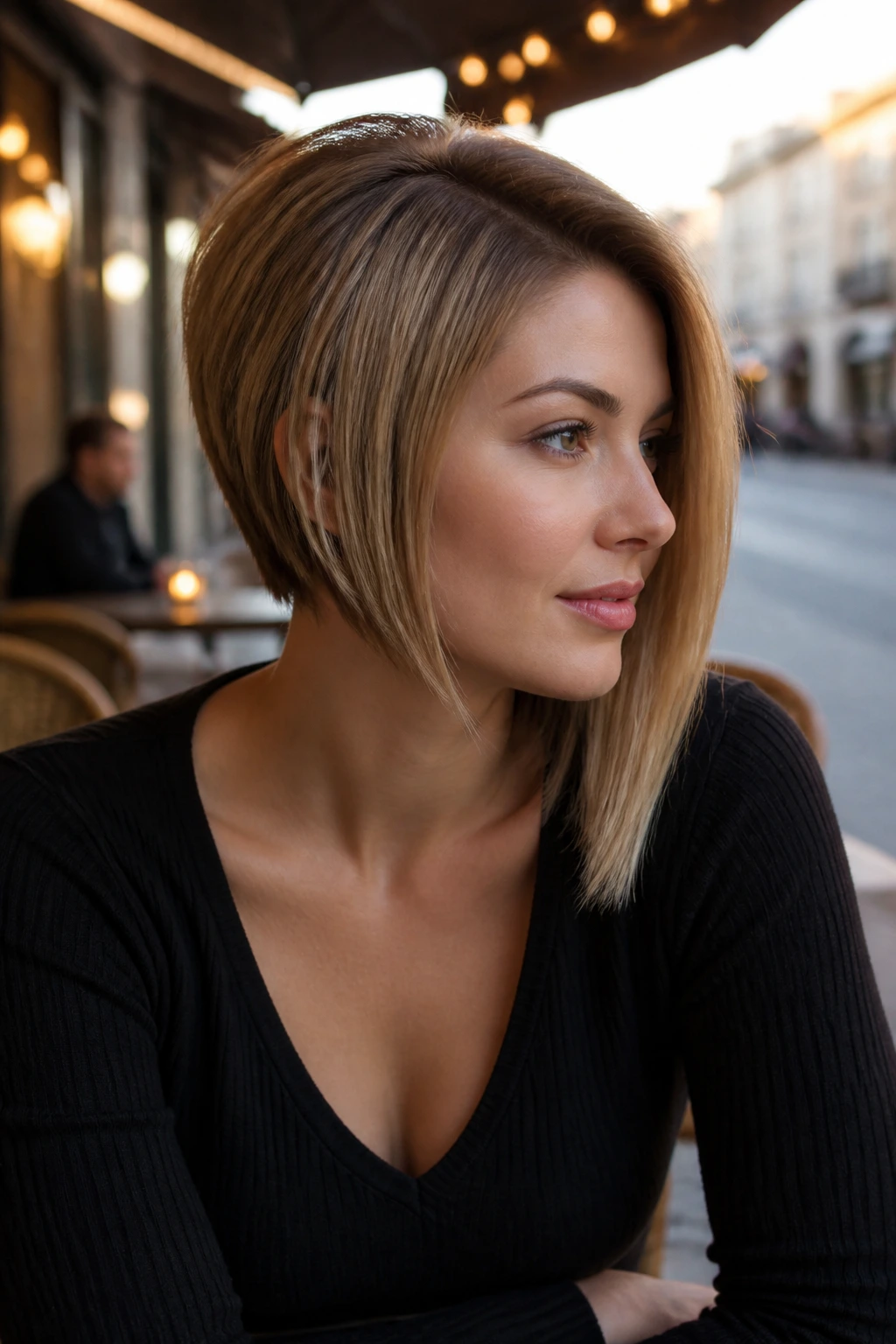
A small asymmetry changes the whole cut. One side sits a little longer, the back stays short, and suddenly the bob feels less rigid without losing the lift that stacking gives you. Fine hair can use that visual trick.
Why asymmetry helps
The off-balance line keeps the eye moving, so the hair looks fuller than it is. It also gives you a side that can tuck behind the ear without the whole style losing shape.
- Keep the longer side subtle, not dramatic.
- Match the part to the shorter side for extra lift.
- Ask for the front to stay long enough to move, but not drag.
A tiny difference — half an inch to an inch — is often enough. You do not need a dramatic angle unless you want one.
20. Blowout-Ready Stacked Bob
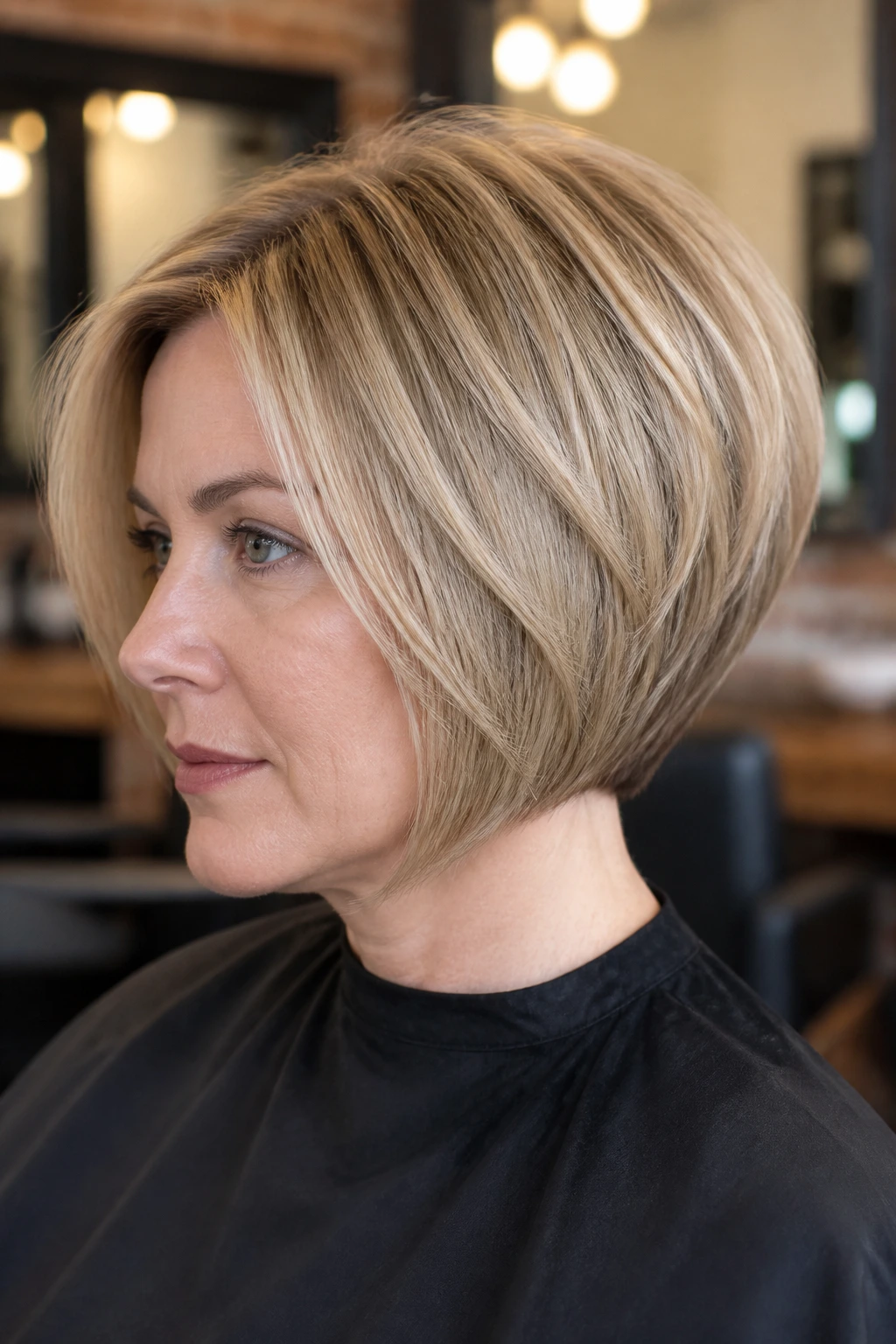
This cut is made for a round brush. That sounds simple, but it matters. A blowout-ready stacked bob is shaped so the back curves neatly and the sides can be lifted without a fight, which makes fine hair look fuller after styling.
The crown should have enough support to hold volume, and the ends should be cut so they bend under cleanly. If the edge is too wispy, the blowout falls apart fast. If it’s too heavy, the style gets flat near the ends. The sweet spot sits right in the middle.
Use a heat protectant, a medium round brush, and clips at the crown while the hair cools. That cooling time helps the shape stay. Skip the heavy finishing cream. A small mist of light hairspray is plenty.
21. Curved Stacked Bob With Tucked Ends
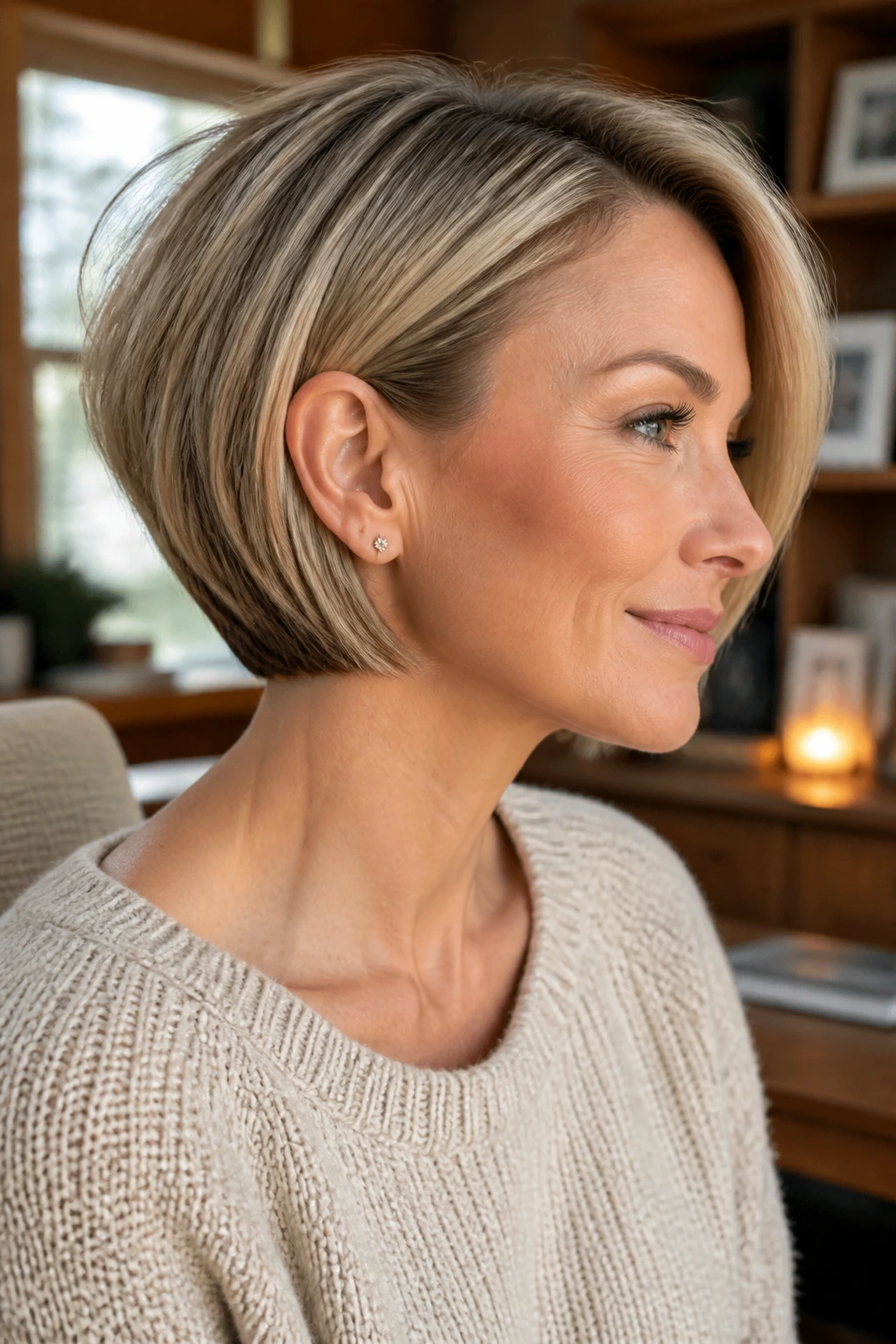
Why do tucked ends make fine hair look fuller? Because they keep the silhouette tight. When the ends turn in toward the neck, the haircut reads as one clear shape instead of a few scattered pieces.
This version is softer than a sharp inverted bob. The curve starts at the back and rolls around the sides, so the eye sees continuity. That continuity matters a lot on fine hair, where broken lines can make the whole cut look sparse.
How to wear it
Tuck one side behind the ear and leave the other side loose. Or pin the front pieces back with a hidden bobby pin and keep the rest smooth.
It’s a neat choice for work, dinner, or any day when you want the cut to look tidy without feeling stiff. The shape does not shout. It just stays put.
22. Low-Maintenance Stacked Bob With Tapered Ends
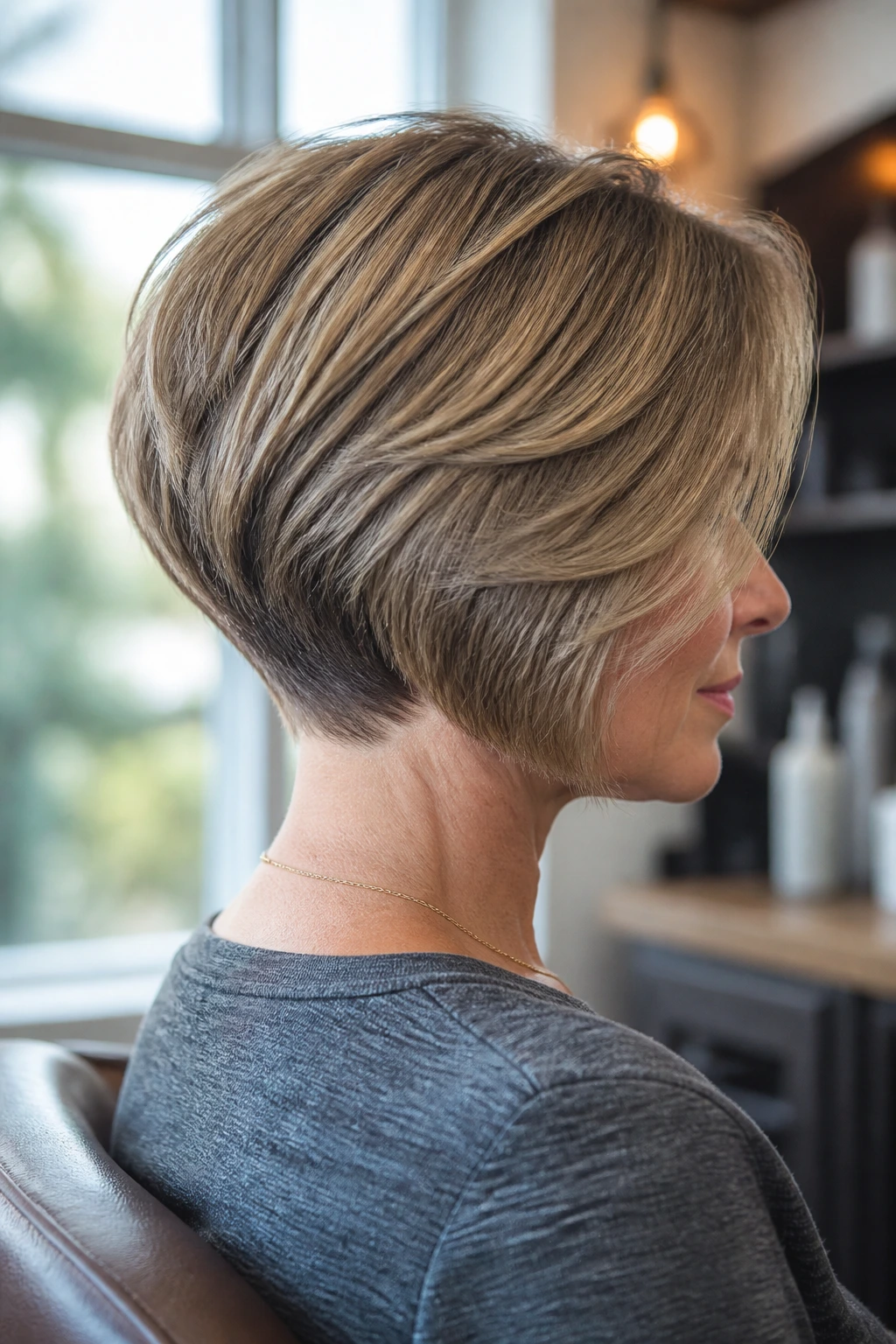
Some bobs need a lot of babysitting. This one doesn’t. A low-maintenance stacked bob with tapered ends keeps the back shaped, but the edges are softened enough that the cut grows out without looking ragged after a couple of weeks.
The taper helps fine hair avoid a heavy shelf at the bottom. That shelf is a common problem. Hair gets too blunt, too dense at the base, and then it starts flipping outward in a way that feels accidental. A tapered finish keeps the line neater.
If you want a cut that can survive a quick blow-dry and still look decent on day two, this is the one I’d look at first. It works best when the stylist keeps the stack modest and the ends clean.
Final Thoughts
The strongest stacked bob for fine hair is the one that matches your density, not the one that looks busiest in a photo. A compact back, a clean perimeter, and a little control around the crown usually beat aggressive layers every time.
Tell the stylist how much length you want to keep at the front, whether you blow-dry or air-dry, and how often you’re willing to trim. Those details decide whether the bob feels easy or annoying.
Bring a side view as well as a front view. Bobs change fast from one angle to another, and the back is doing a lot more work than most people realize. A good cut should make your hair look fuller on ordinary days, not only after a 40-minute styling session.
