



A good bob at work does something most haircuts never quite manage: it looks finished before you’ve even touched it. That is why classic bob cuts for office wear stay useful no matter how much the rest of fashion changes. They sit at the sweet spot between neat and easy, which is a rare thing.
It sounds simple, but the shape matters more than people think. A blunt chin-length bob can look sharp enough for a boardroom, while a softer lob can survive a long commute, a stiff blazer collar, and an afternoon spent tucking hair behind one ear. The cut is doing a lot of the work for you. Good thing, too.
Length changes everything. So does the part, the weight line, and whether the ends bend under or kick out like they have a grudge. A bob that lands at the jaw reads differently from one that grazes the collarbone, and that tiny shift can be the difference between polished and fussy. There’s a reason some bobs look expensive even when they’re barely styled.
The best office bobs are the ones that hold their shape without looking rigid. They should make your face look a little cleaner, your neckline a little neater, and your morning routine a little less annoying. That’s the bar. High enough to matter, low enough to live with.
1. Blunt Chin-Length Bob

A blunt chin-length bob is the haircut I reach for when someone wants the cleanest line in the room. It has no fluff, no chatter, no extra movement, and that is exactly why it works so well with tailored clothes. The cut sits at the jaw or a hair below it, which gives the face a crisp edge and keeps the whole look grounded.
Why It Works in an Office
This shape plays nicely with blazers, collared shirts, and anything that sits close to the neck. Hair that ends in one solid line looks intentional, even on days when you barely style it. It also stays out of the way better than longer cuts, which is useful if you spend a lot of time at a desk or leaning into a laptop camera.
The blunt edge is the point. If the perimeter is too wispy, the whole bob loses its authority and starts looking unfinished. Ask for a soft bevel at the ends if your hair flips outward, because that tiny curve keeps the line neat without making it stiff.
Quick Styling Notes
- Keep the length at the jaw or up to ½ inch below it for the cleanest shape.
- Works best on straight hair and loose waves that smooth down easily.
- A trim every 6 to 8 weeks keeps the line sharp.
- Blow-dry with a 1.25-inch round brush and a nozzle attachment so the ends stay smooth.
Pro tip: If your hair tends to kick out at the collar, ask for a slightly longer front and a cleaner nape. That small adjustment saves a lot of morning frustration.
2. Soft A-Line Bob

Want a bob that looks neat but does not feel boxy? A soft A-line bob is the easy answer. The back sits a little shorter, and the front drops just enough to frame the face without dragging the whole cut down. It has shape. It has movement. It still looks serious enough for work.
The angle does a useful job in the office. It keeps the neckline open, which makes shirts and jackets sit better, and it stops the sides from puffing out around the jaw. If your face is round, square, or a little fuller at the cheeks, that forward slope can make the whole cut feel lighter.
What I like most is that it does not scream “I got a haircut.” It just looks balanced. And that balance matters when your day includes meetings, commuting, and whatever chaos lives in the break room.
How to Style It
- Part it a little off-center to keep the crown from going flat.
- Dry the back first, then shape the front around a round brush.
- Keep the front pieces landing near the cheekbone or upper neck.
- Use a light cream, not a heavy oil, or the angle turns limp fast.
If you want a bob that looks polished without being severe, this is one of the safest bets. It has enough shape to feel styled, but not so much that you need a full morning routine to make it behave.
3. Side-Part Bob
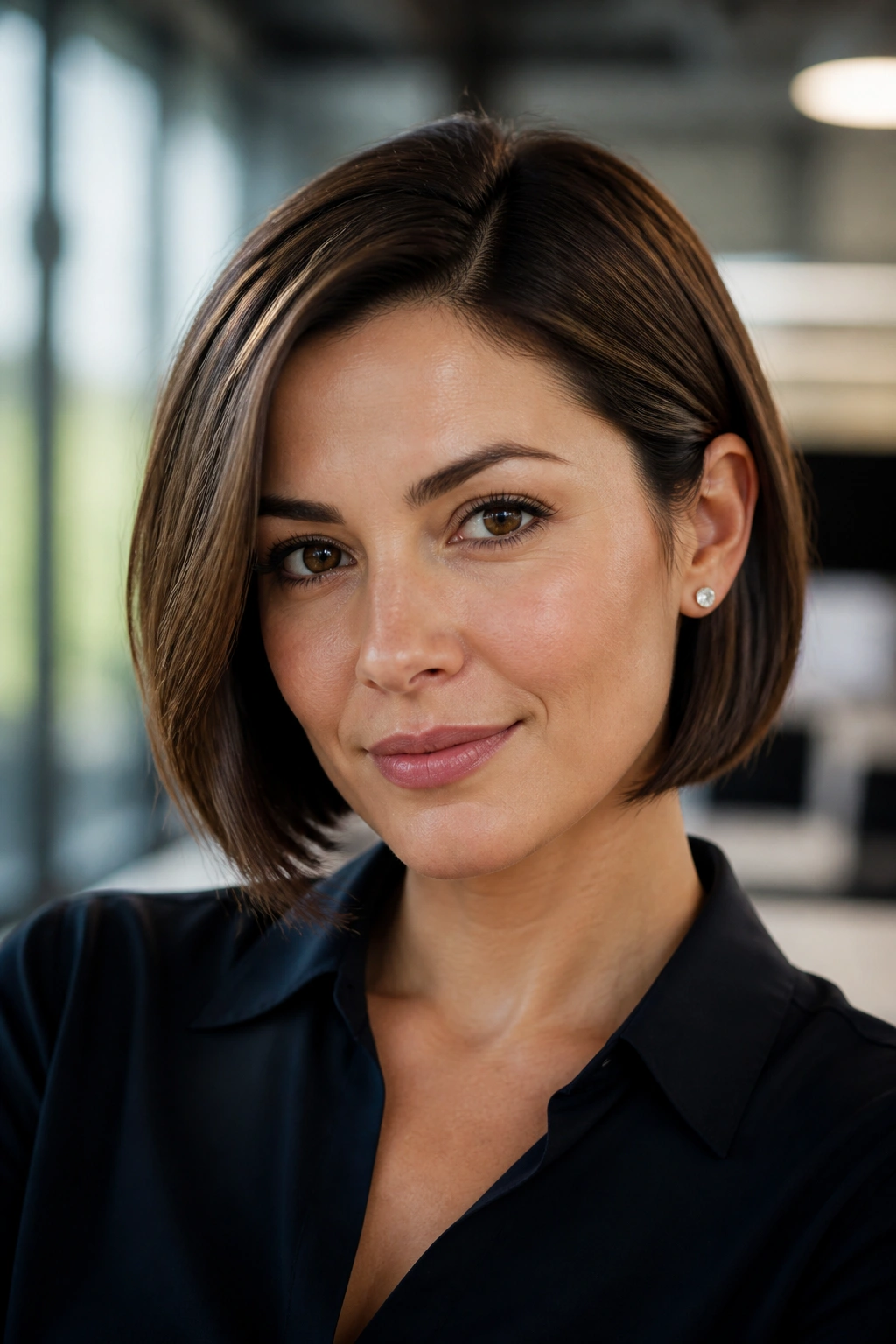
You know the look: one side falls flat, the other side swallows half your cheek, and suddenly the haircut feels tired. A side-part bob fixes that without adding much length or fuss. The part does half the work for you, which is why this cut has stayed around so long.
A side part gives the crown a little lift and softens the face at the same time. It can make a bob feel fuller on fine hair and less severe on straight hair that tends to lie too close to the head. If your hairline has a cowlick, a side part also gives you more control than a middle part usually does.
That tiny shift in direction changes the mood of the whole cut. It can make the same bob feel softer, less school-uniform, and a bit more relaxed without losing the neat line that office hair needs.
- Best for fine to medium hair.
- Looks good with a smooth blowout or a soft bend at the ends.
- Tucking one side behind the ear keeps the shape open around the face.
- A root-lift spray at the part helps the hair stay up through the day.
That matters more than people admit. A bob that collapses at the crown by lunchtime rarely feels polished, no matter how fresh it looked that morning.
4. French Bob with Fringe

A French bob earns its place at work when the fringe is soft and the length stays modest. Too short, and it can look like a costume. Too blunt, and the bangs start to boss the rest of the haircut around. Get the balance right, though, and it looks sharp in a quietly confident way.
The classic version usually lands around the cheekbone or just below the jaw, with a fringe that brushes the brows rather than hiding them. That keeps the face open, which matters if you spend the day talking to people or sitting under bright office lights. A fringe that sits a little airy, not dense, also makes the cut easier to live with.
I like this bob on people who wear simple clothes and want the haircut to carry some of the style load. It gives presence without needing much product. But it does need a bit of care. Fringe gets oily faster than the rest of the hair, and if you ignore it for three days, the whole thing can look sleepy.
Fringe Rules That Keep It Office-Safe
- Keep the bangs at brow level or just below.
- Ask for a light, see-through fringe rather than a heavy wall of hair.
- Style the front with a small round brush or a quick pass of a flat iron at low heat.
- Use dry shampoo at the roots if the fringe separates too fast.
One quick warning: if your office leans very conservative, keep the fringe soft and the perimeter tidy. The cut should look intentional, not theatrical.
5. Layered Jaw-Length Bob

Thick hair at jaw length can turn into a triangle fast. That is the problem a layered bob solves, and it solves it without taking away the clean outline you need for work. The trick is hidden shaping, not chunky layers that shout from across the room.
Layers inside the bob take weight out of the middle and lower sections, so the hair sits closer to the head. That keeps the shape from ballooning at the sides, which is one of the least flattering things a workday haircut can do. You still get movement, but it is controlled movement.
The outer line should stay clean. That part matters. If the layers get too high or too short, the bob loses its polish and starts looking busy. Ask for internal layering or light weight removal under the top layer, then keep the perimeter blunt enough to hold the shape together.
I also prefer this cut on hair that wants to dry big. A thick bob that looks good for twenty minutes and then turns into a mushroom by noon is not a win. A layered jaw-length version behaves better because it has room to settle.
If you style it straight, use a paddle brush and direct the airflow downward. If you want a softer finish, bend the ends under with a flat iron, just a little. Not a curl. Just enough to keep the line tidy.
6. Collarbone Lob

A collarbone lob is the bob for people who want professional hair without committing to a shorter cut. Unlike a chin-length bob, the extra length gives you breathing room. You can tuck it behind your ears, clip it back, or wear it loose on days when you cannot be bothered.
That flexibility is why it works so well in office settings. It looks structured when straight, relaxed when waved, and easy when you pull the front sections away from your face. It is also kinder to grow-out than shorter bobs, which matters if you are not in the mood for frequent salon visits.
I think this is the most forgiving shape for mixed texture hair. Straight ends, soft waves, a little bend at the front — it can handle all of that without looking messy. Keep the length landing just at or slightly below the collarbone, though. If it drops much lower, the “bob” starts fading into plain medium-length hair.
The cleanest version has a light bevel at the ends and a center or soft side part. Nothing too dramatic. The point is not to make a statement. The point is to make mornings easier.
7. Rounded Tucked-Under Bob

Some bobs look best when the ends curl in just enough to kiss the neck. That rounded shape has a quiet kind of polish, and it is one of the easiest ways to make a bob feel office-ready without making it stiff. The cut sits neatly, moves gently, and keeps the neckline tidy.
How to Get the Curve
The shape starts in the blow-dry. Use a 1.5-inch round brush, direct the heat down the hair shaft, and roll the ends under at the last second. Let them cool in that position for a minute or two if your hair tends to drop fast. A little cool shot from the dryer helps the bend hold.
This version works especially well with straight or slightly wavy hair. On very thick hair, the curve keeps the outline from looking wide or blocky. On fine hair, it adds enough shape to make the cut look finished. I’m partial to this bob under tailored jackets because it sits close to the neck and does not compete with the clothes.
What to Watch For
- Don’t let the ends flare out past the jaw.
- Keep the curve soft, not flipped.
- Use only a pea-sized amount of smoothing cream.
- Ask for a neckline that stays clean when the hair grows out.
It is a small detail, but the tucked-under finish changes everything. The haircut reads calm. That is useful more often than people admit.
8. Inverted Bob
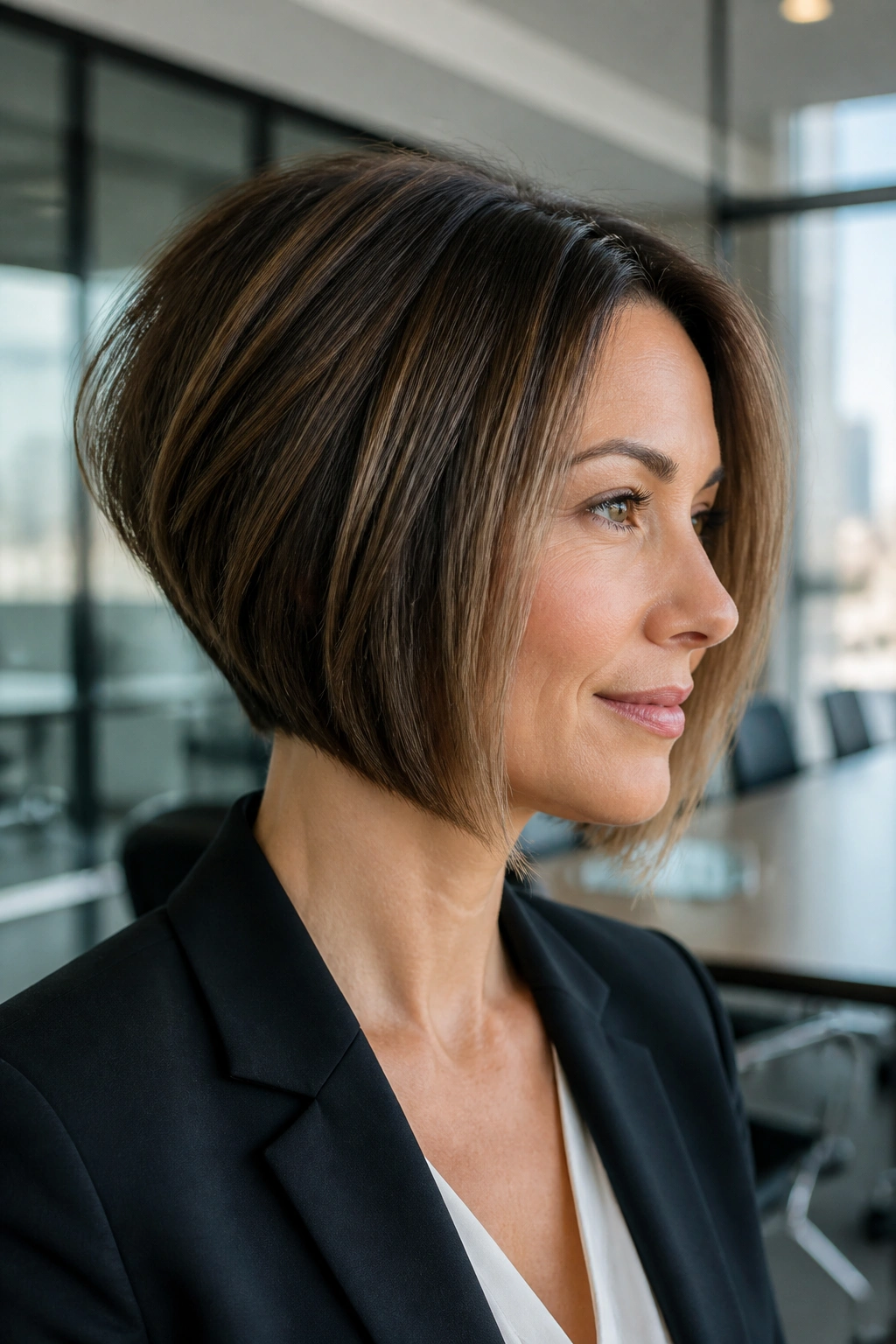
The inverted bob is the answer for fine hair that falls flat by 2 p.m. The back is shorter and slightly stacked, while the front stays longer and sleeker, which gives the cut lift where it needs it most. That built-in shape does the work of a root boost without turning the style into a high-maintenance project.
The safest version for office wear keeps the difference subtle. You want a little more length in front, not a dramatic angle that grabs attention before the haircut does. When the tilt is gentle, the bob feels modern but still professional. When it gets too steep, it starts to look like a fashion cut that needs too much upkeep.
This is one of those styles that rewards people with fine or straight hair. The stack in the back creates the feeling of fullness, especially at the nape, and the longer front pieces keep the face soft. If your hair is thick, the same shape can work, but the stacking needs to stay light or the back will puff.
- Ask for about 1 inch of difference between back and front for a subtle version.
- Use mousse at the roots before blow-drying.
- Keep the nape trimmed often so the shape stays clean.
- A side tuck on the longer front pieces helps the angle read neatly.
A dramatic inversion can feel too sharp for some offices. A restrained one, though, looks tidy and surprisingly easy to wear.
9. Center-Part Sleek Bob
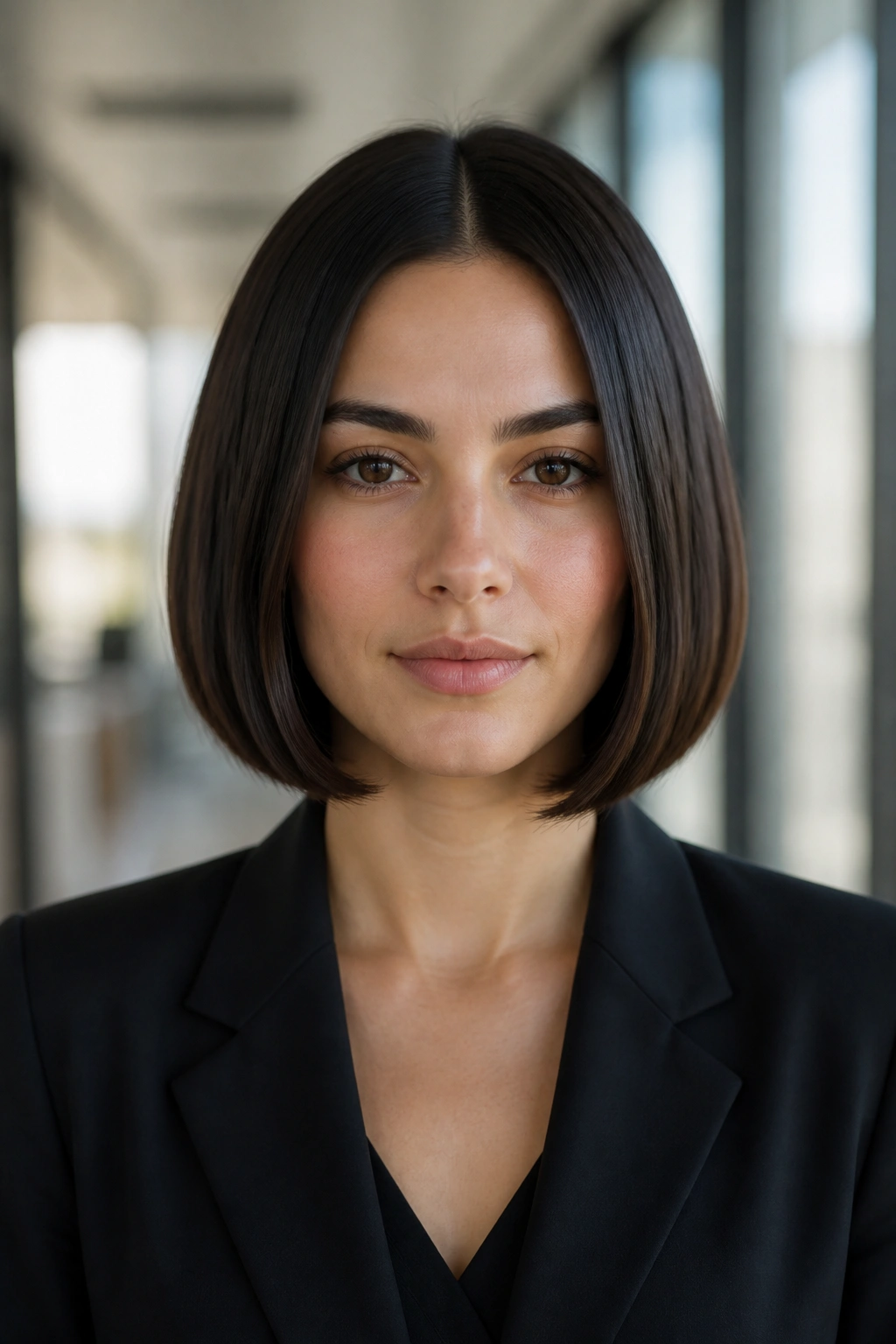
Why does a center part make a bob look sharper than it sounds? Because symmetry reads as deliberate, and deliberate hair tends to look clean in a work setting. A center-part sleek bob gives you that crisp, straight-down-the-middle frame that feels calm, neat, and very controlled.
The trick is keeping it soft enough. If the ends are too blunt and the hair is pressed too flat, the cut can turn severe. I like a slight bevel at the perimeter so the line stays smooth without looking hard. A subtle bend at the bottom takes the edge off and keeps the bob from reading like a helmet.
This style suits straight hair best, especially if your face is oval or long. It can work on round faces too, but the length should stay at or slightly below the jaw so it does not widen the cheeks. Hair that grows in naturally centered also makes this easier to live with, which is worth considering before you commit.
Keeping It Soft Enough for Work
- Flat iron in small sections, no wider than 1 inch.
- Move the iron slowly through the last 2 inches to make the ends curve just a touch.
- Use a shine spray, not a heavy serum.
- If your hairline is uneven, shift the part a quarter inch off center rather than fighting it.
The center-part bob looks best when it seems easy, even if the prep took a little effort. That is the whole point.
10. Feathered Bob

Feathered ends move when you turn your head, not in a wild way — more like they breathe. That is what makes this bob useful for office wear. It softens the shape without stealing the clean outline that keeps the haircut looking professional.
Feathering helps thick or coarse hair most. Instead of a solid wall of hair at the bottom, the ends taper a little, so the cut sits lighter around the face and shoulders. If you wear glasses, this shape is especially nice because it keeps the side pieces from feeling bulky around the temples.
The mistake people make is asking for too much feathering. Then the bob loses its line and starts looking thin at the bottom. Keep the shaping light. You want movement, not fray. The clean perimeter is still doing the heavy lifting.
I also like this version on hair that sits in a wider shape when air-dried. A feathered bob gives the outline a little air, which stops it from looking boxy in profile. That makes a bigger difference than it sounds, especially in rooms with bright overhead light.
If you want it neat, blow-dry with a paddle brush first, then touch the ends with a round brush just long enough to guide them in. Two minutes is often enough. More than that, and you usually start overworking it.
11. Asymmetrical Bob
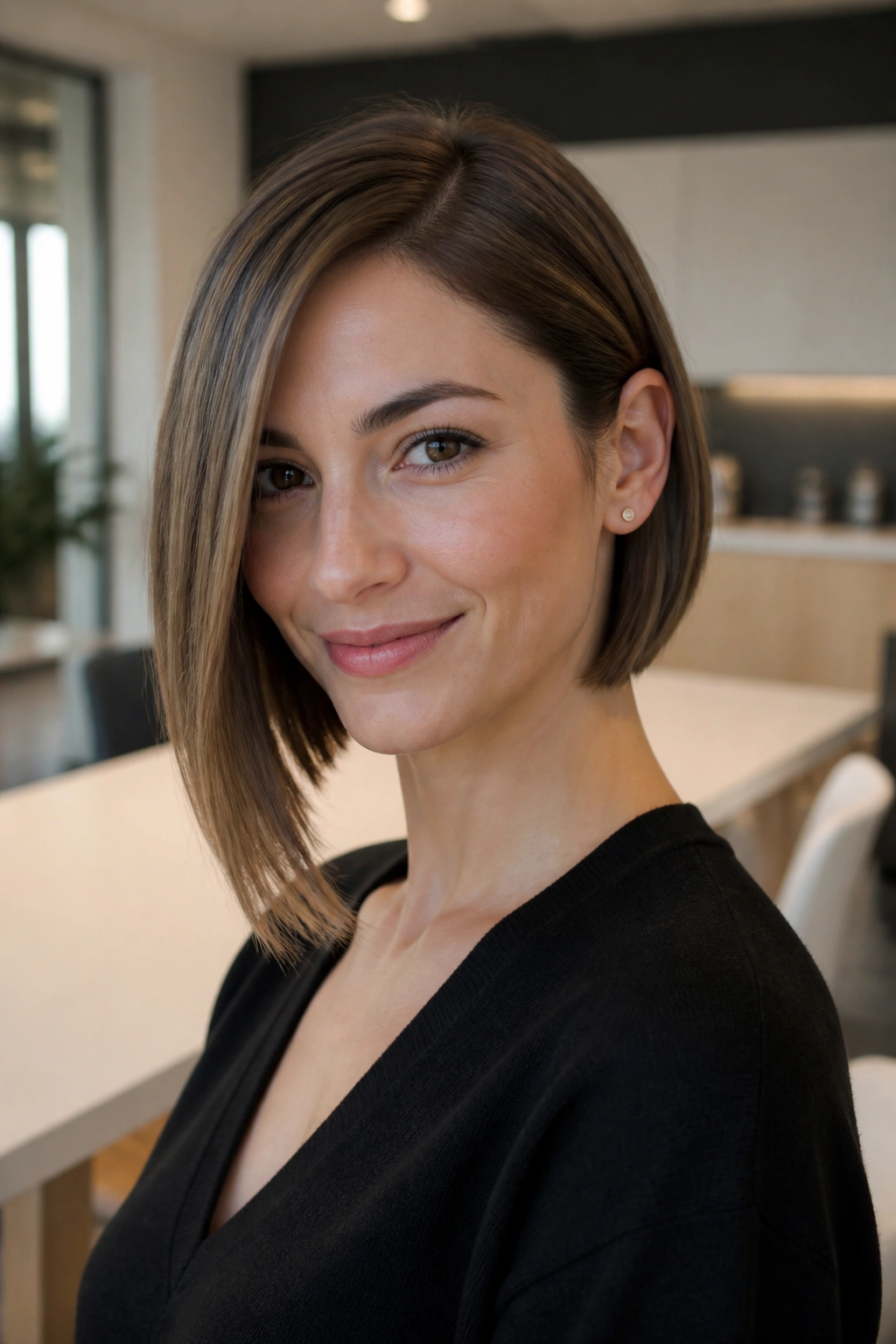
A subtle asymmetrical bob is the choice for people who want a little edge but still need to look like they belong in the meeting. Unlike a strict one-length bob, it gives one side a bit more length, and that tiny difference changes the whole mood of the cut.
The key word is subtle. A half inch to 1 inch of difference is plenty for office wear. Anything more starts to feel loud, and loud hair can fight with sharp clothes. Keep the longer side soft and drapey, not heavy. That way the shape feels intentional instead of awkward.
This cut works well if your style leans simple. Clean sweaters, plain shirts, neat makeup — the haircut becomes the one thing with personality, which can be a nice trade. It also helps if you like tucking one side behind your ear, because the longer piece gives you a little movement at the face.
What Makes It Different
- The asymmetry should be visible only when you look closely.
- Keep the shorter side tucked close to the jawline.
- Use a light smoothing product so the longer side falls cleanly.
- Ask for the ends to stay blunt, not shredded.
I would keep this one out of very strict dress-code spaces unless the difference is tiny. Small details matter there. A lot.
12. Curly Bob with Soft Shape

Curly hair does not have to settle for a long, shapeless trim. A curly bob can look office-ready when the silhouette is controlled and the curls stay defined. The shape should follow the curl pattern instead of fighting it, which is where a lot of bad bob cuts go wrong.
The best version usually lands around the chin or just below it, with soft layers that keep the curls from stacking into a triangle. Cutting curly hair dry, or at least mostly dry, helps a stylist see how much the curls spring up. That matters a lot. A bob that looks perfect wet can shrink into a whole different haircut once it dries.
I like this shape because it looks polished without needing ironed-flat hair. The curls themselves do the framing. You just need the outline to stay neat. A diffuser on low heat, a light gel, and a little scrunching are usually enough to keep the texture in line.
What to Ask For
- Keep the layers long and soft.
- Avoid heavy thinning at the crown.
- Leave enough length for shrinkage, usually a little below the jaw.
- Shape the front so the curls sit away from the eyes.
A curly bob can look especially good under a blazer or collared shirt because it gives texture near the face without getting in the way. If the cut is balanced, it reads tidy rather than wild. That is the whole trick.
