



Side swept bangs do a strange little thing: they soften a face without making a big scene.
That’s why they keep hanging around. A clean diagonal fringe can blur a sharp jaw, calm a wide forehead, and make cheekbones look a little more rounded without the heavy feel of a full blunt bang. Done well, they look like they were always meant to be there. Done badly, they can fall flat, split in the wrong place, or spend the whole day clinging to one eyebrow.
The part that surprises people is how small the changes can be. A half-inch more length. A deeper side part. A bit less bulk at the temple. That’s often the difference between a sweep that frames the face and one that hangs there like a wet curtain.
And yes, hair texture matters. So does face shape. So does the haircut around the bang, which people forget all the time. A side fringe doesn’t live alone; it has to work with layers, weight, and the way your hair naturally falls when you stop fighting it. That’s where the good ideas start to separate from the merely pretty ones.
1. Feathered Sweep That Skims the Cheekbone
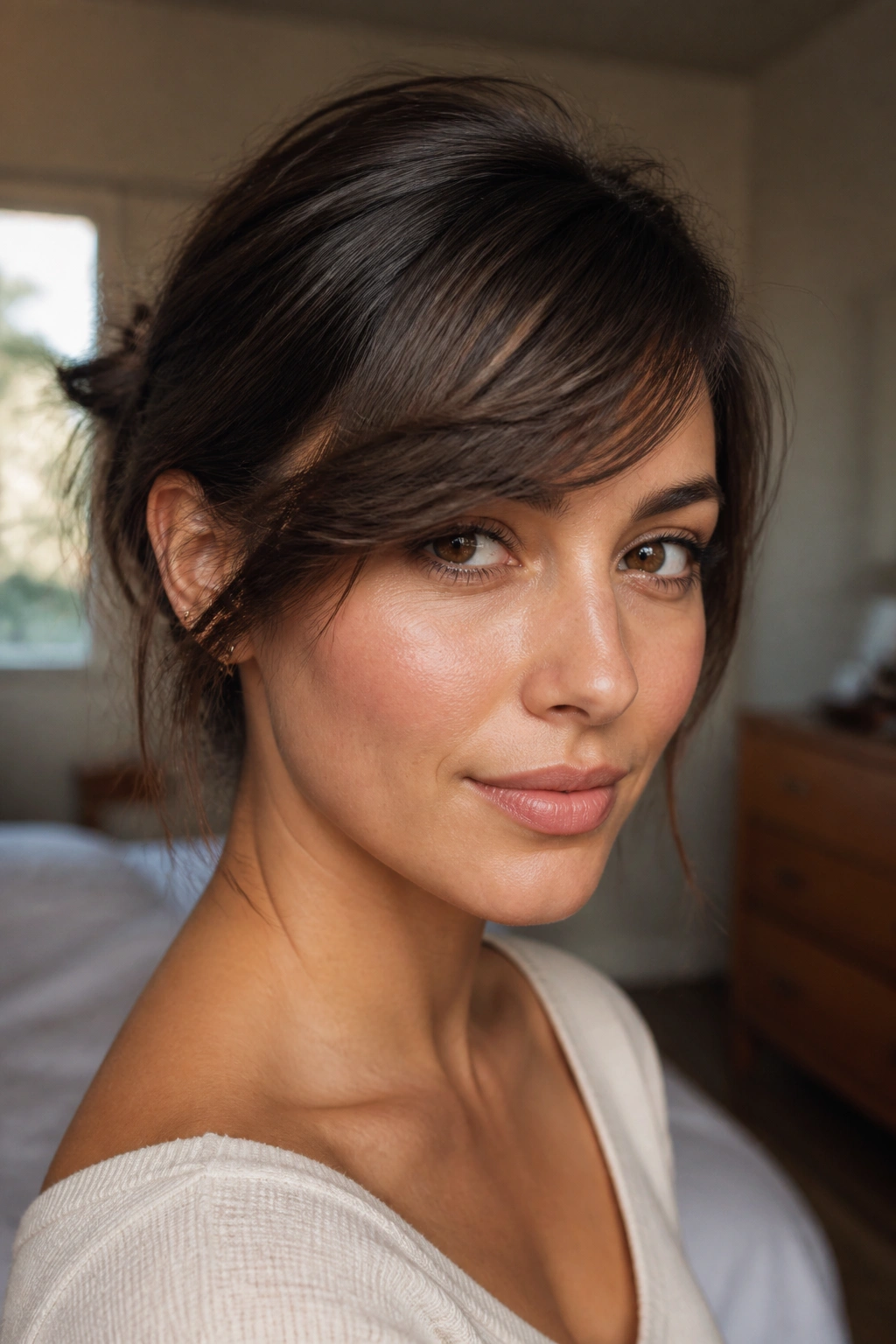
This is the version I reach for when someone wants softness without losing any length around the face. The bang starts around the brow and gradually opens toward the cheekbone, which gives the eye somewhere to travel instead of stopping dead at a straight line.
Why It Flatters So Easily
The feathered edge keeps the fringe from looking heavy. It’s especially good if your face has a strong lower half, because the movement lands right where you want it: around the middle of the face, not across the forehead like a shelf.
- Ask for the shortest point to sit just under the eyebrow.
- Let the longest pieces graze the upper cheekbone.
- Keep the ends soft, not razor-sharp.
- Style with a 1-inch round brush and a quick bend away from the face.
Best for: round, square, and heart-shaped faces that want a little softness without losing structure.
2. Long Side Bangs That Melt Into Layers
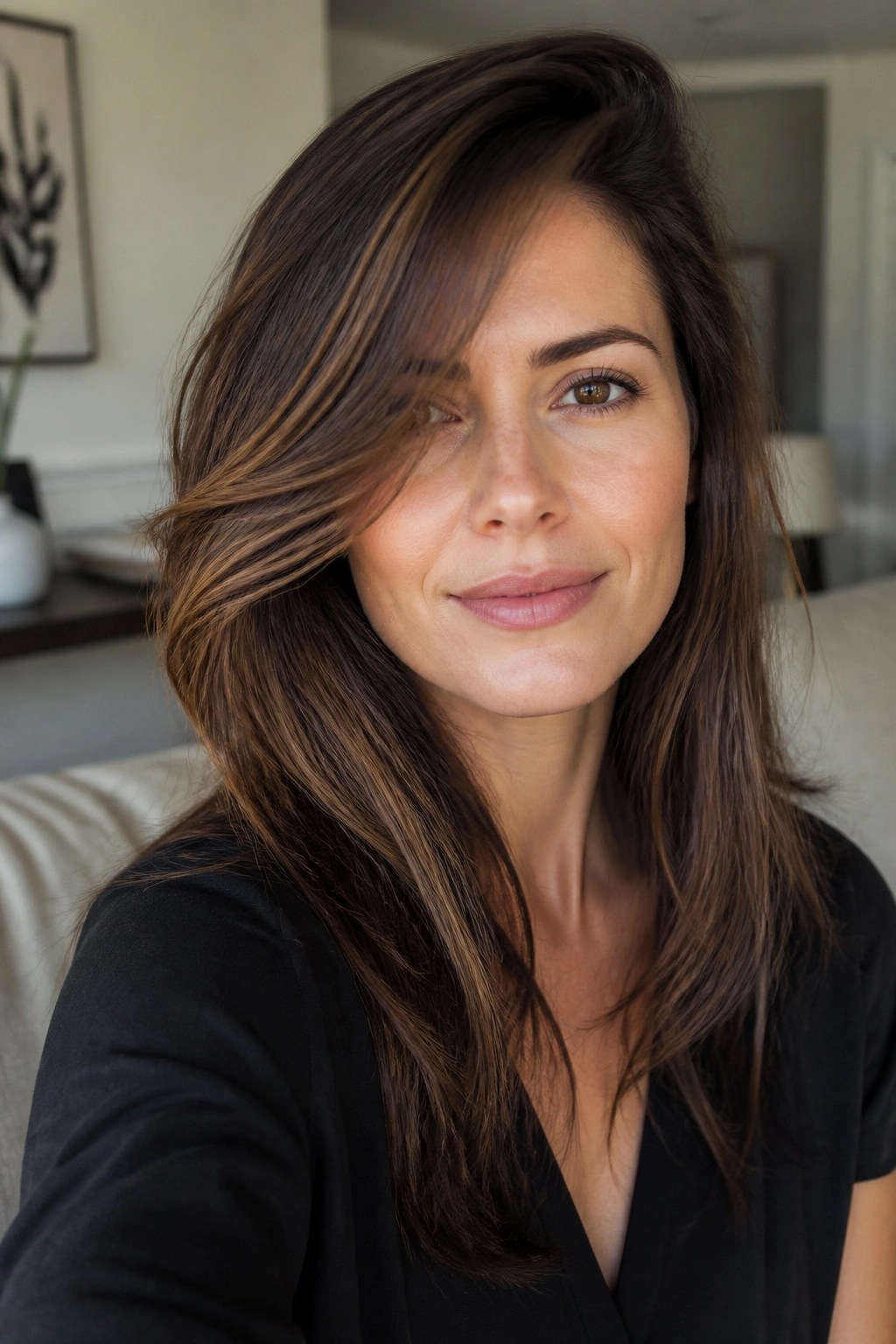
This is the safest all-around choice, and I mean that in the best way. Long side bangs do not scream for attention. They slide into the rest of the haircut, which makes them forgiving if you’re nervous about committing to bangs at all.
The trick is length. Let them start somewhere around the arch of the brow and taper into the front layers, so the eye reads one smooth line instead of a hard bang line. That’s what keeps them from looking chopped or dated. They also give you room to tuck, pin, or blow them back when you want a cleaner face.
Wear them with a collarbone cut, long layers, or even a blunt midlength shape. The point is movement, not precision. If your hair is thick, this version feels lighter than a full fringe. If your hair is fine, keep the ends soft and avoid over-thinning them or they’ll disappear by noon.
3. Brow-Grazing Fringe With a Deep Side Part

Why does this one work so well? Because the deep part gives you instant lift, and the brow-grazing length keeps the fringe close enough to the face to soften it without crowding it.
The part matters more than people think. Shift it too shallow and the bang loses its sweep. Shift it deeper and you get a little drama at the crown, which is handy if your hair falls flat near the front. This is one of those cuts that looks polished even when the rest of your hair is a little messy.
How to Style It
Blow-dry the bang first, before the rest of your hair dries fully. Use a medium round brush and direct the hair across the forehead, then away from the face at the last second. A tiny dab of styling cream on the ends keeps it from splitting into two sad pieces.
If your forehead is short, ask for the bang to stay just below the brow instead of sitting right on top of it. That keeps the look airy. Tiny change. Big difference.
4. Piecey Bangs That Stay Airy, Not Heavy

Picture a bang that breaks into a few soft strands instead of one solid sheet. That’s the whole point here.
Piecey side bangs are a relief if your hair tends to puff up at the roots or if you hate the feeling of a dense fringe touching your skin. A dry cut helps, because your stylist can see how the pieces separate naturally instead of guessing while the hair is damp and stretched. The result should feel loose, not frayed.
What makes them work:
- Light layering at the front
- A texturizing shear used sparingly
- Minimal product at the root
- A tiny bit of dry texture spray at the ends
These look best when you don’t over-style them. A quick bend with a flat iron is enough. Too much curl, and they stop looking piecey and start looking fussy.
5. Chin-Length Bob With a Soft Diagonal Front

A chin-length bob can look severe fast. Add a diagonal front section, and the whole haircut relaxes.
The angle pulls the eye downward in a softer way than a straight-across fringe, which is useful if your jawline is sharp or your chin is prominent. I like this one because it keeps the bob crisp but not harsh. There’s shape, but there’s also movement.
The side sweep should start higher than you think, usually near the temple, and then slide toward the jaw. That path matters. If the bang sits too low, the bob can feel boxy. If it sits too high, you lose the face-framing effect entirely.
This cut also grows out neatly. When the bang gets longer, it just becomes another front layer, which is a nice thing to have when you do not want to be in the salon every six weeks.
6. Curly Side Bangs That Follow the Curl Pattern

Curly hair does not need a fight. It needs a plan.
A side swept bang on curls should work with the bend of the strand, not against it. That means cutting it a little longer than you would on straight hair, because curls spring up once they dry. Let the fringe land where you want it in its natural state, then trim in tiny increments. Big snips are how people end up with one curl sitting on the brow and the next one floating three inches higher.
What Makes It Different
The softness comes from the curl itself. You do not need much layering at all if the texture is already giving you movement. A side part helps direct the fringe, and a light cream can keep the curl clumps together without making them stiff.
How to Wear It
Air-dry or diffuse on low heat. Then touch only the very front pieces with your fingers so they keep their shape. If the fringe collapses, a quick mist of water and a little scrunch usually brings it back.
Curly side bangs look best when they feel intentional but not over-managed. That balance is the whole game.
7. Short Side Bangs for a Pixie Cut
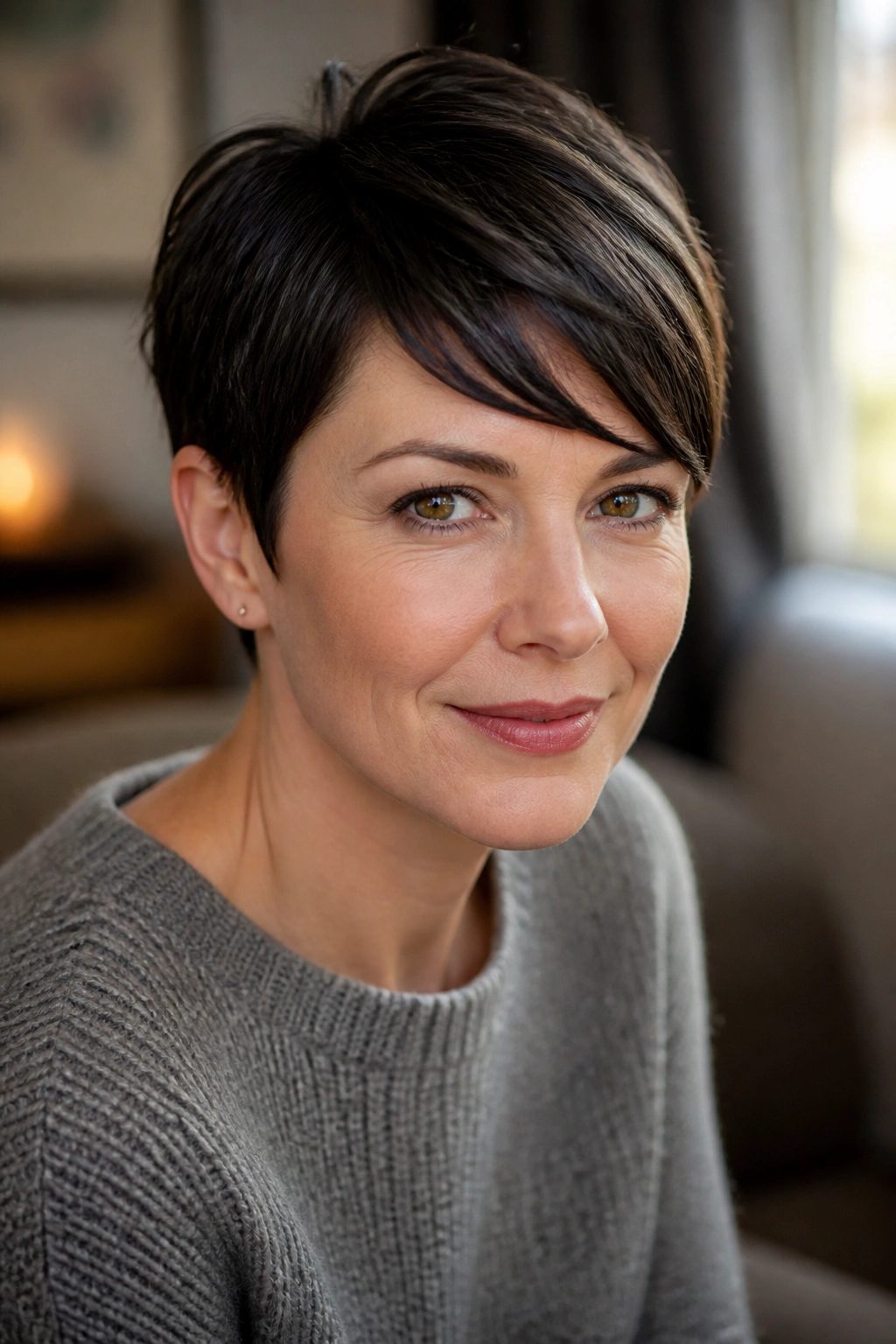
Short hair can carry a side sweep beautifully. You just need to keep the bang light enough to move.
A pixie with side bangs softens the face by breaking up all the short, exposed lines around the hairline. Instead of a hard crop from forehead to ear, you get a little diagonal motion that makes the cut feel less severe. It’s a small detail, but it changes the mood of the whole haircut.
What to Ask For
- Keep the bang long enough to sweep across the forehead.
- Leave a touch more weight at the front than at the crown.
- Cut the ends so they can fall to one side without sticking straight out.
- Use a pea-sized amount of styling paste, not more.
If your hair is straight, this version is easy. If it has a stubborn bend, your stylist may need to cut the bang in the direction it wants to sit. That sounds obvious. It gets ignored all the time.
Best when you want a pixie that feels softer, not sharper.
8. Blunt Bob With a Gentle Side Sweep
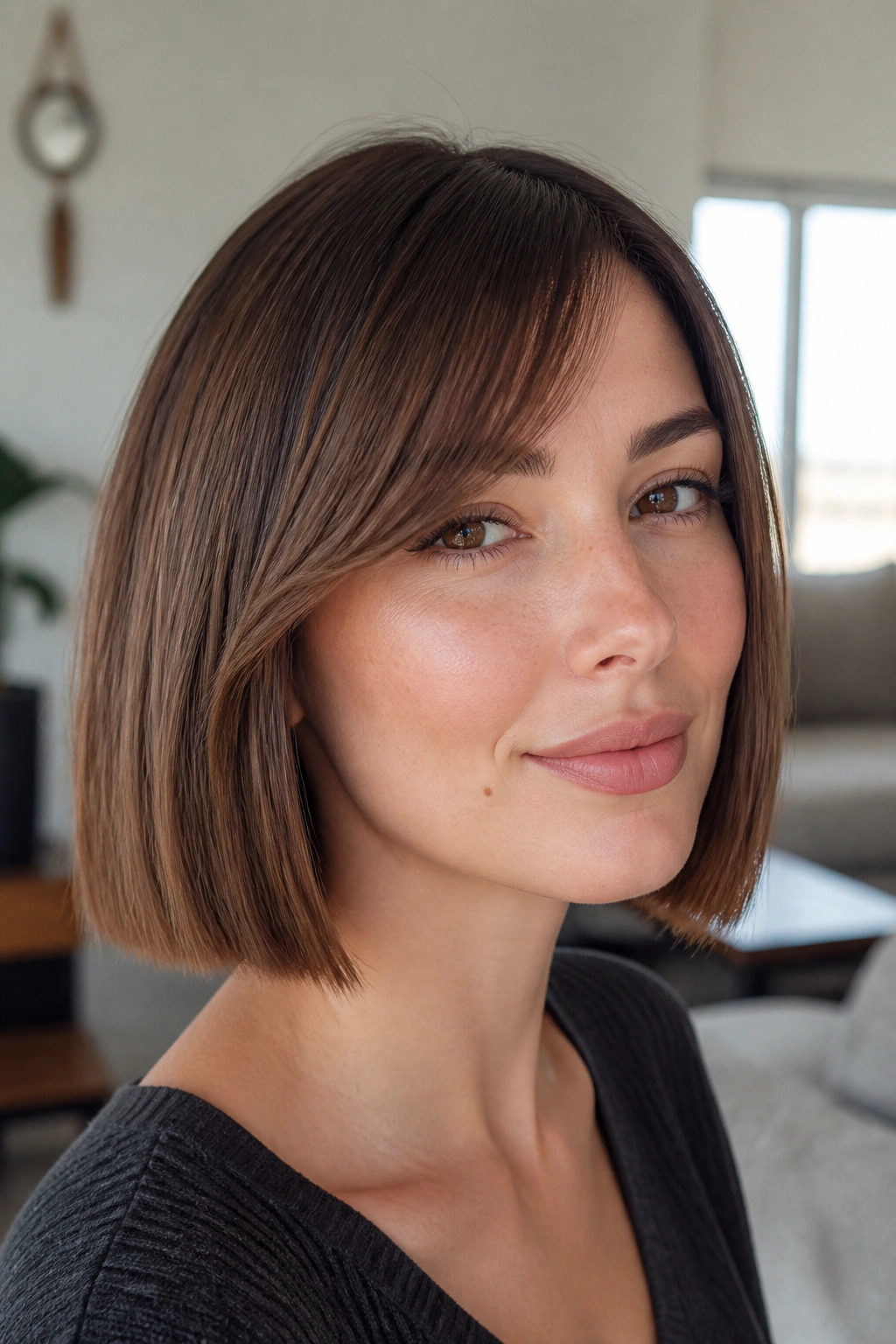
A blunt bob can go from sleek to stern in a hurry. A gentle side sweep takes the edge off without wrecking the clean line of the cut.
This works because the bob stays heavy and even through the ends while the fringe gives you movement up top. That contrast is the magic. The haircut keeps its polish, but the face gets a little curve where it needs it most. If you like the idea of a strong shape but don’t want the whole look to feel severe, this is the sweet spot.
The sweep should be soft enough to tuck behind the ear if needed. That matters. You want options, not a bang that has to sit one exact way or the whole cut falls apart.
A round brush and a quick pass of the blow-dryer are usually enough. Don’t flatten the fringe too much. A tiny bend at the ends keeps the bob from feeling helmet-like.
9. Layered Shag With a Loose Fringe
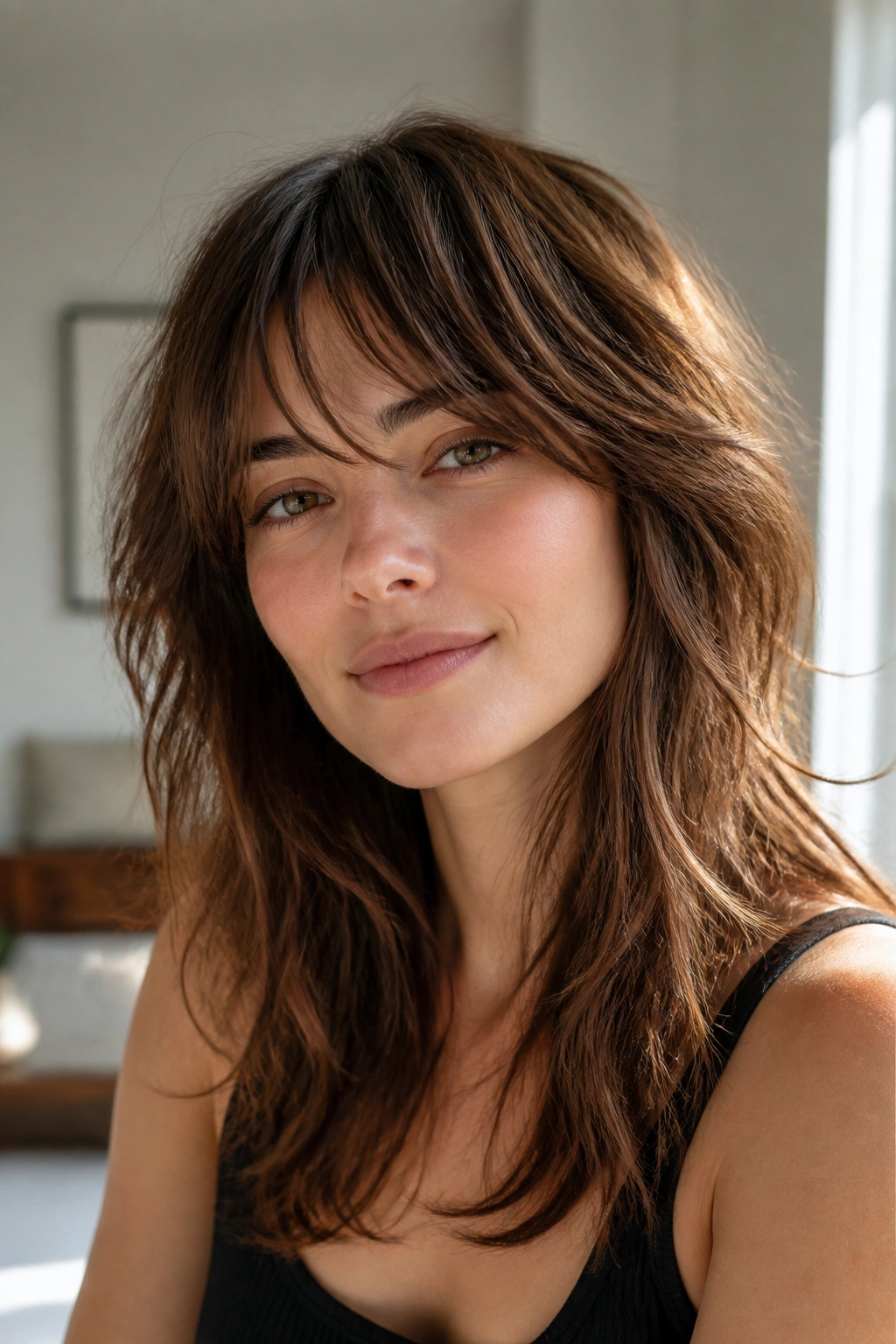
Why do shags and side sweeps get along so well? Because both of them like movement more than perfection.
A layered shag already gives you broken-up texture through the crown and sides. Add a loose fringe that sweeps across the forehead, and the haircut feels lighter around the face without losing that lived-in shape. This is one of the best options if you want softness but hate anything that looks too neat.
How to Get the Most From It
Use a diffuser or rough-dry the hair to keep the natural bend intact. The bang should be cut to fall into the first face-framing layer, not sit separately from it. That overlap is what makes the shape feel easy.
This cut loves a little mess. A little.
If your hair is wavy, you can let the fringe dry in a side part and then just separate the pieces with your fingers. Straight hair may need a quick twist with a flat iron to keep the bang from lying too flat against the forehead.
10. Choppy Side Bangs With Textured Ends
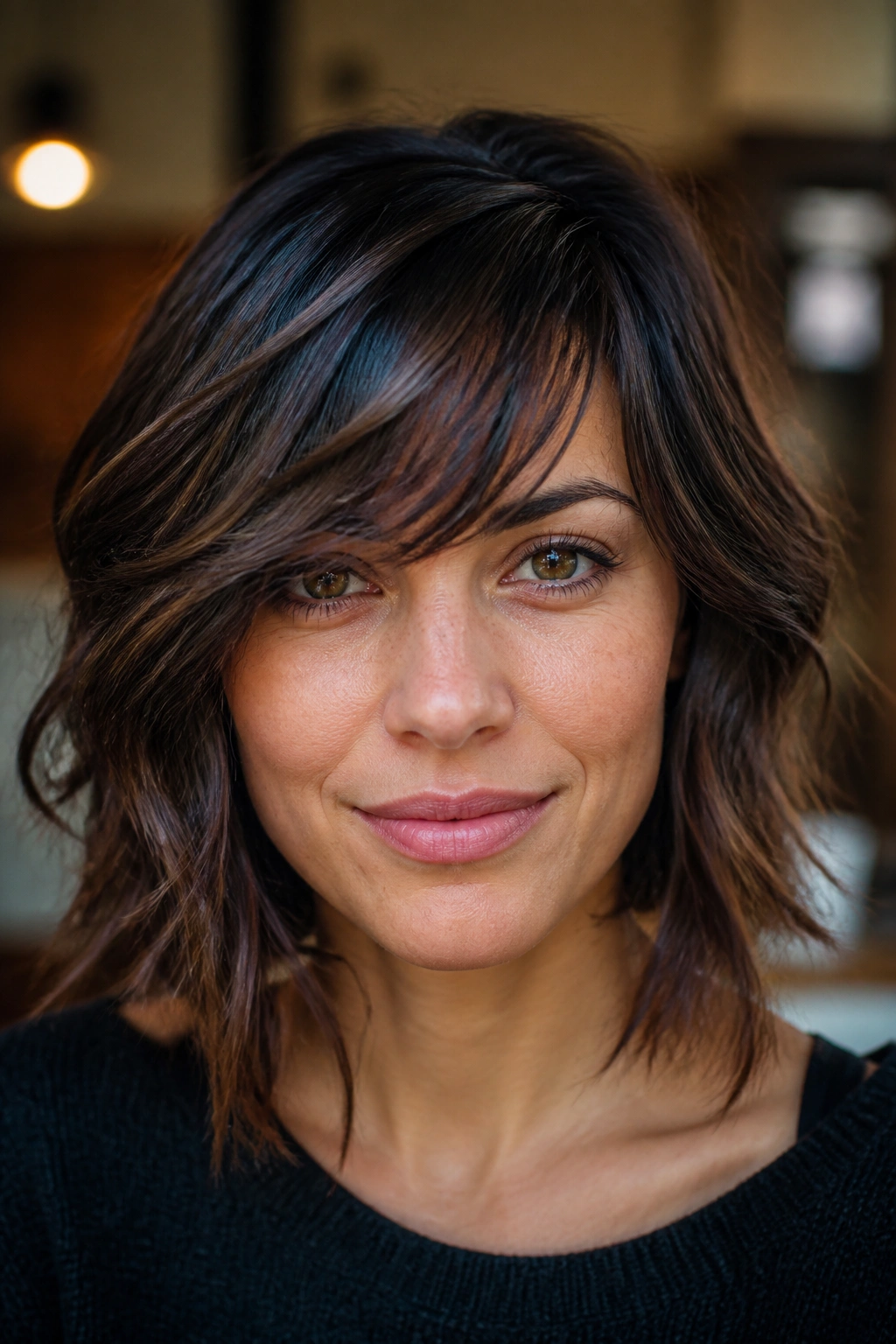
A choppy bang sounds aggressive, but it doesn’t have to be. With the right hand, it reads as light, modern, and a little undone.
The texture at the ends is what softens the look. Instead of one blunt edge, you get small broken pieces that move when you turn your head. That’s useful if you have strong features and want the hair to blur them a bit. It keeps the focus on your eyes, not on a heavy curtain of hair.
I’d pair this with hair that already has some shape through the ends—lob, shag, long layers, even a mullet-light shape if you’re into that. Flat one-length hair can make choppy bangs look disconnected.
Use a texture spray at the roots and a tiny bit of wax on the ends. Not much. Too much product makes choppy bangs look oily instead of airy, and that is never the goal.
11. Brushed-Over Fringe for a Classic Blowout
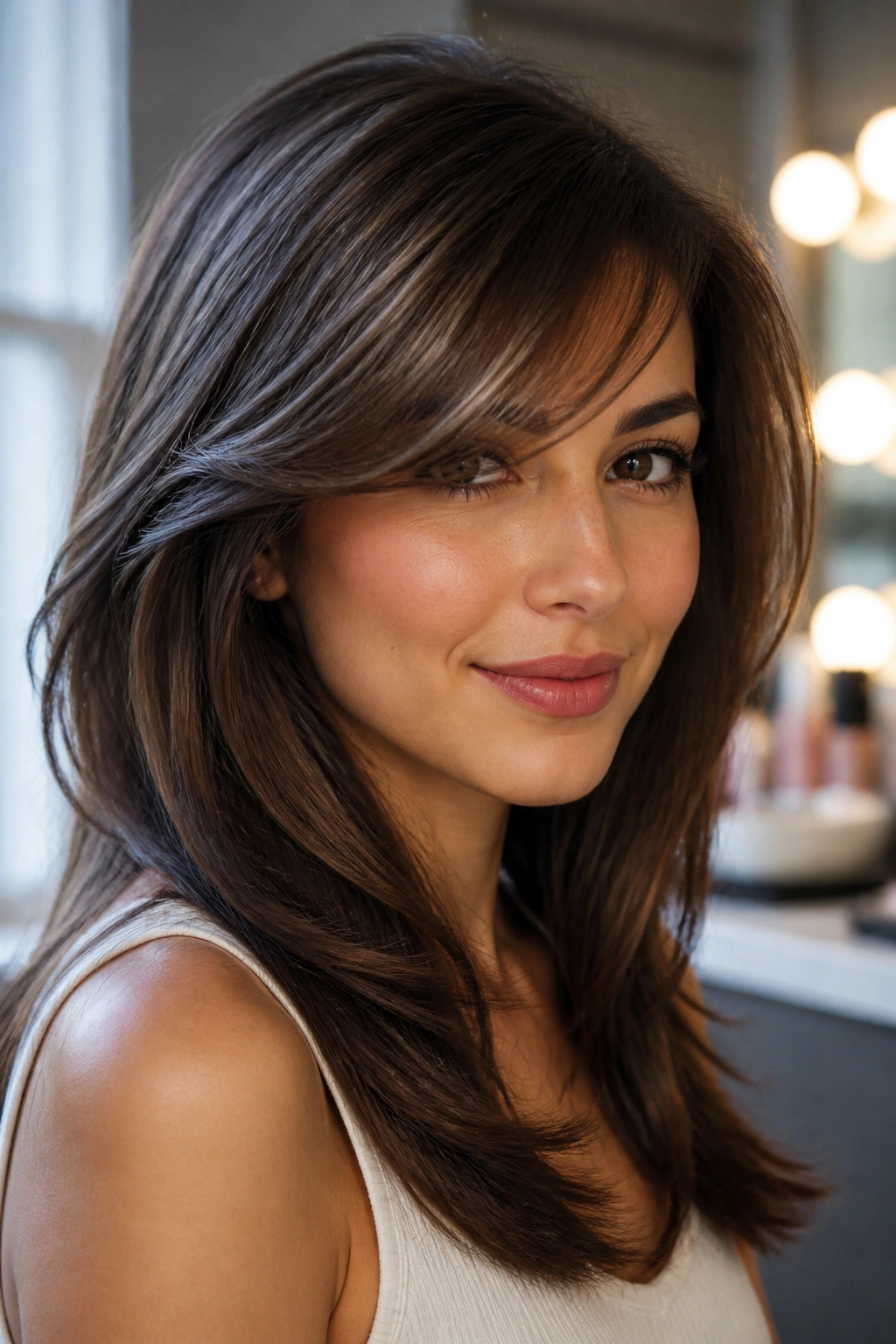
This is the kind of fringe that looks like it was rolled around a big brush and set with intention, because that’s basically what it is.
The brushed-over side sweep feels classic without being stiff. It works especially well on medium to thick hair because the density gives the bang enough body to hold the shape all day. If your hair is fine, it can still work, but you’ll want less length and a lighter hand with products.
The curve should arc away from the face, not collapse toward the eye. That upward lift at the root is what keeps it from looking flat. A bit of heat protectant, a round brush, and a cool shot at the end usually do the trick.
This style is one of my favorites for people who want a softer front without looking like they got “bangs” in the dramatic sense. It’s more understated than that. Cleaner. Easier to live with.
12. Side Swept Bangs on a Soft Wolf Cut
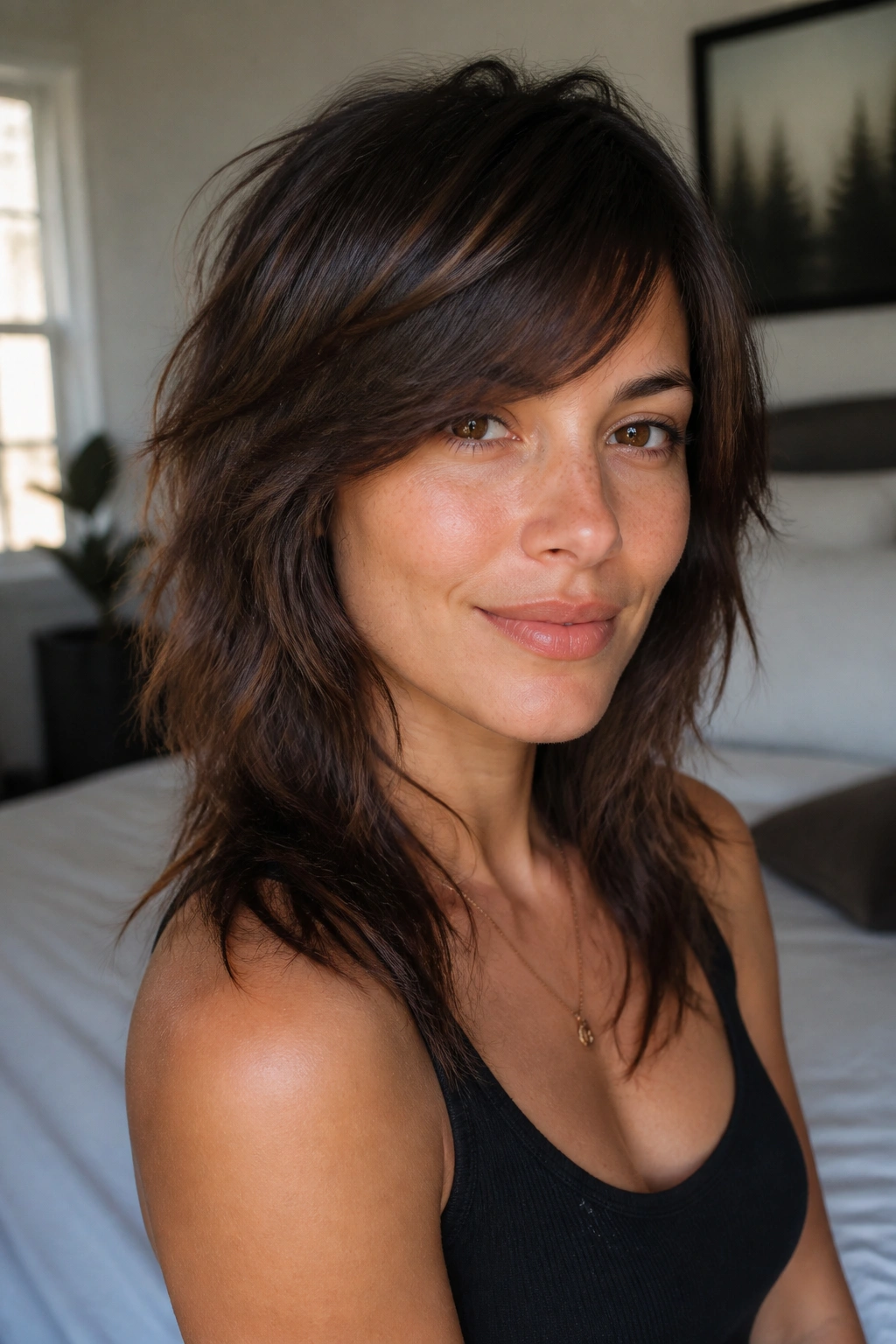
The wolf cut needs a face-softening fringe, or it can get a little wild in the wrong way. Side swept bangs calm it down.
The layered shape of a wolf cut can be sharp around the top, especially if the crown is short and the ends are thin. A side sweep gives the front a clearer direction and keeps the haircut from looking spiky. It also helps balance the volume, which is useful if the haircut has a lot of height up top.
What to Watch For
- Don’t let the bang get too short.
- Keep the sweep connected to the front layers.
- Ask for texture, not thinning.
- Style with a soft bend, not a tight curl.
This cut suits people who want edge without losing softness. If that sounds contradictory, it isn’t. The sweep is what keeps the shaggy shape wearable.
13. Face-Softening Sweep for Round Faces
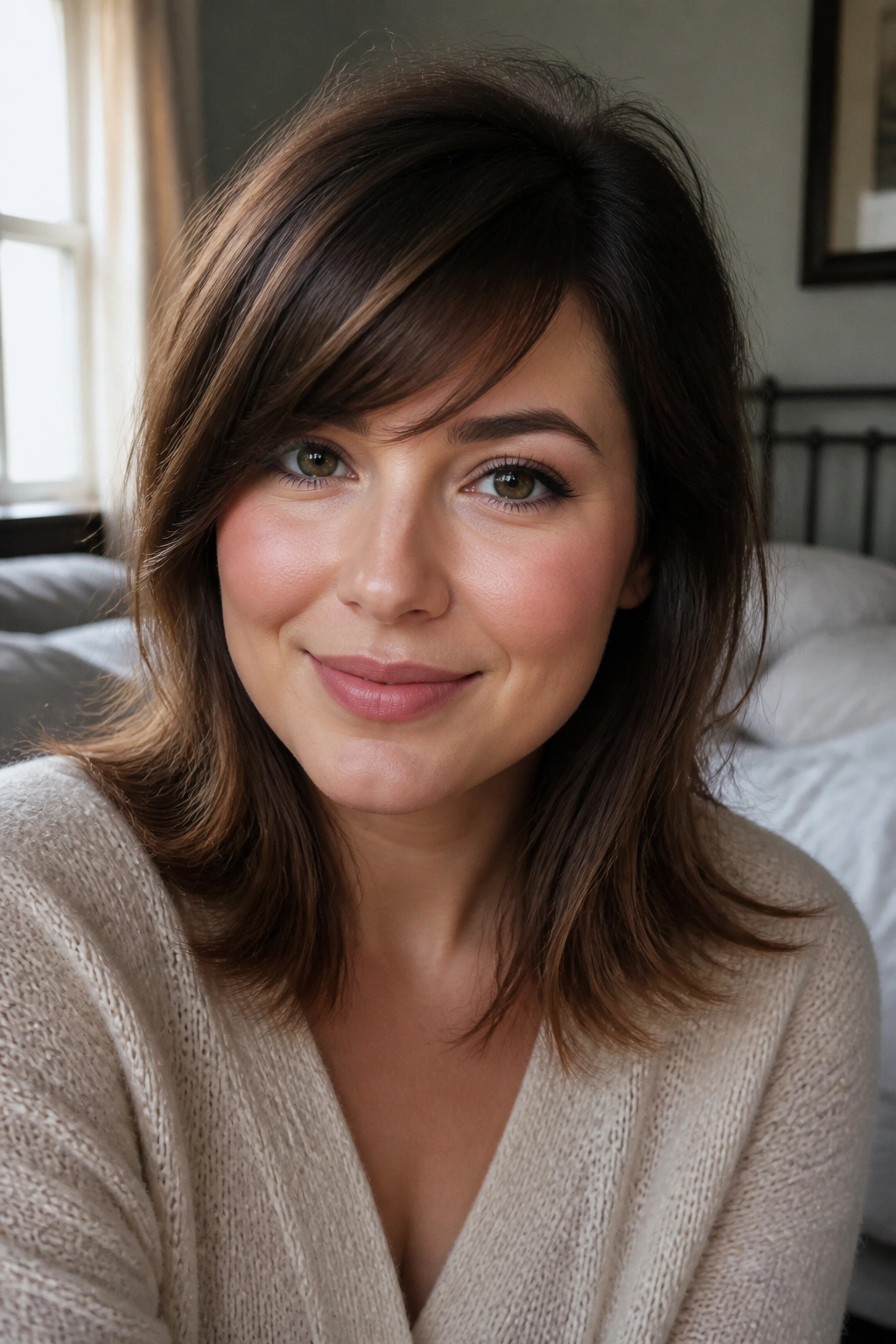
A round face does not need hiding. It needs angles in the right places.
Side swept bangs help by creating a diagonal line across the forehead, which interrupts the circular shape just enough to add length. The eye follows the bang sideways and down, not straight across. That’s a simple trick, but it works every time when the cut is handled well.
Why This Version Helps So Much
The shortest point should sit a little above or at the brow arch, while the longest edge should land near the cheekbone. That stretch gives the face more vertical movement. Keep the bang light at the temple so it does not add extra width where you don’t want it.
A side part helps too. So does pairing the fringe with longer layers around the jaw. I’d skip very thick bangs here unless you want the face to look smaller overall, because density can close things in fast.
The right sweep should feel like a frame, not a mask.
14. Angled Bangs That Balance a Square Jaw

Square jawlines look best when the hair brings in some curve. Straight lines on straight lines can get a little blunt.
An angled side fringe softens the lower half of the face by turning the attention upward and inward. The bang should start a touch higher at the side part and drop longer toward the outer eye or cheekbone. That diagonal movement is flattering because it counters the width at the jaw with something more fluid.
The end of the bang matters here. Soft, slightly tapered tips are better than a hard edge. You want the hair to bend, not sit like a ruler line. If your hair is thick, ask your stylist to remove bulk carefully from the middle of the fringe so it doesn’t puff out and widen the face.
This is one of those cuts that gets better when it’s not too perfect. A little movement around the temple makes the jaw look softer than any amount of heavy layering ever could.
15. Soft Swoop With Loose Waves
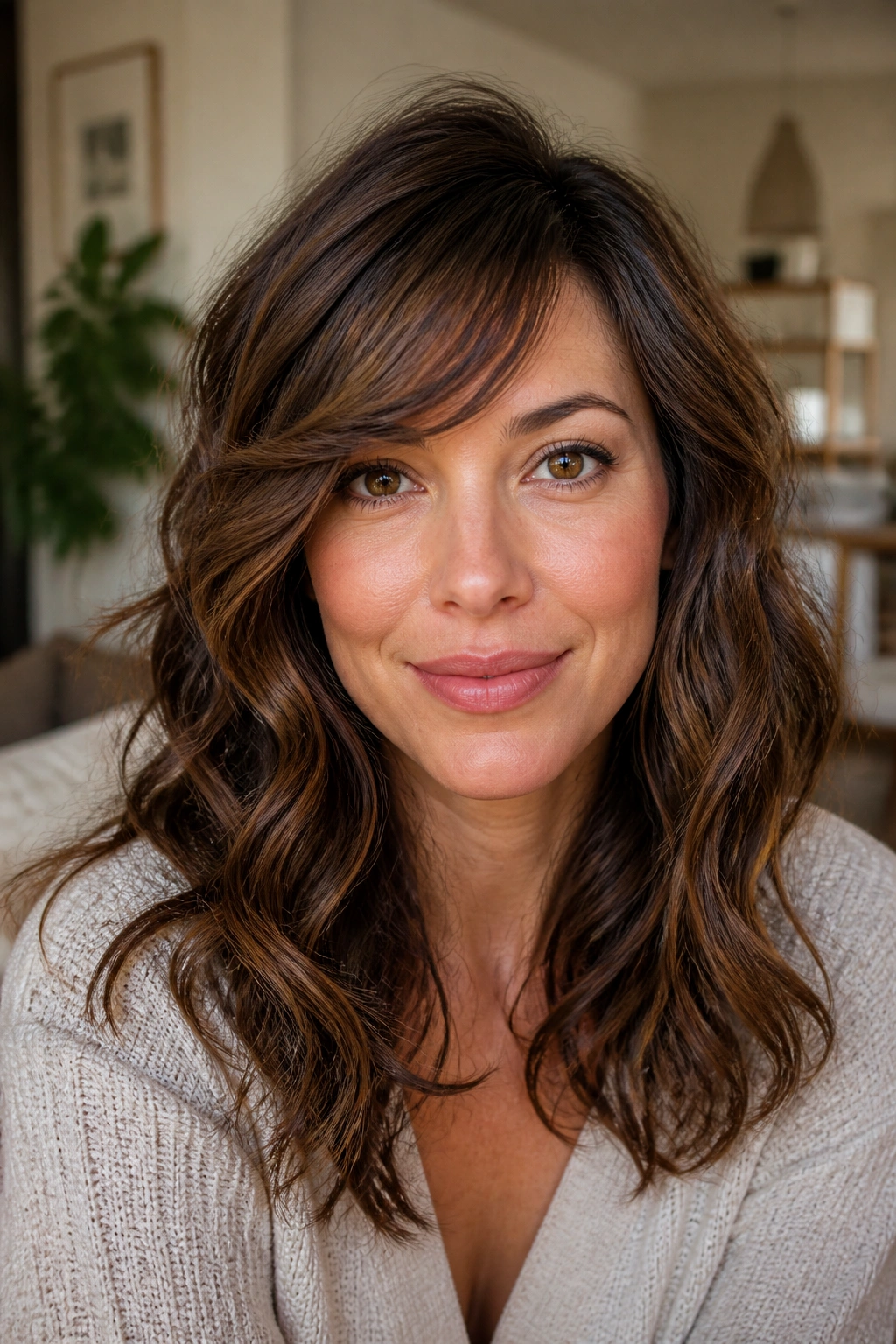
Can a bang be soft enough to vanish into waves? Absolutely, and that’s why this version keeps getting requested.
The trick is to let the fringe live in the same rhythm as the rest of the hair. If the waves are loose and brushed out, the side sweep should be loose too. If the waves are more defined, the bang can have a little bend at the end so it doesn’t look like it was pasted on.
How to Style It
Use a 1.25-inch curling iron or wand, then brush the waves out so they look relaxed. Take the bang section separately and curl it away from the face with only half a turn. That keeps it soft instead of ringlet-like.
A pinch of serum on the ends can tame frizz, but keep it off the roots. Heavy product is the quickest way to make this style droop.
The result is very forgiving. It softens the forehead, brings attention to the eyes, and feels easy enough for everyday wear without looking careless.
16. Airy Fringe for Fine Hair

Fine hair can look great with side swept bangs, but only if the cut is light enough to keep movement.
A dense bang on fine hair tends to separate and show scalp more than people expect. Airy layers solve that. The fringe should be cut with minimal bulk, then directed to one side so it feels full without being heavy. If you want softness, this is a smarter move than trying to create fake thickness.
What Helps Most
- A root-lift spray at the front.
- Blow-drying against the natural fall for 10 to 15 seconds.
- Keeping the bang slightly longer than eyebrow length.
- Skipping heavy creams and thick oils.
Fine hair usually behaves better when the style is simple. One round brush. One pass with the dryer. Stop there. If you keep fussing with it, the bang gets flatter, and then you’re chasing volume for the rest of the day.
This is a good place for a side sweep because the diagonal line creates the look of fullness without actually asking the hair to be something it isn’t.
17. Full Sweep for Thick Hair
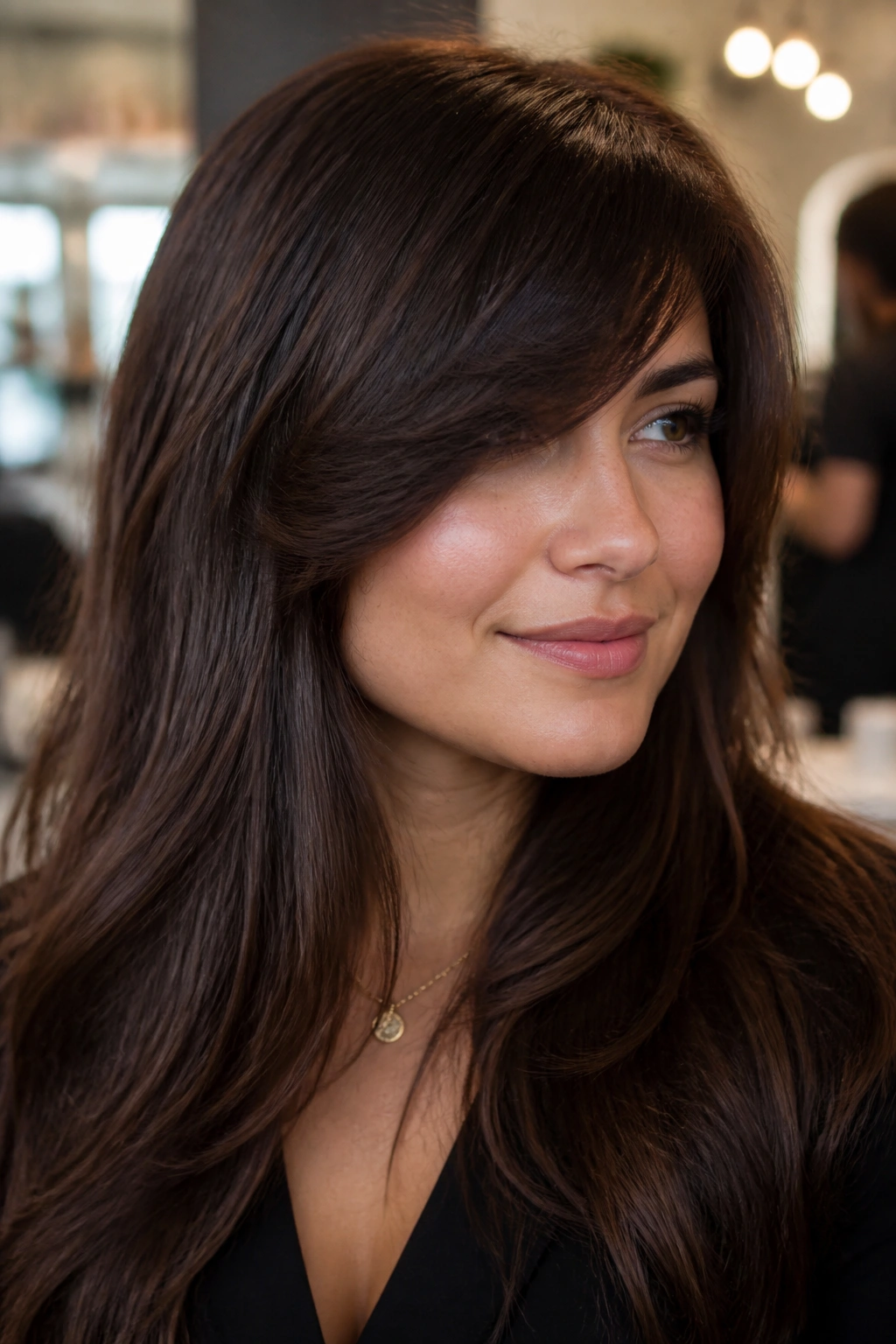
Thick hair can carry a richer, fuller side bang than fine hair ever could, and that’s not a problem. It’s an advantage.
A full sweep works because the density gives the fringe weight and movement at the same time. The challenge is control. Without a clean cut, thick bangs can puff out, split, or sit like a block on the forehead. The answer is usually careful shaping through the interior, not just chopping off length.
The best version is long enough to brush across the forehead and blend into the front layers, but not so long that it drags the whole face down. Your stylist may need to remove bulk near the temple and leave more weight toward the center so the bang bends instead of flaring.
I’d style this with a large round brush and a medium-hold spray. A little polish helps. Too much, and you lose the softness that makes the sweep flattering in the first place.
18. Bangs That Slide Into Shoulder-Length Layers

Shoulder-length hair is where side swept bangs really earn their keep.
The front pieces can disappear into the layers so naturally that the haircut looks built around the fringe instead of decorated with it. That makes the style easy to wear and easy to grow out. It also keeps the face open, which is a nice balance if you don’t want hair sitting heavily on the cheeks.
What Makes It Different
Unlike a shorter bob, this length gives the fringe room to taper. Unlike very long hair, it doesn’t drag the bang down and flatten it. The shoulder line provides a clean landing spot. That matters more than people think.
If you want the most flattering version, keep the shortest pieces near the brow and let them melt into a soft cascade toward the collarbone. You can tuck the fringe behind the ear on busy days and still have enough movement when it’s down.
This is one of the easiest ways to wear bangs without feeling locked into them.
19. Side Bangs That Look Good With Glasses

Glasses change the whole equation. A bang that looks perfect barefaced can fight your frames in seconds.
The best side swept bangs for glasses stay a little lighter at the front and sit high enough to clear the frame line. You want the hair to soften the face, not land directly on the top of the lenses. If the bang is too blunt, it can crowd the eyes. If it’s too thin, it disappears next to bold frames.
What to Ask For
- A shorter center point with longer outer edges.
- Soft ends that don’t hit the frame corner.
- Enough lift at the root to keep the bang visible.
- A shape that can move off the face, not just sit there.
This look is especially nice with round or cat-eye frames because the diagonal bang balances the shape of the glasses. It gives you that little bit of movement near the eyes that keeps the whole face feeling open.
20. Messy Bun and Side Fringe Combo
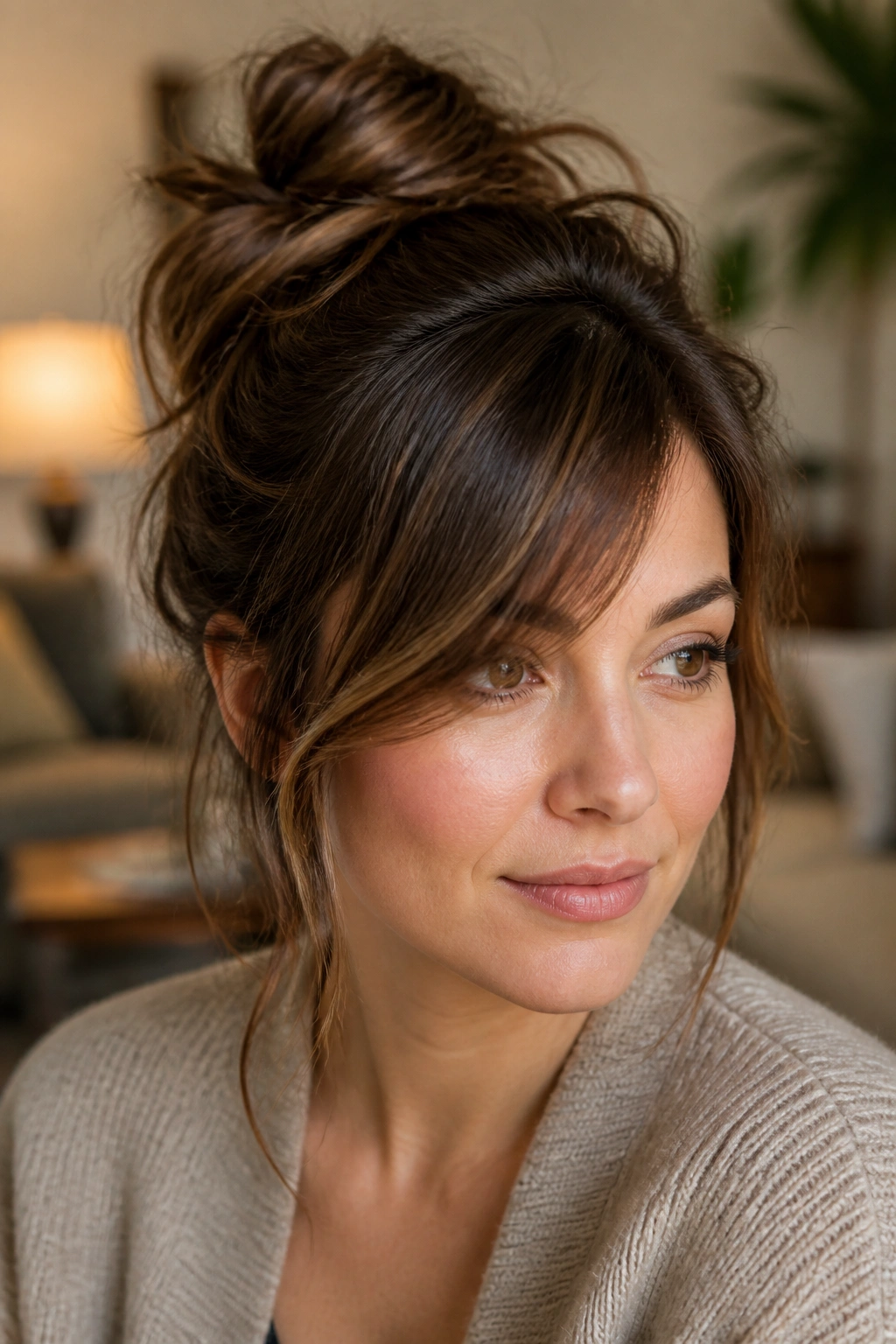
This is one of those styles that looks casual on purpose, which is harder to do than it sounds.
A messy bun gets a lot more polish when a side fringe is left out to soften the face. The bang gives the hairstyle a focal point, so the bun doesn’t have to do all the work. That’s useful on days when you want your hair up but don’t want to look scraped back and stern.
The key is leaving enough face-framing length to sit across the forehead and cheek. If the bang is too short, it turns into a little tuft that needs constant fixing. If it’s too long, it falls into the bun and defeats the point.
A texturizing spray at the roots and a few loose pieces around the temples make this feel relaxed, not sloppy. There’s a difference. A big one.
21. Soft Fringe for Updos and Formal Styles

Why do stylists keep leaving a side sweep out of updos? Because it softens the whole look without taking away the shape of the hairstyle.
A formal bun or twist can look a bit rigid when every strand is pulled away from the face. A side fringe breaks that line and gives you movement around the eyes and cheekbones. That’s especially handy for weddings, dinners, or any event where you want polished hair that still feels like you.
How to Wear It
Keep the fringe smooth, then pin the rest of the hair back low or high depending on your neckline. A loose tendril near the ear can echo the sweep and make the whole style feel connected. If the bang is curly or wavy, let it keep that texture. Straightening only the fringe can make the contrast look awkward.
This version is less about drama and more about balance. The face stays soft, the updo stays clean, and nothing looks overworked.
22. Highlight-Friendly Sweep That Shows Dimension

Highlights and side swept bangs are a strong pair when the color placement is thoughtful.
The diagonal fringe lets light hit the front strands in a way that shows off dimension instead of hiding it. If the color is placed around the face and through the ends, the sweep picks up the lighter pieces as it moves. That gives the haircut depth without needing extra layers everywhere.
What to Watch For
- Keep the lightest pieces near the front edge.
- Avoid over-lightening the shortest bang section if your hair is fragile.
- Let the stylist place color where the sweep naturally falls.
- Use shine spray lightly; too much can flatten the movement.
This idea works especially well if you want the face to look brighter. The fringe acts like a soft frame. Not a spotlight. Just enough to make the eyes and cheekbones stand out more cleanly.
23. Low-Maintenance Piecey Sweep
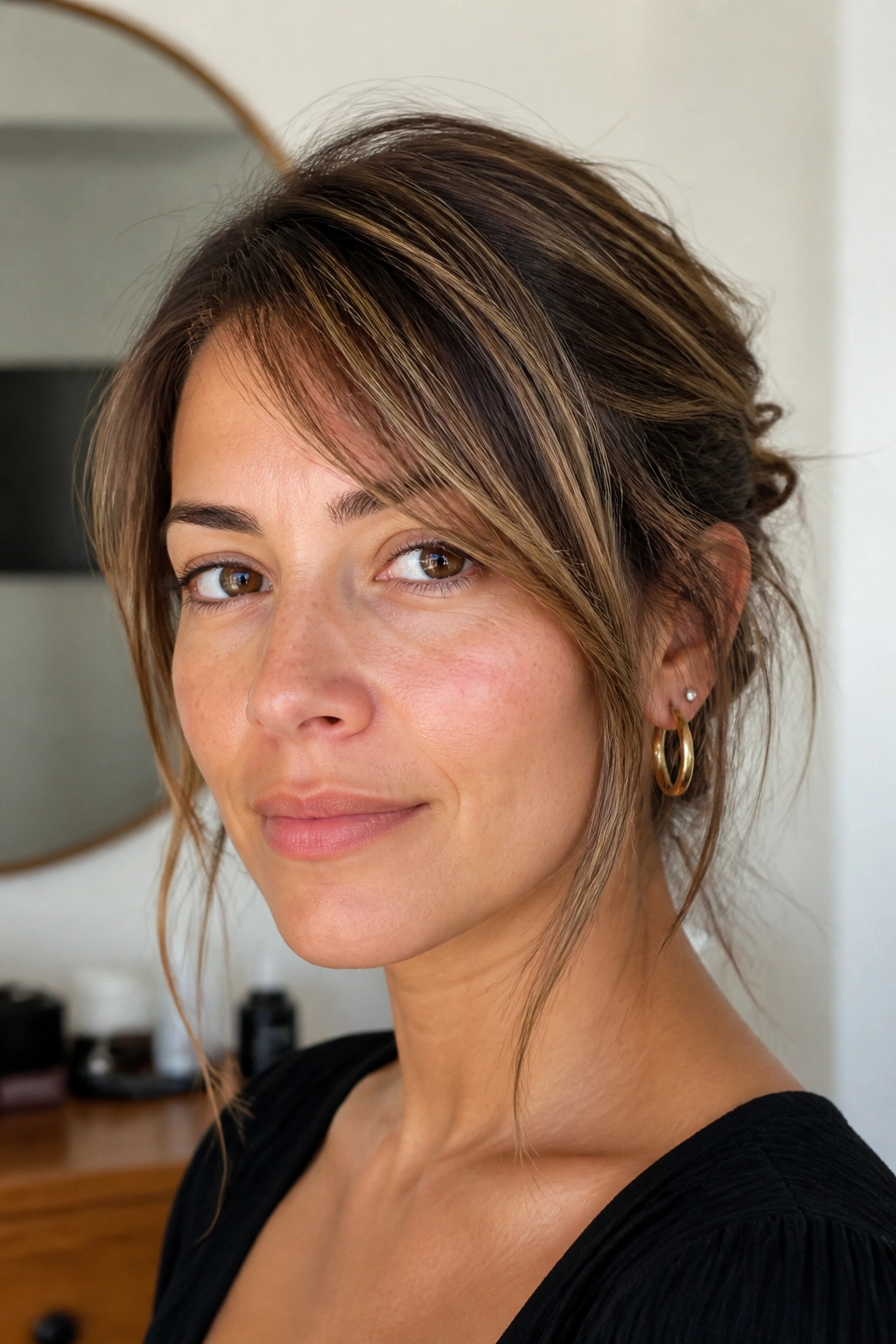
A low-maintenance bang should still look like you chose it.
That’s the appeal of a piecey side sweep. It grows out without looking sloppy, and it does not demand a full round-brush blowout every time you wash your hair. A little separation at the ends keeps it modern, and the side direction prevents the front from feeling blocked in.
The cut should be long enough to tuck behind one ear and short enough to stay visible when you wear it down. That middle zone is where the sweet spot lives. It gives you a fringe on good hair days and a face-framing layer on lazy ones.
I’d avoid making this too thin. Thin bangs on purpose are fine. Thin bangs because the scissors got overenthusiastic are another story. You want soft pieces, not scraps.
24. Natural-Texture Side Fringe
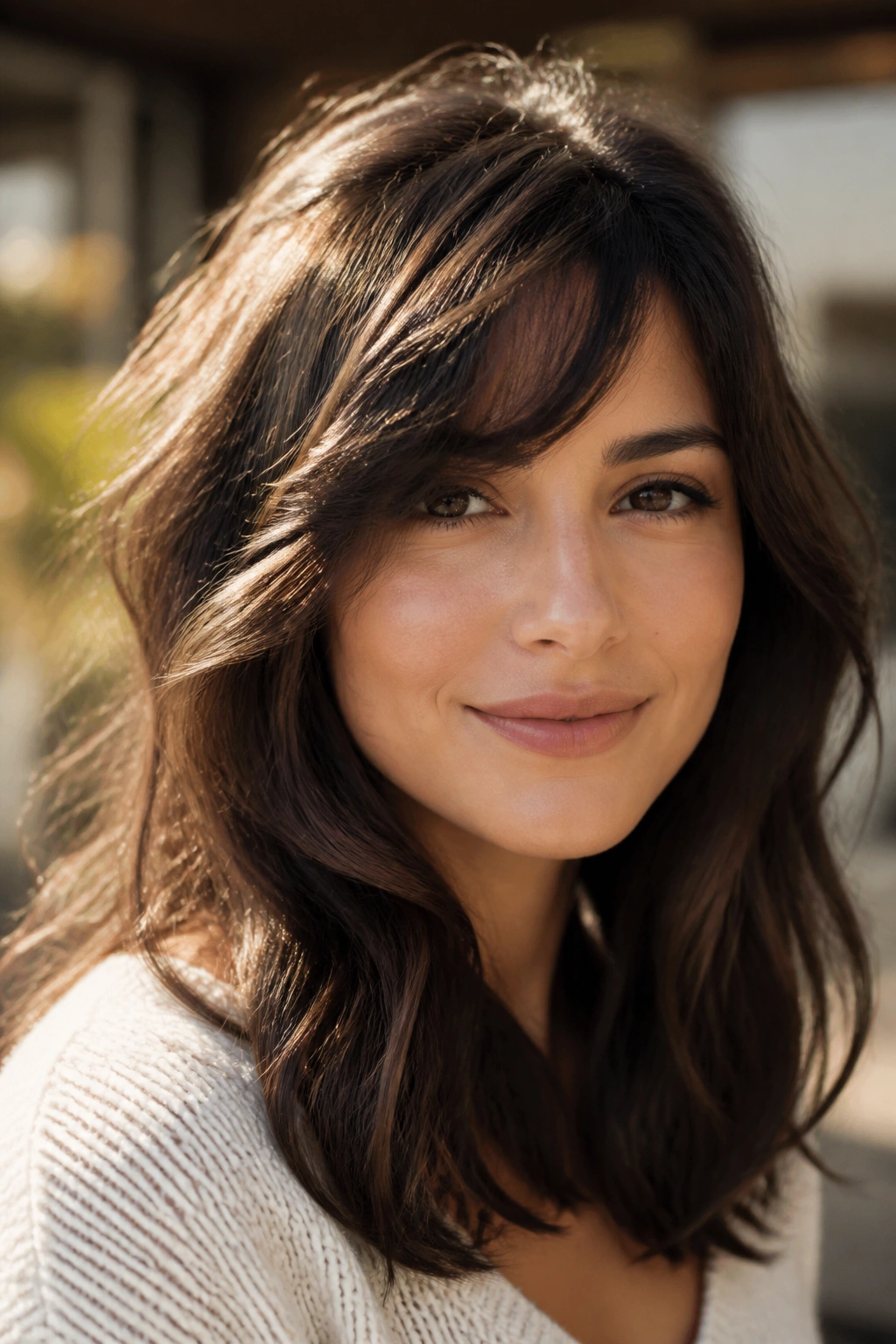
Hair has opinions. The best fringe styles listen.
A natural-texture side fringe works with bends, waves, or loose curls instead of trying to force them straight. That’s usually the fastest path to something flattering. When the hair is allowed to fall in its own direction, the side sweep feels less stiff and more organic around the face.
This style is good for people who dislike the daily ritual of hot tools. Let the hair air-dry with a little cream, then twist the front section once if needed so it keeps the side direction. If there’s frizz, smooth only the outer layer. Leave the texture inside the fringe alone; that’s what gives it life.
The softness here comes from honesty. The bang does not pretend to be sleek if your hair isn’t sleek. It just shapes the texture into something useful.
25. Short Crop With a Long Diagonal Bang
Short hair can look surprisingly gentle when one long front piece sweeps across the forehead.
This is a smart move if you want a crop that doesn’t read as too severe. The long diagonal bang breaks the compact shape of the cut and gives the face a little curve. It can also lengthen the appearance of the forehead, which helps if you feel like your crop is showing too much skin up top.
What Makes It Different
The contrast between short sides and a longer front is the point. If everything is the same length, the crop can look flat. The diagonal line gives it motion. It also gives you a bit of styling freedom, because the bang can sit tucked, brushed forward, or pushed back with a bit of product.
This cut suits confident hair. By that, I mean hair that can hold a shape. If your strands fall limp, keep the bang slightly shorter and use a matte paste at the roots.
26. Wedding-Ready Soft Sweep
Soft side swept bangs are one of the easiest ways to make a formal style look romantic without making it precious.
A wedding look needs movement near the face. A soft sweep gives you that, while still letting the rest of the hair stay controlled, pinned, or waved. It works with low buns, half-up styles, and loose lengths. The fringe catches the eye first, then the rest of the style follows. That order matters.
The best version is lightly bent, not curled into a spiral. You want the hair to curve away from the face and rest there naturally. A little shine spray, a few bobby pins hidden under the sweep, and a clean side part can make the whole thing look calm instead of stiff.
I like this option because it photographs well without needing a pile of product. It just frames the face cleanly and lets the expression do the rest.
27. Grow-Out Friendly Side Bang
How do you keep bangs from feeling like a commitment you’ll regret in six weeks? Pick a shape that wants to become a layer.
A grow-out friendly side bang starts a little longer than a classic bang and ends somewhere around the cheekbone or jaw. As it gets longer, it blends into the front layers instead of turning into an awkward middle stage. That means fewer bad hair days while it’s changing shape.
How to Keep It Easy
- Ask for soft edges, not a blunt line.
- Leave enough length to tuck behind the ear.
- Keep the shortest point above the eyebrow, not far above it.
- Trim only the very front between salon visits if needed.
This is the version I recommend when someone says they want bangs but also wants to be able to change their mind. Which, honestly, is most people.
28. Side Sweep That Tames Forehead Width
A wider forehead does not need covering. It needs a frame that breaks up the expanse.
A side sweep does that by pulling the eye diagonally across the face. The result is softer than a straight fringe, and less heavy than a full curtain bang. If the bang starts near the center part and sweeps down over one side, it narrows the visual width at the top without making the face look closed in.
The best version is long enough to brush across one eyebrow and soft enough to leave some skin visible at the center. That negative space is useful. It keeps the look light and prevents the bang from sitting like a solid band.
A stylist who understands face shape will usually avoid making the fringe too thick here. That’s the mistake. Thick bangs can make the forehead feel smaller in a blunt, boxed-in way. A soft diagonal does the job with less effort and a better finish.
29. The Easiest Soft Side Sweep to Ask For
If you want the simplest salon request, this is the one.
Ask for a side bang that starts around the arch of the brow, keeps its longest pieces near the cheekbone, and blends into the front layers. That single sentence covers the shape, the softness, and the movement. It also gives your stylist room to adjust based on your hair type, which is where the real skill comes in.
This version works because it isn’t overdesigned. It softens the face, grows out cleanly, and doesn’t demand a perfect styling routine. On busy mornings, you can push it to one side with your fingers and still look put together. On better mornings, a quick round-brush pass makes it look more polished.
No drama. No fuss. Just a fringe that behaves.
30. The Everyday Side Sweep I’d Send Most People Toward
This is the one I keep coming back to when someone wants bangs that soften the face without turning their whole haircut into a maintenance project.
The everyday side sweep sits in that useful middle ground: long enough to blend, short enough to matter. It gives a little curve around the forehead and cheek without covering too much of the face. That makes it easy to wear with straight hair, waves, curls, buns, or a simple tuck behind the ear. It is not the loudest choice, which is exactly why it lasts.
The nicest thing about this version is how little it asks from you. A small round brush, a touch of heat, maybe a light spray if your hair needs hold. That’s it. If you want softness in your features but you do not want to babysit your fringe every morning, this is the smart bet.
And if you’re still torn between a full bang and no bang at all, start here. It’s forgiving. It grows out well. It makes the face look a little gentler without stealing the show, which is about all a good side sweep should do.
