



A good pair of side swept bangs can rescue a haircut that feels a little flat, a little heavy, or just plain unfinished. They soften a face fast. They also buy you a little breathing room if your forehead feels too exposed, your jaw looks too sharp, or your hair needs movement up front and nowhere else.
The catch is that side-swept bangs are not one thing. A heavy diagonal fringe, a wispy sweep, and a long face-framing bend all behave differently once they dry. Curl pattern matters. Density matters even more. So does where the part sits, because a bang that starts too low can collapse into your eye, and one that starts too high can look like a stray chunk instead of a deliberate shape.
That’s why the best versions look tailored. The cut does half the work, but the direction of the blow-dry, the weight at the ends, and the way the bang connects to your layers decide whether it looks clean or fussy. A good side sweep should frame, not fight, the rest of the haircut.
1. Deep Side Sweep That Starts at the Crown
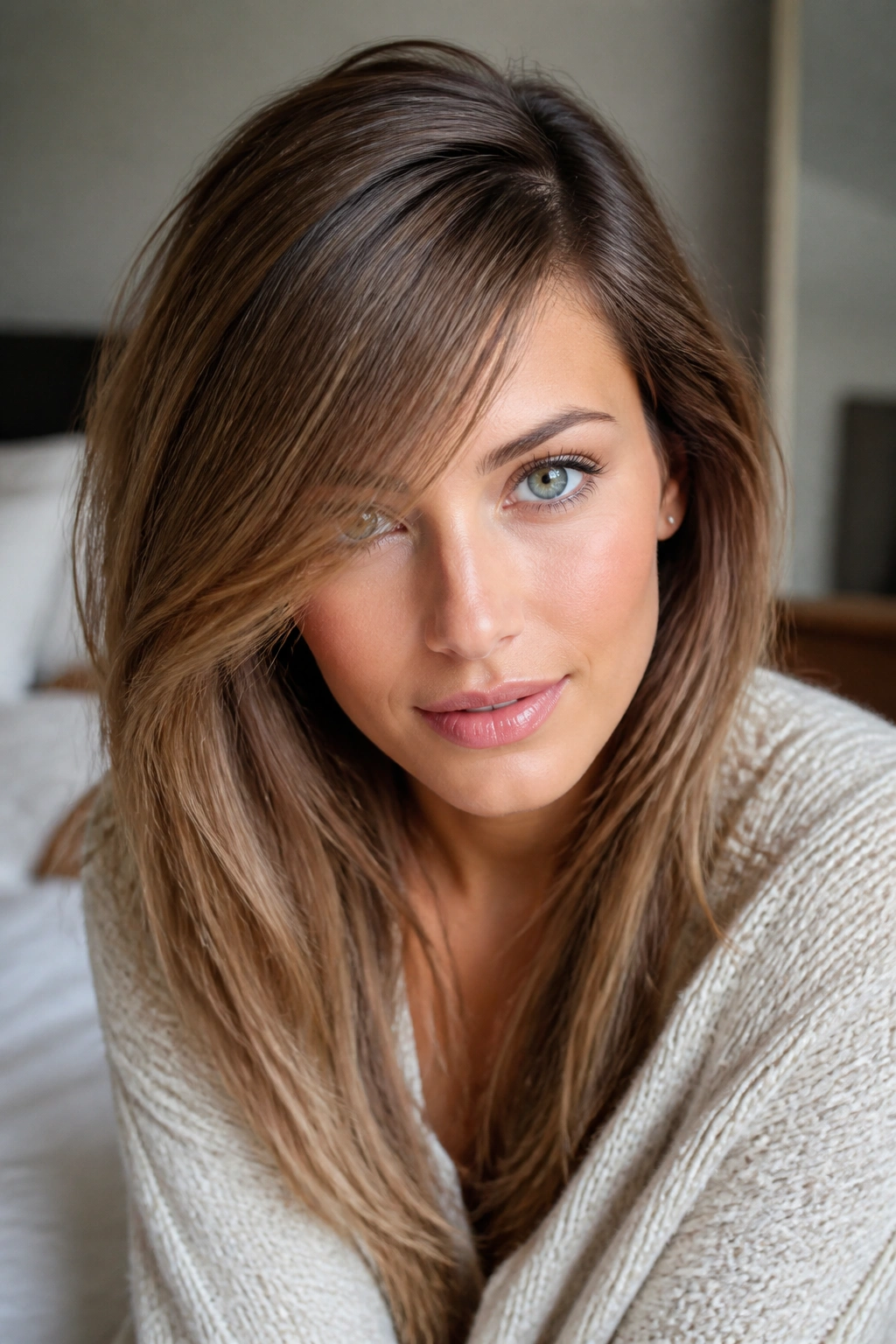
This is the dramatic one. The part starts higher than people expect, usually near the arch of the eyebrow or even a touch above it, and the fringe falls in one long diagonal across the forehead and toward the cheekbone. That high starting point gives the front more lift and makes the face look a little longer and slimmer.
Why It Feels So Strong
The shape works because the eye follows the line of the bang. You get movement, but you also get direction, and that is what makes the style feel intentional instead of accidental.
Ask for a deep side part with soft point-cut ends. If the front is cut too blunt, the bang can swing like a sheet. If it’s too shredded, it loses the clean line that makes this version so good.
- Best for medium to thick hair
- Works well on round and square faces
- Style with a 1-inch round brush and a low-to-medium heat blow-dryer
- Blow the bang up and away from the face first, then sweep it over
Pro tip: dry the root in the opposite direction for a few seconds before you send it across. It keeps the bang from sticking flat to the forehead all day.
2. Wispy Side Swept Bangs for Fine Hair

Fine hair usually looks better with a little air in the front than with a heavy curtain of it. Wispy side swept bangs do that job nicely. They give the face shape without asking the hair to support too much weight, and that matters when each strand wants to fall shut by lunchtime.
The trick is in the cut. You want narrow sections, feathered ends, and a length that lands around the brow or just below it. If the fringe gets too long and too light, it splits apart and starts acting tired. A little density at the root helps. Not much.
I like this version when the hair needs fullness up front. It gives a soft frame without stealing volume from the rest of the cut.
A small round brush, a blast of cool air at the end, and a tiny bit of dry texture spray at the root usually do more than a heavy cream ever will. Heavy products can make fine bangs hang like wet ribbon.
3. Heavy Side Swept Bangs That Skim the Brows
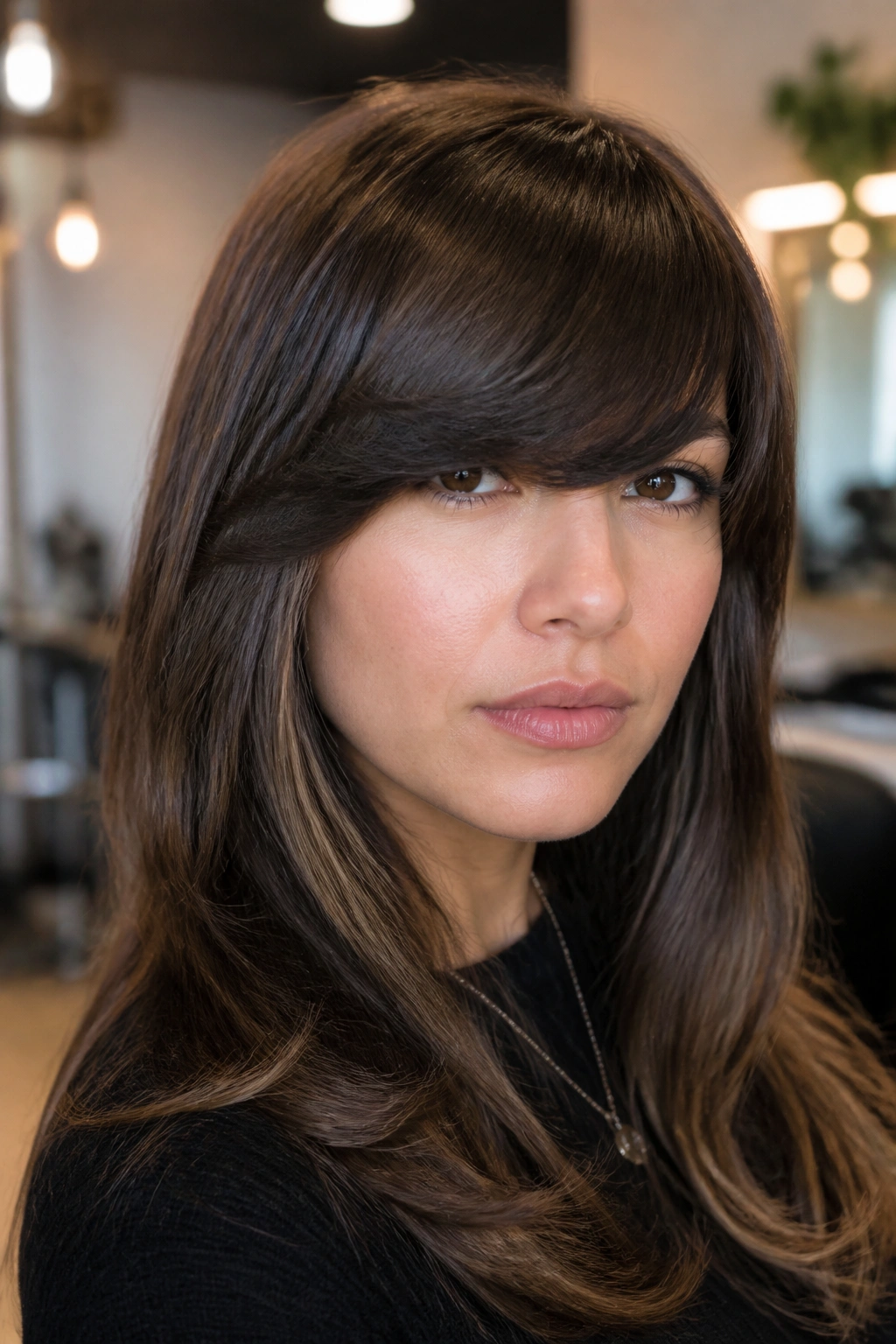
What if you want more coverage? Then go heavier, but not clunky. These side-swept bangs sit closer to the brows and have enough mass to hold shape, which makes them useful if your forehead feels broad or your brows are strong and you want the bang to sit in the same visual family.
The mistake people make here is asking for density without asking for movement. You can have both. The front should still be cut with a slight diagonal and softened ends, or it turns into one thick slab that needs constant pushing out of your eyes.
What Keeps It From Looking Boxy
A stylist should remove weight from the middle and leave the edges a little softer. That makes the bang bend instead of drop.
- Ask for longer internal layers
- Keep the shortest point just above the brow, not halfway up the forehead
- Use a round brush that matches your hair length; a 2-inch brush often works better on thicker hair
- Finish with a light spray, not a stiff one
This style has some attitude. Good. It should.
4. Chin-Length Side Fringe for Longer Faces
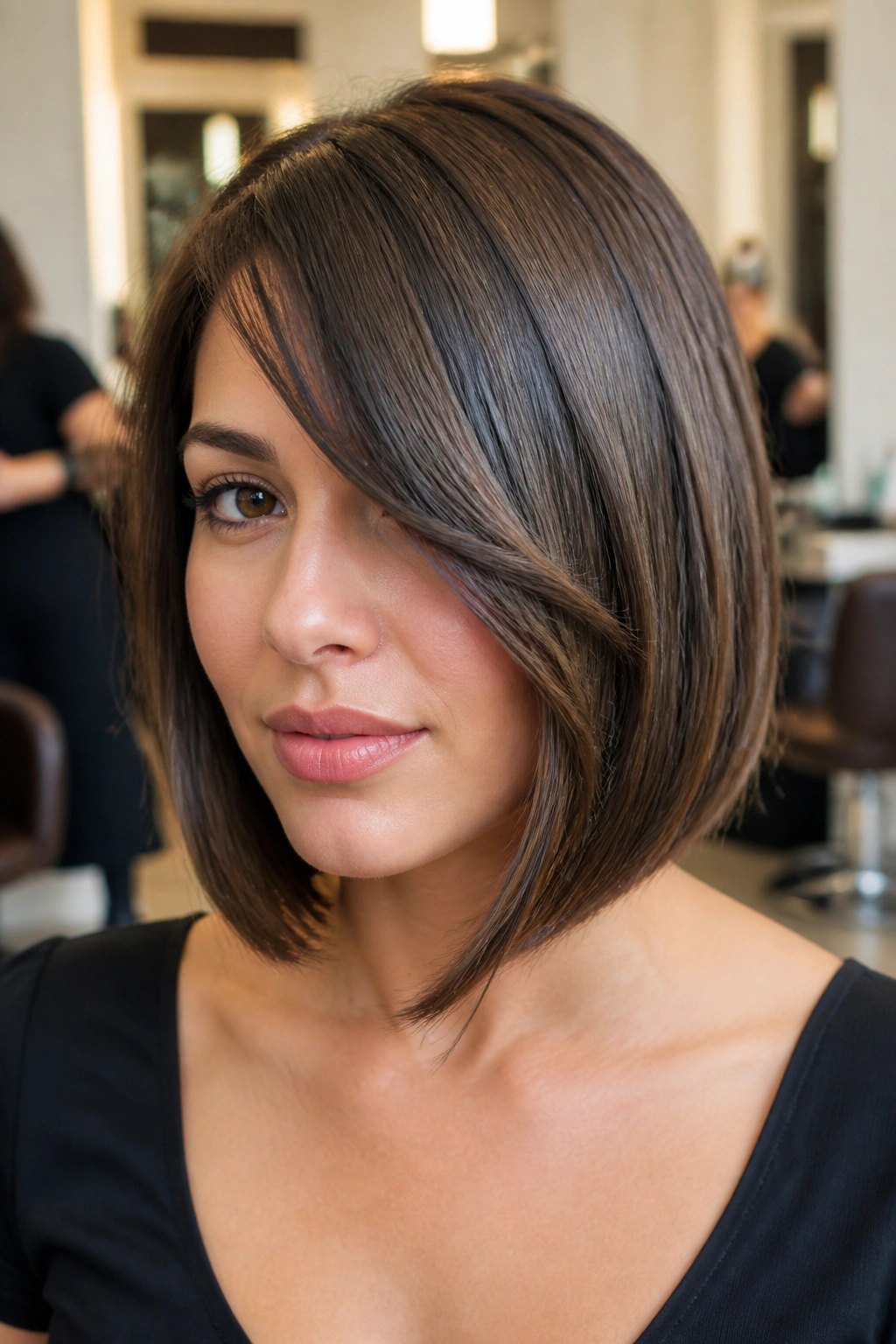
Longer faces usually look better when the front adds width, not extra height. A chin-length side fringe does exactly that. The bang begins near the temple, sweeps across the face, and lands lower than a classic fringe, often near the cheek or chin. That lower landing point breaks up vertical length in a way shorter bangs can’t.
Where the Length Should Land
The sweet spot is usually somewhere between the cheekbone and the top of the chin, depending on your hair texture. Curly hair needs more length. Straight hair can go a little shorter because it won’t spring up as much.
This cut is especially nice if your haircut already has layers around the jaw. The bang can blend into those pieces and create one continuous frame instead of looking like a separate front section someone stuck on later.
A lot of people worry a longer bang will hide their face. It does the opposite when it’s cut well. It gives the face something to rest on.
5. Feathered Side Bangs for Round Faces
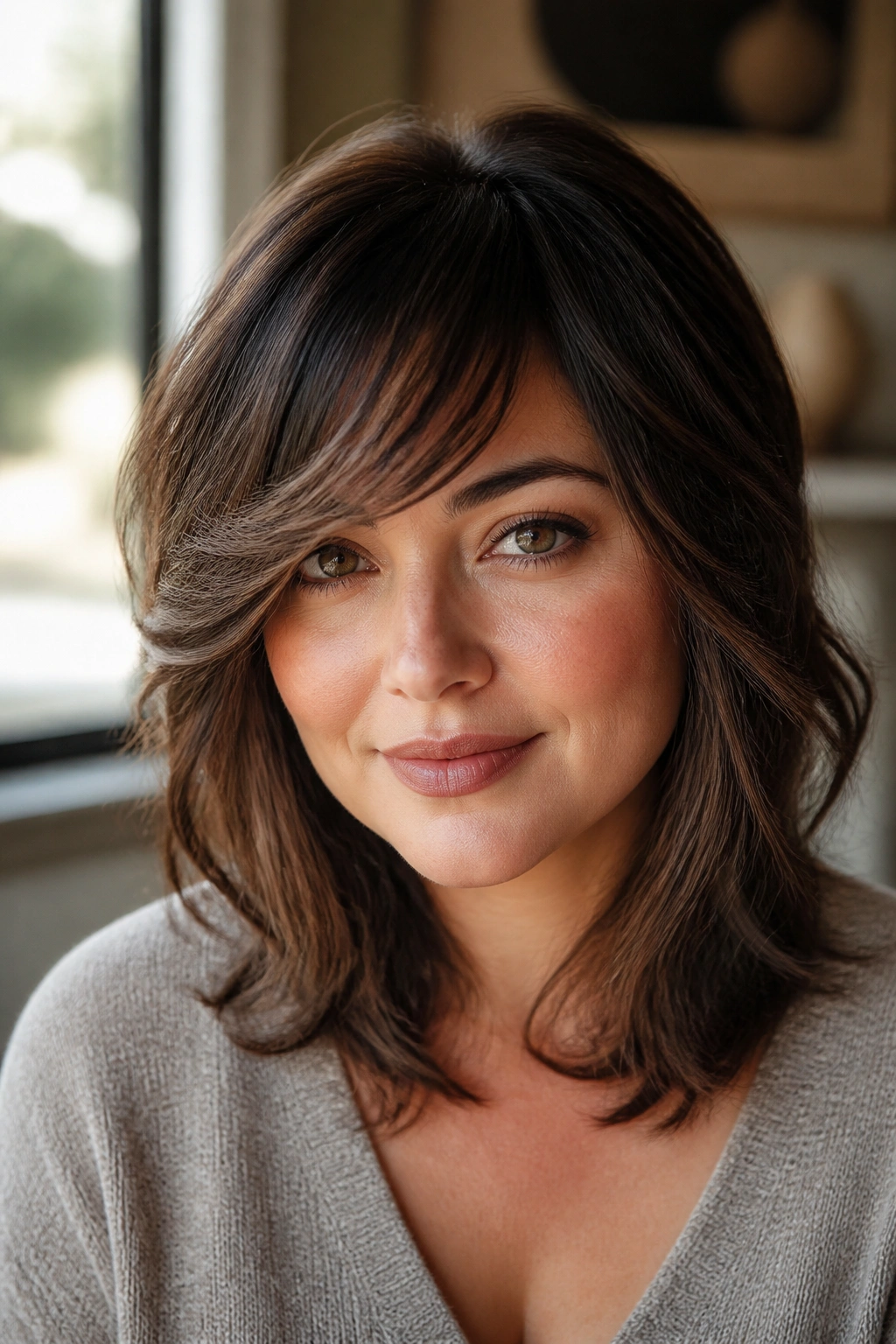
Round faces need a little diagonal energy in the front. Feathered side bangs give you that without chopping the face in half. The key is soft separation and a line that moves away from the widest point of the cheeks. You want the eye to travel down and across, not straight across.
Skip the blunt, full fringe here. It tends to widen the center of the face and can make the front feel dense in the wrong way. Feathering the ends lets the bang lift and soften at the same time.
A lot of stylists will cut this shape with a point-cutting motion and then style it with a side sweep that hugs the brow and cheekbone. That little bend matters. Flat bangs on a round face can look heavy fast.
You can also tuck the longer edge behind the ear on one side, which gives a tiny bit of asymmetry and keeps the whole cut from feeling too perfect. Perfect is overrated anyway.
6. Side Swept Bangs With a Lob
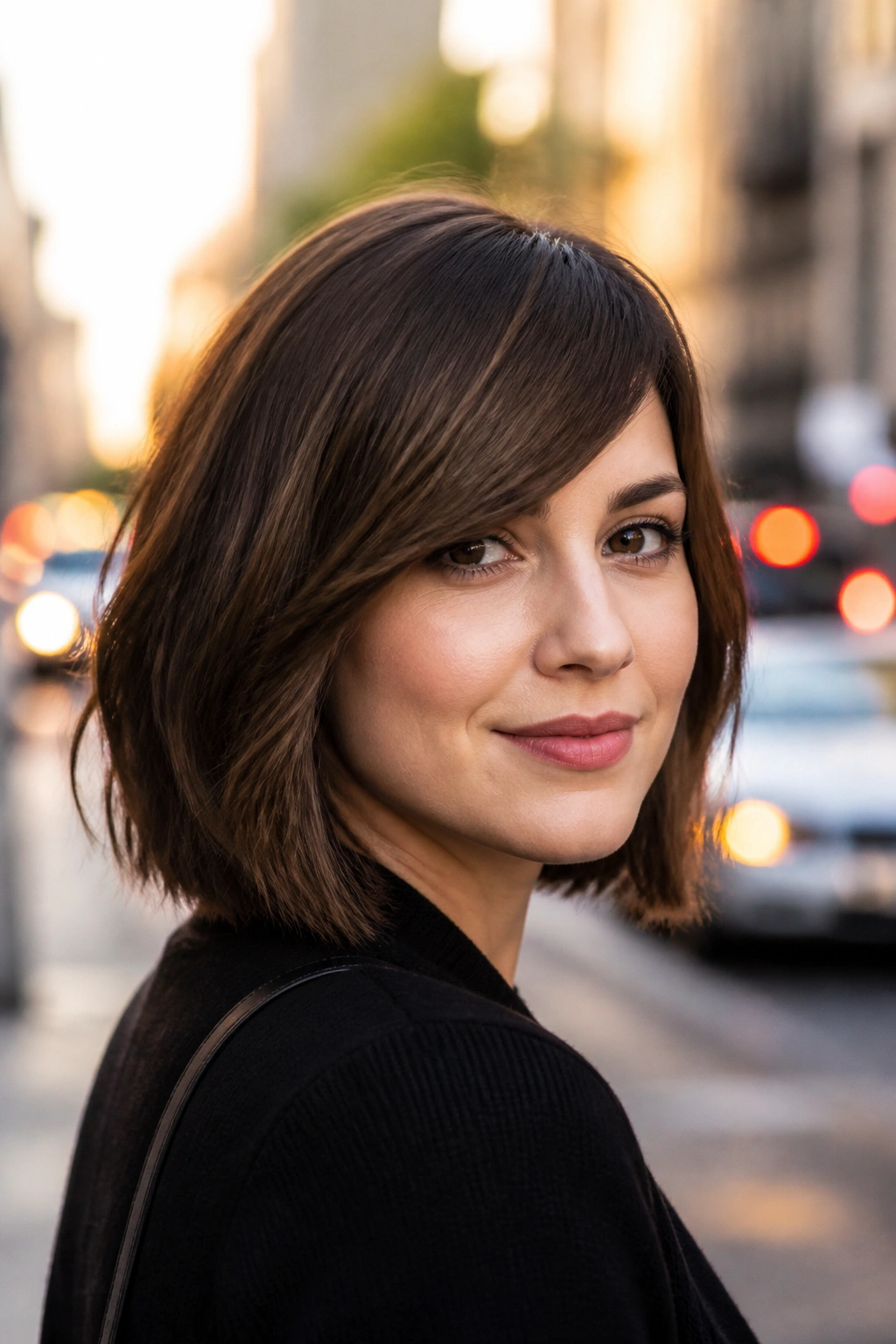
A lob and side swept bangs get along for a simple reason: both want movement at the ends. The bob length keeps the haircut neat, while the side fringe brings the softness. Together they make the face look framed without looking overworked.
The Styling Move That Helps
Wrap the bang around a medium round brush, aim the dryer nozzle downward, and bend the front away from the face for the first few seconds. Then sweep it to the side and let it cool there.
That cooling part matters. Hair sets as it cools, so if you let the front fall while it is still hot, it usually collapses faster than you want.
This combo looks especially good when the bang ends around the cheekbone and the lob hits just above the shoulder. The lines echo each other. Clean. Easy on the eyes. No extra fuss.
7. Side Swept Bangs With a Shag Cut
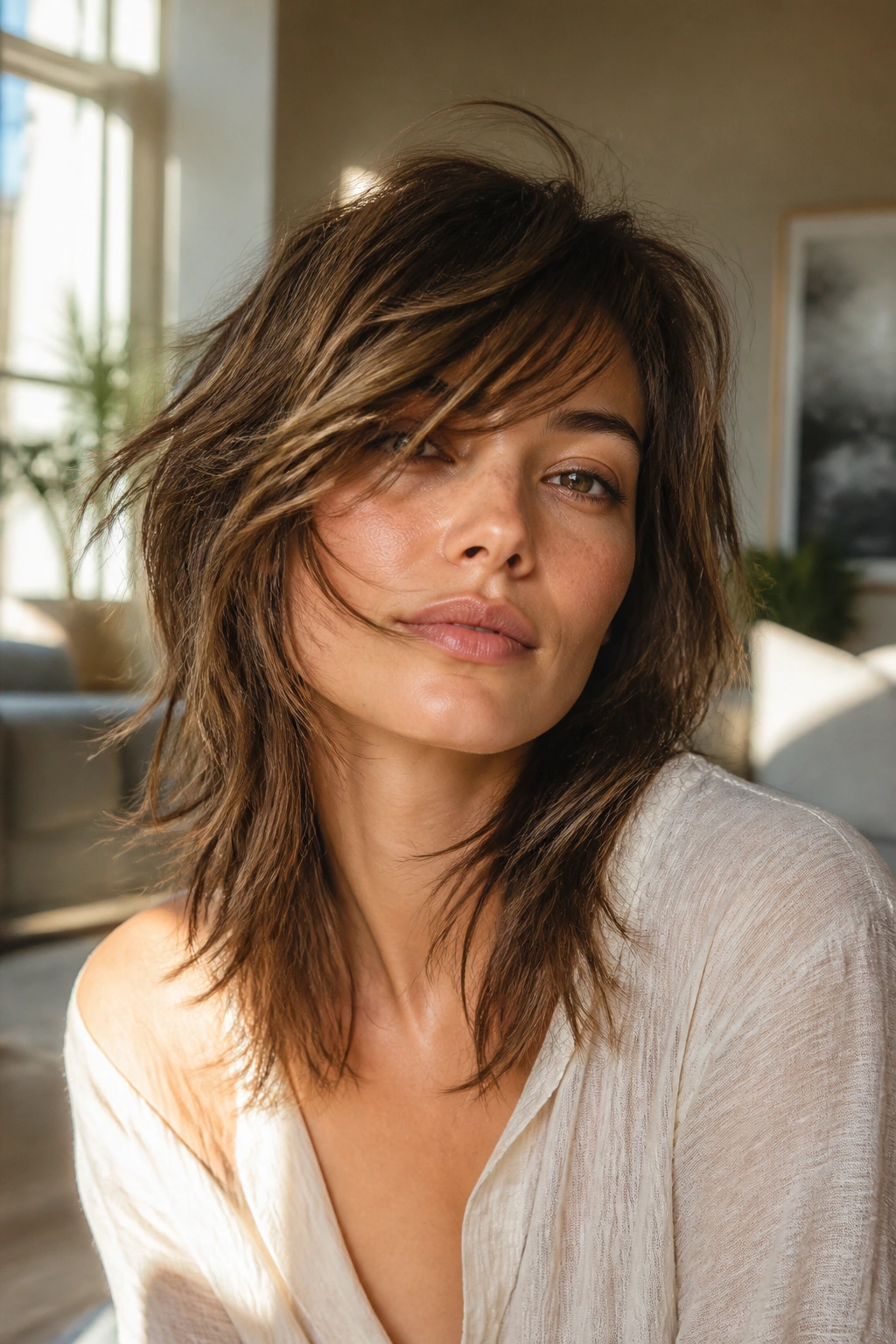
A shag loves a side sweep because the whole haircut already lives on texture. The front pieces don’t need to be polished to work. They need to be piecey, a little uneven, and light enough to move when the rest of the hair moves.
The side bang in a shag usually sits a little longer than people expect. That is on purpose. Choppy layers shorten the visual length once the hair dries, especially if there’s any wave in it. Cut too short and the fringe pops up in a weird way. Cut it with room and it settles into the shape.
Why This Combo Works
The shag creates chaos in a controlled way. The side-swept fringe gives that chaos a direction.
A salt spray or light mousse at the roots helps keep the bang from going flat, and a quick twist-dry with fingers often works better than dragging a brush through every strand. If you like hair that looks a little lived-in, this is one of the easier styles to wear.
8. Curly Side Swept Fringe
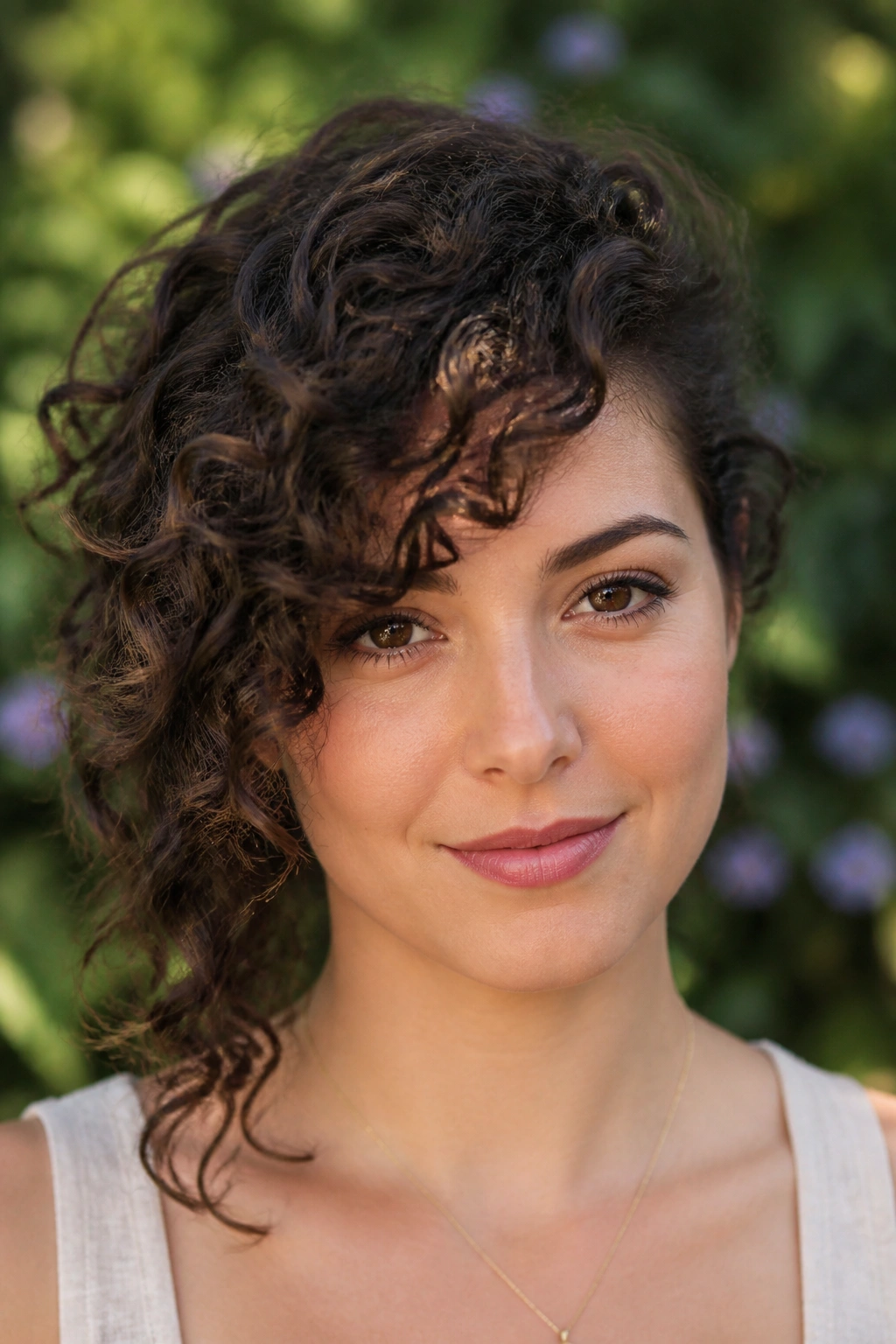
Curly hair and side swept bangs can be gorgeous, but the cut has to respect the curl pattern. That means leaving more length than you think you need and cutting with the curl in mind, not against it. A curl springs up once it dries. You already know this if you’ve ever left the salon and thought, “Wait, where did my bang go?”
The best curly side fringe usually starts around the cheekbone and falls diagonally toward one side. It should frame the forehead softly and then blend into the rest of the curls instead of sitting on top like a separate piece.
How to Dry It
- Apply curl cream or light gel to damp bangs
- Scrunch gently, don’t rough them up
- Use a diffuser on low heat
- Stop once the curl is mostly set; over-drying can make the front frizzy
Never brush curly bangs dry. That’s a fast way to turn them into a cloud with an attitude problem.
9. Side Bangs for Thick Hair That Needs Weight Removed

Thick hair can carry a side bang beautifully, but only if the front has been thinned and shaped with care. Otherwise the bang sits there like a heavy panel and keeps trying to fall into the eyes.
The right cut removes bulk from inside the section, not just at the surface. That means soft layering and some internal weight removal so the bang bends instead of pushing forward like a curtain.
What to Ask For
A stylist should know not to overdo thinning shears. Too much thinning makes the bang fray and separate in odd places.
- Ask for soft internal layering
- Keep the edge slightly longer than a blunt fringe
- Dry with a brush that gives tension, not fluff
- Finish with a touch of serum only on the ends
This version is one of my favorites on dense hair because it gives shape without making you fight the front every morning. The hair still looks full. It just stops acting stubborn.
10. Short Side Swept Bangs on a Pixie
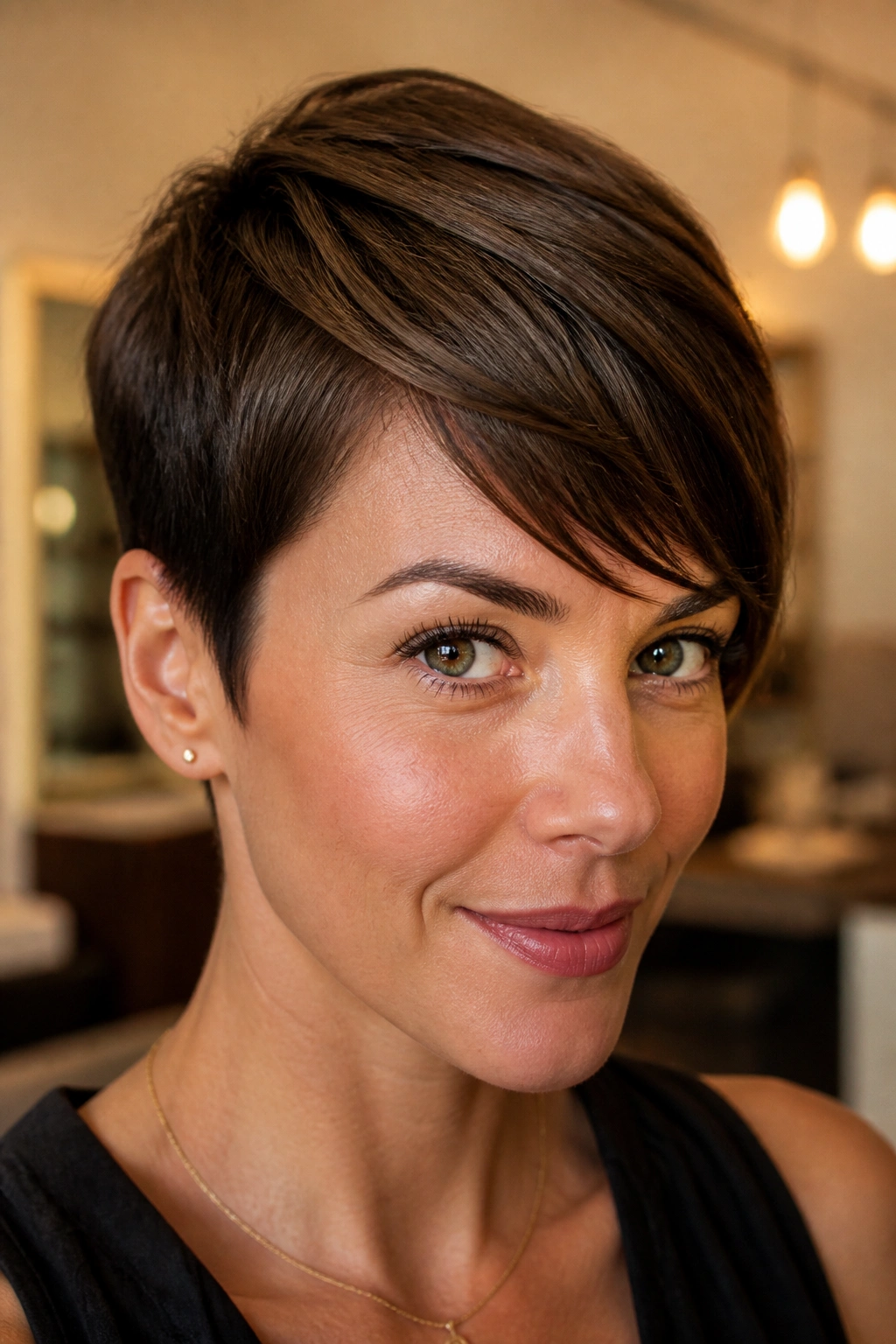
Short side-swept bangs on a pixie cut can be sharp and elegant, but they need confidence. There is no hiding in a pixie fringe. The line is right there, close to the eyes, which means the cut has to be clean and the styling has to be quick.
This style usually works best when the fringe is cut diagonally from a shorter temple area into a slightly longer front section. The longer side can brush across the brow, while the shorter side opens the face and keeps the cut from feeling heavy.
A tiny bit of styling paste or cream is usually enough. Warm it in your hands first. Then smooth it through the front and sweep the bang to the side with your fingers. A brush can make this look too neat, and neat is not always the point.
Bold, short, and a little cheeky. That’s the mood.
11. Side Swept Bangs With Curtain Bang Energy

This is the flexible one. It sits between a real side sweep and a curtain bang, which means you can part it a little differently on different days and still have the cut make sense. If you like options, this is a smart bet.
The front usually starts around the bridge of the nose or a touch higher, then opens into two soft diagonal pieces that fall to each side. One side can be worn more heavily across the forehead; the other can tuck back or blend into face-framing layers.
Why It Gives You Options
You are not locked into one direction. That matters if your part changes or if your cowlick has opinions.
This shape works well on medium hair density and on people who want softness without committing to a full fringe. It also grows out with less drama than a blunt bang, which makes it practical if you do not enjoy frequent trims.
A flat iron bend at the ends is often enough. Keep the curve loose. Too much curl at the front makes the whole thing feel styled within an inch of its life.
12. Sleek Side Part Bangs for Straight Hair

Straight hair can make side bangs look crisp in a way wavy or curly hair cannot. The tradeoff is that straight hair also shows every mistake. If the part sits crooked, you see it. If the bang is cut too heavy, you see that too.
The sleek version leans into clean lines. The fringe slides across the forehead in one smooth diagonal, then ends in a soft taper near the cheek or jaw. A light serum or heat protectant gives it a little slip, but too much product will make the roots look greasy fast.
A Small Styling Habit That Helps
Clip the bang in place for five to ten minutes after blow-drying. That cooling set makes the sweep stay where you put it.
This is the sort of style that looks easy only after you’ve learned a couple of small tricks. Before that, it can flatten in half an hour. After that, it becomes one of the least fussy bangs to wear.
13. Side Swept Bangs That Tuck Behind the Ear

Sometimes the smartest bang is the one that gives you an escape hatch. A long side sweep that tucks behind the ear on one side can open the face when you want it open and fall forward when you want softness around the eyes. It’s a nice compromise for people who like bangs in theory but get annoyed by hair near the lashes.
The cut should be long enough to survive the tuck. That usually means the shortest point lands near the brow, while the longest point brushes the cheekbone or even the top of the jaw. The ends need to be soft so they don’t poke out awkwardly when tucked.
This version is good for work, for dinners, for any day you want your face to show a little more. Pin the tucked side with a tiny bobby pin if your hair slips. No shame in that. Hair does what it wants.
14. Side Fringe for Heart-Shaped Faces
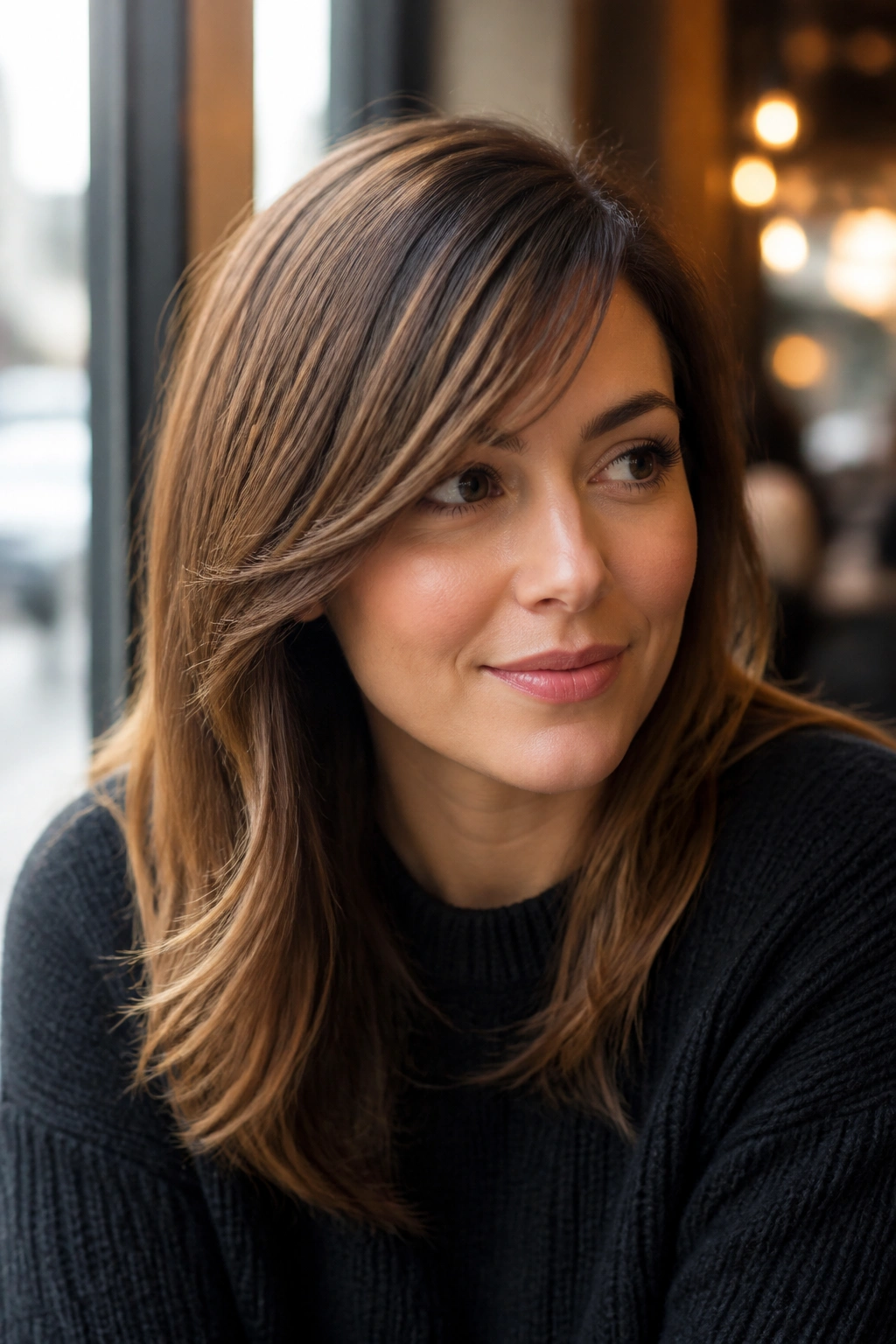
Heart-shaped faces often have a wider forehead and a narrower jaw, so the front should soften the top without adding too much bulk up high. A side fringe does that well when the shortest point starts around the brow and then angles downward toward the cheek.
What to Ask Your Stylist
Ask for a gentle diagonal line that tapers into the front layers. That keeps the bang from sitting too high on the face.
This is not the place for a short, blunt sweep that ends too far up the forehead. That kind of cut can make the forehead look wider than it is. A longer sweep balances the top half and brings more attention to the eyes and cheekbones.
The nice thing about this shape is how easy it is to blend into longer layers. It doesn’t need to look like a separate feature. It should feel like part of the haircut from the start.
15. Side Bangs for Square Jawlines
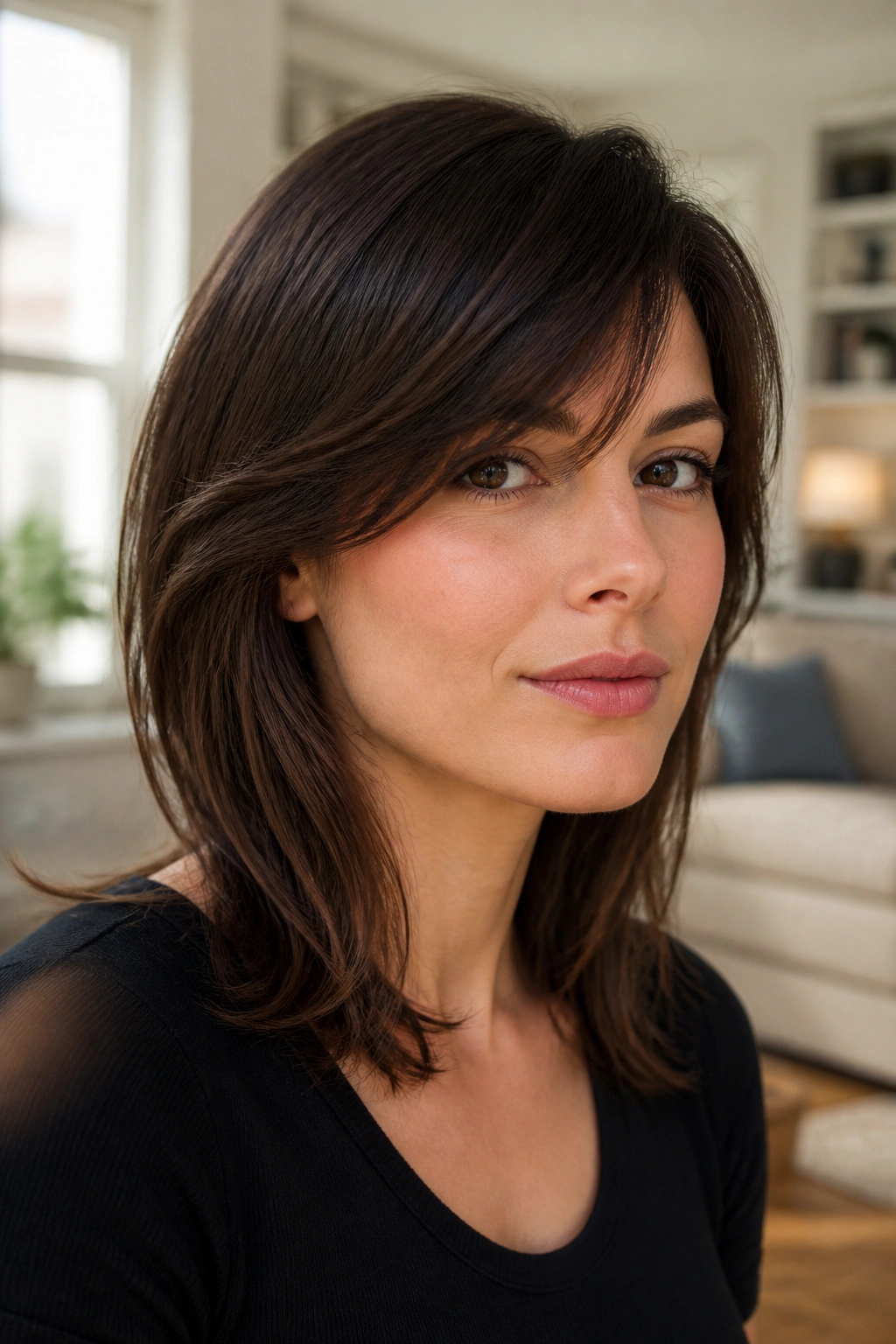
Square jawlines benefit from softness at the front, especially when the bang bends away from the strongest points of the face. A side-swept fringe with rounded ends can pull the eye diagonally and take some of the edge off a sharp jaw without hiding it.
The cut should avoid a hard straight line at the bottom. That line fights the jaw instead of balancing it. A slightly curved shape, softened with point cutting, gives you a better result.
A lot of people with angular faces look best in side bangs that fall across the forehead and then curve toward the cheek rather than ending right at the jaw. That little extra length keeps the style from feeling boxed in.
Here’s the blunt version: hard lines on top of hard lines can look severe. Softness fixes that fast.
16. Side Swept Bangs for Oval Faces

Oval faces get told they can wear anything, and that’s mostly true, which is annoying and useful at the same time. The real decision is not face shape. It is how much maintenance you want and how much forehead you want to show.
If you have an oval face, you can go heavier, lighter, longer, or more piecey. The cut is less about correction and more about taste. That gives you room to choose a style that matches your hair texture instead of chasing a rule that does not matter much.
A softer side sweep is a safe place to start if you want low drama. A thicker sweep works if you want more weight in front. Either way, the face shape is forgiving, so use that freedom to pick the fringe you will actually style, not the one you wish you had the patience for.
That last part matters more than people admit.
17. Air-Dried Side Fringe for Wavy Hair
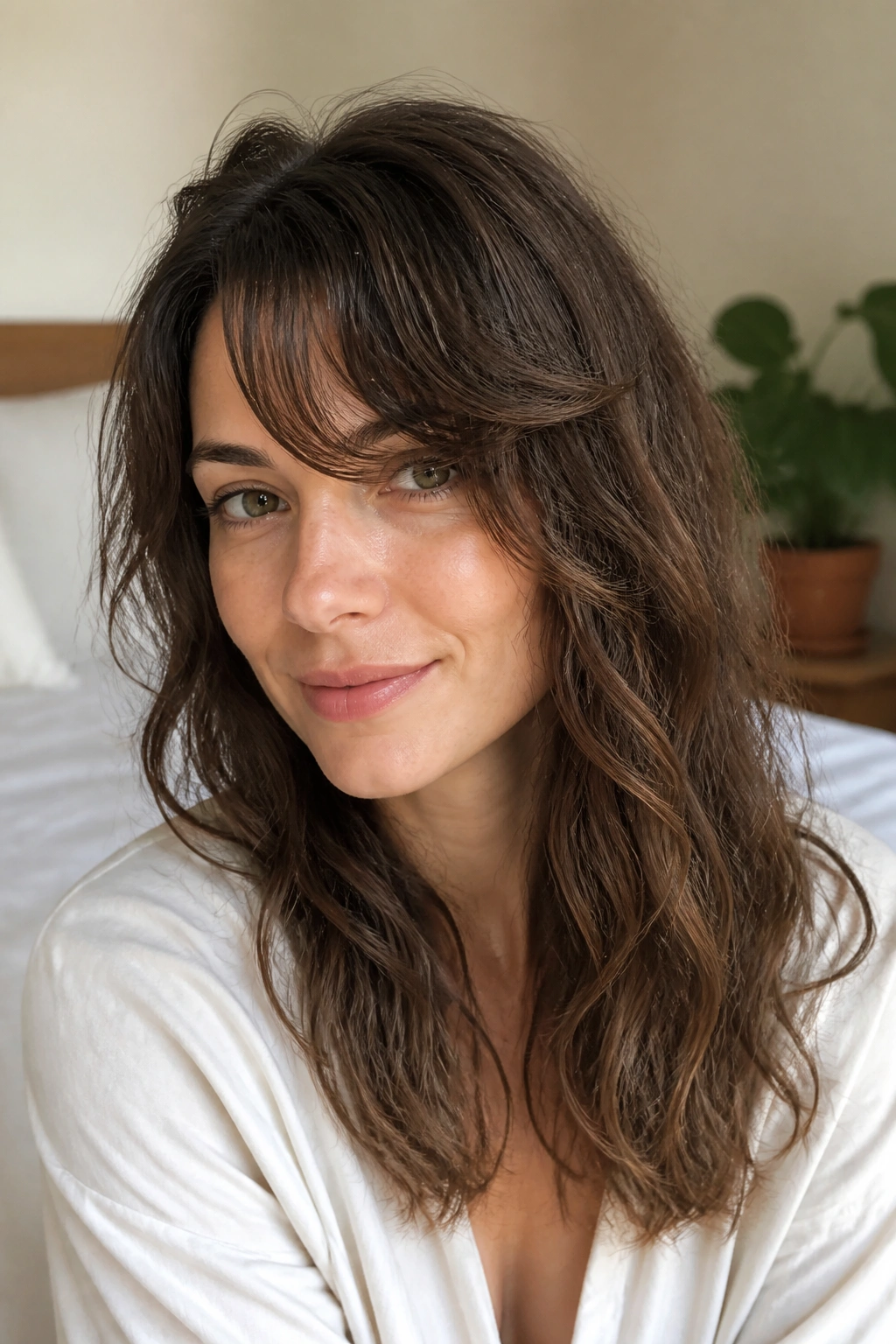
Wavy hair can make side bangs look easy, but only if you plan for shrinkage. A fringe that looks long when wet may sit much shorter once it dries, especially if the wave bends upward near the brow. So the cut needs extra length, and the styling needs a light hand.
How to Let It Set
- Apply a small amount of mousse to damp bangs
- Twist the front lightly in the direction of the side part
- Let it air-dry for the first 10 to 15 minutes
- Finish with a diffuser on low heat if the root starts to puff
The goal is bend, not volume chaos. A little movement is nice. A frizzy triangle sitting on the forehead is not.
I like this look because it feels easy without looking lazy. That’s a fine line, and wavy hair usually walks it well when the cut is thoughtful.
18. Side Swept Bangs for Updos and Ponytails
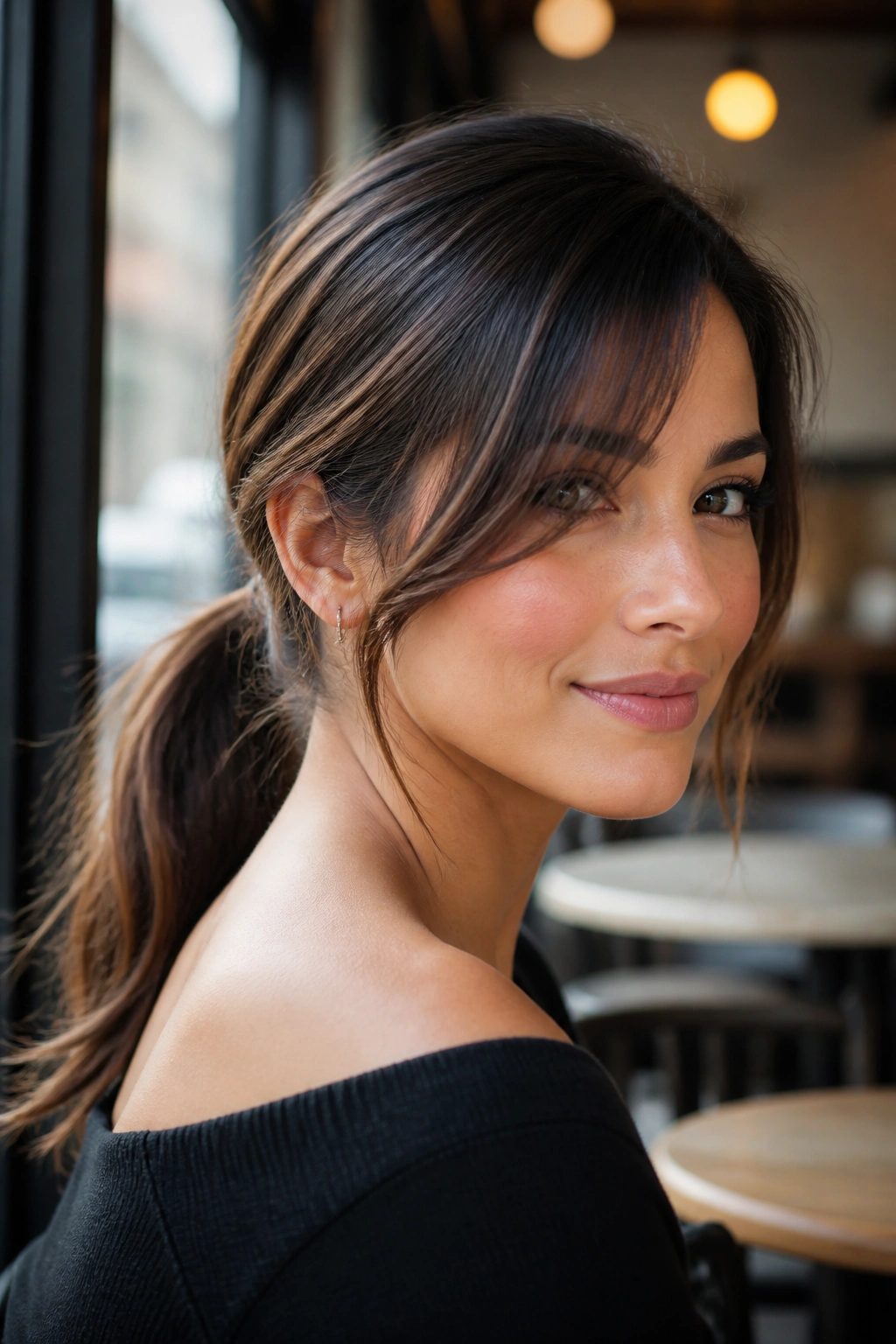
Not every fringe has to live down all day. Side swept bangs can be a great partner for buns, ponytails, and half-up styles because they soften the hairline and give the face something to frame when the rest of the hair is pulled back.
The best versions for updos are usually long enough to reach the cheekbone or jaw. That length lets the bang move around the face instead of sticking straight out or popping loose in odd places. You can also curl it away from the face with a larger brush or a quick pass of a flat iron.
This is one of those styles that saves a simple hairstyle from looking too bare. A low ponytail plus a good side sweep can look more finished than a very structured updo that forgot the front.
A tiny pin tucked under the hair helps on windy days. Small fix. Big payoff.
19. Long Face-Framing Bangs That Blend Into Layers

This is the grown-out, low-drama version. The bang starts as a side sweep, then melts into the front layers so you can hardly tell where the fringe ends and the haircut begins. That makes it a good choice if you want framing without a strong bang line.
The shortest piece usually lands near the cheekbone, and the longest piece can fall to the jaw or even the collarbone depending on the haircut. The diagonal is still there, but it is soft enough to disappear into the rest of the hair when needed.
These bangs are a smart move for people who dislike frequent trims. They grow out in a less awkward way than a blunt fringe, and they still give the face some shape even when they are past their prime.
Honestly, this is one of the most useful bang styles on the list. It forgives a messy morning.
20. Side Swept Bangs With a Rounded Blowout

There is a reason this version shows up on so many salon chairs. A rounded blowout gives side swept bangs lift at the root and a soft curve through the ends, which is exactly what a face-framing fringe needs if you want polish without stiffness.
The Brush Path
Start by lifting the bang at the root with the brush, then curve the ends away from the face. Don’t yank. Let the hair wrap around the barrel or brush and release it only after it cools.
That cooling moment is the part people skip. It is also the part that makes the shape hold.
This style works especially well on medium-density hair and on bangs that have a little length to play with. It can make the front feel bouncier and more deliberate, even if the rest of the hair is tucked behind the shoulders or pinned up. If you want that salon finish without a huge amount of product, this is the route I’d pick first.
21. Side Swept Bangs for Low-Maintenance Grow-Out

Some bangs are high-maintenance because the shape is fussy. Side swept bangs can avoid that trap if they’re cut with grow-out in mind. That means a longer diagonal, soft edges, and enough blend that the front still looks okay after a few weeks of haircuts you have not booked yet.
The best low-maintenance version starts a little longer than you think and keeps the shortest point soft, not abrupt. That way the bang can be pushed aside, tucked back, or worn forward without looking like you missed a trim by accident.
What Helps Between Cuts
- Dry shampoo at the root on day two or three
- A small round brush for quick root lift
- A pin for the stubborn side on busy mornings
- A trim every 4 to 6 weeks if you want the shape to stay crisp
If you hate feeling trapped by bangs, this is the version worth asking for. It gives you the face frame without turning your calendar into a maintenance log.
22. The Soft, Blended Side Sweep That Grows Gracefully

This is the one I keep coming back to when somebody wants bangs but also wants peace. A soft, blended side sweep has enough diagonal shape to frame the face, enough length to move around, and enough softness to stop looking fussy the minute it starts growing out.
The real strength here is balance. The bang should be noticeable, not bossy. It should land somewhere between the brow and cheekbone, then disappear into the front layers instead of ending in a hard line. That makes it work on more face shapes than people expect, and it also makes styling easier on mornings when you would rather not wrestle with a round brush.
If you’re choosing from these styles and still feel stuck, pick the one that fits your hair texture first, then your face shape, then your routine. That order matters. A bang you can style in five minutes will beat a prettier one that needs fifteen and a very good mood.
