



The right bangs can change a haircut faster than a full color appointment. They can soften a strong jaw, bring focus to the eyes, and make long hair feel fresh without taking off six inches.
For women over 40, the trick is not chasing a younger face. It’s finding fringe that works with your hairline, your cowlicks, and the amount of time you actually want to spend with a blow-dryer.
A bang that looks lovely in a salon chair can get fussy at home if it fights your texture. Fine hair hates heavy fringe. Thick hair can turn blunt bangs into a helmet if the cut is too dense. Curly hair needs room to spring.
Some of the most flattering choices are the least dramatic ones: a soft curtain that splits at the brow, a side sweep that slides around glasses, a wispy line that kisses the lashes and grows out without a drama scene. Soft curtain bangs are still the easiest place to begin.
1. Soft Curtain Bangs That Open the Face
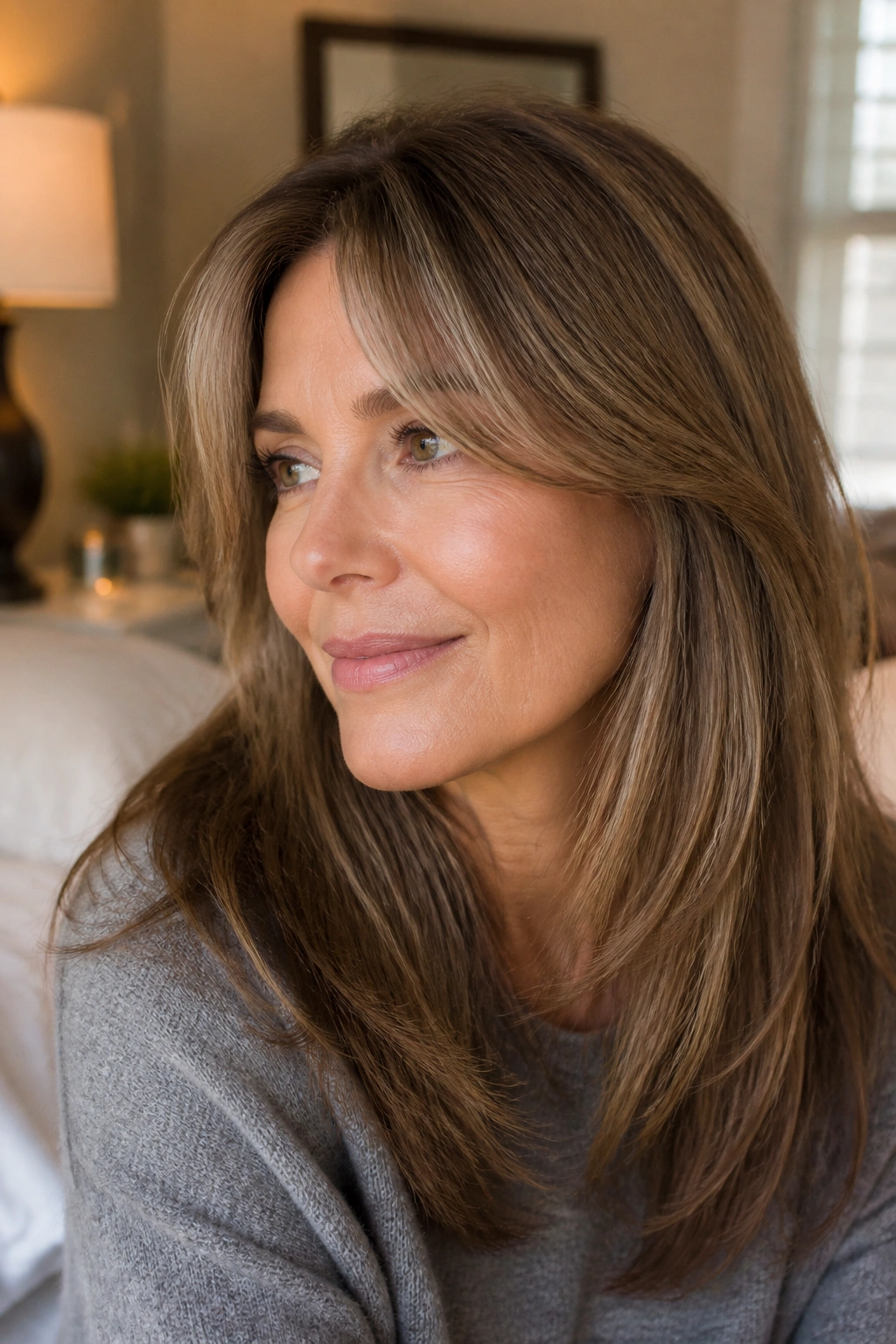
Soft curtain bangs are the classic answer when you want fringe without feeling trapped by it. They part in the middle or just off-center, then drift down toward the cheekbones instead of sitting like a wall across the forehead.
Why They Work So Well
The shape does a lot of quiet fixing. It softens the top half of the face, gives movement around the eyes, and lets you tuck the pieces away on lazy days. That matters when you want something flattering but not high-maintenance.
A good curtain bang usually starts around the bridge of the nose or the pupil line and gets longer toward the jaw. If it ends too short, it can look choppy. If it’s too long, it stops behaving like fringe and starts acting like a face layer.
- Best with: straight, wavy, and loose-curly hair
- Ask for: longer sides that blend into cheekbone layers
- Style with: a 1-inch round brush and a quick bend away from the face
Stylist tip: keep the center soft, not bulky. That little bit of air makes the whole cut look calmer.
2. Long Side-Swept Bangs That Slide Across the Forehead

A side-swept bang is the safe bet that still looks polished. It gives you forehead coverage on one side, then sweeps into the rest of the haircut instead of sitting there demanding attention.
The nice part is the grow-out. Long side bangs are forgiving, which is half the battle if you do not want a trim every three weeks. They also play well with cowlicks because the diagonal line works with the part instead of fighting it.
Keep the shortest point near the brow and let the longest piece graze the cheek or even the top of the lip. That extra length keeps the bang from looking dated or too stiff.
A side sweep is especially useful if you wear your hair in a low ponytail a lot. It leaves enough fringe to frame the face, but not so much that it turns into daily homework.
3. Wispy Brow-Grazing Fringe for a Light, Easy Finish
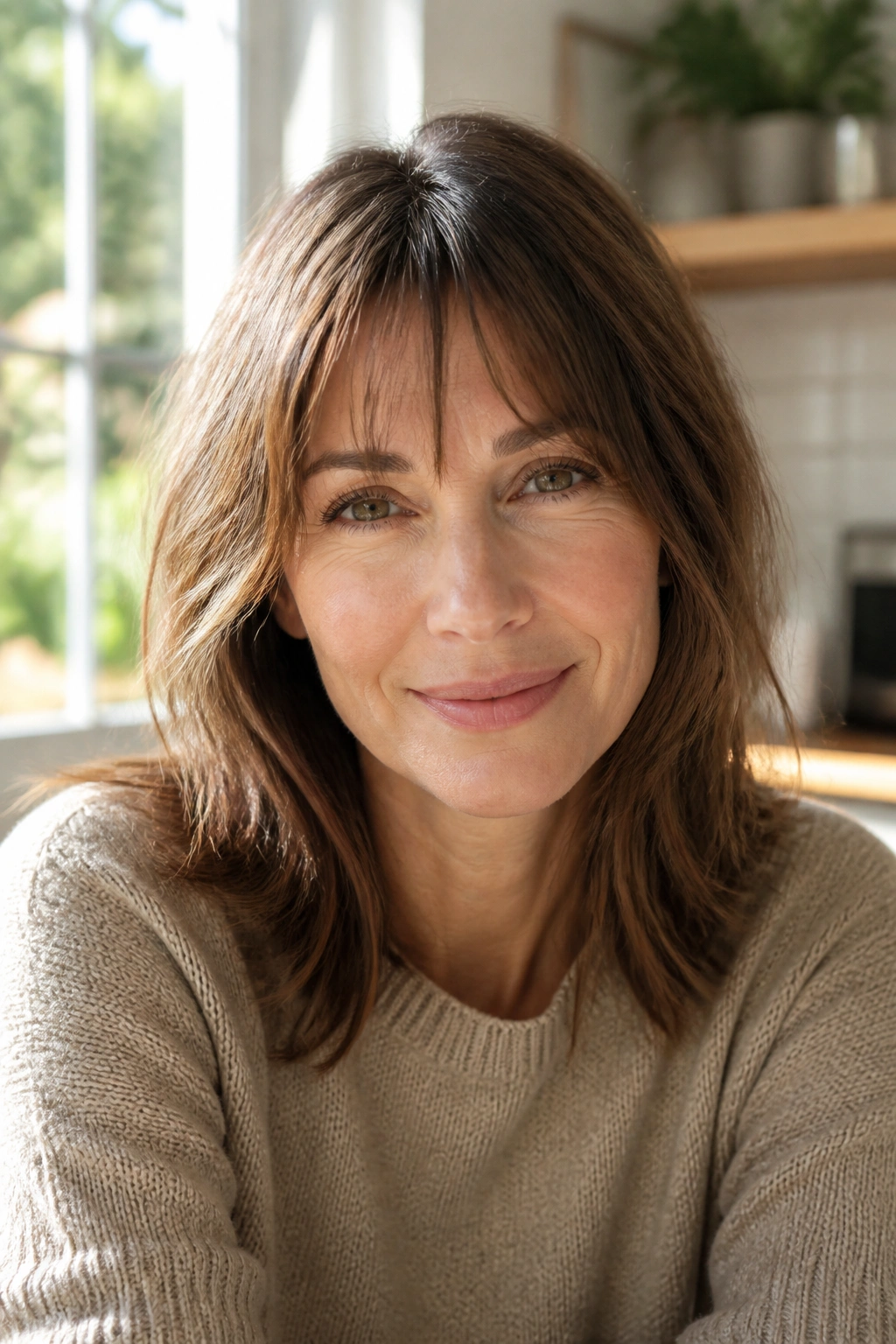
Want a fringe that barely announces itself? Wispy bangs are the answer. They sit around the brow line, but the ends are feather-light, so you still see skin and movement underneath.
How to Ask for It
Tell your stylist you want a soft, see-through edge rather than a solid block of hair. That one request changes the whole mood of the cut. It matters even more on fine hair, because too much thinning can make the fringe look stringy instead of airy.
Wispy fringe is kind to glasses, busy mornings, and hair that gets flat by noon. It looks especially good when the rest of the cut has a little bend or wave. Straight hair can wear it too, but it needs a tiny bit of texture at the ends.
Use a small round brush or even a flat brush with a quick blast from the dryer. No need to overwork it.
A soft fringe should move. If it sits perfectly still, it is usually too heavy.
4. Bottleneck Bangs With a Narrow Center and Fuller Sides

Bottleneck bangs look a little smarter than they sound. They start narrower in the middle, then widen as they drop toward the temples, which gives the face a soft frame without a hard line.
That shape is handy if you want something more styled than curtain bangs but less blunt than a straight fringe. It flatters a lot of hair textures because the middle stays light while the sides carry the shape.
What to Look For
- Shorter center piece that sits near the middle of the forehead
- Longer outer pieces that hit around the cheekbone
- Soft internal texture, not chunky layers
- A finish that bends, not flips
Bottleneck bangs are one of those styles that look deliberate even when they’re slightly mussed. That’s a gift on real life hair. A bit of frizz or bend does not ruin them; it often helps.
5. Blunt Bangs That Sit Right at the Brows
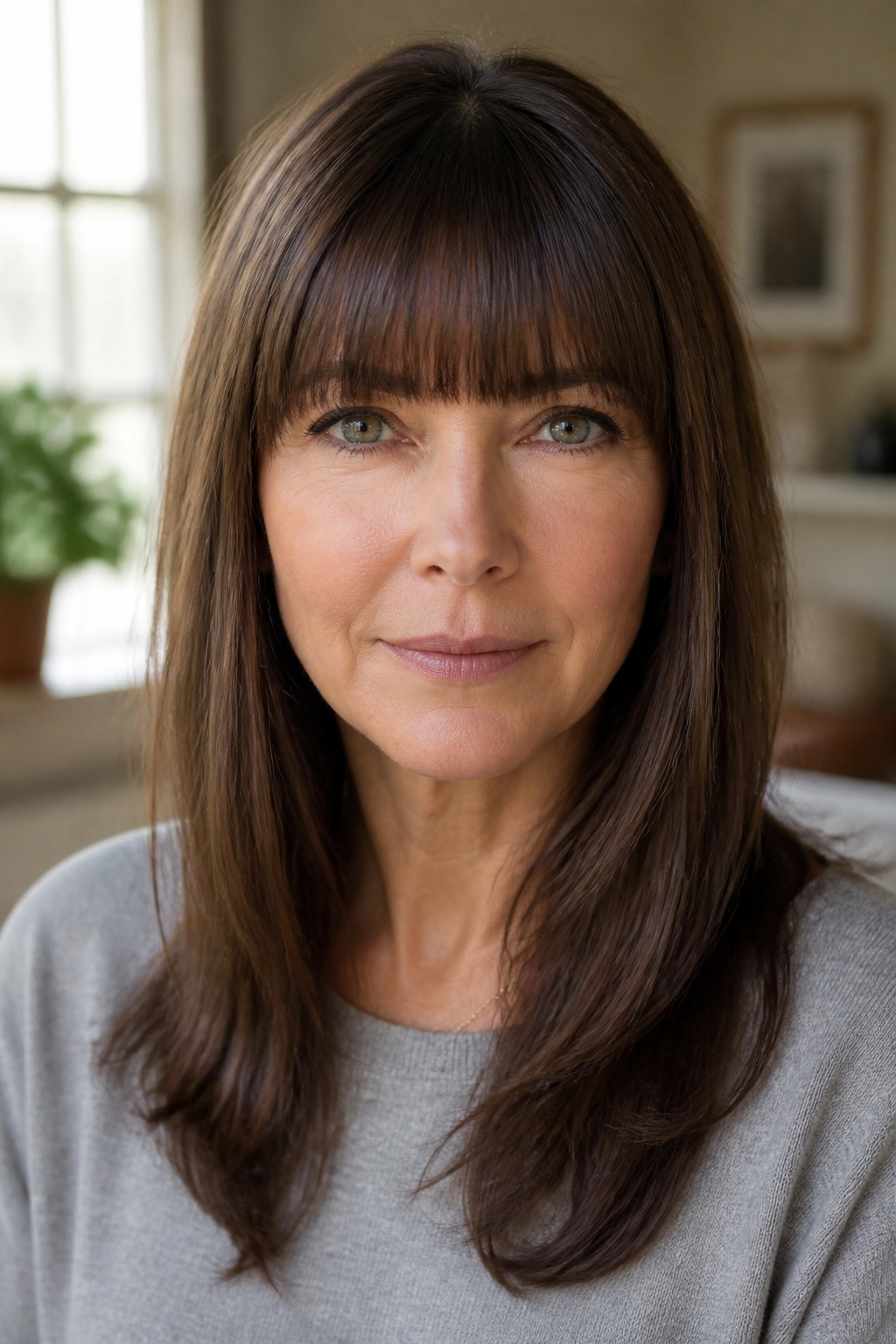
Blunt bangs can be gorgeous on mature faces, but they need conviction. Half-hearted blunt bangs look like a mistake. Clean, full bangs with a solid edge look strong and expensive in the best sense of the word.
The cut works best when the line lands right at the brows or just above them. Too long, and the shape loses its sharpness. Too short, and it can feel severe unless the rest of the haircut is very soft.
They are a smart choice for straight or slightly wavy hair that holds a line well. Thick hair can wear them beautifully too, but only if the stylist removes some bulk underneath. Otherwise the fringe grows a little shelf-like.
This is not the easiest bang to live with. It usually needs more frequent trims and some morning styling. But when it sits right, it does something few other fringes do: it makes the haircut look immediately intentional.
6. Feathered Bangs That Melt Into Layers

Feathered bangs are for women who want motion more than precision. Instead of a hard line, the ends are softened and the fringe folds into the rest of the cut like it was always meant to be there.
Why They Feel Easier
Compared with blunt fringe, feathered bangs are less demanding about perfection. A little wind, a little humidity, a little bend from the dryer — none of that breaks the look. That’s why they work so well on layered cuts and shoulder-length styles.
The best version usually comes from point-cutting or light texturizing at the ends. Not too much. If the stylist over-thins them, the bang loses shape and starts looking wispy in a bad way.
Feathered fringe pairs well with soft layers around the cheekbones and jaw. It’s one of my favorite choices for anyone who wants to keep the forehead partially open but still likes the feeling of hair around the eyes.
7. Piecey Bangs With Separated Ends

Piecey bangs are what happens when you want movement first and polish second. Instead of one solid curtain of hair, you get little sections that separate naturally and show a bit of forehead through the gaps.
That makes them useful for hair that gets greasy at the front or hair that falls flat if it’s too dense. They also work nicely for people who use a little styling cream or wax and don’t mind running their fingers through the fringe.
A good piecey bang should still have shape. It should not look accidental. The trick is in the ends: they need enough texture to separate, but not so much that they fray.
Quick Details
- Best on: wavy hair, layered hair, slightly thick hair
- Styling product: a pea-sized amount of lightweight cream
- Finish: finger-dried or rough-dried with a diffuser
- Avoid: heavy oils at the root
One useful rule: if the pieces clump into three sad little strings, there is too much product.
8. Arched Bangs That Follow the Brow Shape

An arched fringe curves gently in the middle and tapers a bit at the sides, which gives the face a soft frame without a straight line cutting across it. It’s quieter than blunt bangs, but more defined than wispy fringe.
Do you want your eyes to do the work? This shape helps. The curve draws attention upward and gives a little lift, especially when the brows and cheekbones are the features you want to emphasize.
It’s a nice option for women with medium to high foreheads who still want the front of the haircut to feel airy. Ask for the center to skim the brows and the outer edges to land a touch lower.
The important part is balance. If the arch is too steep, it turns playful in a way that can feel dated. Keep it soft, and it stays elegant without trying too hard.
9. Choppy Textured Fringe That Looks Intentionally Loose

Choppy textured fringe is for women who do not want their bangs to look “done.” It has visible separation, a little edge, and a finish that feels more lived-in than polished.
That said, choppy does not mean careless. The cut still needs a shape, usually with short-to-medium pieces that sit just above or at the brow line. The stylist should remove weight in a controlled way so the bang moves instead of puffing up.
This style is a good match for layered haircuts, especially if your hair has some natural wave. It also softens stronger features because the broken edge keeps the front from feeling heavy.
A little matte texture spray goes a long way.
Skip the glossy serum here. Shine can make choppy bangs look stringy when they’re supposed to look airy.
10. Grown-Out Shag Bangs That Live Well Between Trims
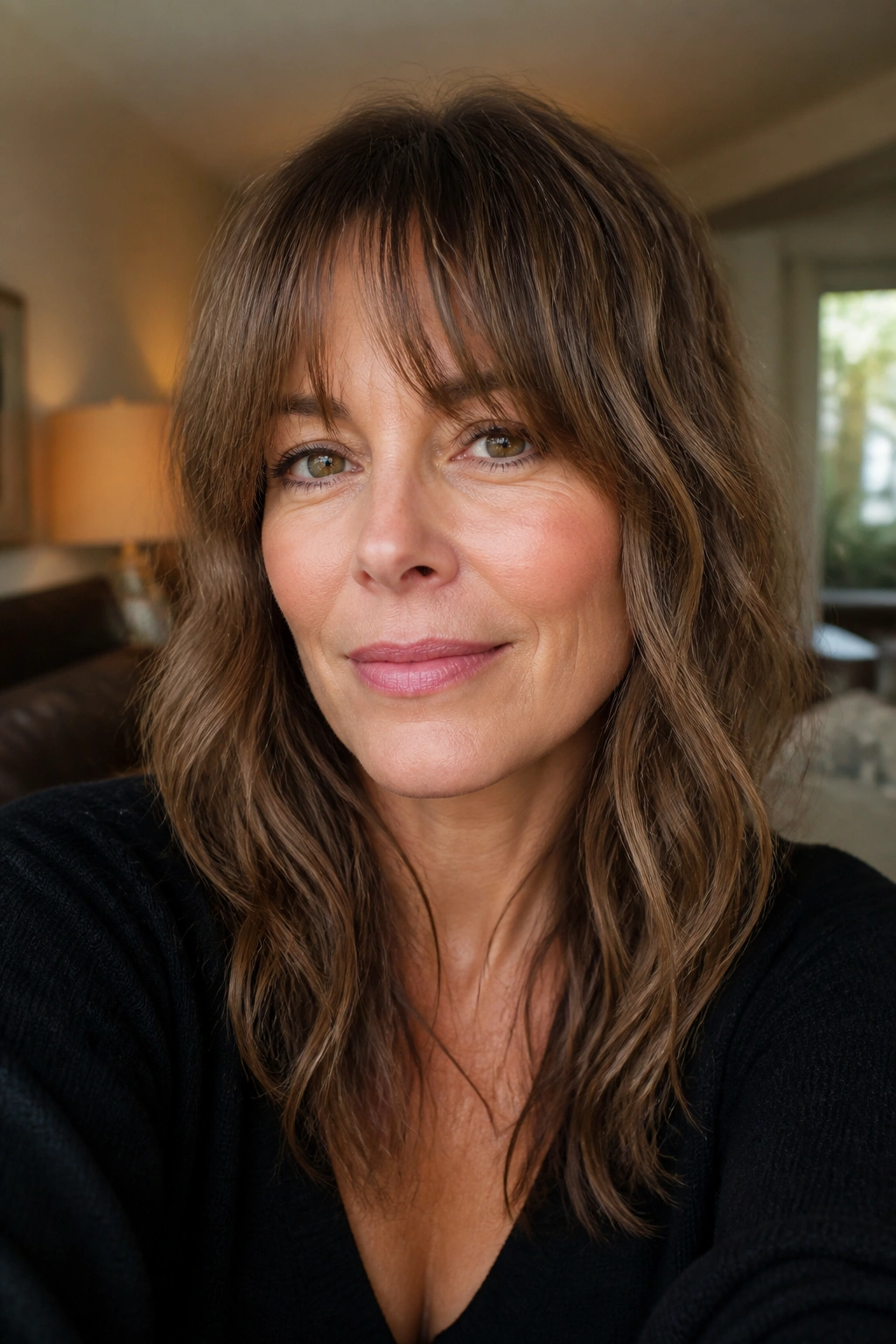
Grown-out shag bangs are the easiest bangs to live with. They sit somewhere between a fringe and a face layer, and that is exactly why so many people keep them once they try them.
The shape usually starts around the cheekbones and blends into a shaggy cut or long layers. There’s no hard beginning and no hard end. If you want fringe that can survive a messy bun, a humid commute, and a skipped styling day, this is a strong candidate.
They also suit a lot of older hair, which can be drier, finer, or a little less cooperative than it used to be. The softer shape hides that. It does not demand perfection from the ends.
This is the bang I’d pick for anyone who likes the idea of fringe but hates the upkeep. It grows out with far less awkwardness than a blunt line.
11. Face-Framing Fringe With Long Layers
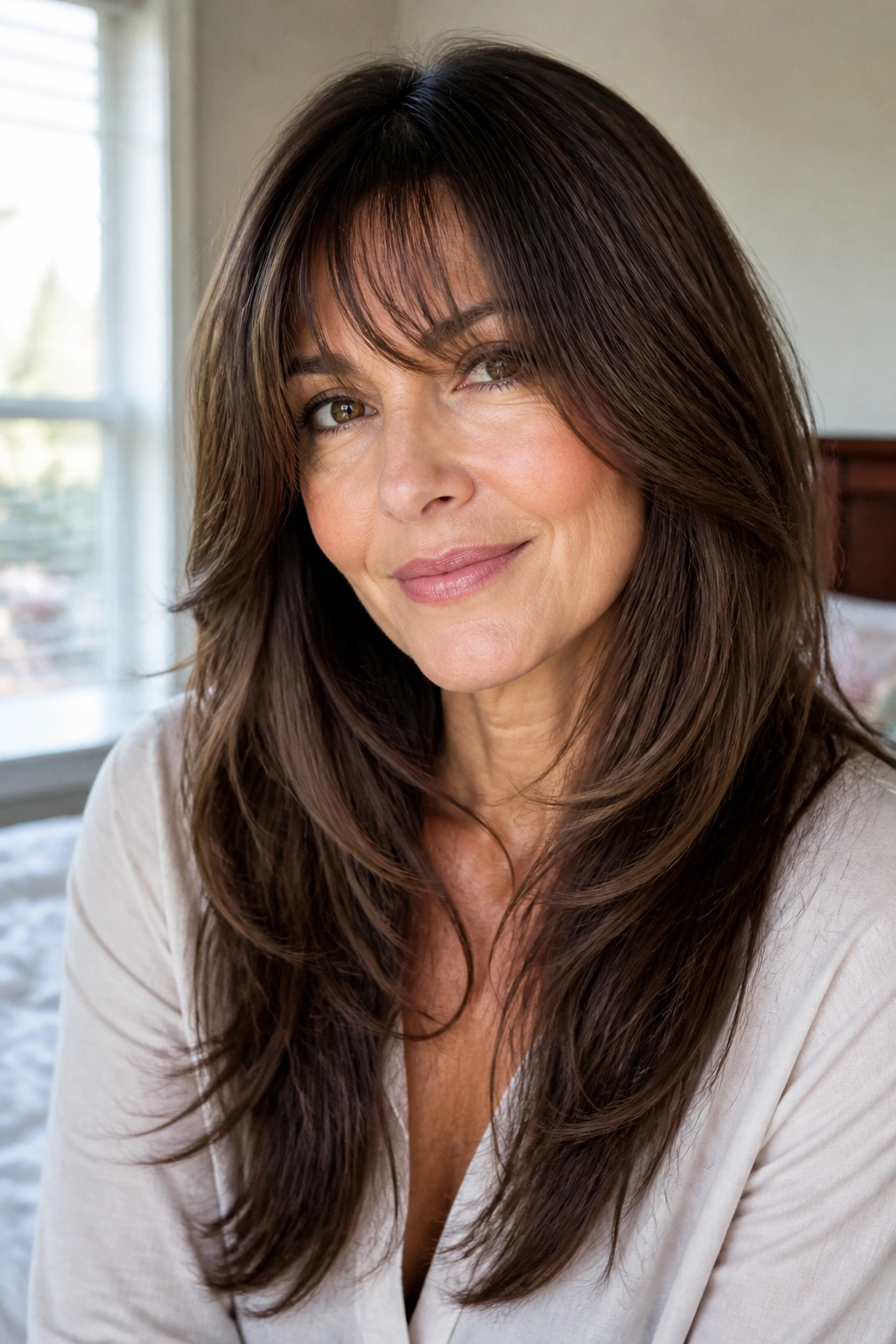
This is the sneaky option. It gives you the mood of bangs without a full forehead commitment, which is useful if you are still deciding whether you want actual fringe.
The front pieces begin around the chin or cheekbone and angle inward toward the face. Some stylists call this a fringe, some call it face framing, and honestly the label matters less than the effect. You get movement, softness, and a little front-end polish.
What to Ask For
Tell your stylist you want the front pieces to start below the brow line and connect into long layers. That keeps the look open and avoids the heavy top-heavy feeling some fringes create.
It’s especially nice on medium to long hair because the front pieces can echo the length of the rest of the cut. If your hair is growing out from a shorter style, this can bridge the gap beautifully.
12. Curly Bangs That Work With the Curl, Not Against It
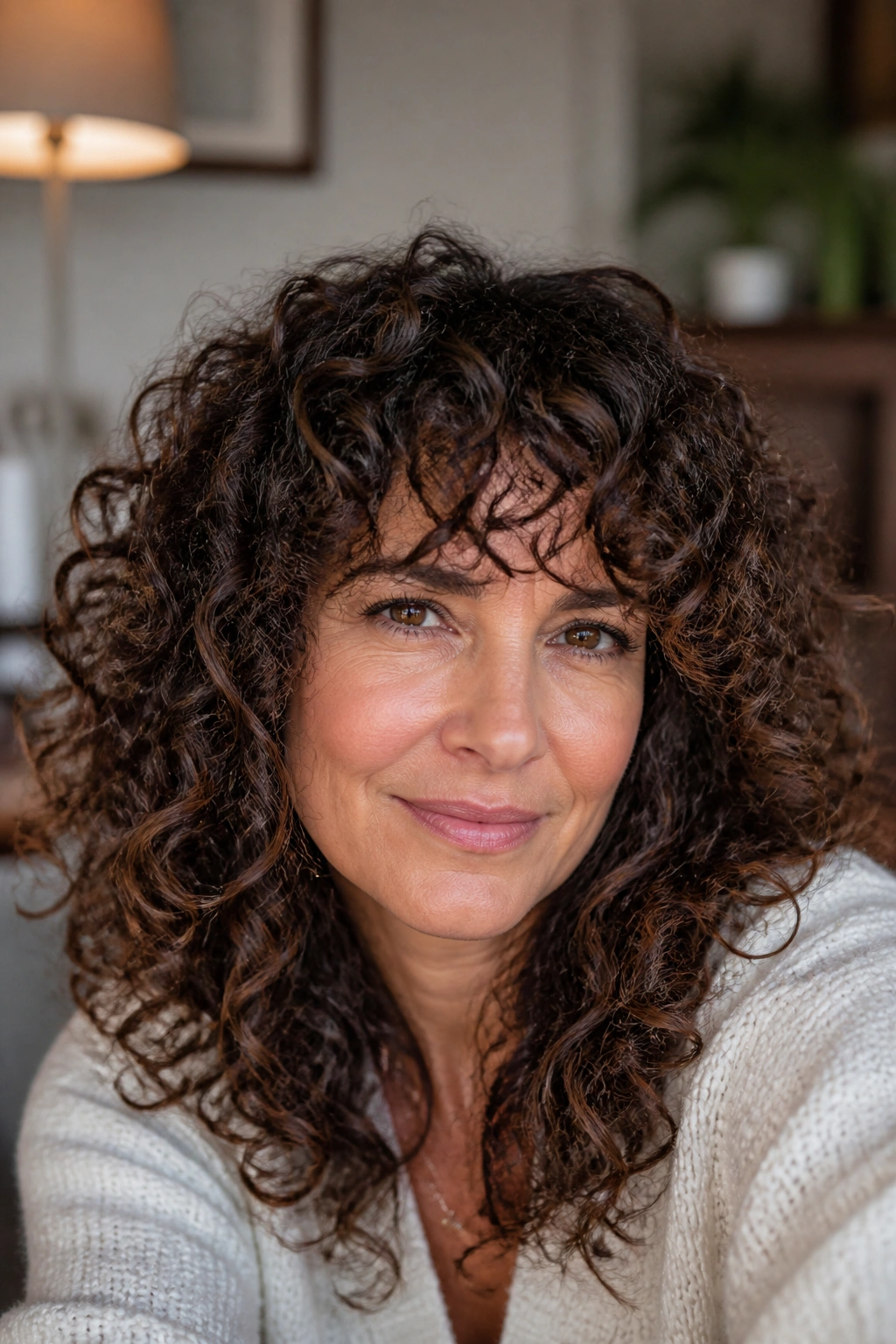
Curly bangs have a reputation problem. People imagine a puffy triangle or a ringlet disaster. Done well, though, curly fringe can be one of the most flattering shapes around.
The rule is simple: the bangs should be cut to match the curl pattern, not stretched straight and guessed at. That usually means cutting dry or mostly dry so the true length shows. Curly hair shrinks. A lot. If you cut it like straight hair, you will regret it.
How to Make Curly Fringe Behave
- Ask for a dry cut or curl-by-curl shaping
- Keep the shortest pieces slightly longer than you think
- Use a light leave-in, not a thick cream that weighs the curls down
- Diffuse on low heat to keep the shape soft
Curly bangs look especially good when the rest of the haircut has face-framing layers. They keep the front from feeling boxy and give the curls a place to land.
13. French-Inspired Full Fringe With Soft Edges

French-style full bangs can look expensive without being stiff. They’re fuller than wispy fringe, but the edges are softened so the look feels relaxed rather than severe.
The length usually sits around the eyebrows or just brushing the lashes. That little bit of closeness to the eyes is what gives the style its charm. It frames the face in a way that feels direct, almost like a signature.
This bang works well on straight or slightly wavy hair. If your hair is very thick, the fringe needs internal shaping so it does not balloon. If your hair is very fine, the stylist should avoid cutting too much into the ends.
It’s a lovely choice for women who like a bit of old-school polish. Not fussy. Just neat, soft, and strong enough to hold the whole haircut together.
14. Diagonal Side Fringe That Follows the Part
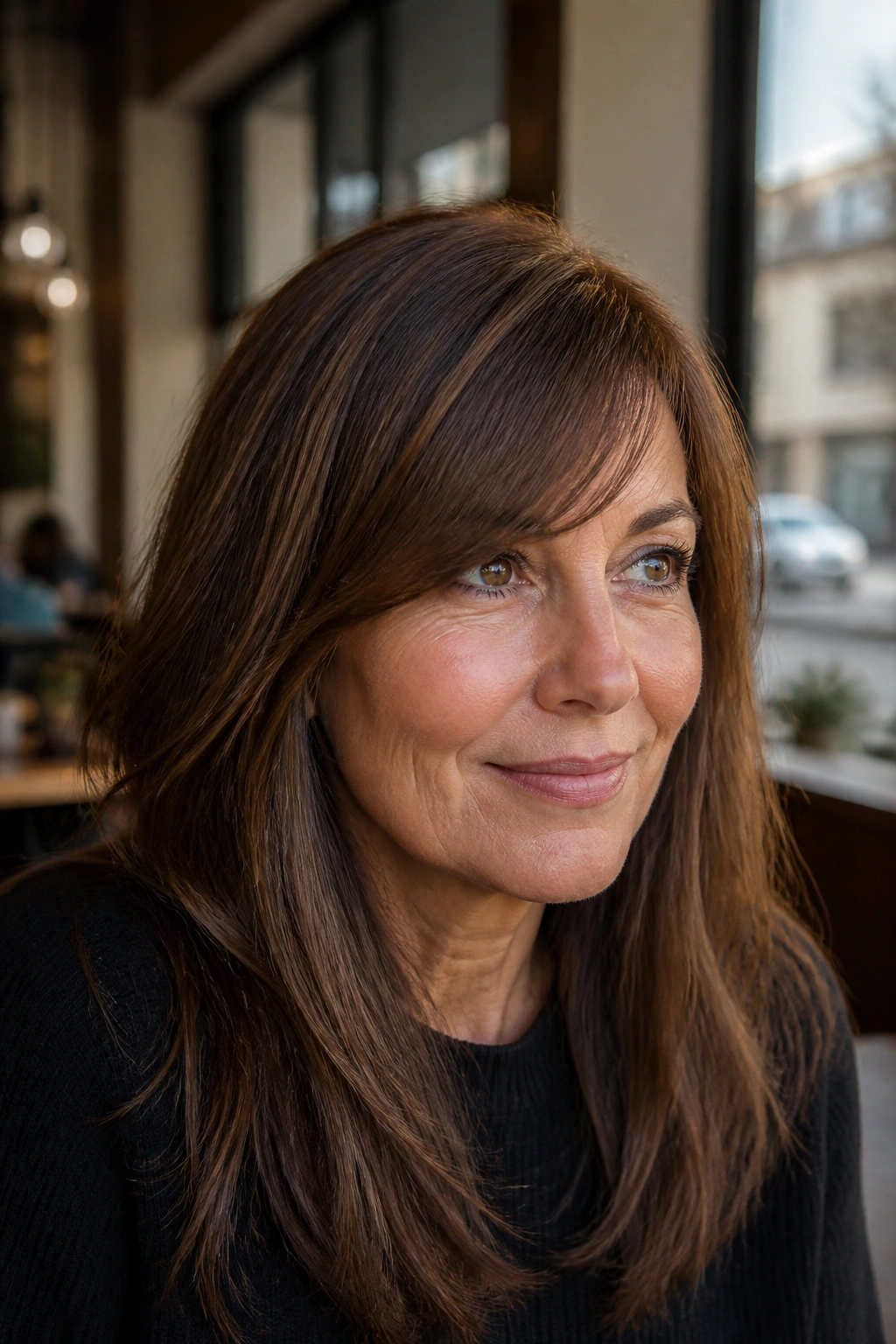
A diagonal side fringe makes the part line do half the work. Instead of a full bang, you get a smooth sweep that starts near the crown and drops across the forehead at an angle.
That angle is useful. It softens the front of the face, adds movement near the temples, and gives hair a little lift at the root where many women want it most. It also works well with a low-maintenance blow-dry because you’re not trying to force a straight line.
Key Details
- Best when the fringe blends into layers at the cheek
- Longest piece can graze the outer corner of the eye
- Shortest piece usually sits around the brow peak
- Great for side parts, naturally
If you have a strong swirl at the front, this is one of the easiest ways to work with it instead of against it. The diagonal shape gives the cowlick somewhere to go.
15. See-Through Bangs for a Light, Airy Forehead Line
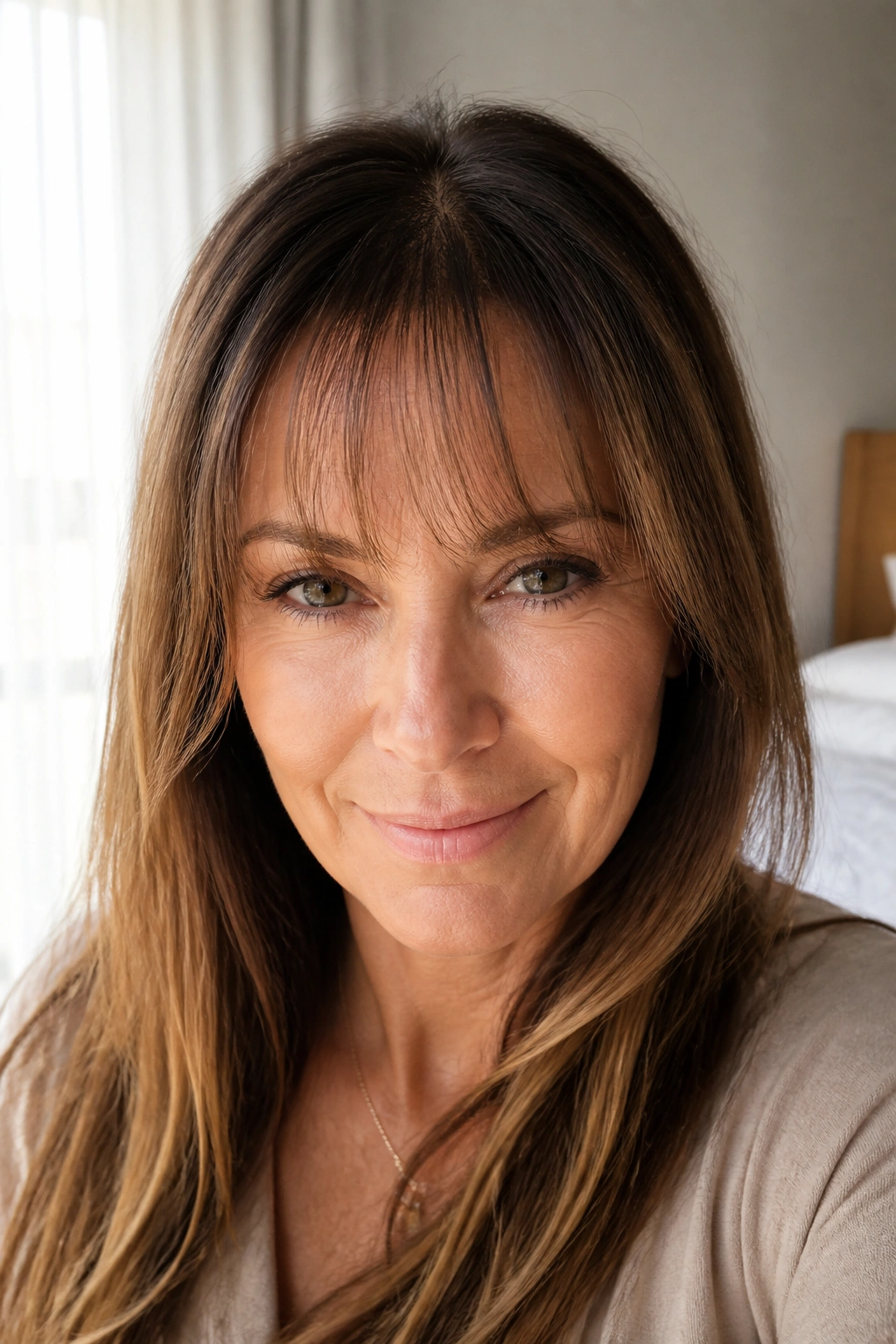
See-through bangs are thinner than they sound. You still get fringe, but there’s enough space between the strands that your forehead shows through. The result is soft, not heavy.
This style can be a relief if you have never liked the feeling of thick bangs sitting on your skin. It’s also helpful for women who wear makeup sparingly or like a lighter front line around the face. A full fringe can sometimes feel like too much. This one usually does not.
The best see-through bangs are cut with restraint. Too much thinning and they go wispy in a weak way. Too little, and the whole point disappears.
They’re especially nice on straight hair and loose waves. Keep them light, blow them forward with a small brush, and stop before they start to look overworked.
That restraint is the whole trick.
16. Soft Shag Fringe That Blends Into the Cut
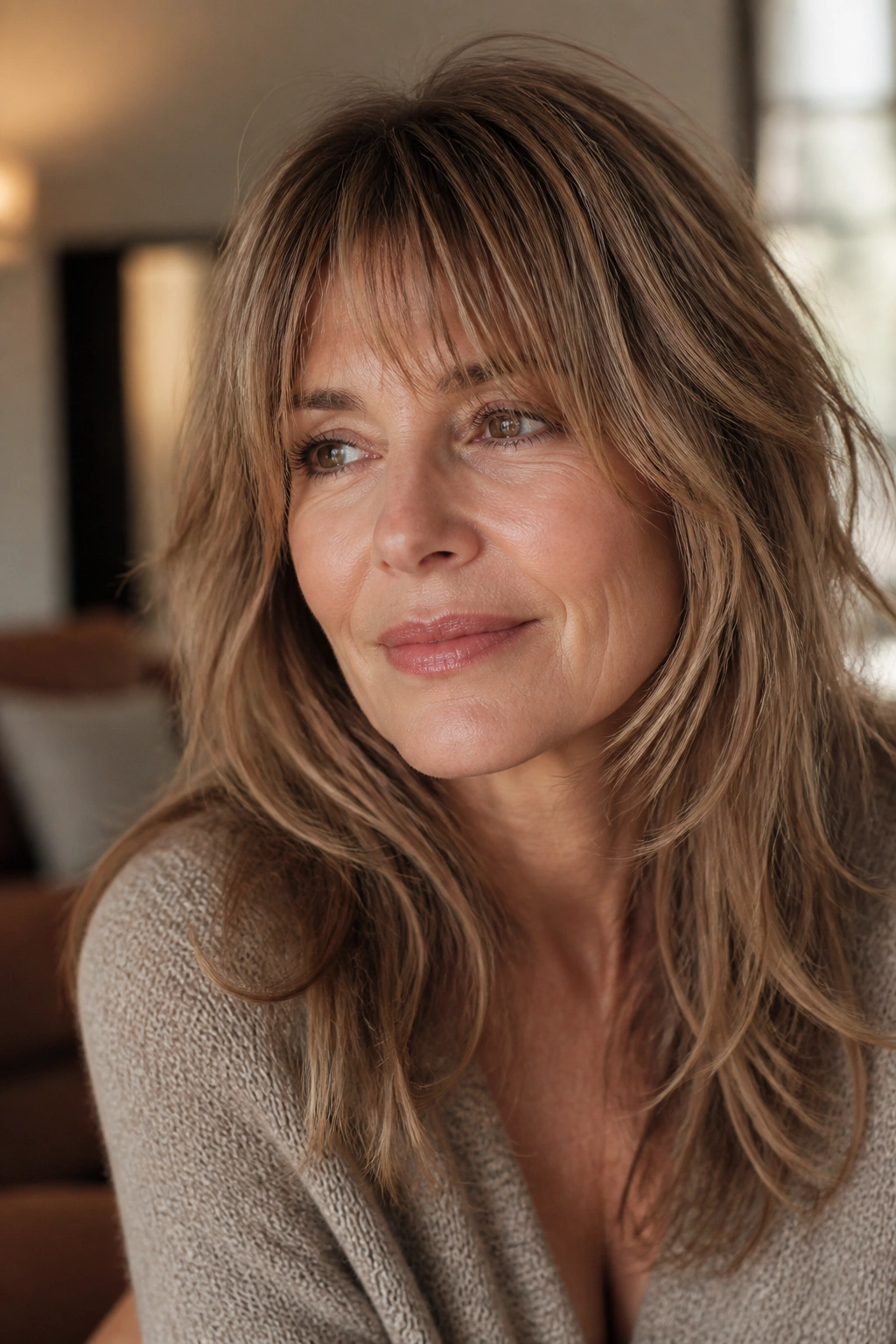
Soft shag fringe works because it refuses to behave too neatly. The bangs are part of the haircut, not a separate event. They blend into layers around the temples and cheekbones, which makes the whole style feel easy.
This is a good match for women who air-dry a lot or who like that slightly undone texture. You don’t need a perfect round brush finish. A little mousse at the roots and a rough dry is often enough.
The best shags keep the front pieces long enough to move. If the fringe gets too short, the style can feel busy. If it’s too long, the shag loses energy. That sweet spot is usually around the brows to cheekbones, depending on the haircut.
It’s relaxed, sure. But relaxed in a smart way.
17. Short Micro Bangs for a Braver, Sharper Look
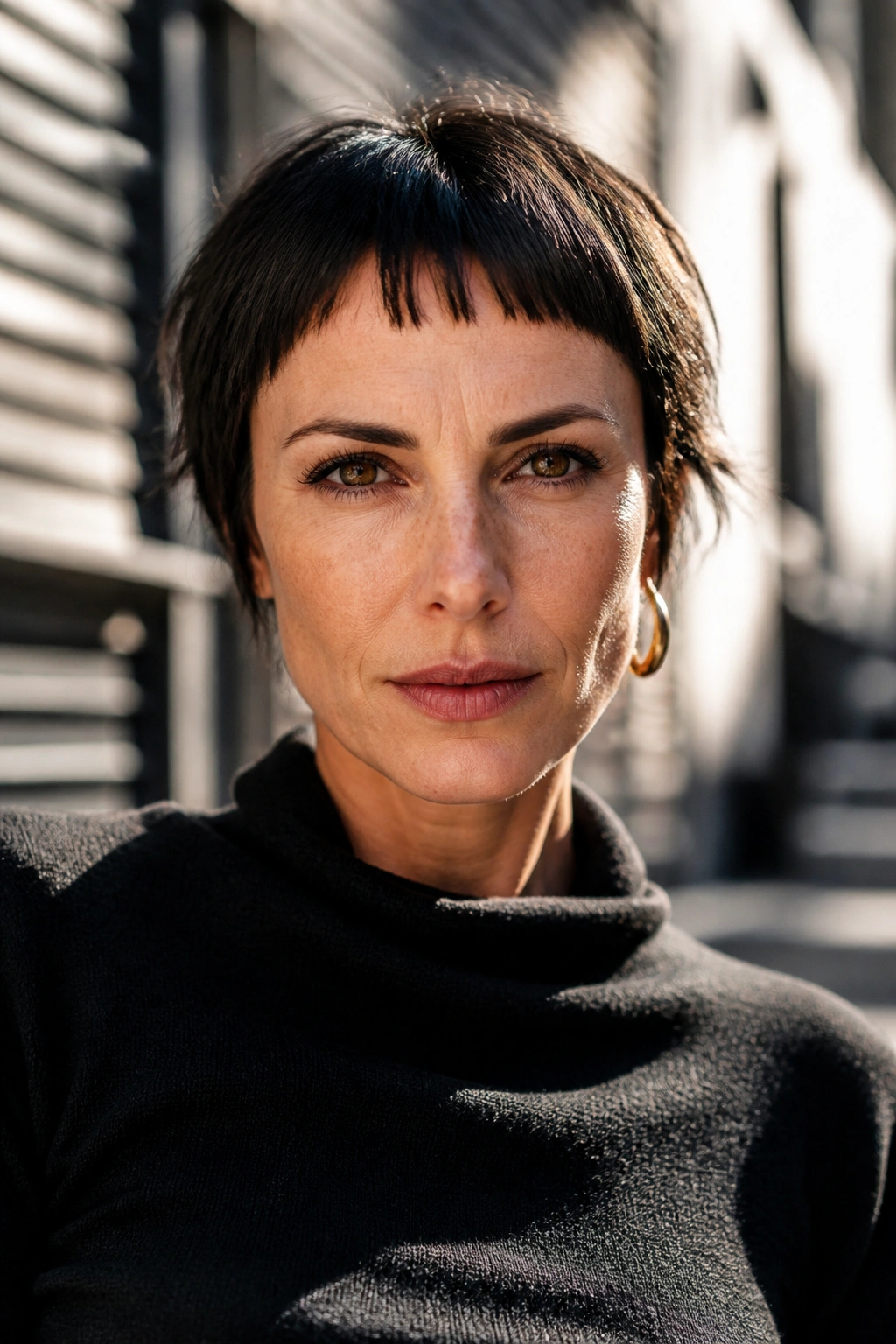
Micro bangs are the boldest choice on this list. They sit well above the brows, which means they put all the attention on the eyes, brows, and bone structure.
That can be stunning. It can also be unforgiving. If you like a soft, invisible fringe, walk past this one. If you want a haircut with real personality, it’s worth considering.
The softer version is better for most women over 40 than the graphic, stiff kind. Ask for a little texture at the ends so the line does not feel too severe. A tiny bit of bend keeps it modern.
Micro bangs work best when the rest of the haircut has movement or softness — a shag, a bob with texture, or a crop with pieces around the ears. Straight, severe hair plus blunt micro fringe can read a bit harsh.
18. Razored Fringe That Lays Lightly on the Forehead

Razored fringe lives and dies by the hands doing the cutting. In the right salon chair, it creates soft ends and a lighter feel at the front. In the wrong one, it can leave the fringe frayed and weak.
This is a smart choice for thick hair that needs debulking. The razor removes some weight so the bangs fall instead of puffing out. It also gives wavy hair a more casual edge.
The caution is simple: if your hair is fine, fragile, or prone to split ends, a razor may not be your favorite tool. Scissors with careful point-cutting can be safer.
A good razored fringe should still look deliberate. You want softness, not damage. That difference matters more than people think.
19. Heavy Fringe With Long, Sweeping Lengths
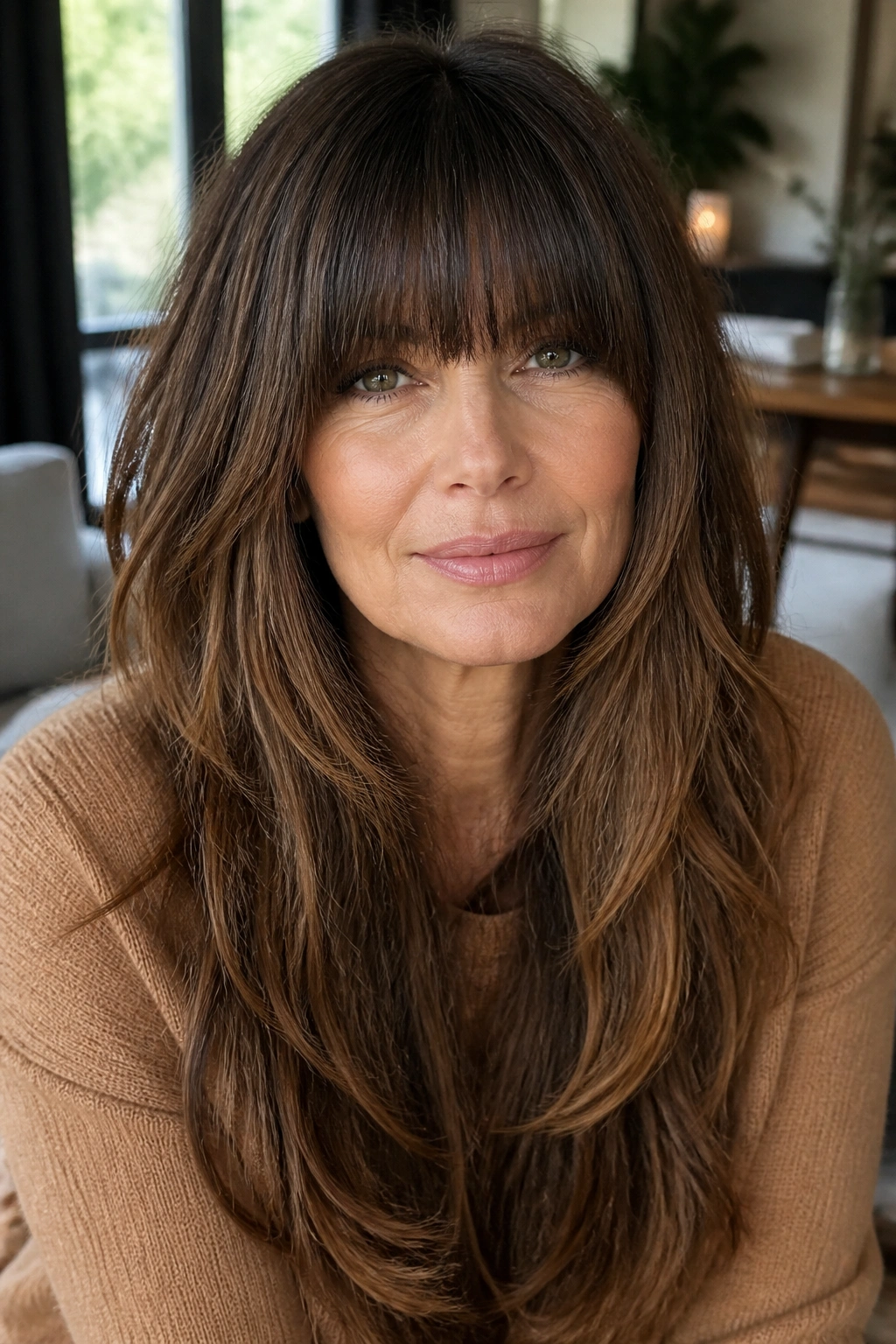
Heavy fringe with long lengths is a strong, dramatic pairing. The bangs carry weight, but the rest of the hair stays long enough to keep the style from feeling boxy.
This can be a gorgeous look for women with dense hair or strong features. The fullness at the front gives presence, while the long lengths soften the overall shape. It’s one of those cuts that looks good even when it is not freshly styled.
The balance matters. Heavy bangs need room. If the rest of the haircut is also compact, the face can feel crowded. Long layers or a shoulder-grazing cut help.
It’s a good option if you like the feeling of hair around your eyes and do not mind a bit of daily styling. Not every fringe should be light. Sometimes you want the front to carry some weight.
20. Airy Bangs for Fine Hair

Fine hair needs a different answer. Too much fringe can collapse by noon and make the front of the haircut look flat and see-through in the wrong place.
Airy bangs solve that by keeping the density light but the shape clear. Think soft edges, minimal bulk, and enough length to graze the brows without sticking straight to the forehead. You want movement, not a mat of hair.
What Helps Fine Hair Most
- A light mousse at the roots
- A small round brush for a quick lift
- Bangs that are cut with clean shape, not deep thinning
- A little separation instead of a dense block
The main mistake is over-texturizing. Fine hair does not need to be shredded to look airy. It needs a smart, modest cut and a style that gives the root a little lift.
21. Dense Layered Bangs for Thick Hair
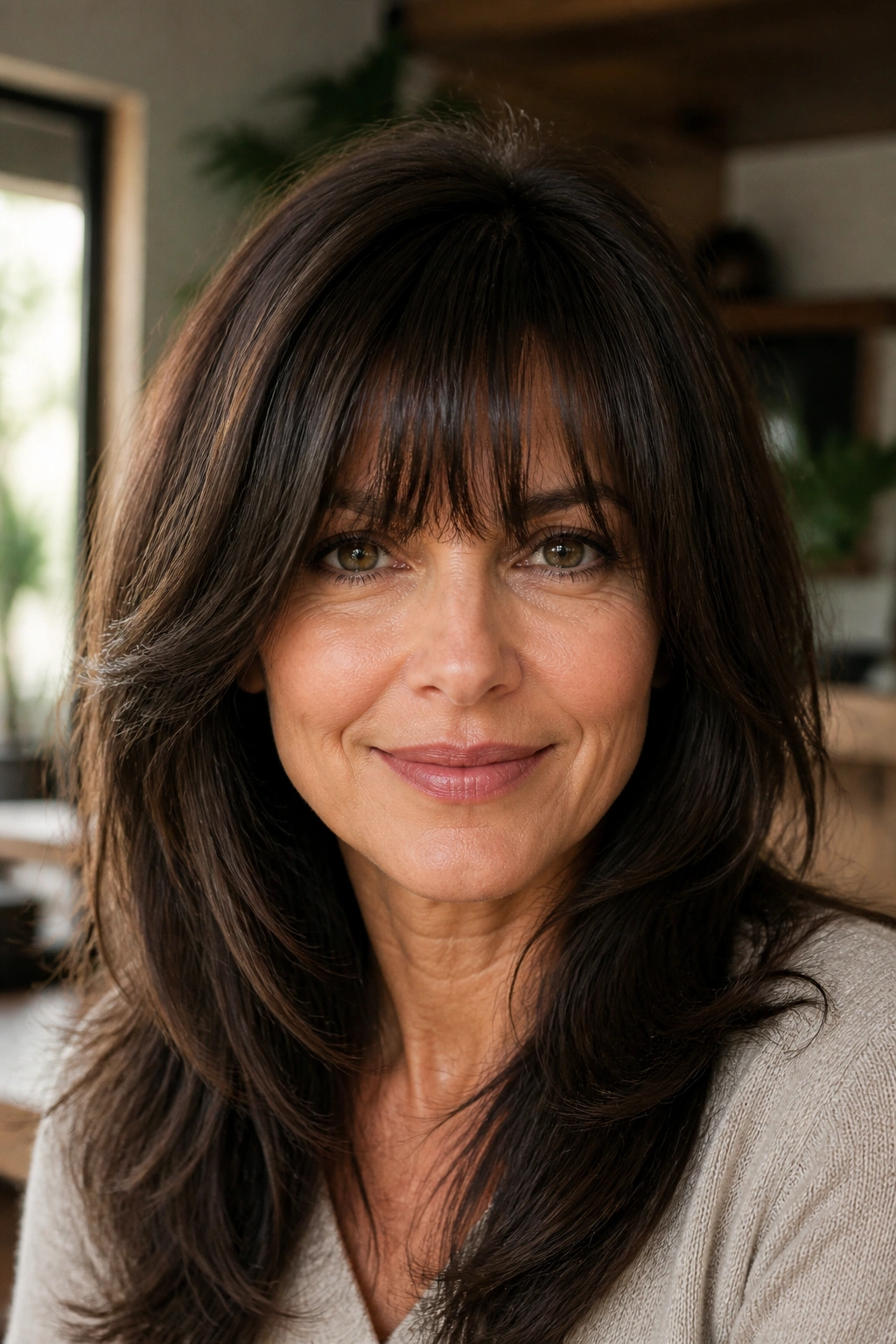
Thick hair needs a different answer too. If the fringe is cut like a flat sheet, it can sit too heavily and feel hot, blunt, and hard to move.
Dense layered bangs keep the fullness but remove the bulk where it counts. The line can still be substantial, but the interior should be softened so the fringe bends and falls instead of sticking out like a shelf.
This is where a good stylist earns the haircut. Thick hair often needs internal layering, point-cutting, or a slight underlayer of removal so the fringe does not fight itself. Done well, it looks rich and controlled. Done badly, it looks bulky.
If you have thick hair, do not be afraid of fringe. Just do not let anyone cut it like a single blunt block unless you want a lot of daily blow-drying.
22. Bangs That Play Nicely With Glasses
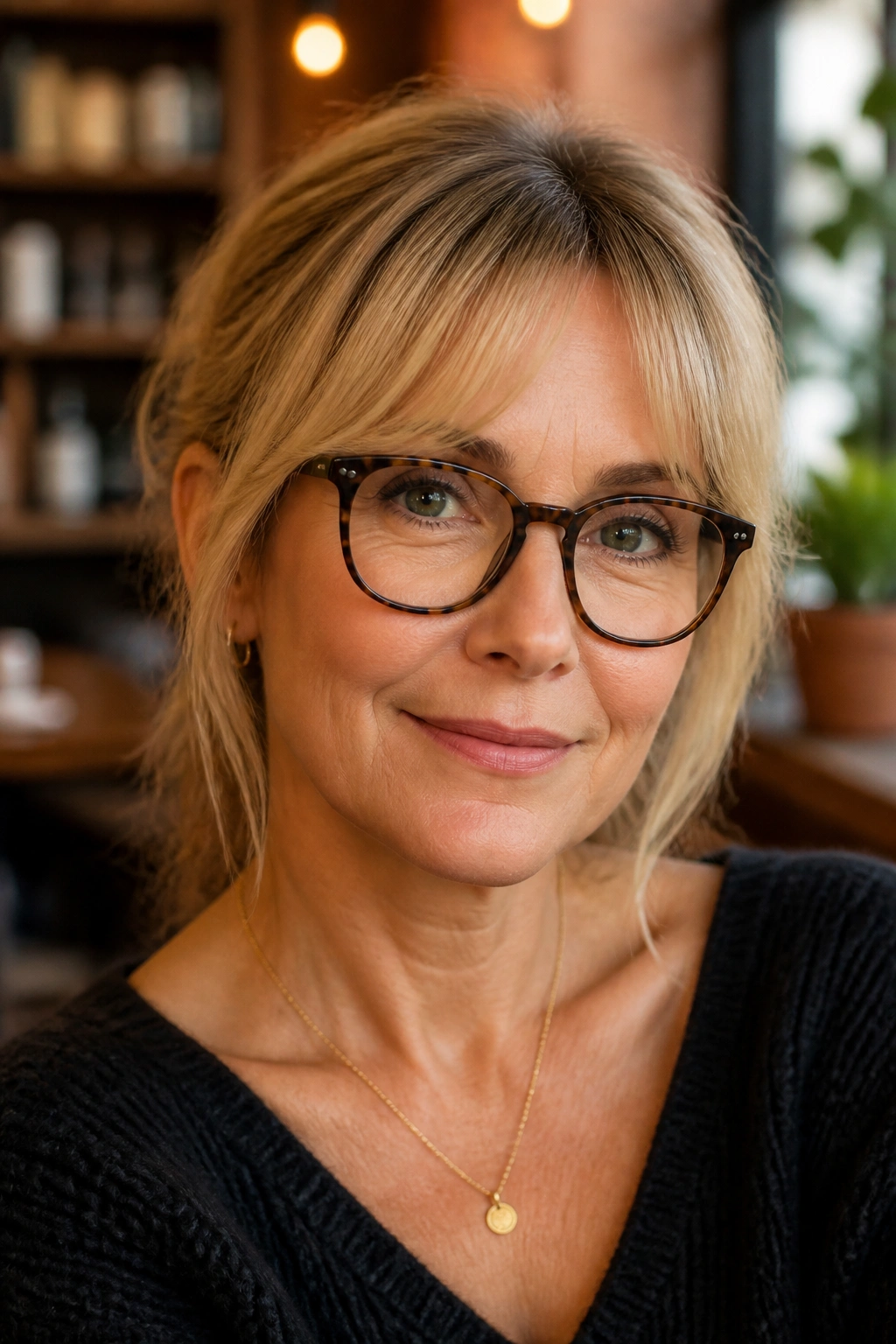
Glasses change the whole conversation. The wrong bang can jam into your frames, hide your eyes, or create a busy top half of the face. The right one makes the frames and fringe feel like they were designed together.
Good Glasses-Friendly Shapes
- Soft curtain bangs that split above the nose bridge
- Side-swept fringe that clears the frame line
- Wispy bangs that sit just at or above the brows
- Long face-framing pieces that end beside the glasses, not inside them
The biggest thing to avoid is a thick fringe that lands directly on the top of the frames unless you want a strong retro look. That can work, but it needs confidence and clean styling.
A lighter bang usually wins here because it keeps your eyes visible. And that’s the point, really. You bought the glasses to see better, not to disappear behind them.
23. Bangs for Round Faces That Add Length
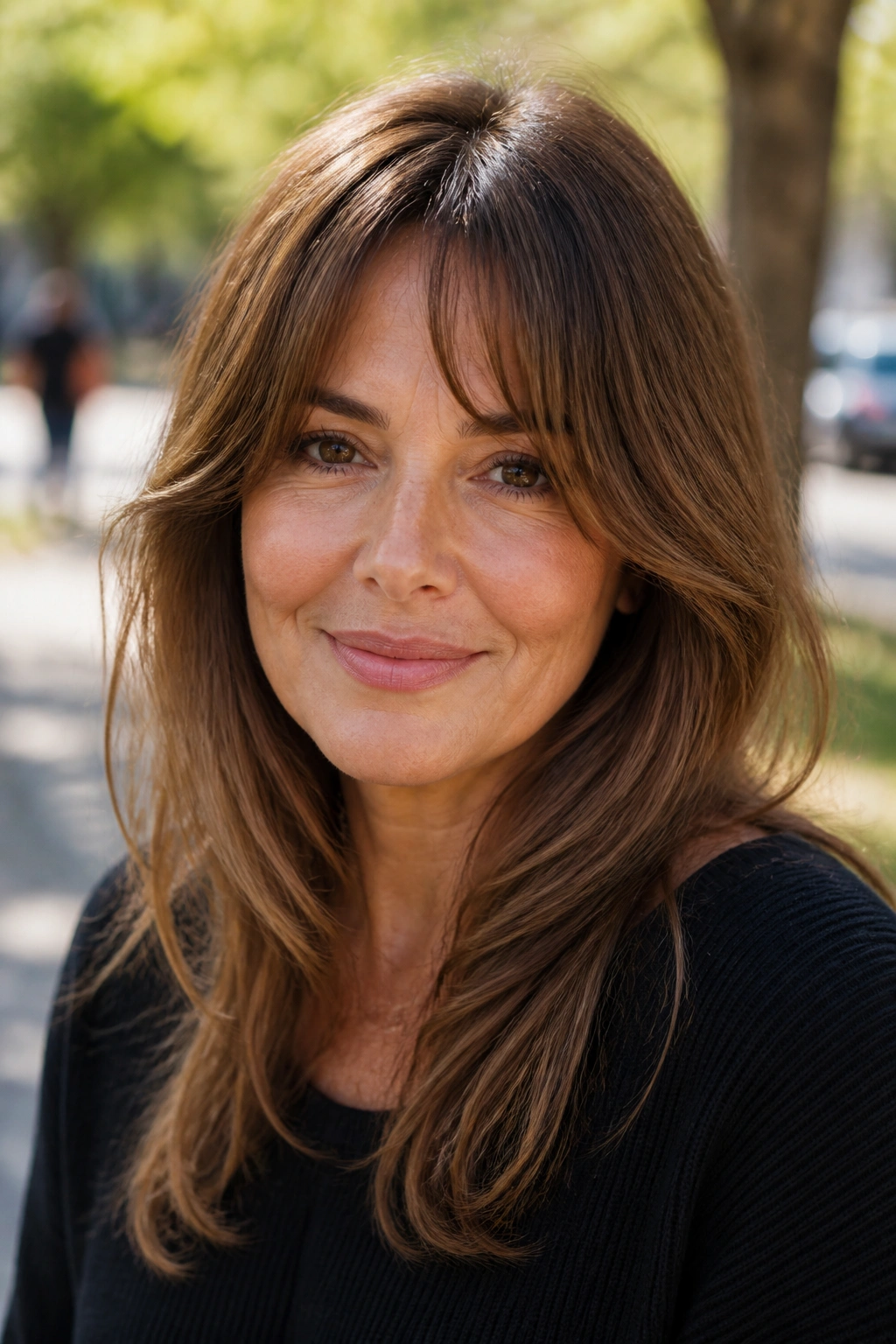
Round faces usually look best when the fringe stretches the face vertically or diagonally. A straight, wide bang can shorten the face in a way that feels too boxy. A longer shape creates balance.
Curtain bangs and side-swept fringe are usually the first places I’d look. They draw the eye down and out, which gives the face more length. The shortest point should stay away from the center of the forehead if you want that effect to stay soft.
A little cheekbone framing helps too. It gives the front of the haircut a line to follow instead of stopping abruptly at the brow.
You do not need to chase a “slimming” trick here. You need proportion. That’s the real story. The right fringe makes the face feel balanced without looking like it’s trying to fix anything.
24. Bangs for Square Faces That Soften the Corners

Square faces usually want softness near the jaw and a front shape that breaks up strong straight lines. A hard horizontal fringe can make the face feel more geometric than you may want.
Side fringe, bottleneck bangs, and feathered curtain pieces do that softening job well. They bring a little curve to the front and let the haircut move around the face rather than sitting in a straight band across it.
The part line matters here, too. A slight off-center part often feels kinder than a dead-straight one. It keeps the front from looking rigid.
I like styles that fold around the cheekbone on square faces. They keep the attention near the eyes and temples, which is flattering without trying too hard.
25. Bangs for Heart-Shaped Faces That Balance the Forehead
Heart-shaped faces usually have more width at the top and a narrower chin. Bangs help when they reduce the forehead’s visual size without burying the eyes.
Curtain bangs are a natural fit, especially if the shortest pieces stay soft and the sides sweep down toward the cheekbones. That shape balances the upper face and helps the chin area feel less narrow by comparison.
A full blunt fringe can work too, but it needs to be softened at the ends so it does not overpower the forehead. Very heavy bangs can flatten the top half of the face in a way that feels off.
The best choices here usually have movement. Nothing stiff. The cut should open the face, not box it in.
26. Bangs for Long Faces That Add Width
Long faces need width, not extra length. So bangs that spread softly across the forehead or land in a fuller band tend to help more than skinny fringe that disappears.
A full French bang, a soft blunt edge, or even a wide curtain shape can shorten the visual length of the face a bit. The goal is to create horizontal balance at the brow line.
What to Avoid
- Bangs that are too thin in the middle
- Fringe that hangs too low and stretches the face
- Overly long side pieces with no front width
If your face is long, do not be scared of fullness. You are not hiding the face. You are giving it a better frame. A little width up top often does more than extra length ever will.
27. A Bob With Bangs That Feels Clean and Modern
A bob with bangs can look sharp or clunky. The difference usually comes down to length harmony. If the bangs are too heavy for the bob, the cut feels helmet-like. If they’re too flimsy, the front loses its purpose.
The nicest bob-and-bang combinations usually keep the bangs slightly softer than the bob line. That contrast keeps the cut from feeling boxy. A chin-length bob with curtain fringe or a jaw-skimming bob with wispy bangs is a strong place to start.
What to Ask Your Stylist
Ask for the bob to be cut with the bangs in mind, not as separate pieces. That way the front and the perimeter share the same idea. If the bob is blunt, keep the bangs a little lighter. If the bob has texture, the fringe can have a bit more shape.
The whole cut should feel tidy, not frozen.
28. A Lob With Bangs Gives You Room to Play
A lob gives bangs more breathing room. Because the length sits between the jaw and the shoulders, you can wear a fuller fringe without the haircut feeling too compact.
That makes lobs a smart base for curtain bangs, soft blunt bangs, or even a heavier fringe if you like some drama up front. The longer length below the chin keeps the shape open and helps the face look less crowded.
It’s also forgiving during grow-out. If the bangs start to slip past the brow line, the lob usually absorbs that change without looking awkward. That matters more than people admit.
A lob plus fringe is a good middle road. You get structure, but not too much. You get coverage, but not the “I need to trim this tomorrow” feeling.
29. Bangs on a Curly Pixie or Short Crop
Short cuts can carry bangs, too. In fact, a curly pixie or textured crop often looks better with some kind of fringe because it gives the haircut direction.
The fringe can be short and airy, swept to the side, or left curly and piecey right at the front. The point is to keep the top from feeling like a flat cap. A little shape at the forehead makes the whole crop feel intentional.
Curly short bangs need a stylist who respects shrinkage. If the front is cut too short, it can spring up more than you want. Leave room for the curl pattern to do its thing.
This is a confident look. Not loud for the sake of it. Just clean, modern, and full of life.
30. Transitional Bangs That Grow Out Without the Usual Awkward Phase
Transitional bangs are the ones people thank themselves for later. They’re designed to grow out softly, which makes them ideal if you want to try fringe without locking yourself into constant trims.
The smartest version usually starts as curtain bangs, bottleneck bangs, or a soft side sweep. Those shapes already have a built-in escape route. As they lengthen, they become face-framing layers instead of an annoying in-between stage.
What to Request at the Salon
Tell your stylist you want a fringe that can live as layers later. That one sentence changes the cut. It tells them to leave enough length at the sides and enough softness at the center to blend as it grows.
Transitional bangs suit women who want flexibility more than drama. They still frame the face, they still move well, and they do not punish you if you miss a trim. That’s a pretty sensible deal.
And honestly, sensible is underrated. A bang that still looks good when you’ve had a rushed morning is usually the one worth keeping.
