



Baby bangs are not a shy haircut. They put the forehead on display, pull attention straight to the eyes, and make even a simple cut feel like it has an opinion.
That is the fun of them, and also the reason people hesitate. A short fringe can look razor-sharp, sweet, odd, cool, retro, or a little dangerous — sometimes all in the same haircut, depending on how the rest of the shape is built. The difference between “bold” and “why did I do this?” is often only a few millimeters, plus a stylist who knows when to stop cutting.
What makes baby bangs work is not the fringe alone. The texture of the hair, the density at the front, the amount of weight around the temples, and the length of the rest of the cut all change the result. A blunt line on straight hair reads one way. The same line on curls reads another. Add a bob, a pixie, or a shag, and the mood changes again.
The good versions look intentional without looking stiff. They sit just above the brows, sometimes much shorter, and they leave enough room for the eyes to do the talking. A bad version can feel chopped too high, too heavy, or too thin in all the wrong places. So the details matter. A lot.
1. Blunt Micro Fringe with a Chin-Length Bob
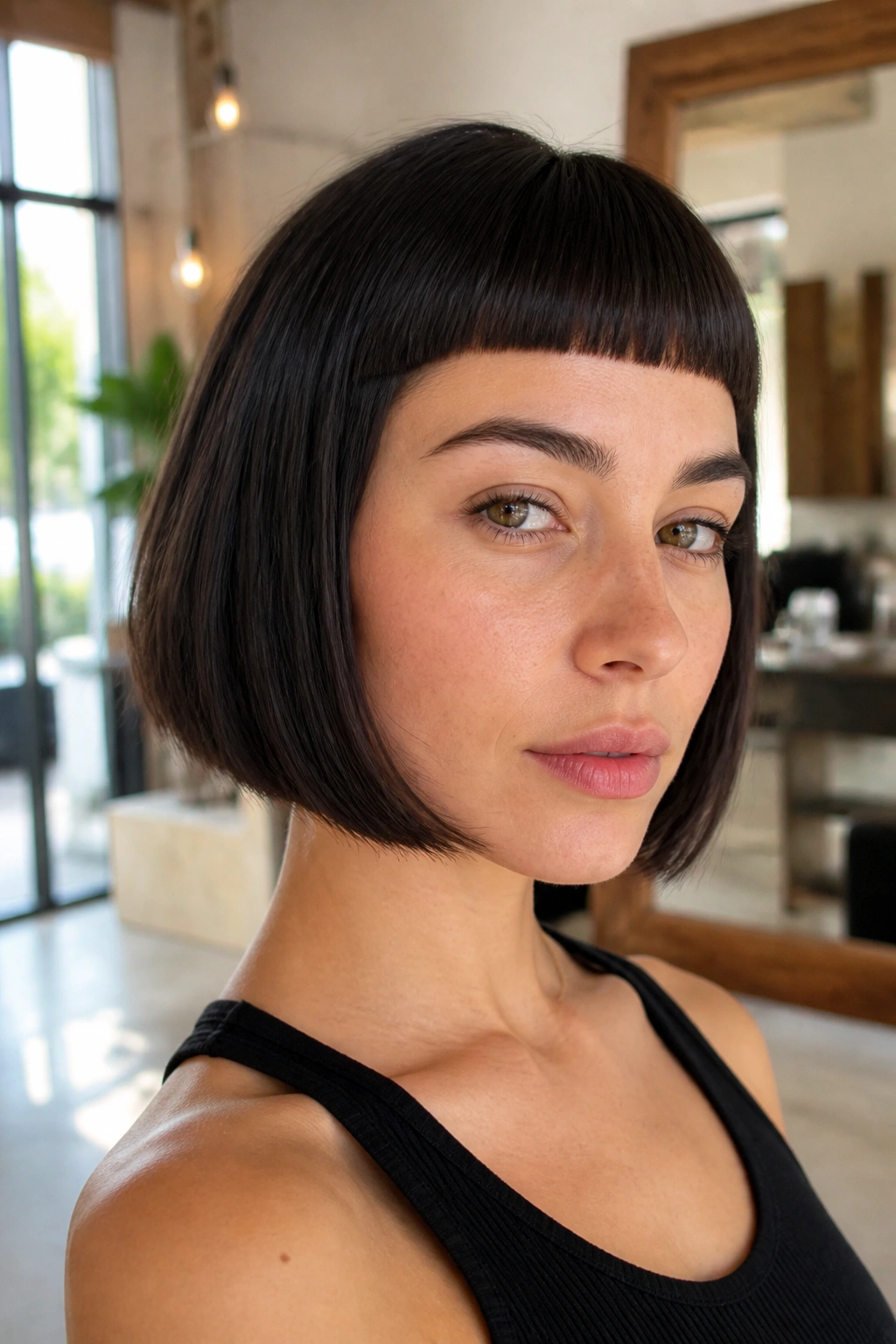
If you want baby bangs to walk in first, start with a clean blunt line and a chin-length bob. That pairing has presence. The short fringe lands in a hard horizontal line across the forehead, while the bob keeps the shape polished and close to the jaw, so the whole cut feels sharp instead of messy.
This is the version I’d point to for someone who likes structure. It works especially well on straight or slightly wavy hair because the fringe stays visible instead of splitting apart every time you blink. The bob should be heavy enough at the ends to hold its shape; if it gets too airy, the short bangs start to look detached from the rest of the cut.
A small detail makes a big difference here: ask for the fringe to be cut dry or nearly dry if your hair shrinks at all. Wet bangs can look fine in the chair and land an inch shorter once they spring up. Not fun.
- Best for oval, heart, and long faces
- Trims usually need to happen every 3 to 4 weeks
- A flat brush and a quick bend under the ends keep the bob neat
- A tiny bit of smoothing cream helps the fringe stay flat
Pro tip: keep the fringe just a hair wider than your brows. Too narrow looks accidental.
2. Choppy Baby Bangs on a French Bob

Can baby bangs feel soft? Absolutely. The trick is to let the fringe break a little instead of cutting one hard slab across the forehead. On a French bob, that choppiness feels lived-in rather than severe, and the cut gets a little swing around the cheeks without losing edge.
The charm here is in the mess. A French bob already has that cheekbone-skimming shape, so the baby bangs don’t need to do all the work. A stylist can point-cut the ends of the fringe so the line is irregular, almost like tiny teeth rather than a ruler. That tiny bit of texture keeps the haircut from feeling too neat.
How to Style the Texture
Rough-dry the fringe first, then touch only the ends with a mini flat iron if they kick out. A pea-sized amount of matte paste, warmed between the fingers, is enough. More than that and the bangs start to clump.
I like this cut on hair that has a little bend in it. Pin-straight hair can wear it too, but it needs more hand styling, and there’s no point pretending otherwise. If your hair fights the idea of being sleek, let it be slightly undone on purpose. That is the whole charm.
3. Curly Baby Bangs on a Rounded Crop

Curly baby bangs have a different personality the second humidity shows up. The curls lift, the fringe changes shape, and the line on the forehead becomes softer and more alive than any blunt cut could ever be. That is exactly why they work.
The best curly version is cut with the curl pattern in mind, not against it. A rounded crop keeps the silhouette close to the head, while the fringe is trimmed curl by curl so it sits just above the brows when dry. If you cut curly bangs straight across while they are soaking wet, you are gambling. Badly.
Do not fight the shrinkage. Build for it. A curl that looks a little too long when dry will often spring up to the right length once it’s washed and diffused. That’s the version you want, not the overly short surprise that lands half an inch higher than expected.
A light cream or foam is usually enough at the front. Heavy butters can drag the fringe down, then make it puff at the roots. And yes, the bangs may separate into little pieces. That is not a mistake. It’s the point.
If your curls are tight, ask the stylist to leave the center slightly longer than the outer pieces. The fringe will curl up into a soft arc rather than a jagged shelf. It’s one of those little salon choices that saves you from daily frustration.
4. Tiny Straight Bangs with a Pixie Cut
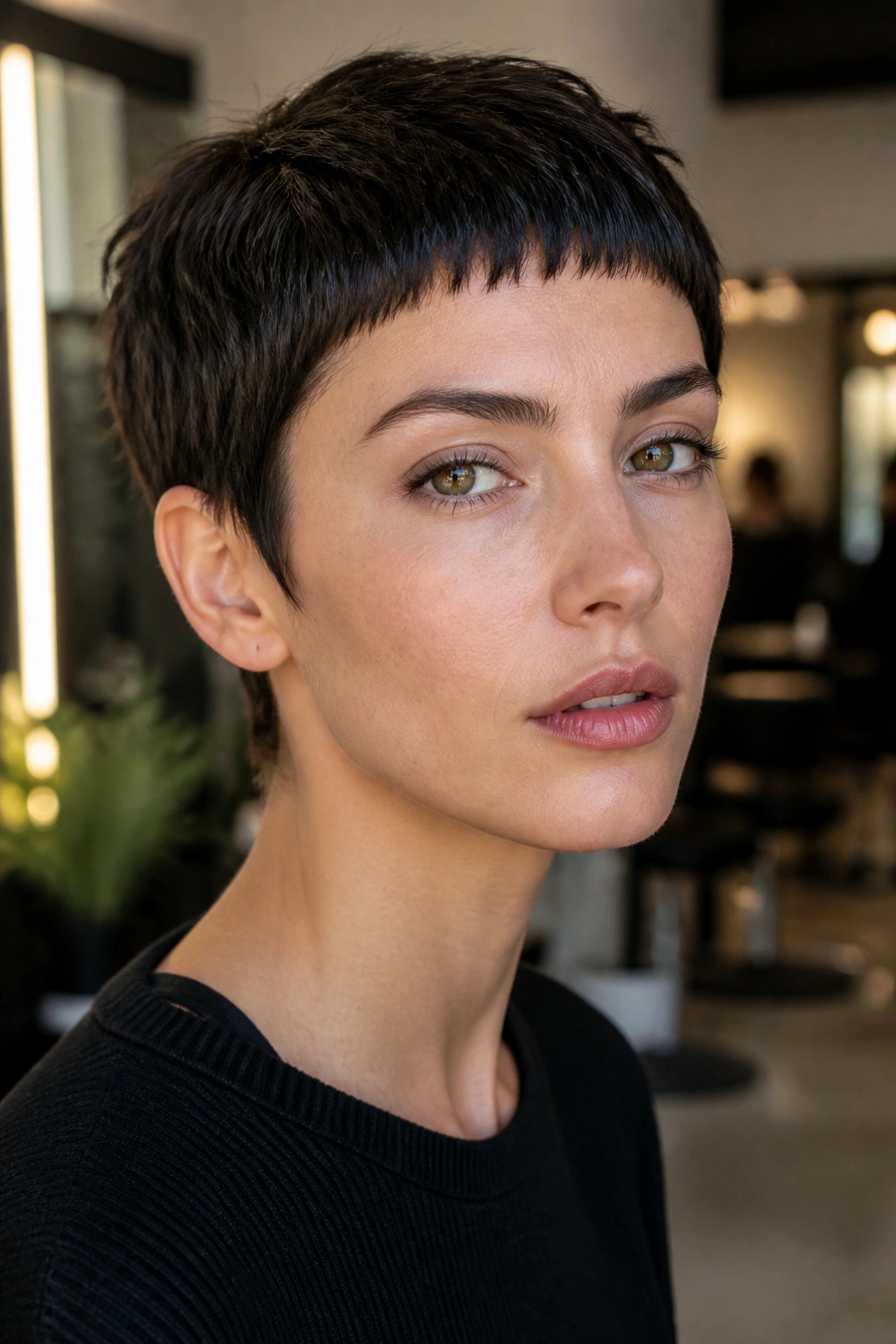
A pixie cut with baby bangs is blunt in the best way. You get almost no softness to hide behind, which means the haircut has to earn its place with shape, line, and attitude. When it’s done well, it looks crisp and expensive in the plain old haircut sense — clean, balanced, and not overworked.
This pairing is especially good if you want your eyes and brows to take center stage. The short fringe opens the face completely, and the pixie keeps the sides neat so the whole cut feels light. It also gives you a lot of control over the mood: sleek it down, or rough it up with fingers and paste. Either way, the bang line stays the main event.
What to Watch For
- Keep the fringe no shorter than the strongest point of your brow if you want some softness.
- Ask for the sides to be tapered, not puffed out.
- Use a tiny round brush or flat iron to keep the front flat.
- Skip heavy oils near the fringe; they make the short pieces separate in odd ways.
The downside is obvious. Tiny bangs on a pixie show everything. Cowlicks. Uneven growth. A messy part. If you like a haircut that forgives you, this is not it. But if you like a cut that looks deliberate with almost no decoration, it’s a very strong choice.
5. Feathered Baby Bangs with a Shag Cut

This is the easiest way to make baby bangs feel less severe. A shag already has movement through the crown and the sides, so a feathered fringe can sit on top of all that texture without turning into a hard wall across the forehead.
The smartest version keeps the bangs short, but not blunt. The ends are softened with point-cutting, and the rest of the cut is layered enough that the fringe feels like part of the whole shape instead of an add-on. That matters. Baby bangs can look strange when the rest of the hair is too heavy or too neat. The shag gives them room to breathe.
Why It Works
The layers take pressure off the fringe. Instead of asking the bangs to frame the whole face on their own, the haircut spreads that job around. The result is easier to wear with wavy or medium-textured hair because the front can move a little instead of staying frozen in one shape.
A quick blow-dry with a diffuser or a rough dry with your hands is often enough. Add a touch of mousse at the roots if your hair goes flat fast. I would skip heavy curling irons here; the point is to keep the ends soft and a little ragged, not polished into submission.
If you want a bold cut that still feels wearable on a Tuesday morning, this is one of the better bets.
6. Uneven Baby Bangs with a Wolf Cut
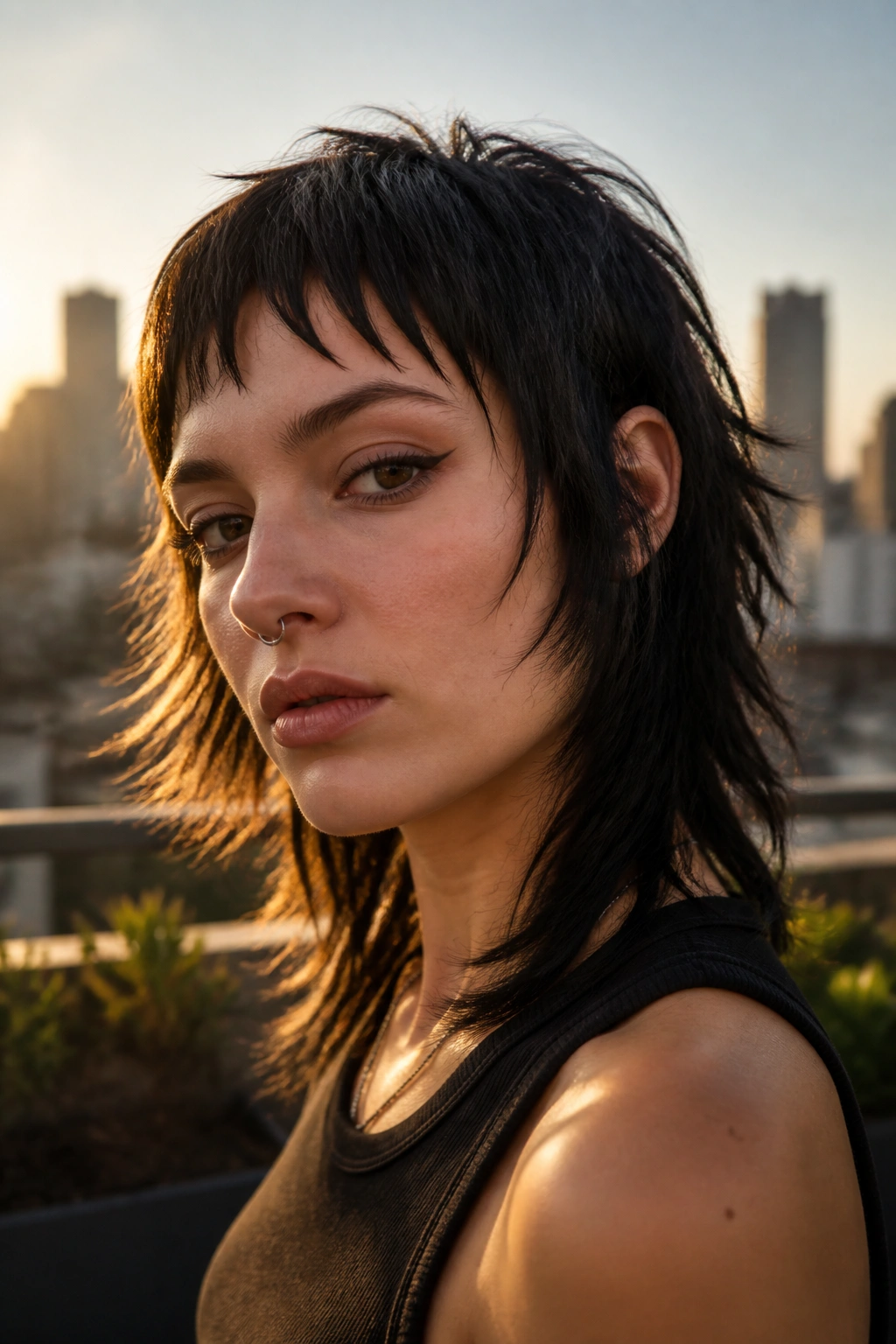
A wolf cut and baby bangs are a good match when you want the haircut to look a little wild on purpose. The wolf cut has that broken, layered shape through the lengths, and uneven baby bangs make the front match the rest instead of sitting there like a separate idea.
There’s a useful trick here: the fringe should not be too symmetrical. A slight difference in length across the forehead keeps the cut from feeling heavy. One side can land a touch lower, or the center can be chopped a little shorter, depending on the face shape. It sounds small. It changes everything.
The haircut also works nicely if your hair has a bend or a bit of frizz. Straight, flat baby bangs can look too polished against a wolf cut. A bit of grit makes the whole thing feel connected. Use a texturizing spray lightly at the roots, then shake the fringe with your fingers instead of brushing it into submission.
People often overdo the volume in the crown with this cut. Don’t. The fringe already gives the haircut enough attitude. If the top gets too fluffy, the eyes disappear under all that shape, and the whole thing loses its snap.
7. Curved Baby Bangs with a Sleek Lob
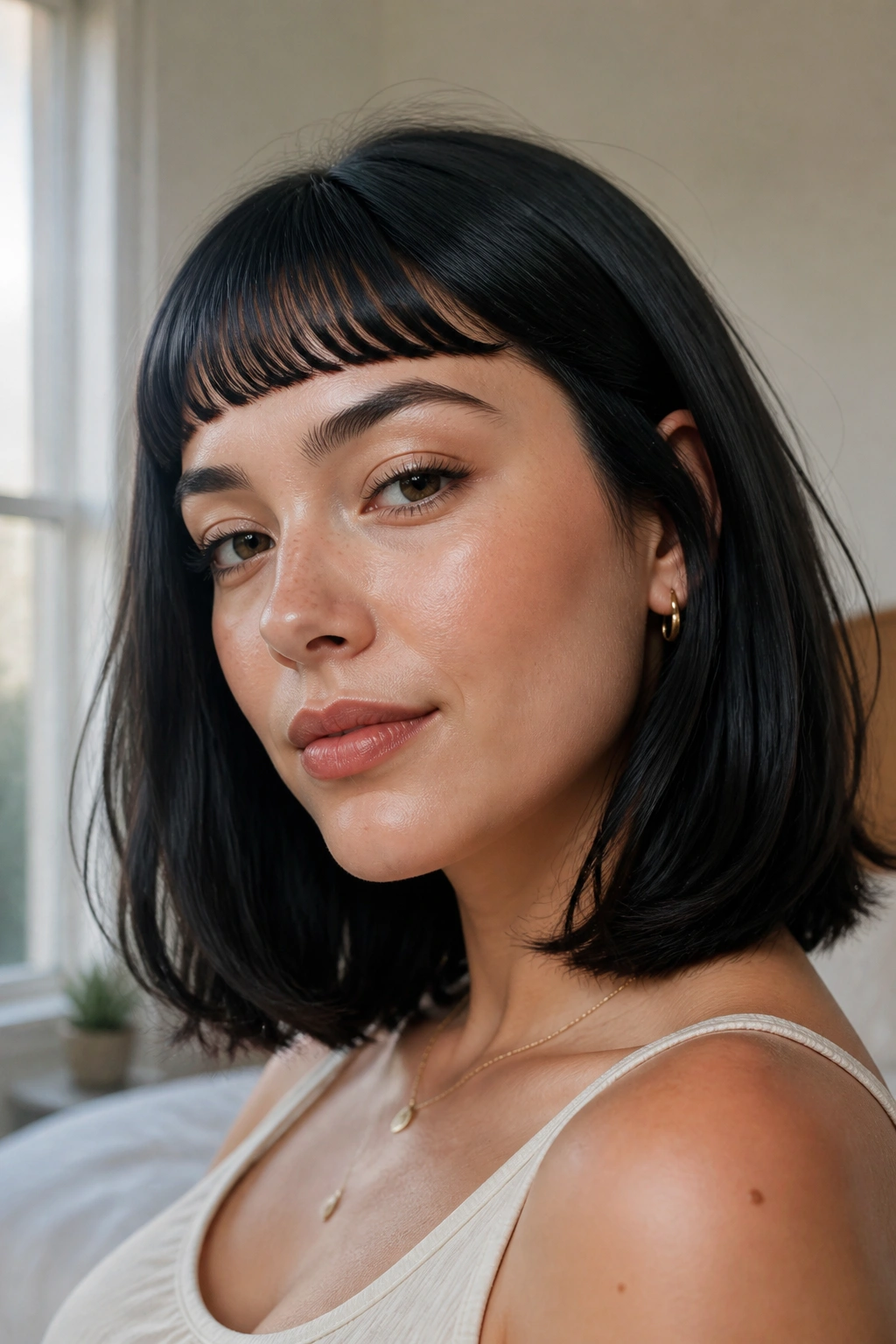
Want the shortest fringe without the hardest line? Try a curved baby bang with a sleek lob. The fringe is still short, but instead of cutting straight across, the line arches a little higher in the center or softly drops at the sides. That curve takes the sting out of the look.
A lob gives the haircut some air around the face. Because the length sits below the chin or near the collarbone, the short bangs become the focal point without making the rest of the style feel bulky. On straight hair, this can look almost graphic. On soft waves, it feels gentler.
The styling part matters more than people think. A small round brush or a flat iron with a gentle bend at the ends helps the curve read clearly. If you leave the fringe alone and hope it falls into shape by itself, it may split or kink in one spot and make the whole cut look unfinished.
I like this version for people who want a little drama but not a full blunt edge. The curve makes the forehead look a touch softer, and that can be the difference between “bold” and “too hard.” Same short fringe. Different mood.
8. Dense Blunt Baby Bangs for Thick Hair

Thick hair can carry a heavier baby bang better than most people expect. In fact, dense hair is often the best canvas for a crisp blunt fringe because the line has enough weight to stay solid instead of looking see-through.
The danger is puff. Too much bulk under the fringe can make the bangs stick forward like a shelf. A good stylist will remove some weight from the underside while keeping the top edge clean, so the line lies flat but does not collapse. That detail is the whole game.
What Makes This Version Hold Up
- The fringe should be cut with enough density to cover the forehead fully.
- The ends need internal removal, not random thinning.
- A paddle brush and a dryer nozzle help the fringe sit down.
- A light anti-frizz cream keeps the front from spreading out during the day.
If your thick hair has a lot of wave, this can still work, but the fringe may need a bit more daily styling. That’s the trade. You get presence and structure, but you also sign up for a little maintenance. Nothing catastrophic. Just honest.
This cut is strongest when the rest of the hair is controlled too — a bob, a blunt midi length, or a long layered shape with clean edges. If the rest of the haircut is too fluffy, the fringe will look like it belongs to another person.
9. Airy Baby Bangs for Fine Hair

Fine hair does not need a heavy fringe to make an impact. In fact, a dense baby bang can overwhelm it fast and leave the front looking stringy by midday. The better move is an airy fringe with light, separated pieces and a soft edge.
What makes this version different is the amount of space between the strands. Instead of a full wall of hair across the forehead, you get a feathered line that still reads as baby bangs but feels lighter. The effect is subtle, which is exactly why it suits fine hair so well.
The key is not to over-layer it. Fine hair can lose shape if the fringe is thinned too much, so the cut should be soft but not wispy to the point of disappearing. A small round brush and a root-lift spray can help the bangs sit forward without collapsing into the rest of the hair.
This is a good choice if you like short fringe but hate the feeling of hair sticking to your forehead. It’s also friendlier to a side part, because the pieces can shift a little without exposing a hard gap. Clean, easy, not fussy. That’s the appeal.
10. Baby Bangs with a Mullet

A mullet with baby bangs is for somebody who wants the haircut to have teeth. The short fringe at the front, the longer pieces in the back, the roughness through the sides — all of it says something before you do. That is the charm.
The balance is what makes it work. The bangs give the cut a sharp point of focus, while the longer back keeps it from becoming a flat little crop. If the fringe is too tidy, the mullet can look costume-y. If it’s too jagged, the whole shape falls apart. So there’s a narrow lane, but it’s a good lane.
The front should usually be cut a bit softer than a classic blunt micro fringe. Not too soft. Just enough to keep the line from fighting the rest of the haircut. If the back is layered and a little shaggy, the bangs can be the cleanest part of the cut, which feels intentional rather than chaotic.
This one shines when the hair has movement. Air-dry it, rough it up with a diffuser, or bend the ends with a 1-inch iron if you want definition. I would not try to make it too neat. That’s not the point, and the haircut will punish you for it.
11. Side-Tilted Baby Bangs with Soft Layers
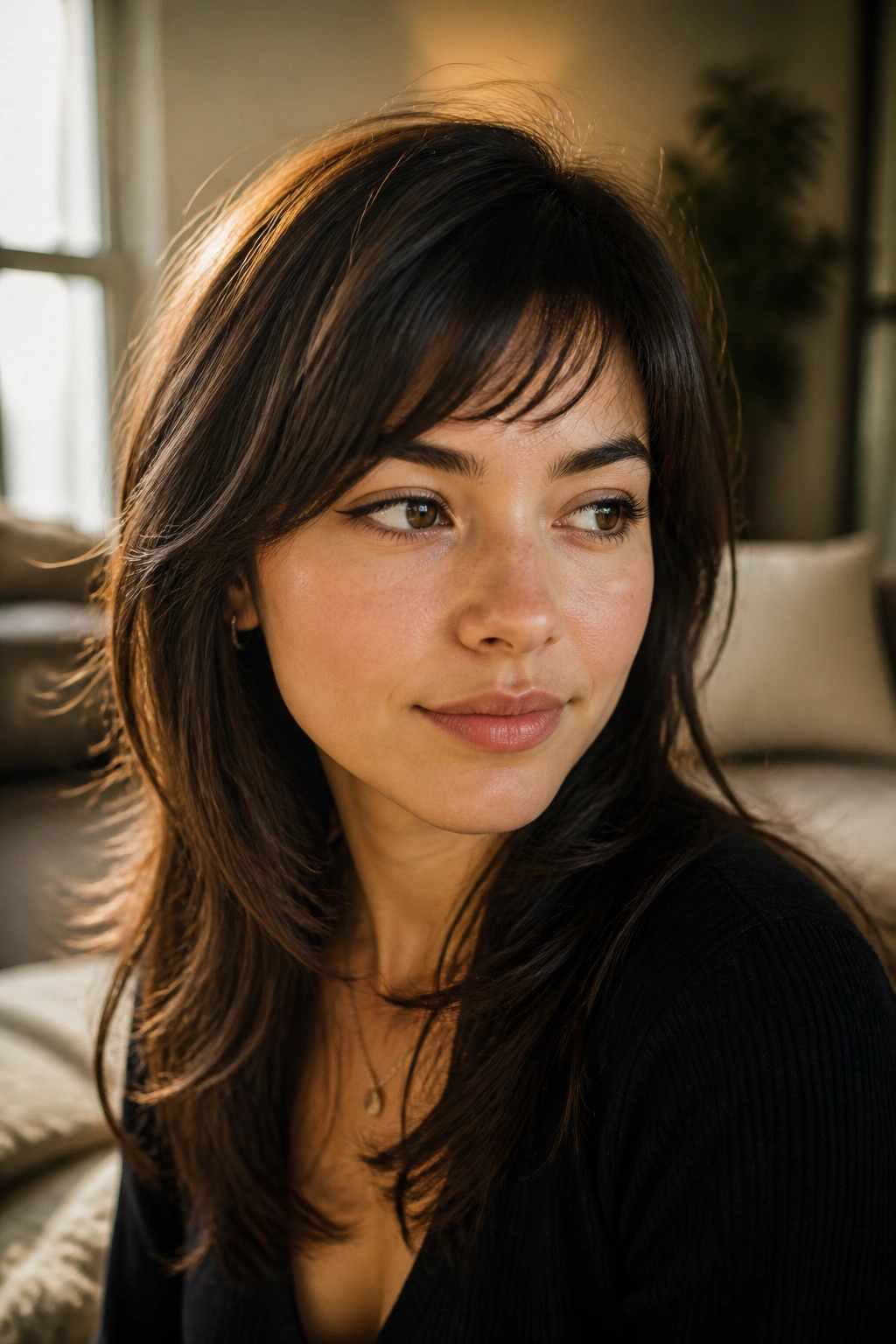
Yes, baby bangs can be soft. A side tilt changes the whole mood, especially if you want the shortness up front but do not want the hard, straight-across look that usually comes with it. The tilt gives the forehead a little breathing room.
This shape is useful for people who like the idea of a bold fringe but get nervous about how permanent it feels. By angling the front pieces slightly to one side, the cut moves with the face instead of sitting like a fixed bar. The soft layers around the cheekbones help the eyes lead the haircut, which is where short fringe tends to look best anyway.
You need a stylist who understands how to cut a fringe that can be worn two ways: brushed straight down on some days, pushed to the side on others. The line should still be short enough to count as baby bangs, but not so blunt that it only works one way.
A light cream or a flexible spray is enough here. Hard product ruins the whole point. The fringe should look touchable, with a bit of bend near the ends. If you want short bangs but prefer a gentler face frame, this is one of the smartest routes.
12. Rounded Baby Bangs with a Chin-Length Bob
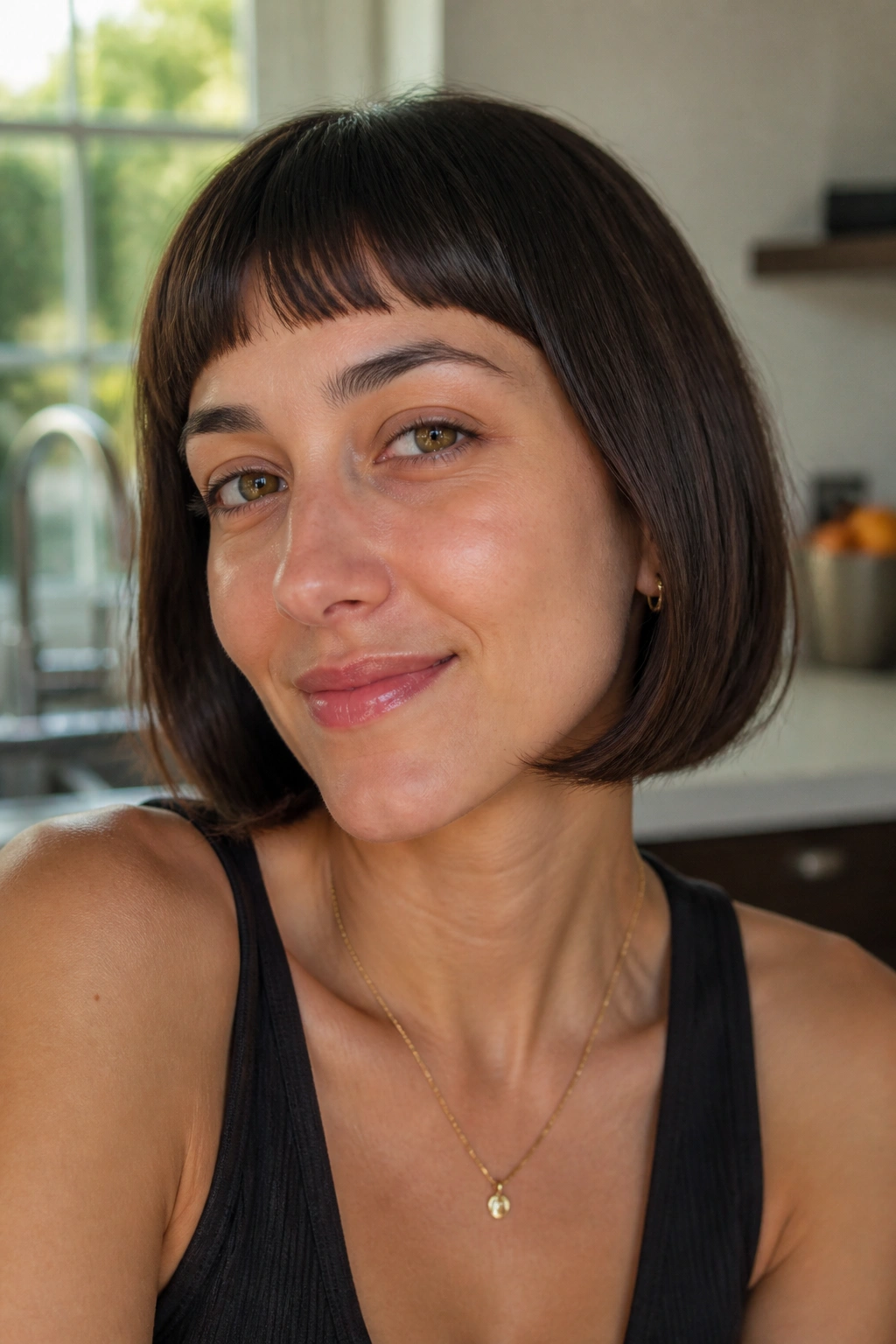
Why do rounded baby bangs feel softer than blunt ones? Because the curve echoes the face instead of slicing across it. On a chin-length bob, that rounded shape can make the whole haircut feel more fluid, especially if your jawline is strong and you don’t want the front to look severe.
The bob should follow the contour of the head and tuck in neatly near the chin, while the fringe is cut in a shallow arc. Not a big curve. Just enough that the center sits a touch shorter and the sides relax outward. That tiny adjustment makes a lot of sense on longer faces, but it can work on round faces too if the bob is kept crisp.
What to Ask For
- Keep the center of the fringe slightly shorter than the corners
- Make sure the bob is rounded, not boxy
- Use a blow-dryer brush to guide the front into the curve
- Ask for the ends to be blunt enough to stay defined
This cut looks especially good when the hair is glossy and clean. Not stiff. Clean. The rounded line wants the hair to move as one shape, and that works better when the strands aren’t covered in heavy texture spray. A little shine serum on the ends can help the bob read as one smooth line.
13. Graphic Baby Bangs with an Asymmetrical Bob
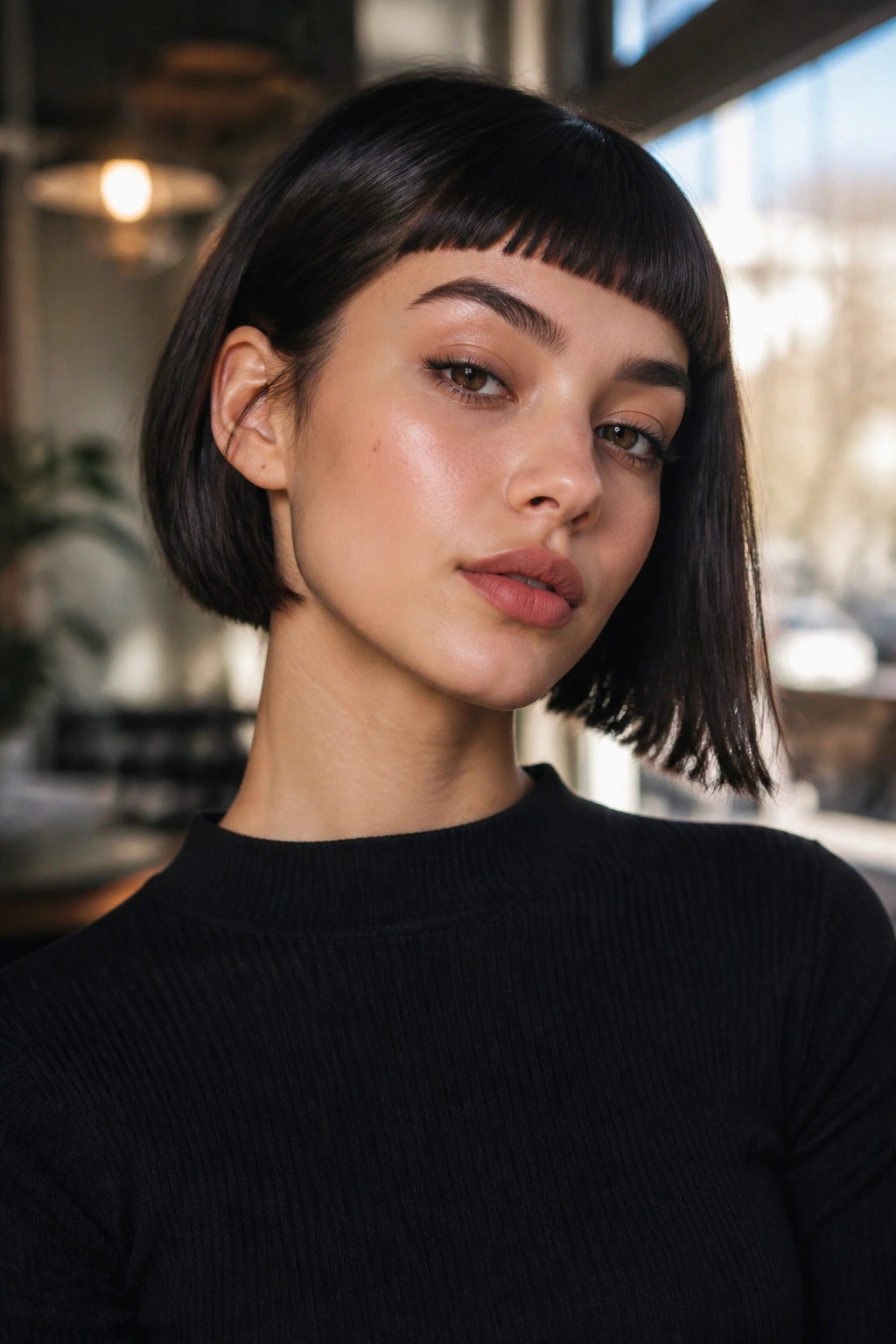
If you want baby bangs to feel modern rather than retro, let the bob do some of the talking. An asymmetrical bob gives the haircut a slight tension — one side longer, one side shorter — and that imbalance makes the short fringe look bold on purpose.
The fringe here should be crisp. Not severe, but crisp. A graphic bang line against an uneven bob keeps the haircut from becoming cute or twee, which is a trap some short fringe styles fall into. You want the eye to notice the shape, not the novelty.
This is one of the more fashion-forward combinations, and it looks strongest when the ends are blunt and the styling is clean. A center part can work, but a slight off-center part often adds a bit more life. The asymmetry needs one clear anchor point so it doesn’t drift into chaos.
It suits people who like contrast: short front, uneven sides, sharp edges. If that sounds like too much, skip it. If it sounds like the exact kind of haircut you’d wear with a black turtleneck and no apology, this is your lane.
14. Wispy Baby Bangs on a Long Pixie
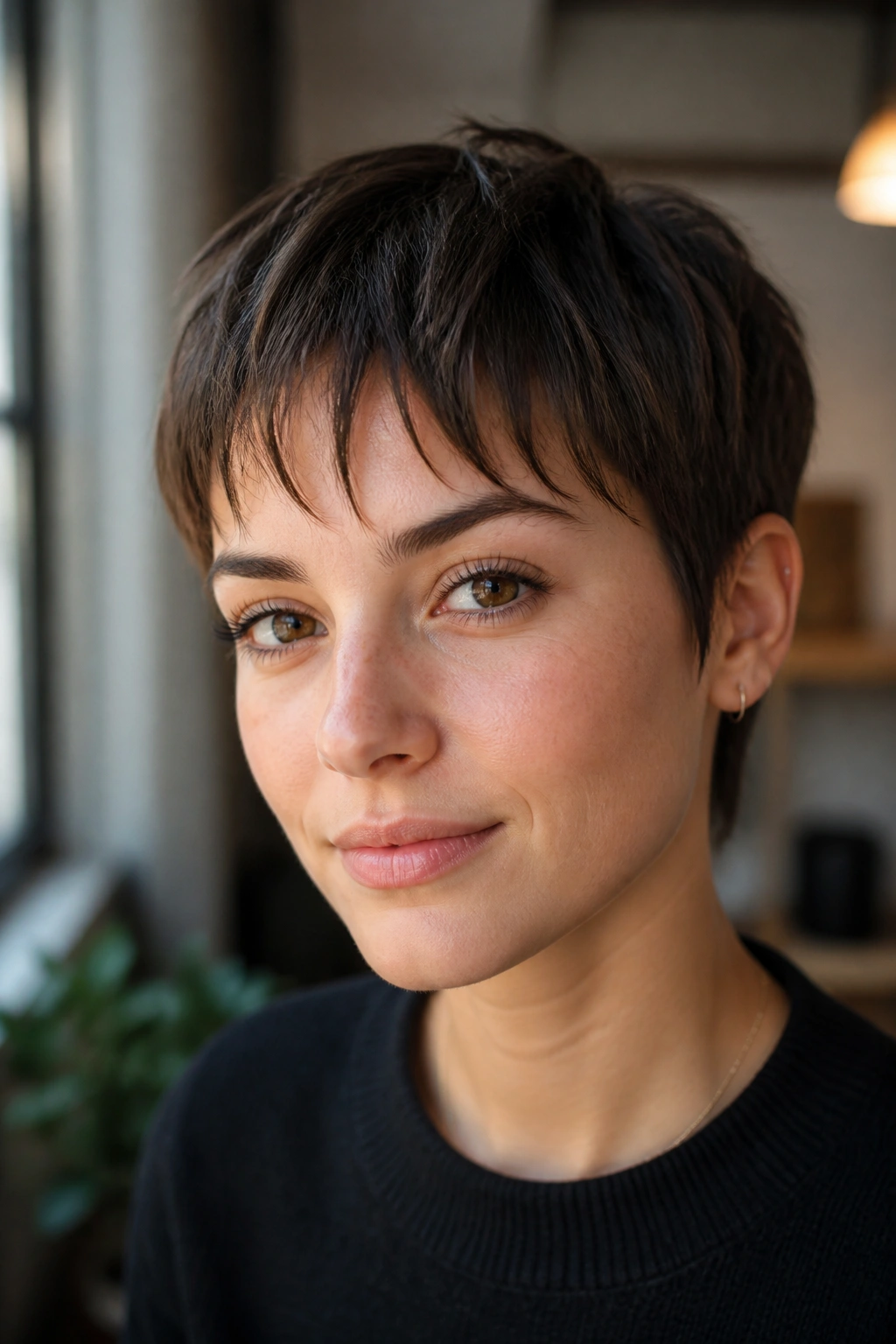
A long pixie is a nice place to start if you want baby bangs but are not ready for a severe chop. The extra length on top gives you room to soften the fringe, and the whole haircut feels lighter than a classic pixie with a hard micro bang.
The wispy part matters. The bangs should not sit as one solid strip; they need broken ends and a little transparency so the forehead peeks through. That keeps the cut from looking heavy on a smaller face or flat on finer hair. The long pixie underneath can be brushed forward, tucked behind the ears, or puffed slightly at the crown depending on how much shape you want.
This is also one of the easier baby bang ideas to grow out. The top length buys you time. When the fringe gets annoying, a few pieces can be swept to the side while the rest of the cut catches up. That flexibility is rare with very short bangs.
I’d call this a smart choice for someone who wants edge without the daily commitment of a sharper fringe. It still reads as baby bangs. It just doesn’t shout.
15. Grown-Out Baby Bangs for an Easy Exit
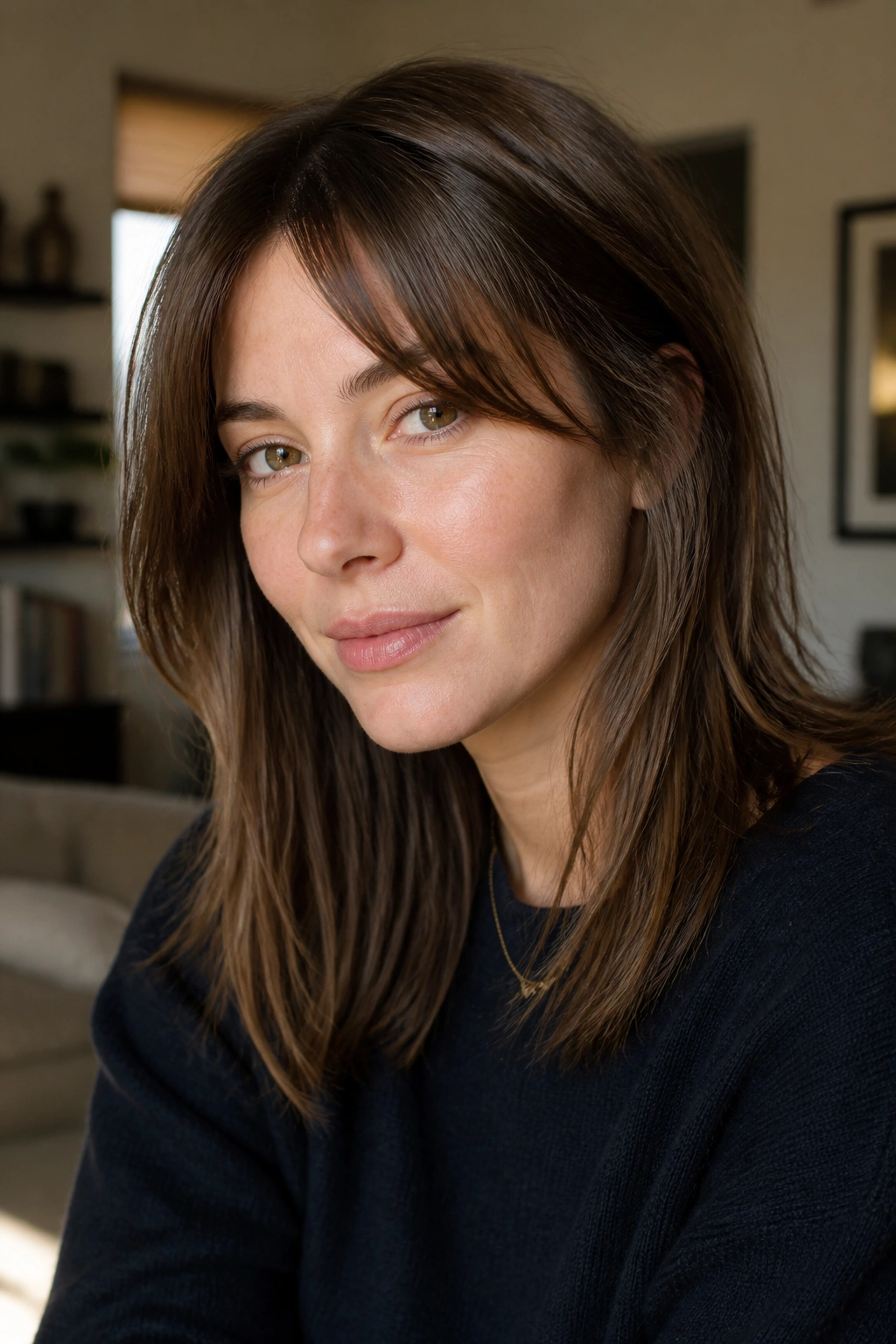
Not every bold cut needs to stay bold forever. Grown-out baby bangs can look better than the freshly cut version if the line softens in the right place and the rest of the haircut supports it. That’s not settling. It’s a different look with less maintenance.
The trick is to let the fringe sit a little longer, then keep the ends tidy so it doesn’t collapse into your eyes. A tiny trim every few weeks can preserve the idea of baby bangs without forcing the hard line. If you want the look but are tired of constant appointments, this is the version to keep in mind.
It helps to pair the grown-out fringe with a side part, soft layers, or a bob that has a little movement. That way the bangs blend instead of hanging there like a reminder of a haircut you meant to change and never did. The result is more relaxed, a little lived-in, and easier to wear on days when you don’t feel like styling.
A good exit strategy matters. Ask for “a dusting, not a reset” if you want to keep some shape while you grow the fringe down. That one sentence can save a haircut you already like.
