



Bangs can change a haircut faster than almost anything else. For women over 50, the right fringe can soften a strong forehead, pull attention toward the eyes, and make a tired bob feel deliberate again — without chopping off length you may still want to keep.
Bangs ideas for women over 50 work best when they respect texture, hairline, and styling habits. A blunt fringe on straight hair behaves one way; the same cut on wavy or thinning hair is a different animal altogether. Add glasses, a stubborn cowlick, or a few finer strands at the temples, and the shape matters even more.
I always think about bangs in motion, not in a salon mirror. Hair moves when you talk, bend down, drive with the window open, or tuck it behind one ear. That is why the smartest fringe cuts usually look a little softer in the chair than the client expects.
Plenty of directions exist. Some are barely there. Some are crisp and bold. Some take five minutes with a round brush, and some look better when you barely touch them at all. Start with the shape that fits your life, then let the rest follow.
1. Soft Side-Swept Bangs for Women Over 50
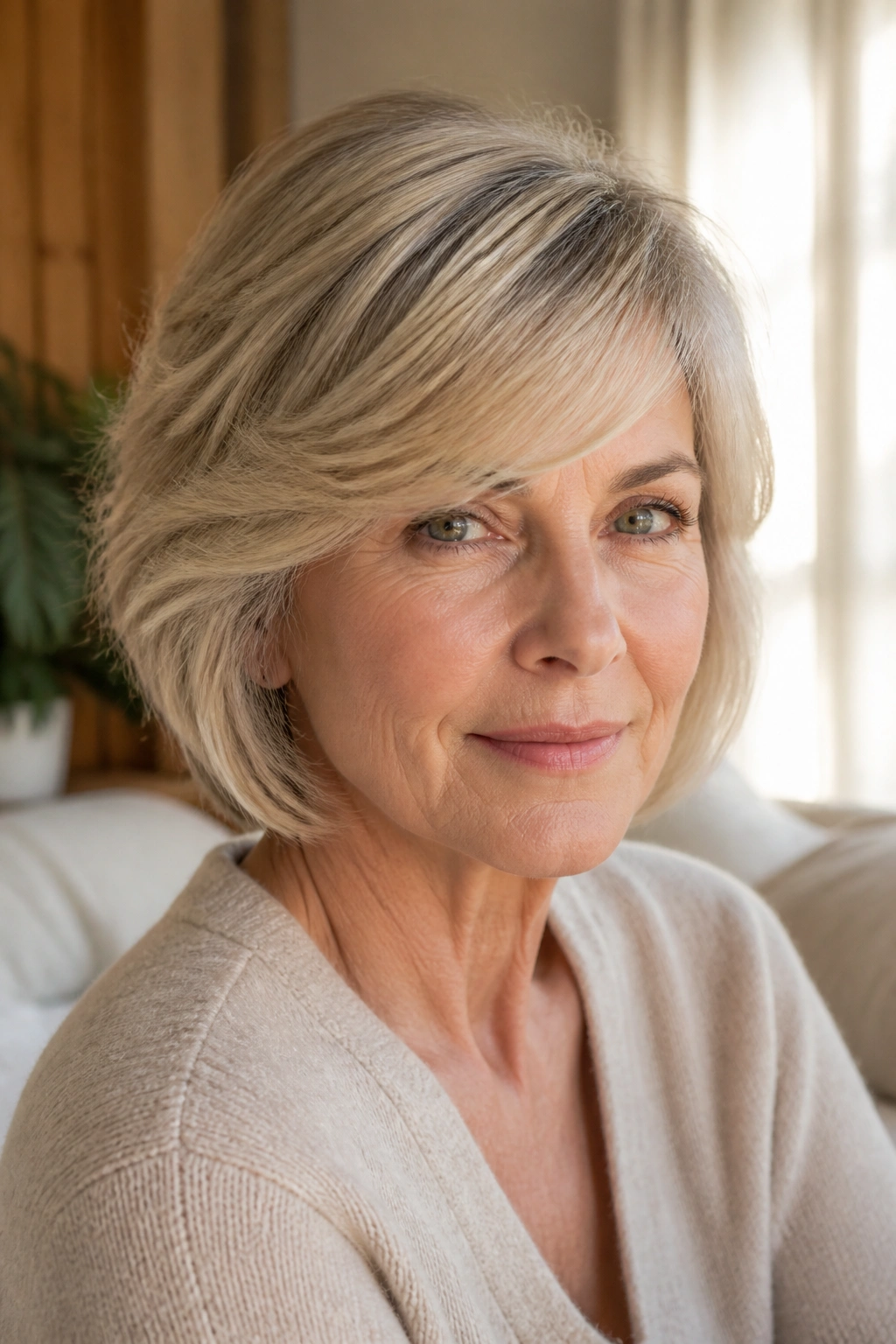
Soft side-swept bangs are the easiest place to begin if you want fringe without the shock of a full reset. The sweep breaks up a forehead, softens glasses frames, and gives a bob or shoulder-length cut a little movement near the face.
Why They Work So Well
The best part is how forgiving they are. If one side lies flatter than the other, the cut still looks intentional. That matters when your hair has a cowlick at the front or a slight bend that refuses to stay put.
Side-swept bangs also make grow-out much easier. You are not trapped in a hard line across the forehead, which means the style can slide into layers when you are ready to change it again.
- Ask for the shortest point to land just below the brow arch when dry.
- Keep the longest side grazing the cheekbone or the outer corner of the eye.
- Blow-dry the bangs from side to side with a small round brush so they do not split awkwardly.
- Use a light mist of flexible spray, not a sticky finish that makes them clump.
Tip: If your hair is fine, keep the fringe a little longer than you think you need. Short side-swept bangs can spring up and expose more forehead than you planned.
2. Curtain Bangs for Women Over 50
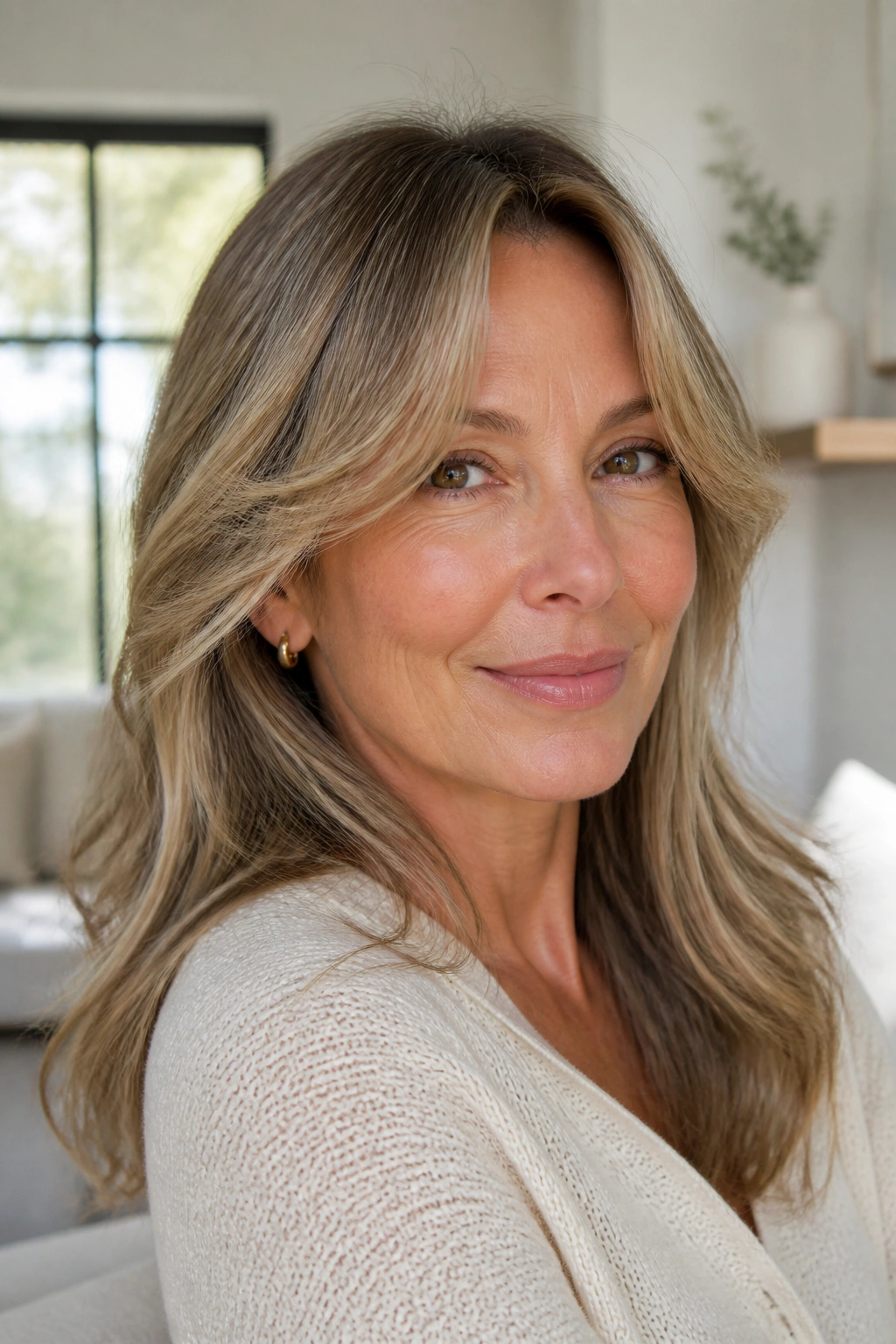
Curtain bangs are the least scary fringe choice, and I mean that in the nicest way. They part near the center, slide away from the face, and leave enough openness that you never feel boxed in by your haircut.
They work especially well if you like a soft, face-framing effect without a heavy edge. The inner pieces can sit around the cheekbones, while the outer pieces blend into longer layers. That shape pulls the eye down and out, which is flattering on round faces, long faces, and really any face that benefits from a little framing.
A lot of people overcomplicate curtain bangs. They do not need to be fussy. A 1.5- to 2-inch round brush, a quick blow-dry forward and then away from the face, and a few seconds of cool air are usually enough. That little bend at the ends matters more than perfect symmetry.
And yes, they grow out nicely. That is half the appeal. If you are deciding between fringe and no fringe, curtain bangs are the practical middle ground.
3. Wispy Brow-Grazing Bangs
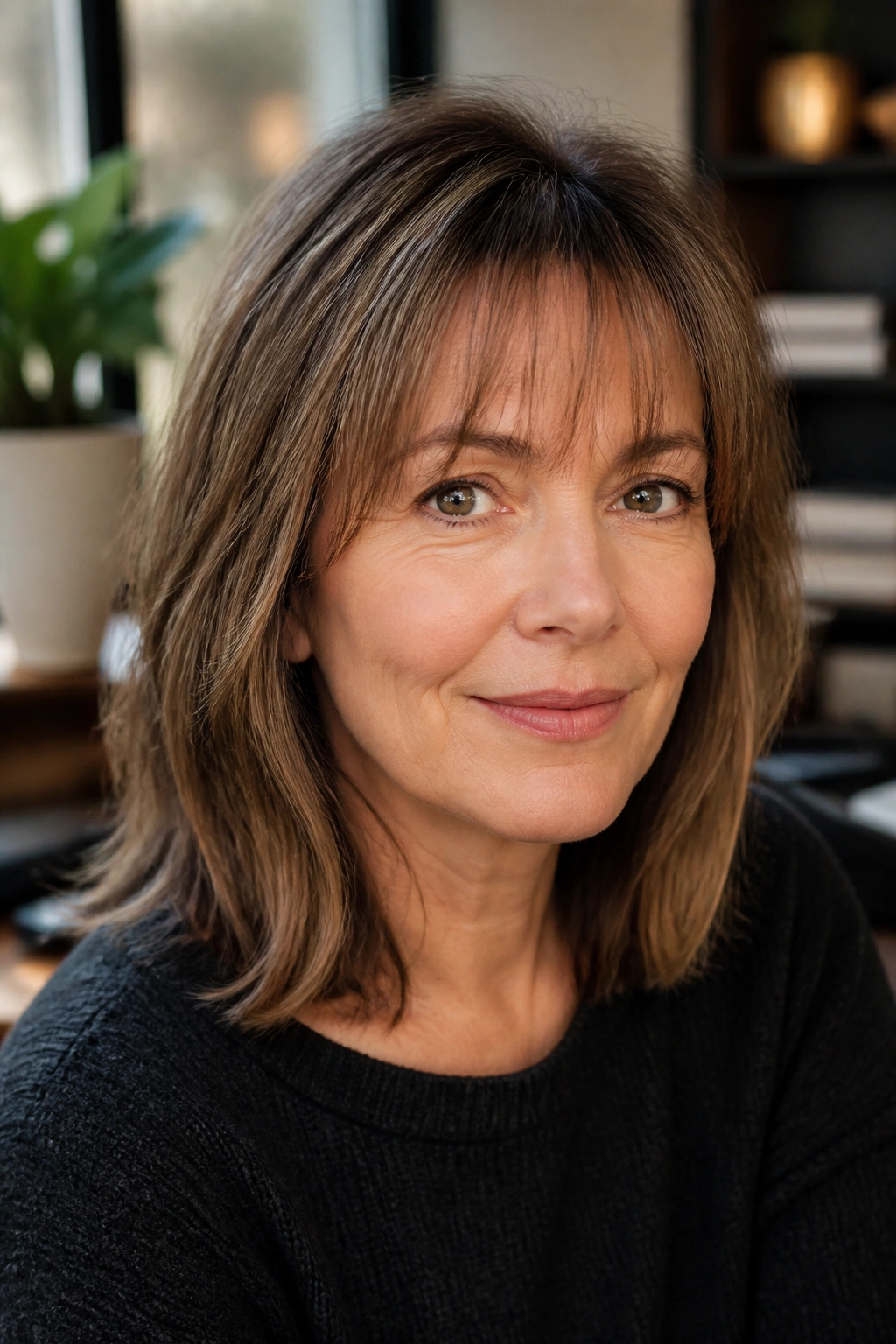
If your hair is fine, wispy bangs can feel like a relief. There is no heavy shelf of hair sitting on your forehead, no thick wall to fight with every morning, and no hard line that announces itself before you are ready.
What Makes Them Different
The trick is the density. Wispy bangs use less hair at the front, so the cut feels airy instead of dense. That lets a little forehead show through, which keeps the style soft and stops the hair from looking flat or stiff.
They can also be kinder to glasses. A thin fringe usually sits above or between frames without crowding the eye area, which makes the whole face look cleaner. If your hair is naturally light in the front, this cut works with that instead of against it.
A Few Things to Ask For
- Point-cut ends instead of a blunt edge.
- A longer middle section if your forehead is broad.
- Slightly separated pieces, not a single solid strip.
- A dry check at the end, so the stylist can see how the fringe falls in real life.
One warning: do not let someone thin the bangs so much that they disappear. There is a difference between airy and stringy, and the second one is not flattering on anybody.
4. Blunt Straight-Across Bangs

Blunt bangs are the sharpest way to make a bob feel crisp. They give structure, and structure can be a lovely thing when your haircut has started to feel too soft or too safe.
This style is strongest on straight or lightly wavy hair with enough density to hold a clean line. If the hair is too sparse at the front, the fringe can look thin at the edges and too heavy in the center. If the hair is very curly, the daily upkeep climbs fast.
I like blunt bangs on women who wear clean shapes elsewhere in the haircut. A chin-length bob, a long bob, or a smooth shoulder cut all benefit from that straight line across the forehead. It gives the face a frame and the haircut a point of view.
Trims matter here. A lot. Blunt bangs usually want a tidy touch-up every 2 to 4 weeks, depending on how quickly your hair grows. That is the tradeoff. You get a precise shape, and the shape asks for attention.
5. Bottleneck Bangs
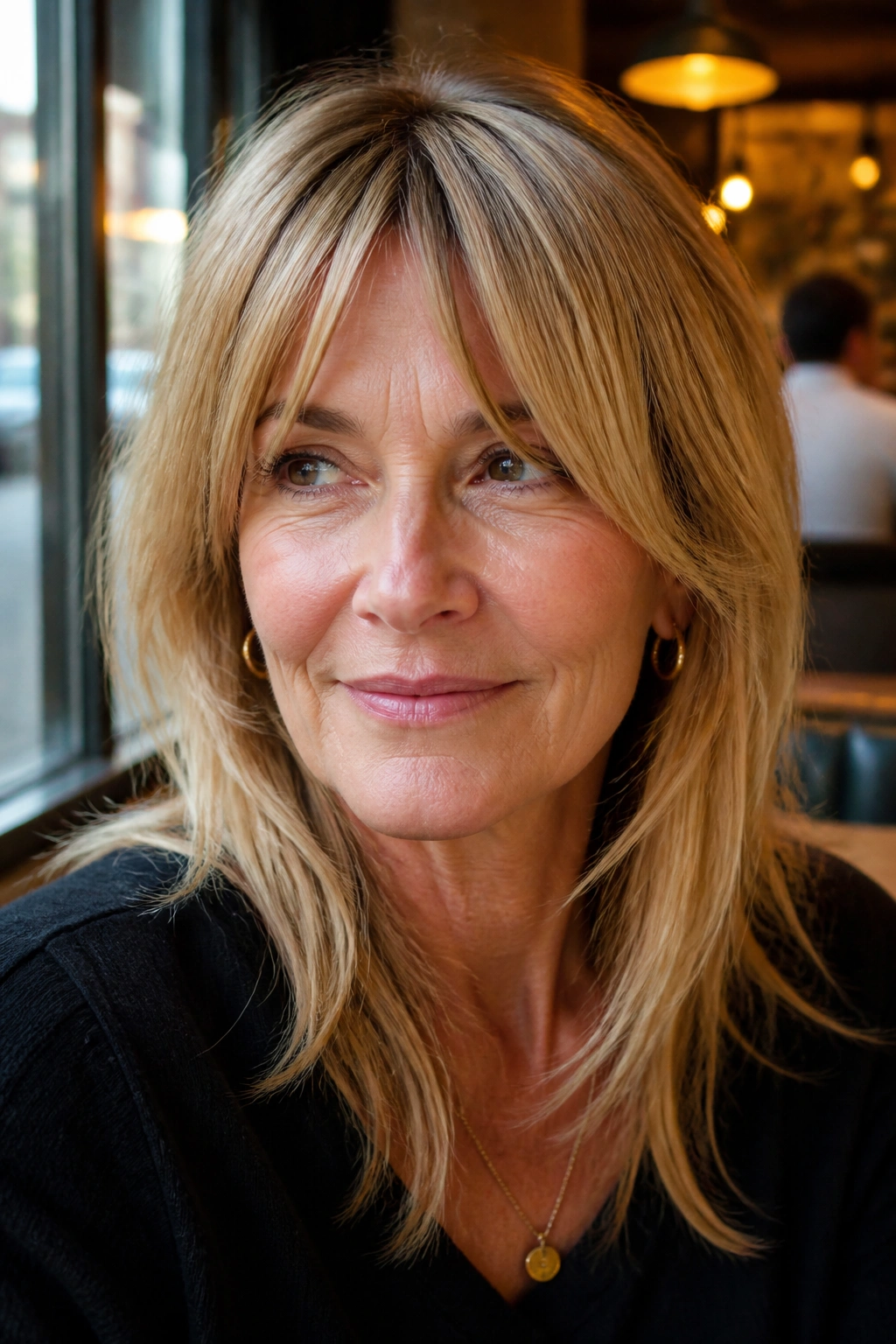
Why do bottleneck bangs flatter so many faces? Because the shape opens and closes in the right places. The fringe begins narrow near the center of the forehead, then widens toward the temples, almost like the neck and shoulder of a bottle.
That shape is useful if you want forehead coverage without a hard wall of hair. It softens the center line, but the longer sides still let light around the face. It is one of those cuts that looks casual in motion and polished when styled.
How to Ask for Them
Tell your stylist you want the center shortest point to sit around the brow area, with the sides kept longer and blended toward the cheekbones. The word “blended” matters. You want a soft taper, not a dramatic chunk of disconnected hair.
A round brush helps, but so does your hand. Dry the center forward, then guide the sides away from the face with a slight bend. If the ends flick too sharply, the shape can turn cartoonish fast, and that is not the point.
Bottleneck bangs are a good choice if you like curtain bangs but want a little more coverage through the middle. They feel a touch more tailored, which suits a lot of women who want shape without fuss.
6. Feathered Bangs

Feathered bangs are all about movement. Compared with a blunt fringe, they let air through the cut, which helps the front of the hair feel lighter and less helmet-like.
They work especially well with layered haircuts and medium-density strands. If your hair has a little natural bend, even better. Feathered bangs can echo that movement instead of fighting it, and the result feels softer around the eyes and temples.
A stylist usually builds this look by layering the fringe in a way that removes weight from the ends. That does not mean hacking out chunks with thinning shears and hoping for the best. It means shaping the front so the pieces fall in a soft, uneven sweep rather than one flat strip.
This is one of my favorite choices for gray or silver hair that has changed texture over time. Many women notice their hair feels coarser in some spots and finer in others. Feathering can help those differences blend instead of standing out.
7. Long Layered Fringe

Long layered fringe is the workhorse option. It gives you the idea of bangs without locking you into a strict shape, and that matters if you are growing out an older cut or you simply do not want to spend 10 minutes every morning fighting your forehead.
Why It Stays Useful
The length usually begins somewhere between the brow and the cheekbone, then blends into face-framing layers. Because the edge is not cut short, you can part it in the middle, sweep it to the side, or tuck one side behind the ear without it looking awkward.
That flexibility makes it a smart choice for busy mornings. A little dry shampoo at the roots and a quick finger-comb are often enough. If the hair falls forward too much, a 2-inch round brush and a short blast of heat will redirect it.
- Great for women who like a soft shape but not a strict fringe.
- Useful during grow-out phases.
- Easier to pin back on humid days.
- Helpful if your hairline swirls at the center.
My blunt opinion: if you are nervous about bangs, start here. It is the least dramatic way to test the waters, and you can always shorten it later.
8. Piecey Textured Bangs

Piecey bangs are for women who do not want every strand behaving itself. The separation is the point. The fringe looks a little broken up, a little undone, and that stops it from feeling heavy across the forehead.
This style works well on hair with natural wave or a little grit. Clean, silky hair can wear it too, but you may need a touch of texture spray or a tiny bit of styling cream to keep the pieces apart. The goal is not a perfect sheet; the goal is a few visible strands and some breathing room between them.
I like this cut when a woman wants a modern edge without going full short crop. It softens strong features and keeps the forehead from disappearing under one solid block of hair. On fuller hair, it can also cut down the “triangle” effect that sometimes happens at the front.
One caveat: piecey bangs can look messy if they are too short or too thinned out. The best versions still have shape. They are separated, not scattered.
9. Angled Bangs
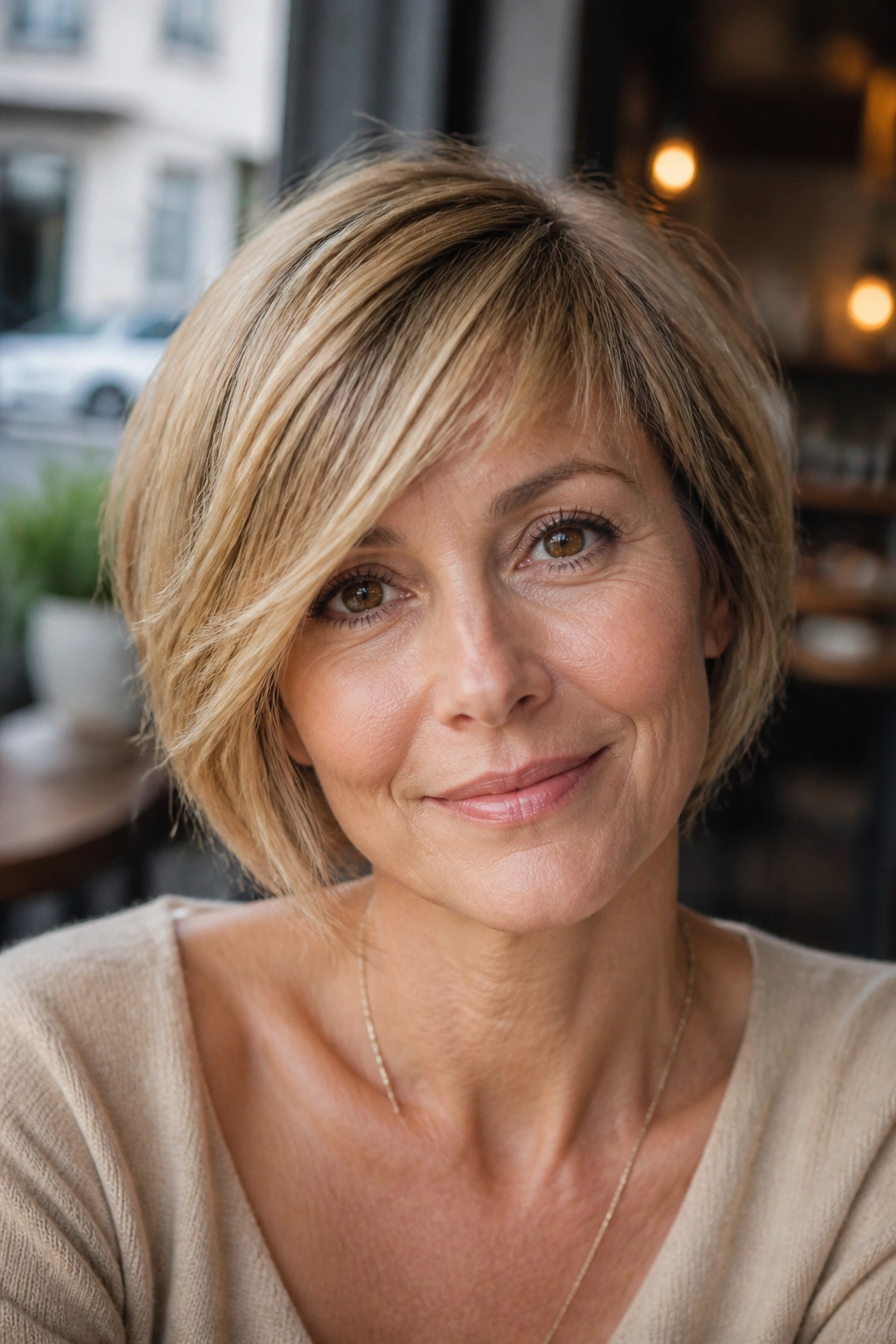
Angled bangs sweep diagonally across the face, usually starting shorter on one side and dropping a bit longer on the other. The line gives the haircut direction, which is useful if you want something more interesting than a plain side part.
They are especially good for women who wear glasses or have a strong jawline. The diagonal shape softens the straight edges of frames and draws attention upward without crowding the eyes. It is a nice balance.
A short cut with angled bangs can look sharp and tidy. A bob with angled fringe can look relaxed. The same idea works in both places, which is why stylists return to it so often.
Ask for a soft diagonal, not a steep slice. The difference is huge. A gentle angle feels natural; a severe one can look dated fast. You want the hair to fall, not to announce itself with a hard geometric line.
10. Shaggy Fringe
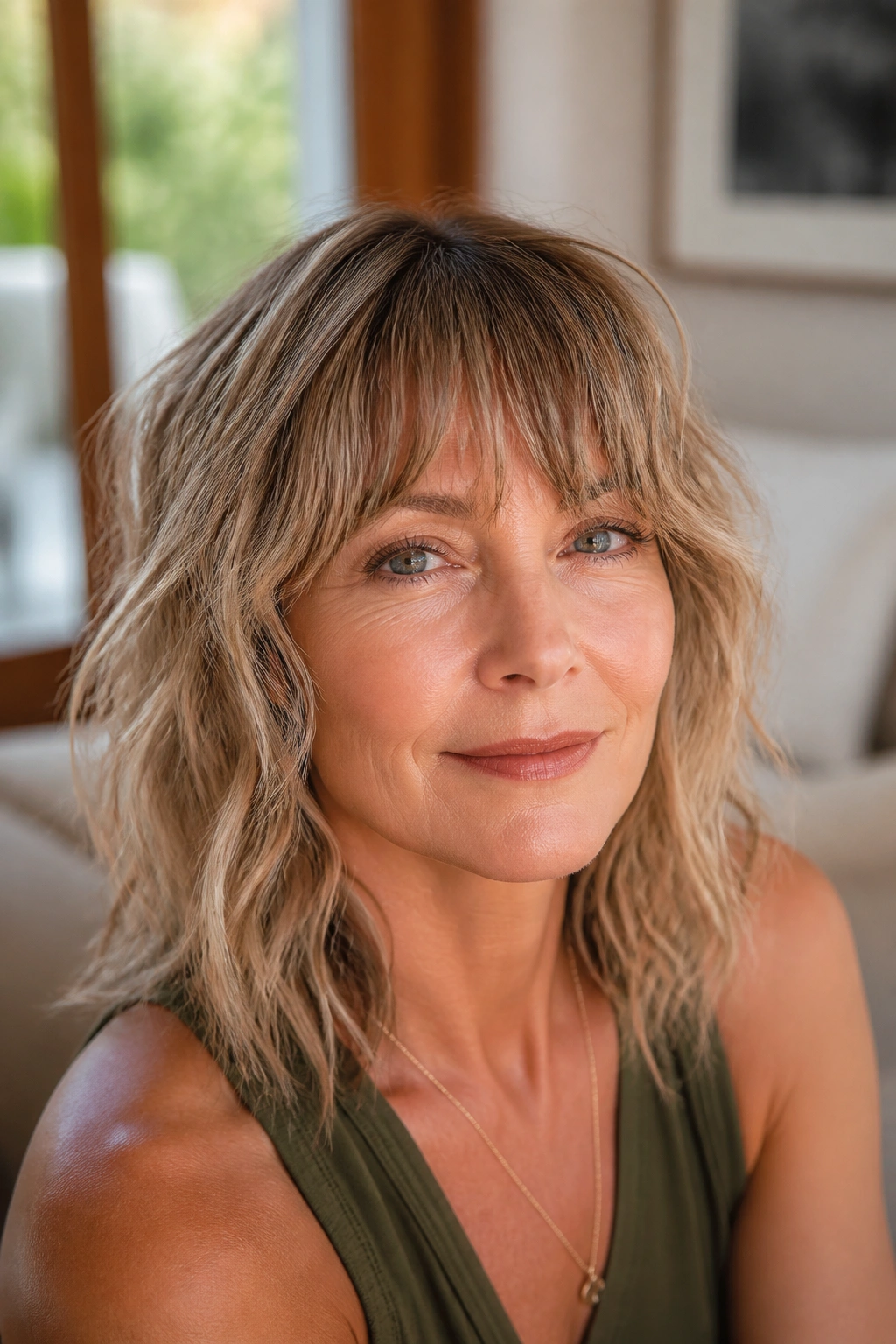
Shaggy fringe belongs to women who do not want to wrestle every strand into place. It is loose, layered, and a little wild in the best sense.
The cut usually pairs with a shag or layered lob, which means the bangs are not an isolated feature. They are part of the whole haircut. That is why this style works so well on wavy hair and on curls that need room to move. The front pieces can sit lightly on the forehead, while the rest of the haircut carries the shape.
If you air-dry often, this is a strong option. A dab of leave-in cream or curl cream can be enough, especially if the hair is already textured. If you prefer a polished finish, though, know this: shaggy fringe is never going to look as crisp as blunt bangs, and pretending otherwise is a waste of time.
Still, there is a charm to it. The cut does not beg for perfection. It gives you room.
11. Arched Bangs

Why do arched bangs feel so soft? Because the line follows the brow instead of fighting it. The center sits a little higher or lighter, while the sides curve down gently, which opens the face and keeps the fringe from looking like a block.
This shape can be lovely on women with longer foreheads or anyone who wants the eye to travel upward and outward. It also works when you want something a little more refined than a shaggy fringe but less severe than a blunt cut.
What to Avoid
- Too much curve. That can look dated fast.
- A fringe that is too short in the middle.
- Heavy product that freezes the arch in place.
- An overly round finish on very narrow faces.
The best arched bangs feel soft, not painted on. A blow-dry with a medium round brush usually gives enough shape. If your hair is thick, ask for a little internal layering so the fringe does not puff out into a helmet.
12. Pixie Bangs
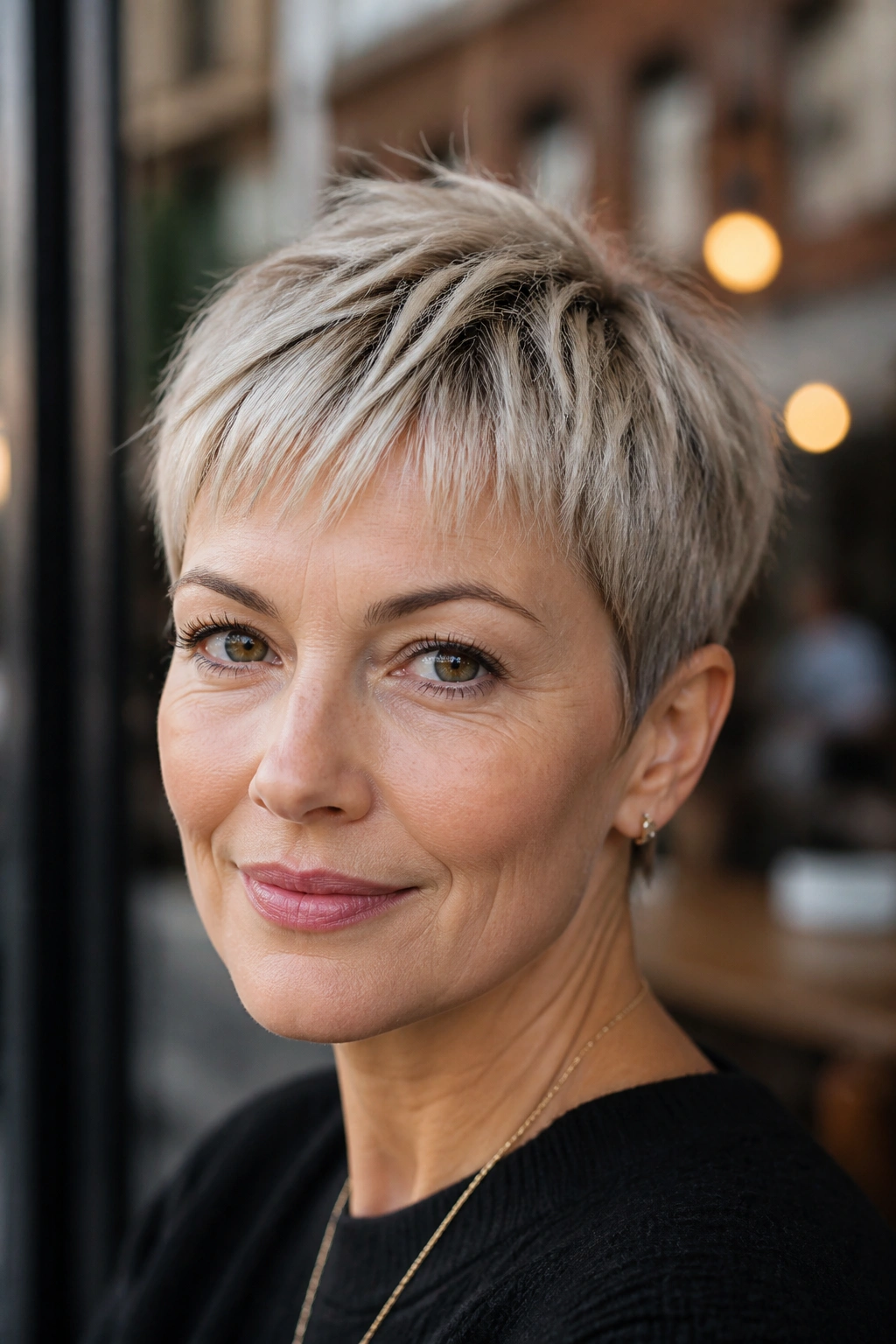
Pixie bangs are short, light, and unapologetic. They are made for cropped cuts, and they usually sit well above the brows or skim the top edge of them.
What I like about them is how little hair they need to feel complete. A tiny fringe can be enough when the rest of the cut is clean and the texture is right. It also keeps the face open, which is useful if you want your eyes, brows, or earrings to do the talking.
They are not low-maintenance in the trim sense. That part matters. Short fringe grows fast, and even a quarter inch can change the balance of the cut. If you dislike salon upkeep, this is not the easiest lane to live in.
But if you love short hair and want a bit of edge, pixie bangs have real style. A pea-sized bit of styling paste, rubbed between the fingertips, is usually all you need. The pieces should look separated and touchable, not stiff.
13. Rounded French Bangs
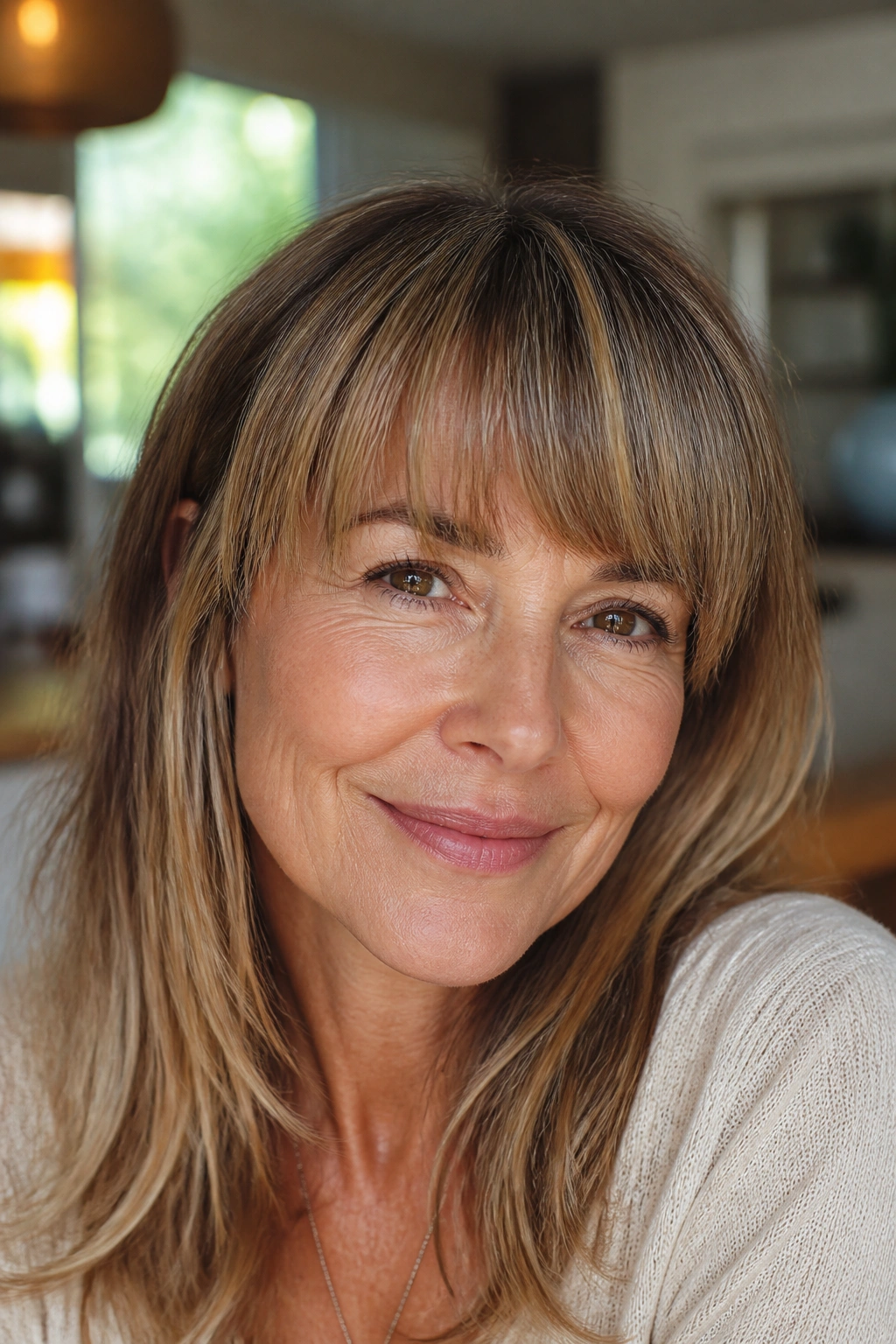
Rounded French bangs are a softer cousin of the straight-across fringe. They curve just enough to follow the forehead, usually a touch fuller in the center and a little lighter at the edges.
Salon Notes That Matter
- Ask for the center to sit near the brows, not far above them.
- Keep the outer corners longer so they melt into the sides.
- Request a soft, rounded edge rather than a sharp shelf.
- Style with a medium round brush, then let the ends relax.
This shape works beautifully with bobs, lobs, and hair that has a bit of body. It can make the haircut feel finished without looking severe. If you like your hair to seem polished but not overworked, this is a very strong option.
It also plays nicely with glasses because the curve softens the frame line. That small detail matters more than people think. A fringe that lands wrong with your frames can dominate the whole face. A rounded one usually behaves better.
14. Micro Bangs
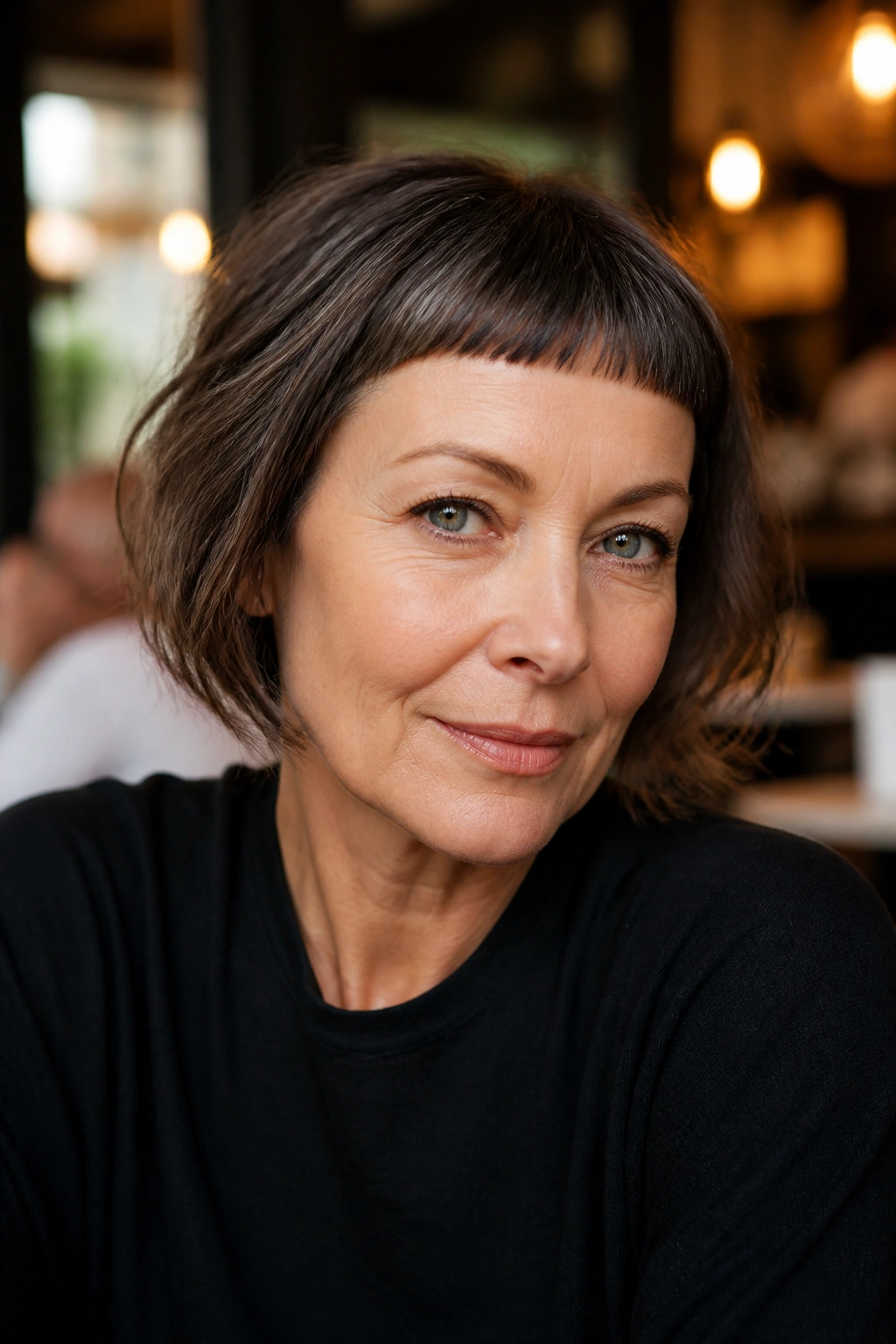
Micro bangs are not shy. They sit well above the brows and make the eyes and brows the main event, which is exactly why some women love them.
They are bold, and bold is fine. The catch is upkeep. A micro fringe loses its shape fast as it grows, so trims come often — usually every couple of weeks if you want the line to stay crisp. They also demand a stylist who understands precision, because the wrong version can look choppy in an unflattering way.
These bangs work best when the rest of the haircut supports them. A short bob, a shag, or a strong crop can hold the look together. On longer hair, micro bangs can feel disconnected unless the styling is very intentional.
If you want something a little playful and a little sharp, this is the fringe. If you want easy, skip it. No shame in that. Hair should fit your morning routine, not the other way around.
15. Curly Bangs for Women Over 50
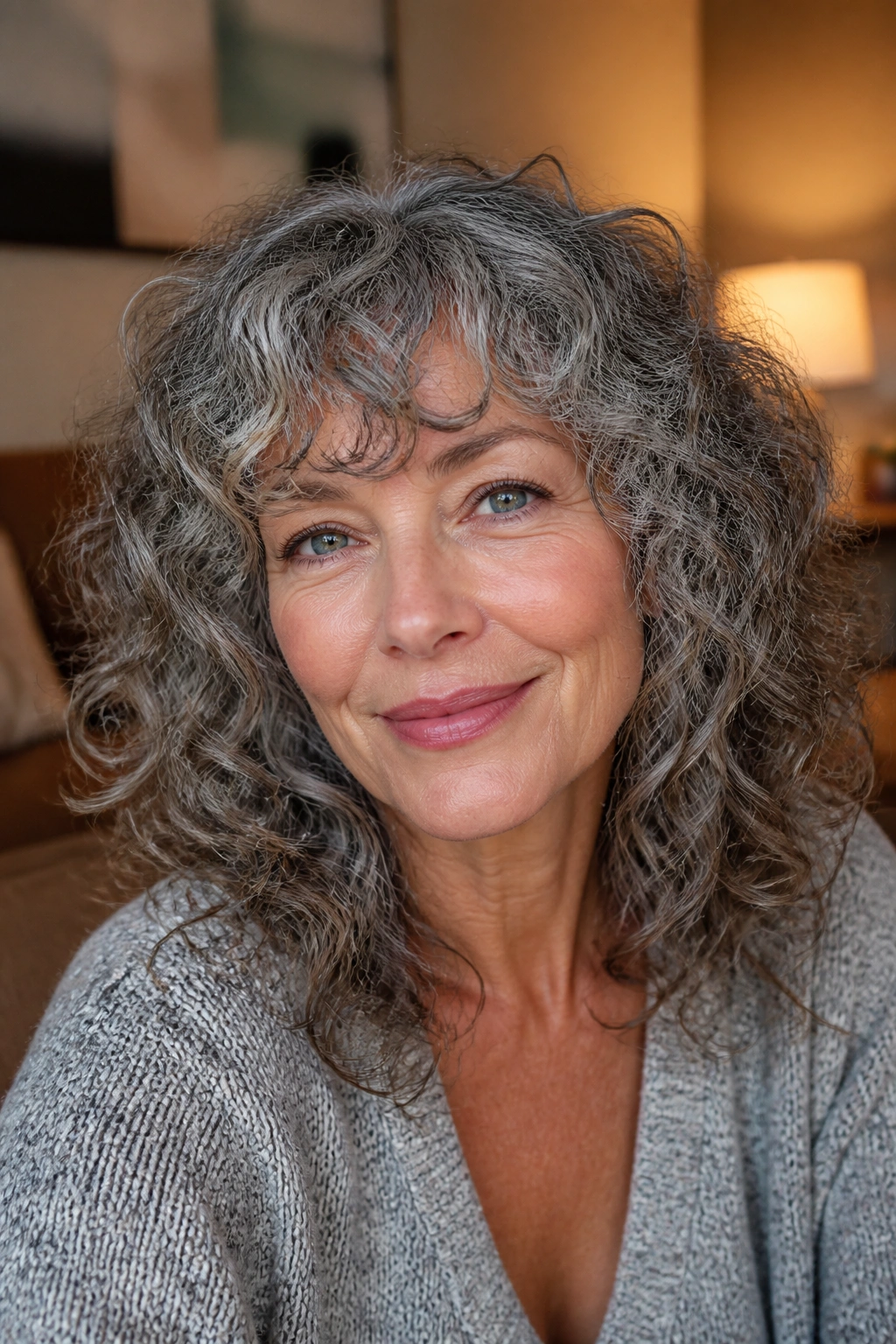
Curly bangs are one of the most practical bangs ideas for women over 50 if your natural texture has a mind of its own. Instead of forcing the hair flat, the cut follows the curl pattern and lets the fringe land where it wants to land.
That means the bangs usually need to be cut dry, one curl family at a time. Wet curls lie. They stretch, spring, and shrink unpredictably, and a fringe cut too short in the salon chair can end up much shorter than you meant to ask for. The safest approach is to let the stylist see the curl in its natural state.
What Makes Them Work
- Keep the length longer than a straight fringe, because curls bounce up.
- Ask for the front to be shaped to match the rest of the curl pattern.
- Use a diffuser on low heat or let the hair air-dry.
- Reach for leave-in cream or curl cream, not heavy wax.
Curly bangs can look soft, lively, and face-framing in a way that straight fringe never quite copies. They also work well with gray curls, which often gain a nice spring and a little more shape with the right cut. If you have been told bangs are not for curls, I would not take that as gospel. The cut just has to respect the texture.
Final Thoughts
The best fringe is the one that fits how your hair actually behaves on a Tuesday morning. Not the one that looks clever in a salon mirror. Not the one that needs three tools and a prayer.
If you are unsure where to start, pick the softest version of the shape you like and keep the first cut a little longer. That gives you room to adjust. Shortening bangs is easy. Growing out a bad fringe takes patience, hats, and more patience.
Bring two photos to the salon if you can: one for the length you want, and one for the fullness you want. That gives your stylist a much clearer target than saying you want “something flattering.” Haircuts respond better to specifics.
