



Medium hair is where highlights stop hiding. At shoulder length and collarbone length, every ribbon of color shows up fast, which means placement matters more than people think. The same shade that looks soft on long layers can look choppy on a blunt lob if the color sits in the wrong place.
That’s why hair highlights ideas for medium hair need a little more thought than a quick salon photo would suggest. The best ones play with movement, face shape, and the way the hair falls when it tucks behind one ear or flips over a sweater collar. Medium hair shows all of that.
The good news: this length can carry a lot. Warm tones, cool tones, subtle brightness, chunky contrast, hidden panels, rooty blends — medium hair can take them all if the color is placed with some care. It’s one of the few lengths where you can go soft or bold without losing the cut.
Thirty ideas follow, and none of them are filler. Some are low-commitment. Some ask for regular toning. A few are for people who want the kind of hair that makes strangers ask who does their color. Different moods, different maintenance, different results. That’s the fun part.
1. Honey Balayage Ribbons

Honey balayage is the move when you want warmth that feels lived-in, not loud. On medium hair, the lighter pieces have enough room to show off the hand-painted sweep, but the length is still short enough that the color doesn’t disappear into the ends.
Why It Works on Medium Hair
The soft bend of a collarbone cut makes honey tones look richer than they do on very long hair. You see the light catch the wave, then slip away. That motion does a lot of the work for you.
Ask for medium-width balayage ribbons starting around the cheekbone and softening toward the ends. If your base is dark blonde or light brown, a honey lift of about 2 to 3 levels usually keeps the result warm instead of brassy.
- Request painted pieces through the top layer so the color shows when hair moves.
- Keep the brightest ribbons near the face and the upper crown.
- Finish with a golden-beige gloss if the blonde looks too yellow.
- Skip heavy foils if you want the blend to stay soft.
Best tip: Honey balayage looks best when the root stays a touch deeper than the mids. That tiny shadow gives the color shape.
2. Caramel Face-Framing Contour
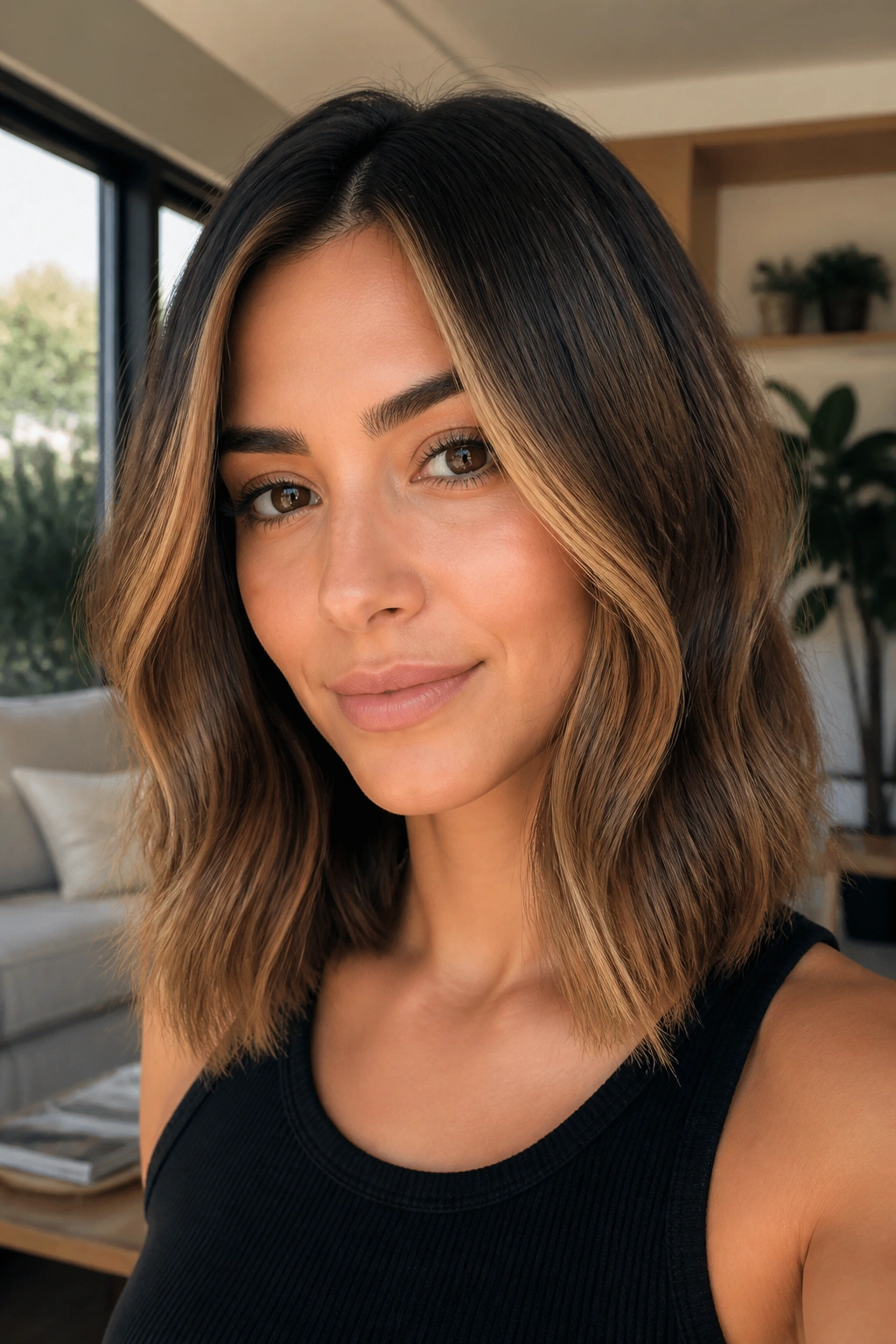
Caramel around the face is one of those ideas that works because it does one job well: it brightens without taking over. On medium hair, that matters. You do not need a full-head change to make a shoulder-length cut feel fresh.
The color sits like makeup for the hair. A warm caramel contour along the cheekbones and jawline softens the cut, especially on lobs with a center part or a loose bend.
This is also a smart choice if your hair grows fast and you hate obvious lines. Ask for thin, blended panels at the front, then let the back stay close to your base shade. It gives you contrast where people actually look first.
A little extra shine helps here. A clear or caramel gloss every 6 to 8 weeks keeps the front pieces from going flat or muddy. Easy fix. Nice payoff.
3. Beige Blonde Babylights
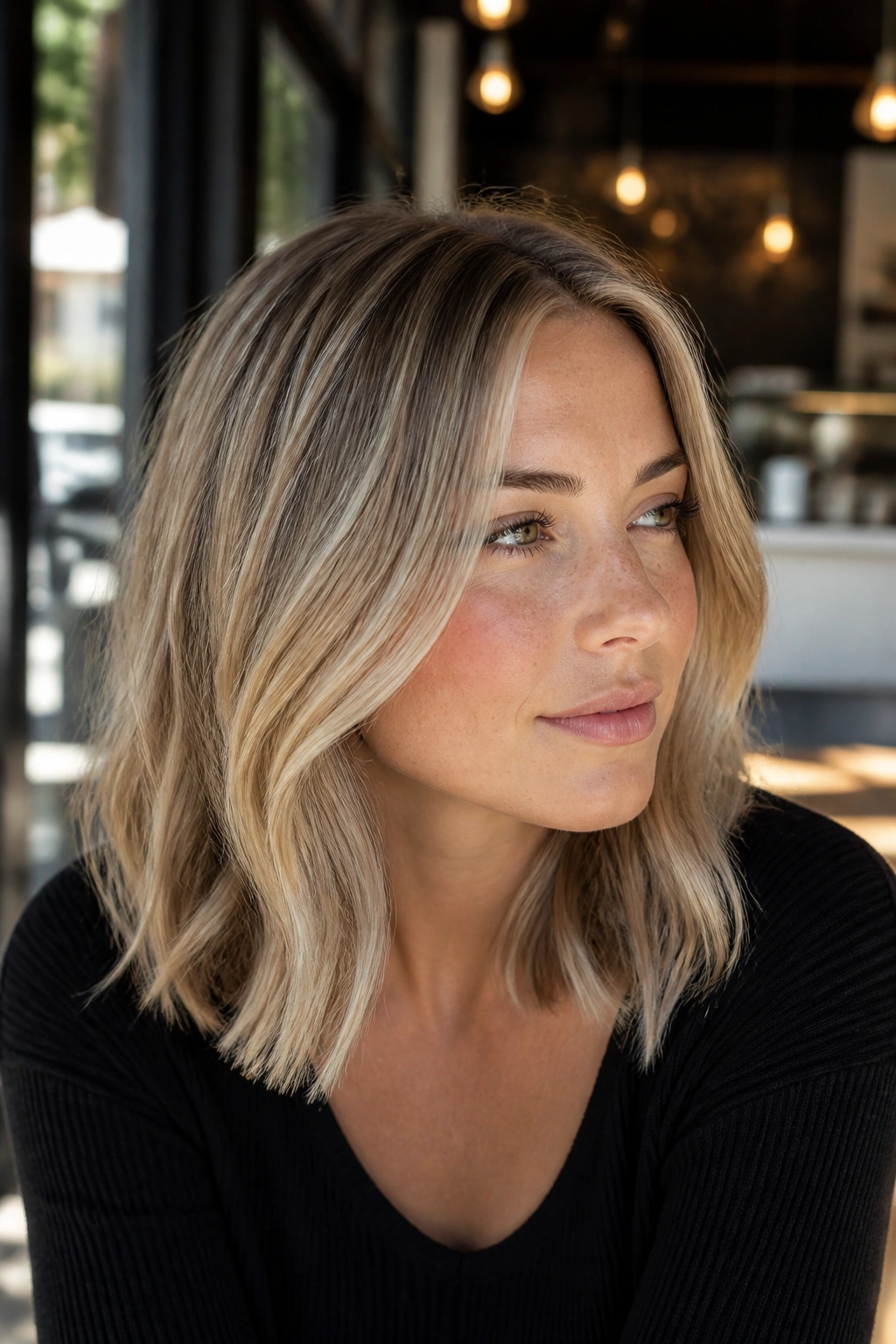
Why do babylights look so good on medium hair? Because the length is long enough to show the detail, but not so long that the fine color gets lost in the ends. The result is airy, not stripey. That’s the whole point.
Babylights are tiny. Think woven sections so thin you can barely separate them at a glance. On medium hair, that fine placement gives a soft sparkle through the top layer and around the face, especially if the cut has a few layers.
How to Ask for Them
Tell your colorist you want micro-fine highlights with a beige blonde tone, not a bright yellow blonde. Beige keeps the finish calm and expensive-looking without turning flat. If your base is light brown, the contrast stays gentle. If your base is darker, the highlights may need a few sessions to lift cleanly.
A few practical notes matter here:
- Ask for 1/8-inch sections or smaller.
- Focus the lightest pieces through the part line and temples.
- Keep the tone beige or sand, not icy.
- Use a purple shampoo only when the blonde starts to look warm.
Babylights are a little fussy, sure. But they grow out beautifully, and medium hair gives them enough room to breathe.
4. Ash Brown Ribbons
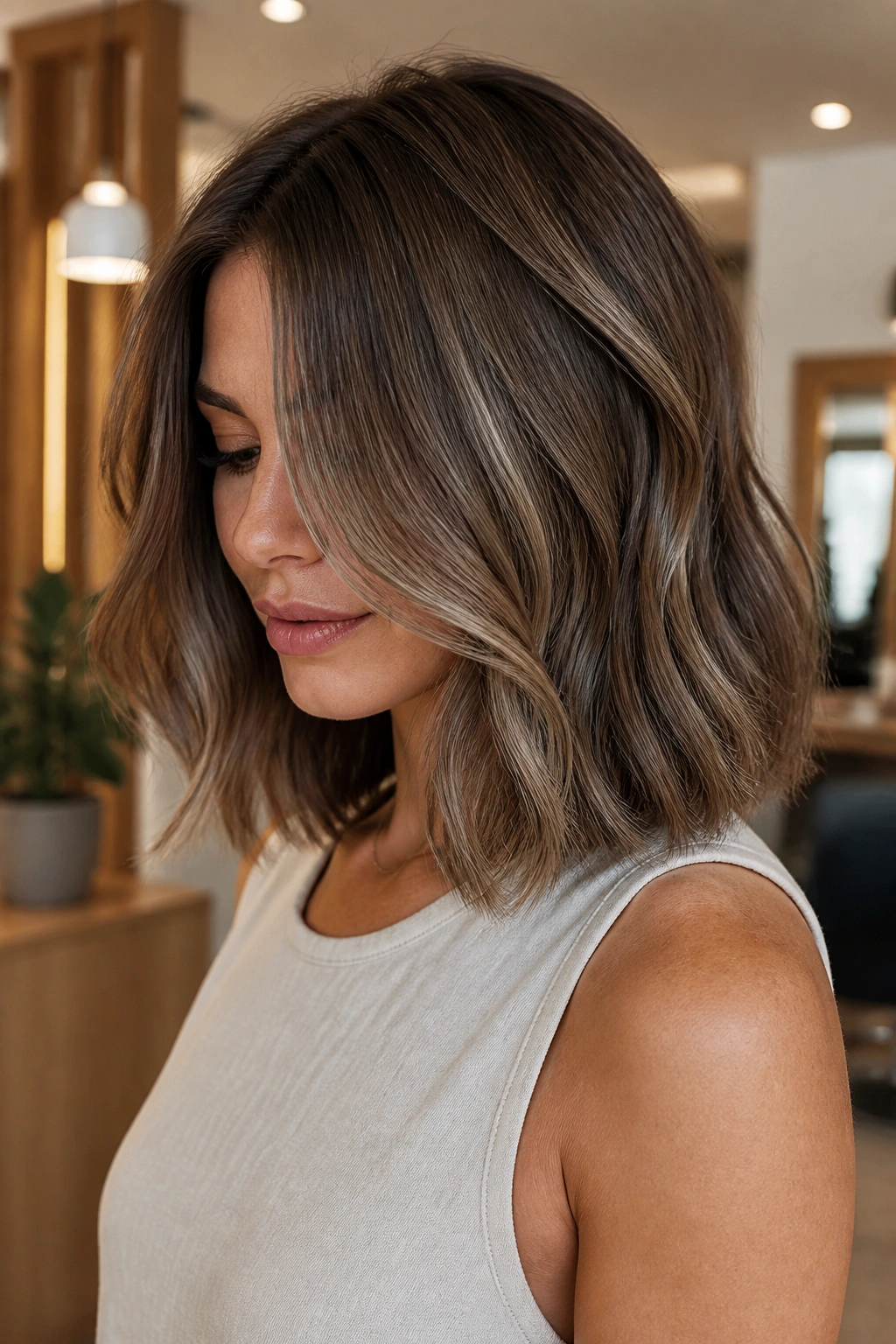
If your hair pulls orange the minute you lighten it, ash brown ribbons are your friend. They cool things down fast. On medium hair, the effect is especially nice because the shorter length keeps the cool tones from reading muddy.
Picture a brunette lob with ribbons that sit one or two shades lighter than the base, then get toned into a soft ash finish. Not gray. Not flat. Just cooler and cleaner around the edges.
The Look in Real Life
The best ash brown highlights are not obvious at first glance. They show up when the hair moves or when daylight hits the top layer. That’s what makes them so wearable.
A good colorist will leave some depth at the root and mids, then place the ash pieces where the hair bends. If you wear your medium hair in waves, that placement gives a clean, smoky dimension. Straight hair shows the contrast differently — more like slim ribbons than big streaks.
- Ask for cool brown foils instead of golden blonde.
- Keep the pieces narrow near the face.
- Use a blue or green-toned shampoo only if brass keeps coming back.
- Expect a toner refresh every 4 to 6 weeks.
Small warning: ash tones can go flat if you take them too pale. Medium hair usually looks best when there’s still a little brown in the highlight.
5. Copper Money Piece

Copper at the front is a bold move, and I like it for medium hair because the length keeps it from feeling costume-y. You get enough surface area to show the glow, but not so much that the color overwhelms the whole head.
This works especially well on brunettes and deep blondes who want a warmer, more spirited finish. The money piece frames the face, and copper gives it energy. It’s the kind of highlight choice that changes the mood of the haircut right away.
The trick is keeping the rest of the color calmer. If the whole head goes copper, medium hair can start looking busy. Leave the back closer to the base, then brighten only the front panels and maybe a few top-layer pieces.
Copper does need care. Expect a gloss or toner refresh every 4 to 6 weeks if you want the warmth to stay vivid. Water, heat, and sun pull it down faster than blonde. That’s the tradeoff.
6. Mocha Lowlights With Chestnut Threads
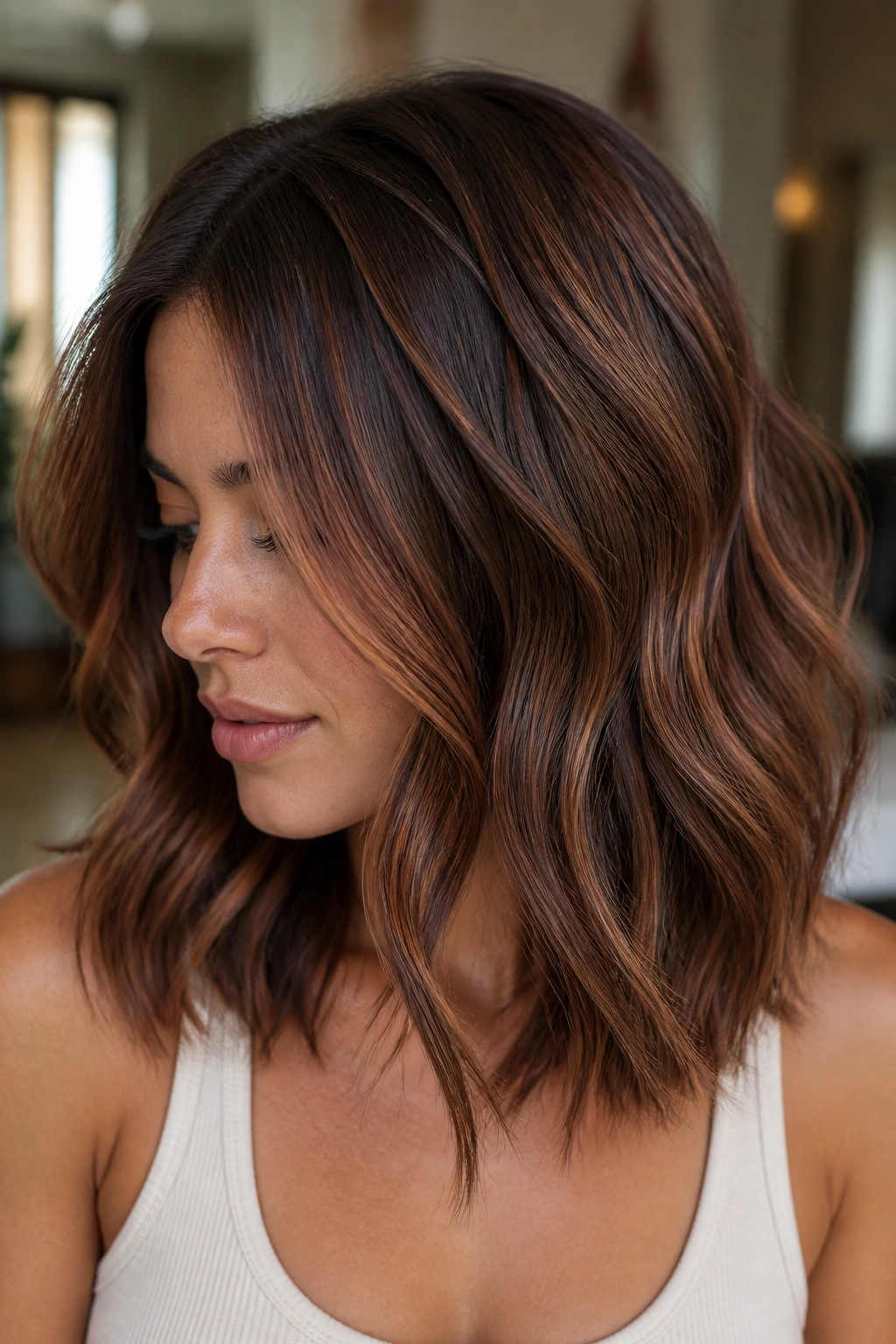
Unlike highlights that brighten the whole head, mocha lowlights give medium hair more depth. That matters if your cut feels too light after summer color, or if your fine hair needs a little visual weight.
Chestnut threads woven through a mocha base create a richer, denser look. It’s one of my favorite fixes for hair that got over-lightened and started looking a bit wispy at the ends. The darker pieces tuck the cut back together.
Best For
This look works on medium brunettes, dark blondes, and anyone who wants color that looks fuller instead of brighter. If your hair is thin, the added lowlight can make it seem thicker at the crown and through the mid-lengths.
Ask Your Colorist For
- A base that stays close to your natural brunette.
- Chestnut lowlights placed under the top layer.
- A few lighter mocha ribbons around the face.
- A gloss that keeps the finish soft, not flat.
My take: lowlights are underrated. On medium hair, they can do more for shape than another round of bright blonde.
7. Champagne Blonde Face Frame
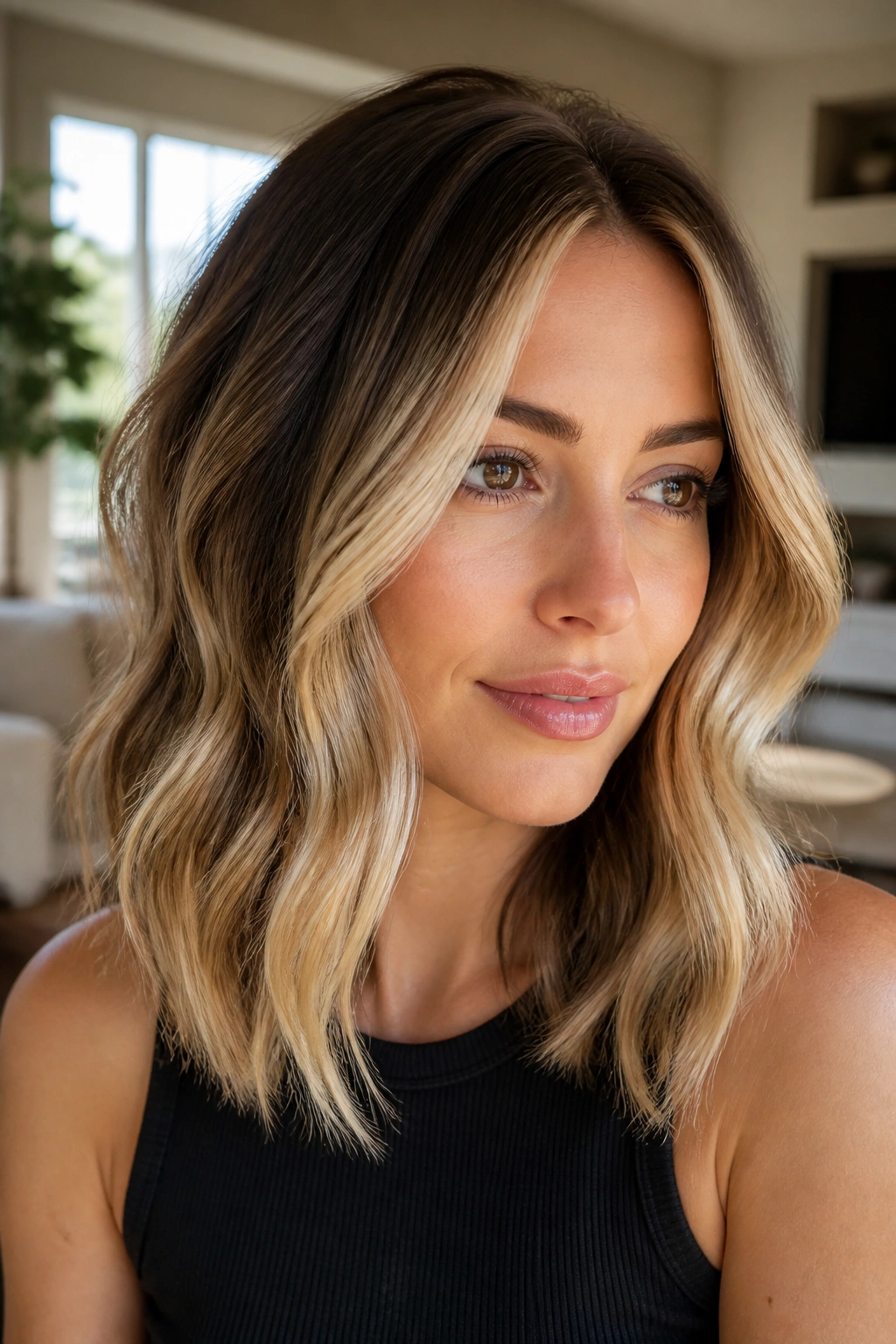
Champagne blonde is what I reach for when someone wants brightness that feels cool, but not icy. It has a soft sparkle to it — pale enough to lift the face, warm enough to avoid that harsh white-blonde line that can be too much on medium hair.
The face frame is the whole story here. If the rest of the hair stays closer to a dark blonde or light brown, the champagne pieces at the front give the haircut a clean edge without turning the whole head into a maintenance project.
What Makes It Different
Champagne blonde lives between beige and pearl. It looks airy, but there’s a faint warmth underneath that keeps it from going chalky. That balance works nicely on medium-length waves, where the light pieces catch the bend and soften the jawline.
A few specifics help:
- Keep the brightest strands at the front and through the top layer.
- Ask for cool-beige toner, not platinum.
- Leave some depth at the root so the face frame stands out.
- Refresh tone every 4 to 5 weeks if the blonde starts to warm.
It’s a polished look, but not a loud one. That’s why it works.
8. Toffee Foilayage
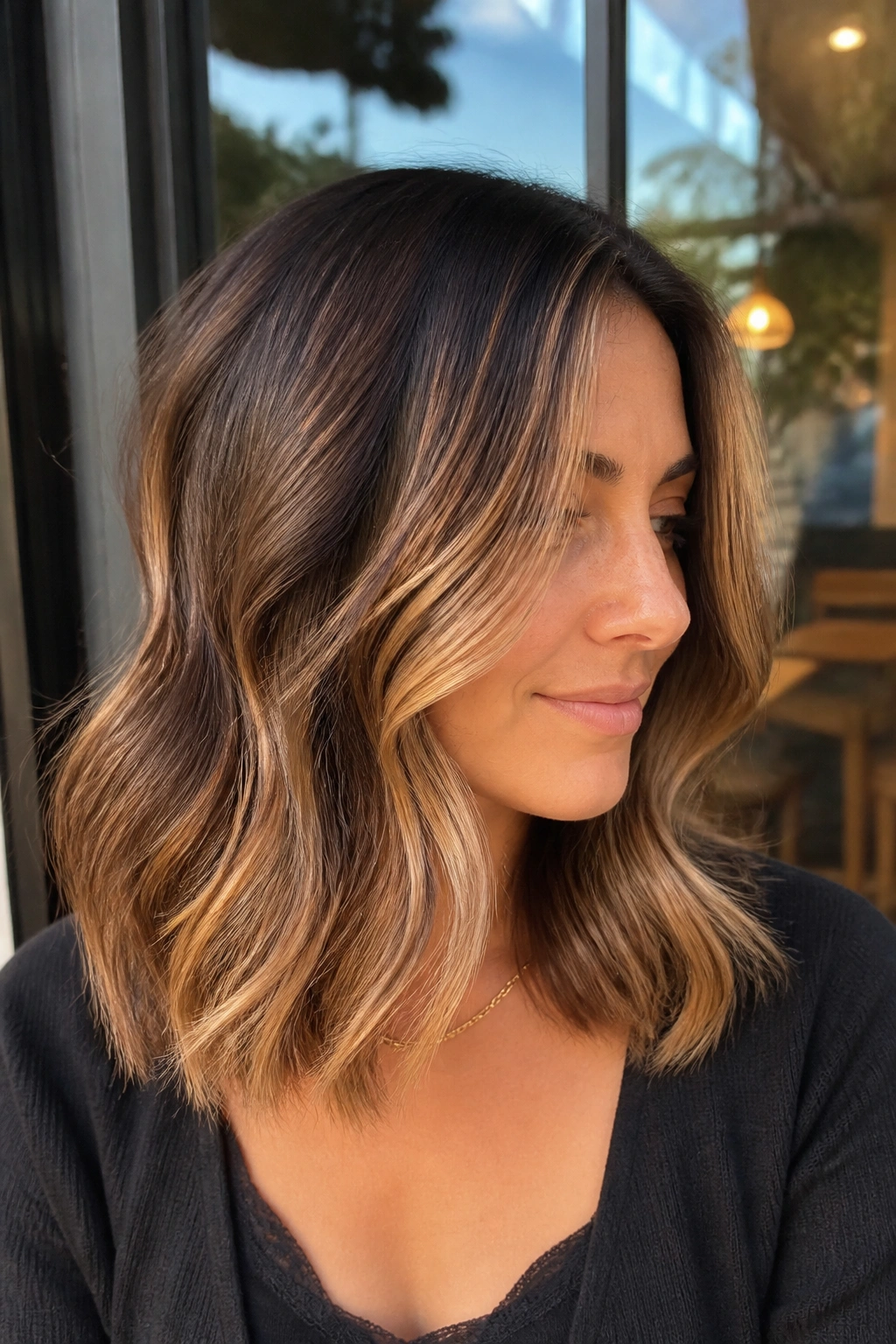
Toffee foilayage gives you the softness of balayage with a bit more lift at the ends. On medium hair, that extra brightness can make the cut swing better, especially if the layers are a little choppy or the ends are blunt.
This is the kind of color I’d suggest for someone who likes dimension but doesn’t want obvious stripes. The foils provide punch near the mid-lengths and ends, while the hand-painted part keeps the grow-out blurrier. Good combination.
What I like most is the way toffee sits between gold and brown. It’s warm without getting orange. On a lob, that means the highlight pieces look deliberate from every angle, not only in the mirror straight on.
A colorist will usually place the lightest pieces around the lower half of the hair and then soften the top with a root shadow. That gives the style movement and keeps the ends from looking hollow. Nice, easy, wearable.
9. Mushroom Brown Dimension

Why do mushroom brown highlights keep showing up on medium hair? Because the tone is hard to mess up if you want something cool, muted, and slightly smoky. The color sits between brown and taupe, which gives the hair that soft, expensive gray-brown feel people keep asking for.
Medium hair is a good canvas for it. Long hair can make mushroom brown feel dragged out. Shorter cuts can make it too blunt. At collarbone length, the shade has enough surface to show off its muted shifts without losing shape.
How to Get the Most From It
Tell your colorist you want neutral-cool ribbons, not beige blonde. That distinction matters. Mushroom brown should look earthy, not sunny.
A clean mushroom look usually includes:
- A brown base that stays close to natural.
- Taupe or smoke-toned pieces through the top layer.
- A few lighter threads around the face.
- A soft gloss that kills unwanted warmth.
It suits people who hate brass, and people who are tired of gold. Pretty simple.
10. Strawberry Blonde Gloss
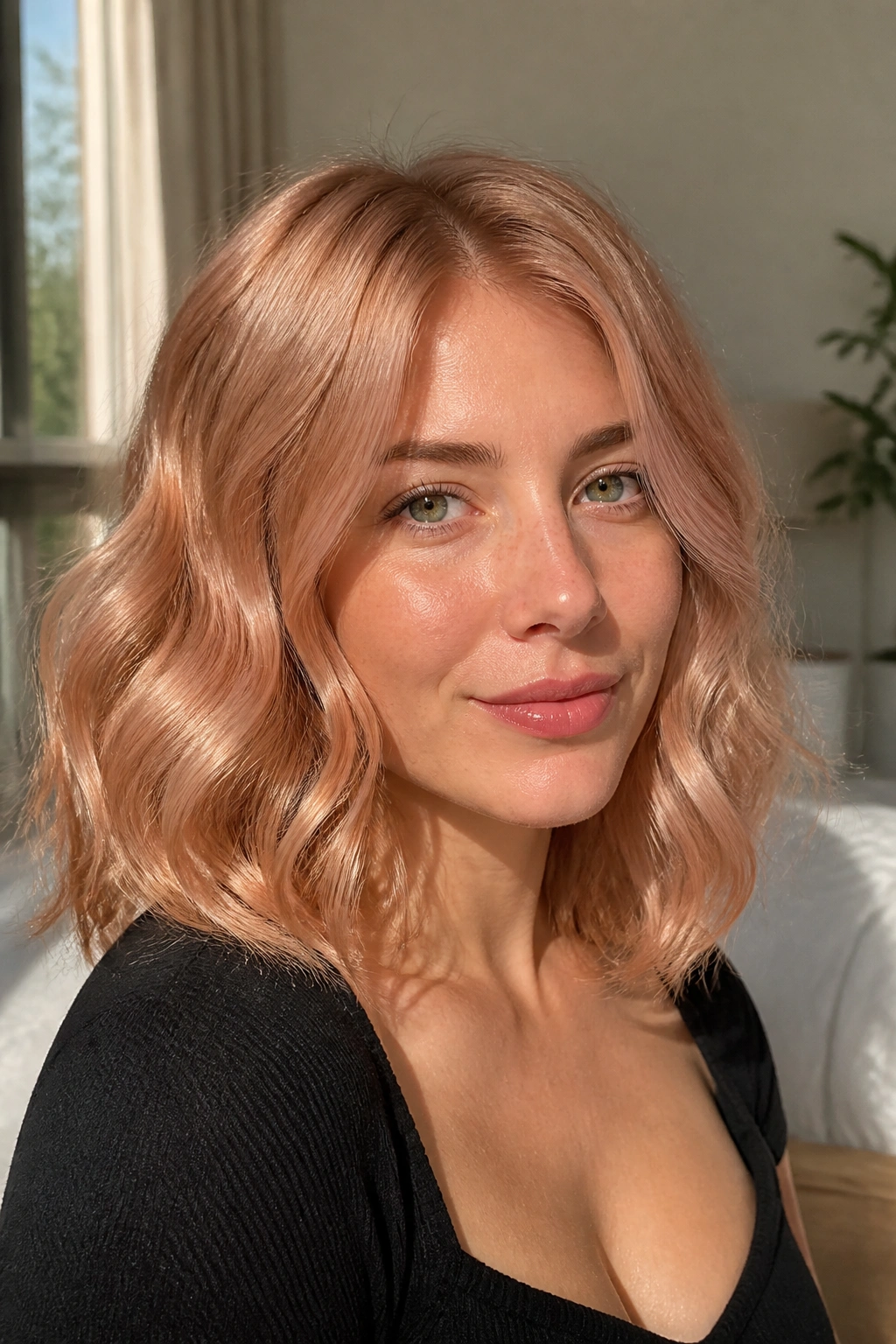
A strawberry blonde gloss can make medium hair feel lighter without pushing it into full blonde territory. That’s the sweet part. You get peach, gold, and a hint of pink in the same finish, and on shoulder-length hair it looks playful rather than sugary.
I like this most on natural blondes and light brown bases. If the hair is too dark, the strawberry note disappears unless the lift is strong enough to support it. Medium hair keeps the color from reading too juvenile because the cut gives it some structure.
The gloss matters more than the highlight pattern here. You can use a few soft foils or balayage pieces underneath, then glaze the whole head with a strawberry-beige toner. That gives the hair a faint rose-gold warmth instead of a cartoon pink cast.
A small warning: strawberry shades fade fast under heat and hard water. A color-safe shampoo and cooler rinses help, but they won’t work miracles. Still, the color is lovely while it lasts.
11. Cinnamon Spice Highlights

Cinnamon highlights are one of those shades that can look subtle in low light and rich in the sun. That’s the appeal. Medium hair tends to reveal color changes in layers, so cinnamon pieces can move from copper-brown to warm auburn depending on the angle.
I prefer this look on deeper brunettes. The warmer ribbons don’t fight the base; they wake it up. If the hair has a wave or bend, the cinnamon pieces sit between the curves and give the whole cut a warmer rhythm.
The biggest mistake is making the highlights too orange. Cinnamon should feel dry, warm, and slightly spiced — not neon. That means asking for a tone that leans red-brown, not pumpkin.
A Few Good Habits
- Keep the lightest pieces through the front third of the hair.
- Add a soft gloss to keep the red-brown from going flat.
- Use heat protectant every time. Red tones vanish fast with too much iron work.
- Ask for a few deeper lowlights if your hair is naturally very dark.
It’s a cozy color. Not boring. Cozy.
12. Sandy Beige Ombré

Sandy beige ombré gives medium hair a softer bottom half without a hard line. The color usually starts close to the natural base, then drifts into a muted beige at the ends. On a shoulder-length cut, that gradual shift looks clean because the transition happens over enough length to feel intentional.
This is a smart choice if you want lightness but not high upkeep. The grow-out is gentler than a full foil job, and the beige tone avoids the harsh brightness that can make medium hair look drier than it is.
Unlike a stark ombré, this version keeps the contrast low. The root stays grounded, the mids carry the movement, and the ends pick up the lightest shade. That shape works especially well on wavy lobs. It also works if you wear your hair straight, since the gradient shows clearly at the hemline.
Best for: people who want a soft lift with fewer salon touch-ups.
13. Peekaboo Underlights
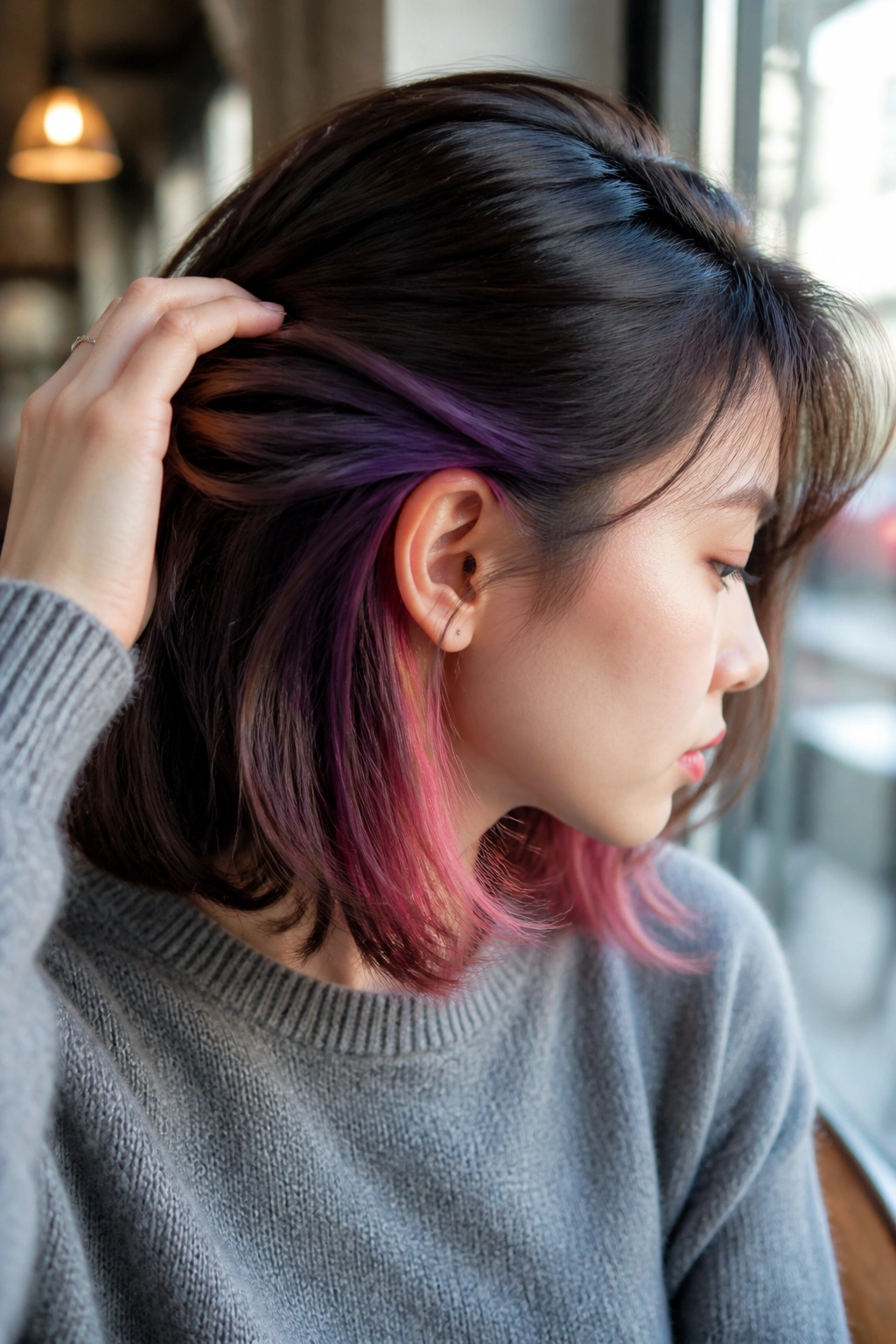
Peekaboo highlights are for people who want color with a little attitude. Medium hair is ideal for them because the top layer can hide the fun pieces until you flip, tuck, or braid the hair.
Underlights sit beneath the surface layer, usually at the nape and through the lower interior. That hidden placement makes them perfect if your workplace leans conservative or if you want the color to surprise rather than announce itself.
What to Ask For
- A darker or brighter panel under the top layer.
- Color placed near the ear and through the nape.
- A shade that contrasts with your base, like plum, teal, copper, or soft blonde.
- Enough depth on top to cover the color when the hair is worn down.
The nice part is that peekaboo color lets you have a bolder shade without coloring the entire head. On medium hair, the movement is enough to show flashes of it when you walk, bend, or pull the hair half up. Fun. Slightly rebellious. Still easy to live with.
14. Soft Chunky 90s Highlights

Chunky highlights have a bad reputation because people remember the stripey versions. Fair enough. But a softened 90s-inspired placement can look sharp on medium hair if the contrast is controlled and the stripes are broken up with finer pieces.
The point is not to recreate a zebra pattern. The point is to use a few wider ribbons to add shape, then mix them with softer weave work so the result feels deliberate. On a medium bob or lob, that contrast can give the haircut more edge than a quiet balayage ever will.
I’d keep this look to a brunette base with caramel, honey, or light mocha pieces. Those tones give the style a retro feel without making it harsh. If the highlights are too pale, the whole thing tips into costume territory fast.
Medium hair can handle chunky placement because the length gives each strip room to land. You see the lines. You see the swing. That’s the draw.
15. Sunlit Bronze Sweep
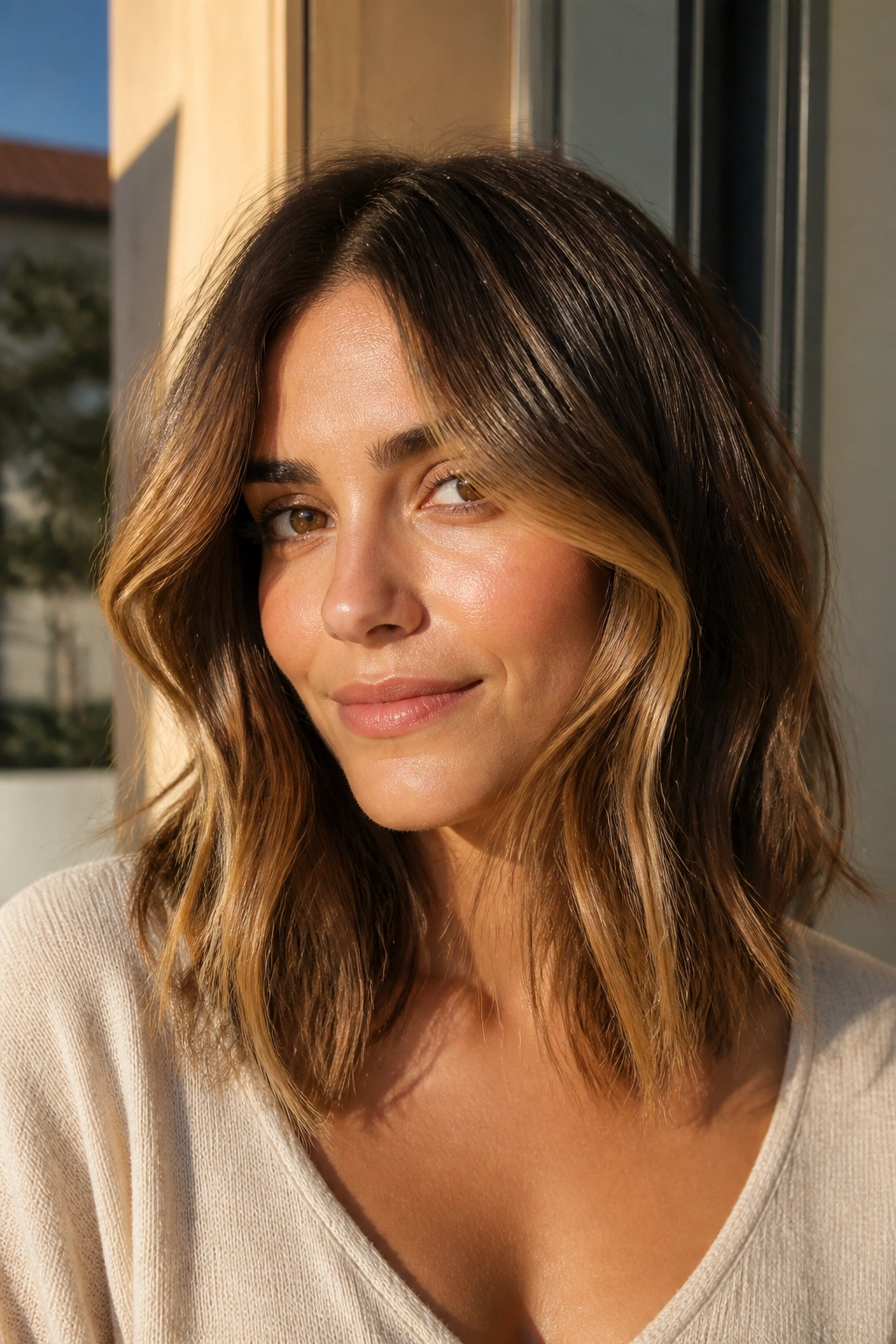
Why does bronze work so well on medium hair? Because it sits between gold and brunette, which means the color picks up warmth without sliding into flat brown. On a medium cut, that bronze sweep catches the bends through the layers and gives the hair a glowing, worn-in look.
This is one of the easiest ways to make dark brown hair feel lighter without going blonde. The bronze pieces should stay close to the natural base, just a shade or two up, then brighten around the face and the top layer. That small shift is enough.
How to Wear It Well
A good bronze sweep has depth at the root and shine through the mids. If your hair is thick, ask for slightly wider pieces. If it’s fine, keep the strands narrow so the color doesn’t swallow the cut.
A simple breakdown:
- Best on medium brown to deep brunette bases.
- Looks strongest on waves and soft bends.
- Needs a warm gloss to keep the copper-gold edge alive.
- Grows out gracefully because the contrast stays low.
It’s a quiet color, but not a shy one.
16. Smoky Brunette Ash Ribbons

If you like dark hair but hate brass, smoky ash ribbons are a solid answer. They keep the brunette base intact and slip in cool-toned pieces that make medium hair look thicker and a little more layered.
A lot of people think ash equals dull. Not here. On medium hair, smoky ribbons can look sleek, especially when the cut has a blunt edge or soft internal layers. The cool tone creates contrast against the brunette base without demanding full blonde lift.
What To Watch For
This look can go muddy if the toner is too heavy. You want cool, not gray sludge. That means the lighter pieces should still have some brightness underneath. Ask for ash-brown or smoke-beige, depending on how dark your base is.
Here’s the useful part:
- Great for brunettes who want movement without warmth.
- Works well on straight or polished waves.
- Needs toner maintenance every 4 to 6 weeks.
- Looks best when the highlights are concentrated through the top half and face frame.
Smoky brunette color has a calm, expensive feel. That is probably why so many people keep coming back to it.
17. Rose Gold Whisper Highlights
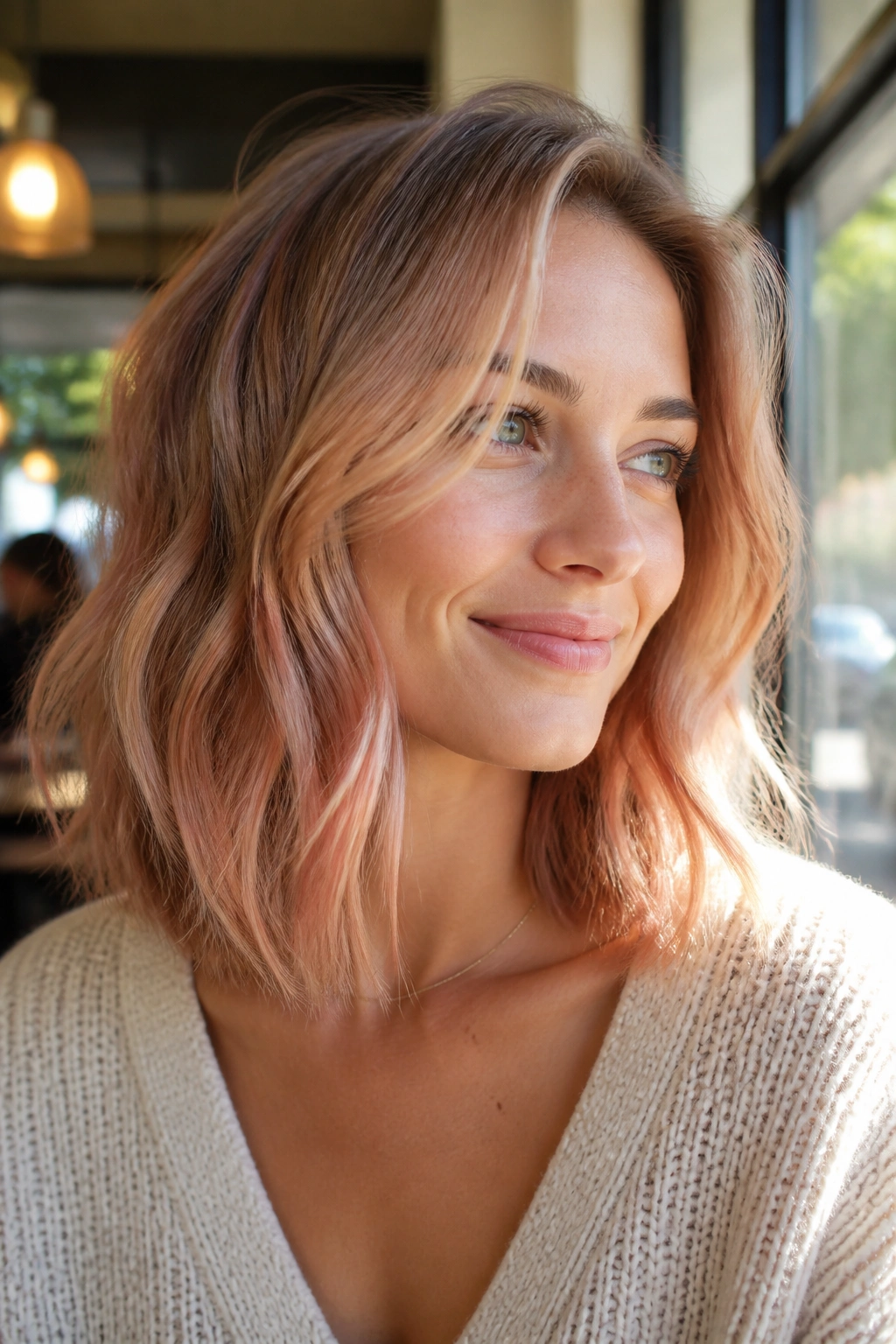
Rose gold on medium hair should be soft, not candy-like. The best version has a warm blonde base with a faint pink-gold sheen that shows mostly in light. It’s subtle enough for everyday wear, but interesting enough that people notice the tone shift when the hair moves.
I like this idea on blondes and light brunettes who want something a little different without jumping into vivid color. The medium length gives the rose gold enough surface area to glow, but the cut still keeps the shade from taking over the room.
The trick is gloss, not heavy color blocks. A rose gold glaze over soft highlights can give the hair that faint blush cast, especially around the front and mid-lengths. If the pink is too strong, the whole look gets brittle fast. Keep it whisper-light.
It fades faster than neutral blonde, so plan on refreshes if you love the tone. Worth it if you enjoy color with a bit of personality.
18. Vanilla Cream Ends
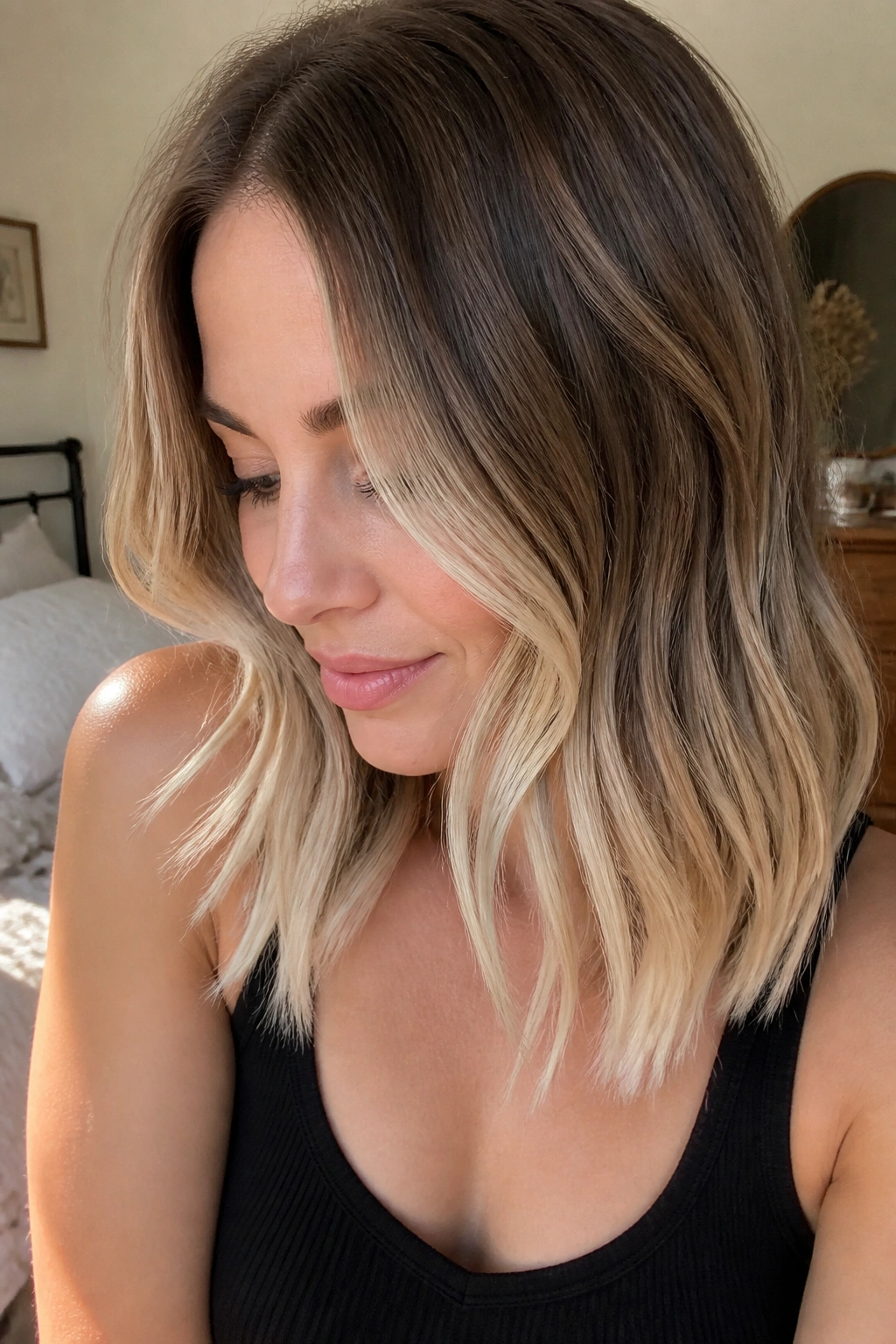
Vanilla cream ends are for someone who wants the bottom of the hair to look lighter and softer, almost like the color melted down the shaft. On medium hair, that lighter finish shows well because the ends sit close enough to the face to matter, but not so far away that the detail gets lost.
This idea works best when the roots and mids stay in a natural blonde or light brown zone. The ends then brighten into a creamy, pale shade that sits between ivory and soft beige. It feels fresh, but not icy.
The length matters here. Medium hair has enough drop for the gradient to show, yet it still keeps the brightness from feeling stretched thin. The ends don’t need to be pure white. In fact, they look better if they aren’t. A little cream keeps the color from drying out visually.
Ask for a soft melt, not a hard line. That’s the difference between chic and dated.
19. Walnut Ribbons on Espresso

Walnut ribbons add movement to an espresso base without stealing the show. That’s the appeal. Medium hair needs some visual break-up when the base is very dark, and walnut gives just enough lighter brown to keep the shape from collapsing into one solid block.
The color lives in the family of cool-warm brown, which makes it easier to wear than a golden streak. It looks natural on medium-length cuts, especially if the hair has a slight wave or a round brush finish at the ends.
The Placement Matters
Ask for the walnut tones to sit through the top layer and around the face. Leave the underlayer deeper so the hair still has anchor. Too much light brown on a dark base can look washed out. Too little can disappear. The middle ground is the useful part.
- Good for deep brunettes who want subtle shine.
- Works well with a root shadow or gloss.
- Needs low-maintenance toning compared with blonde.
- Looks cleanest when the highlight width stays narrow.
It’s not flashy. That’s exactly why it works.
20. Warm Auburn Dimension

Warm auburn can change the whole mood of medium hair. Instead of a flat brown, you get copper-red depth that moves in layers. The color feels alive in daylight, which is where auburn tends to shine best.
This is a strong choice for medium hair because the length gives auburn enough room to show contrast at the crown and warmth through the ends without overwhelming the cut. On a lob, it can look rich and glossy instead of heavy.
The best auburn highlights are not all one tone. Mix lighter copper threads with deeper red-brown panels so the color shifts when the hair moves. That detail matters more than people think. A single red tone can look flat fast; layered auburn has more life.
If your skin has warm or neutral undertones, auburn tends to be an easy fit. Cool undertones can wear it too, but a softer copper-brown version usually works better than a loud red.
21. Platinum Micro-Highlights

Platinum micro-highlights are the high-contrast option for people who want brightness without big chunky pieces. The tiny sections keep the look refined, and medium hair gives them enough room to sparkle through the top layer.
What makes this work is density. You don’t need giant blonde panels. You need a lot of fine pieces placed close together so the overall finish looks lighter, not striped. On a medium cut, that can create a crisp, icy texture that feels modern without looking overdone.
How to Ask for It
Tell your colorist you want ultra-fine platinum foils with enough spacing to keep the base visible. If your hair is dark blonde or light brown, the platinum will show cleanly. If it’s darker, expect more than one session.
A few specifics help:
- Keep the pieces fine, not wide.
- Place them through the crown, part line, and face frame.
- Use a violet shampoo sparingly.
- Plan on toner refreshes every 3 to 5 weeks if you want the cool tone to stay crisp.
It’s bold. It also grows better than people expect when the highlights are tiny.
22. Copper-Gold Melt

Copper-gold melt sits in that sweet spot between fiery and soft. On medium hair, the color can travel from a deeper copper near the root into a warmer gold at the ends, which gives the style shape without a hard break.
I like this on brunettes who want warmth but don’t want to go full red. The melt keeps the finish blended, and the medium length lets the transition show clearly. That’s where it gets good. You can actually see the shift instead of guessing where the color starts.
A Good Version Looks Like This
The top third stays rich. The mids pick up copper. The lower half gets a golden glow that catches light in waves. If the hair is layered, those different tones land on different lengths and keep the cut from feeling blocky.
- Best on warm brunettes and dark blondes.
- Needs a gloss to protect the copper tone.
- Works especially well with a loose blowout.
- Grows out softer than a hard highlight line.
It’s a warmer version of balayage, basically, but with more color personality.
23. Pearl Blonde Over Soft Brown
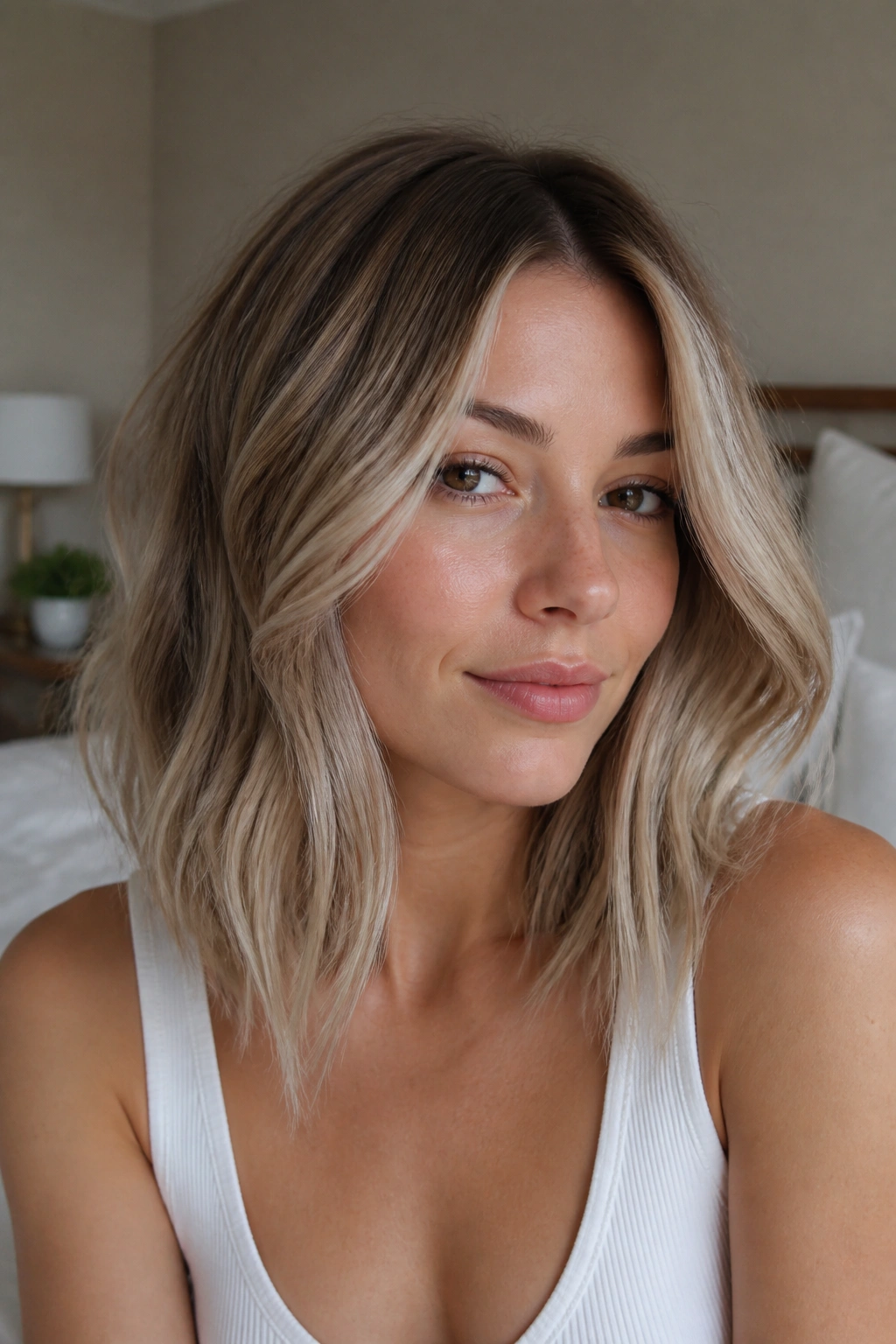
Pearl blonde gives medium hair a cool, luminous finish without pushing it into stark white territory. Over a soft brown base, the contrast feels clean and airy. The color shifts from brown to pale pearl, and that subtle coolness can make the whole cut look calmer.
This style is better than full platinum for anyone who wants brightness with less visual noise. The pearl tone is cooler than beige, but it still has enough softness to stay wearable on a shoulder-length cut.
The most important thing is keeping the base soft. If the brown is too dark, pearl can look harsh. If the base is a touch lighter, the blend feels smooth and expensive without that phrase doing too much work. You know the look when you see it. Quiet, but not plain.
A light toner is part of the deal. Pearl tones fade into beige or warm blonde if they’re neglected, and medium hair usually shows that shift faster than longer hair because the ends sit right there in view.
24. Golden Apricot Pieces
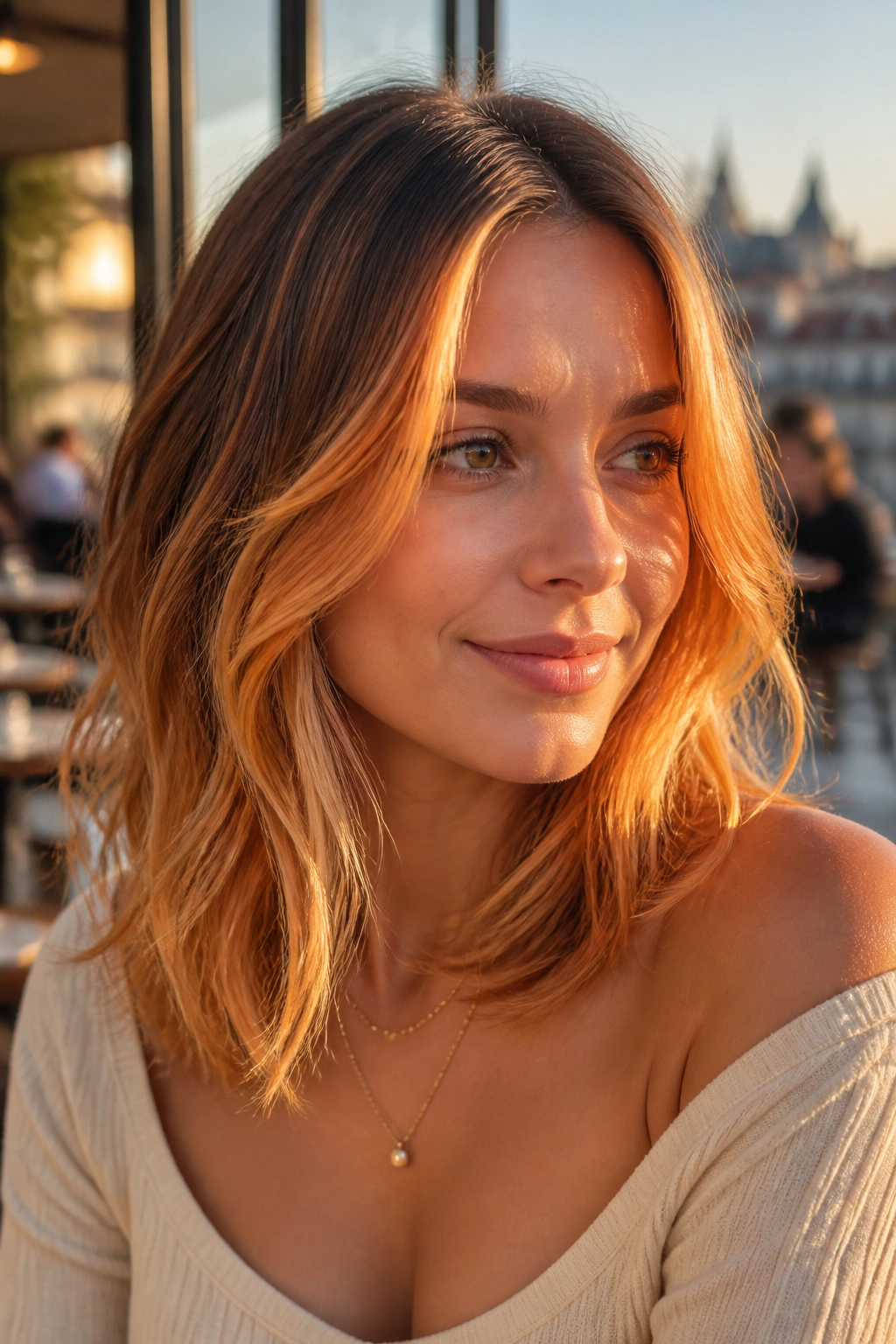
Golden apricot pieces are a smart compromise when you want warmth that leans brighter than caramel but softer than copper. On medium hair, they show up as a soft orange-gold glow that looks especially nice around the face and through the ends.
This is a good pick for light brunettes and dark blondes who want a warm shift without a full red makeover. The apricot tone can make the skin look fresher, especially if the base is a little dull. It has energy.
Best Way to Wear It
Keep the apricot mostly in the upper lengths and around the front. If the whole head goes apricot, the color can start to feel loud. A few placed pieces do more.
The shape helps too. On medium hair, a slight bend at the ends makes the apricot glow feel intentional. Straight hair can wear it, but it shows more movement on soft waves.
- Ask for apricot with a golden base, not a neon orange.
- Use a gloss that keeps the finish warm and shiny.
- Pair it with a shadow root if your natural color is dark.
- Great for people who like warmth but hate brass.
It’s cheerful. It’s a little unusual. That is the point.
25. Chestnut Contour Highlights

Chestnut contour highlights are all about shaping the face. Instead of scattering light everywhere, you place the brighter chestnut pieces where they frame the cheeks, jawline, and top of the head. On medium hair, that gives the haircut a cleaner outline.
I like this on brunettes who want movement but don’t want their color to look busy. The chestnut tone sits comfortably between brown and auburn, so it warms the hair without turning it copper-heavy.
Why It’s Worth Asking For
Face contour highlights work because they steer the eye. The brightest pieces go where the face needs lift, while the rest of the hair stays a little deeper. That contrast makes medium hair look more styled, even when you’ve done very little to it.
A few practical notes:
- Keep the front pieces slightly wider than the back pieces.
- Ask for a chestnut gloss to avoid orange warmth.
- Leave the underlayer darker for depth.
- Great for round, square, or heart-shaped faces.
This is one of those colors that looks subtle until you compare it to a flat brunette. Then the difference is obvious.
26. Espresso Gloss With Cinnamon Threads
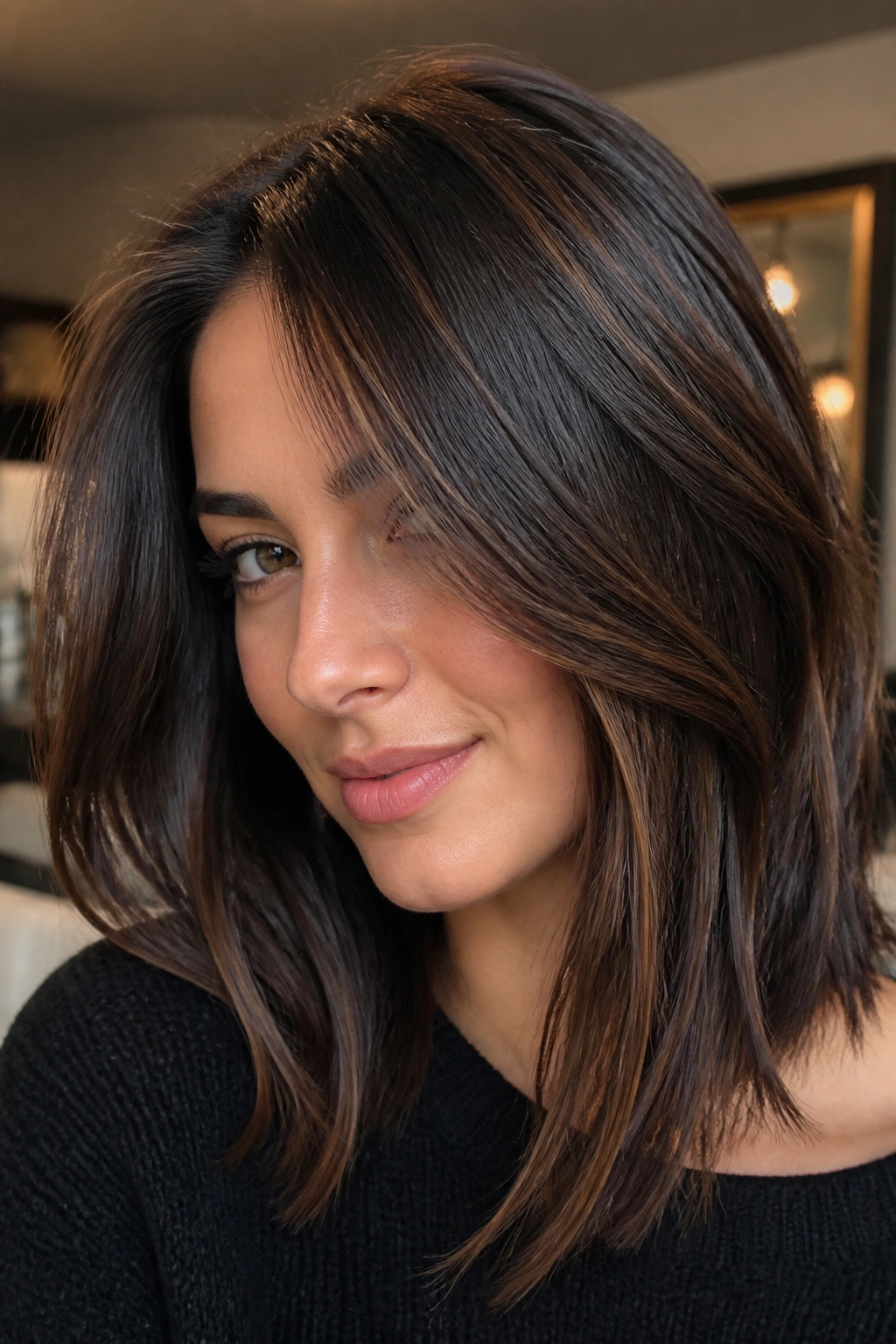
Espresso gloss with cinnamon threads is for people who want dark hair to stay dark, just not lifeless. The espresso base keeps the cut grounded, and the cinnamon threads add enough warmth to stop it from looking flat under indoor light.
Medium hair handles this combo well because the layers can catch the lighter threads without exposing too much contrast. That keeps the look smooth. The color is especially good if you wear your hair in a blunt lob or soft waves, since the light pieces show when the hair turns.
You do not need a heavy highlight job here. A few fine cinnamon ribbons through the front and top layer are enough. The gloss does most of the work, sealing in shine and making the dark base look rich rather than dull.
This is a strong choice for someone who likes brunette hair but wants a little movement. Not a lot. Just enough to keep it from feeling one-note.
27. Violet-Brown Sheen
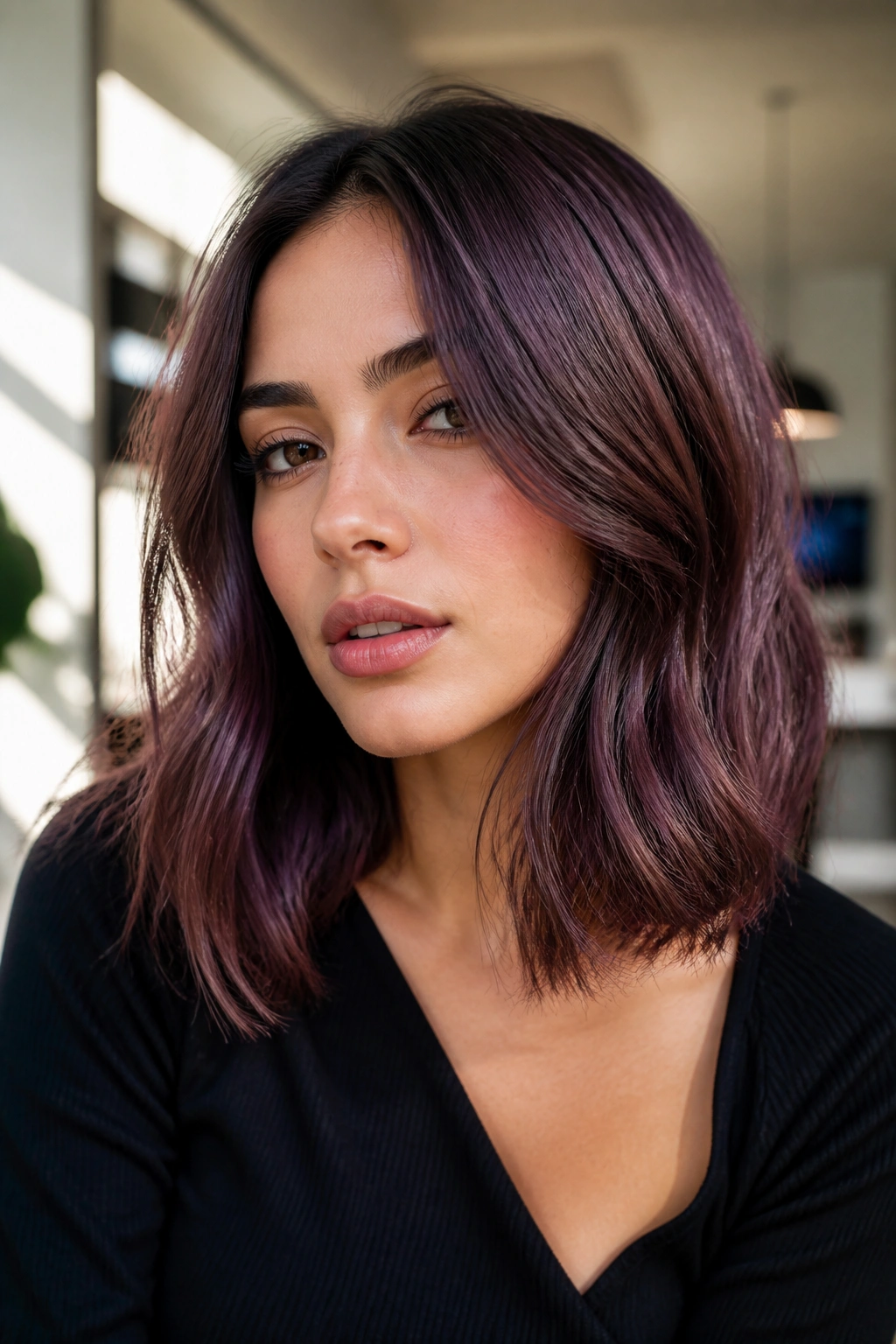
Violet-brown highlights are a nice middle road if you want a fashion color but do not want the whole head to look dyed. On medium hair, a violet sheen can sit over a brown base and show up as plum in bright light and smoky brown in shade.
That shifting effect is what makes it interesting. You don’t get an obvious purple block. You get a color that changes depending on where you stand. Medium hair is the right length for that because there’s enough surface to catch the shift, but not so much that the tone starts to feel costume-like.
The best version keeps the violet muted. Think plum-brown, not grape. A colorist can layer the tone over highlights or weave it through the ends for a soft reflective look.
A few reasons it works:
- Looks richer on medium brown bases.
- Adds depth to straight or slightly wavy hair.
- Fades into a smoky mauve if cared for well.
- Needs color-safe products and cooler water.
It’s a little moody. I like that.
28. Sand Money Piece And Ends
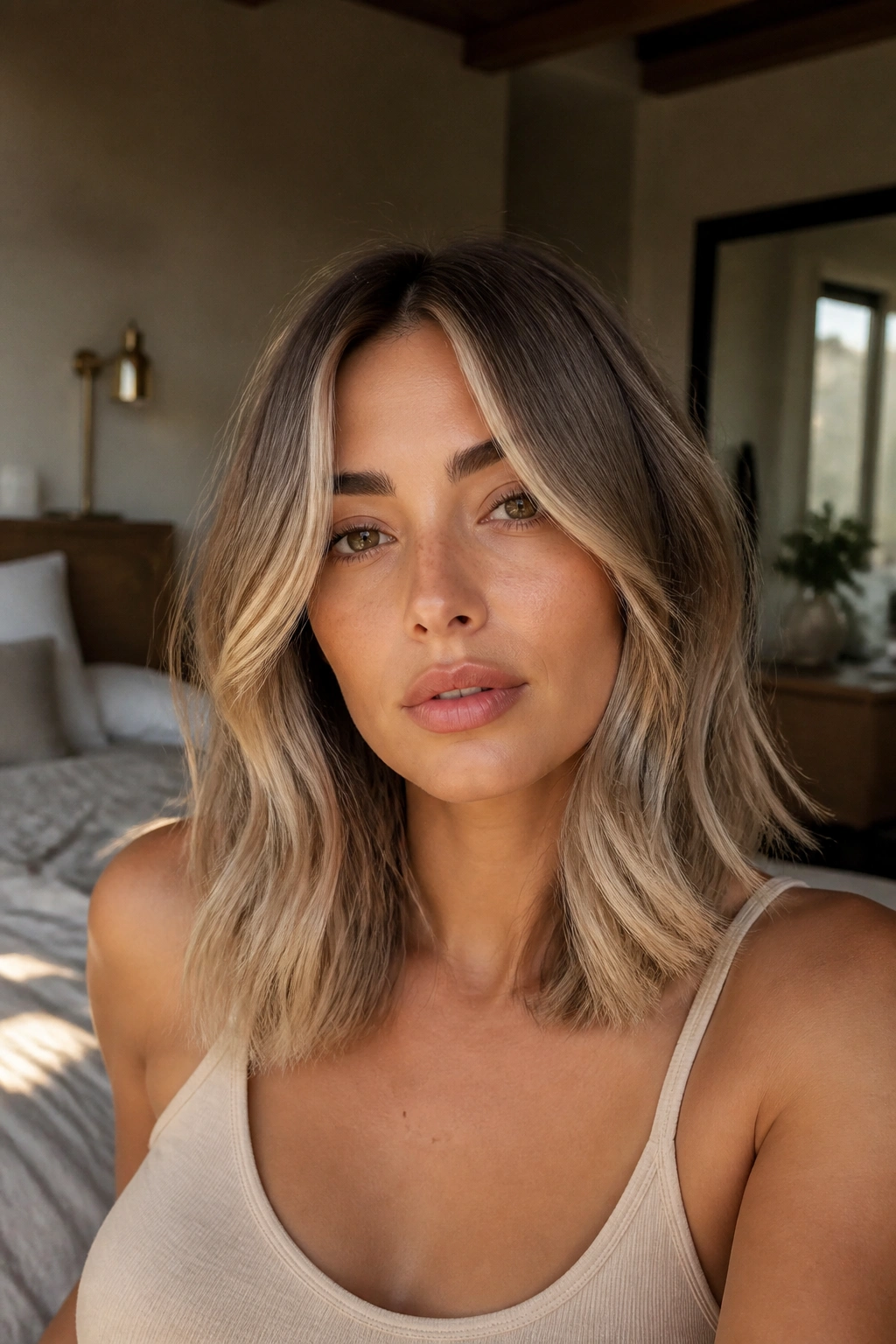
Sand money pieces are a clean way to brighten medium hair without going full blonde. The front pieces are light enough to lift the face, while the ends carry a soft sandy tone that makes the whole haircut feel sun-kissed.
The strength of this idea is placement. Brightness at the front keeps the look open, and lighter ends give the cut movement. The middle stays a touch deeper so the color has structure. On medium hair, that three-part shape works well because the length is short enough to keep it cohesive.
How to Wear It
This is best if you want a blondish result but hate harsh contrast. Ask for the money piece to be a few shades lighter than the rest, then let the ends drift into a sandy beige. That’s enough to make the hair feel brighter without bleaching every section.
- Great on light brunette and dark blonde bases.
- Looks good with soft waves or a straight bend.
- Needs toner if the beige turns yellow.
- Grow-out stays softer than a full highlight set.
It’s beachy, but not in the lazy way people sometimes mean that word.
29. Silver Blend for Growing Grays
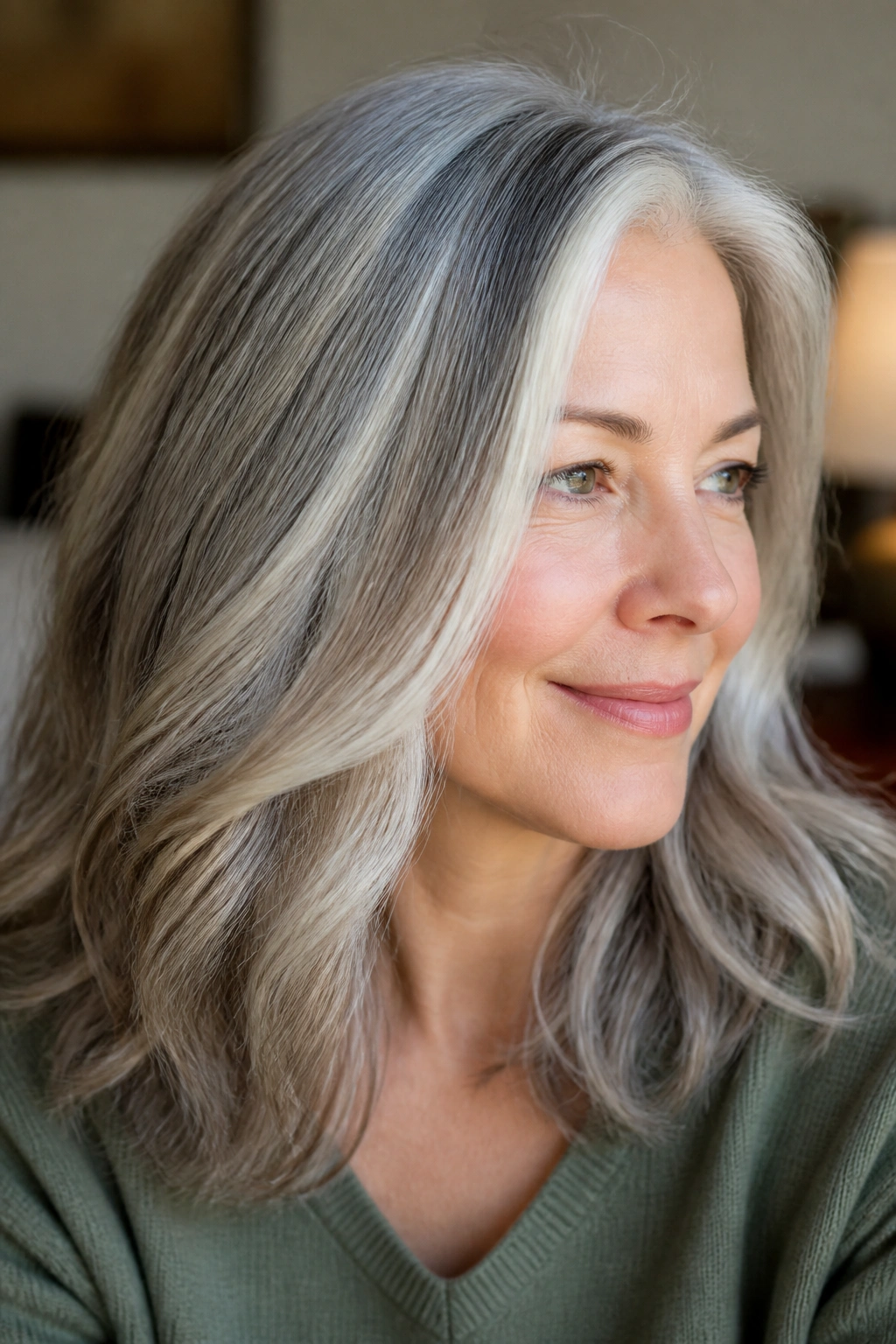
Silver blending is one of the smartest uses of highlights on medium hair. Instead of fighting gray regrowth, you fold it into the color plan and use silver, ash, and pearl tones to make the transition look intentional.
Medium hair is a good length for this because the grays show enough surface area to matter, but the cut still has shape. That gives the colorist room to blend the silver into the existing strands without making the hair look flat or overprocessed.
The key is not to chase pure silver everywhere. A blend of soft ash lights and deeper lowlights makes the regrowth less obvious and keeps the hair from becoming one pale block. It also grows out better than a hard blonde foil set.
This idea works well if you’re tired of constant root touch-ups. It does need smart toning, though. Silver fades toward beige fast, and strong heat styling can dull the sheen even faster.
30. Soft Root Melt With Lived-In Gloss
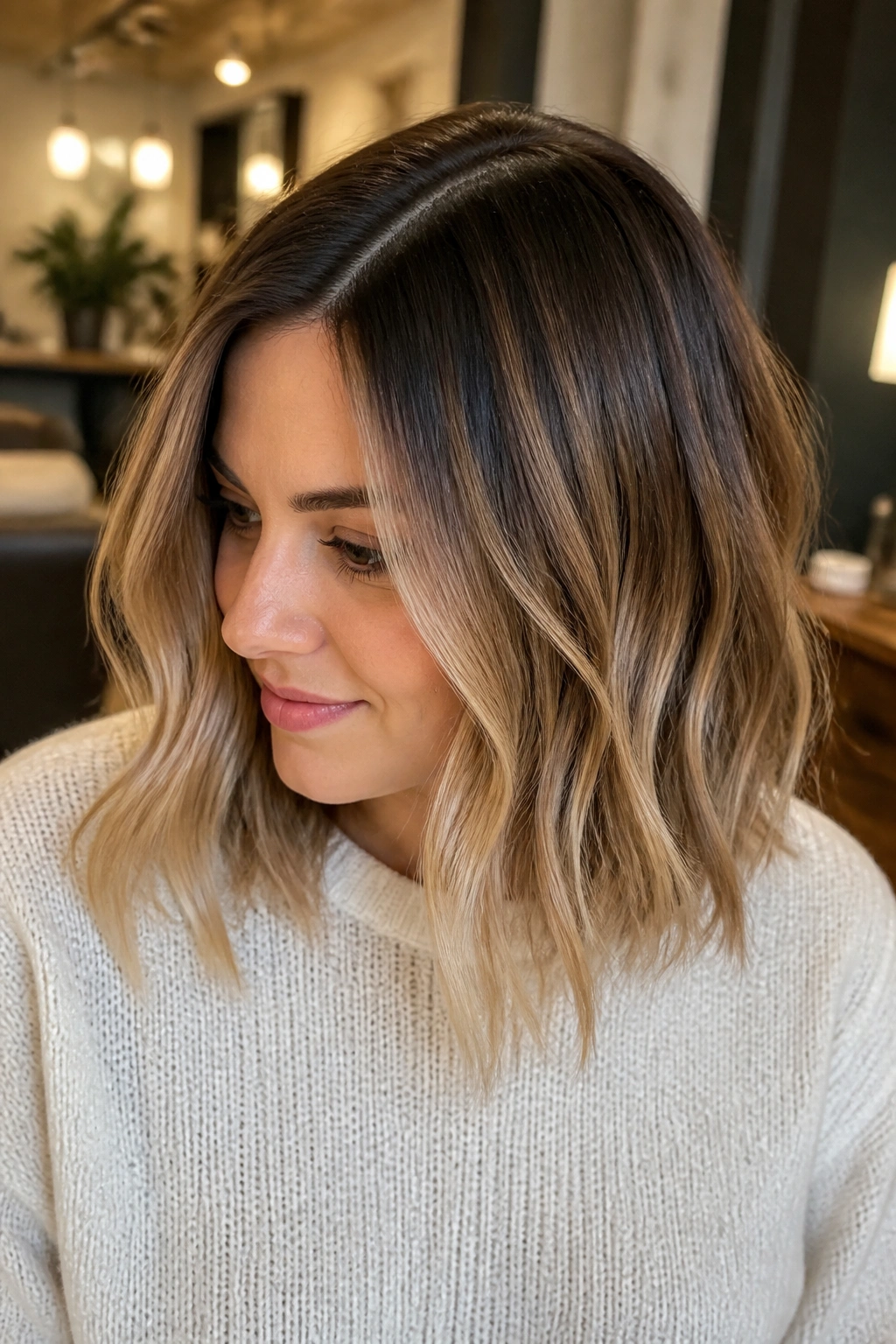
A soft root melt is the one I’d choose for someone who wants highlights on medium hair but does not want to babysit them. The root stays deeper, the mids light up gently, and the gloss ties everything together so the color looks blended from top to bottom.
This is different from a high-contrast ombré. The change is subtler. The root melt gives the hair a natural shadow, which means the grow-out stays calmer and the color keeps some shape even after several weeks.
The lived-in gloss is what makes it work. A neutral or warm gloss on top of the highlights keeps the strands shiny and prevents the blonde pieces from looking dry. On medium hair, that shine matters because the ends sit close enough to the eye to reveal every dull patch.
If you want color that looks good with a center part, a soft wave, or a quick air-dry, this is a strong finish. It’s flexible. It’s low-drama. And on medium hair, low-drama is often the smartest look of all.
