



Long hair changes everything. The best summer hair colors for long hair do not sit flat on top of the hair; they move, shift, and catch the eye in pieces.
A waist-length cut can swallow color if the placement is lazy. That is why ribbons, soft roots, and tonal shifts matter so much here. Sun, chlorine, and hot tools can make one-note color look tired fast, while well-placed dimension keeps the hair looking alive even when the weather is doing its own messy thing.
Flat color is the enemy. On long hair, a single shade has to work harder because there is more surface area, more movement, and more chance for the ends to read lighter than the roots. That is also why the colorist’s placement matters almost as much as the shade itself.
Some of the shades below lean warm, some cool, some barely bend from your natural base at all. Good. That range gives you room to match your skin tone, your maintenance tolerance, and the way you actually wear your hair—air-dried, brushed out, curled, or shoved into a clip when the humidity gets rude.
1. Honey Blonde Ribbons in Long Waves
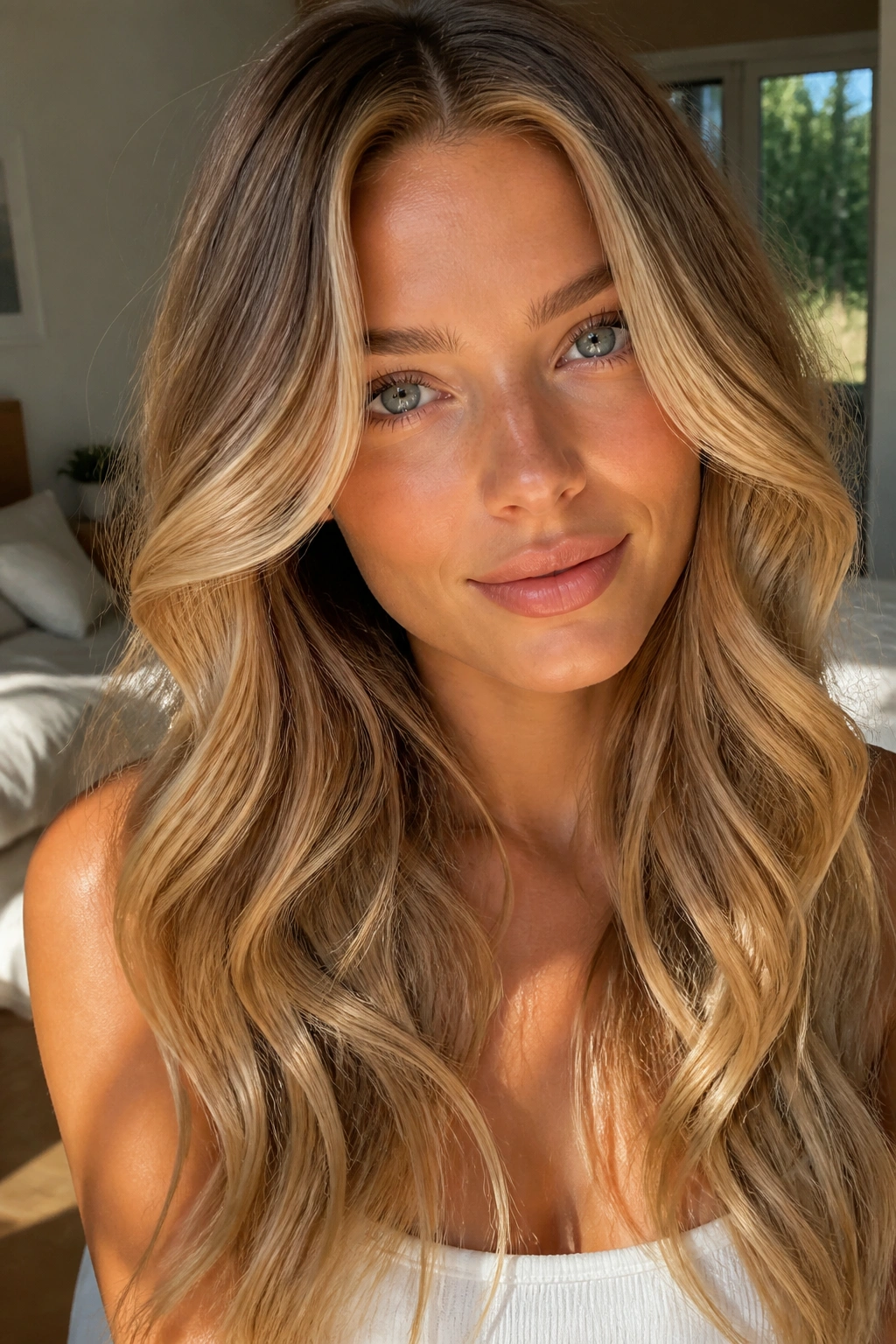
Honey blonde is the shade that makes long waves look sun-kissed without tipping into icy or washed-out territory. On long hair, that matters more than people think, because the length can make pale blonde look thin and overprocessed if the placement is too even.
Why It Flatters Long Hair
Honey blonde works best when it is broken into ribbons, not painted as one solid blanket. The warmth sits between gold and beige, so it reads soft in shade and brighter in direct light. That little shift keeps long layers from looking heavy.
The best version usually starts with a slightly deeper root and brighter pieces through the mid-lengths and ends. Ask for a root shadow one to two levels deeper than your lightest ribbons. That keeps the grow-out easy and gives the color some shape.
- Best on layered, wavy, or blow-dried hair
- Looks richest on neutral and warm skin tones
- Needs a gloss refresh every 6 to 8 weeks
- Works well with a center part or soft side part
Pro tip: Keep the lightest pieces around the face and collarbone, where long hair moves the most.
2. Champagne Beige Blonde With Soft Root Shadow
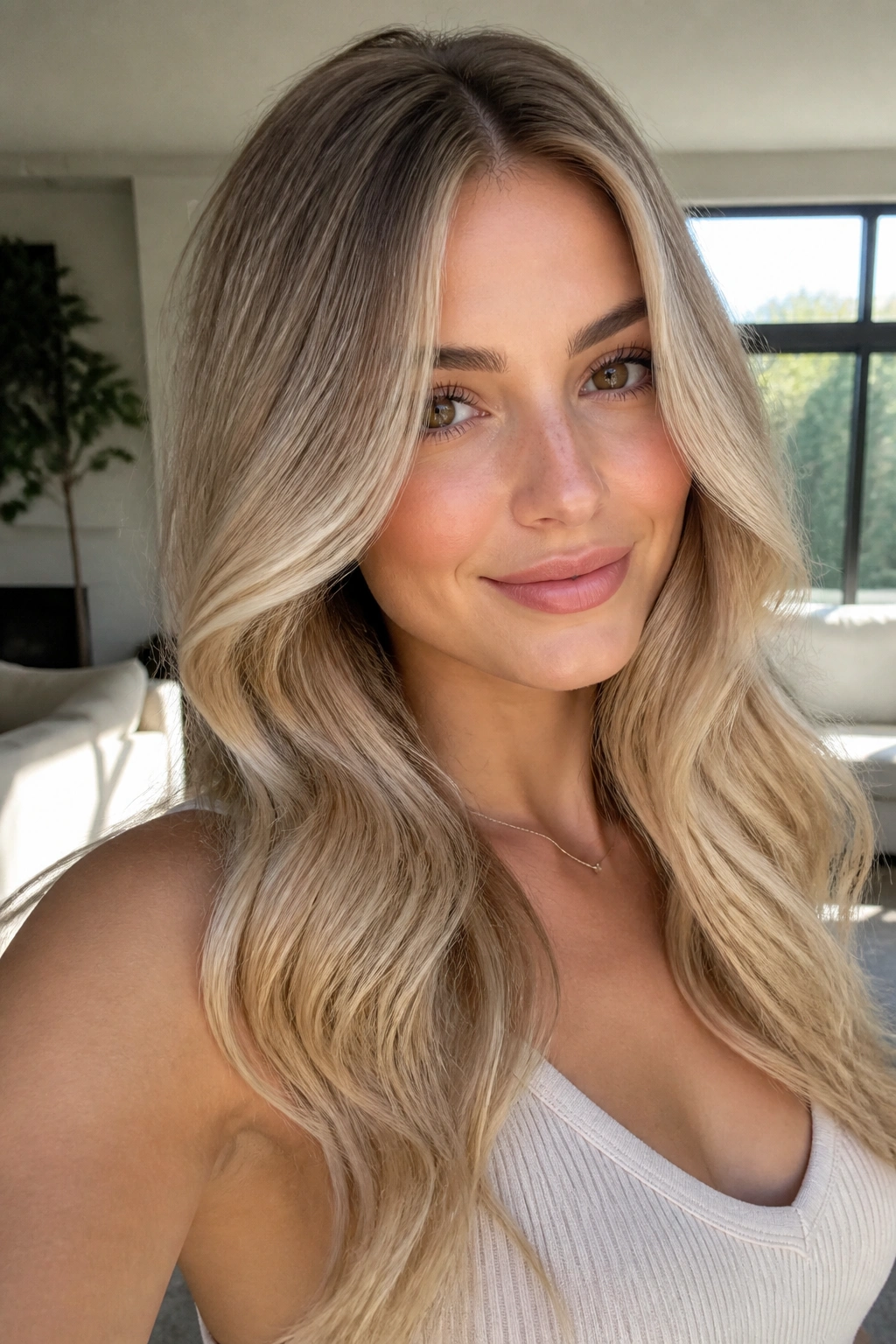
Champagne beige blonde is the one blonde shade that can make long hair look expensive without screaming for attention. It has enough warmth to stay soft, but enough coolness to avoid that brassy yellow cast that can creep in after a few washes.
Long lengths need this balance. A full, pale blonde on waist-length hair can start to look flat at the roots and dry at the ends, especially if the hair is fine. Champagne beige solves that by keeping the overall tone airy while leaving a little depth near the scalp.
The smartest way to wear it is with very fine highlights, almost like threads, plus a beige toner that leans neutral rather than silver. If your base is already light brown or dark blonde, this shade can look especially natural because the contrast stays gentle.
One thing people get wrong: they overuse purple shampoo. That can drain the warmth and push beige blonde into dull, grayish territory. Less is more here. Use it only when the blonde starts to pull too gold.
3. Sun-Kissed Caramel Balayage on Long Layers
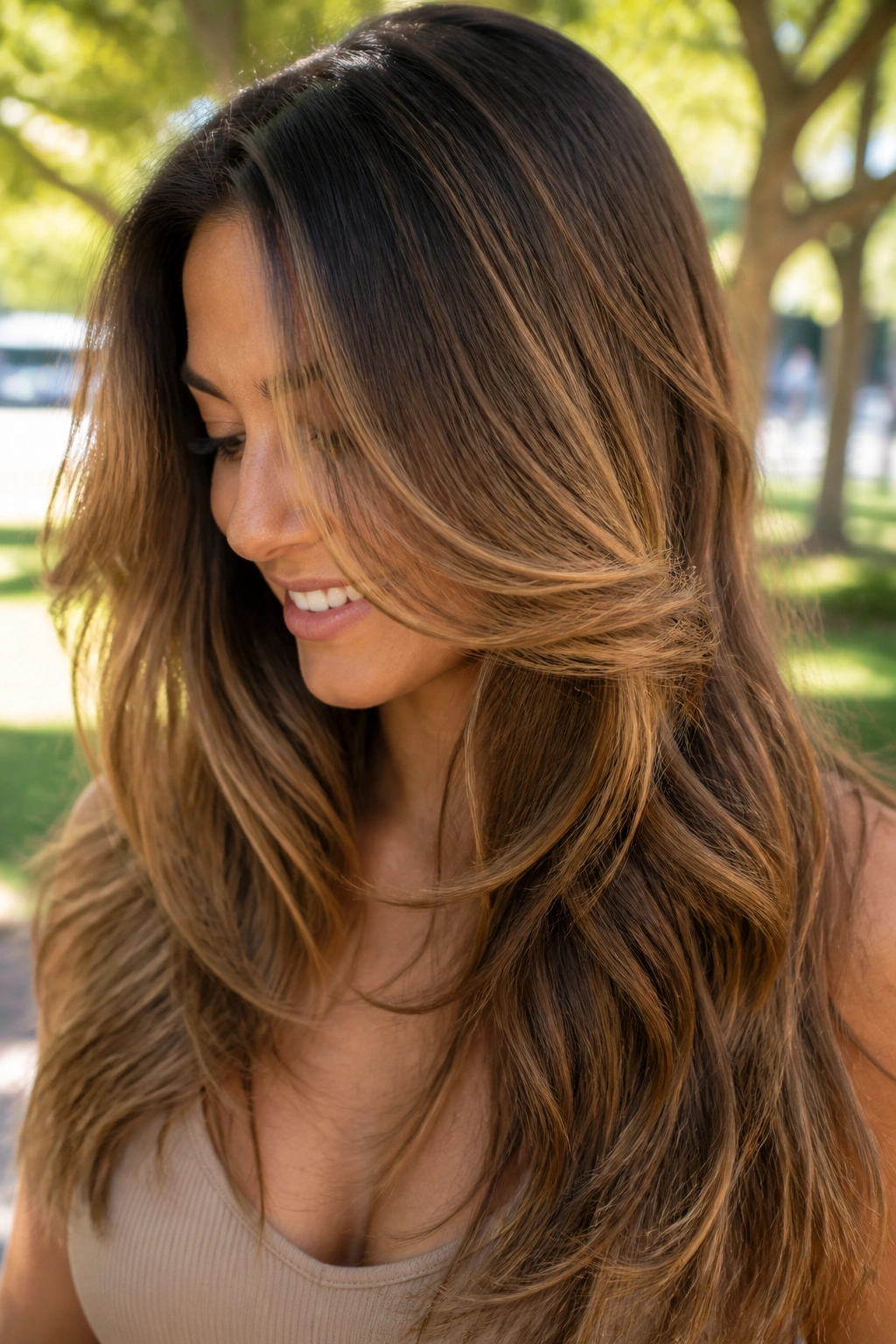
Why does caramel balayage look richer on long hair than on short hair? Because the length gives the color room to fade from darker roots into warm mid-lengths and brighter ends without looking abrupt.
Caramel is one of those shades that can go dull if it is all one tone. Balayage fixes that by placing the light where the sun would naturally hit: top layers, face frame, and the ends that swing forward when you move. On long hair, those shifts read as texture, not streaks.
How to Wear It
If your hair is thick, ask for wider painted panels so the caramel doesn’t disappear inside the volume. If your hair is fine, keep the lighter pieces narrower and a little higher up to avoid a stringy look. The goal is movement, not stripes.
- Best on medium brown to dark blonde bases
- Especially good with loose curls or brushed-out waves
- Needs a gloss or toner every 6 to 8 weeks
- Looks warmer when styled with a round brush at the ends
A center part makes the dimension feel softer. A high ponytail shows off the lighter ends. Both work.
4. Copper Strawberry Glaze Along the Ends
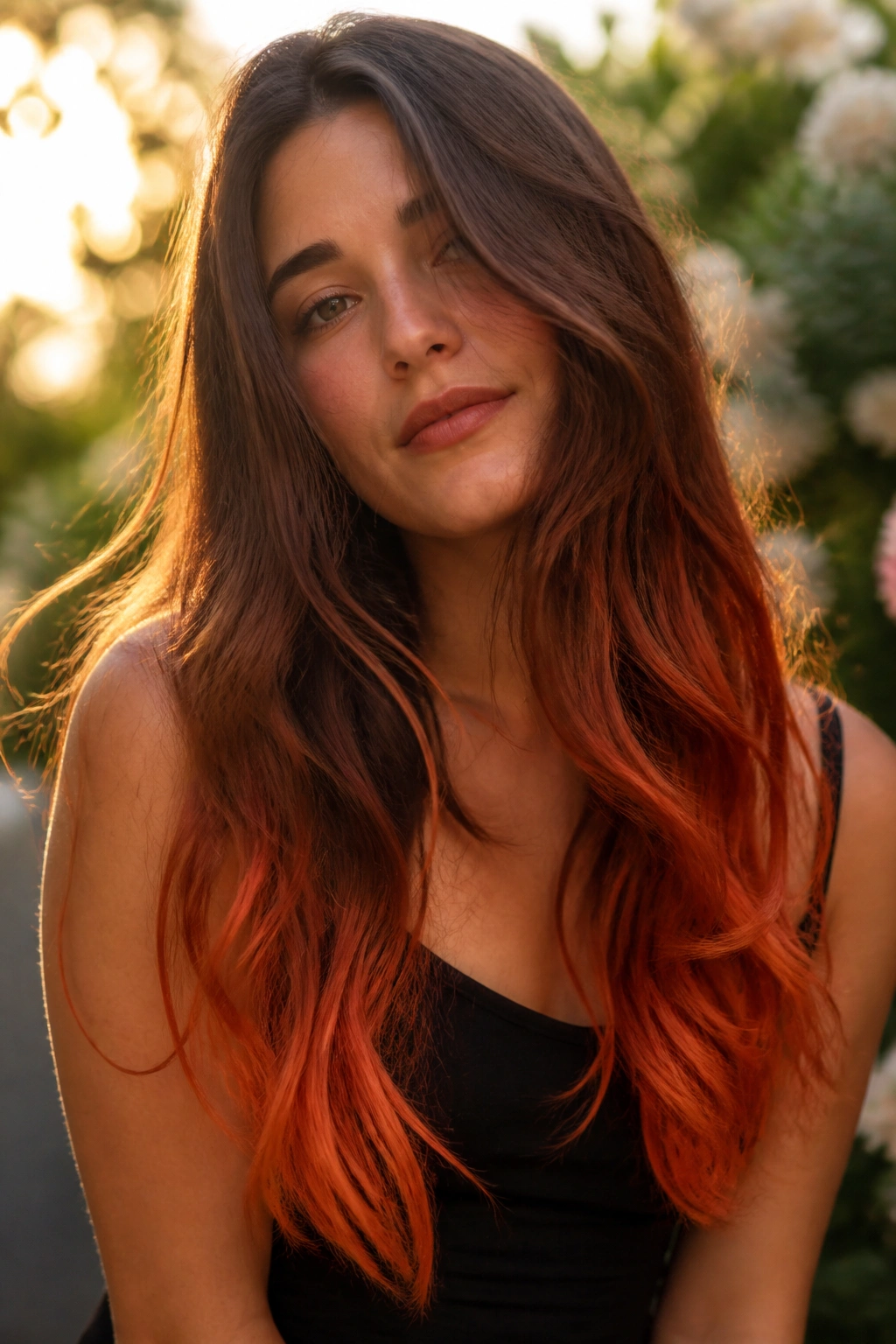
Picture long hair gathered in a loose braid, with copper threads flashing through the folds. That is the charm of a strawberry glaze: it feels playful, but it is still wearable enough to live with every day.
This shade is not about full-on orange. It is softer, more translucent, and better when it sits over a blonde or light brown base that has been lifted first. On long hair, the best effect usually comes from concentrating the copper through the ends and a few face-framing pieces, then leaving the root area quieter.
- Best for naturally warm bases
- Needs careful toner maintenance so it does not skew too orange
- Looks especially good on layered cuts and loose waves
- Pair with a 1.25-inch curling iron for soft bends, not tight curls
If your hair is porous, this one can grab pigment fast. That is both useful and annoying. It means the shade may look rich on day one and fade sooner than you want.
The upside is the glow. Copper like this has life in it.
5. Apricot Peach Blend Through the Mid-Lengths
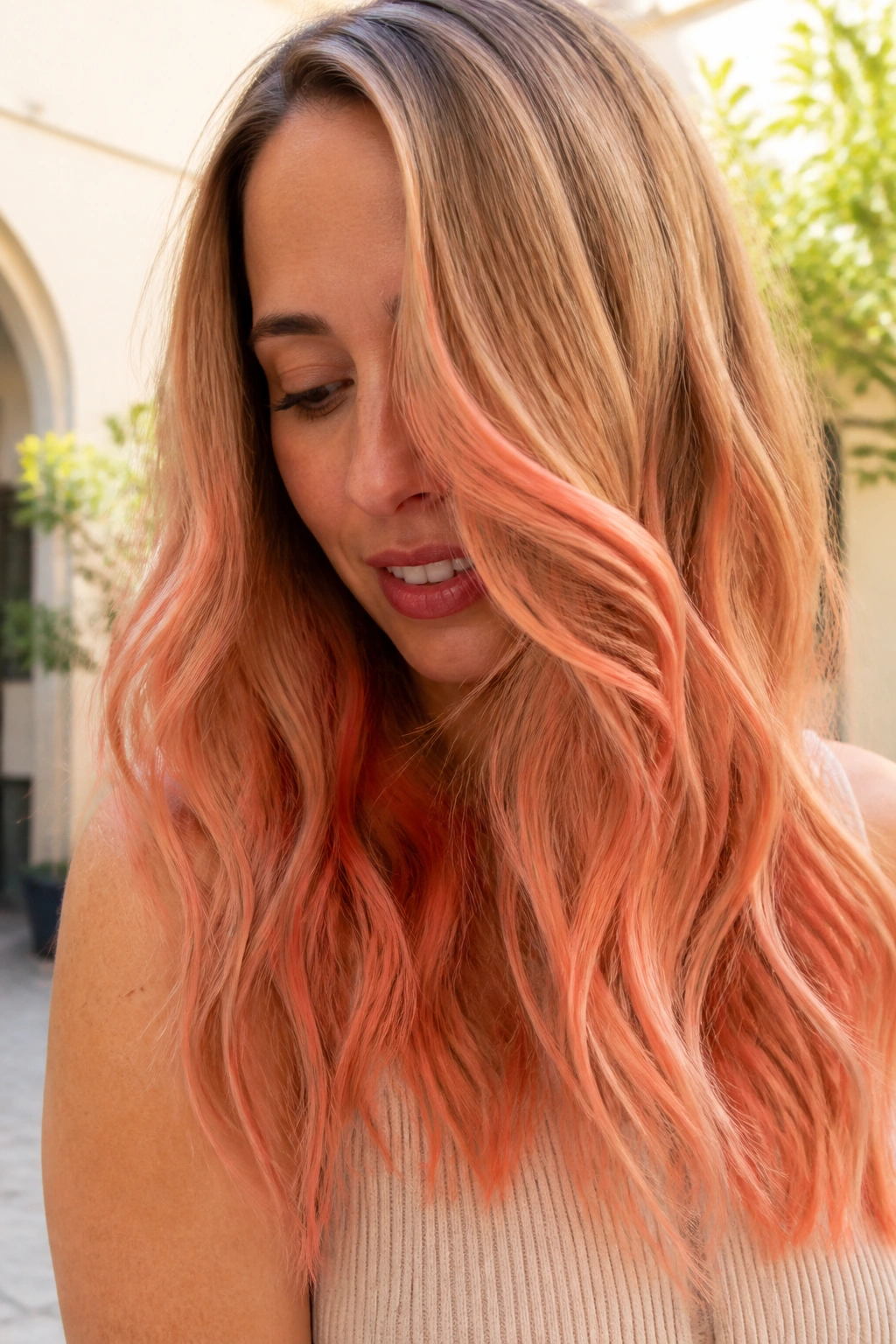
Apricot peach has a soft, ripe look that feels made for long hair that moves. The color sits somewhere between warm blonde and delicate coral, which keeps it from looking too sweet or too loud.
The nicest version uses the mids as the main canvas and lets the ends go a touch brighter. That way, the shade shows up when the hair swings, not only when you are standing under perfect lighting. On layered cuts, the effect can look almost watery.
This is not a shade for someone who wants zero maintenance. Peach tones fade. Fast, sometimes. But they fade in a way that can still be pretty, slipping into a warm blonde rather than turning muddy, which is more than I can say for some fashion shades.
If your skin has a bit of golden or pink warmth, apricot peach can be a lovely match. It also plays well with soft makeup—cream blush, glossy lips, not much else. Let the hair do the talking.
6. Vanilla Cream Blonde on Waist-Length Hair
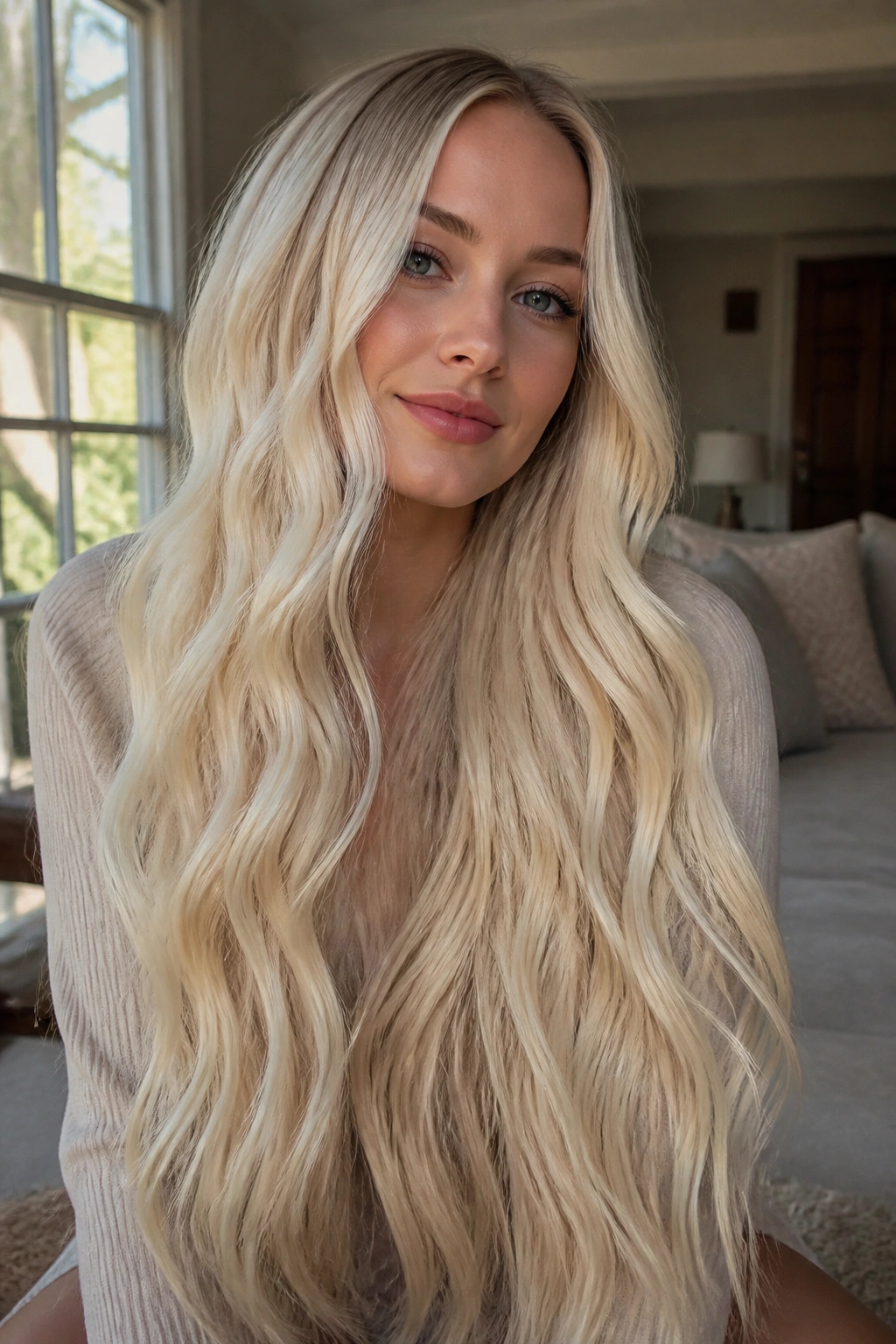
Vanilla cream blonde is the answer for anyone who wants light hair without the sharp edge of platinum. It keeps enough warmth to feel soft, which matters a lot on long hair because every inch of length can amplify harshness.
Unlike icy blonde, vanilla cream does not depend on a stark white finish. It lives in that sweet spot between pale blonde and soft beige, which makes long waves look smoother and less dry. If your ends are a little fragile, this shade is kinder to them visually.
The real trick is contrast. Too much contrast at the root makes the length look disconnected. A creamy blonde with a smudged root and a few lowlights near the underside keeps the color from reading like a helmet. That underside depth is doing more work than people realize.
This one is best if you like bright hair but want to keep it believable. Ask for a creamy toner, not a silvery one, and keep the brightest pieces around the front where the hair moves the most.
7. Mushroom Brown Melt With Smoky Beige Ends
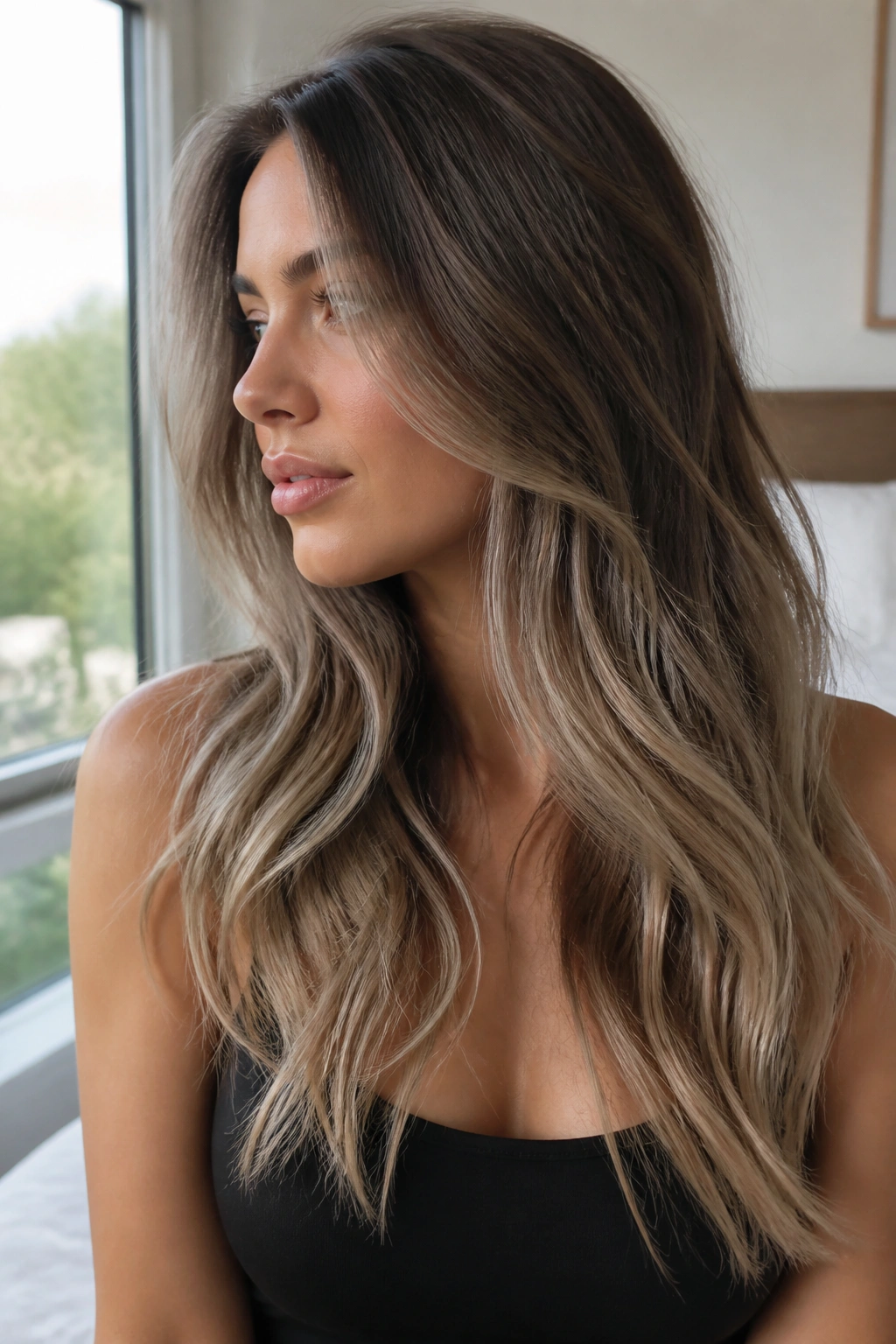
Mushroom brown is the shade that saves brunettes from boring hair. It is cool, soft, and slightly earthy, with a beige cast that looks especially good on long lengths because the color has room to stretch and melt.
What Makes It Different
This is not a flat ash brown. It is a mix of taupe, brown, and soft gray-beige, which gives the hair a smoky finish without making it look dull. On long hair, that subtle coolness reads polished in daylight and richer indoors.
The best version keeps the roots slightly deeper and lets the mid-lengths carry the smoky beige. You want the finish to feel plush, not chalky. If the tone goes too gray, the hair can look dusty instead of dimensional.
- Best for brunettes who want a cooler shade without going black
- Great with sleek blowouts and soft bends
- Works well on thick hair because the shade does not fight the texture
- Ask for a gloss rather than a heavy permanent shift if you are testing the tone
It is a quietly confident color. No drama, no fuss, and no yelling from across the room.
8. Iced Mocha Brunette With Satin Shine
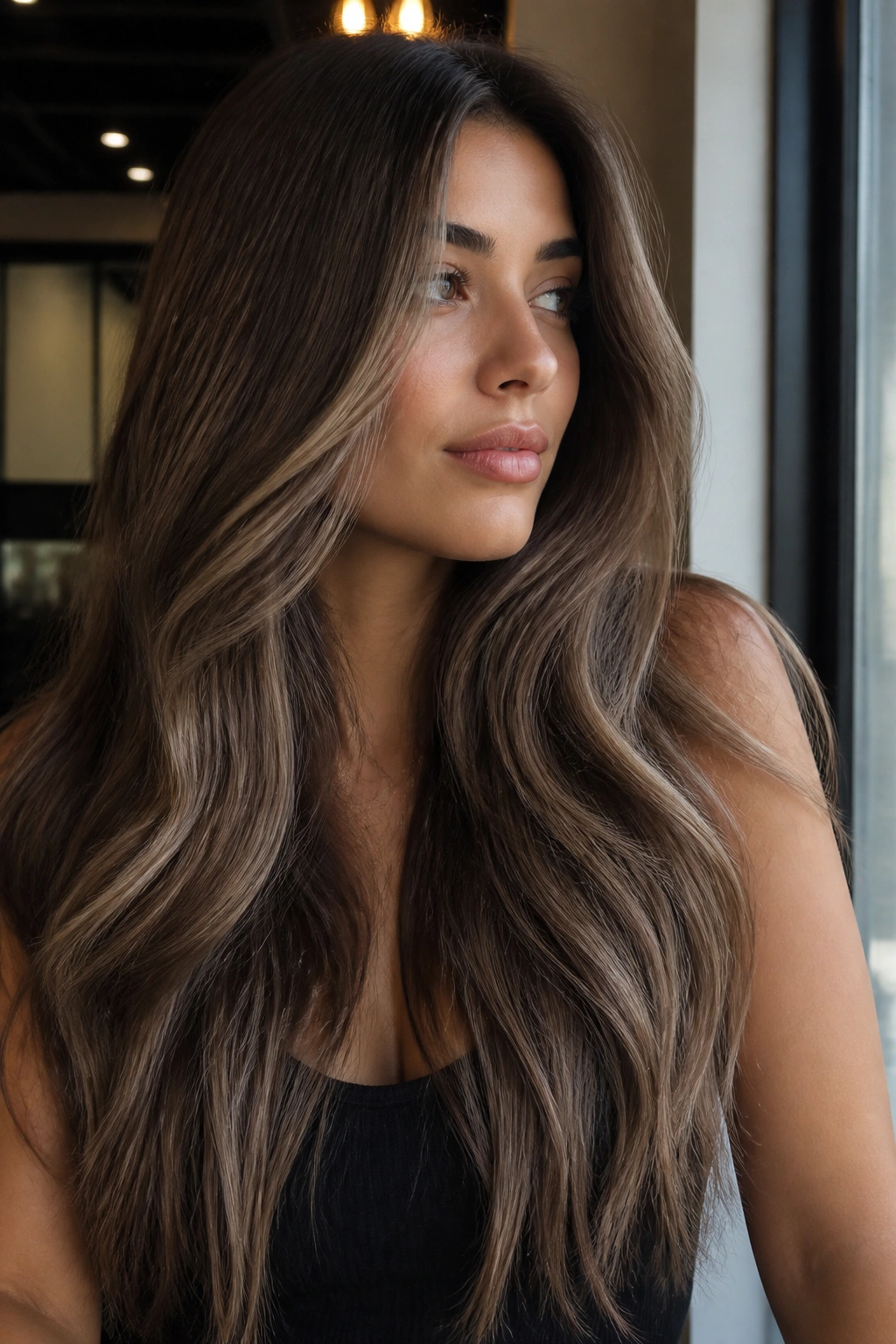
If you like dark hair but hate flat dark hair, iced mocha is the move. It keeps the depth of brunette while adding a cool, glossy finish that stops the color from looking one-dimensional on long hair.
The shade lives somewhere between espresso and milk chocolate, but with a cooler cast that keeps it from turning red or too warm in the sun. On long layers, that means the hair still looks rich from a distance, but the movement gives away the dimension up close.
The most flattering version usually has a few lighter strands hidden through the mid-lengths, not enough to read as highlights, just enough to break the darkness. That tiny variation matters. It keeps long hair from looking like one solid curtain.
This is a strong choice if you wear your hair straight a lot. The shine shows. If you prefer waves, the contrast gets even softer, which can be nice if you want a more relaxed finish.
9. Soft Rose Gold With Dimensional Ends
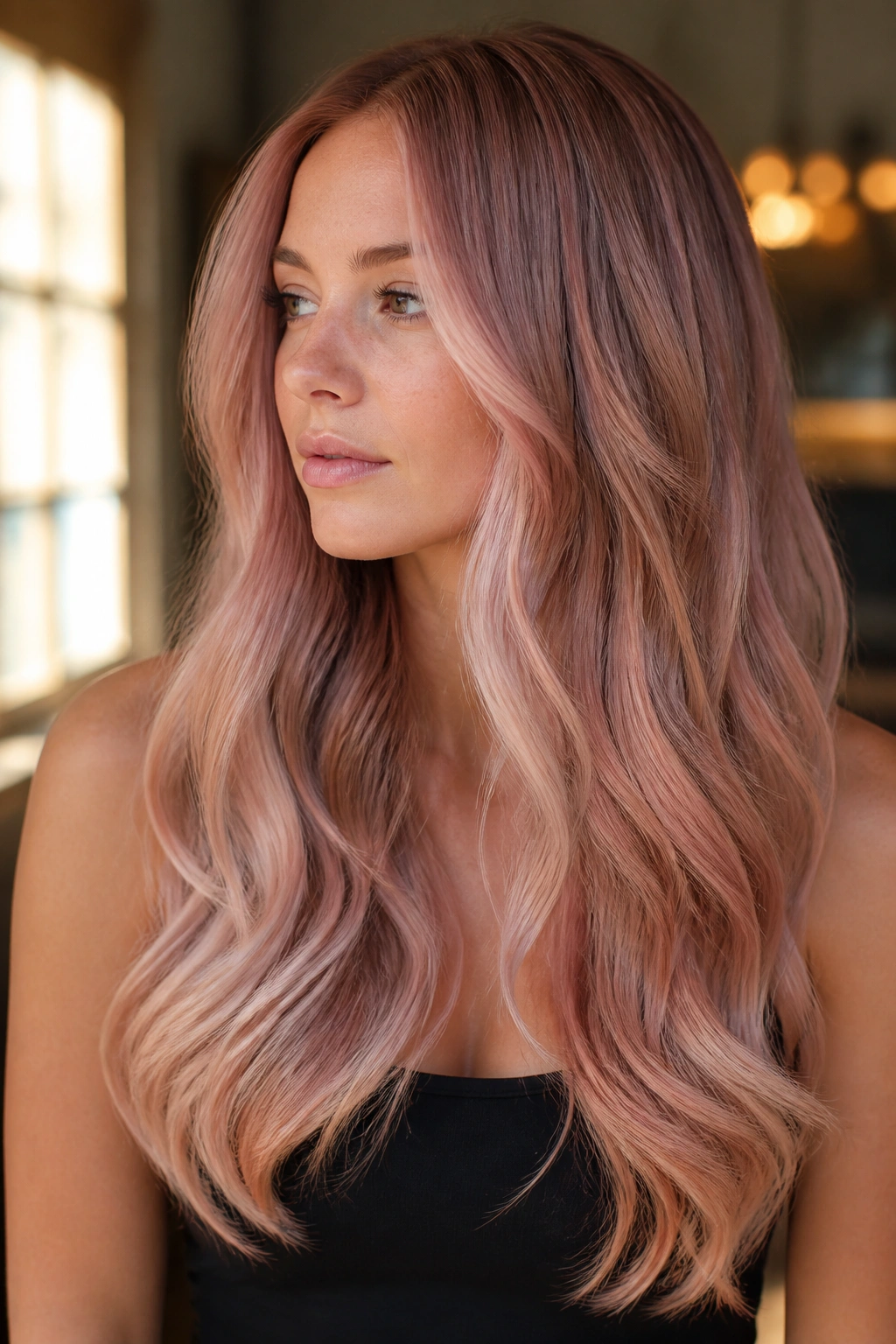
Why does rose gold work so well on long hair? Because the length gives the pink-gold tone a chance to soften as it travels from roots to ends, which keeps the color from looking like a costume wig.
Soft rose gold is not loud. The best versions stay muted, almost dusty, with a beige blonde base underneath. That little bit of restraint makes the shade wearable on long hair, especially if the hair has layers or a few bent waves. The color catches at the edge of each layer and then disappears again.
How to Keep It Soft
Rose gold can turn brash if it is too saturated or if the base is lifted too far. A tinted gloss or pastel toner is usually better than a heavy permanent color, especially if you want the shade to fade gracefully.
- Best on pre-lightened blonde or light brown hair
- Use a color-depositing conditioner once a week
- Avoid frequent clarifying shampoo unless the tone goes dull
- Works especially well with loose, brushed-out curls
A little root shadow helps too. It keeps the rose from floating on top of the hair like a sticker.
10. Peach Blonde Fade on Long Beachy Waves
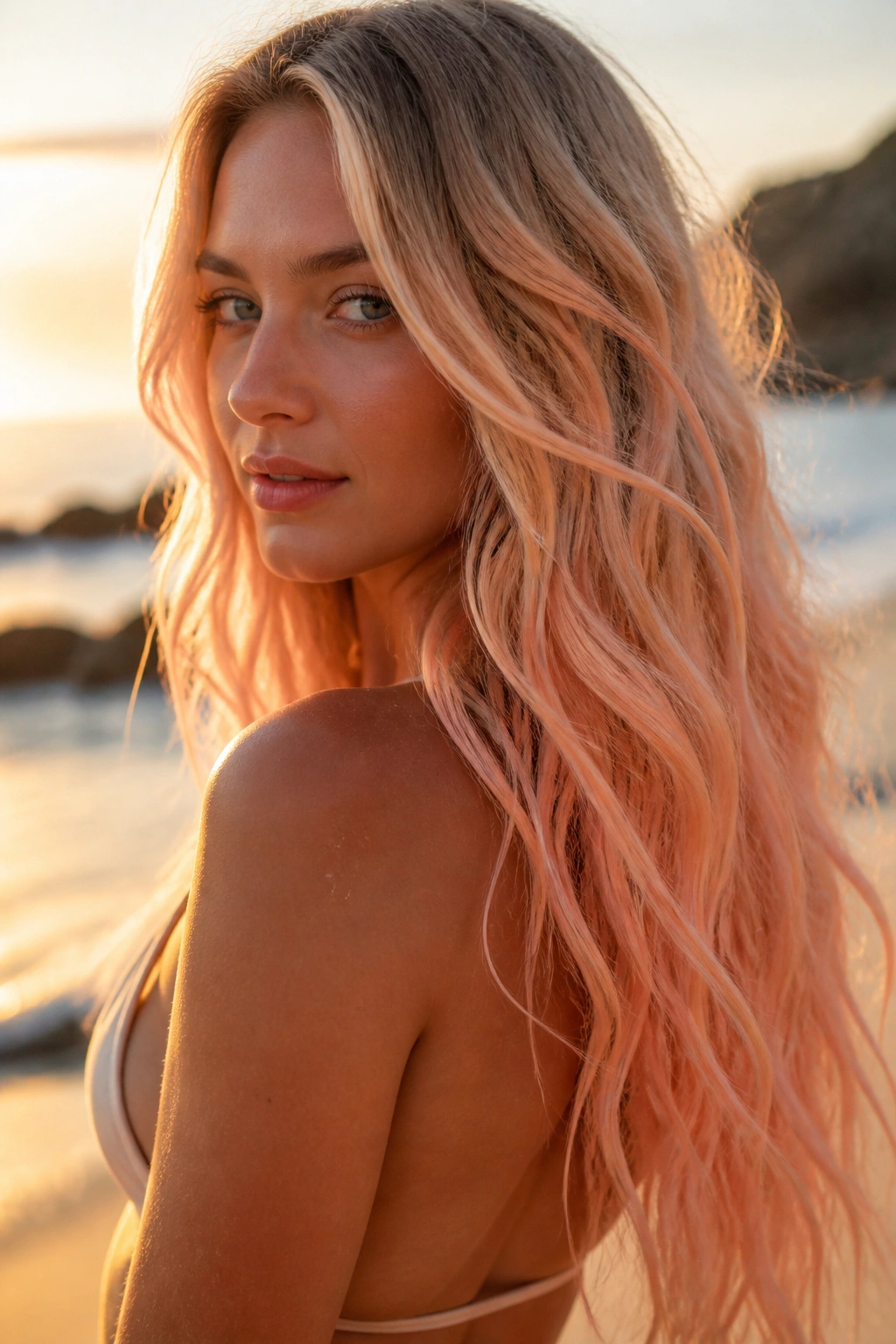
On beachy waves, peach blonde reads like sunset dust, not a costume color. That is the whole appeal. It has enough warmth to feel playful, but the blonde base keeps it from becoming loud or sticky-looking.
The fade is part of the charm. Peach tones soften over time, and on long hair that fade can be planned into the look instead of fought against. The best versions start brighter near the face and cooler through the lower lengths, so the color still looks deliberate after a few washes.
If your hair is very dark, this one needs serious lightening first. If your base is already blonde, the process is easier, and the result usually looks more expensive because the peach sits on top rather than fighting through too much pigment.
- Best with undone waves and layered ends
- Ask for a soft peach glaze, not a saturated coral
- Refresh with a tinted conditioner every 2 to 3 washes
- Avoid heavy oils on the first day, or the color can look muted too fast
It is a sweet shade, but not childish. There is a difference.
11. Bronze Gloss on Dark Blonde Hair
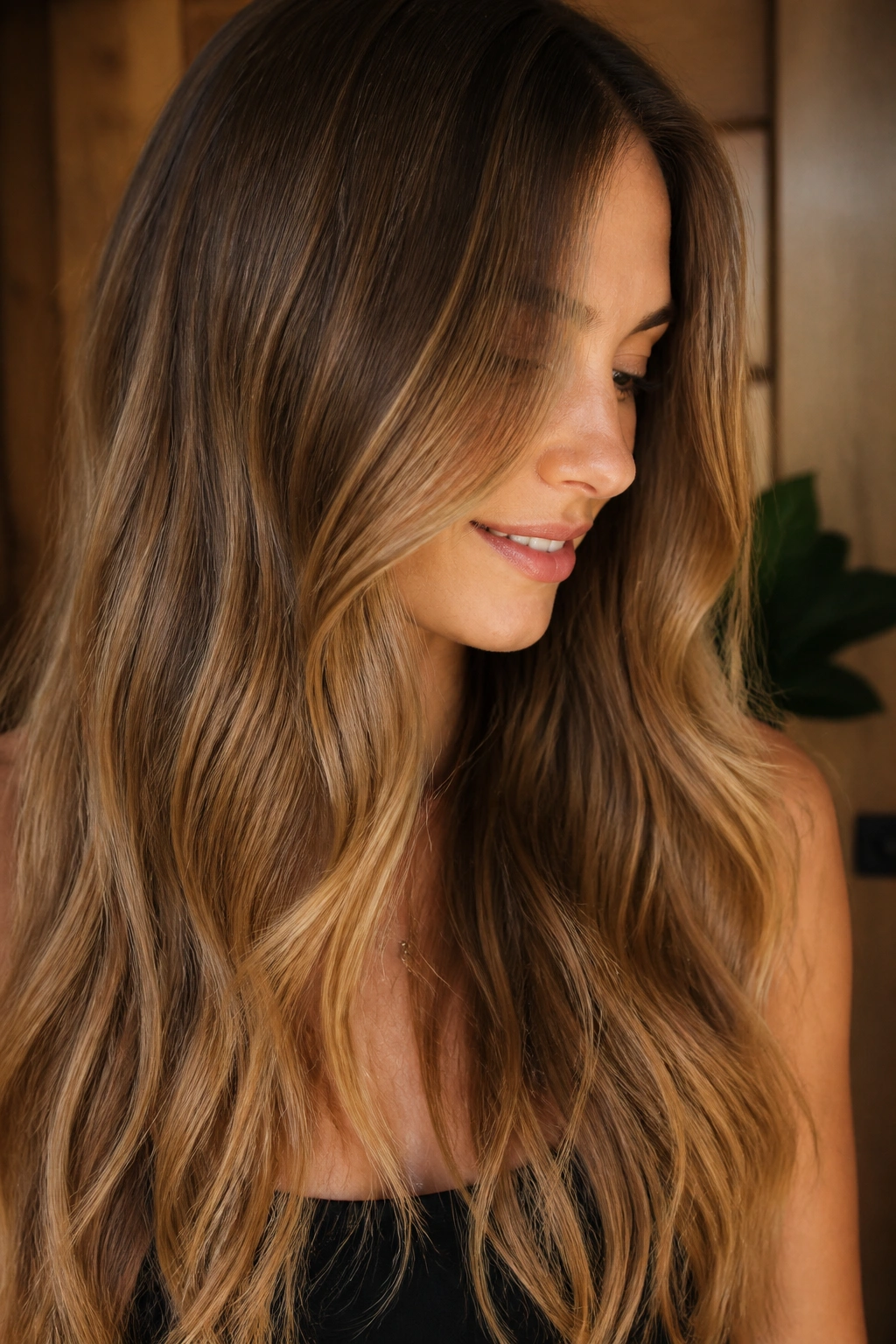
Bronze gloss is one of those shades that does a lot without looking like it is trying. On long hair, it gives the surface a warm, reflective finish while letting the natural base stay visible underneath.
That is why it works so well on dark blonde and light brown hair. The bronze sits over the base instead of hiding it, which keeps the hair looking thick and lively. Long hair can lose that effect fast if the color is too opaque. Gloss avoids the problem.
The finish should feel warm, not orange. Think sunlit metal, not copper pennies. A good bronze tone can make a simple blowout look richer, and it can make air-dried waves look like they were styled on purpose, which is a nice bonus on busy mornings.
This is a low-drama color if you want shine more than change. You can keep your root color close to natural and simply brighten the mids and ends. That usually wears well between salon visits.
12. Chestnut Brown With Face-Framing Highlights
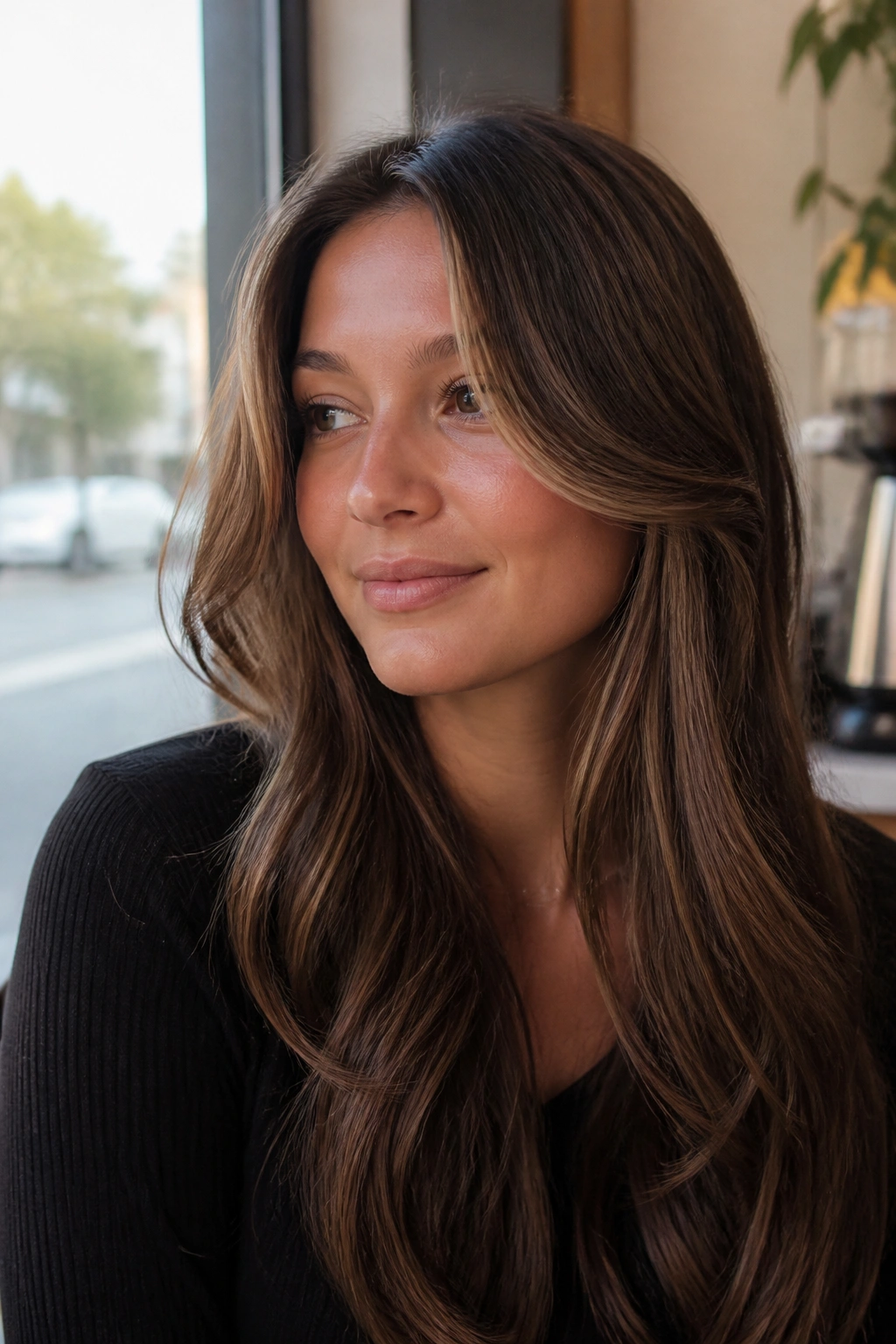
Chestnut brown with face-framing highlights is the smart choice if you want brightness without committing to a full head of light pieces. The chestnut base keeps long hair grounded, while the highlights near the face wake up the whole cut.
Unlike all-over lightening, this approach gives you focus exactly where the eye goes first. Cheekbones, jawline, collarbone. That is the part that matters on long hair, because a few well-placed pieces can do more than a lot of scattered highlights that vanish into the length.
It also grows out better. That is the practical truth nobody likes to hear. When the bright bits live around the front, regrowth is easier to live with, and the back of the hair can stay deeper and healthier-looking.
This shade works especially well if you wear your hair in ponytails, braids, or half-up styles. The chestnut base gives the hair weight, and the brighter face frame keeps it from feeling too serious. Clean, not fussy.
13. Jet Black With a Blue-Black Sheen
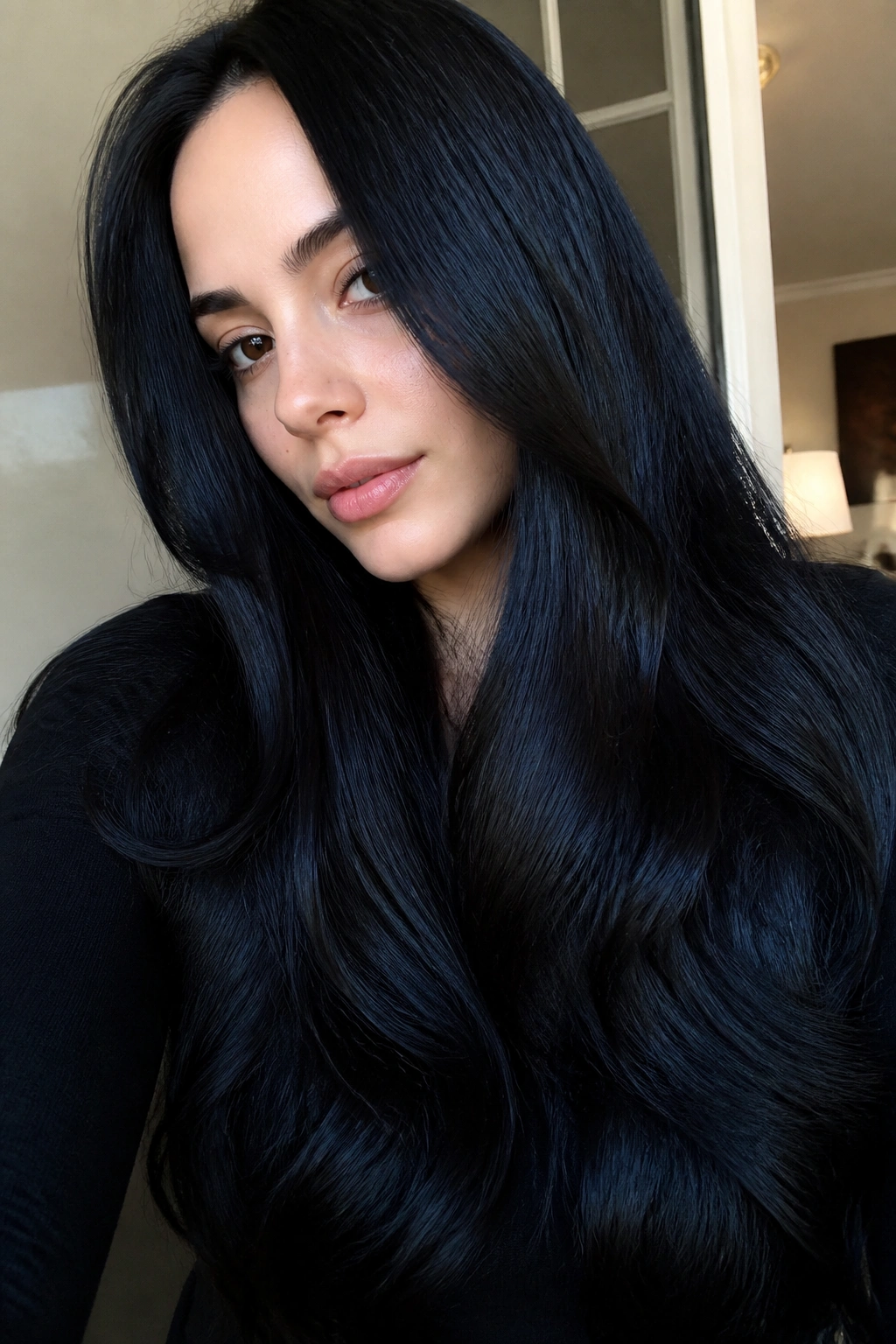
Jet black on long hair can look severe if it is matte. Add a blue-black sheen, and the whole thing changes. The color starts to read glossy, reflective, and intentional instead of flat.
Why the Sheen Matters
Blue-black is not the same as plain black. In daylight, the blue cast gives the hair depth, especially when long layers move and the undersections peek through. It can make curls look richer and straight hair look sharper.
The trick is keeping the finish shiny. A clear gloss or a blue-toned glaze can make the difference between elegant and harsh. You want the color to flash cool, not look inky or dead.
- Best on naturally dark hair or hair that has been pre-filled properly
- Looks strongest in straight styles and polished waves
- Needs shine spray sparingly, not a heavy coat
- Avoid over-washing; black can fade into brown if the cuticle gets rough
This is a strong color. If you like soft and airy, skip it. If you like drama with polish, it is hard to beat.
14. Smoky Lavender on Lightened Lengths
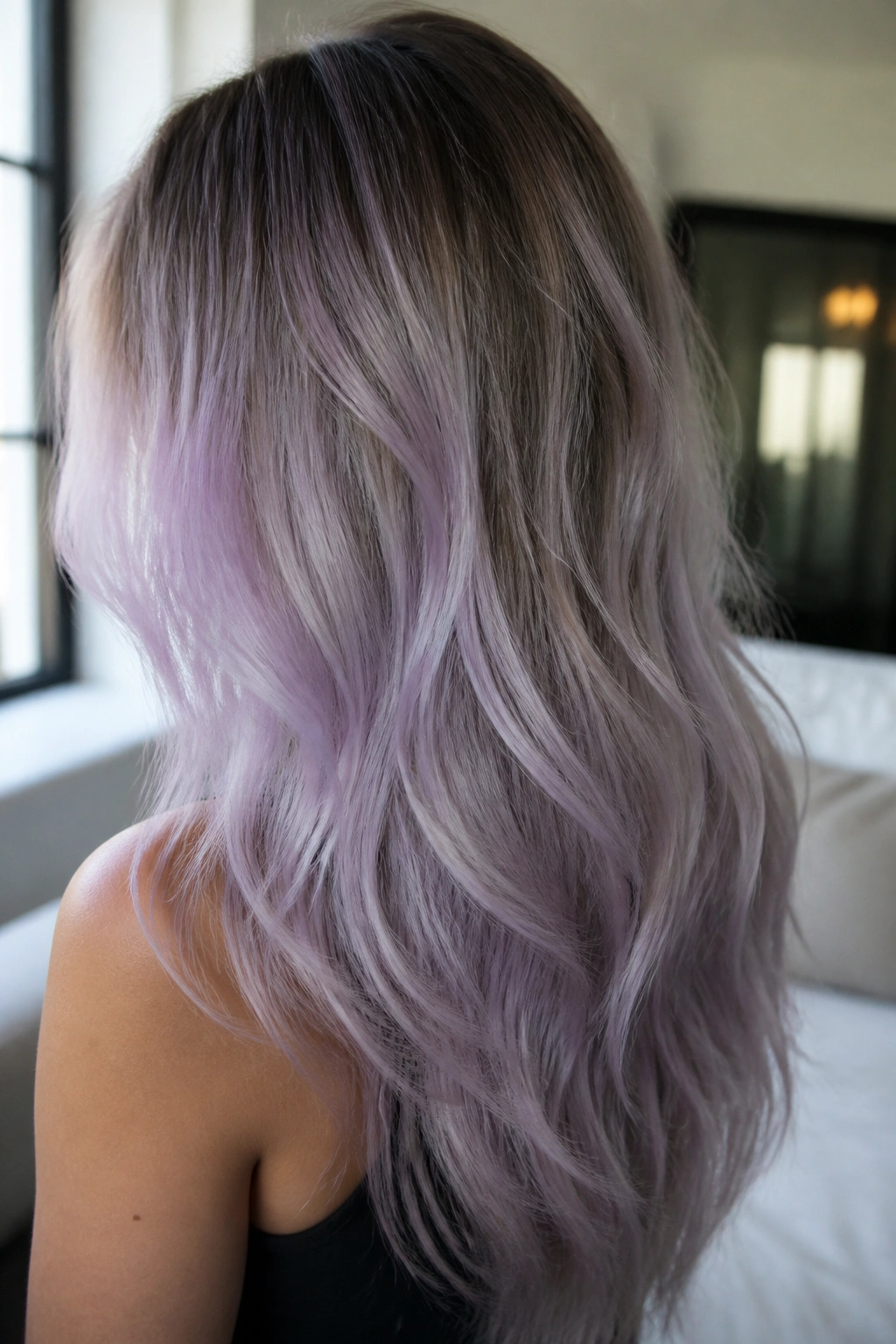
Smoky lavender is the rare pastel that can look calm on long hair instead of sugary. The smoky base is the reason. It takes the edge off the purple and lets the shade sit somewhere between silver, lilac, and mist.
Long hair helps here because the color can fade through different tones as it moves. The upper lengths may hold more of the lavender while the lower sections drift softer and cooler. That uneven fade is part of the appeal. It feels lived in, not painted on.
The nicest version is never too bright. If the lavender gets neon, it starts fighting the hair’s movement. Keep the root area muted, let the mid-lengths carry the color, and ask for a toner that leans dusty rather than candy-colored.
This shade is best on lightened hair that is in decent shape. Pastels show dryness fast. That is the tradeoff. If the hair is already fragile, a tinted gloss on a few panels may be safer than a full head application.
15. Coral-Tinted Brunette With Warm Depth
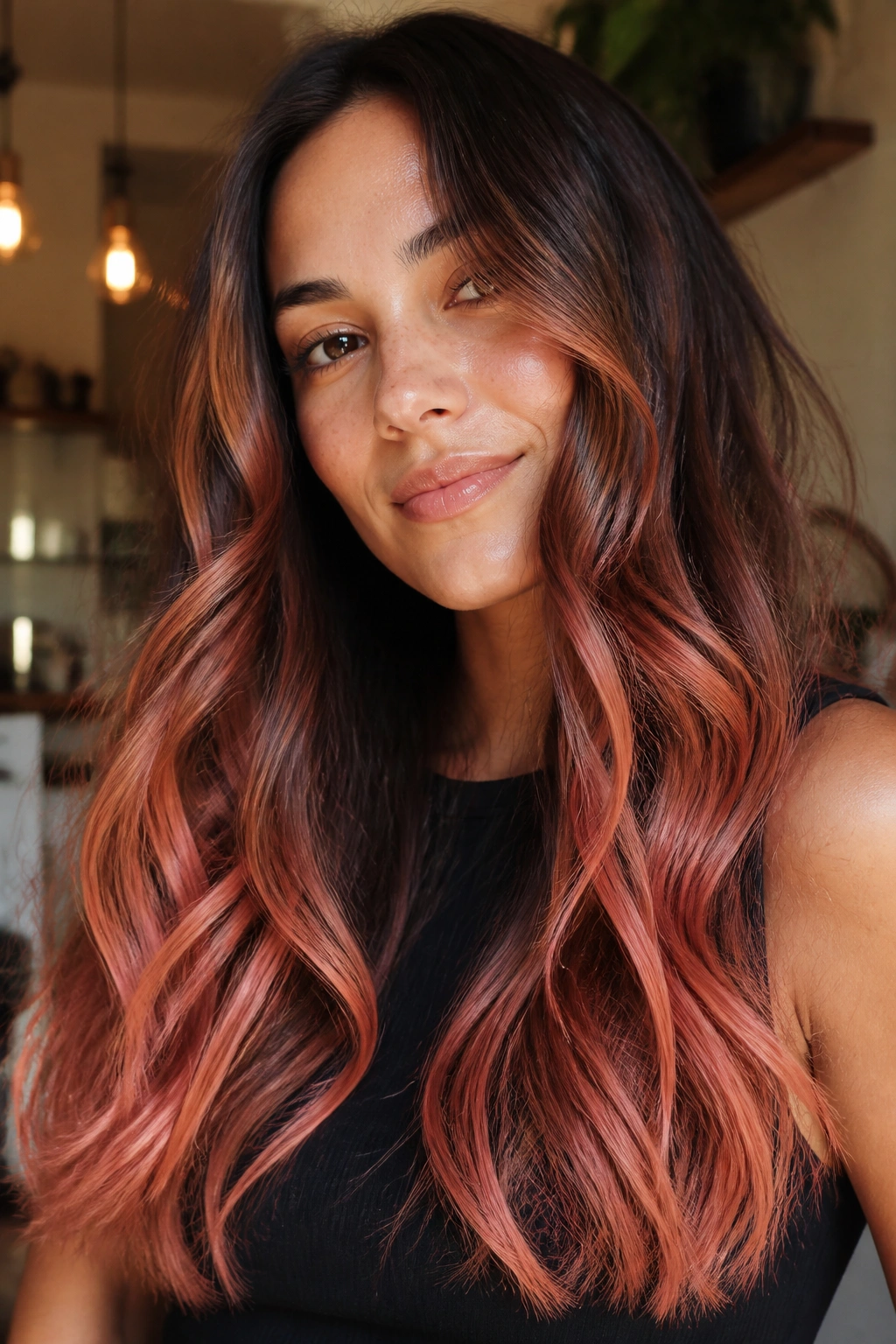
Why does coral work on brunette hair at all? Because it lets warmth sit on top of the brown without turning the whole head copper. The effect is softer than red, lighter than auburn, and more playful than a basic warm brunette.
On long hair, the best version usually lives in the ends and a few scattered panels through the mid-lengths. That placement keeps the coral from getting lost in the depth of the base. It also makes the color show when the hair moves, which is where a shade like this earns its keep.
How to Keep It from Turning Neon
Coral can go too bright if the base is over-lightened. Ask for a warm glaze rather than a saturated fashion dye, especially if you want the hair to stay wearable. A hint of apricot inside the coral can help the shade feel softer.
This one is lovely on layered cuts and soft curls. The coral sits in the bends and gives the hair a warm glow that looks better in motion than in a flat photo. That is the whole point, really.
16. Sunset Copper on Thick, Long Hair
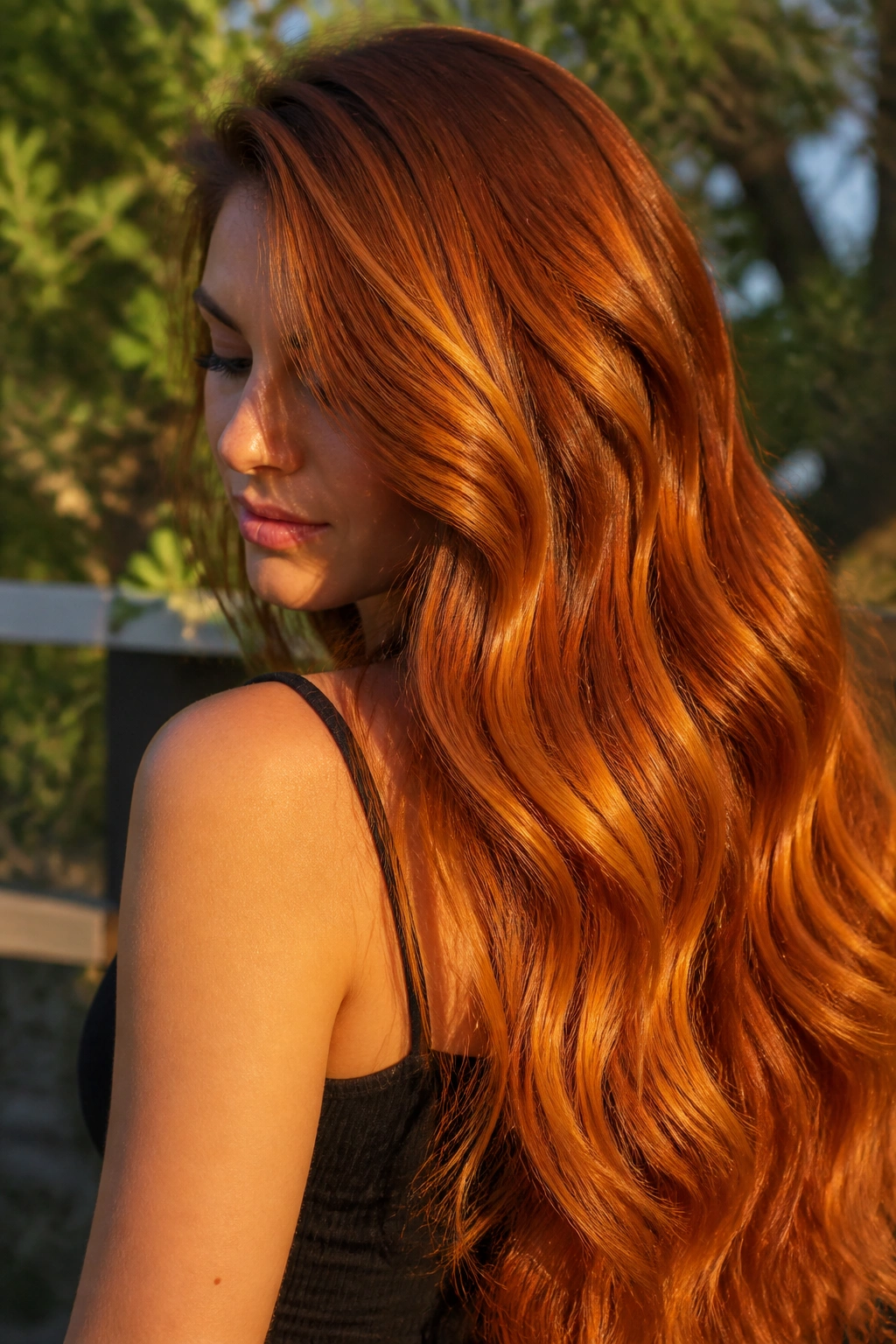
Picture thick, long hair in late afternoon light. That is sunset copper: rich orange, amber, and brown all layered together so the color looks lit from within.
This shade loves density. Thin hair can wear it, sure, but thick hair gives the copper more places to land, and the dimension stays visible instead of disappearing. The best versions mix deeper copper near the root with brighter amber pieces through the ends.
- Best for warm or neutral undertones
- Ask for copper ribbons, not one flat orange block
- Needs color-safe shampoo and cool rinses if your water runs hot
- Works well with braids because the different tones show up in the plait
Copper like this can fade quickly if the hair is porous. That is worth saying plainly. A pre-color filler and a good gloss schedule will matter more than the exact brand of dye.
Still, when it is done well, it looks expensive and a little wild in the best way.
17. Cool Espresso With a Bright Money Piece
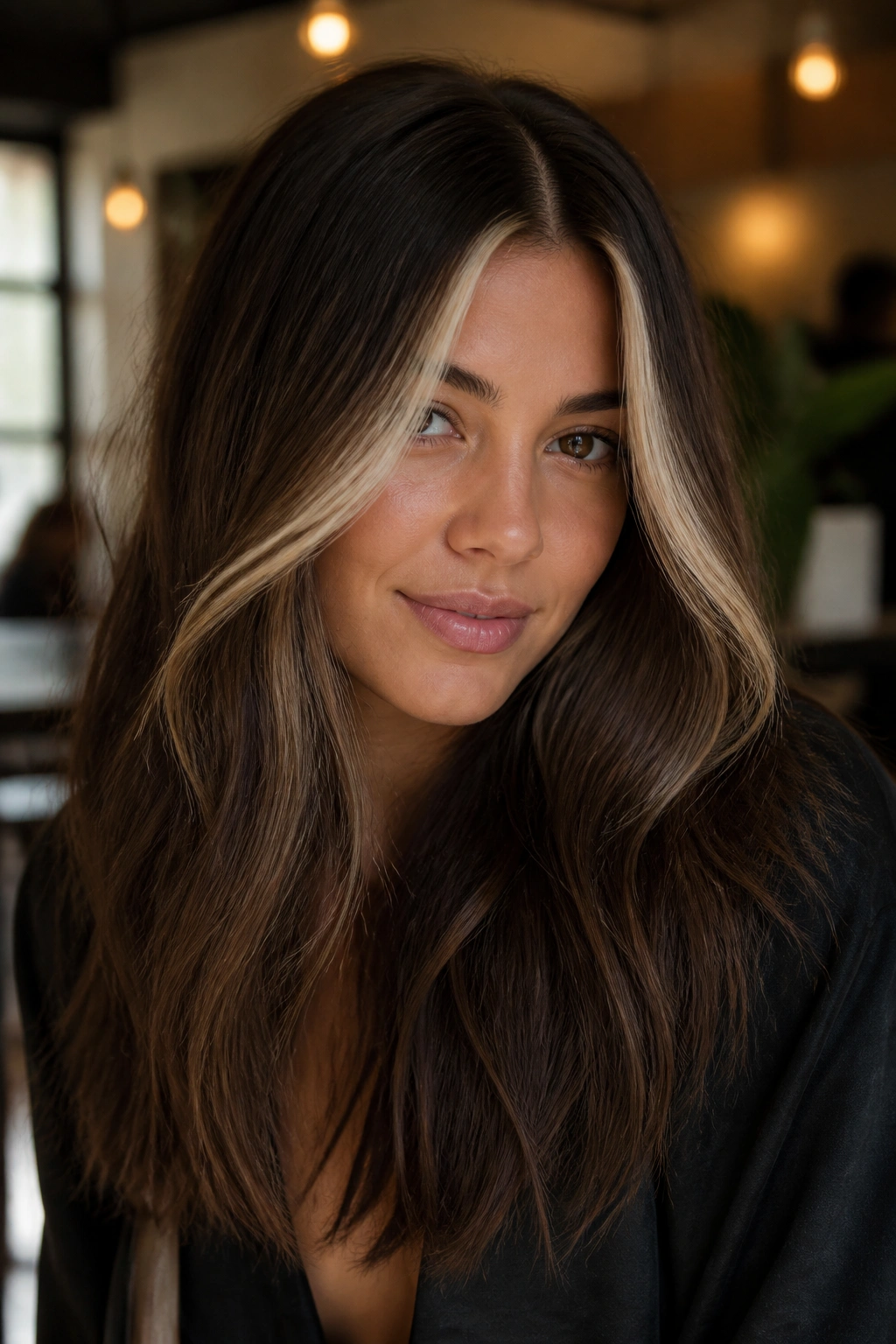
Cool espresso is the dark-hair answer for people who want contrast without losing depth. On long hair, the base stays deep and sleek, while a bright money piece around the face gives the whole style a little spark.
The placement is what makes it work. Keep the lighter section about one to one and a half inches wide, then blend it softly into the front layers. Too wide, and it starts stealing attention from the rest of the hair. Too narrow, and it disappears the second you tuck your hair behind your ear.
Long hair handles this contrast well because the rest of the length can stay rich and dark. That means less overall lightening, less damage, and less upkeep. The money piece can be refreshed on its own between bigger color sessions, which is handy if you like a dramatic look but not a dramatic schedule.
This shade looks sharp on straight hair and softer on waves. Either way, the contrast does the work.
18. Buttercream Bronde With Dimensional Ends
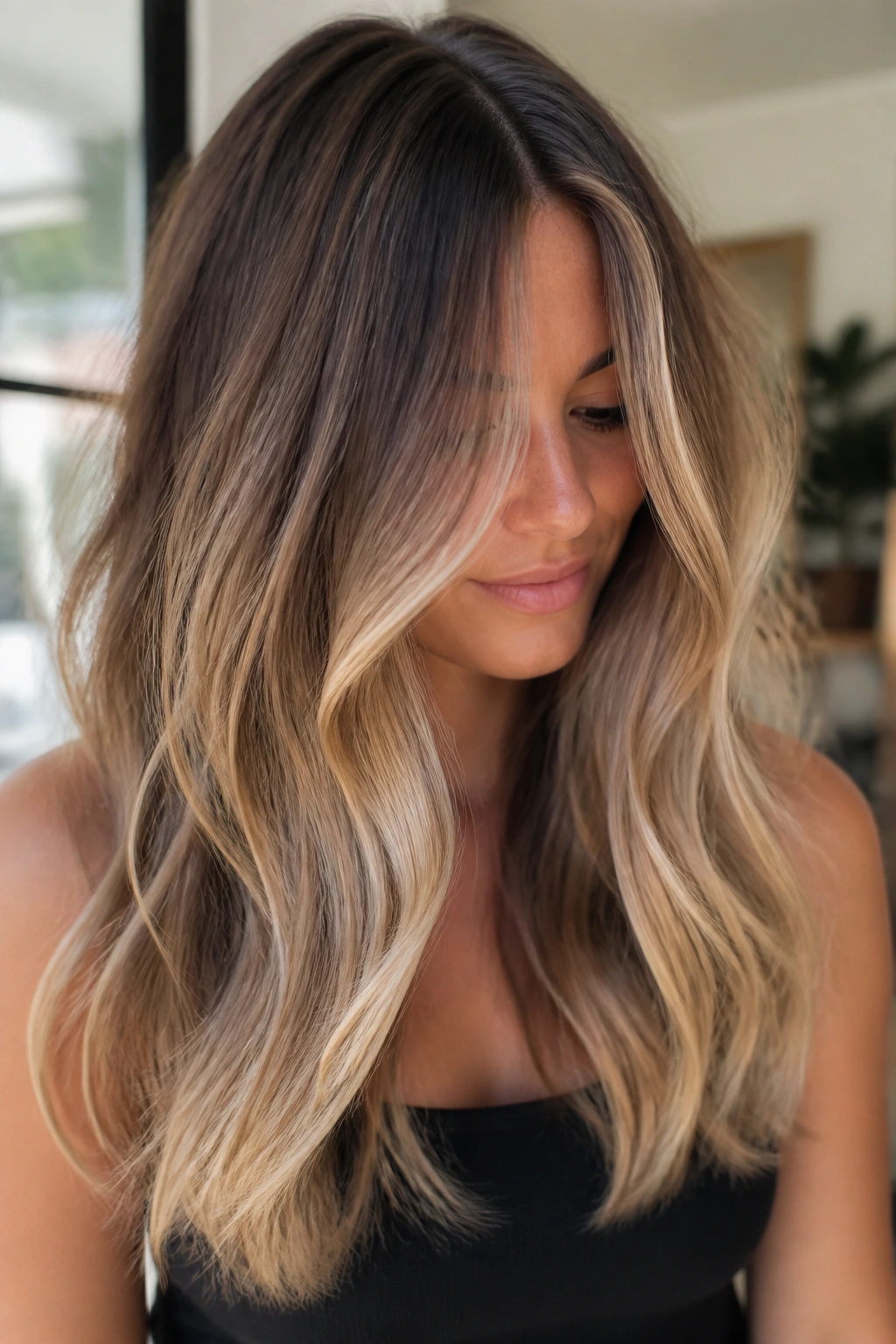
Buttercream bronde lives in the space between brown and blonde, but it feels softer than the word sounds. The creamier tone keeps long hair from looking too ash or too gold, which is a nice middle ground if you hate both extremes.
Unlike honey blonde, buttercream bronde keeps more of the natural brown base visible. That makes it an easy shade for people growing out color or trying to move away from heavy highlighting. On long hair, that soft transition matters because the length can make grow-out look obvious if the contrast is too sharp.
The best version has brighter mids and slightly creamier ends, with a root area that stays a shade deeper. That root-to-end shift is what keeps the hair from flattening out. It also means you can skip the salon a little longer without the look falling apart.
This is a friendly shade. Not boring, not flashy, just easy to wear.
19. Lilac Champagne on Long, Layered Hair
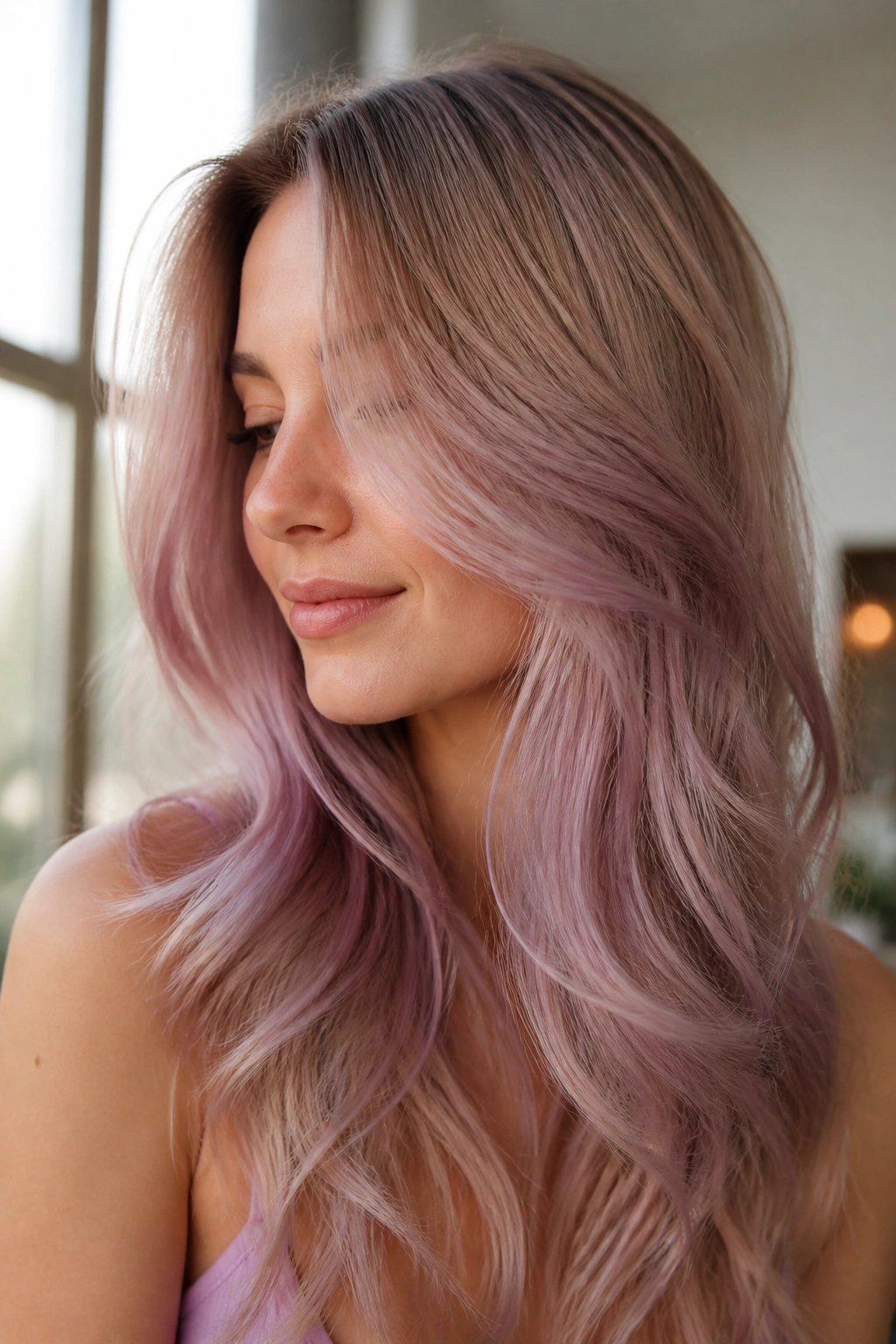
Lilac champagne is what happens when beige blonde meets a whisper of purple. It is delicate, but not fragile-looking, and long layered hair gives it enough movement to avoid reading as one solid pastel block.
Why It Works on Layers
The lighter champagne base reflects warmth, while the lilac tone cools it down just enough to make the color feel fresh. On layers, the upper pieces can hold the champagne and the lower pieces can carry the lilac haze, which creates a pretty shift as the hair moves.
This shade works best when the purple stays soft. If it gets too saturated, the whole look can tilt costume-like fast. Keep the color muted and let the shine do the rest.
- Best on pre-lightened blonde hair
- Use a color-depositing conditioner with a pastel violet tint every week or two
- Avoid harsh clarifying shampoo unless the tone turns too yellow
- Looks especially good in loose waves or half-up twists
It is one of the more delicate shades on this list, but that delicacy is the point. It feels airy without being plain.
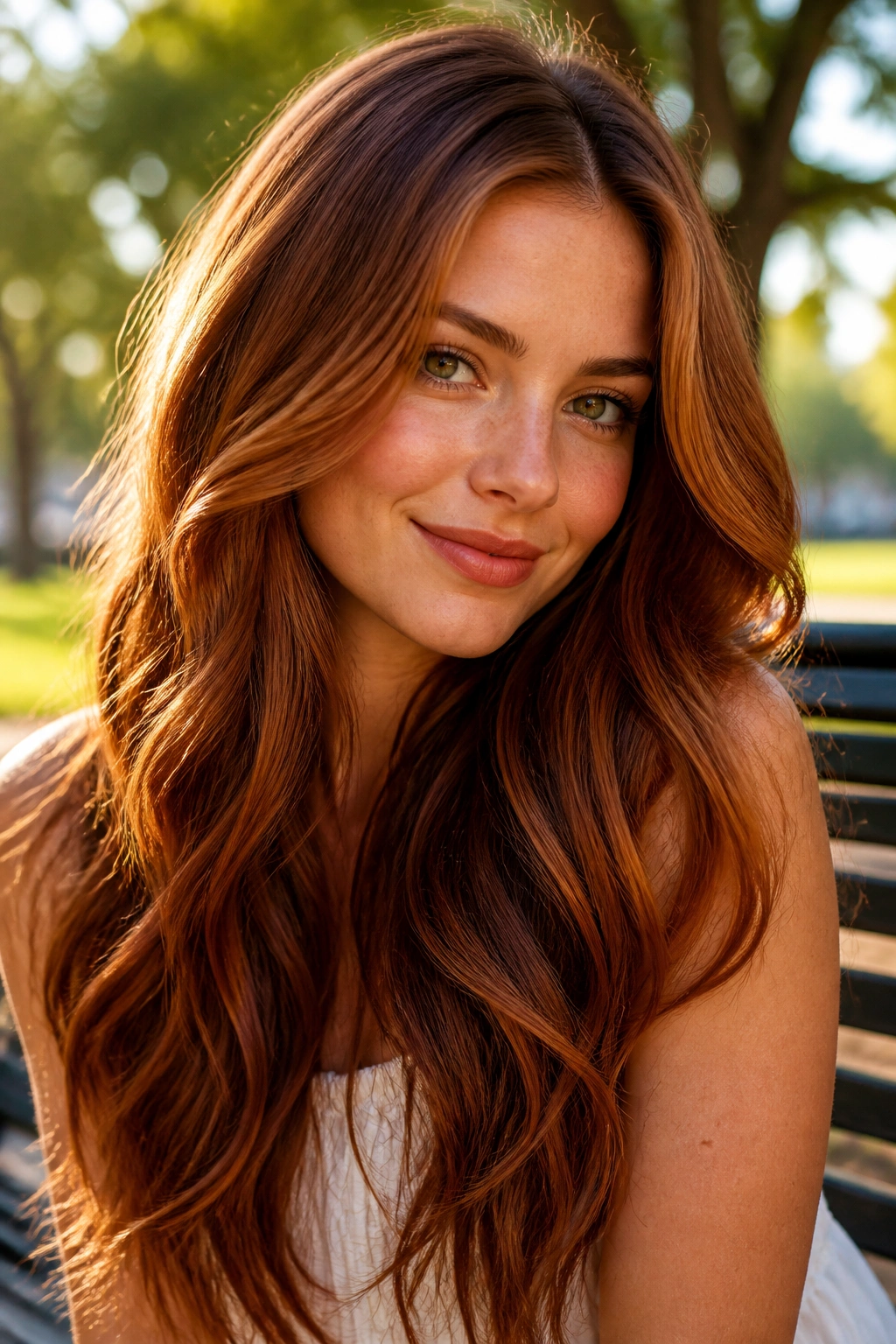
20. Rich Auburn With Soft Ribbon Highlights
Rich auburn is the one red family shade that can stay flattering on long hair without needing perfect styling every day. It has enough brown in it to keep the color grounded, but enough red to make the hair glow.
The best version uses ribbon highlights rather than all-over brightness. That keeps the auburn from looking heavy through the length and gives the waves places to catch light. On braids, the ribbons are even better. They show up in the twists and make the color look deeper than it is.
Long hair suits auburn because the shade can move between copper, chestnut, and red-brown depending on the light. That shift is what keeps it interesting. A flat auburn block can look good for about ten minutes; a dimensional auburn that plays across the length can stay interesting for much longer.
If your hair is porous or previously lightened, ask for a filler first. Reds need a base to sit on. Skip that step and the color can vanish faster than you want.
Final Thoughts
Long hair gives color more room to breathe, which is both the blessing and the trap. A good shade looks richer on length because it can move through layers, waves, braids, and glossy blowouts. A lazy shade looks flatter for the same reason.
If you want the easiest route, pick something with a root shadow or a soft gloss finish. If you want more punch, lean into copper, blue-black, or lilac. Those shades have edge, but they still work on long hair when the placement is smart.
Bring your colorist photos of the roots, the mids, and the ends you actually want. That sounds small. It is not. Long hair color lives or dies on placement, and the best result is usually the one that looks good even when you twist it into a knot and head out the door.
