



Thick hair is a blessing, but it often feels like a battlefield when you are considering bangs. The primary fear is the dreaded “mushroom effect”—that moment when you cut bangs into dense hair, and suddenly your fringe sits heavy, puffy, and wide, looking more like a shelf than a deliberate hairstyle. Managing density is the key to successfully navigating the world of bangs. If you want to pull off a fringe with thick, coarse, or abundant hair, the strategy isn’t about avoiding the scissors; it is about choosing cuts that remove weight without sacrificing the body you have worked so hard to maintain.
Most people with thick hair are told to avoid bangs entirely. That is outdated advice. The reality is that weight removal is the secret weapon. You need a stylist who understands point-cutting, internal layering, and texturizing. Without these techniques, any set of bangs on thick hair will likely feel cumbersome. When you go into the salon, be specific about what you need: you want the fringe to blend into the sides, you want the ends to be soft rather than blunt-chopped, and you want to reduce the density so the bangs lay flat against the forehead. If your stylist isn’t comfortable with these techniques, it might be time to find someone else.
Here are forty ways to approach bangs if you have thick, dense hair.
1. The Classic Blunt Fringe
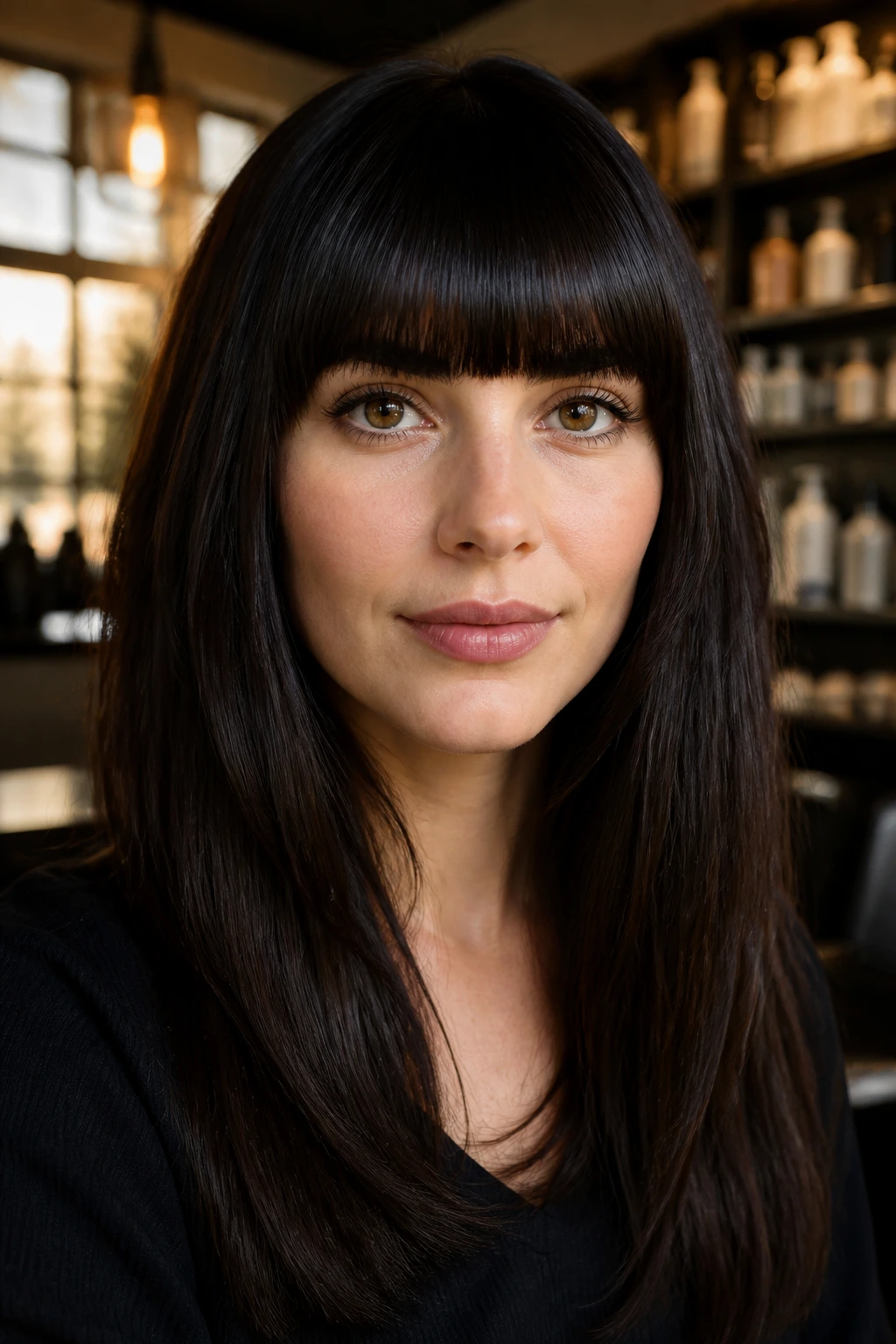
This is the cut that scares everyone with thick hair, but it can be the most striking. The key is in the execution. Instead of cutting a straight, heavy line across the forehead, you need to ask for deep point-cutting. By cutting vertically into the ends of the hair, your stylist removes mass without losing the sharp, dramatic shape of the fringe. It sits squarely across the brows, framing the face with intense, high-fashion appeal. Because your hair is naturally dense, you won’t need to pile on styling products to get that thick, lustrous look; the hair provides the volume all on its own.
2. The Wispy Curtain Bangs
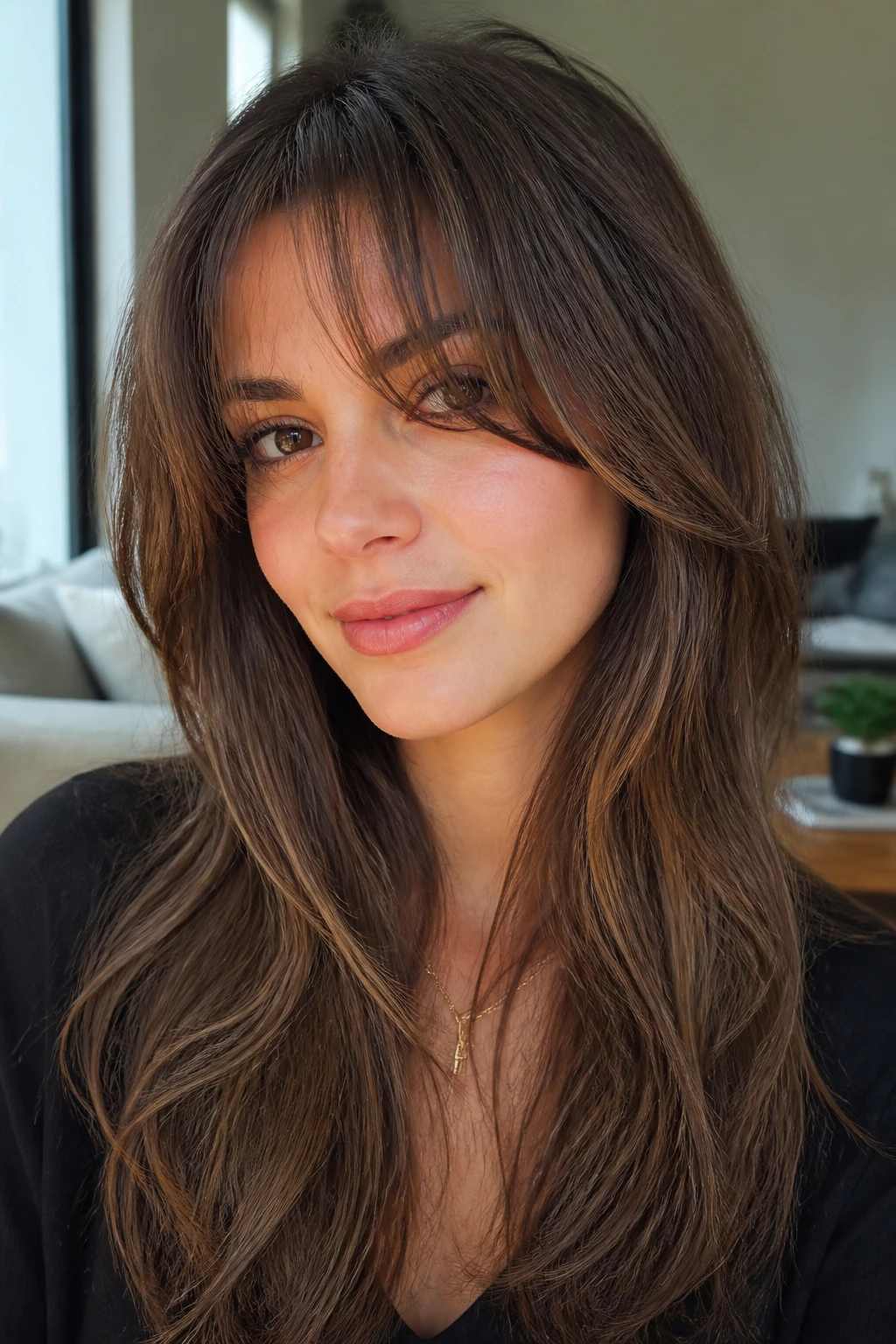
Curtain bangs are the gateway drug for anyone afraid of full commitment. On thick hair, you want to avoid the “heavy curtain” look that can sometimes feel suffocating. Ask for a piece-y, see-through version that uses longer lengths at the corners to blend into your existing layers. These are inherently low-maintenance. Because they are longer and lighter, they don’t require the daily wash-and-dry cycle that a blunt fringe demands. You can tuck them behind your ears when you need them out of your face, which is a major advantage for those who get frustrated with hair in their eyes.
3. The Soft-Tapered Side-Swept Fringe
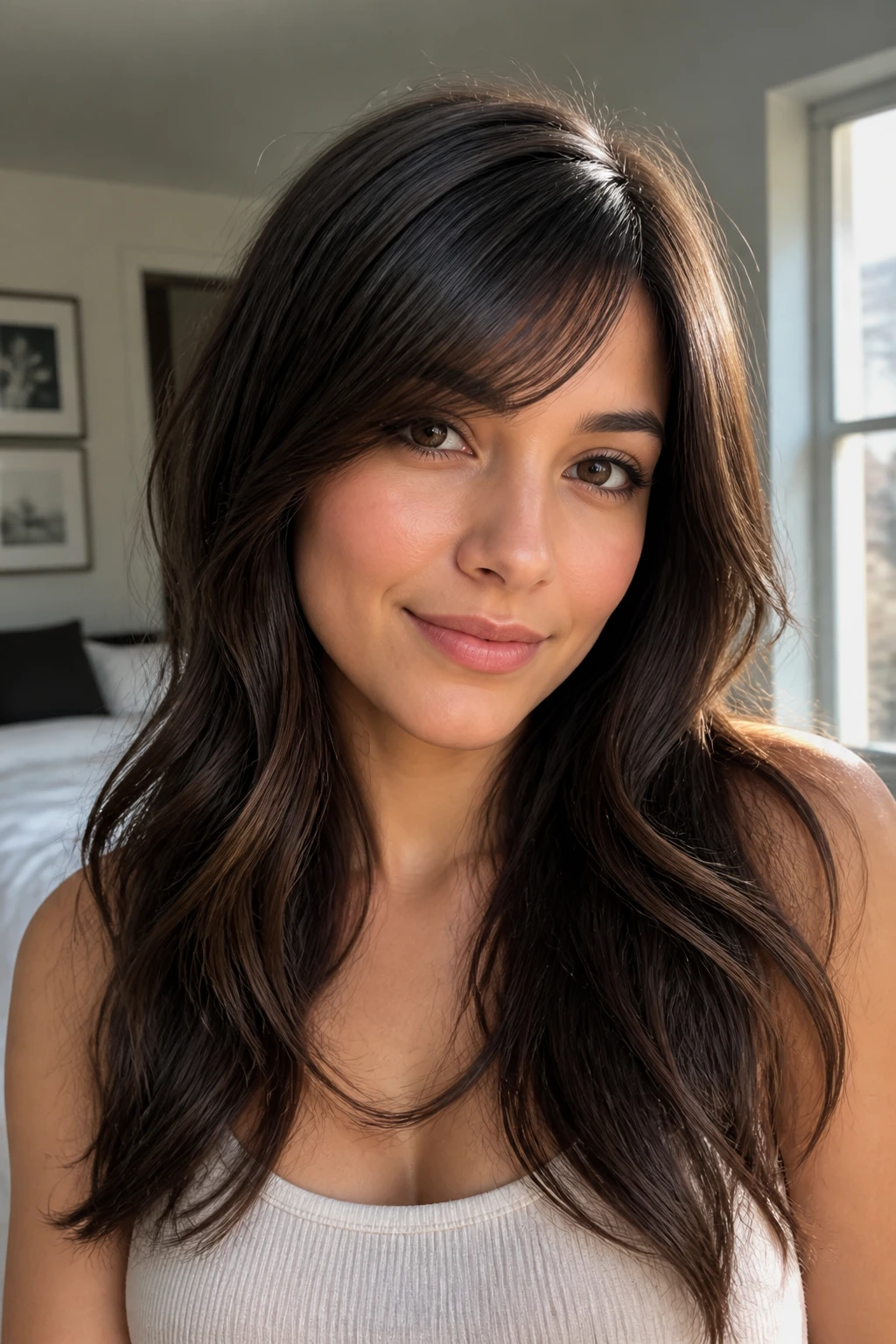
If you are worried about your bangs looking too “blocky,” this is your best bet. A side-swept look creates an angular line across the forehead, which naturally breaks up the density of thick hair. By tapering the ends—making them shorter toward the center and longer toward the temples—you create a seamless transition into the rest of your hair. This style is incredibly flattering for rounder face shapes, as the diagonal line draws the eye downward. You will need a round brush to encourage the swoop, but beyond that, it holds its shape beautifully throughout the day.
4. The Shaggy Layered Fringe

Thick hair and shag haircuts are a match made in heaven. Shags thrive on volume and density, meaning you don’t have to fight your hair’s natural inclination to be big. The fringe in this style is rarely a perfect line. It is usually chopped, layered, and intentionally messy. It blends perfectly into the rest of the cut, so as it grows out, you aren’t stuck with a awkward “in-between” stage. You can wake up, run a little sea salt spray through the ends, and walk out the door. It is effortlessly cool and leans into the natural texture of thick strands.
5. The Micro Fringe
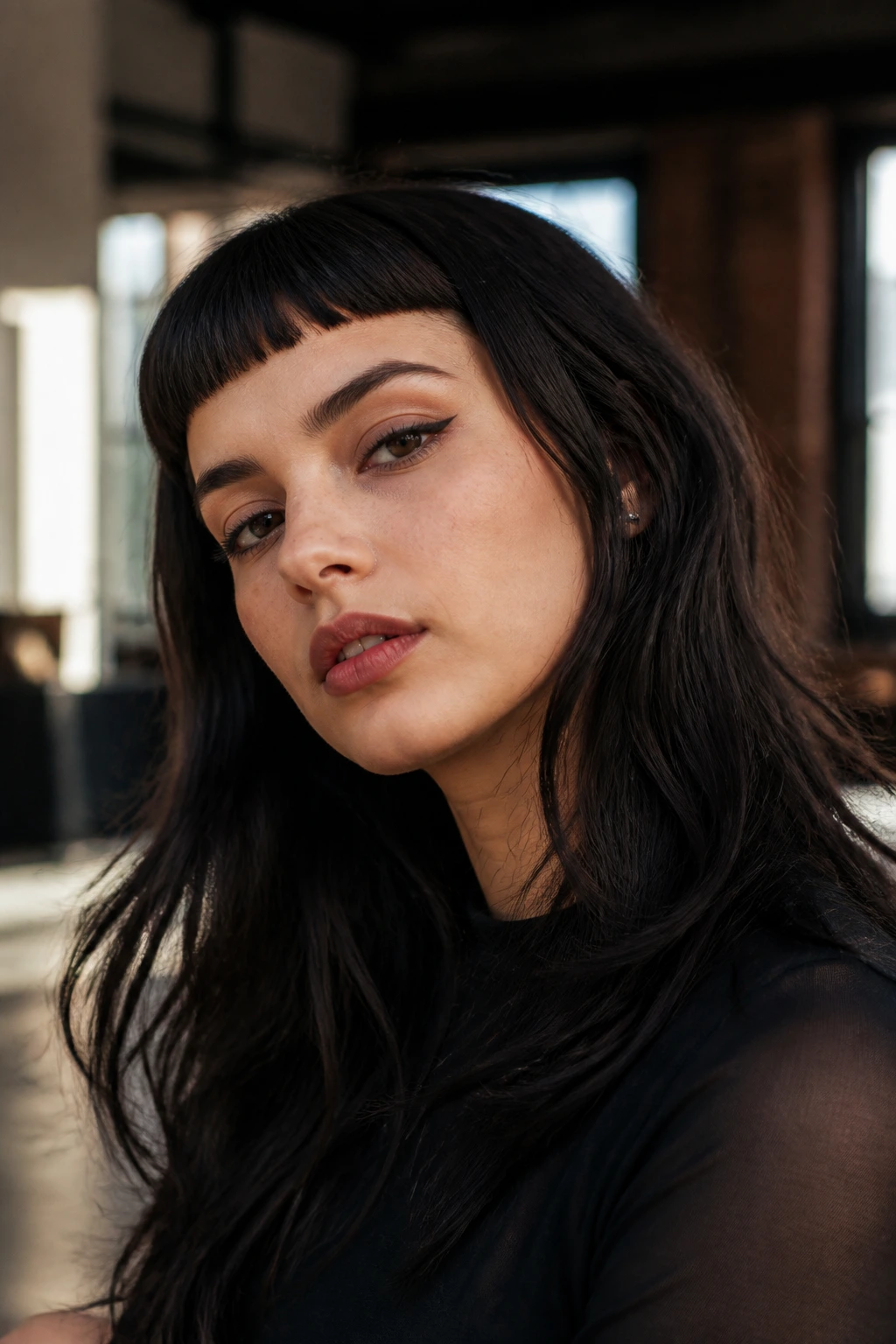
This is a bold, edgy choice. By cutting the bangs very short—usually well above the eyebrows—you avoid the problem of the bangs touching your lashes or feeling too hot against your forehead. For thick hair, the micro fringe needs to be thinned out significantly. If you leave it too heavy, you risk looking like a doll with a plastic wig. When it is done right, however, it frames the eyes intensely and makes a massive fashion statement. It requires more frequent trims to keep that “intentional” length, but it keeps the hair away from your face entirely.
6. The Bardot-Inspired Heavy Fringe
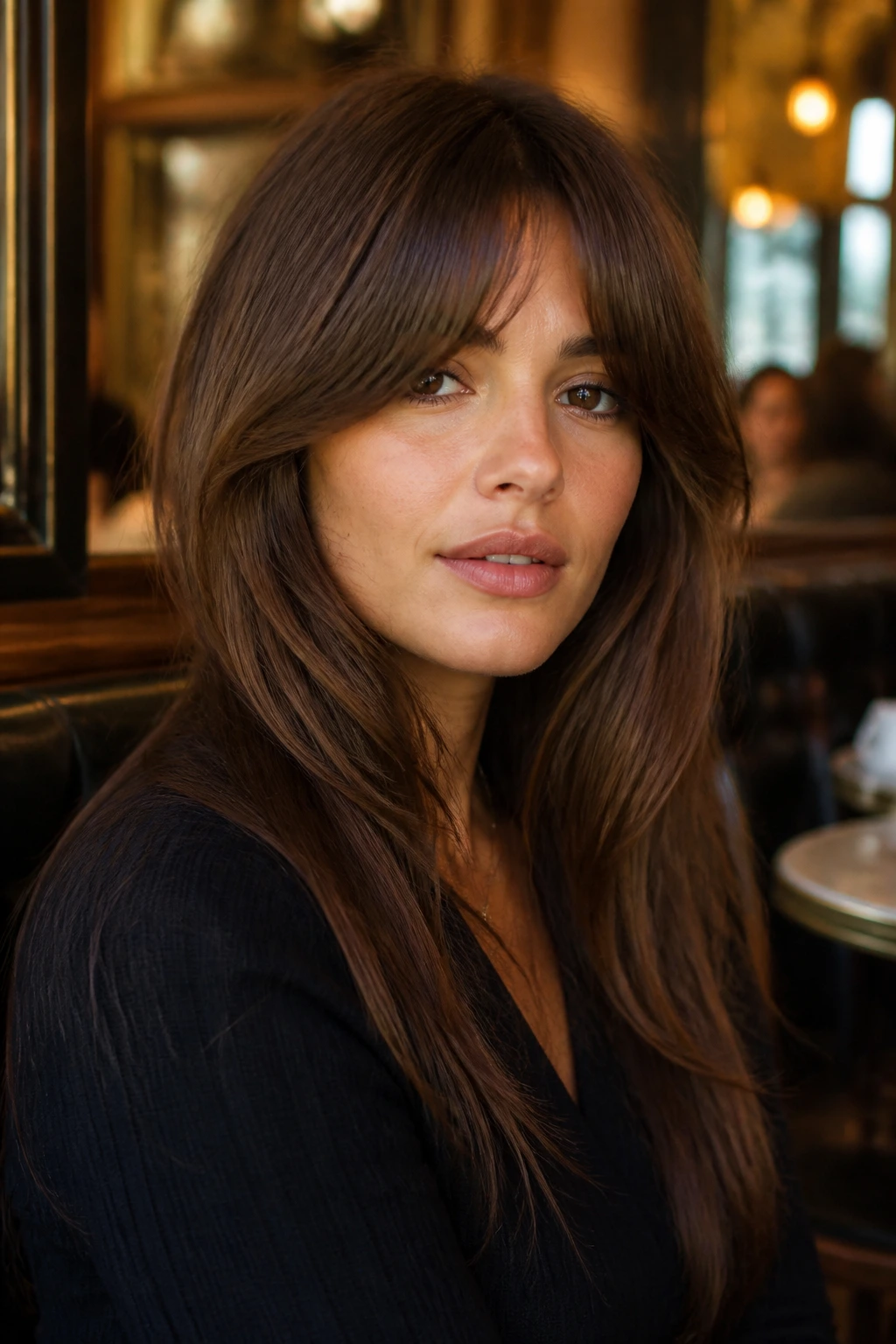
Named after the style icon, this is a longer, thicker, and softer version of the classic fringe. It is designed to look lived-in. Unlike a sharp, blunt cut, this fringe is meant to be parted in the middle or slightly off-center, with the sides grazing the cheekbones. For thick hair, this provides a wonderful way to use your natural volume. The hair on the sides adds structure to the face, while the center part keeps the density from feeling overwhelming. It is the perfect blend of polished and relaxed, working just as well with a ponytail as it does with a blowout.
7. The Bottleneck Bangs
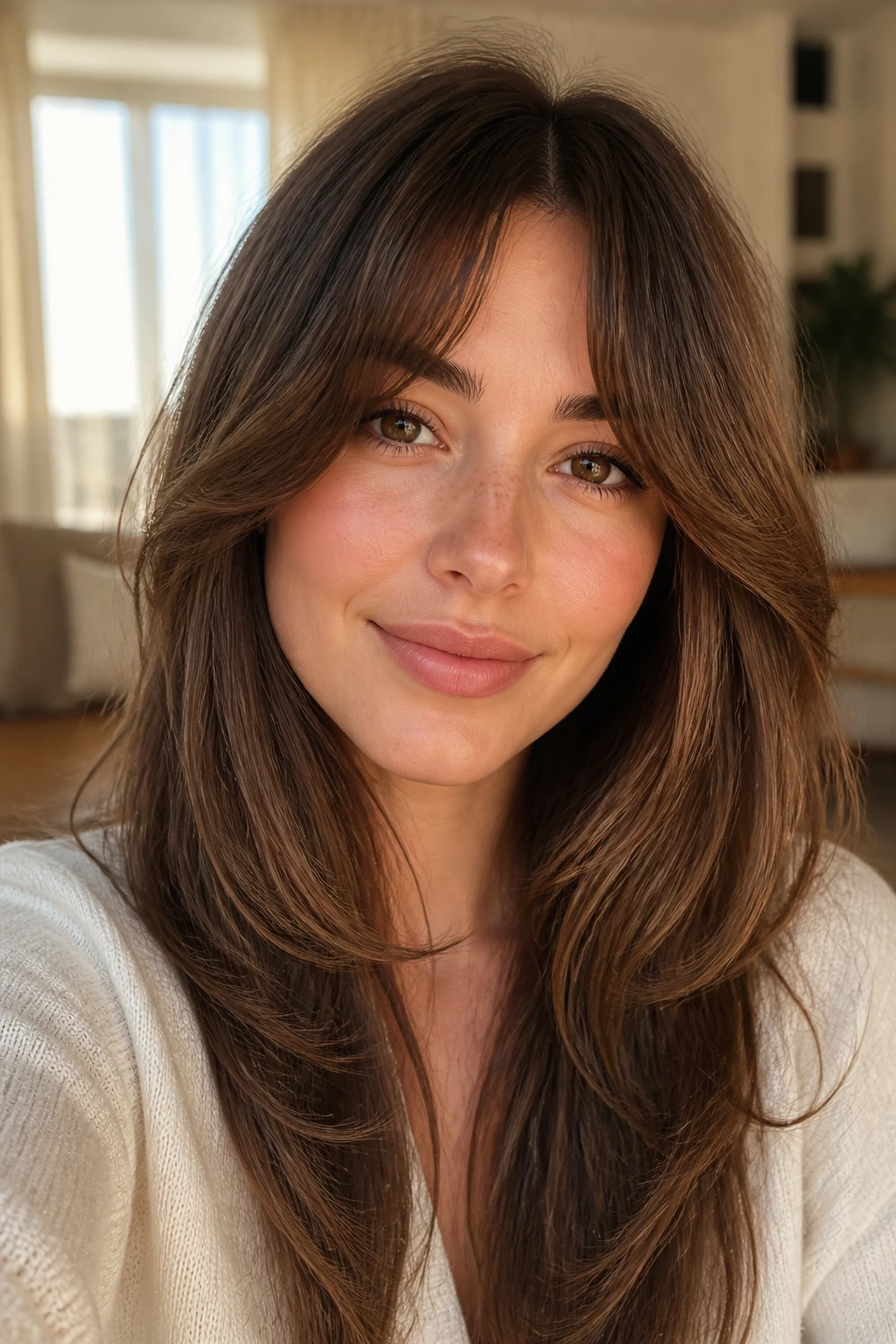
This style is essentially a hybrid of curtain bangs and a shorter, center-parted fringe. It gets its name because the shape resembles the neck of a bottle: it is shorter in the middle and flares out to be wider and longer at the sides. It is a fantastic option for thick hair because it allows for a lot of internal layering. You can keep the center light and wispy while letting the sides become thicker as they blend into your layers. This creates a very natural, grown-out aesthetic that feels vintage yet modern.
8. The Eyelash-Skimming Fringe
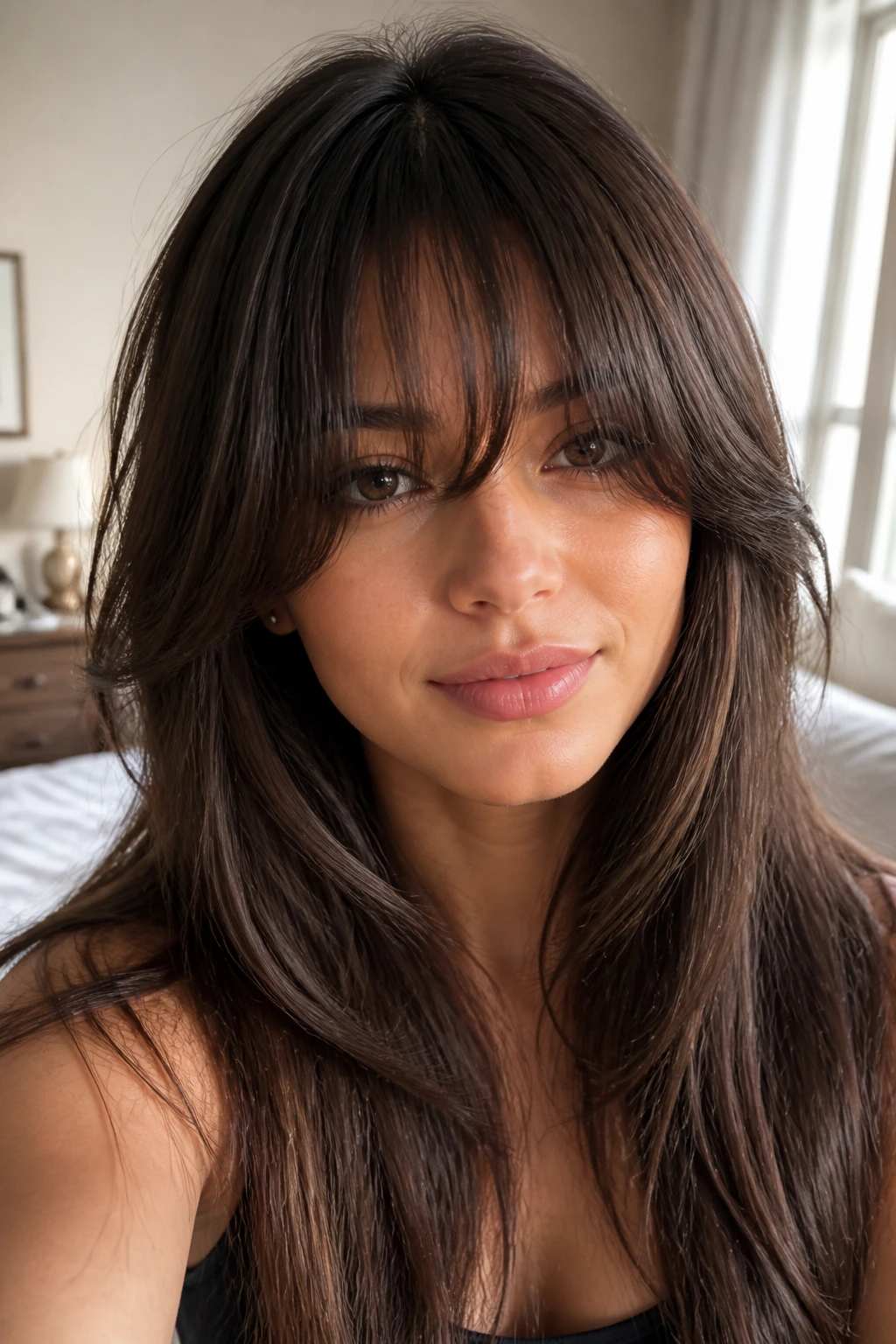
If you have thick hair and want a longer fringe, aiming for right at the eyelash line is a great compromise. It feels substantial and glamorous without the maintenance of a micro-bang. Because the hair is long, gravity helps keep it lying flat, which is a huge benefit if your hair tends to poof up. This look is all about the sweep. When you style it, you want a slight curve inward. The density of your hair will make the fringe look expensive and full, rather than limp or sparse, which can sometimes happen with this length on finer textures.
9. The See-Through “Korean” Bangs
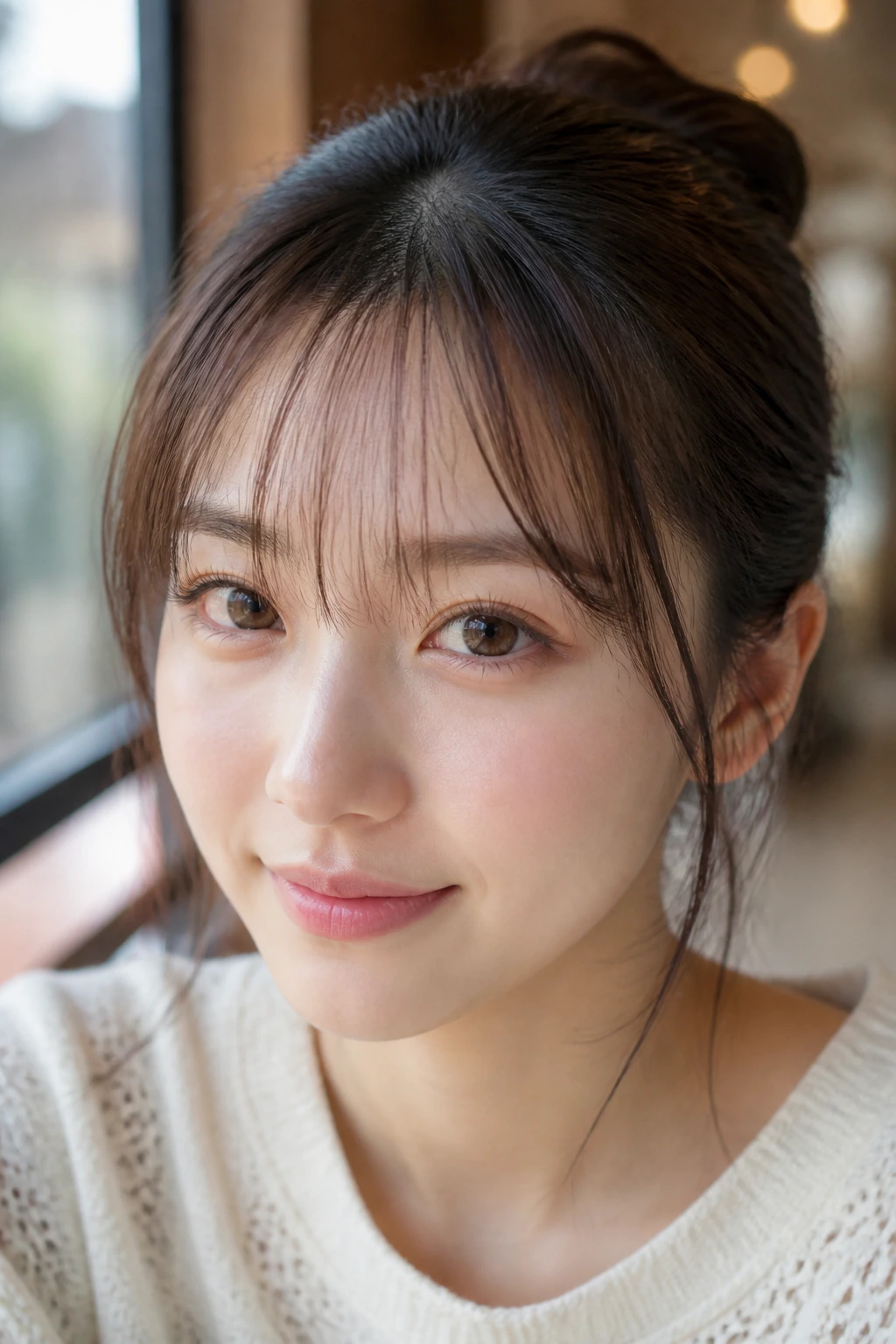
This style has become a staple for a reason. It is exceptionally thin, light, and airy. To achieve this on thick hair, you only grab a small section of hair from the very front to create the bangs, leaving the rest to be swept back or layered into the sides. It is the ultimate low-commitment fringe. If you decide you hate it, the growth period is incredibly easy to manage because there isn’t much hair to begin with. It softens the face significantly and prevents the heavy, boxy look that thick hair can sometimes create.
10. The Rounded “Halo” Fringe
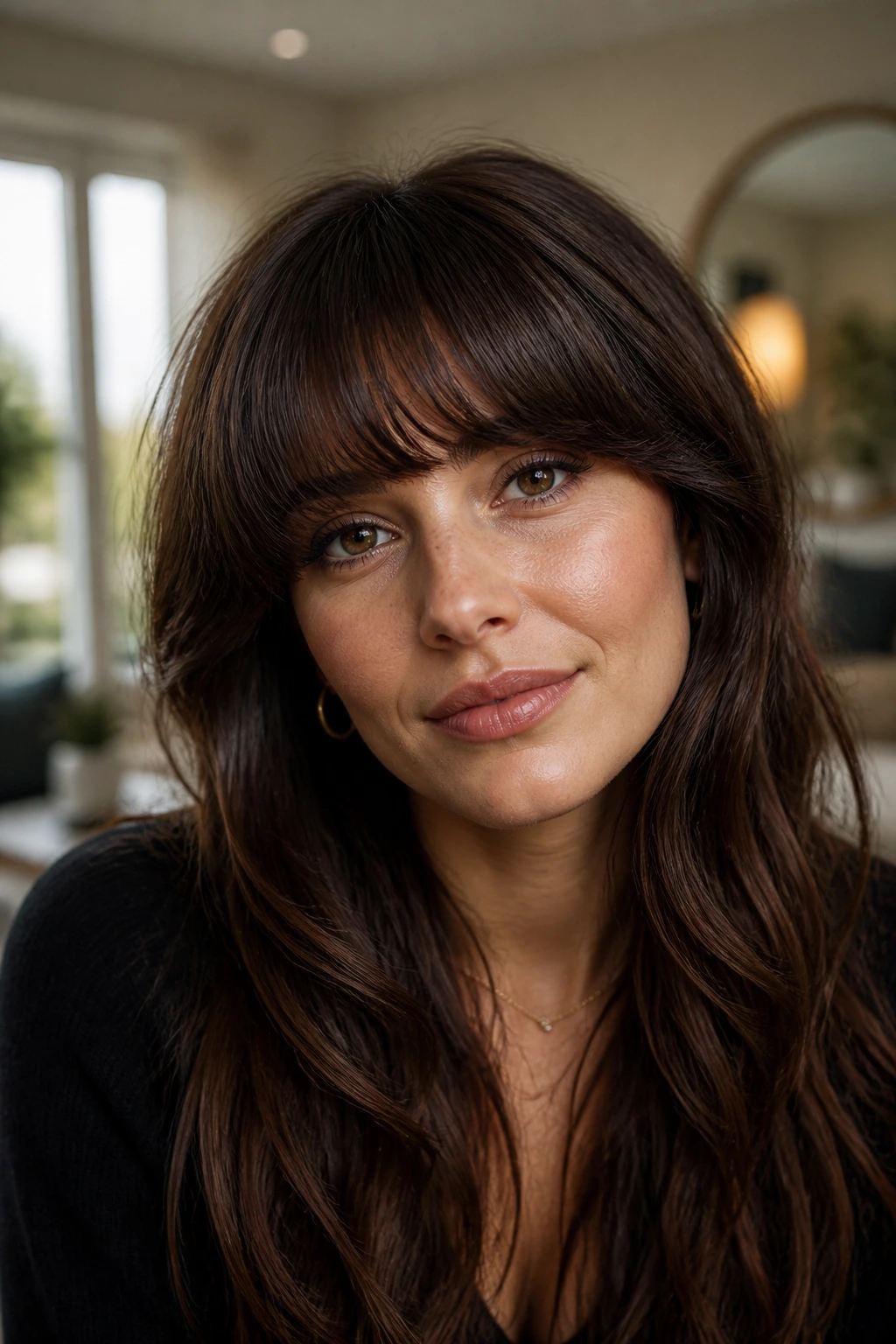
This cut is curved, framing the face in an arc that follows the brow line. On thick hair, you have to be careful with the rounding; if it’s too heavy, it creates a bowl-cut effect. To avoid this, ask your stylist for “invisible layers” within the bangs. This involves slicing into the underneath section of the fringe to create a slightly shorter layer that pushes the hair forward, while the top layer sits longer and smoother. The resulting shape is elegant and structured, providing a soft contrast to a strong jawline.
11. The Textured Piece-y Fringe
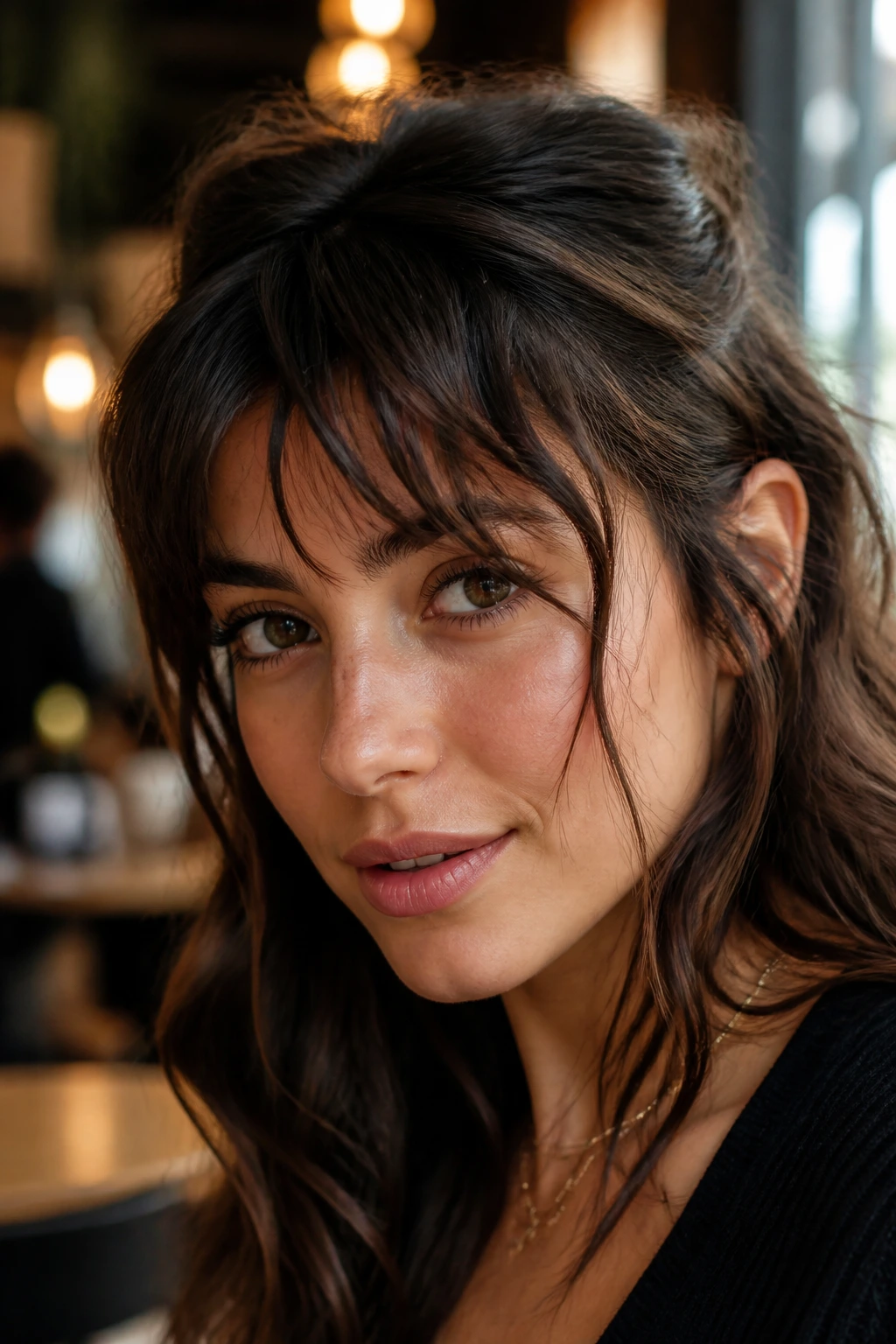
Forget the idea that bangs have to be a solid block of hair. A textured, piece-y fringe is created by taking distinct sections of hair and highlighting the separation. With thick hair, you can use a small amount of pomade or styling wax on your fingertips to pinch the ends of the bangs together into little clusters. This breaks up the density and prevents the hair from looking like one solid piece. It’s a great style if you prefer a more bohemian, undone aesthetic rather than a sharp, salon-styled look.
12. The Curly-Texture Fringe
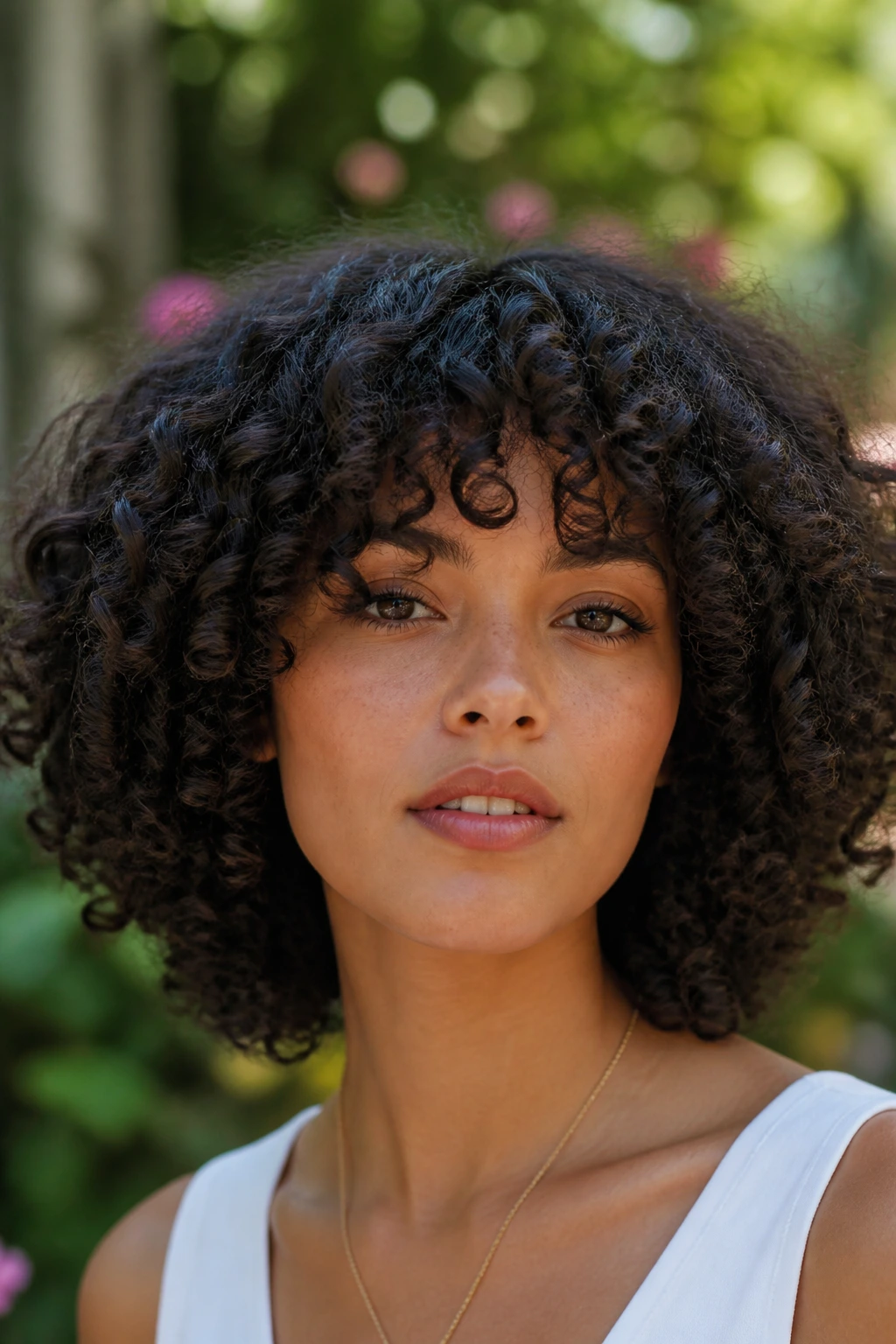
There is a pervasive myth that thick, curly hair cannot have bangs. This is entirely false. The trick is cutting them dry and focusing on the shape of the curls rather than forcing a straight line. If you have thick, curly hair, your bangs should be cut longer than you think you need them, because they will shrink significantly. When done properly, the curls sit in a halo around your forehead, adding volume and personality. You need a stylist who specializes in texture; do not let someone cut these wet, or you will end up with much shorter hair than anticipated.
13. The Wavy “Beach” Fringe
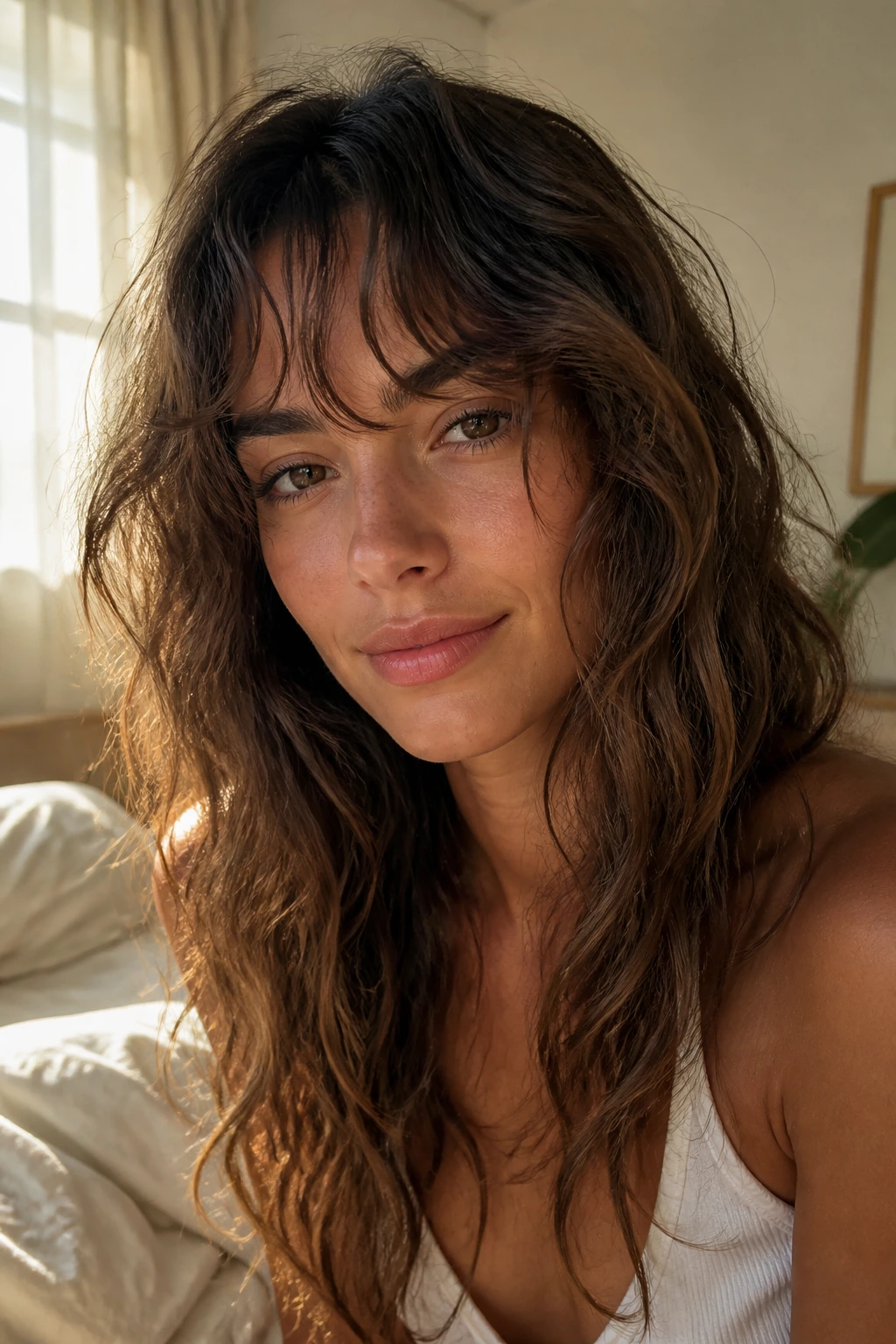
If your hair is thick and possesses a natural wave, you are perfectly positioned for a low-effort fringe. You don’t need a flat iron or a round brush to get this look. Instead, you allow the natural wave to dictate the shape of the bangs. After washing, use a light mousse and let them air dry, occasionally pushing them in the direction you want them to sit. The natural wave helps break up the thickness of the hair, making the fringe appear more delicate and soft than it would if you tried to force it into a straight, blunt shape.
14. The Asymmetrical Fringe
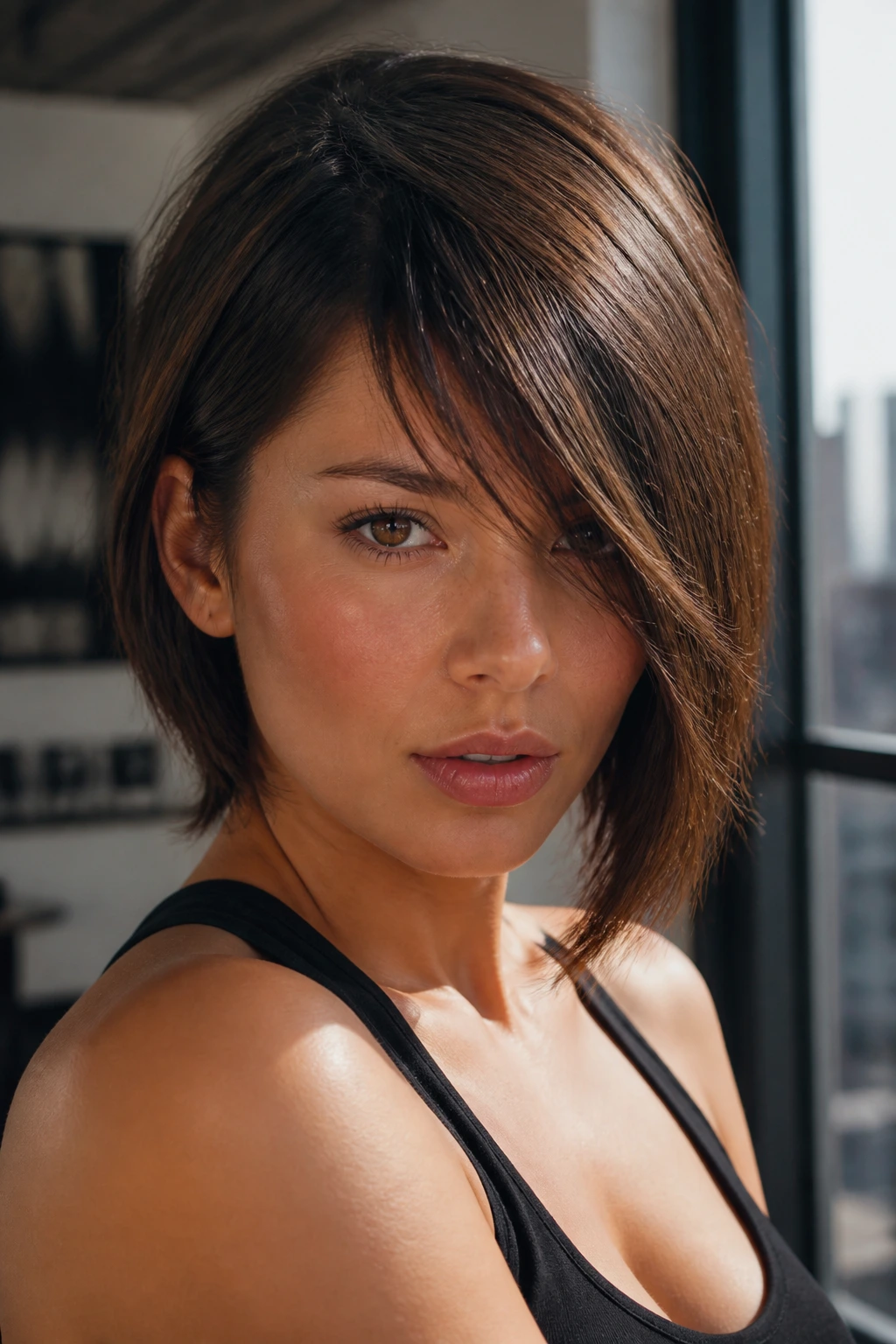
Want to minimize the look of thickness? An asymmetrical cut is the answer. By cutting the bangs at a deliberate slant—shorter on one side, longer on the other—you remove the visual weight that a straight line creates. This draws the eye diagonally across the face, which is very flattering for those with wider cheekbones. Because thick hair has so much body, an asymmetrical cut tends to hold its shape well without looking limp. It is a bold, modern style that looks best when paired with a sleek, straight blowout.
15. The Deep-Set Full Fringe
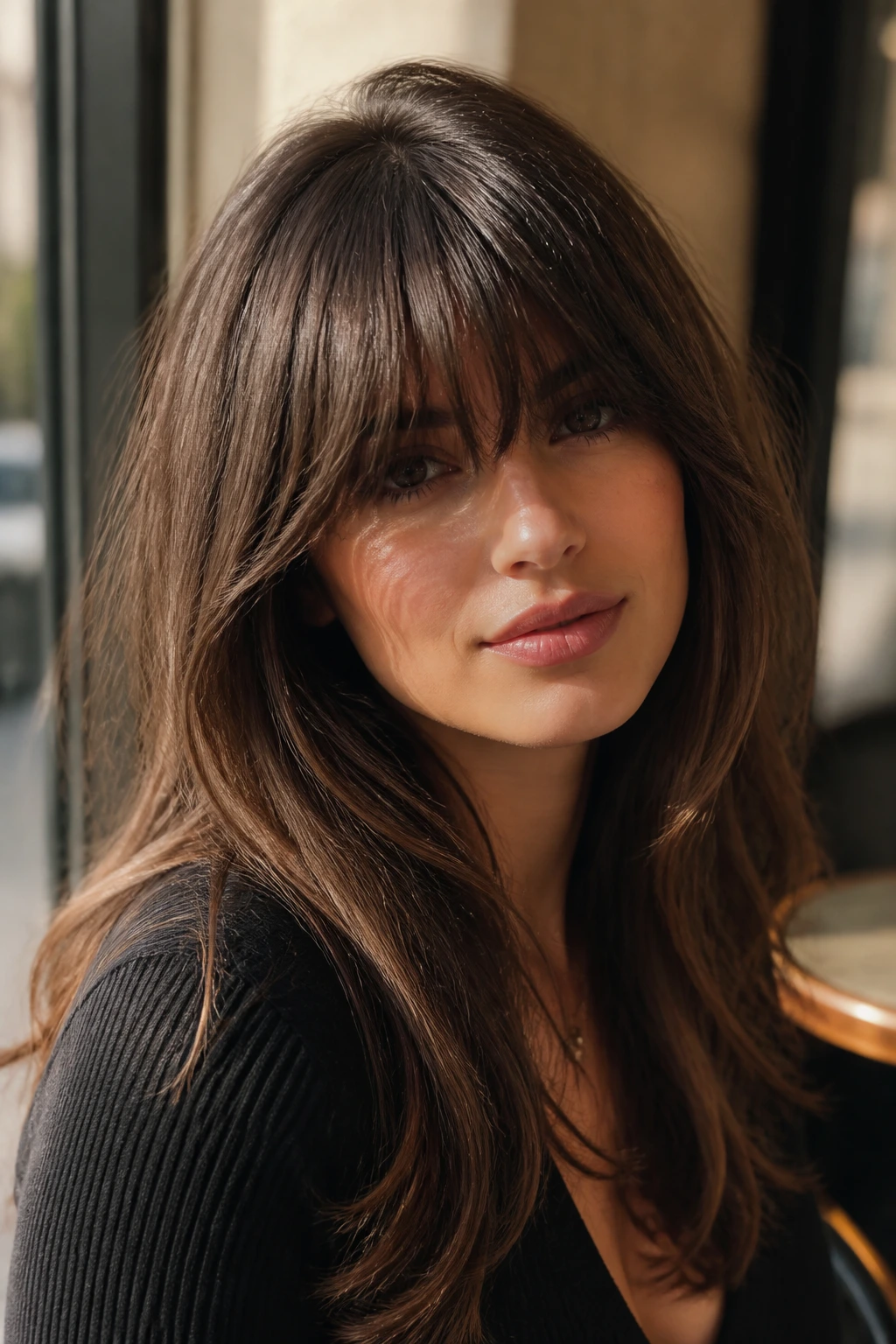
This style starts further back on the crown of your head, bringing more hair forward to create the fringe. Normally, this is a dangerous move for thick-haired individuals, but it works if you prioritize aggressive thinning. By taking more hair, you create a very dramatic, full look that covers the entire forehead. The trick to keeping it from looking like a wig is to keep the ends very soft and feathered. It feels heavy and luxurious, perfect for those who want that “French Girl” aesthetic without the fuss of constantly parting their hair.
16. The Feathered Brow-Grazing Fringe
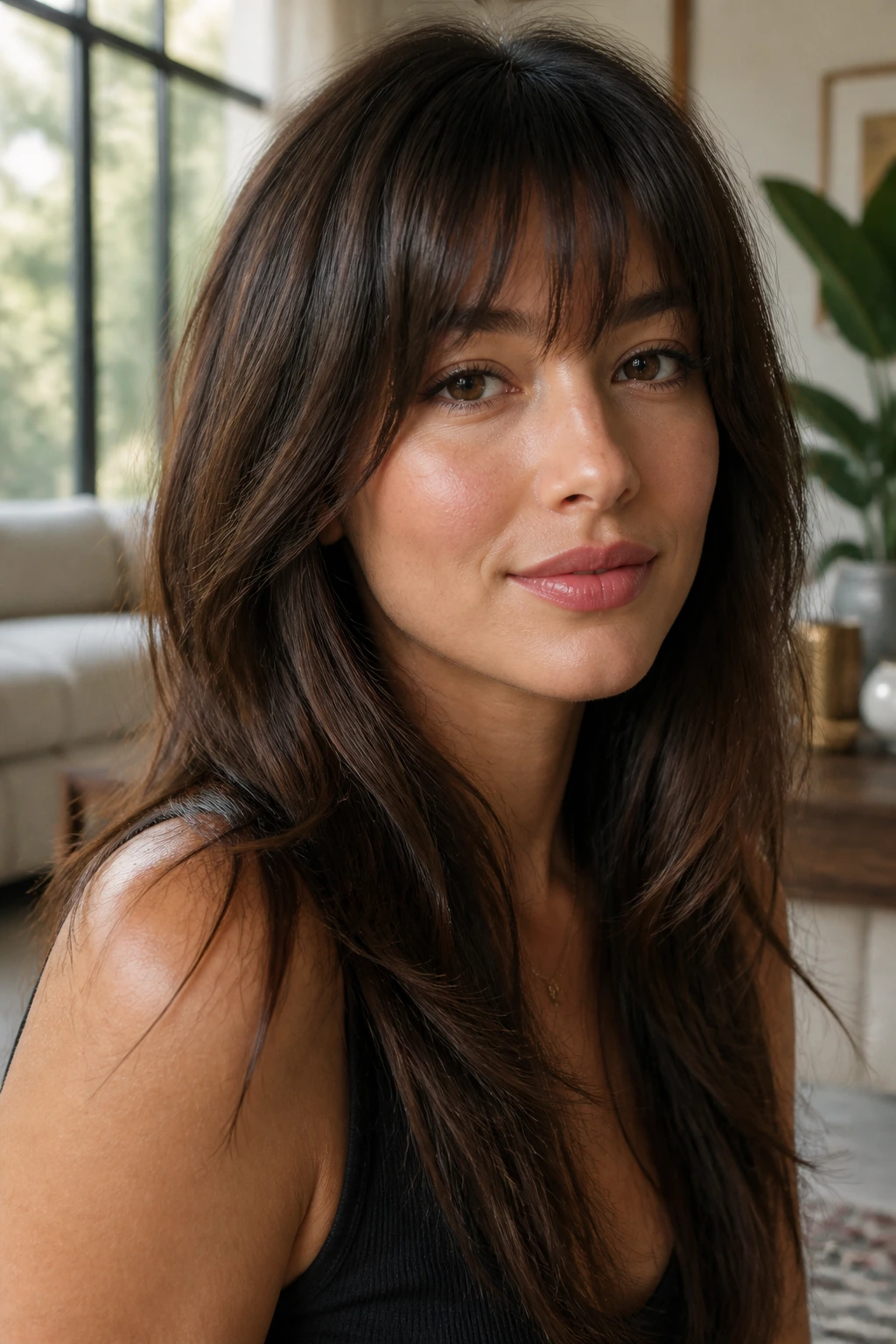
Feathering is the process of using razor-cutting techniques to create soft, tapered ends that blend into the face. For thick hair, this is essential. It prevents the hard line that makes thick hair look bulky. This fringe hits right at the brow, which is the “sweet spot” for most people. It frames the eyes beautifully without being distracting. Because the ends are feathered, the bangs feel light against the skin, which is a major comfort factor during warmer months when heavy hair can feel trapped against the forehead.
17. The Two-Tone Colored Fringe
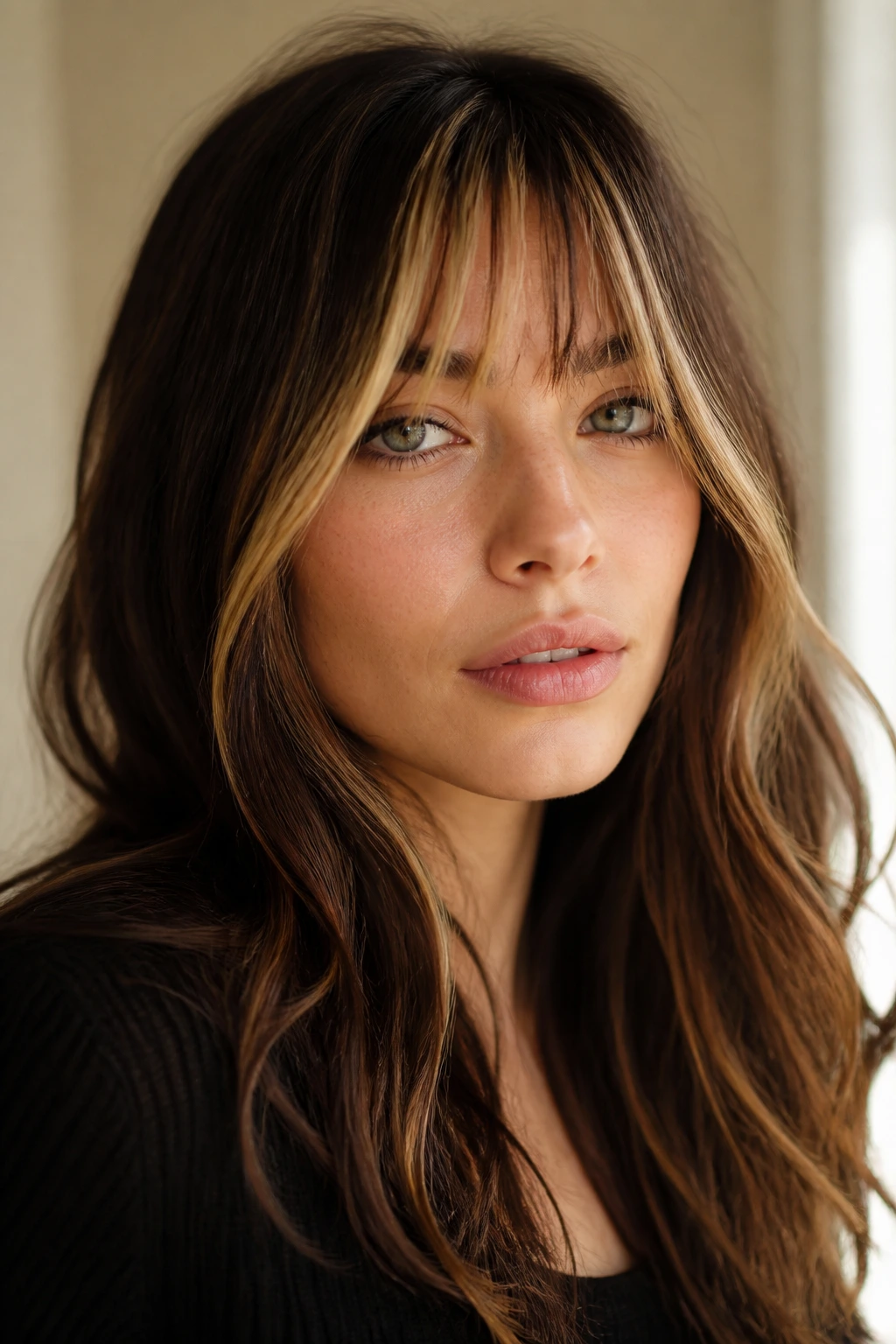
One way to break up the visual density of thick hair is through color, not just the cut. By keeping the bangs a slightly different shade—perhaps a lighter tone if your hair is dark—you create the illusion of lightness and texture. The contrast draws the eye and makes the fringe look less solid and dense. It’s a classic trick that works exceptionally well for thick hair because there is enough surface area for the color to really shine. Whether you go for a bold fashion color or just a subtle honey-toned highlight, it adds dimension that hides the bulk.
18. The Peek-a-Boo Bangs
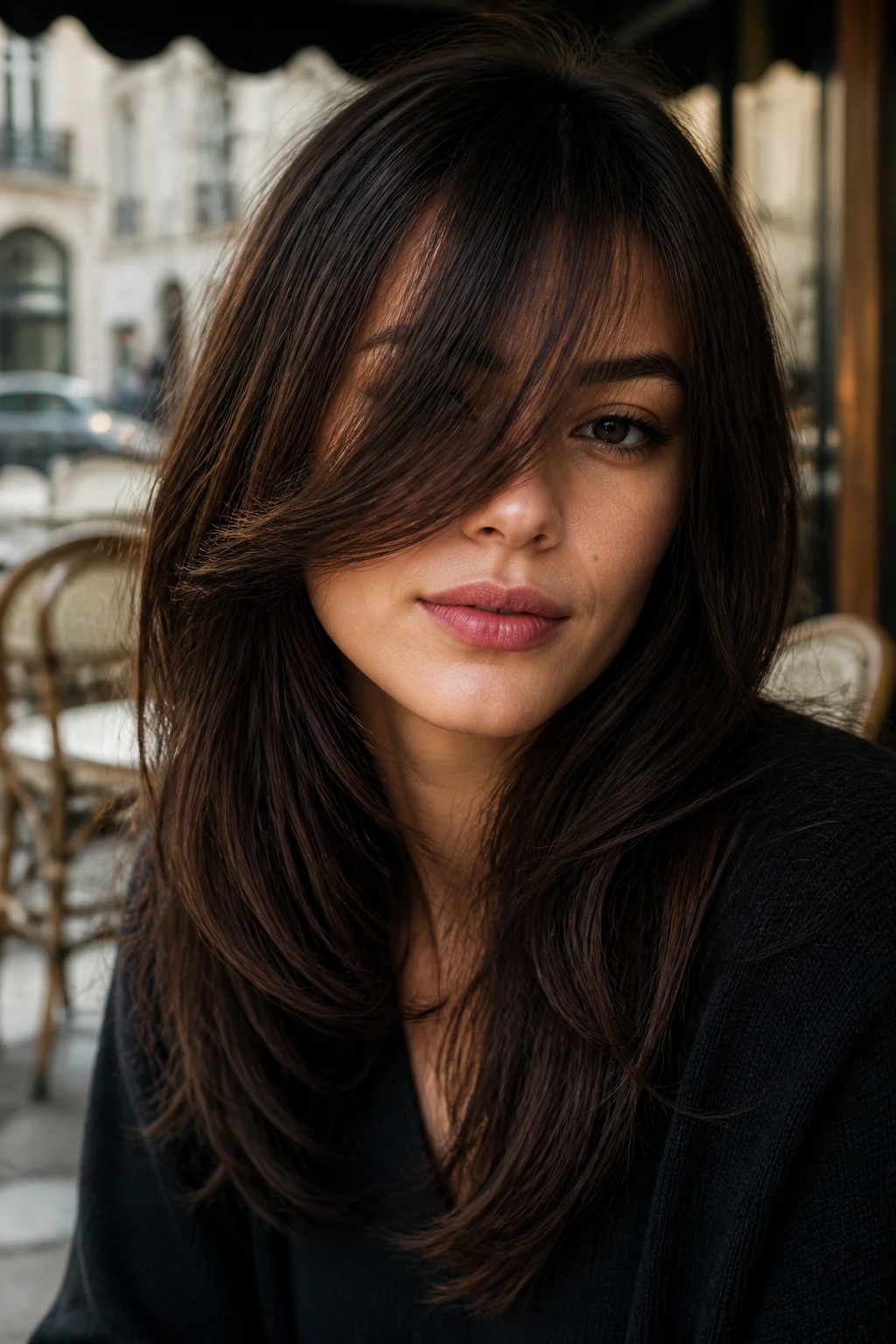
These are long, side-swept bangs that are essentially just a shorter layer in the front. They don’t cover the forehead entirely but instead sweep across the eye, creating a mysterious, effortless vibe. This is the safest bet for thick-haired people who are terrified of “bang regret.” If you don’t like them, they blend back into your layers in a matter of weeks. They require almost no styling—simply sweep them to the side while damp, and they will dry into place.
19. The Choppy “Pixie” Fringe
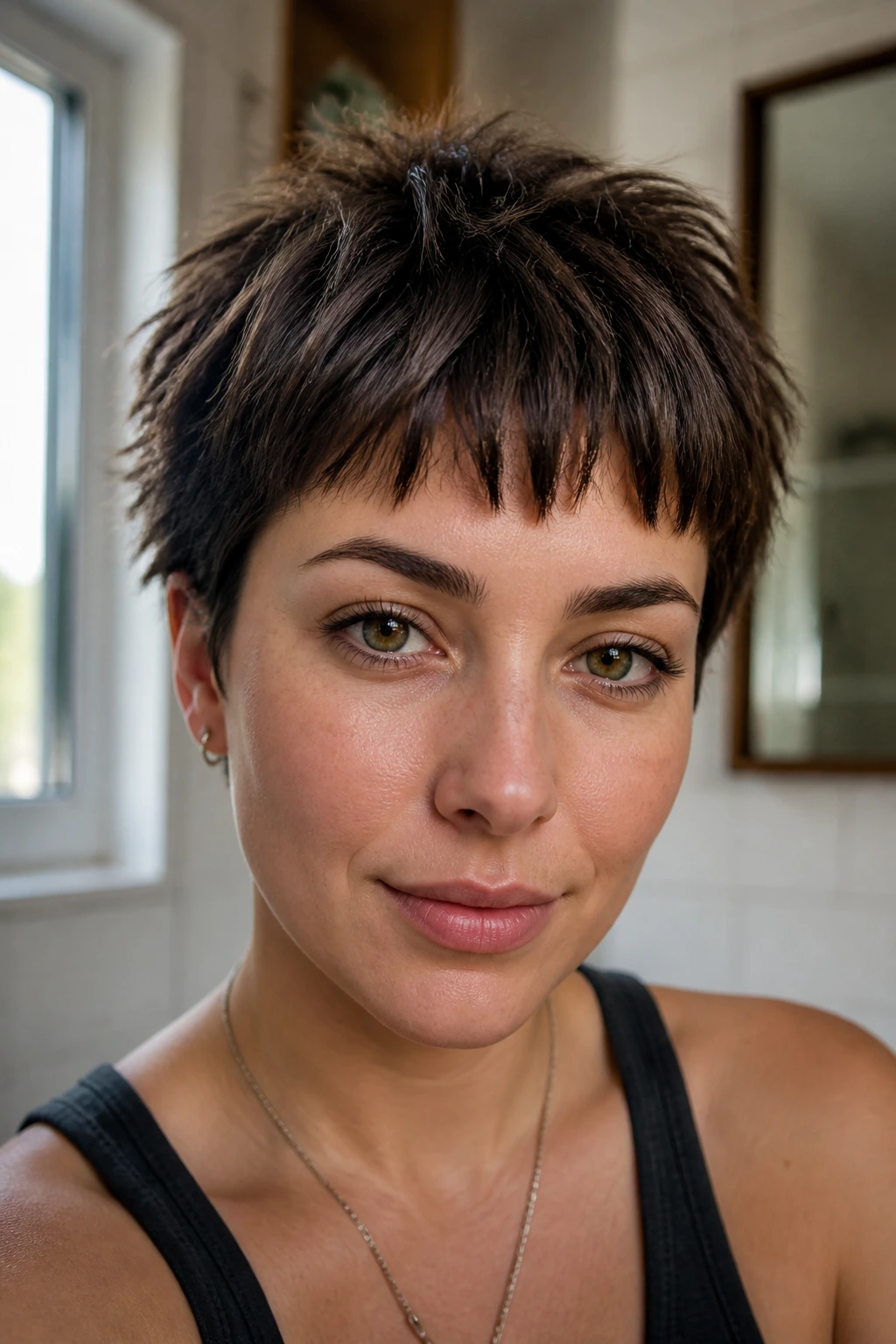
If you have a short haircut or a bob and thick hair, a choppy, short fringe is a fantastic choice. The choppiness is created by cutting the hair at varying lengths, which naturally removes bulk and creates texture. It prevents the “triangle” shape that thick hair often takes on when cut short. This style is youthful, energetic, and incredibly easy to manage. A quick dab of matte paste is all you need to separate the pieces and give it that edgy, textured look.
20. The Long-Fringe Layered Cut
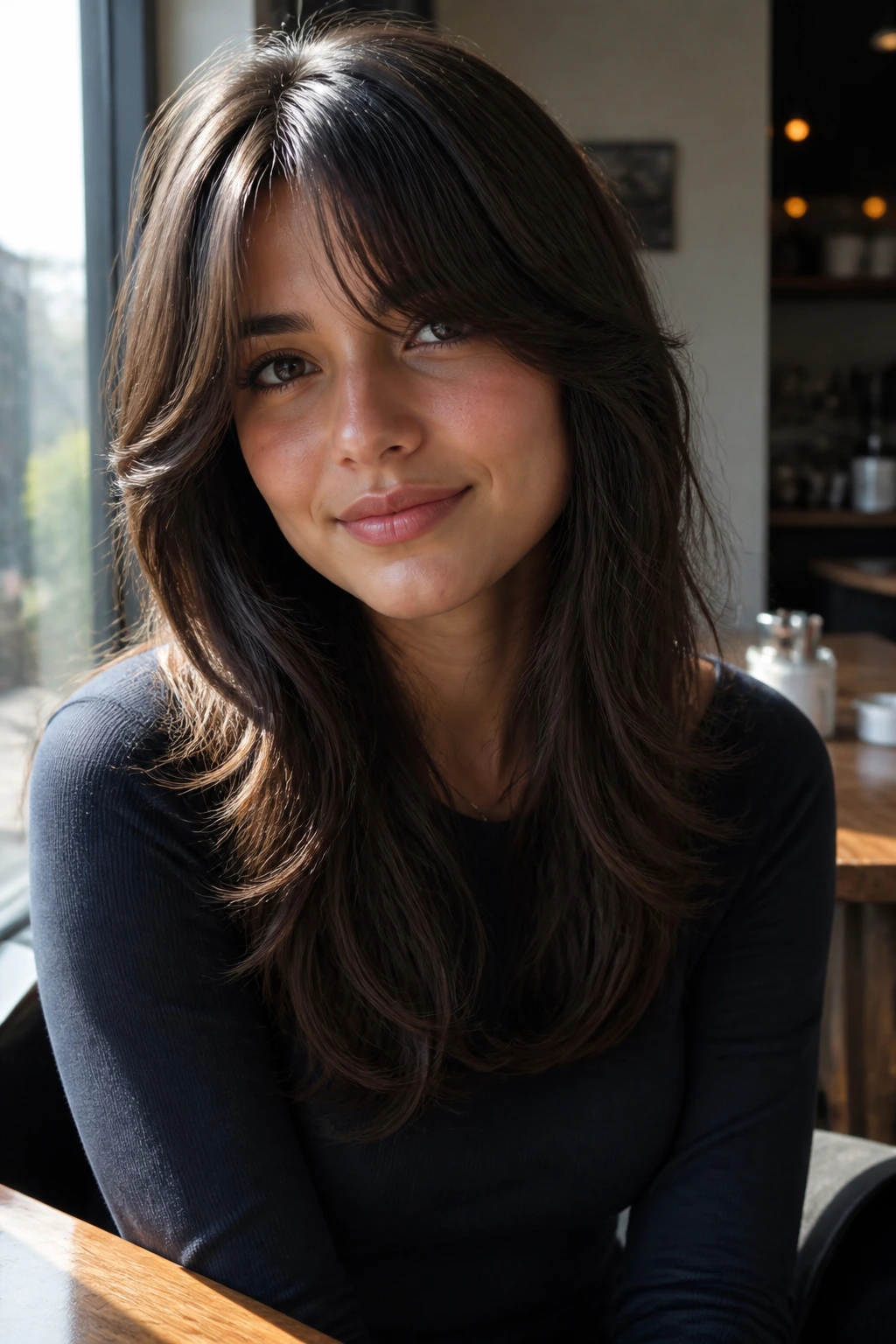
Sometimes, the best bangs are the ones that aren’t technically bangs at all. Instead of a traditional blunt cut, ask for face-framing layers that start at the bridge of the nose and get longer as they move toward the jaw. This effectively gives you a fringe effect—you have pieces of hair framing your face and hitting your brow—without the maintenance of a true bang. For thick hair, this is often the most flattering option because it integrates the density into the rest of the style, rather than isolating it on the forehead.
21. The Center-Parted “Curtain” Evolution
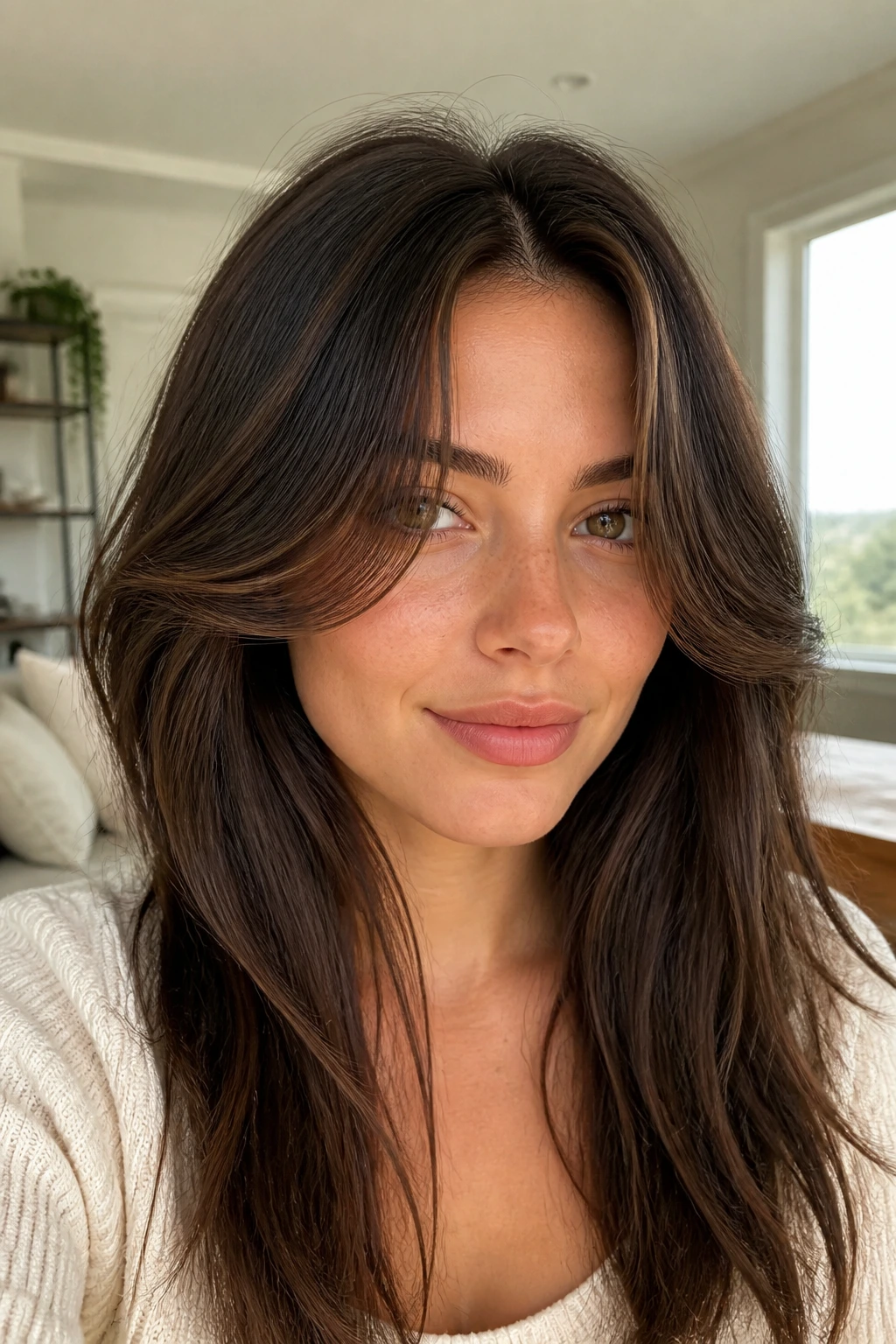
You have likely seen this all over social media. It is longer, usually hitting the cheekbones, and meant to be parted right down the middle. For thick hair, the trick is to get the hair to “flip” back, away from the face. You can achieve this with a large round brush and a blow-dryer. By directing the hair upward and outward while drying, you build volume at the roots, which lifts the heavy hair off your forehead. This prevents the “greasy” look that can sometimes happen when heavy, thick hair sits directly against the skin.
22. The Blunt Bob with Heavy Fringe
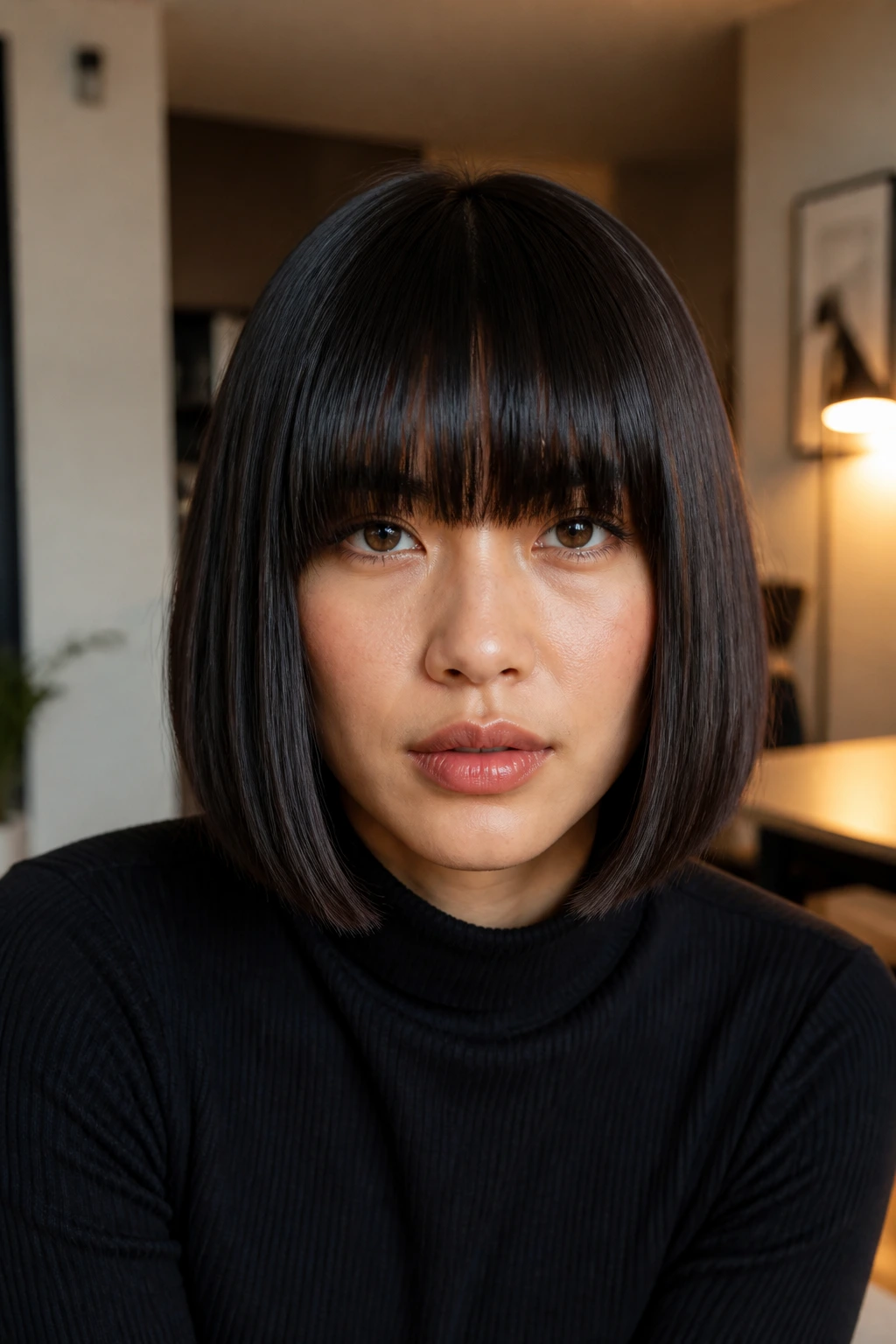
This is the “Anna Wintour” look, albeit modernized. A blunt bob paired with a blunt fringe is powerful, sleek, and high-maintenance—but undeniably chic. If you have the patience for it, this style highlights the beauty of thick hair because it embraces the density rather than fighting it. You will need a high-quality flat iron to keep the line sharp and a glossing serum to tame any natural frizz. It looks professional, tidy, and incredibly expensive.
23. The “Soft Taper” for Growing Out Bangs
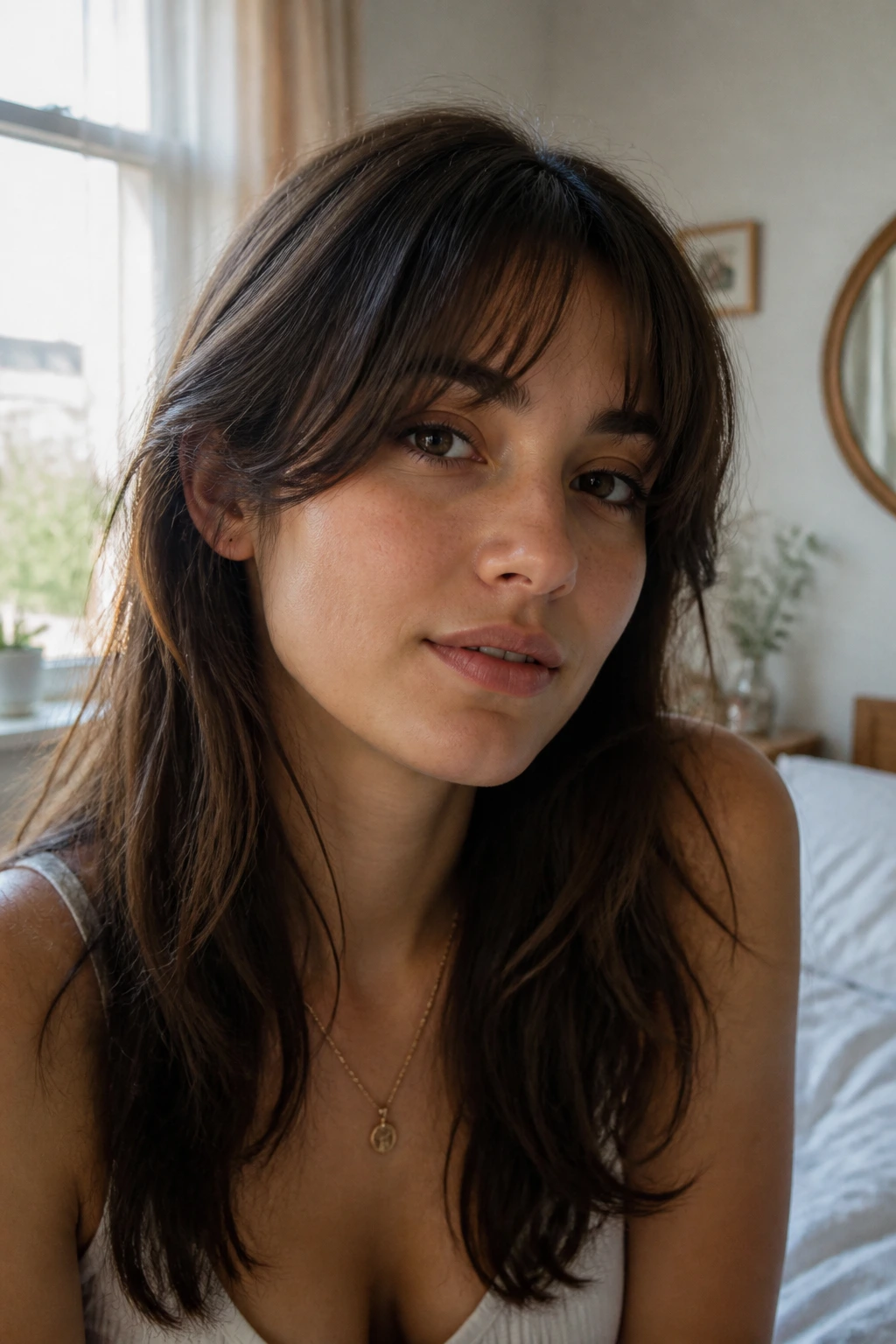
If you are currently in the process of growing out a fringe, the “soft taper” is your best friend. This involves trimming the sides of your fringe into a smooth, blended line that connects to your face-framing layers. It effectively turns your old bangs into a face-framing shape. It is a transitional style that actually looks like a haircut rather than an accident. It helps manage the density of thick hair by ensuring the “bang” area doesn’t look like a solid block of regrowth.
24. The Braided Bangs
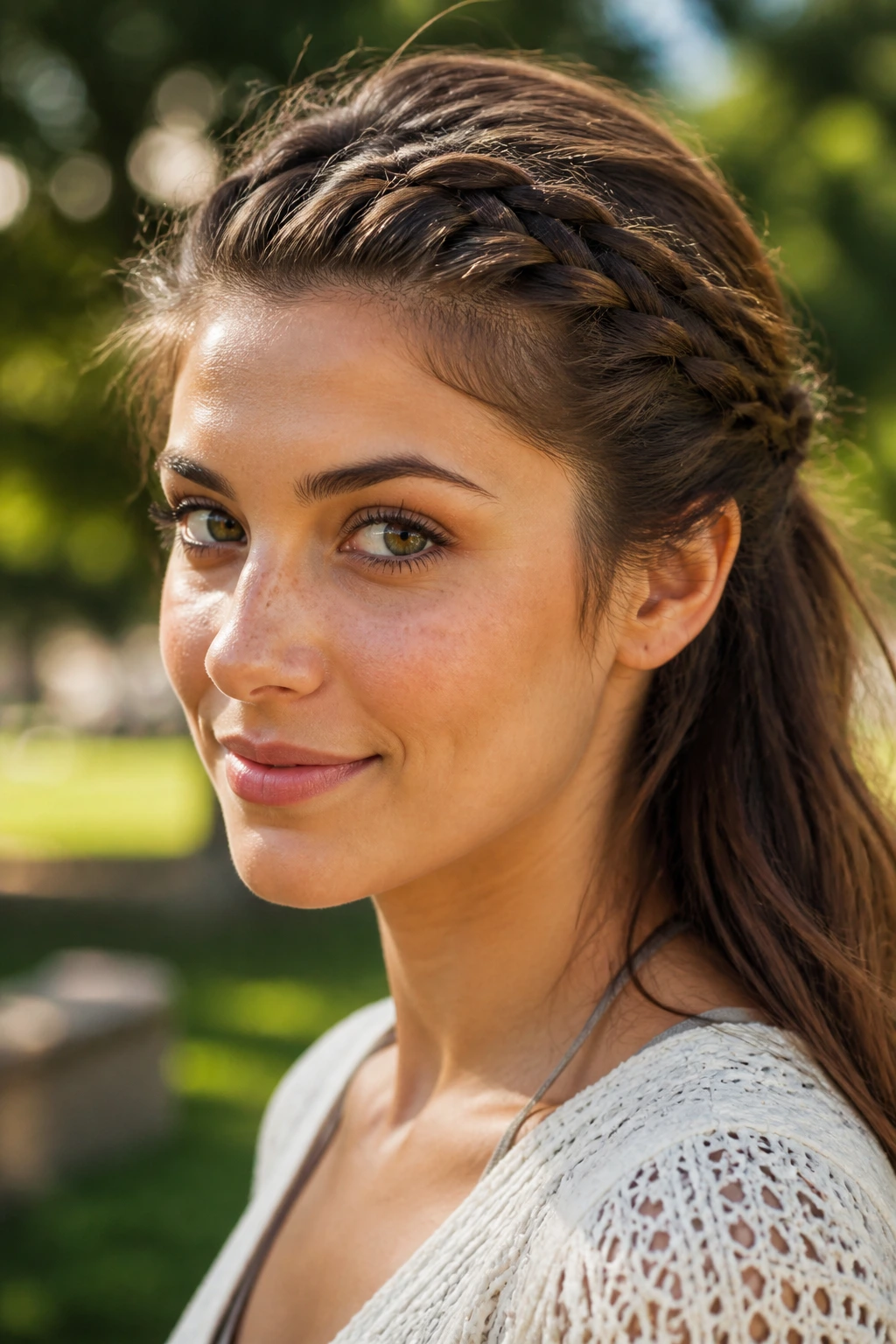
This isn’t a cut, but a styling technique for those days when you can’t be bothered to deal with your bangs. If you have a longer fringe or curtain bangs, you can braid them back into the rest of your hair. This is a life-saver for thick-haired individuals because it removes the hair from your forehead entirely, providing immediate relief if the bangs are feeling too heavy or hot. It’s a functional style that also looks polished and deliberate.
25. The Retro “Pin-Up” Fringe
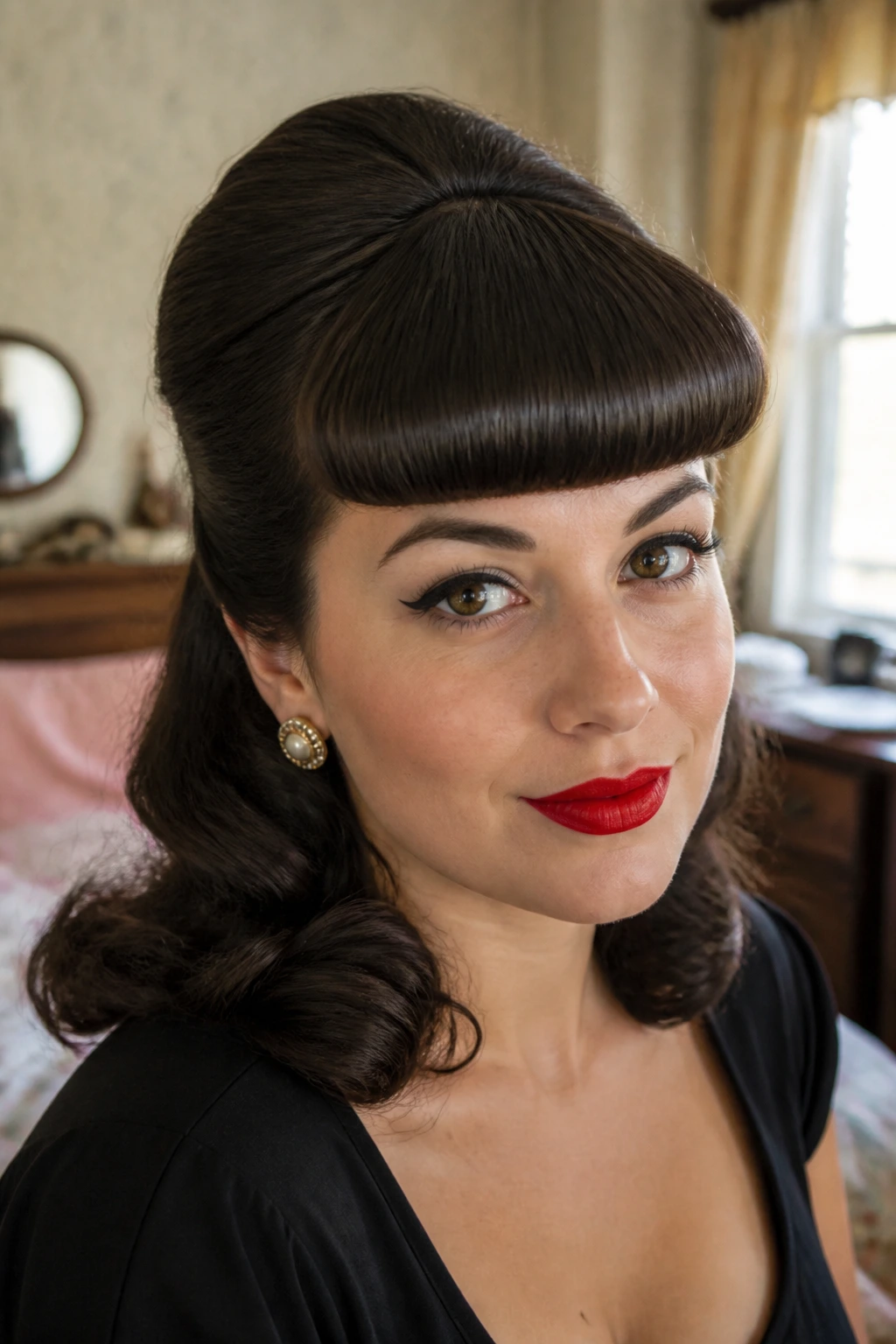
Think of the 1940s and 1950s. This look is usually curled under, creating a smooth, rounded shape that sits perfectly above the brows. For thick hair, this is excellent because the hair holds the shape of the roll exceptionally well. You will need a curling iron and some hairspray to set it, but once it’s set, it stays. The density of thick hair actually helps here, as it makes the roll look voluminous and substantial, rather than flimsy.
26. The “Invisible” Internal Bangs
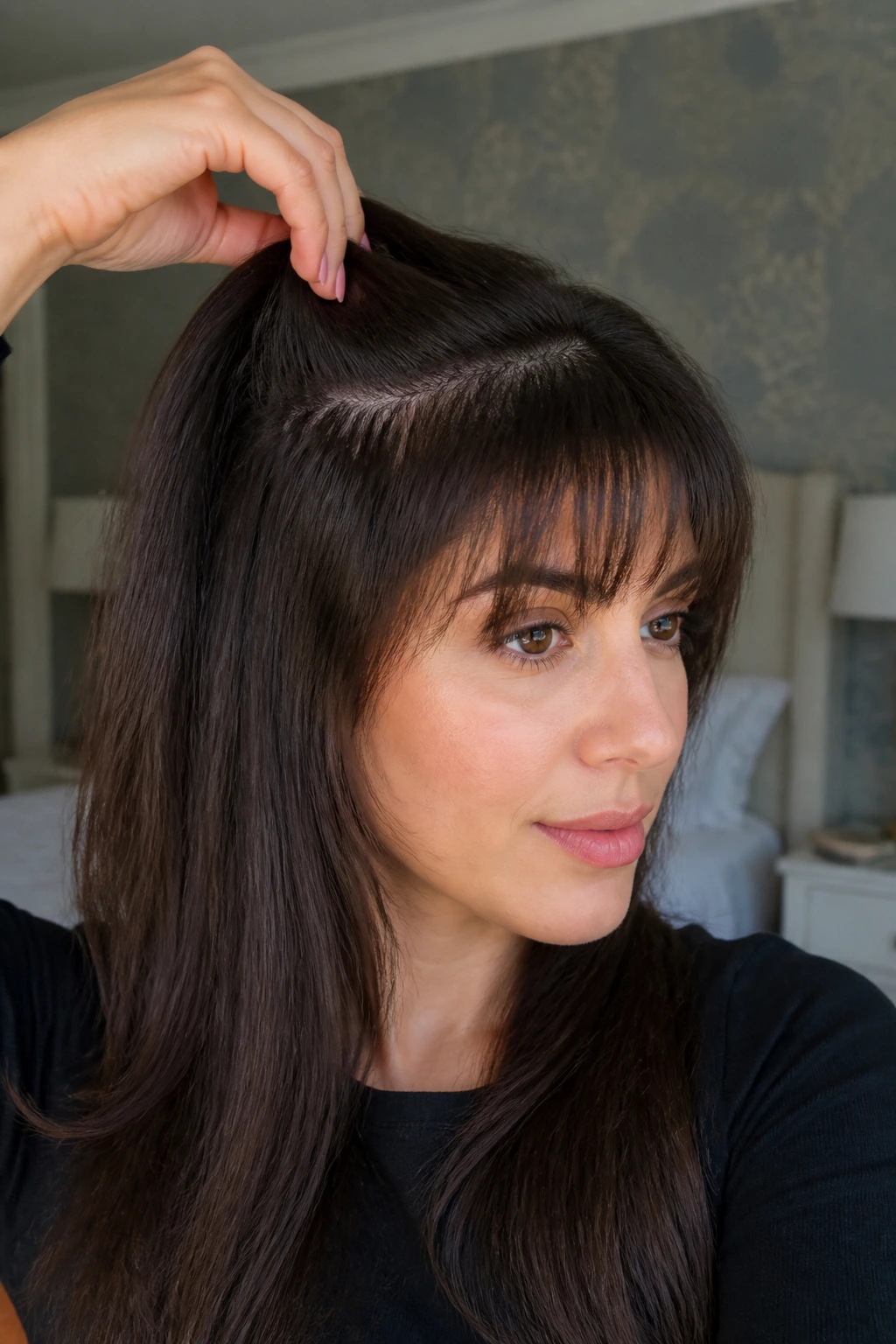
This is a technique rather than a specific aesthetic. If you have thick hair and want a side-swept look, ask your stylist to use “internal thinning.” This involves lifting the top section of the hair and thinning out the hair underneath that layer. When the top layer falls back down, it looks just as thick and full as before, but the overall weight is significantly reduced. This allows you to have a fringe that sits flat against your forehead without looking like a helmet.
27. The Blunt Fringe with “See-Through” Ends
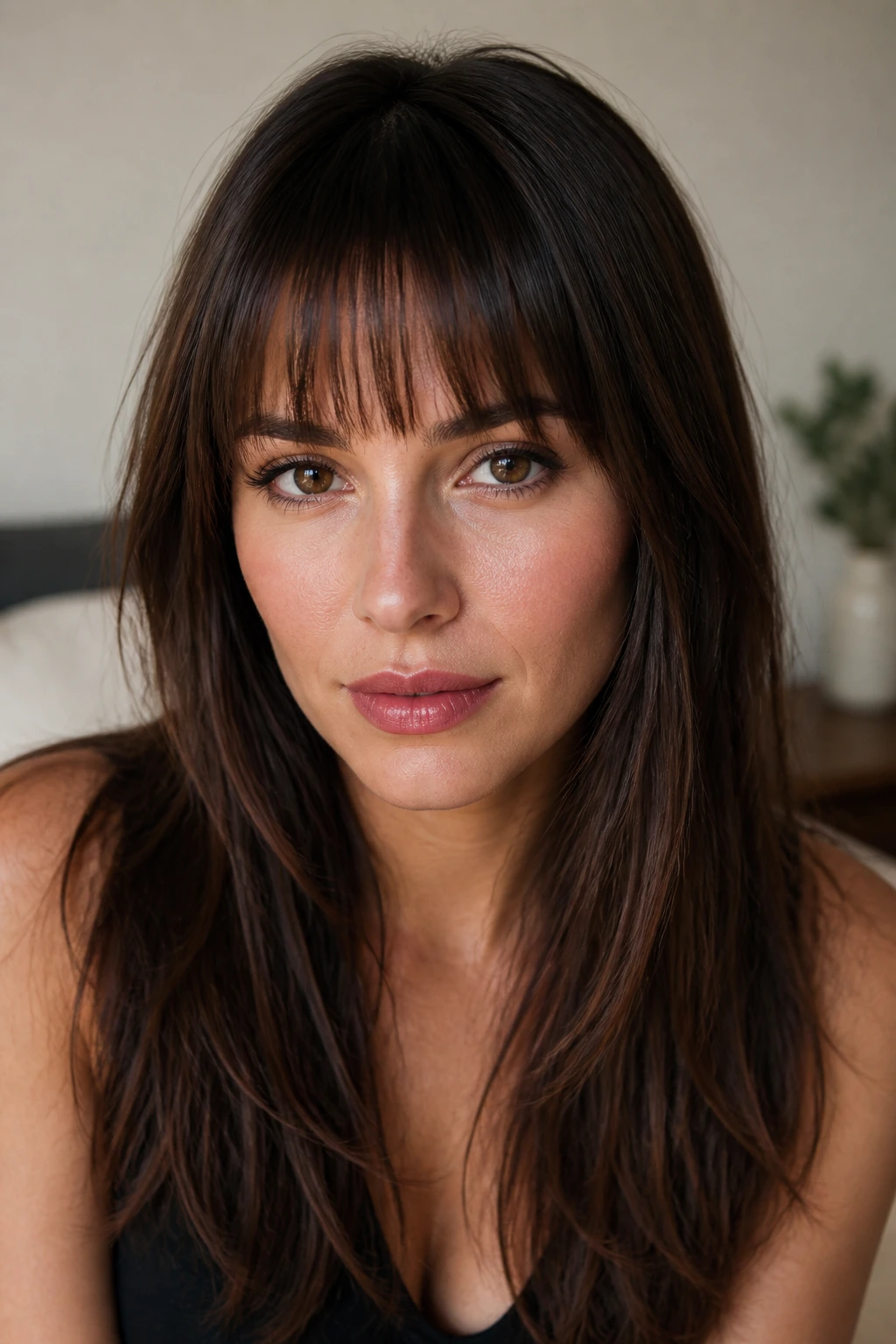
This is the best of both worlds. You get the drama of a blunt, straight-across fringe, but the ends are cut into “points” or “teeth.” This prevents the ends from clumping together and looking oily. It is a fantastic option for thick, dark hair, where blunt ends can sometimes look harsh. The point-cutting softens the perimeter, making the look feel more organic and less like a rigid line drawn across your forehead.
28. The Messy “Bedhead” Fringe
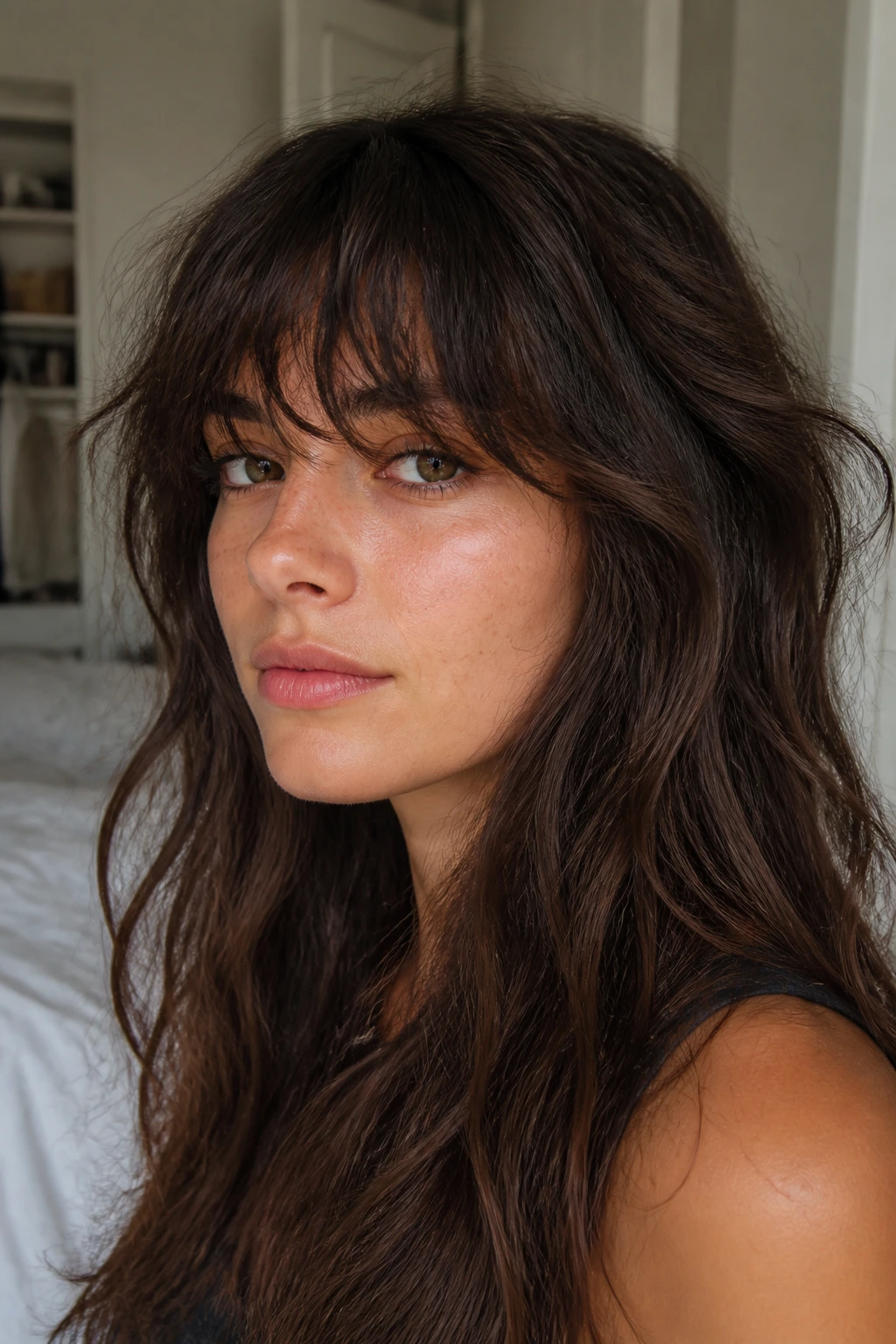
This look is achieved by not trying too hard. If you have thick, wavy hair, let it air dry with a little bit of texturizing spray. The bangs will dry in whatever direction they want, creating a wild, textured appearance. It’s inherently cool and embraces the natural thickness of your hair. The key is to keep the bangs slightly longer so they don’t jump up too high when they dry.
29. The Voluminous “80s” Fringe
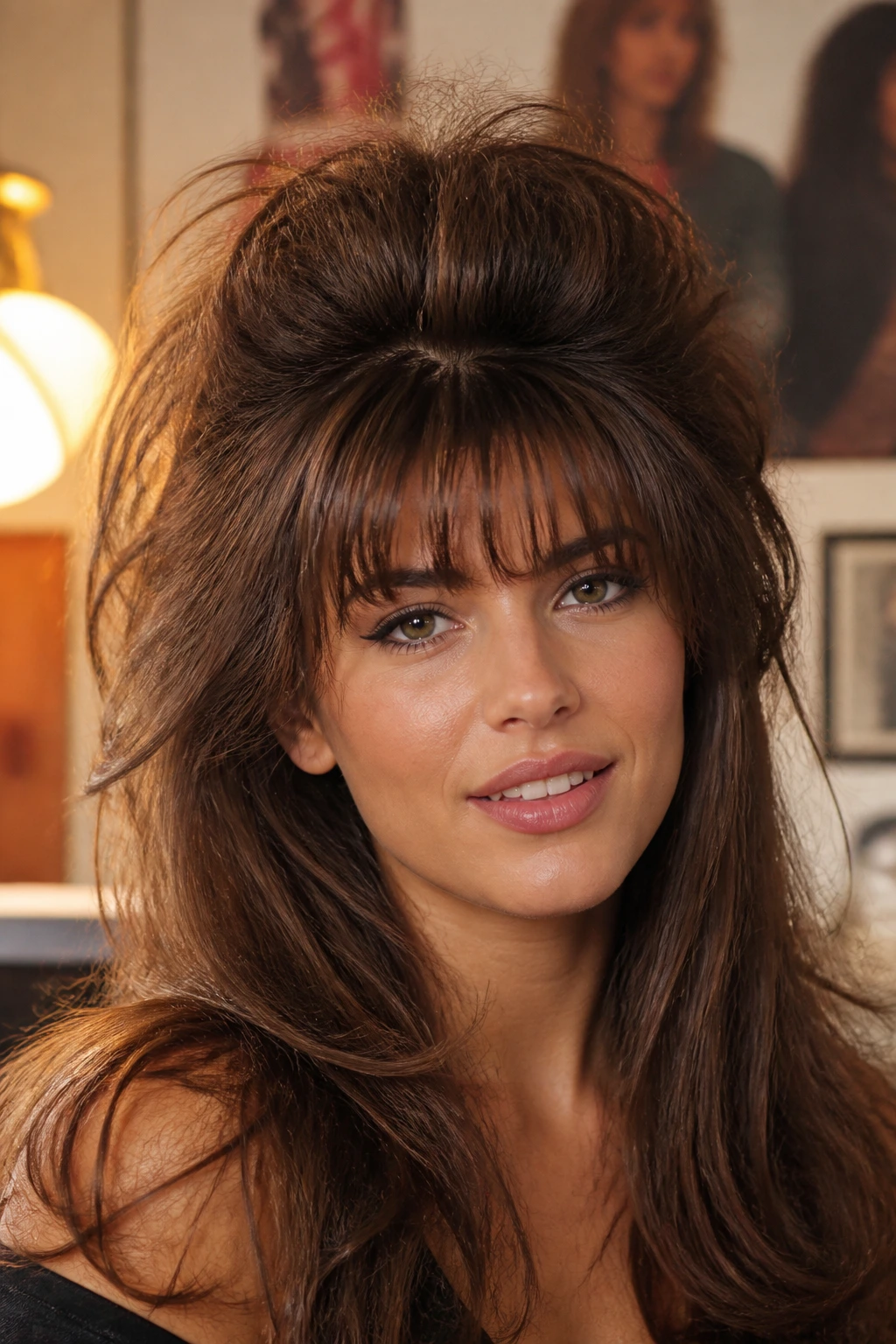
With the resurgence of 80s-inspired volume, big, teased hair is back. If you have thick hair, you are already halfway there. This fringe is all about height. You use a round brush to blow-dry the bangs with significant lift at the roots, then use a tiny bit of hairspray to lock it in. It creates a bold, larger-than-life silhouette. This style is perfect if you have a rounder face and want to elongate your features by adding height at the top.
30. The “Pinned-Back” Bangs
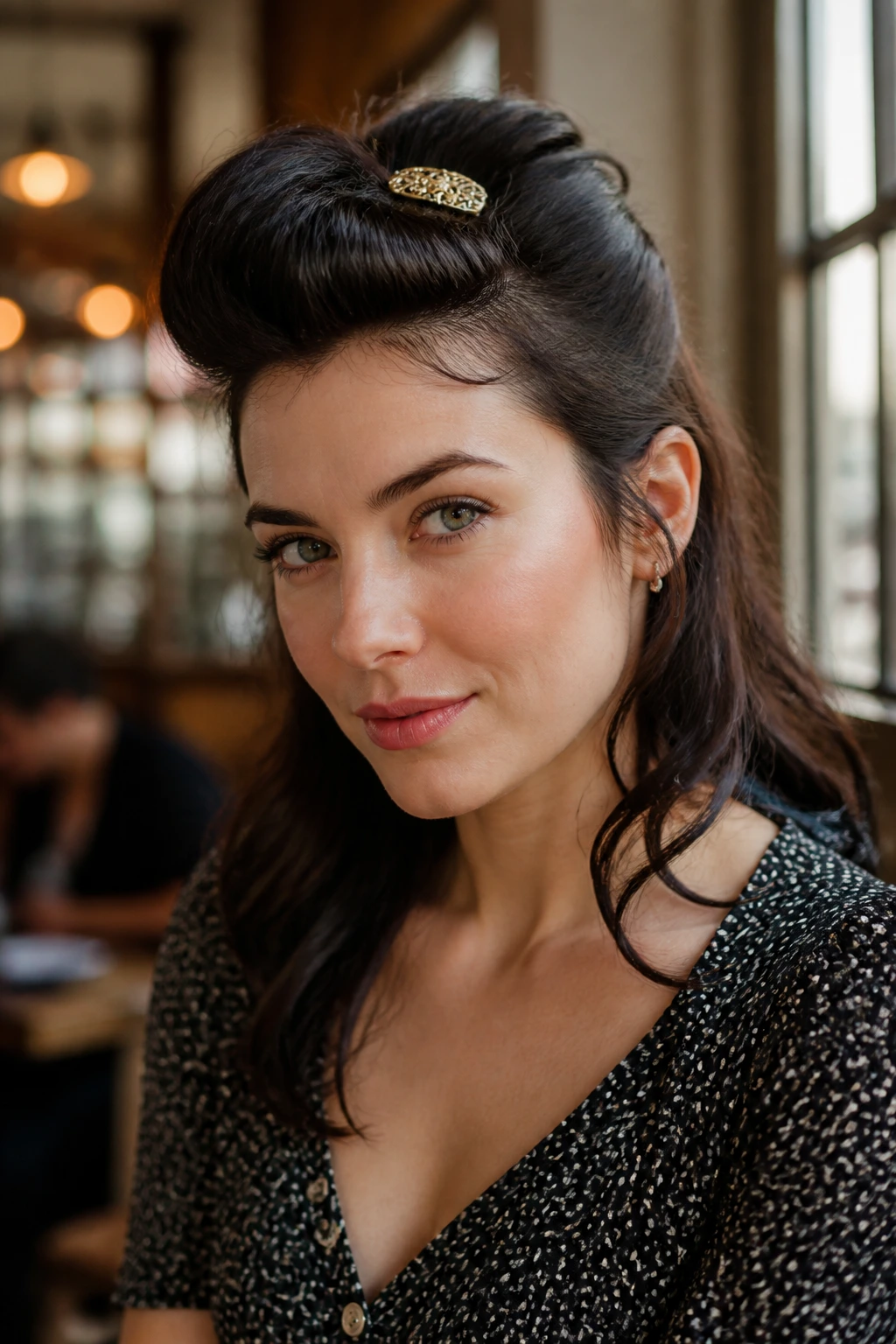
Sometimes the best way to wear bangs is to style them up. Using a decorative barrette or a simple bobby pin, you can pin your bangs back with a slight twist or volume. This creates a pompadour effect at the front, which is classic and elegant. For thick hair, this works well because you have enough volume to make the pompadour look full and intentional, rather than flat and limp.
31. The Textured Lob with Long Fringe
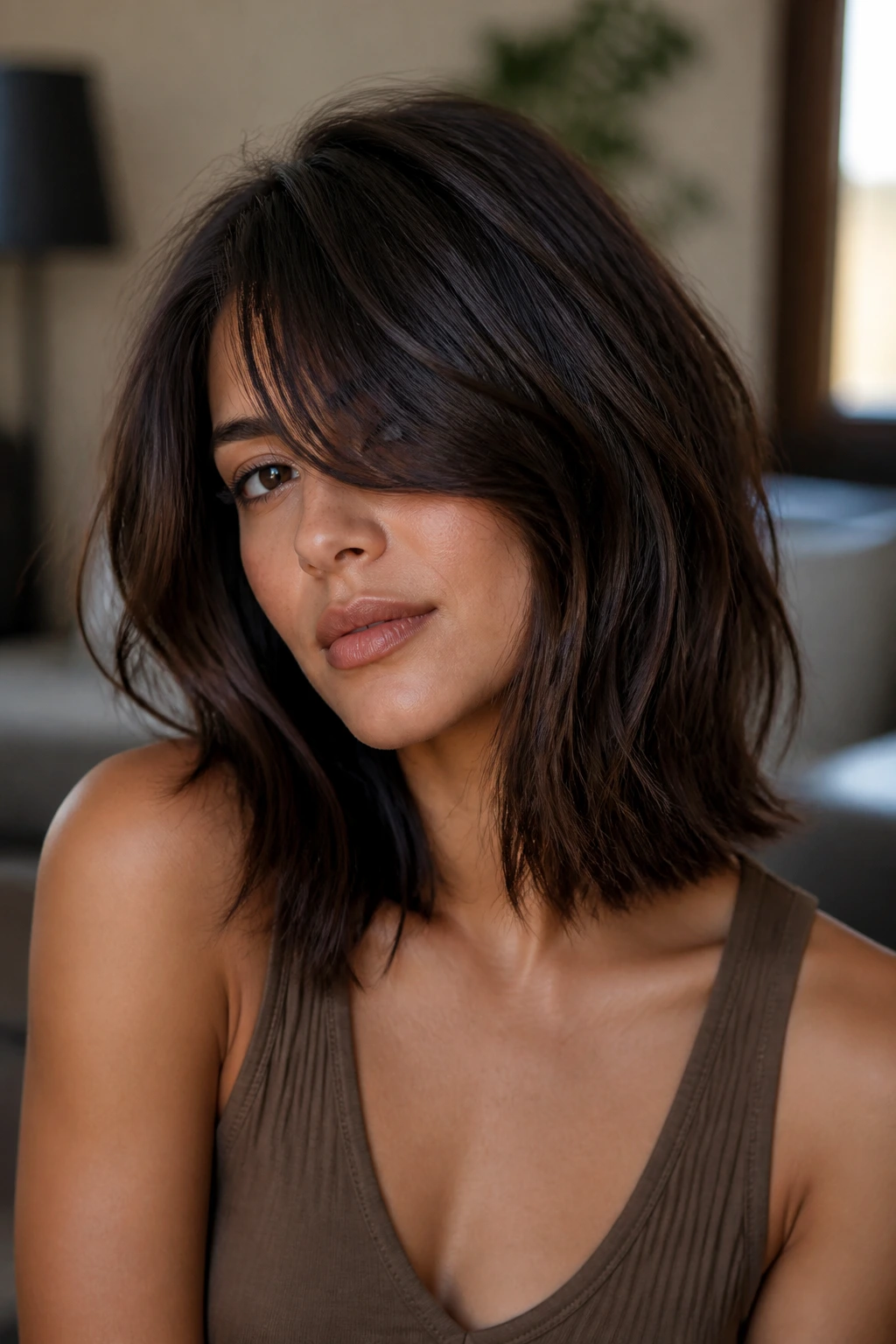
A long bob (lob) is the most popular haircut for a reason. Adding a long, sweeping fringe to a lob creates a cohesive, face-framing shape. For thick hair, the lob helps take the weight off the length, while the long fringe adds interest to the front. You can wear this straight, wavy, or curled. It is a versatile, low-risk style that frames the face without requiring the high-maintenance upkeep of a short, blunt fringe.
32. The “Curtain” Bob
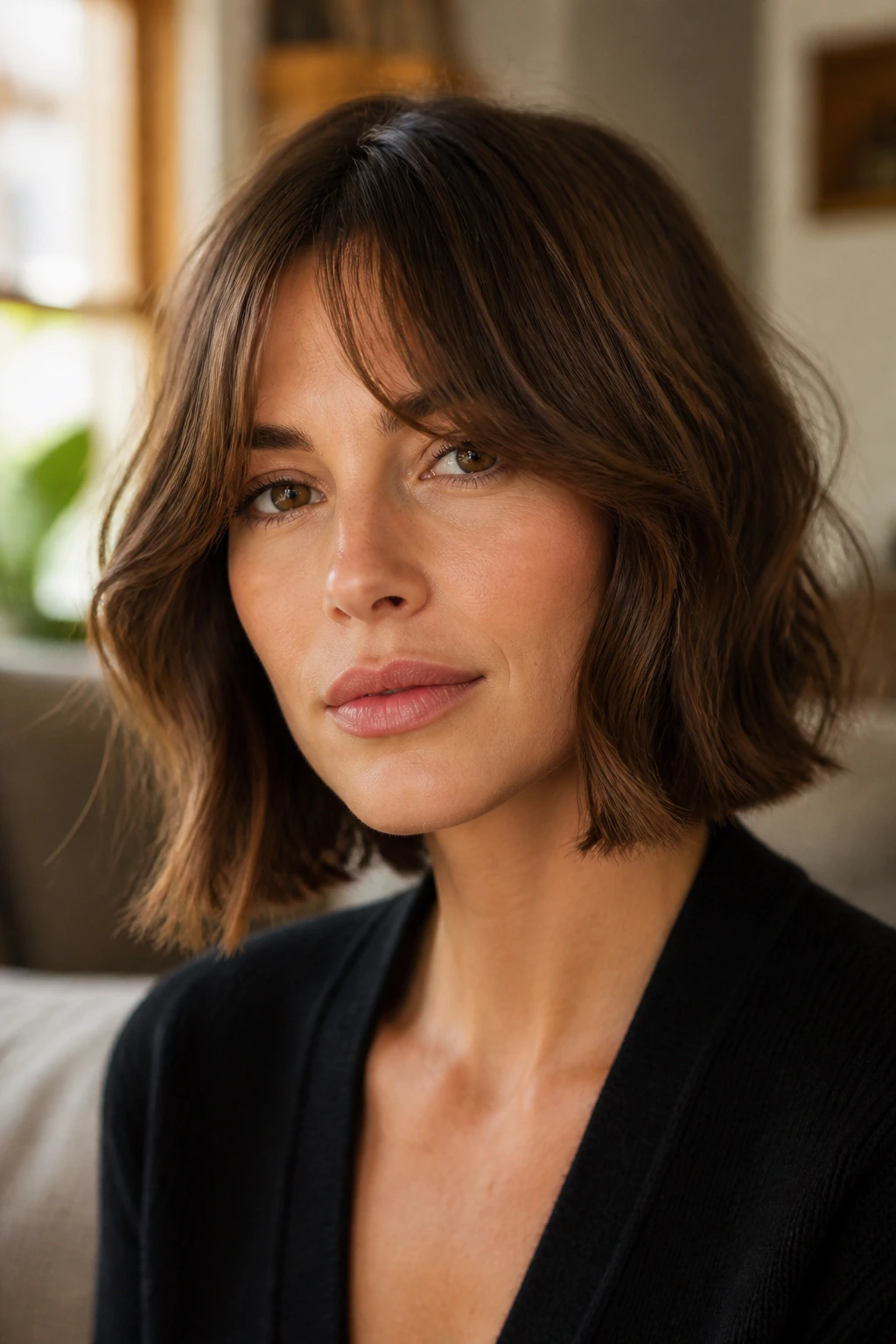
Take a blunt bob and add a curtain fringe that blends into the length. This creates a very rounded, soft aesthetic. It is perfect if you have a strong jawline you want to soften. The thick hair provides the “bounce” this cut needs to look its best. When styling, focus on creating volume at the mid-lengths, which helps pull the attention away from the forehead and toward the cheekbones.
33. The Wispy-Side Fringe for Glasses Wearers

If you wear glasses, you know the struggle: bangs often hit the frames, creating a weird, clumpy look. The solution is a wispy side fringe that is cut to sweep away from the frames. By tapering the ends so they don’t touch the glasses, you avoid the smudge-mark issue and the frustration of constantly pushing your hair out of your eyes. For thick hair, this keeps the density away from the frames entirely, preventing the “too much hair” look that often happens when bangs and glasses collide.
34. The “Baby” Bangs with Pixie
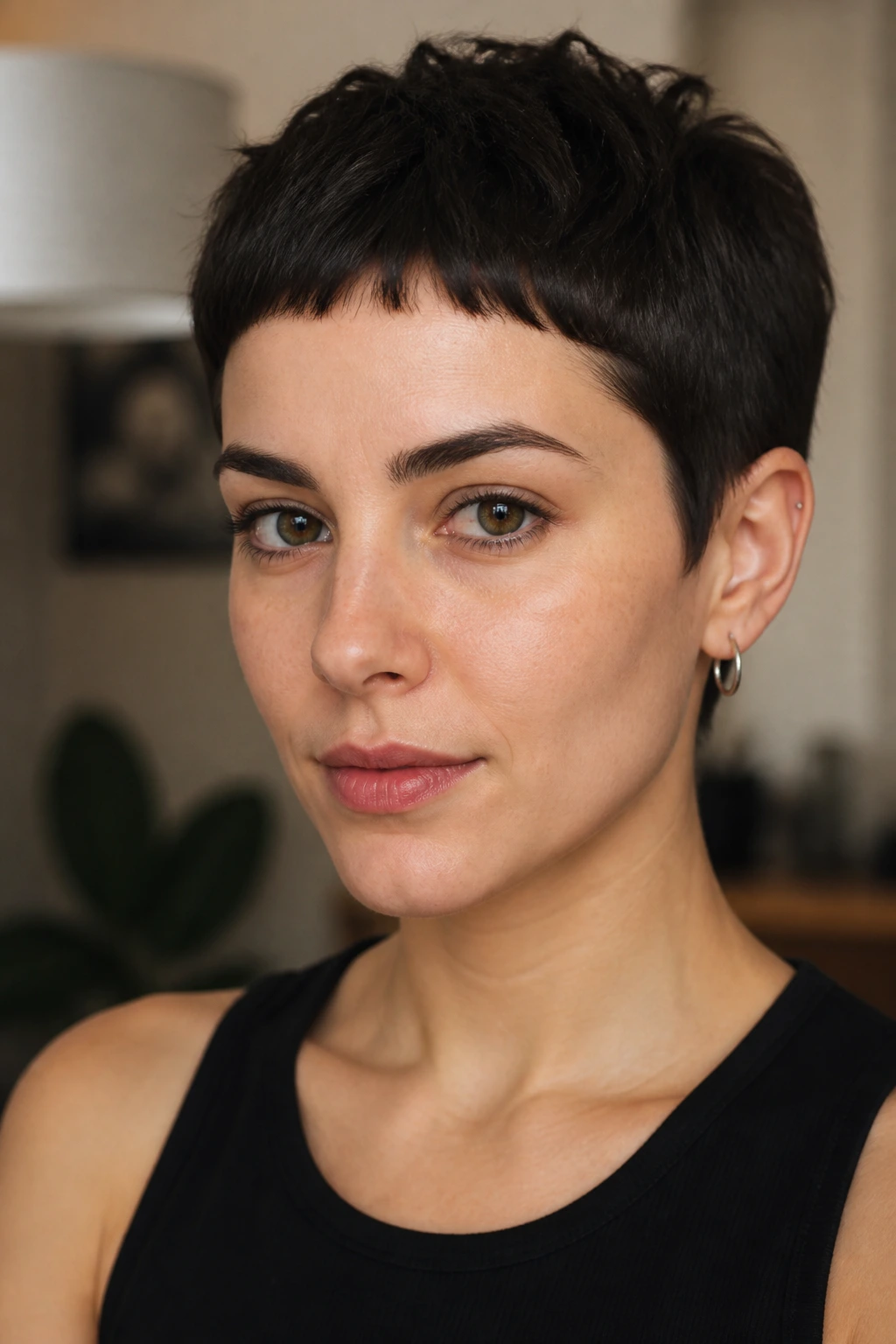
If you are brave enough to go for a pixie cut, pair it with baby bangs. Because the hair is already short, the bangs don’t have to be long to balance out the style. This is exceptionally easy to style on thick hair; a little bit of pomade works through the bangs in seconds, and you are done. It is a chic, modern, and very low-maintenance look that highlights your facial features.
35. The Sleek Straight Fringe
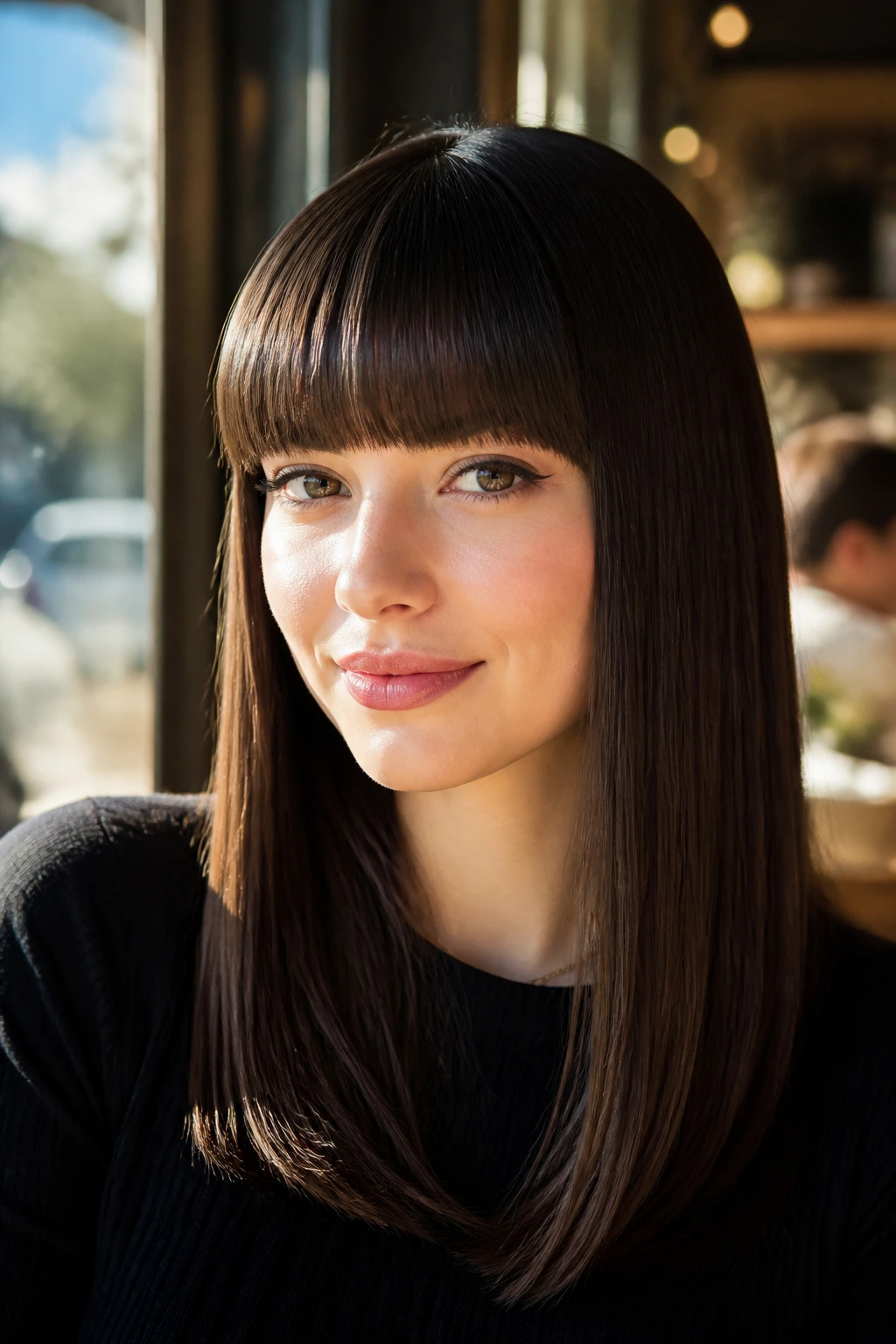
This is for the person with naturally straight, thick hair. If your hair is poker-straight, you can rock a blunt, heavy, straight-across fringe. It looks graphic and deliberate. The key here is shine. Because thick, straight hair is a great canvas, focus on using a high-quality flat iron and a shine spray to ensure the hair looks glassy. This style is minimalist and high-impact.
36. The Textured Shag with Center Part
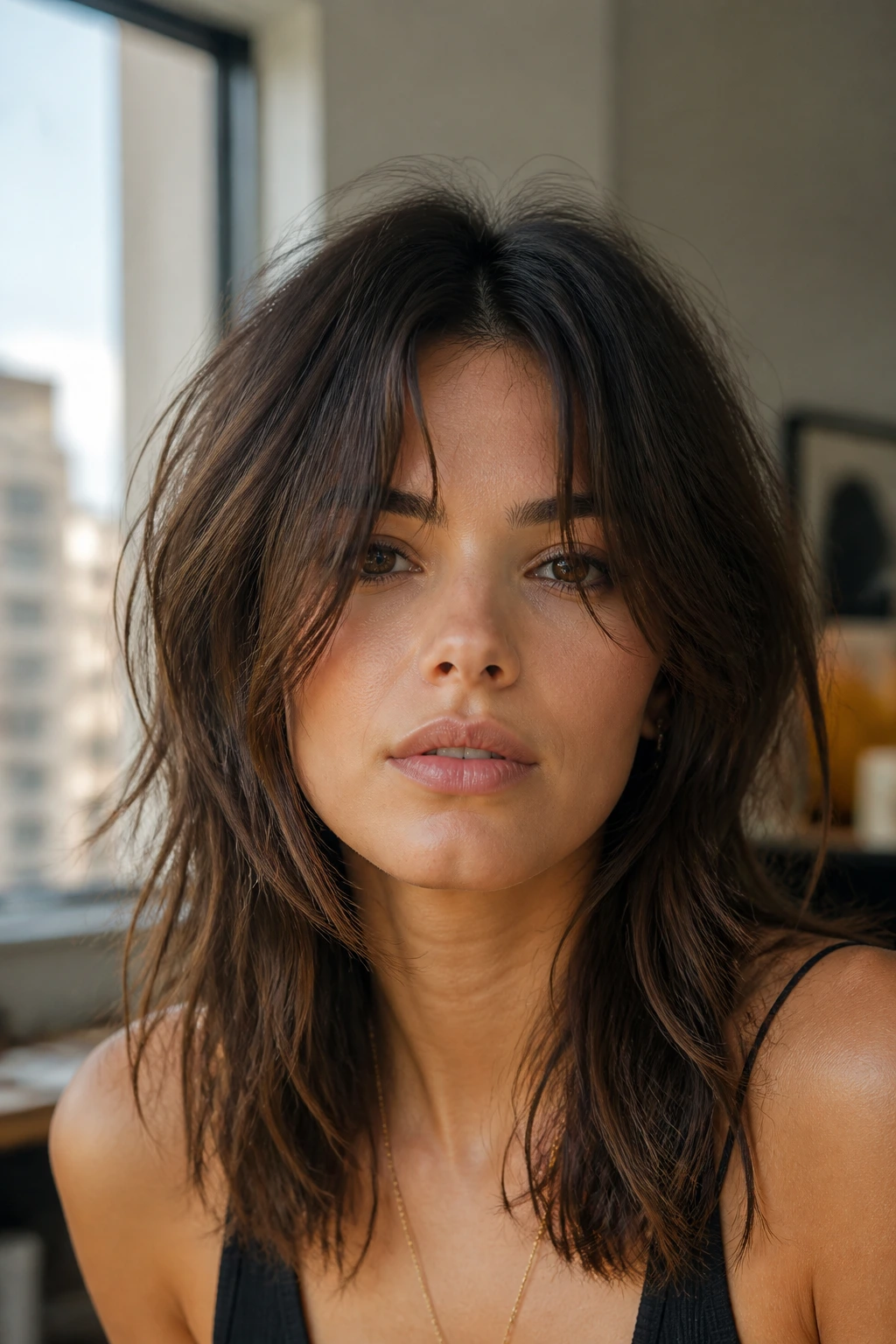
A center-parted shag is effortless. The bangs are long, piece-y, and blend into the shag layers. This is perhaps the easiest style for thick-haired people because it doesn’t require a perfectly straight line or a specific “bang” shape. You just cut layers into the front, let them fall, and they naturally frame the face. It is a style that thrives on the “lived-in” aesthetic.
37. The “Deep-Side” Part
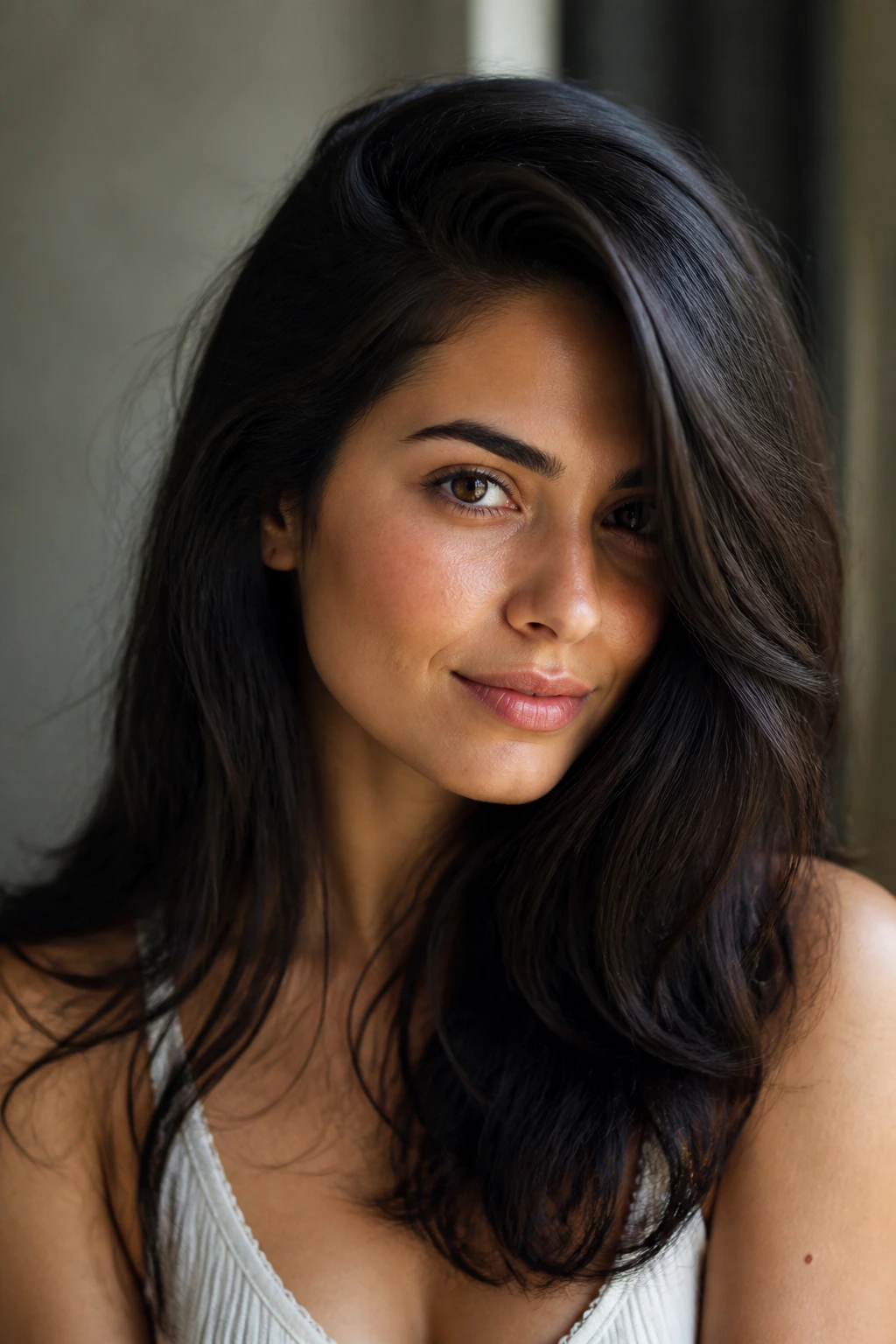
Sometimes you don’t need a cut—you just need a change of part. If you have thick hair, a deep side part creates the illusion of a sweeping bang. By flipping a large section of hair over from one side to the other, you create a heavy, dramatic fringe. You can use a curling iron to give that section a bit of a swooping shape. It is a no-cut, zero-risk way to test-drive the look of bangs before committing to the scissors.
38. The Faux-Bang Updo
Want to try bangs for a special event without the commitment? You can fake it. Pull your hair up into a high bun, and leave the ends of your hair out in the front, draping them over your forehead to mimic the look of a fringe. Use a curling iron to shape them and pin them into place. It’s a fun way to experiment with the silhouette. This works especially well on thick hair because you have plenty of length and volume to create a convincing “fringe” without it looking thin.
39. The Tapered “Wolf Cut” Bangs
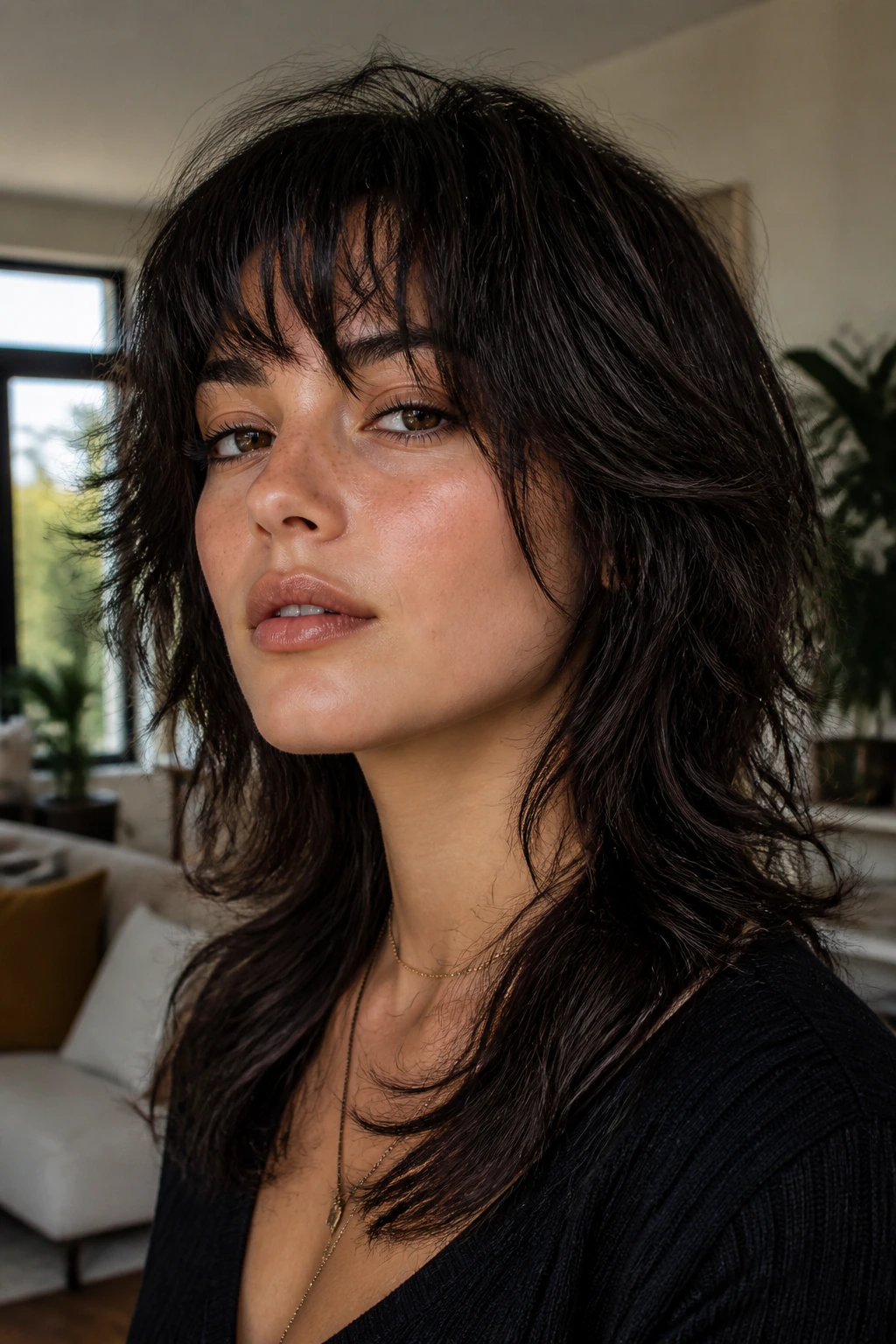
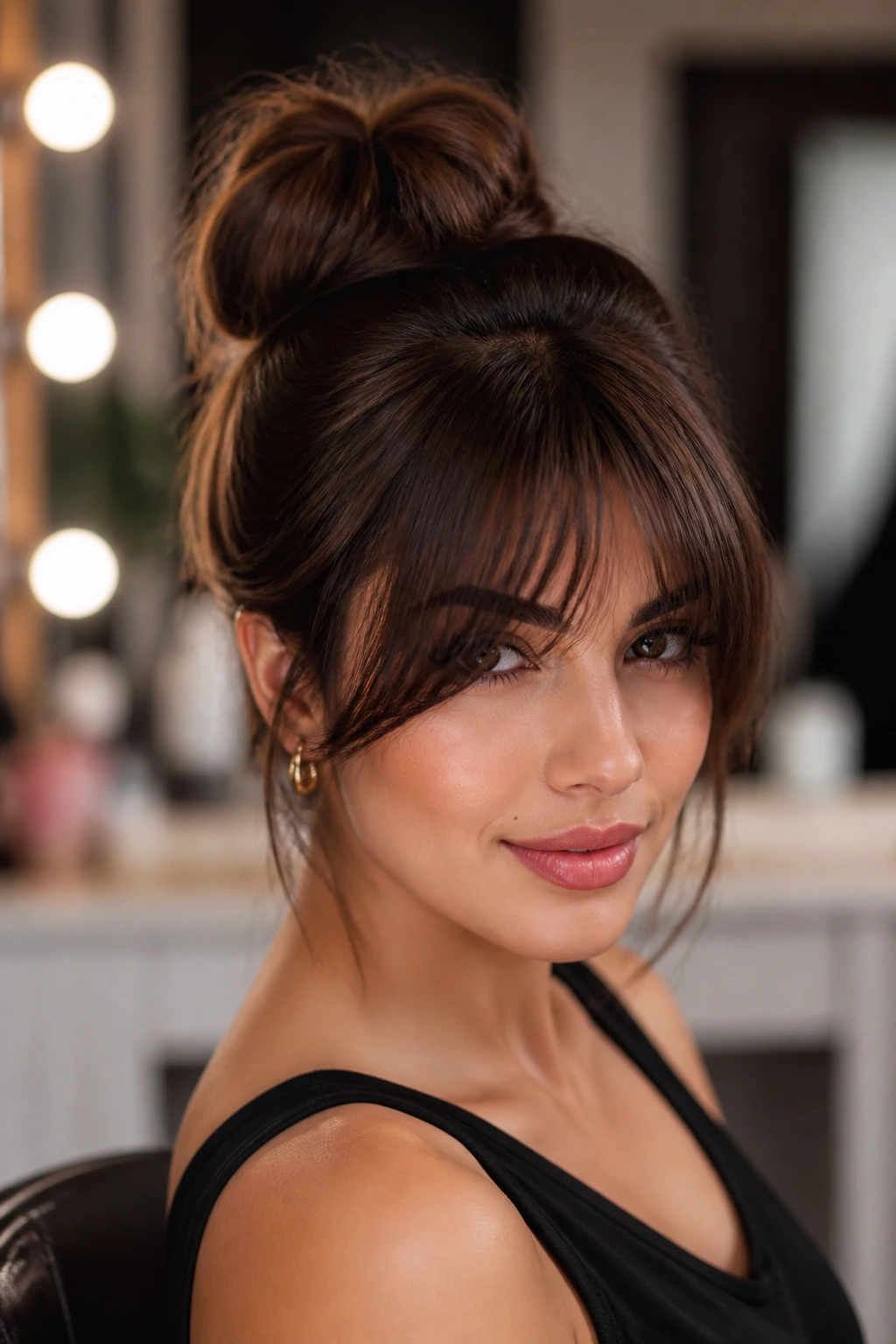
The wolf cut is essentially a shaggy mullet, and it includes a very specific type of fringe: short, choppy, and heavily layered. This is a dream for thick hair because it relies on bulk removal. The bangs in a wolf cut are designed to be wispy and messy. They provide a lot of texture around the eyes and temples. If you want a style that is unapologetically trendy and embraces the natural thickness of your hair, this is it.
40. The Blunt-Bob Fringe with Color-Blocking
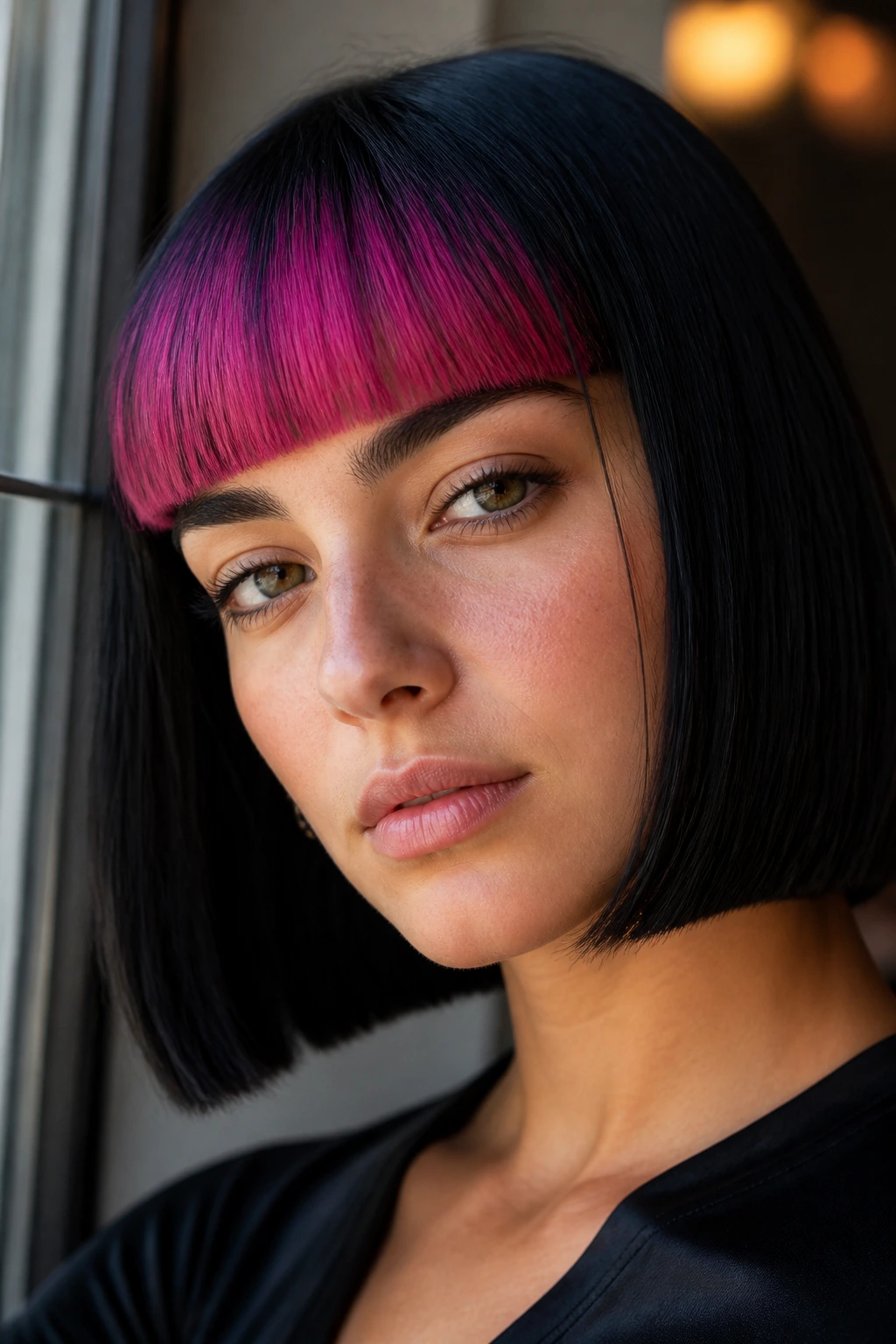
Take your blunt bob and blunt fringe, and add a pop of color only to the fringe. This is a very creative way to style thick hair. By color-blocking the bangs, you draw all the attention to the eyes and away from the density of the hair itself. It is a bold, artistic choice that requires some upkeep, but the visual result is striking.
Final Thoughts
When you have thick hair, the idea of getting bangs often feels like you are inviting trouble. But the “trouble”—the weight, the puffiness, the maintenance—usually stems from not adapting the haircut to your specific hair type. You are not destined to have a mushroom on your head.
The most successful bang styles for thick hair are those that embrace texture, layering, and precision cutting. Don’t be afraid to ask for thinning. Don’t be afraid to go for a style that feels lighter and less “done.” Sometimes the best fringe is the one that looks like you just woke up with it—effortless, airy, and framing your face in a way that feels completely natural to your style.
