



Short haircuts with wavy curtain bangs solve a problem that annoys a lot of people: you want movement around the face, but you do not want to spend half your morning fighting your own texture. The right cut lets the wave do half the styling for you.
That matters more than it sounds. Curtain bangs are not one fixed look; they’re a placement choice, a weight choice, and a length choice all at once. On short hair, they can skim the cheekbones, split softly at the bridge of the nose, or land right at the jawline, and each version changes the whole mood of the haircut.
One detail gets missed constantly. Wavy bangs shrink when they dry. A fringe that looks a touch too long when wet often lands in exactly the right place once the bends settle in, especially at the temples where hair tends to spring up first.
Some cuts feel crisp, some look lived-in, and some sit in that useful middle ground where you can air-dry and still look put together. The trick is matching the cut to your hair density, your face shape, and how much fuss you’re willing to put up with on a weekday morning.
1. French Bob With Wavy Curtain Bangs

The French bob is the cleanest starting point if you want short haircuts with wavy curtain bangs that still feel polished. It usually sits around the jaw, with a blunt edge and a soft split in the fringe that opens the face instead of closing it off.
Why the Shape Works
The blunt perimeter gives wave something solid to sit against. If your hair likes to puff at the sides, that jaw-length line keeps the shape controlled while the bangs bring softness back in near the eyes and cheekbones.
A French bob also has a nice built-in shortcut. You do not need perfect styling for it to read well. A little root lift, a bend through the front pieces, and a touch of separation at the ends is usually enough.
- Ask for the fringe to hit around the cheekbone when dry.
- Keep the side pieces a little longer than the center if your wave pattern is uneven.
- Use a mousse at the roots, then bend only the front sections with a 1-inch curling iron.
- Let the ends stay a little imperfect; too much smoothing can make the cut look stiff.
Best for: fine to medium hair, especially if you want a bob that looks deliberate even on days when you skip a full blowout.
2. Chin-Length Blunt Bob With Soft Curtain Fringe

Why does this one work so well? Because the blunt line at the chin gives the waves something to hang off of, and the curtain bangs stop the whole look from feeling boxy. The result is sharp, but not severe.
A chin-length bob has a way of making cheekbones do the heavy lifting. That is especially handy if your hair has a natural bend and you want the front to move without looking fluffy. The fringe should graze just under the brow or slide down to the tops of the cheekbones; any shorter and the wave can kick up in an awkward way.
It’s a neat little cut.
What I like about this version is how clean it looks in motion. When you turn your head, the front pieces fall away from the face instead of sitting in one heavy curtain. If your hair is medium density and your jawline is something you like to show off, this cut does a lot with very little effort.
The maintenance is straightforward. Trim the ends every 6 to 8 weeks if you want the line to stay crisp, and ask your stylist not to over-thin the bangs. Thin them too much and they split in odd places; keep a little weight, and the wave lands more naturally.
3. Layered Italian Bob With Flipped-Out Curtain Bangs

The Italian bob carries a little more body than the French version, and that’s exactly why it works on wavy hair. It’s usually cut a bit fuller through the ends, with soft internal layers that let the front pieces flip and curve instead of lying flat.
What Makes It Different
The crown has a little lift, the mid-lengths have movement, and the curtain bangs can be styled with a slight bend away from the face. That shape gives the cut a fuller, almost airy feel without turning it into a shag.
If your hair is thick, this is one of the better short haircuts with wavy curtain bangs because it keeps the bulk in check without making the head look too narrow. If your hair is finer, ask for light layers only; too many cuts in the interior can make the ends look wispy fast.
- Blow-dry the bangs forward first, then round them away from the center part.
- Use a medium round brush if you want the ends to flick out a little.
- Keep the length just below the jaw if your hair swells when humid air hits it.
- A pea-sized amount of cream on the ends is enough; more than that and the shape drops.
Best for: anyone who wants a bob with a little glamour and a little bounce, not a stiff helmet.
4. Shaggy Bob With Airy Curtain Bangs

A shaggy bob is the haircut you choose when you want texture to do the talking. It’s softer, messier, and less precise than a blunt bob, which makes it a good match for wavy curtain bangs that want to split and fall in pieces.
The charm here is the movement. The layers should not be so short that they frizz out, but they should be short enough that the hair lifts away from the neck and cheeks. That creates space around the face, and curtain bangs help connect the top layers to the rest of the cut.
Texture First, Polish Second
This shape is kind to hair that air-dries with a bend. If your waves turn into spirals in some spots and loose bends in others, the shaggy bob can hide the unevenness instead of fighting it. That is a real advantage.
- Ask for soft, piecey layers through the crown and sides.
- Keep the fringe long enough to tuck behind the ears on days you want it out of the way.
- Scrunch in mousse while the hair is damp, then leave the ends alone.
- Use a diffuser only if your roots collapse easily.
One warning: do not let the layers get so short that the cut turns into a triangle. That happens fast on dense hair. The best shaggy bob still has shape at the bottom, just less of it than a blunt bob.
5. Textured Pixie Bob With Longer Fringe Pieces
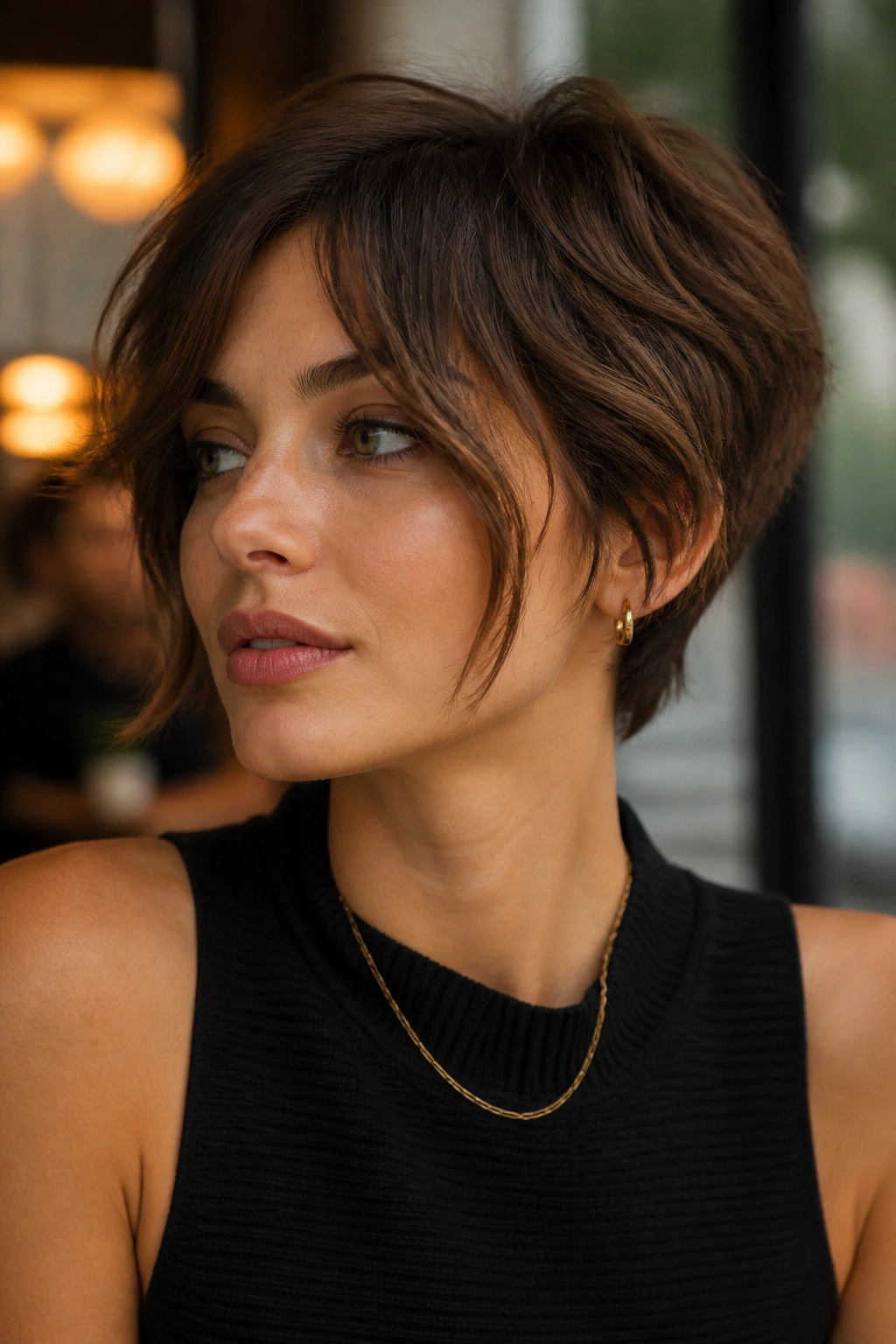
This one sits between a pixie and a bob, which makes it useful for people who want short hair without going fully cropped. The back is tight enough to feel clean, but the front stays longer so the curtain bangs can fold into the rest of the cut.
The longer fringe pieces matter here. If the front gets too short, the bang stops behaving like a curtain and starts reading like a standard fringe. Keep the center a touch longer, and let the sides feather down toward the temples.
Ask For This at the Salon
- Shorter nape, but not shaved.
- Longer pieces at the front that hit between the brow and cheekbone when dry.
- Soft point-cutting, not chunked-out ends.
- Enough weight in the bangs to split naturally at the center.
This cut shines on finer hair because the shorter back gives the illusion of fullness. It also helps if your waves are loose and tend to flatten by midday. The shape stays interesting even when the texture relaxes.
And yes, it needs upkeep. The good news is that the salon visits are quick. The annoying part is that the front pieces lose their shape faster than the back, so if you let the bangs grow too far, the whole look starts to sag.
6. Bixie Cut With Wavy Curtain Bangs

The bixie is still one of the smartest choices for people who want the ease of a pixie with a little more face-framing room. It is cropped at the back, slightly longer at the sides, and built to hold movement through the top.
What makes it work with wavy curtain bangs is the contrast. The short back keeps the silhouette light, while the front has enough length to split and curve around the face. That balance stops the cut from feeling too severe.
It also photographs differently than a traditional bob. The layers break up the outline, so you get texture instead of one flat shape, and the bangs keep the front from looking too spiky. If your hair has natural wave and you hate spending time with a brush, this cut can be a relief.
A bixie does need shape control. Ask your stylist to leave enough weight near the temples so the curtain bangs do not separate into two thin strands. That tiny detail changes the whole haircut. Without it, the front can start to look stringy.
7. Angled Bob With Center-Part Curtain Bangs
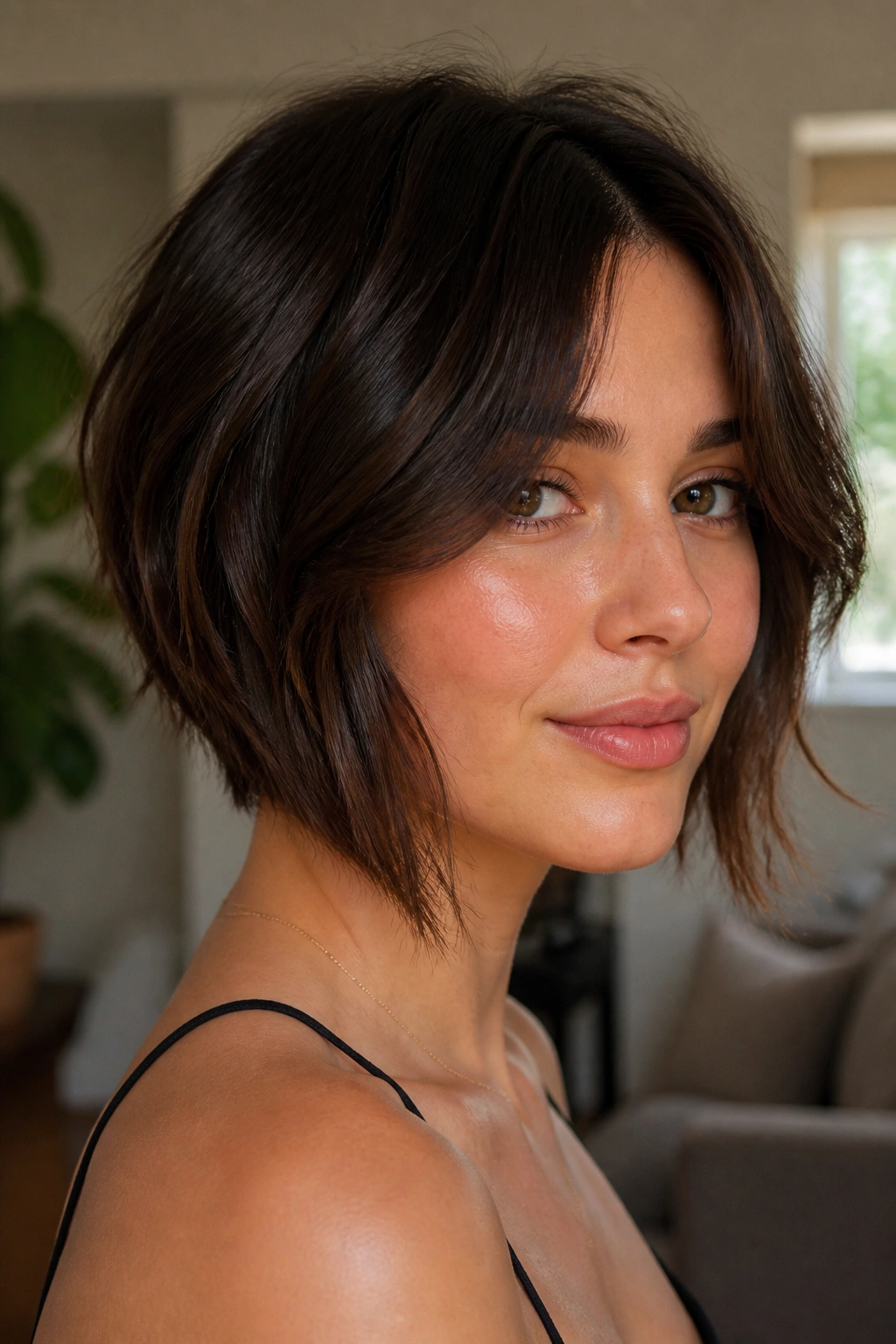
Why not lean into the angle? An angled bob gives you a little extra length in front, shorter volume in back, and a clean slope that makes wavy curtain bangs fall into place with less arguing.
This cut is especially useful if your face is round or soft in shape and you want a bit more length near the jaw. The forward angle stretches the outline, while the curtain bangs split the forehead and draw the eye upward. It’s a practical trick, not a magic one, but it works.
What to Watch For
The front pieces should not be so long that they drag. You want them to skim the neck or collarbone area if the bob is on the longer side, or sit just below the chin if you’re keeping it tighter.
- Ask for a clear difference between back and front length.
- Keep the bangs soft at the center part so they don’t sit in a hard V.
- Style the front with a bend away from the face, not a curl.
- Use a lightweight serum only on the ends; too much product makes the angle droop.
This cut has a little attitude. Not loud attitude. Just enough. If you like a bob that feels sharp from the side but relaxed from the front, this is one of the most flattering short options in the bunch.
8. Rounded Bob With Feathered Curtain Fringe

A rounded bob has a softer outline than a blunt one, and that’s the whole point. The sides hug the face, the back curves gently under, and the curtain bangs feather outward so the top of the haircut does not look flat.
The first thing you notice is the softness near the cheekbones. The second thing is how tidy the shape looks, even when the hair has a natural wave. That curve under the jaw helps the haircut keep a bit of polish, while the bangs stop it from feeling dated or too neat.
This style is one of the better picks if you have medium-density hair and want structure without stiffness. It is also friendly to people who do not love a strong middle part. The fringe can split slightly off-center and still read like curtain bangs.
The one catch is volume. If your hair already expands a lot at the sides, keep the layers subtle and the roundness low. Too much curve plus too much wave can make the head look wider than you meant. A good stylist will trim the interior carefully and leave the outline soft rather than puffy.
9. Mini Lob With Loose Curtain Bangs

A mini lob is the haircut for people who want to stay in short-hair territory without losing the option to tuck, twist, or pin the front back on busy days. It usually lands somewhere between the jaw and the top of the shoulders, which gives the curtain bangs a little more room to move.
That extra room matters. Loose curtain bangs look especially good when they can blend into longer front sections instead of stopping abruptly at the face. If your hair bends in soft waves, the result feels relaxed rather than overworked.
Why It’s So Easy to Live With
This cut grows out well. That may sound boring, but it is one of the main reasons people stick with it. As the bangs lengthen, they slide more naturally into the front layers instead of turning into a hard fringe line.
It is also useful if your hair is thick and you do not want the upkeep of a true bob every six weeks. The mini lob gives you a little breathing room. You can wear it sleek one day and rough-dried the next, and the haircut still makes sense.
If you want more shape, ask for long layers only around the face. If you want more body, keep the ends blunt and let the waves build their own texture.
10. Curly-Wavy Crop With Separated Bangs
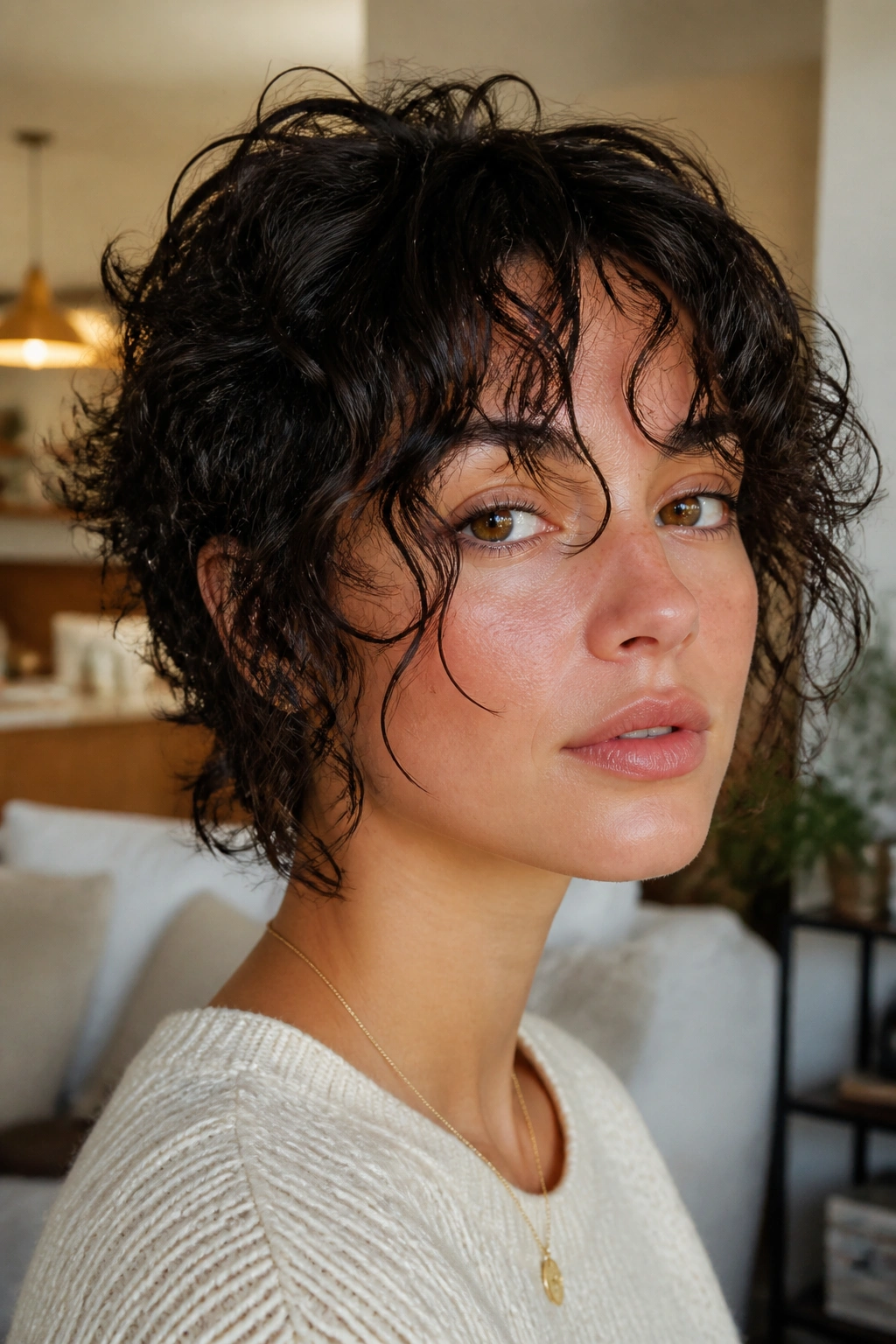
Not every wave behaves the same way, and this cut respects that. A curly-wavy crop works when your hair falls somewhere between loose wave and loose curl, with bangs that split into pieces instead of trying to sit like a perfect curtain.
The mistake people make here is cutting the fringe too short. Short bangs on wavy texture can spring up hard and sit awkwardly above the brows. Leave the front long enough to bend down to the cheekbones or even the mouth corners when wet, and the finished result is far easier to wear.
The Length Matters Most
A curlier wave needs room. That means the front sections should be a little longer than you’d ask for on straight hair, because shrinkage is part of the package. If you keep that in mind, the cut becomes much less fussy.
- Use curl cream on damp hair, then scrunch from the ends upward.
- Avoid brushing once the hair starts to dry.
- Ask for light, separated bangs rather than one solid block of fringe.
- Trim in a dry state if your stylist works that way; wet cutting can hide the true length.
The crop can look playful or sharp depending on how it’s styled. If you let the pieces fall where they want, it reads casual. If you add a little root lift and separate the front with a touch of balm, it turns more polished.
11. Tapered Crop With Side-Leaning Curtain Bangs
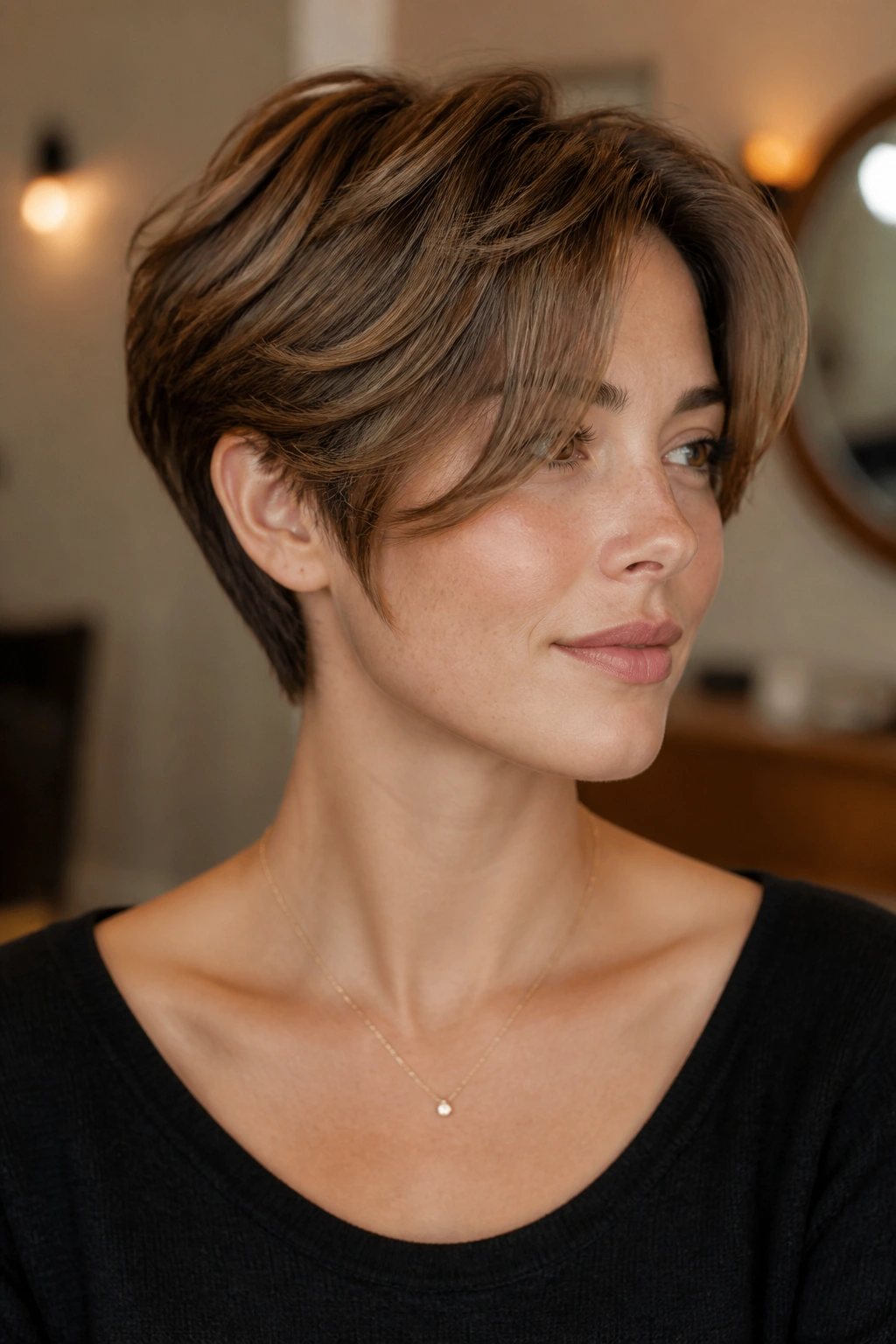
A tapered crop is a smart choice when you want the neck area short and clean but still want softness around the face. The sides taper in slightly, the back stays tidy, and the curtain bangs lean just enough to create shape without full symmetry.
The beauty of this cut is that it keeps the bulk off the nape. That alone makes daily styling easier for people with thick or coarse waves. The front stays longer, so the bangs can drape into the cheek area and make the cut feel less severe than a classic crop.
It’s also a good one if you wear glasses. The side-leaning fringe can sit above or around the frame without creating the heavy curtain effect that sometimes fights with lenses. Small thing, but it changes how the haircut lives on your face.
Ask for a soft taper, not a hard fade. If the back is too aggressively short, the longer front can start to look disconnected. You want a gradual shift in length so the whole cut feels like one shape, not two separate ideas.
12. Undercut Bob With Piecey Curtain Bangs
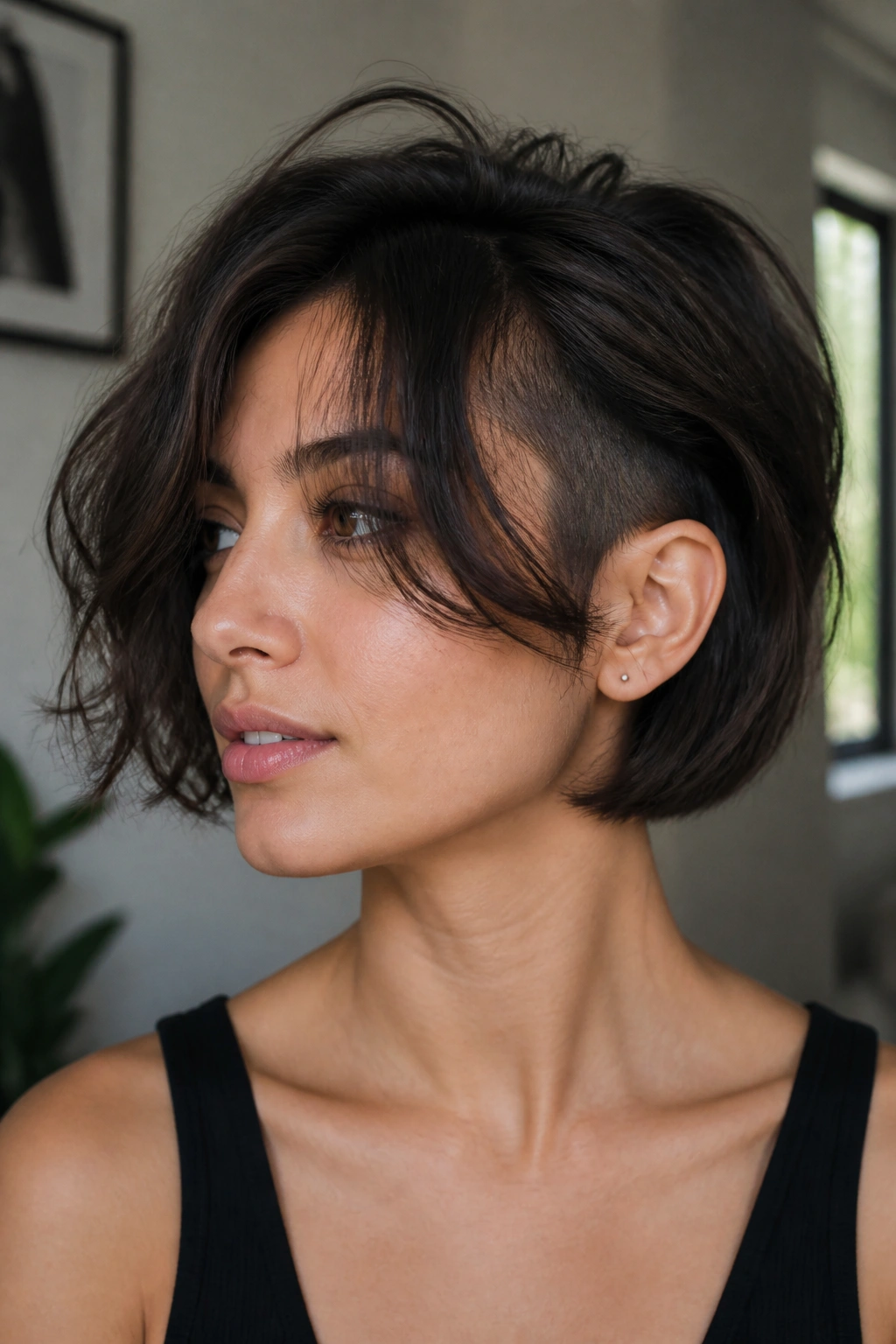
This is the bold one. An undercut bob removes weight from underneath, which makes sense if your hair is dense, warm, or so full that a regular bob turns into a mushroom by lunch.
The visible shape can still look soft on top. That’s the fun part. The undercut stays hidden unless you tuck one side back, while the curtain bangs and top layers keep the haircut feeling feminine, sharp, or somewhere in between depending on how you style it.
What It Solves
Bulk. That’s the plain answer.
If your hair swells at the nape or gets heavy around the ears, an undercut lets the bob sit closer to the head without losing movement in the front. The curtain bangs then frame the face instead of competing with the rest of the cut.
- Ask for a hidden undercut only through the lower back section.
- Keep the top layers long enough to cover the shaved area when the hair is down.
- Style with a small amount of paste to separate the bangs into soft pieces.
- Trim more often if you want the outline to stay crisp; regrowth shows fast.
This is not the haircut for someone who wants zero upkeep. It is for someone who likes clean edges and does not mind a little edge peeking out when the hair moves.
13. Wavy Wolf Cut With Shorter Crown Layers and Curtain Fringe

Can a wolf cut count as short hair? Absolutely, if the length stays above the shoulders and the layers do the heavy lifting. The point is the shape: choppy, airy, a little wild, with curtain bangs that blend into the front layers instead of ending as a separate feature.
This cut is a good fit for thick waves that need release. The crown layers remove weight, the sides keep some length, and the fringe opens the face so the whole thing doesn’t collapse into one fuzzy outline.
It looks best when you don’t overstyle it. That sounds lazy, but it’s the truth. A wolf cut loses its charm if you round-brush every bit into submission. Let the texture stay loose, and use a diffuser only where the roots need help.
Best For People Who Like Shape, Not Perfection
If you want a haircut that looks slightly different every day, this is a strong option. Some days the bangs will sit straighter. Some days they’ll split wider at the center. That variation is part of the appeal.
The one thing to ask for is control around the face. Without it, the layers can get too feathery and the cut starts to look unfinished instead of intentionally messy. A good wolf cut still has a plan hiding inside the chaos.
14. Collarbone Bob With Heavy Texture and Curtain Bangs

A collarbone bob gives you a little more length than a classic short cut, and that extra inch or two changes everything. It keeps enough weight at the ends to stop the wave from puffing out, while the curtain bangs bring the focus back to the face.
This is the haircut I’d point to if someone wants a short style that can grow out gracefully. It’s long enough to tuck behind the ears, long enough to pin up, and short enough to feel fresh. That middle ground is useful.
The heavy texture through the mid-lengths should be handled carefully. You want movement, not choppiness for its own sake. If your stylist slices too much out of the interior, the ends can look stringy. If they leave too much bulk, the collarbone length starts to feel heavy. There’s a narrow window here, and it’s worth getting right.
A collarbone bob also works well with a slight bend in the curtain bangs rather than a full curl. That keeps the front light and avoids the old-school “grown-out fringe” look that can happen when the bangs get too long and too flat.
15. Soft Pageboy Bob With Airy Curtain Bangs

The pageboy bob has a retro shape, but the soft version is far less rigid than the old-school cut people picture. It curves under at the ends, keeps the outline tidy, and uses airy curtain bangs to keep the whole thing from feeling stiff.
It’s a nice option if you like clean lines. Not severe lines. Clean ones.
The curve at the bottom gives the haircut a little swing, especially if your hair has a medium wave that flips naturally as it dries. The bangs should be lighter than the rest of the cut, almost feathered through the center so they open at the nose and slide toward the cheekbones.
This style suits hair that likes a round brush. If you enjoy a quick blow-dry and want a shape that looks put together without looking shellacked, the soft pageboy bob delivers that neatly. It also flatters strong jawlines because the curve at the ends softens the lower half of the face instead of sitting on top of it.
One thing to avoid: making the ends too bulky. That’s where the pageboy starts to feel dated. Keep the edges soft, keep the curtain bangs loose, and let the wave do the last bit of work.
Final Thoughts
The best short haircut with wavy curtain bangs is the one that respects your hair’s natural bend instead of trying to erase it. That sounds obvious, but a lot of bad cuts start with the wrong goal. The hair should move with you, not sit there like a shape you have to defend all day.
The biggest choices are simpler than people think: how much weight stays at the ends, where the bangs hit when dry, and whether the top needs layers or restraint. Get those three things right, and the rest gets much easier.
If you’re bringing one of these looks to a stylist, bring a photo of the silhouette you want, not just the bangs. The shape matters. A lot.
