



Managing thick, heavy hair is a specialized skill. It is not just about length; it is about weight distribution, porosity, and the specific way your follicles want to fight gravity. Most men with dense hair find that their manes possess a mind of their own, often expanding outward rather than flowing downward. That is not a flaw in your genetics; it is simply a reality of your hair’s density. If you try to force it to behave like fine, straight hair, you will lose every time.
The secret to pulling off a longer style with thick hair lies in the cut, not just the length. You need a barber who understands thinning shears, razors, and how to debulk sections without leaving them looking sparse or frizzy. Once you get the foundation right, the styling becomes a matter of choosing the right product—usually something with high hold and low shine—or learning to embrace the natural volume that so many others are desperately trying to fake with sprays and powders.
If you are ready to stop fighting your hair and start working with it, the following list covers the spectrum from rugged to refined. Each of these styles requires a different approach to maintenance, and some might even require you to change how you wash and dry your head. Remember, with great density comes a longer drying time and a higher need for conditioning. Let’s look at the best ways to wear that length.
1. The Structured Man Bun
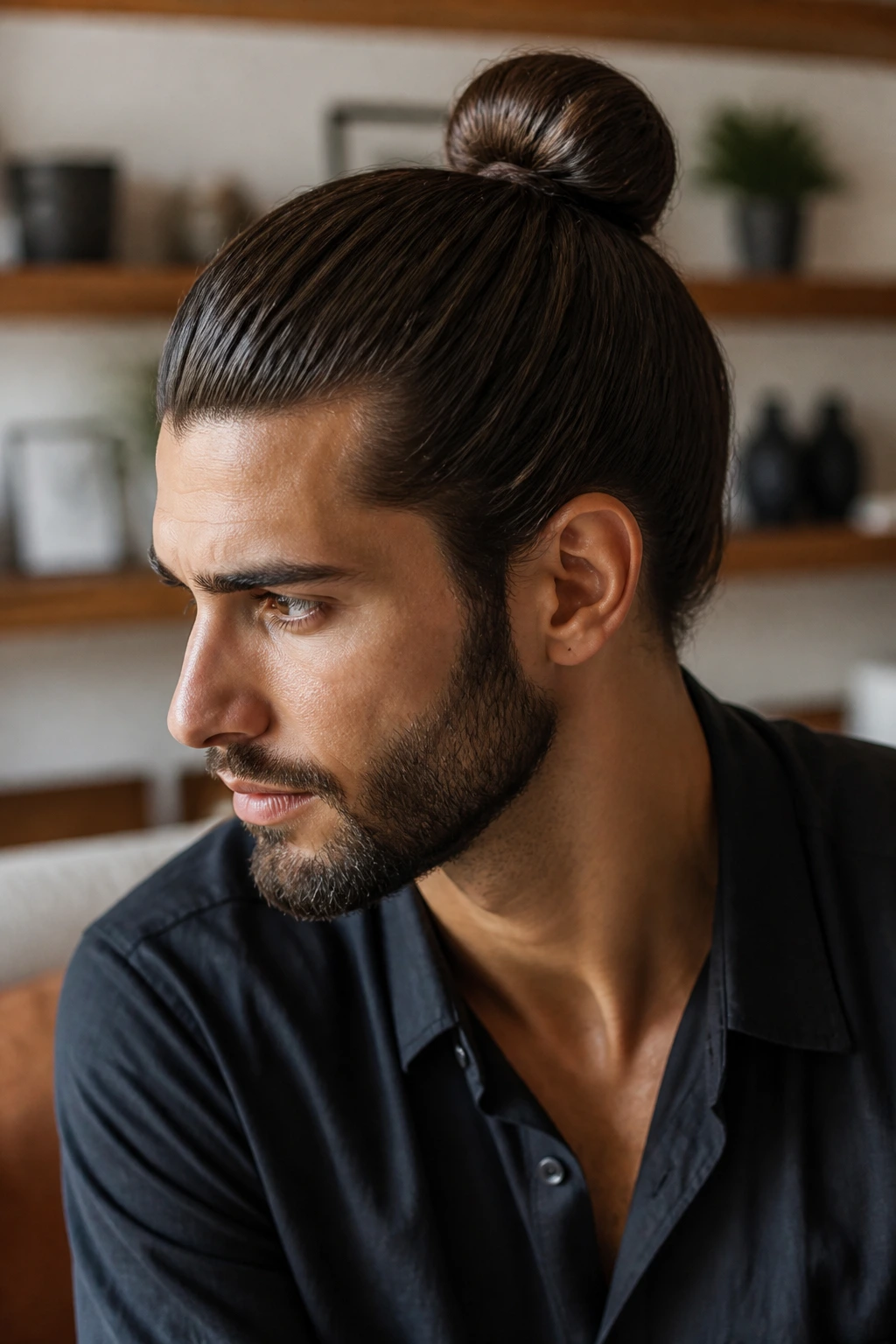
This is the baseline for most men growing out thick hair, but there is a right way and a wrong way to do it. The key is in the tension. If you pull it too tight, you create strain on your scalp and look like you are trying too hard. If you leave it too loose, it will slide down and look messy within an hour.
Achieving the Perfect Tension
- Use a hair tie that matches your hair color, or it will stand out unnecessarily.
- Pull your hair back with your fingers, not a brush, to maintain some natural texture.
- Leave a little bit of slack at the base of the bun so it doesn’t pull on your hairline.
- Secure the bun so it sits at the crown of your head, not at the nape of your neck.
Pro tip: Use a tiny dab of matte paste on your palms before you gather your hair. It gives you the grip you need to keep shorter flyaways from poking out.
2. Shoulder-Length Natural Flow
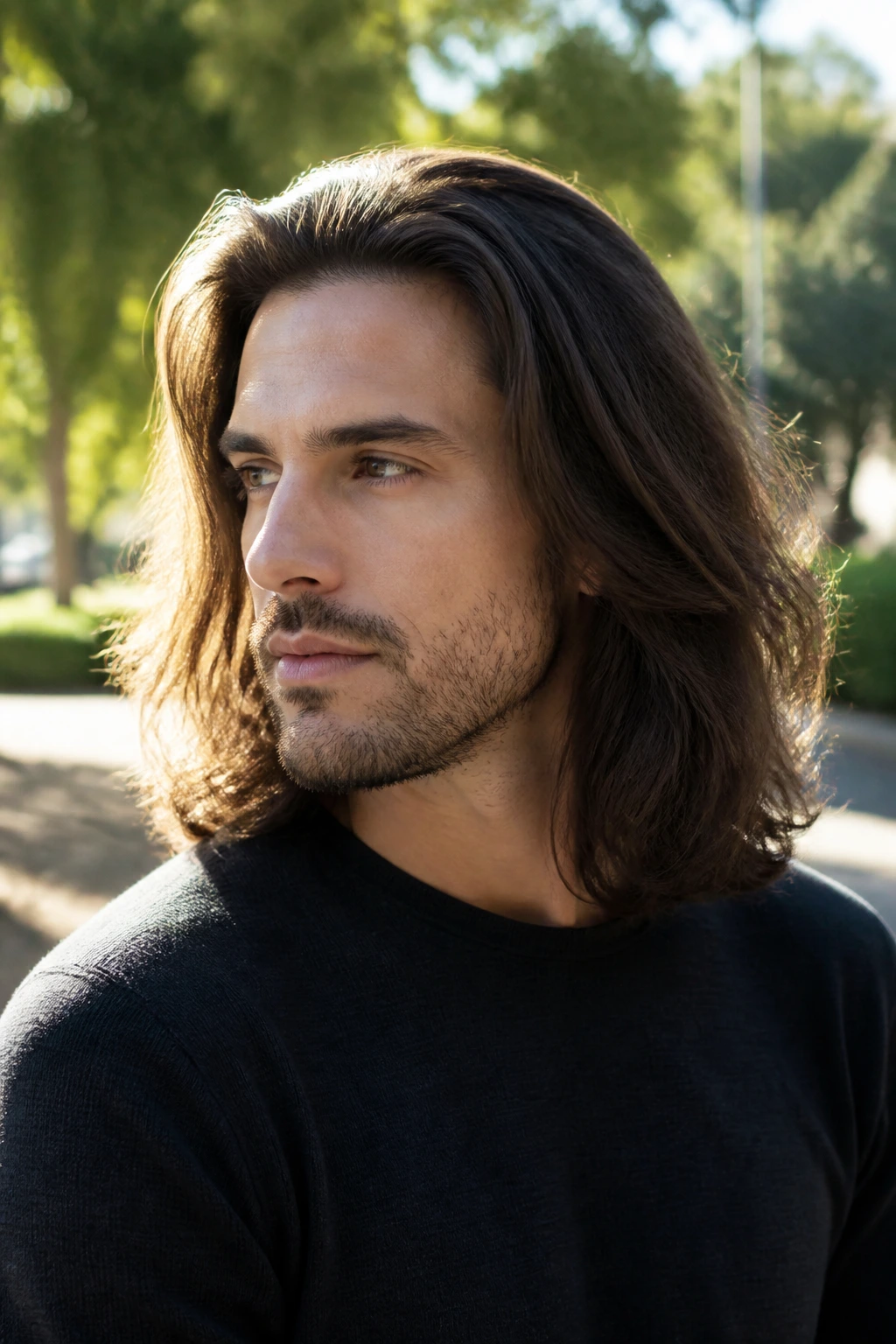
This look is all about accepting the weight of your hair. When hair is thick, it naturally falls in a way that creates a heavy silhouette. Instead of trying to layer that weight away, let it sit at the shoulders. This style works best for guys with slight natural wave.
The Maintenance Routine
You cannot get away with washing this style and walking out the door. The weight of the hair will make it look shapeless if you don’t condition properly. Use a hydrating leave-in conditioner while the hair is damp. This prevents the ends from becoming a frizzy mess as they brush against your shirt collar throughout the day. If you find the ends look too thick, ask your barber to point-cut the perimeter to soften the line.
3. Textured Long Layers
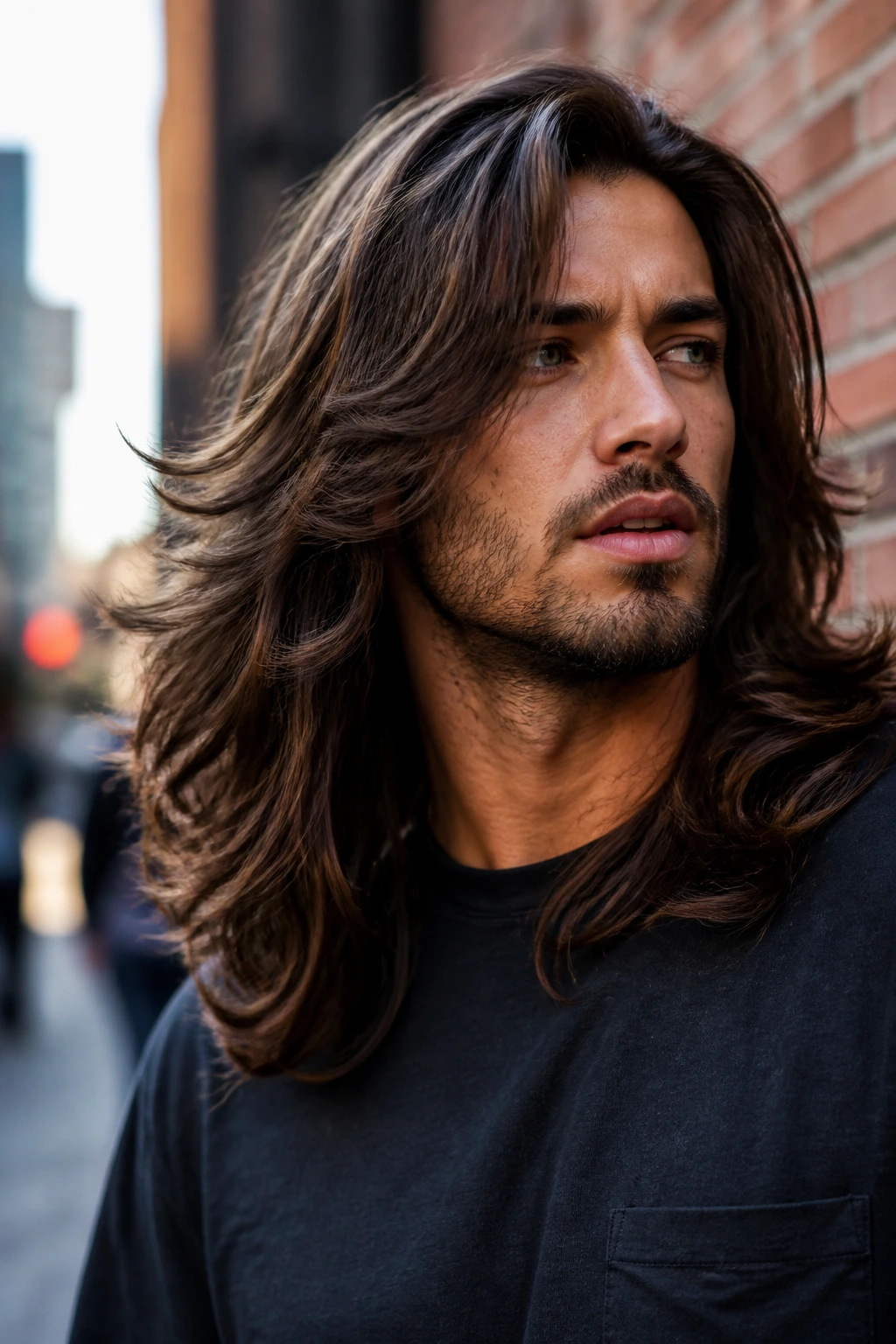
Layering is your best friend when you have thick hair. By cutting into the hair at different lengths, you remove bulk without taking away the overall length. This prevents the dreaded “triangle” shape where the hair is flat at the scalp and poofs out at the bottom.
Why This Works
The internal layering creates movement. When you walk, turn your head, or catch a breeze, the hair moves in pieces rather than as one giant, heavy block. This style requires a bit of styling cream to define those layers. Work a dime-sized amount of cream through the mid-lengths to the ends, focusing on twisting sections to bring out the texture. Avoid heavy waxes here; you want movement, not cement.
4. The Disconnected Undercut
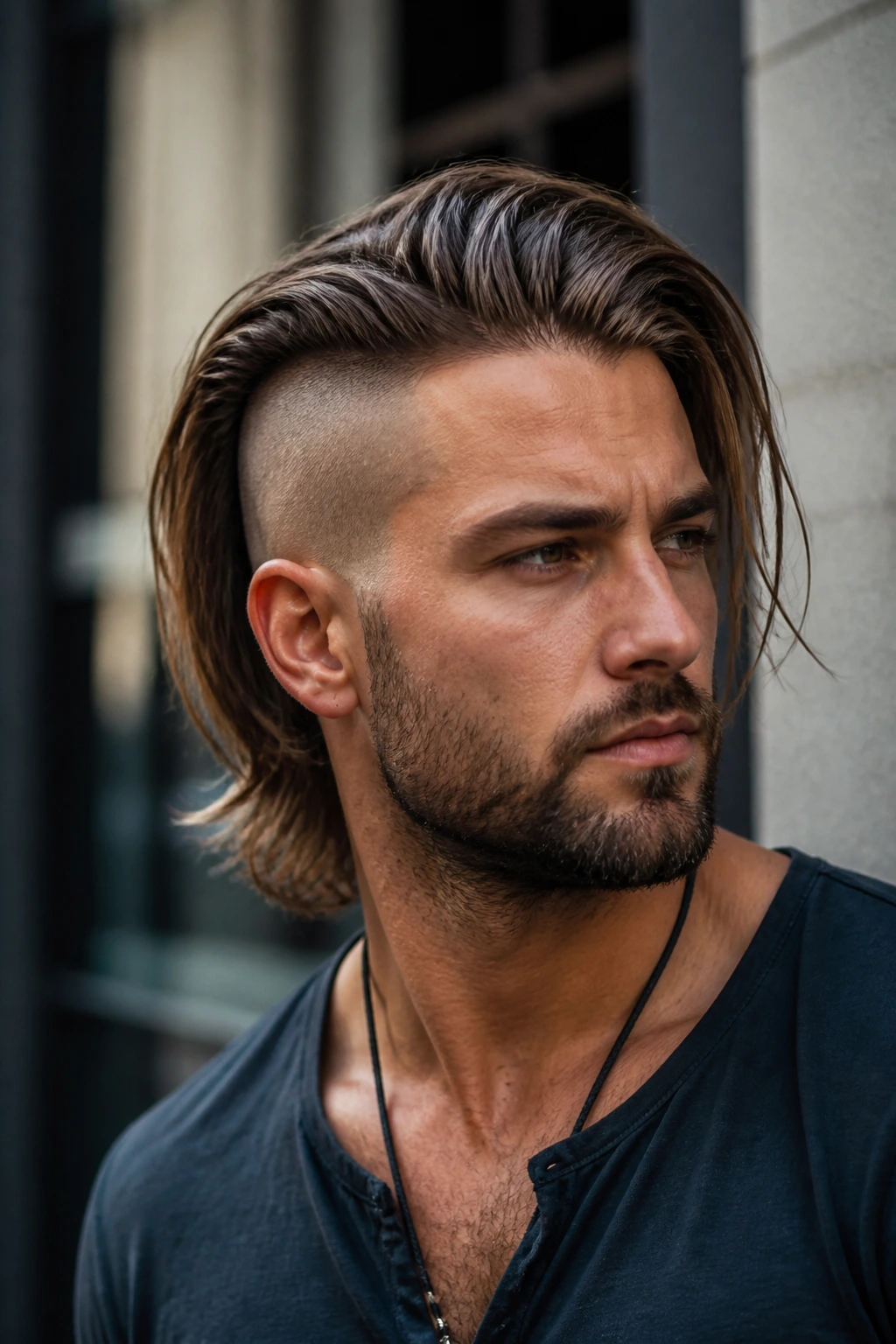
If you want to keep the length but hate the sheer amount of hair on your head, this is the solution. You keep the hair on top very long—at least chin length or longer—and shave or fade the sides and back down to the skin.
Why It’s Efficient
This style effectively cuts your total hair volume in half. It is a bold look that keeps the focus on the long top section. You can slick it back for a formal look or let it fall naturally to cover the shaved sides for a more relaxed, surprising aesthetic. The contrast between the shaved sides and the long, thick top creates a sharp, architectural silhouette that is hard to ignore.
5. The Classic Surfer Cut
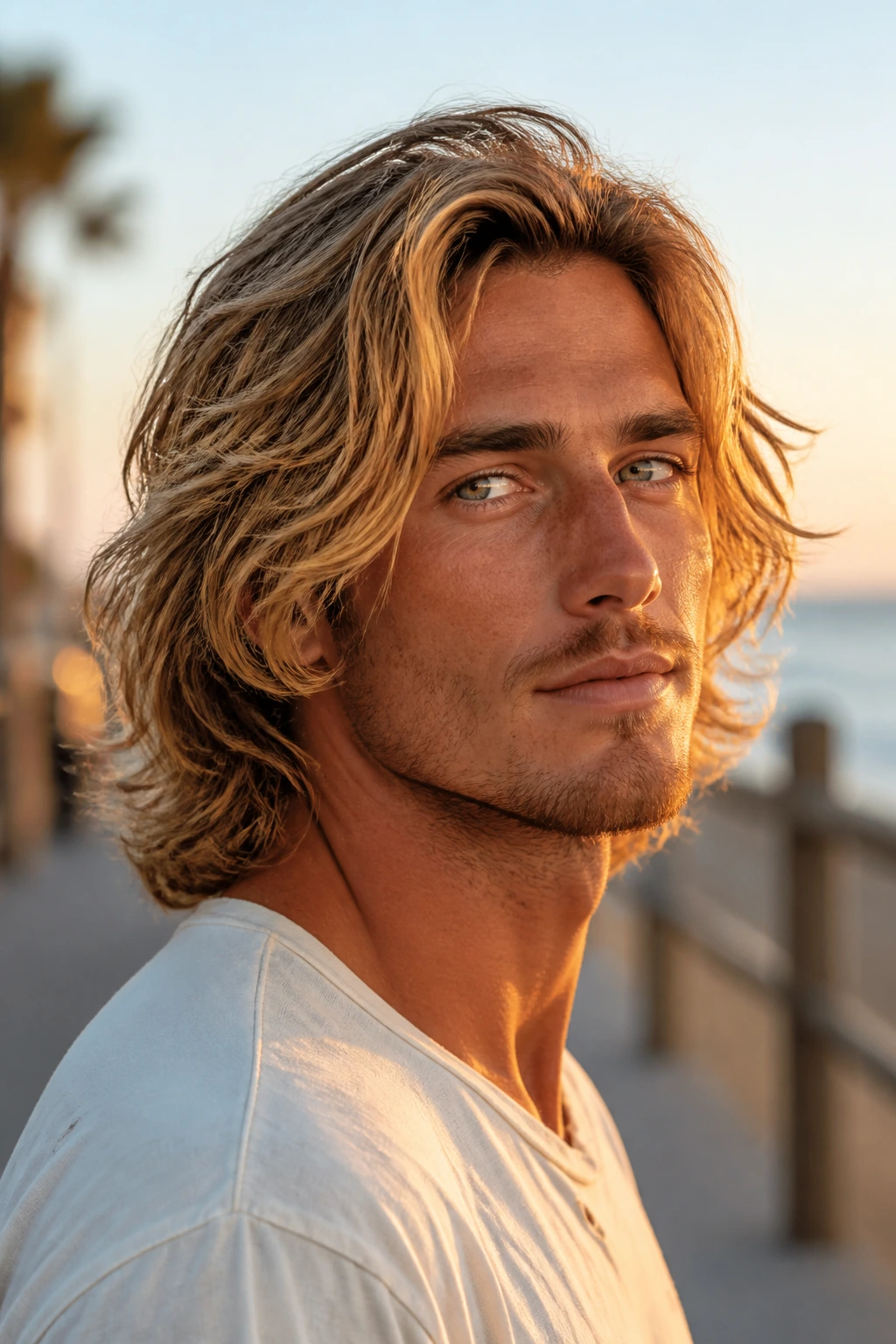
This style is synonymous with “lived-in” hair. It is not overly styled, not perfectly parted, and definitely not stiff. It relies on the natural wave pattern of thick hair. The cut usually features slightly shorter layers around the face to frame it, while the back hits around the collarbone.
Styling the “Just Off the Beach” Look
You want a product that mimics salt water. A sea salt spray is the absolute standard here. Mist it onto damp hair and let it air dry. If you blow dry this, you will destroy the wave pattern and end up with a frizzy, expanded mess. Let nature do the work. If you feel like your hair is getting too puffy, that is a sign you need to wash it less. The natural oils in your scalp will actually help weigh this style down in a good way.
6. Long Braids (The Viking Style)

Braids are not just for aesthetics; they are a functional necessity for long, thick hair. When you have high density, managing the sheer volume during a workout or a windy day is a challenge. Braids lock everything into place.
The Technique
You do not need to be a hair stylist to do a basic three-strand braid. The trick is to start with damp, slightly oiled hair to keep the strands together as you weave. If you are new to this, start with a single braid down the back. As you get better, you can try two Dutch braids (where you weave under rather than over) for a tighter, more secure hold. This look works best when you keep the braids slightly tight, as thick hair will naturally expand them over the course of the day.
7. Slicked Back
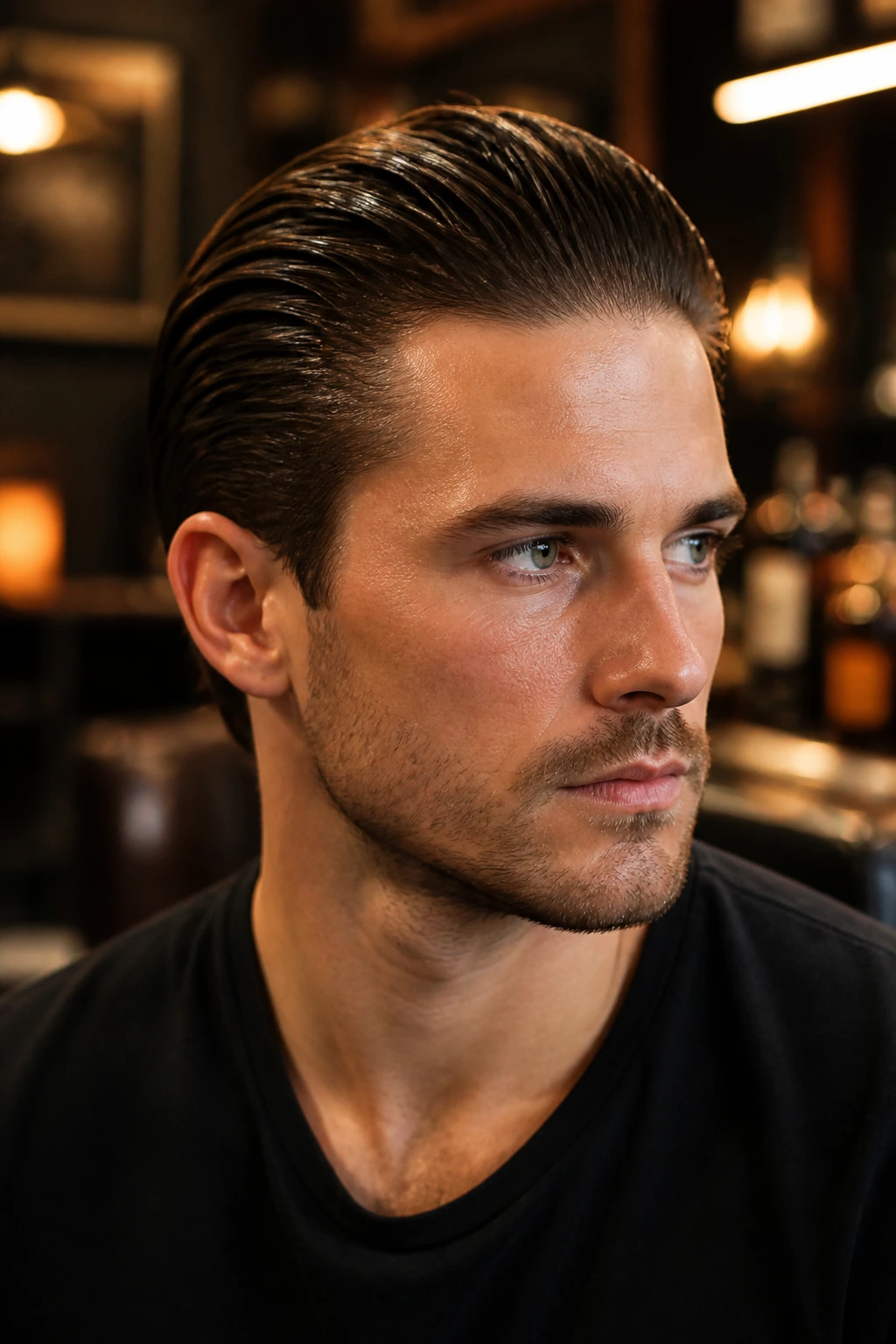
This is a high-maintenance look, but it is one of the most sophisticated ways to handle thick hair. By slicking it back, you remove the hair from your face and create a clean, intentional profile.
The Product Choice Matters
Do not use a standard gel. It will dry out, flake, and turn your thick hair into a crusty, immobile helmet. You need a high-hold, high-shine pomade or a grooming cream. Apply the product while your hair is slightly damp. Use a wide-tooth comb to distribute the product from root to tip. Once it is distributed, use your hands to smooth the hair back. The key is to keep the sides tight against the head. If the sides start to poach out, you need to use a little more pressure with your palms.
8. Long Curly Shag
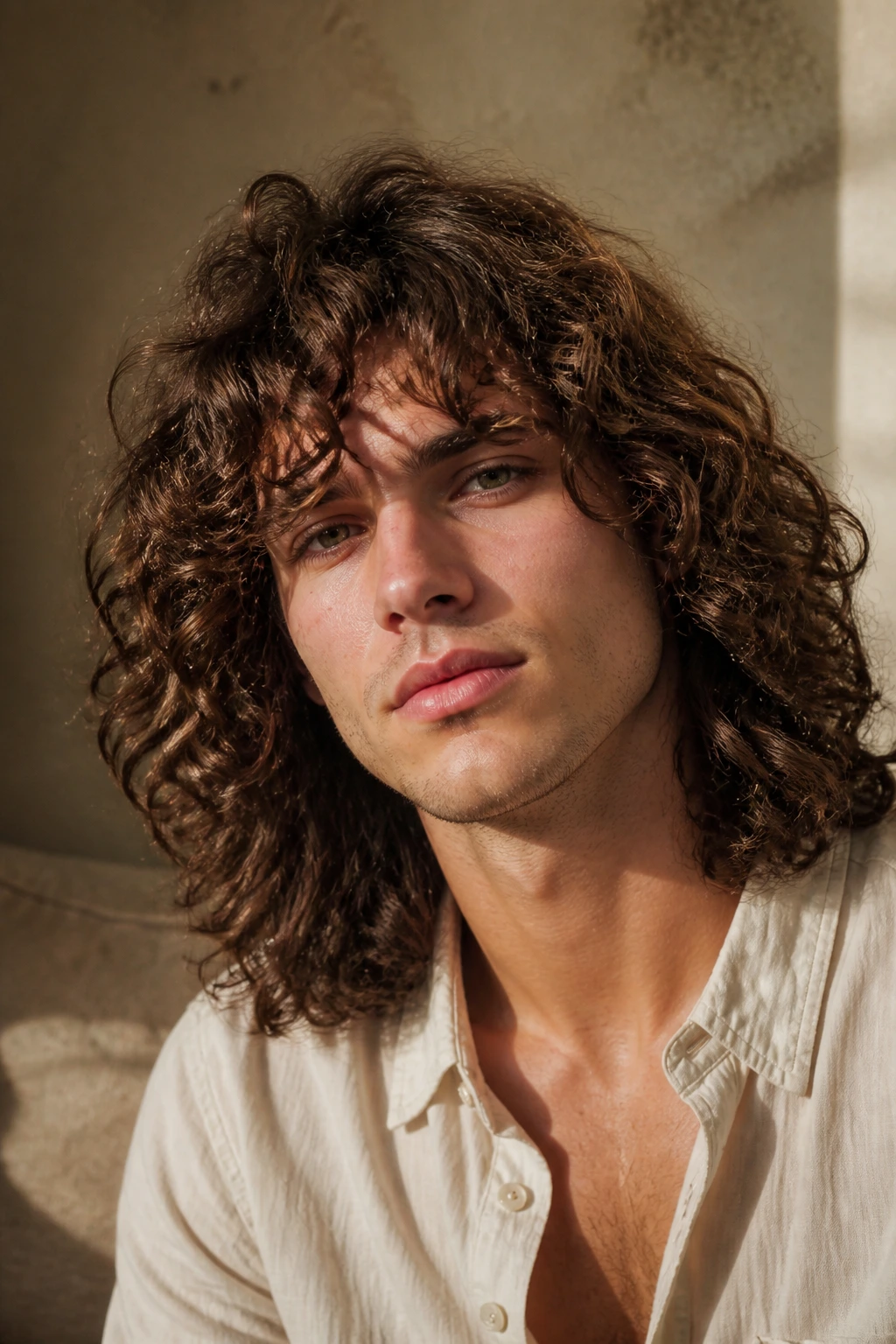
If your hair is thick and curly, you have hit the genetic lottery for volume. A long shag cut utilizes layers to encourage your curls to spring up while preventing the “poodle” effect.
Controlling the Shape
The biggest mistake guys with thick curly hair make is using a brush. Throw your brush in the trash. Use a wide-tooth comb only when your hair is soaked with conditioner in the shower. Once you are out, use a microfiber towel to gently squeeze the water out—do not rub. Apply a curl-defining cream while the hair is still dripping wet. This locks the curl pattern in before it has a chance to frizz. Let it air dry completely before you even think about touching it.
9. The Top Knot
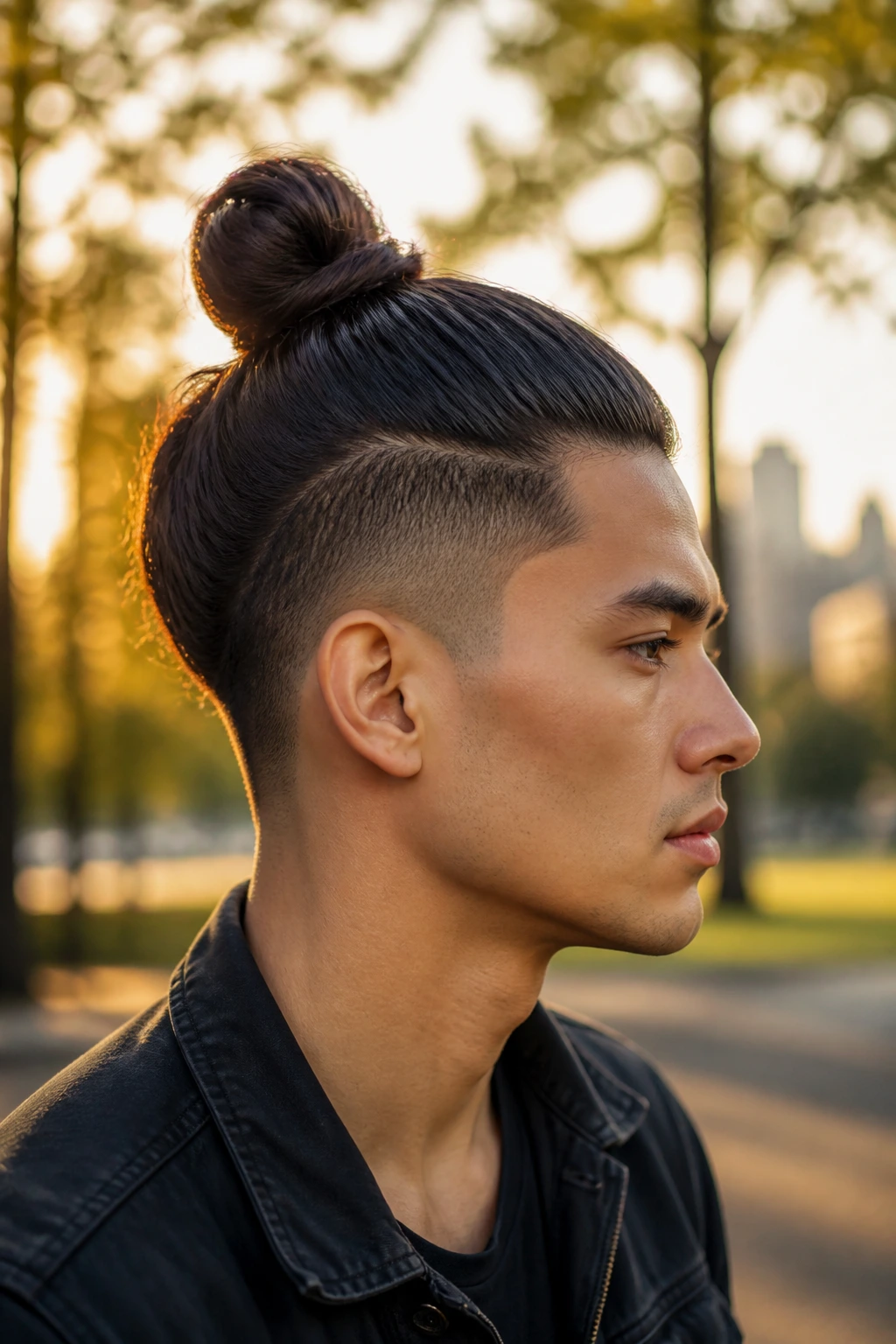
Distinct from the man bun, the top knot usually sits higher and is often paired with an undercut or a fade. It is the perfect compromise for a guy who wants the long-hair look but finds the maintenance of a full head of long hair to be too much work.
Why This Style Persists
It keeps the hair off your neck entirely, which is a massive relief in warmer weather or during physical activity. The trick is to keep the sides of your head freshly trimmed. If you let the undercut grow out too much, the style loses its sharpness and just starts to look like you couldn’t be bothered to fix your hair. Keep the sides skin-tight and the knot tight.
10. Half-Up, Half-Down
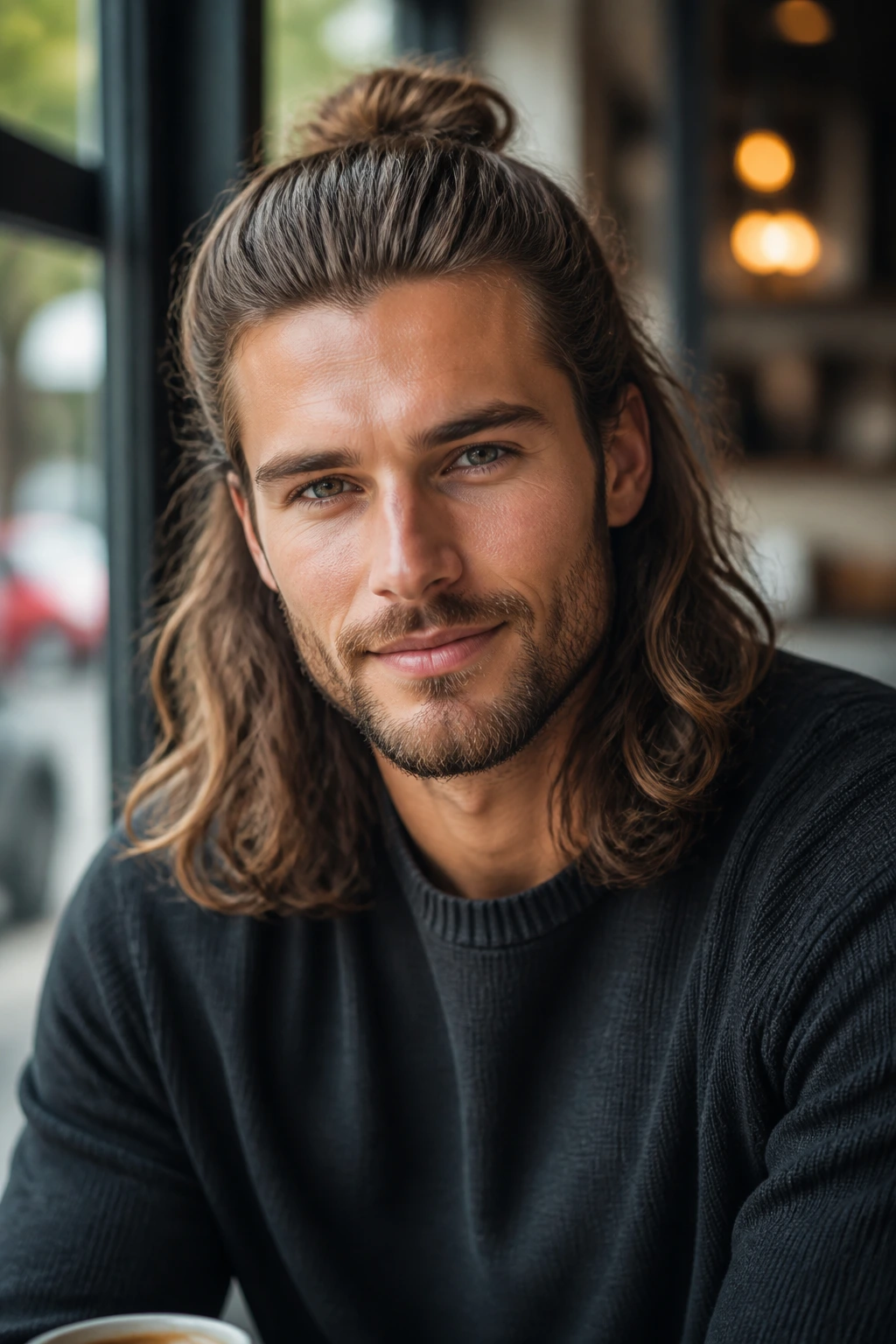
This style is arguably the most practical for daily life. It gives you the drama of long hair but keeps the front sections out of your eyes. It is essentially the “business in the back, party in the front” of hairstyles.
How to Execute It
Gather the top third of your hair—everything from the temples up—and secure it with a tie. Leave the rest of the hair loose and falling over your shoulders. For guys with thick hair, this is a lifesaver because it reduces the amount of hair hitting your face without sacrificing the length that took you two years to grow. It also adds a bit of volume to the crown, which can be very flattering.
11. Long Pompadour
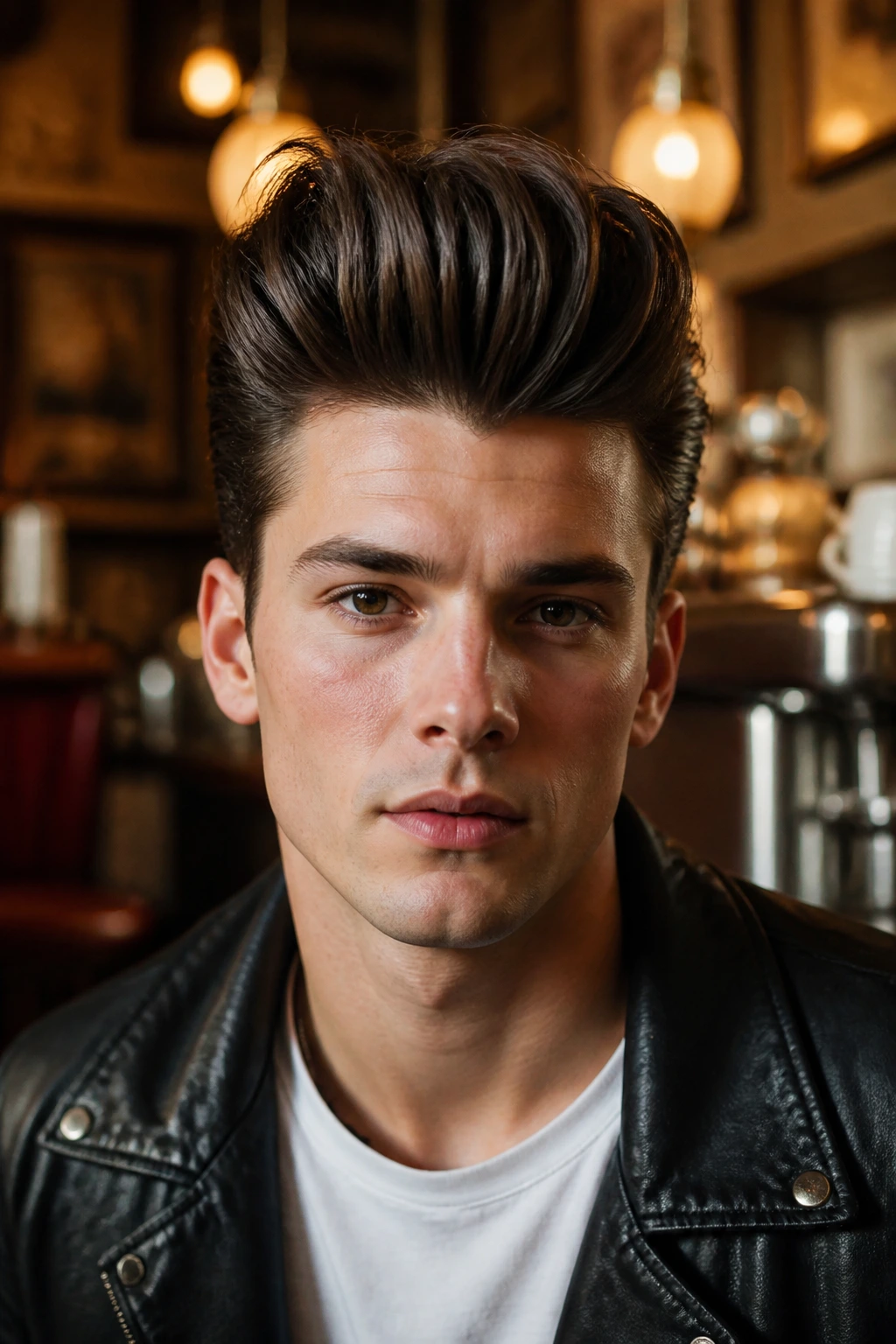
You might associate the pompadour with the 1950s, but a long, modern pompadour is a powerhouse look. It requires significant volume at the front, which thick hair provides in spades.
The Blow-Dry Strategy
You cannot achieve this without a blow dryer and a round brush.
- Apply a volumizing mousse to damp roots.
- Use the round brush to pull the front hair upward and backward while aiming the dryer at the roots.
- Once the roots are set in that upward position, use a strong-hold wax to guide the lengths back.
- Finish with a light misting of hairspray. If you skip the blow-dry step, the weight of your thick hair will eventually pull the pompadour flat against your forehead.
12. Tapered Sides with Long Top
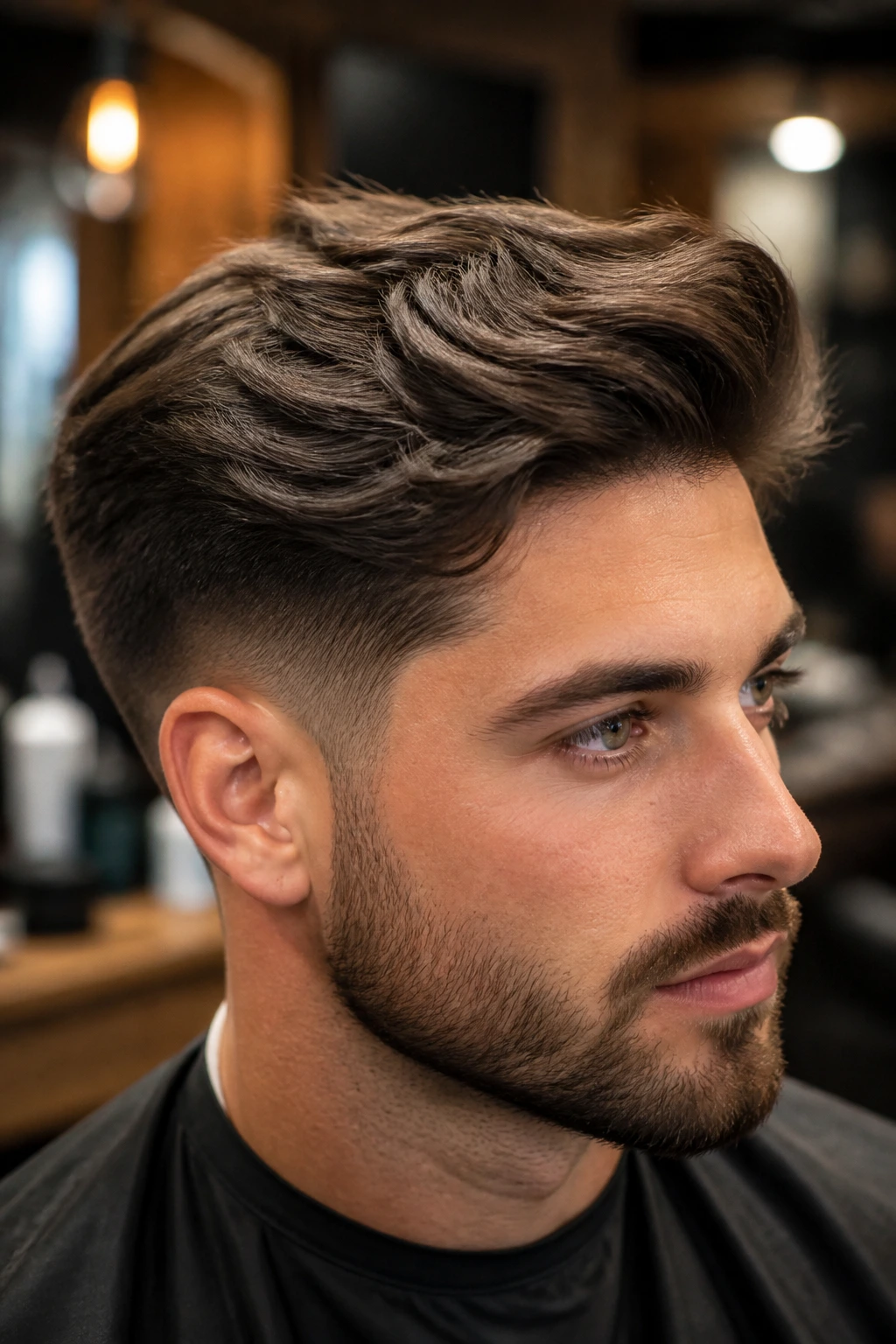
This is the “clean-cut long hair” style. You keep the sides faded or tapered, but instead of the hair on top just being long, it is blended into a long, textured top section.
Blending is Key
The success of this cut depends entirely on the transition point between the short sides and the long top. You want a seamless fade that moves into a textured top. Ask your barber to use “scissors over comb” for the transition rather than a clipper guard. This creates a softer, more natural look that doesn’t scream “I just got a buzz cut on the sides.” It looks effortless, like you just grew your hair out from a shorter style, even though it is very calculated.
13. Long Wavy Side Part
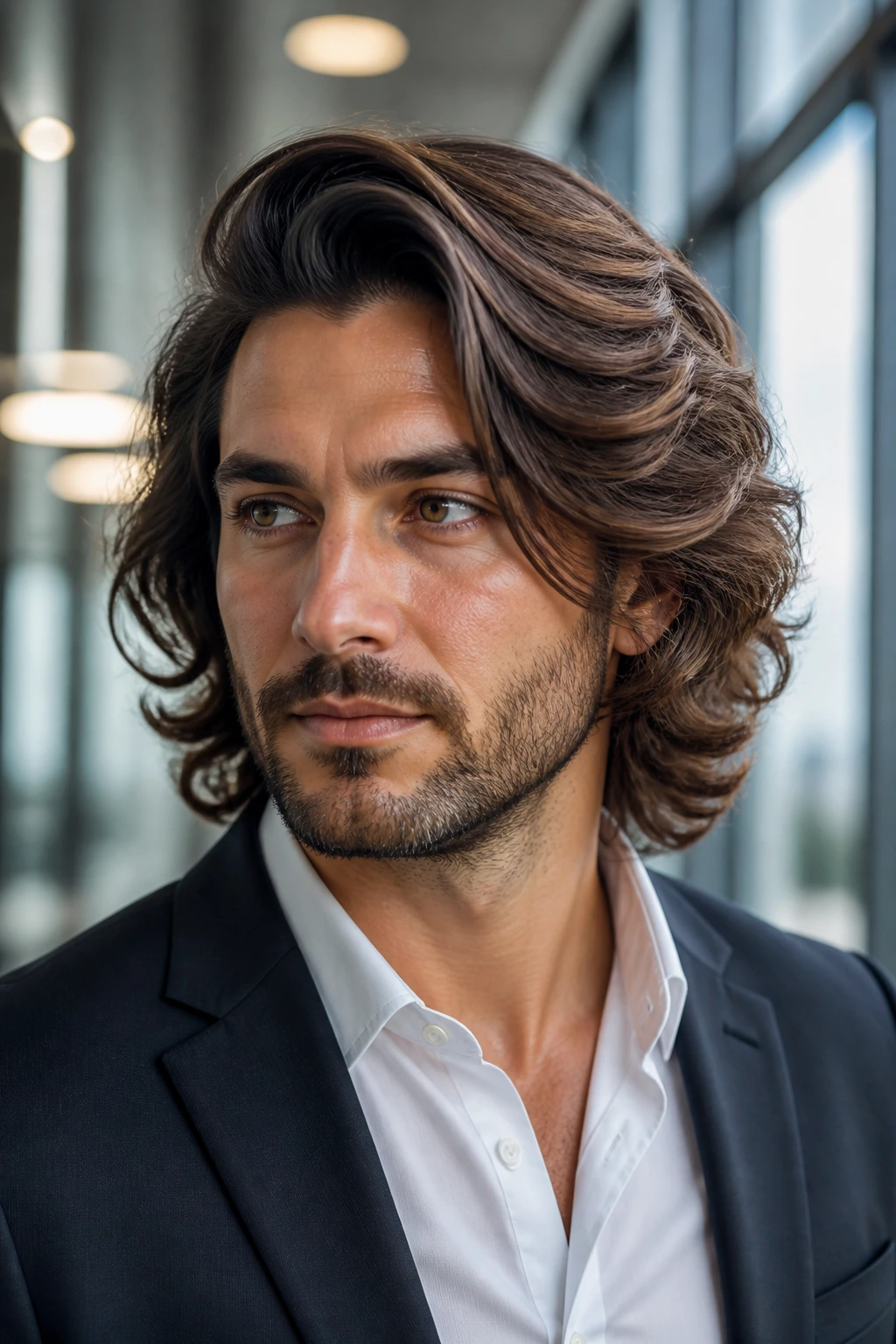
This is a sophisticated, classic choice that works well in office environments. It implies a sense of order without requiring you to chop off your length.
The Parting Technique
The secret is finding your natural part. Don’t force a side part if your hair wants to go the other way; it will just create awkward cowlicks. Once you have the part, use a small amount of light styling cream to keep the hair on the sides tucked down and the hair on top sweeping across. Because your hair is thick, the “swoop” across your forehead will have natural body and won’t look limp.
14. The Viking Braid (Side-Shaved)
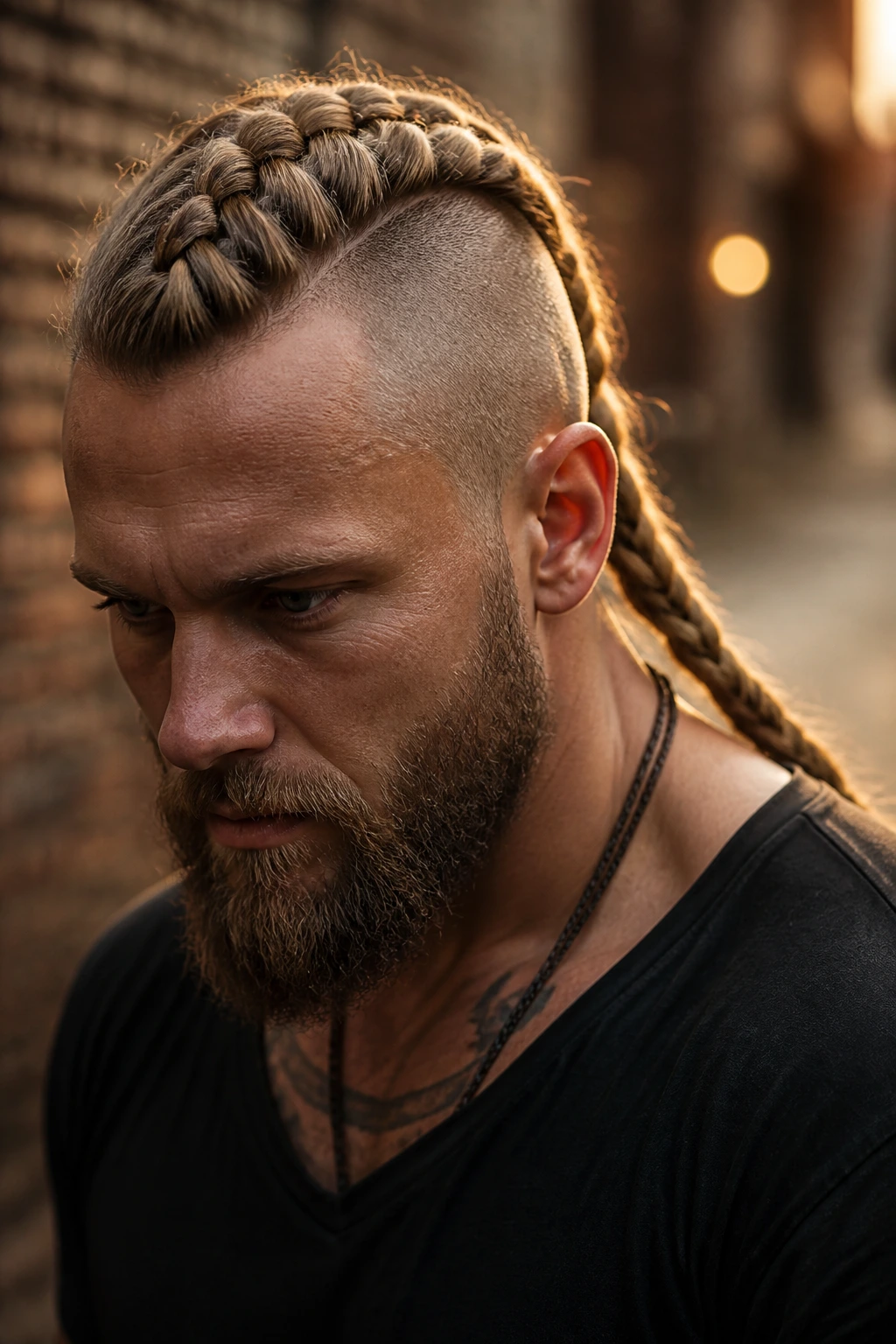
This is an edgier version of the braided look. It involves shaving the sides of your head and braiding the long top section tightly toward the back. It is aggressive, rugged, and extremely functional.
Why It Holds Up
By shaving the sides, you eliminate the tension on the perimeter of the scalp, which often causes braids to pull and hurt. You are left with a single, thick mohawk-style braid. This is a great style for guys who want a distinct, masculine look that doesn’t require daily styling—once the braids are in, they can stay for a few days, depending on your hair texture.
15. Shoulder-Length Bob
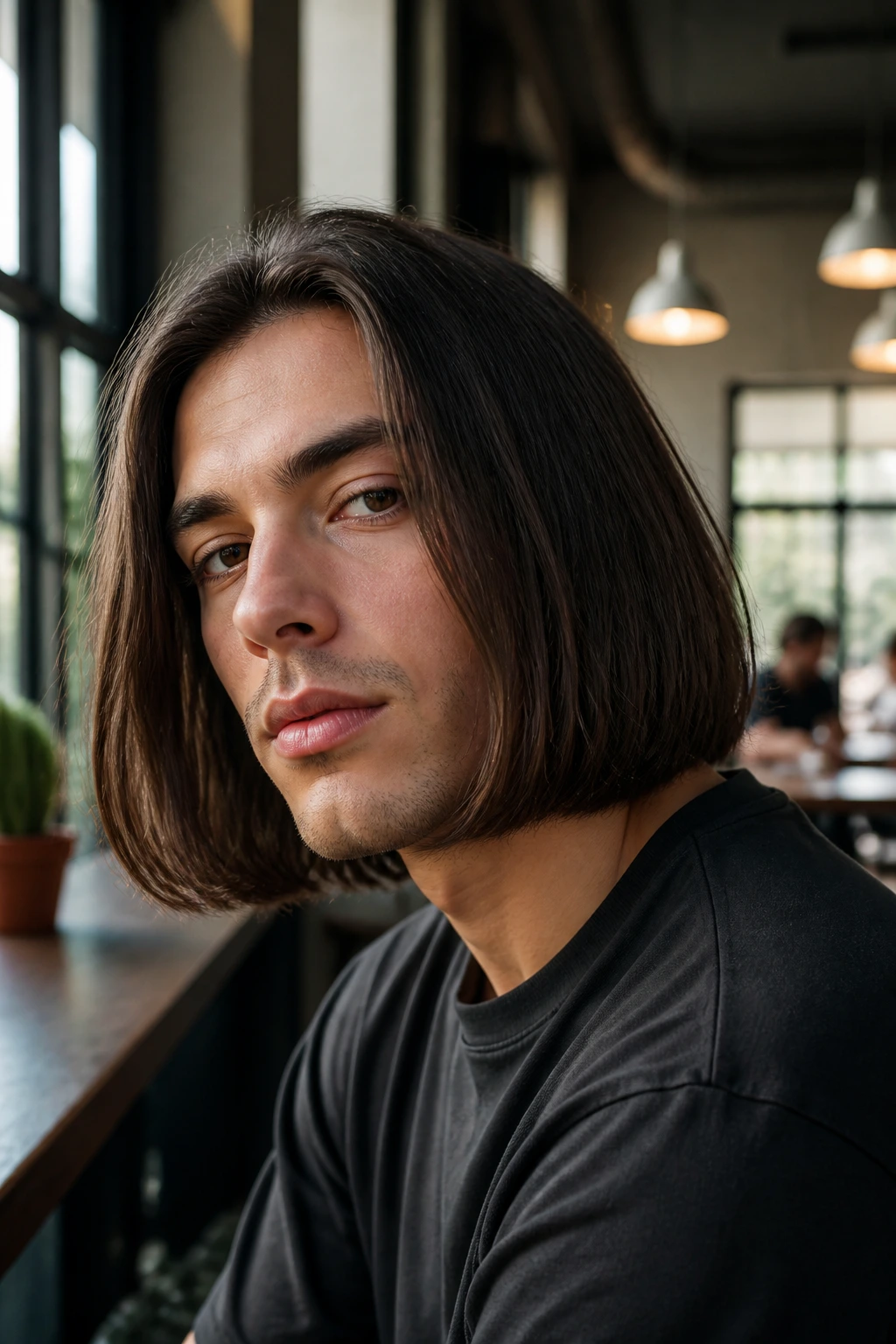
The bob is not just for women; it is a classic, structured haircut that looks excellent on men with straight or slightly wavy thick hair. It involves cutting the hair to a uniform length, usually hitting just around the chin or shoulders.
The Blunt Cut Advantage
A blunt cut is the best way to control thick hair. By cutting straight across, you create a “weight line” at the bottom. This weight actually helps pull the hair down, keeping it from puffing out or getting frizzy. It is a very intentional look that signals confidence. If you choose this, commit to the grooming. You need to keep the ends healthy, or the bluntness will look frayed rather than sharp.
16. Long Afro
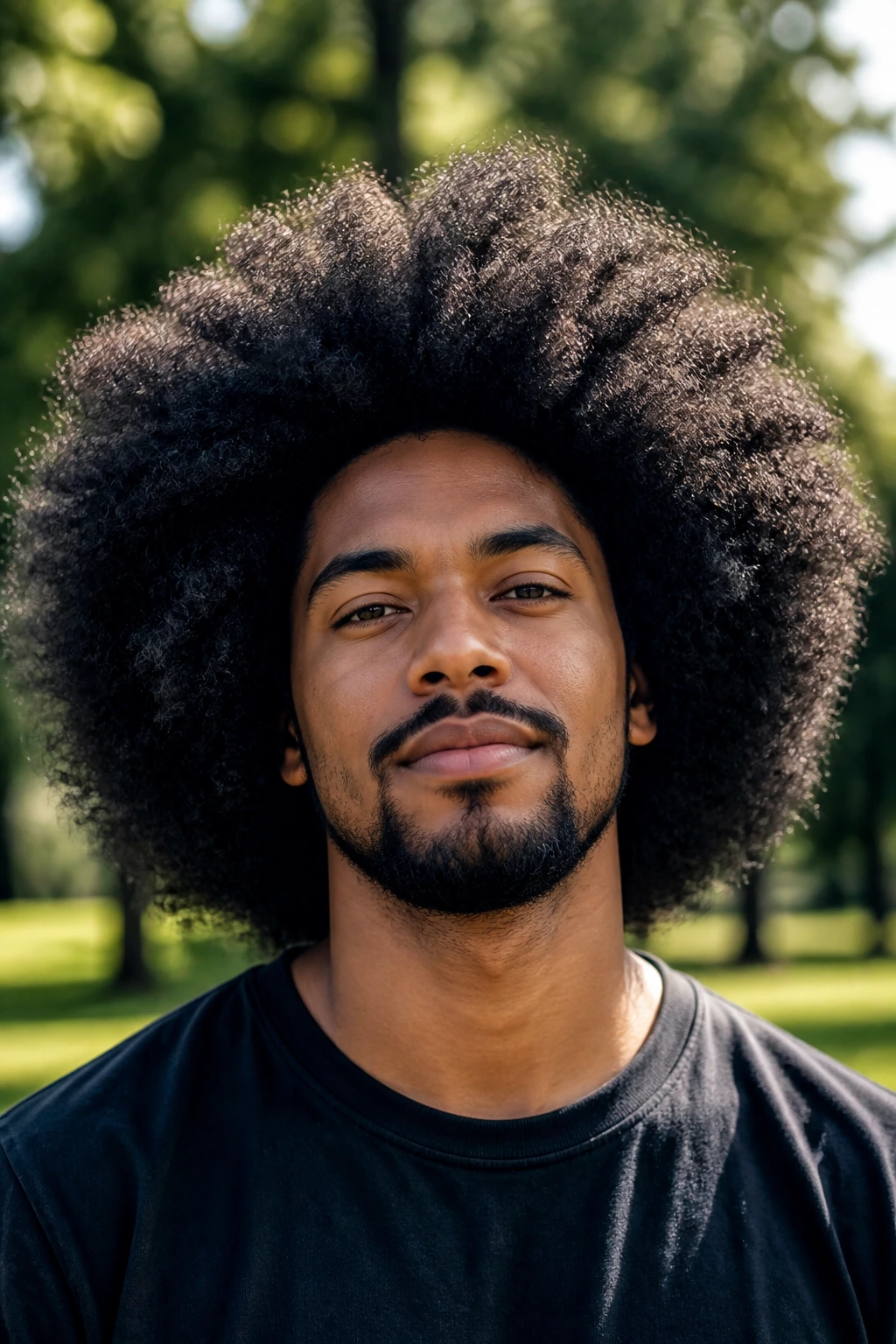
If you have tight coils and dense hair, growing it long is a statement. A well-maintained, long Afro requires patience and the right hydration strategy. It is not about “taming” the hair; it is about celebrating the natural volume and shape.
The Moisture Foundation
Thick, coiled hair dries out faster than any other texture. You need to incorporate deep conditioning into your weekly routine. Use a pick to shape the Afro and add volume where you want it. Do not use fine-tooth combs; they will rip through the curls and cause breakage. The goal is to keep the Afro uniform and healthy-looking from the roots to the tips.
17. Dreadlocks
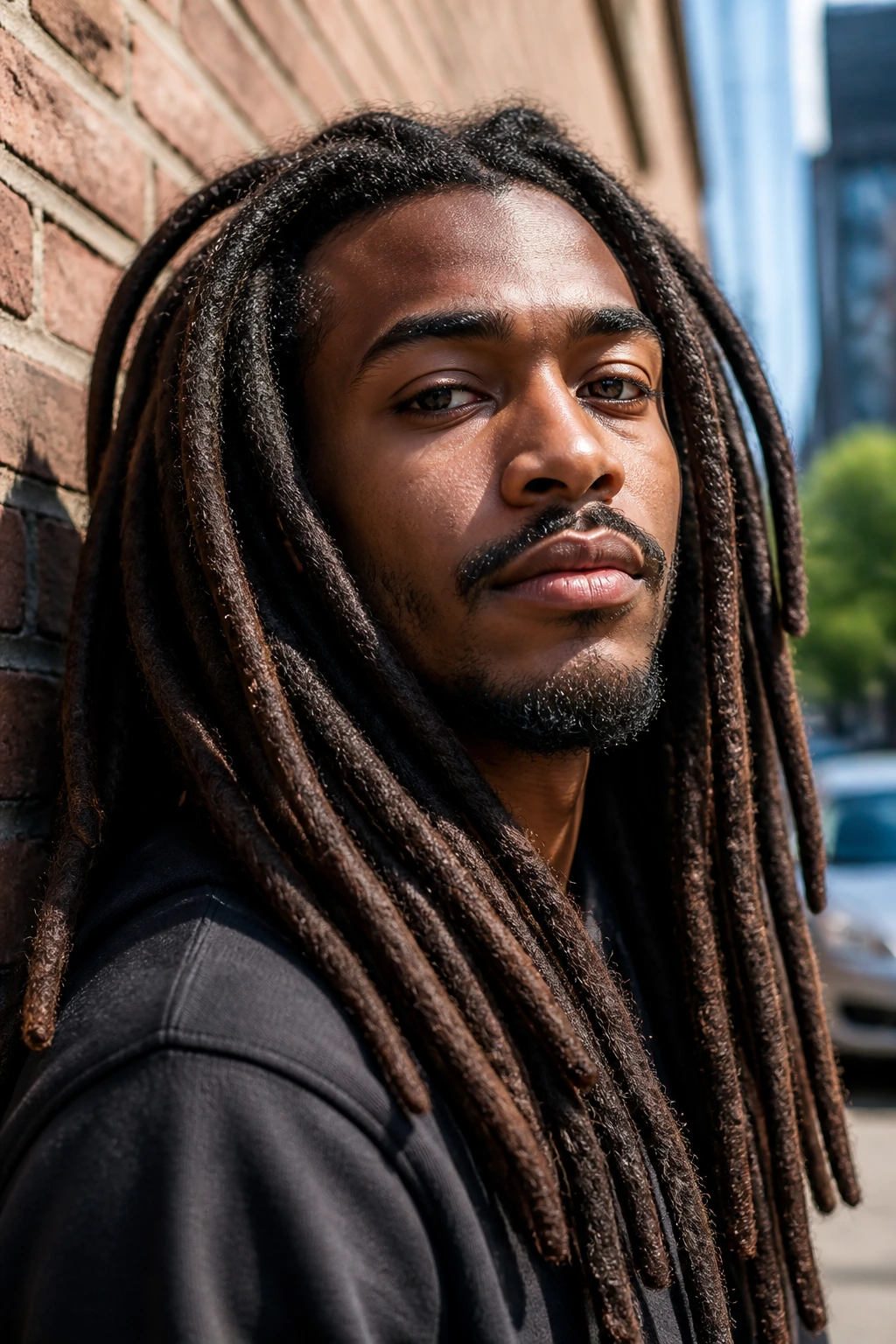
Dreadlocks are the ultimate long-term commitment for thick hair. They are a great way to manage density because they consolidate all those thousands of strands into distinct sections.
The Initial Phase
The first few months are the most difficult. You will have to deal with frizz and the “unraveling” stage. Once your hair locks, however, the maintenance becomes much more streamlined. You will need to keep your scalp clean and oil-free to avoid buildup, and you will need to get the roots retightened periodically. It is a bold, culturally rich style that completely solves the problem of “daily styling.”
18. The “Wolf” Cut
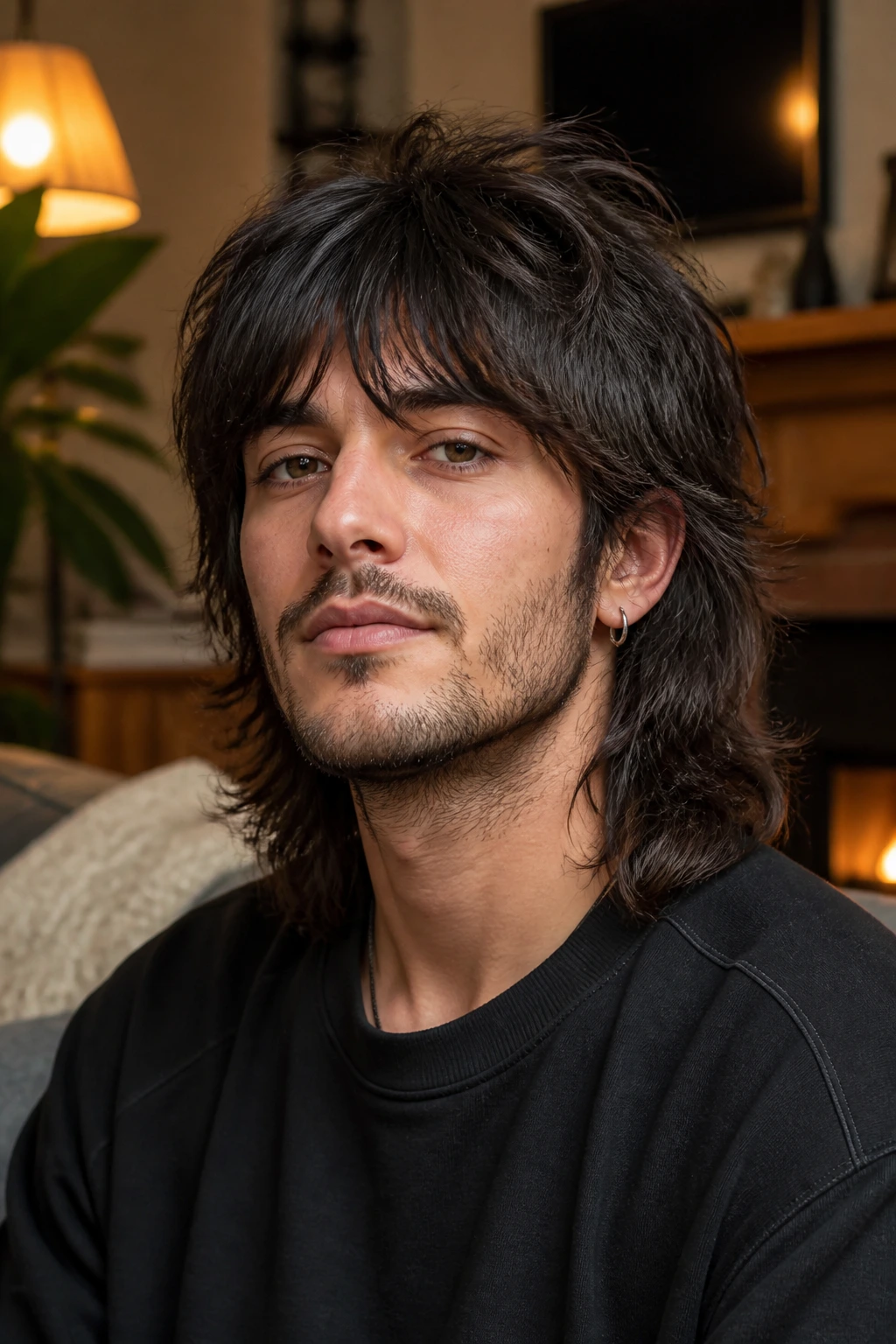
The Wolf cut is a modern take on the shag. It features shorter, choppier layers on the top and crown of the head, and longer, thinner layers toward the bottom. It is messy, chaotic, and intentionally unpolished.
Why It Works for Thick Hair
It removes a massive amount of weight from the top of your head, which makes your hair feel lighter. The choppiness creates a jagged, rebellious look that thrives on volume. If you have thick, slightly wavy hair, this is the easiest style to maintain. You can literally roll out of bed, run your fingers through it, and it will look like you spent twenty minutes styling it.
19. Long Layers with Bangs
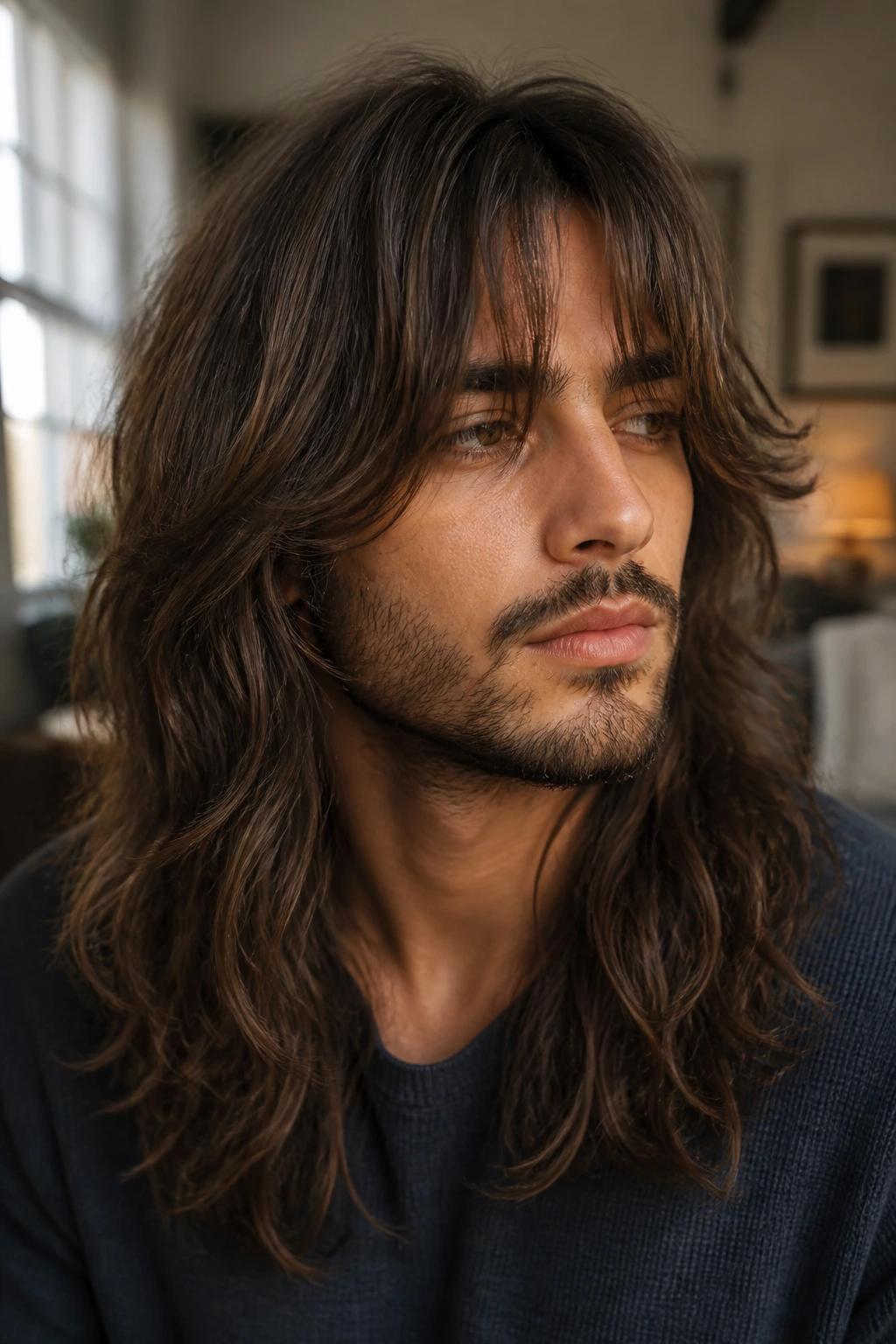
Bangs are often avoided by men, but when paired with long, thick hair, they can be transformative. They add structure to your face and prevent your hair from just hanging like a curtain.
Framing the Face
The key is to keep the bangs textured, not straight across like a bowl cut. Ask for “curtain bangs” that are longer on the sides and blend into the rest of your hair. This softens the jawline and draws attention to your eyes. Because your hair is thick, these bangs will have plenty of body and won’t lay flat against your forehead, which is the main reason most guys dislike bangs.
20. Center Part
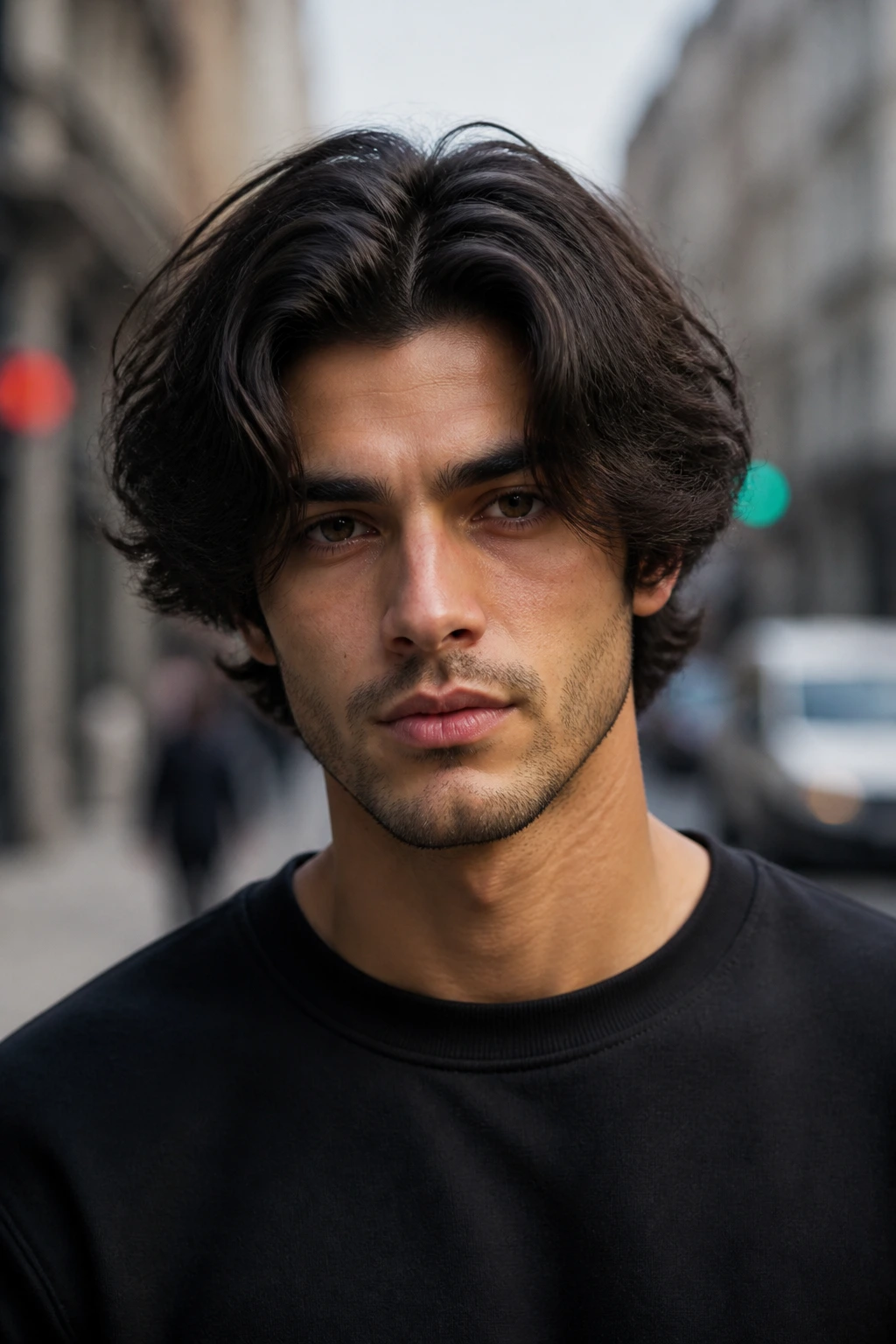
The center part is a 90s aesthetic that has come back around. It works exceptionally well with thick hair because the density allows the hair to fall over the sides of your face with a nice, heavy drape.
The Commitment to Length
This style is unforgiving if your hair isn’t long enough. You need the hair to at least hit the middle of your ears to pull this off effectively. If it is shorter than that, you will just look like you have a bad mushroom cut. Use a bit of grooming cream to push the hair back slightly behind the ears, which prevents it from looking too heavy on your cheeks.
21. Tucked Behind Ears
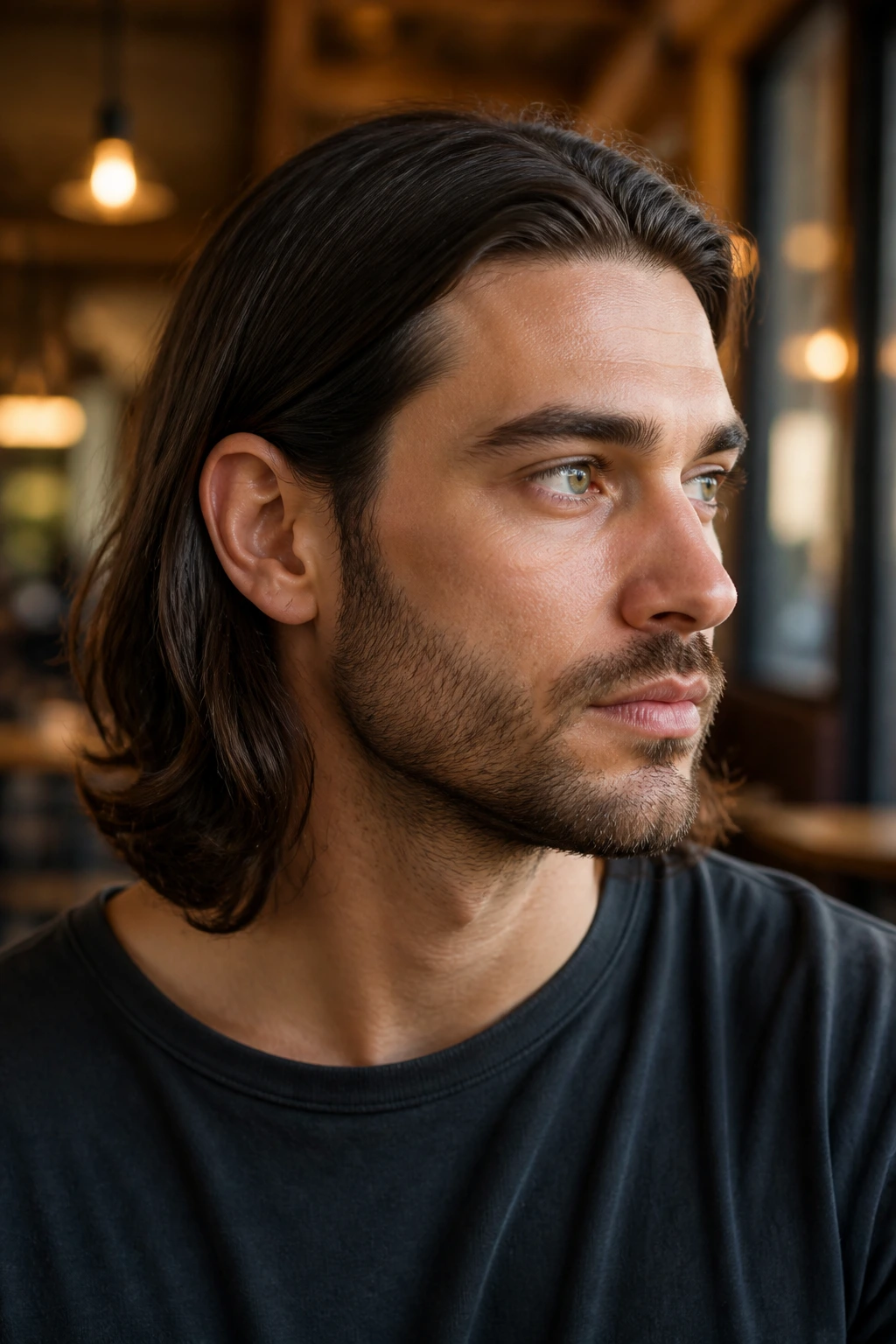
This is less of a cut and more of a styling technique. If you have long, thick hair, there will be days where you don’t want it in your face but don’t want to tie it back.
The Professional Look
Tucking your hair behind your ears is a simple way to neaten up the look instantly. It exposes your face and creates a clean line from the earlobe to the jaw. It works best if you have a little bit of length on the sides. If your hair is too short, it will just pop back out. If it is thick, it will stay tucked, which is a major advantage.
22. Long and Messy
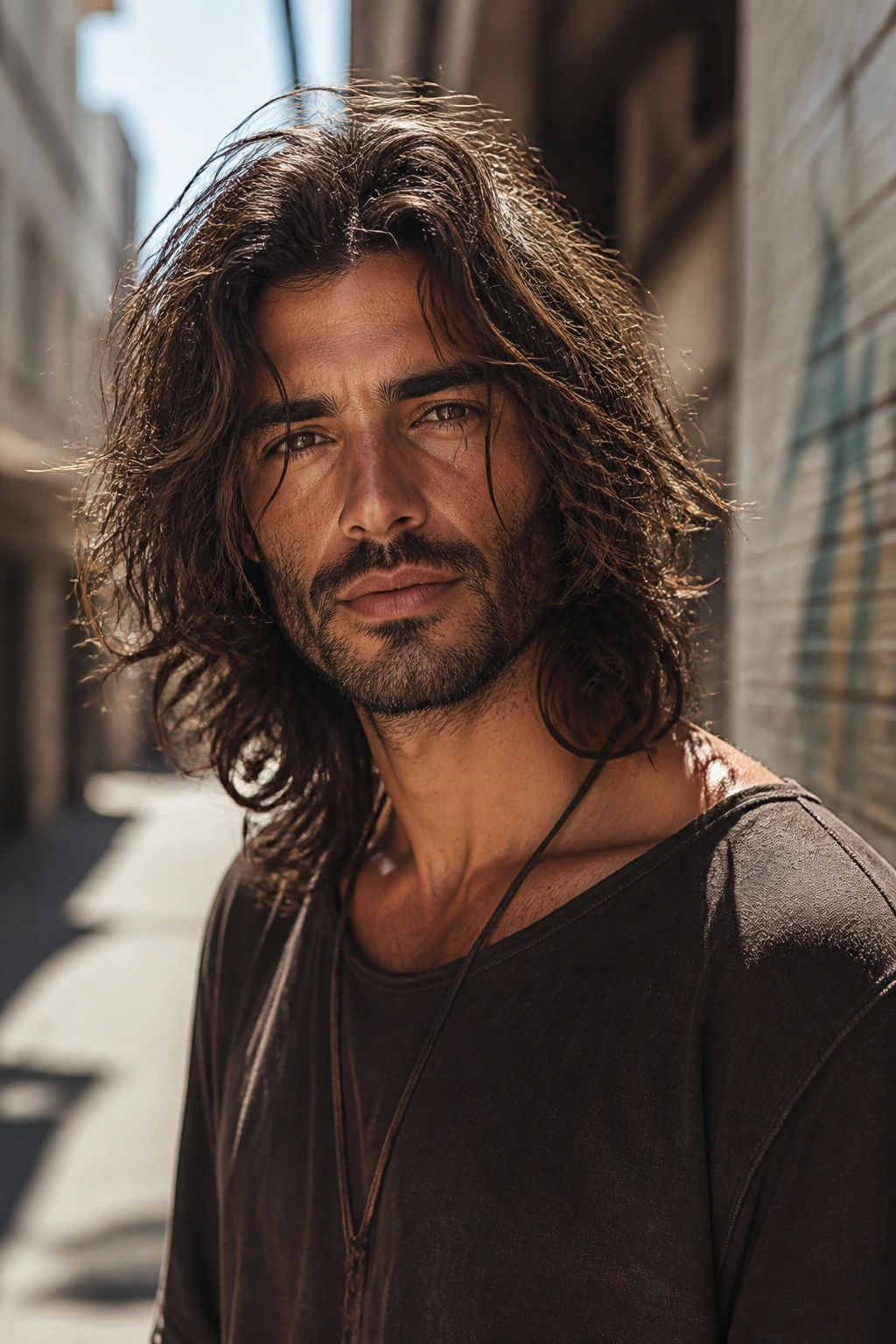
This is the “I just woke up” style, but it is actually the most carefully constructed. It involves long layers and a total disregard for perfect parting.
The Secret Ingredient
You need a texturizing powder or a “dry shampoo” spray. This adds grit to your hair. Thick, clean hair is often too silky and heavy to hold a messy style; it just falls flat. By adding grit, you allow the strands to clump together and hold the “disheveled” shape. Shake the powder into your roots, ruffle your hair with your hands, and leave it alone. The more you touch it, the worse it looks.
23. Long Slicked Side-Part
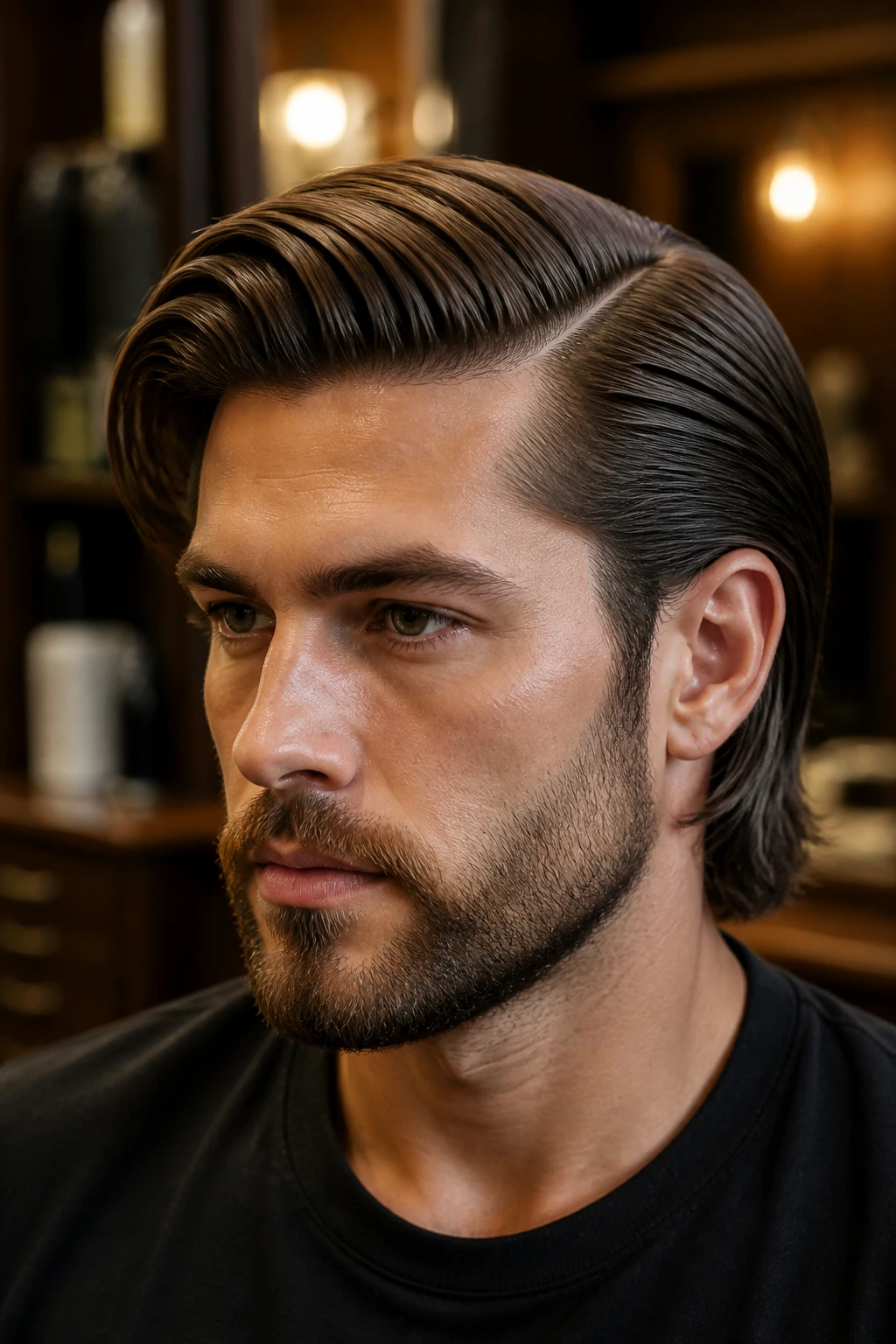
This is the refined brother of the slicked-back look. Instead of pulling everything straight back, you create a deep side part and direct the hair across and back.
The Precision Required
You need a fine-tooth comb for this. You need to create a razor-sharp part line. This style exudes a classic, formal vibe. It is perfect for events where you need to look polished. Use a pomade with a slight sheen to make the hair look healthy and controlled. Because your hair is thick, this style will look incredibly substantial—you won’t have that “see-through” look that guys with fine hair get when they try to slick their hair down.
24. Taper Fade with Long Texture
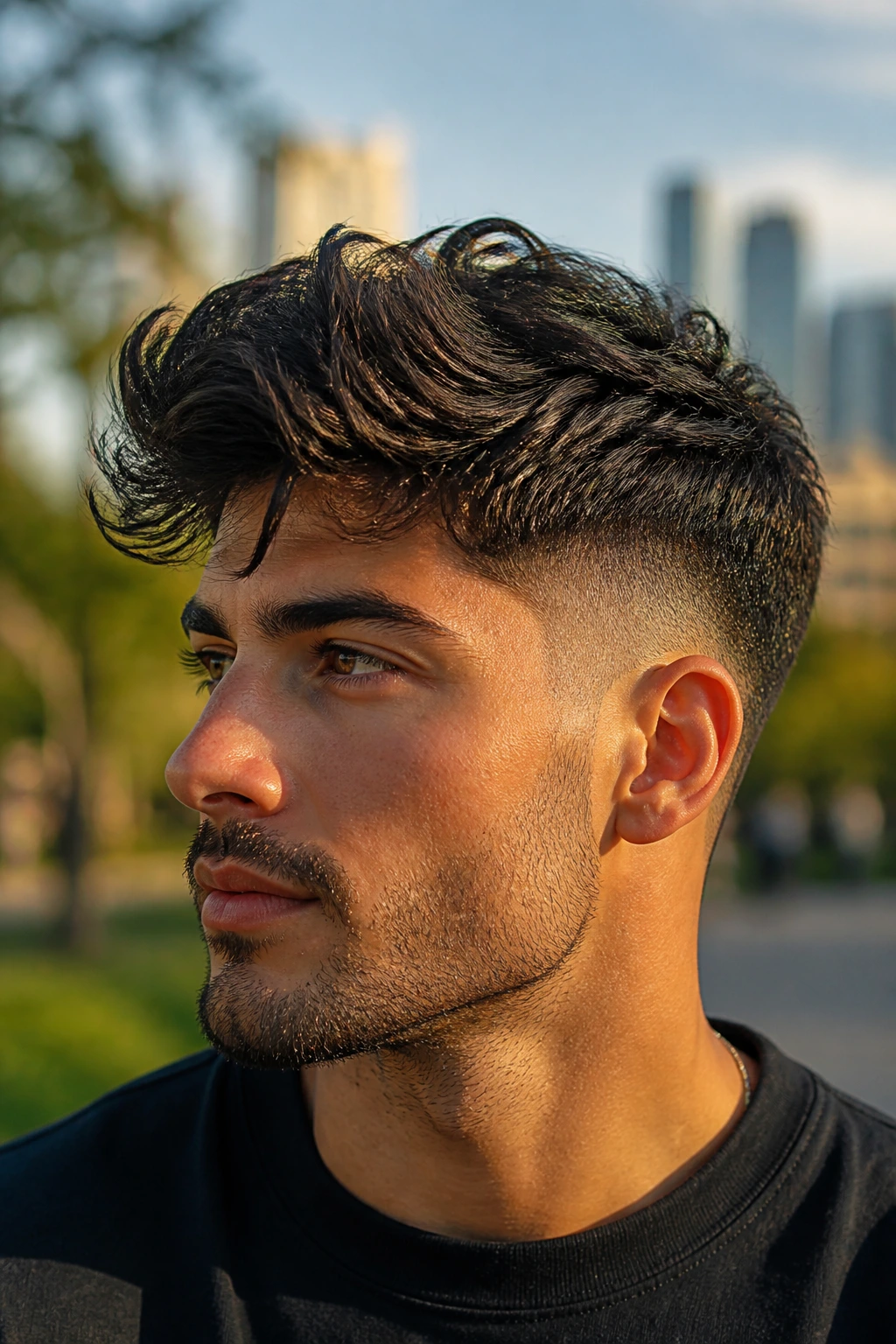
This is the ultimate modern hybrid. It combines the ease of a taper fade on the bottom with the freedom of long, textured hair on top.
The Best of Both Worlds
The taper fade keeps the hairline around your ears and neck clean, which is often the messiest part of growing out hair. It keeps the neck looking slim and the style looking purposeful. On top, you leave the length. You can style it messy, slick it back, or just let it fall. It removes the bulk from the bottom, which is where most thick-haired guys experience the most “poof” or “frizz.”
25. The Samurai Top Knot
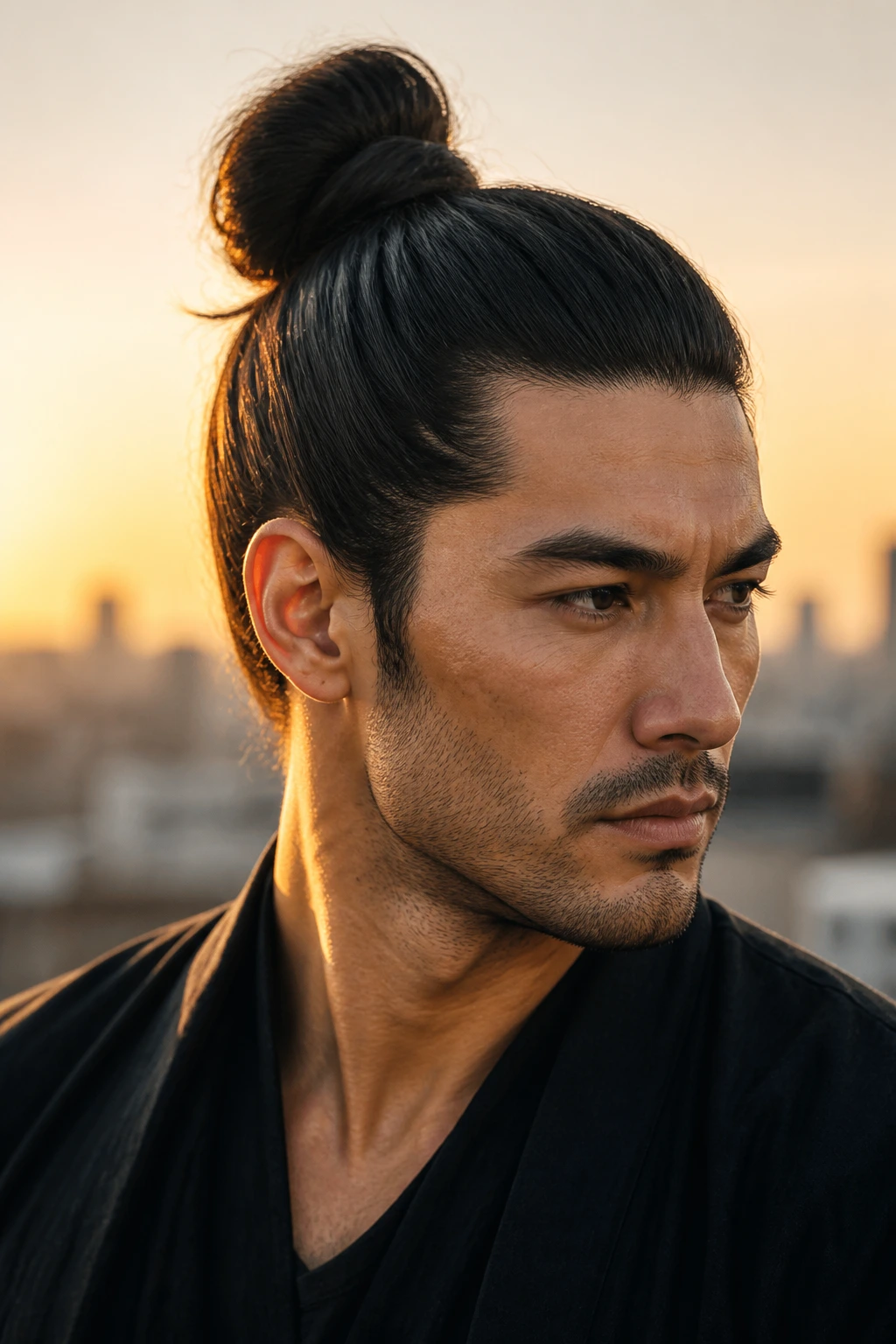
This is different from the regular top knot because it involves the entire head of hair being pulled up, not just the top section. It is a full-head pull, secured in a tight, high bun.
The Structural Integrity
Because you are pulling all your hair up, you need a heavy-duty hair tie. Do not use flimsy plastic bands; they will snap. Look for thick, fabric-covered elastics. The Samurai knot is a bold look that works best if you have a strong jawline. It is entirely uncompromising—there is nowhere for the hair to hide. It is sleek, precise, and completely out of your face, making it a favorite for guys who need total focus during their day.
Final Thoughts
Hair is a material that changes over time, and your relationship with it will evolve as you grow it out. You will have days where it feels unmanageable, where the layers aren’t sitting right, or where you just want to reach for the clippers. That is part of the process. The biggest mistake guys make with long, thick hair is trying to treat it like shorter hair. It requires different tools—wider combs, better conditioners, and products that prioritize control over shine.
If you find that a style isn’t working, do not assume your hair is the problem. It is usually the cut. A great barber knows how to take the “triangle” out of a long haircut. Don’t be afraid to ask for thinning or texturizing. You are paying for their expertise to manage the weight that nature gave you. Stick with it, find the product that gives you the hold you need, and remember that with thick hair, a little bit of patience goes a long way. Your hair has potential; you just have to give it the right structure to flourish.
