



A bangs trim can change a haircut faster than losing three inches of length. That sounds dramatic, but it’s true: fringe sits right where people look first, so even a quarter-inch shift changes the whole mood of the face.
Bangs are also fussy in a way the rest of the haircut usually isn’t. A flat crown, a stubborn cowlick, a forehead that prefers a center part — all of that shows up right away, which is why a good trim matters more than people expect. I’ve seen a blunt fringe turn severe simply because it was cut too short, and I’ve seen curtain bangs go limp because nobody left enough length for them to bend.
Small change. Big shift.
The smartest trims are not the ones that erase your forehead. They’re the ones that sit where your hair wants to live, then use shape to make the whole cut feel cleaner.
1. Soft Curtain Bangs Trim

If you want a change that feels noticeable without feeling loud, this is the safest place to start. A soft curtain bangs trim opens at the center and falls away toward the cheekbones, which gives the face room instead of boxing it in.
Why It Flatters So Many Faces
The middle is usually the shortest point, then the length drifts down at the sides. That little slope does a lot of work. It softens a high forehead, frames the eyes, and makes a blunt haircut feel less stiff.
The best version looks easy, but it isn’t random. The shortest pieces should sit around the bridge of the nose when dry, and the longer edges need enough length to skim the top of the cheekbone. Too short in the center and the whole thing turns stubborn. Too long and you lose the fringe effect completely.
- Ask for a center opening that starts narrow, not wide.
- Keep the edges long enough to tuck behind the ears if you want.
- Tell your stylist you want movement, not a hard curtain split.
- Style with a round brush or a quick bend from a flat iron, then let the ends fall naturally.
Best tip: leave the center a touch longer than your first instinct. You can always shorten it, and you’ll be glad you did when it dries.
2. Brow-Grazing Blunt Bangs
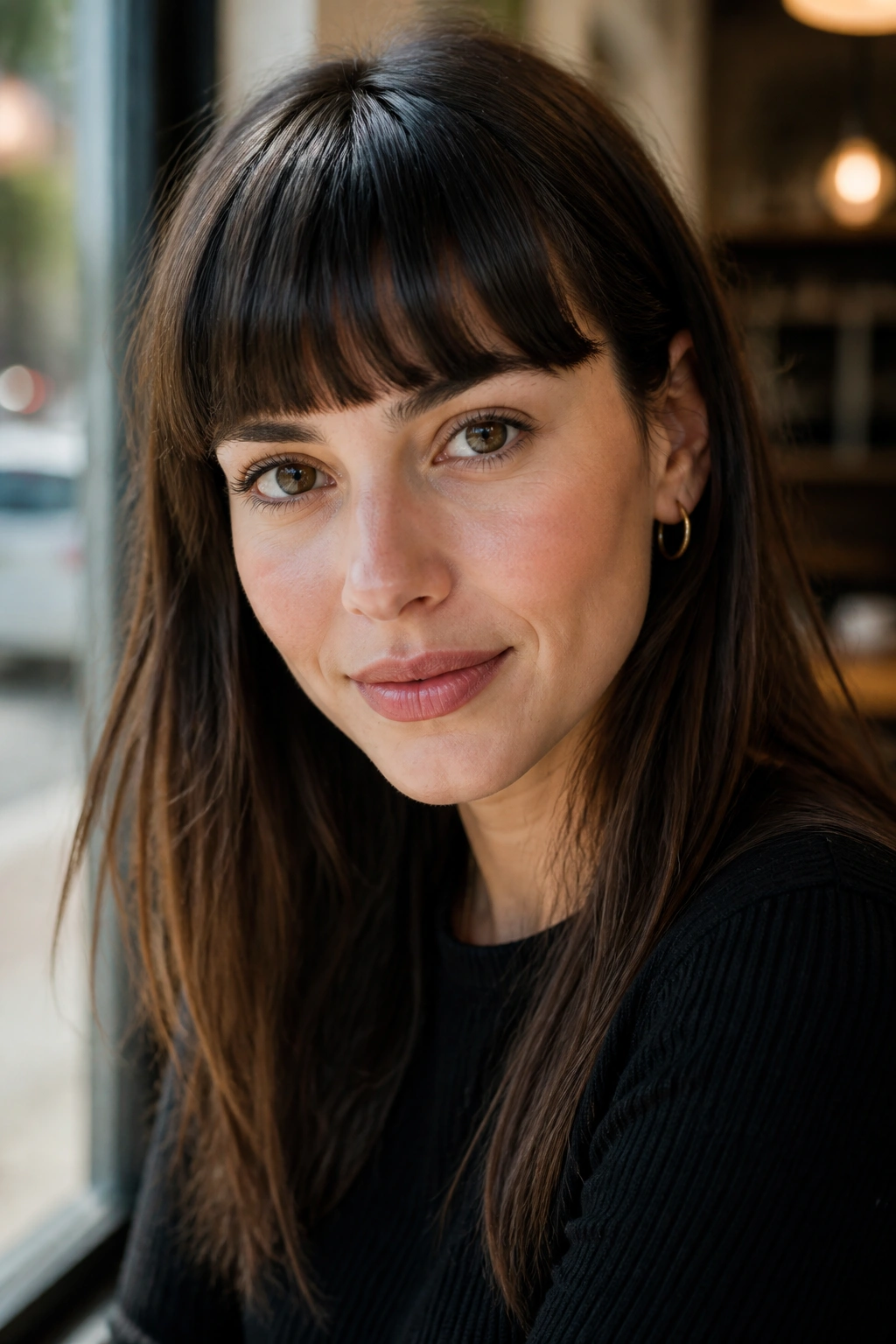
Want your eyes to look sharper without changing the rest of the haircut? Brow-grazing blunt bangs do that job in one clean line. They’re tidy, direct, and a little bit bossy in the best way.
A blunt fringe lands right at or just above the brows, which means the line itself becomes the point. That’s why this trim reads so clearly in photos and in real life. There’s no soft fade to hide behind. It’s all edge, and that edge can make fine features look more defined.
It works best on straight or slightly wavy hair, because the shape depends on staying fairly flat. If your hair kicks out hard at the sides, ask for a tiny bit of internal texture so the corners don’t puff up after a few hours. Skip that, and the fringe can look boxed-in.
It is a small cut with loud results.
The upkeep is the catch. Brow-grazing bangs usually need a trim every three to four weeks if you want them to stay crisp. If that sounds annoying, fair enough. This is not a lazy haircut. But if you like structure and you want the face to look more intentional, the payoff is worth the scissors.
3. Wispy See-Through Bangs Trim

A little air goes a long way here. Wispy see-through bangs are light, soft, and just sparse enough to let your skin show through, which keeps the forehead from feeling covered up.
What Makes Them Stay Soft
The trick is density. You do not want a thick sheet of hair sitting on the front of the face. You want thin, separated pieces that skim the brow and break apart naturally when you move. That’s why point-cutting matters so much with this look; a straight shear line turns delicate bangs into something blunt and awkward.
On fine hair, this trim can be a lifesaver because it gives you fringe without dragging the whole front section down. On thicker hair, it helps reduce the feeling of “too much hair” sitting in one place. Either way, the shape should look feathery, not accidental.
- Keep the center light and narrow.
- Ask for soft ends rather than a solid edge.
- Blow-dry forward with low heat, then separate the pieces with your fingers.
- Use only a tiny bit of cream or paste so the fringe doesn’t clump together.
One warning, because it matters: if the section is too thin, the style can look unfinished instead of airy. Balance is the whole trick. A wispy fringe should feel delicate, not like someone forgot to finish the cut.
4. Side-Swept Diagonal Bangs

If your part already lives off to one side, a diagonal bang trim can look like it was always meant to be there. The line moves across the forehead instead of stopping in front of it, which makes the whole face feel longer and a little softer.
This shape is useful when you want bangs without fully committing to a straight-across fringe. The shortest point usually sits near the outer brow on the heavier side, then the length drops toward the opposite cheek. That slope pulls the eye across the face, which is handy if you want to soften a strong forehead or a very square front hairline.
They also play well with grow-out. You can tuck them behind the ear, pin them back, or let them fall into layers. That’s a nice bit of insurance if you’re nervous about bangs in general.
A deep side part helps, but the cut matters more than the styling. Tell your stylist you want the line to begin soft and end long enough to brush the cheekbone. If the diagonal is cut too steep, it starts looking like a leftover fringe instead of a deliberate shape.
5. Bottleneck Bangs Trim

These are the smartest hybrid bangs on the list. Bottleneck bangs start narrow in the middle, widen at the brow, then melt into the face-framing pieces at the sides. That little shape shift makes them feel polished without turning severe.
The name makes sense once you see them in motion. They’re tighter at the center, almost like a small opening, then they flare out in a way that sits between curtain bangs and a full fringe. You get forehead coverage without that solid wall of hair that can make some cuts feel heavy.
They’re especially good if you want bangs that look styled even on a low-effort day. The curve gives the cut some built-in movement, so it rarely looks flat unless the blow-dry is rough. Medium to thick hair usually holds the shape best, though fine hair can wear it too if the density is kept light.
I like this trim because it feels balanced. Not too trendy. Not too safe. Just shaped enough to make the haircut feel finished.
If you’re asking for it at the salon, mention narrow in the center, wider at the temples, soft at the ends. That keeps the whole thing from turning into either a blunt bang or a full curtain split.
6. Micro Bangs With a Clean Edge

Short bangs are not for hiding. They’re for showing off the cut.
Micro bangs sit well above the brows, sometimes a finger’s width higher, and they change the face fast. They put the eyes and brows front and center, which is why they can look so sharp on the right person. If your brows have a strong shape, this trim loves that. If you like a little edge in your haircut, even better.
What They Change on Your Face
A micro fringe opens the forehead and makes the rest of the haircut feel more fashion-forward. It also draws attention upward, which can be useful if you want your cheekbones or jaw to take a back seat. The whole look depends on precision, though. A sloppy micro bang just looks like a bang that got cut too short.
- Best on straight or slightly wavy hair.
- Needs regular touch-ups, often every two to three weeks.
- Works better when the line is crisp and the ends are not overly thinned out.
- Looks strongest when the brows are groomed to match the mood of the cut.
It asks for confidence. There isn’t really a polite way around that. But if you like sharp lines and you don’t mind a style that gets noticed right away, micro bangs are a very clean, very deliberate choice.
7. Arched Full Fringe Trim
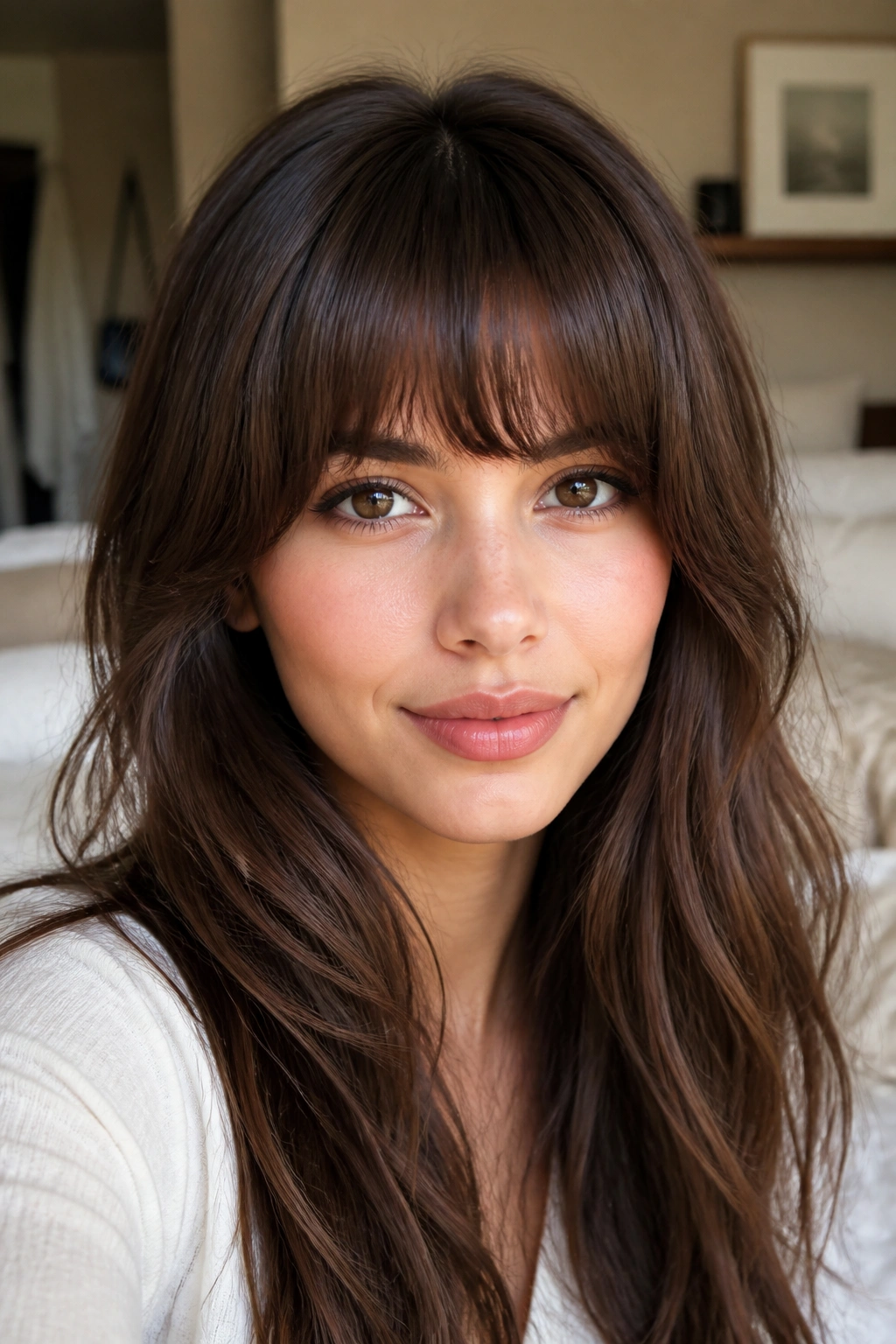
Want a fuller frame without the hard edge of a blunt cut? An arched fringe gives you that middle ground. The line curves gently across the forehead, usually a touch shorter near the center and a little longer toward the temples, which makes the shape feel softer than a straight line.
That curve matters more than people think. It lets the fringe follow the brow instead of sitting on top of it like a shelf. The result is fuller than wispy bangs but less rigid than a blunt chop. If you have a square face, a strong jaw, or a forehead that you want to soften without hiding, this shape does good work.
How It Differs From a Blunt Fringe
A blunt bang gives you one solid line. An arched fringe gives you a curve, which changes how the eye reads the face. That sounds small, but it makes the cut feel less heavy, especially on thick hair.
- Ask for a soft arch, not a deep crescent.
- Keep the sides long enough to graze the temples.
- Blow-dry with a round brush so the bend stays visible.
- Avoid over-thinning the center, or the arch loses its shape fast.
The best versions look tailored, not fussy. If the curve is too steep, it starts looking costume-y. Keep it shallow, keep it soft, and let the line do the talking.
8. Choppy Textured Bangs
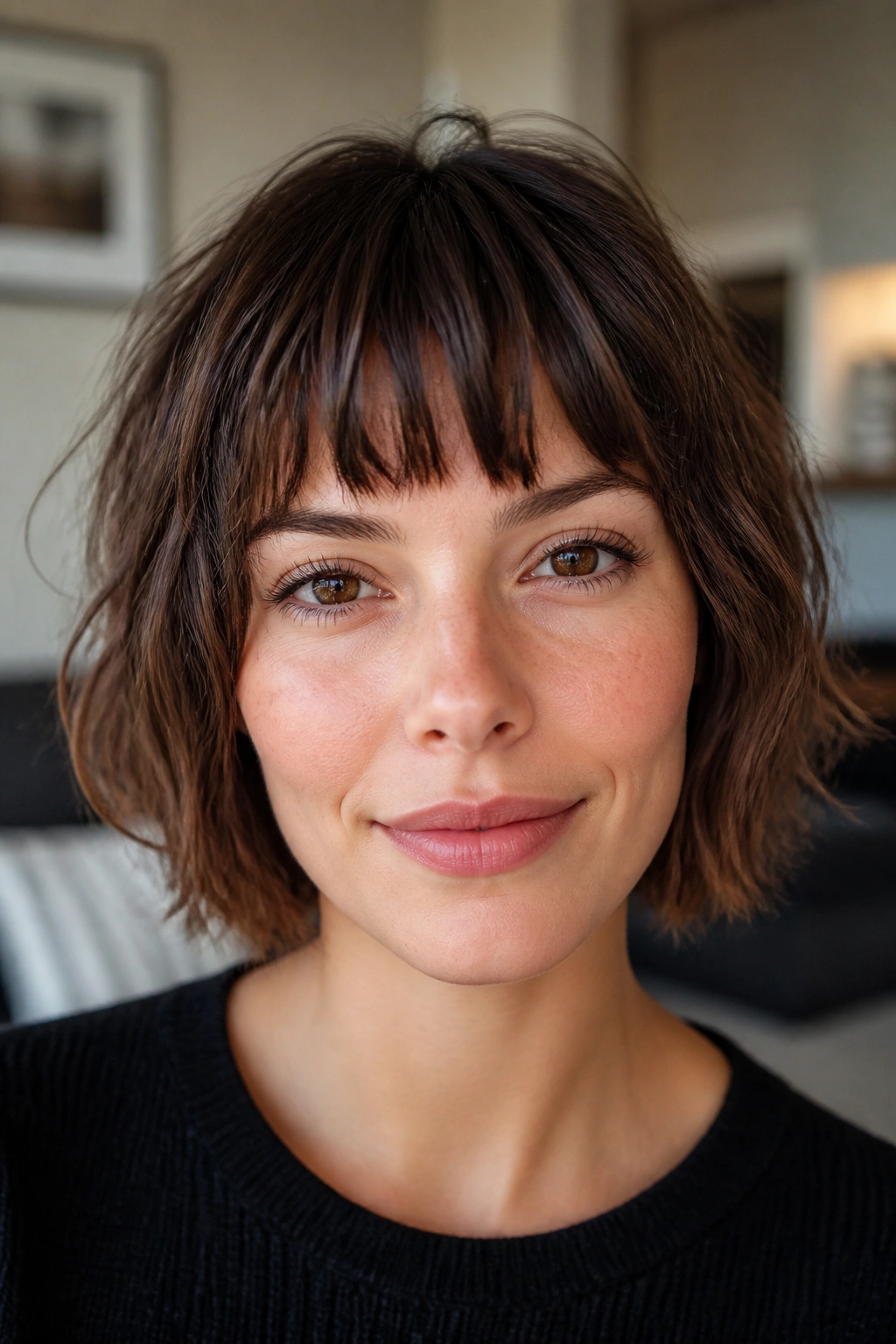
On humid mornings, a perfectly straight fringe can turn into a mood. Choppy textured bangs are the answer when you want the front of the haircut to look a little broken up on purpose.
The cut is built with small variations in length, so the fringe doesn’t sit as one solid block. That gives it movement right away, even if you air-dry and walk out the door. It’s a smart choice for thicker hair that tends to puff, because the texture breaks up the weight before it settles.
A point-cut finish usually works better than a heavy razor job here. A razor can be lovely, but it can also go too soft if the hair is already fine. Point-cutting gives the stylist more control over where the line breaks and where it stays a little denser.
This is one of those trims that looks easy only because the shape is doing the heavy lifting. It is not “messy.” It is built to look controlled in a loose way. Big difference.
If you want this look, tell your stylist you want movement at the ends, not a straight shelf of hair. That single phrase saves a lot of trouble.
9. Face-Framing Hybrid Bangs
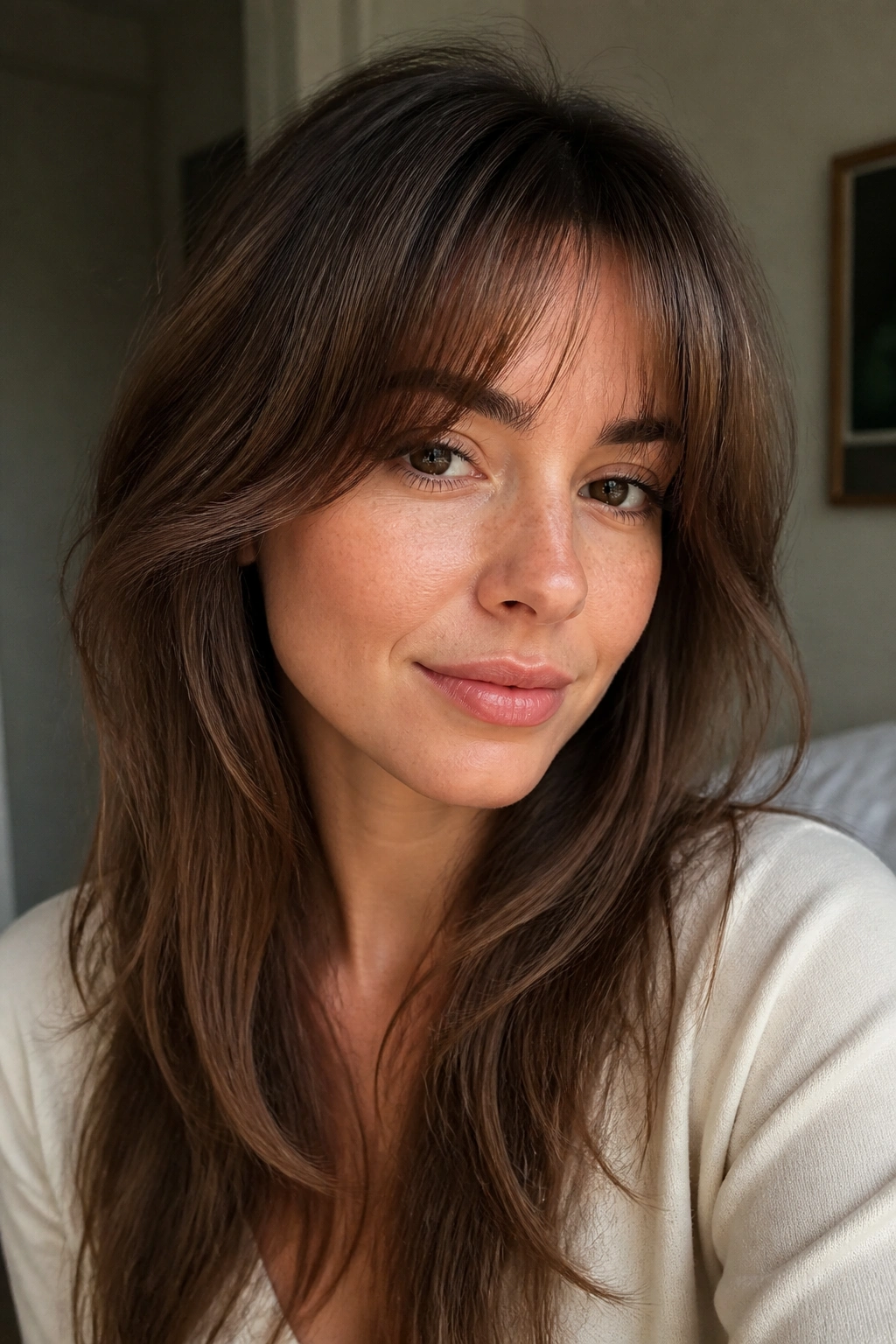
This is the lowest-risk way to try bangs. Face-framing hybrid bangs start like a fringe, then slide into layers around the temples and cheekbones, so the front never feels boxed in or overly committed.
Half fringe, half layer.
That’s the appeal. You get enough hair across the forehead to change the shape of the haircut, but the sides melt away before the look gets heavy. It’s especially good if you’ve grown out bangs before and you know you want softness more than drama. It also works well for people who tuck hair behind one ear a lot, because the shape still holds when the front pieces move.
The shortest point usually sits somewhere around the pupil or just below the brow, then the line drops gradually. That small difference gives the cut a lot of flexibility. You can wear it center-parted, side-parted, curled under, or blown out with a little bend.
If you’re uncertain, this is the style I’d point to first. It does not demand much from your morning routine, and it doesn’t punish you if you skip a wash day. The grow-out is forgiving too, which is more useful than people admit. A bang that behaves itself after six weeks is worth keeping around.
10. Curly Bangs Trim

Curly bangs do not sit still, and that’s the point. If your hair has real bend in it, the trim should work with the curl pattern instead of trying to flatten it into a straight line that will rebel by lunch.
The biggest mistake is cutting curly fringe too short while it’s stretched wet. Curl spring is no joke. A piece that looks eyebrow-length when damp can bounce to the middle of the forehead once it dries. That’s why curly bangs are usually cut dry, or at least rechecked dry before anyone takes off more.
How Curly Bangs Behave
They need room. The shortest pieces can still frame the eyes, but they should leave space for the curl to pop upward. The length also has to account for shrinkage on the sides, which is why curly bangs often look best when they’re a little longer than straight bangs at first.
- Cut dry or finish the shape dry.
- Leave more length than you think you need.
- Use curl cream or light gel, not a heavy paste.
- Avoid brushing them hard once they dry, or the shape frizzes out.
A good curly fringe feels relaxed but not sloppy. It should bounce, separate, and still look intentional. If the cut fights the curl, the curl wins every single time. Better to start with the hair you have than the hair you wish you had.
11. Grown-Out Shag Bangs
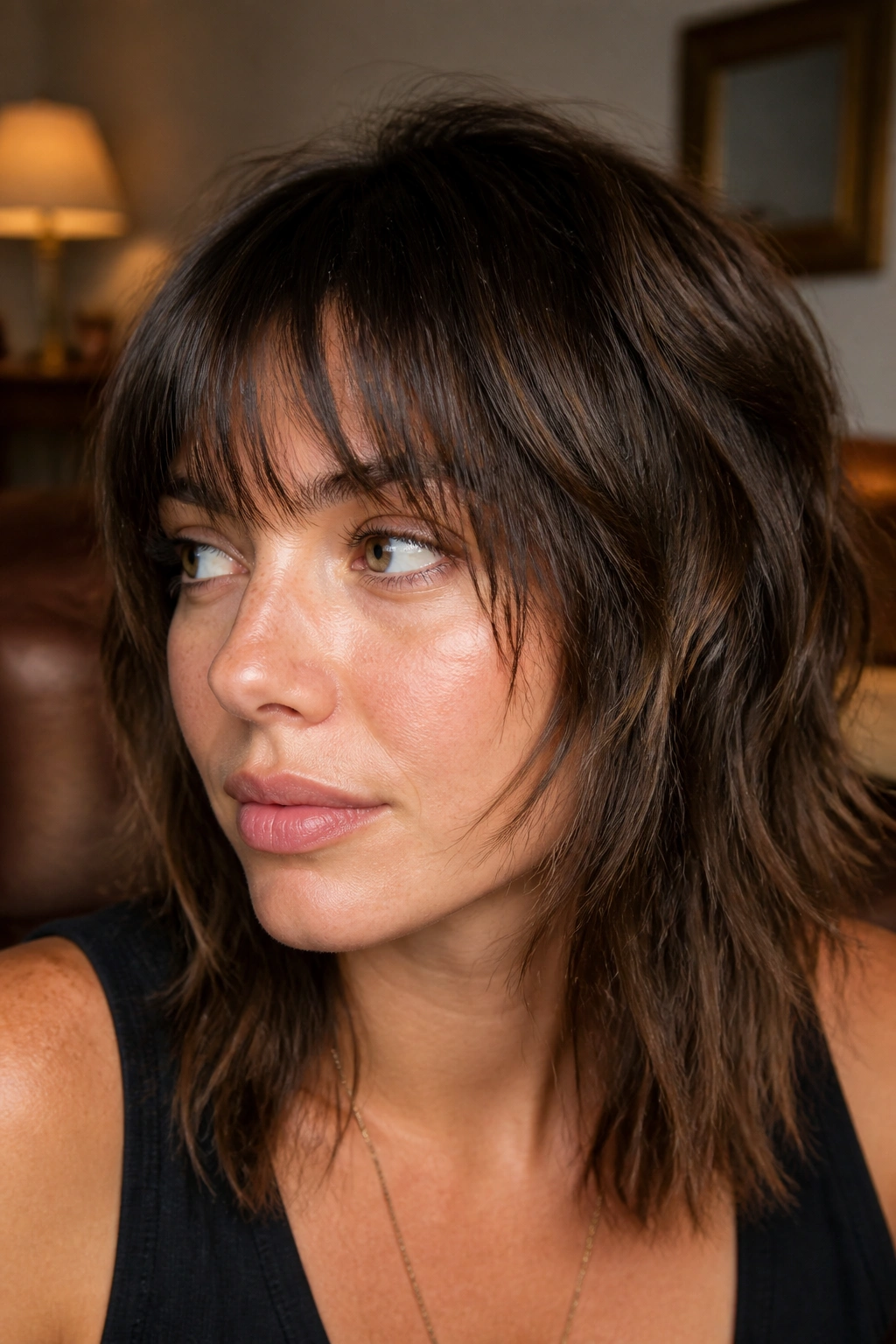
If your fringe already lives halfway down your forehead, turn that into the style. Grown-out shag bangs are for the in-between stage that most people try to hide.
This look leans on texture, layers, and a little messiness around the temples. The bangs are not meant to sit like a clean band across the face. Instead, they blend into a shag cut or layered shape, so the front feels part of the haircut instead of a separate piece sitting on top of it. That makes it a strong choice if you hate the feeling of a highly polished fringe.
I like this one because it’s honest. It works with the shape you already have instead of demanding a reset. That means less time in the mirror, less worry about perfect styling, and less panic when the bangs grow out a little too fast.
A quick rough-dry and a touch of texture spray are usually enough. If the ends kick out here and there, that’s fine. They’re supposed to. The whole point is to keep the fringe looking lived-in, not laminated to the forehead.
This is the one I’d recommend to anyone who wants bangs but not the ceremony that sometimes comes with them.
12. Rounded Retro Fringe

A rounded fringe feels older-school, but in a good way. The curve gives the haircut shape around the eyes and cheekbones, and it can make a simple cut look more finished without needing a lot of styling tricks.
The rounded shape is different from a blunt fringe because the sides are usually a little longer than the center, which creates that soft dome across the forehead. That curve is especially useful if you have a long face or want to shorten the visual length of the forehead a bit. It adds weight in the middle without making the edges harsh.
Why the Curve Changes the Face Shape
A straight fringe cuts the face into neat sections. A rounded one redirects the eye, which makes the whole front of the haircut feel more balanced. That’s why it can flatter thicker hair so well — there’s enough density to hold the curve.
- Ask for a soft round shape, not a severe half-moon.
- Keep the longest edges at the temples.
- Use a round brush or large roller brush to keep the bend smooth.
- Let the ends sit a little softer rather than forcing a hard edge.
There’s a tiny vintage feel here, and I mean that as a compliment. Done right, it looks polished without looking stiff. Done wrong, it can feel dated fast, so keep the curve gentle.
13. Piecey Feathered Bangs
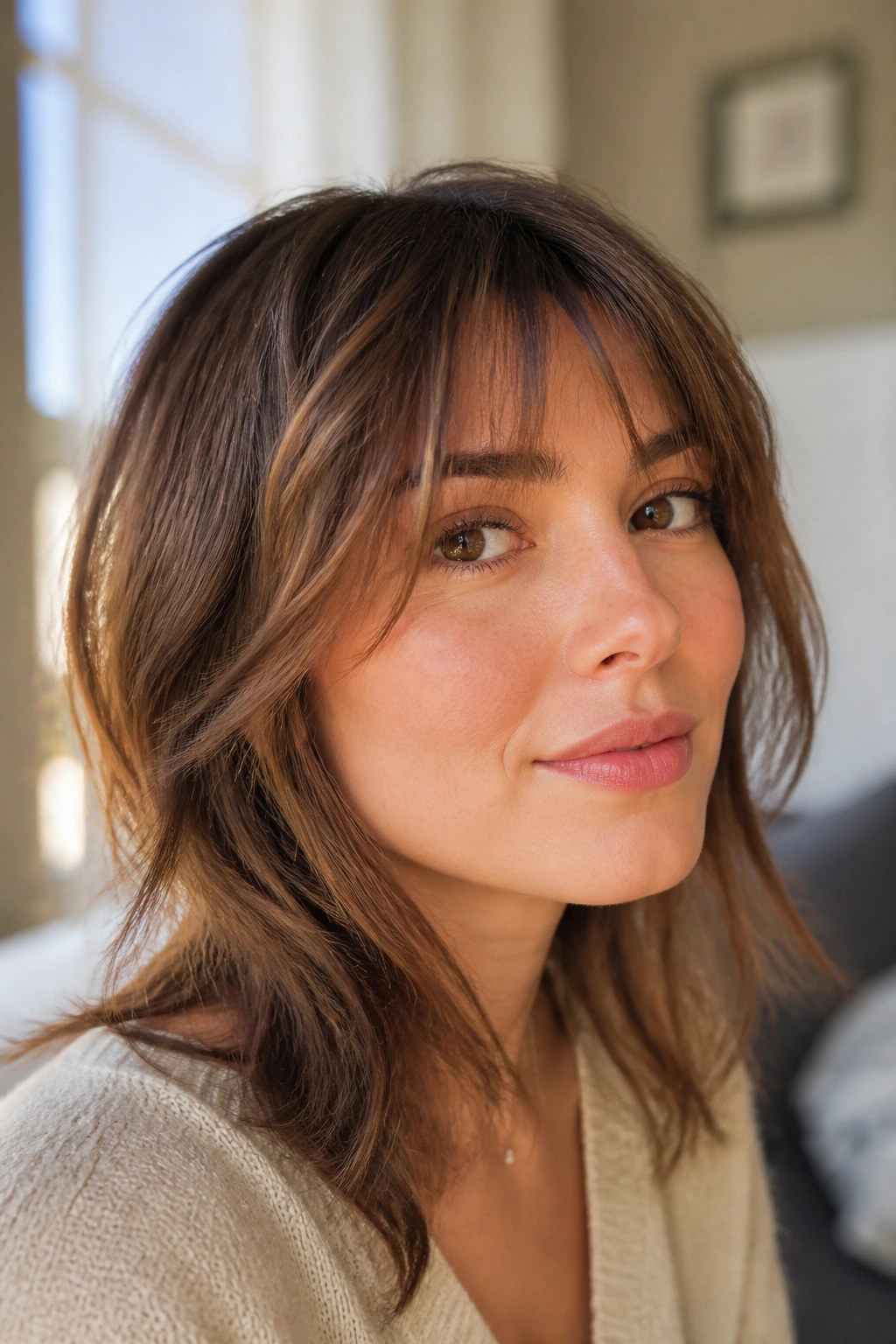
Do you like hair that moves a little when you turn your head? Piecey feathered bangs are built for that. They’re separated, light, and a touch shaggy at the ends, which gives the front of the haircut a soft, broken-up finish.
Unlike wispy bangs, which can be almost translucent, feathered bangs still show a clear shape. The pieces are just more separated, and the ends taper out rather than stopping bluntly. That makes them a good middle ground if you want something airy but not too sparse.
The styling is where this look comes alive. A small round brush, a quick pass with a flat iron, or even just finger-drying with a little root lift can keep the pieces from clumping together. The key is not to overwork them. Too much brushing and the feathering disappears.
This trim works well with layered cuts, especially if you already wear your hair with some bend. It also ages better than a very sharp fringe when you’re trying to stretch the time between salon visits. The shape softens on its own, which is convenient when life gets busy.
If a blunt bang feels too heavy and a see-through bang feels too thin, this sits in the middle nicely.
14. Soft Baby Curtain Bangs
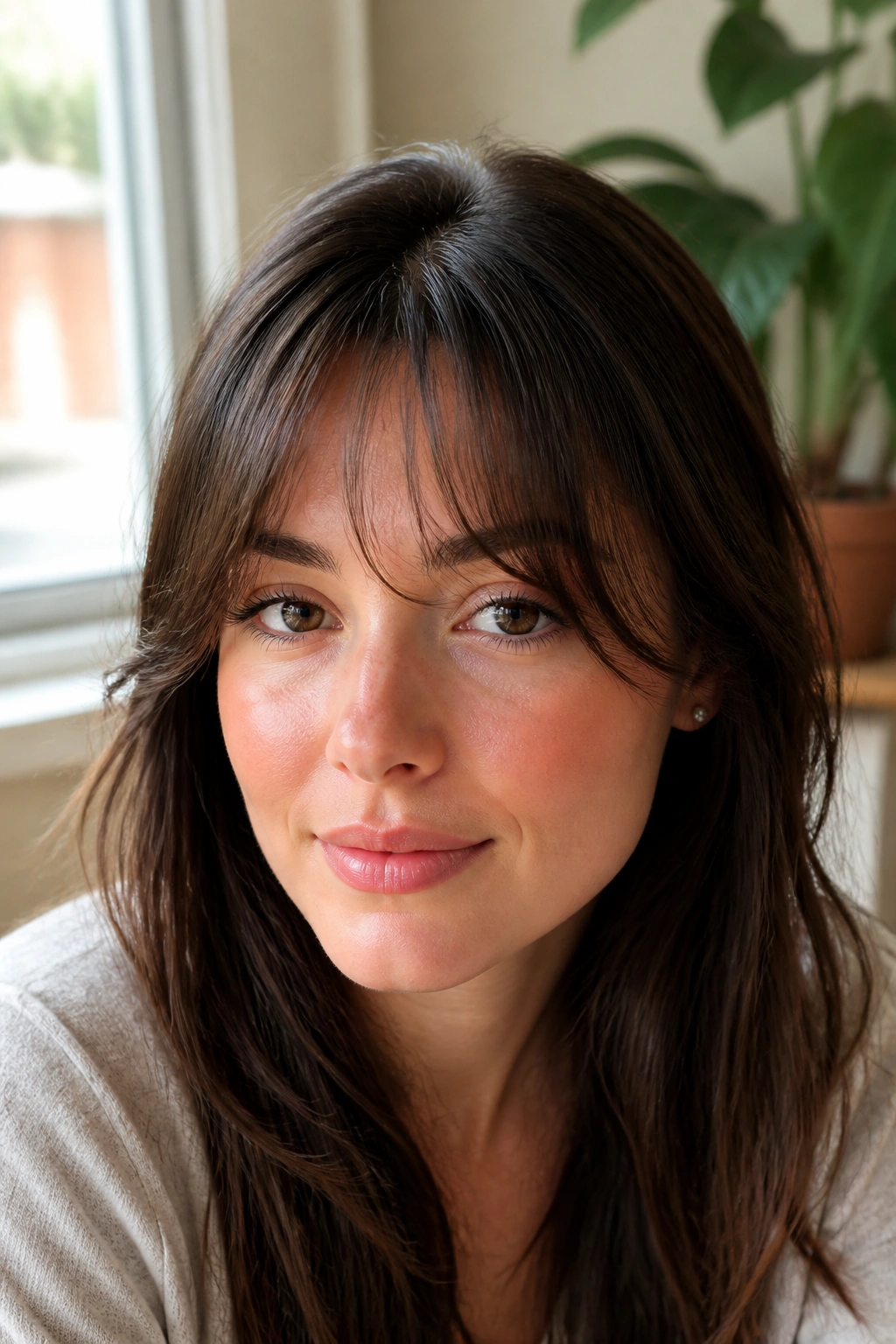
Tiny curtain bangs are a sweet spot. They give you the center split and face-framing bend of curtain bangs, but in a shorter, softer package that sits closer to the brows.
That makes them a good choice if you want to test the waters without diving into a full fringe. They can be clipped back, pushed aside, or worn forward in a loose split, which is handy when you want your haircut to change its mood during the week. The center usually lands near the upper brow or just below it, while the sides drop into cheekbone territory.
The important thing is softness. If the center gets cut too short and the edges too blunt, the style loses its easy feel fast. Ask for pieces that can move out of the way instead of a hard center line that needs constant correction.
- Good for people who like to switch between center and side parts.
- Easy to grow into longer curtain bangs.
- Friendly with straight, wavy, and lightly curly hair.
- Less intense than a full fringe, more noticeable than face-framing layers alone.
I like this trim because it does not demand that you become a bangs person overnight. It just gives the face a little shape and lets you decide the rest.
15. Long Layered Sweep Bangs

Sometimes the smartest trim barely announces itself. Long layered sweep bangs fall into that category. They start at the front, curve across the forehead, and blend into the rest of the haircut so smoothly that people notice the effect before they notice the bangs.
This is the one I’d point to if you want polish without a hard commitment. The longer length means you can wear them swept to the side, tucked back, or curved forward with a blow-dry. They’re friendly to grow-out, which matters more than most people think. A fringe that still looks decent six weeks later saves a lot of regret.
The shape is also useful if your hair gets weird in humidity or if you don’t want to spend ten minutes forcing the front into place every morning. Long sweep bangs are forgiving. They move with the haircut instead of sitting on top of it like a separate piece.
I keep coming back to this style because it solves a common problem: people want a change, but they do not want their forehead haircut to become the only thing anyone notices. This trim changes the silhouette without taking over the room.
If you want the smallest possible shift with the cleanest payoff, start here.
