



Long hair can swallow a bad fringe in seconds. A heavy, blunt bang on waist-length hair often looks like it belongs to another haircut altogether, which is why feathered bangs for long hair work so well when they’re cut with a little air and movement.
They don’t sit there like a shelf. They bend, break up, and blend into the rest of the hair so the front feels lighter without making the whole style look thin. That balance is the whole trick. Too much weight and the bangs drag the face down; too little and they disappear into nothing.
The best feathered fringe isn’t one single shape. It can be soft and curtain-like, side-swept, shaggy, grown out, barely there, or cut to skim the cheekbones. Some versions do a lot of face framing. Others are more about easing a thick head of hair into something easier to wear.
1. Curtain Feathered Bangs That Split at the Cheekbones

Curtain bangs are the easiest place to start if you want a feathered look that still feels familiar. The center stays shorter, then the lengths drift outward and hit around the cheekbones or upper lip. That shape opens the face without stealing too much length from the rest of the hair.
Why This Shape Works
The feathering matters here because it keeps the curtain from looking heavy at the sides. A clean, blunt curtain bang can feel thick fast on long hair, especially if your hair is dense. Soft ends solve that.
- Ask for the center to land around the bridge of the nose or just below the brows.
- Keep the sides long enough to tuck behind the ears.
- Use a round brush or a big Velcro roller for a bend, not a curl.
- Best for straight to wavy hair that likes movement.
Tiny tip: If you wear a middle part most days, this is the one to try first.
2. Side-Swept Feathered Bangs With a Soft Diagonal Line

A side-swept bang is still one of the easiest ways to ease into fringe if you’ve been nervous about cutting it. The diagonal line feels gentle, and feathering keeps the front from looking sliced off. It’s a smart choice when you want a little change without a dramatic reset.
The best version doesn’t end at one blunt point near the cheek. It should taper from the shorter side into a longer sweep that melts into your face-framing layers. That diagonal line gives the eye somewhere to travel, which is why it tends to flatter long hair so well.
And yes, it grows out gracefully. That matters more than people admit.
3. Bottleneck Feathered Bangs For a Narrower Forehead Look
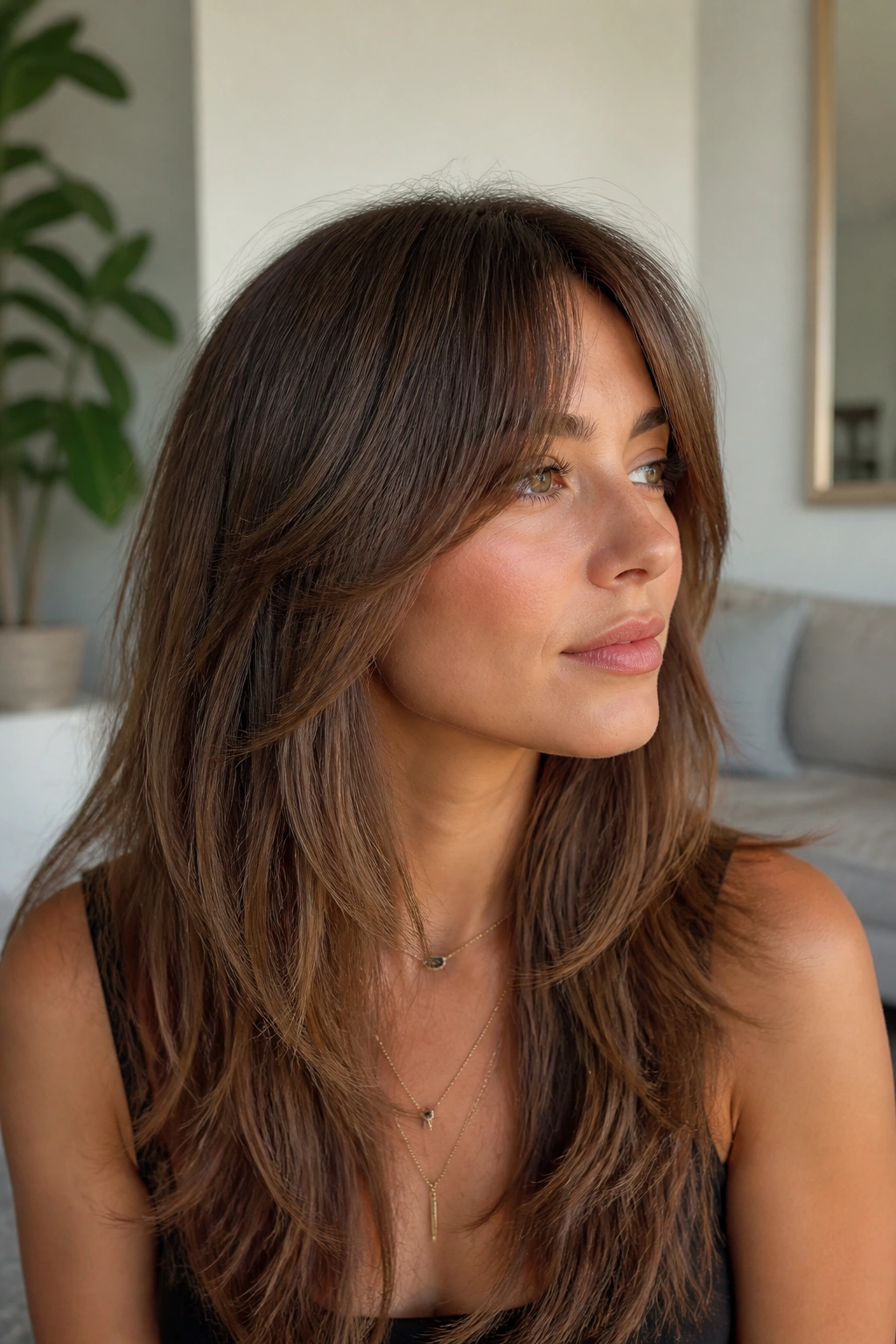
Why do bottleneck bangs keep showing up in good salons? Because they solve a common problem without looking fussy. The center opens up a little at the forehead, then the sides drop longer and softer, like the neck of a bottle turning into a wider base.
What Makes It Different
Unlike a full, straight fringe, this version gives you breathing room at the brow. The feathered ends stop the shape from feeling too precise, which is where a lot of bangs go wrong on long hair. A hard line in front of flowing length can look awkward. This doesn’t.
It works especially well if your forehead feels wider than the lower half of your face. The longer side pieces soften that width without hiding the front entirely. If you like styling with a blow-dryer brush, this is an easy bang to live with.
4. Long Feathered Bangs Blended Into Face-Framing Layers
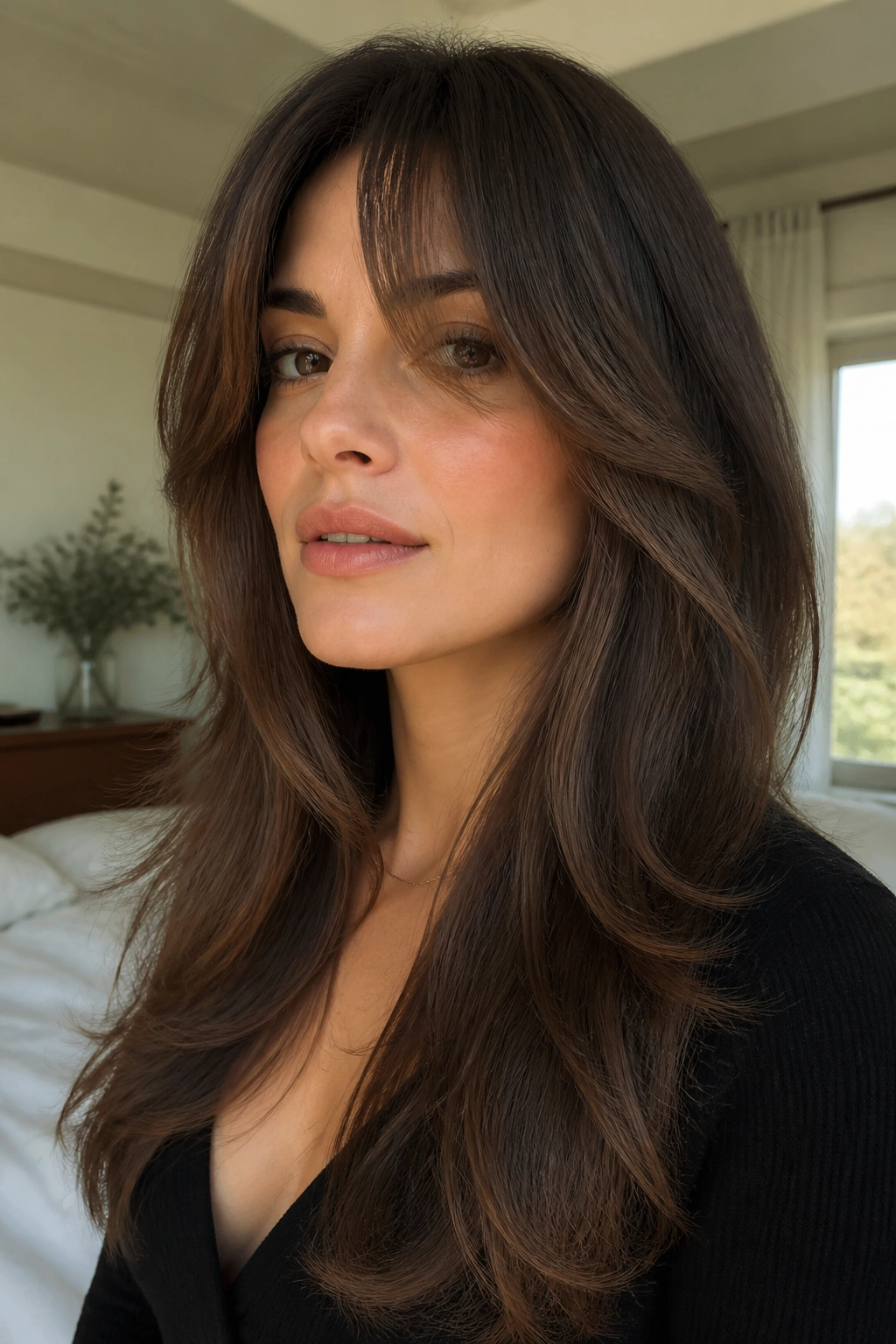
Some people want bangs, and some people just want the idea of bangs. This is the in-between version. The fringe starts long enough to blend into the front layers, so nobody gets that sharp “new haircut” moment. It just looks like your hair decided to move better.
The cut is all about continuity. The shortest pieces should connect to the layers around the jaw and collarbone, not stop and start in a visible block. On long hair, that kind of blend matters. It keeps the style soft from every angle, which is useful if you wear your hair up half the week.
This is a favorite of mine for people who hate obvious grow-out lines.
5. Wispy Feathered Bangs That Barely Touch the Brows

Wispy feathered bangs are for the person who wants texture, not commitment. They sit light across the forehead, with broken-up ends that look airy instead of dense. On long hair, that spareness can be a relief. You get movement at the front, but the overall shape still feels open.
How to Keep Them From Looking Sparse
The mistake here is over-thinning. A wispy bang should feel soft, not see-through in a sad way. Ask for a little density in the middle and less weight at the edges. That keeps the fringe readable without turning it into a stringy strip.
They’re lovely on fine hair when the hair is straight or slightly bent. Thick, coarse hair can wear them too, but the cut has to be handled carefully. A good stylist will use point cutting or light texturizing, not chop them into pieces.
6. Feathered Bangs With a Deep Middle Part
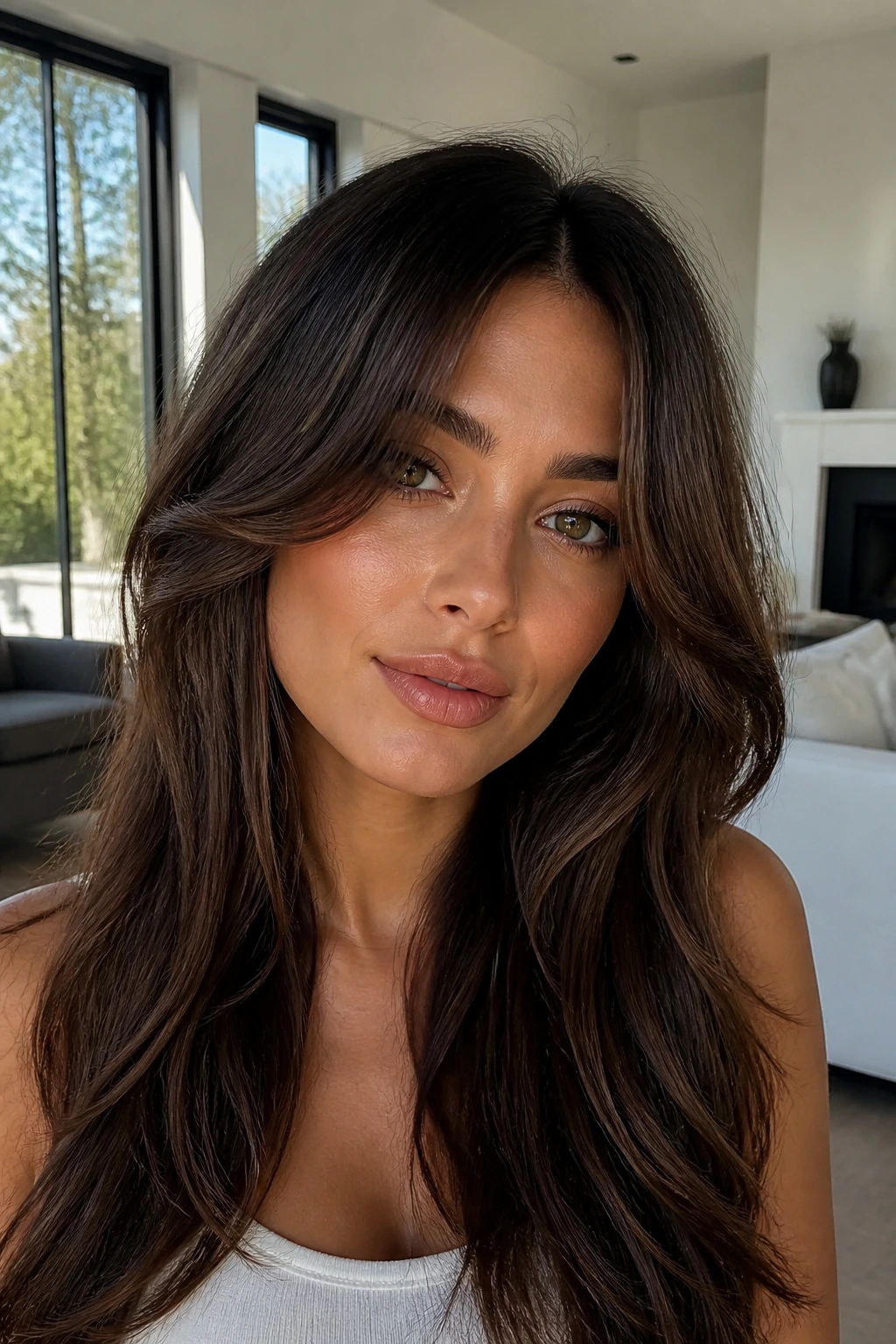
A deep middle part can be harsh if the front pieces are too flat. Feathering fixes that fast. The center part gives symmetry, and the feathered bangs break up the line so the face doesn’t feel boxed in.
This shape works especially well when your long hair already wants to fall evenly on both sides. The bangs can start short near the center, then drift down in a soft curve that meets the cheekbones. It’s a clean look, but not severe. There’s a difference.
If you like a polished finish, this one plays nicely with a smooth blowout and a little serum on the ends. Too much product will make it lose that airiness, though. Keep it light.
7. Arched Feathered Bangs That Open the Eyes

Arched bangs have a subtle lift in the center, which pulls attention upward instead of letting the fringe sit in a straight line. On long hair, that arch can keep the style from feeling heavy around the eyes. It reads softer than a blunt brow-grazer, and more deliberate than a random wispy cut.
Why the Curve Helps
The shape gives space where the face needs it most. If your brow line feels crowded by straight fringe, an arch can fix that in one haircut. The feathered finish keeps the edges from looking too styled, which matters. A curved bang without softness can start looking like a costume.
Best on medium to thick hair that can hold shape. If your hair lies very flat, you may need a round brush and a quick blast of heat at the roots.
8. Cheekbone-Grazing Feathered Fringe on Straight Hair
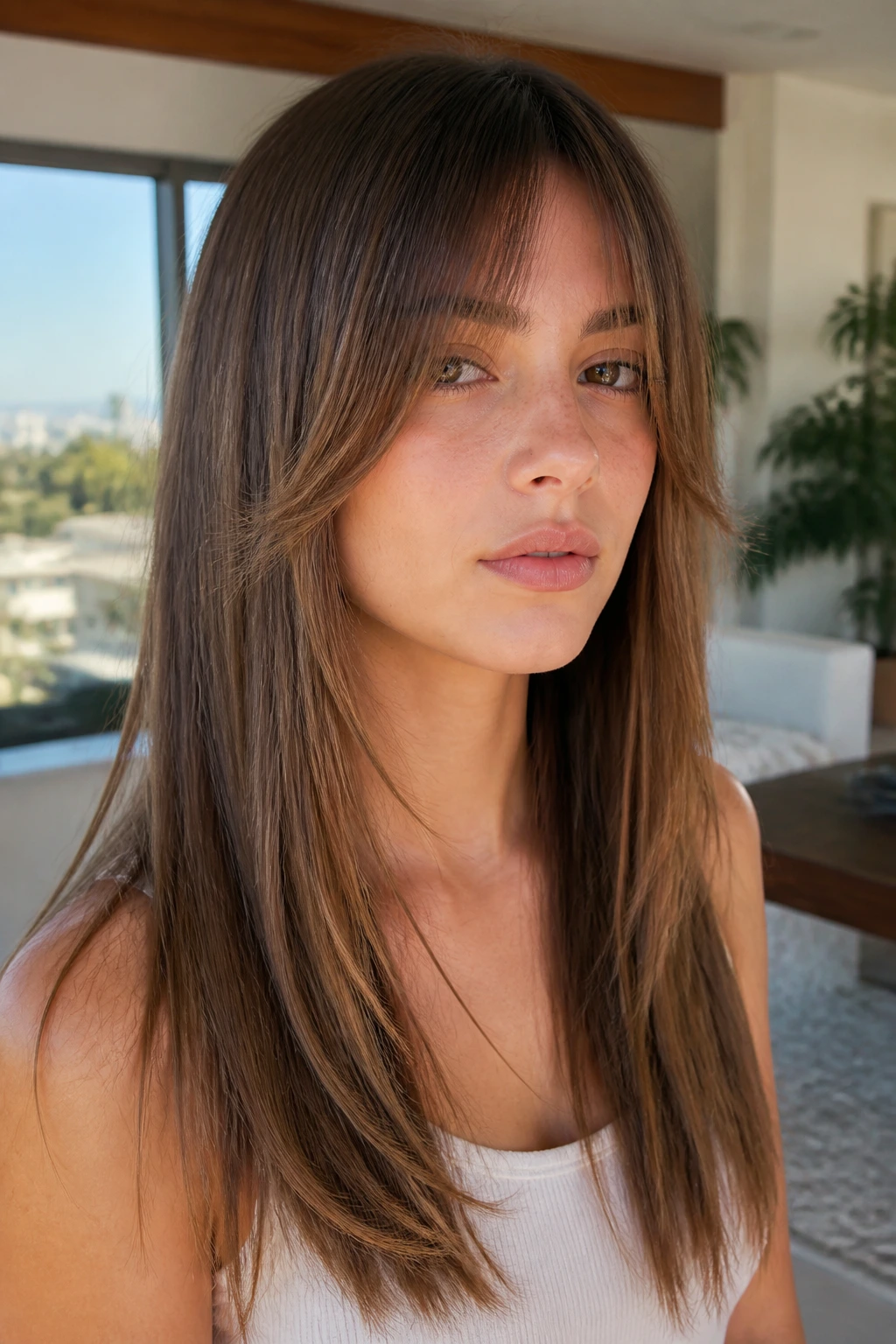
Straight hair makes every decision visible. That’s the good news and the bad news. A feathered bang that skims the cheekbones gives you shape without forcing texture that isn’t there, and it keeps poker-straight lengths from looking too severe at the front.
Picture it: long, glossy hair with just enough bend around the face to keep the cut from feeling heavy. That’s the appeal here. The bangs should start short enough to matter, then taper out before they get stiff. If they sit too bluntly on straight hair, they lose the point.
- Blow dry with a small round brush for a slight curve.
- Keep the root flat only if you want a sleeker look.
- Use a tiny bit of light cream on the ends.
- Skip heavy oils near the forehead.
9. Grown-Out Feathered Bangs That Look Intentional
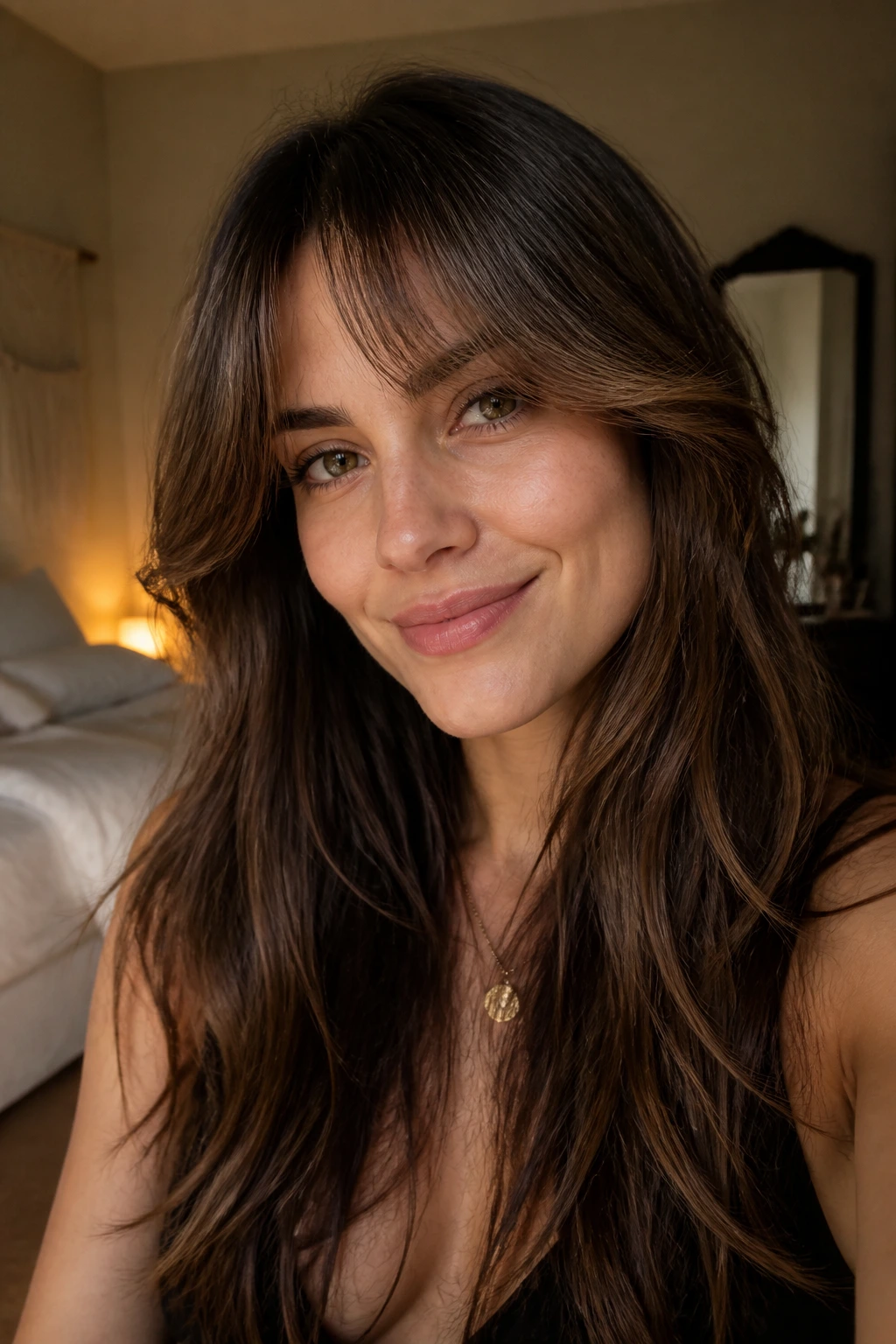
This is the bang for people who hate maintenance. Grown-out feathered bangs can look better than freshly cut ones when the lengths are right, because the front starts to blend into the rest of the hair instead of sitting as its own separate shape.
The trick is making the grow-out part of the design. A long, tapered fringe that sweeps into the cheekbones feels soft when it’s new and even softer after a few weeks. That’s why this style is so useful for long hair: you don’t need to live at the salon to keep it working.
If your last bang cut turned awkward fast, this is the safer lane. It stays useful for a long time.
10. Butterfly-Layer Feathered Bangs
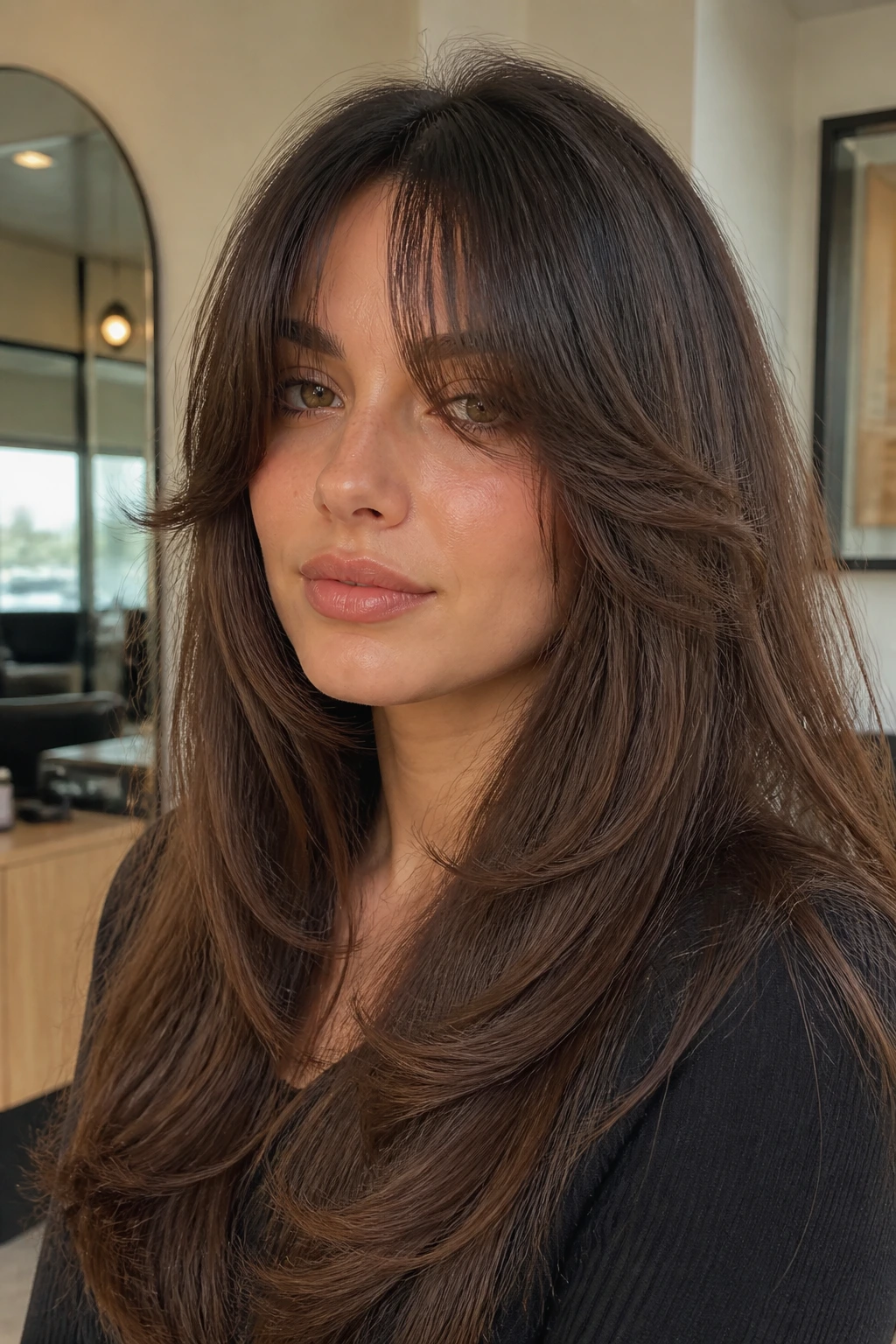
Can bangs and a butterfly cut get along? Very much so. Butterfly layers already create that lifted, airy shape around the front, and feathered bangs slot into that structure without fighting it. The result is big around the face, but not bulky.
How the Shape Works
The shorter front pieces act like the top layer of the butterfly cut, while the longer face-framing sections keep the look flowing. That means the bangs don’t read as one separate block. They become part of the haircut’s movement.
This style loves a round brush and a little root lift. If you dry it flat, you miss the whole point. The front should float away from the face just enough to show the shape of the layers underneath.
11. Feathered Bangs for Thick Hair With Razored Ends

Thick hair can eat bangs alive if the cut is too blunt. Feathering gives the front room to breathe, and razor-softened ends help remove some of that dense, solid look. The front stays full, but it doesn’t feel like a curtain dropped onto your forehead.
The important part is control. You don’t want the stylist to thin the bang so much that it frizzes or splits apart. You want weight removed in a way that keeps the edges soft and movable. On long hair, thick feathered bangs can be a gift because they balance out the rest of the mass.
They also sit beautifully with layered ends. Heavy hair can look almost too polished in a blunt fringe. Feathering fixes that.
12. Feathered Bangs for Fine Hair With Soft Density
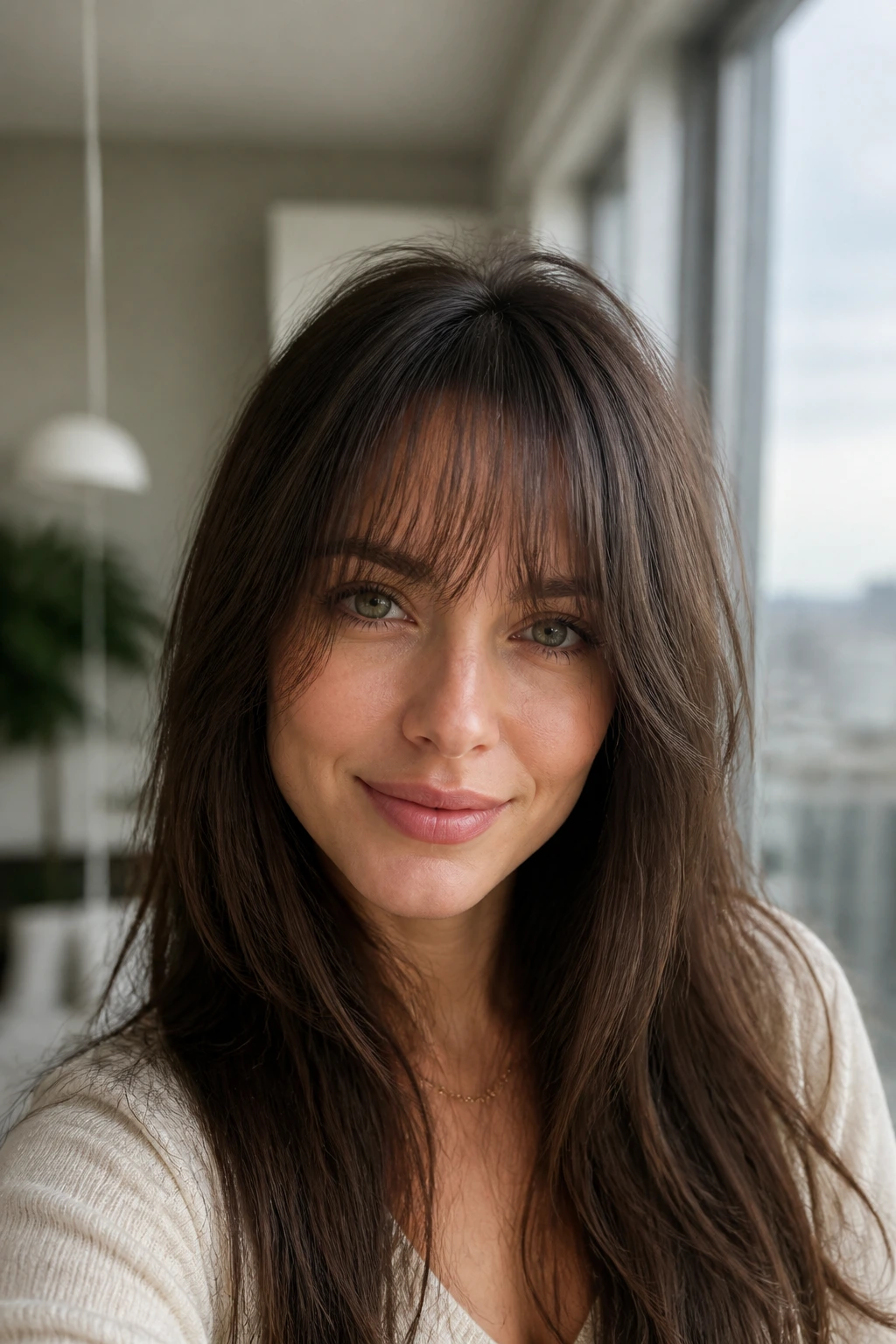
Fine hair needs a different hand. Too much thinning and the bangs disappear; too much bluntness and they cling to the forehead. The sweet spot is a soft, feathered fringe with enough density to show up, but not so much that it overwhelms delicate hair.
What to Ask For
Ask for the bang to stay fuller in the center and lighter at the sides. That keeps the line visible when the hair separates a little during the day. Fine hair almost always does that. Better to plan for it.
A little root spray helps, but the cut does most of the work. If the shape is good, you won’t need much. Long hair plus fine feathered bangs can look expensive in the best way — not loud, just clean and airy.
13. Shaggy Feathered Bangs With Long Hair
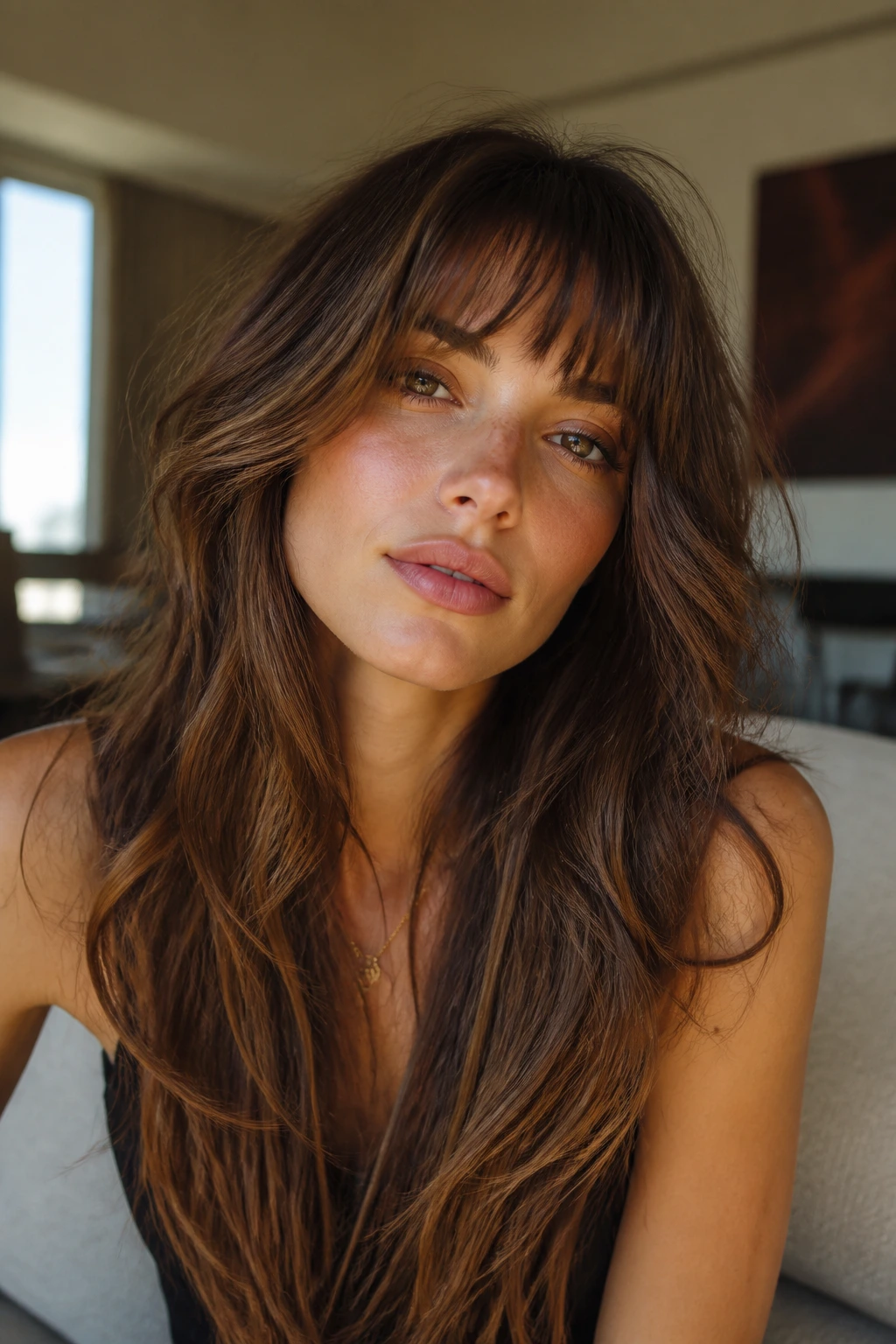
Shaggy bangs bring attitude, but they don’t have to look messy. On long hair, a feathered shag fringe adds broken texture near the eyes and cheekbones, which can make the whole cut feel looser. It’s a good move if your long hair tends to hang too neatly.
The difference between shaggy and sloppy is shape. The bang still needs a clear point of shortest length, usually near the center or just off-center, then longer pieces taper out around the temples. That broken line keeps the fringe from looking heavy.
This one works best when the rest of the hair has some movement too. Pin-straight lengths can make shag bangs look disconnected.
14. U-Shaped Front Layers and Feathered Bangs
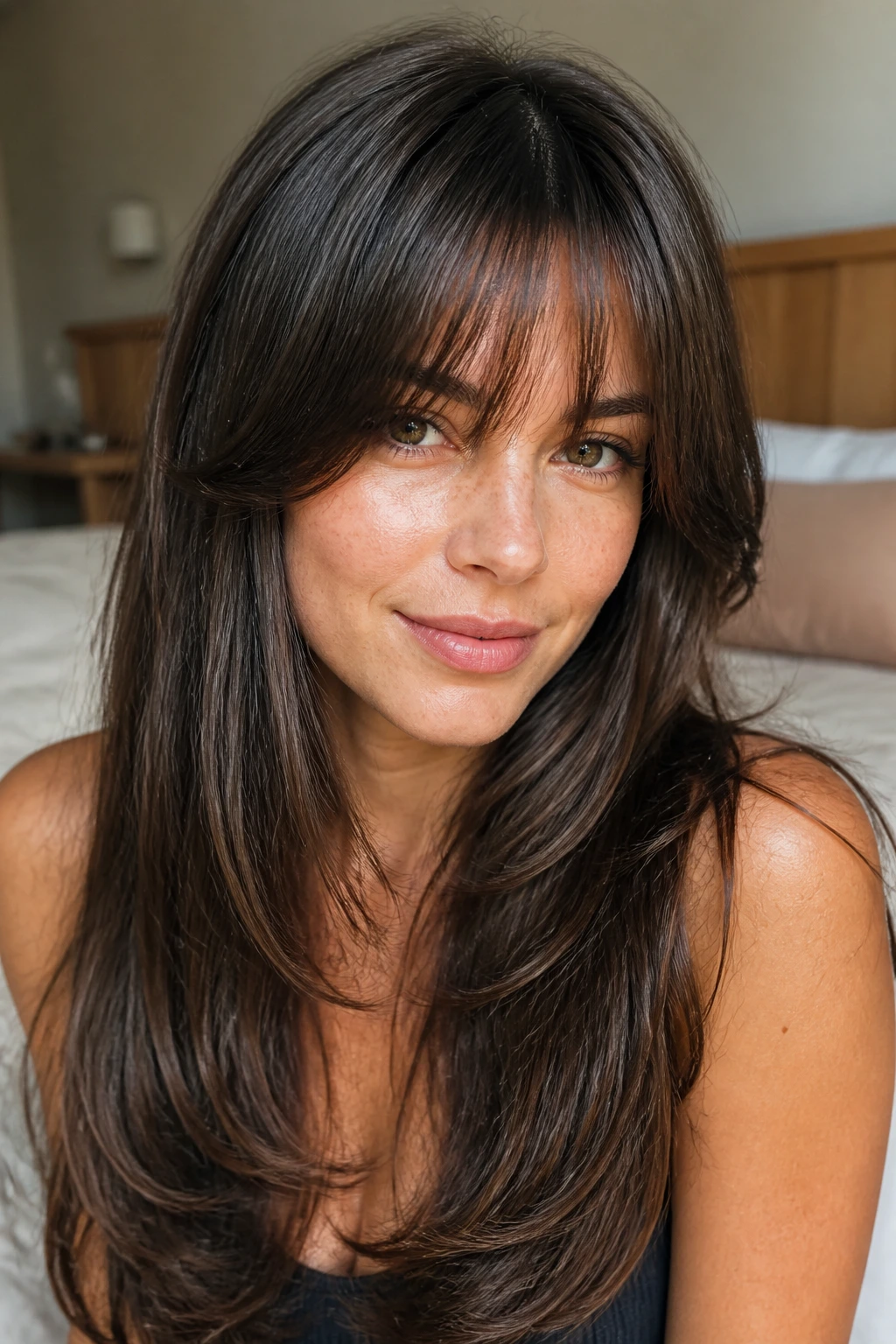
A U-shaped front gives the hair a softer frame than a straight line ever could. The center stays shortest, the sides curve longer, and feathered bangs make that curve feel even lighter. On long hair, this is one of the most forgiving shapes around.
The front pieces should drop in a gentle arc, not a sudden angle. That arc helps the bangs and layers share the same language. It’s one of those cuts that looks expensive even when it’s not trying hard. Which is probably why so many people keep coming back to it.
- Nice for hair that’s thick at the ends.
- Easy to tuck behind the ears.
- Looks good air-dried.
- Pairs well with a soft blowout.
15. Wolf Cut–Inspired Feathered Bangs on Long Hair

There’s a little edge here. Not too much, unless you want it. Wolf-cut-inspired bangs are more piecey and separated, with a stronger contrast between the shortest front pieces and the longer lengths. Feathering keeps that contrast from turning harsh.
Long hair gives this style room to work. The bang can be choppy and still feel balanced because the length behind it is so substantial. That balance is what keeps the cut from looking too short or too punk unless you want it to.
If you like texture paste, this is your section of the haircut. A tiny amount through the ends can pull the pieces apart in a nice way. Too much, and it gets greasy fast.
16. Feathered Bangs Styled With Beach Waves

Soft waves and feathered bangs get along because they both want movement. The bangs don’t have to be perfectly smooth here. In fact, a tiny bend makes the whole front feel more relaxed, which is the entire point of this pairing.
A curling iron with a barrel around 1 to 1¼ inches works well if you’re after loose bends. Keep the bangs off the iron for too long — a few seconds is enough. You want the front to frame the eyes, not curl into a full ringlet. A quick brush-through after heat helps the feathered ends fall back into place.
This is one of the easiest long-hair looks to wear when you want soft, lived-in shape without losing polish.
17. Feathered Bangs on Sleek, Straight Lengths
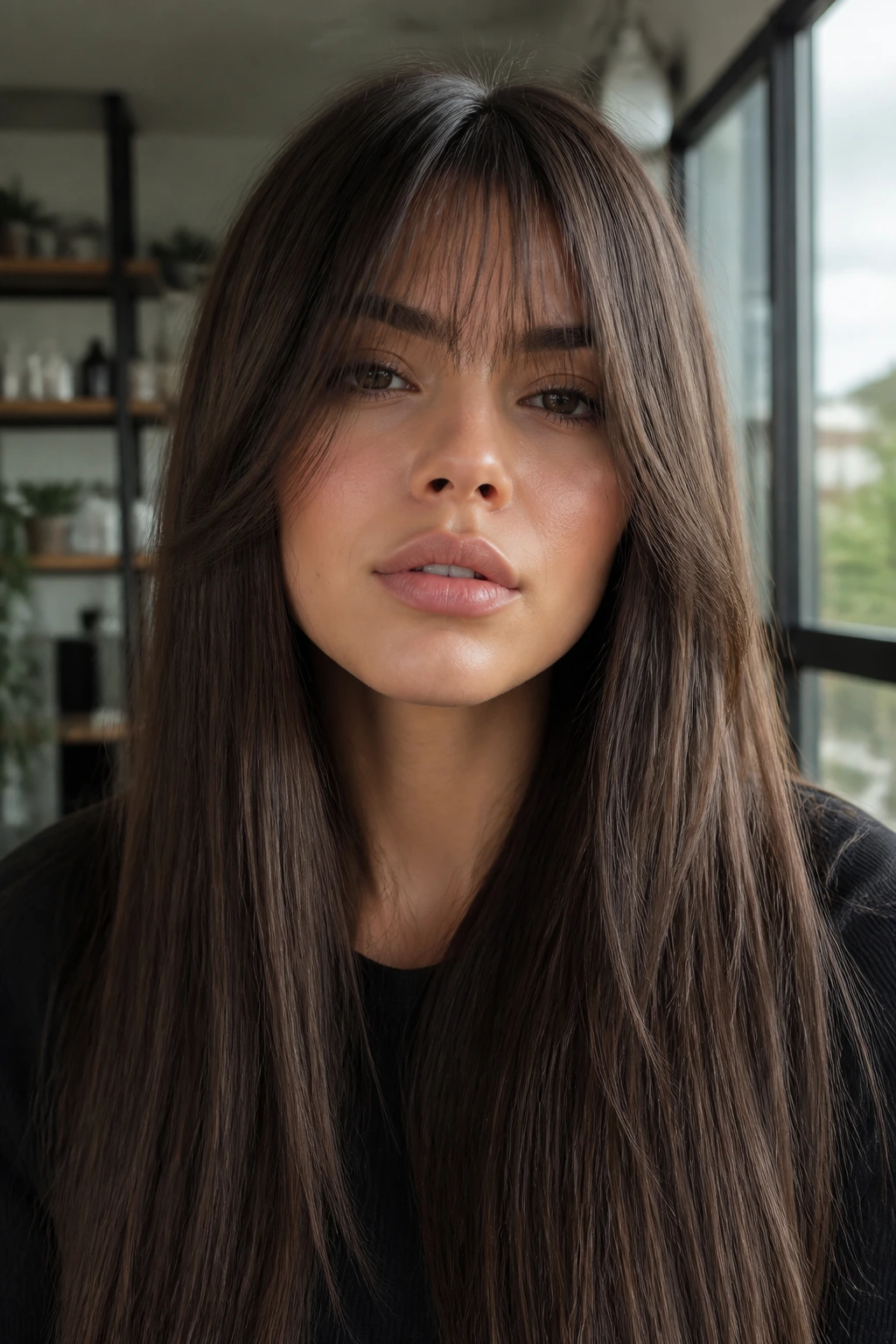
Straight hair with feathered bangs can look incredibly sharp when the cut is done right. The contrast is the point. Long, sleek lengths give the fringe a clean backdrop, and the feathered front prevents the whole style from turning severe.
The bang should move. Even a little. A pin-straight, heavy fringe on long straight hair can feel boxy, while a feathered one keeps the line softer around the face. I like this pairing on people who wear black, tailored clothes, or anything with clean lines.
A flat iron bend at the ends can help the front pieces curve away from the face without taking away the sleek finish. Keep the movement subtle. Too much and the polish is gone.
18. Feathered Bangs on Curly Long Hair
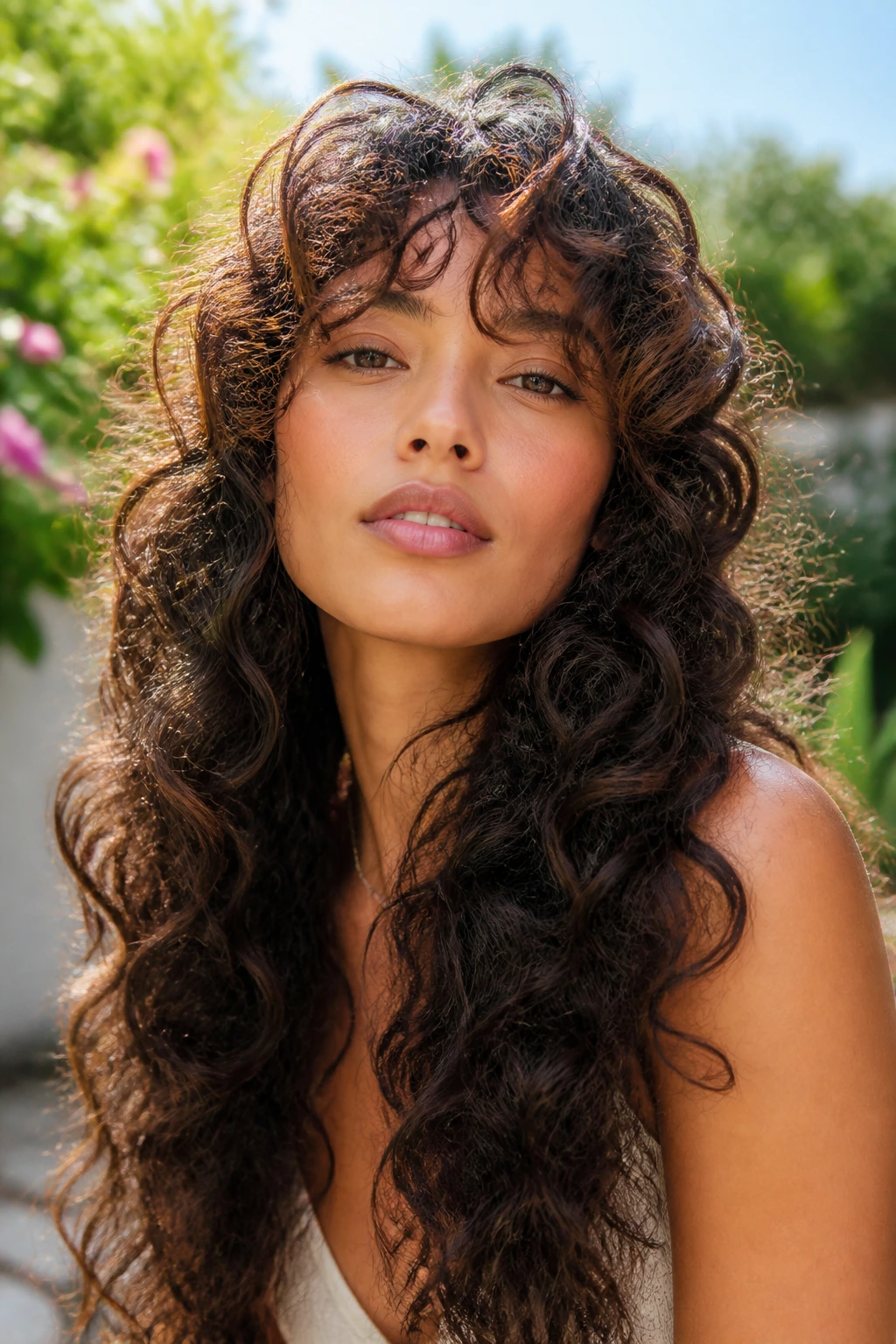
Curly hair needs its own rulebook, and bangs are where that becomes obvious fast. Feathered bangs on curls should be cut with the curl pattern in mind, not against it. If the hair springs up an inch or two, the bang needs that extra room built into the shape.
The front should soften around the forehead and cheekbones, not fight them. Long curly hair can handle a lot of visual weight, so feathering the bangs helps the front stay light. I’d rather see a curl-friendly bang that lands a little longer than one that’s cut too short and bounces into a puff.
Dry cutting often helps here, because it shows the true length. Wet curls lie.
19. Blowout Feathered Bangs With Big Root Lift
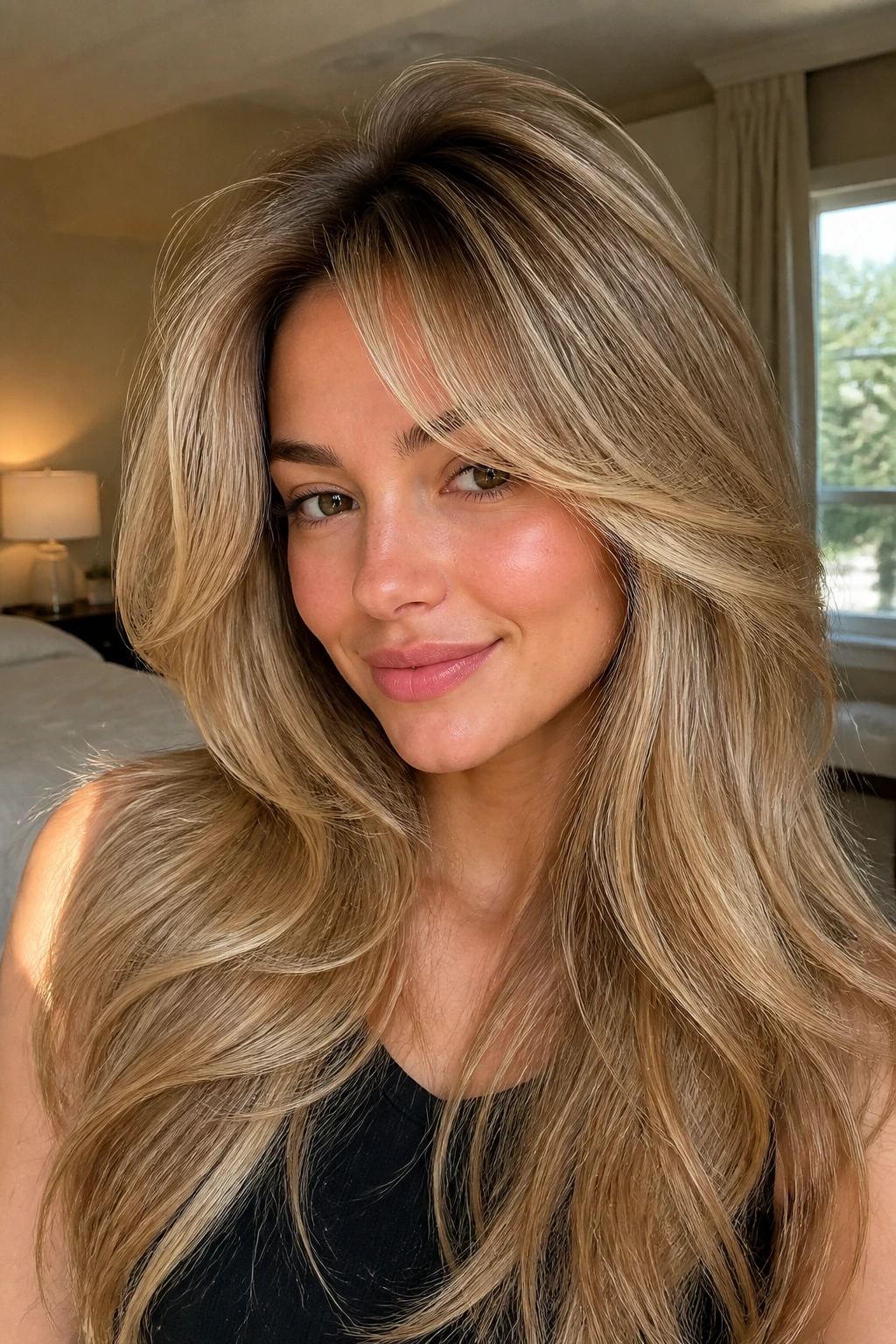
A bouncy blowout makes feathered bangs look like they were made to move. The roots lift, the ends flick away from the face, and the whole front gets that airy salon finish that can be hard to fake on your own. Long hair carries the volume well, so the bangs don’t look too big for the cut.
Styling Notes
Use a round brush that matches your hair length — bigger for long fringe, smaller if you want more bend. Aim the dryer downward at the ends, then roll the brush under just long enough to create a curve. Let the hair cool before touching it. That cooling part matters more than people think.
A little root spray at the crown can keep the front from collapsing by lunchtime. Keep the product light near the bang line.
20. Barely-There Feathered Baby Fringe

Not everyone wants a bang that announces itself. A barely-there feathered baby fringe gives you a hint of shape without stealing the show from long hair. It’s short, yes, but the feathering keeps it soft enough to feel deliberate instead of severe.
This kind of fringe works best when you want some edge but not a lot of face coverage. It can be a strong choice on long, layered hair because the tiny front section gives the haircut a point of interest. The rest of the length still does the heavy lifting.
Be honest about your styling habits here. Baby fringes need regular trims, and they’re less forgiving than longer feathered shapes. Cute? Absolutely. Casual? Not always.
21. Jawline-Starting Feathered Bangs With Long Layers

Where should the shortest piece land if you want the face to look a little longer? Near the jawline is a smart answer. Bangs that start higher and taper down toward the jaw draw the eye vertically, which can be useful when long hair needs a little shape around the face.
The feathering keeps the line from turning heavy. That matters because a jawline-length front piece can feel blunt fast if the edges are too clean. The soft ends let the cut slide into the rest of the hair instead of standing apart from it.
This is a good pick if you like to wear one side behind the ear. The front still reads as styled, even when it’s tucked back.
22. Asymmetrical Feathered Bangs With a Side Part
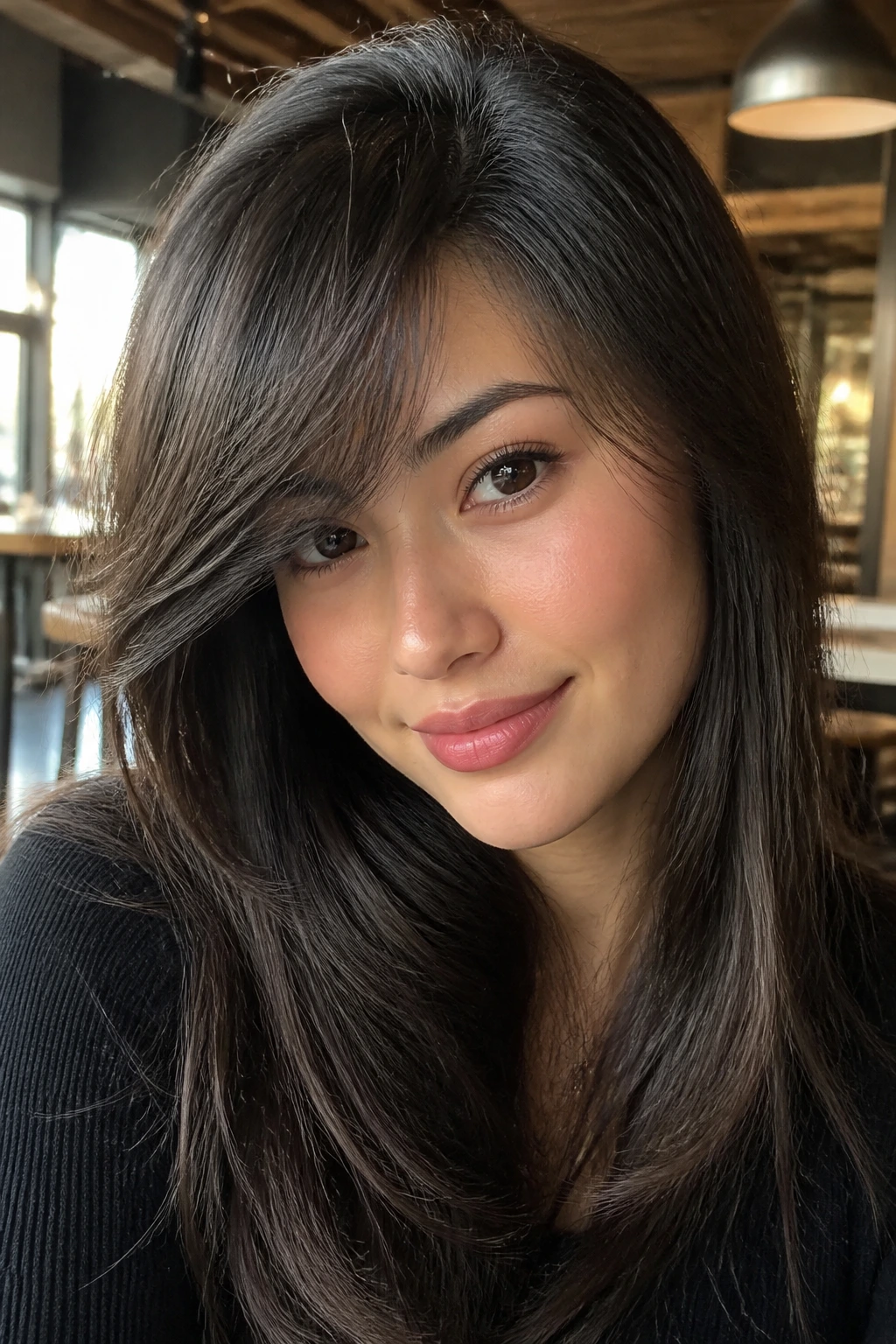
Sometimes the most natural part of your hair is the thing to lean into. If your hair always falls to one side, an asymmetrical feathered bang can make that habit look intentional. One side stays shorter and lighter, while the other drifts longer across the forehead.
The shape is useful on long hair because it adds movement without demanding symmetry. Symmetry can be lovely, sure, but it can also feel stiff. A side-parted feathered fringe gives the haircut a little tilt, which can wake up a very long length instantly.
It’s especially nice if one side of your face is your favorite side. Most of us have one.
23. Feathered Bangs With Blunt Ends Elsewhere
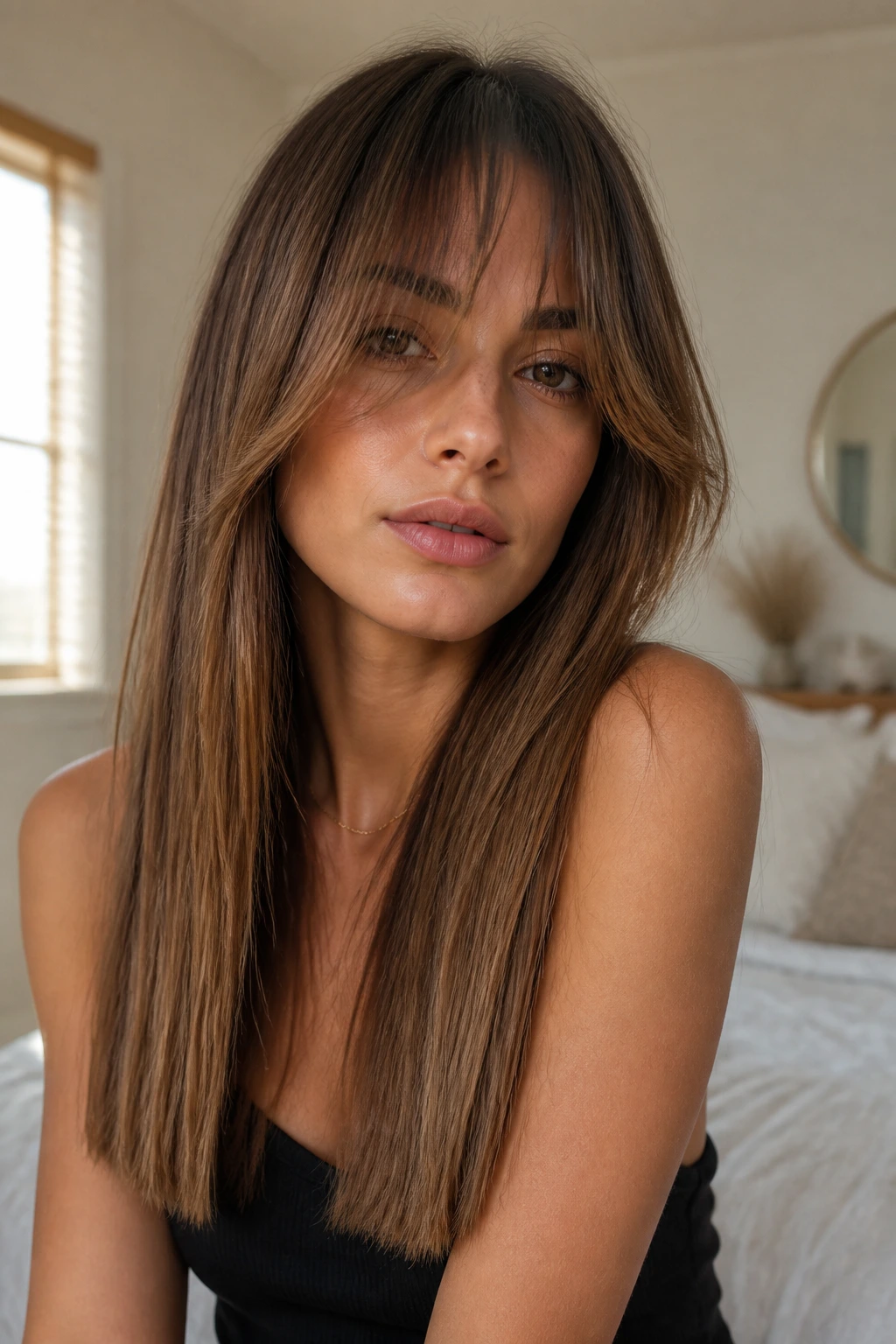
Here’s the contradiction that works: soft bangs with blunt lengths. The front feels airy and broken up, while the rest of the hair lands in a cleaner line. That contrast can look sharp on long hair, especially if you like structured ends but don’t want a heavy fringe.
The key is balance. If the bangs are too choppy and the length too blunt, the haircut can feel split into two personalities. One soft decision, one firm decision. That’s okay if the shapes talk to each other. Ask for the front to echo the density of the ends, even if the textures are different.
This look is good for people who like a polished outline but want the face softened.
24. Feathered Bangs for Round Faces
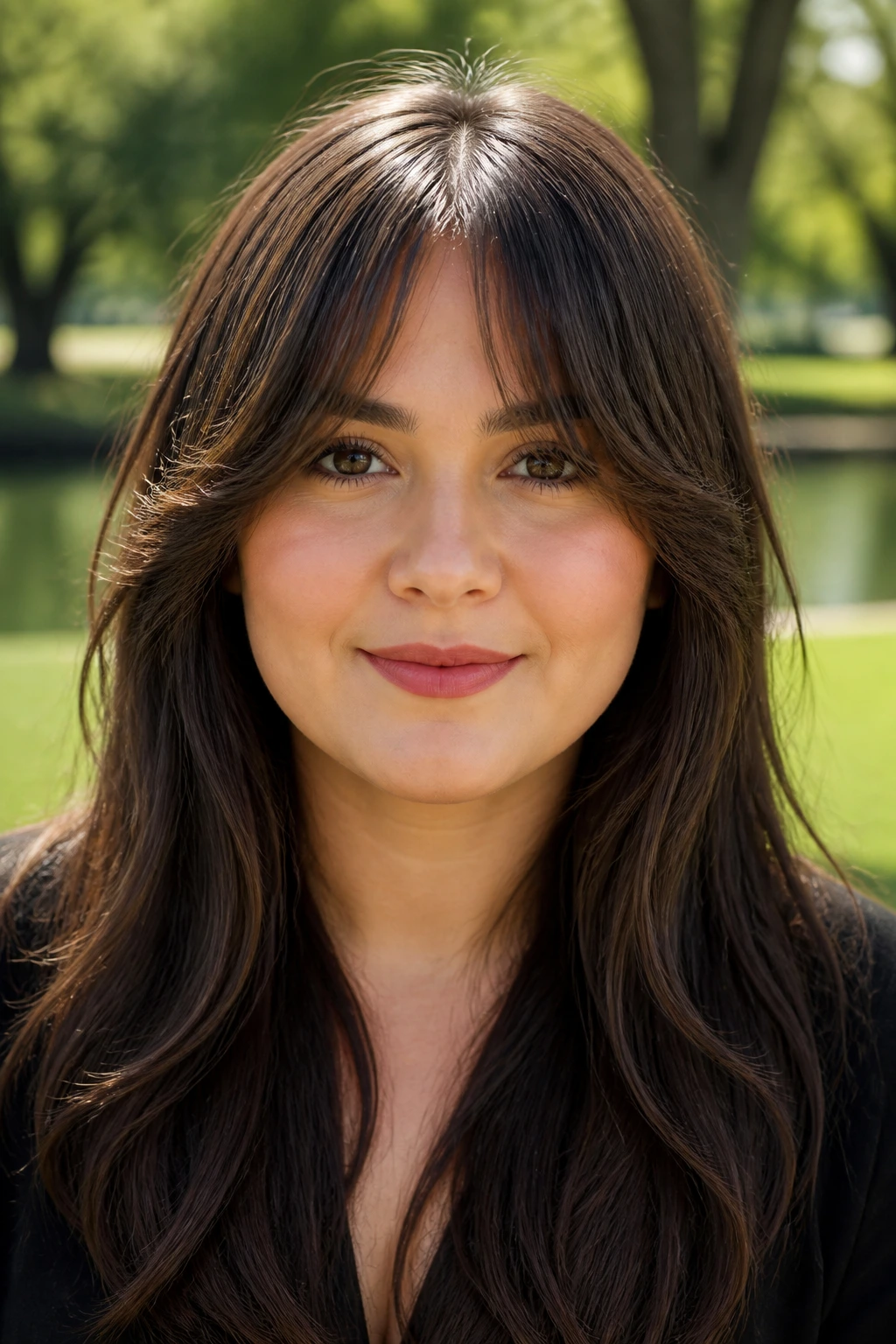
Round faces usually benefit from vertical movement and a little opening at the cheeks. Feathered bangs can do that if the shortest pieces don’t sit too wide across the forehead. Keep the center a touch longer and let the sides sweep down past the cheekbones.
What Helps Most
- A middle or soft off-center part can lengthen the face.
- Longer side pieces draw attention downward.
- Heavy, blunt center bangs usually make the face look wider.
- Soft texture near the temples helps the fringe blend better.
The whole idea is to create lines that move up and down, not side to side. That’s why this shape feels good on long hair. Long length already gives verticality; the bangs just need to support it.
25. Feathered Bangs for Long Faces

Long faces usually need the opposite treatment: a little width and a little softness around the brow. Feathered bangs can help, but the shape should stay fuller and sit a bit lower than you might expect. Too much height or too much center lift can make the face feel even longer.
A wide, airy fringe that opens near the temples works better than a skinny strip of hair. The feathering should be gentle, not shredded to the point of disappearing. I like this shape when the long hair itself has some body, because it balances the length below the face.
A soft blow-dry with the brush pulling the bangs slightly forward can make the forehead area feel shorter and more grounded.
26. Feathered Bangs for Heart-Shaped Faces

Heart-shaped faces often have a wider forehead and a narrower chin, so feathered bangs can be a nice way to soften the top half without hiding it. The best versions usually start a little longer at the sides and taper down around the cheekbones. That keeps the eye moving outward and downward.
The bang should not sit too short in the center unless you want a stronger, more dramatic look. A little length helps balance the forehead. Long hair already creates a lot of visual weight at the bottom, so the front can be soft and still hold its own.
This is one of those cuts that looks prettier when it moves. Static hair is not its best friend.
27. Feathered Bangs for Square Faces
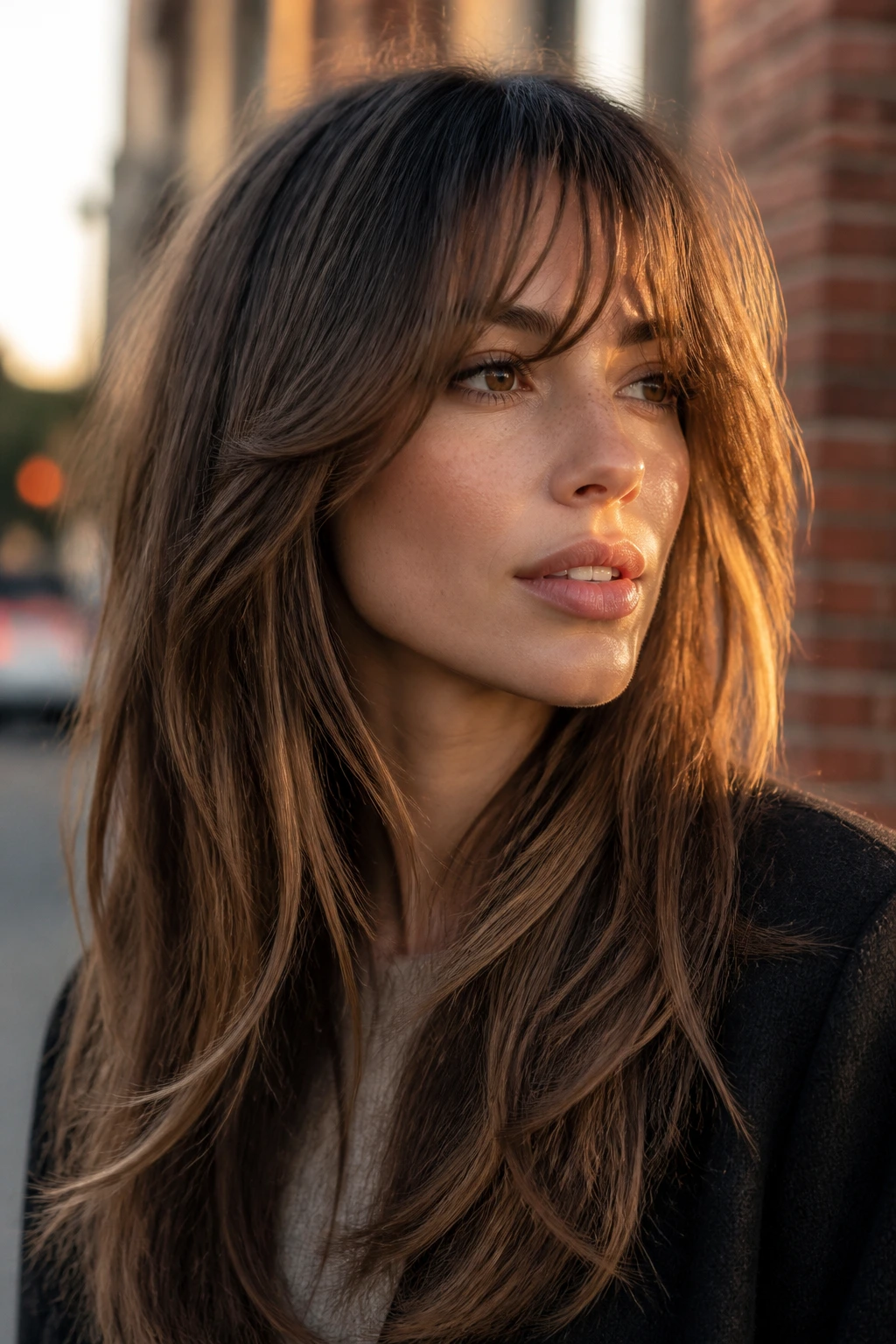
Square faces need softness around the jaw and a little curve near the forehead. Feathered bangs can help if the ends are broken up and the sides sweep instead of stopping bluntly. A sharp, straight fringe can emphasize angles you may not want to highlight.
Best Shape Notes
Keep the center slightly rounded or softly parted. Let the side pieces brush the cheekbones. Avoid a harsh line that lands right at the brow. Use styling that creates bend, not stiffness.
That last part matters. A square face usually looks best when the front has movement that mirrors the natural structure of the face, rather than fighting it. Long hair gives you enough length to do that without the haircut feeling overworked.
28. Feathered Bangs With Highlighted Face Framing
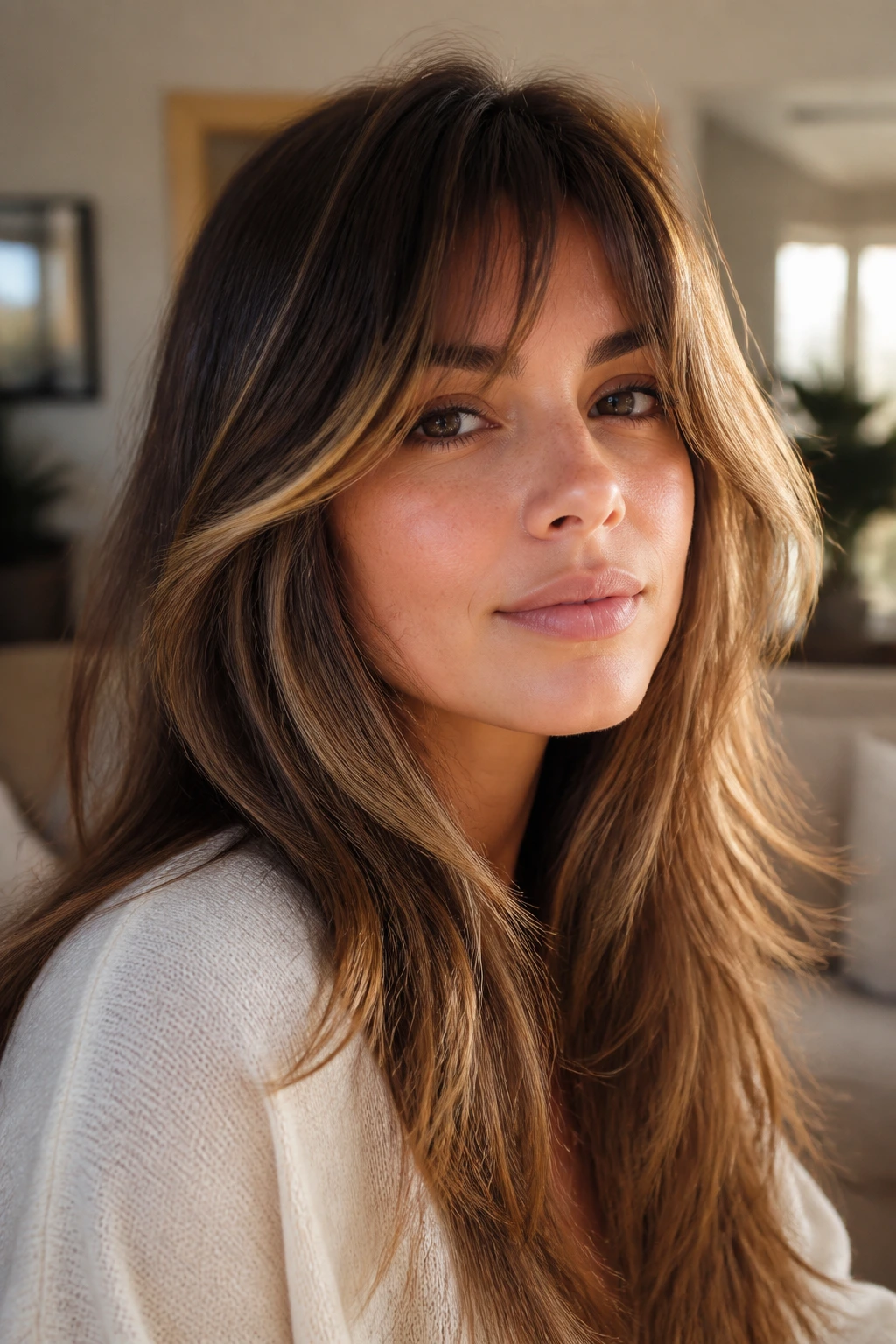
Color changes the whole story. A few lighter ribbons around feathered bangs can make the shape read more clearly, especially on long hair where the front pieces can disappear into the lengths. The highlights don’t need to be loud. They just need to catch the eye enough to separate the fringe from the rest of the cut.
This works beautifully with curtain shapes, side sweeps, and those long blended fronts that hover around the cheekbones. The lighter pieces show off the movement in the feathering, which makes the haircut look more lived-in and less flat. If your hair is dark, even a subtle face frame can change the whole mood.
If I had to choose one practical rule, it would be this: the lighter pieces should follow the cut, not fight it. When color and fringe line up, long hair looks softer, brighter, and a lot more expensive than a plain straight bang ever will.
