



Curtain bangs can be the easiest fringe to wear after 40, but only when the shape matches your hair, your face, and how much fuss you’re willing to put up with before coffee. A good version doesn’t sit in one hard line across the forehead. It opens in the middle, softens at the cheekbones, and lets the rest of your haircut keep doing its job.
That’s why this style hangs on. It can make a bob feel less stiff, give long hair some movement, and take the edge off features that look sharper than they did a decade ago. It also helps that the grow-out is kinder than a blunt fringe. If you’ve ever had bangs that turned into a small personal grudge by week three, you know why that matters.
The catch is shape. Curtain bangs are not one-size-fits-all, and women over 40 usually have more to think about than “Will this look cute in a photo?” Hair density changes, cowlicks get bossy, and glasses or cheekbones can change how a fringe sits. So the best ideas aren’t the prettiest on a mood board. They’re the ones that work when you leave the salon and try to live your life.
1. Brow-Skimming Feathered Curtain Bangs

This is the clean, classic version, and it earns its place because it does a little bit of everything without looking like it’s trying too hard. The center sits around the brow line, then the sides taper out softly toward the cheekbones. On women over 40, that shape can lift the eyes a bit and keep the forehead from looking bare.
Why the Brow-Grazing Length Works
The sweet spot is usually just long enough to move. Too short, and the fringe can feel jumpy or dated fast. Too long, and it turns into face-framing layers that stop behaving like bangs at all.
This cut works well if your hair has some natural bend or if you’re willing to do a quick blow-dry with a round brush. A 1-inch to 1.5-inch brush is enough for most people. Anything larger can flatten the shape.
- Best for: straight to softly wavy hair
- Styling time: about 5 to 8 minutes
- Salon note: ask for the center to hit the brow area, then angle the sides longer
- Maintenance: trim every 5 to 7 weeks if you want to keep the shape crisp
Tip: blow-dry the center first, then roll each side away from the face for a few seconds. That little flip matters.
2. Bottleneck Curtain Bangs With a Soft Center
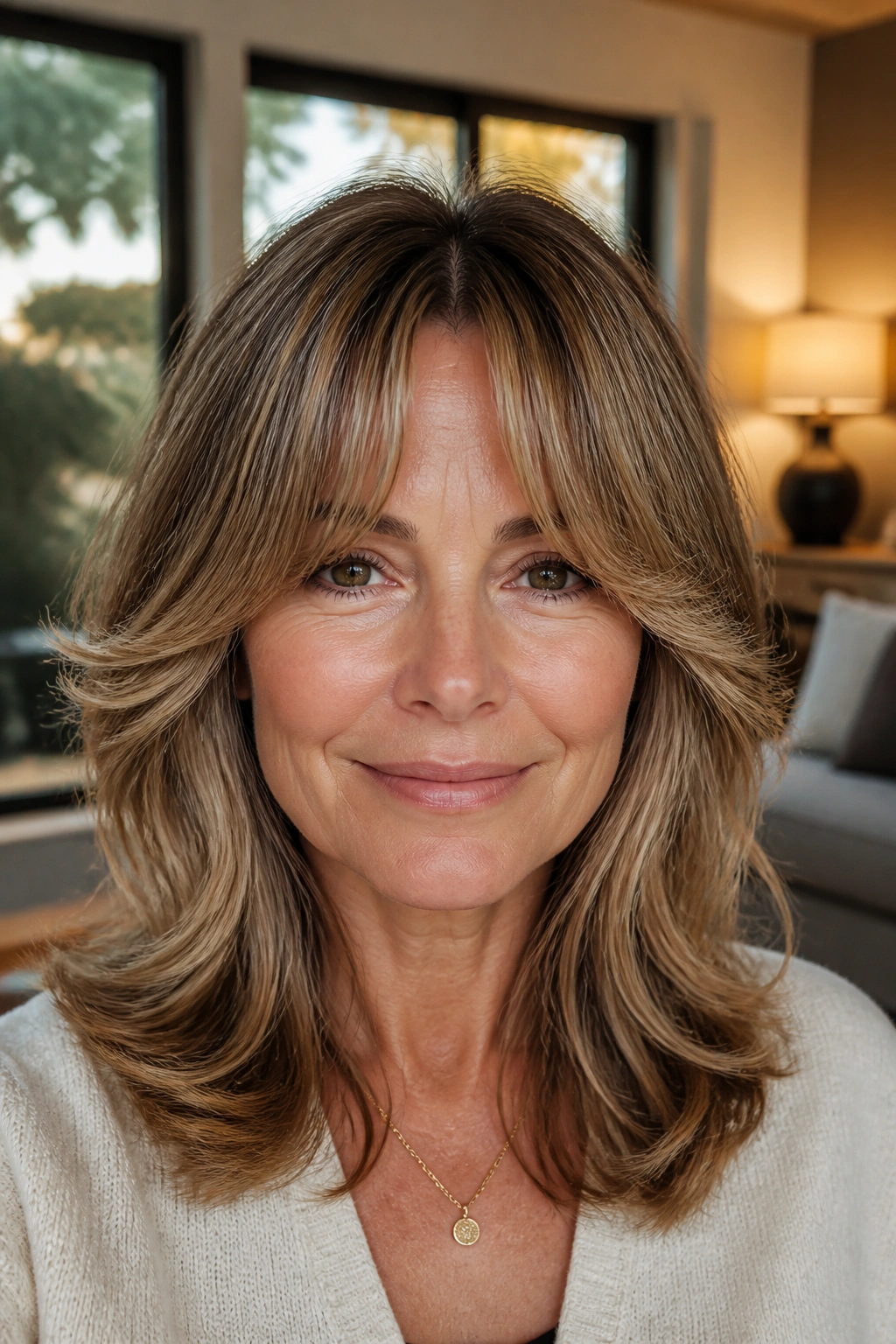
Bottleneck bangs are the stronger, more sculpted cousin of the classic curtain fringe. The center starts a touch shorter, then opens outward in a gentler slope, almost like the neck of a bottle widening into the shoulders. It sounds fussy. It isn’t.
The reason this shape works so well is that it gives structure without turning heavy. If your forehead is on the broader side, or your face has fuller cheeks, the narrower center can pull the eye inward before releasing it softly around the temples. That creates shape without a hard edge.
They’re also a nice fit if you wear your hair in a blowout or a loose wave most days. The cut has enough personality to stand on its own, so you don’t need perfect styling every morning. A few twists with a dryer brush or a medium round brush are enough.
One thing I like about this version: it grows out better than it sounds like it should. The shape stays useful for longer because the sides already have room to fall naturally. Less panic between trims. Always a plus.
3. Chin-Length Curtain Bangs That Blend Into Layers

Why do longer curtain bangs often feel easier to live with? Because they give you options. You can wear them split down the middle, push them off to the side, tuck them behind one ear, or let them fall into the rest of your haircut when you don’t feel like dealing with them.
This length tends to land around the jaw or chin, which makes it ideal if you want the face-framing effect without a fringe sitting right on the forehead. It’s especially useful when hair starts to get a little drier or finer around the front. A longer piece has more movement and less tendency to stick straight out.
How to Style It
A slight bend is enough. Wrap the bangs around a 1.25-inch curling iron for 4 to 6 seconds, then brush them out with your fingers so they don’t look too done. If you prefer heatless styling, pin them in a loose curl while your hair cools after drying.
They’re a good match for women who want softness around the mouth and jaw area. That sounds minor, but it changes the whole balance of the cut.
4. Curtain Bangs With a Shoulder-Length Lob

Picture a shoulder-length lob with curtain bangs that start around the pupils and drift into the rest of the cut by the time they hit the cheekbones. It has polish, but not the stiff kind. The whole look moves when you turn your head, which is half the appeal.
This pairing works because the lob gives the fringe a place to land. Without that anchor, bangs can feel like they’re floating on their own. With it, the cut looks intentional and easy to wear. That matters when you want hair that looks styled even on a normal weekday, not just after a salon blowout.
- Ask for: soft internal layers through the lob, not choppy ends
- Good tool: a vent brush or medium round brush
- Product to keep nearby: lightweight mousse at the roots
- Best face match: round, heart, and oval shapes
The one mistake people make here is cutting the bangs too short while keeping the lob long. That mismatch can make the front feel disconnected from the rest of the hair. Keep the lengths talking to each other.
5. Shaggy Curtain Bangs With Feathered Layers

Some cuts look neat in a mirror and flat in real life. Shaggy curtain bangs are the opposite. They look better when they’re touched a little, moved around, and allowed to break up instead of staying perfectly neat. That’s why they suit women who want texture more than polish.
The key is feathering. The bangs should melt into short layers around the cheekbones and the top of the hairline, so nothing lands as one heavy block. If your hair is thick, this can remove that bulky shelf around the front. If your hair is fine, the trick is to keep the layers soft, not overly thinned. Otherwise the fringe can go wispy in a bad way.
Heavy ends ruin this cut.
A shaggy curtain bang also plays well with a little bend in the hair. Air-dried texture, a diffuser, or a quick pass with a flat iron turned slightly inward can all work. The point is movement. Not perfection. Perfection is overrated anyway.
6. Soft Curtain Bangs for Fine Hair

If your hair is fine, blunt bangs can be a trap. They often need more density than the hair has, and once they start separating, the whole front can look thin and fussy. Soft curtain bangs solve that problem by keeping the perimeter airy and letting a little forehead show through.
What makes this version different is the cut line. You want enough hair to frame the eyes, but not so much that the fringe becomes a thick curtain with no lift. A stylist should work with the natural fall of the hair and avoid chopping too much volume from the middle. Fine hair rarely needs aggressive thinning. It usually needs smarter shaping.
For styling, a root-lifting spray or a light mousse at the crown helps more than heavy creams. Those can collapse fine strands by lunchtime. Blow-dry the bangs first while they’re still damp, and use your fingers to separate them before they cool.
This style is best if you want softness around the face without committing to a dense fringe that demands daily effort. It looks especially good with layered cuts that don’t drag the front down.
7. Curly Curtain Bangs That Follow the Curl Pattern
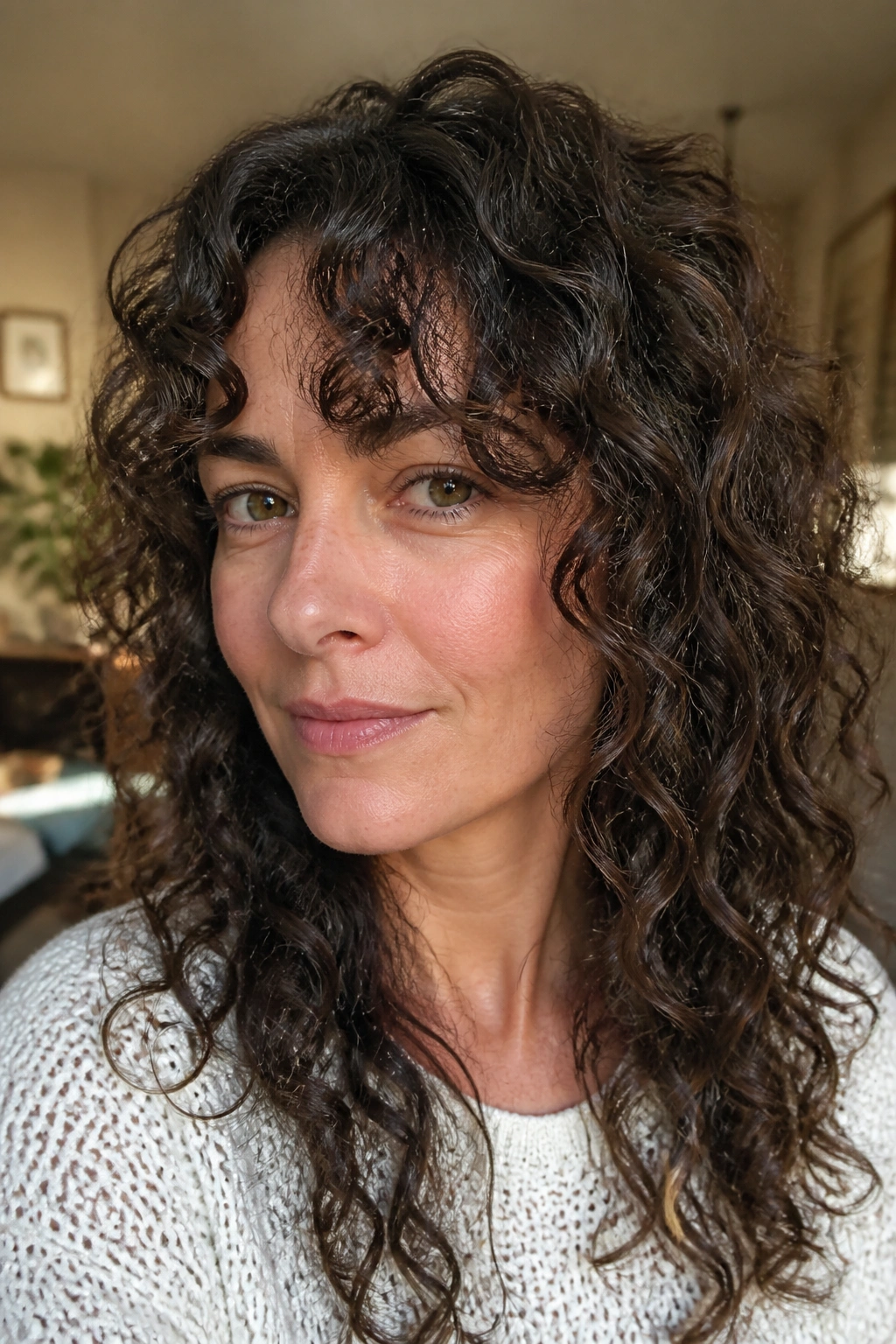
Curly hair and curtain bangs can be a dream, but only when the cut respects the curl instead of fighting it. The big mistake is trimming curls as if they behave like straight hair. They don’t. They spring, shrink, twist, and occasionally decide to live their own lives.
A good curly fringe starts longer than you think it should. That gives the curls room to bounce up without ending too high on the forehead. The shape should open in the middle and ease outward toward the temples, but the stylist needs to cut each curl in its natural state. Dry cutting often helps because it shows the real length and the real shape.
What to Watch For
- Shrinkage: curly bangs can rise an inch or more once dry
- Dryness: the front pieces often need extra hydration
- Shape memory: curls will return to the way they were cut
- Frizz: a small amount of cream or gel can keep the fringe defined
Diffuse on low heat, scrunch gently, and leave the curl pattern alone once it sets. Curly curtain bangs look best when they move, not when they’re flattened into a fake smooth shape.
8. Wavy Air-Dry Curtain Bangs
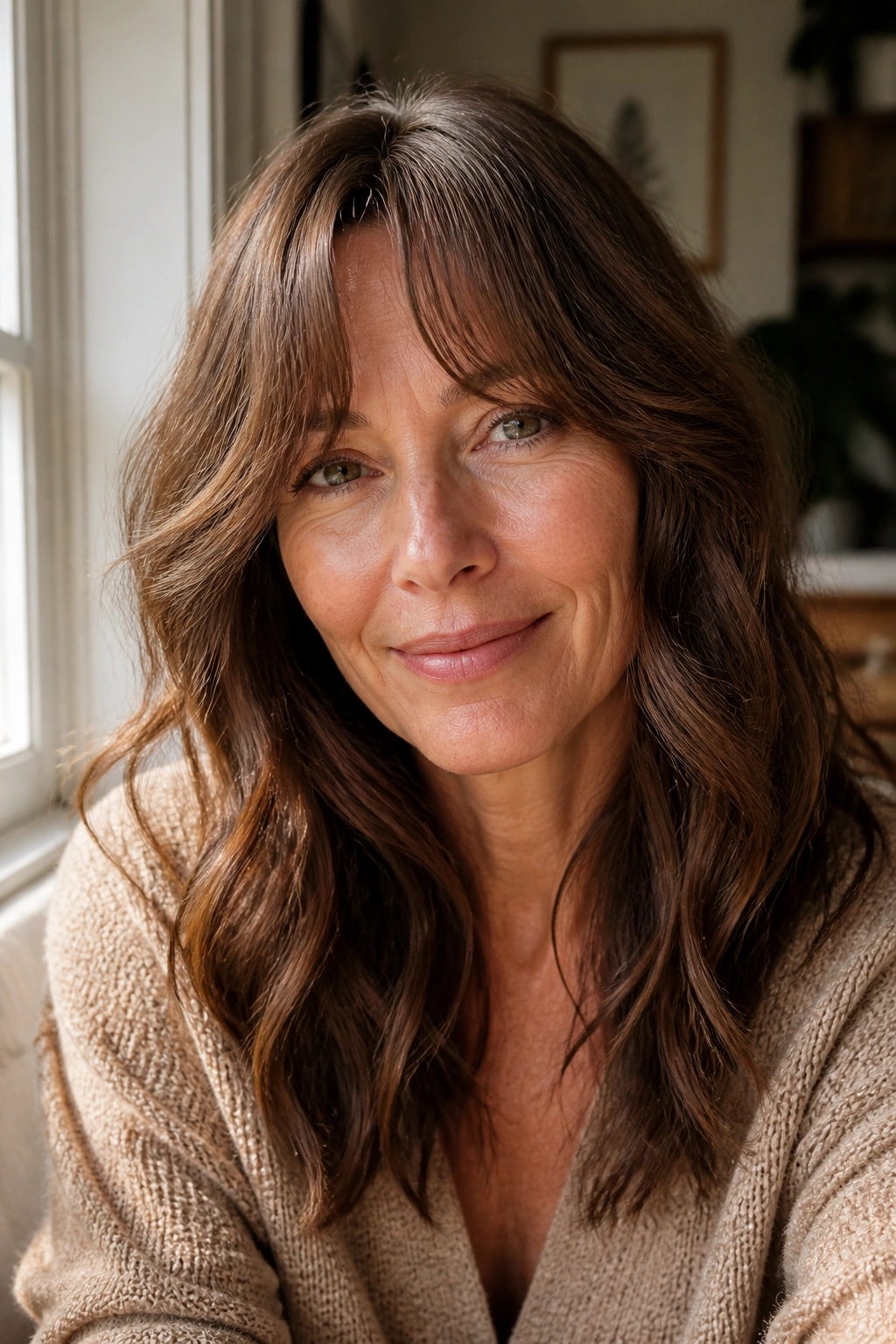
Can you skip the round brush? Yes, if the cut is right and your hair already has bend. This version is made for women who like a softer, less polished fringe that dries into shape with a little help and a lot less effort.
The center should be left long enough that the waves don’t bounce too short. A mid-face starting point works better than a short forehead bang here. From there, the sides can fall naturally into the rest of the haircut. The result is loose, slightly undone, and easy to wear with everything from a knit sweater to a sharp blazer.
The styling routine is simple. Work a small amount of mousse through damp bangs, twist each side away from the face, and clip the roots for 10 minutes while the hair starts to dry. Once it’s mostly set, remove the clips and use your fingers to separate the pieces. A flat iron is only needed if one side tries to do something strange.
This is the fringe for women who want softness but do not want to be married to a blowout.
9. Side-Part Hybrid Curtain Bangs

Not everyone likes a strict middle part. Some faces look better with a slight offset, and some cowlicks flat-out refuse to cooperate with a dead-center split. That’s where the side-part hybrid comes in.
This look keeps the spirit of curtain bangs — soft opening, face-framing movement, a longer edge on both sides — but lets the split land a little off-center. It’s a smart choice if your hair naturally falls that way already. Fighting a stubborn growth pattern every morning gets old fast, and there’s no prize for making your fringe obey a part it hates.
The hybrid also softens asymmetry in a good way. One side can sweep a bit fuller across the forehead while the other falls more openly toward the cheek. That can make glasses, a stronger jaw, or a long face feel more balanced without looking obvious.
A side-part curtain bang is not flashy. That’s the point. It looks like your hair decided to be cooperative for once, which is a lovely change.
10. Full Curtain Bangs With Crown Volume

Some women want a fringe that looks soft. Others want one that looks like it has a little backbone. Full curtain bangs with crown volume sit in the second camp, and I like them when the rest of the haircut has enough lift to support them.
The difference here is density at the front. You still get the opening in the middle, but there’s more hair to work with, which creates a rounder, more noticeable fringe. This can be a good move if your face is long, your features are narrow, or your hair tends to lie flat at the roots. A bit more shape up front can bring the whole haircut into balance.
Velcro rollers or a large round brush help, but only at the roots. You don’t need a shellacked curl. You need lift where the fringe starts and a smooth bend through the ends. A few clips at the crown while the hair cools can make a bigger difference than a heavy styling product ever will.
This style does ask for more maintenance. Worth it, if you like a stronger front shape.
11. Curtain Bangs That Sit Well With Glasses

Glasses change everything. Not in a bad way. Just in a practical one.
A fringe that looks balanced on a bare face can turn crowded once a frame sits on top of it, especially if the bangs are too short or too wide. For glasses wearers, the best curtain bangs usually leave a little breathing room above the frame line and keep the longest face-framing pieces soft near the temples.
That means the center should avoid landing right on the bridge area. A touch more length keeps the fringe from fighting your frames every time you tilt your head. The sides can still sweep down toward the cheekbones, which helps soften the top edge of the glasses and keeps the whole look from getting boxy.
If you wear chunky frames, ask for a lighter center. Thin frames can handle a little more fringe. Simple rule. Nothing fancy.
The best part is how low-maintenance this can be when the cut is right. A quick finger-dry and a pass with a brush at the front is usually enough, and your glasses do some of the styling work for you.
12. Short Bob With Curtain Bangs
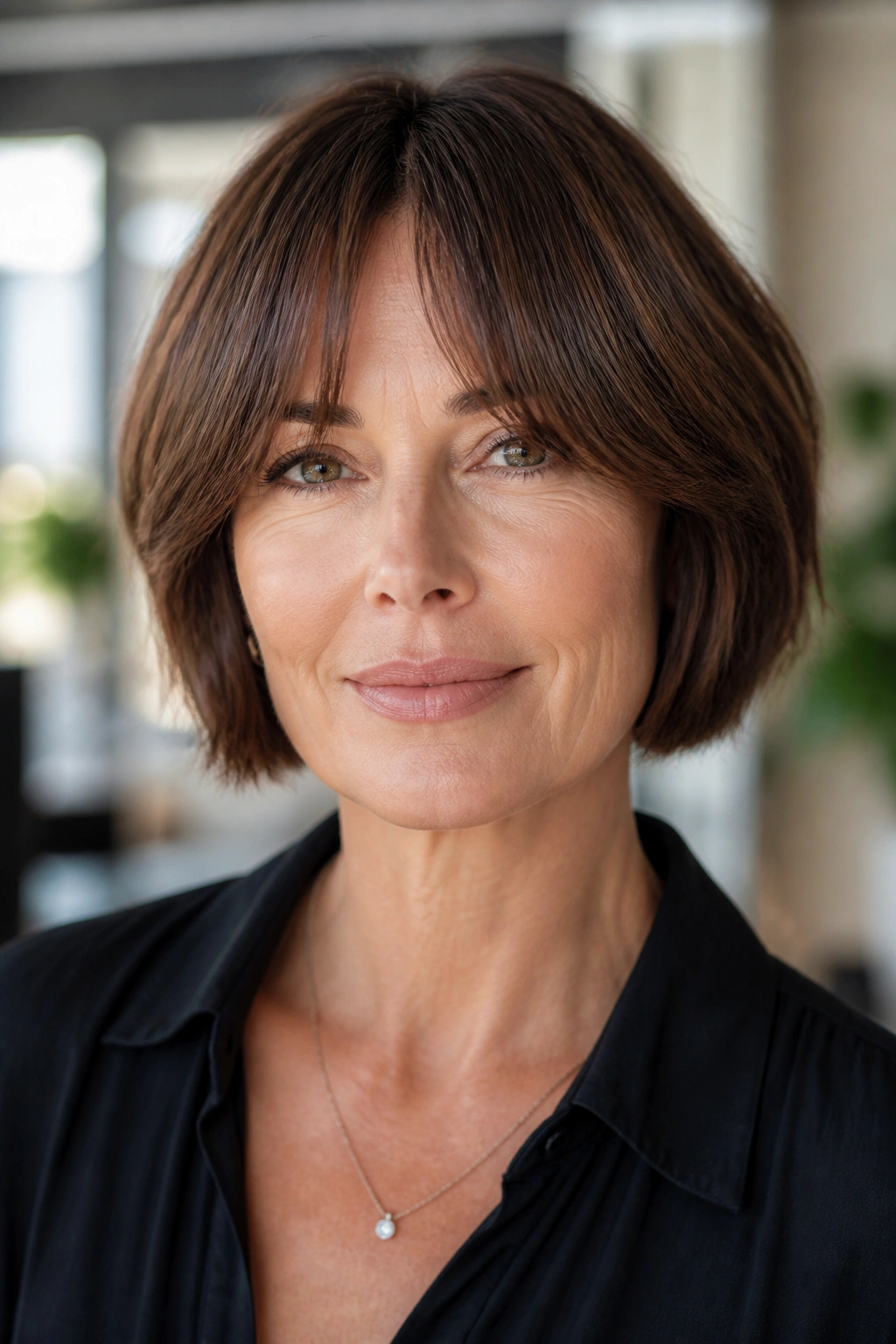
A short bob with curtain bangs is one of those cuts that looks sharper than people expect. The bob keeps the shape clean through the jawline, and the fringe breaks up the front so the whole style doesn’t feel severe. That combination can be especially flattering if your features have become a little more angular over time.
The bang length matters here. Too long, and it drags the bob down. Too short, and it starts competing with the shape of the cut. The best version usually sits around the upper cheekbone in the center and fans out just enough to blend into the bob’s top layer.
This works well for women who like structure but still want some softness around the eyes. It can also make fine hair look thicker at the front because the bob gives the ends a clean line. Pair that with a gentle bend in the fringe and the cut gets a little lift without losing control.
If your neck is shorter or your jaw is broader, ask for a bob that grazes the jaw, not one that stops awkwardly above it. The wrong bob length can make the bangs do too much work.
13. Piecey, Choppy Curtain Bangs for Thick Hair

Thick hair can swallow a fringe if the cut is too blunt. You end up with a heavy curtain that sits there like a shelf, and nobody needs that. Piecey curtain bangs fix the problem by breaking the front into softer segments that move instead of settling into one dense block.
The cut should remove bulk in a controlled way, not shred the ends to pieces. Slice cutting and point cutting can help create separation without leaving the fringe ragged. If your stylist reaches for thinning shears without a plan, ask questions. Thick hair needs shape, not random holes.
What to Ask For
- A center that starts a little longer than you think
- Soft internal removal through the front, not aggressive thinning
- Longer side pieces that blend into layers around the cheekbones
- A finish that looks smooth when brushed, but breaks apart nicely with fingers
Styling is easier when the bangs are piecey on purpose. A dab of texture cream or a light mist of dry shampoo at the roots can keep them from collapsing. The front should move in little sections, not one stiff sheet.
14. Grown-Out Curtain Bangs That Still Look Intentional

What if you’re between haircuts and your bangs have started to drift? Good. That awkward stage can be turned into a style if you work with it instead of pretending it does not exist.
Grown-out curtain bangs are often the most wearable version of the style for women who want low upkeep. The center sits a little lower, the sides get longer, and the whole fringe blends into the rest of the haircut. It’s easy to tuck behind the ears, pin back on one side, or let drop into a loose wave when you want softness around the face.
A small round brush can refresh the front in a couple of minutes, but you don’t need a full salon blowout every morning. That’s part of the charm. The cut looks relaxed because it is relaxed.
This version is also kind to people who like to stretch appointments a bit. The grow-out phase is the look. No apology needed.
15. Silver-Blending Curtain Bangs With Soft Face Framing
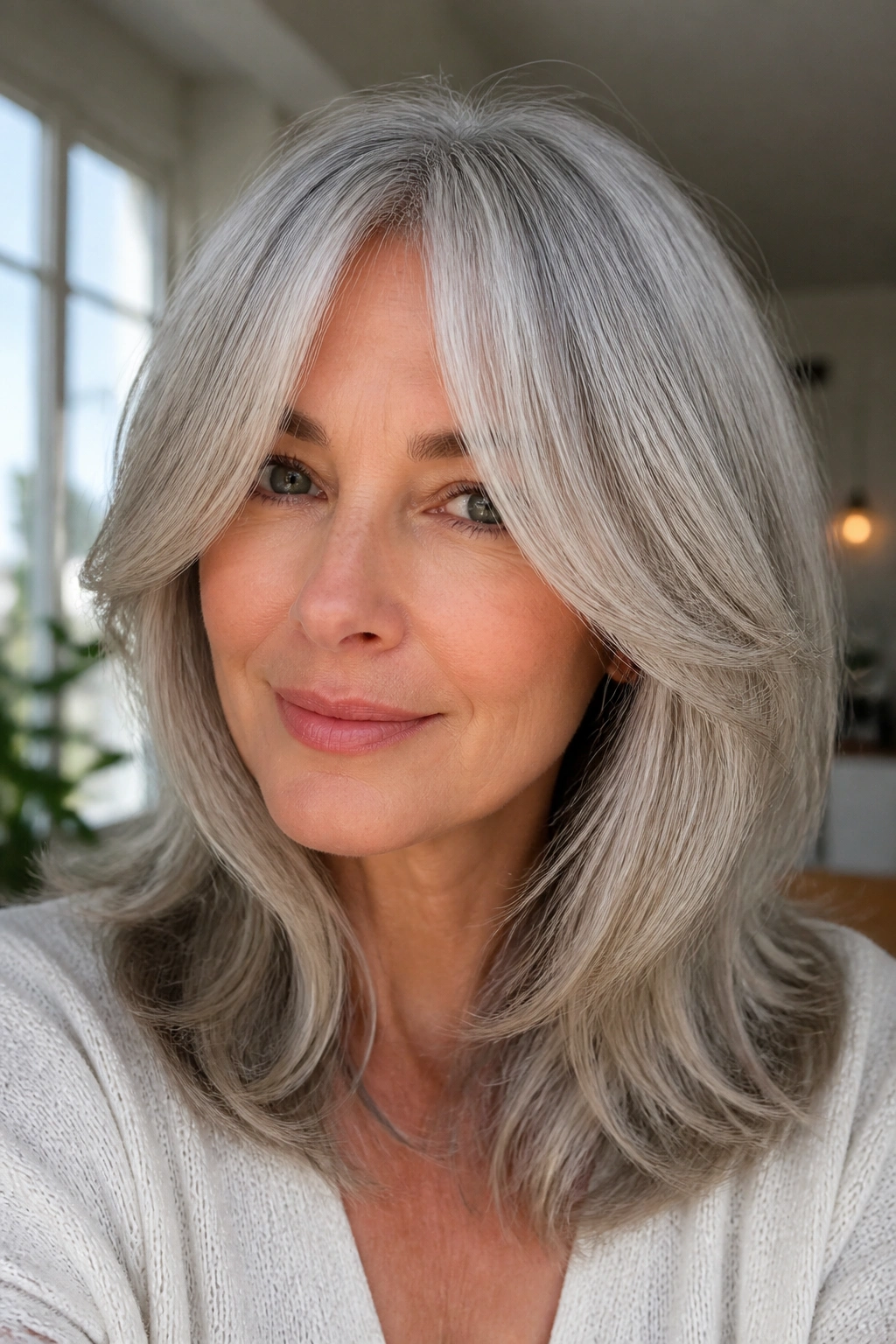
Gray hair changes the way light hits the face, and curtain bangs can make that shift look calm instead of abrupt. Soft fringe around the forehead and temples helps blend silver strands into the rest of the cut, especially when the length transitions gradually into face-framing layers.
The cut works well whether you’re letting your gray grow in fully or mixing silver with darker hair. A too-short bang can make the front look stark, but a longer curtain shape keeps the contrast smoother. That matters when the hairline is changing or the texture has become a little coarser. The fringe should move, not stand up and fight you.
There’s also a nice side effect here: silver hair tends to show texture changes faster, and curtain bangs let you lean into that. A little bend, a little softness, and the whole style feels deliberate even if the color is doing half the visual work.
If you want the most flattering version, keep the front layers light and avoid overloading them with heavy oils. Silver hair can look sleek, but too much product flattens the face frame fast. A small amount of cream, a clean blow-dry, and a gentle curve away from the face usually give the best result. And honestly, that’s enough.
