



Ombre hair looks especially good when the weather turns cool. The softer light, heavier clothes, and darker makeup shades make that dark-to-light fade feel richer, not louder. Copper reads warmer. Caramel looks creamier. Even a muted beige melt has a little more depth when it isn’t fighting bright sun.
The part people get wrong is contrast. Too much of it can make the ends look striped, especially if the transition starts too high or the blonde is pushed too pale against a deep brunette base. A cleaner autumn ombre usually keeps the root area grounded, lets the mid-lengths do some work, and saves the brightest point for the ends or a few face-framing pieces.
That matters when your hair spends half its life under scarves, coats, and topknots. You want a color that still makes sense when it’s tucked behind your ears. The shades below lean warm, smoky, spicy, wine-toned, and softly golden — the tones that hold up when the air gets dry and the wardrobe gets heavier.
1. Cinnamon Brown to Copper
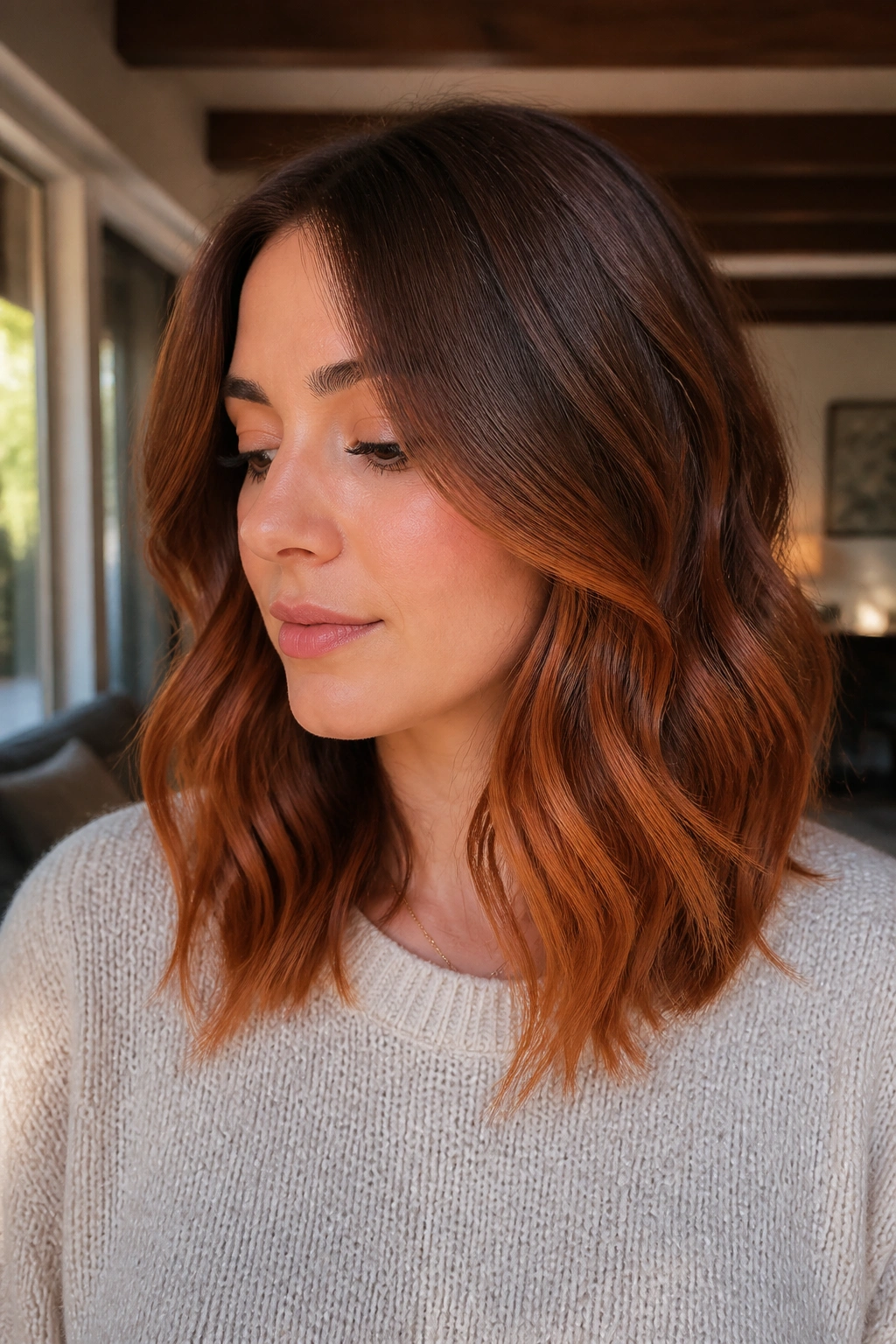
Cinnamon brown fading into copper is one of those ombre looks that never seems to fight the season. The base stays rich and grounded, while the ends bring in that warm metal shine that sits nicely against knits, leather jackets, and everything else that comes out when the temperature drops.
What makes this version work is the red-brown middle step. Skip that, and copper can look abrupt. Keep it, and the whole thing feels smoother, almost like the color was poured downward instead of painted on.
A shoulder-length cut with loose bends shows it off best. On straighter hair, the copper can read louder at the ends, so ask for a softer melt around the collarbone.
2. Espresso Melt with Caramel Ends
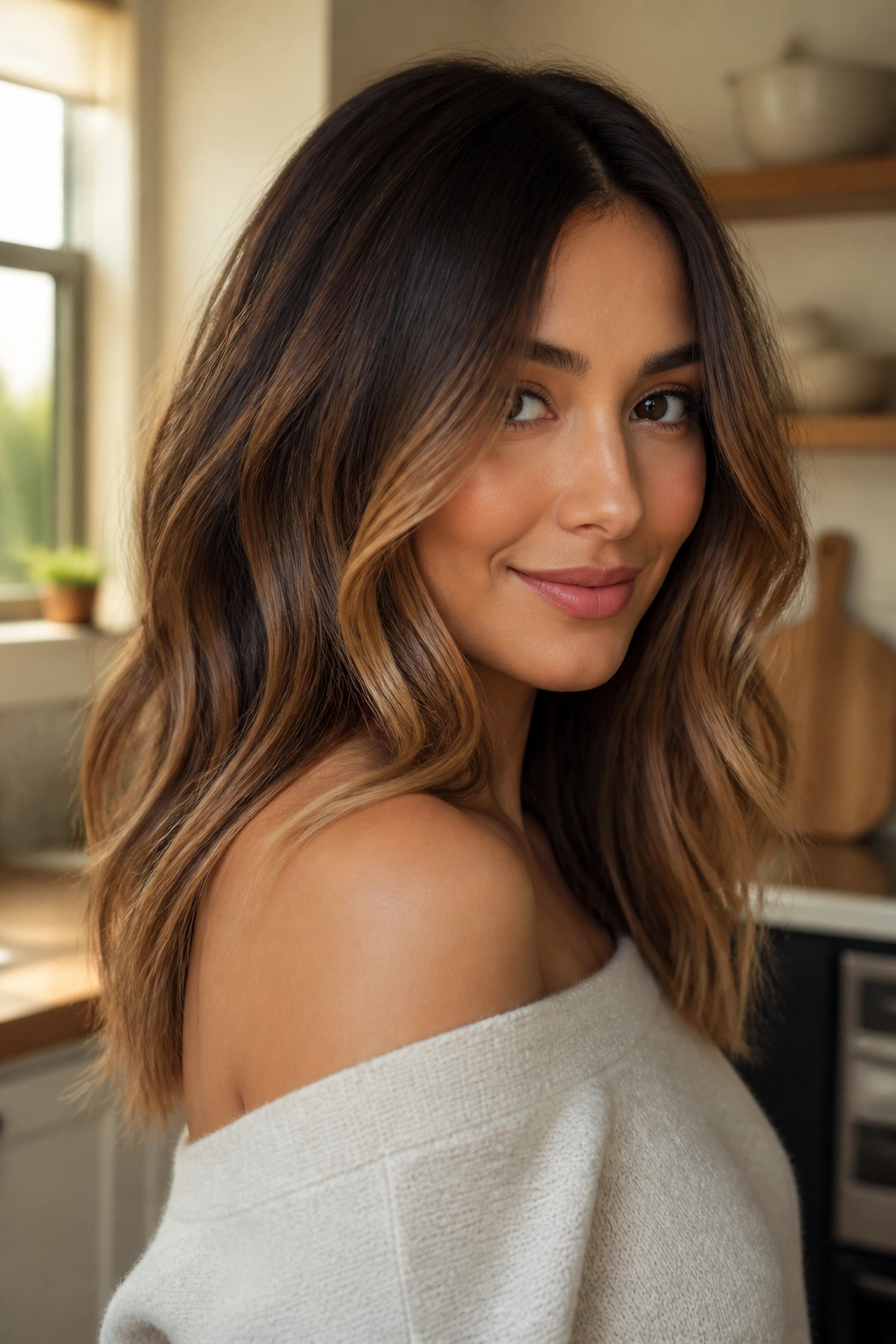
If you want something subtle, this is the lane. Espresso roots melting into caramel ends give you movement without shouting for attention, which is useful if you wear your hair straight or in low buns most days.
Ask your colorist for a deep root zone and fine lightening at the bottom third of the hair. The trick is keeping the caramel creamy, not orange. Too much warmth on a dark base can look brassy fast.
- Best on medium to long layers.
- Looks polished in a low ponytail.
- Needs a gloss every 6 to 8 weeks.
- Works well if your base is already dark brown.
A soft wave makes the transition look more expensive than a perfectly flat blowout. Funny how that happens.
3. Chestnut to Golden Toffee
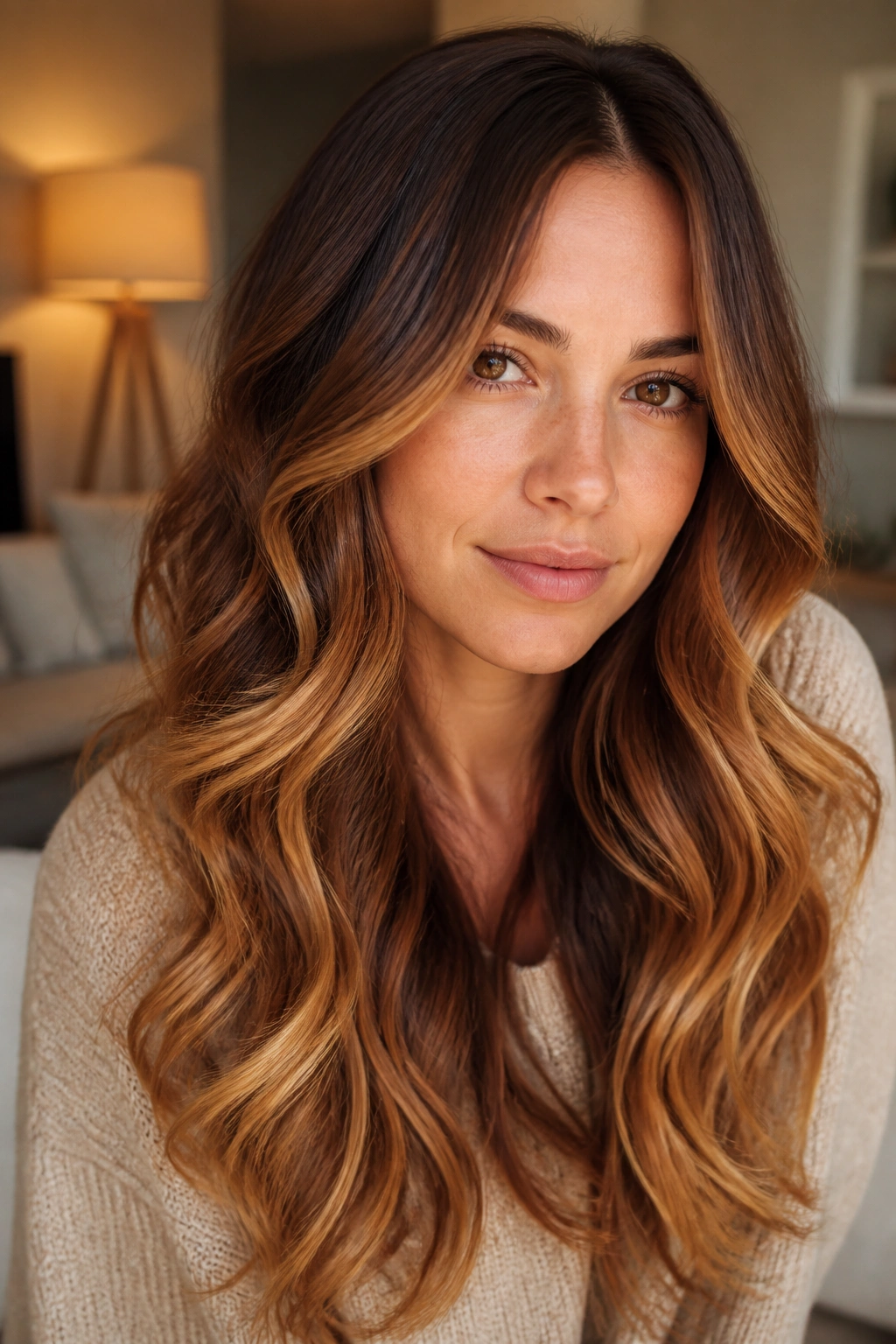
Why does chestnut to golden toffee look so easy on the eye? Because chestnut already has that red-brown warmth, so the toffee ends don’t feel like a jump. They feel like a natural brightening, which is exactly what autumn hair should do.
This one flatters hair that has some movement, especially layered cuts around the face. If the ends are too blunt, the shine can pool there and make the lighter shade feel heavy. A few face-framing pieces around the cheekbone help the whole style look lighter without losing the darker root.
How to wear it
Loose curls are the sweet spot here. A 1.25-inch iron or a round brush blowout gives the toffee a soft glow, while air-drying can make the contrast look too flat.
Keep the toffee on the lower half of the length. That’s where it reads warm and rich instead of streaky.
4. Mushroom Brown to Smoky Beige
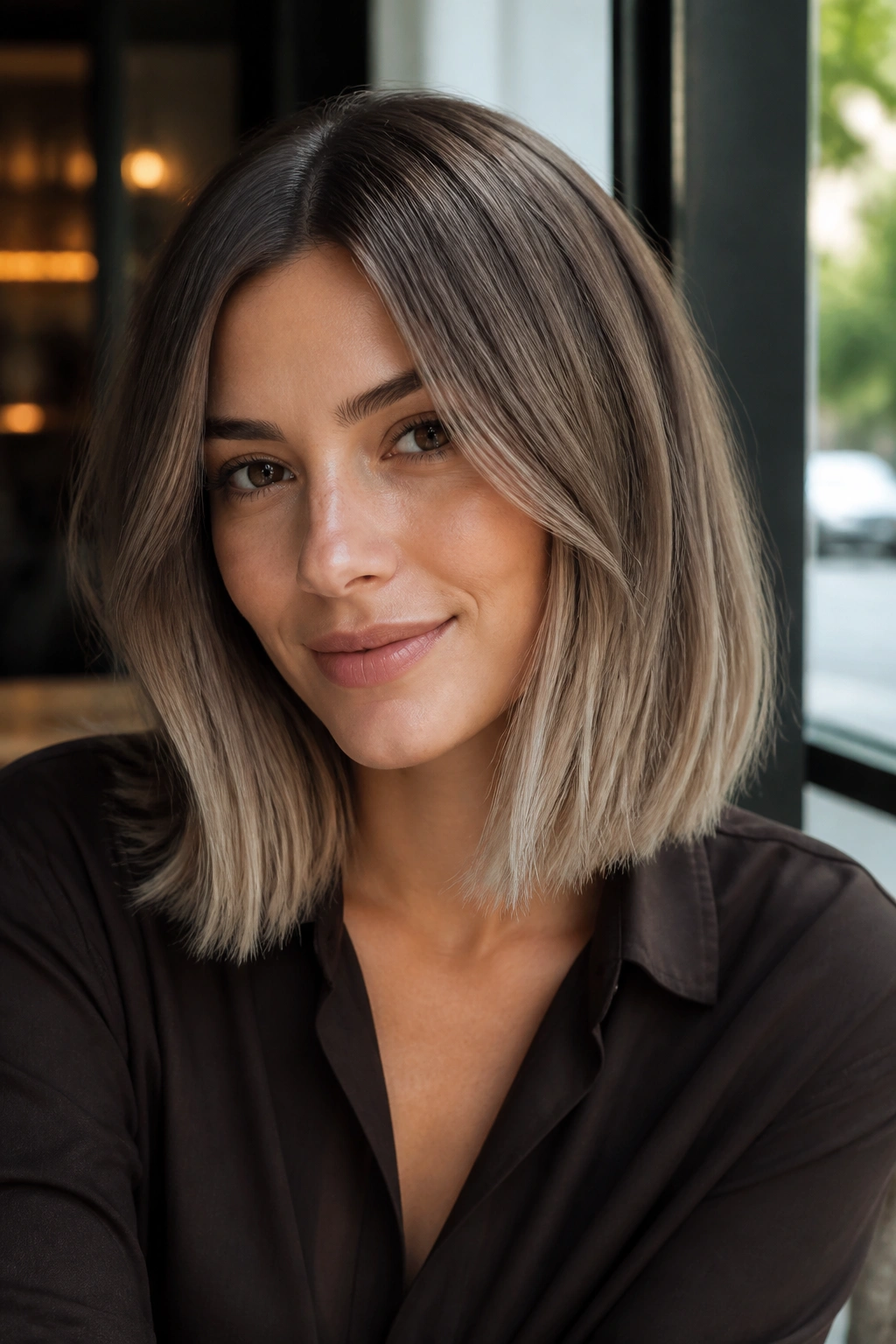
Not every autumn ombre has to be warm. Mushroom brown into smoky beige is for the person who likes cooler clothes, soft neutrals, and hair that looks expensive without trying very hard.
The ash-brown base keeps the color from drifting orange, and the beige ends should stay muted, almost suede-like. If the beige gets too light or too creamy, the whole look loses that misty edge that makes mushroom brown feel modern. This is one of those shades where toner matters a lot.
A blunt lob works well here, especially if you wear a center part. The cleaner the cut, the more intentional the color looks. On long wavy hair, it reads softer and a little more romantic.
5. Auburn Fade with Rusty Ends
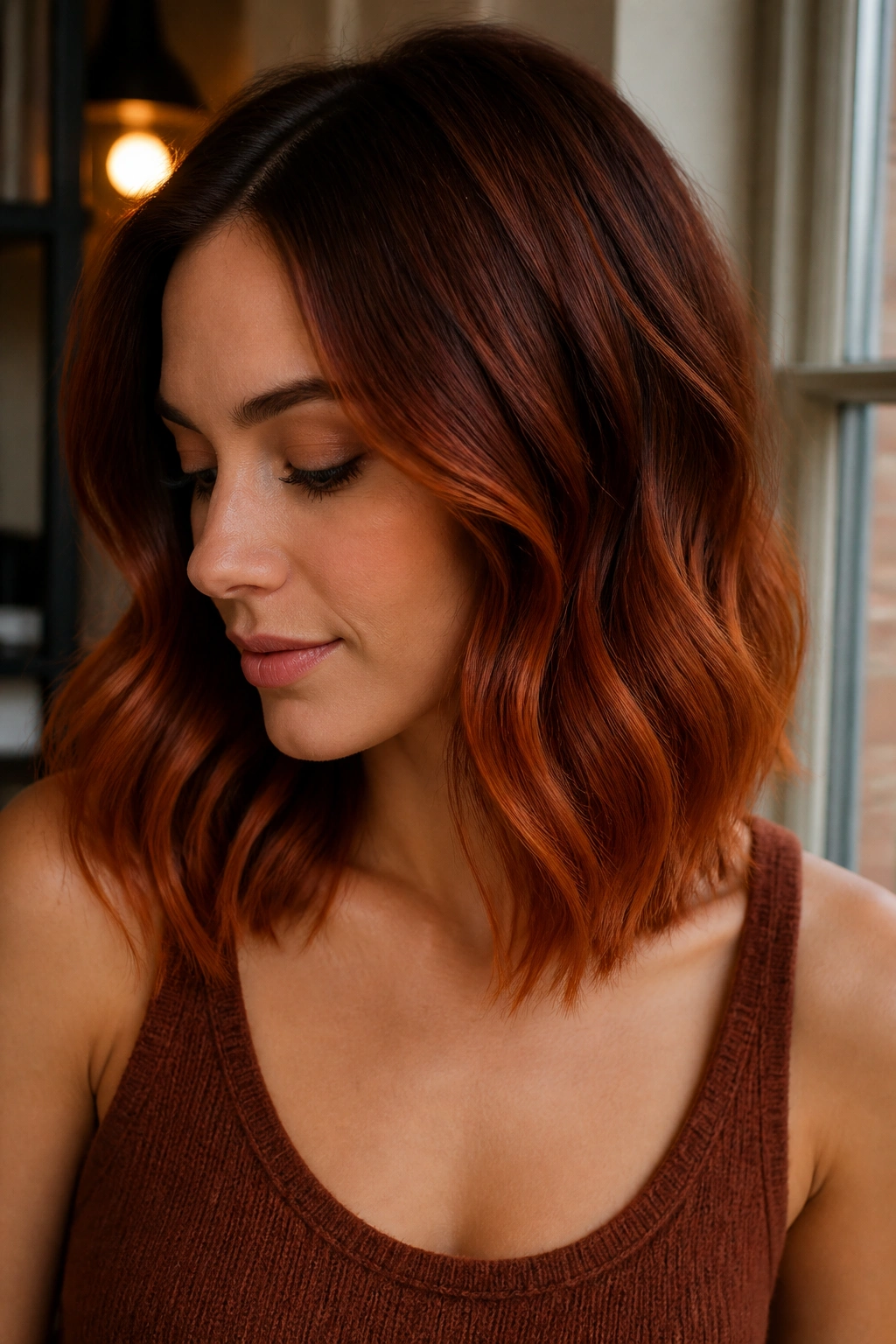
Auburn fading into rusty ends has a lot of range. It can look rich and polished in indoor light, then turn almost ember-like near a window. That shift is what gives it real autumn energy.
The key is saturation. You want the auburn to stay deep near the root, then let the ends take on a burnished rust tone instead of a bright fire-engine red. That way, the color stays wearable. Loud reds can be fun, but they age quickly if the cut is too severe or the tone is too pure.
This shade loves collarbone-length layers and long waves. The movement keeps the rust from sitting in one heavy block at the bottom.
6. Black Cherry Ombre
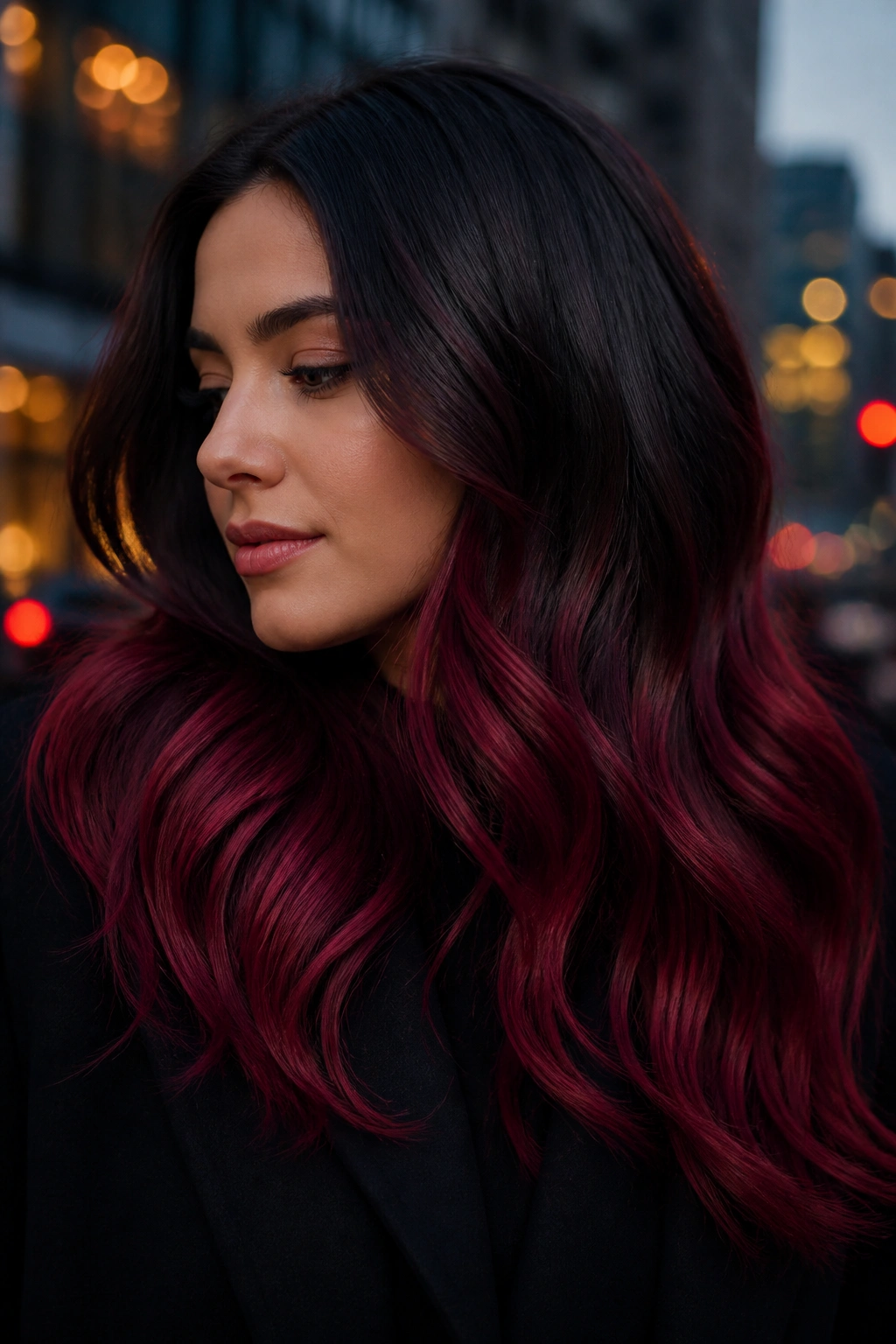
Black cherry ombre is darker than people expect. That’s a good thing. The base can stay near-black or very deep brown, while the ends shift into cherry red, plum, and a little wine stain depending on the light.
Unlike a full red dye job, this version leaves room for shadow. That makes it easier to wear, especially if your clothes lean black, gray, navy, or deep green. The color looks richest when the cherry is concentrated below the jawline instead of wrapped all the way through the crown.
What makes it work
- A deep base keeps the red from feeling flashy.
- Soft waves show the plum undertone.
- A cool-toned gloss helps the cherry stay clean.
- Best for thick hair that holds color well.
If you want drama without a hard line, this one earns its keep.
7. Honey Brunette with Soft Blonde Tips
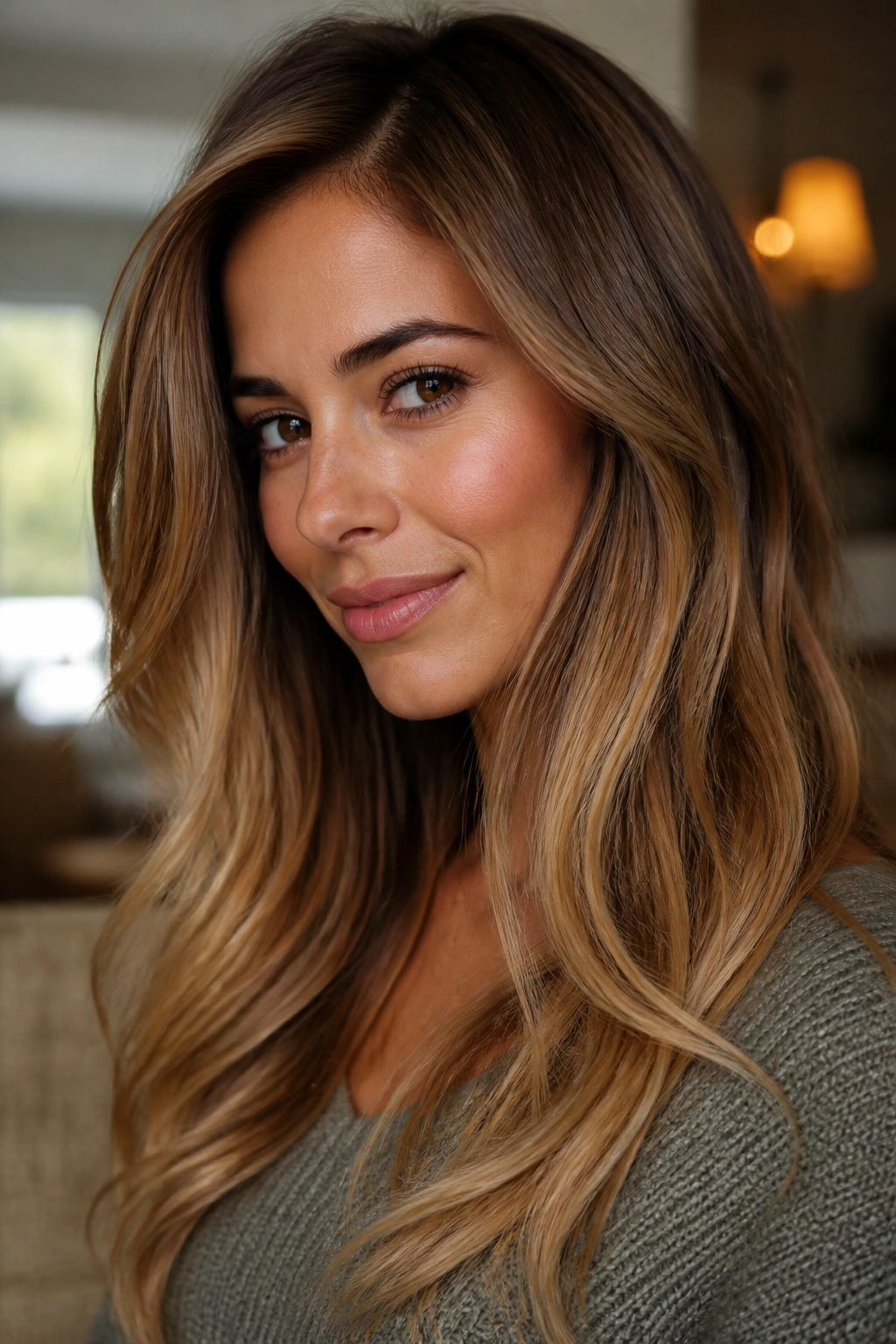
Honey brunette can read autumnal if the blonde stays soft. That’s the part a lot of people miss. Push the ends too pale and you’re back in summer territory. Keep the lightness warm and muted, and the whole look turns cozy.
This works nicely on medium brunettes who want brightness without a huge lift. You’re not chasing platinum here. You’re after a gentle honey tone that sits at the ends and glows a little when the hair moves.
A few long layers help keep the lighter tips from feeling boxy. If your hair is curly, ask for the blonde to be placed in spirals rather than straight stripes — the curl pattern does the blending for you.
8. Walnut Brown to Champagne
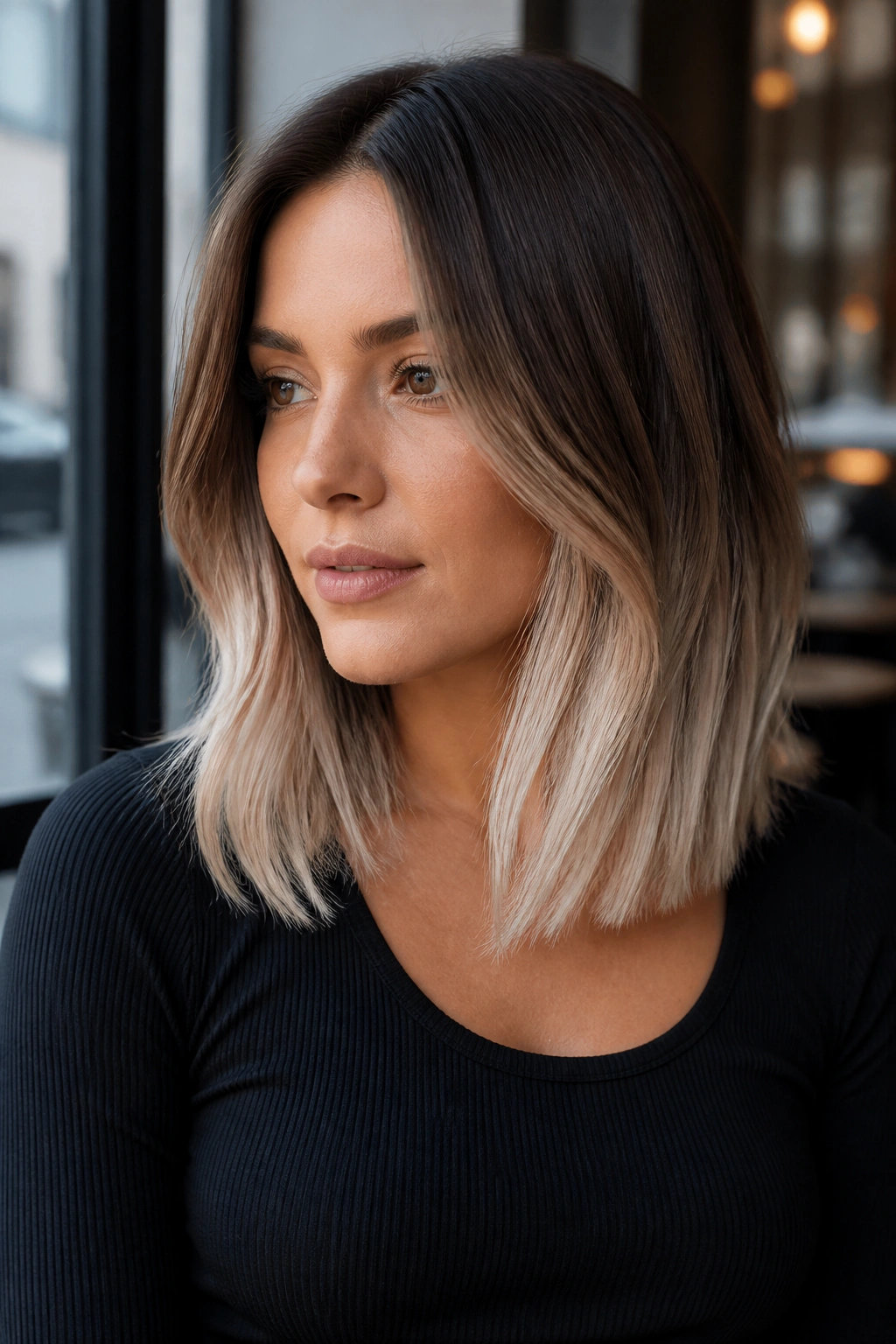
Walnut brown into champagne feels a touch dressier than the usual caramel fade. The walnut base is deep and grounded, while champagne brings a pale, cool shimmer that looks clean against a darker root.
Compared with a stark blonde ombre, this one stays softer. The contrast is there, but it’s tucked under the surface. That makes it a strong choice for blunt cuts, where too much warmth at the ends can look chunky.
A shoulder-grazing lob is especially good here. The line of the cut gives the champagne ends a place to sit, and the color looks deliberate instead of overworked.
9. Cocoa to Mahogany
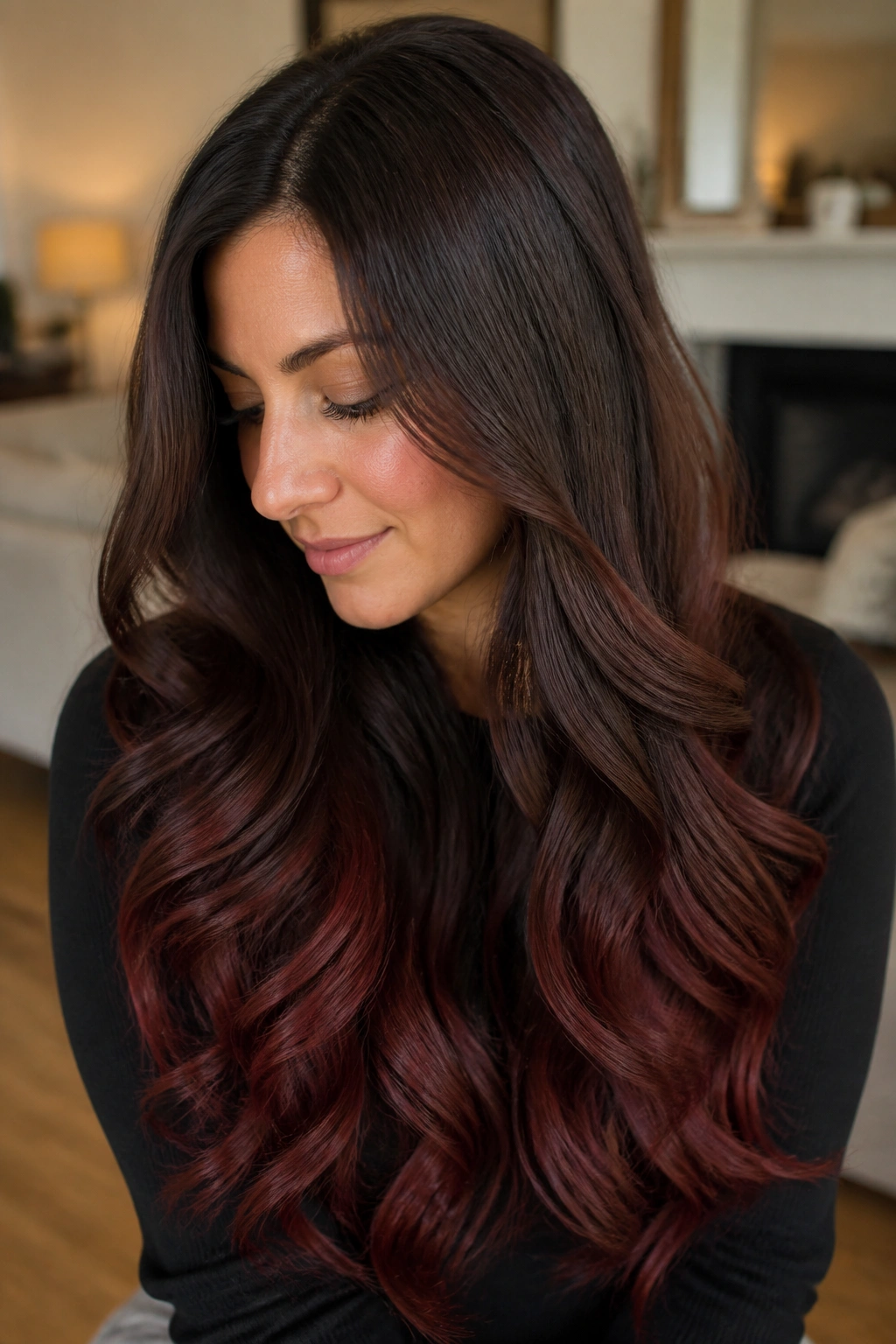
A cocoa to mahogany ombre has a quiet kind of luxury to it. The base stays deep and matte, then the lower half picks up that warm red-brown glow that shows best in indoor light or on cloudy days.
Why do people keep coming back to this shade? Because it gives depth first and shine second. That sounds backwards, but hair that has depth looks healthier. Mahogany on the ends keeps the color from reading flat, especially if your natural hair is already dark.
Why it flatters long cuts
Longer hair gives the mahogany more room to breathe. On a short bob, it can feel compressed. On longer layers, the color moves and separates in a way that feels softer.
A light curl at the bottom third is enough. Too much styling and the mahogany starts to look more like a solid red than a gradient.
10. Maple Brown to Amber
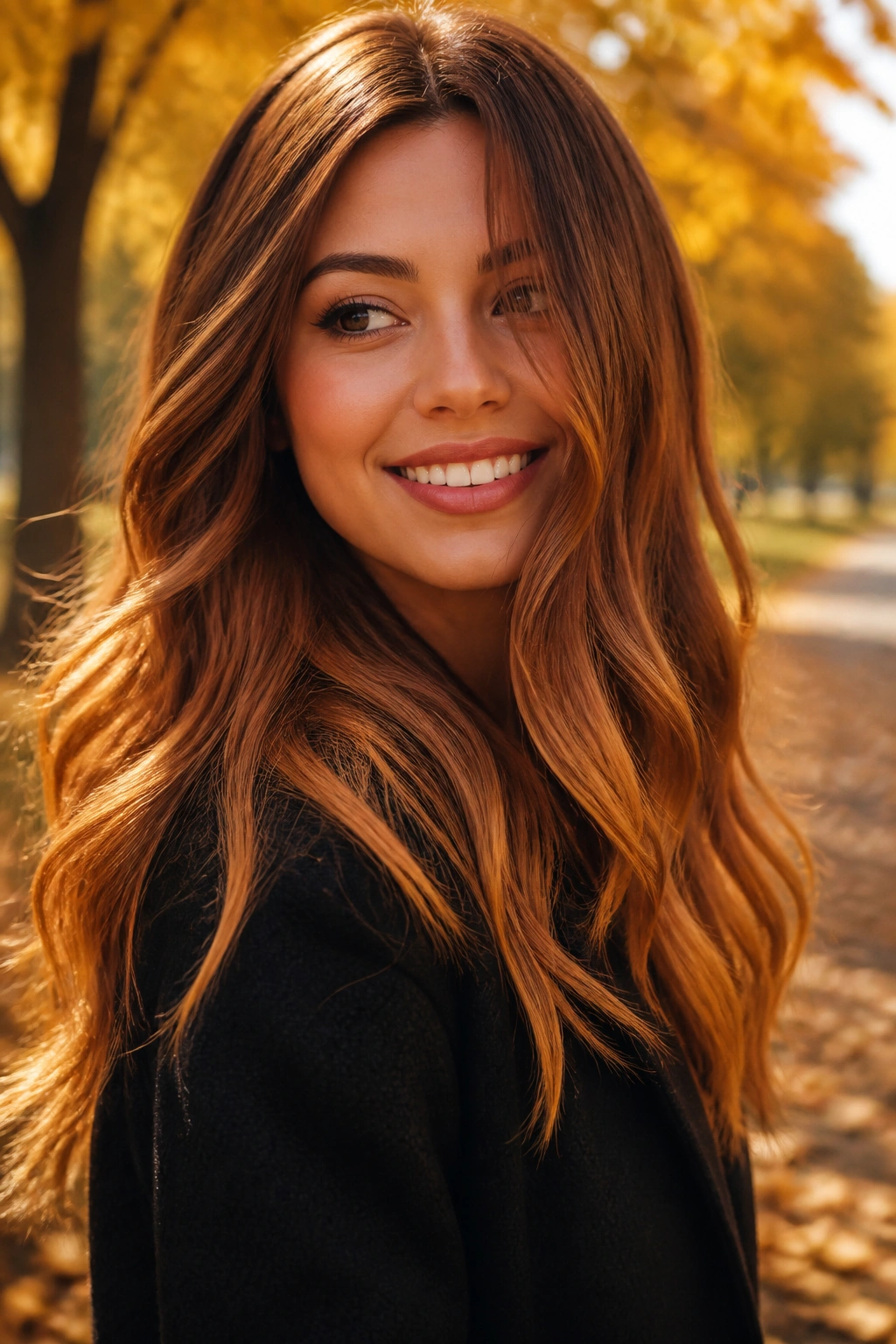
Maple brown melting into amber is pure autumn in hair form, but it works because the amber stays translucent rather than loud. The brown base keeps the style grounded, and the amber ends bring in a warm glow that looks especially good on textured hair.
This shade shines on curls and waves. Amber loves movement. When the hair swings, you see tiny flashes of warmth instead of one flat block of color, and that makes the whole ombre feel more natural.
If your hair is fine, keep the amber close to the last four or five inches. Fine hair can go wispy fast if the lighter color starts too high. The lower placement helps the ends stay full.
11. Bronde with Shadow Root
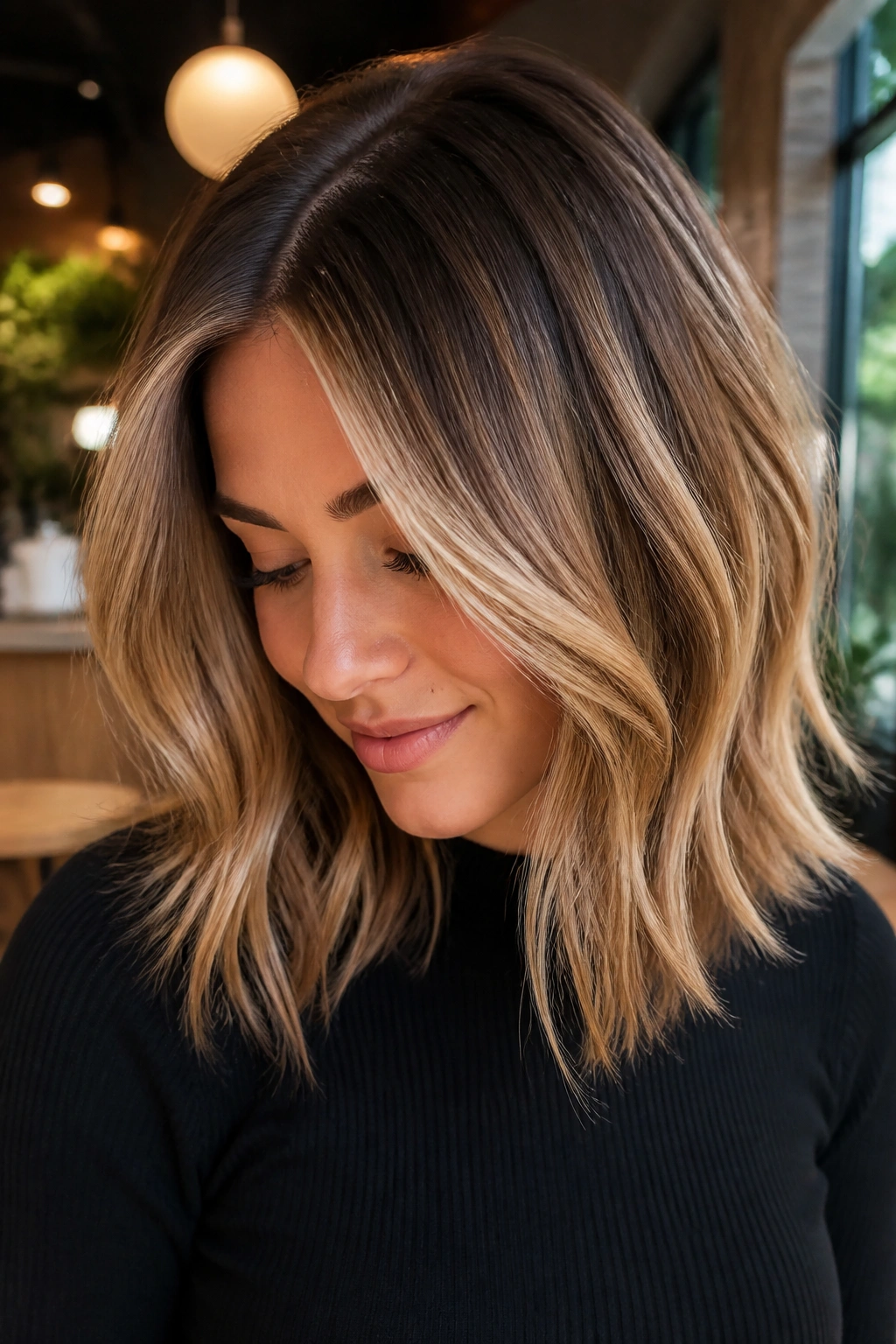
Bronde with a shadow root is the safe choice that never feels boring. It sits between brown and blonde, which is why it works so well when you want seasonal change without losing the lightness you already like.
The shadow root keeps the regrowth soft. That’s the real win here. Instead of a hard line every few weeks, you get a blurry transition that grows out in a way most stylists would happily defend in a mirror. The color also looks good under scarves and hats because the darker root gives the hair some visual weight at the top.
This is especially nice on layered, medium-length cuts. The blend can be built into the layers so the ends look airy, not bleached-out.
12. Burnt Sienna Balayage Ombre
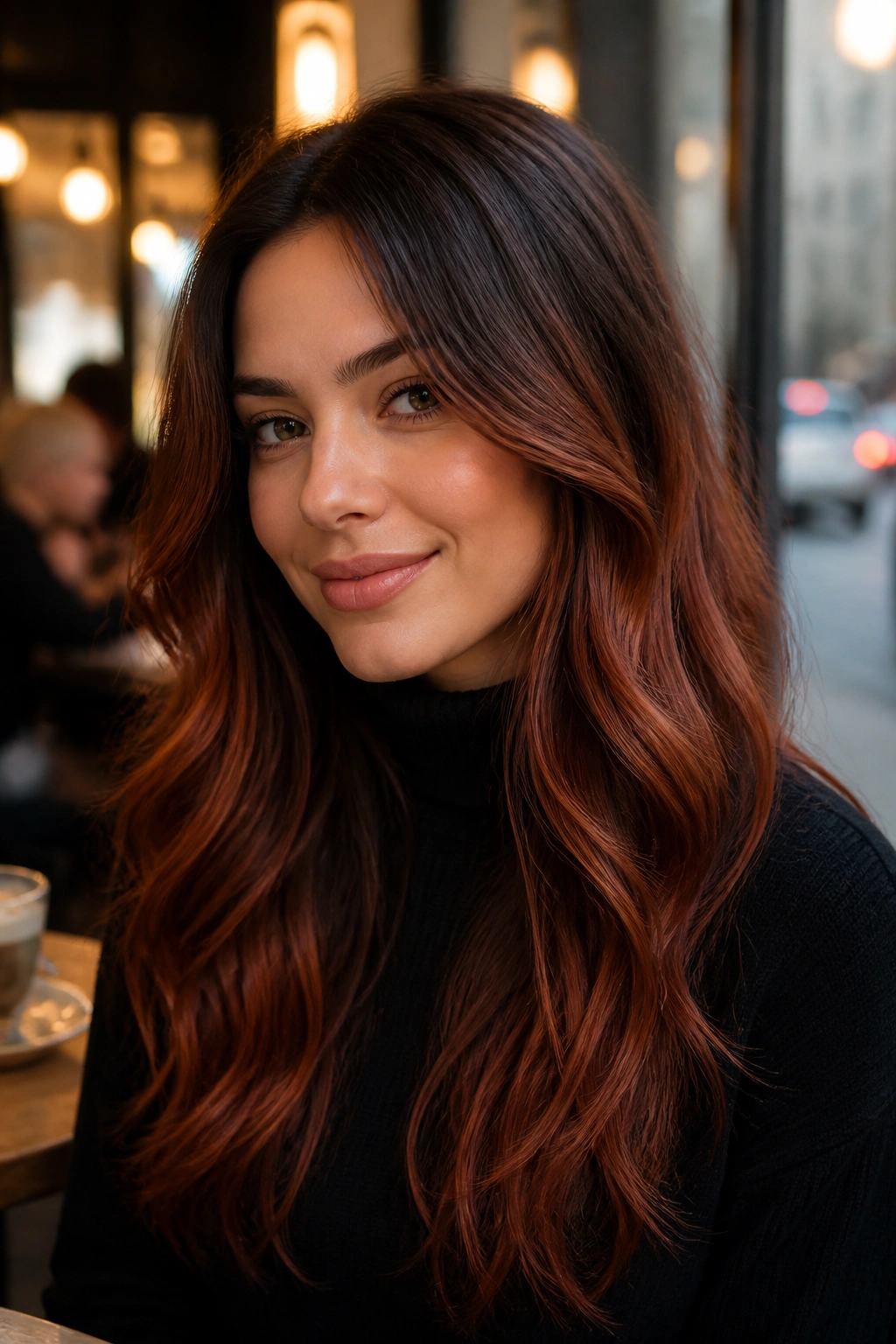
A sweater in burnt sienna is one thing. Hair in burnt sienna is better. The color lives between copper, rust, and clay, which gives it enough warmth for cooler weather without tipping into bright orange.
The balayage part matters. Hand-painted placement keeps the sienna from sitting in a hard band, and that helps the color feel more expensive. If the lift is too high, burnt sienna can lose its earthy edge and start looking neon. Nobody wants that.
Salon note
Ask for the sienna to begin below the cheekbone on straighter hair, or a little lower on curls. That keeps the color from crowding the face and lets the darker base frame everything properly.
13. Hazelnut to Buttercream
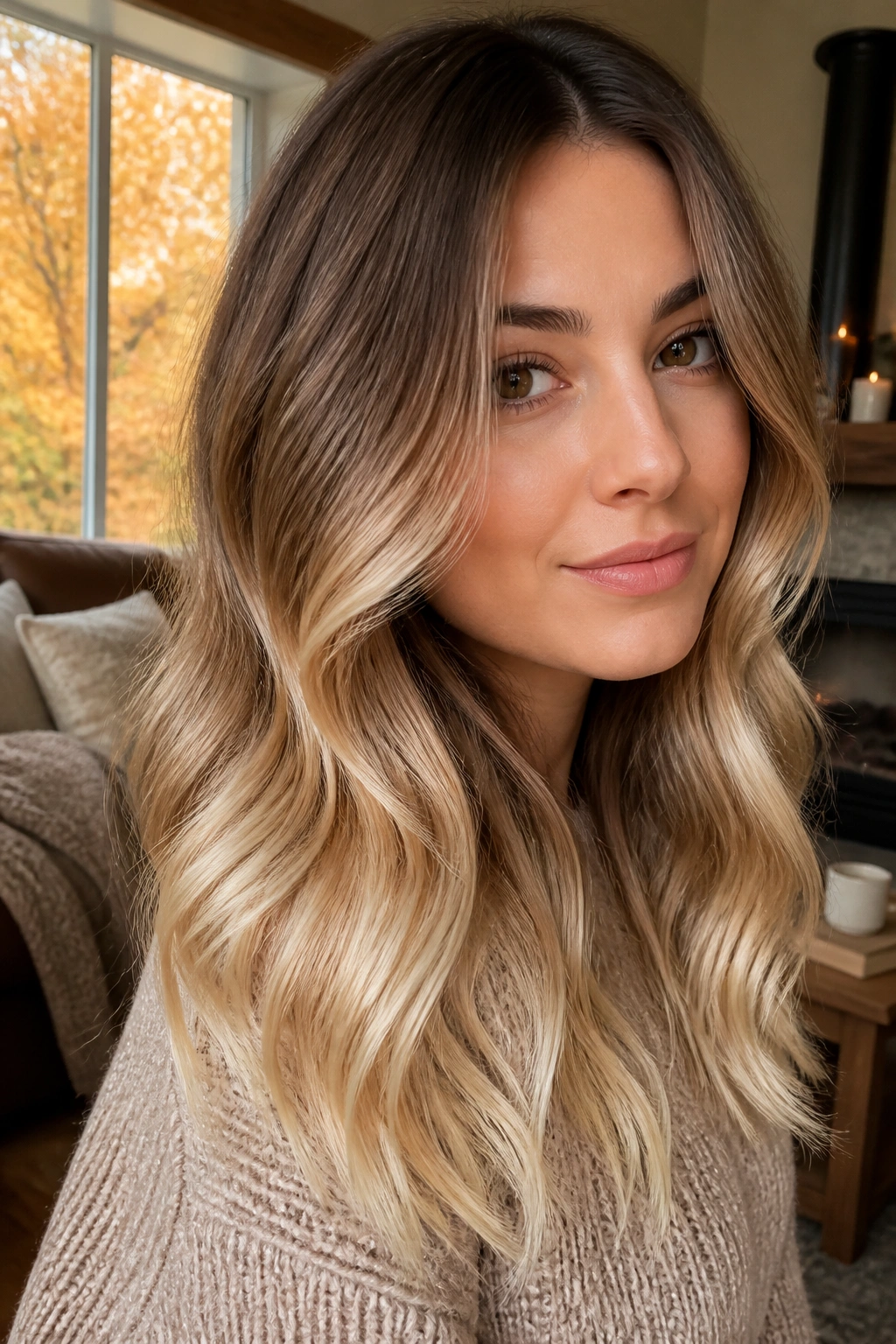
Hazelnut to buttercream gives you warmth without heaviness. The hazelnut base has enough brown to keep the style grounded, while buttercream softens the ends in a pale, creamy way that still feels cozy.
This is a smart option if your hair is naturally light brown or dark blonde. You don’t need huge contrast to get a nice ombre effect. A few levels of lift can be enough, which is easier on the hair and easier to maintain through dry weather.
The finish matters here. Buttercream needs to look soft, not yellow. A beige-leaning toner keeps the shade from drifting too sunny, and a light wave helps the whole thing read plush instead of flat.
14. Smoky Plum Ends
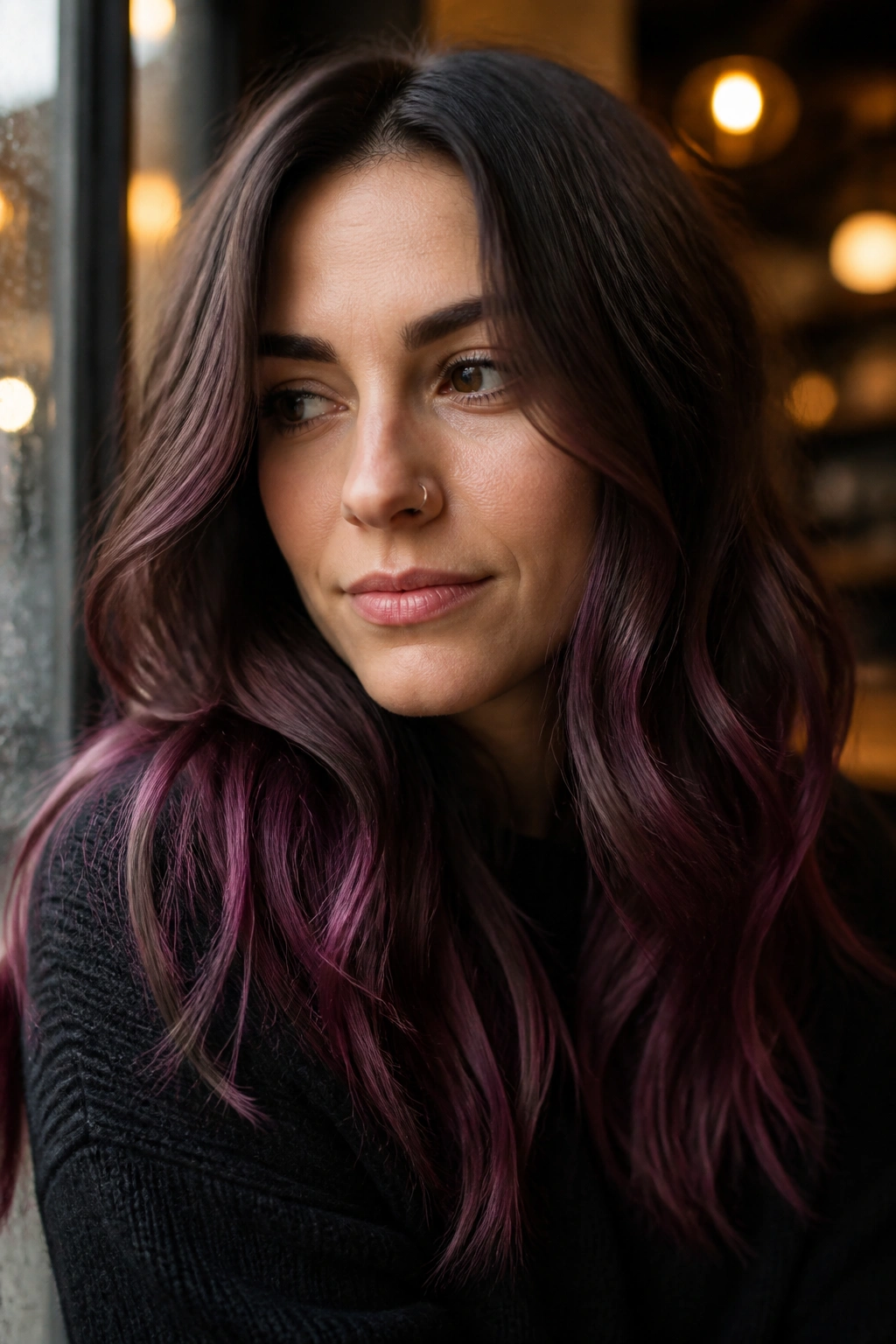
Smoky plum ends are for anyone who wants a little edge without going full jewel-tone all over the head. The root can stay brunette or deep brown, then the lower half picks up plum, violet-brown, and a touch of smoke.
Why does this work so well in autumn? Because plum loves lower light. It shows depth in a way bright red can’t, and it sits beautifully under knitwear and darker makeup shades. The key is keeping the plum muted enough that it still feels like hair color, not costume color.
How to wear it
Straight hair shows the color shift sharply. Waves soften it. If your hair is layered, let the plum start at different points in the lengths so it feels lived-in rather than blocky.
15. Copper Penny Ends on Brunettes
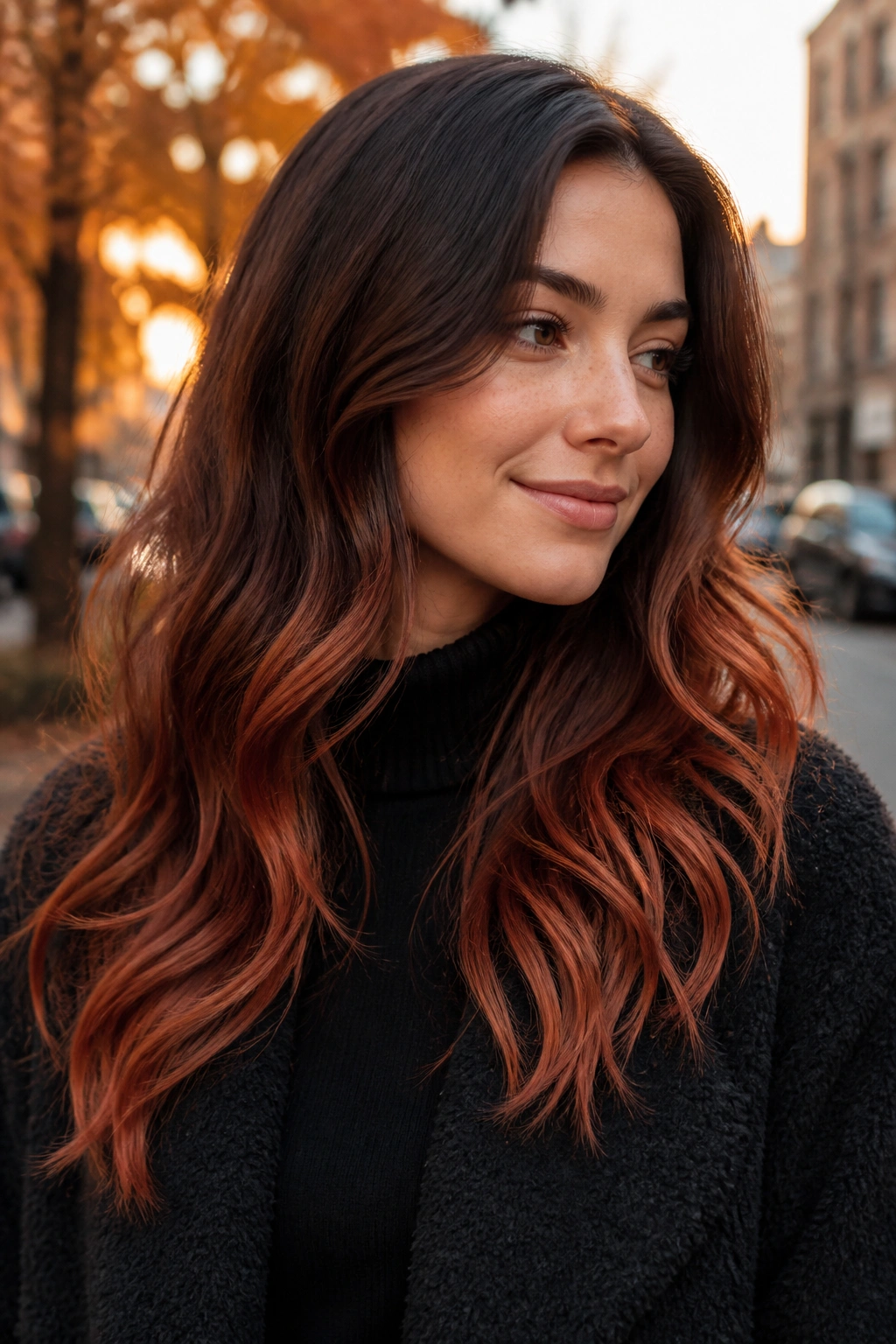
Copper penny ends are brighter than cinnamon and cleaner than rust. On a brunette base, that metallic copper at the tips gives you a sharp little flash that still feels wearable if the placement stays low.
This one works especially well on lobs, shags, and blunt cuts with texture. The contrast at the bottom edge of the hair makes the shape stand out. If the ends are too thin, though, copper can disappear, so keep enough density in the lower section for the color to show.
- Ask for fine copper ribbons, not chunky panels.
- Keep the root zone deep brown.
- Style with a bend, not tight curls.
- Refresh the copper with gloss rather than full color every visit.
That last part saves both time and hair. Worth it.
16. Sepia Brown to Warm Blonde
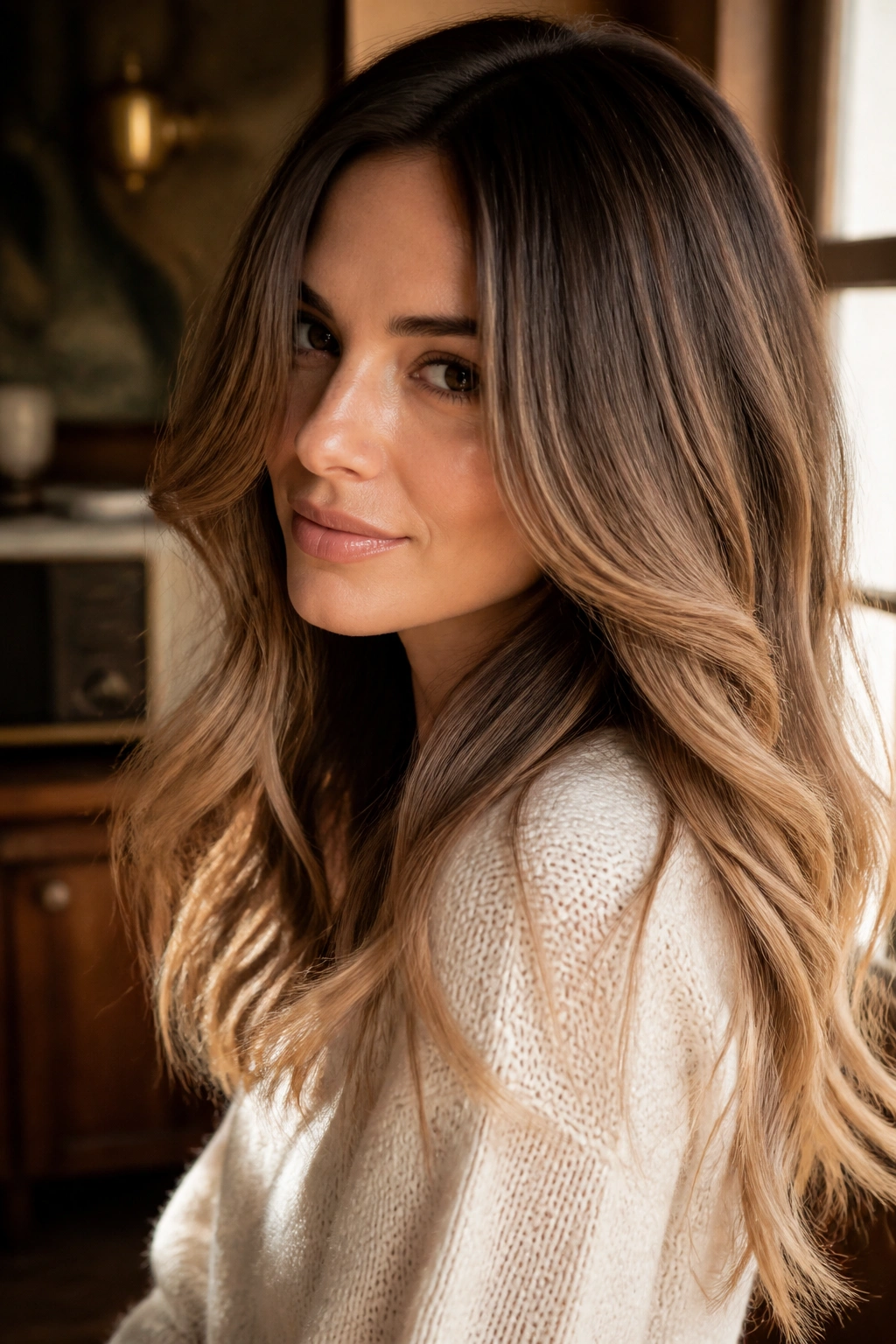
A sepia brown base into warm blonde ends has a kind of old-photo softness to it. Sepia keeps the brunette side muted and grounded, while warm blonde gives the ends a gentle lightness that doesn’t feel beachy or overdone.
This look is especially good if you like vintage-inspired clothes or makeup. The brown isn’t flat, and the blonde isn’t icy. Both parts sit in the same warm family, which is why the blend feels calm instead of high-contrast.
A soft blowout makes this one shine. The movement brings out the difference between sepia and blonde, but not in a sharp way. More like a slow shift.
17. Brushed Bronze Ombre
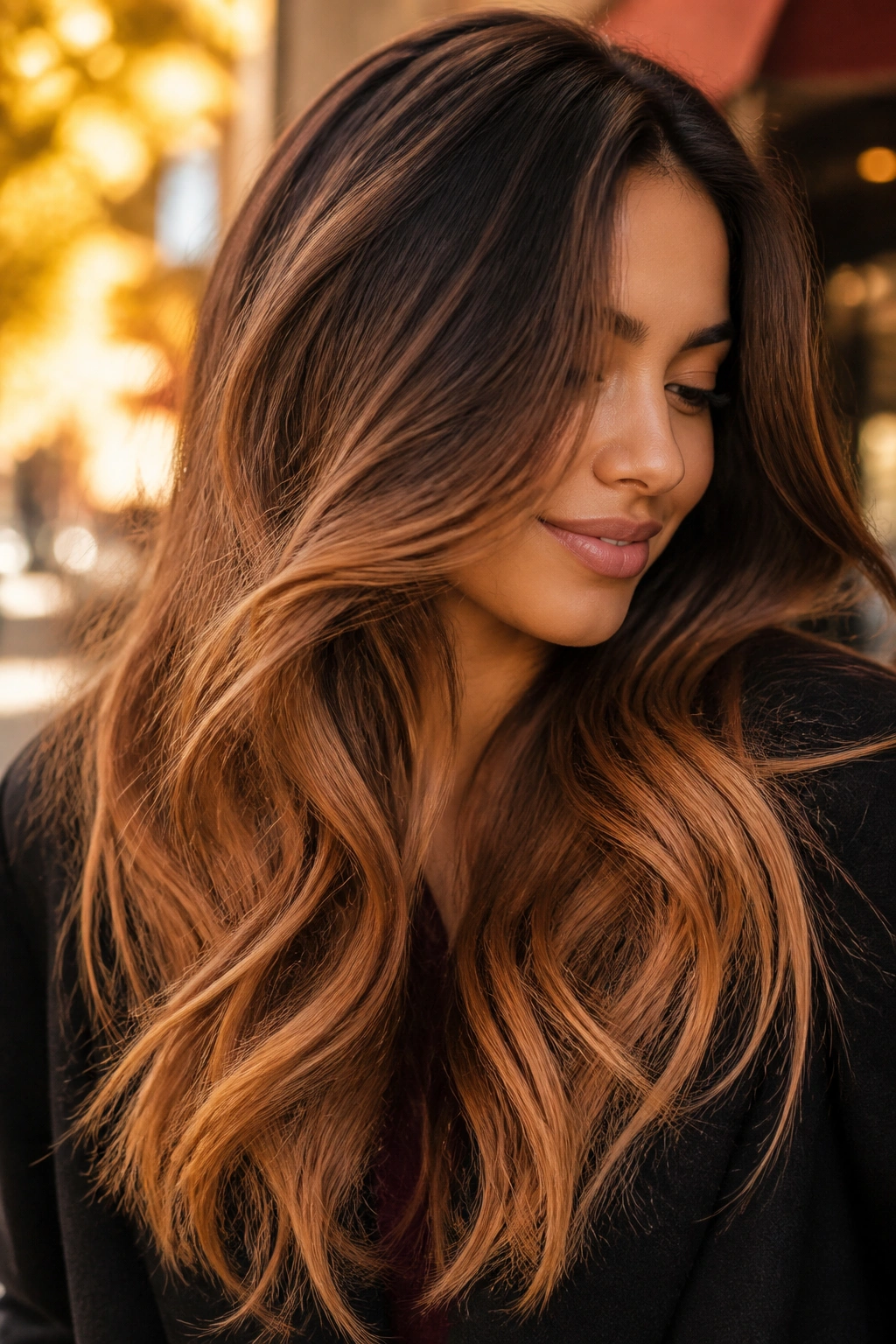
Bronze is underrated. It’s warmer than ash brown, cooler than copper, and polished without being shiny in a cheap way. In ombre form, bronze creates a burnished fade that looks especially good on thick hair.
The color gives you that metal-like finish people want from autumn shades, but it isn’t screaming for attention. Bronze works because it has brown depth underneath the glow. On thick hair, that depth prevents the ends from looking too light or stringy.
Long layers are the friend here. They keep the bronze from pooling at the bottom. If your hair is very dense, ask for some brighter pieces around the front so the color does not disappear into the length.
18. Espresso to Mahogany Red
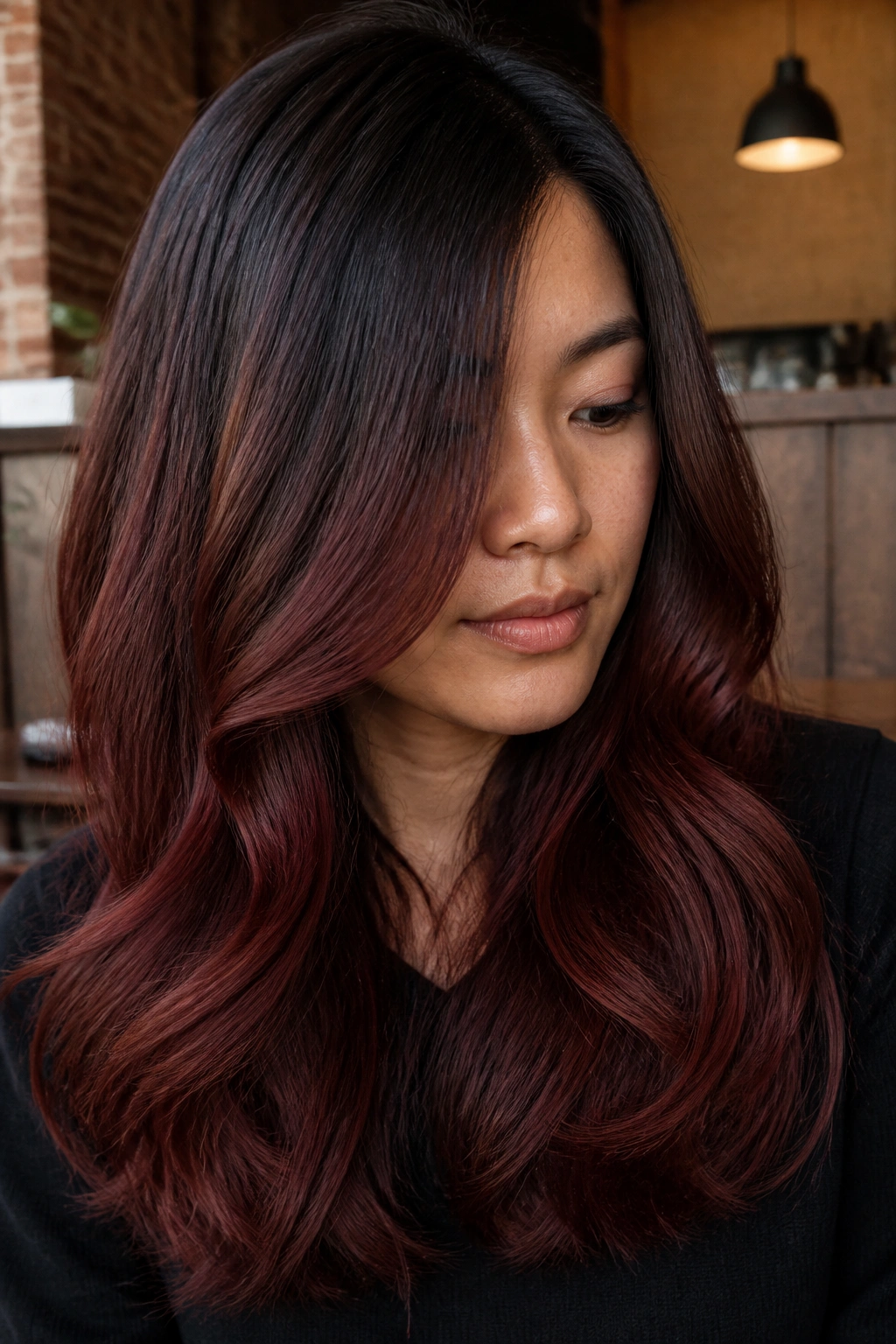
Espresso into mahogany red is darker and calmer than a cherry ombre. That makes it a good pick for someone who wants red, but not a red that looks like it has to be the main character in every room.
The mahogany should stay brown-leaning. If it moves too close to burgundy, the finish starts to look dramatic in a different way. Mahogany is richer when it keeps some cocoa in the mix.
Styling note
A smooth blowout shows off the red sheen fastest. If you prefer curls, use bigger sections and keep the ends loose. Tight spirals can make the color look more uniform than dimensional, which is not the point here.
19. Strawberry Brunette
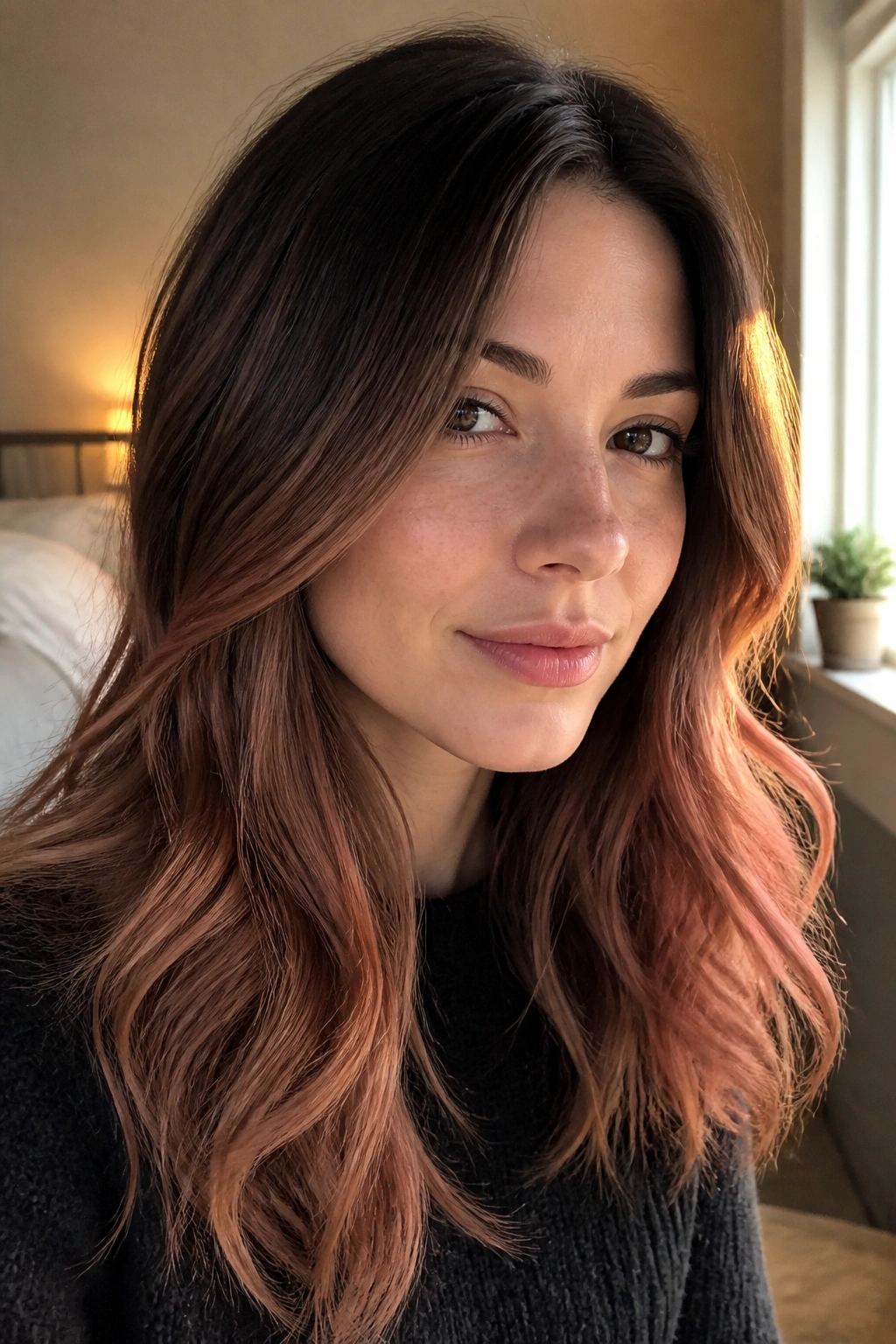
Can brunette hair pull off strawberry? Yes, if the strawberry stays muted. That’s what makes this ombre interesting. You get a soft red-gold warmth at the ends without losing the brown structure at the top.
This shade is kinder than a full copper transformation. The strawberry tone can sit in the lower third of the hair and read as a warm glow, not a solid dye job. That’s useful if you like your color a little softer and a little less obvious when you’re wearing minimal makeup.
What to tell your colorist
Ask for strawberry tones that lean more rose-gold than orange. On dark hair, that keeps the finish from looking too bright. On medium brown hair, it gives the ends a pretty, slightly fruit-toned warmth.
20. Rustic Rose Brown
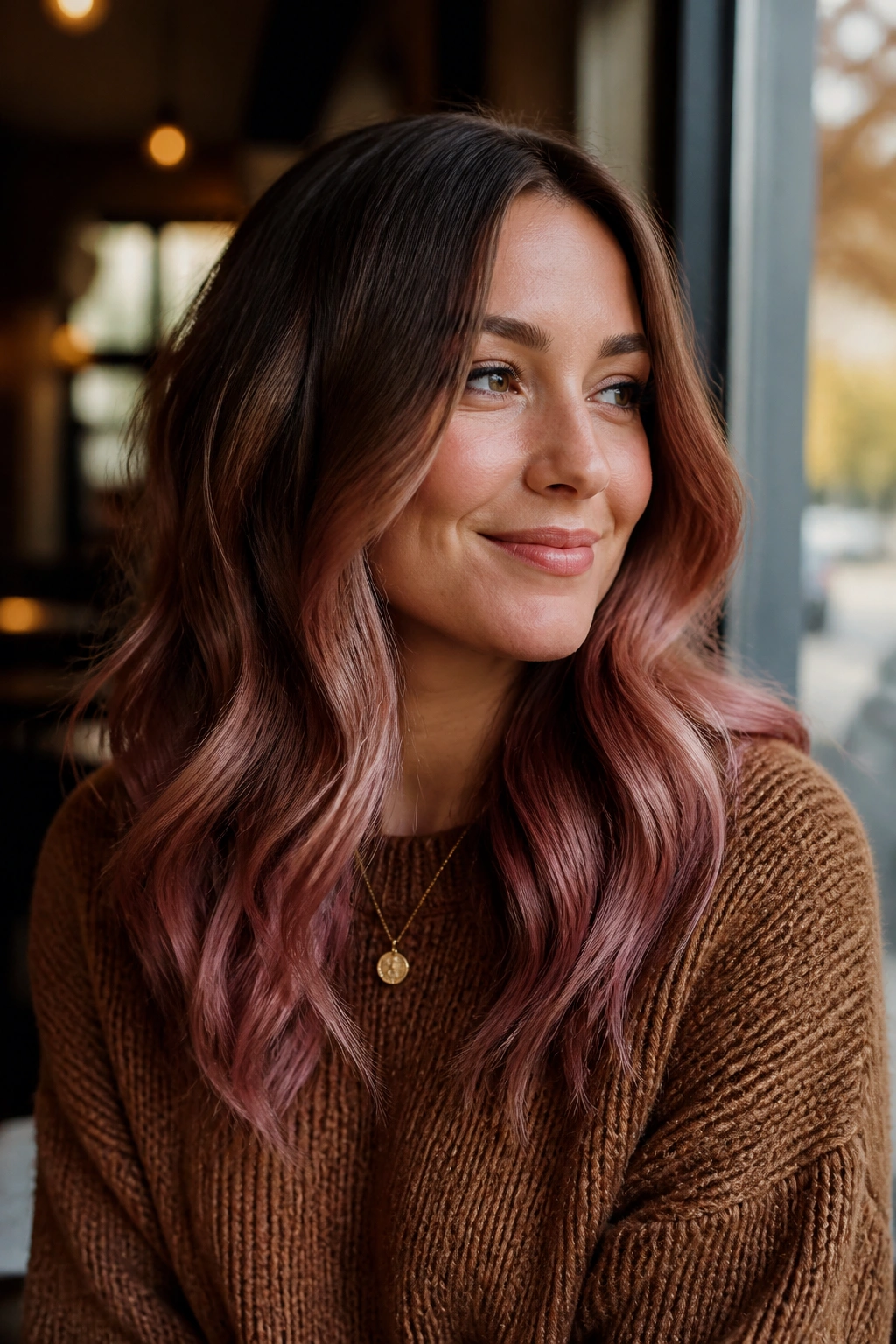
Rustic rose brown is muted pink done the right way. The brown base keeps it grounded, and the rose ends stay dusty enough that the whole look feels wearable with boots, denim, and those heavy scarves everyone digs out once the air turns crisp.
The trick is not letting the rose go bubblegum. You want a faded petal tone, maybe with a little mauve in it, so it reads like a worn-in color rather than a fresh one. That softness is what makes it fit cooler months.
This shade looks best on wavy bobs and shoulder-length cuts. The movement breaks up the rose and keeps the brown from swallowing it whole. A color-safe gloss can help keep the rose part from fading too flat between salon visits.
21. Oak Brown to Sand
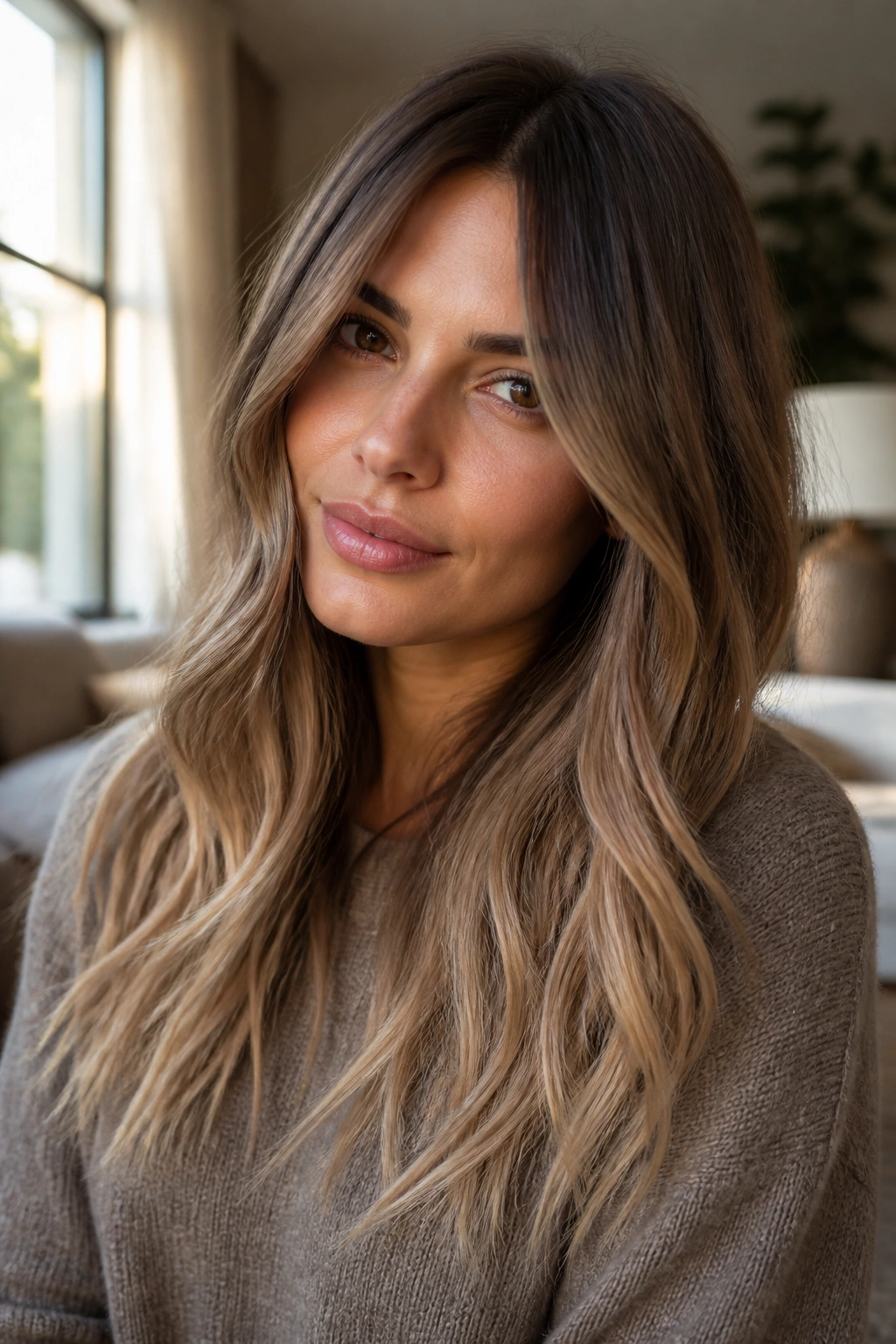
Oak brown into sand is for people who want a neutral ombre with less sweetness than caramel. Oak gives you a sturdy brown root, while sand lightens the ends in a dry, soft beige that feels calm and easy to wear.
It’s a good low-maintenance pick because the color transition does not rely on dramatic brightness. Instead, it leans on tone. That means your hair can grow out a little and still look deliberate, which is handy if you do not love frequent touch-ups.
- Best on medium-length hair with soft layers.
- Looks cleaner on a side part than a severe center part.
- Pair with a matte or satin finish, not high shine.
- Ask for beige, not yellow, at the ends.
The result is quiet, but not dull. There’s a difference.
22. Golden Apricot Tips
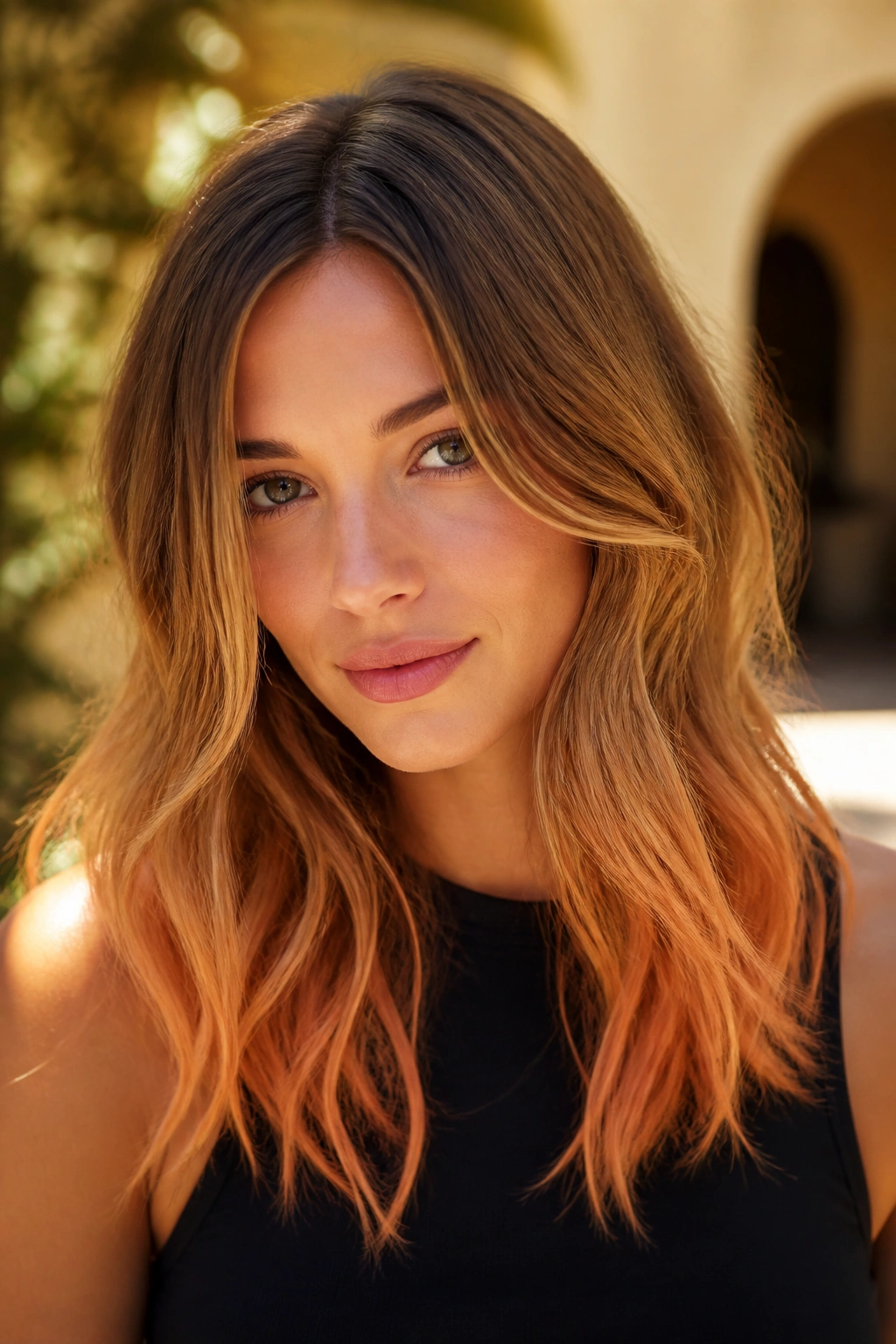
Golden apricot tips bring a softer fruit tone into ombre hair. Apricot is warmer than peach and less brash than orange, so it gives the ends a mellow glow that sits nicely against dark blonde or light brown roots.
This is a good choice if you want something playful but not loud. The apricot should be more golden than neon, with enough beige in it to stay wearable. On straight hair, it can look crisp. On waves, it turns gentle and almost velvety.
A shorter cut helps keep the color fresh. Very long hair can swallow apricot if the lift is too subtle. Keep the color concentrated at the ends and let a few face-framing strands carry the tone upward.
23. Tobacco Brown to Honey
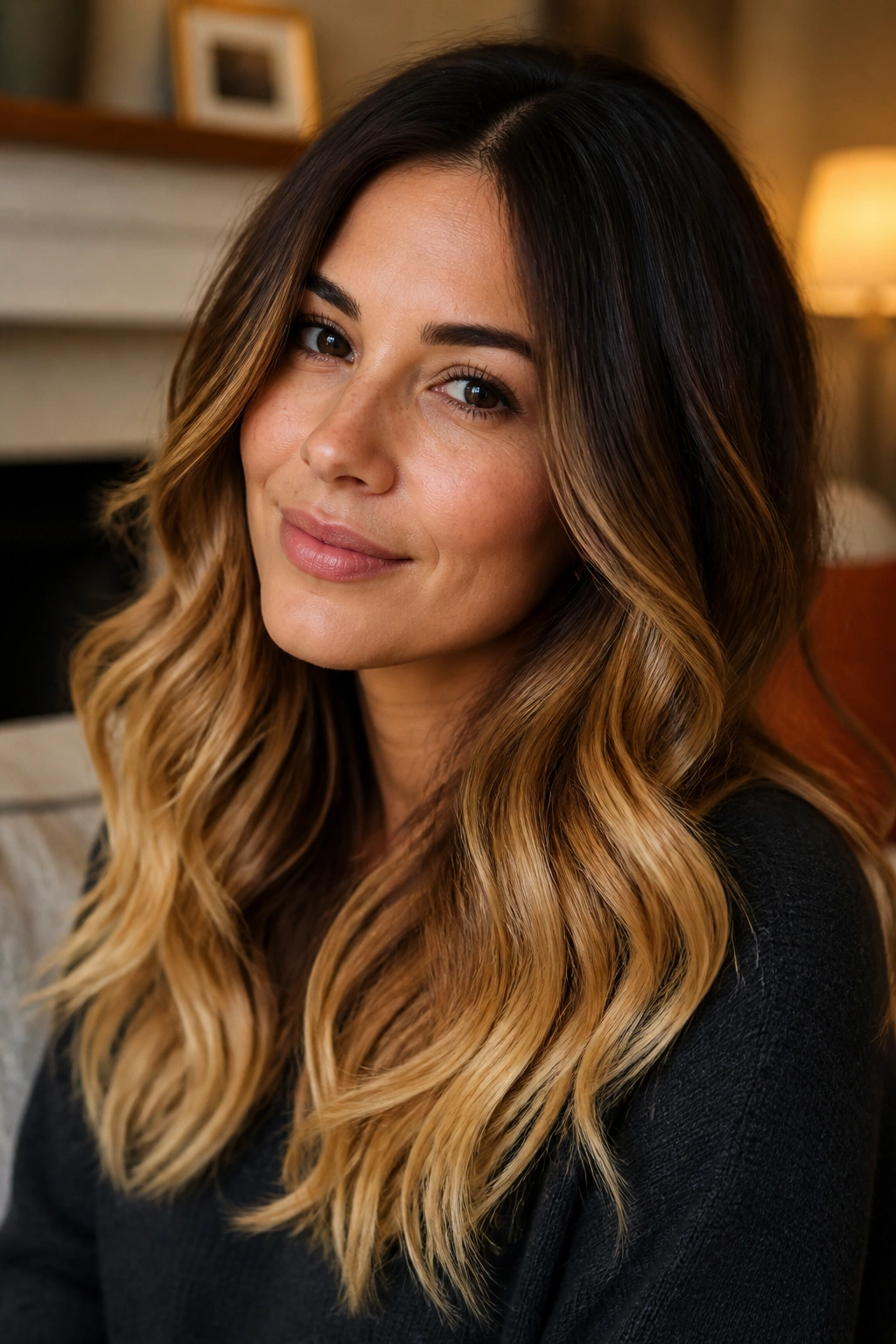
Tobacco brown into honey is more grounded than a classic honey blonde ombre. Tobacco gives the root warmth and depth, while honey brings in a soft sweetness at the ends without pushing the whole look too light.
That difference matters. Honey on its own can flatten darker hair if the root is not deep enough. Tobacco keeps the shading strong, so the lighter ends feel like an accent rather than the whole story.
This is especially nice on layered curls. Honey loves the edges of a curl, and tobacco gives the curls somewhere dark to start from. The contrast feels richer in person than it does in photos, which is one reason this shade has such staying power.
24. Mulled Wine Ends
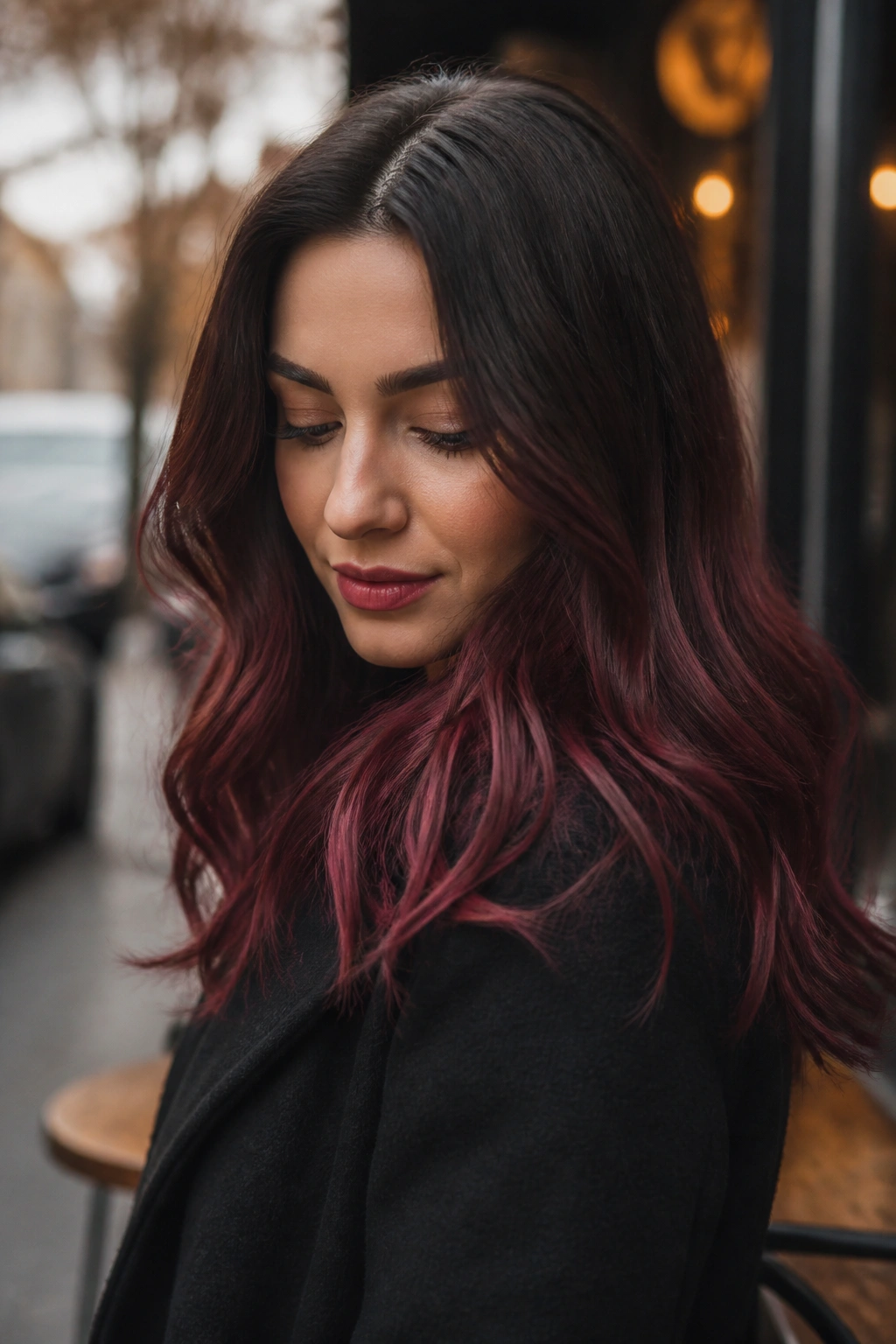
A mulled wine ombre is deep, warm, and a little moody. The ends lean into burgundy, clove, and dark berry, while the root stays brunette or black-brown. It feels like something you’d wear with a wool coat and a messy bun.
Unlike brighter red ombres, mulled wine stays grounded. The wine tone is there, but it isn’t glossy in a loud way. It looks best when the shade sits just below the mid-lengths and gets denser toward the ends.
Best finish
Soft curls help this color move. A glassy straight style can make the ends look darker than they are, while loose waves let the berry tones surface. If your hair is very dark, ask for a glaze between salon appointments so the wine shade doesn’t fade into brown too fast.
25. Butterscotch Ribbon Ombre
Butterscotch ribbon ombre is a little softer than a full blonde melt. The ribbons of butterscotch sit through the ends and a touch of the mid-lengths, which keeps the color looking sweet, warm, and slightly buttery without washing out the root.
This is a smart move for shoulder-length hair. The ribbons show up quickly, so you do not need a ton of length to make the gradient visible. On shorter cuts, they can look too concentrated; on longer hair, they spread out and feel airy.
The biggest win here is movement. Ribbon placement gives the hair depth even when it’s pinned back. That means the color still looks intentional in a low ponytail or claw clip, which is more useful than people admit.
26. Autumn Blonde with Root Smudge
Autumn blonde needs a root smudge. Without one, the lightest blonde ends can look too bright against cooler-weather clothes. The smudge softens the top and lets the blonde sit in a warmer, more grounded way.
This style is especially good if you already live in blonde territory and want a seasonal shift without going dark. The root smudge can be beige, soft brown, or muted ash-gold depending on your base. The result is a cleaner grow-out and a more relaxed look around the scalp.
- Keep the smudge close to your natural root level.
- Let the blonde start below the eyes on longer hair.
- Use purple shampoo sparingly if the blonde skews too yellow.
- A loose wave keeps the transition soft.
That last part matters. A glossy wave makes the blonde feel plush instead of icy.
27. Cocoa to Red Velvet
Cocoa to red velvet is a richer, darker answer to bright red ombre hair. The cocoa root holds the structure, while red velvet at the ends gives you that plush, almost fabric-like depth that looks especially good in low light.
What makes it different from cherry is the saturation. Red velvet has more body and less sparkle. It feels heavier, in a good way. If your clothes lean dark, this color can become the detail that keeps the whole look from going flat.
What to tell your colorist
Ask for a deep red with brown underneath, not a true red through the whole end section. That keeps the tone plush. A color like this also holds up well on thick hair because the density makes the red look richer instead of thin.
28. Saffron Auburn Fade
Saffron auburn is brighter than a classic auburn, but still anchored in brown. The saffron note gives the ombre a tiny lift, almost like the color of dried petals or spice mixed into warm chestnut.
This is a strong option if you want warmth with a little edge. It works best when the transition is soft and the saffron doesn’t start too high. High placement can make the hair look too coppery, while lower placement keeps the color elegant.
Braids show this shade in a nice way. Each strand catches a different part of the color, so the saffron and auburn bits alternate instead of sitting in one flat block. It’s one of the few ombres that can look better when the hair is not blown out perfectly.
29. Ash Brown to Beige Melt
Ash brown into beige is the cool-toned cousin in a room full of copper and caramel. If your wardrobe leans gray, black, cream, and denim, this kind of ombre fits without forcing you into warmer shades that never quite feel right.
The important part is the melt. Ash brown should not slap into beige. It needs a soft bridge so the ends feel airy, not chalky. Beige can go muddy if the base is too dark or the toner is too flat, so this is a shade that benefits from careful tonal control.
A long bob or collarbone cut keeps the shape neat. The color reads cleanest when the ends are blunt enough to hold the beige, but soft enough that the transition still flows.
30. Bronze to Pumpkin Spice
Bronze to pumpkin spice sounds festive, but the refined version is actually very wearable. Bronze keeps the root metallic and brown-based, while pumpkin spice adds a warm orange-brown note at the ends without going costume-level bright.
The best versions of this shade stay earthy. If the pumpkin spice gets too vivid, the color can take over the hair. Keep it muted and the look becomes cozy, dimensional, and easy to wear with neutral makeup.
How to keep it soft
Ask for the pumpkin tone to stay below the chin on medium-length hair, or lower on long hair. A slightly tousled finish helps the warm tone look natural. Straight hair can make it feel a bit too clean, which is not always flattering for orange-based colors.
31. Deep Brunette to Cinnamon Spice
A deep brunette base with cinnamon spice ends is one of the easier autumn ombre ideas to live with. The color change is warm but not extreme, so it keeps the hair looking thick at the root and lively at the ends.
This works especially well if you wear scarves, collars, and high-neck tops. Cinnamon spice is visible even when a lot of the hair is tucked away, but it doesn’t demand constant styling to show up. That makes it practical, which is not a bad word in hair color.
Long hair with soft layers gives the cinnamon room to spread. If the layers are too short, the warm tone can bunch up and feel uneven. Ask for a smooth gradient, not a harsh fade.
32. Burgundy to Mocha
Burgundy to mocha gives you one of the richest fall ombre pairings on the list. Burgundy at the ends brings in depth and a little wine-like drama, while mocha keeps the root smooth and familiar.
Compared with black cherry, burgundy reads a touch warmer and less blue-toned. That makes it easier to wear if your skin tends to look better next to brown-based reds rather than cool violet reds. The mocha root also softens the whole look so it does not turn heavy.
This one shines on thick, straight hair because the smooth surface shows the color shift clearly. If you want movement, add a bend only through the last few inches. That’s usually enough.
33. Caramel Smoke Balayage Ombre
Caramel smoke sounds almost contradictory, and that is why it works. The caramel brings warmth, while the smoky overlay keeps it from going sugary or flat. You get a softer, slightly muted version of the classic caramel ombre.
Why the smoke effect works
The smoky part dulls the brightest edges just enough to make the color feel modern. It also helps the transition from brunette to caramel look more blended, which matters if your hair has a lot of layers or texture.
- Ask for caramel in thin, hand-painted pieces.
- Keep the smoke tone around the transition area.
- Use shine spray lightly; too much can make it look oily.
- Best on wavy or layered cuts.
This is a good choice if you like warmth but do not want your hair to read sweet.
34. Sable to Cream Beige
Sable to cream beige is the high-contrast version for people who like a bolder ombre edge. Sable at the root feels almost black, then the cream beige ends lighten the whole look in a soft, pale way that still looks polished.
The contrast is the point here, but it needs clean placement. If the beige starts too high, the effect can feel streaky. If it starts too low, the fade may disappear. The sweet spot is somewhere below the cheekbone, depending on length and density.
This shade looks especially sharp on straight hair and sleek finishes. The crispness helps the sable and beige stay separate enough to be noticed. On curls, it becomes more romantic and less graphic.
35. Cocoa Noir to Copper Glow
Cocoa noir into copper glow is a strong ending shade because it gives you darkness first, then warmth. The cocoa noir base keeps the hair anchored and glossy, while the copper glow at the ends adds that last bit of light that autumn hair loves.
What I like about this one is the balance. It doesn’t ask the copper to carry the whole look. Instead, the copper comes in like a highlight at the bottom, which is enough if you want something elegant and low-friction. The result feels rich even when the hair is tied back.
A long cut with face-framing layers shows the glow best. If your hair is fine, keep the copper concentrated toward the last few inches. If it’s thick, you can spread the tone a little higher without losing the depth at the root.
Final Thoughts
The smartest ombre choices for cooler months do one thing well: they keep the root believable and let the ends do the talking. That might mean copper, maybe champagne, maybe a smoky beige that whispers instead of shouts. Fine either way.
What matters most is placement. A good fade looks intentional when your hair is down, tied back, or half-hidden under a scarf. That’s the part that separates a color you like for a week from one you actually want to live with.
If you’re stuck between two shades, choose the one that makes your hair look thickest at the root. The rest can be built with tone, gloss, and a little patience at the salon chair.
