



Straight hair does not forgive bad blending.
On a loose wave, a rough fade can hide in the movement. On straight strands, the seam sits there in plain sight, which is exactly why ombre hair ideas for straight hair need a cleaner plan than the photos that float around on the internet. The good versions look glossy, deliberate, and expensive in the plain old everyday sense of the word: the color shifts make sense from root to tip, and nothing looks dragged through the mud.
A straight finish can be a blessing, though. Every tone reads clearly. Every gloss appointment shows. Every soft ribbon of light catches the eye without the hair needing texture or curling to do the work. That is why a well-done ombre on straight hair can make fine hair look denser through the mids and make heavy hair feel lighter at the ends.
The trick is staying honest about the canvas. Straight hair shows banding faster, brass faster, and rushed toners faster. The styles below lean into that reality instead of pretending it does not exist.
1. Caramel Ribbon Ombre
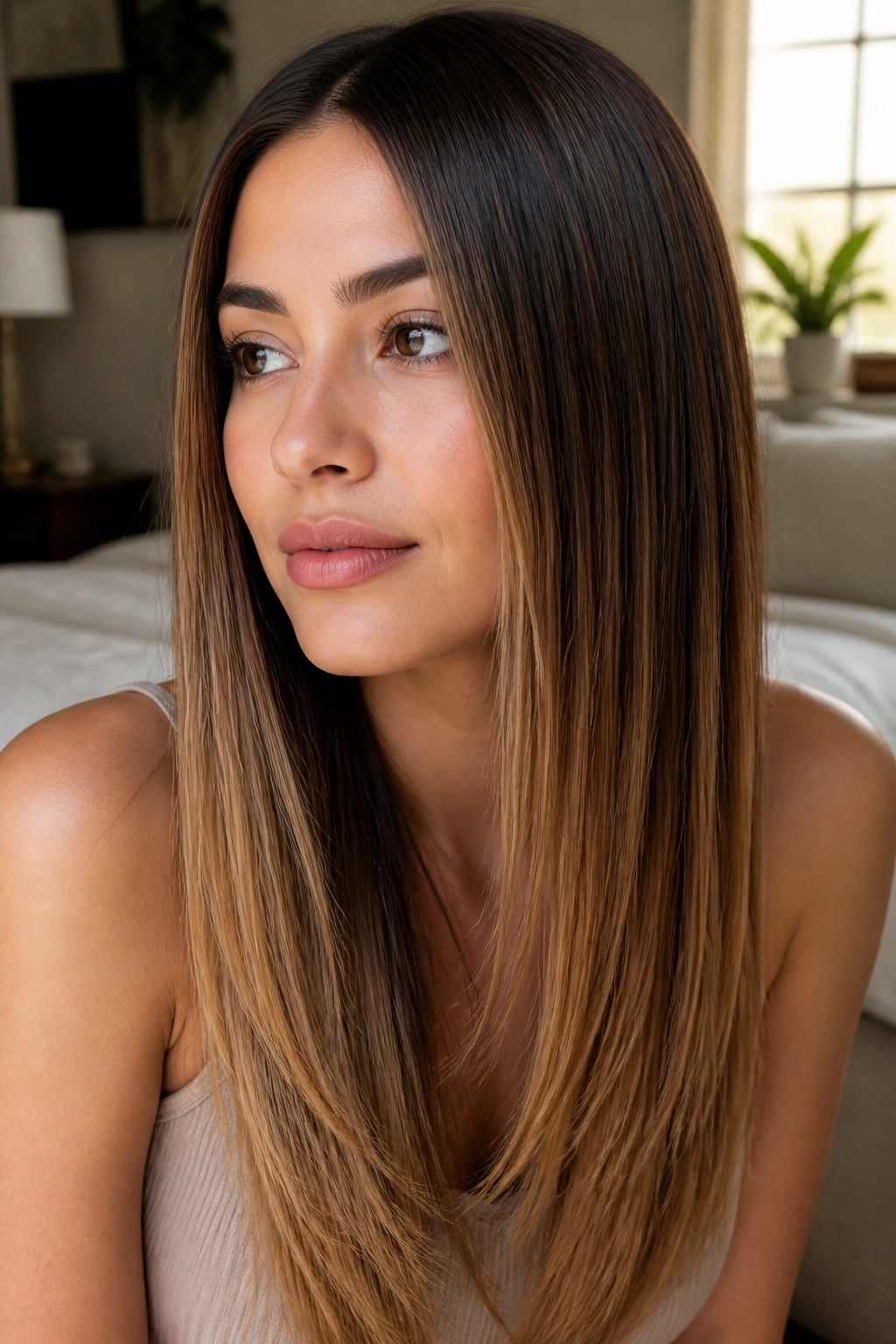
Caramel ribbon ombre is the one I keep coming back to for medium brown hair because it looks polished without trying too hard. The transition starts soft at the mid-lengths, then the ends pick up warm caramel strands that read as movement, not streaks. On straight hair, that matters. You can see every ribbon, so the placement has to be thin and intentional.
Why It Works on Straight Hair
The straight finish gives the caramel a clean lane to live in. A few fine ribbons near the front soften the face, while the lower half carries the warmer fade without turning the whole head orange.
- Ask for a level 5 to level 6 brunette base with level 7 caramel through the ends.
- Keep the ribbons thin enough that the hair still looks like one sheet.
- A beige-gold gloss keeps the warmth from going brassy.
Skip chunky caramel panels. They read old-school fast on straight hair.
2. Espresso to Mocha Melt
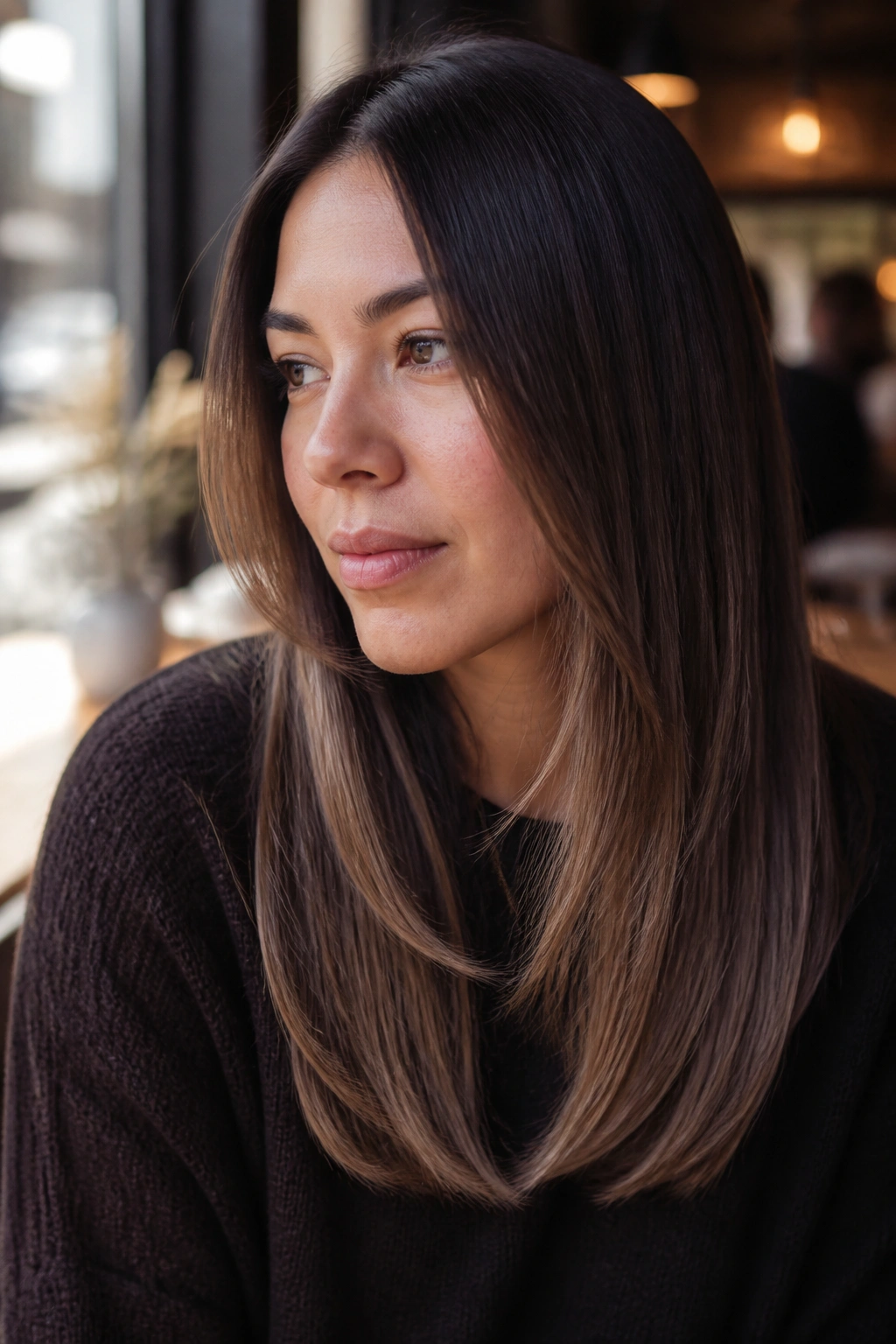
Want a change that people notice only when they stand close? This is it. Espresso to mocha melt stays inside the brunette family, so the effect comes from softness rather than contrast. The roots stay deep and cool, then the mids loosen into mocha, and the ends pick up a smoother, milky brown tone.
That low-contrast shift works especially well if your hair is fine or naturally flat. Straight hair with too much lightening at the ends can look thin. A mocha melt keeps the edge of the cut strong while still giving the length some life.
I like this choice for people who wear a center part and don’t want a color that shouts. It is one of the easiest ombre looks to grow out, too. The regrowth line stays quiet for weeks.
3. Chestnut to Cinnamon Fade
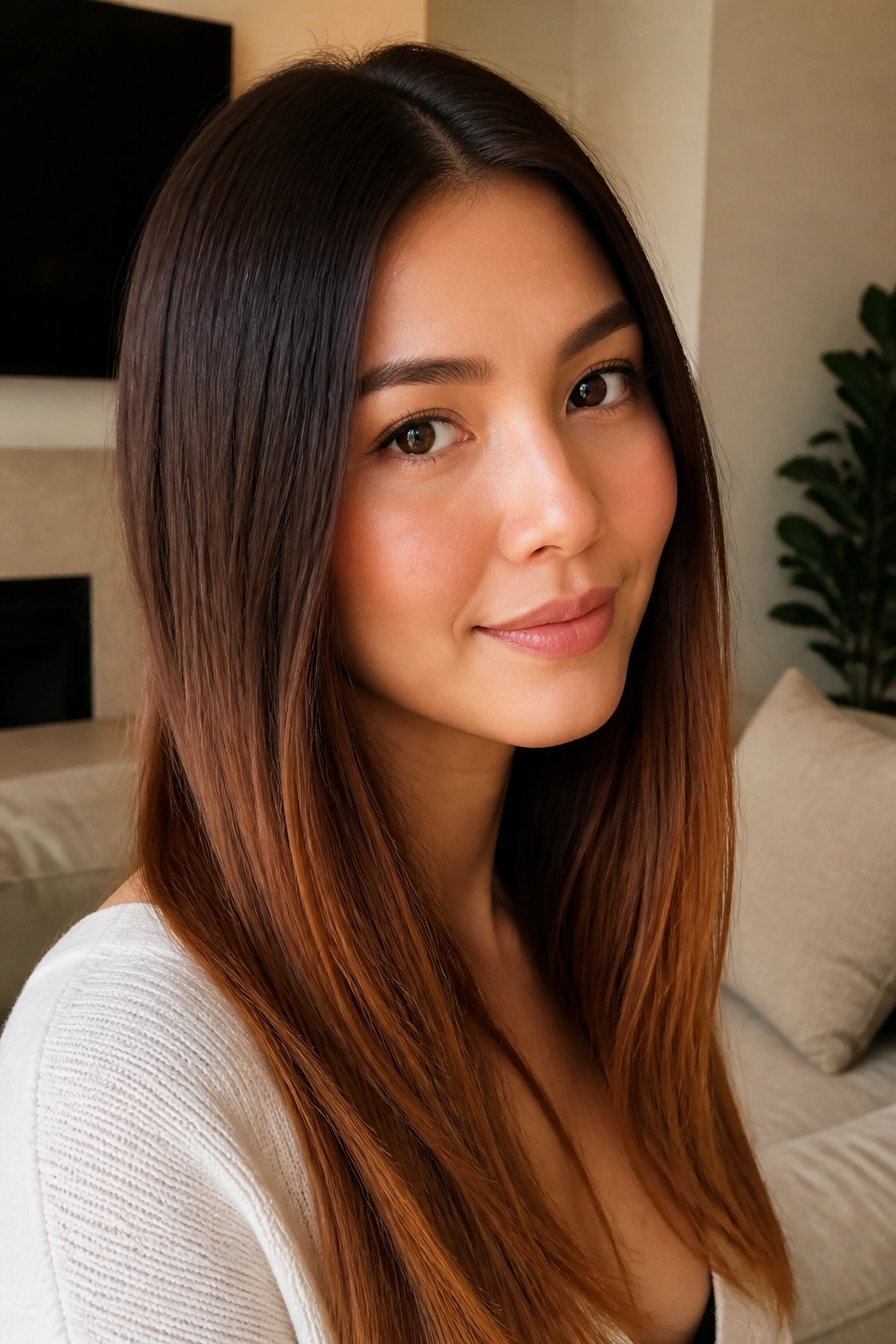
If your straight hair looks a little serious under indoor light, chestnut to cinnamon gives it a pulse. Chestnut holds the deep brunette base, then cinnamon warms the lower half with a red-brown glow that shows even when the hair is worn poker-straight. No curls needed.
Why does it work? Because cinnamon isn’t trying to be copper. It sits one step quieter. That keeps the fade from looking loud, which is where a lot of red-brown ombres go wrong. The color should feel like a warm hit at the ends, not a full-on auburn takeover.
What to Ask For
- A neutral chestnut root zone
- Fine cinnamon balayage starting below the cheekbone
- A soft gloss with red-brown undertones
- Low heat during styling, since repeated flat-ironing can dull warm tones fast
4. Mushroom Brown to Beige Blonde
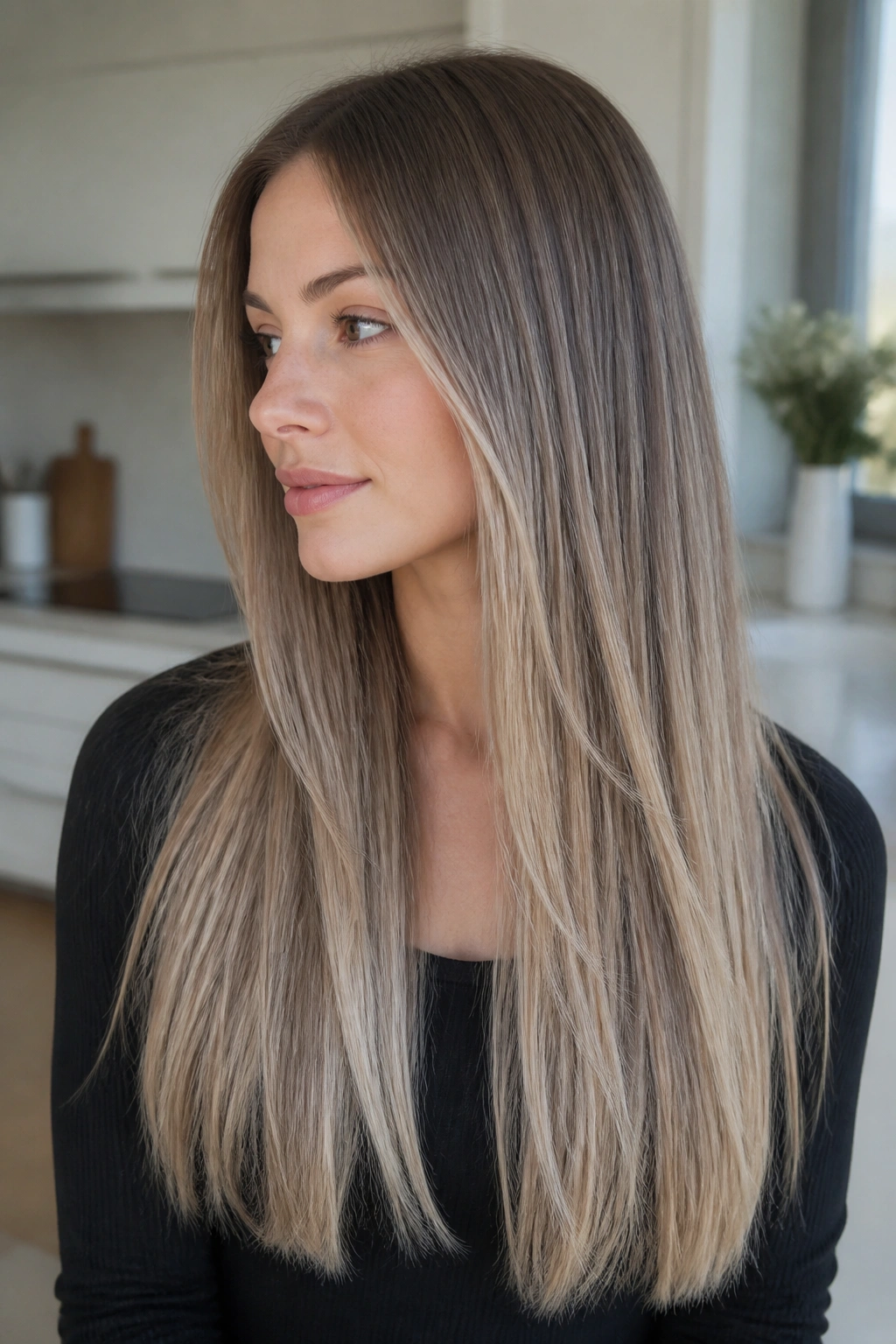
Mushroom brown is one of those shades that looks cool, muted, and expensive without needing a dramatic blonding session. On straight hair, the jump from mushroom brown to beige blonde can look very sleek, almost graphic, if the blend is done right. That is the point. The color change should read as a long, soft drift, not a hard stripe.
This look suits hair that already sits in the light brown range. Too much warmth at the root makes the ash-beige ends feel disconnected. Too much toner on the ends and the whole thing can go flat and dusty. I have seen that mistake more times than I care to count.
The best version uses airy babylights through the mids, then a beige toner on the lightest pieces. It is a cooler ombre, so a violet shampoo once a week usually helps keep the blonde from turning yellow.
5. Honey Bronde Curtain Fade
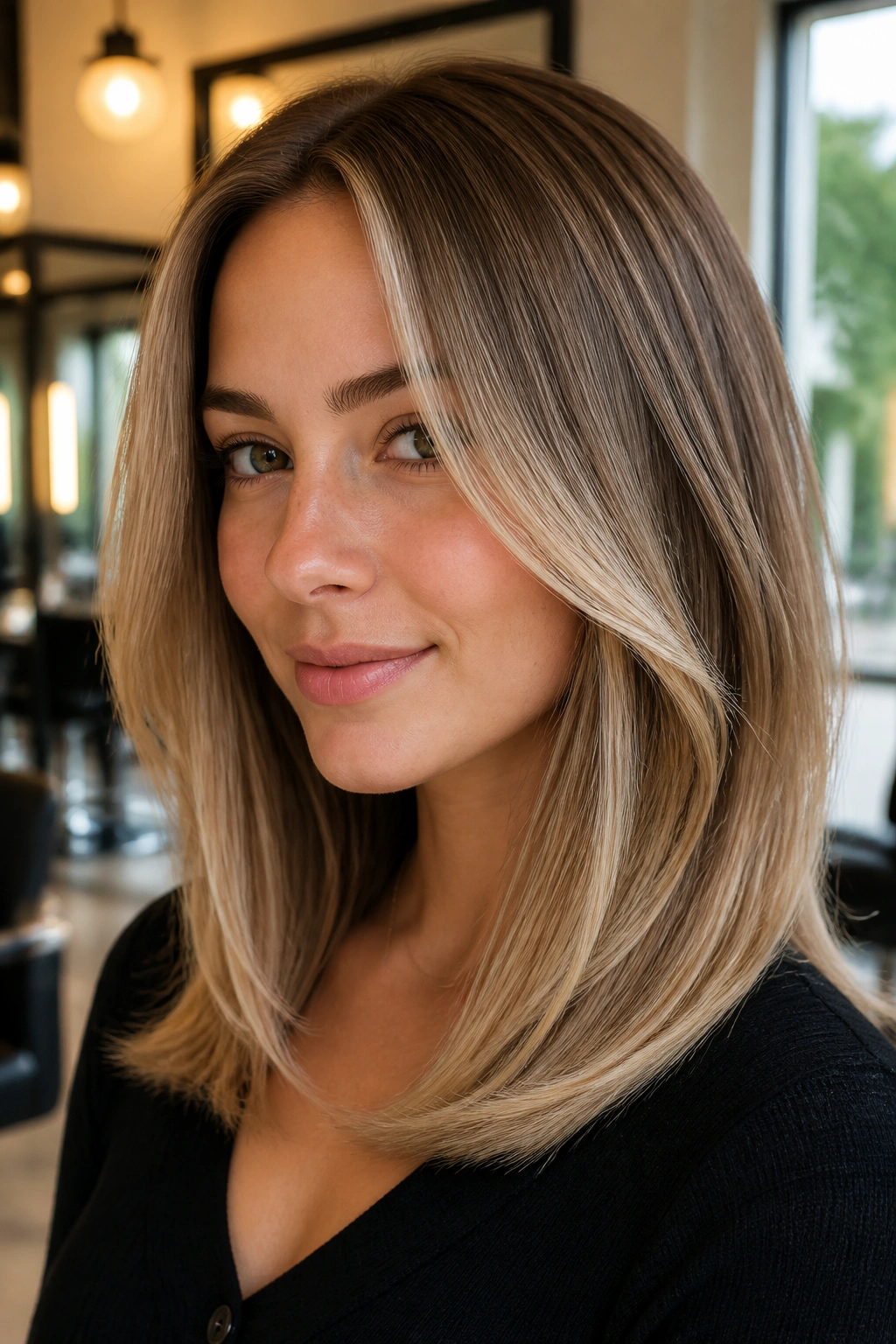
Honey bronde is what happens when brunette and blonde stop arguing. On straight hair, the curtain fade version gives you brightness around the face and a softer glow through the lengths, so the whole head looks lighter without losing depth. It feels approachable, which is useful if you work in a place where neon blonde would look out of place.
Unlike ash blonde, honey bronde still has warmth in it. That warmth flatters straight hair because the glossy surface reflects it cleanly. The hair does not need waves to show the change. A sleek blowout is enough.
A good colorist will keep the face-framing pieces a half-step lighter than the rest, then let the ends drift into honey beige. If you want maintenance that does not eat your life, this is a smart place to land.
6. Sand Blonde on Dark Blonde
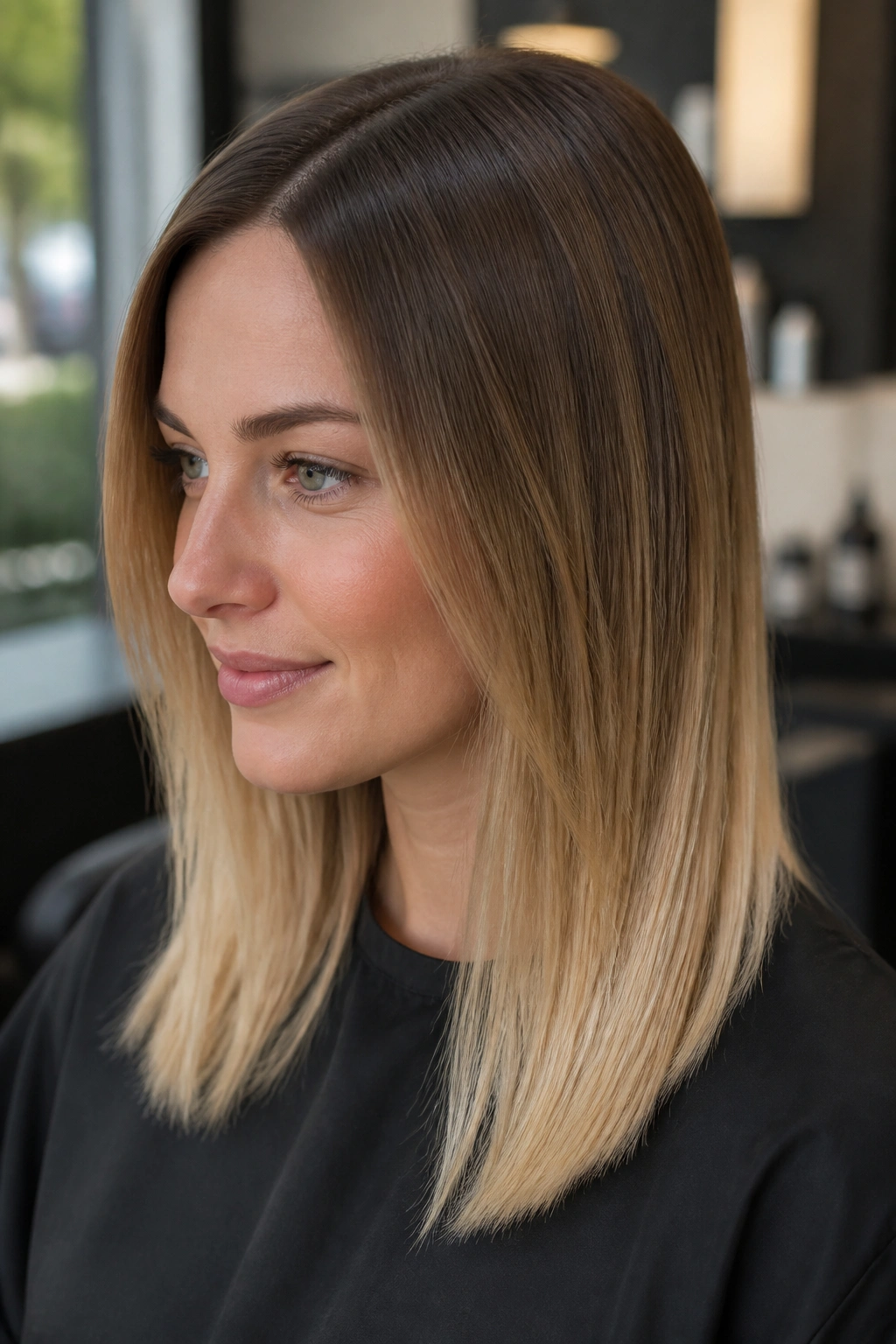
This is one of the easiest ombre looks for straight hair to wear, and I mean that in a practical way. Dark blonde already gives you a built-in midtone, so sand blonde at the ends feels natural instead of forced. The result is clean and bright, but not icy.
What to Ask For
- Level 7 dark blonde at the roots
- Level 8 to 8.5 sand blonde through the ends
- A soft root shadow, not a blunt line
- A toner that lands in the beige, not yellow family
A straight cut benefits from this because the lighter ends make the line of the hair look longer and smoother. I would keep the transition start point around the chin or collarbone if the hair is medium length. Do not push the blonde too high. On straight hair, that can start looking stripey in a hurry.
7. Auburn to Copper Flame
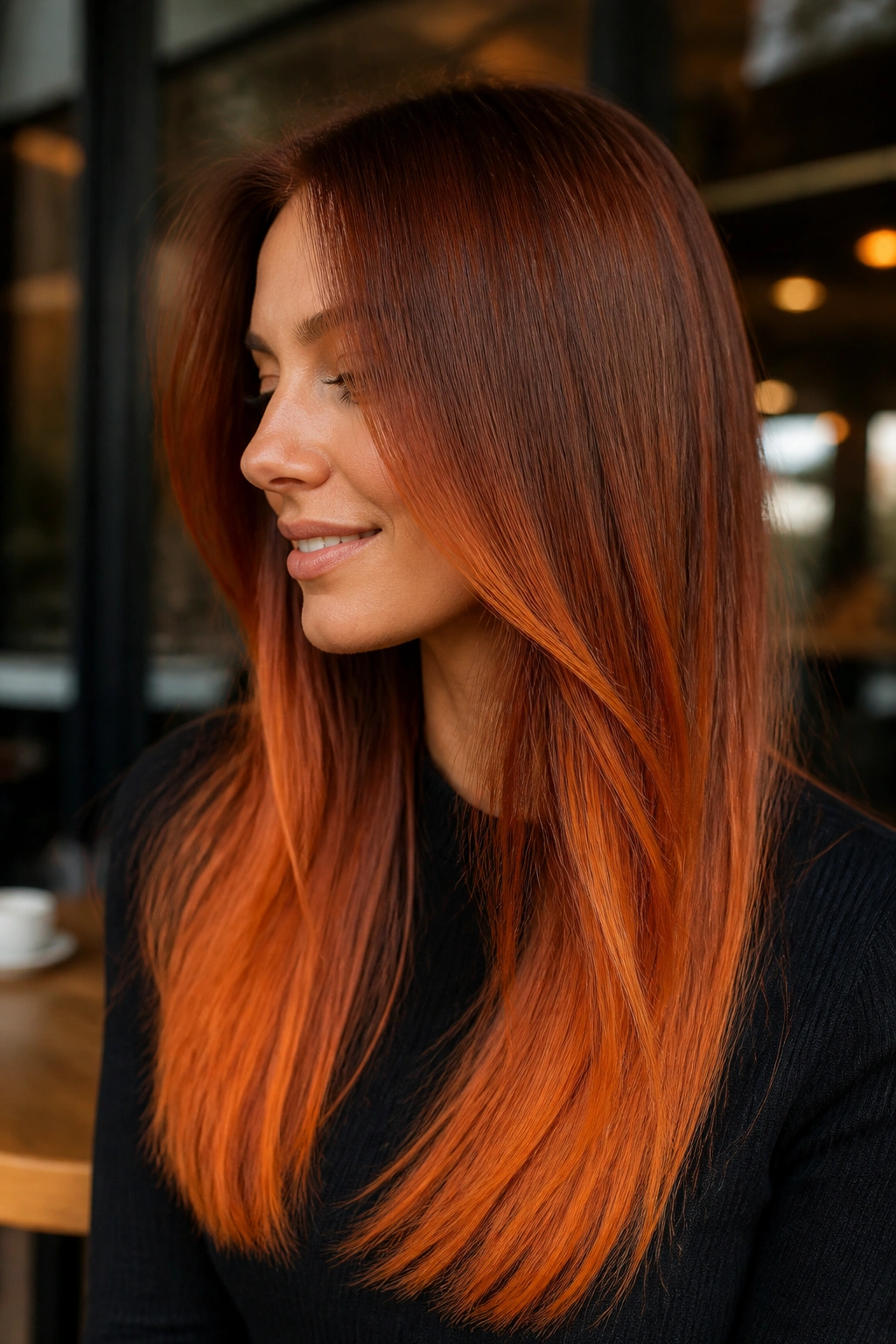
Red shades can look flat on straight hair if they are too dark or too uniform. Auburn to copper avoids that problem by giving the mids a grounded red-brown and the ends a lighter copper flame. The color shift is still red, but it moves enough to keep the eye interested.
There is a catch. Red fades fast. Copper fades even faster if you wash daily with a strong shampoo or use a hot flat iron with no protection. That does not make the shade a bad choice. It just means you need to respect it.
I like this ombre on shoulder-length straight hair because the end color sits right where light hits the longest. A copper color-depositing conditioner every week or two helps, and lukewarm water matters more than people think. Red hair is needy. Worth it, though.
8. Mahogany to Cherry Cola
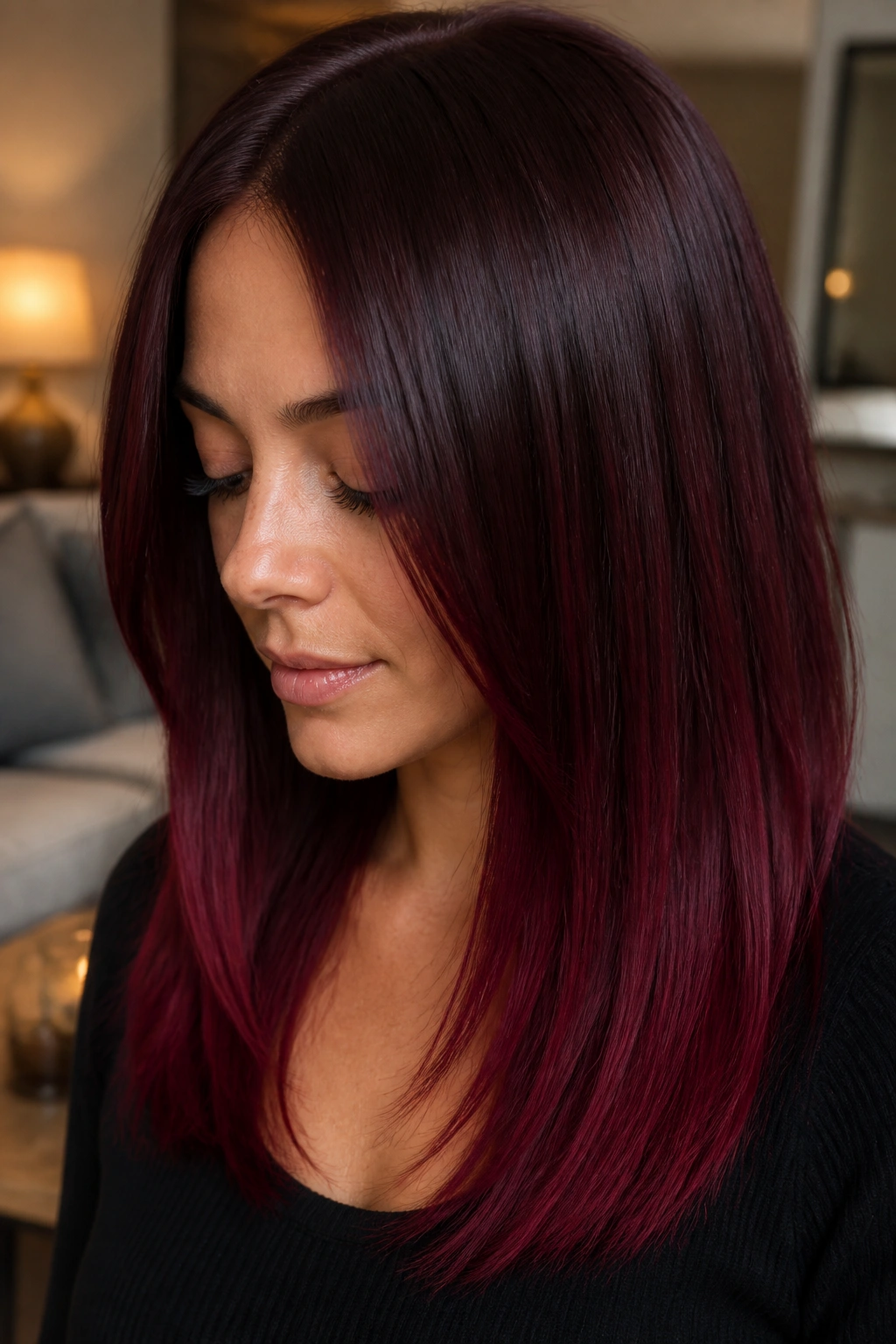
Cherry cola ombre is for someone who wants dark color with a little bite. Mahogany at the root gives you depth, then the lower half shifts into a cherry-brown tone that flashes red only when the light moves across it. Straight hair loves this because the shine shows the berry undertone without needing curl texture.
Why It Feels Different
The tone is richer than burgundy and less loud than pure red. That middle ground makes it wearable for people who want color that feels grown-up rather than costume-y.
If your natural hair is dark brunette, this can be done with a gloss and a few lighter red-brown panels instead of full bleaching. That is a big win for shine. Ask for depth first, brightness second.
9. Black to Blue-Black Shine
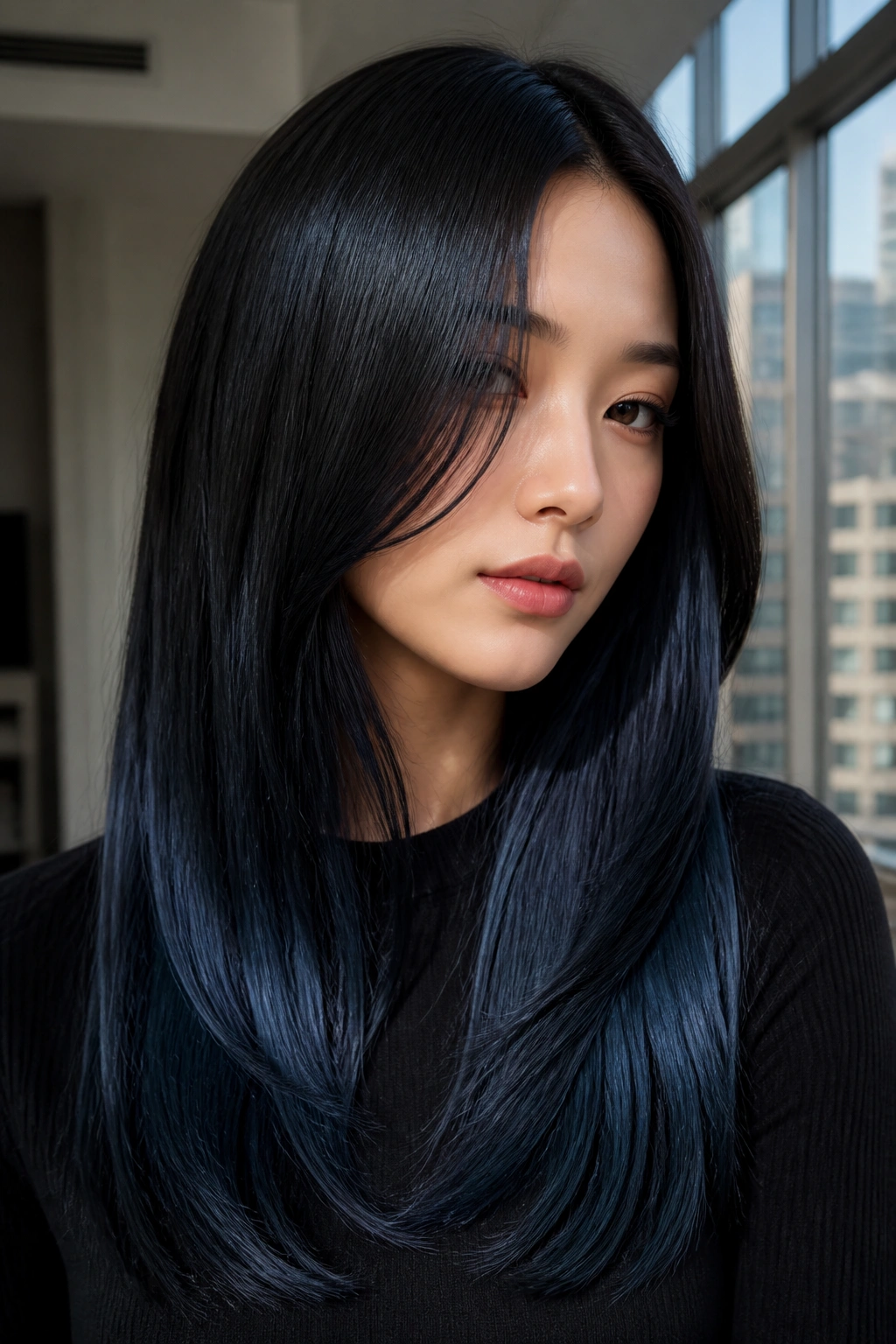
Black hair does not need to be boring. Blue-black adds a slick, inky cast that straight hair wears well because the shine sits on the surface like lacquer. Inside, it looks nearly black. In daylight, it flashes blue. That tiny shift is what gives the color its life.
This is a smart choice if you like dark hair but want something sharper than a plain one-tone black. The key is keeping the ends reflective, not muddy. A violet-blue gloss can help, but the base has to be even or the blue will sit unevenly and look patchy.
I prefer this on blunt cuts and long layers. The straight lines of the cut and the deep blue tone work together. It feels sleek, not stiff.
10. Black to Smoky Silver
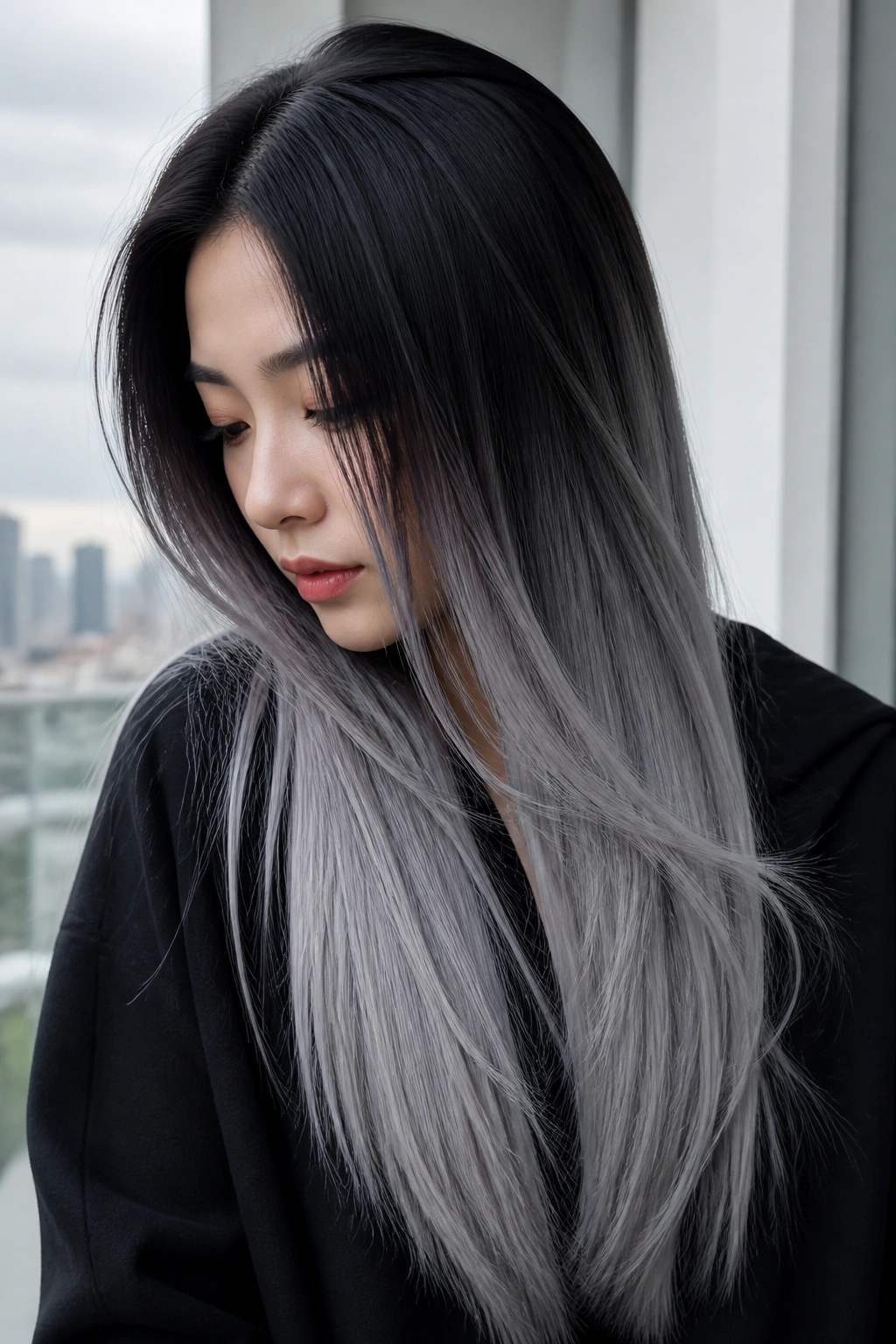
Smoky silver ombre is not for the faint of heart, and I mean that kindly. It looks striking on straight hair because the darker root gives the silver space to glow without making the whole head look washed out. The fade should stay cool and soft, with charcoal at the mids and silver at the ends.
Unlike platinum, smoky silver lets you keep some depth. That makes grow-out less annoying and gives the hair a little more body visually. It also reads cleaner on straight hair than it does on curls, where the cool tones can get hidden in the texture.
This one needs a pale yellow lift before toning, which means patience. Rushing the lightener is how silver turns khaki. That color is not forgiving. A weekly silver shampoo usually helps, but toner is the real workhorse here.
11. Reverse Ombre
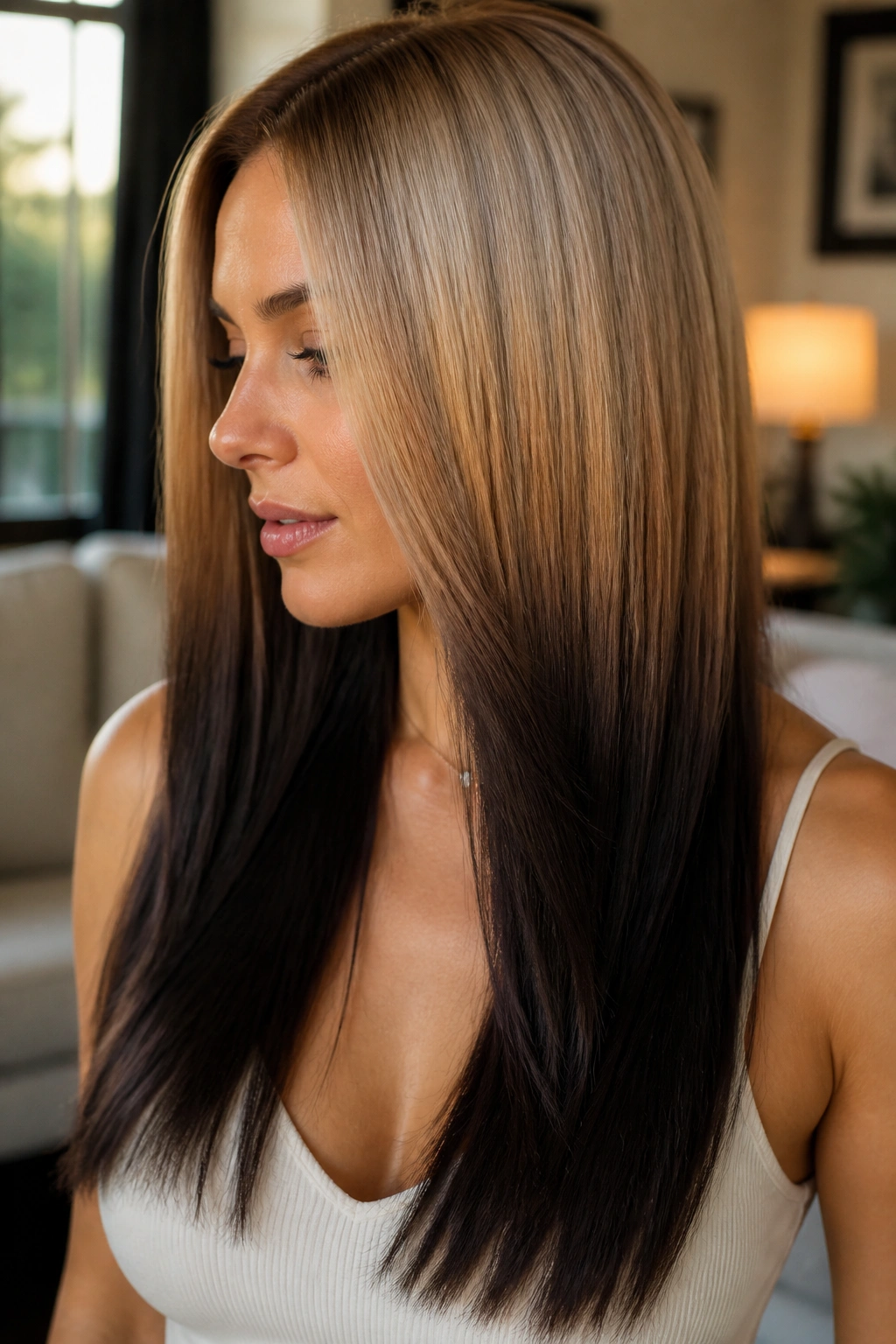
Reverse ombre flips the usual script: lighter at the top, darker at the bottom. On straight hair, that reversal looks sharp and modern because the eye goes straight down the length of the hair. There is nowhere for the darker ends to hide, and that is exactly why the effect feels intentional.
I like this on people who are tired of constant root touch-ups. If the lighter section sits near the scalp and the darker ends stay tucked away, the grow-out can be easier to manage. It also works well on long bob cuts, where the lower half has enough length to show the fade clearly.
The one rule is balance. If the top is too pale and the ends are too heavy, the hair can look top-heavy. Keep the middle blend soft, almost smoky.
12. Rooted Vanilla Blonde
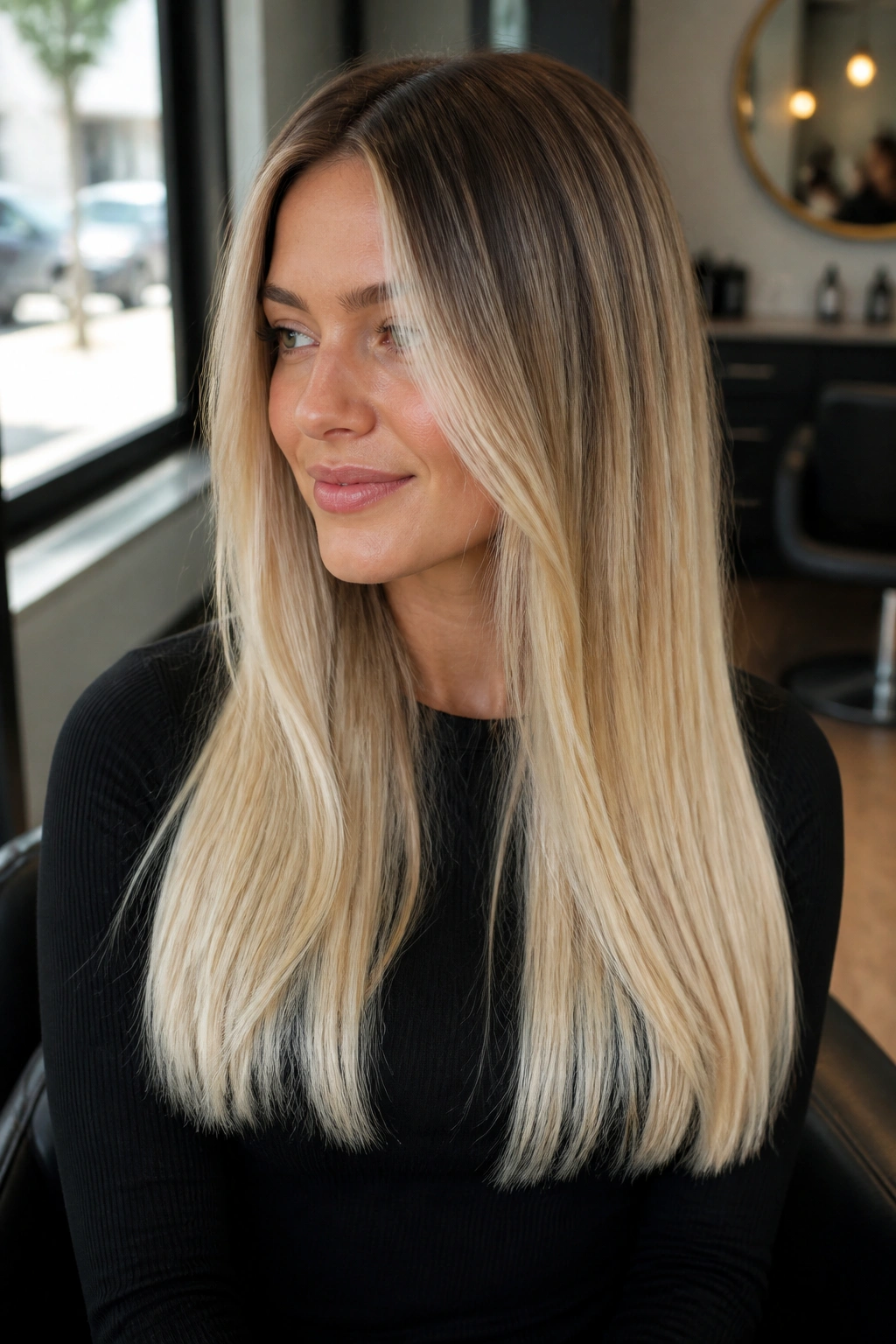
Rooted vanilla blonde is the blonde I would point someone to if they want brightness without living at the toner sink. The root stays a shade or two deeper, then the mids and ends open into a creamy vanilla blonde that feels soft rather than icy. Straight hair shows that creamy finish beautifully because the smooth surface makes the shade look even.
The Salon Formula
- Level 6 to 7 root smudge
- Level 9 vanilla blonde through the mids and ends
- A beige or pale gold toner
- Tiny babylights near the part so the transition does not look painted on
This is one of the better ombre hair ideas for straight hair if you wear your hair down a lot. It keeps the top looking lived-in and the ends looking bright without a harsh band.
13. Platinum Tips with Shadow Root
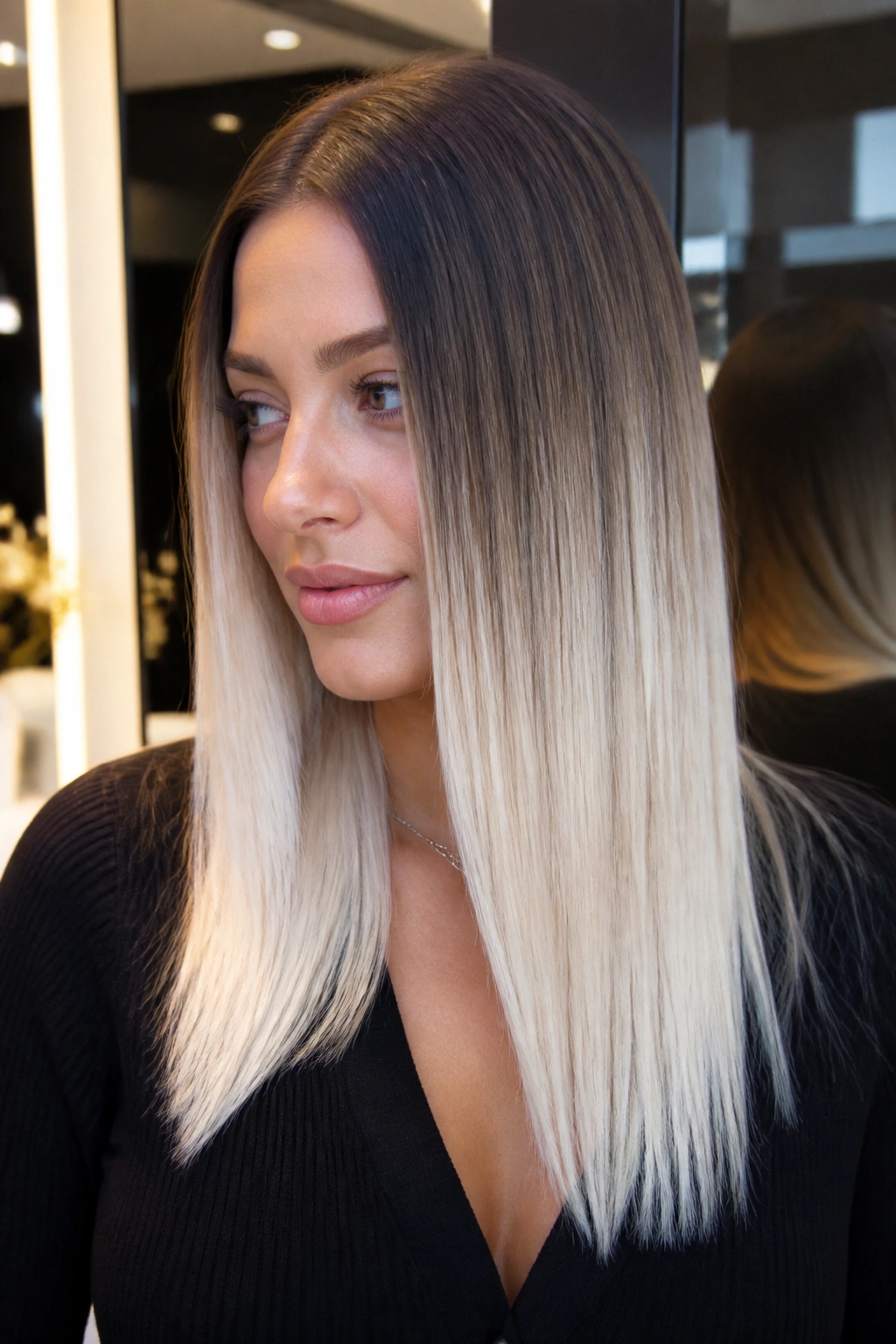
Want drama without bleaching from scalp to ends? Platinum tips with a shadow root are the move. Straight hair carries this look with a crisp edge, because the darker root anchors the brightness and the pale ends act like a clean finish line. It can look very polished on long, sleek hair.
The shadow root matters more than people think. Without it, platinum on straight hair can look like a helmet. With it, the whole thing softens and the grow-out line becomes less obvious. I would not recommend this for hair that is already fragile from repeated lightening. Platinum asks a lot from the hair shaft.
A center part makes the contrast even stronger. A side part softens it a touch. Either way, the ends need regular bond care and heat protection if you want the cuticle to stay smooth.
14. Beige Blonde Money Piece
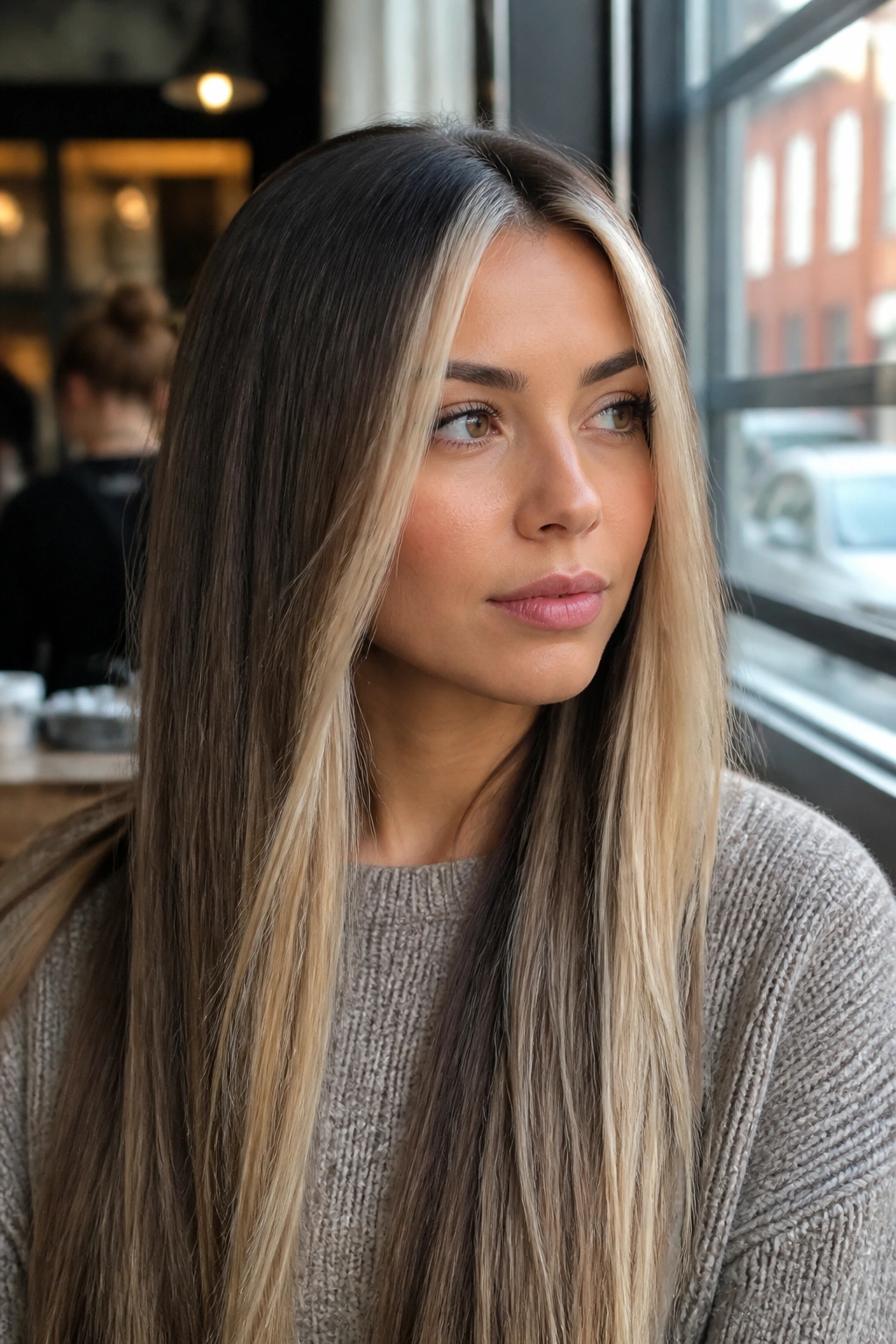
A beige blonde money piece can change the mood of straight hair fast. The front panels brighten first, so the face gets framed in a way that looks clean instead of overdone. Behind that, the ombre can stay softer and darker through the lengths, which keeps the color from feeling one-note.
The trick is restraint. If the front pieces are lifted too high, they can look like stripes. Beige is better than icy white here because it feels smoother against straight hair and blends back into the rest of the color more easily.
How to Wear It
- Keep the face frame 1 to 2 levels lighter than the rest
- Let the mids stay softer and slightly deeper
- Ask for a beige gloss, not a stark ash toner
- Change the part every few weeks so the bright front pieces do not carve one permanent line
15. Rose Gold Melt
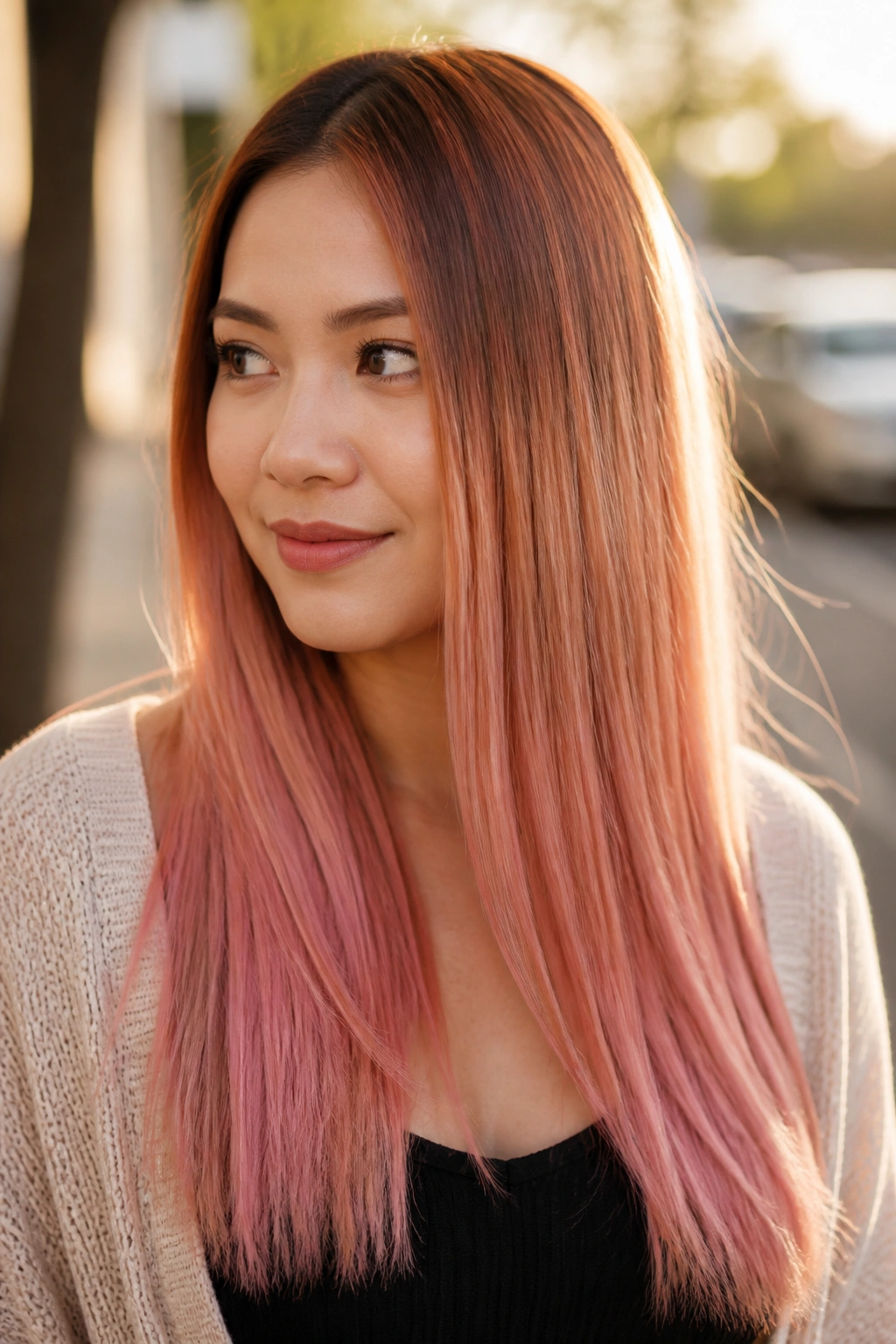
Rose gold is one of the few pink-leaning shades that can feel adult without becoming dull. On straight hair, the color melt works because the copper base keeps the pink from going chalky. The result is a warm blush at the ends, usually with a peachier middle and a deeper blonde or light brown root.
Unlike candy pink, rose gold has enough warmth to age well as it fades. That is the piece people often miss. A cooler pink can go flat fast. Rose gold softens instead, which is much kinder on straight hair that shows every color shift.
I like it on lobs and collarbone cuts. There is enough length for the melt to show, but not so much that the pastel loses impact before the ends. A color-depositing mask every week or two helps keep the pink side alive.
16. Peach Champagne Fade
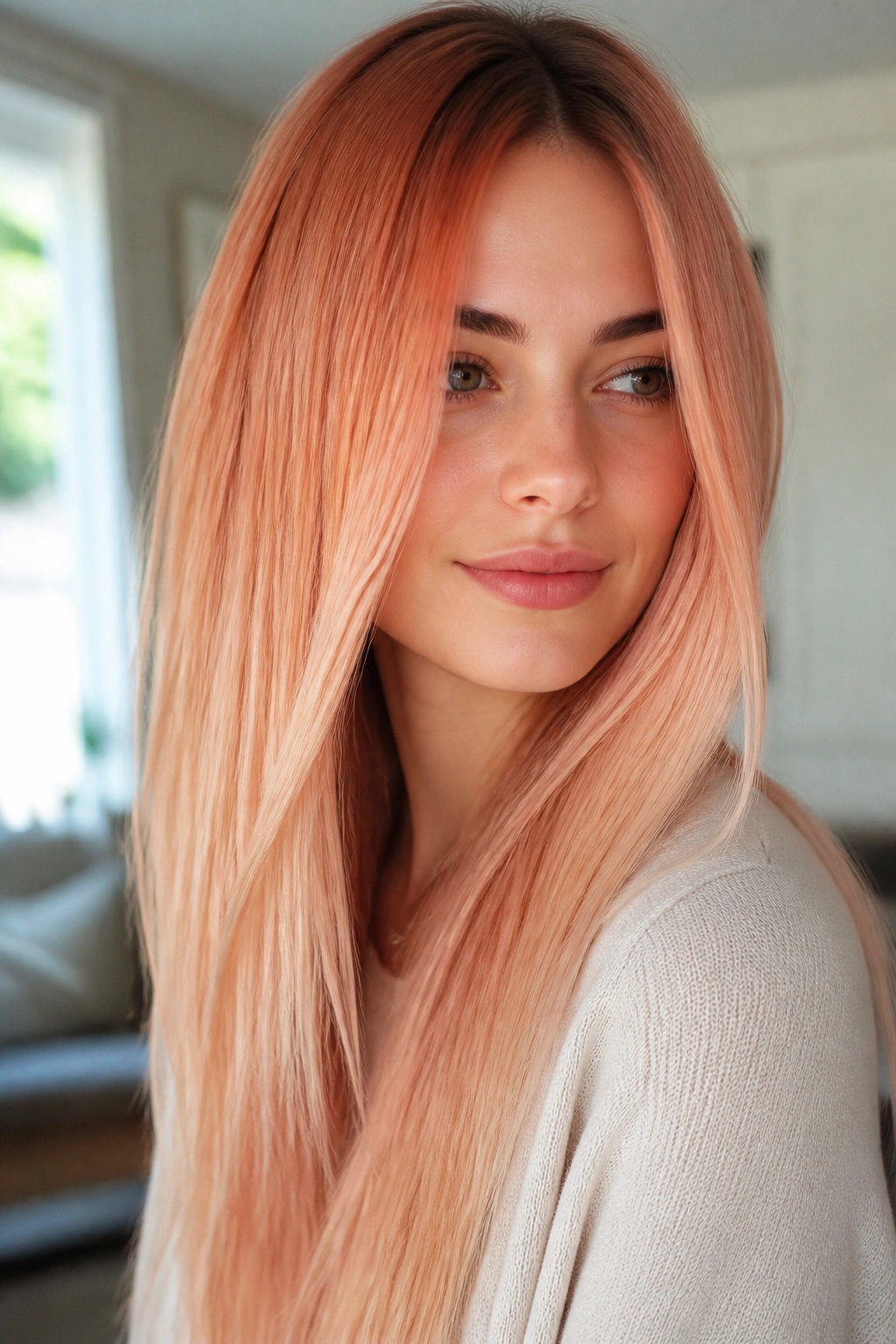
Peach champagne is a quieter cousin to rose gold, and it suits straight hair in a different way. The peach gives the fade a warm blush, while the champagne keeps the finish creamy and light. It is softer than copper, less pink than rose gold, and more playful than beige blonde.
One thing I like about it: the color shifts gently under different light. Indoors, it can read almost neutral. Near a window, the peach comes forward. Straight hair shows that movement without extra styling, which makes the shade feel easy to live with.
A pale blonde base works best here. If the hair is too yellow, the peach can go orange. If it is too white, the champagne part can disappear. The sweet spot sits in the middle.
17. Lavender Smoke Ends
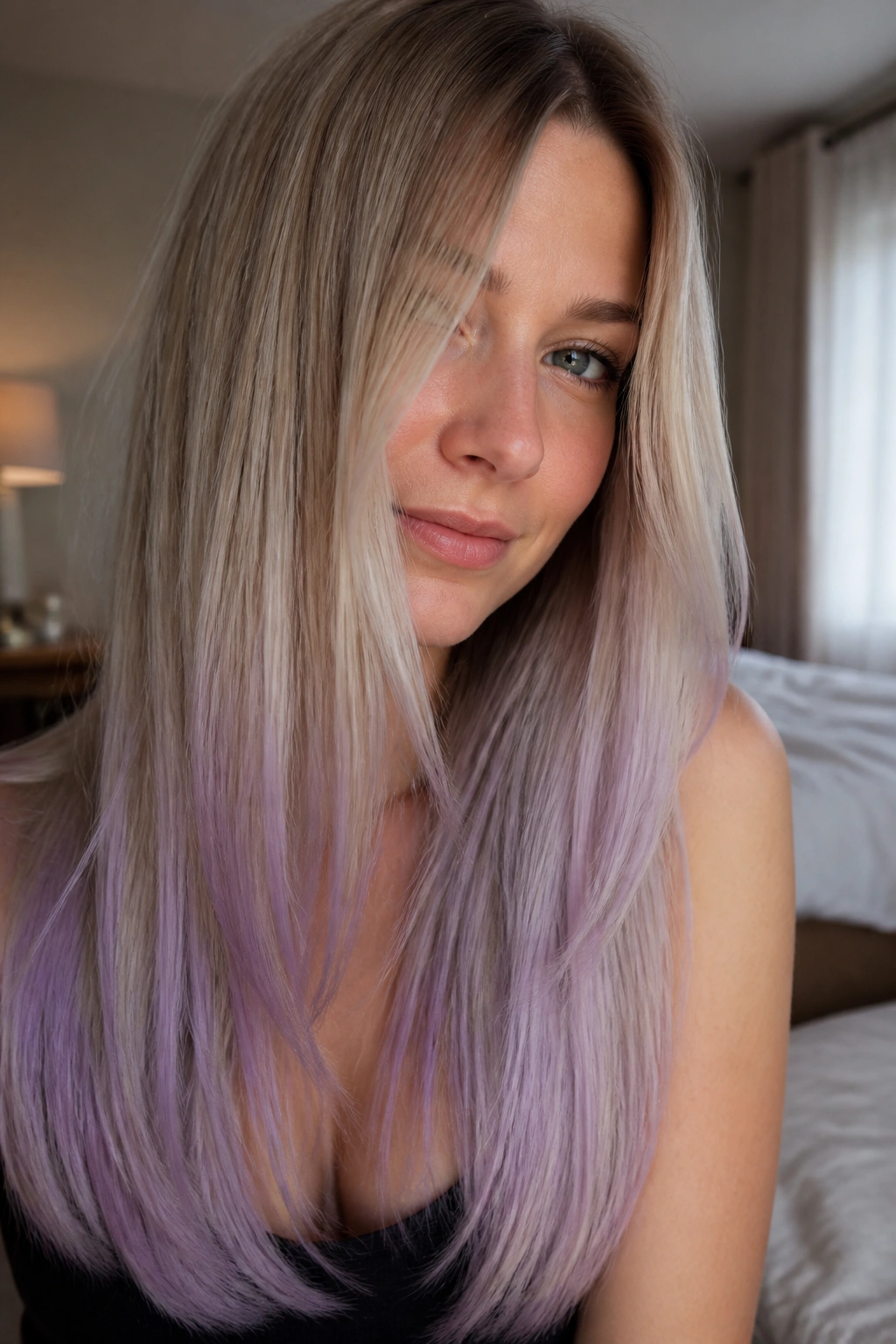
Lavender smoke is the easiest fashion color to keep from looking childish, and that is because the smoke matters more than the lavender. Straight hair works well with it since the smooth surface shows the cool violet cast without needing waves to break up the color.
Why It Works
The gray-ish undertone quiets the pastel. Instead of bubblegum, you get a muted lilac that feels soft and a little moody.
- Start with pale blonde ends, lifted to a clean level 9 or 10
- Ask for a smoky violet toner instead of a bright pastel
- Keep the root close to your natural shade
- Wash in cool water so the toner hangs on longer
If you like color that whispers instead of shouts, this is a solid pick.
18. Plum Wine Ombre
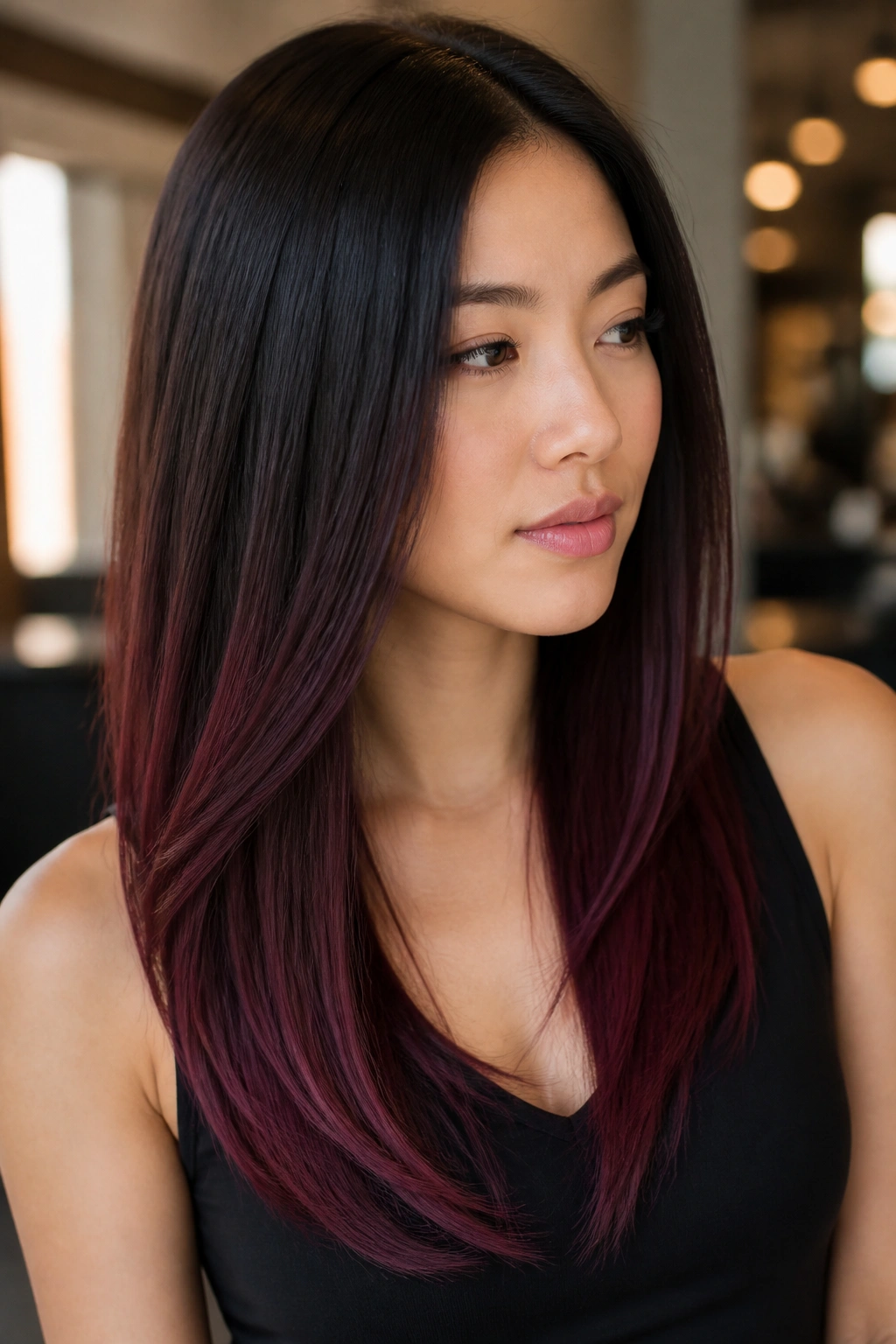
Plum wine has more depth than lavender and more edge than burgundy. On straight hair, the dark berry tones show up in a clean, glossy way, especially when the base is deep brown or black-brown. The ends should not turn purple-purple. They should feel like a rich glass of dark fruit with a little shine on top.
Would this work on lighter hair? Yes, but it changes the mood a lot. On brunettes, plum wine feels lush and serious. On lighter hair, it can look more playful. I like the brunette version better because the darker base gives the ombre room to breathe.
A shine spray helps here, but the real trick is color-safe washing. Red-violet shades fade fast if you scrub them hard. Keep the shampoo gentle and the heat low.
19. Midnight Navy Tips
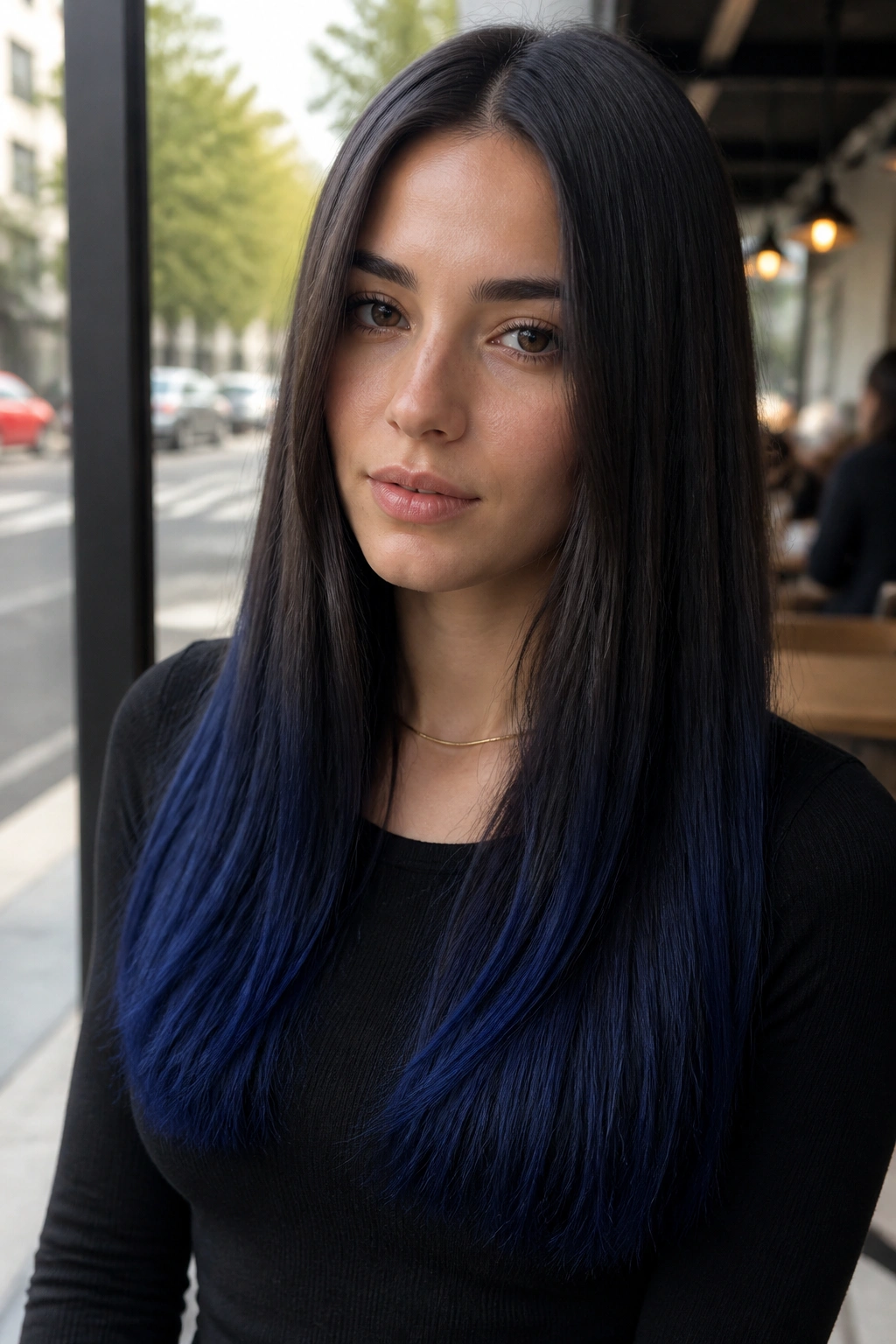
Midnight navy is one of those shades that looks almost black inside and then turns electric in sunlight. Straight hair is perfect for it because the glossy surface reflects the blue without blurring it. You do not need curls, and you do not need a dramatic root.
The best version keeps the navy concentrated at the lower half or last few inches. If the lift goes too high, the color can start looking teal in places you did not want teal. That is not a disaster, but it is a different look. Sometimes a very different look.
This is a smart option if you like dark hair but want a little surprise at the ends. It works especially well with blunt cuts, where the line of the color mirrors the line of the haircut.
20. Teal Glass Ends
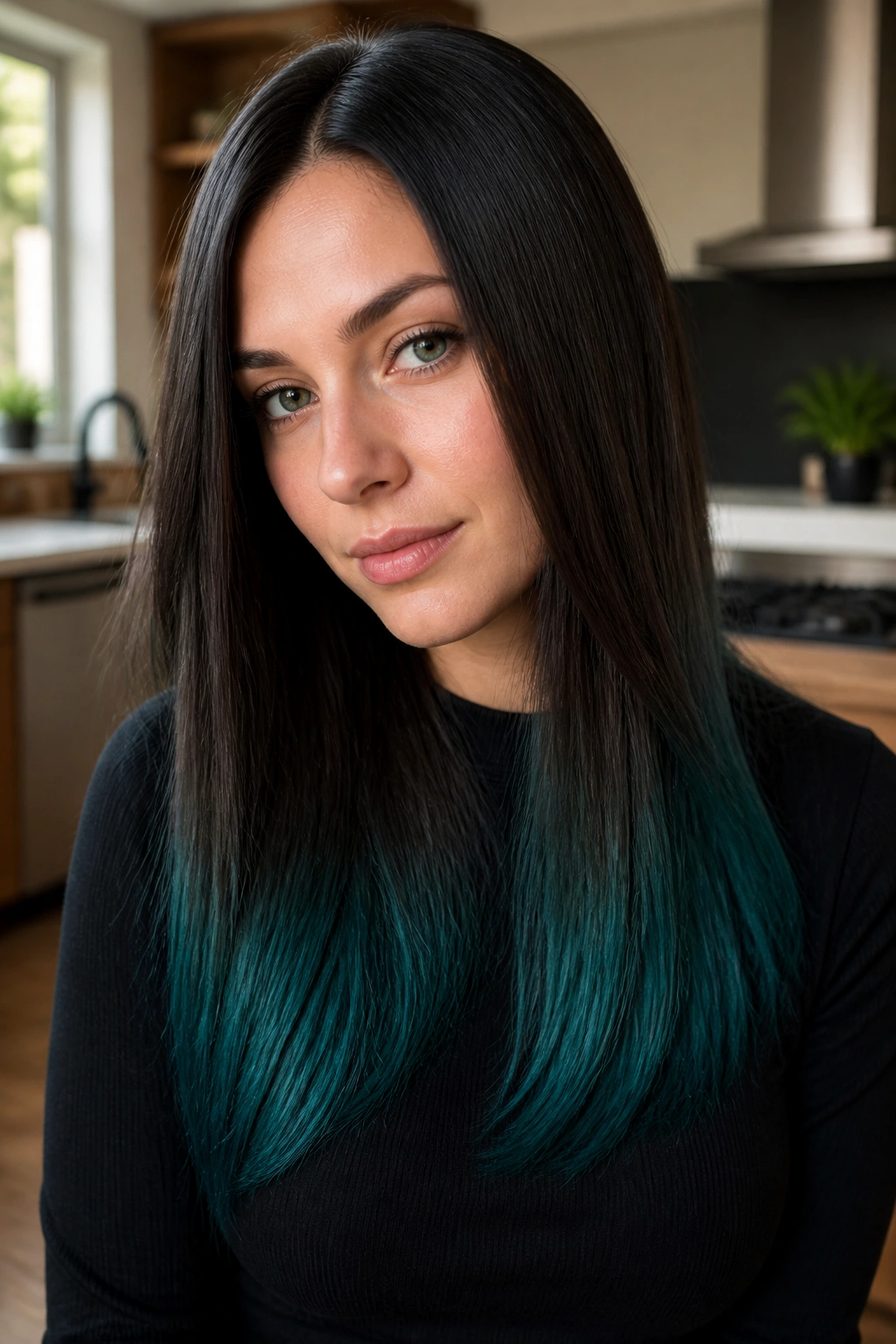
Teal glass ends are the boldest shade on this list that still feels sleek on straight hair. The color should be deep and glossy, not neon. Think jewel tone, not pool float. When done well, the teal sits on the ends like colored glass against a darker base.
Unlike turquoise streaks, teal glass feels more controlled. That makes it easier to wear with straight hair, where a loud shade can otherwise take over the whole look. Keeping the color to the bottom 3 to 4 inches helps the gradient stay clean.
This one does need prelightened ends, usually to a darker blonde rather than pale platinum. That helps the teal hold depth. If the base is too light, the tone can slide toward seafoam, which changes the whole effect.
21. Red Velvet Gradient
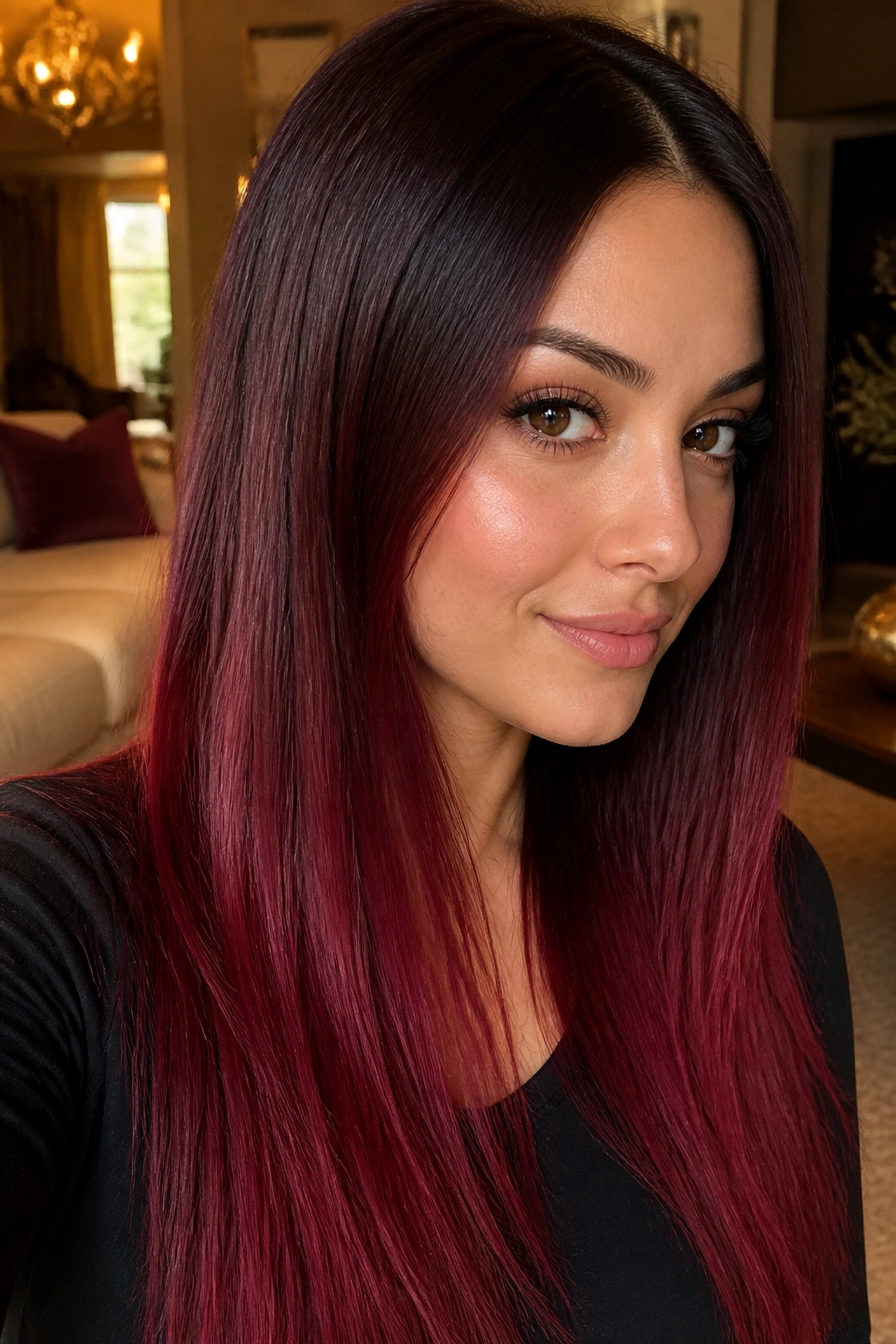
Red velvet is the answer when you want red but not traffic-light red. The gradient starts with a deeper cherry or wine root, then opens into a softer ruby at the mids and ends. Straight hair wears this shade well because the shine helps the red layers read as depth instead of one flat block.
If you have ever had a red that felt too bright, this is the safer lane. The velvet quality comes from the darker undertone, not from making the shade loud. That is the part that usually gets missed.
I would wear this on long straight layers or a blunt cut with a deep side part. The motion of the part changes how much red you see, which keeps the color from going static. Red conditioner helps, but gentle washing matters just as much.
22. Cinnamon Rose Ombre
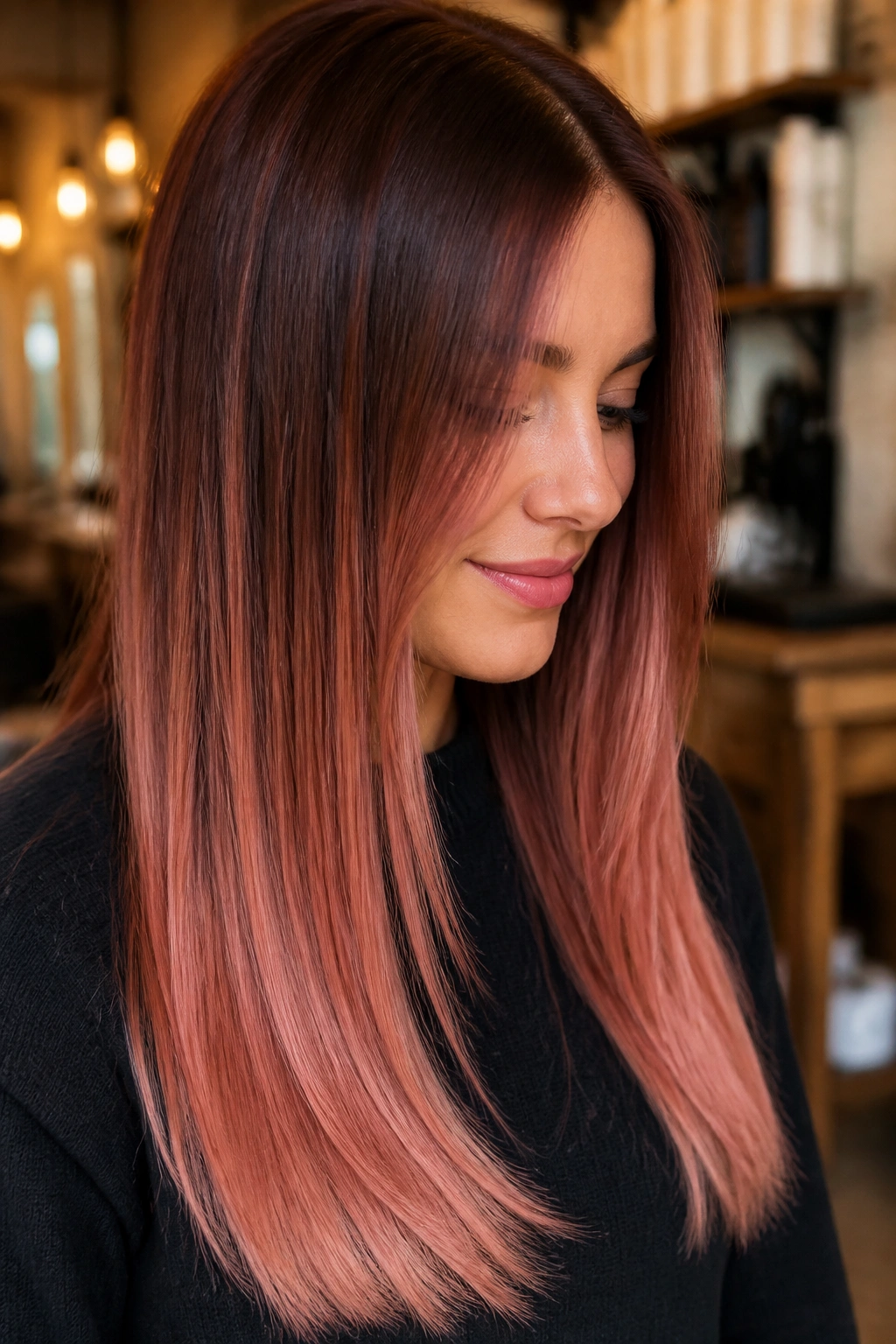
Cinnamon rose sits in that sweet spot between warm and soft. The root stays brunette or deep auburn, then the lower half picks up rose-kissed cinnamon with a dusty pink edge. On straight hair, the color change looks more refined than it sounds, which is half the appeal.
Who It Suits
It looks especially good on medium brown and light brown bases where the red family has room to show without looking too dark.
The best version does not lean orange. That is the trap. You want a rosy warmth, not a pumpkin shade. A gloss with copper and muted pink tones usually gives the right finish. If the tone gets too bright, the whole thing loses its softness fast.
23. Cool Taupe to Ash
Tired of warm caramel everything? Cool taupe to ash is the quieter answer. The roots stay in a taupe-brown family, then the ends shift into ash blonde or ash beige with almost no warmth at all. Straight hair shows the cool finish beautifully because the shine stays clean and not golden.
The caution here is tone control. Cool shades can go green, gray, or flat if the toner is left on too long or if the base is already too muddy. I would rather see this color slightly soft than over-toned into something chalky. Straight hair makes that mistake easy to spot.
This is a good option for people who wear silver jewelry, black clothing, or minimalist clothes a lot. It has a crisp, airy feel without looking frosty.
24. Smoky Mocha to Ash Blonde
Smoky mocha to ash blonde is a more dramatic brunette-to-blonde ombre, but the smoke keeps it from feeling loud. The mocha root preserves depth, then the mids lighten into a cool beige, and the ends land in ash blonde. Straight hair gives you a smooth runway for that shift, so the contrast reads clearly.
I like this look on longer hair because the fade needs length to breathe. On a shorter cut, the contrast can feel compressed. If the hair is very fine, keep the ash pieces soft and not too chunky, or the ends will look see-through.
A gloss every few weeks helps keep the beige from turning brassy. Heat styling can pull warmth back in too, so a thermal protectant is not optional here.
25. Toffee Ribbon on Medium Brown
Toffee ribbon ombre is a workhorse choice, and I mean that as praise. It takes medium brown hair, threads in warm toffee through the lower half, and leaves enough depth at the root that the whole thing still looks grounded. Straight hair likes the ribbon effect because the smooth surface gives each lighter strand a place to show.
Unlike a full blonde fade, this keeps most of the brown intact. That means less maintenance and less risk of the ends looking thin or dry. It also means the color grows out more quietly, which people tend to appreciate after the second salon visit.
I would ask for 5 to 7 fine ribbons through the mid-lengths and more warmth concentrated at the bottom third. That keeps the finish soft instead of stripey.
26. Sand to Pearl Blonde
If your hair already lives in the blonde range, sand to pearl blonde is a cleaner choice than pushing it all the way to white. The top stays sandy and soft, while the ends move into a pearl blonde that has a pale, creamy sheen rather than a stark icy finish. On straight hair, that difference shows up right away.
The pearl end tone keeps the hair looking smooth instead of chalky. That is the part I like. Too much platinum can flatten straight hair and make it look almost shell-like. Pearl keeps a bit of warmth in the reflection, which is easier on the eye.
Quick Notes
- Best on level 8 to 9 blondes
- Tone with neutral-beige and a touch of violet
- Keep the lightest pieces below the cheekbone so the fade stays long and sleek
27. Dip-Dyed Cocoa Ends
Dip-dyed cocoa ends are the most graphic option here, and straight hair wears them better than almost any other texture. The root and mid-lengths stay light or medium, then the last chunk of hair flips to a deep cocoa brown. No fake blending. No whispery fade. Just a deliberate color change.
What Makes It Different
The sharp line is the point. On straight hair, that line can look modern instead of messy when it sits low enough to feel intentional.
- Works best when the color break falls below the collarbone
- The cocoa shade should be rich brown, not black
- The top section can be blonde, beige, or light brown
- A blunt cut or long bob makes the contrast feel cleaner
This is not a shy look. It suits someone who wants their hair to say something from across the room.
28. Pearl Frost Ombre
Pearl frost is the softest icy ombre in the bunch, and straight hair makes it look almost glassy. The root stays cool beige or light taupe, then the mids brighten, and the ends turn into a pale pearl with a frost-like finish. It is lighter than sand blonde, cooler than vanilla, and less severe than platinum.
The reason it works so well on straight hair is the smoothness. You get a continuous sheet of shine, so the pearl finish does not need waves or curls to make sense. It just sits there and glows, quietly.
I would keep this shade on hair that is already in good shape, because pale ends show dryness fast. A light gloss between color appointments helps keep the frost effect from going dull. And if you want the fade to stay clean, ask for toner under natural light. Bathroom lights lie all the time.
