



Chunky highlights on brown hair can look sharp when the placement is right. They can also go wrong fast if the stripes are too yellow, too skinny, or packed too close together. The real trick is not brightness alone. It’s width, tone, and where the light lands on your haircut.
Brown hair gives colorists more room than people think. A level 4 espresso base behaves differently from a level 6 chestnut base, and curly hair throws those thicker pieces around in a way straight hair never will. That means the same foil map can look soft, loud, or expensive, depending on the cut and the finish.
The looks worth copying have a clear point of view. Caramel money pieces near the face, wide blonde ribbons through long layers, a copper block around the part, or a single icy stripe on a blunt bob all change the read of the whole head. Some need a gloss every six to eight weeks. Others are meant to soften a little.
1. Caramel Money Pieces
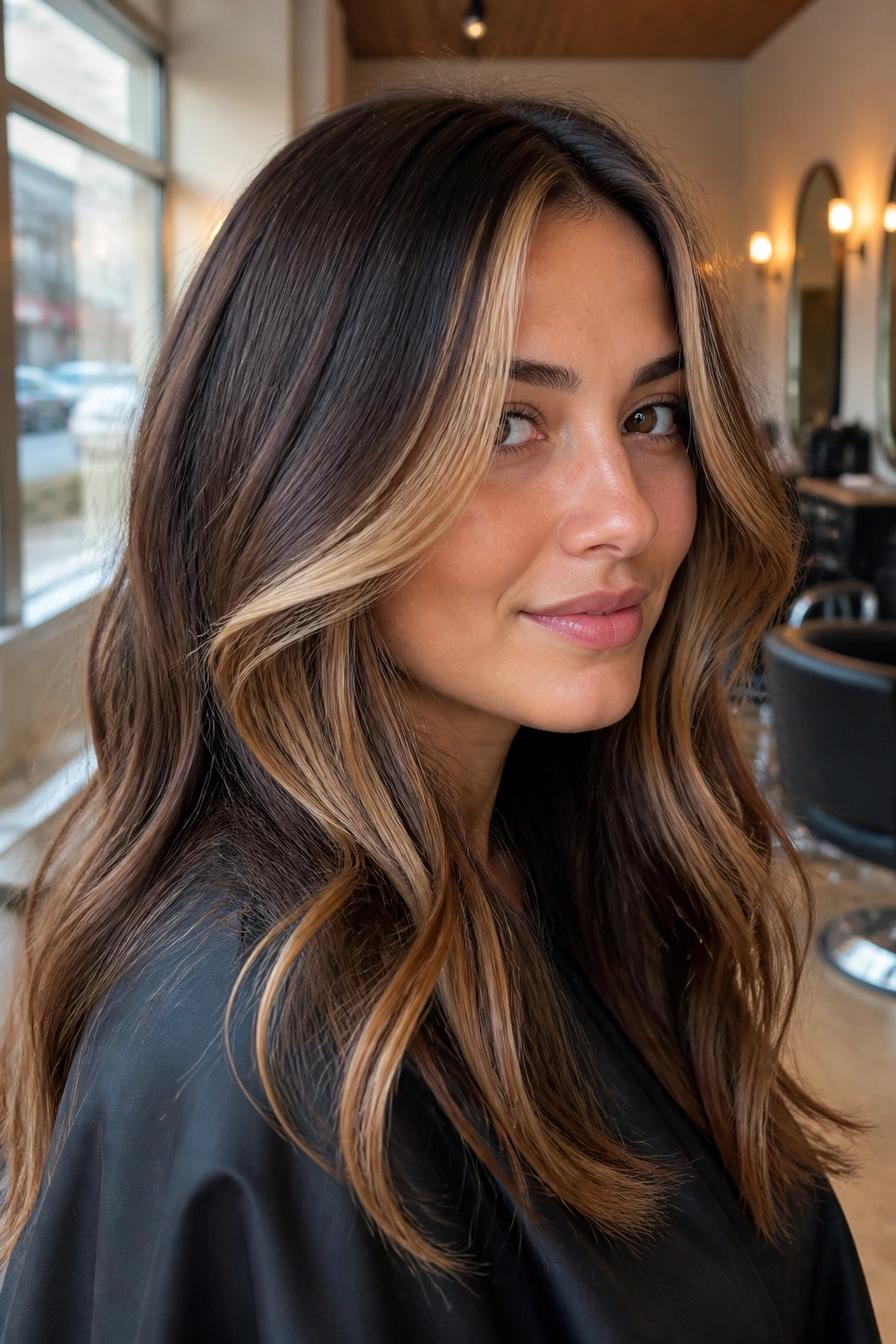
Caramel money pieces are the easiest way to test chunky highlights on brown hair without feeling like you’ve signed up for a full color overhaul. The brightness sits right where people look first, so even a few thicker strands can wake up the whole face.
Why This Placement Works
A colorist can keep the rest of the brown base rich and dark, then push the front pieces about one to two levels lighter. That contrast does a lot of work. It lifts the eyes, softens strong cheekbones, and makes a plain center part look intentional instead of flat.
- Ask for thicker face-framing foils, usually about 1/2 inch to 1 inch wide.
- Keep the brightest point near the cheekbone, not all the way to the roots.
- Caramel tones read best on medium and deep brunettes with warm or neutral undertones.
- A soft gloss helps the pieces stay golden instead of orange.
Best move: keep the money pieces a little softer at the root and brighter through the mids. That tiny gradient keeps the front from looking like two hard stripes glued to your head.
2. Honey Blonde Ribbons
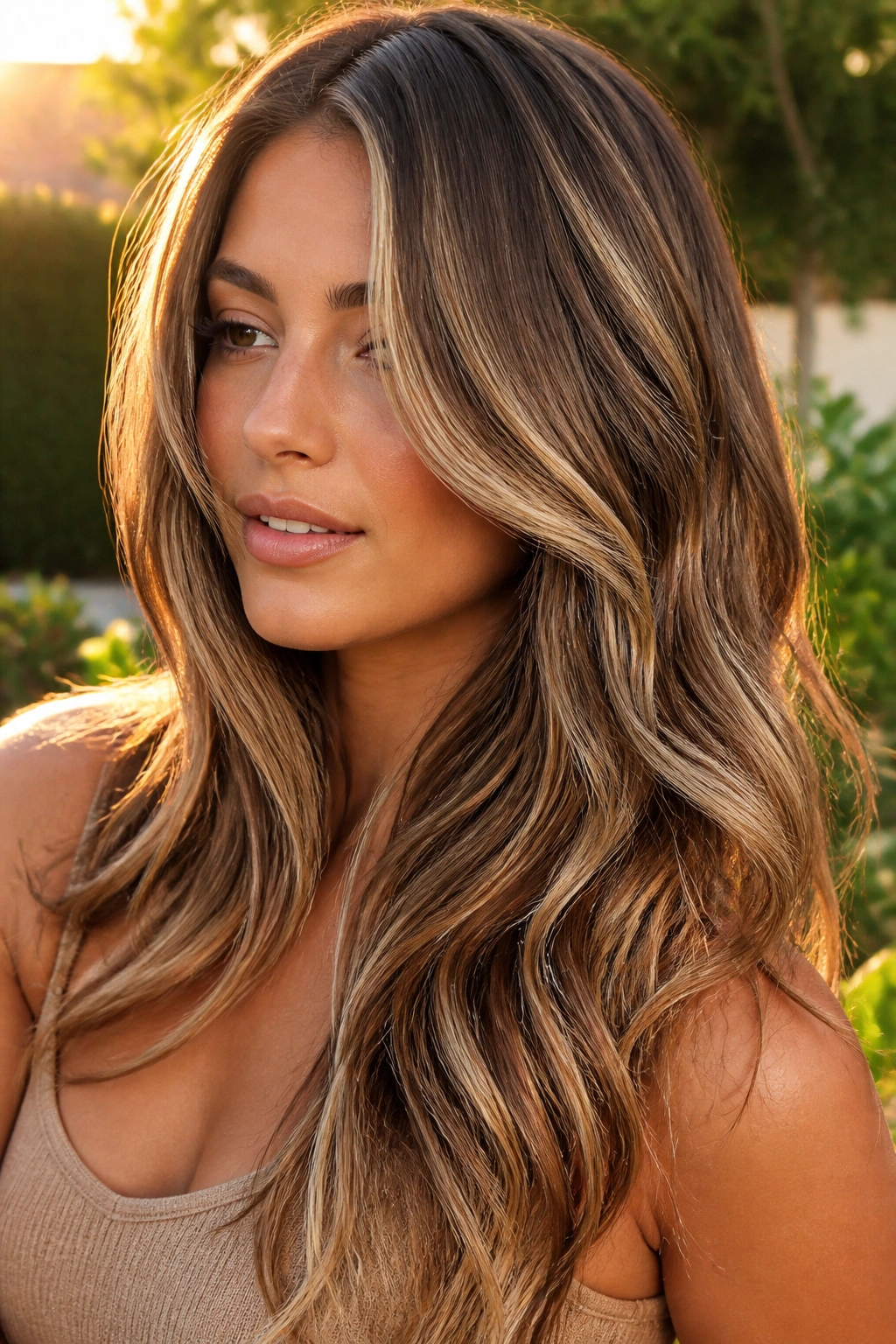
Honey blonde has a way of making brown hair look awake without tipping into icy territory. It’s warm, shiny, and easy on the eyes, which is exactly why chunky honey ribbons keep showing up on brunettes who want brightness without the harshness of platinum.
The trick is width. Thin highlights disappear into brown hair. Chunky honey ribbons do the opposite. They give the hair a clear pattern, especially on long layers, where the color can move as you walk or turn your head. A blowout makes the tone look even richer because the light catches the bend in each section.
I like this look on chestnut, cocoa, and soft chocolate bases. It can go a little too yellow on very dark brown if the lift is pushed too far, so a beige-gold toner matters. Not ash. Not white. Honey needs warmth to stay believable.
If you wear your hair in loose waves, this one is a workhorse. It shows up. It keeps showing up.
3. Platinum Front Streaks
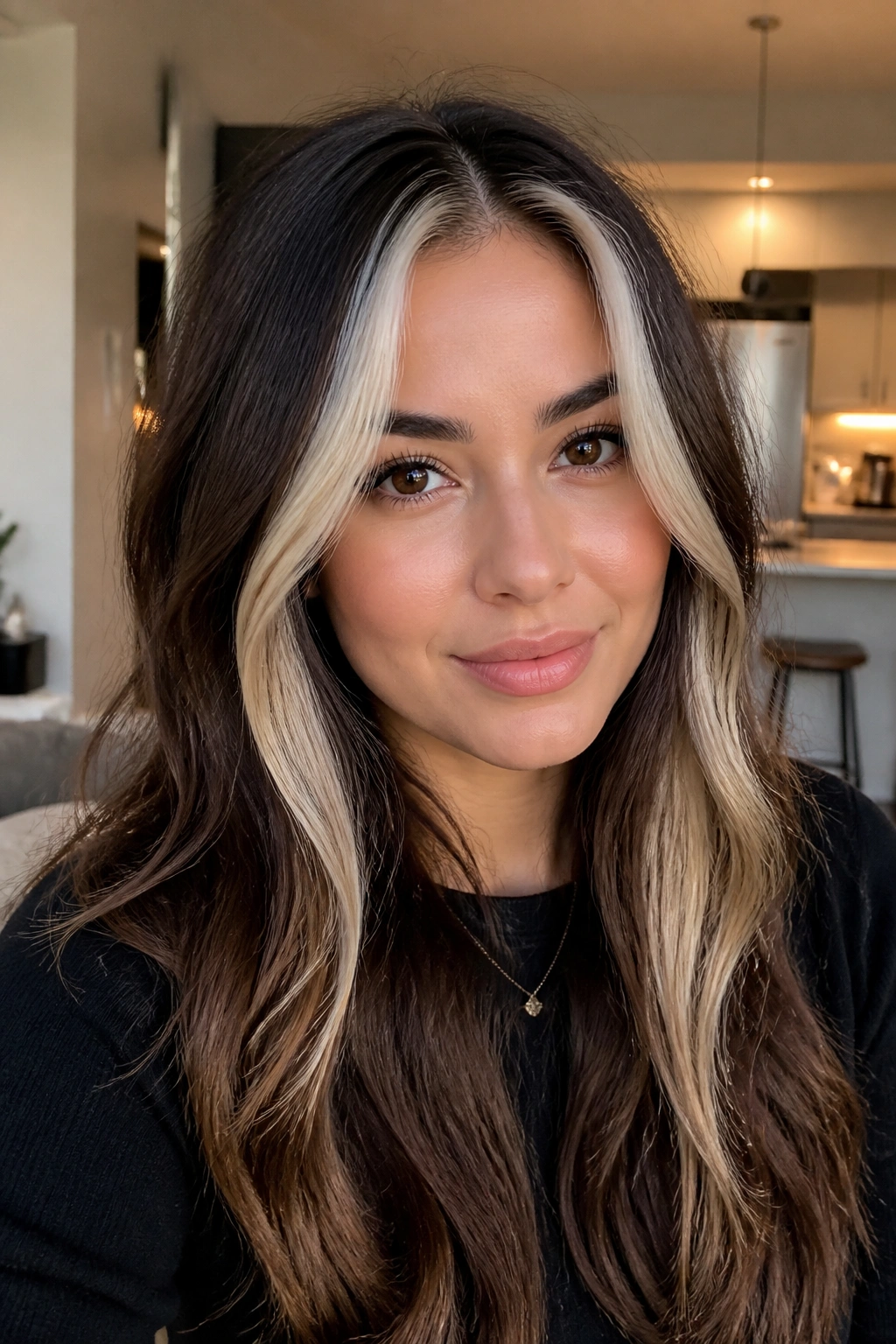
Why do a few platinum streaks near brown hair feel so striking? Because the contrast is impossible to miss, and that is the whole point. The eye goes straight to the front sections, which makes the cut look sharper and the face frame look deliberate.
Platinum chunks are not the easiest version of chunky highlights for brown hair, though. The hair has to lift cleanly before the toner goes on, and darker bases usually need more than one session if you want to protect the length. Skip the rush. Fried ends look worse than slow progress.
How to Wear It
A chunky platinum stripe works best when it’s placed with some restraint. One or two wide pieces near the part line are enough. You do not need a whole head of white-blonde to get the effect.
- Keep the streak about 3/4 inch to 1 inch wide.
- Pair it with a blunt fringe or a middle part for a clean line.
- Tone to pearl, beige, or soft icy blonde, depending on how cool you want it.
- Ask for a bond-building treatment if the brown base is dark.
This is the look for someone who wants the color to speak first.
4. Cinnamon and Copper Panels
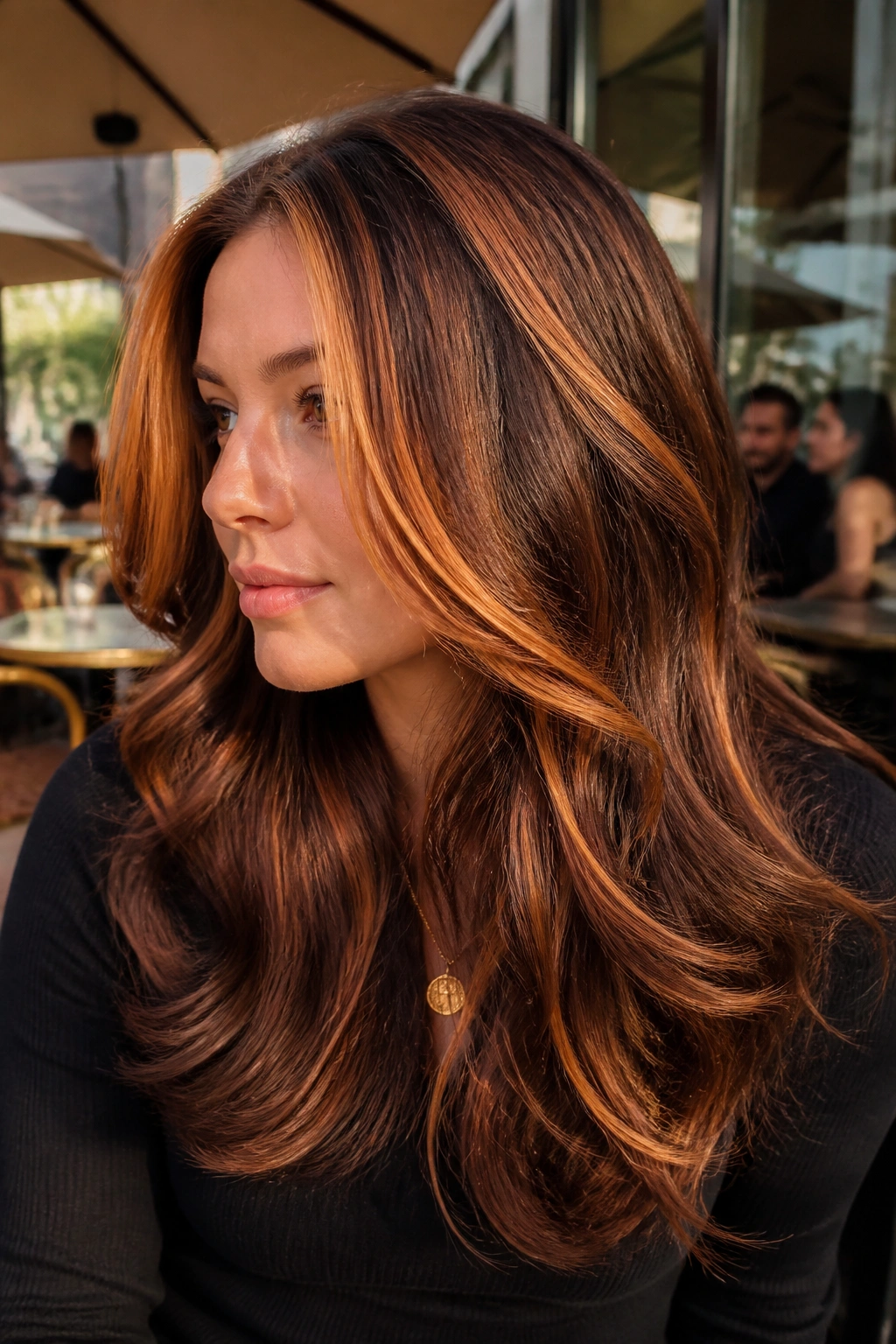
Picture a shoulder-length brunette bob with thick cinnamon and copper panels tucked through the top layer. The color shifts every time the hair moves. That’s what makes this one feel alive.
Copper can look flat when it’s painted too thin. Chunky panels solve that. They give the red tone enough room to show depth, so the result reads as rich, not streaky. On brown hair, especially medium brown, cinnamon leans cozy while copper brings the heat.
What to Ask For
- Place the brightest copper around the temples and crown.
- Keep the brown base visible between the panels.
- Ask for a gloss with a red-gold note, not a flat orange tone.
- Use larger painted sections if your hair has a lot of texture.
A look like this usually shines best on layered cuts and warm skin tones, but it can work farther across the board if the copper is muted a bit. The biggest mistake is making every panel the same intensity. Real dimension needs a dark patch beside a bright one.
5. Beige Blonde on Chestnut
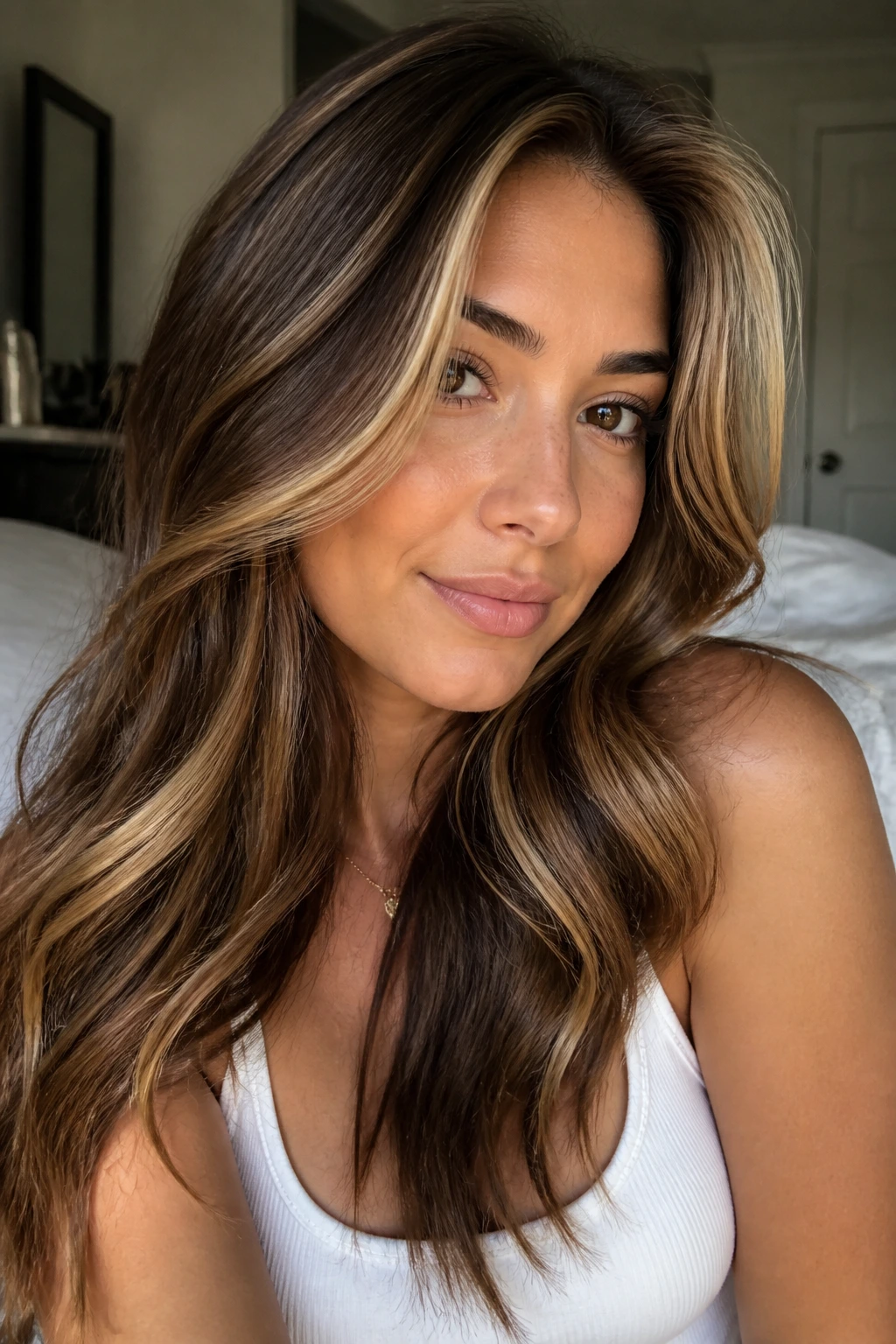
Beige blonde is the answer when you want chunky highlights on brown hair and hate the look of yellow. It sits in that middle zone between warm and cool, which makes chestnut bases look polished instead of brassy. The effect is quiet, but not boring.
The best version keeps the chunky pieces wide enough to read from a few feet away. That matters. Beige can disappear if the foils are too skinny, especially on dense hair. A few broad ribbons through the top layers make the whole cut look more expensive than a scatter of tiny streaks ever could.
There’s also a practical reason this shade works so well. Beige tones tend to age more gracefully than very icy blondes on brunettes, because they soften as they fade. The color still needs upkeep, of course, but it doesn’t turn into a yellow strip as quickly as a harsher blonde can.
Use this if you want the hair to look bright in daylight and calm indoors. It has range. That’s the appeal.
6. Golden Ribbons Through Long Layers
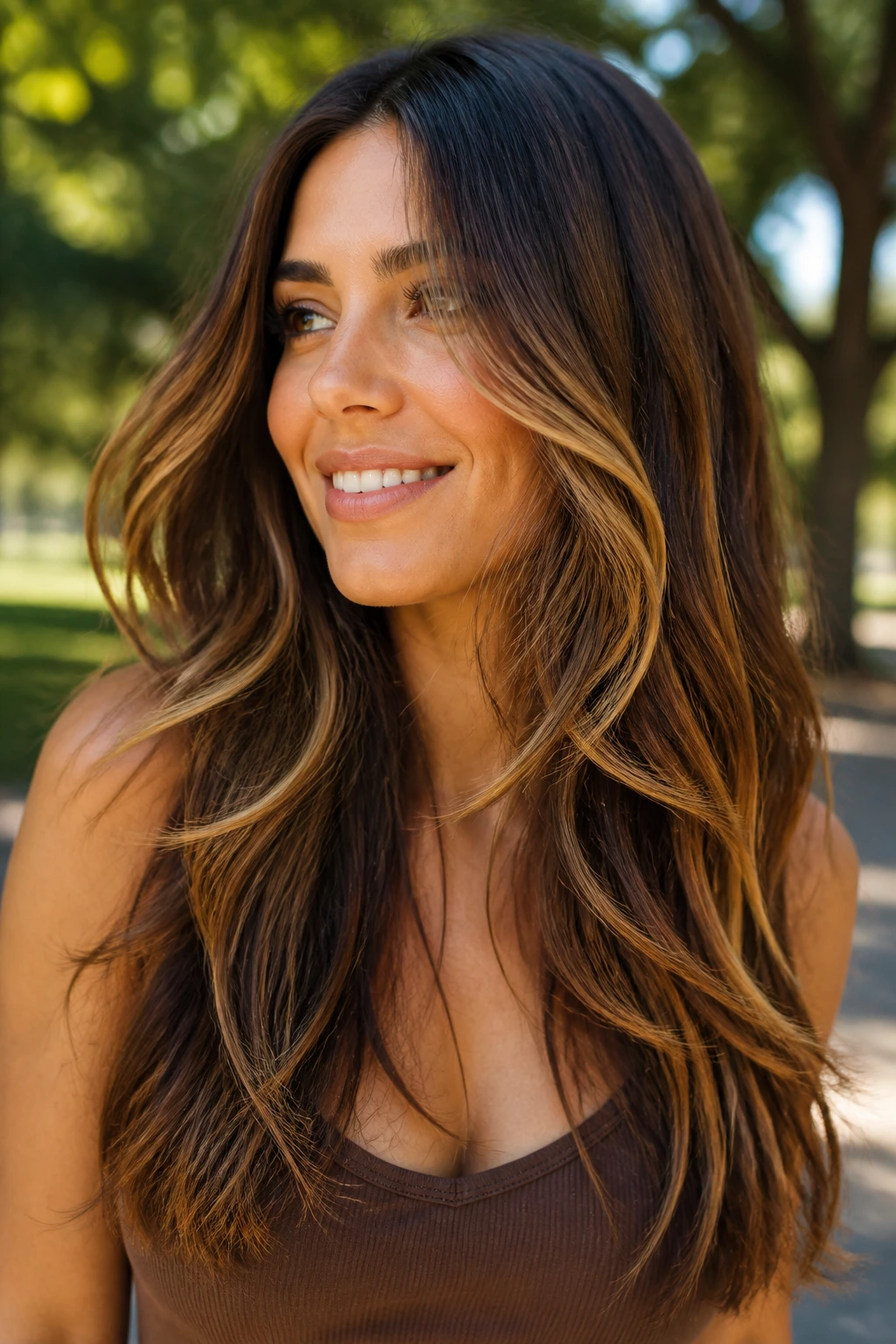
Unlike babylights, which blur into the base, golden ribbons announce themselves. That makes them a smart choice for long layered brown hair, where movement is half the story. The layers need something to catch, and these thicker bands do exactly that.
The best placement starts below the cheekbone and continues through the mids and ends. If the color goes too high on a long cut, the top can look busy. Keep the crown darker, let the ribbons widen as they fall, and the whole style starts to move like it has air in it.
Who This Suits Best
- Long hair with soft layers
- Medium brown to light brown bases
- Blowouts, round-brush styling, and large-barrel curls
- People who want visible color without a full blonde transformation
Golden ribbons are also forgiving if your hair grows fast. The contrast stays readable even after a few weeks, which is part of why this style gets worn so much. It looks styled even when the finish is easy.
7. Toffee Slices Around the Crown
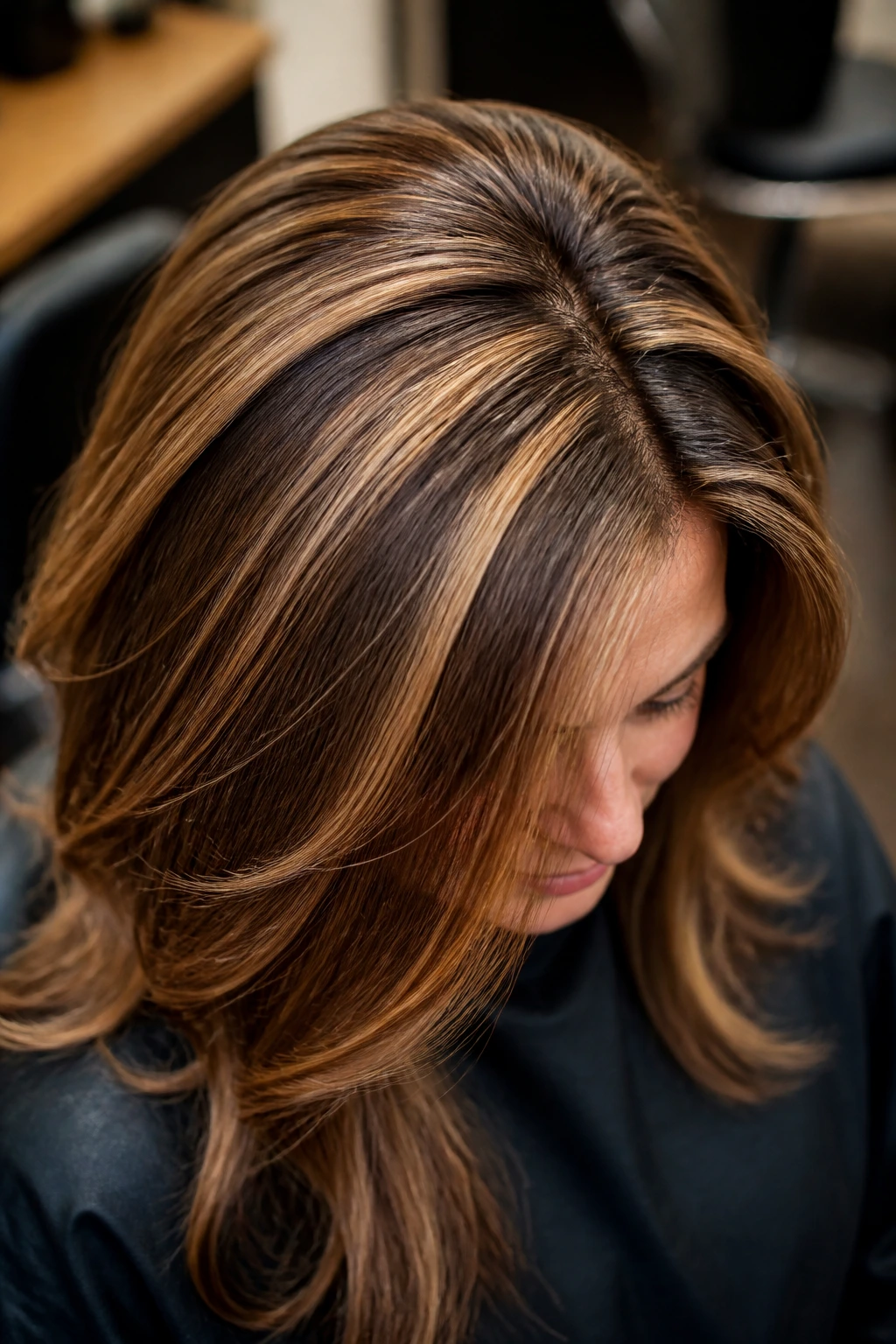
The crown is where this look earns its shape. Wide toffee slices placed up top make brown hair look fuller, especially if the rest of the cut is layered or long enough to show movement.
A crown placement works because overhead light hits the top of the head first. Put the brightness there and the color shows up immediately. Put it too low, and the effect gets lost every time the hair falls forward. The best version uses a few broad foils near the part and a softer trail through the upper sides.
Ask For This
- Thicker foils at the crown, around 1 inch wide.
- A slightly deeper brown left at the roots for a soft grow-out.
- Lighter ends than roots, but not a hard stripe.
- A warm toffee gloss rather than a gold that leans yellow.
Small detail, big payoff: leave the very ends a shade deeper than the middle section. That keeps the highlight from looking chopped up when the hair is tied back or tucked behind the ears.
8. Smoked Mocha with Warm Beige Chunks
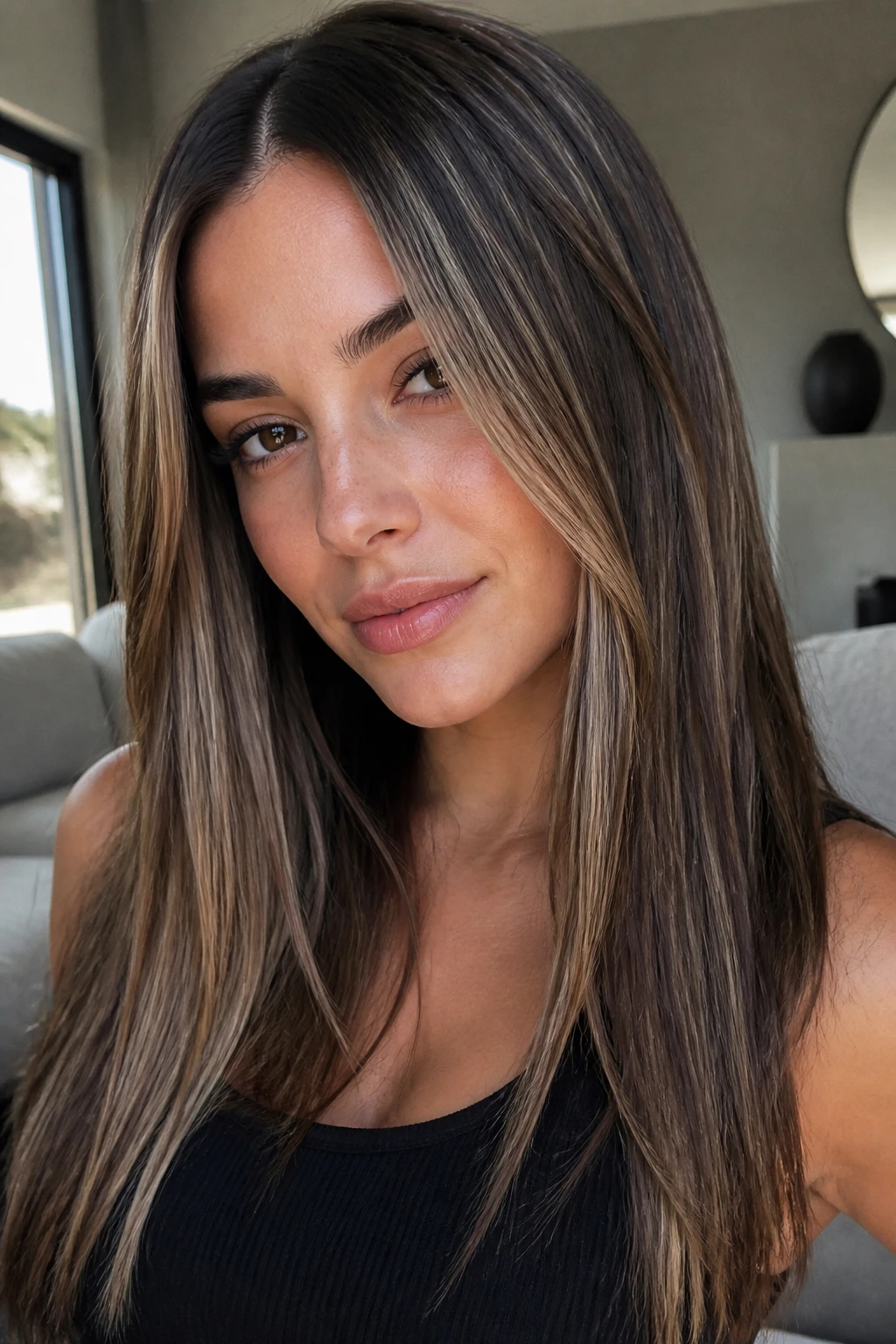
If you want contrast without brass, smoked mocha is one of the safest dark-brown routes. The base stays deep and cool enough to look rich, while the beige chunks give the hair some lightness without turning it into a blonde job.
This is a good fit for straight styles, silk presses, and smooth blowouts because the blocks stay clean. On very curly hair, the same color can blur a bit more, which is not a bad thing, but it changes the read. The finish matters as much as the placement.
The smarter version keeps the beige pieces wide and spaced out. Too many of them, and the dark brown stops looking intentional. A few strong panels near the face, maybe one or two through the upper midlengths, and the whole style starts to feel balanced.
A cool brunette base can go muddy if the beige is too flat. That’s why the toner choice matters here. You want beige with some life in it, not dull taupe that looks dusty.
9. Ash Blonde Panels on Cool Brown Hair
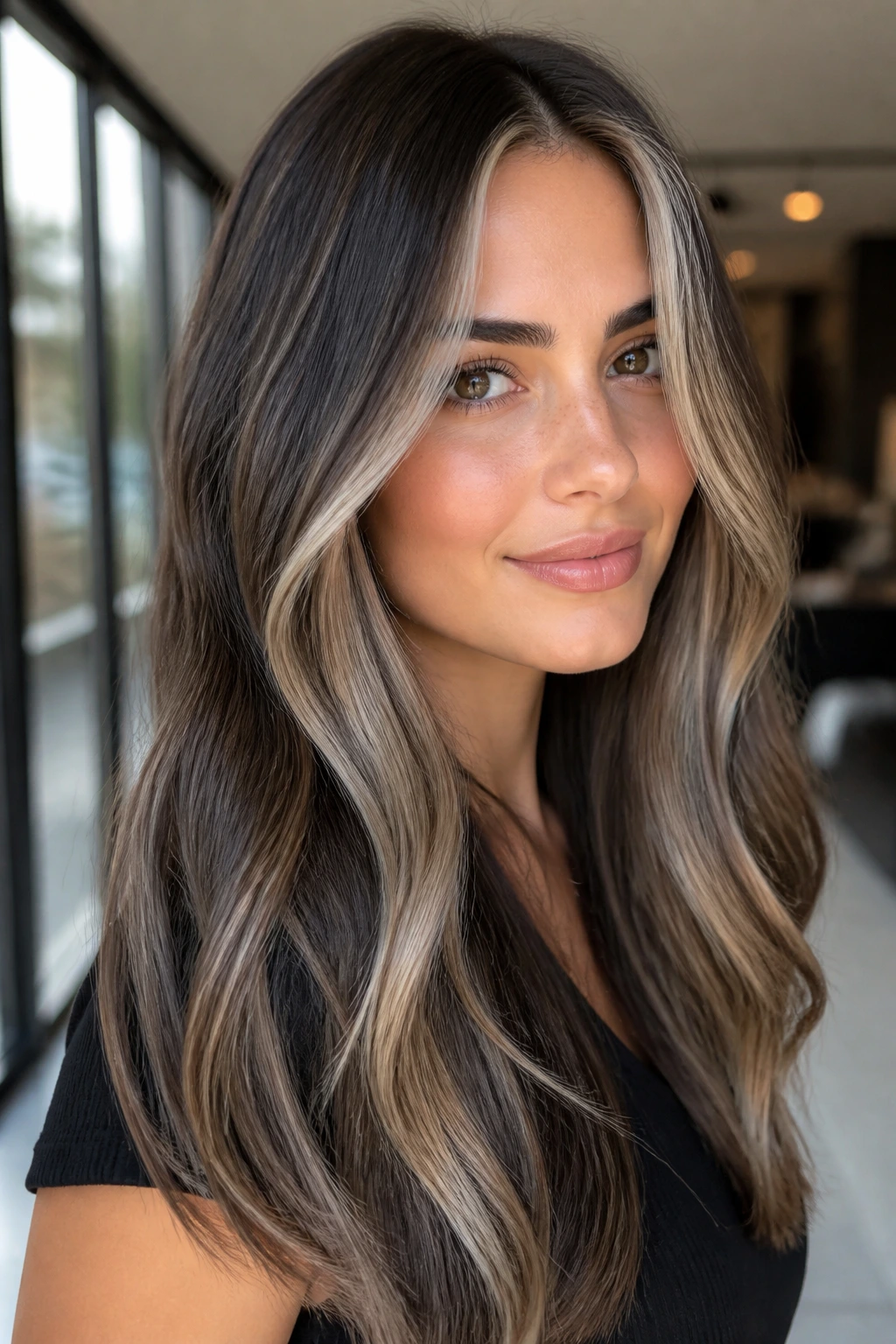
Why do ash blonde panels work on some brunettes and fall flat on others? Because the brown base needs to already lean cool. If the hair is warm underneath, ash can look muddy or even a little green at the edges. That’s the catch.
On the right brown base, though, chunky ash panels look sleek and modern in a very practical way. They make dark hair look sharper without bringing in much warmth at all. The vibe is clean, especially on straight hair or smooth waves.
What to Watch For
- Ask whether your brown base has enough cool pigment to support ash.
- Keep the lifted pieces pale enough before toning, or the result can look smoky in a dull way.
- Avoid gold-heavy products that can drag the ash tone warmer over time.
- Use a blue-violet shampoo only when needed, not every wash.
This look suits neutral and cool skin tones especially well, but the bigger point is tone control. Ash is unforgiving. When it works, it looks crisp. When it doesn’t, you see every mistake.
10. Beige Panels with Curtain Bangs
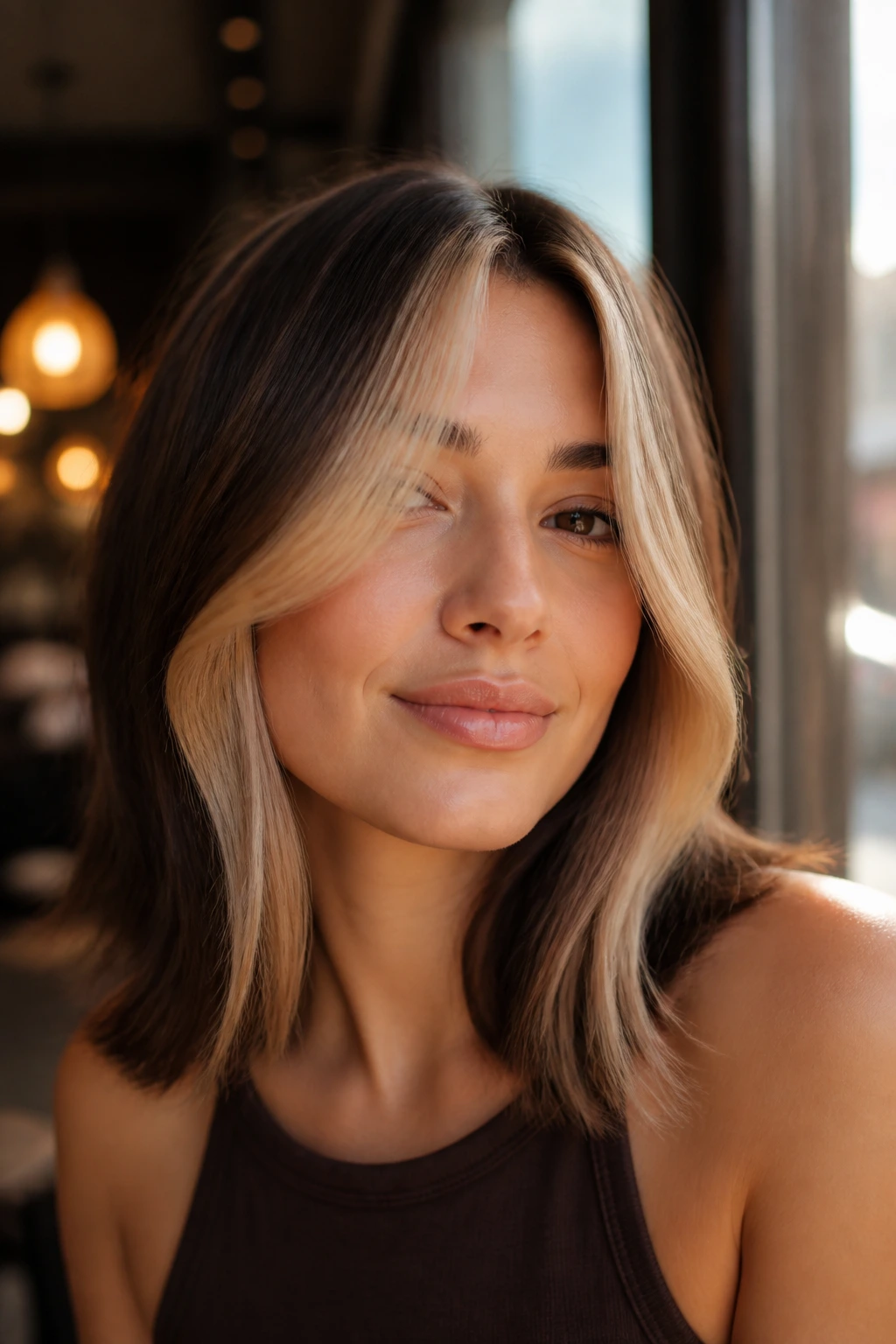
Curtain bangs and chunky highlights are a good pair because they give the front of the haircut a job. Without color, curtain bangs can melt into the rest of the hair. With thicker beige panels beside them, they read as a feature.
The best version places one brighter section on each side of the part, then keeps the rest of the hair a little darker underneath. That creates movement around the face without making the bangs look disconnected from the cut. On shoulder-length brown hair, the effect is especially clean.
How to Style It
- Blow the bangs away from the face with a round brush.
- Keep the face-framing pieces at least 1 level lighter than the base.
- Let the front panels start near the brow or cheekbone, not all the way on the scalp.
- Finish with a soft bend through the lengths so the highlights don’t sit in a stiff line.
This is a smart choice if you’re growing out bangs and want the front to still look designed. It buys you time.
11. Auburn Chunks on Dark Brown Curls
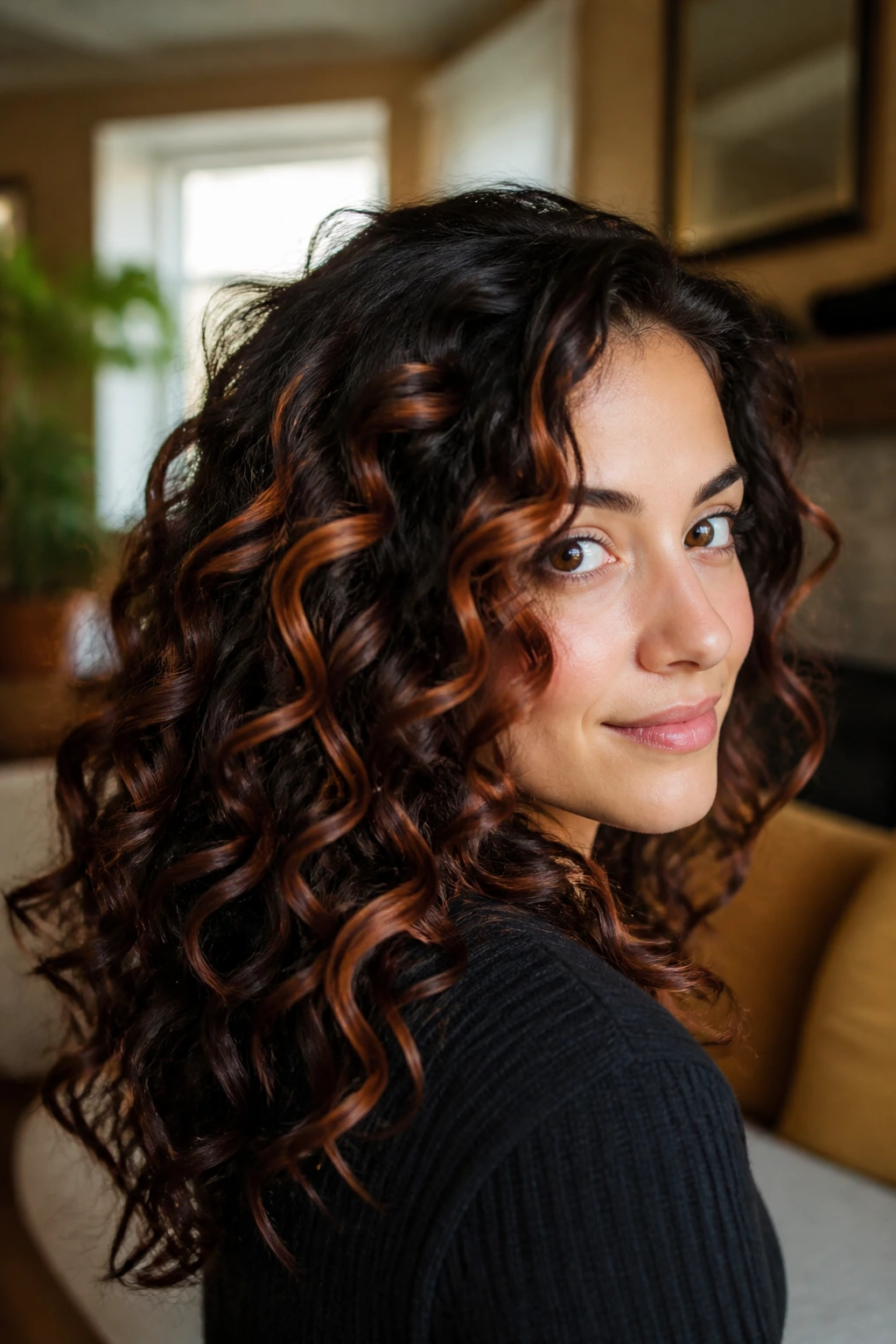
Dark brown curls and auburn chunks have a lot of chemistry together. Curl pattern changes everything here. A wide painted section on a coil or wave doesn’t stay flat; it expands and shifts, which makes the color feel bigger than it is.
The smartest placement sits on the outer curve of the curl, where light would naturally land. If the sections are too tiny, the red-brown tone disappears into the hair. Larger painted pieces keep the auburn visible between washes and through frizz, which is where a lot of color jobs fail.
This look can be rich and warm without going bright red. That matters. The brown base keeps it grounded. The auburn adds just enough heat to keep the curls from reading as one solid block.
A gloss helps here more than people realize. It keeps the red tone shiny and stops it from turning flat after a few shampoos. And with curls, flat is the enemy.
12. Chunky Highlights on a Blunt Lob
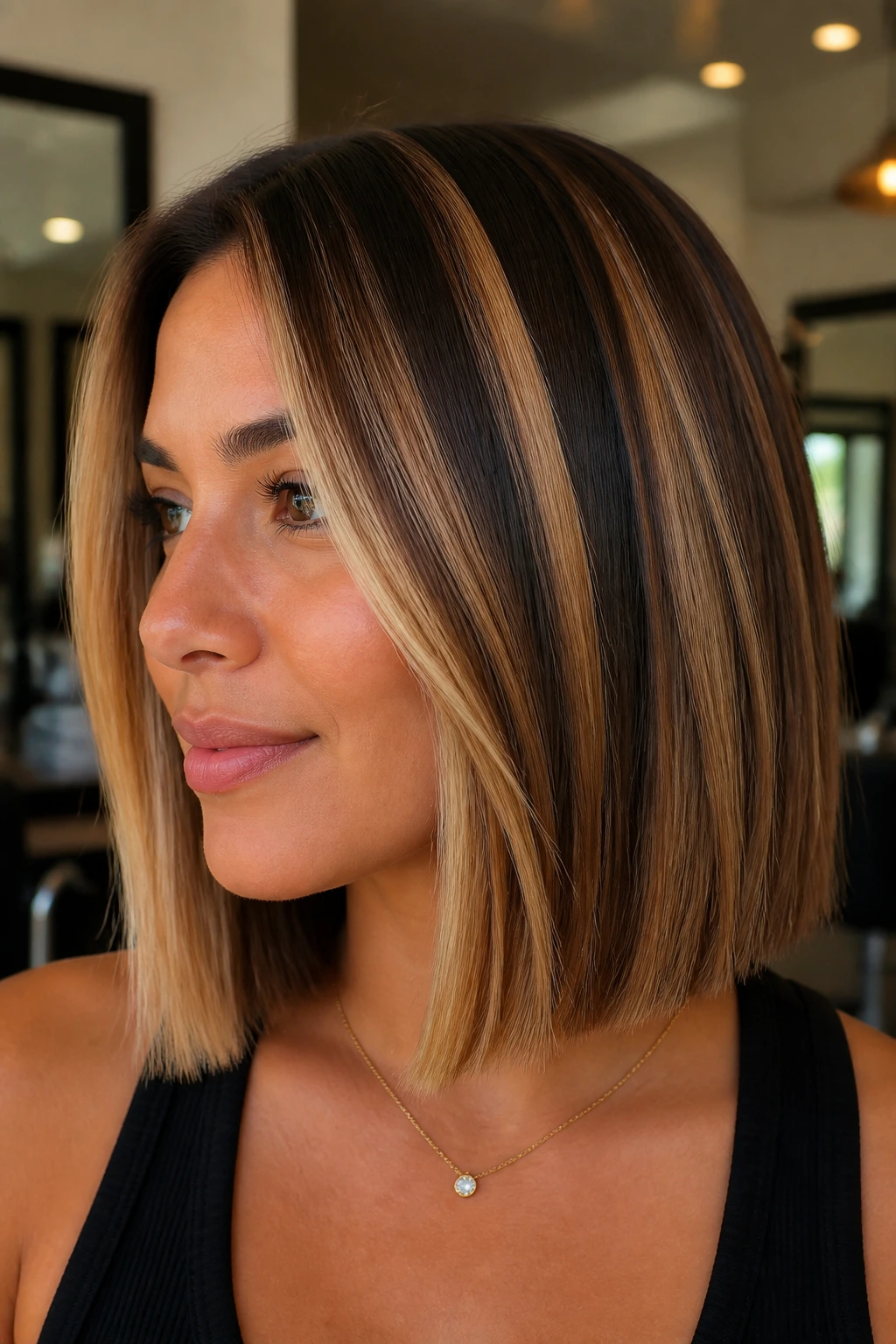
A blunt lob makes chunky highlights look more deliberate than longer cuts do. There’s less hair to hide in, so every stripe has to earn its place. That can sound unforgiving, but it’s actually why the style works.
The clean edge of a lob gives the color a frame. Put wide caramel, beige, or honey chunks near the front and sides, and the haircut starts looking sharper right away. Straightened lobs show the panels in the most graphic way, while a soft bend keeps them from feeling too hard.
Best Setup
- Keep the widest highlights around the cheekbones and jaw.
- Leave the underlayer darker so the cut still has depth.
- Ask for a soft root at the scalp to avoid a blocky line.
- Use a flat iron bend or 1-inch curling iron to show the pattern.
This is one of the easiest styles to maintain because the cut itself does some of the work. A blunt lob and chunky color are a strong pair. No extra drama needed.
13. Peekaboo Highlights Under the Top Layer
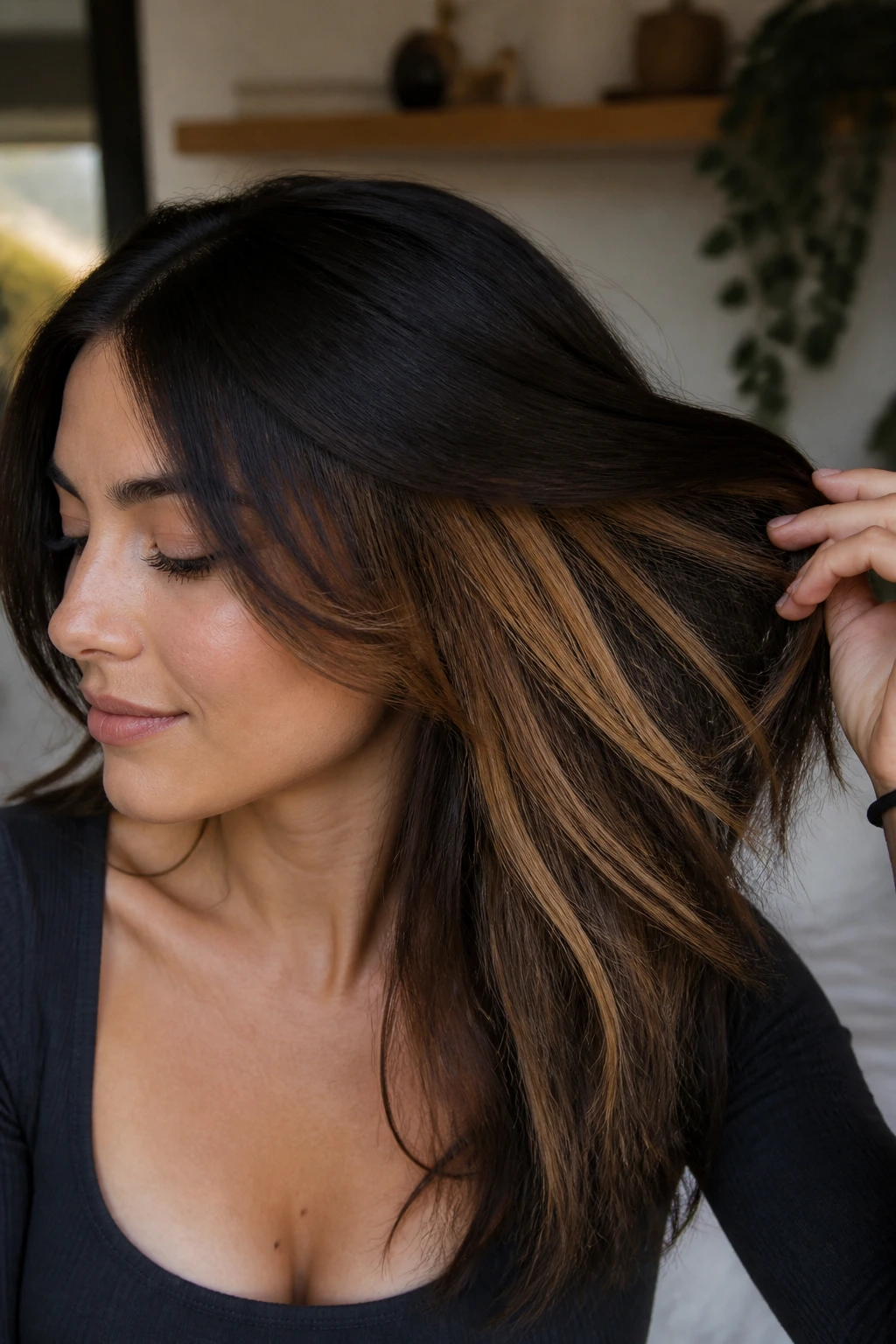
Some of the best chunky color hides under the top layer. Peekaboo highlights are a good example. They flash when the hair moves, then disappear again, which makes the look feel playful instead of loud.
On brown hair, peekaboo chunks can be caramel, copper, blonde, or even red. The key is keeping the top layer darker so the contrast has somewhere to live. If the whole head is lifted too much, the effect loses the surprise.
Why It Works
- It suits ponytails, half-up styles, and braids.
- The grow-out is softer because the brightest pieces are not sitting right at the hairline.
- You can choose warm or cool tones without changing the entire base.
- It’s a good option if your workplace wants a calmer look during the week.
There’s a little bit of fun built into this one. You catch a flash of color when you turn your head, then it’s gone. That rhythm is the whole appeal.
14. Skunk Stripe Face Frame
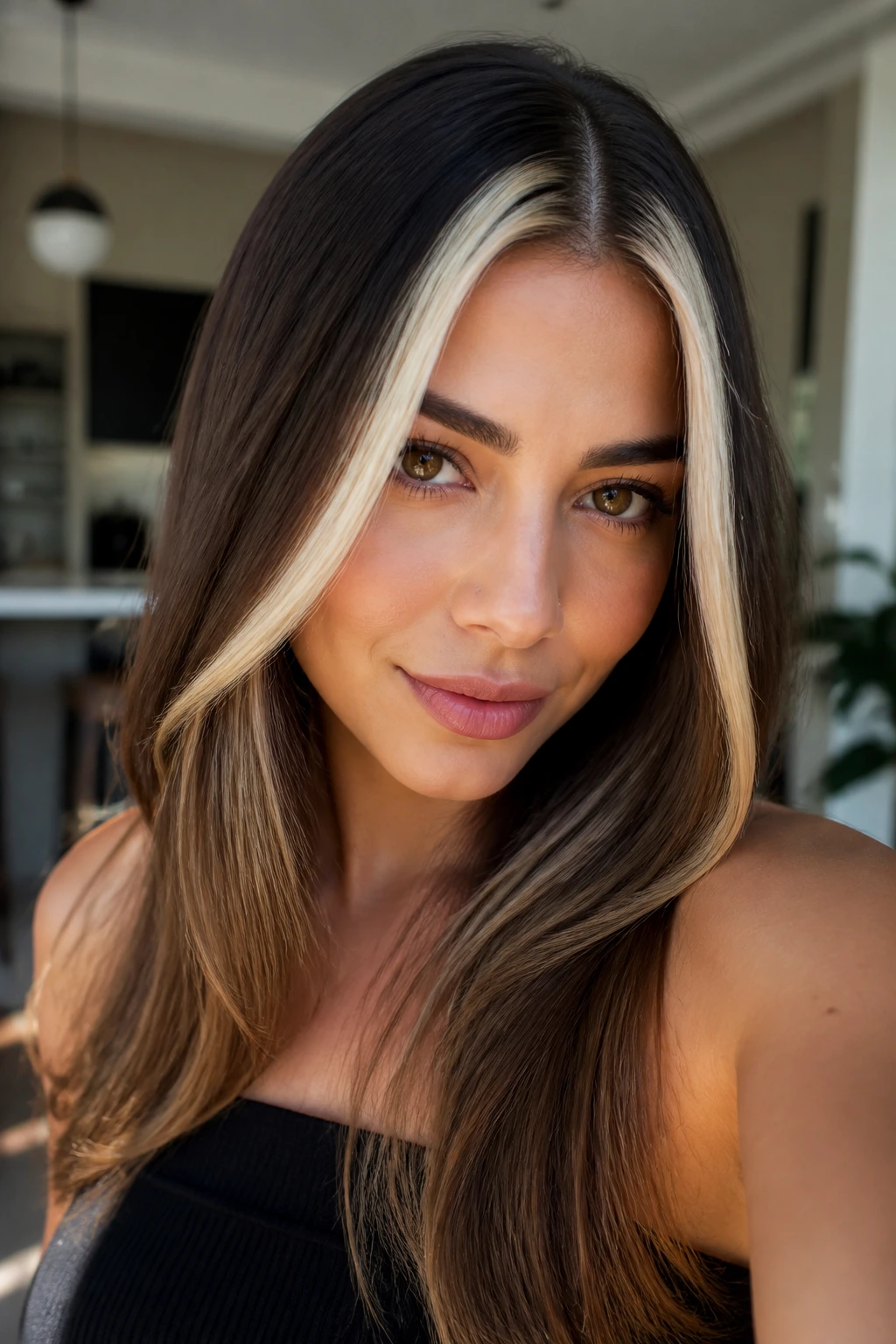
The skunk stripe is not subtle, and that is the point. One high-contrast front section against brown hair gives a very clear, graphic line, especially on a center part or a sleek blowout.
This look works best when the stripe is treated like a design choice, not an afterthought. The rest of the color should stay cleaner and quieter so the front piece can carry the punch. If every section is loud, nothing stands out. That’s a mistake I see a lot with bold brunette color.
A wide stripe near the face can be platinum, silver beige, or even a cool sand tone if you want less shock. The width matters more than people think. Too thin and it just looks accidental. Too wide and it can start to swallow the face. Somewhere around 1 to 1.5 inches is the sweet spot for most heads.
This is for someone who wants the haircut to look edited. It says something fast.
15. Bronde Blocks with a Soft Root Melt
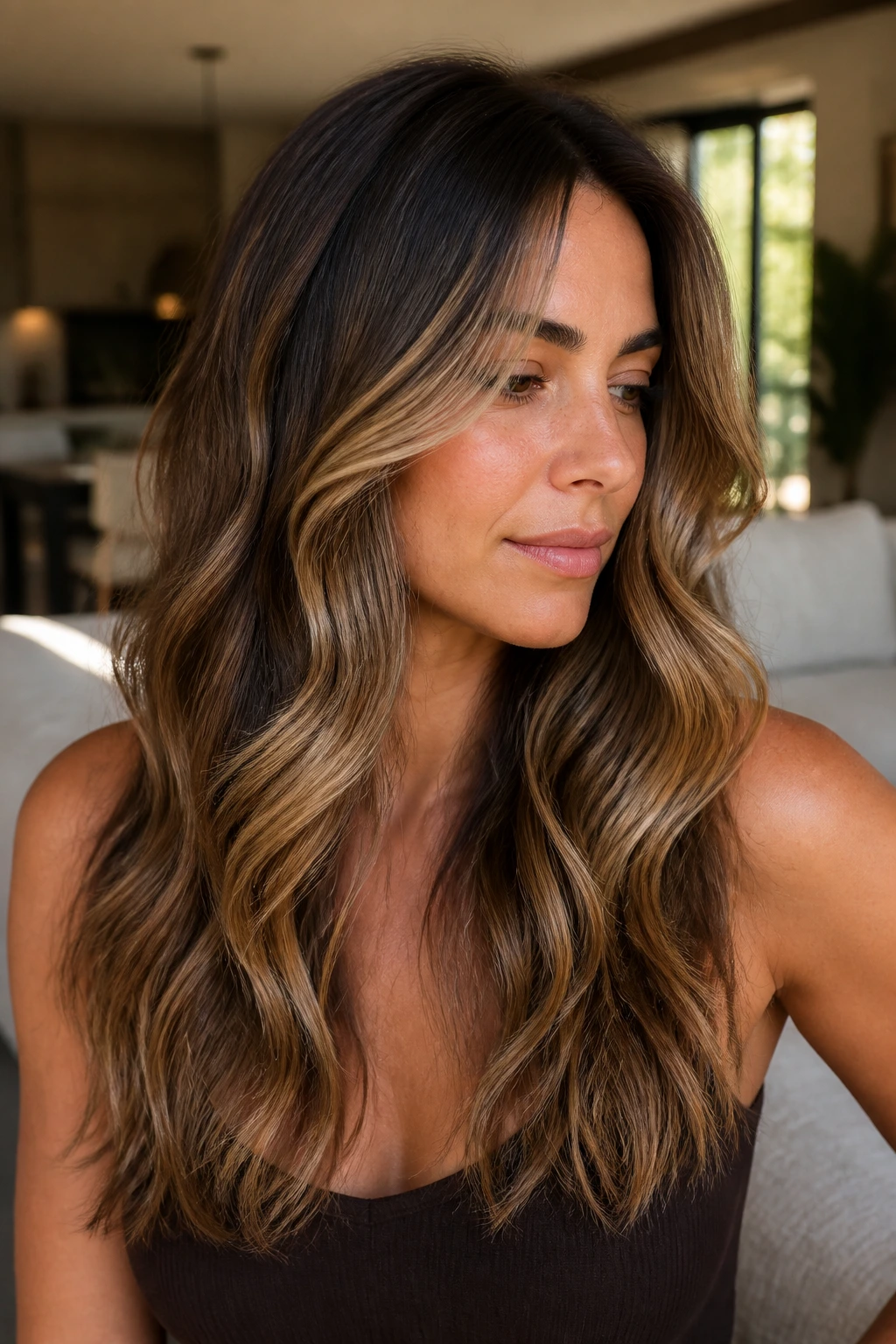
Can chunky highlights still look soft? Yes, if the root is stretched and the blocks aren’t all starting at the scalp. Bronde gives you that middle ground between brown and blonde, and the soft root melt stops the color from feeling chopped up.
This version works well on medium brown bases that want brightness without a hard line. The lighter blocks can sit through the mids and ends while the root stays smoky and deeper. That keeps the grow-out calmer, which matters more than people admit. Nobody loves a color job that looks good for ten days and then gets weird.
How to Wear It
- Ask for chunky bronde sections placed below the part line.
- Keep the root about 1 to 2 inches deeper than the lightest pieces.
- Use waves or loose bends to show the contrast.
- Choose beige-bronde if you want soft warmth, or ash-bronde if you want less gold.
This is the compromise that doesn’t feel like one. It reads polished without losing the chunkiness that makes the whole trend interesting.
16. Chestnut and Maple Panels
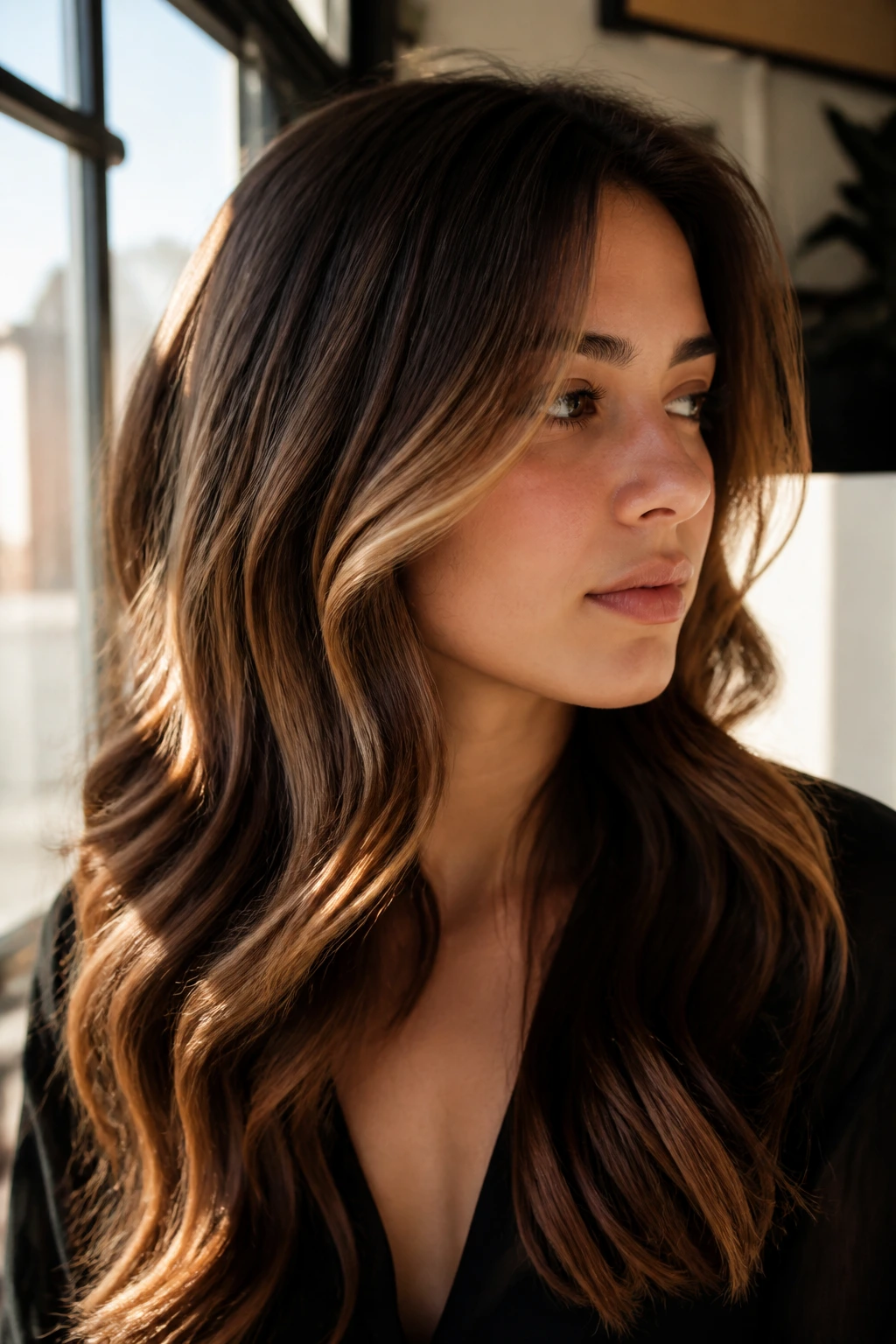
If your brown hair feels flat indoors, chestnut and maple panels fix that fast. Chestnut keeps the base rich, while maple adds a lighter brown-gold note that shows up in daylight without screaming for attention.
This is one of the more natural-looking chunky highlight ideas on brown hair, which is why it works on people who want dimension more than drama. The pieces are still broad. They just live closer to the family of the base color, so the contrast feels believable.
What to Ask For
- Put the maple sections under the top layer for movement.
- Leave a deeper chestnut shadow between the lighter pieces.
- Keep the face frame a touch brighter than the rest.
- Style with loose waves so the different tones separate instead of blending into one flat color.
The result is calm but not dull. It has depth when the light hits it and enough contrast to keep the cut from disappearing. That’s a useful balance.
17. Wavy Brunette Bob with Chunky Lights
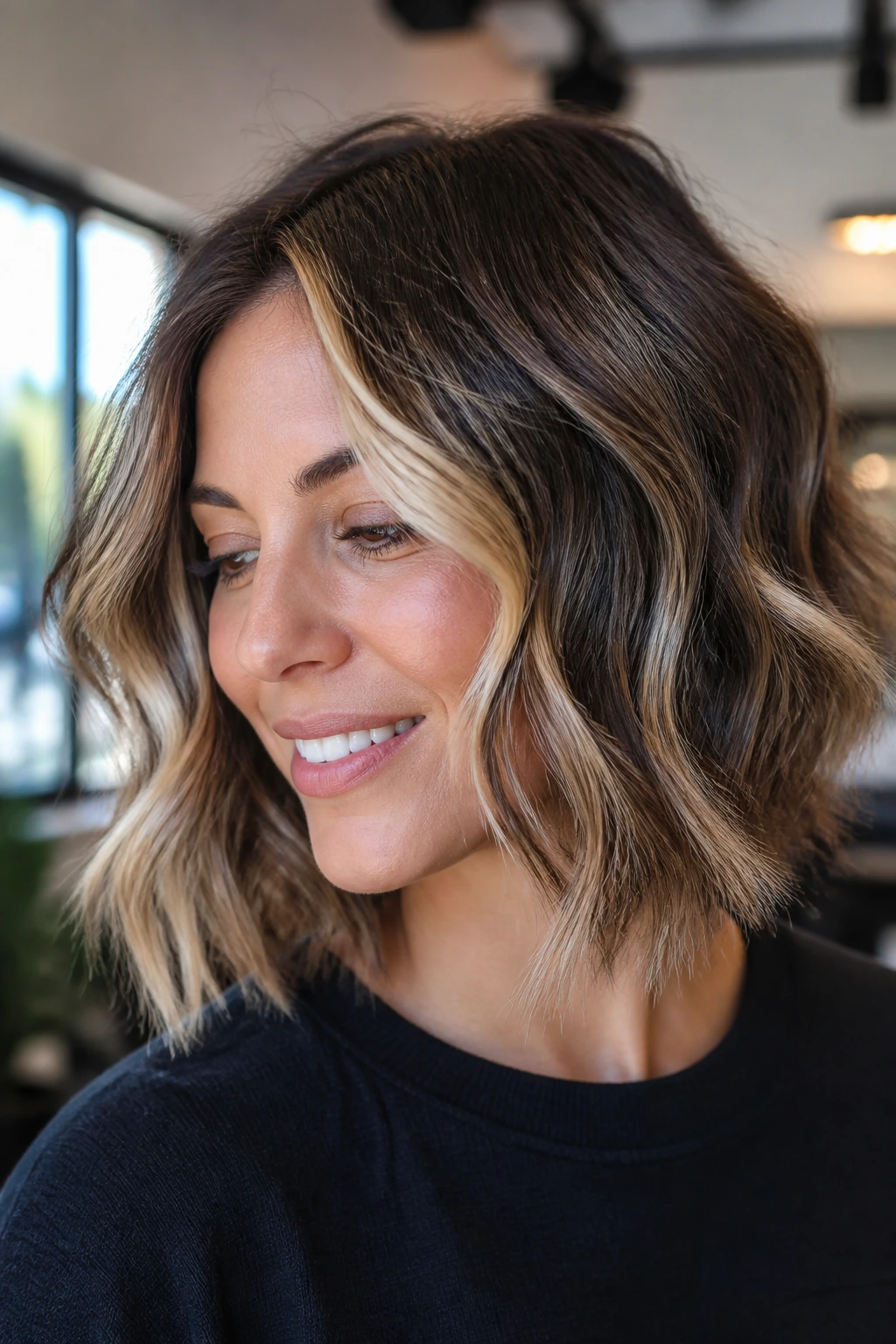
A wavy brunette bob can carry chunky highlights better than people expect. The shorter length makes each bright section more visible, and the waves keep the color from looking like a set of bars across the head.
This works especially well when the highlights sit around the perimeter and the front. The ends move, so the bright pieces move too. A bob that’s all one dark shade can feel heavy. Add a few thicker light chunks and the shape opens up.
The width of the sections matters more on short hair than long hair. Narrow foils can disappear inside the bend of the wave. Bigger sections hold their shape better. You want the color to feel placed, not sprinkled.
A 1-inch curling iron or a flat iron bend shows this look off nicely. Let the wave break up the stripe a little. Clean, but not too perfect. That’s the sweet spot.
18. Golden Copper Halo
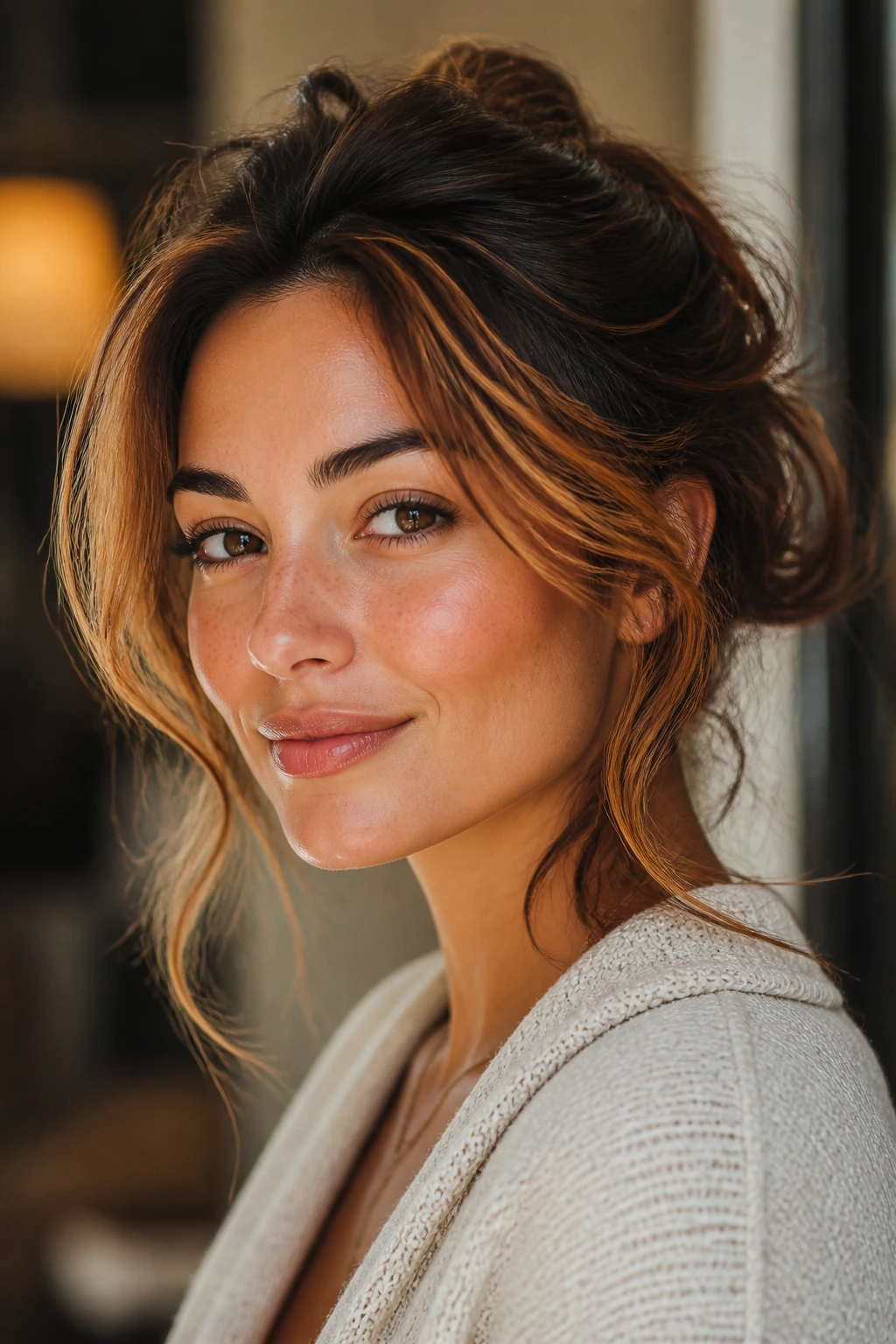
Unlike all-over highlights, a halo sits where the eye lands first: along the outer edge, top layers, and temples. On brown hair, a golden copper halo can make the whole head look brighter without changing the depth underneath.
This placement is smart if you wear your hair in a bun, low ponytail, or half-up style. The color still shows when the hair is pulled back, which means you get more use out of the bright pieces. It also gives a very polished frame to the face, especially on darker brown bases.
The top layer should stay the lightest. Keep the nape darker so the halo stays defined. If the color is spread evenly everywhere, you lose the point of the shape.
Golden copper works best when the red is warm rather than fire-engine bright. Think copper with honey in it, not orange marker. That small shift keeps the look rich and wearable.
19. Mahogany and Berry Ribbons
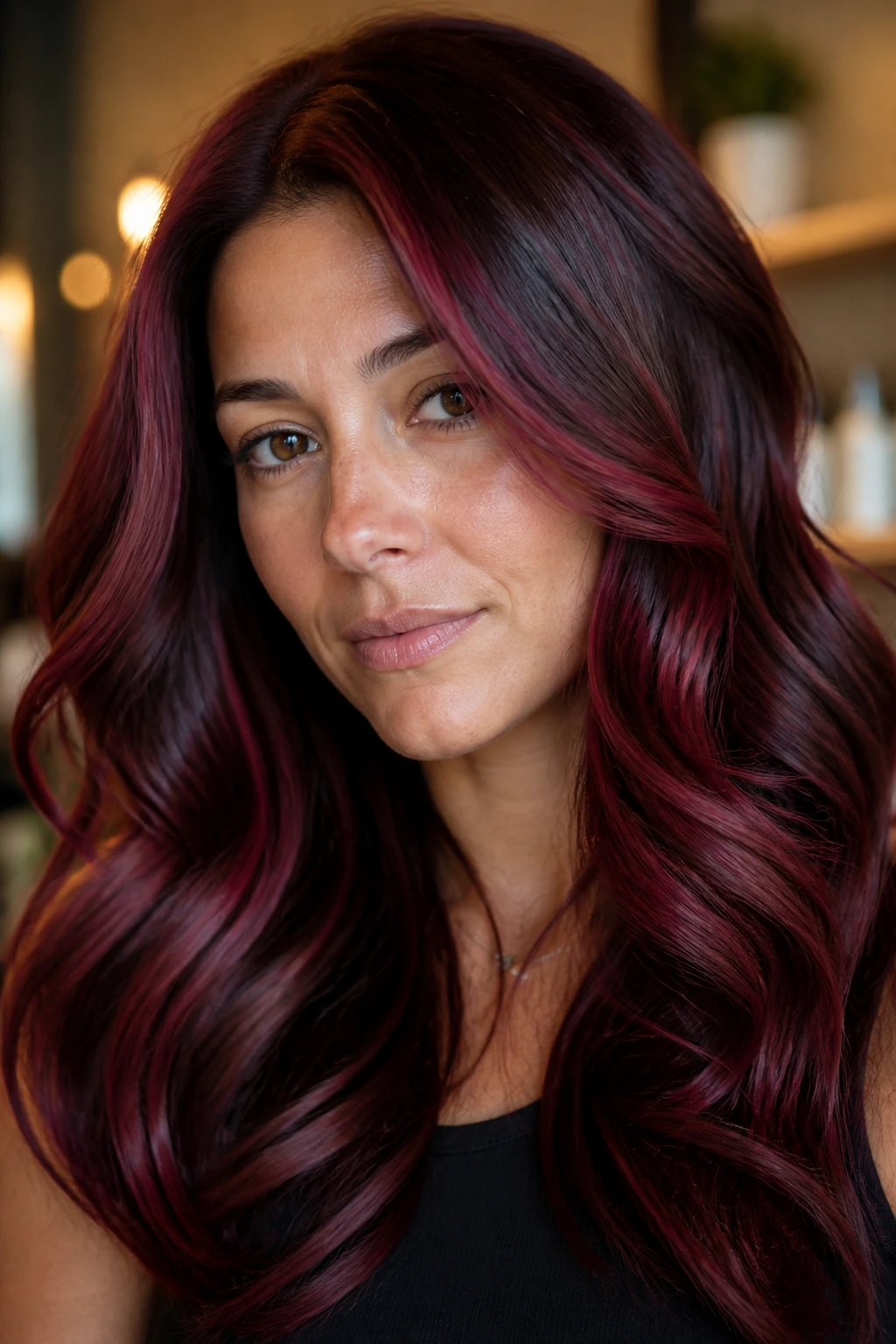
Red-brown chunks can look rich instead of loud when the tone stays deep. Mahogany and berry ribbons are a good example. They add color, but they still live close enough to brown to feel grounded.
Why This Color Pairing Works
Mahogany gives the hair a wine-dark base note. Berry pushes the tone a little cooler and clearer, which keeps it from going muddy. On medium to deep brown hair, the result has depth even when the light is low.
- Place the berry ribbons near the top and front for the clearest read.
- Keep mahogany through the mids and ends to avoid a flat finish.
- Use a shine spray or gloss so the red-brown tones stay reflective.
- If your hair is porous, ask for a deeper red formula to hold the color longer.
This is one of those looks that looks expensive when the colorist keeps the tones layered instead of one flat red. It rewards a little restraint.
20. Mushroom Brown with Icy Beige Chunks
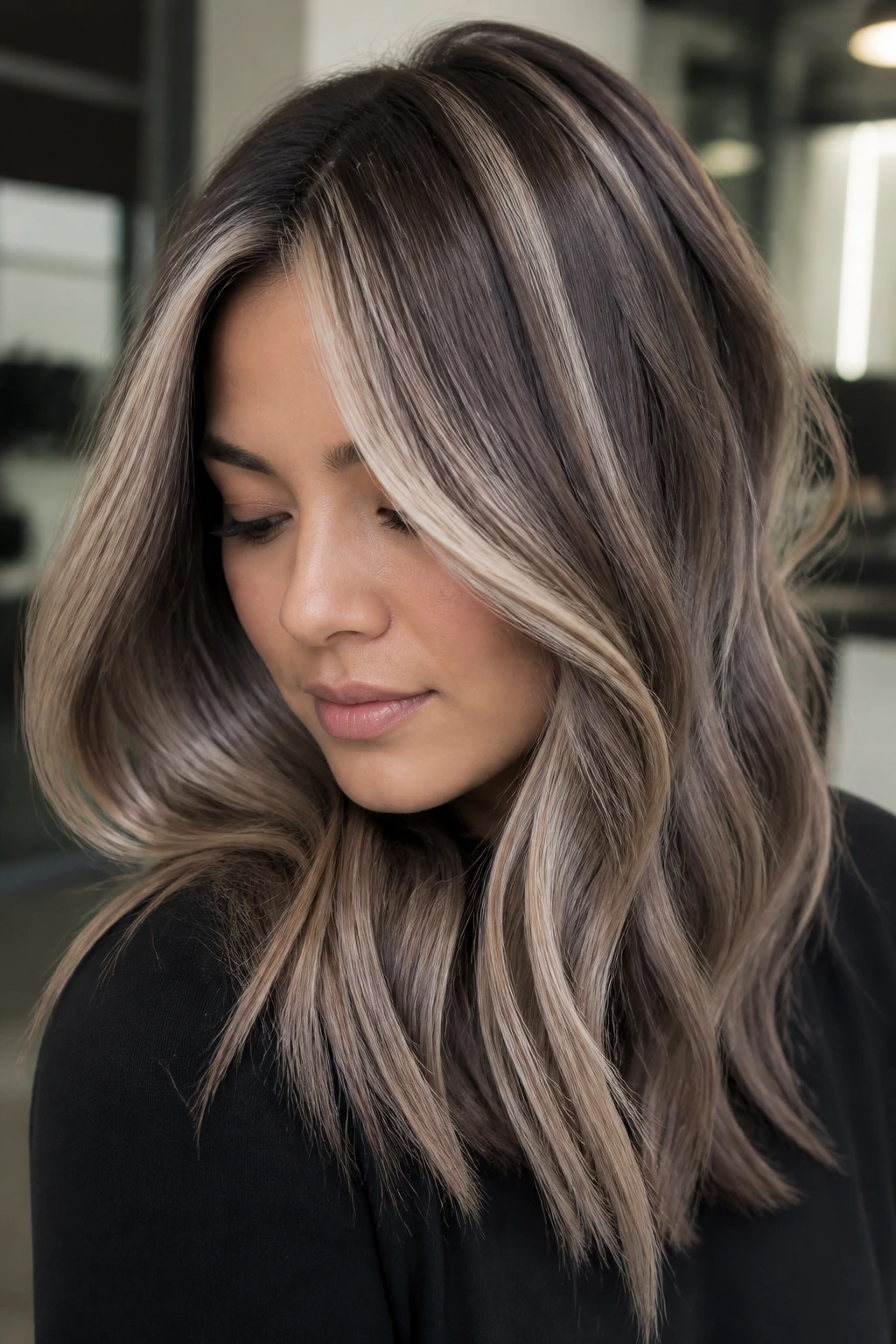
Cool brunettes do not have to choose between dark and bright. Mushroom brown with icy beige chunks gives you both. The base stays taupe-heavy and earthy, while the highlights bring a pale, cool contrast that feels modern without turning too white.
This look is not for someone who wants warmth. It leans ash, beige, and smoky all the way through. On the right brown base, it looks clean and controlled. On a warm base, it can go muddy fast, so the starting color matters more here than almost anywhere else on the list.
The best version uses broad chunks around the face and through the top layer, then keeps the underside darker. That gives the beige pieces a place to sit without turning the whole head pale. It’s a cooler version of the chunky trend, and it has a sharper edge than caramel or honey.
If your wardrobe already leans black, gray, cream, or navy, this one slots in well. It has that clipped, cool finish some people keep chasing.
21. Chunky Highlights in Braids or Locs
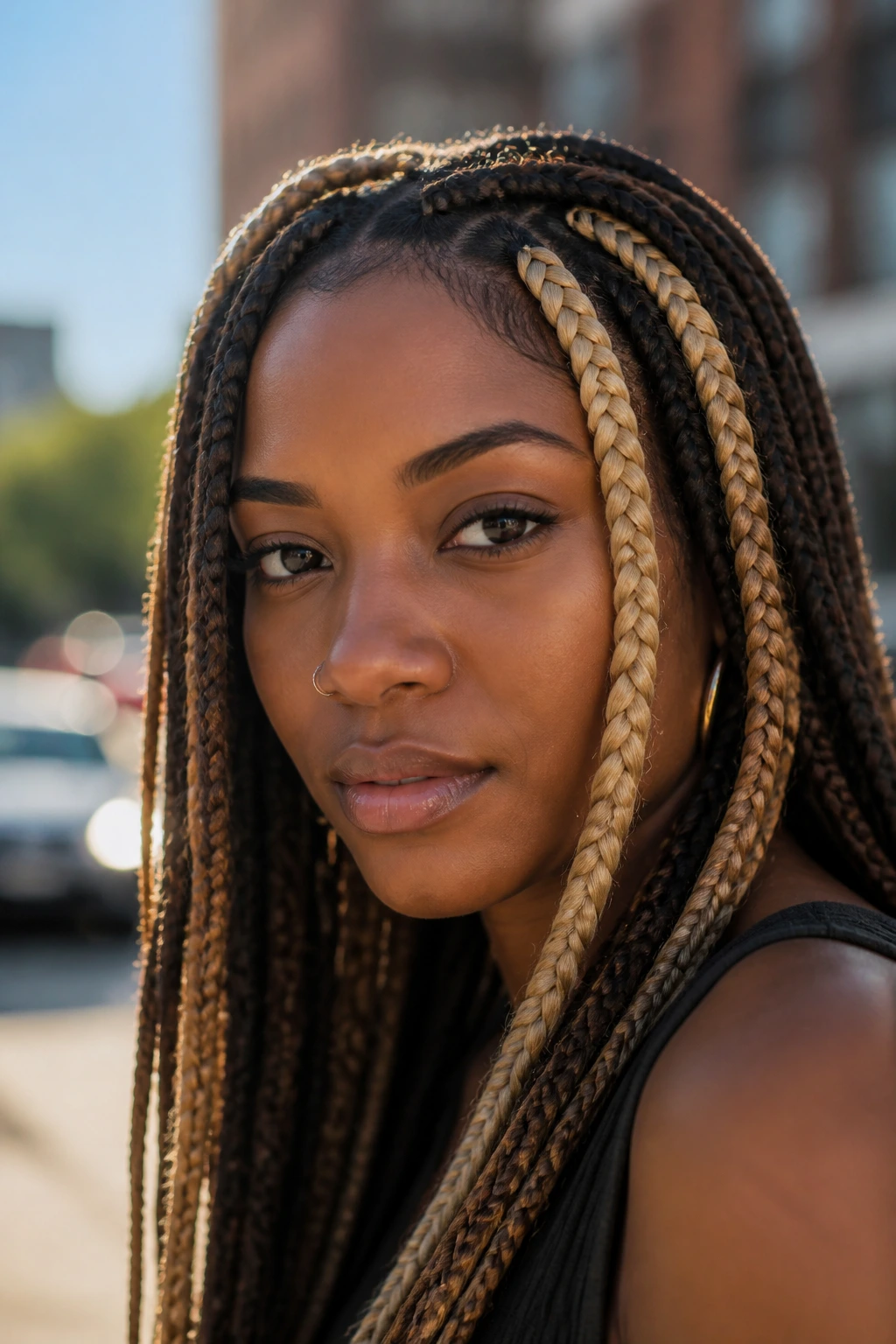
What if the color isn’t on loose hair at all? Chunky highlights can look striking in braids, twists, or locs because the pattern becomes part of the style itself. The blocks of color break up the braid pattern and make each section easier to read.
The nicest version keeps the brightest pieces around the front and outer layers, where they’ll catch the most light. You can do this with dyed sections, colored extensions, or a mix of both, depending on how much commitment you want. The important part is not overloading every braid with color. A few bright strands near the face can do more than a whole head of scattered lightness.
This approach also has a practical side. Braids and locs already ask for careful upkeep, so the color should be placed with enough contrast to still show after the style settles. Too subtle, and it disappears. Too much, and the braid pattern gets busy.
If you want a chunkier look without loose-hair maintenance, this is one of the smarter paths.
22. The Grown-Out Version That Fades Well
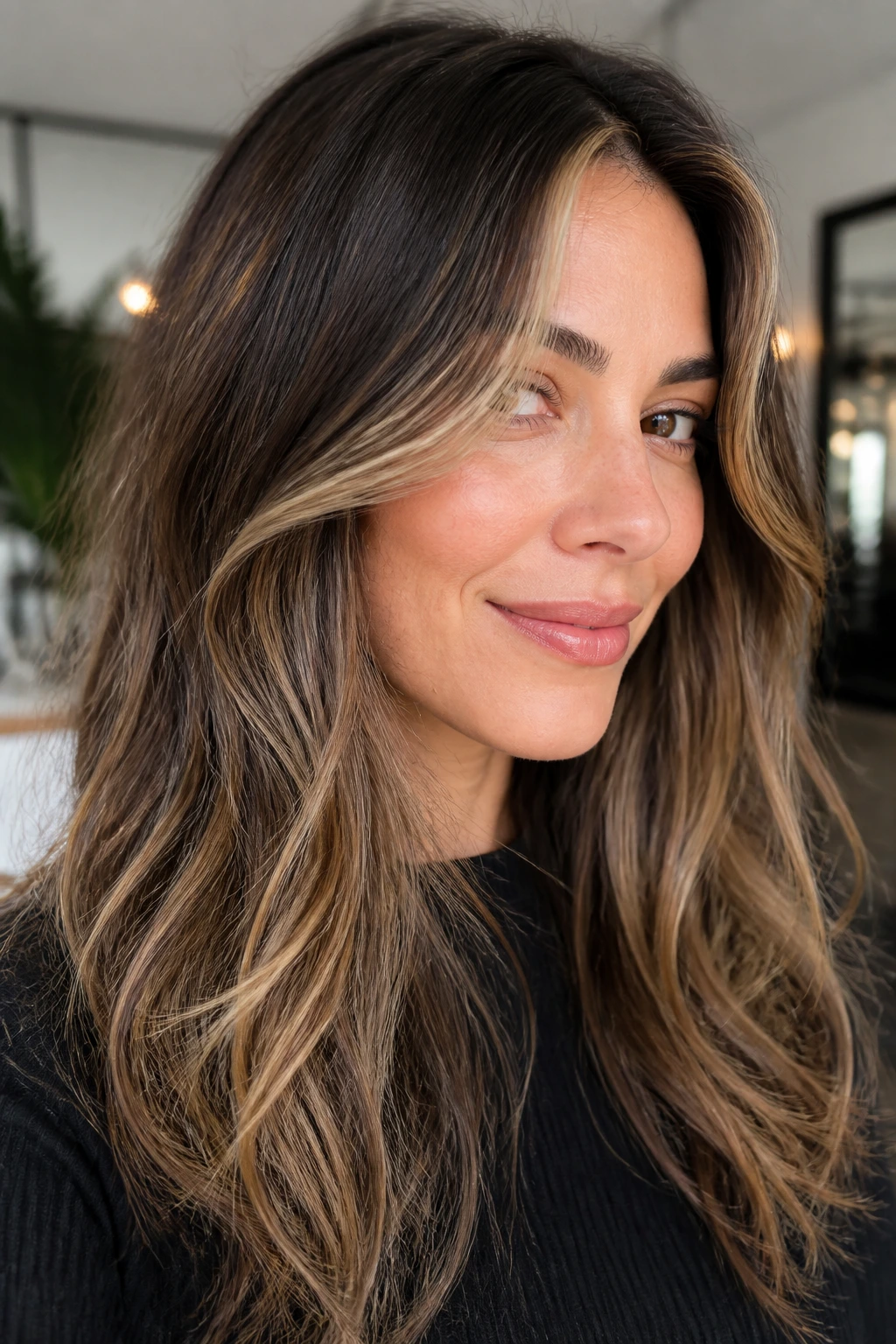
The best chunky highlight on brown hair is the one that still looks intentional after it softens. That usually means a deeper root, wider sections, and a tone that can fade a little without turning strange.
This is the look for people who do not want to babysit their color every few weeks. A soft grow-out makes the style easier to live with, especially on medium and dark brunettes. Ask for the brightest pieces around the face and the top, then let the rest melt into the base. The highlight should still be visible at six inches of grow-out, not collapse into a stripey mess.
A gloss can stretch the life of the tone, but the real trick is the placement. If the pieces are too high and too evenly packed, the color starts fighting your roots as soon as it grows. Wider spacing gives the hair room to soften.
This is the version I’d send to anyone who wants impact without a constant salon chase. Strong at the start. Still decent later. That’s the good stuff.
