



A flat brown dye job can age hair faster than a few gray strands ever will.
That sounds harsh, but it’s true. Once hair starts changing texture — a little drier here, a little coarser there, maybe a few silver streaks around the temples — a single solid color can look stiff in a way it never did before. Brunette works beautifully at this stage because it has room to breathe. A brown shade can be deep, smoky, warm, cool, glossy, or softly highlighted, and each version changes the whole mood of the hair.
The trick is choosing brunette hair color ideas that do more than cover. The good ones soften the face, make regrowth less obvious, and give hair some movement so it doesn’t sit there like a helmet. I’m far more interested in brown shades that look alive in daylight than in colors that look flat and heavy the minute you leave the salon.
Some shades lean rich and dark. Some sit in that pretty middle zone where brown meets caramel, beige, or soft copper. A few work best with gray blending, and a few need a haircut that has shape and swing. The right brunette isn’t about hiding age. It’s about making the hair look thicker, shinier, and a little more deliberate.
1. Espresso Brown with Mirror Gloss
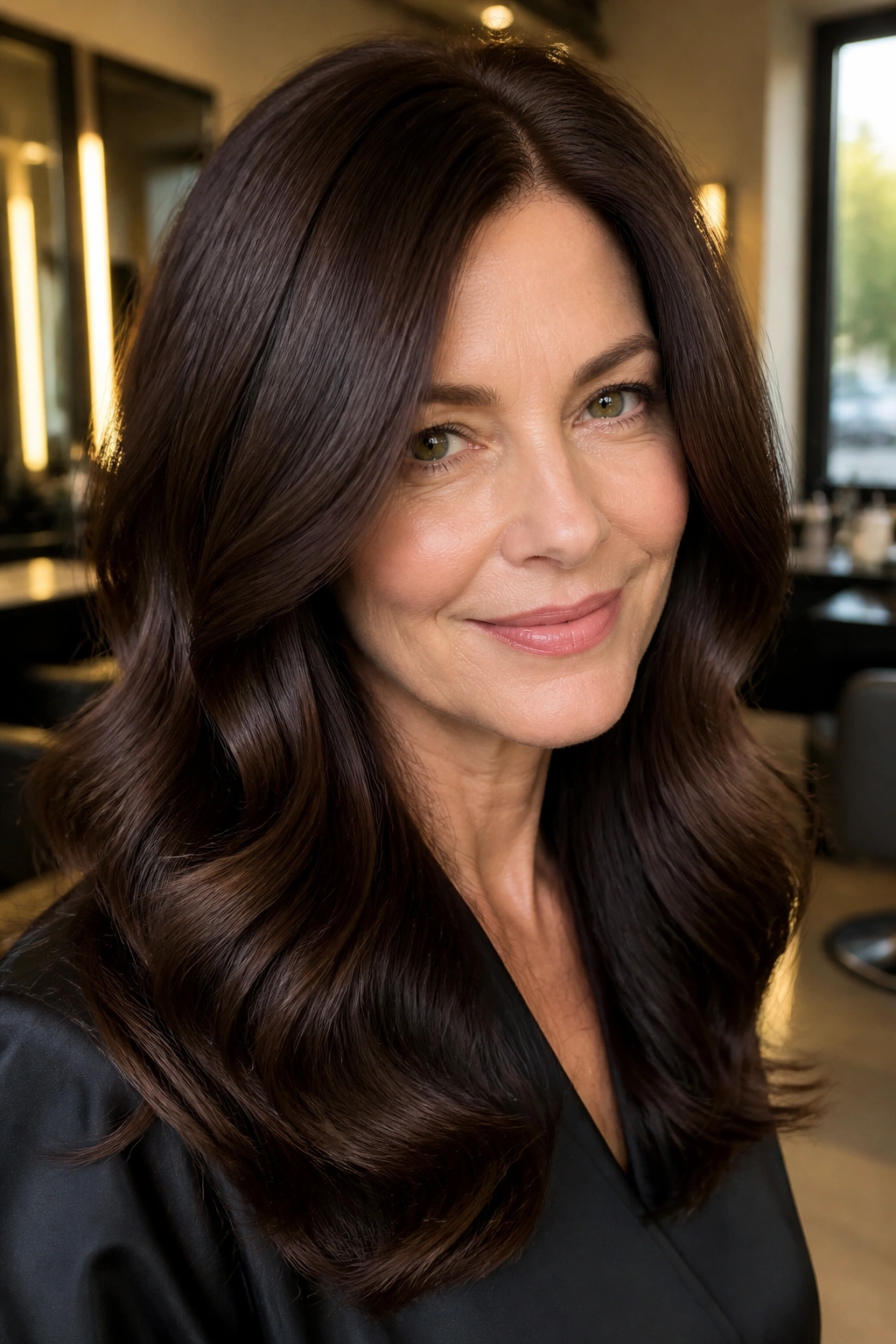
Espresso brown is the shade I reach for when hair needs depth fast. It sits in that deep level 3 to 4 range, so it looks luxurious without drifting all the way into harsh black territory. On mature hair, that matters. Too-dark color can flatten the face, but espresso with a glossy finish still leaves room for light to move.
Why It Works on Mature Hair
A rich espresso base makes the hair look denser at the ends, which helps if the overall shape has started to thin out. The gloss is doing real work here, too — not just shine for shine’s sake, but a smooth surface that makes strands catch light in a cleaner way.
Ask for a neutral espresso brown with a clear gloss if you want polish. If your skin runs cool, keep the formula more neutral than warm. If your hair is coarse or gray-resistant, a demi-permanent glaze on top of permanent color can soften the finish instead of making it look painted on.
- Best on: medium to thick hair
- Salon note: keep the ends a half-shade lighter if the cut is long
- Maintenance: gloss every 6 to 8 weeks
- Mood: sleek, rich, and a little dramatic
My take: this is the brown that makes a blowout look expensive without asking for much else.
2. Chestnut Brown with a Copper Whisper
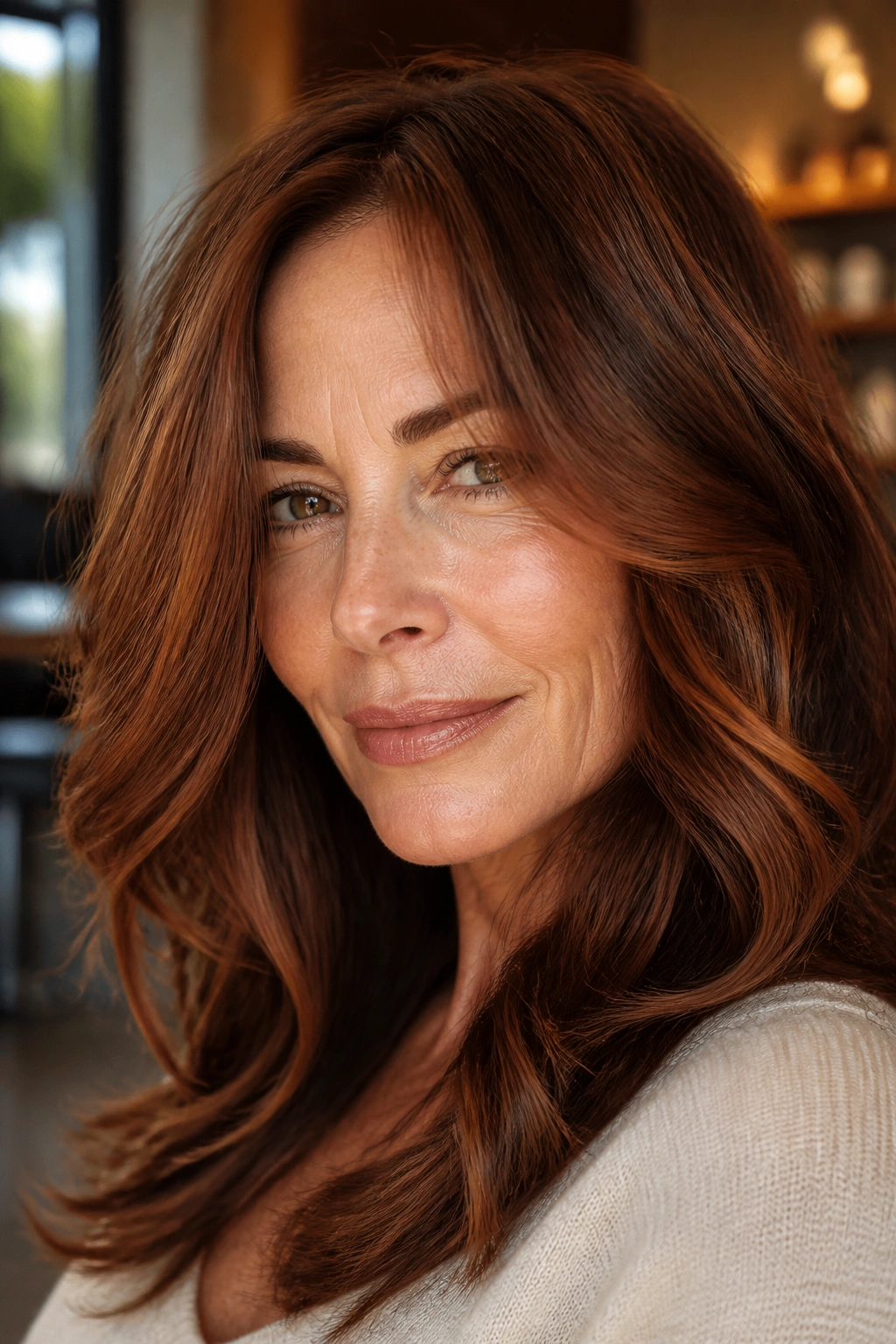
Why does chestnut brown look softer than a flat dark dye? Because chestnut carries a little warmth inside it. Not orange. Not red. Just enough copper to keep the color from sinking into the face.
That whisper of warmth is flattering on skin that has gone a bit more muted over time. It wakes things up. If your natural brown has started to feel dull, chestnut is one of the easiest ways to bring back movement without jumping into blonde territory.
A good chestnut shade usually lives around level 4 or 5 with a tiny copper or gold-brown reflection. Keep the shine subtle. Too much red in the formula can turn brassy fast, and that is not the same thing at all. Chestnut should feel like a polished leather bag, not a fire engine.
3. Dark Chocolate Brown with Hidden Lowlights
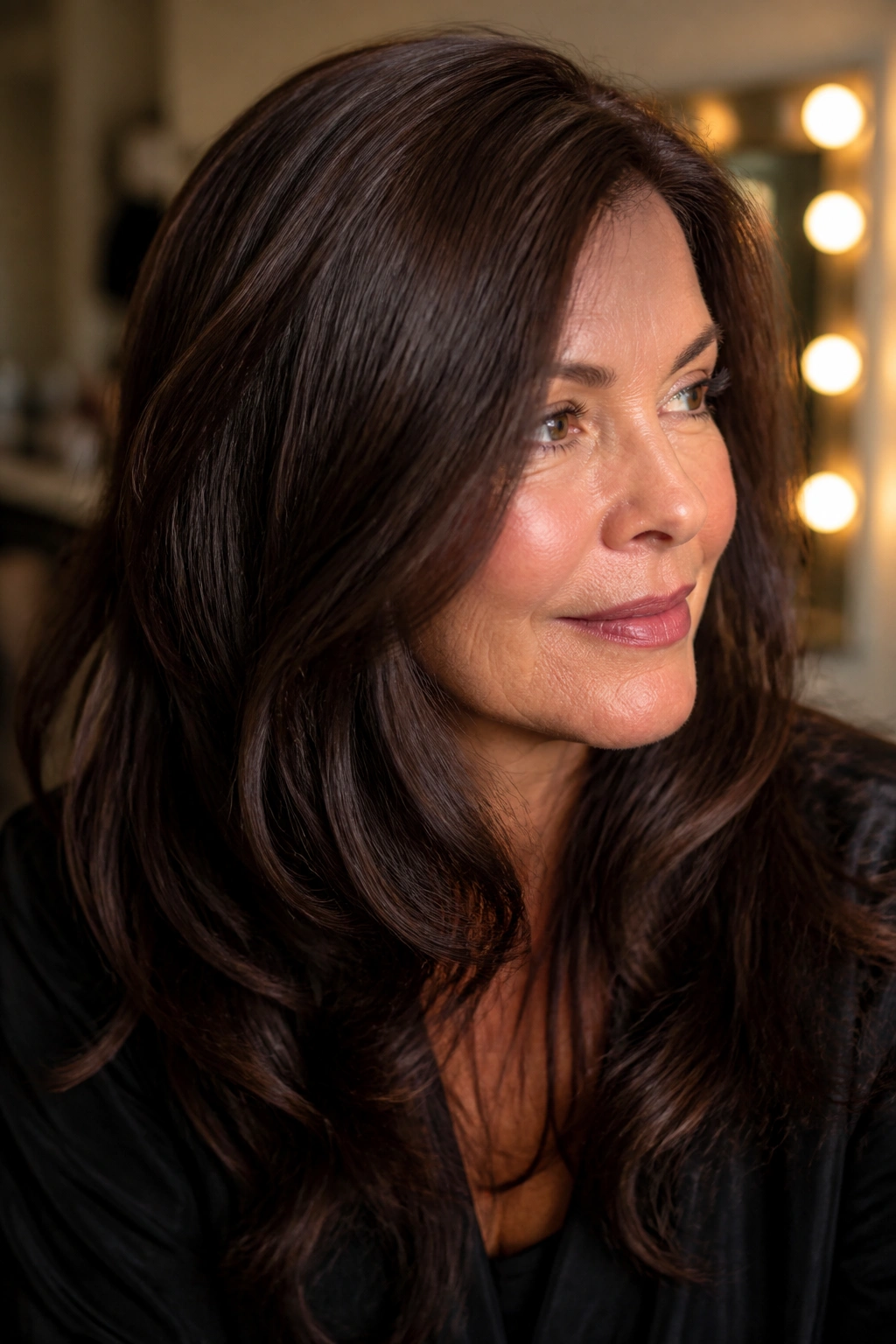
If your hair feels heavy in one solid shade, hidden lowlights are the fix I’d try first. Dark chocolate brown gives you that rich, cocoa-deep base, then the lowlights slip a half-step darker through the mid-lengths so the whole head has depth.
I like this approach for hair that has lost some body. Flat color can make fine hair look thinner than it is. A few lowlights placed under the top layer change that instantly, especially when the hair moves. You do not need chunky stripes. You need shadow in the right places.
What to Ask For
- A chocolate brown base one to two shades deeper than your natural level
- Lowlights placed under the crown and through the back
- Thin sections, not streaks
- A soft finish, not high contrast
One warning: if your hair is dry at the ends, keep the lowlights away from the most porous pieces. They can grab dark and look patchy.
4. Mocha Balayage on Shoulder-Length Layers
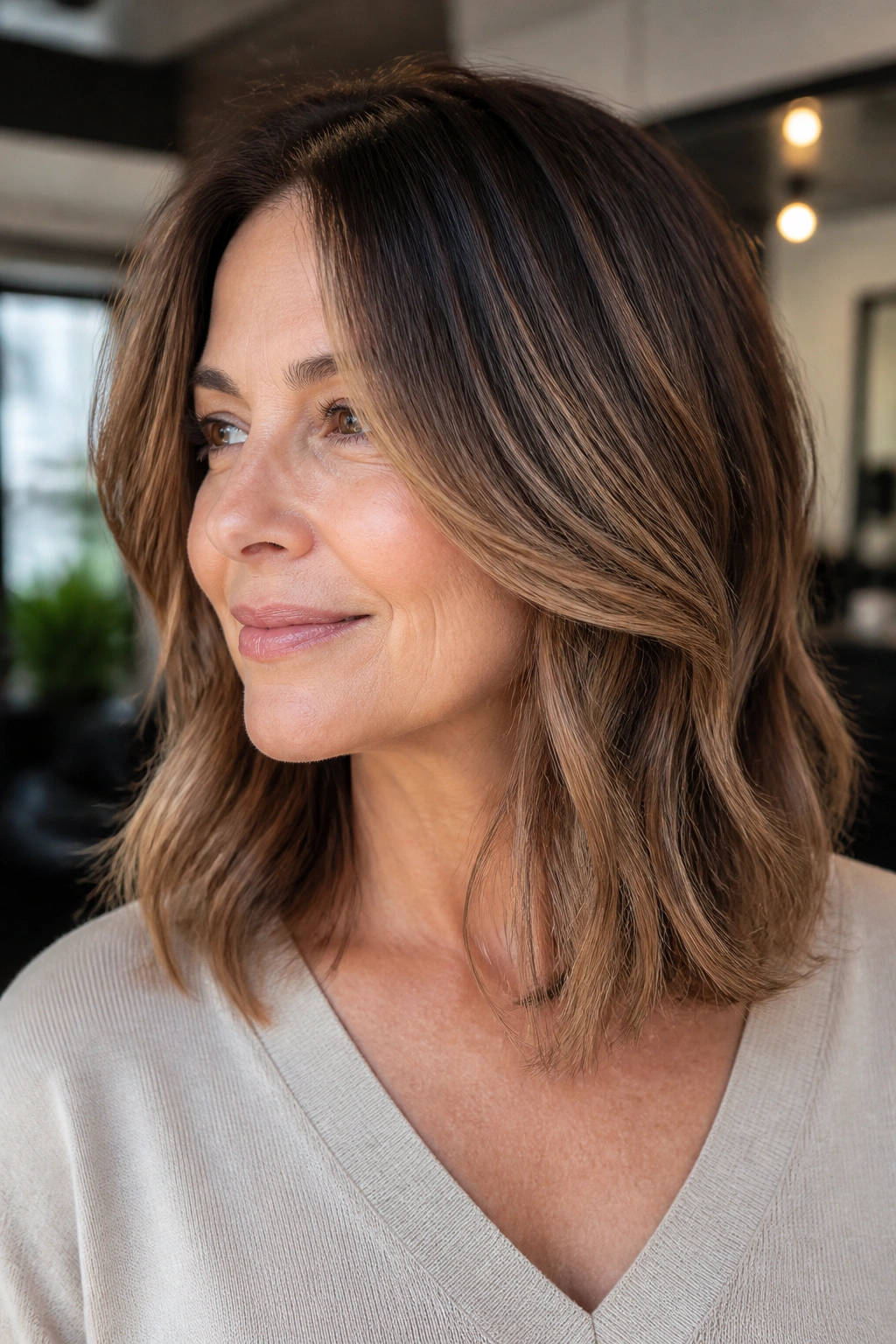
Mocha balayage is one of those shades that looks relaxed in the best way. It’s not trying to be loud. It just moves. On shoulder-length layers, the painted pieces sit where the hair naturally bends, so the color ends up doing half the styling for you.
Unlike a single-process brown, mocha balayage keeps the top darker and lets the mid-lengths and ends carry a softer coffee tone. That makes grow-out easier, which is a blessing if you do not want to chase your roots every few weeks. The layered cut matters here. Without it, the balayage can just sit there. With it, the color swirls.
A clean mocha ribbon through the front and around the face can brighten the whole cut without pushing it into blonde. The result is gentle, but not dull. There’s a difference.
5. Mushroom Brown for Cool Undertones
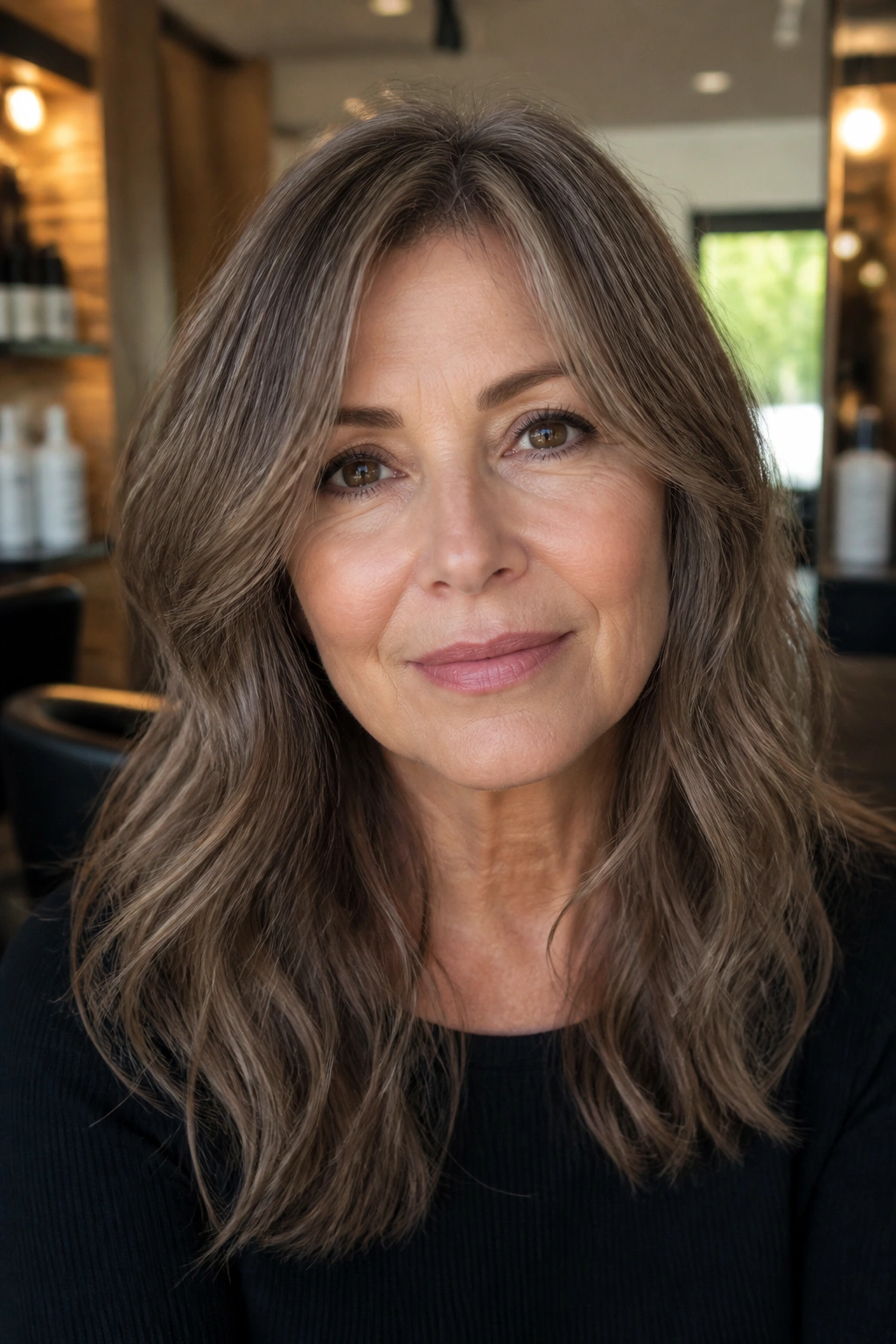
Mushroom brown has a cool, smoky feel that a lot of people overlook because it sounds understated. It’s one of the smartest brunette hair color ideas for women over 50 who want depth without warmth fighting their skin tone.
The color lives in that taupe-brown space between ash and beige. Done well, it looks soft, earthy, and a little modern without trying too hard. Done badly, it can go muddy. That’s why the toner matters so much. You want a cool-neutral brown, not a dull gray-brown that sucks the life out of the face.
Salon Note
Ask for a cool brunette glaze with beige undertones rather than a hard ash formula. If your hair tends to pull red, mushroom brown can calm that down. If your skin has pink or rosy tones, this shade usually sits better than a golden brown.
It’s quiet. That’s the point.
6. Walnut Brown with Beige Ribbons
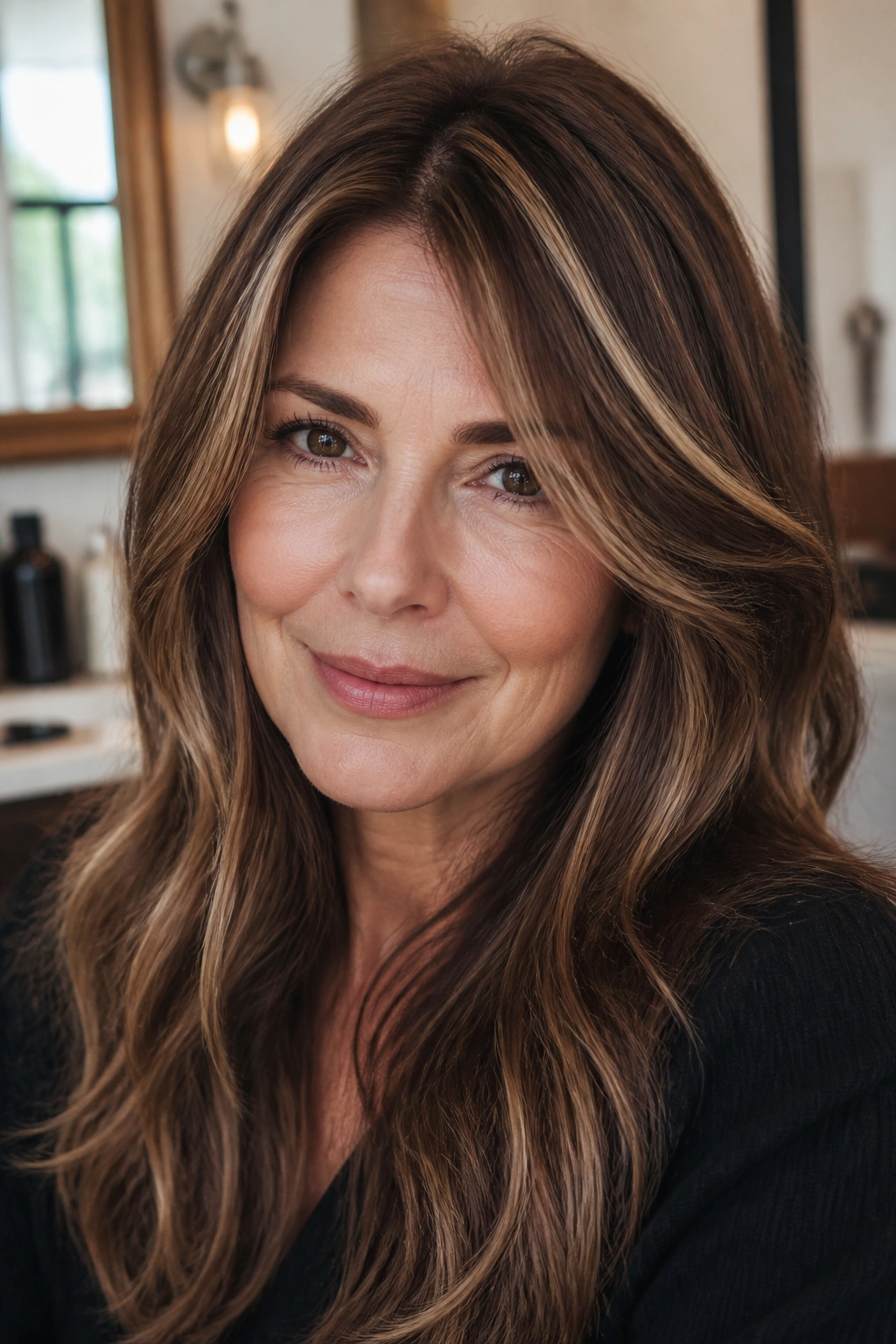
Walnut brown is one of my favorite middle-ground shades because it never looks overworked. The base feels earthy and soft, while the beige ribbons lighten the whole shape just enough to keep it from reading flat.
This is a good choice if you want dimension but don’t want obvious highlights. Think thin ribbons, not loud stripes. Think a 1/4-inch slice through the crown, then a few softer pieces around the face and under the top layer. The beige should blend into the brown, not sit on top of it like a separate color.
Walnut brown also plays well with layers and movement. If the haircut is blunt and heavy, the shade can feel a bit too safe. But on a lob or a soft shag, it looks lived-in in a good way. Clean. Natural. Not boring.
7. Caramel Ribbons Around the Face
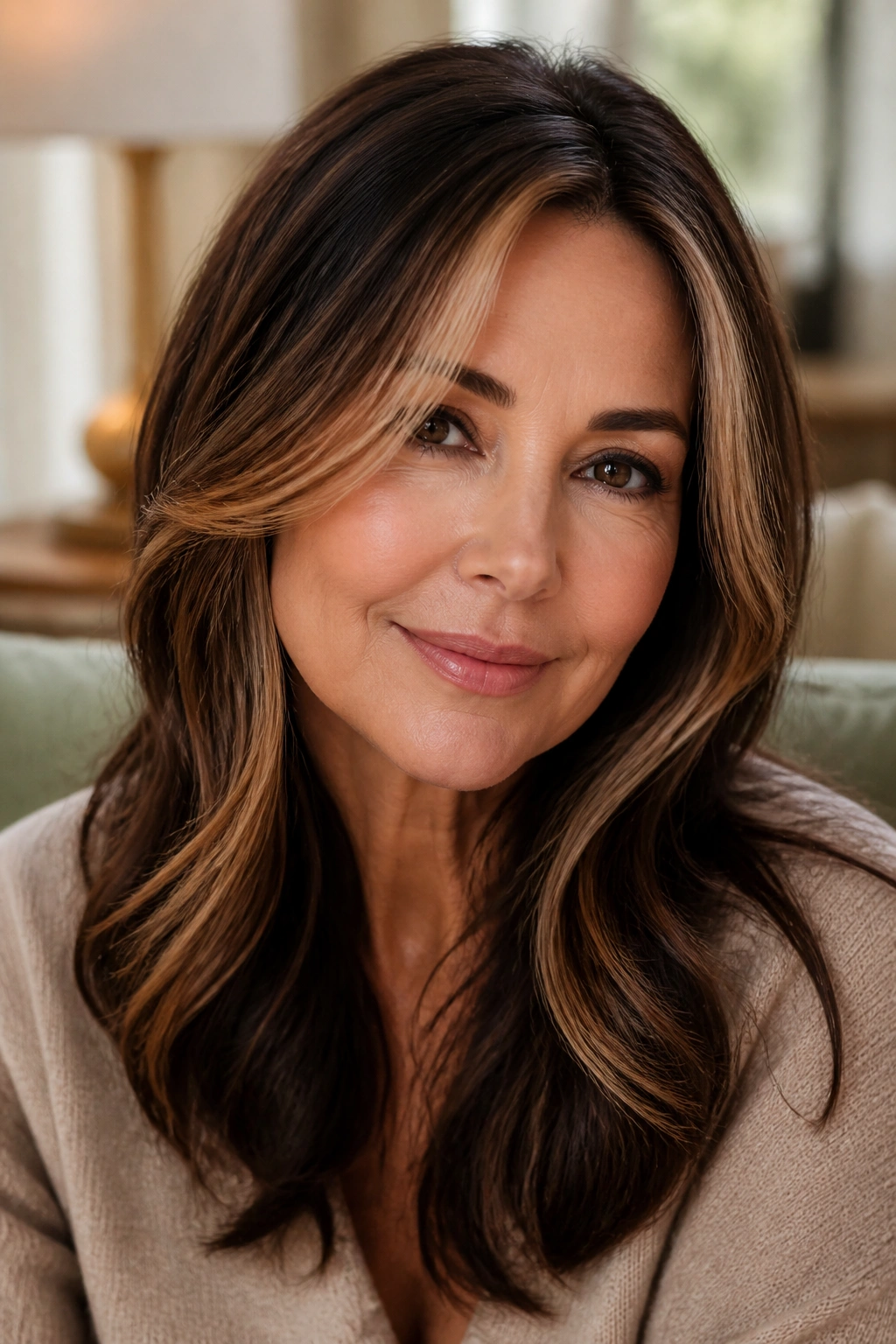
Caramel near the face does a lot of work in a small space. That’s why it keeps showing up in salon chairs. Two lighter pieces beside the cheeks can soften jawlines, brighten the eyes, and keep a brunette base from feeling too dark around the features.
The best version isn’t chunky. It starts about 1 to 2 inches back from the hairline and stays thin enough that it reads as a ribbon, not a stripe. If the hair is dry, keep the caramel pieces mid-shaft and lower. That spares the fragile front sections from too much lift.
This color idea works especially well when the rest of the hair stays a natural brown level 4 or 5. The contrast gives the face a bit of shape. Not harsh shape. Just enough to wake things up.
8. Honey Bronde with Brunette Roots
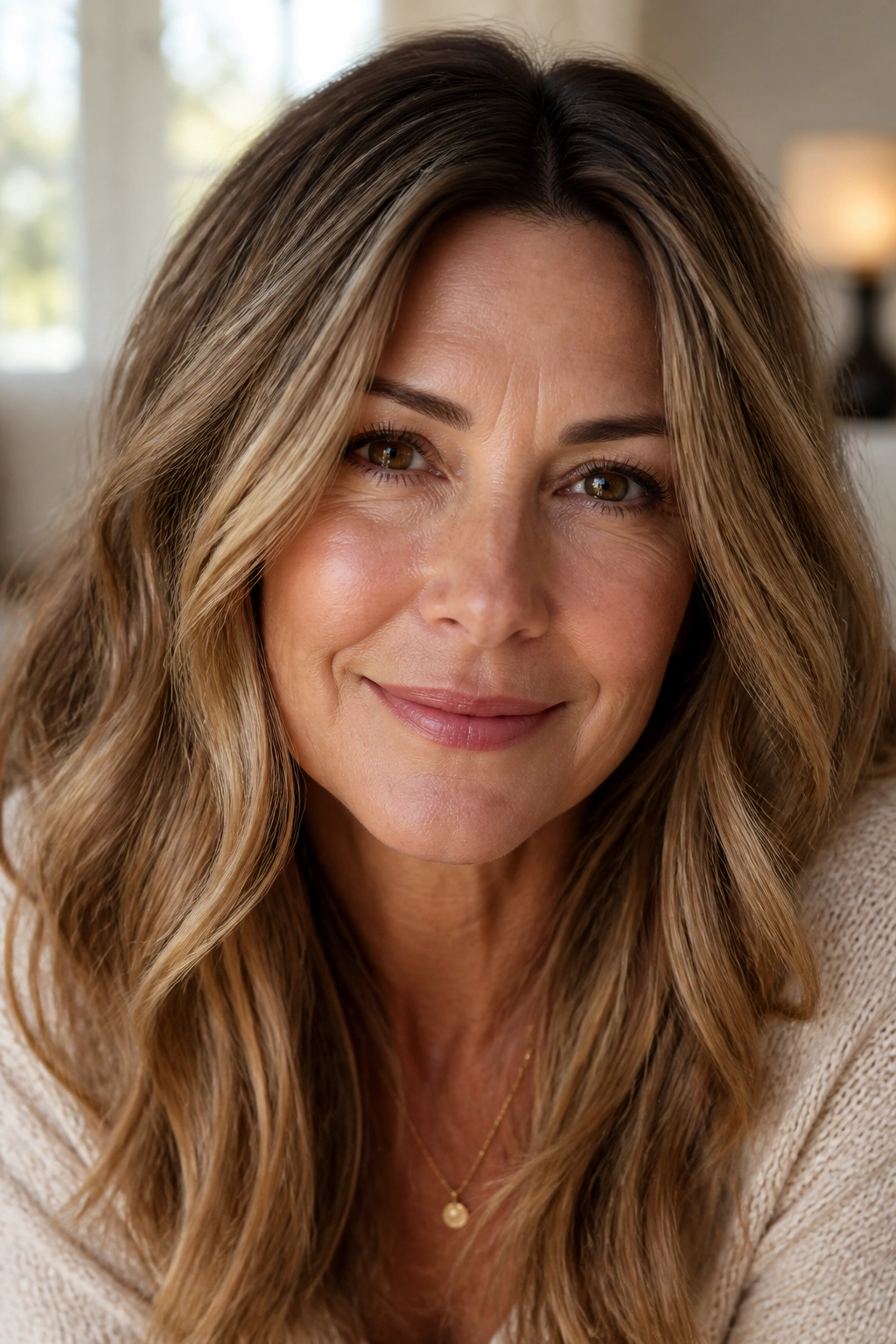
What makes honey bronde easy to wear? The root stays brown, and the lighter pieces never fight the base. That’s the whole trick.
This is a good path if you want to move toward lighter hair without going full blonde. The brunette roots keep the grow-out soft, while honey pieces through the mids and ends bring warmth and shine. A root shadow that sits one to two shades deeper than the highlight zone makes everything blend better.
I like honey bronde on women who are tired of seeing every root line in the mirror. It buys you breathing room. It also helps if your hair has a mix of natural brown and silver, because the depth at the root makes the regrowth look intentional instead of abrupt.
9. Toffee Babylights Over a Medium Brown Base
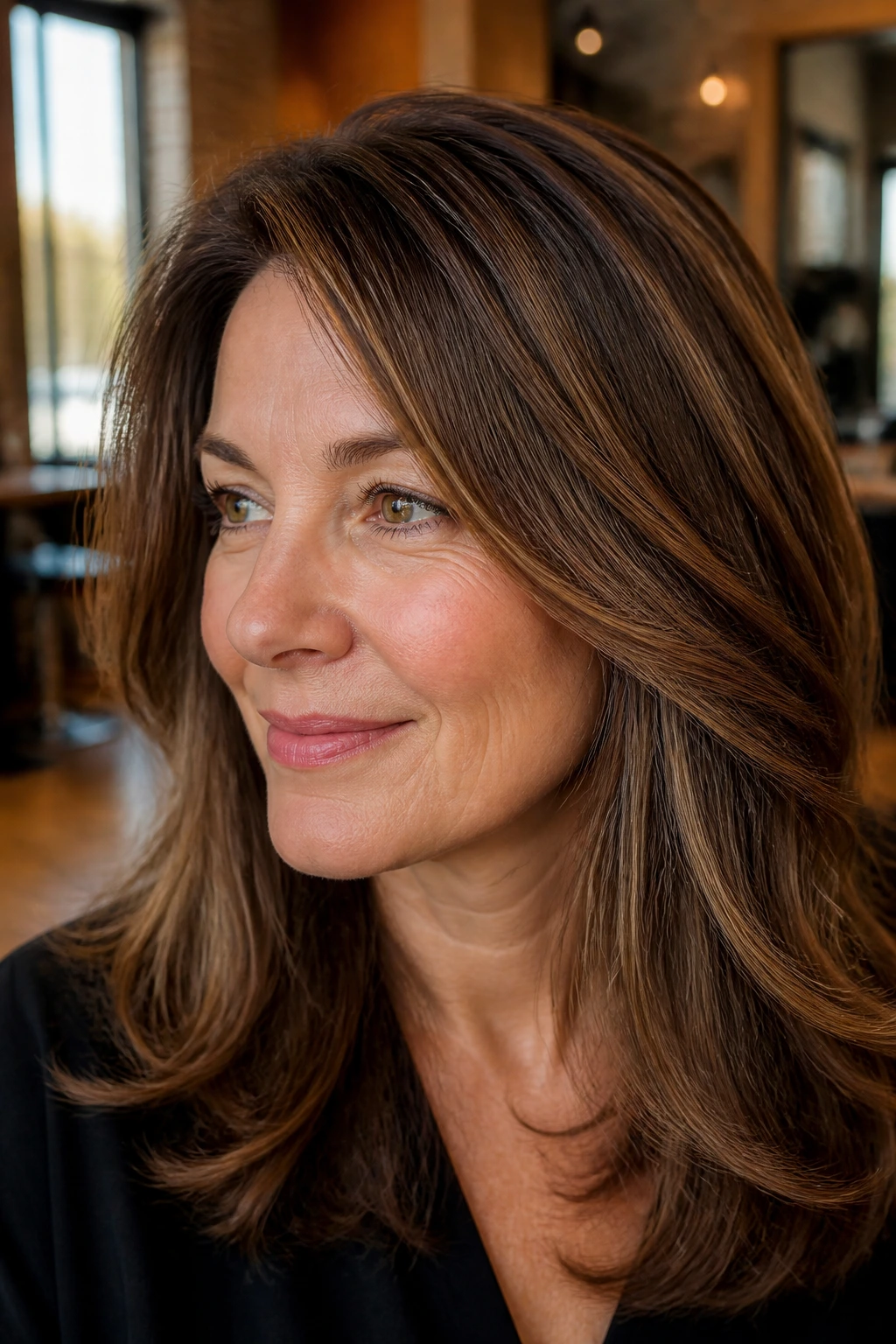
Toffee babylights are tiny, fine highlights that barely announce themselves. That’s their strength. They skim the surface of a medium brown base and give the hair a soft, sweet lift without a lot of contrast.
If your hair is fine, this is one of the better brunette hair color ideas to keep in mind. Big highlights can make fine hair look stringy if they’re too wide apart. Babylights, on the other hand, create a soft shimmer that makes the whole head feel fuller.
A good toffee result usually sits around level 6 to 7 in the lighter pieces, but the pieces should stay narrow. The brown underneath still needs to show. That’s what keeps the color looking expensive instead of striped.
10. Cinnamon Brunette with a Warm Glaze
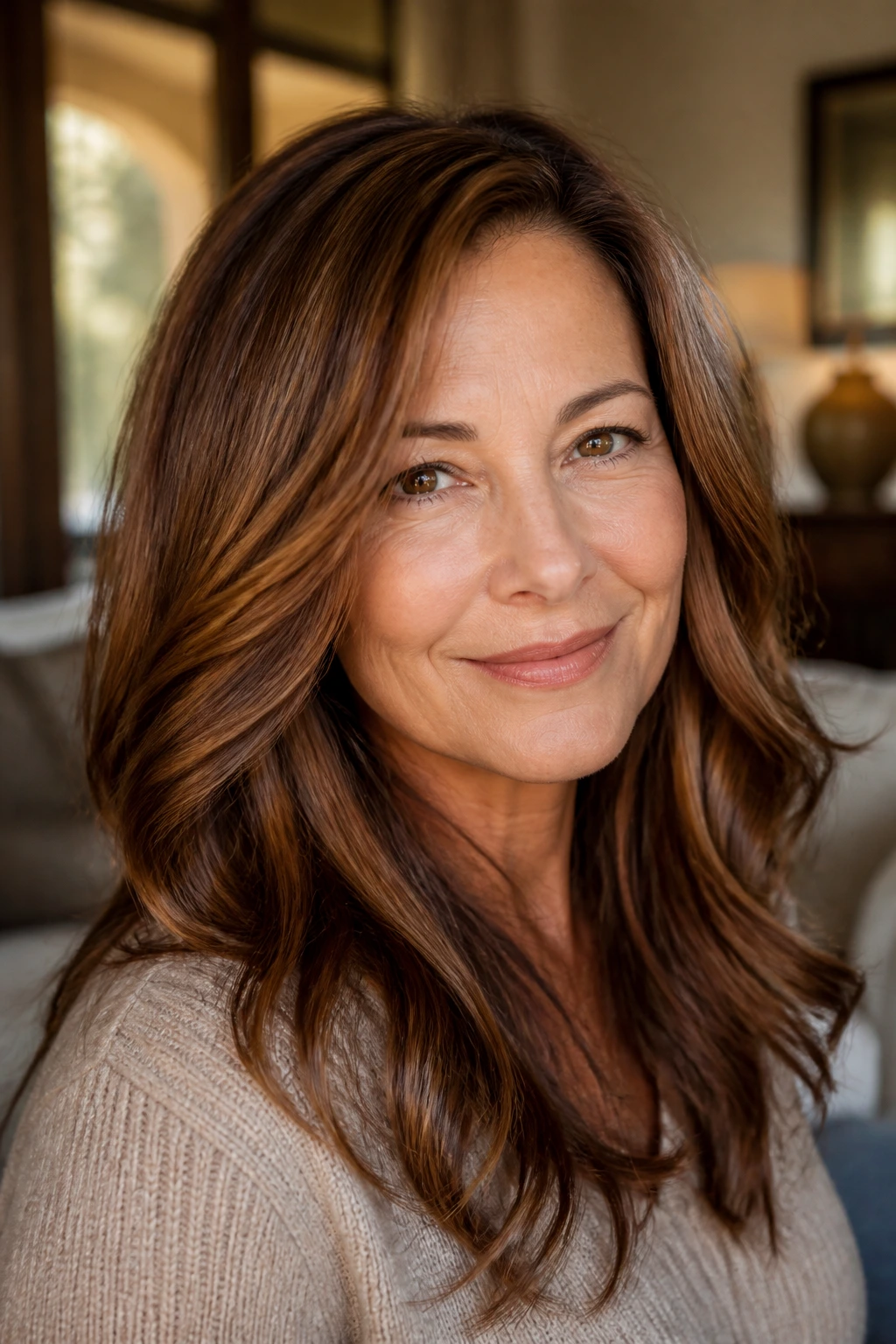
Cinnamon brunette is not red hair. Not really. It’s brown with a warm, spicy edge that shows up in sunlight and then settles back down indoors. That little shift is what makes it flattering.
I like this shade on hair that has gone too flat after years of one-process brown. A warm glaze can revive the color without committing to a permanent copper finish. If the base is around level 5, a cinnamon toner or demi-permanent gloss can add enough warmth to make the face look less washed out.
The key is restraint. Too much red pigment and the shade turns loud. Too little and you barely notice it. Cinnamon should feel like a lifted version of brown, not a different category altogether.
11. Auburn-Brown That Reads Rich, Not Red
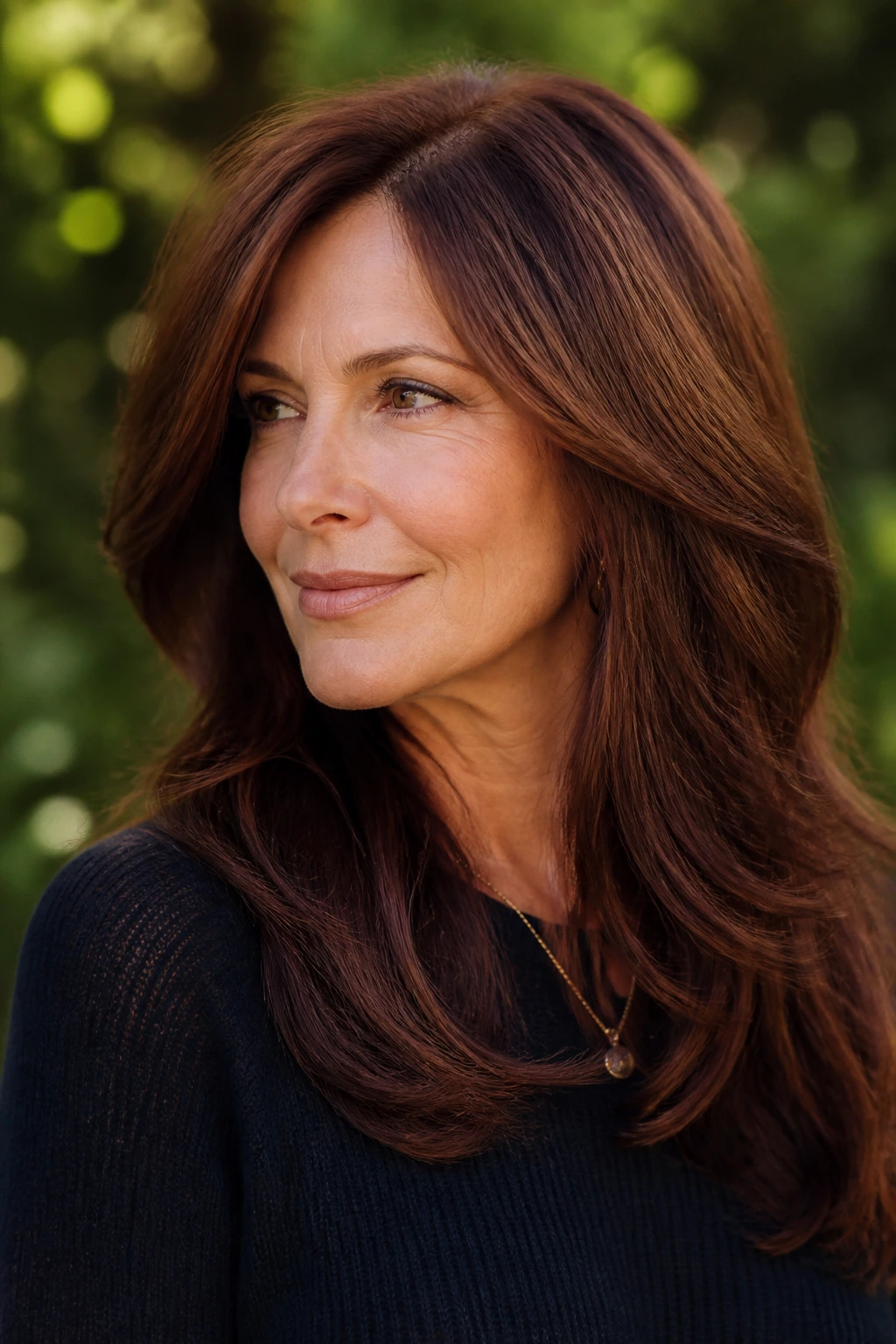
Auburn-brown works when you want depth with a touch of fire, but you don’t want the color to shout from across the room. It has more red than cinnamon and less orange than a true copper shade, which is why it often looks richer on mature hair.
This shade can be stunning on layered cuts because the movement pulls the red-brown tones forward at the ends. In still hair, auburn can look darker than it really is. In motion, it warms up. That shifting quality is the part I like.
If your skin tends to look sallow in plain brown, auburn-brown can help. Keep the finish glossy and avoid heavy black-brown roots unless you want a sharper contrast. A soft auburn glaze over brown is usually enough.
12. Mahogany Brown with Burgundy Depth
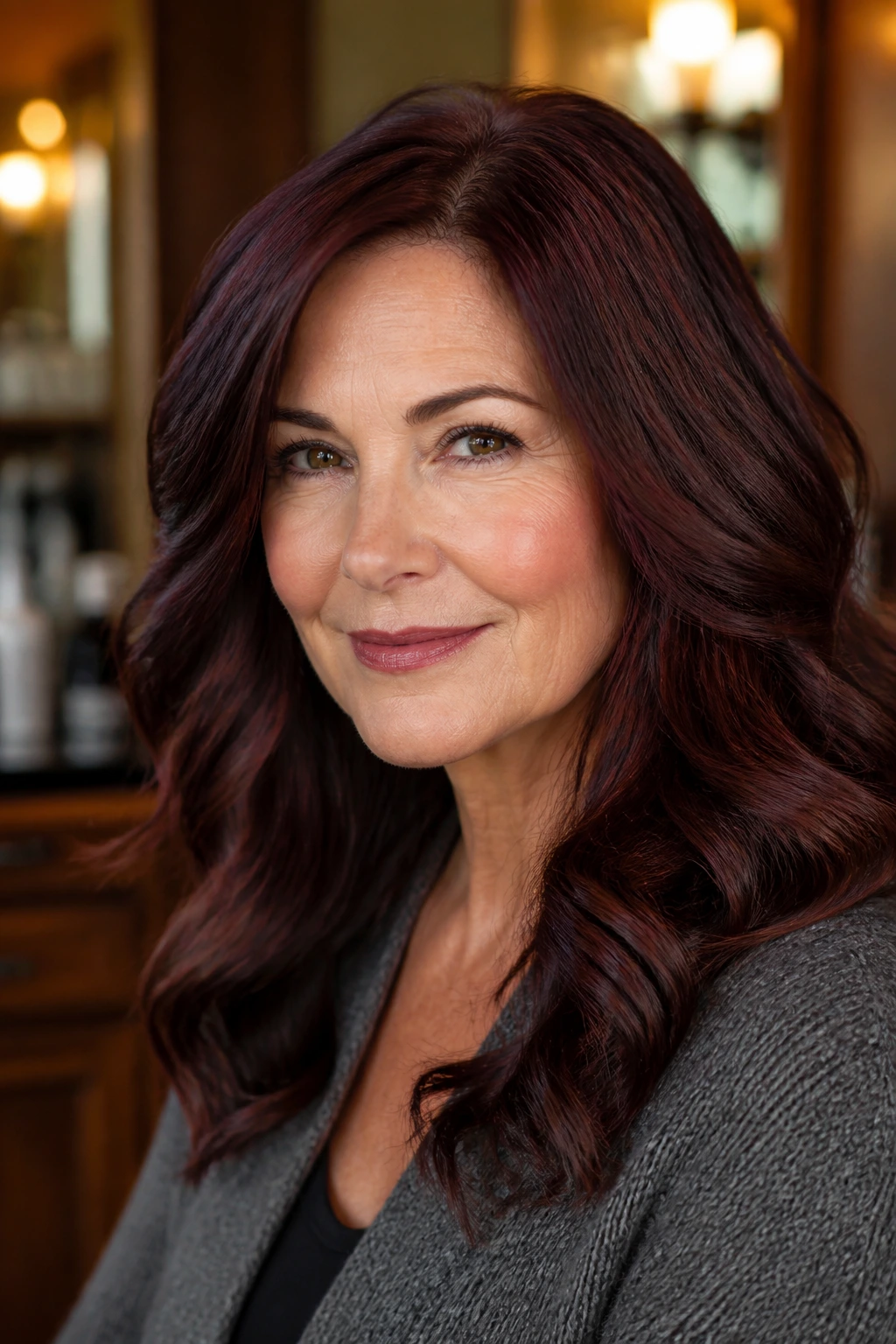
Mahogany brown has that deep wine tone underneath the brown, and it’s one of the easier ways to add richness without going bright. The burgundy note stays hidden until light hits it, which means the color feels elegant in a low-key way.
This shade is lovely if your hair has stubborn orange tones you want to bury. A mahogany base can neutralize that warmth while still keeping the look lively. It also pairs well with smoother blowouts and bobs, because the color has enough depth to show off the cut.
Not every mahogany has to lean purple. Some formulas sit closer to red-brown. The right one depends on how much warmth your skin can handle. If you wear cooler makeup or silver jewelry, a slightly cooler mahogany usually feels cleaner.
13. Soft Black-Brown for Short Hair
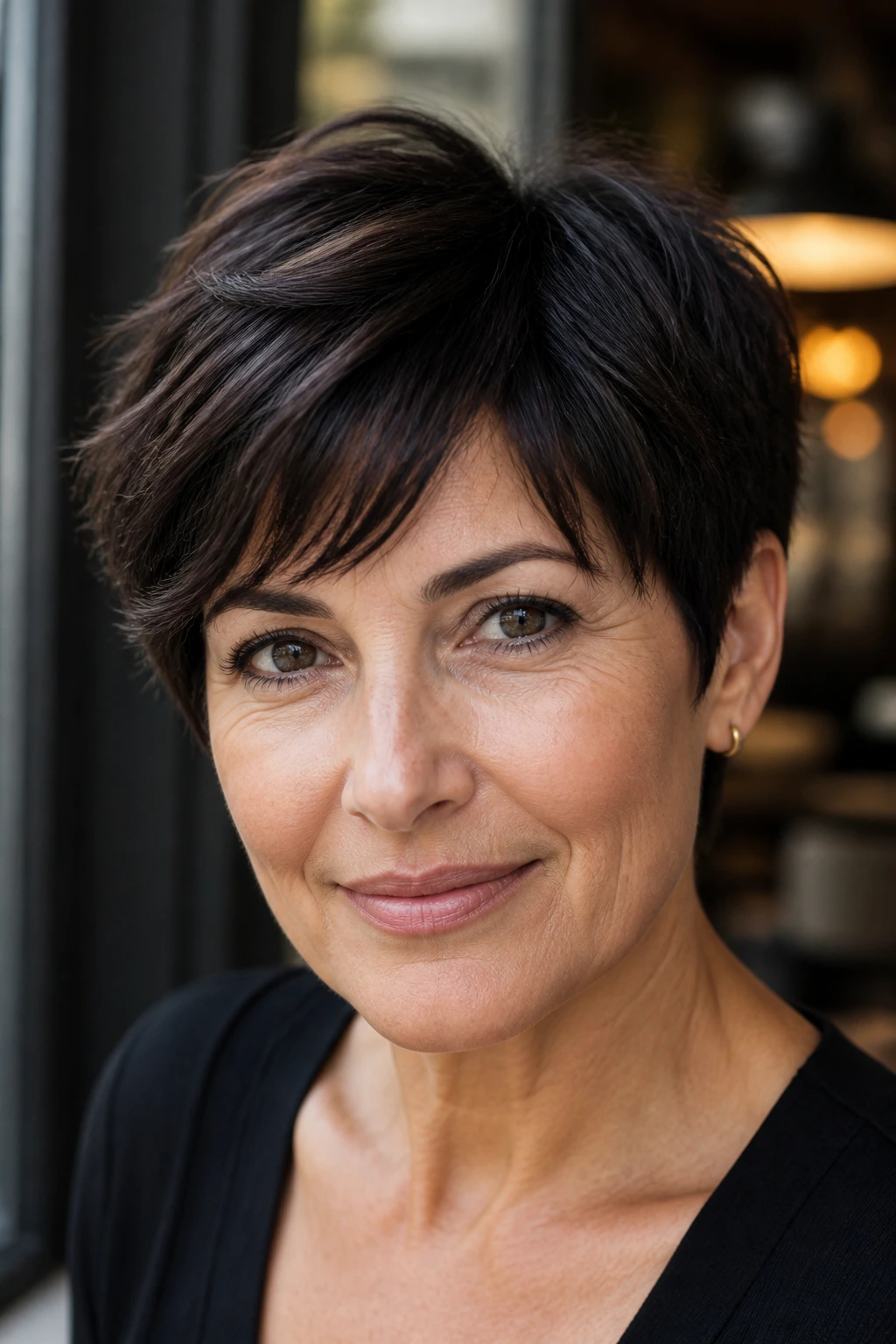
Soft black-brown is not jet black, and that difference matters. Jet black can feel severe on some faces. Soft black-brown keeps the drama but lets a little brown light back in, which is much kinder when hair is shorter and sits close to the face.
Why Short Cuts Like This Shade
A pixie or cropped bob needs shape, and dark color can show that shape beautifully. The color outlines the cut, especially around the ears, nape, and fringe. If the haircut has good lines, this shade makes them look crisp.
- Keep the formula 1 shade softer than pure black
- Ask for a satin or glossy finish, not a matte one
- Add a few feather-light brown pieces on top if the hair is very fine
- Trim every 6 to 8 weeks so the shape stays clean
This is a strong look. It is not a shy one.
14. Cocoa Brown with Money-Piece Highlights
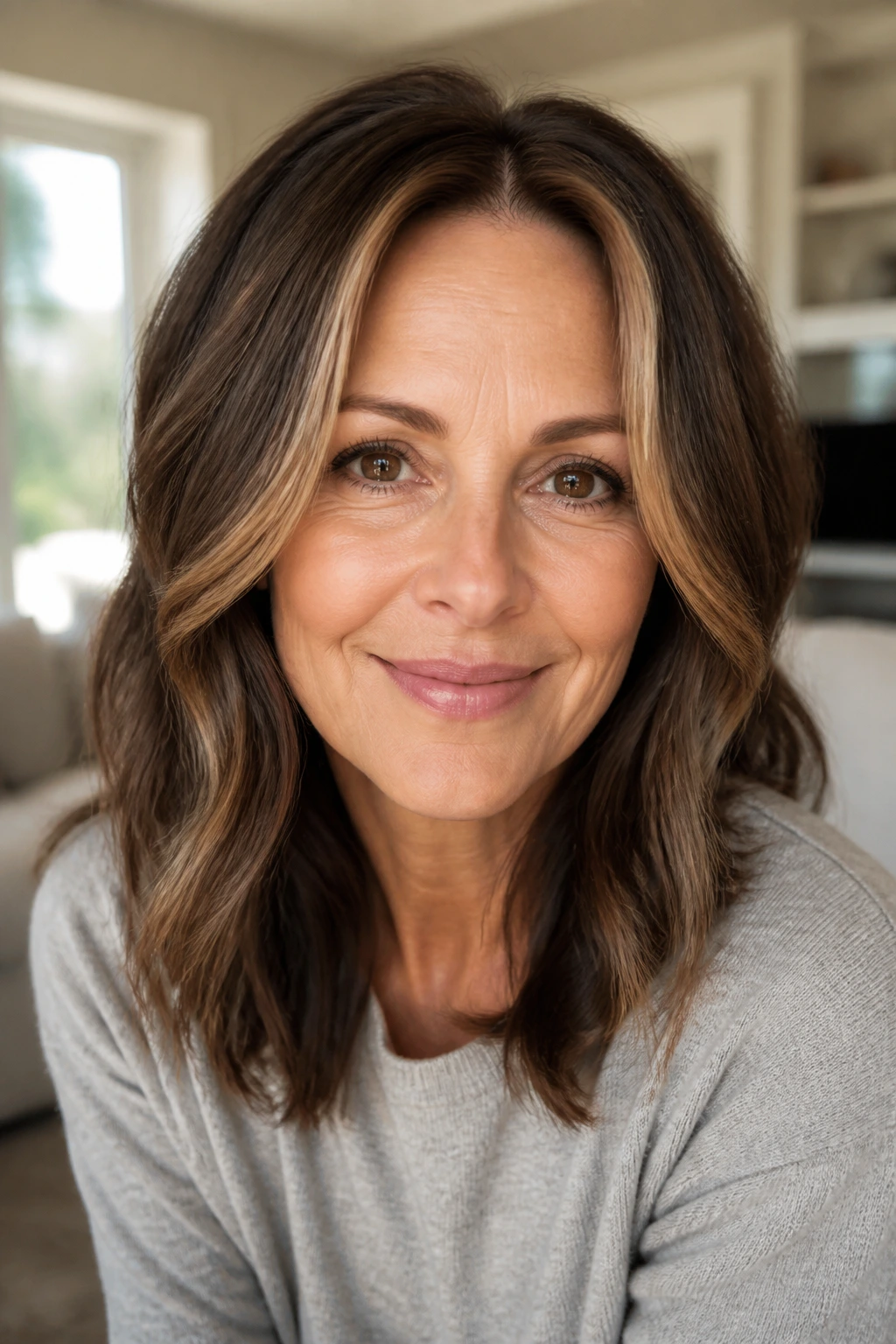
Cocoa brown is the kind of medium-dark brunette that feels easy to live with. Add money-piece highlights — those lighter front sections that frame the face — and the whole cut starts working harder for you.
The front pieces should stay narrow, usually about 1 inch wide on each side, and they should live one to two shades lighter than the base rather than leaping into blonde. That keeps the look soft. A harsh money piece can age the face faster than it helps.
I like this idea because it gives structure. The cocoa base keeps the hair grounded, while the front lift opens things up near the eyes. If you wear glasses, this can be especially flattering because the light around the face stops the color from feeling heavy.
15. Brunette Ombré with Warm Ends
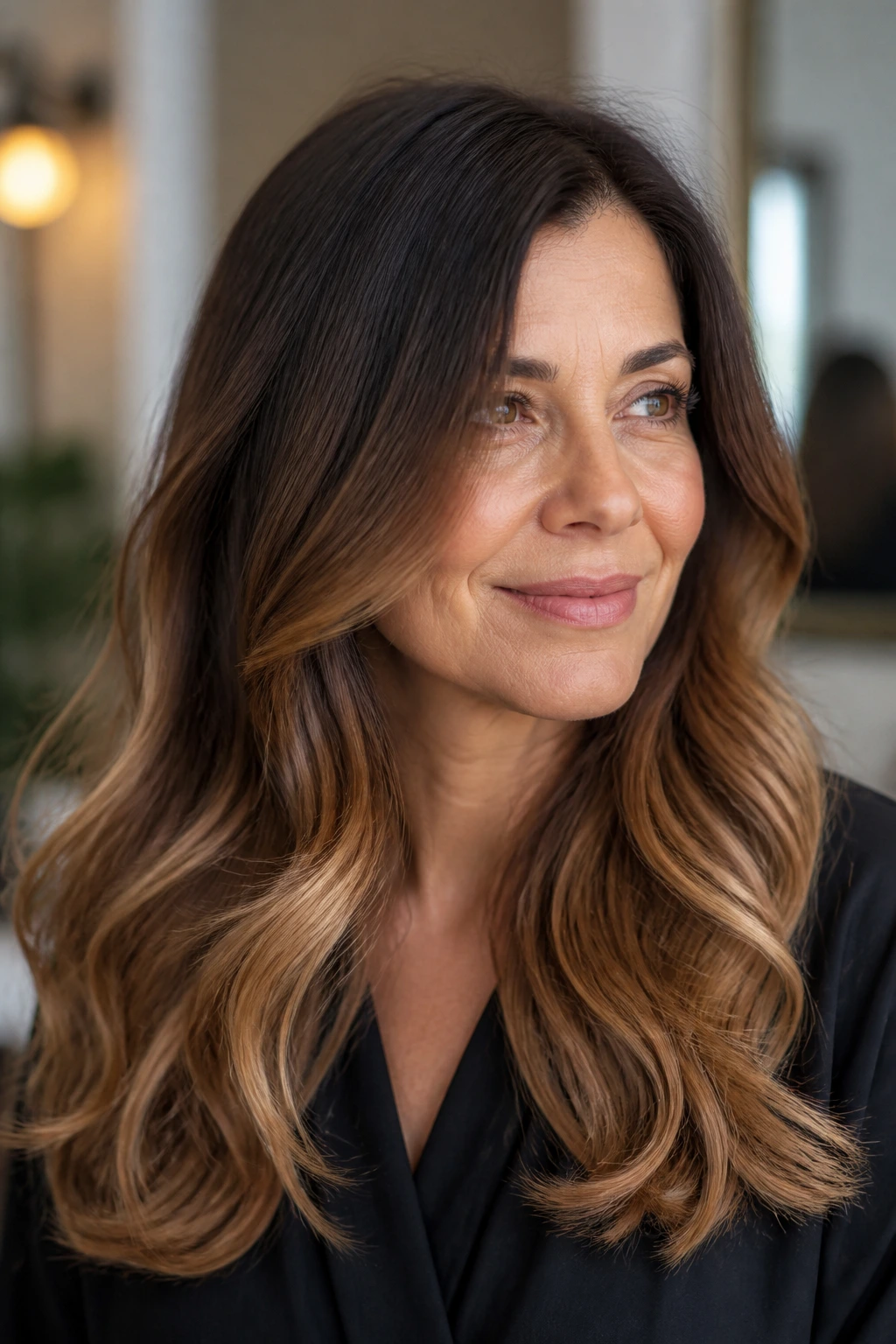
Brunette ombré can be a relief if you’re tired of perfect root lines. Darker roots flow into warmer, softer ends, and the whole thing looks less like a strict dye job and more like a grown-in color story.
This works well if your ends are lighter already from past highlights or sun. Instead of fighting that fade, the ombré uses it. A colorist can melt the shade from a level 4 or 5 root into a caramel or chestnut finish at the bottom, leaving the transition blurry instead of obvious.
The danger is a hard line. That’s what ages ombré fast. The fade should begin gradually, about a few inches down from the root, and the ends should still look like hair — not a separate block of color.
16. Rooted Brunette for Gray Blending
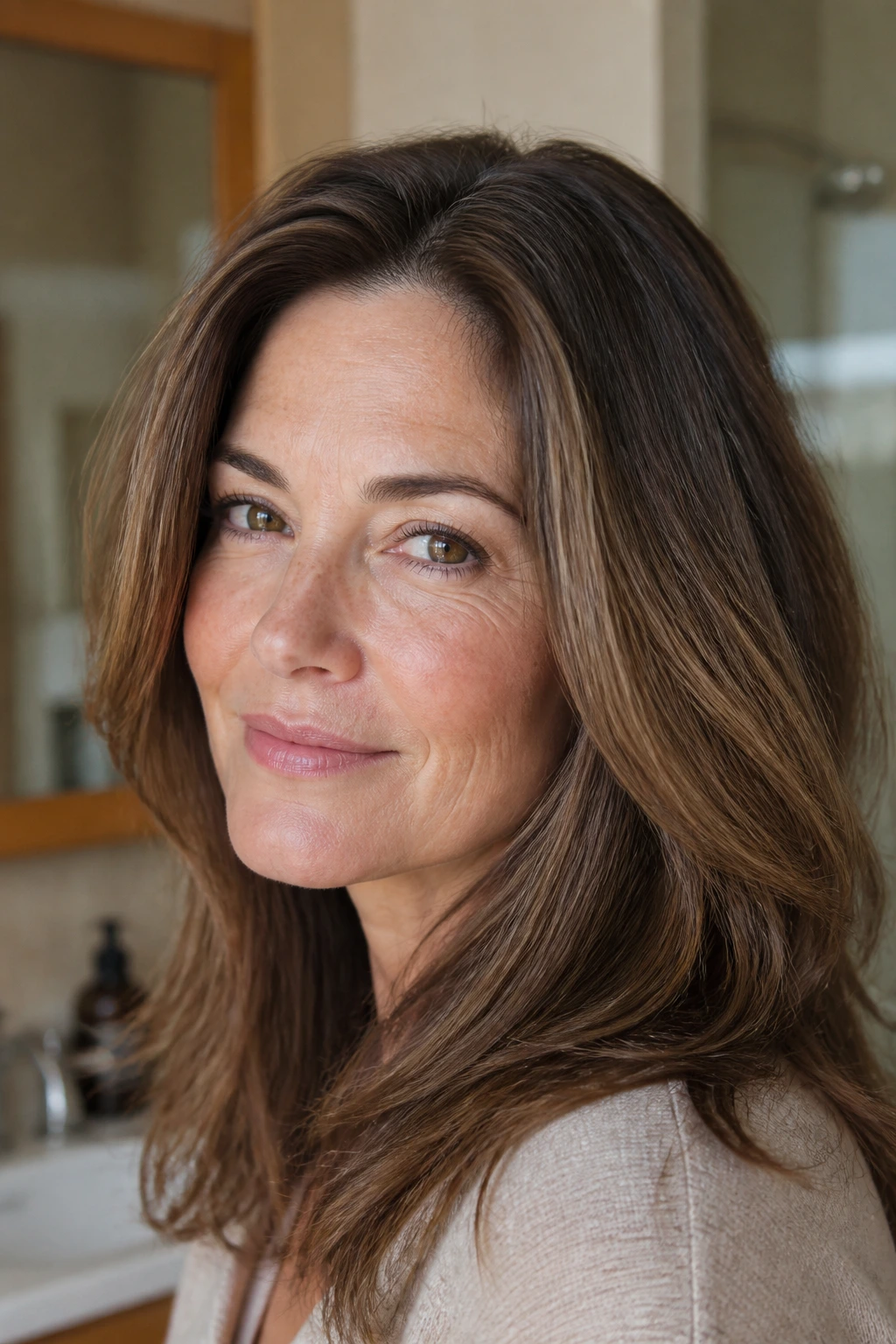
A rooted brunette is one of the smartest answers to gray regrowth because it stops the eye from hunting for a line. The darker root area blends into a softer brown mid-shaft, so silver strands can live there without screaming for attention.
What to Ask Your Colorist For
- A shadow root that matches your natural level closely
- Lowlights around the temples and crown
- A demi-permanent brown glaze on the mids
- Fine, scattered brightness where the hair is most visible
This method is especially useful if your grays show up fast at the hairline. Instead of chasing full coverage every few weeks, you get a softer grow-out and a more natural transition. It’s practical. Also, it looks better than a hard line of permanent color on many heads of hair.
17. Ash Brown with Silver-Friendly Coolness
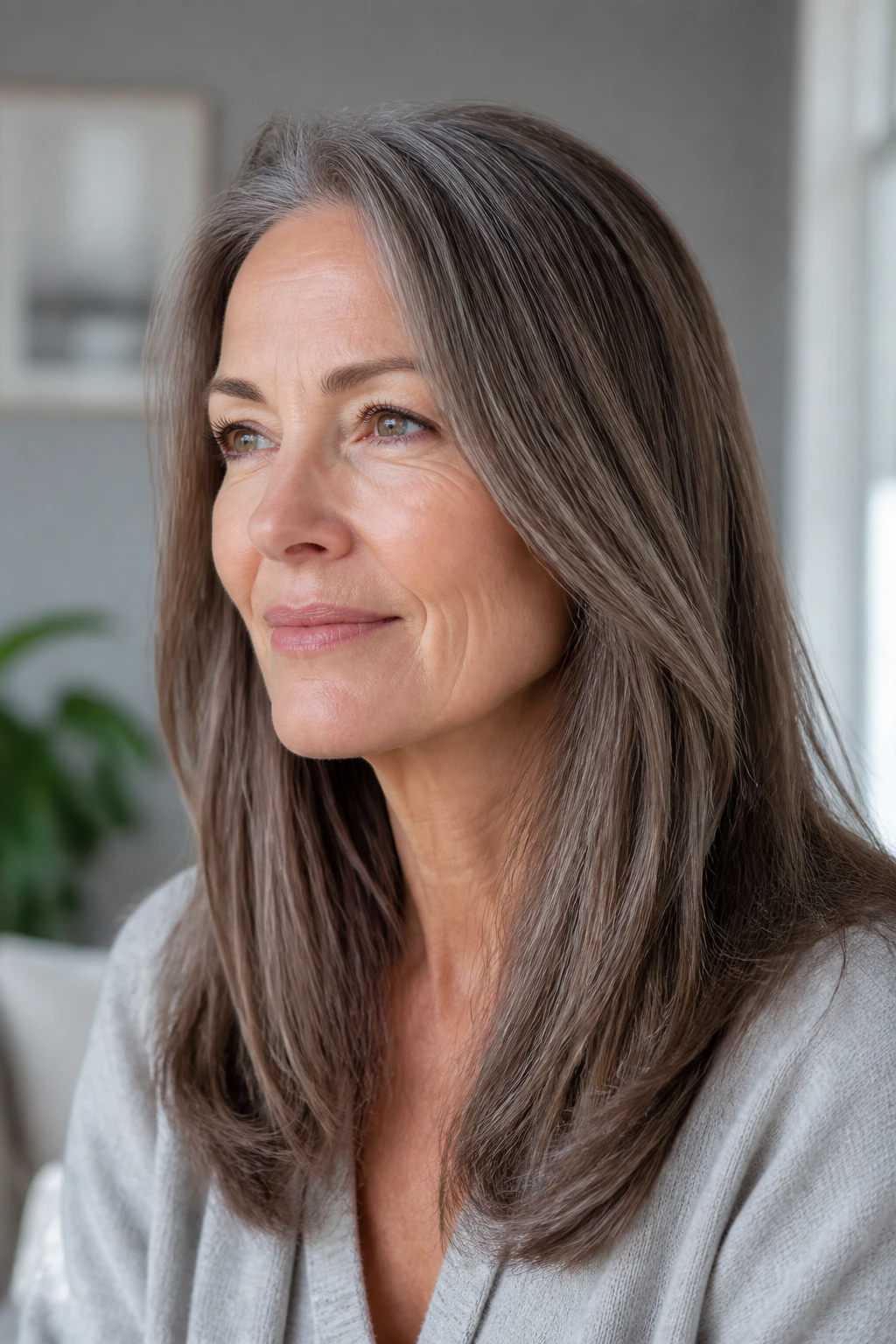
Ash brown gets a bad reputation because people often see it done badly. Too much ash, and the hair turns dull. Done right, though, it has a crisp, cool beauty that works well with silver strands and pink-toned skin.
The shade sits in a cool brown zone with just enough smoke in it to keep warmth from taking over. That makes it useful if your hair tends to pull orange or brassy after coloring. It also helps if you wear cooler makeup or have naturally fair, cool-toned skin.
The mistake is overdoing it. You want ash as a note, not as the whole song. A beige-ash mix is usually safer than a hard slate brown. It keeps the color looking clean rather than washed out.
18. Hazelnut Brown with Soft Contrast
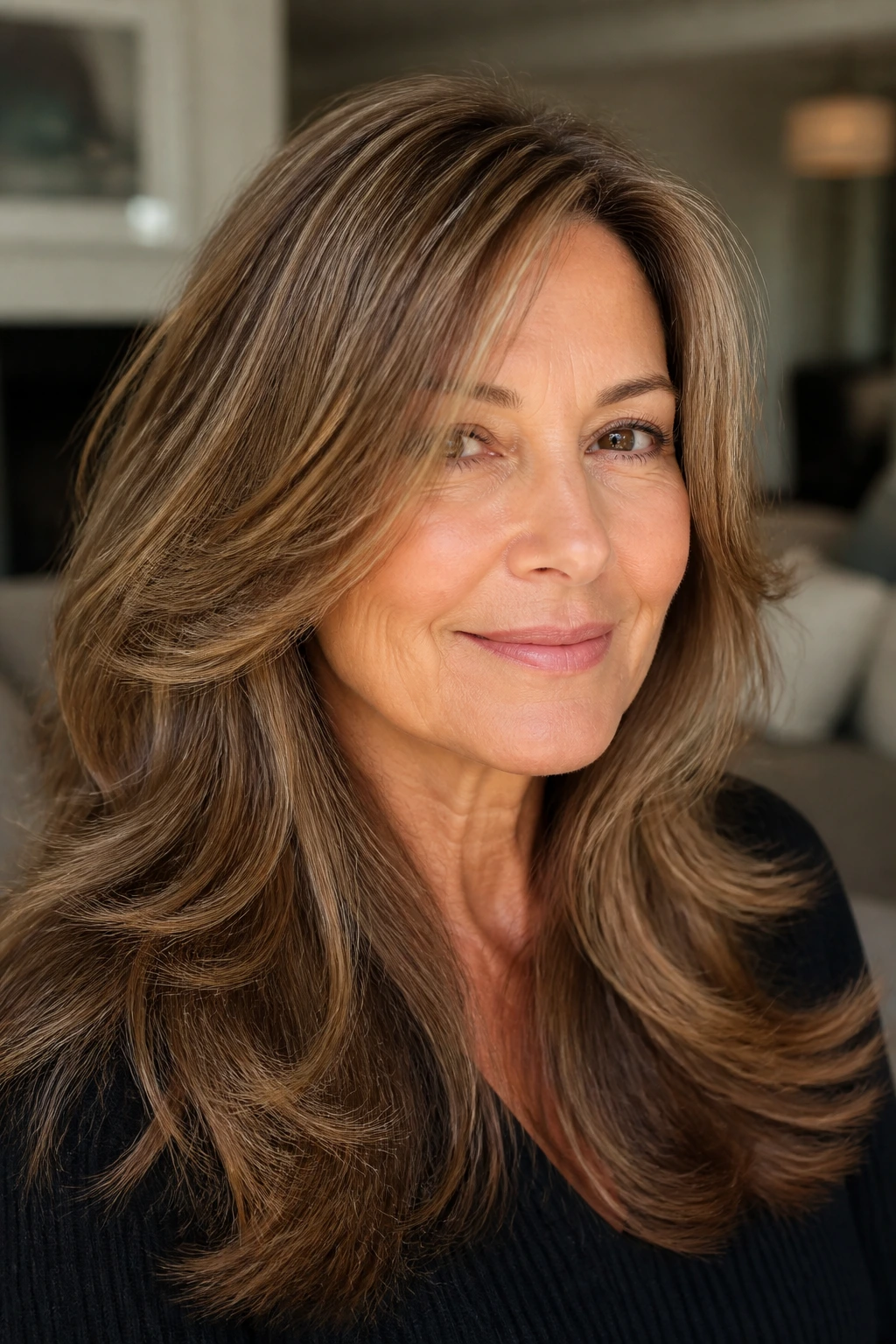
Hazelnut brown is one of those shades that seems simple until you look closely. Then you notice the mix of warm brown, beige, and a touch of gold running through it. Nothing screams. Everything blends.
That softness is why it works so well on changing hair. If your natural color has become less dense or a little dull, hazelnut brings back light without making the hair look highlighted to death. It suits layered cuts, shoulder-length cuts, and even longer hair that needs a little life.
I’d call this the safe choice if you want dimension but you’re nervous about warmth. It has enough beige to stay modern, enough warmth to avoid looking gray, and enough contrast to keep the texture visible.
19. Latte Brown for a Lighter Finish
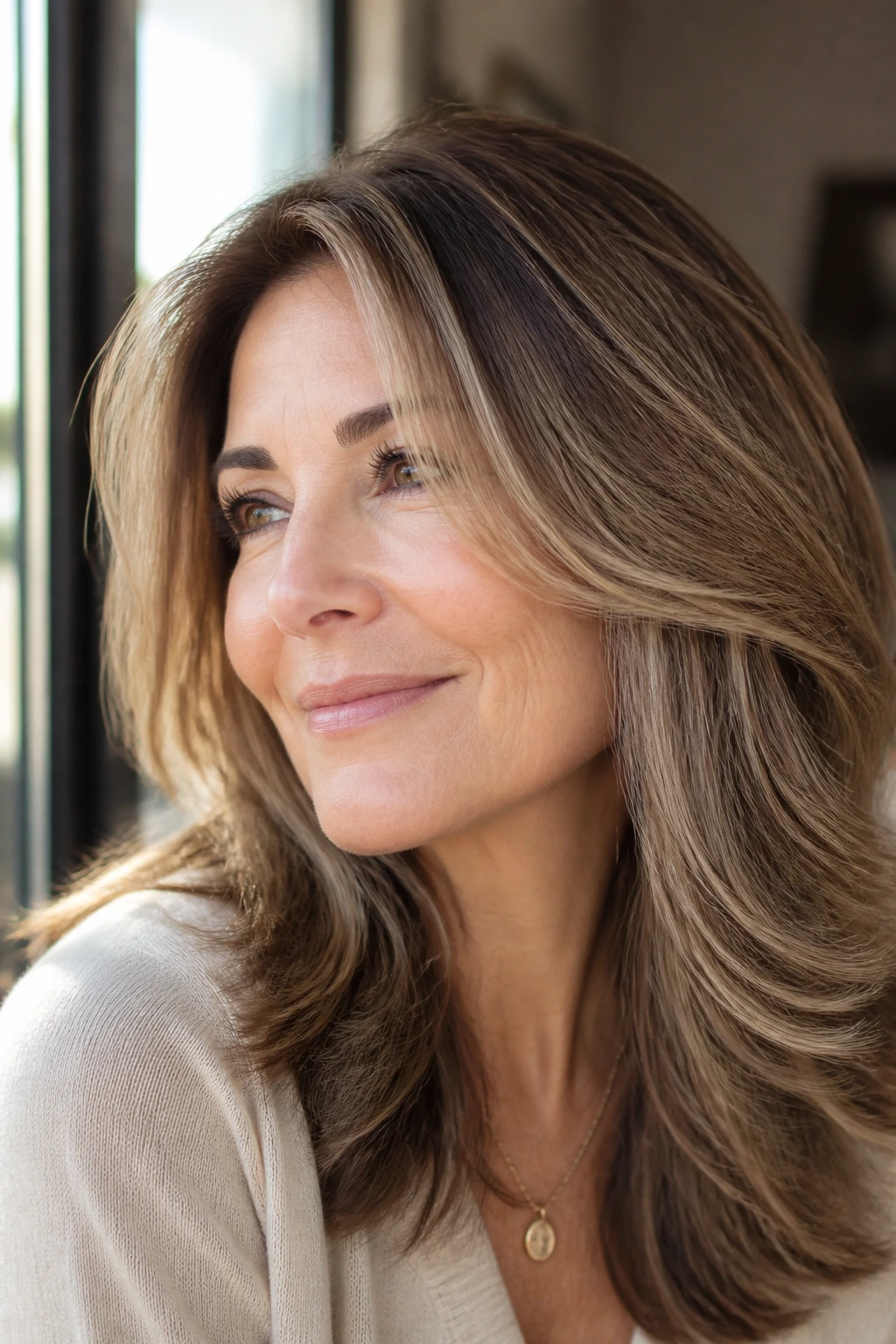
Latte brown is lighter than chestnut and softer than golden blonde. That middle zone can be very flattering because it lifts the face without making the hair look stripped of depth.
This shade is especially nice on fine hair. Lighter brunette pieces reflect more light, which can make the hair seem fuller. Keep the highlights creamy, not white. White pieces can look stark against mature skin, and the contrast gets old fast.
A good latte brown usually has a medium-brown base with beige or milk-chocolate ribbons. If the cut is layered, the lightness around the ends helps show movement. If the cut is blunt, keep the highlights a little softer near the bottom so the line doesn’t look hard.
20. Chestnut Balayage on Curly Hair
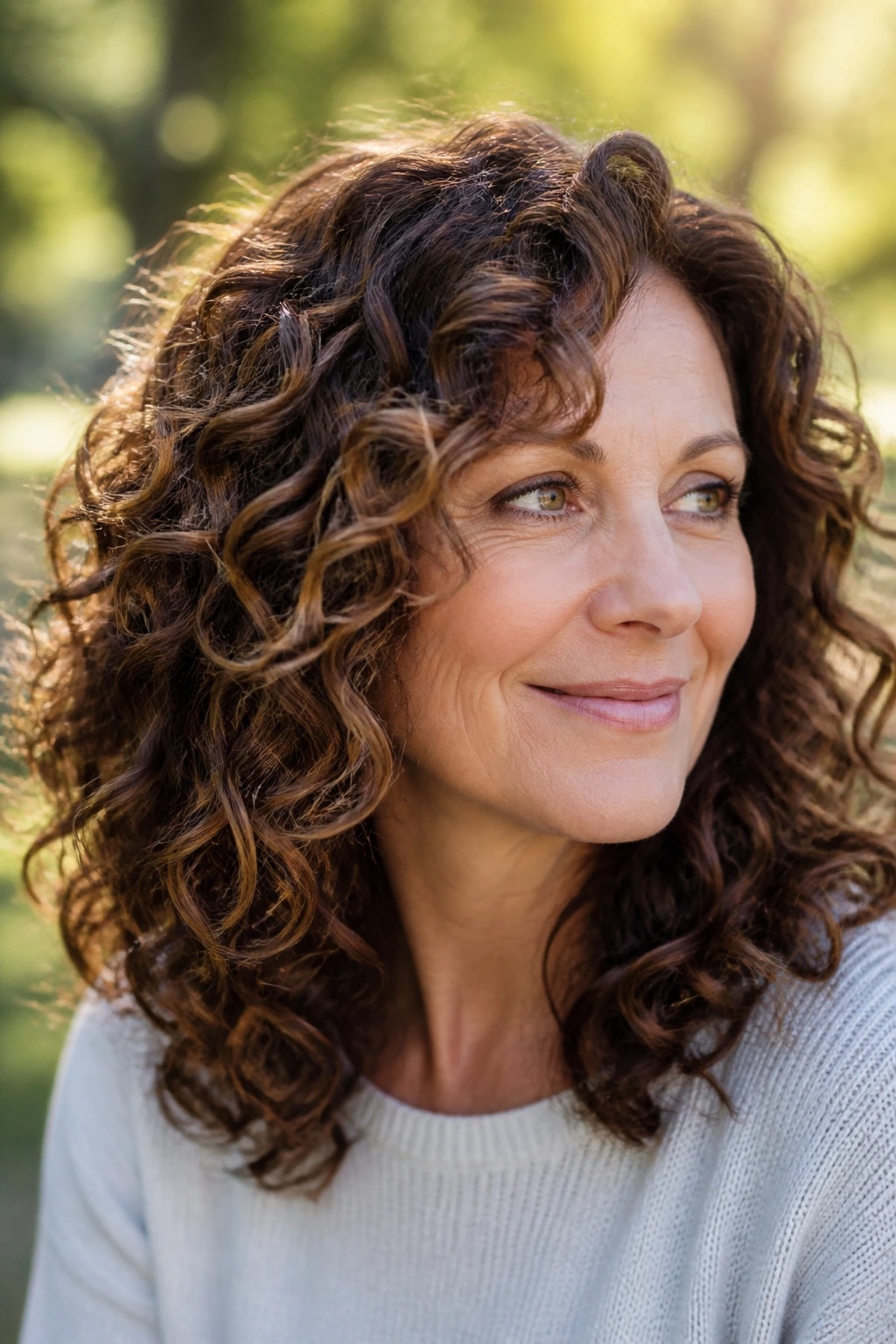
Curly hair and flat color rarely get along. The curl pattern already creates shape, so the color should help, not hide it. Chestnut balayage does that nicely because it lifts the surface curls and leaves depth underneath.
Why Curls Need Different Placement
Color on curly hair should follow the bend of the curl, not fight it. A highlight painted on the inside of a curl can disappear. One placed on the outer curve will show movement right away. Chestnut is a good tone for this because it adds warmth without turning each curl into a separate stripe.
- Paint the lighter pieces on the outer curve of the curl
- Keep the root deeper for contrast
- Use a gloss after lightening to seal frizz-prone ends
- Avoid wide blonde panels; they can break up the pattern too much
The result is dimensional, not busy. That matters.
21. Sable Brown with a Plush Finish
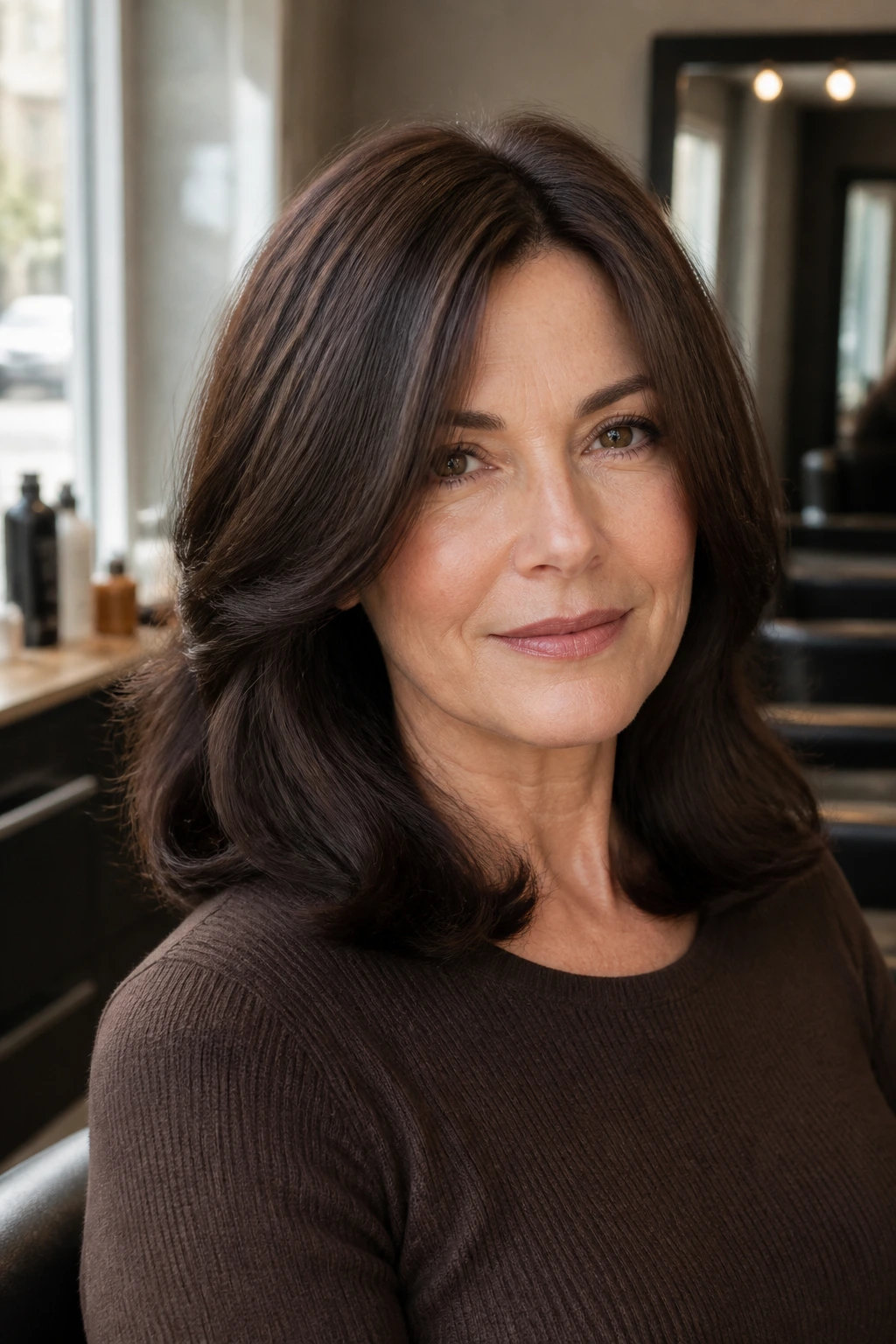
Sable brown has a plush, velvety feel that I think suits mature hair beautifully. It’s deep, but not black; rich, but not red. The finish is what sells it. A good gloss makes the surface look smoother, which helps hair that has lost a little sheen over time.
This color works best when the haircut has some shape. A blunt lob, a soft bob, even a layered shoulder cut — all of them benefit from sable because the shade outlines the silhouette. If the hair is very long and very one-length, sable can feel heavy unless there’s movement built in.
Keep the color neutral to cool if your skin has pink undertones. A warm sable can drift toward brown-black in a way that feels too dense. The more precise the tone, the better this shade behaves.
22. Mink Brown for a Sleek Bob
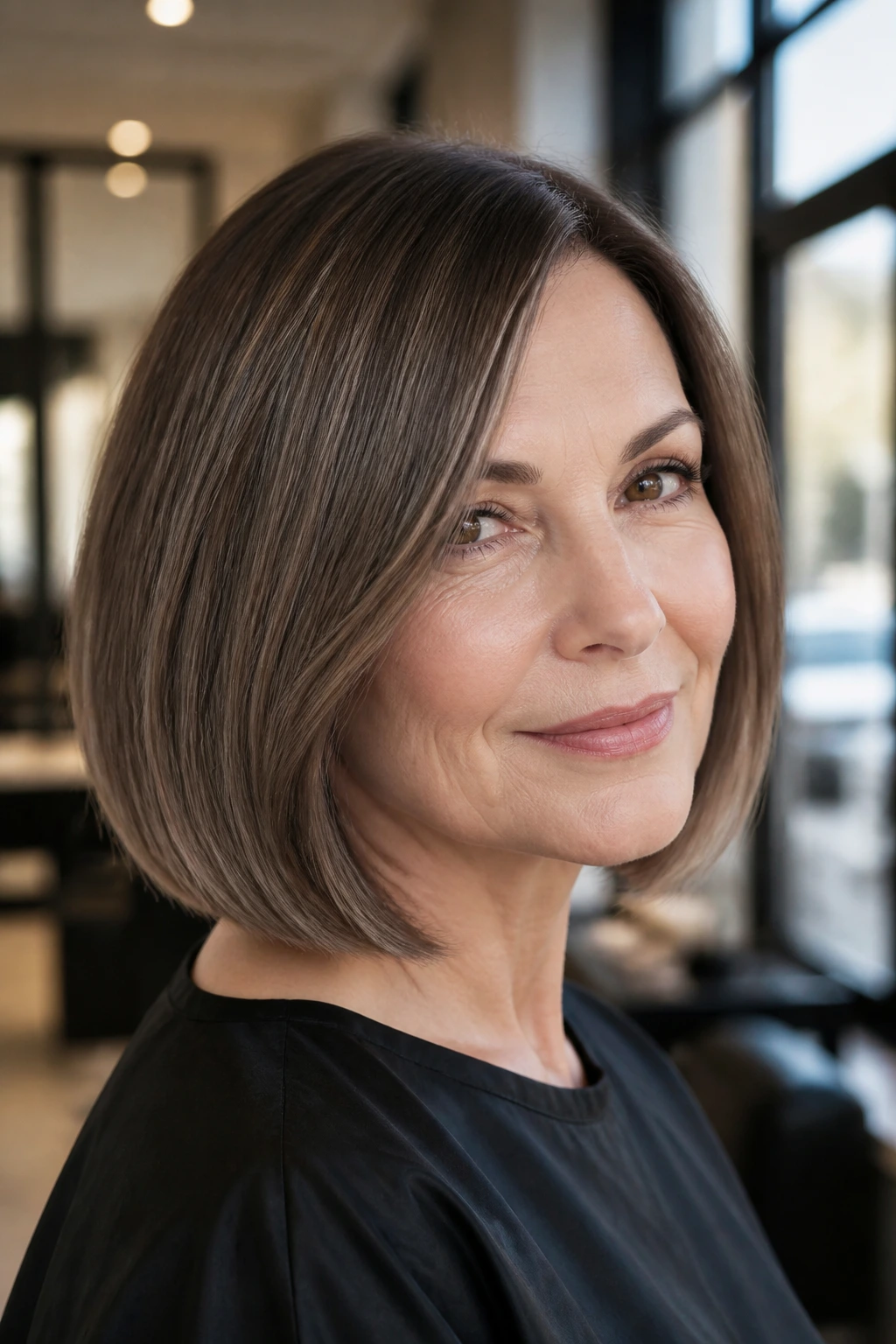
What makes mink brown different from plain dark brunette? It has a cool, velvety softness that looks sharp on a sleek bob. It doesn’t flash red in the sun, and it doesn’t go flat the minute the hair is straightened.
A bob with blunt ends or a sharp jawline cut loves this shade. The color follows the line of the haircut and makes the shape look cleaner. If the bob is layered and feathered, mink brown can still work, but you may want a few slightly lighter strands around the crown to keep the top from disappearing.
This is a good option if you like polished hair and you’re not interested in warmer tones. It feels tailored without being severe. That’s a rare combination.
23. Chocolate Cherry with Subtle Wine Tones
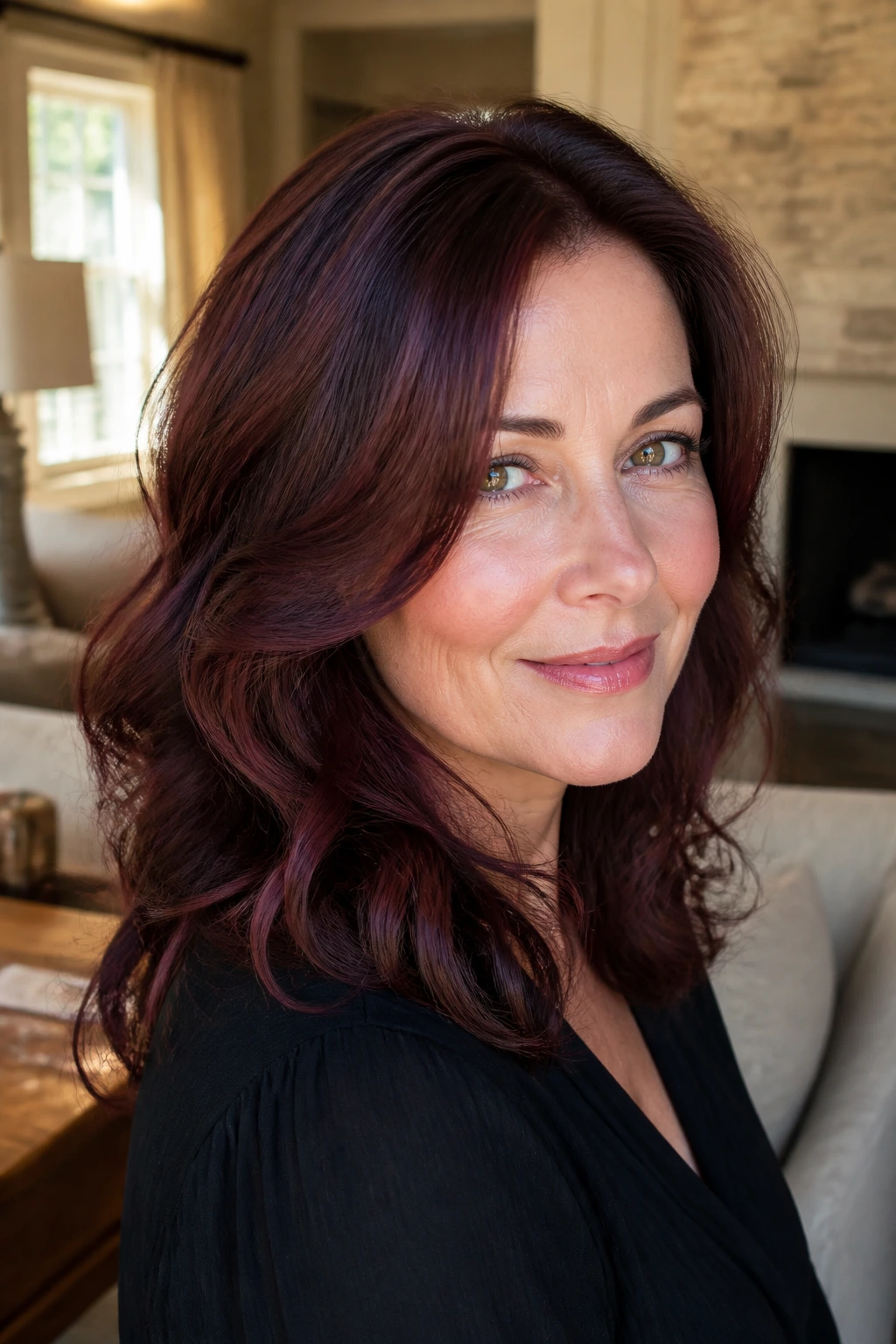
Chocolate cherry is one of the prettiest brunette hair color ideas if you want depth with a little surprise in it. From a distance, it reads brown. Up close, there’s a wine-red cast underneath that turns on when the light shifts.
I like this shade on hair that sits in layered waves because the color changes along the bends. On straight hair, it reads a little darker and more uniform, which is fine if you want a quieter look. The trick is keeping the cherry note subtle. Too much red, and it stops looking like brunette.
This shade can be a smart move when hair looks tired in beige or ash colors. The wine tone brings warmth back to the face without going orange. It’s a little moody. In a good way.
24. Espresso and Mushroom Balayage
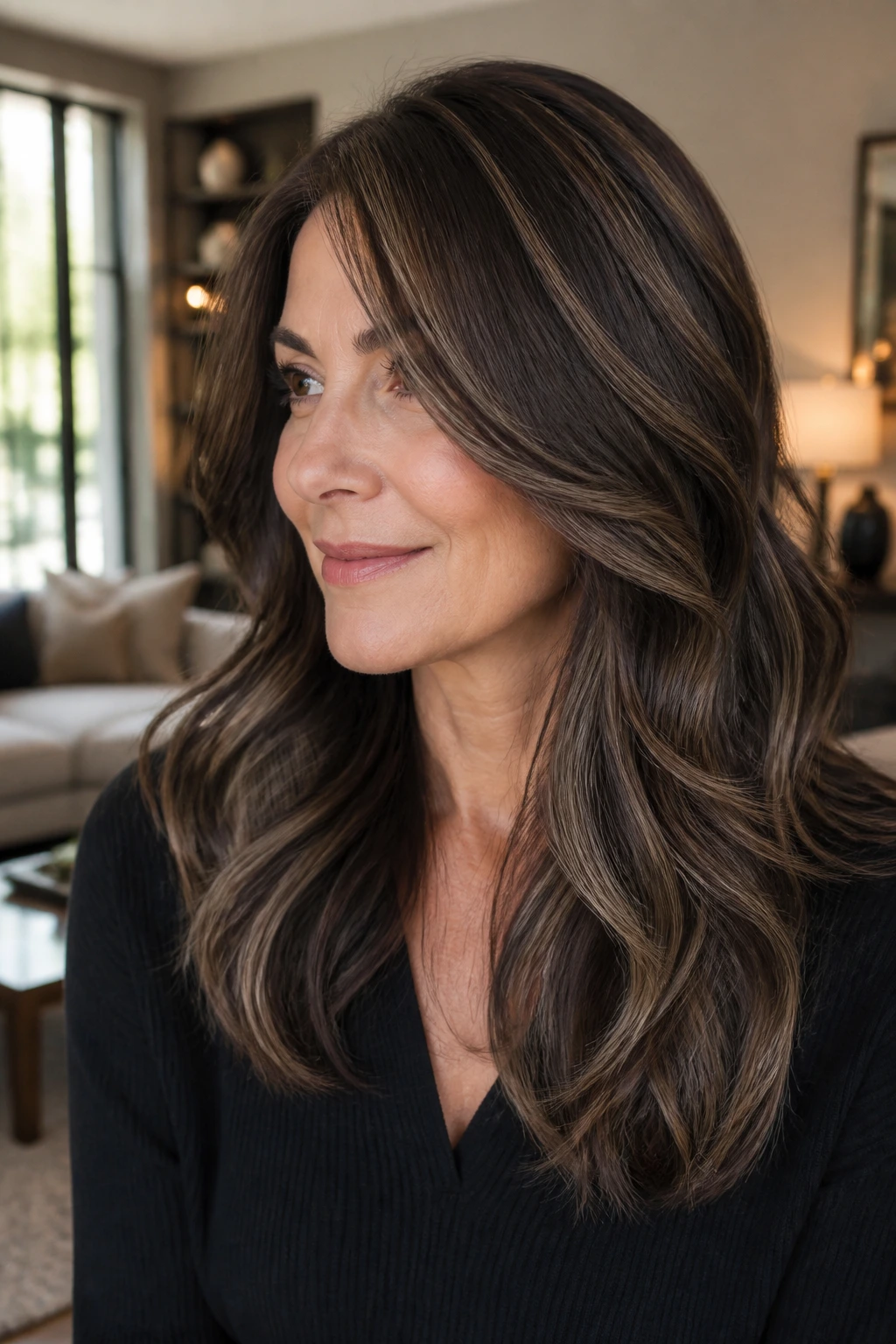
Espresso and mushroom together make a nice pair because one gives you depth and the other keeps the surface from going one-dimensional. The espresso root anchors the look. The mushroom ribbons cool it down and soften the edges.
That combination is especially helpful if you like brunette hair but hate a strong highlight pattern. The contrast stays low, so the color looks blended even as it moves. On shoulder-length cuts and long bobs, this can look especially good because the layers show both tones.
The best version keeps the lighter pieces thin and scattered, not blocky. Think of it as a soft contrast, not a dramatic makeover. The whole point is that the color should look rich from every angle without making a fuss about it.
25. Sandy Brown Brunette with Soft Lift
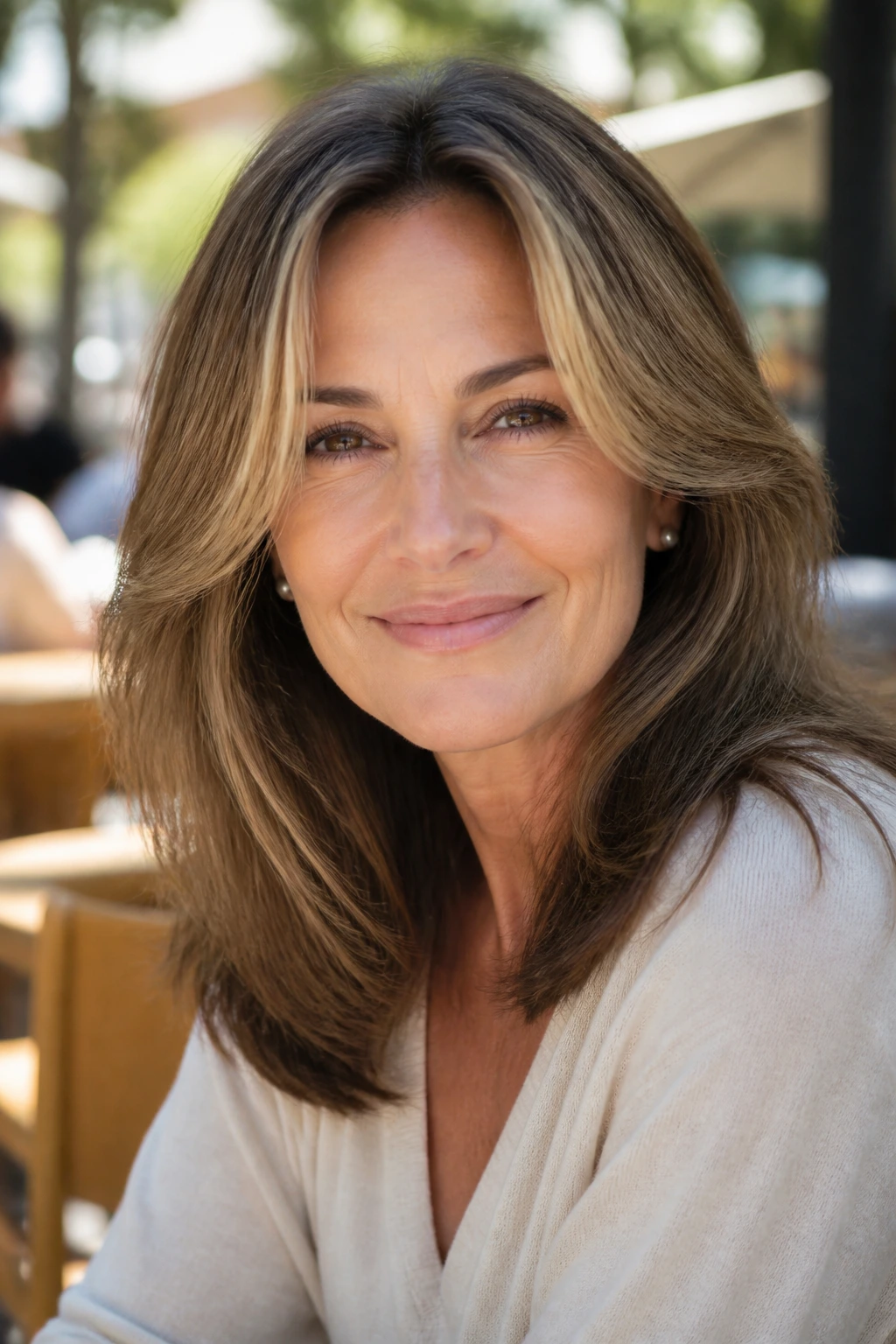
Sandy brown is a good answer when you want the hair to look lighter but not blonde. It sits in a muted brown-beige zone that feels airy without losing the brunette base.
This shade works well if your face needs a bit more brightness around it. The sandy tone is less warm than caramel and less cool than ash, so it lands in a comfortable middle. That makes it easy to wear on skin that changes tone through the years. It does not compete.
A sandy brunette often looks best when there are a few brighter pieces near the front and softer ones through the rest of the head. That way the overall color still reads brown, but the effect is lighter and gentler than a standard brunette.
26. Brown Sugar Highlights on a Layered Cut
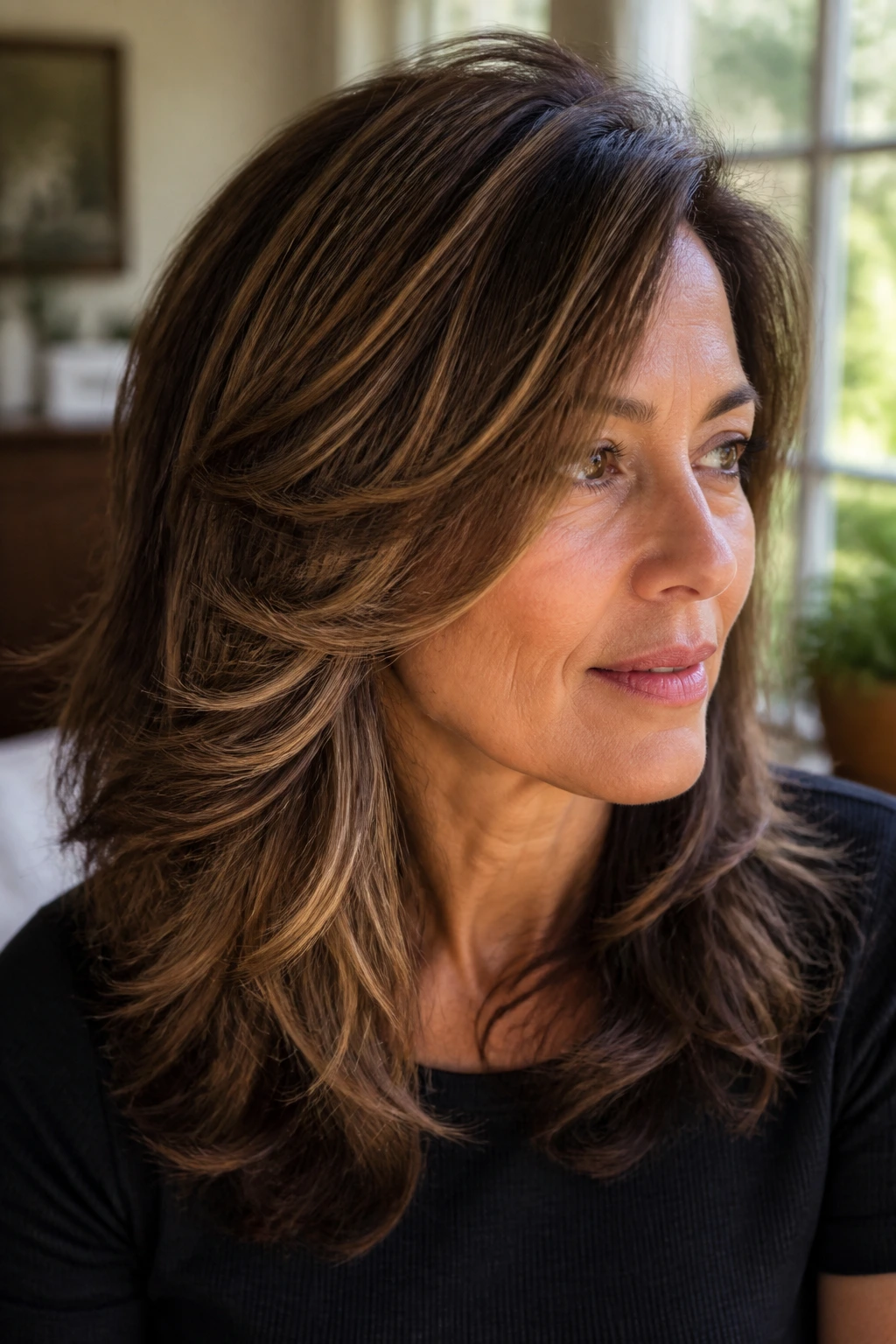
Brown sugar highlights are sweet in the literal hair-color sense: warm, soft, and a little glossy. They’re usually a touch deeper than caramel, which keeps them from looking too blond against a brunette base.
Where the Light Should Go
On a layered cut, these highlights belong where the hair bends and flips. The ends, the mid-lengths, the pieces near the cheekbones. That placement shows off the texture instead of scattering the light randomly.
- Keep the highlights 2 shades lighter than the base, not 4
- Use narrow sections through the top layer
- Add a few brighter strands around the fringe area
- Finish with a warm glaze so the tones stay soft
This is one of those ideas that makes a layered cut look intentional. Without layers, the highlights can feel a little ordinary. With them, they move.
27. Bronze Brunette with Golden Reflect
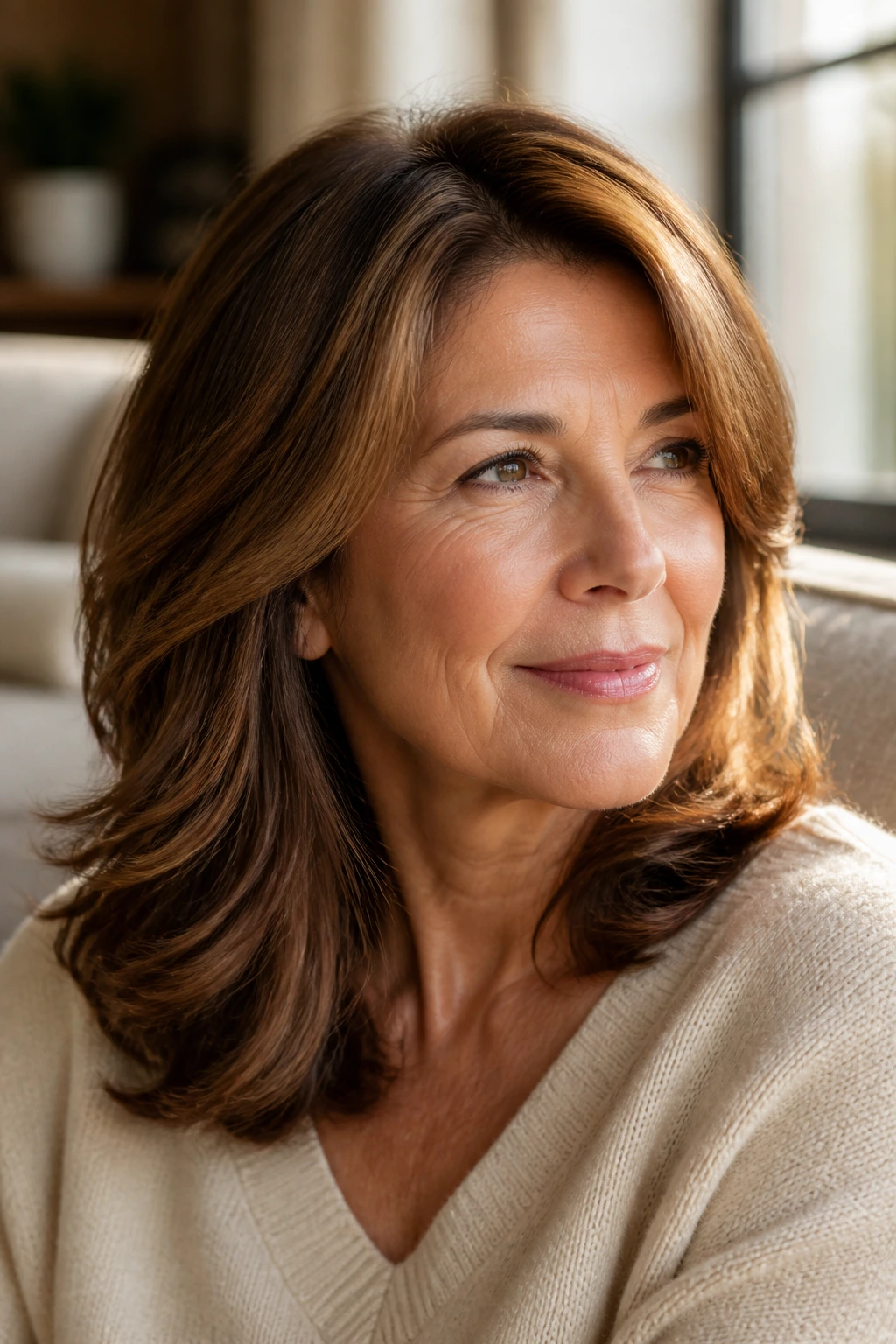
Bronze brunette has a warmer, more polished shine than plain brown. The golden reflect catches daylight in a way that makes the color look alive, especially on medium-length cuts with loose movement.
I like bronze when hair has started looking a little dry or matte. A bit of gold reflection can change the whole mood. It does not have to be bright. In fact, too much gold can make the hair look dated. The sweet spot is a brown base with a warm metallic glow that stays close to the surface.
This shade works well if your skin still likes warmth and you wear earthy tones. If you wear silver makeup or cool colors most days, keep the bronze subtle so it doesn’t fight your style.
28. Smoky Caramel for Medium Hair
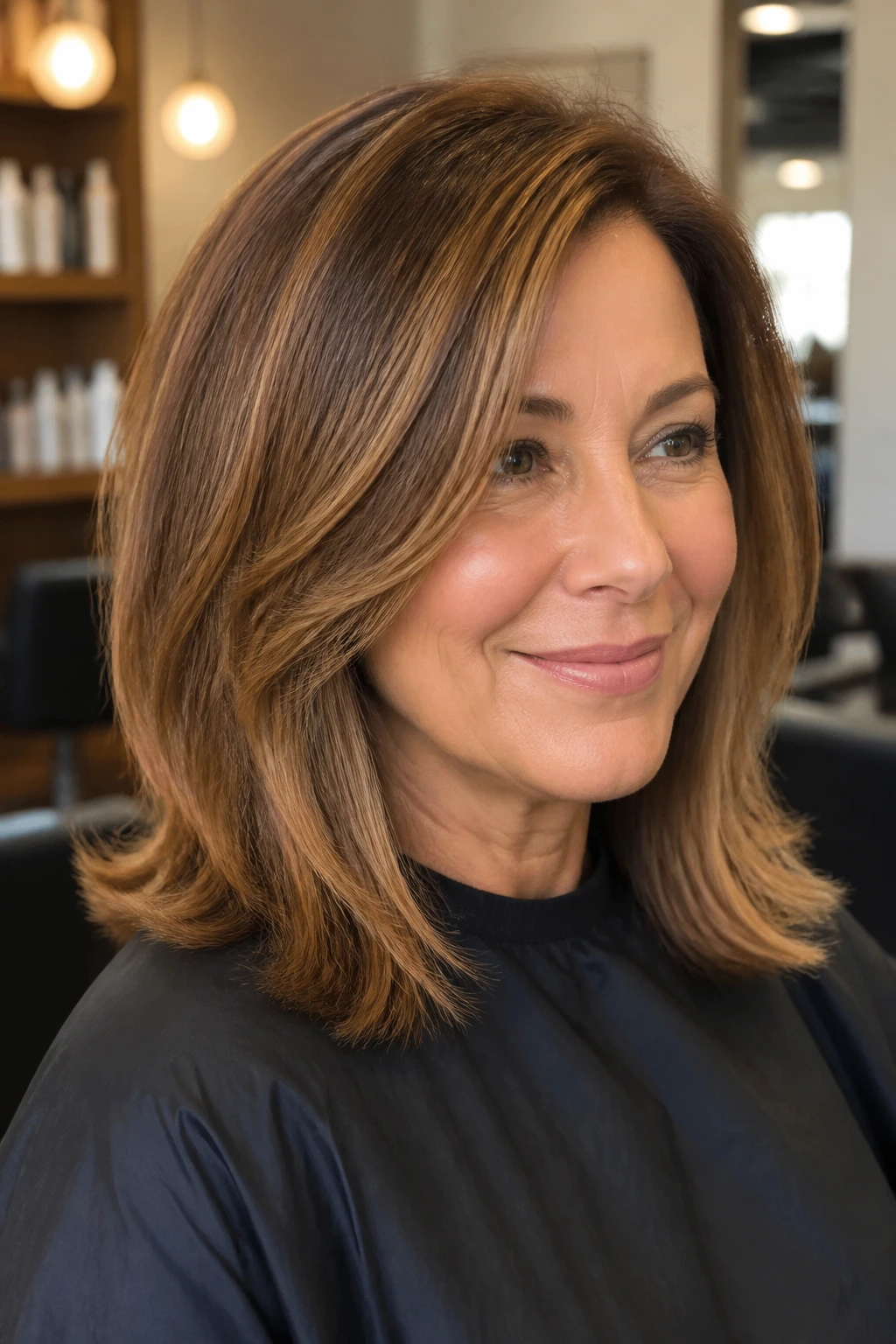
Smoky caramel is caramel that went to finishing school. It keeps the warmth people love, but it softens the brightness so the color does not turn brassy after a few washes.
That makes it a smart pick for medium-length hair, where every highlight is visible. If the caramel is too light, the grow-out can look sharp. If it’s too dark, the effect disappears. Smoky caramel lives in between and looks especially good with waves or a round-brush blowout.
I’d use this shade on hair that naturally pulls orange when lightened. The smoky glaze calms that down. The look stays warm, but not loud. That balance is harder to get than people think.
29. Golden Walnut for a Soft Glow
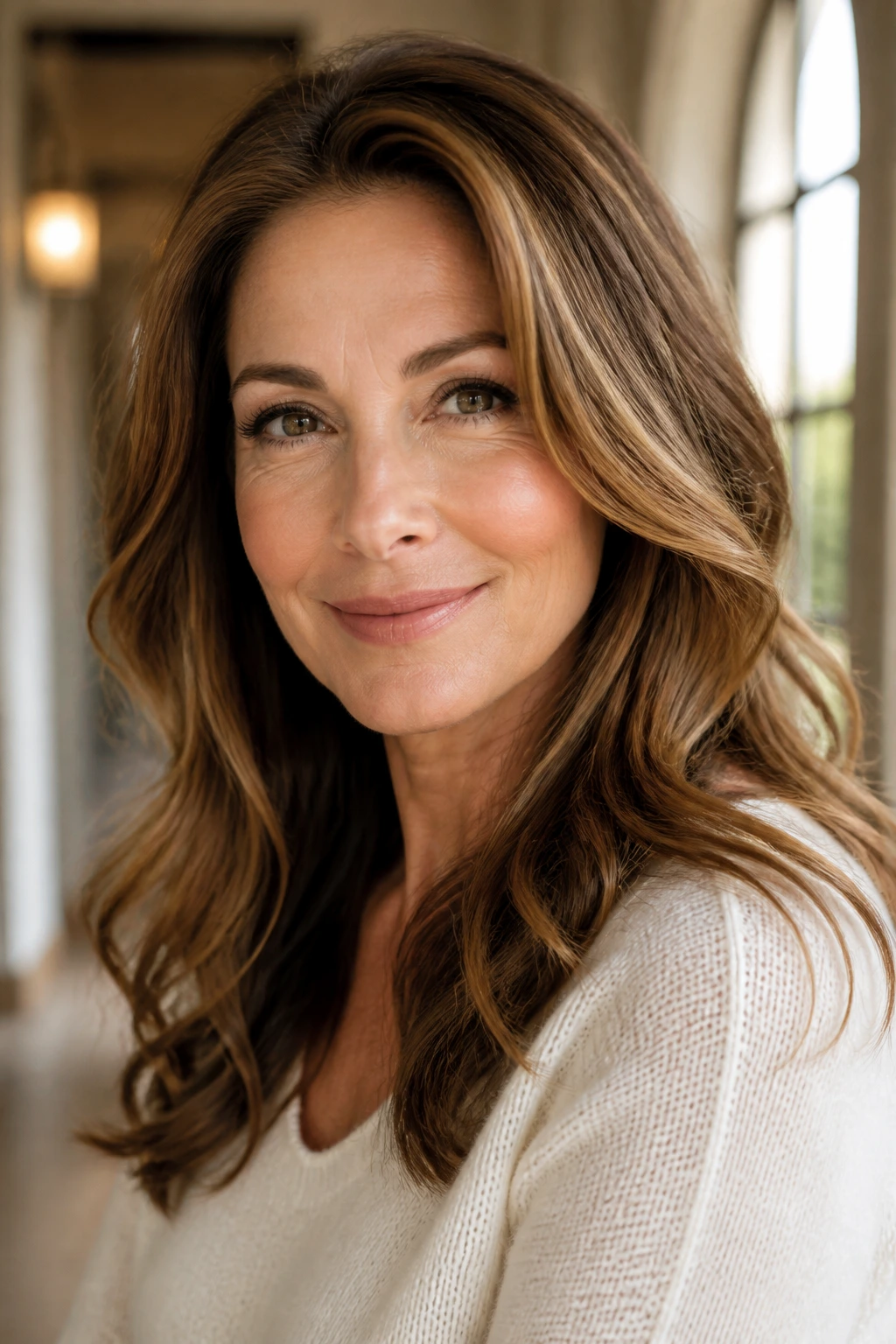
Golden walnut is one of the easiest brunette shades to wear because it sits in a friendly middle zone. The walnut base gives depth, while the gold-beige light keeps the hair from looking tired.
What I like about it is the way it softens shadows around the face. Some deep browns can feel a little hard once the hairline starts changing. Golden walnut avoids that. It still looks brown. It just has a softer edge.
If you’re unsure where to start, this shade is a safe but not boring choice. It works on straight hair, wavy hair, and layered cuts. It also grows out gracefully, which matters more than people admit.
30. Deep Plum-Brown for a Cooler Edge
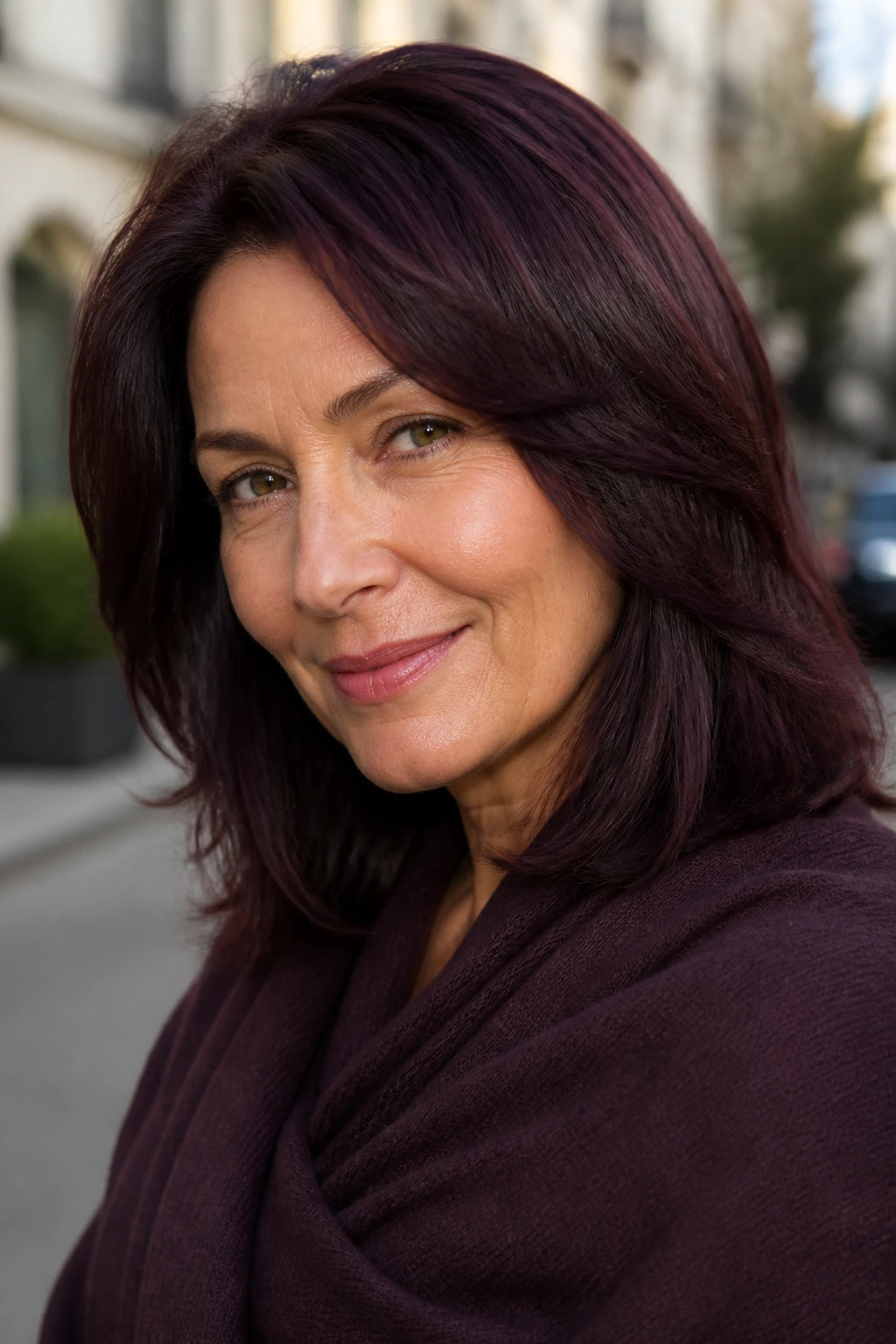
Deep plum-brown is for someone who wants a brunette shade with a little attitude. The plum tone sits under the brown, so the color looks rich first and purple second. That keeps it wearable.
This shade is especially useful if your hair has too much red or gold left in it. The plum cast helps cancel that warmth and gives the hair a cooler finish. It can look gorgeous on smooth bobs and longer styles with shine, because the color changes as the hair moves.
A deep plum-brown should not look cartoonish. If it does, the formula is too strong. Keep it dark and restrained. The color should be noticeable only when light hits it, not all the time.
31. Beige Brunette for Fine Hair
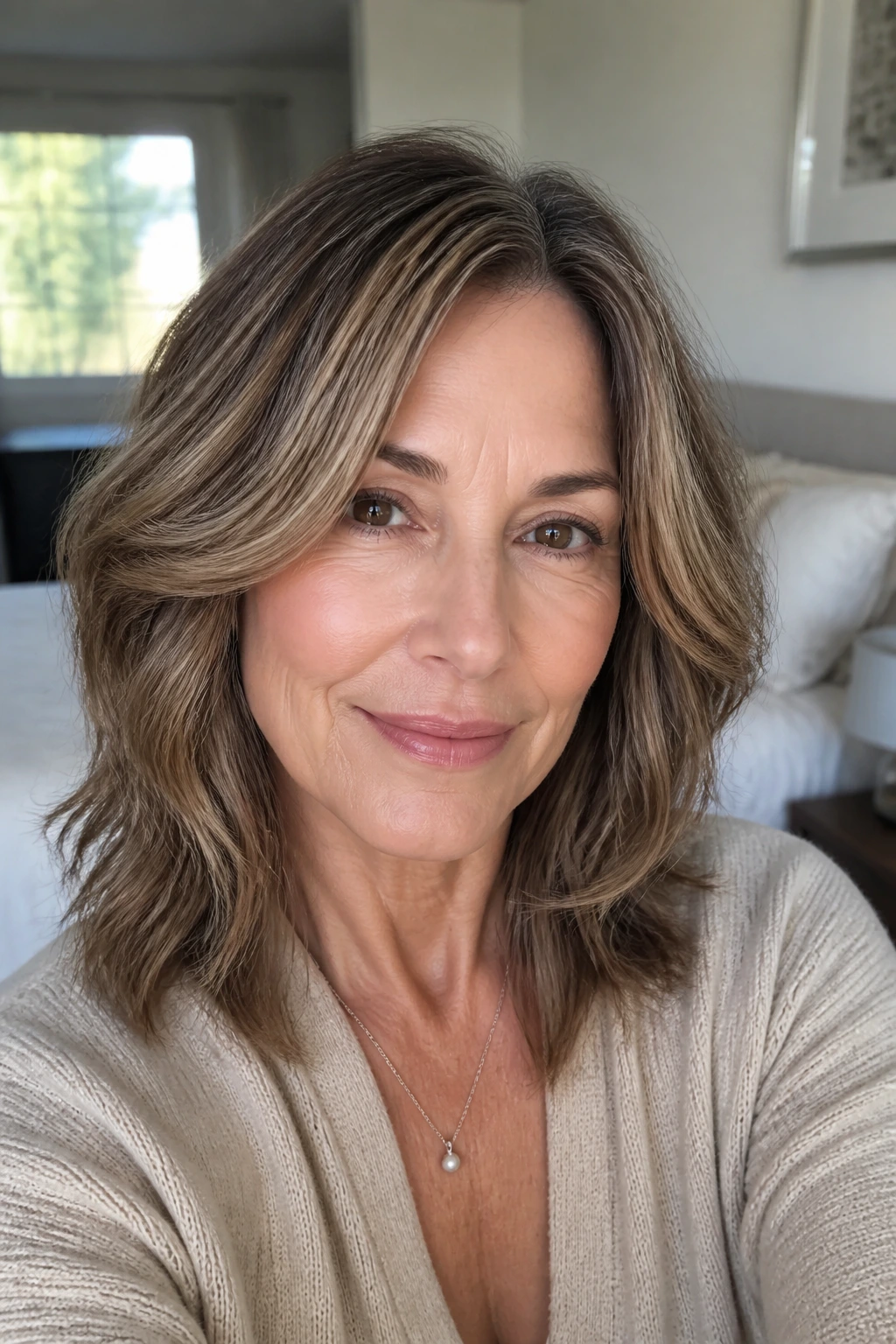
Beige brunette is a smart move for fine hair because it adds light without breaking the strand pattern into loud stripes. The contrast stays soft, which helps the hair look fuller rather than thinner.
Keep the Contrast Narrow
Wide highlights can make fine hair look patchy. Beige brunette works better when the lighter pieces stay narrow and close in tone to the base. That means you get softness instead of chunks.
- Choose a medium brown base around level 5
- Add beige pieces that are only 1 to 2 levels lighter
- Keep the highlight placement around the part and face frame
- Finish with a lightweight gloss, not heavy toner
This shade is nice because it brightens without shouting. For a lot of people, that’s the sweet spot.
32. Mahogany With Gray-Blending at the Temples
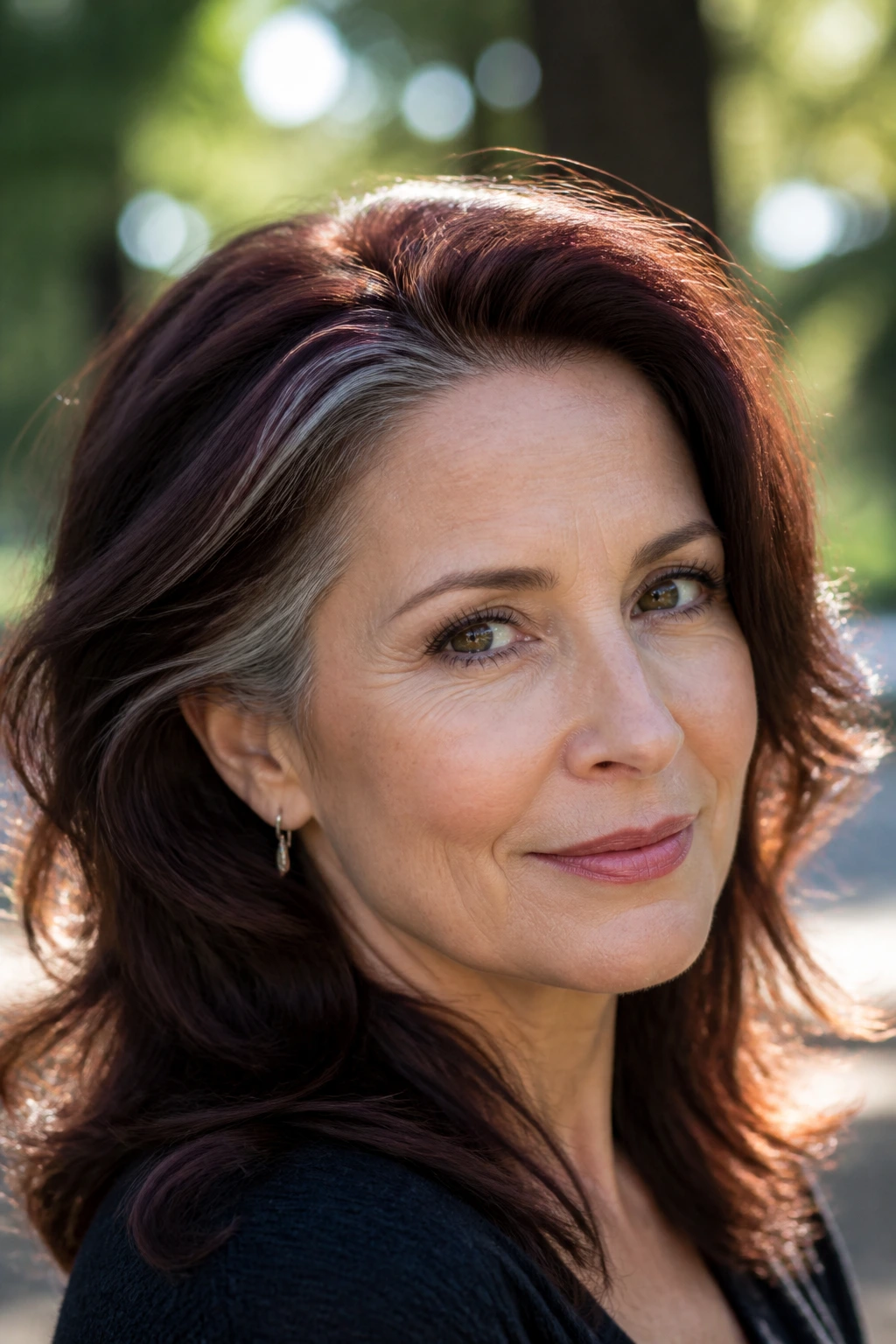
Gray often shows up first at the temples, and that area can make the whole hairline look more obvious than it really is. Mahogany helps because its deeper red-brown tone gives the front a little more life while blending the silver instead of fighting it.
The trick is to concentrate the mahogany slightly more around the hairline, then keep the rest of the head a softer brunette. That way the temples stop flashing white every time you tuck hair behind your ears. A few lowlights through the crown can help the blend feel natural.
If you’re nervous about going too red, ask for a brown mahogany instead of a cherry mahogany. The red should stay under the surface. A soft finish makes all the difference here.
33. Dimensional Bronde for a Pixie or Crop
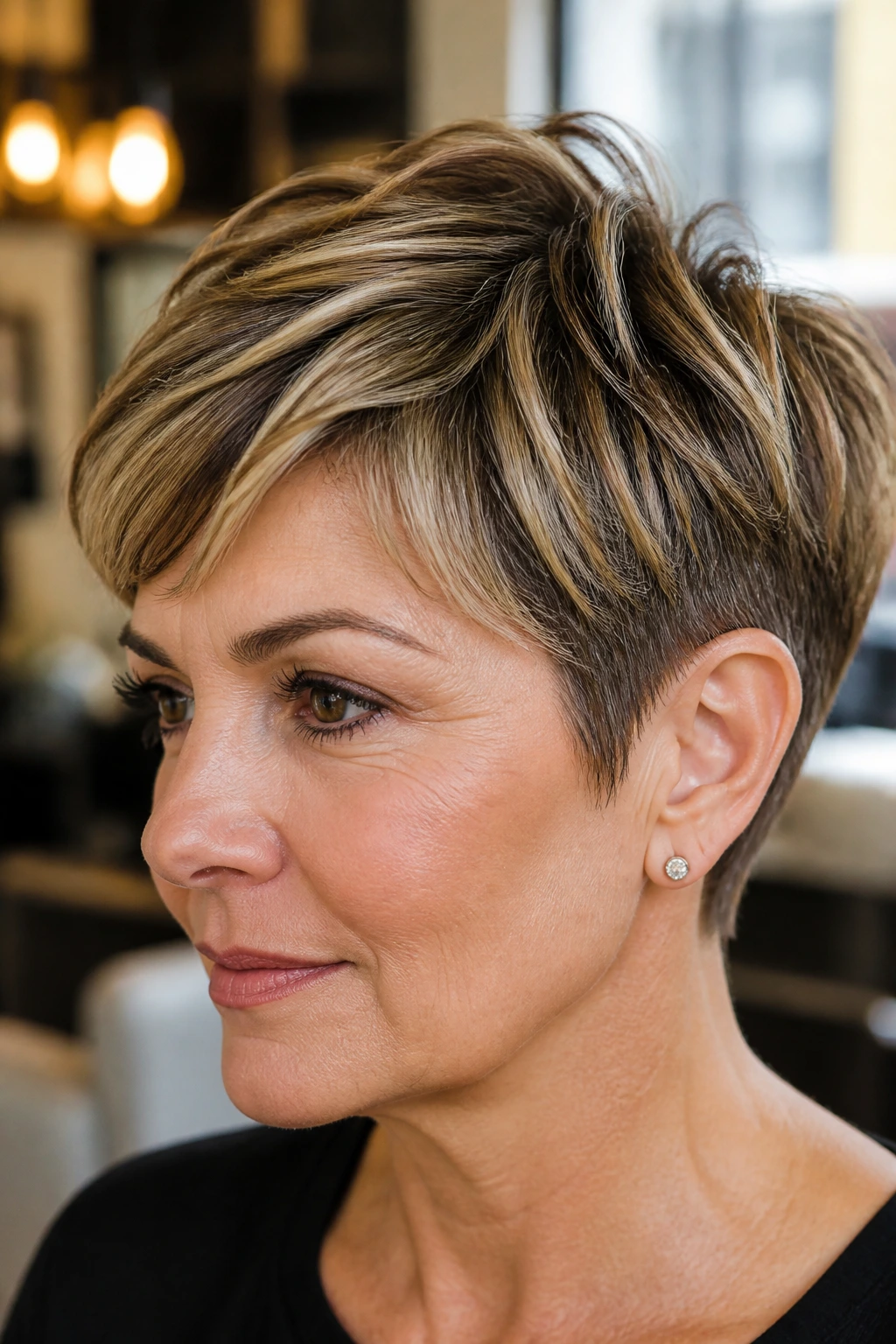
Short hair needs dimension more than length does. On a pixie or crop, bronde can keep the cut from looking like one solid block, especially when the hair is fine or naturally silvering.
The best short-hair bronde doesn’t scatter light everywhere. It places it on the top layer, the fringe, and a few pieces near the crown. That gives the cut lift where the eye looks first. Too much light at the sides can make a crop feel busy, which is the opposite of what you want.
I like this idea because it makes short hair look more styled with less effort. The color and the cut work together. That’s the whole point.
34. Rich Mocha with Curtain Highlights
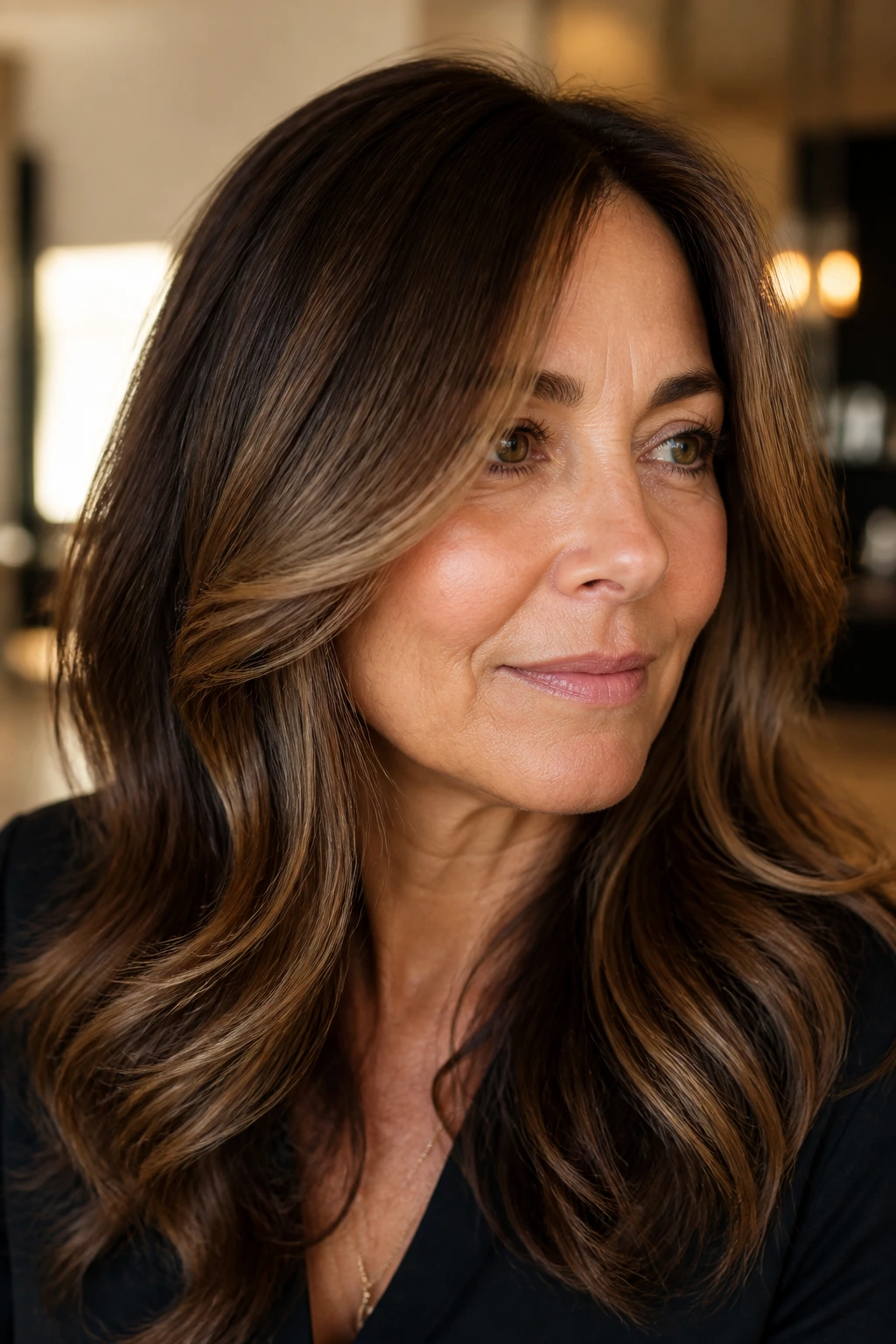
Rich mocha is a beautiful base for curtain highlights because the darker brown keeps the face-framing pieces from taking over. The lighter sections start around the cheekbones and flow down through the front layers, which softens the face in a clean, direct way.
Why Curtain Highlights Still Work
They work because they follow the haircut. A curtain bang, a face-framing layer, or a soft fringe gives those lighter ribbons somewhere to land. Without the cut, the highlights can feel random. With it, they look built in.
- Ask for a mocha base one shade lighter than espresso
- Start the lighter pieces below the root for a softer grow-out
- Keep the front ribbons about 1 inch wide
- Use a gloss to keep the mocha from looking dull
This is one of the more polished brunette ideas without becoming high maintenance.
35. Low-Maintenance Medium Brown Gloss
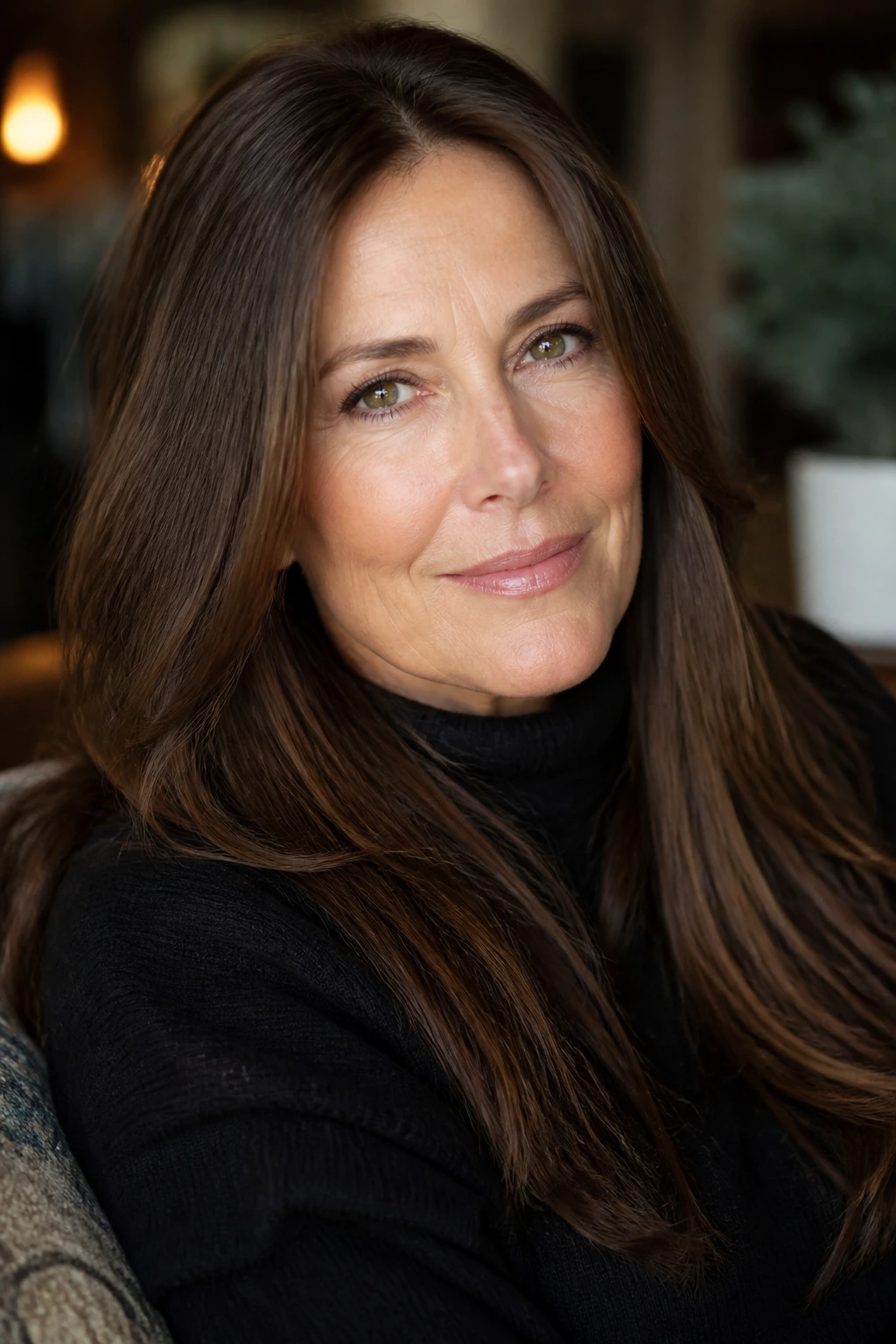
Sometimes the smartest brunette is the one that does not try too hard. A medium brown gloss can refresh faded color, blur dullness, and make hair look healthier without changing the whole head.
That matters if you want something easy to live with. A gloss can deepen the base by a shade, cool down unwanted warmth, or add a bit of warmth where the hair has gone flat. It also wears off gradually, which means grow-out stays soft and the whole look feels calm instead of fussy.
This is the brunette I keep coming back to when someone says they want shine more than drama. Keep the level around 5, ask for a clear or tinted gloss, and let the cut carry the style. It is not flashy. It just works.
A brown like this is often the one that makes the rest of the list make sense.
