



A rich hair color doesn’t have to be loud to get noticed. The shades that look deepest and glossiest usually have a smart mix of darkness, reflection, and tone — not just more dye, more darkness, or more shine spray. That’s why the best rich hair color ideas tend to look expensive in a quiet way: the color has weight at the root, movement through the mids, and a finish that looks polished even when the hair is not freshly styled.
The trap is going too one-note. Flat black can look harsh. A blunt brown can look dry. Even a beautiful red can fall apart if it’s too bright at the surface and not deep enough underneath. Depth is what gives glossy color its power. Reflection is what keeps it from looking heavy. And if the hair is porous — which happens after bleaching, heat damage, or too many color changes — the same shade that looks soft in a swatch can drink up pigment and turn muddy on the head.
Porosity changes everything.
That’s why the richest shades usually live in the level-2 to level-6 range, with just enough cool, warm, or violet reflect to make the hair move under light. A good colorist thinks about undertone, not just darkness. A good at-home color plan does the same.
1. Espresso Brunette
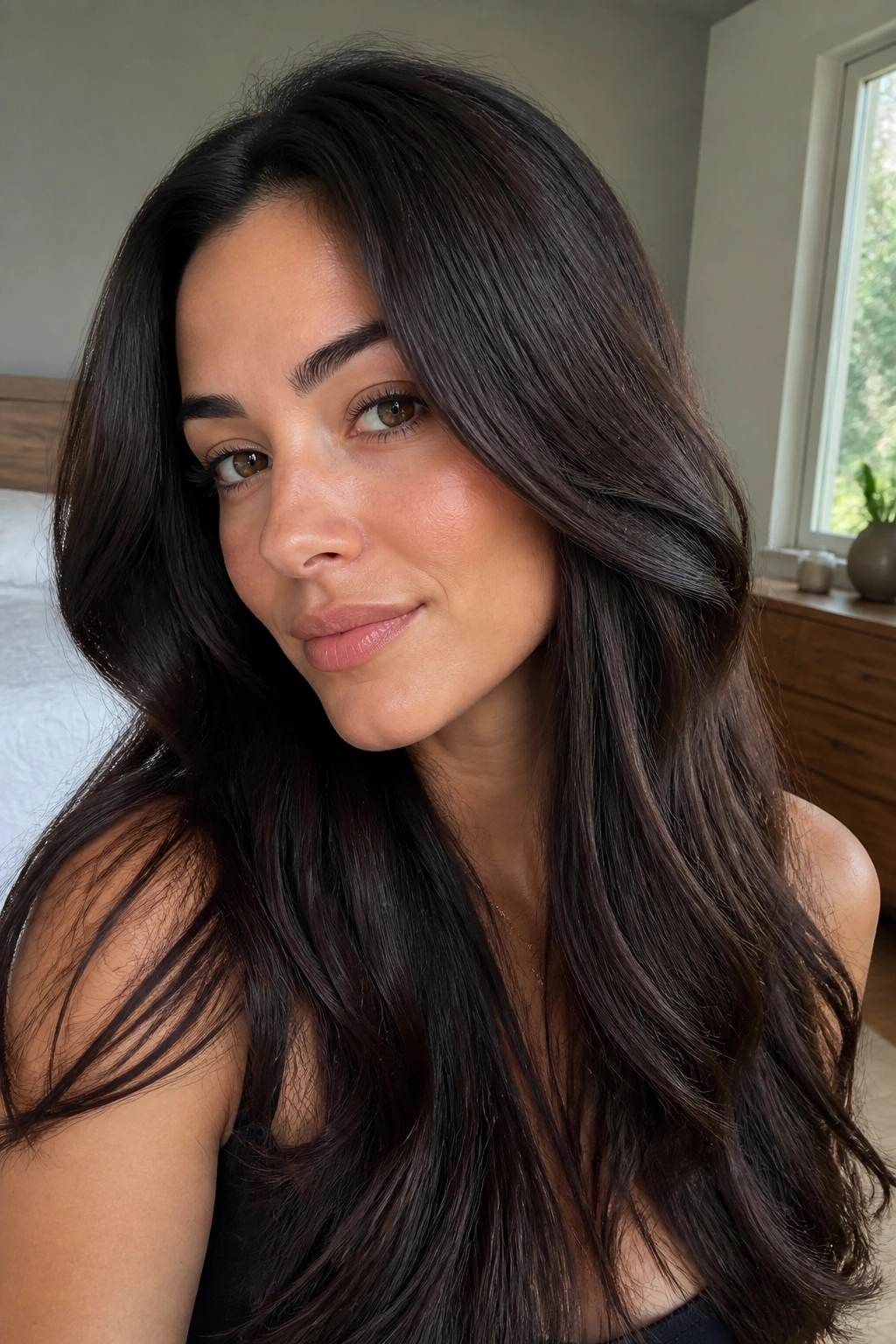
Espresso brunette is the shade I reach for when someone wants dark hair without the hard edge of black. It sits in that deep brown zone that looks polished in daylight and almost liquid under indoor light, especially when the finish is toned a touch cooler than the natural base.
Why it reads so glossy
The magic is the balance. If the brown goes too warm, it can start to look soft but dull. If it goes too ash-heavy, it can look flat and smoky in a way that steals shine. Espresso works because it holds a neutral base with just enough cool depth to keep the color clean.
Ask for a level 3 or 4 brown with a neutral or cool gloss. If your ends are lighter from old color, they may need to be filled first so the shade doesn’t grab unevenly. That part matters more than people think. Dark color on damaged hair can go patchy fast.
Quick notes that help
- Best starting base: level 4 to 6.
- Salon request: neutral-to-cool espresso with a demi-permanent glaze.
- Best finish: a soft blowout or loose waves that show the color’s sheen.
- Watch for: overly red formulas that can turn the look chestnut instead of espresso.
Best tip: if the hairline tends to fade fast, ask for a slightly deeper root and a softer mids-to-ends gloss. It keeps the whole color looking fresh longer without making the face frame look heavy.
2. Chocolate Cherry Brown
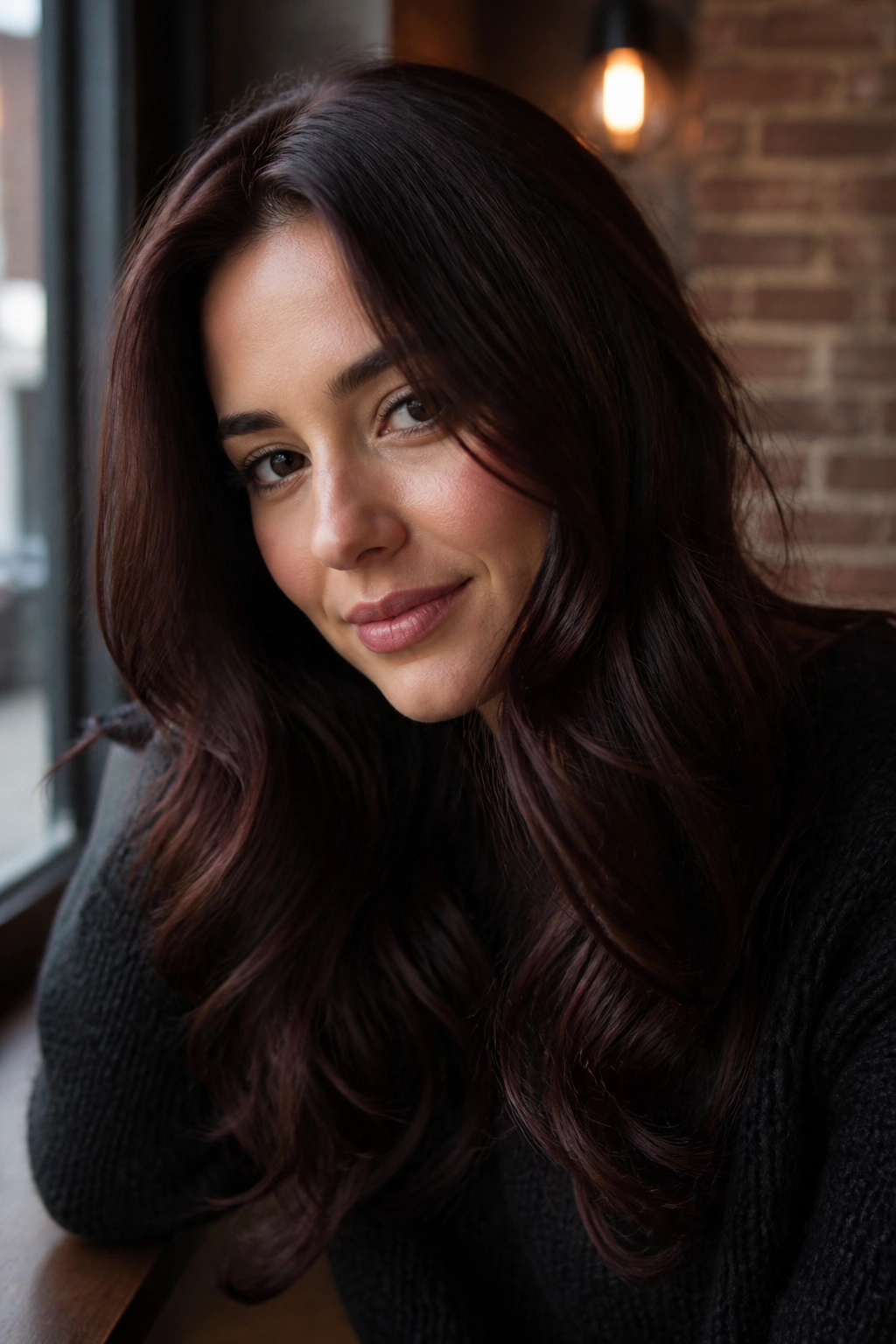
Why does chocolate cherry brown look richer than a plain brunette? Because the red-violet reflect gives the hair something to do when light hits it. You get depth first, then that dark cherry glimmer in the right angles. It never shouts. It just moves.
This shade is especially kind to hair that’s naturally medium brown or dark brown. The base stays familiar, so the color doesn’t feel like a costume. But the cherry note changes the whole mood. Under warm indoor light, it can read like polished cacao. In sunlight, the red side wakes up and you get that almost wine-like glow.
A good version of this color should stay brown first and cherry second. If the red takes over, it starts looking brighter and less expensive. The trick is a brown base with a sheer red-violet overlay, not a red dye job disguised as brunette.
How to ask for it
Tell your colorist you want a dark brown with a visible cherry reflect, not a copper result. If you’re doing it at home, choose a shade marked brown-red or brown-violet rather than straight red. Those usually keep the color grounded.
This one is also a nice move if you want depth but hate the flatness that sometimes comes with cool brunettes. It gives the hair a little life without pushing it into bright territory.
3. Blue-Black Glass
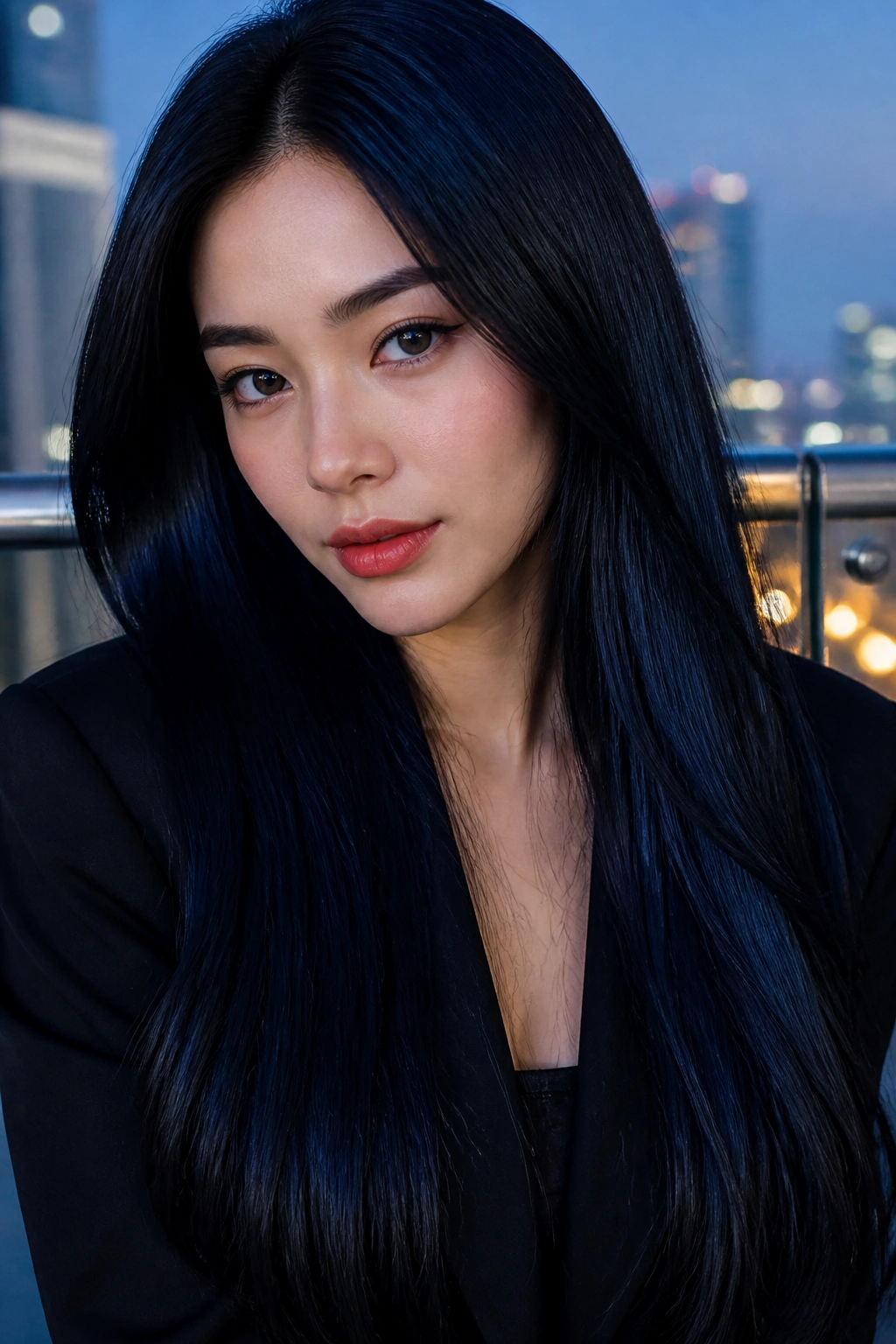
If you want hair that looks almost lacquered under restaurant lighting, blue-black is the shade to know. It’s dramatic, yes, but the best version feels clean and sleek rather than severe. That blue reflect is doing quiet work the whole time.
Blue-black can be tricky on porous hair. On healthy hair, it looks inky and reflective. On rough, thirsty ends, it can go too matte, or even pick up a greenish cast if the hair underneath is too light. That’s why this shade works best when the base is already dark or has been filled properly before coloring.
The payoff is strong. The hair looks dense, and the shine has a mirror-like edge when the light hits straight on. It’s one of the best choices if you like a cool finish and you don’t want warm brown tones anywhere near your head.
What matters most
- Best base: naturally dark brown or black-brown.
- Best formula type: permanent or demi-permanent with blue reflect.
- Best styling: sleek waves, straight blowouts, or a low bun.
- Common mistake: lifting the hair first, then going blue-black without filling.
A little shine serum on the mids and ends helps, but don’t drown the hair in oil. The color should look glossy because of the tone, not greasy because of product.
4. Mahogany Melt
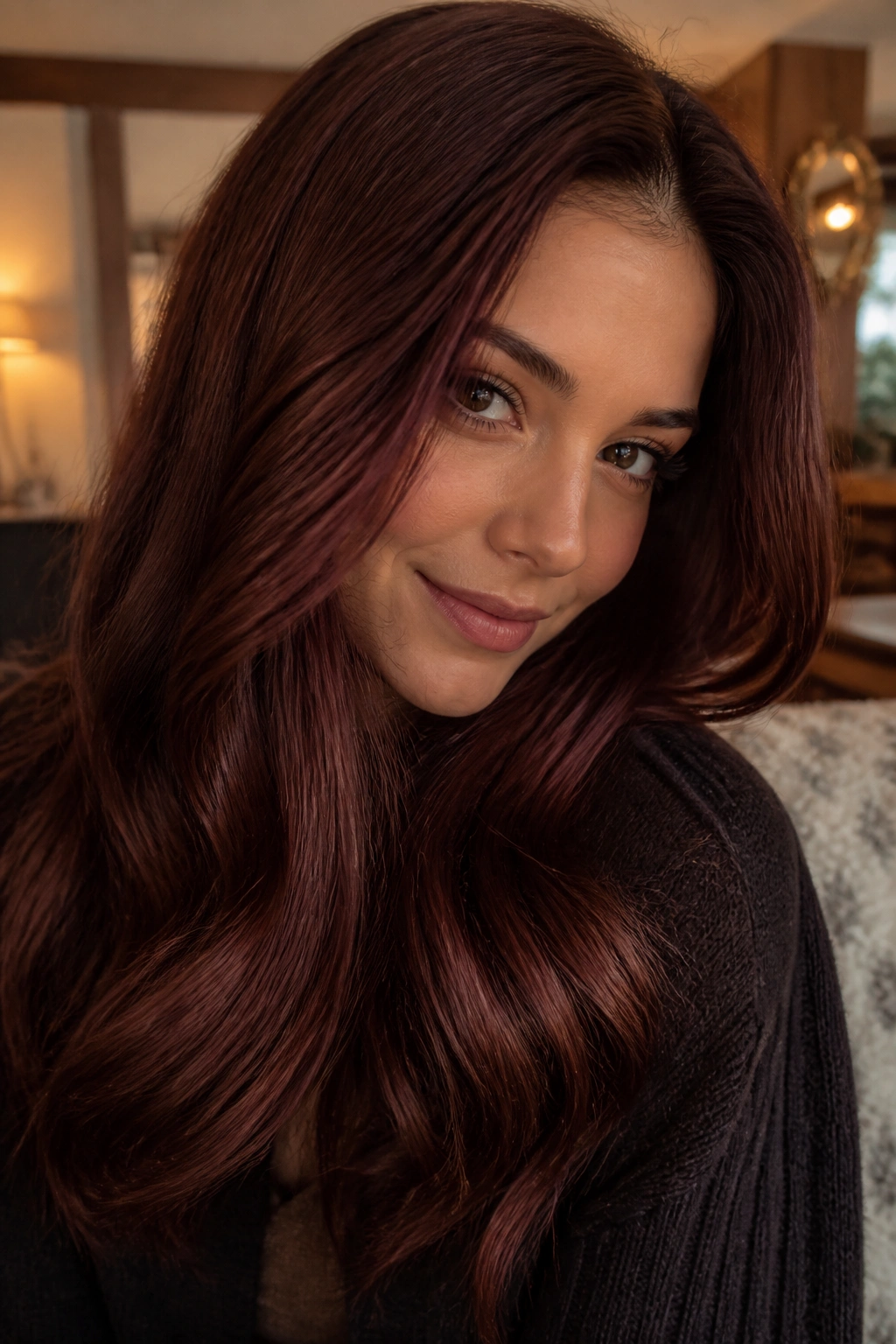
Mahogany is one of those shades that looks richer the longer you stare at it. It sits between brown and red, with a red-brown warmth that feels deeper than copper and less blunt than auburn. On the right base, it almost glows from inside the hair shaft.
What makes mahogany special is the way it changes under different light. In dim indoor light, it reads as a deep brunette with warmth tucked inside. In brighter light, the red-brown side comes forward. That movement keeps the hair from going flat, which is half the battle with rich color.
Where the warmth lives
Ask for deeper roots and slightly warmer mids, not one solid red-brown block from scalp to ends. That small shift gives the color dimension and keeps it from looking painted on. A gloss after coloring can help a lot here, especially if the hair is dry or prone to rough ends.
Mahogany is also a smart choice if you’ve been living in cooler browns and want a little more life without jumping to bright red. It feels grown-up. It feels intentional. And it has enough depth that it still reads glossy when the weather is harsh or the light is bad — which is where a lot of hair color gets exposed.
5. Smoked Chestnut
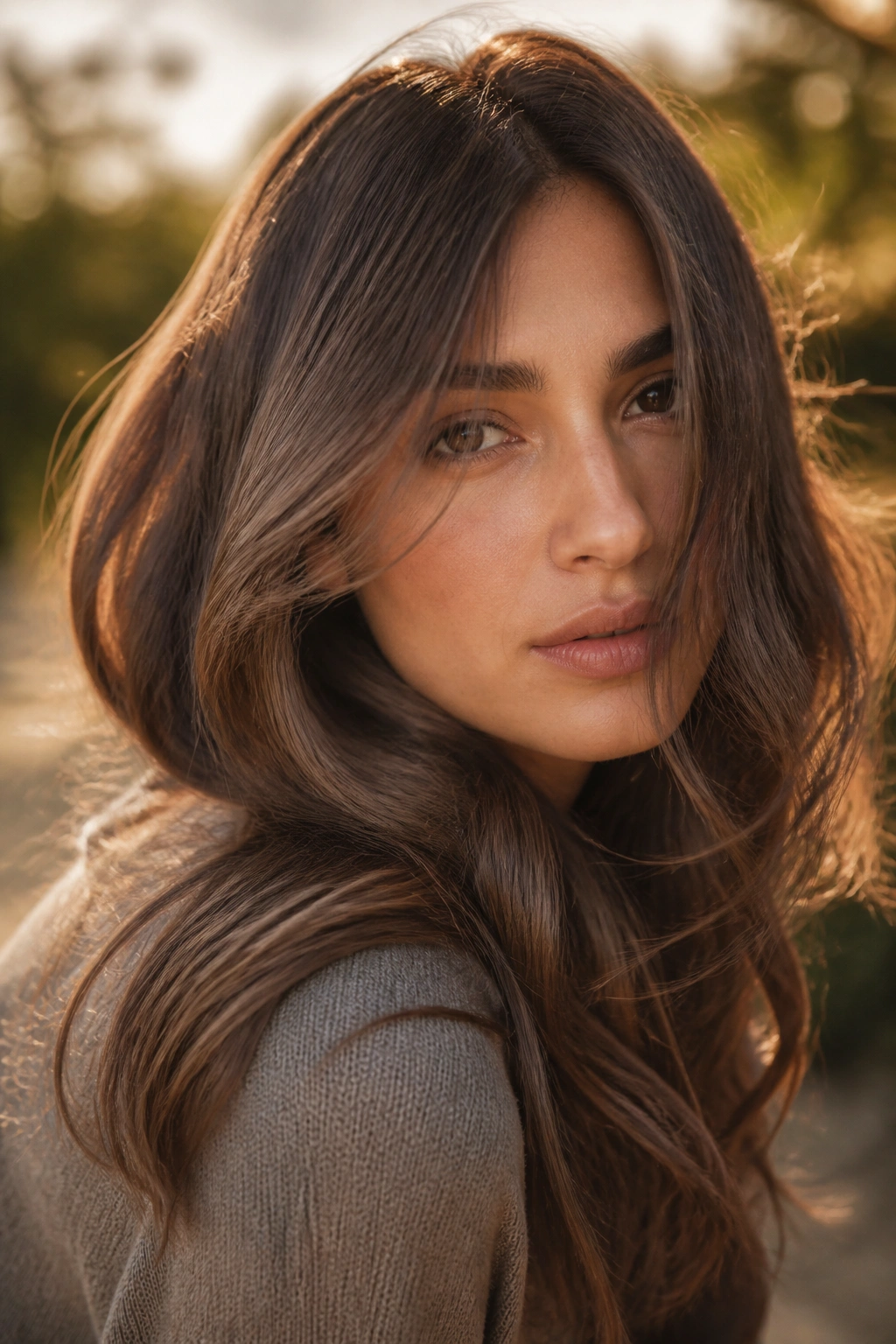
Smoked chestnut is for people who like brown hair with a little mystery in it. It’s not loud. It’s not warm in the obvious way. Instead, it blends chestnut brown with soft ash and muted beige so the result feels shaded, not painted. That shading is what gives it depth.
This shade works well when the hair has some movement, even if it’s subtle. A soft bend at the ends or a loose wave shows the tonal shifts better than poker-straight hair. But even straight, it holds up because the color itself does the visual work. The smoked part keeps the chestnut from reading orange or flat.
It’s also a forgiving shade for people who don’t want to be at the salon every few weeks. The grow-out is gentler than a high-contrast color, and the roots can blend into the rest of the hair without looking sloppy.
A detail I like here: the gloss should be soft, not glassy. Too much shine can flatten the ash notes. A balanced finish lets the brown stay deep while the cooler pieces catch the light just enough.
6. Plum Noir
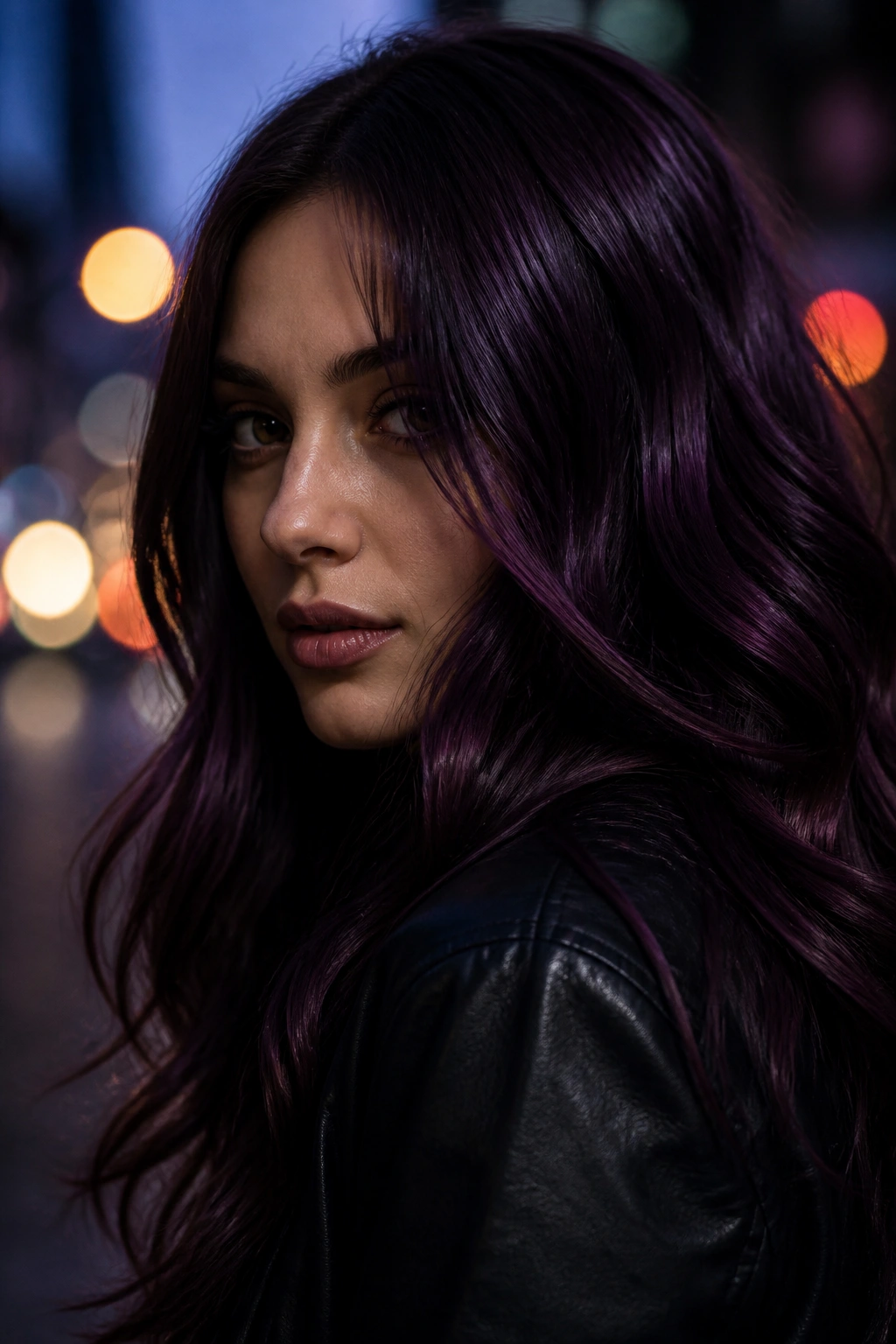
Plum noir is what happens when black-brown hair gets a dark violet secret. On paper, it sounds bold. In real life, it often looks like the most elegant dark brunette in the room, with just enough berry tone to keep the shade from collapsing into plain black.
Unlike warmer reds, plum noir stays cool and moody. Unlike pure blue-black, it has a little softness in the undertone. That makes it useful for people who want drama but don’t want the sharpness that can come with a very cool black shade. It also plays nicely with olive and neutral skin because the violet keeps the tone from looking harsh.
A good plum noir formula usually sits around a level 2 to 4 base with a violet-brown gloss on top. If the purple is too bright, the color can go flashy. If it’s too weak, you lose the whole point. The best version looks almost black until the light finds it.
This is a strong pick if you wear a lot of black clothing and want your hair to have just enough color to stop the look from going dead. That small note of plum changes everything.
7. Cinnamon Cocoa
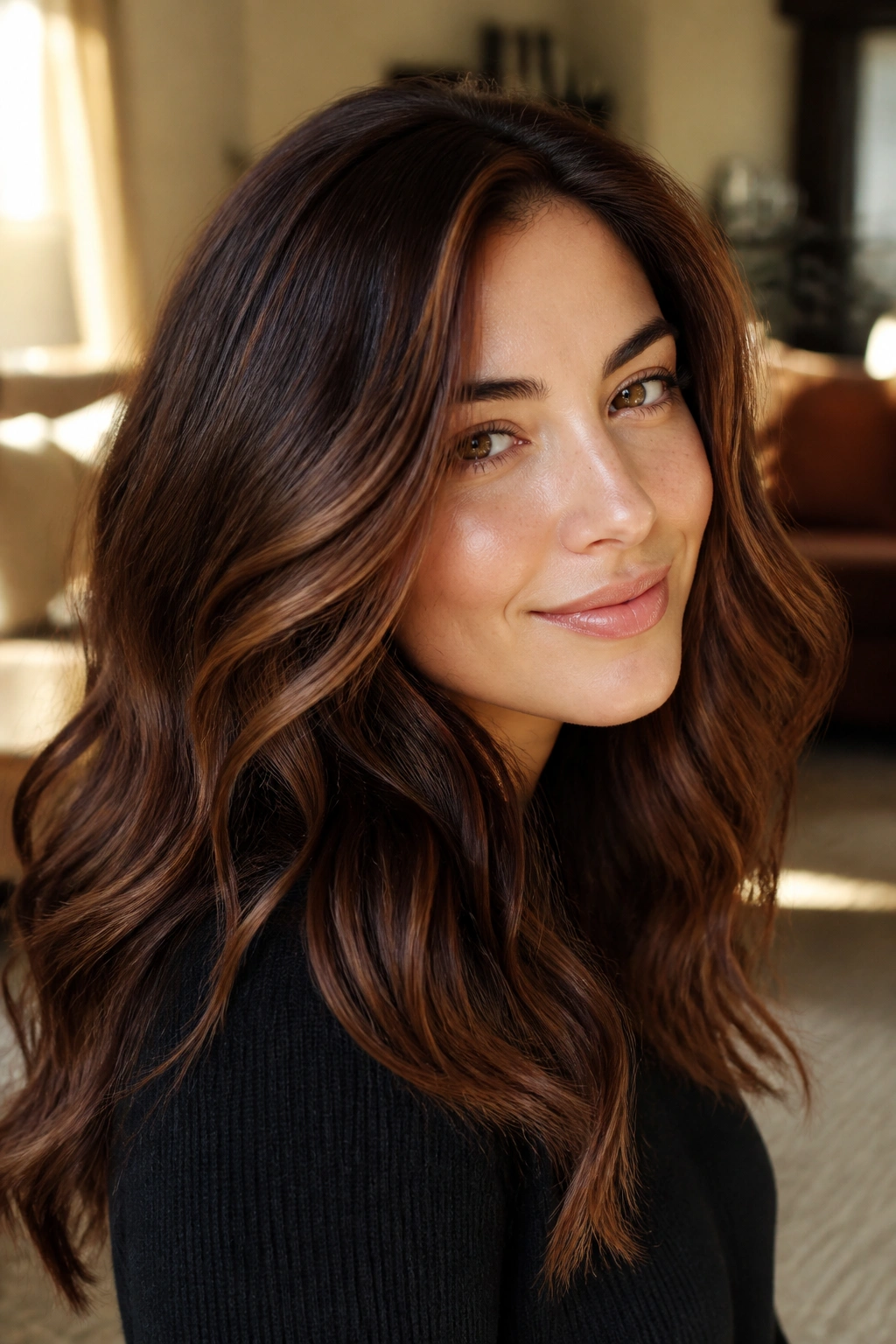
Cinnamon cocoa has warmth, but it’s controlled warmth — not the kind that turns brassy and loses shape. Think of a deep cocoa base with a cinnamon thread running through it. The color feels cozy, but not soft to the point of vanishing.
This one really wakes up on wavy or curly hair. The bends in the hair show the cinnamon pieces, so the color gets movement without needing heavy contrast. On straighter hair, you can still get the effect, but the placement matters more. Thin ribbons around the face and a few deeper cinnamon strokes through the mid-lengths usually work better than broad warm bands.
What to ask for
- A cocoa brown base with cinnamon reflect, not copper.
- Soft lowlights if your hair already runs light brown.
- A gloss that keeps the red side muted.
- Face-framing warmth only if you want extra brightness near the skin.
The danger here is going too orange. That’s not cinnamon cocoa. That’s a different thing entirely, and it usually looks flatter because the depth disappears. Keep the brown strong and the spice subtle. That’s where the shine lives.
8. Velvet Mocha Balayage
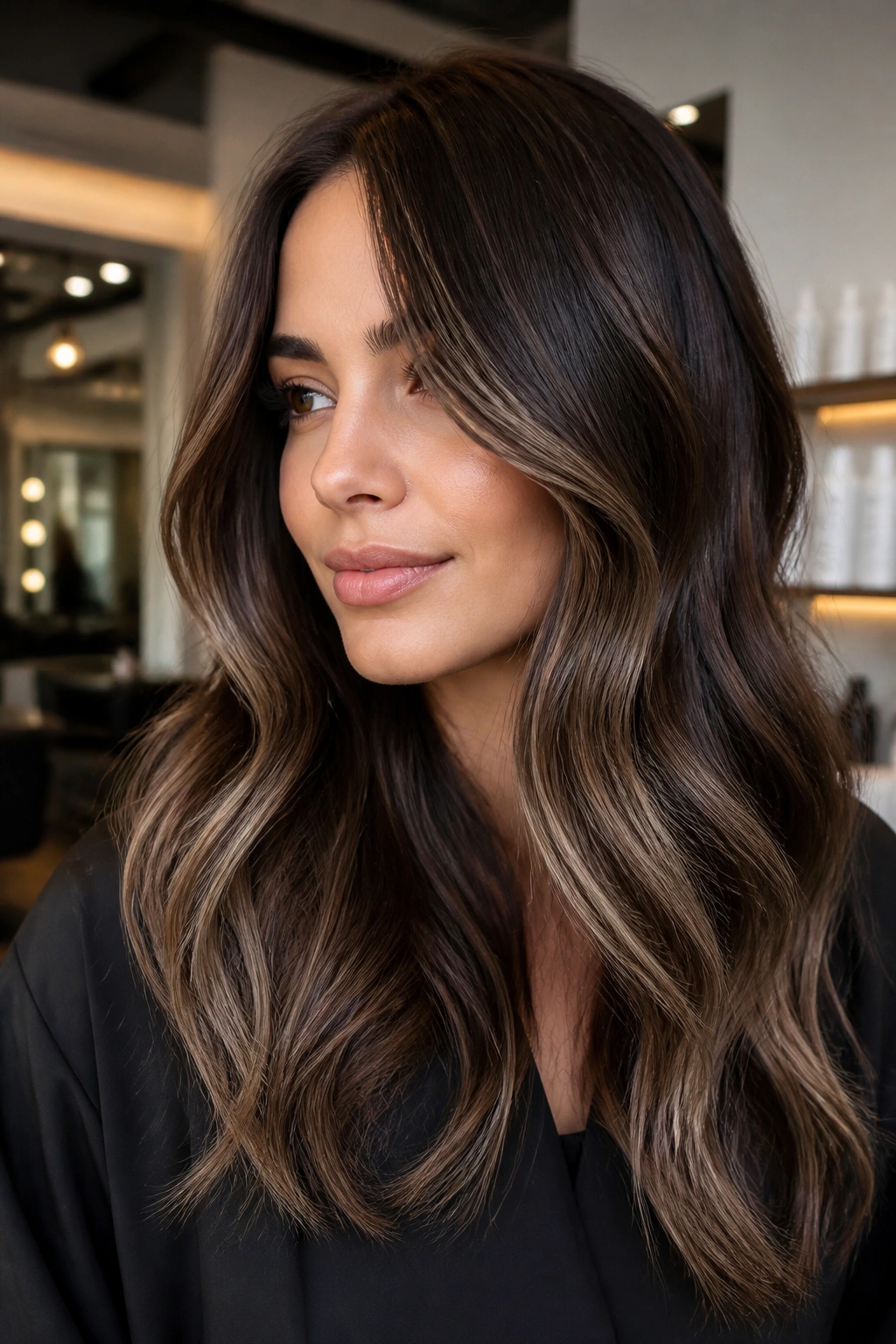
Balayage can look rich. It just needs a strong base. Velvet mocha balayage keeps the root and most of the hair deep mocha brown, then threads in soft ribbons of beige-mocha, latte, or muted caramel through the mids and ends. The contrast is there, but it doesn’t shout.
The reason this works is simple: the darker base anchors the whole look. If too much lightening happens, the color starts to feel airy and thin. If the ribbons stay narrow and blended, the hair looks expensive in a very quiet way. You get dimension without losing that deep, glossy brown shell around it.
This is the kind of color that grows out well, which people often underestimate. The regrowth doesn’t look like a mistake because the balayage placement is soft at the root. That matters if you want something pretty but not high-maintenance.
The best version usually has
- A level 4 or 5 mocha base.
- Lightened pieces no more than 2 to 3 levels brighter than the base.
- Soft face framing, not chunky stripes.
- A glaze after lightening to smooth the tone.
If the lighter pieces turn too gold, the whole look can get sleepy. Keep the ribbons toned beige or soft tan, and the color stays plush instead of brassy.
9. Deep Auburn
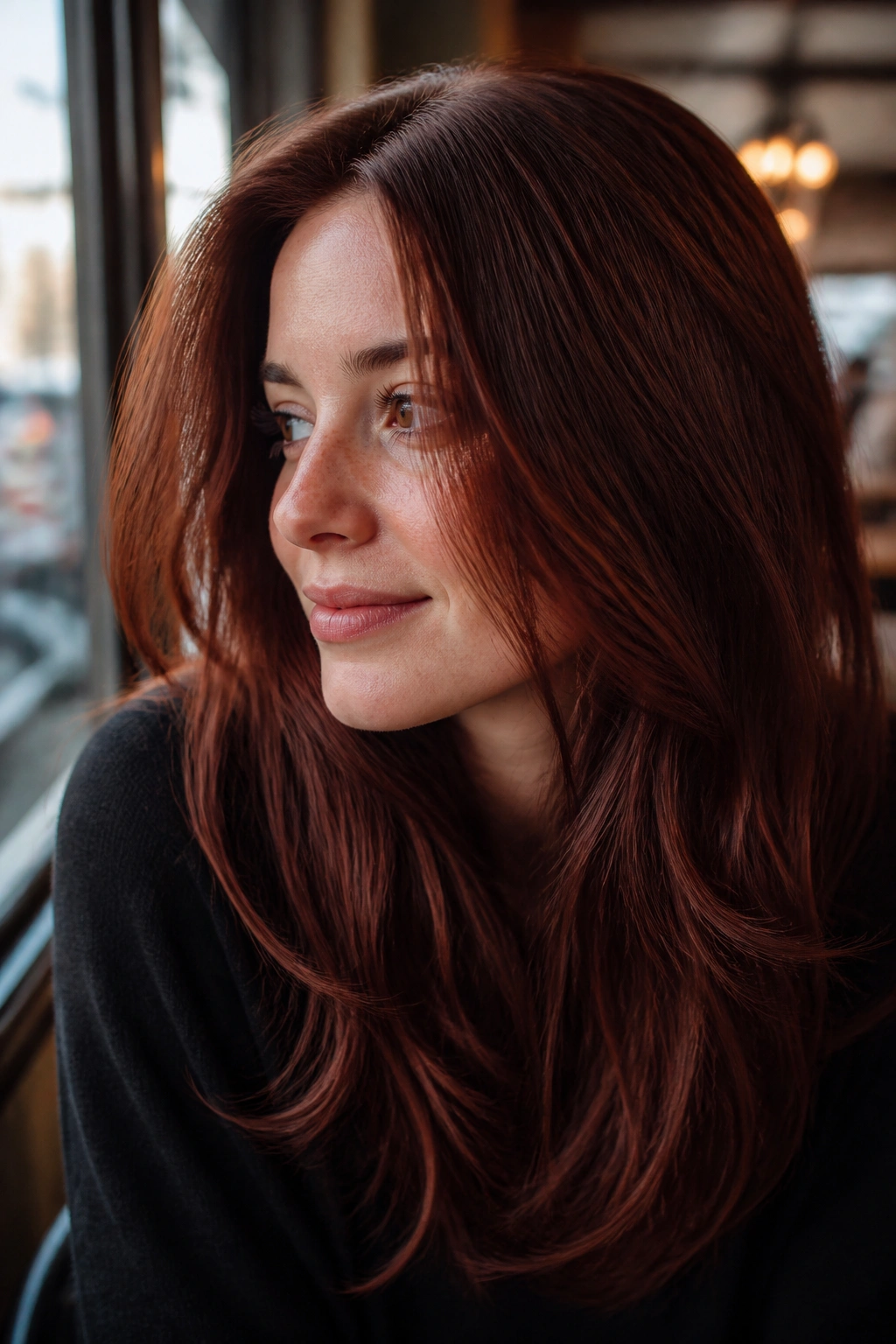
Deep auburn is for the person who wants red hair, but with more brown in it than most people expect. That brown base is what gives the color weight. Without it, auburn can turn bright and lose the rich finish you’re after.
This shade looks especially good when the hair has some thickness or volume because the red-brown depth can spread through the shape of the cut. It’s not a color that needs to be screaming to work. In fact, it often looks better when the red note is tucked under the surface and the brown stays front and center.
Auburn can fade fast if it’s over-washed or hit with hot water every day. So if you like this family of color, a cool rinse and a color-safe shampoo go a long way. That’s not glamorous advice, but it’s the boring part that keeps the glossy part alive.
The best auburn shades look like brown in low light and red in motion. That little shift is what makes them feel expensive instead of loud.
10. Mushroom Brown
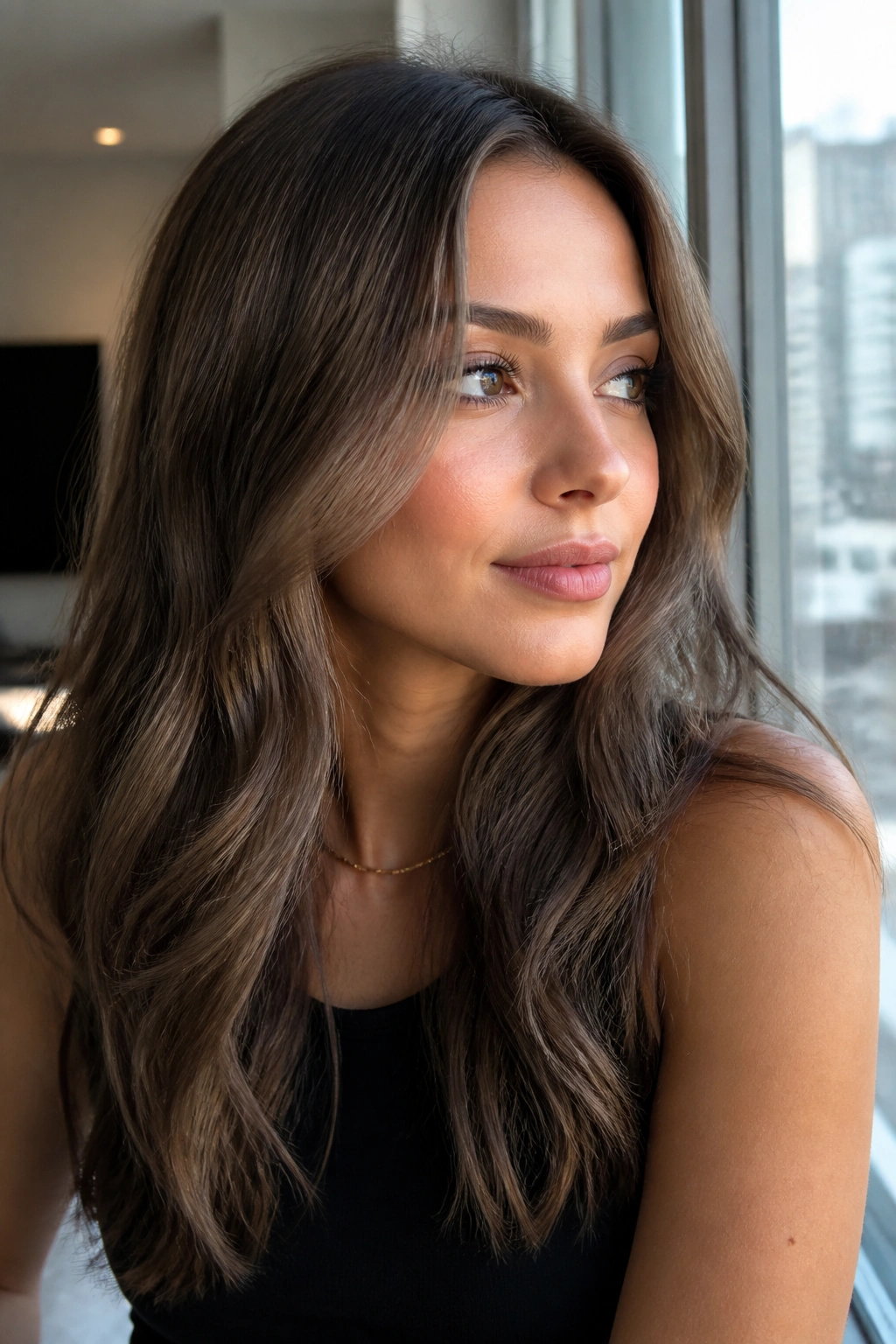
Mushroom brown is not boring if it’s done well. It’s a cool-toned brunette with taupe, ash, and soft beige woven through it, and the whole effect is far more dimensional than people expect. The name sounds plain. The color usually isn’t.
What keeps mushroom brown from looking flat is the mix of tones. If everything is too gray, the hair can look dusty. If it’s too beige, you lose the mushroom effect entirely. The sweet spot sits between those extremes, where the cool tones make the brown look smoky and the soft neutral pieces keep it wearable.
The part people miss
Mushroom brown looks best when the cut has movement. A blunt one-length cut can still work, but layers or soft face framing let the cool and neutral pieces show themselves. That’s where the shine comes from — not from brightness, but from contrast inside the shade.
This is a nice choice if you want something muted, polished, and low drama. It also works well when you don’t want red or gold showing up in the mirror every morning. Keep the toner fresh, though. Cool brunettes can drift warm as they fade, and then the whole point gets lost.
11. Black Cherry
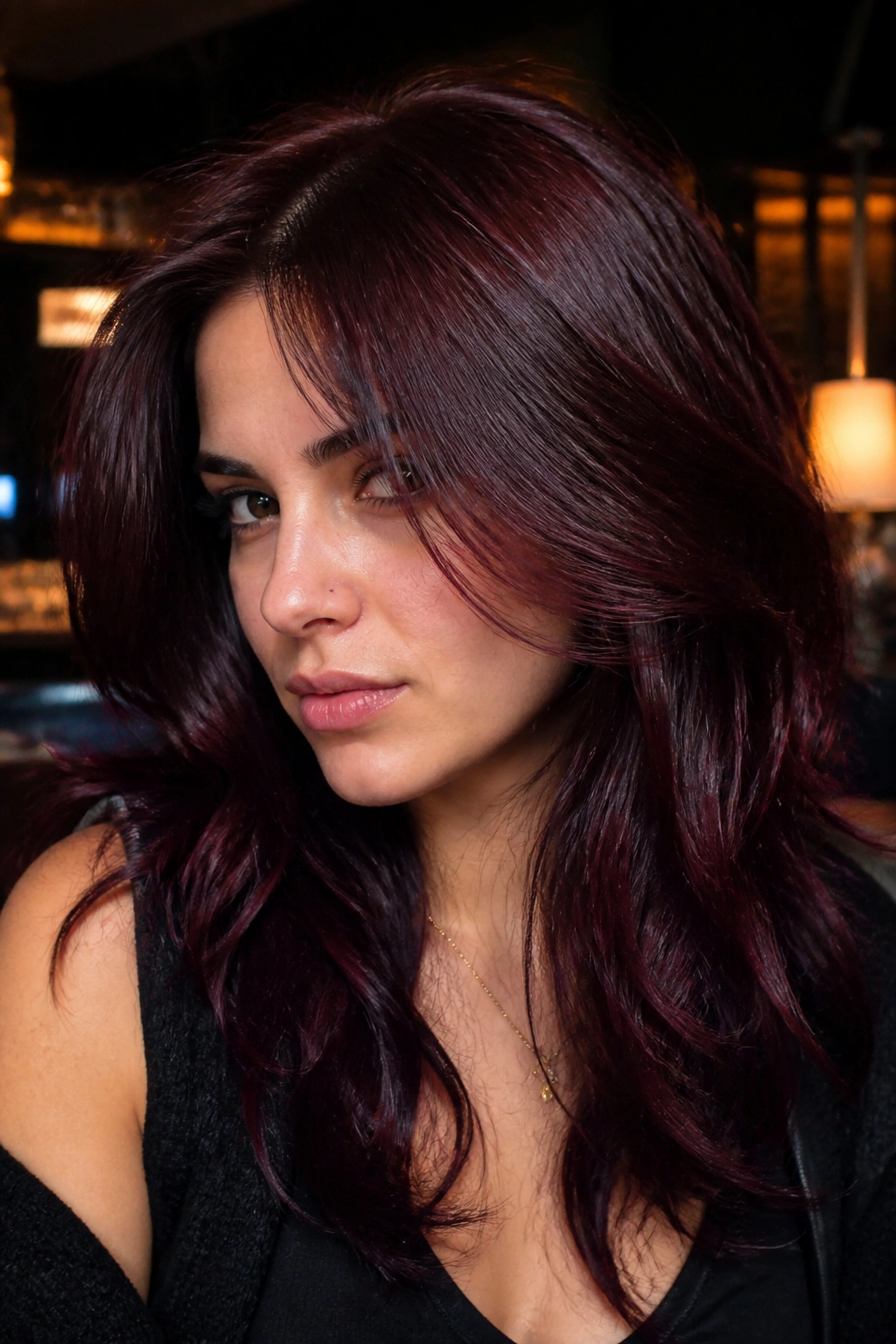
Black cherry is what happens when a dark brunette decides to wear wine-colored light underneath it. From a distance, it can look almost black. Up close, the burgundy and cherry notes start to appear, especially around the crown and the ends where light catches the hair more easily.
This is a richer, darker cousin to chocolate cherry brown. The difference is depth. Black cherry sits lower and moodier, with less obvious brown and a stronger red-violet shadow. If you want something that feels dramatic without reading as bright red, this is a very solid place to land.
How it differs from mahogany
Mahogany leans brown-red and feels warmer. Black cherry leans red-violet and feels cooler. That small shift changes the whole mood. Mahogany is cozy. Black cherry is sultrier.
If you have dark hair already, a black cherry gloss can be enough. On lighter brunettes, you may need a richer base so the color doesn’t go too transparent. A deeper base makes the red look plush instead of sheer, and plush is what you want here.
This shade is one of those colors that looks even better on day two, after the hair settles and the shine levels out. Fresh color can be a little loud. A day later, it usually looks richer.
12. Tawny Bronde
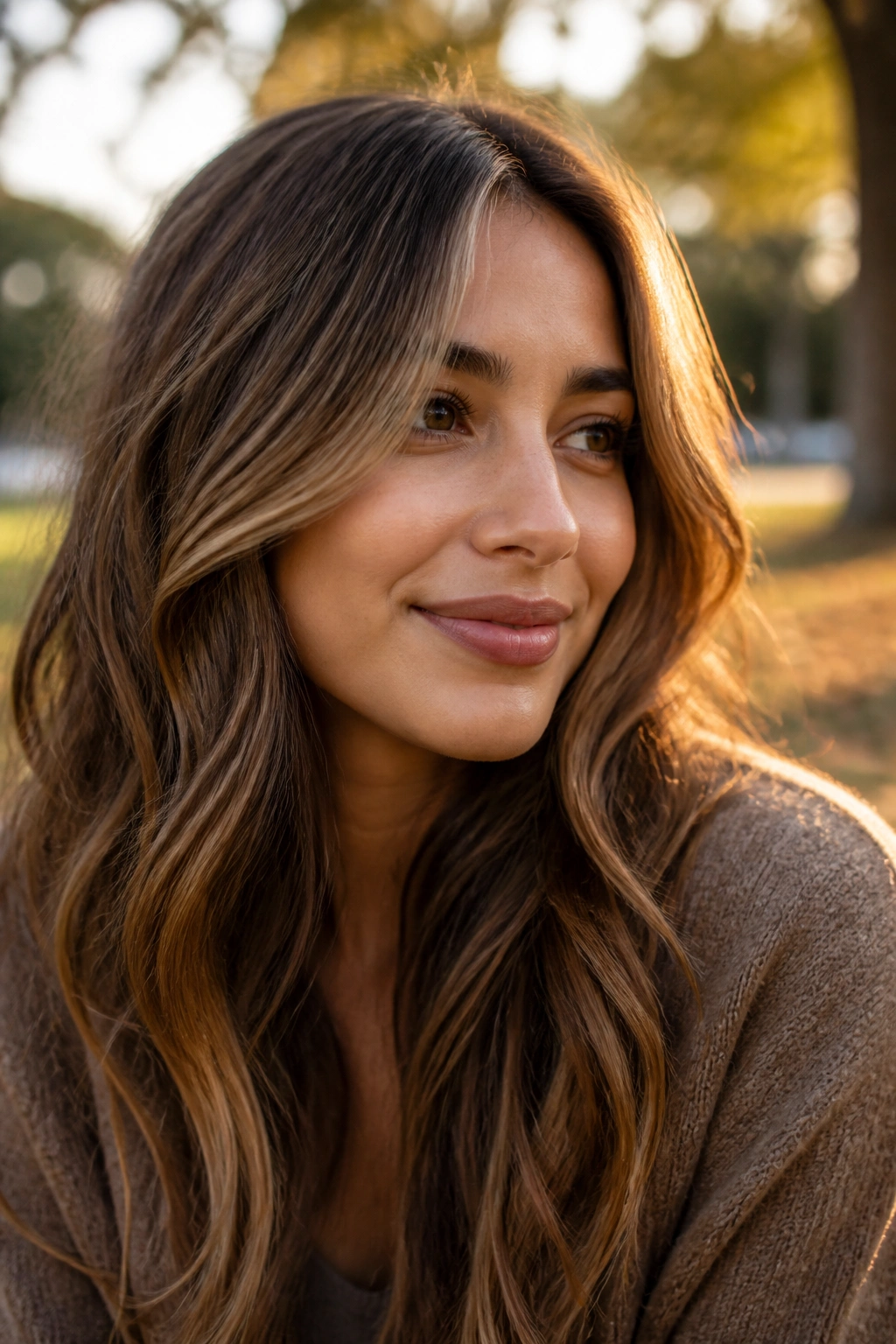
Tawny bronde is the answer when you want brightness, but you don’t want to lose the feeling of depth around the roots. The best version keeps the base a warm brown and weaves in tawny, honeyed, and soft beige pieces that sit between brunette and blonde. It’s lighter than mocha balayage, yet still grounded.
This shade works because the lighter pieces are selective. If the entire head gets lifted too much, the richness disappears and you’re left with something airier and less glossy. Keep the root deeper, keep the ribbons fine, and the color stays full.
A lot of people ask for “bronde” and end up with a vague mix that doesn’t commit either way. Tawny bronde should commit. The root is brown. The mids are warm. The lighter pieces sit where light naturally hits — around the face, through the top layer, and on the ends of movement pieces.
That little bit of darkness at the root is what makes the blonde pieces look brighter. Without it, the whole thing just reads light brown.
13. Ink Black with Soft Reflection
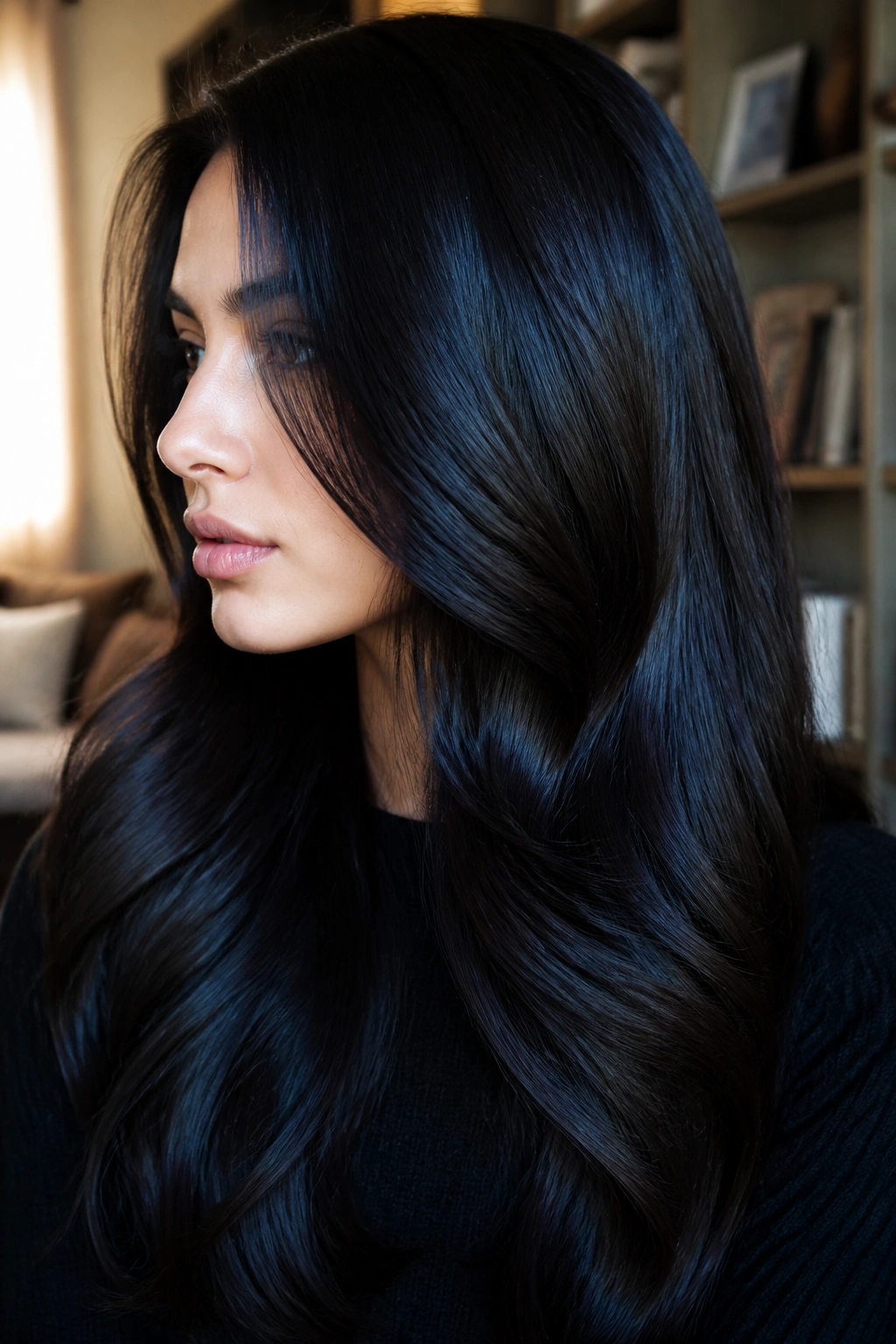
Ink black with soft reflection is not the same thing as a flat black dye job. That distinction matters. Flat black can swallow detail and make the hair look hard. Ink black with a soft reflective finish keeps the depth but lets a tiny brown or blue sheen show when the hair moves.
Compared with blue-black, this version is less cool and a little softer. Compared with jet black, it has more dimension and less severity. That makes it a smart choice if you want black hair but still want to see some shape in the cut, some movement in the ends, and some light on the surface.
Best for people who want
- A deep, classic black result without a harsh edge.
- Shine that looks polished, not oily.
- A shade that works with strong brows and sharp lines.
- Low contrast against naturally dark roots.
This kind of black can be stunning on thick hair because the density of the strands gives the color more surface to reflect off. Fine hair can wear it too, but a blunt cut sometimes helps keep the ends from looking see-through. A clear gloss after coloring can make the finish feel smoother, which helps a lot on textured or porous hair.
14. Honeyed Espresso
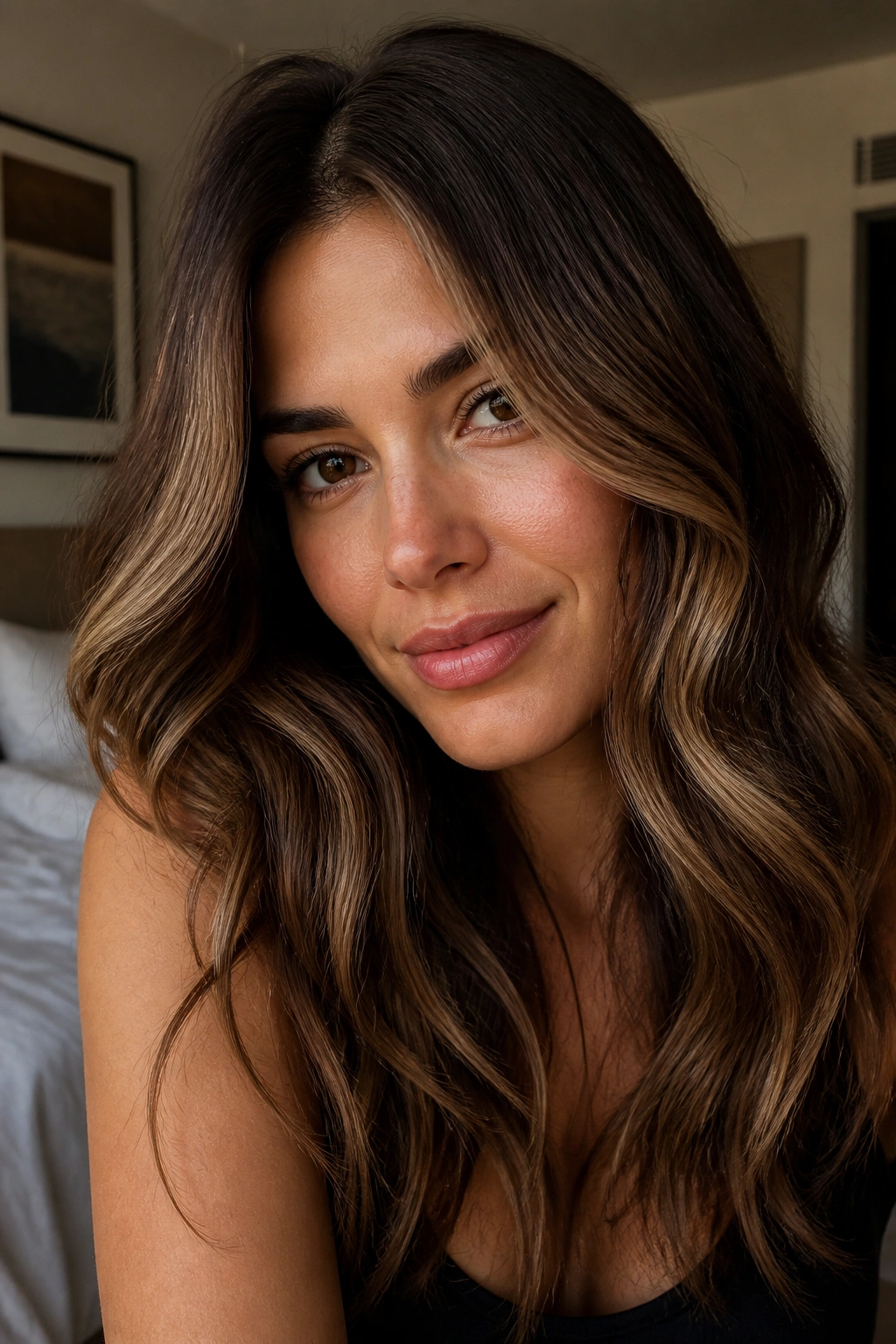
Honeyed espresso gives you deep brown roots with only a restrained trace of honey around the face and through the top layers. The key word there is restrained. Too much honey and the shade loses its richness. Too little and it’s just another brown. The sweet spot is narrow, and that’s why it works.
This color is useful if you want softness near the face without giving up the dark, glossy body of a brunette. The lighter pieces should look intentional, not scattered. Think a few ribbons that lift the complexion, not a full brightening job that breaks the mood of the hair.
One thing I like about this shade is how forgiving it is on grown-out color. If you already have old highlights, a honeyed espresso gloss can weave them back into the base instead of forcing you to start from scratch. That saves time and keeps the hair looking full.
It also tends to look best with waves or a round brush blowout because the reflected honey pieces can move across the darker brown underneath. That movement is where the richness shows up.
15. Mulberry Brunette
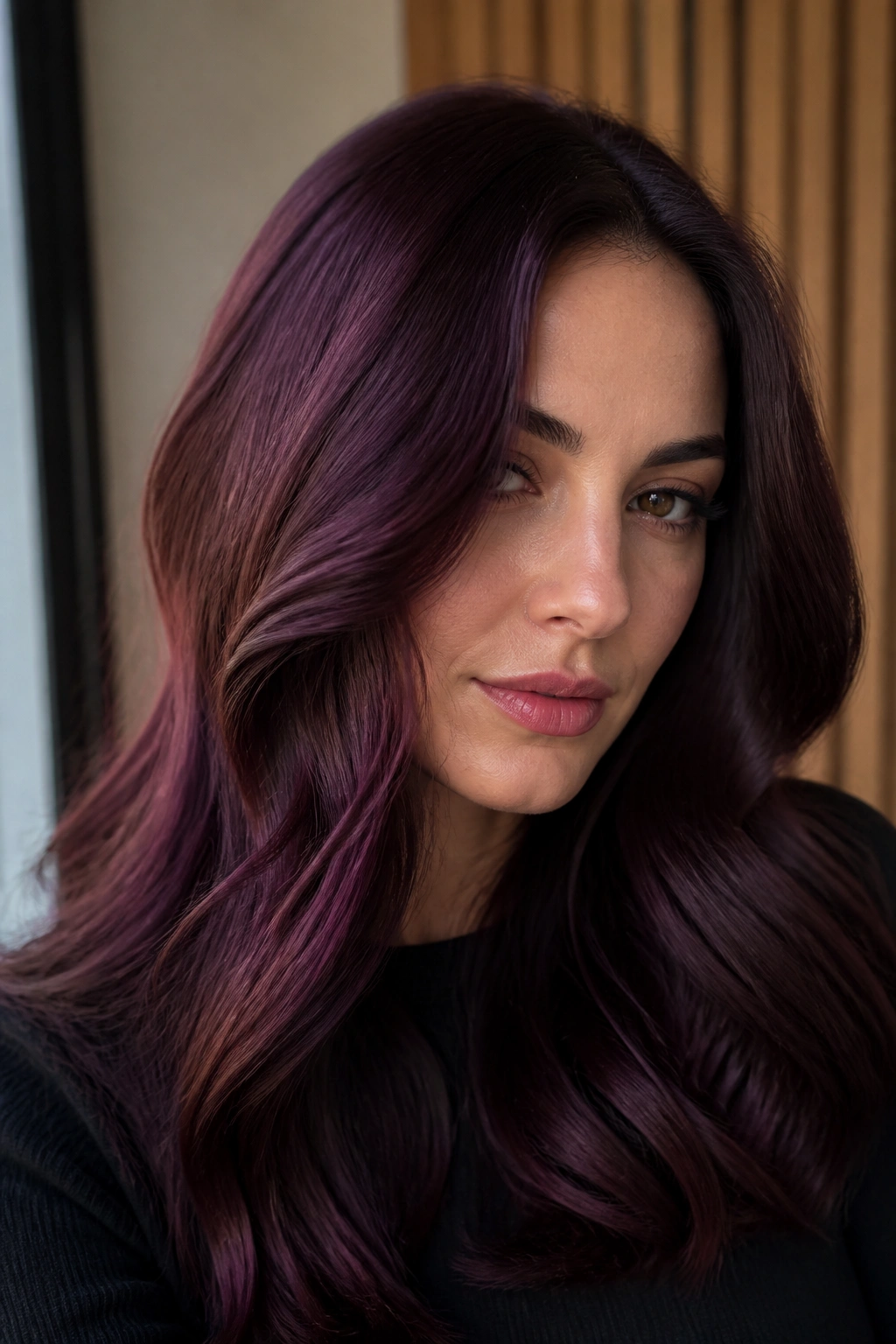
Mulberry brunette has a low, dark base with berry-violet undertones that appear and disappear depending on the light. It’s one of the most interesting deep shades because it never looks exactly the same twice. Indoors, it can seem like a deep chocolate brown with a hidden wine note. Outside, the mulberry side wakes up and the whole color gets a little more alive.
This shade is a nice finish for anyone who wants dark hair with personality. Not flashy personality. Just enough. The trick is keeping the violet-burgundy piece subtle so the color stays brunette first. If the berry goes too hard, it stops feeling rich and starts feeling dyed on the surface.
A few people overlook this shade because they think berry tones belong only in bright red families. They don’t. In a deep brunette base, mulberry can look plush and elegant, especially when the hair is glossy and the ends are trimmed clean.
If you want depth with a little edge, this is a smart final stop. It has the darkness of a classic brunette and the dimension of a fashion shade, but it still reads wearable enough for everyday life.
Final Thoughts
The richest hair colors usually do two things at once: they hold a deep base, and they keep a little life in the tone. That life can come from red-violet reflect, smoky ash, soft caramel, or a cool blue note. The exact shade matters less than the balance underneath it.
If you’re choosing between several options, think about how much contrast you want near your face. Darker, cooler shades tend to look sharper. Brown-red and berry tones feel softer. Warm ribbons add brightness, but they only look rich when the base stays strong.
Bring photos if you can, but bring the right kind. A good one in indoor light, another near a window, and one from the back if the placement matters. That small bit of prep saves a lot of regret later, and it makes the conversation with your colorist a whole lot easier.
