



Silver highlights on medium brown hair can look smoky and sharp, or they can turn a little yellow and flat after the first wash. The difference usually comes down to placement, lift level, and how much of your brown base is left showing. If you want silver highlights for medium brown hair, the first decision is not the shade card — it’s where the lightest pieces should live.
Medium brown is a useful starting point because it gives silver something to sit against. Too dark, and silver can read muddy unless the hair is lifted hard. Too light, and you lose the contrast that makes silver feel intentional instead of washed out. A good colorist usually works in layers: lighter pieces around the face or crown, deeper brown left in the low spots, then a toner that pulls the whole thing toward smoke, steel, pearl, or graphite.
That balance is what makes silver look expensive instead of stripy. And yes, stripy is the risk. Silver is unforgiving when the lift is uneven, especially on hair that already has warmth in it. Orange and yellow are not the enemy by themselves; they just need to be lifted far enough before the cool toner goes on.
The styles below cover the full range, from whisper-fine babylights to bolder streaks that let the medium brown do half the work.
1. Smoky Silver Babylights for a Soft First Step
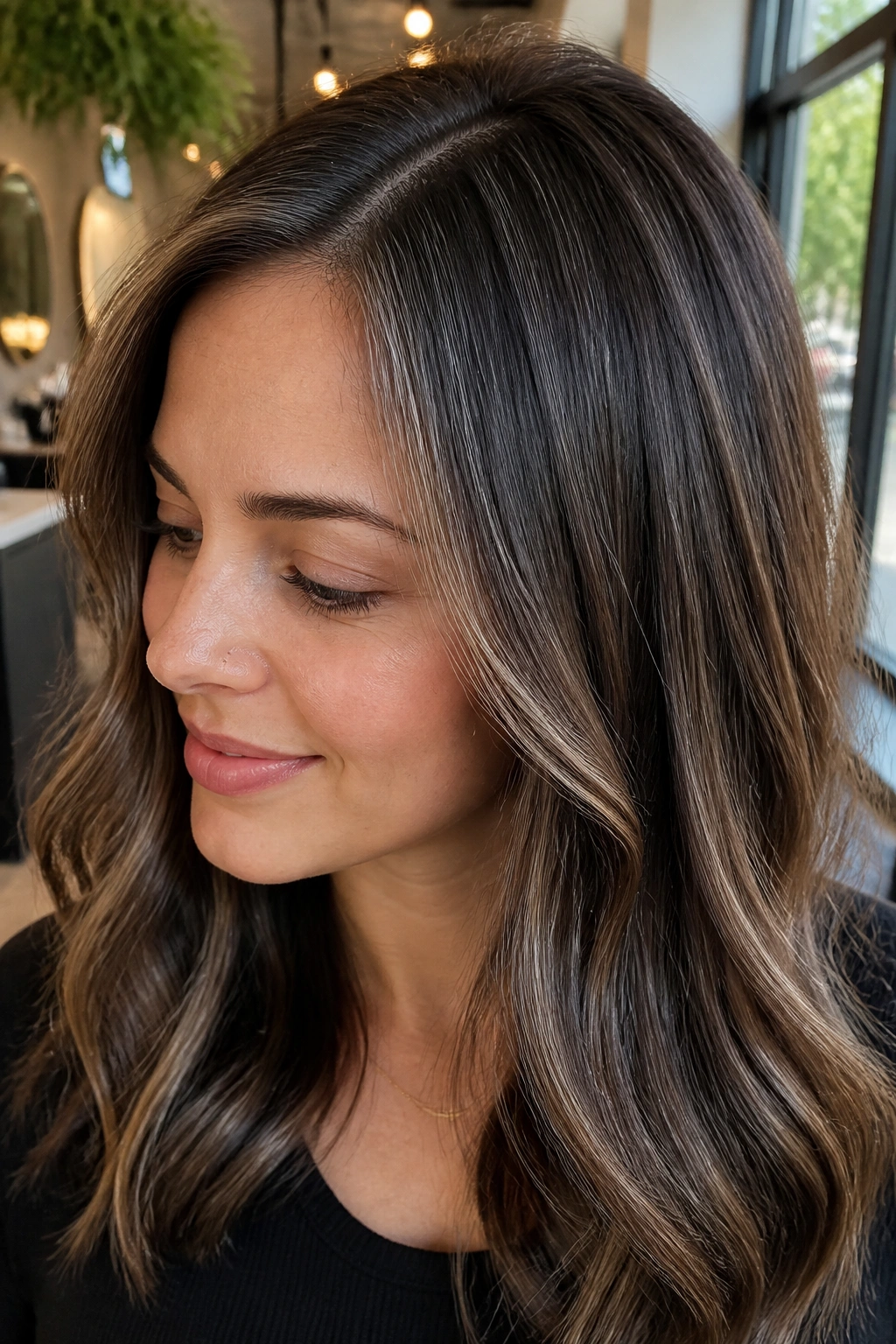
Tiny silver babylights are the easiest way to test the water without letting the whole head go icy. On medium brown hair, they create a soft shimmer rather than a hard stripe, which is exactly why I like them so much. They catch movement, not attention.
Why They Work So Well
Babylights are narrow enough to blend into the brown base, so the result feels airy instead of chunky. Ask for very fine foils, almost threadlike, with most of the placement around the top layers, part line, and hairline. The light pieces should be lifted to a pale yellow base before toner goes on; if the underlying warmth is still too strong, the silver will look beige or dull.
This idea suits people who want something cool but not high-drama. It also grows out gracefully, which matters more than people admit. You are not stuck with a blunt regrowth line every six weeks.
What to Tell Your Colorist
- Ask for micro-fine highlights, not wide foil sections.
- Keep the silver cool and smoky, not metallic chrome.
- Place more brightness around the part and face frame.
- Let the brown stay visible in the underlayers so the color reads dimensional.
My take: if you want silver but you are nervous about maintenance, start here. It’s the least punishing version of the trend.
2. Chunky Silver Ribbons for Real Contrast
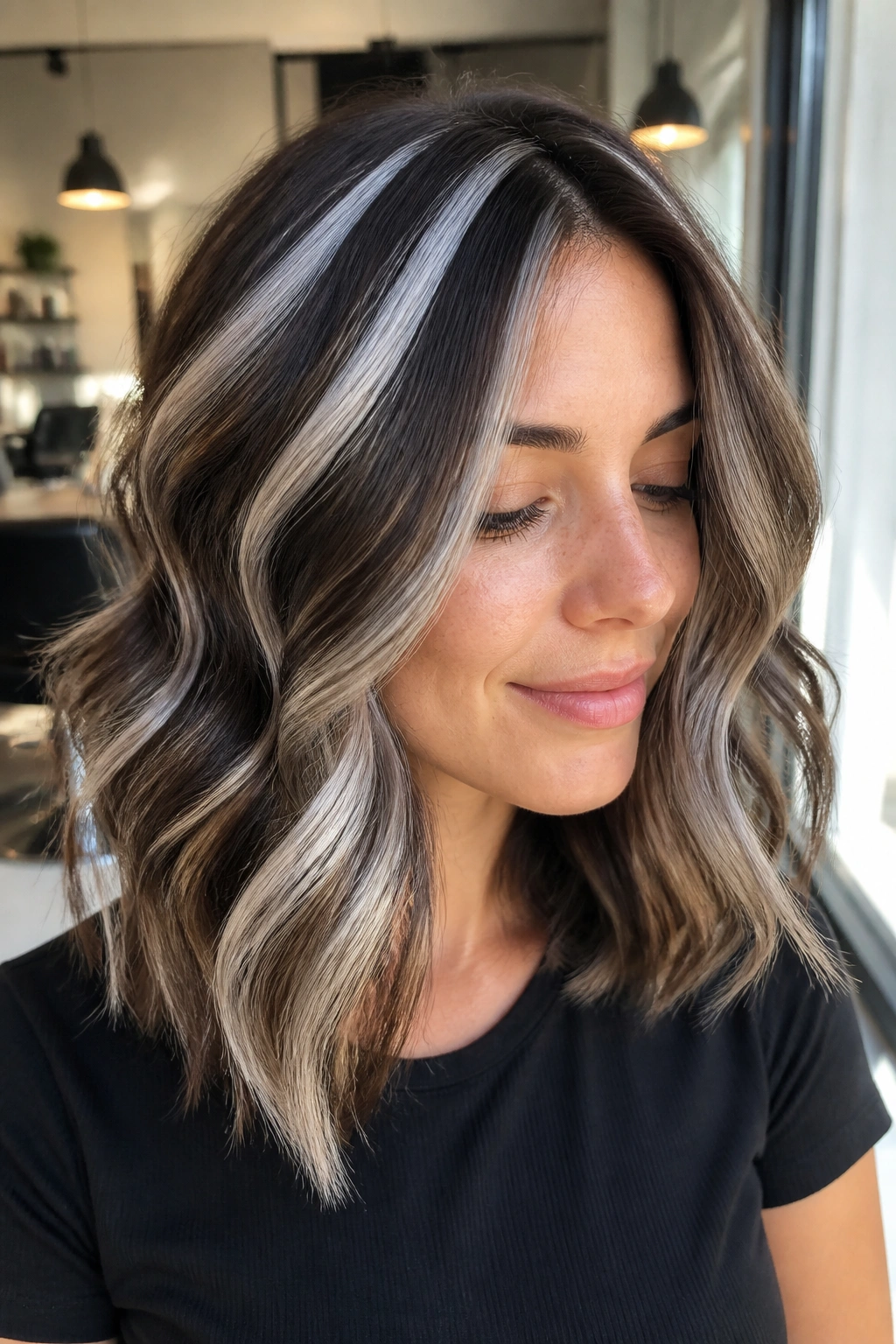
Chunky silver ribbons are not shy, and that’s the point. On medium brown hair, they make the cool tone feel deliberate instead of delicate, especially if your cut has blunt ends or strong waves. The brown base keeps the whole look from drifting into platinum territory.
These work best when the ribbons are placed with some breathing room between them. Too many thick highlights too close together and the hair starts to look striped, which is a mess no toner can fully fix. Spread the silver through the crown, mid-lengths, and a little around the front so the light moves with the haircut.
Chunkier placement also shows off texture. A wave bends the silver and brown into each other in a way that straight hair sometimes misses. That little bend in the strand matters.
The catch is upkeep. Bigger ribbons show regrowth faster than babylights, and if your natural brown is rich and warm, the contrast will be obvious after a few weeks. But if you like that punchy, graphic look, it is a very good trade.
3. Face-Framing Silver Money Piece That Brightens the Whole Cut
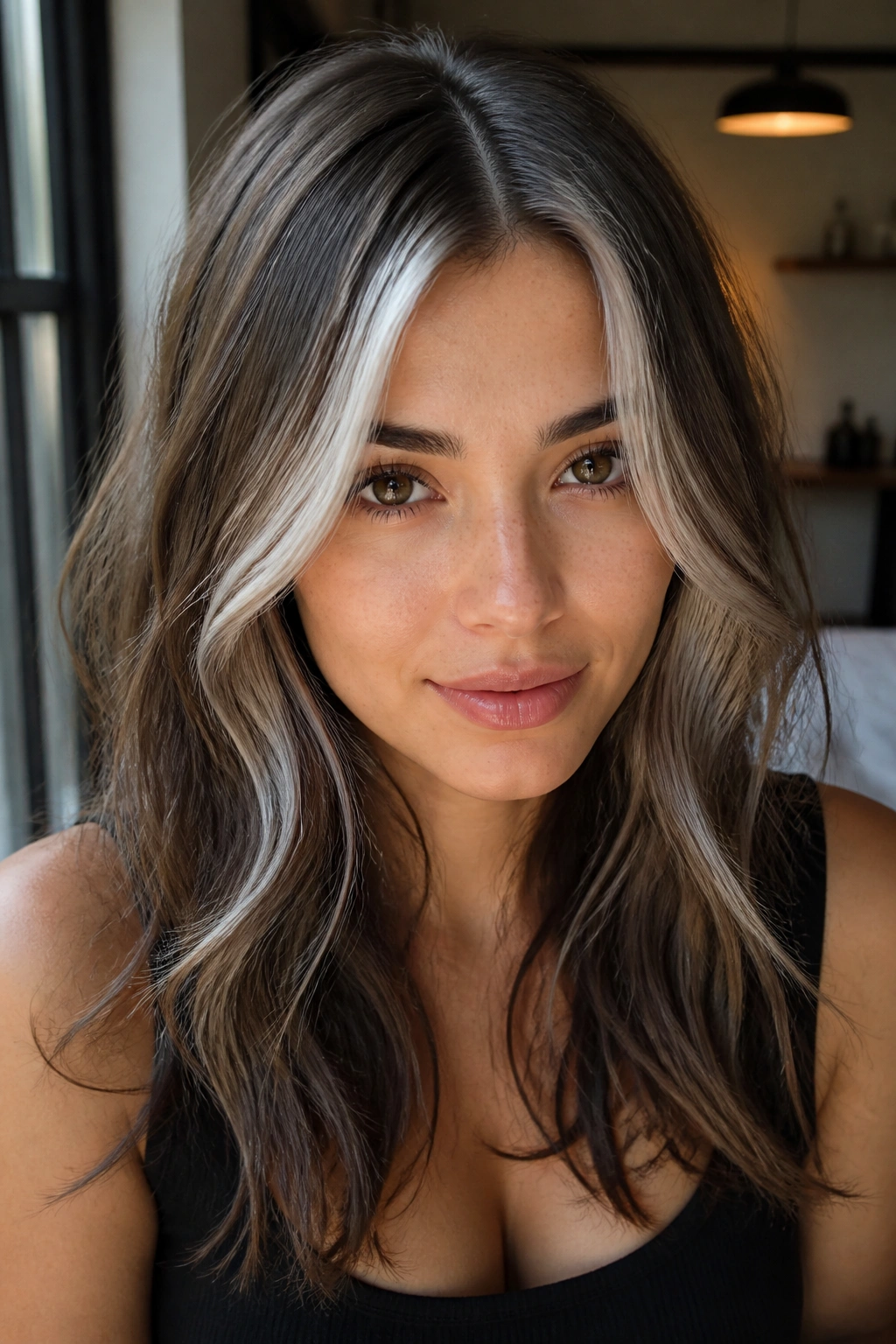
Why does one bright strip around the face change everything? Because the eye goes there first. A silver money piece on medium brown hair pulls light toward the cheekbones and forehead, and it makes the rest of the color feel fresher even if the rest of the highlights stay subtle.
How to Ask for It
Tell the colorist you want the front sections lifted more than the rest — usually just two to four pieces on each side, depending on your part and your haircut. The silver should be brightest near the face, then soften as it moves back into the side panels. That keeps the front from looking disconnected from the rest of the hair.
I like this option for ponytail wearers, too. When the hair goes up, the silver still shows. When it’s down, the front pieces frame the face without taking over the whole head.
- Brighten the front hairline first.
- Keep the toner icy but not flat gray.
- Leave the back and nape deeper for contrast.
- Ask for a placement that works with your usual part.
One warning: if you wear glasses with thick frames or have a very short fringe, don’t overlight the front. A little brightness goes a long way.
4. Silver Balayage That Melts Into Chocolate Ends
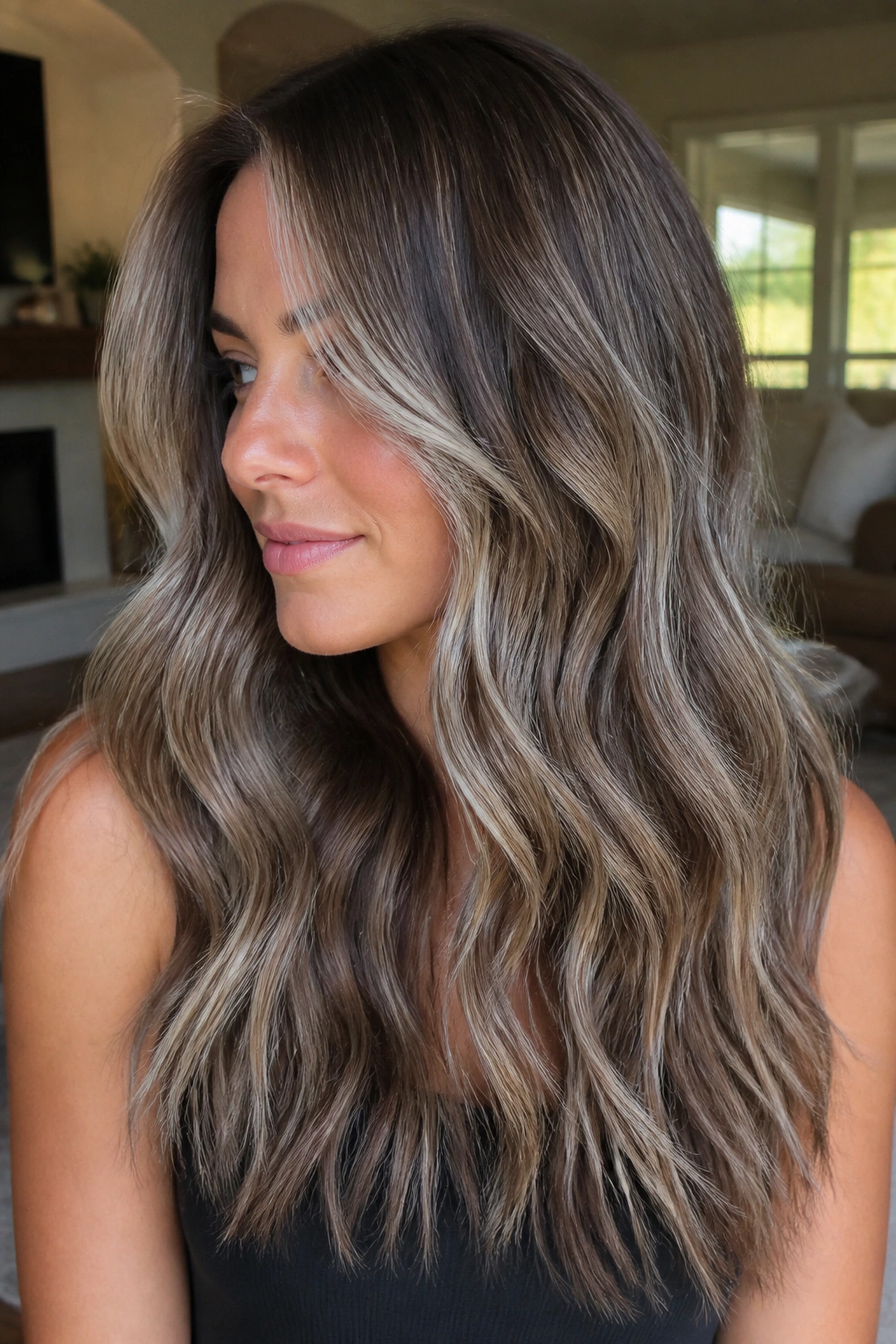
If foils feel too neat for your taste, silver balayage gives you a softer, hand-painted look. The silver sits more like a wash than a stripe, which makes it a good match for medium brown hair that already has movement or layered ends. The color feels grown-in from the start.
The trick with balayage is not to chase brightness everywhere. You want the lightest silver pieces on the surface and through the mid-lengths, then a softer fade as the color moves down. Leaving the roots deeper keeps the look grounded and stops the whole thing from floating away from the haircut.
This is one of those styles that gets better in waves. A loose bend shows the silver and brown side by side. A straight blowout makes the ribboning read sleeker. Either way, it does not feel as formal as full-head silver.
It’s also one of the easier routes if you dislike obvious regrowth. The grow-out is softer, which means fewer awkward weeks between salon visits. Not no maintenance. Just less annoying maintenance.
5. Peekaboo Silver Panels Underneath the Top Layer
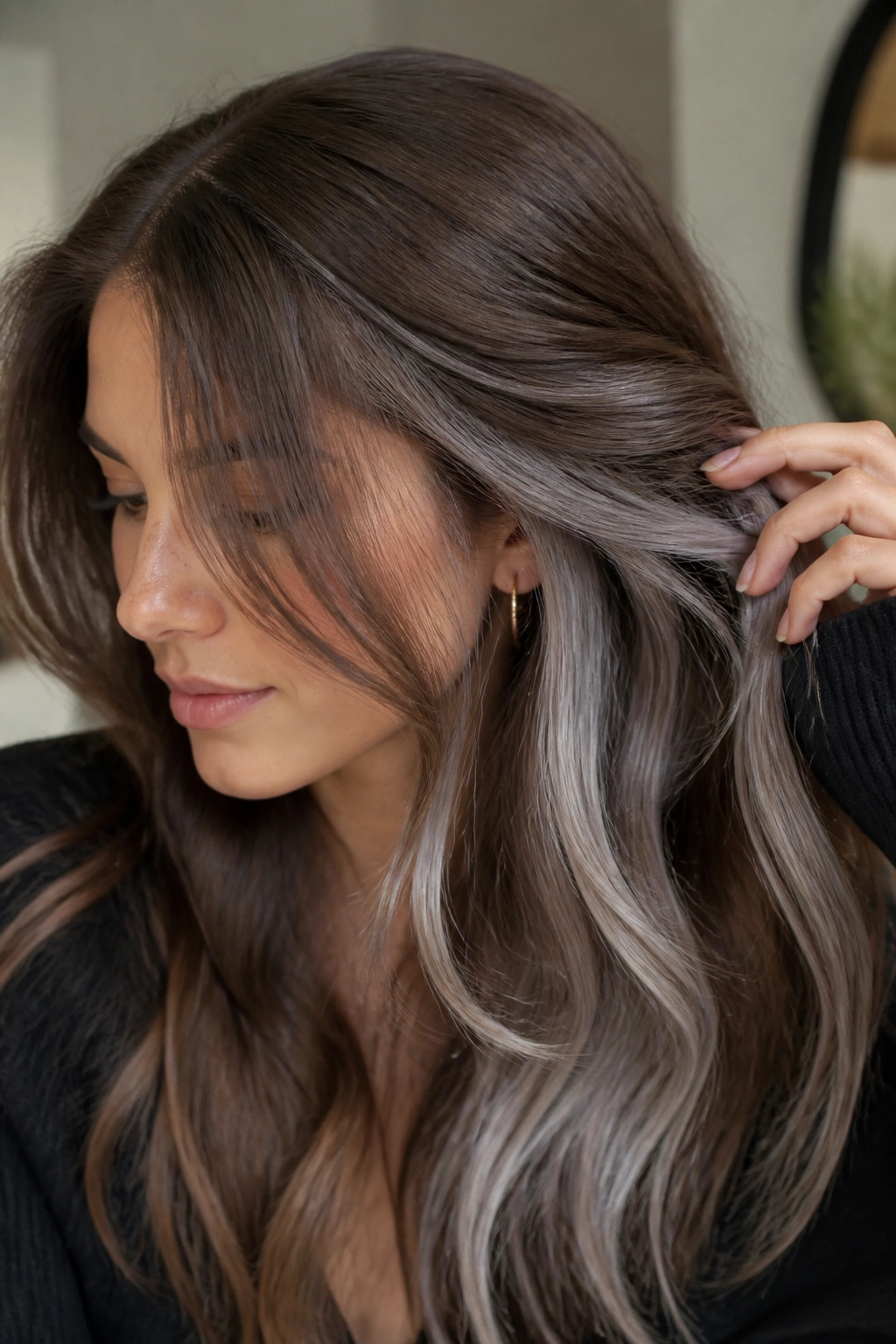
Pull your hair into a bun and the silver disappears. Let it fall, and it flashes from underneath like a secret. That’s the whole charm of peekaboo silver panels on medium brown hair.
Where They Work Best
This placement is smart if you want dimension without making every day feel like a color commitment. The silver lives under the top layer, usually through the sides or back panels, so the brown stays dominant when the hair is worn down. Movement reveals the cool tone. Stillness hides it.
That makes peekaboo panels especially useful for anyone in a conservative work setting or anyone who just likes a little surprise in their hair. The panels can be narrow and neat, or wider and more obvious, depending on how much contrast you want.
They also work beautifully on layered cuts because the shorter top pieces let flashes of silver peek through on their own.
- Place the panels in the lower half of the head.
- Keep the top layer slightly deeper for cover.
- Choose a toner with a smoky finish so the silver doesn’t look blue.
- Show them off with half-up styles, braids, and curls.
This is one of the few silver ideas that feels playful without needing a full overhaul.
6. Rooted Silver Melt for Softer Grow-Out
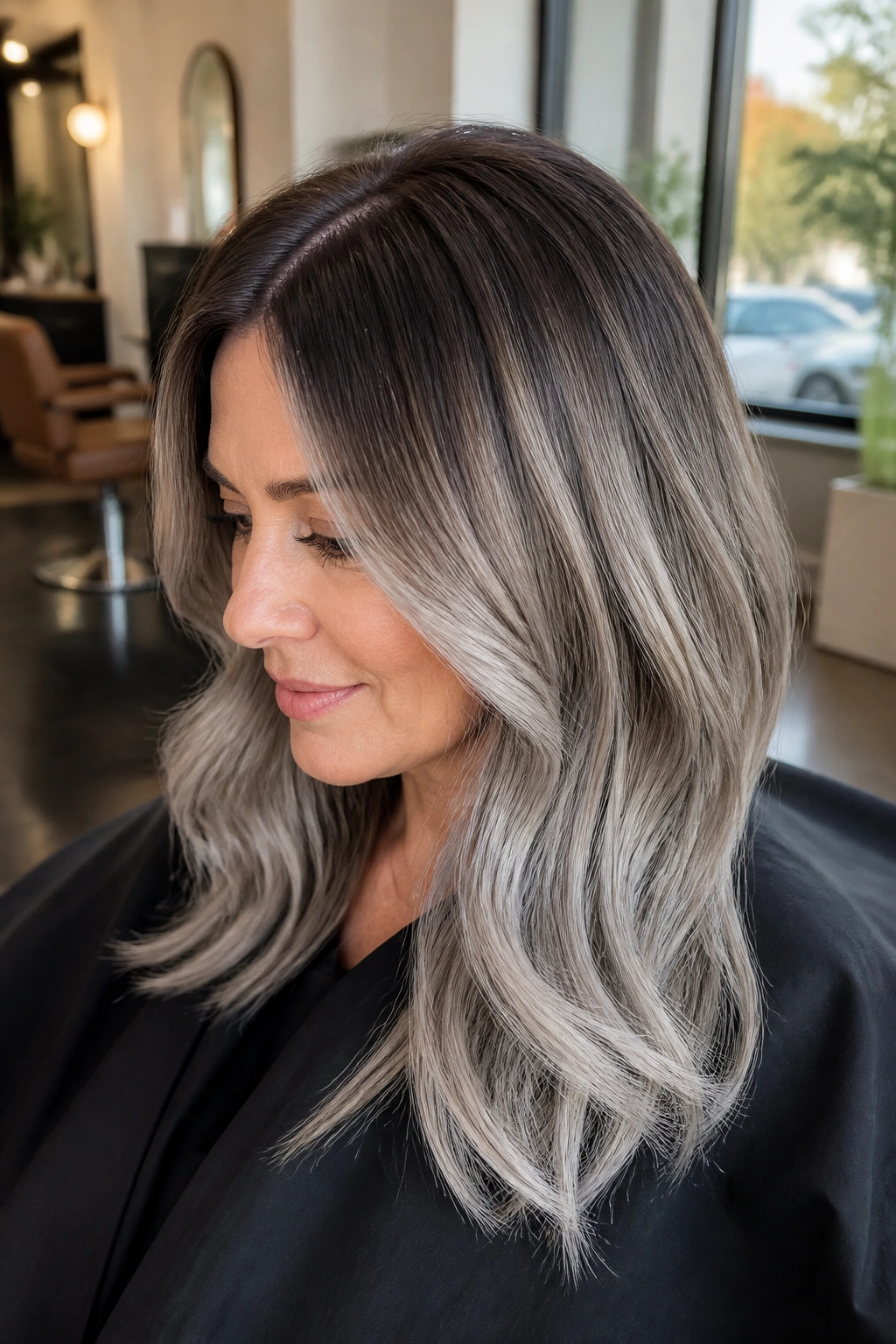
A rooted silver melt is the grown-up version of cool highlights. Instead of starting the silver at the scalp, the color drifts from a deeper root into lighter, cooler lengths. On medium brown hair, that root shadow keeps the style believable. It also saves you from that obvious grown-out band that can happen when silver starts too high.
Unlike a solid silver block, a melt gives the hair a little depth near the root, then slides into charcoal, steel, and pale silver through the mids and ends. That progression matters. It stops the color from feeling pasted on.
This is a strong choice if your natural brown is medium to dark and you want the silver to look blended rather than bright for the sake of brightness. It’s also kinder to the hair because you do not need the scalp area lifted as aggressively.
I like this one on layered lobs and shoulder-length cuts. The movement in the haircut helps the melt read from every angle. If the hair is long and straight, the transition should be extra soft or it can look like a hard band.
7. Silver Foilayage Around the Crown for Lift Where It Counts
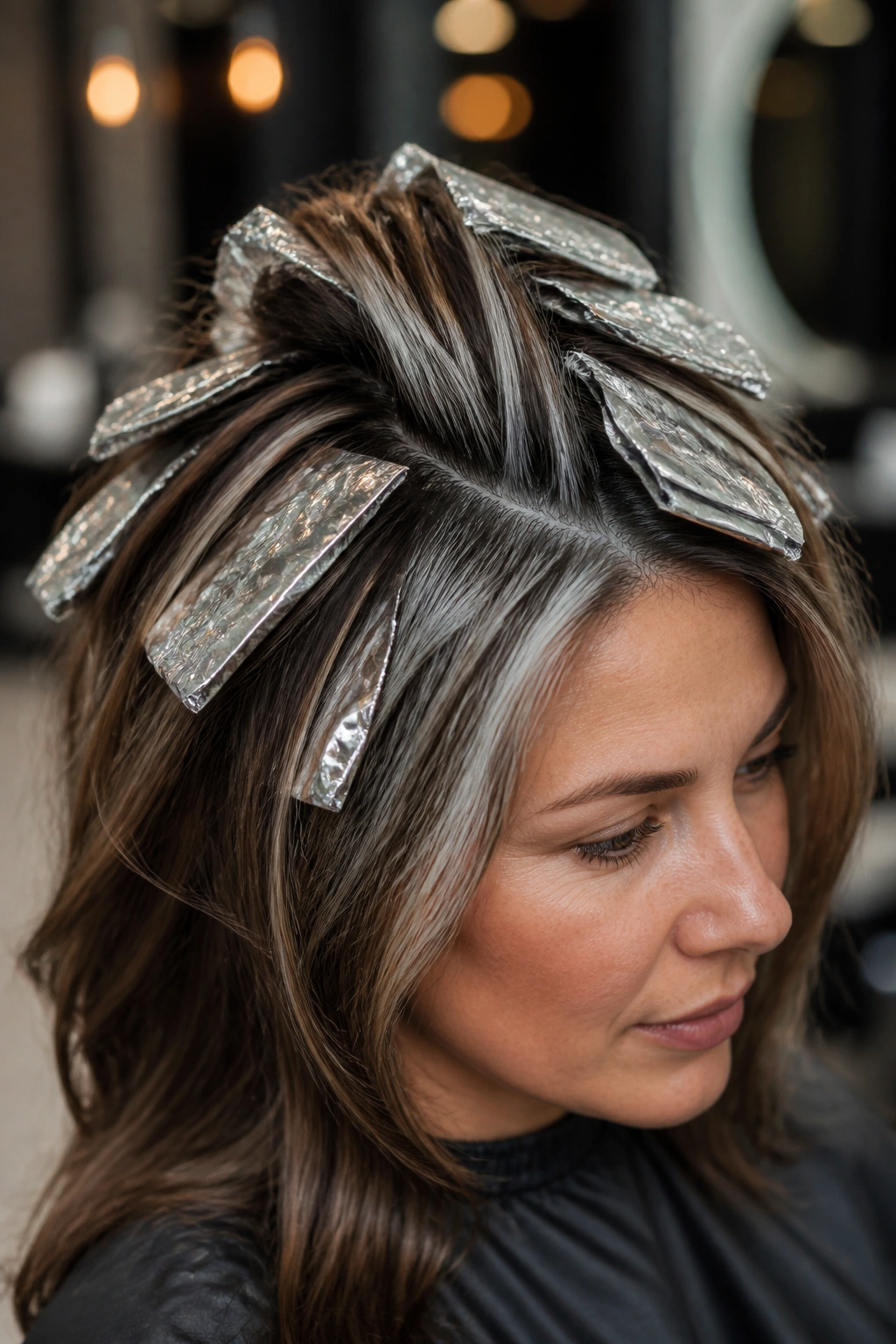
Some people only need brightness where the hair is naturally seen — the crown, the part line, the upper sides. Foilayage is a nice compromise because it combines the lift of foils with the softness of balayage. On medium brown hair, that hybrid gives you a clean silver effect without flooding the entire head.
Why It Feels Different
Traditional balayage can be very soft. Foilayage pushes the lift harder, which matters when you want a true silver finish rather than a beige blonde look. The foil traps heat, so the selected pieces lift more evenly and often a little lighter. That’s useful if your brown base is stubborn or warm.
I especially like this around the crown because it adds a touch of height. The eye reads brightness as volume, which is a neat trick if your hair lies flat at the top. Keep the lower layers darker, though. If everything is lifted equally, the effect loses its shape.
A good version should show a controlled scatter of silver around the part, not a bright helmet.
- Concentrate the foils near the part line and crown.
- Use a toner that stays cool, not flat gray.
- Leave the underneath layers deeper.
- Style with a slight bend to show the placement.
This one looks strongest when the haircut has some lift of its own.
8. Frosted Silver Ends on Wavy Lob Lengths
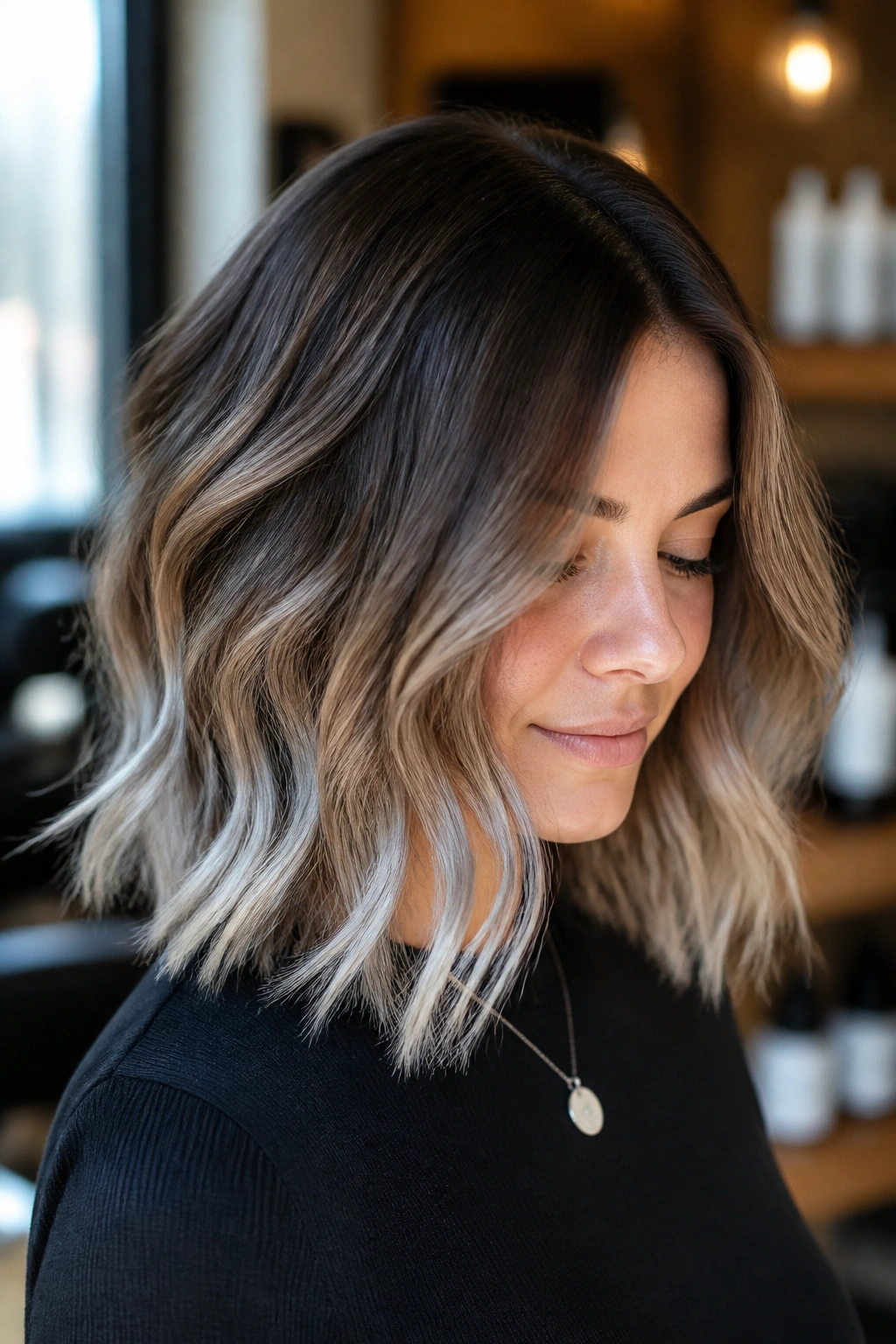
If you are nervous about going full silver, start at the ends. Frosted silver tips on a medium brown lob give you a cool finish without forcing the roots and mids into the same level of brightness. The result feels crisp, especially on shoulder-length waves.
The reason this works so well is simple: the ends are where the eye expects a little lightness anyway. When the last two to three inches turn silver, the color looks like a deliberate finish, not a mistake. On wavy hair, the frosted ends flash in a way that straight hair cannot quite copy.
Keep the Bottom Clean
The ends need to be in decent shape before you try this. Dry, frayed tips eat toner fast and go patchy. If the hair is rough, trim first, color second.
- Best on a lob or collarbone-length cut.
- Works well with loose waves and bends.
- Needs regular trims because the ends show wear first.
- Looks strongest when the top stays a rich brown or soft mocha.
This is a good pick if you like contrast but do not want your scalp and part line to become the center of attention.
9. Metallic Silver and Taupe Dimension for a Softer Cool Tone
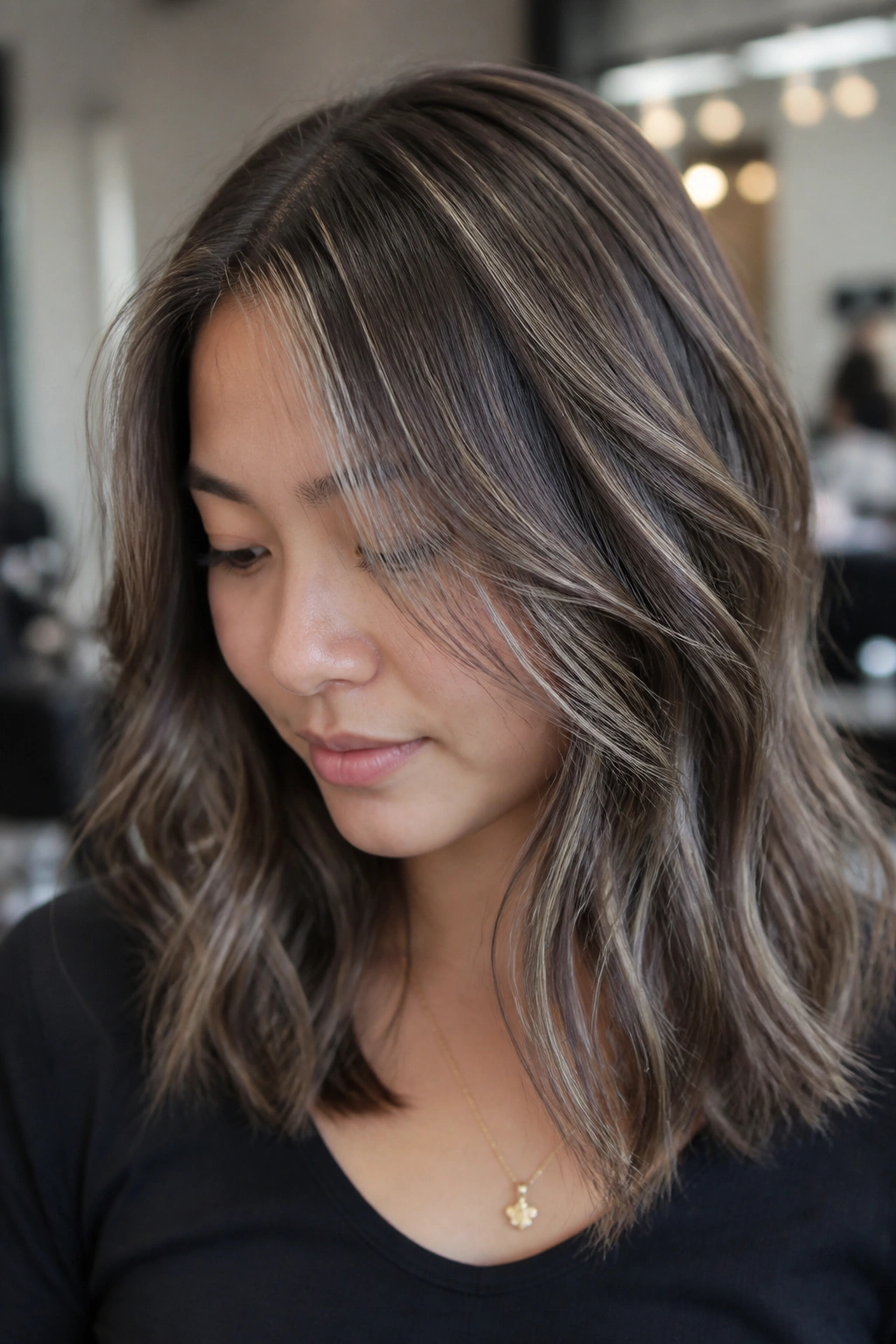
Does silver have to look icy? Not at all. Metallic silver mixed with taupe gives medium brown hair a cooler finish without pushing it into flat, harsh gray. I reach for this idea when the base has warmth that won’t quit. Taupe softens that problem fast.
The blend works because silver brings the shine and taupe brings the depth. Together, they stop the highlights from looking like separate white threads floating over brown hair. Instead, the whole head reads as one cool color family with movement.
What Makes the Mix Look Better
You want the toner to live somewhere between smoke, pearl, and mushroom. Too much blue and it can look steel-heavy. Too much beige and the silver loses its bite. The sweet spot is a soft metallic finish that still lets the brown base peek through.
This is a solid choice for people who want silver that can survive office lighting, daylight, and a no-makeup day. It does not scream. It glows a little.
It also flatters layered cuts because the taupe areas help separate the silver ribbons. Without that middle tone, the highlights can blur into one pale patch.
10. Silver Micro-Highlights for Fine Hair
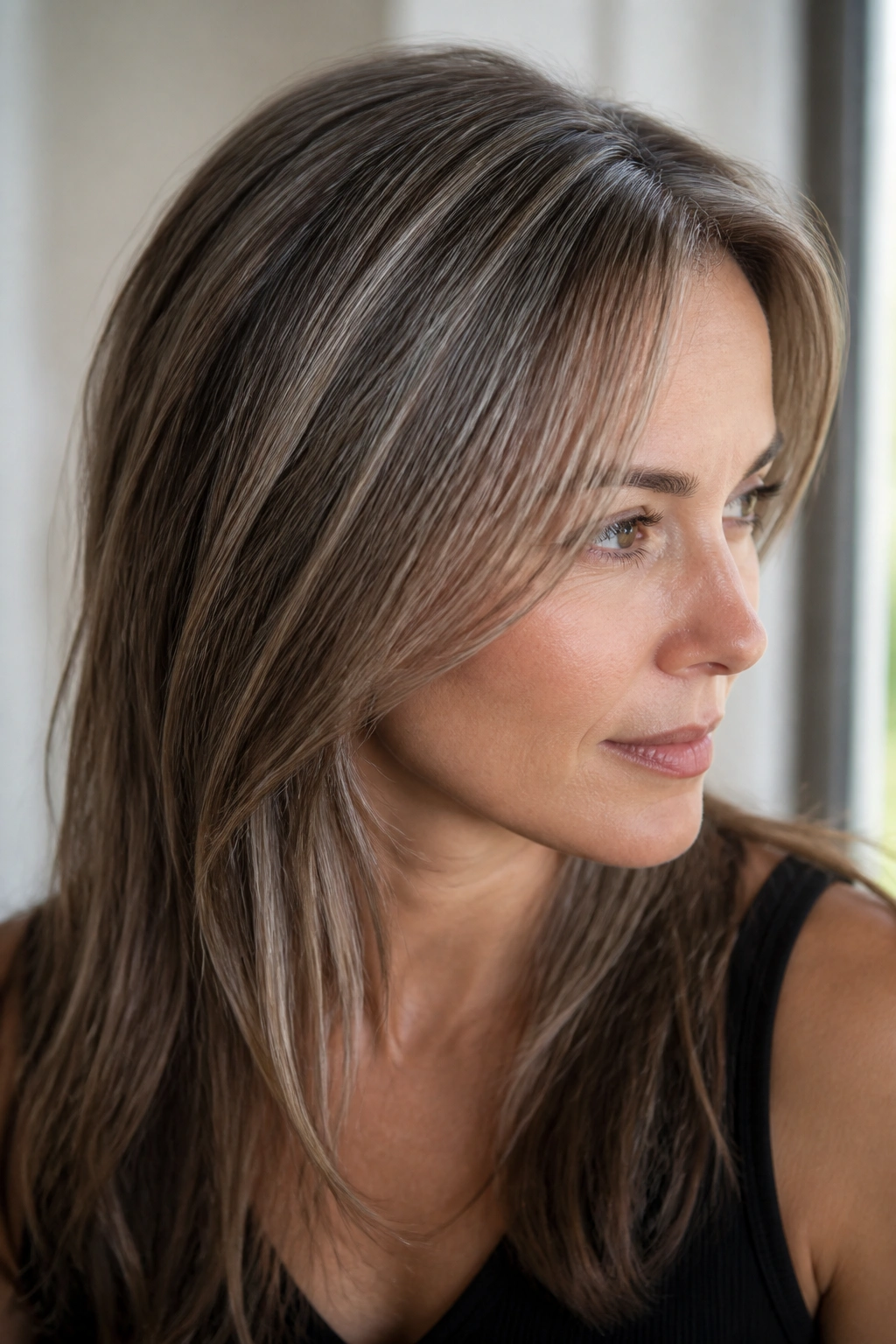
Fine hair can look thinner when the highlights are too wide. That’s why micro-highlights are such a smart move. On medium brown hair, tiny silver threads add shimmer without opening up huge visible gaps in the color. The hair still looks full. It just has more light in it.
These highlights should be narrow enough that you do not immediately clock each one. You notice the movement first, then the color. That is the goal. If the pieces are too chunky, the scalp can peek through and the result turns patchy fast.
The Placement That Saves It
Keep the highlights close together but not packed. Think thin slices, soft spacing, and a cooler toner that stays translucent instead of opaque. The best versions live on the top layer, crown, and around the hairline, where they catch light naturally.
- Use very fine sections instead of broad ribbons.
- Place them close to the part line and surface layers.
- Let the silver stay sheer, not chalky.
- Avoid overdoing the lower sections if the hair is already sparse.
This is one of the easiest silver ideas to wear if your hair is fine, silky, or naturally flat. Big contrast is not the friend here.
11. Platinum-to-Silver Ombré from Mid-Lengths Down
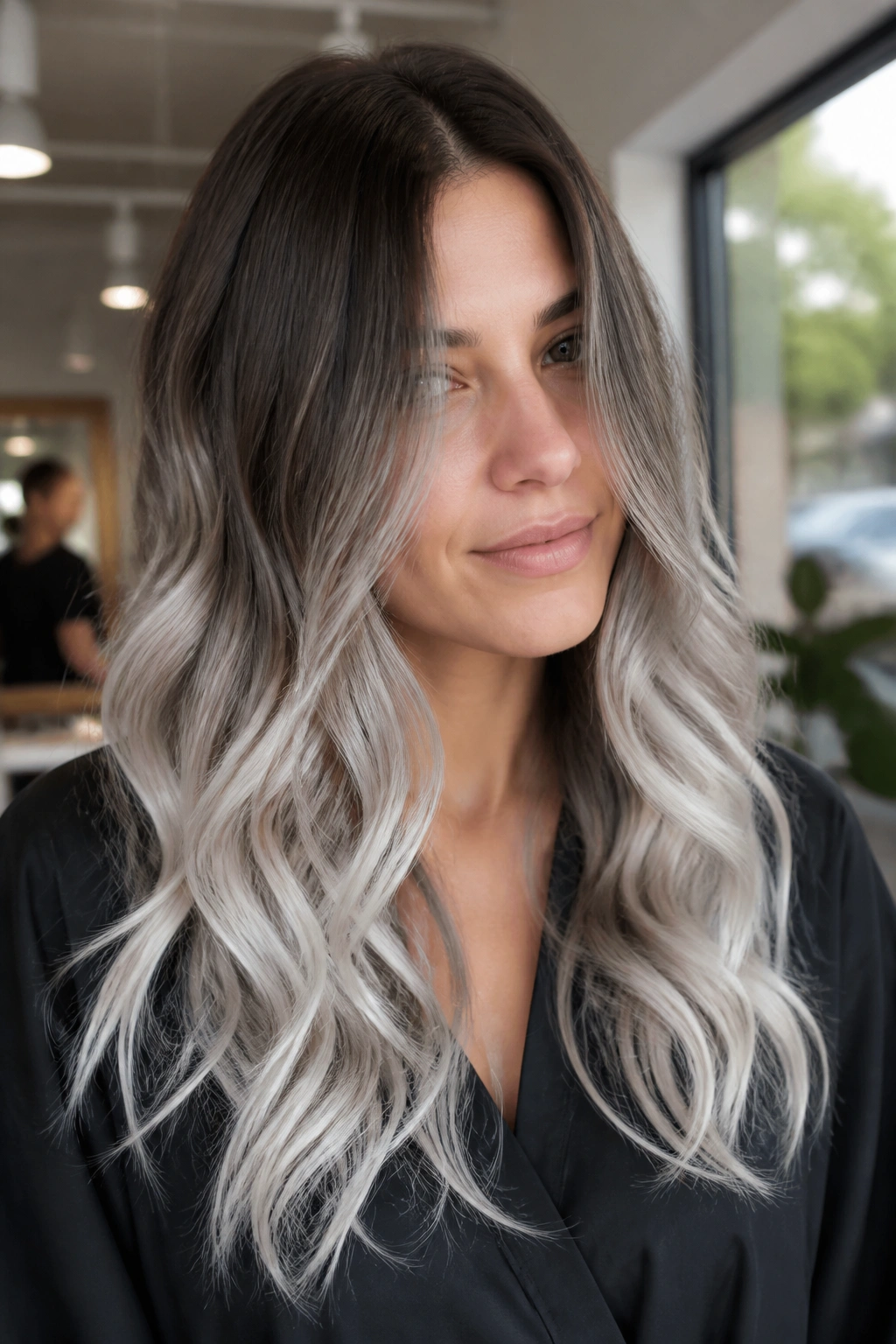
A platinum-to-silver ombré is the boldest route in the bunch, but it can look beautiful on medium brown hair when the transition is handled well. The top stays deeper brown, the mid-lengths brighten into pale blonde, and the ends settle into silver. That gradient gives the style a real sense of movement.
The reason I like this on longer hair is that there is room for the fade to breathe. Shorter hair can lose the ombré shape before the silver gets a chance to show. On long layers, the transition has space to move from dark to light without feeling abrupt.
It is a strong choice if you wear your hair curled. Curls break up the transition and keep the silver ends from looking blunt. Straight styles can work too, but the gradient needs to be very soft or you will see the line where the toner changes.
This one is not the easiest to maintain, and it can be rough on fragile ends. If the hair is already dry, ask for a softer silver finish rather than chasing full platinum at the tips.
12. Silver Streaks That Follow Curly and Wavy Texture
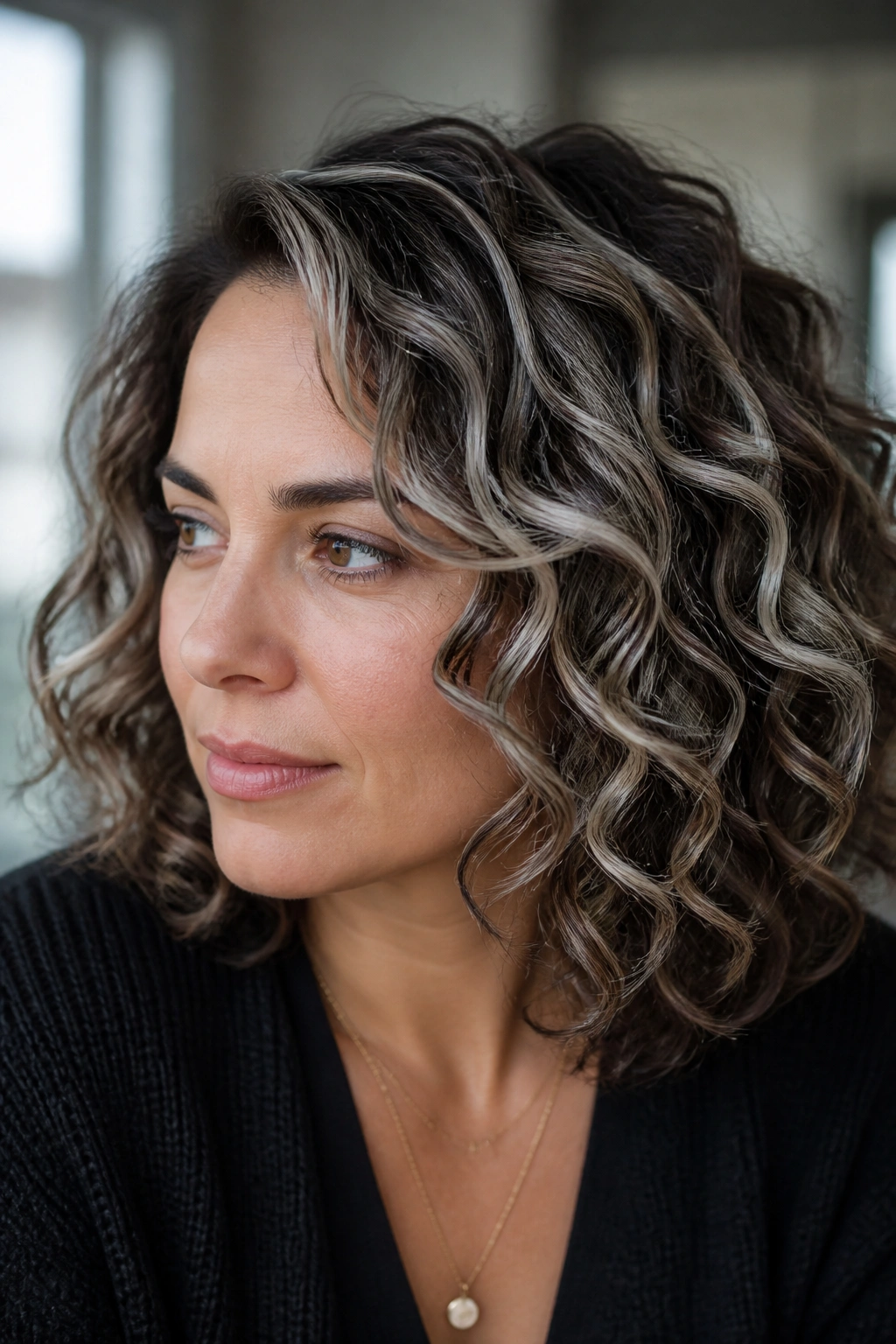
Curly hair does not show color the same way straight hair does. The bends and ridges catch light in smaller flashes, which is why silver streaks on curls can look richer than they do on flat strands. On medium brown hair, the contrast feels lively instead of obvious.
Where the Foils Should Sit
The best silver placement follows the curl clumps, not a straight grid. A colorist should place lighter pieces around the outer curve of the curl and leave the inner bend darker. That keeps the dimension from looking blotchy. It also helps the color show from more angles.
This matters a lot on wavy and curly textures because silver can disappear if it’s hidden too deep inside the coil. You want enough surface exposure for the tone to read when the hair moves.
- Place silver where curls open to the light.
- Keep some brown between curl groups.
- Use a toner that stays smoky, not icy-white.
- Diffuse or air-dry to let the pattern show.
The result feels a little more natural on texture than on poker-straight hair. The curl does half the work.
13. Ash-Silver Highlights With Espresso Lowlights
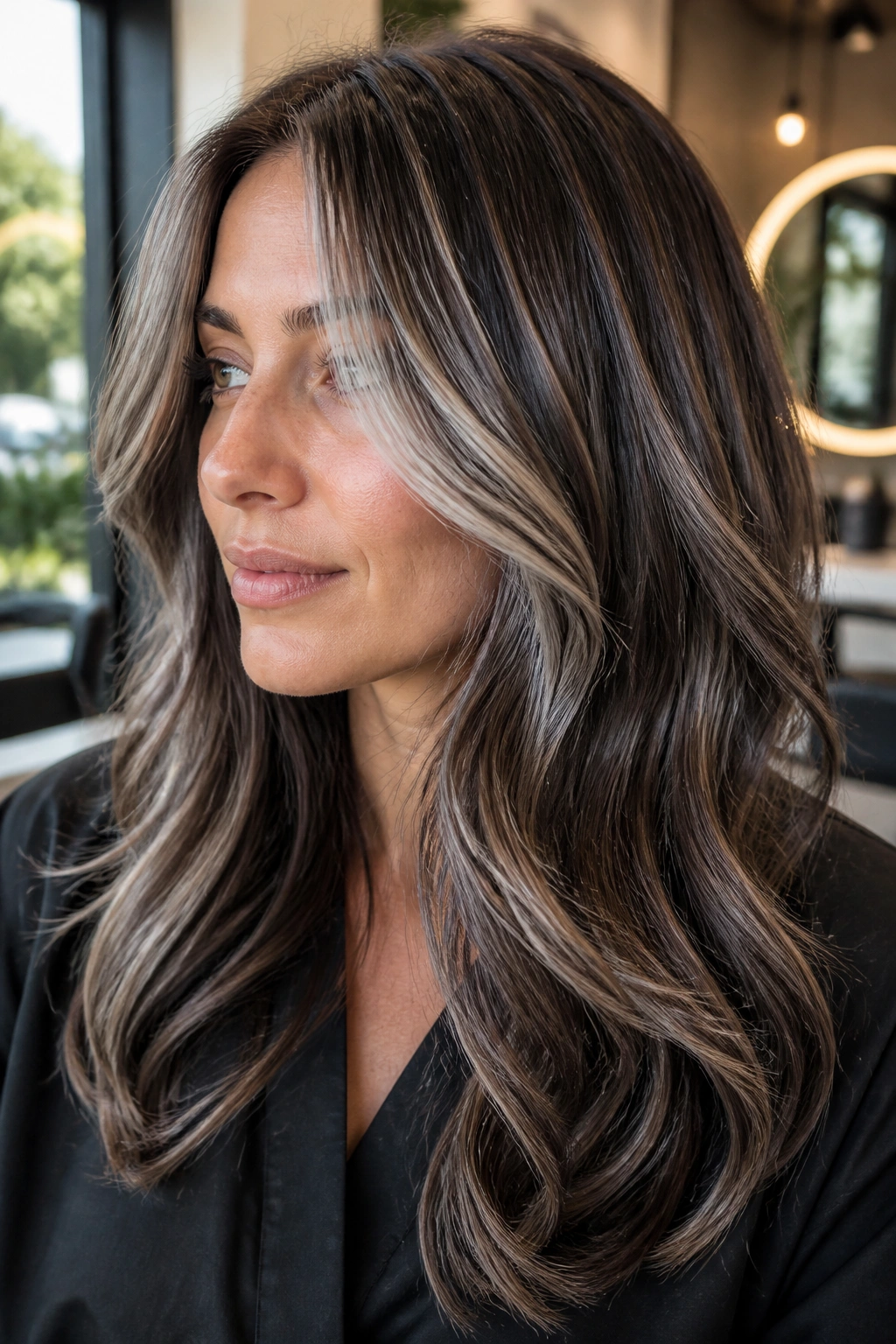
Sometimes the smartest silver move is not more light, but a little darkness left behind. Ash-silver highlights with espresso lowlights give medium brown hair a stronger frame, and they stop the cool pieces from looking washed out. I like this pairing because it respects the base color instead of trying to erase it.
The lowlights matter more than people think. They create shadow between the silver pieces, which makes the cool strands pop without needing extra bleach everywhere. That means less stress on the hair and a cleaner result at the same time.
This approach is especially useful if your medium brown leans warm or golden. The espresso pieces neutralize some of that warmth and make the silver look sharper. Without them, the highlights can drift into beige too quickly.
What to Ask For
- Keep the silver pieces medium-width, not tiny and not chunky.
- Add lowlights in a deep espresso or cool brown.
- Leave about half the base visible so the dimension stays clear.
- Ask for a toner that lands in the ash family, not pearl blonde.
This is one of the most flattering options for anyone who wants silver without looking fully blonde.
14. Smoky Silver Accents for Short Cuts
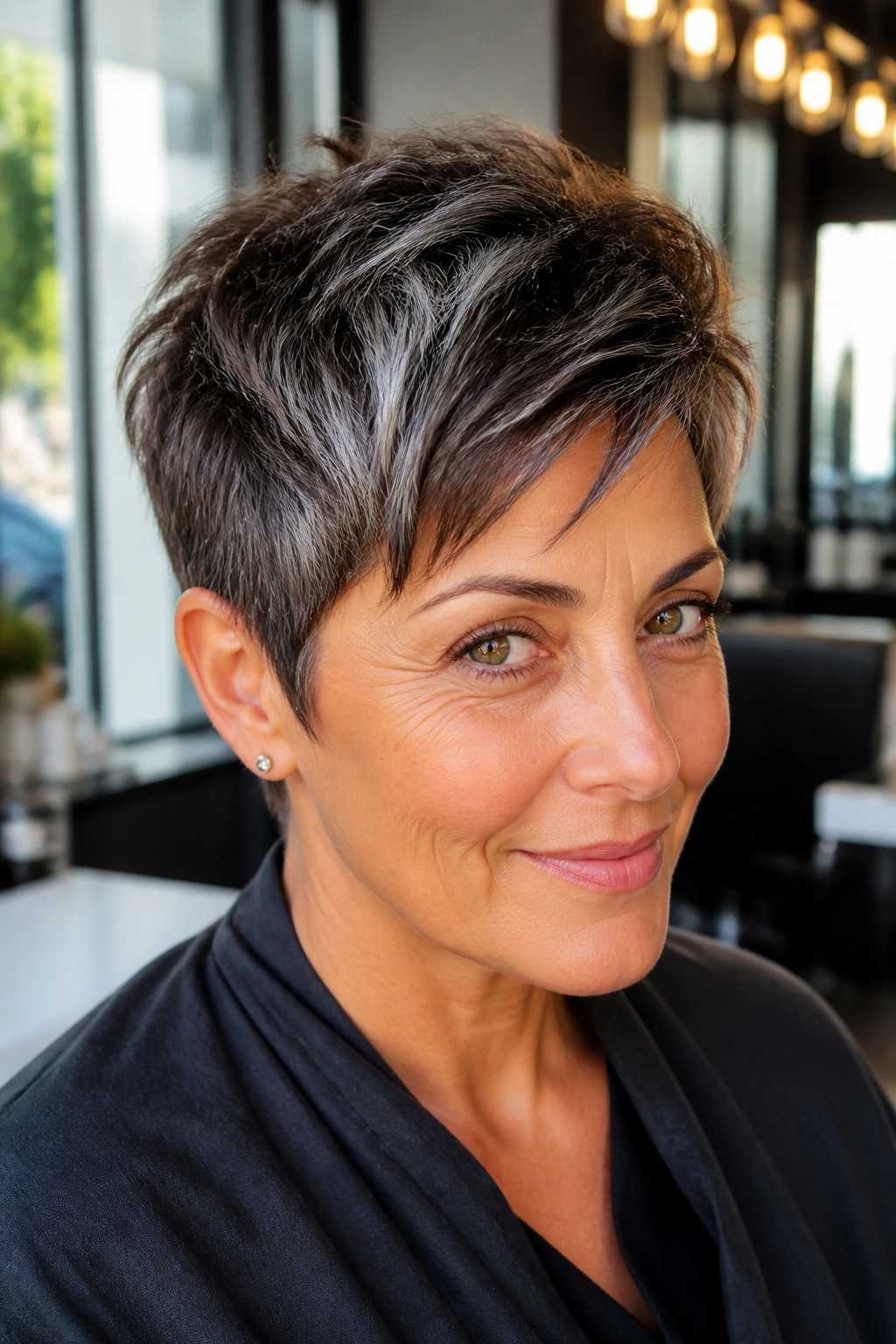
Short hair wears silver differently. A bob, shag, or pixie gives the highlights less room to hide, which means placement has to be sharper. On medium brown hair, smoky silver accents around the top and sides can make the cut look more defined without needing a full-head transformation.
The top layers matter most here. If the silver sits around the crown and part line, the haircut gains movement the minute the head turns. On a shag, that can look a little edgy. On a blunt bob, it feels cleaner and more graphic. Same color family. Different mood.
Cut-Specific Placement
A pixie needs tiny, controlled pieces near the fringe and crown. A bob can take wider silver swipes through the top half. A shag works best when the silver follows the layers rather than fighting them.
One thing I would avoid: over-lighting the underside on short cuts. It sounds dramatic, but it often looks messy once the hair is styled. Keep the silver where the haircut already shows off its shape.
This is also a smart route if you like regular trims. Short hair loses damaged ends faster, so silver can stay looking neat if the cut is maintained.
15. Herringbone Silver Highlights That Blend Without Hard Lines
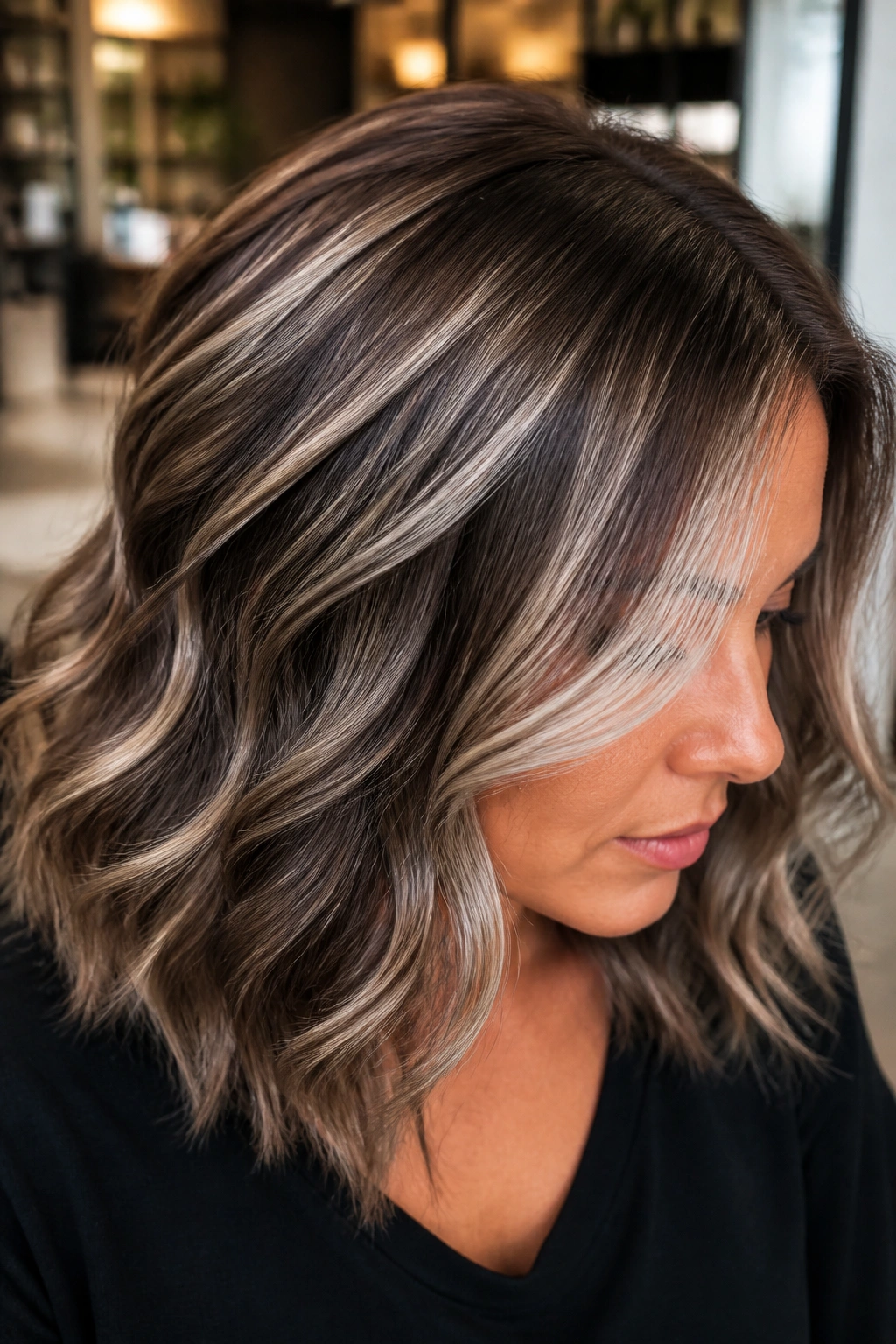
Why do some silver highlights look painted on while others seem to disappear into the haircut? Herringbone placement is a big part of that difference. The diagonal sectioning breaks up the light pieces so they do not land in straight, obvious rows. On medium brown hair, that makes the silver feel woven in rather than dropped on top.
The Pattern Behind the Blend
Herringbone foiling works because the sections angle in alternating directions, which softens the finished line of color. Instead of one heavy streak after another, you get a pattern that follows the head shape. That matters on layered medium brown hair, where straight vertical foils can look too neat.
This idea is especially good if you want polished silver but hate stripy regrowth. The placement itself helps the grow-out look softer. It also gives the colorist more control over where the brightest pieces land — usually around the part, front, and upper crown.
- Ask for diagonal or woven sectioning.
- Keep the silver pieces fine to medium, not blocky.
- Let the brown base stay visible between foils.
- Use a cooler toner if the base is warm, but do not chase flat white.
This is one of the more technical ideas on the list, and it pays off when you want silver that blends instead of shouting.
Final Thoughts
Silver on medium brown hair works best when it feels placed, not sprayed across the whole head. The brown base is doing real work here. It gives the silver shape, depth, and contrast, which is why the smartest versions usually leave more brown behind than people expect.
If you want the safest entry point, start with babylights, a face-framing money piece, or peekaboo panels. If you want something bolder, the rooted melt, herringbone placement, or chunky ribbons will give you more edge. Bright silver is fun. Soft silver is easier to live with. The sweet spot depends on how much grow-out you want to see every morning.
