



The best Asian hair color trends for women usually do not scream from across a room. They catch your eye on the move, then get better the closer you look. That’s the whole trick: on darker hair, the shade has to work with depth, shine, and undertone at the same time.
A lot of women with naturally dark Asian hair run into the same problem. A color chart looks pretty in the salon, then it lands on the hair and turns brassy, muddy, or flat. Not a disaster. Just a sign that the formula, the lift, or the placement was off.
The shades that keep winning are the ones that respect the base. Mushroom brown, blue-black, mocha melt, cherry cola, ash beige, soft copper — these all read differently in daylight, office light, and evening light, which is exactly why they stay interesting. They also tend to grow out in a cleaner way, which matters more than people admit.
1. Mushroom Brown with Soft Ash Undertones
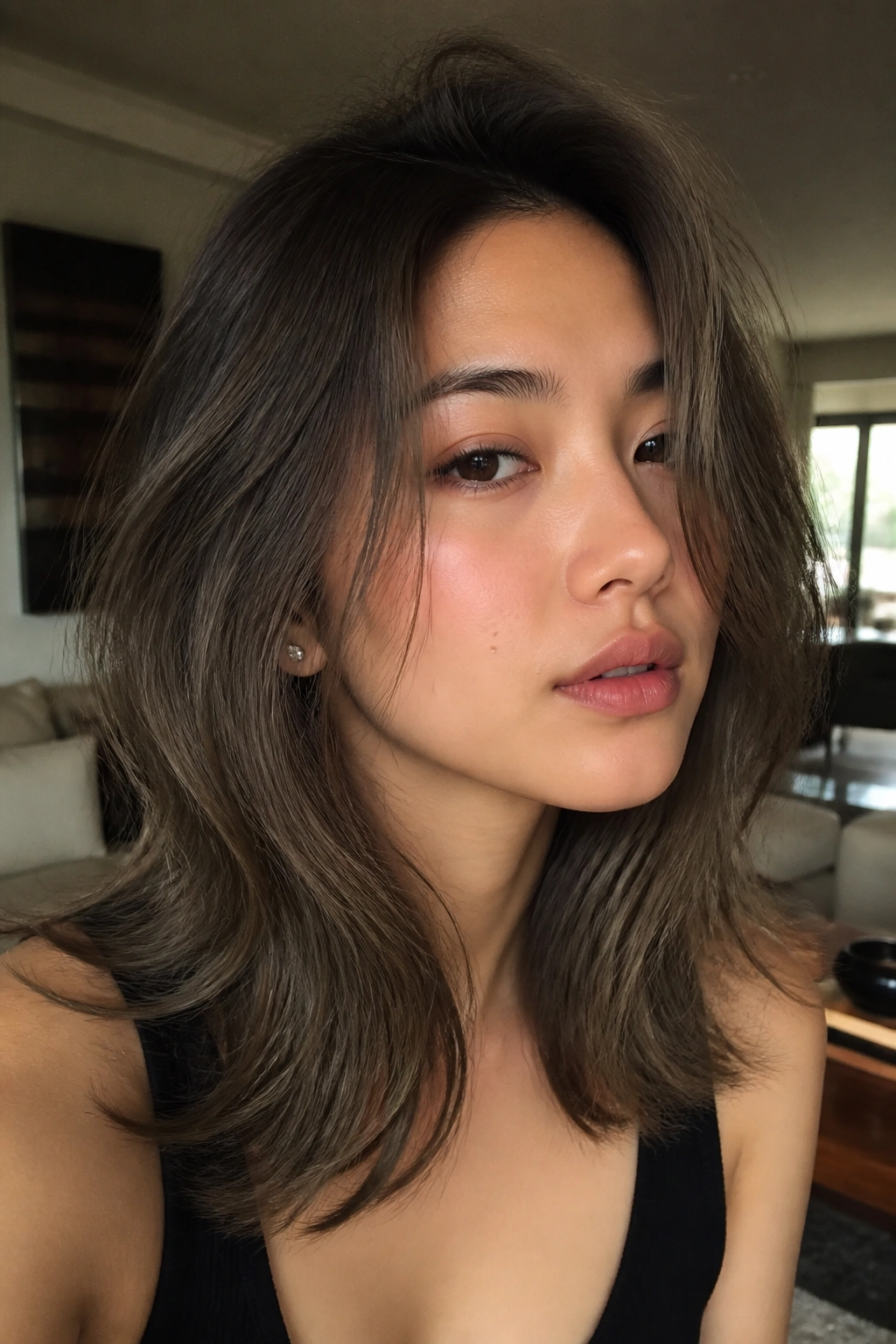
Mushroom brown has a quiet kind of confidence. It sits between brown and taupe, with just enough ash to keep the warmth from taking over, and that balance is why it shows up so often in Asian hair color trends for women.
Why It Works on Dark Bases
On naturally dark hair, this shade doesn’t fight the base. It softens it. The finish looks cool, earthy, and slightly smoky — like brown hair after a gray filter, but in a good way.
It’s especially useful if your hair tends to pull red or orange when lightened. A mushroom brown formula can mute that warmth without making the hair look dead. That matters. Dead-looking brown is a real problem.
Quick things to ask for
- A level 5 to 6 brown base with ash-beige reflect
- A soft root shadow so the grow-out doesn’t look hard
- Blue shampoo only if your hair turns orange, not on every wash
- A demi-permanent gloss if you want less commitment
Best for: women who want a cool brown that still feels soft, not icy.
Watch out for: too much ash on very porous hair. It can go flat fast.
A good mushroom brown should look like expensive cloth, not chalk. If the colorist starts talking only about “cool tones” and never mentions shine, ask them to adjust the formula. Shine is the whole point here.
2. Blue-Black Gloss
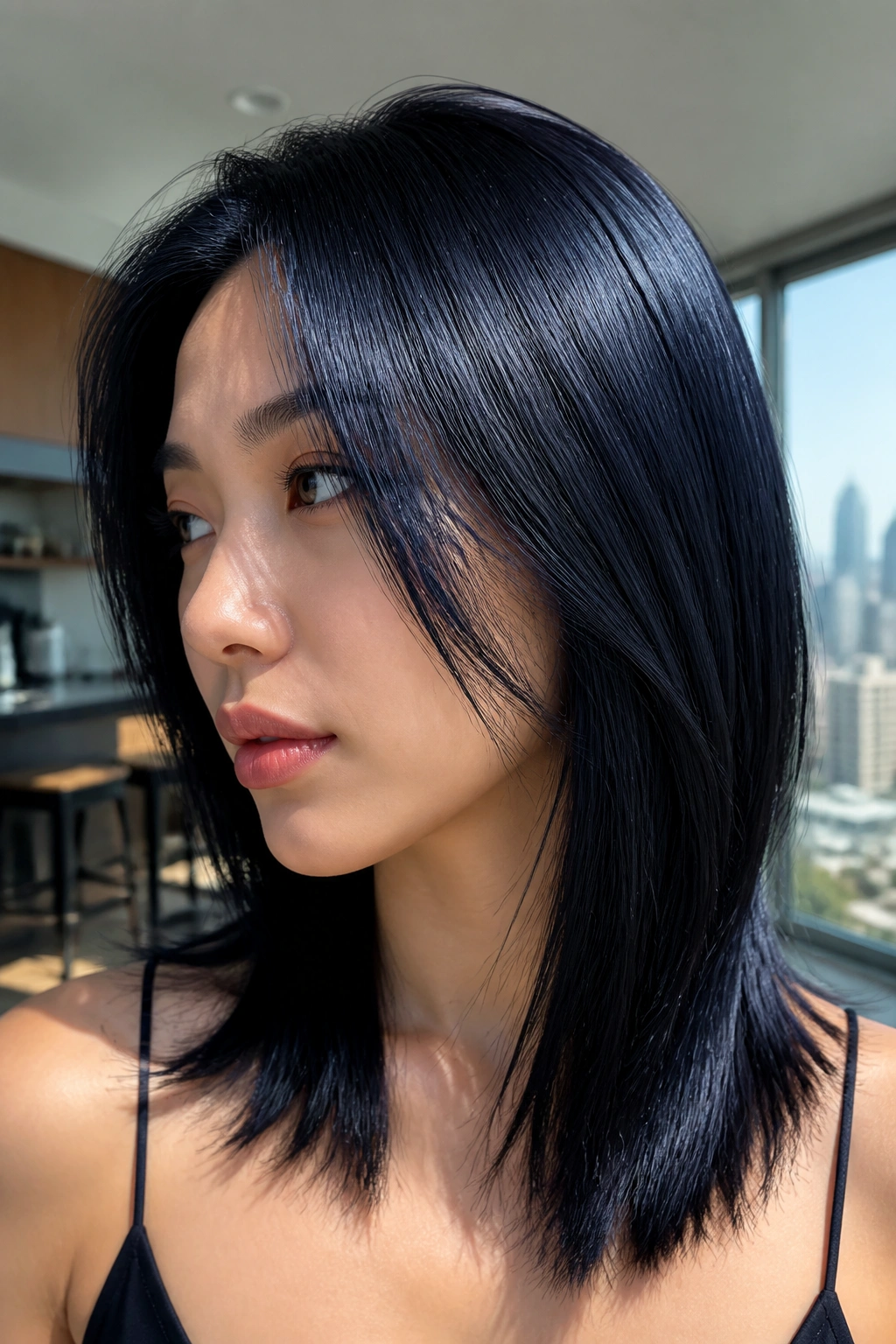
Blue-black is one of those shades that sounds dramatic on paper and looks smoother in real life. It’s not ordinary black. The blue sheen changes the way light sits on the hair, which keeps the color from looking like a flat helmet.
Why does that matter? Because dark Asian hair already has depth. A pure black dye can swallow that depth. Blue-black keeps the richness, then adds a slick, polished edge that looks sharp on straight hair, layered cuts, and blunt bobs.
This is the shade for women who want impact without bleaching. It also works well if your hair is thick and glossy by nature, because the finish feels intentional rather than heavy. On curls, waves, or air-dried texture, the blue tint shows up in flashes. On smooth blowouts, it looks nearly liquid.
If you’re asking a colorist for this shade, say blue-black with a glossy finish, not matte black. That one detail changes the whole result. A matte version can look harsh under indoor lights. Glossy blue-black looks cleaner.
No, it does not need much styling to make sense. A center part, tucked-behind-ear layers, or a straight blow-dry is enough. Simple. That’s the appeal.
3. Chestnut Latte Brown
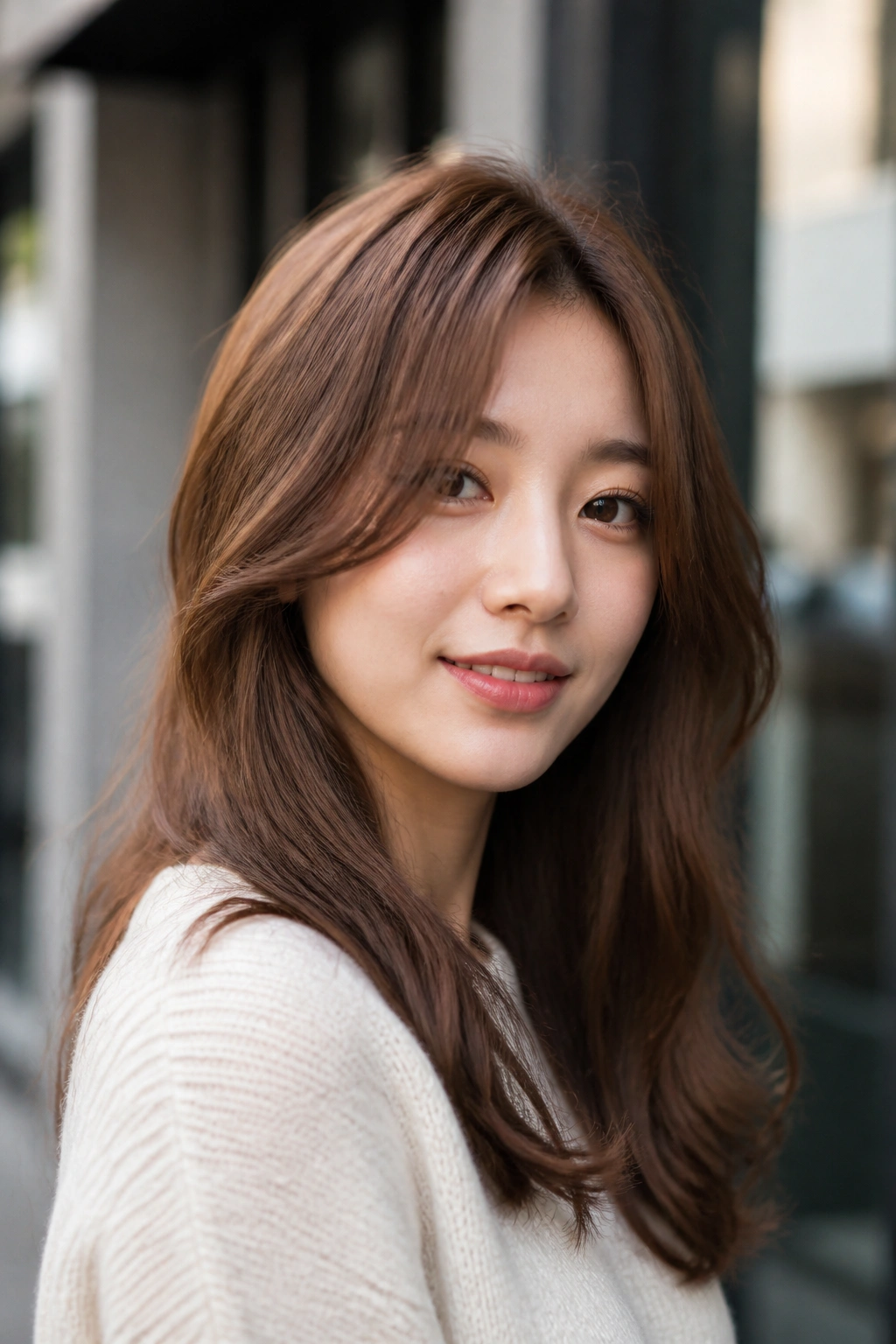
Chestnut latte brown feels familiar, but better. It has the warmth of chestnut, the softness of milk tea, and just enough depth to keep it from reading golden in every light.
The reason this shade keeps showing up in Asian hair color trends for women is simple: it flatters dark hair without demanding a huge lift. If your hair is virgin or only lightly colored, a chestnut latte formula can often be built with low-to-medium developer and a brown-red base rather than a full bleach job. Less damage. Less drama.
What makes the shade read softly
A good chestnut latte brown usually has three things going on at once:
- a neutral brown base
- a muted red-brown reflect
- a soft beige or creamy overlay
That mix matters because straight chestnut alone can look too red, while latte tones alone can go muddy if the formula is weak.
How to wear it
A shoulder-length cut makes this color shine, especially if the ends are lightly beveled or curled under. The shade also looks nice with soft waves, because the warm and cool pieces move against each other instead of blending into one block.
If your skin runs warm, this is a very easy color to live with. If your skin is cool, keep the chestnut side muted and ask the colorist to avoid copper-heavy formulas. Small difference. Big payoff.
4. Caramel Balayage
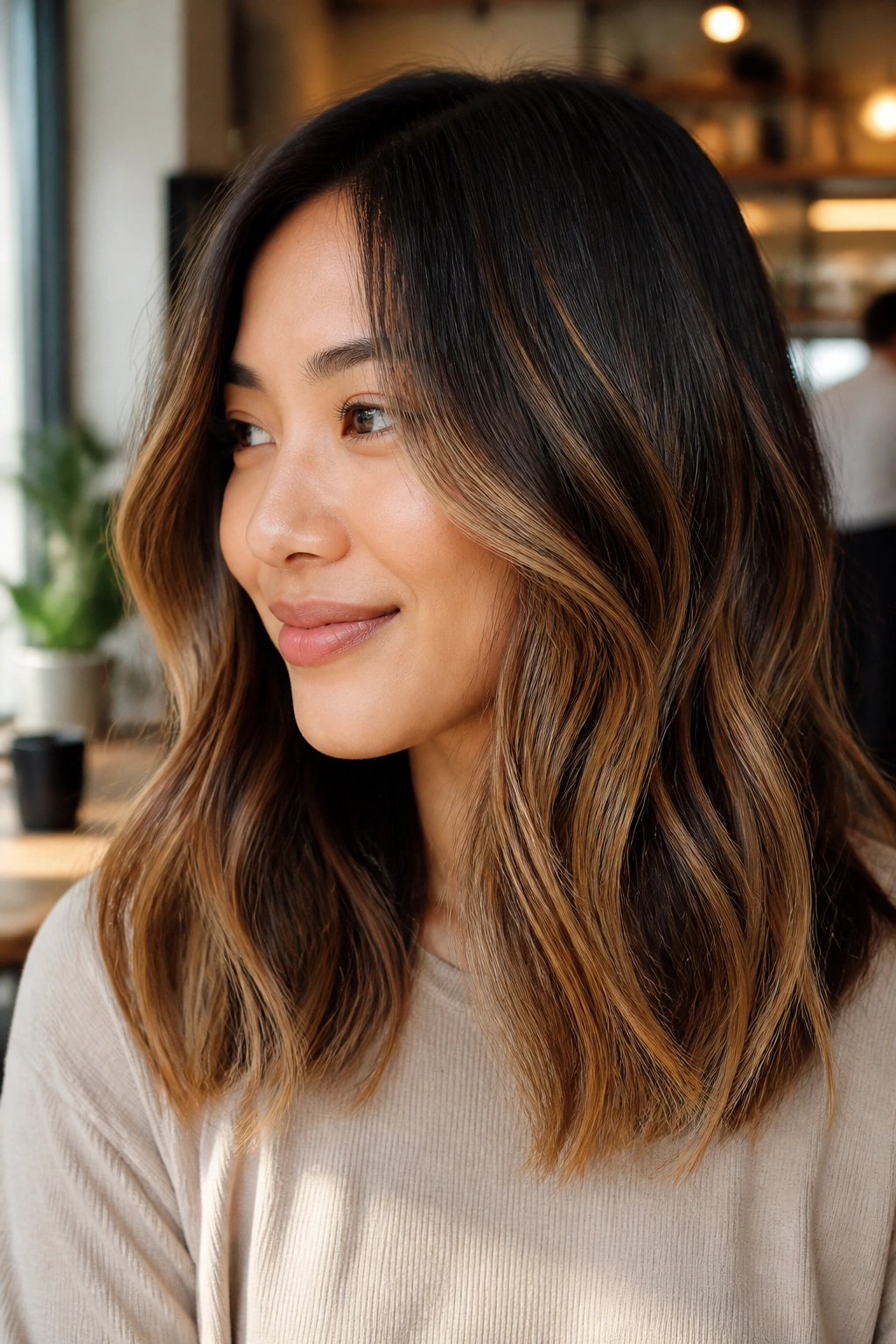
Caramel balayage is for the woman who wants light in her hair, not a total identity switch. The darker root stays in place, then caramel ribbons are painted through the mid-lengths and ends so the whole head looks softer and more dimensional.
That placement is the point. Balayage is not just “lighter ends.” It should follow the haircut. Around the face, the pieces can be a little brighter. Underneath, they can stay deeper. The result looks lived-in, which is why it works so well on long layers, loose waves, and lob cuts.
If you have dark Asian hair, caramel balayage usually needs better planning than a blonding service on light hair. The lift has to be controlled so the warm tones land caramel instead of orange. Not impossible. Just something the formula has to respect.
Useful details to mention in the chair:
- Ask for hand-painted mid-lengths, not stripy foil highlights
- Keep the root at least one to two shades deeper than the lightest pieces
- Use glosses or toners to keep the caramel from turning brassy
- Place brighter pieces around the cheekbones if you want the face to open up
The best caramel balayage looks like the sun touched your hair for a few months. Not more. Too much saturation and it starts to read fake. Keep it soft, keep it airy, and let the haircut do part of the work.
5. Mocha Melt
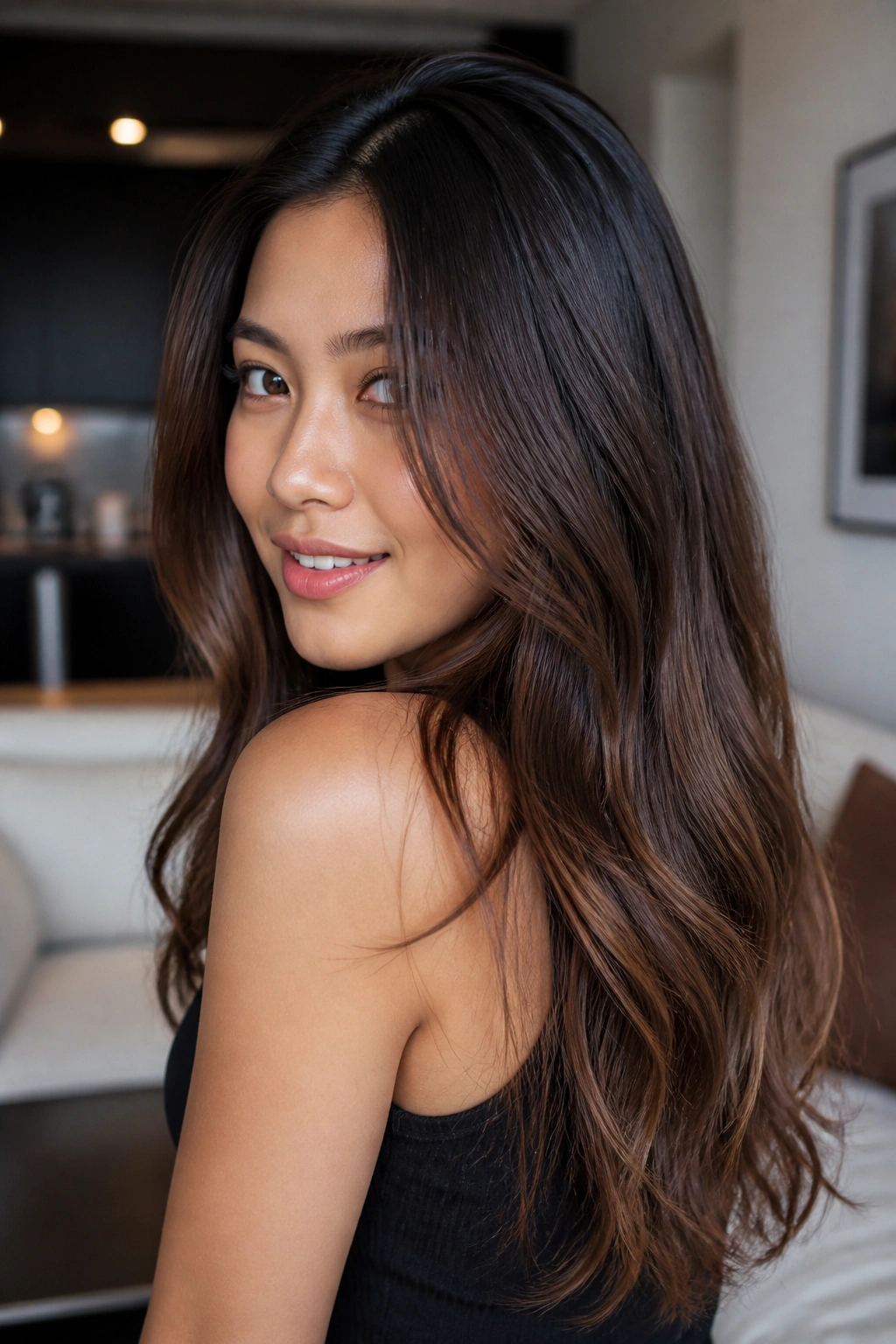
Mocha melt is what happens when you want dark hair to look more expensive without changing the mood too much. The root stays deep, then the color melts into mocha-brown lengths with no obvious line between shades.
This is a very good option for women who wear their hair long. Long hair gives the gradient room to breathe. Shorter cuts can still wear it, but you lose some of that slow fade that makes the color feel polished.
The thing I like about mocha melt is that it doesn’t try too hard. It’s not asking for a dramatic before-and-after moment. It gives you movement, softness, and a cleaner finish around the face. If your hair is thick, the soft transition also keeps the ends from looking bulky.
You’ll usually see this achieved with a root shadow, then a lighter mocha glaze on the mids and ends. The ends should still look brown, not blonde. If they drift too light, the whole effect changes into balayage territory.
A good mocha melt should:
- keep the roots rich and deep
- show a visible but gentle color shift
- look glossy in indoor light
- grow out without a harsh line
It’s a quietly smart choice. Some colors get attention. This one gets repeated appointments.
6. Ash Beige Brown
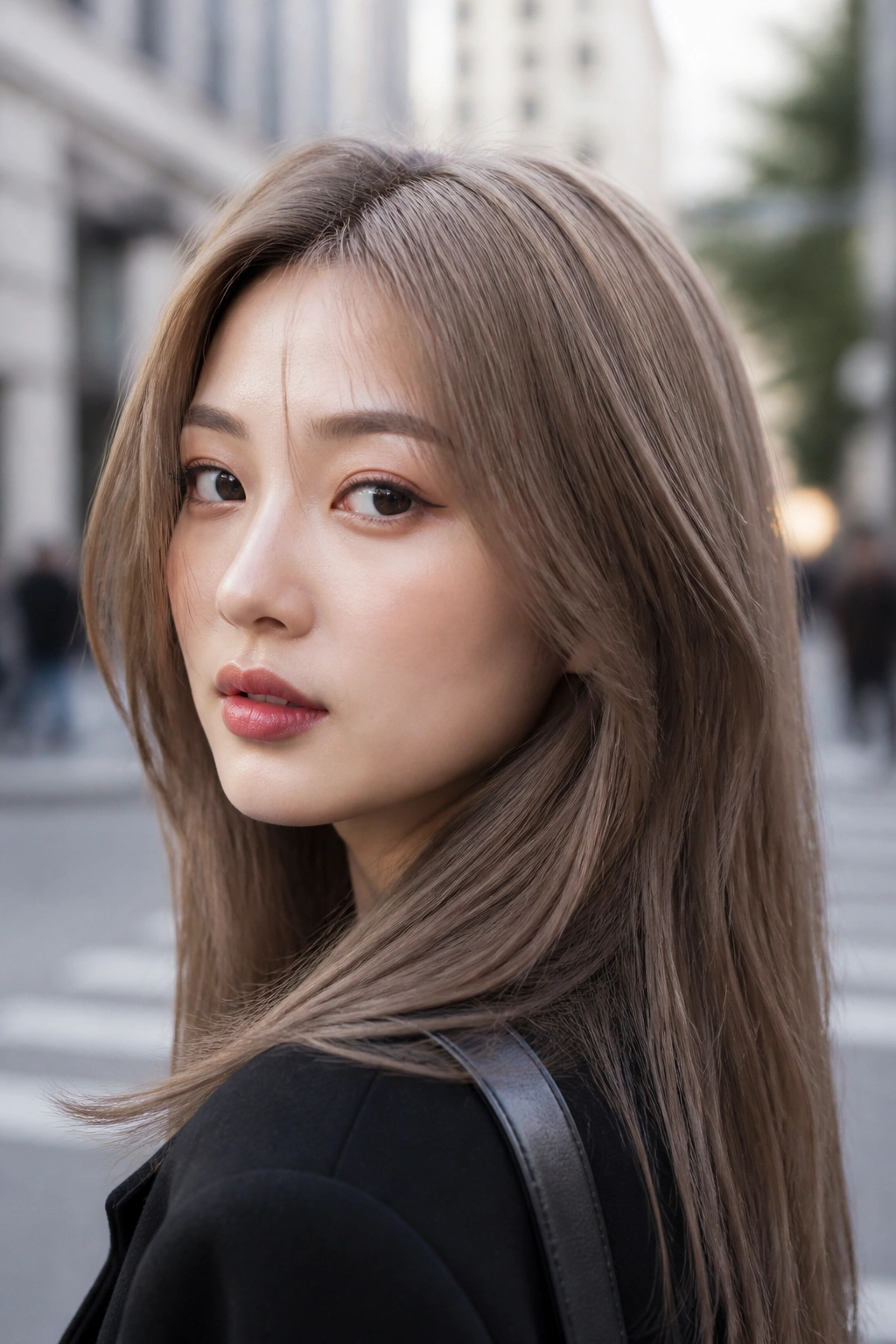
Ash beige brown is the cooler cousin of caramel. Where caramel leans warm and sweet, ash beige stays muted, dusty, and clean. That difference sounds small. It isn’t. On dark hair, ash beige can change the whole mood of the cut.
This shade suits women who want something lighter than a plain brunette but less warm than honey or chestnut. It tends to work well on sleek styles, layered lobs, and soft curtain bangs, because the cool tone keeps the finish from looking heavy.
Compared with caramel balayage, ash beige brown usually feels more restrained. Less glow. More polish. If your wardrobe runs toward black, gray, cream, and navy, that restraint can look very good. If you love coral lipstick and warm blush, you may want a touch more beige than ash so the hair doesn’t feel disconnected from your face.
Why colorists reach for this shade
- It helps cancel orange after lightening
- It keeps brown hair from looking too red
- It gives a more muted, editorial finish
- It pairs well with fine highlights or babylights
If your hair pulls warm fast, ask for a beige-brown base with ash toner on the lighter pieces. Full ash everywhere is risky. A little too much and the hair can go flat, especially at the ends.
7. Cherry Cola
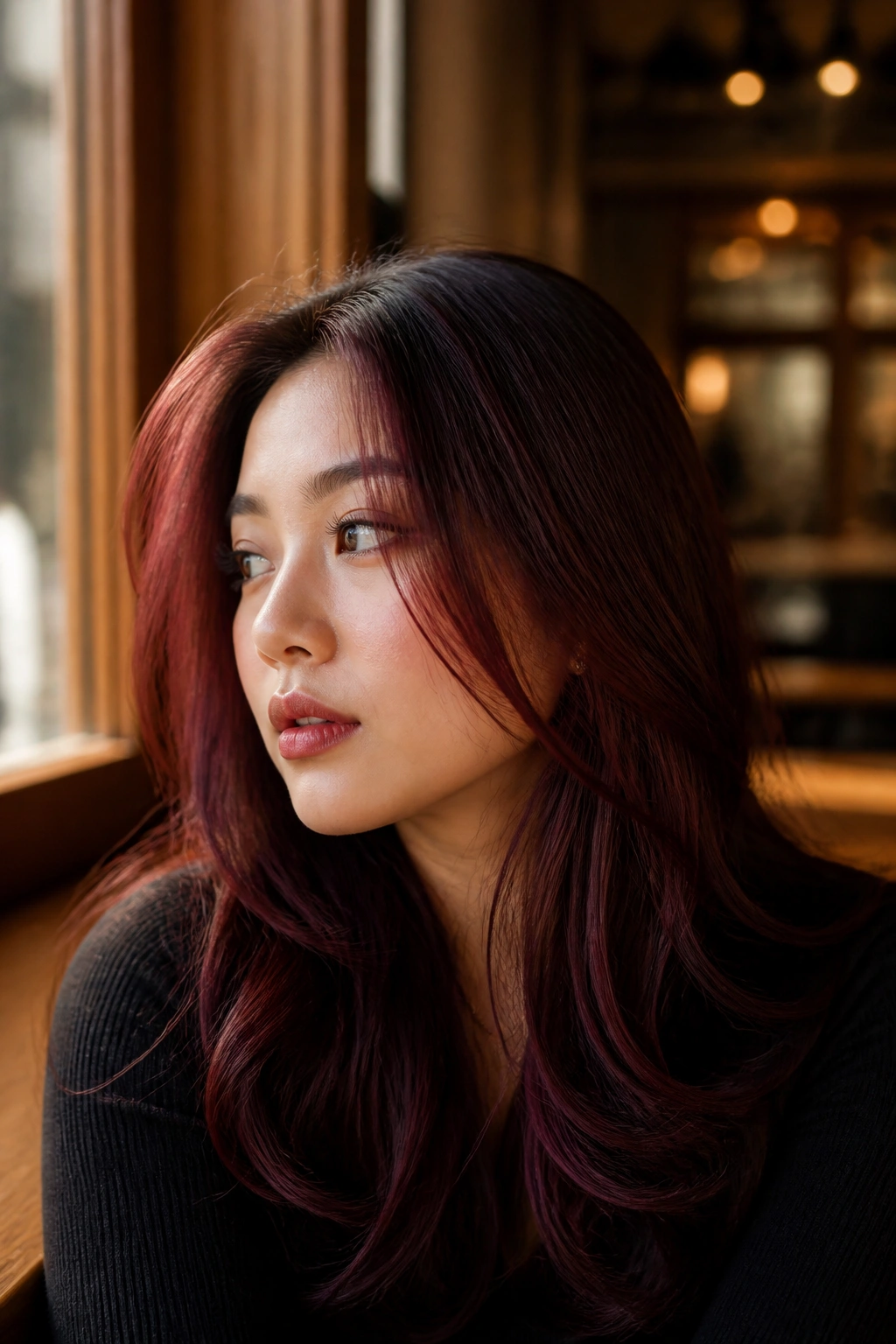
Cherry cola is one of my favorite red-brown shades because it changes with the light. Indoors, it can look like a deep brown with a wine hint. Outside, that cherry tone wakes up and gives the hair a clear, glossy edge.
That shift is what makes it fun. It never reads the same twice. And on naturally dark Asian hair, that subtle movement can be enough to feel fresh without tipping into bright red. A lot of women want red, but they do not want the maintenance that comes with loud copper or true burgundy. Cherry cola is a strong middle ground.
The formula usually needs a red-violet base with brown depth underneath. Too much violet and it turns plum. Too much red and it looks candy-like. The balance matters.
How to keep it rich
- Wash with lukewarm water, not hot
- Use a color-safe shampoo that does not strip fast
- Add a red-brown gloss when the shine starts to fade
- Keep heat styling moderate, because high heat dulls reds fast
Cherry cola is especially nice on medium-length cuts with soft waves. The bends in the hair catch the red tones and make the shade feel fuller. Straight and glossy works too, though. If anything, it gets moodier.
8. Rose Brown
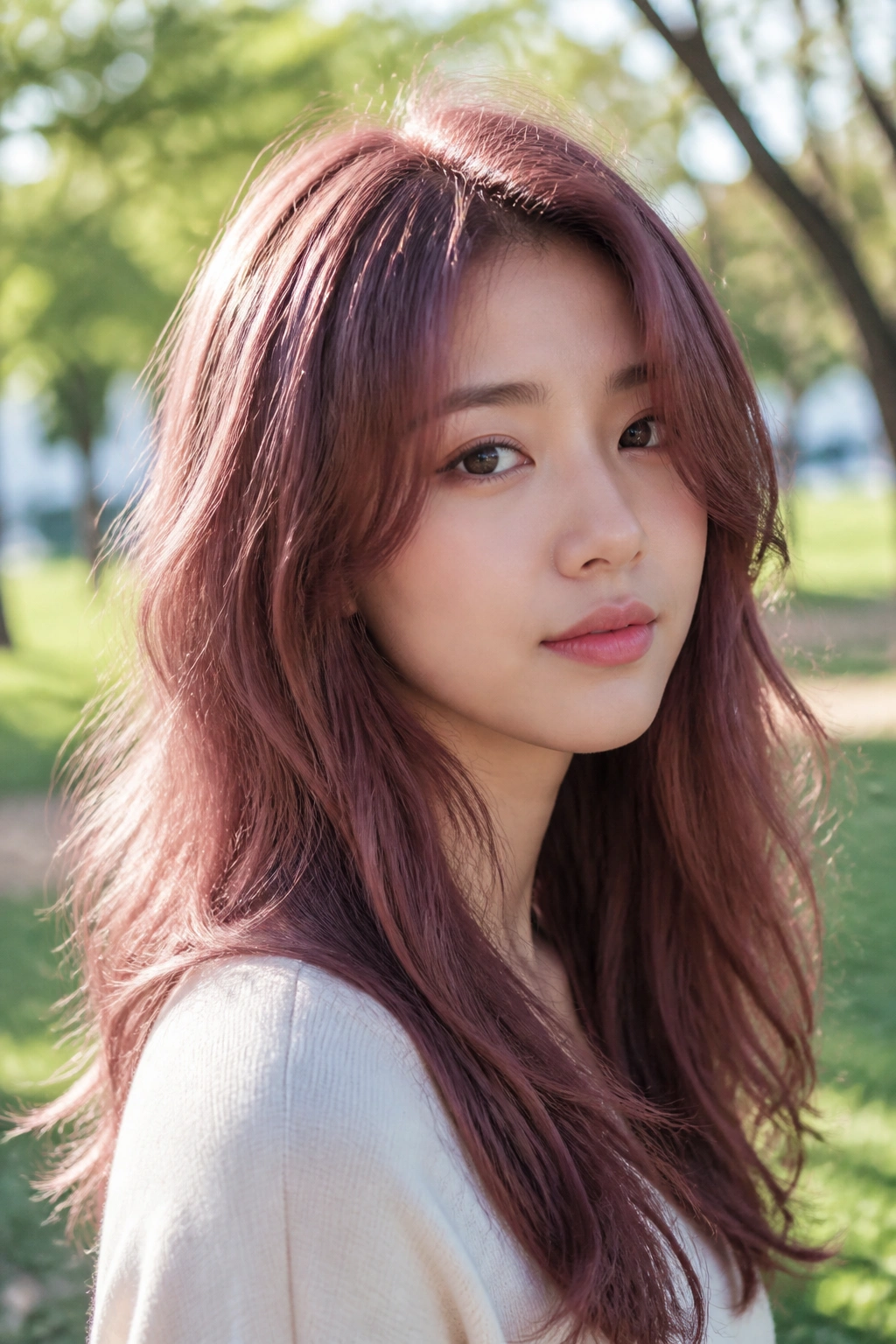
Can pink hair feel grown-up? Absolutely, if the pink is buried under brown instead of floating on top of it. That’s what rose brown gets right.
This shade is softer than rose gold and warmer than mauve. Think brown hair with a blush tint that appears at the surface, not a full pink dye job. On pre-lightened hair, the effect can be delicate and almost powdery. On darker bases, it usually needs more lift or a rose-brown gloss over a lighter brown canvas.
How to wear it
- Choose rose brown on waves or a loose blowout so the pink tones move
- Ask for a brown base with a rose glaze, not neon pink
- Keep brows and makeup soft if you want the color to feel balanced
- Let it fade a little; the washed-out stage can look lovely
There’s a small catch. Rose tones fade fast if the hair is porous. That is not a dealbreaker, just a planning issue. A semi-permanent gloss or color-depositing mask can keep the blush tint alive between salon visits.
On the right person, rose brown feels playful without looking like a costume. That balance is hard to fake.
9. Soft Copper Auburn
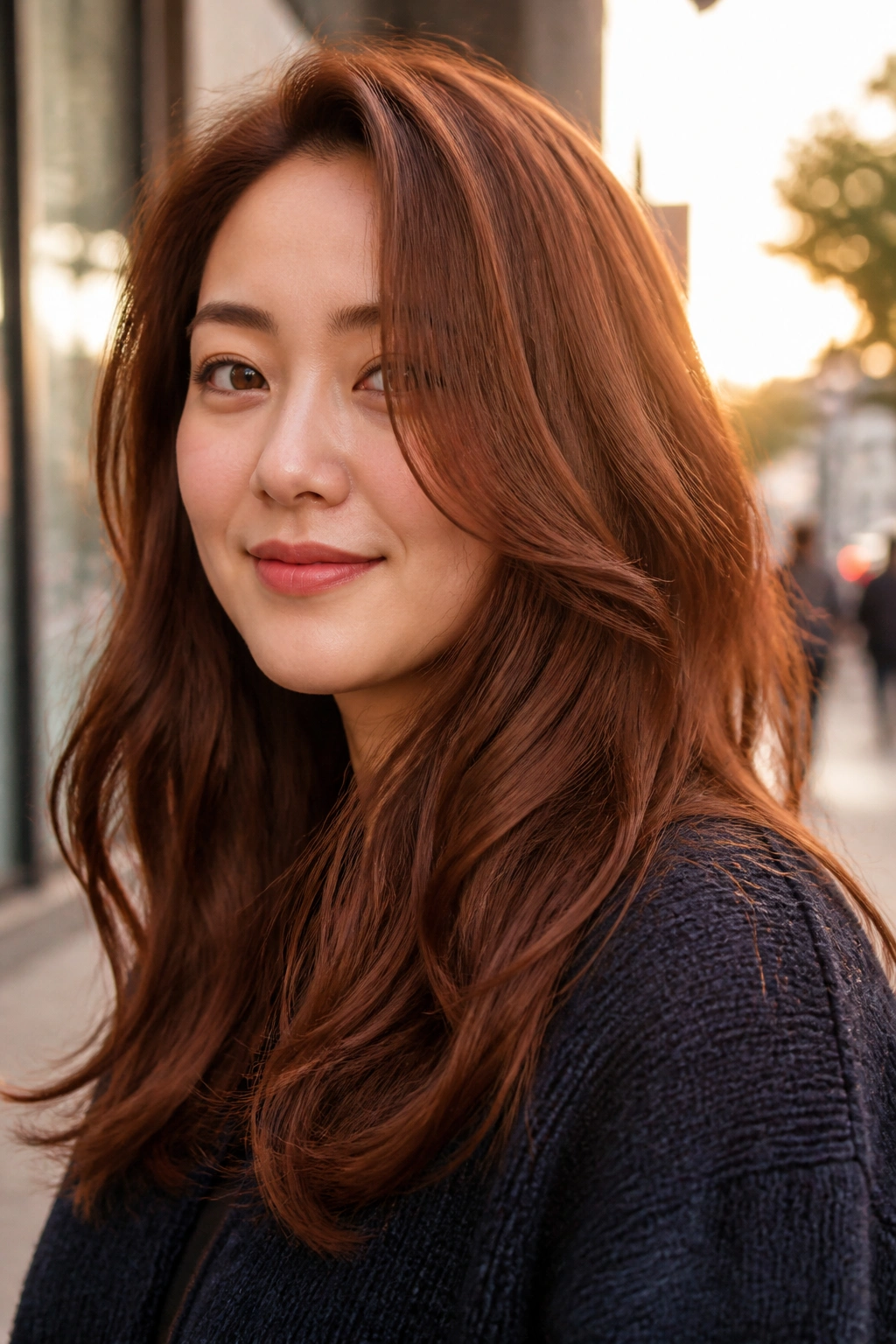
Soft copper auburn is what happens when warmth is handled with a lighter hand. Not bright orange. Not deep burgundy. Just enough copper to wake up the face and enough auburn to keep the shade grounded.
A lot of dark Asian hair can carry copper beautifully if the formula is tuned carefully. The goal is not to turn the hair orange. It’s to add a warm reflect that glows when the light hits it. On layered cuts, the movement helps. On a bob, the color looks crisp and fresh.
I’ve always thought this shade works best when the finish is glossy and slightly dimensional. One flat copper block can feel heavy. A few softer copper ribbons over an auburn base look much better.
Good questions to ask your colorist:
- Will this be a permanent color or a gloss?
- How much lift do we need for the copper to show?
- Can the roots stay slightly deeper than the mids?
- What toner will keep it from looking too orange?
If your skin has golden or olive undertones, this shade can wake everything up. If your coloring is cool, keep the copper muted and let auburn do more of the work. That small shift changes the whole mood.
10. Honey Bronde
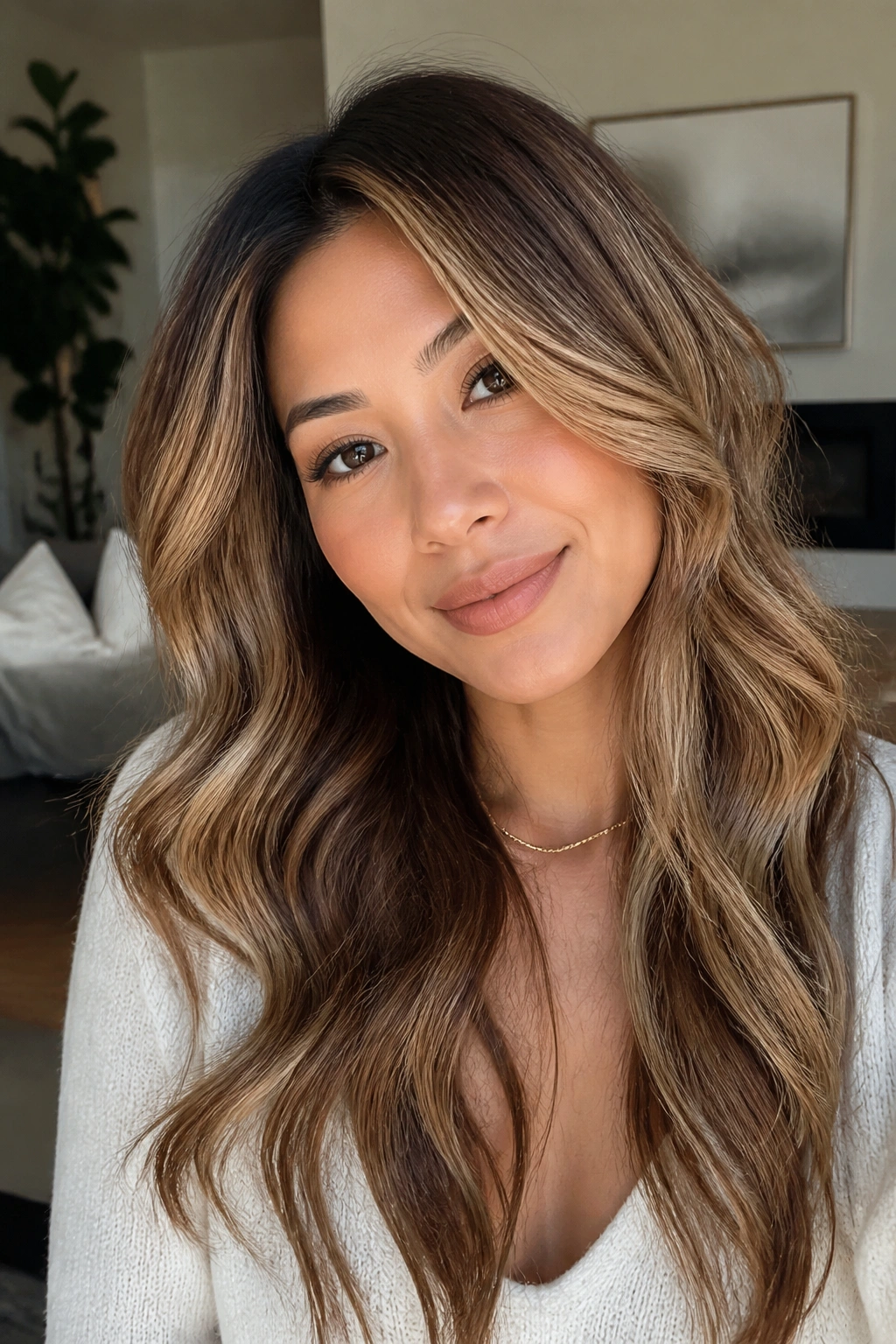
Honey bronde sits in the middle of brown and blonde, and that middle is where the magic lives. On dark hair, it can create brightness without forcing the whole head into full blonding. That’s why it keeps showing up among Asian hair color trends for women who want lighter hair but not a hard edge.
Bronde can look messy if it is done badly. Too much blonde and it loses the soft honey note. Too much brown and it becomes just another caramel mix. The best versions use fine highlights, a gentle root shadow, and a warm beige toner so the result looks woven rather than striped.
This is one of those shades that depends a lot on haircut and placement. Face-framing pieces can be a shade lighter. The ends can stay richer. Around the crown, a few scattered lights make the whole thing catch movement better.
It also helps if you like soft waves or a loose blowout. Honey bronde is less convincing on hair that sits absolutely flat, because the dimension is part of the point. If you wear your hair sleek most days, keep the highlights finer and the contrast lower.
A tiny warning: honey bronde can veer brassy if the toner washes out. If that happens, it usually needs a neutralizing gloss, not a whole new color service.
11. Face-Framing Money Piece Highlights
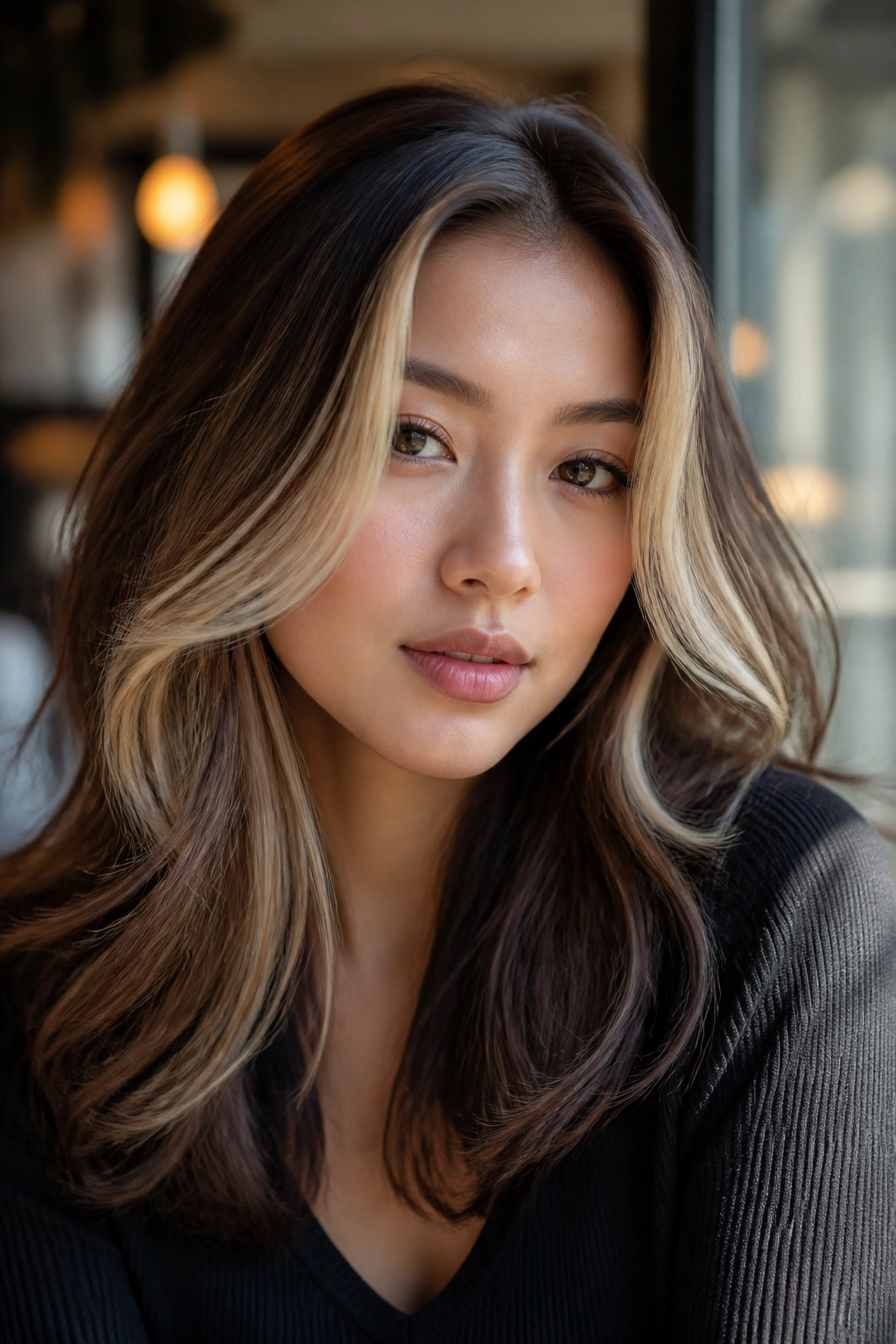
If you want a visible change without coloring every strand, face-framing money piece highlights are the move. They sit right around the face, usually a little brighter than the rest of the hair, and they do a lot of work for a small amount of processing.
The whole idea is contrast. Dark hair stays dark in most places, then the front pieces lift enough to make the eyes, cheekbones, and jawline pop. That’s why the service is so popular with women who want lighter hair but hate full upkeep. It gives the impression of more change than the appointment time would suggest.
How to place them well
- Keep the brightest sections around the front hairline and part
- Use 1/2-inch to 1-inch slices, not chunky panels
- Ask for a soft blend into the side layers
- Leave the underlayer darker so the contrast does not look harsh
The best version depends on your haircut. Curtain bangs love this. So do long face layers. A blunt bob can wear it too, but the lighter pieces need to be thinner or they can look a little blocky.
And yes, the grow-out still matters. If you want the look to stay soft, ask for a root shadow or shadowed melt near the scalp. That extra step keeps the highlights from looking like they were dropped onto the hair instead of part of it.
12. Smoky Lilac
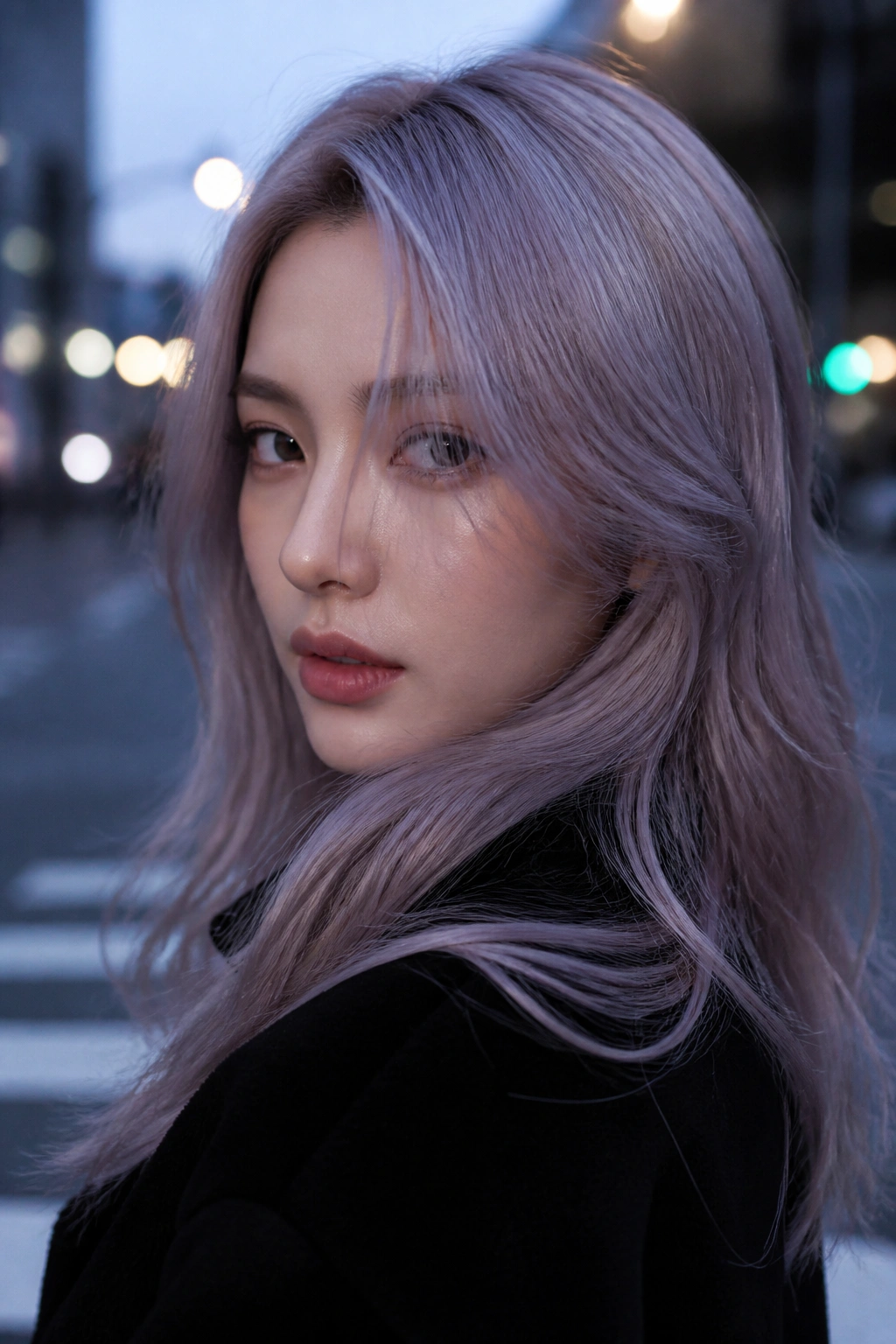
Can lilac work on dark Asian hair without looking loud? It can, but only when the purple is muted down with gray or smoky beige. That’s the whole appeal.
Smoky lilac is not candy purple. It’s more restrained, more moody, and a lot easier to wear if you like cool tones. It usually sits on a pale blonde base, which means lift matters. The hair has to be light enough for the violet to show, but not so yellow that the color turns muddy.
How to use it
A smoky lilac gloss looks lovely on shorter cuts, shaggy layers, and airy waves. The texture breaks the color up, so it doesn’t look like one giant block of purple. If your hair is long and thick, you may want the lilac only on the mid-lengths and ends, with deeper roots for contrast.
Some useful notes:
- Pre-lighten evenly or the lilac will patch
- Use cool water and gentle shampoo
- Expect a softer pastel fade after a few washes
- Book gloss refreshes before the shade disappears completely
This is one of the more maintenance-heavy choices on the list. That does not make it a bad one. It just means you should love the mood enough to care for it. If you do, the result can look dreamy in daylight and surprisingly sophisticated at night.
13. Burgundy Plum
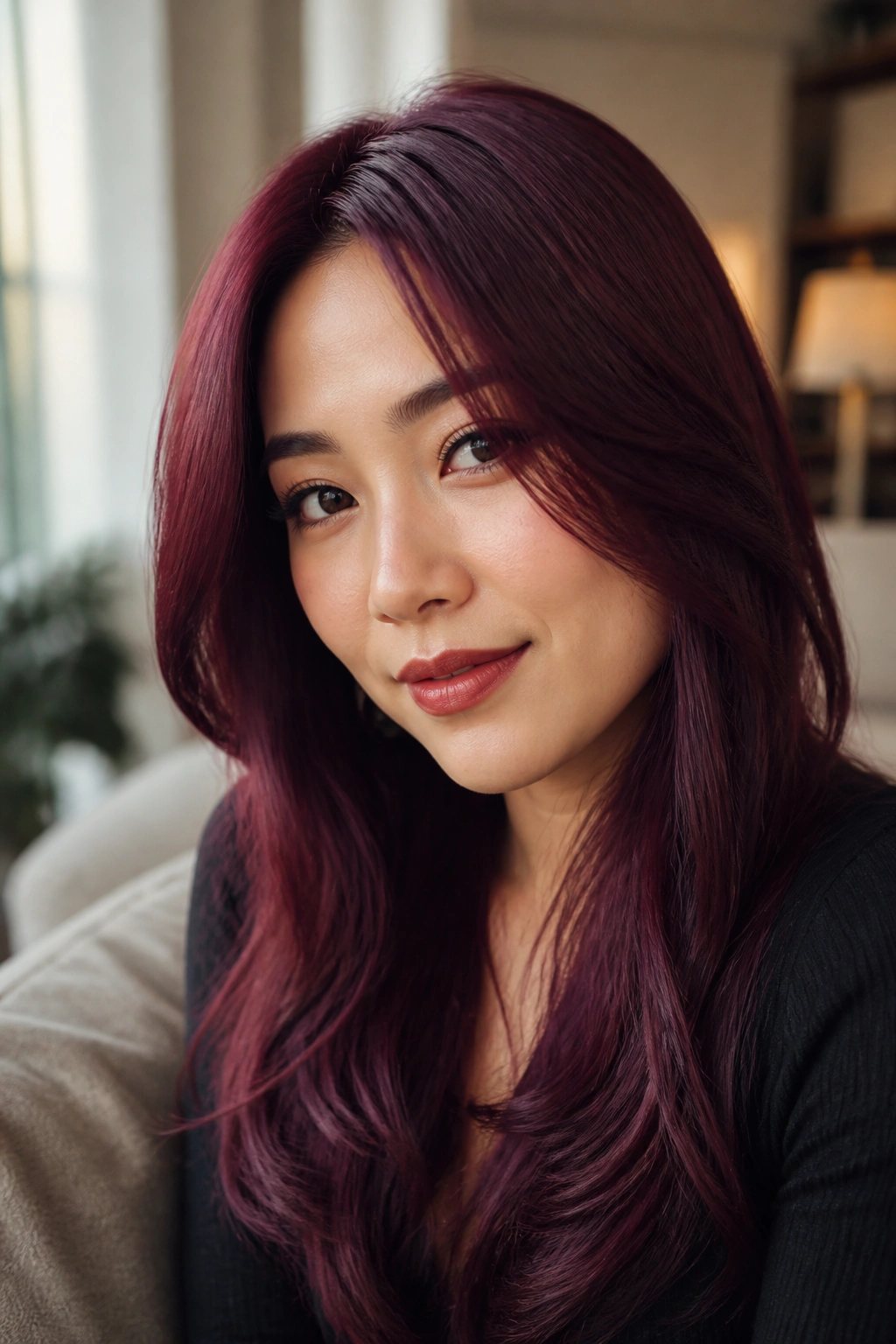
Burgundy plum is a rich, velvety shade that sits between wine red and deep purple. On dark hair, it gives a bold change without needing the same level of lift as pastel colors. That alone makes it one of the more practical dramatic options.
The shade works because it adds depth, not just brightness. The plum keeps the burgundy from looking flat, and the burgundy keeps the plum from going too cool. On straight hair, it can read sleek and intense. On waves, it picks up red-violet flashes that look almost hidden until the hair moves.
This is a good color if you like darker lips, sharper eyeliner, or black clothing. It plays well with a stronger wardrobe. It also fades in a decent way. Instead of turning into a weird washed-out orange, a well-done burgundy plum usually softens into a softer red-brown.
A few practical points:
- Keep the formula deeper at the roots
- Ask for glossing between full color appointments
- Avoid harsh clarifying shampoos unless you need a reset
- Use heat protectant every time, because red-violet tones fade fast under heat
If you want something richer than cherry cola, this is the next stop. It has a little more drama, and I mean that in a good way.
14. Espresso with Mirror Shine
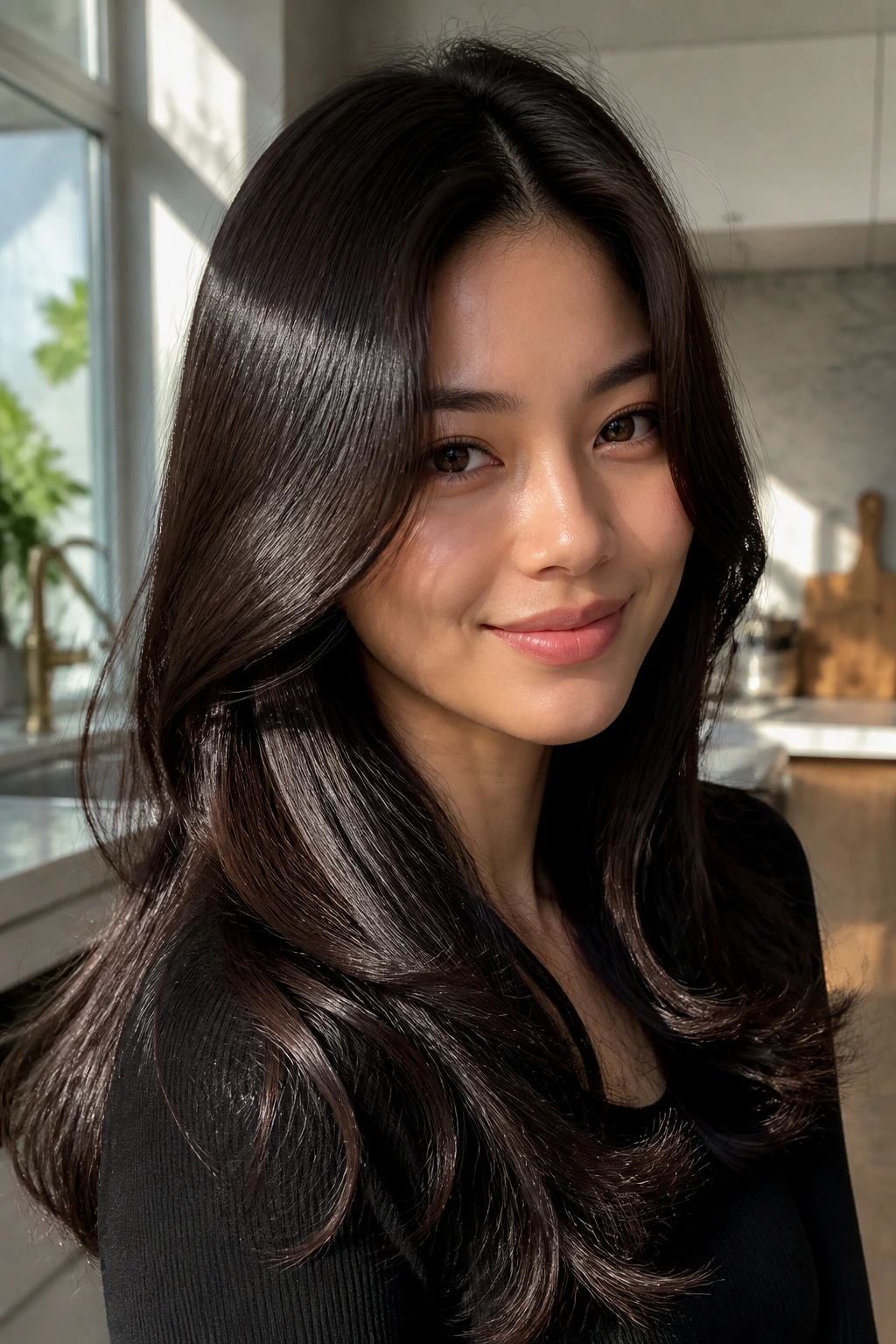
Not every color trend has to be a color change. Espresso with mirror shine proves that depth, tone, and finish can do the job all by themselves.
This look is about making dark hair look clean, rich, and reflective. The shade itself stays close to a deep brown-black, but the gloss is what brings it to life. On healthy hair, the effect is almost glassy. On layered cuts, the movement keeps the dark color from going flat.
Unlike lighter trending shades, espresso shine does not need bleaching or a big lift. That makes it especially appealing for women who want a lower-maintenance color that still feels intentional. It can be done with a glaze, a demi-permanent color, or a deep gloss service depending on the starting base.
Who it suits best
- Women who like dark, polished hair
- Anyone growing out lighter dye and wanting to return to depth
- People who prefer shine over contrast
- Cuts with sleek ends or blunt lines
A good espresso shade should look expensive in the boring way that matters: clean roots, smooth cuticle, and no dull red cast at the ends. If the hair looks shiny only from one angle, the tone probably needs adjusting.
This is the shade I recommend when somebody says, “I want something simple, but not plain.” That sentence comes up a lot.
15. Iced Coffee Beige
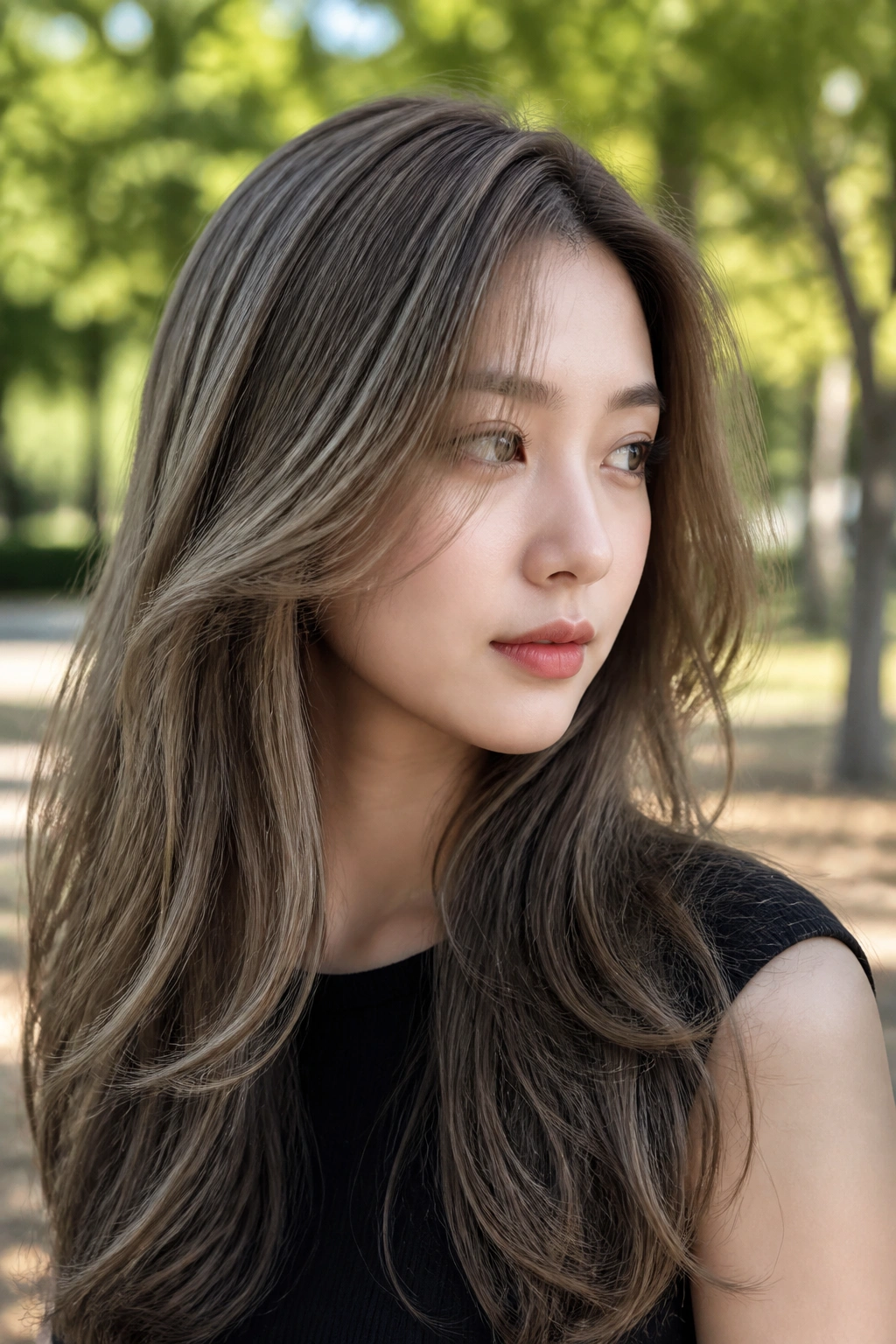
Iced coffee beige is cooler than honey and softer than ash blonde. It sits in that useful middle zone where the hair looks lighter, but not yellow, and the result feels airy without losing all the brown depth underneath.
This shade can be gorgeous on dark Asian hair, but the formula has to be handled carefully. Beige tones need enough lift to show, and if the hair is not lightened evenly, the color can turn muddy around the mids or too warm at the ends. A clean lift matters more here than with darker brunettes.
The best version usually uses fine babylights or a soft highlight pattern rather than big, obvious panels. Then a beige toner rounds out the warmth and keeps the finish creamy.
Why people like it:
- It brightens the face without a huge color shift
- It looks soft in daylight and indoor light
- It pairs well with layered cuts and loose styling
- It can be adjusted cooler or warmer depending on undertone
Be honest with yourself about upkeep. Beige shades need toner refreshes when the yellow starts to creep in. If you want low-maintenance, choose a darker beige and keep the lift subtle. That way the grow-out looks cleaner and the color stays wearable longer.
16. Peachy Beige Pink
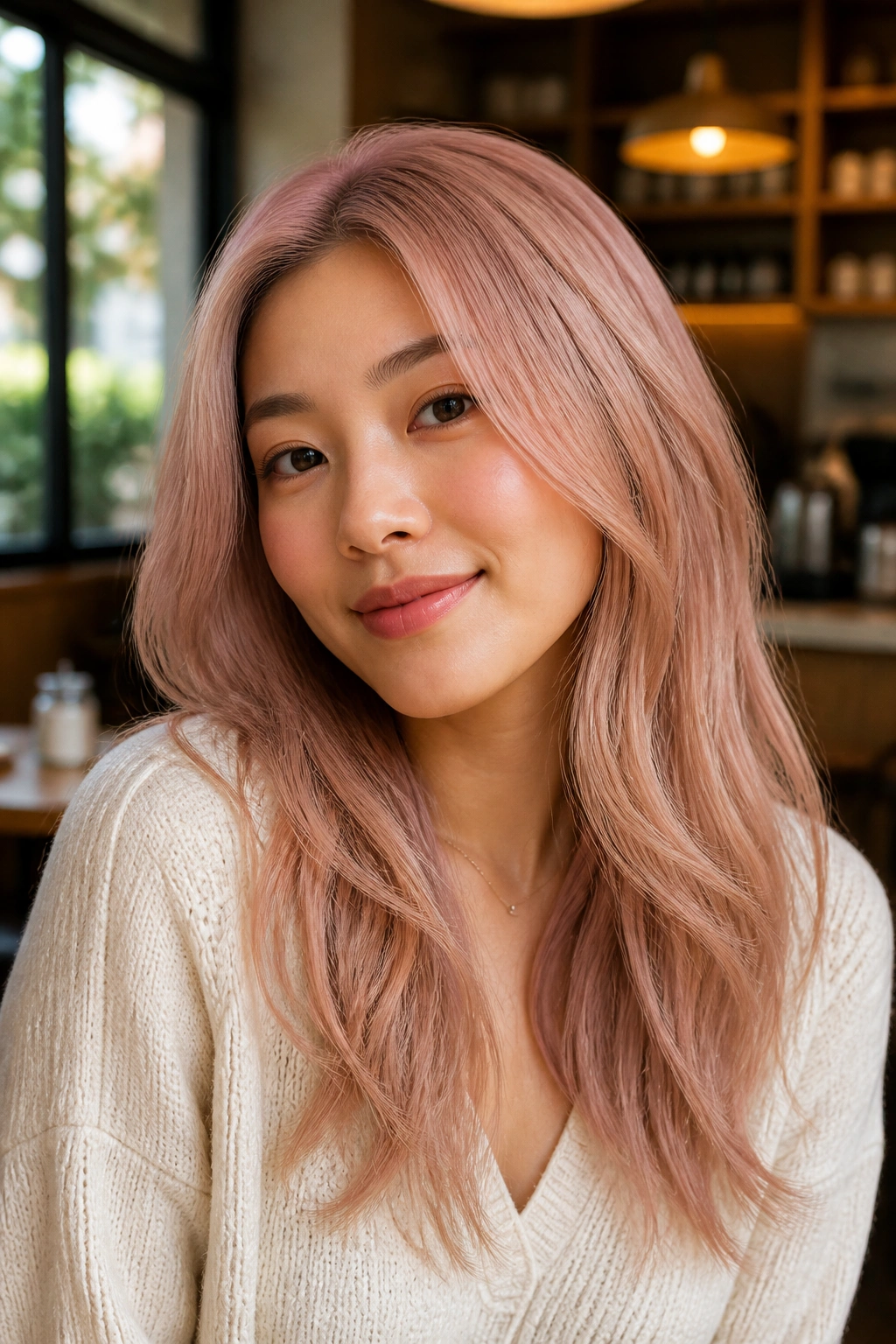
Peachy beige pink is one of those shades that looks gentle until it’s on hair, then it suddenly makes the whole cut feel fresher. It’s softer than coral, warmer than rose, and less sugary than pastel pink. That balance makes it more wearable than people expect.
On dark hair, this color usually needs a light base first. If the canvas is too orange, the peach can get loud. If the base is too yellow, the pink can disappear. The sweet spot is a pale beige blonde with enough warmth to support the peach tone, not fight it.
Shorter cuts love this shade. So do soft waves and layered lobs. There’s something nice about seeing peach tones move through the hair instead of sitting in one solid block.
Good ways to wear it
- Keep the roots slightly deeper for contrast
- Use peach on face-framing pieces if you want a lighter touch
- Let the color fade into beige rather than fighting the fade
- Pair it with soft makeup tones so the hair does not feel disconnected
It is not the easiest shade to maintain, and I would never tell someone otherwise. But if you want something playful that still feels gentle, peachy beige pink has a charm that louder pinks usually miss.
17. Smoky Gray Brown
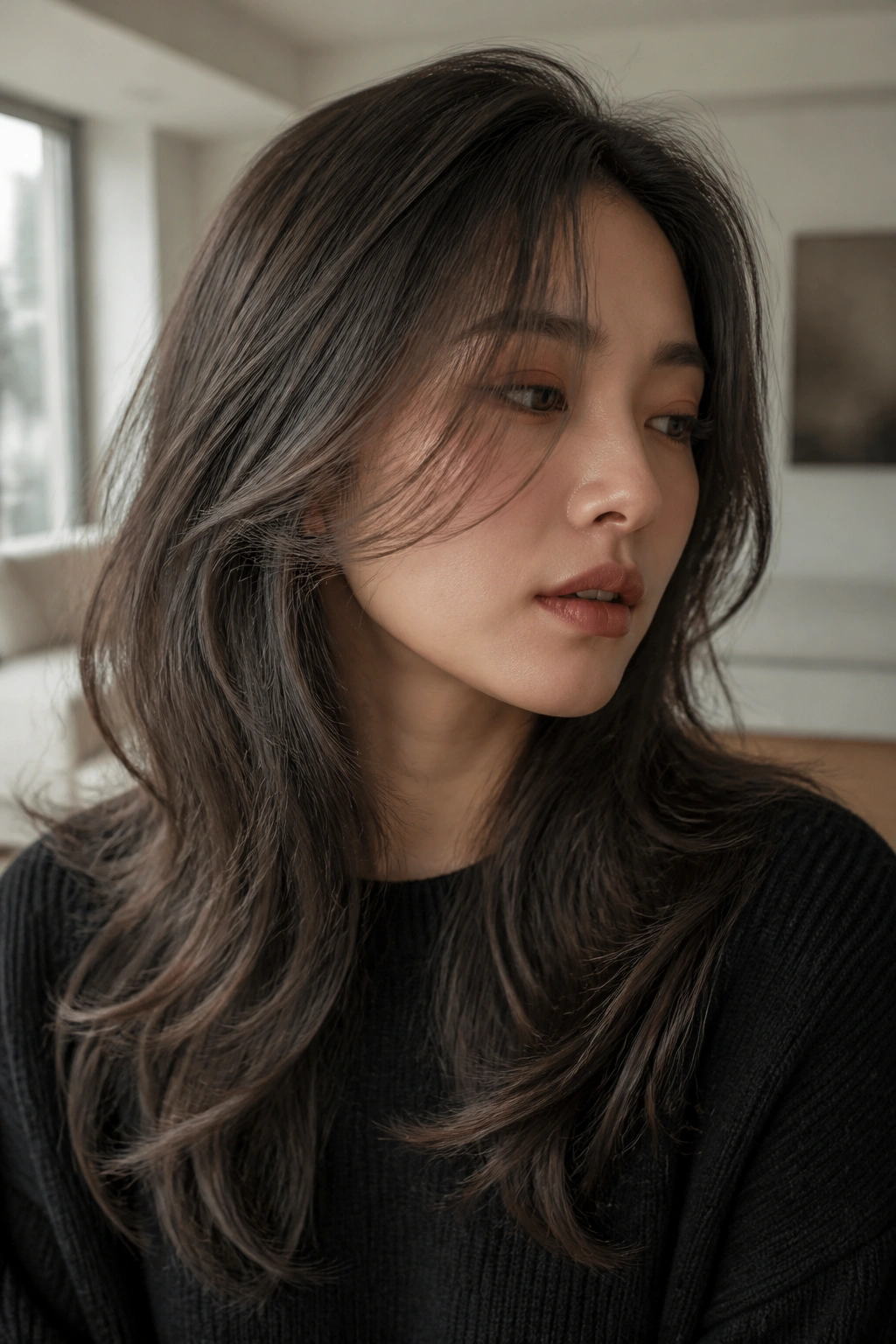
Smoky gray brown is what happens when ash tones are handled with a little more brown and a little less silver. The result looks cool, modern, and calm. Not icy. Not muddy. Just controlled.
This shade tends to flatter women who already wear darker clothes, sharp collars, or minimalist makeup. It also looks strong on straight hair because the clean lines let the muted color read clearly. On wavier hair, the gray-brown reflect can look softer and more diffused.
The trick with smoky gray brown is balance. If the hair is too dark, the gray disappears. If it’s too light, the shade starts to look washed out. Most of the time, the sweet spot is a level 6 to 7 base with a cool toner that keeps the warmth under control.
What to tell your colorist
- Keep the brown base visible
- Avoid silver-heavy toner unless your hair is lifted very pale
- Ask for a soft matte finish, not a dull one
- Use a blue shampoo only when brass starts showing up
This shade can look especially nice in ponytails, buns, and half-up styles because the movement shows off the difference between the smoky surface and the darker base. It has range. That’s the part I like most.
18. Warm Cinnamon Brown
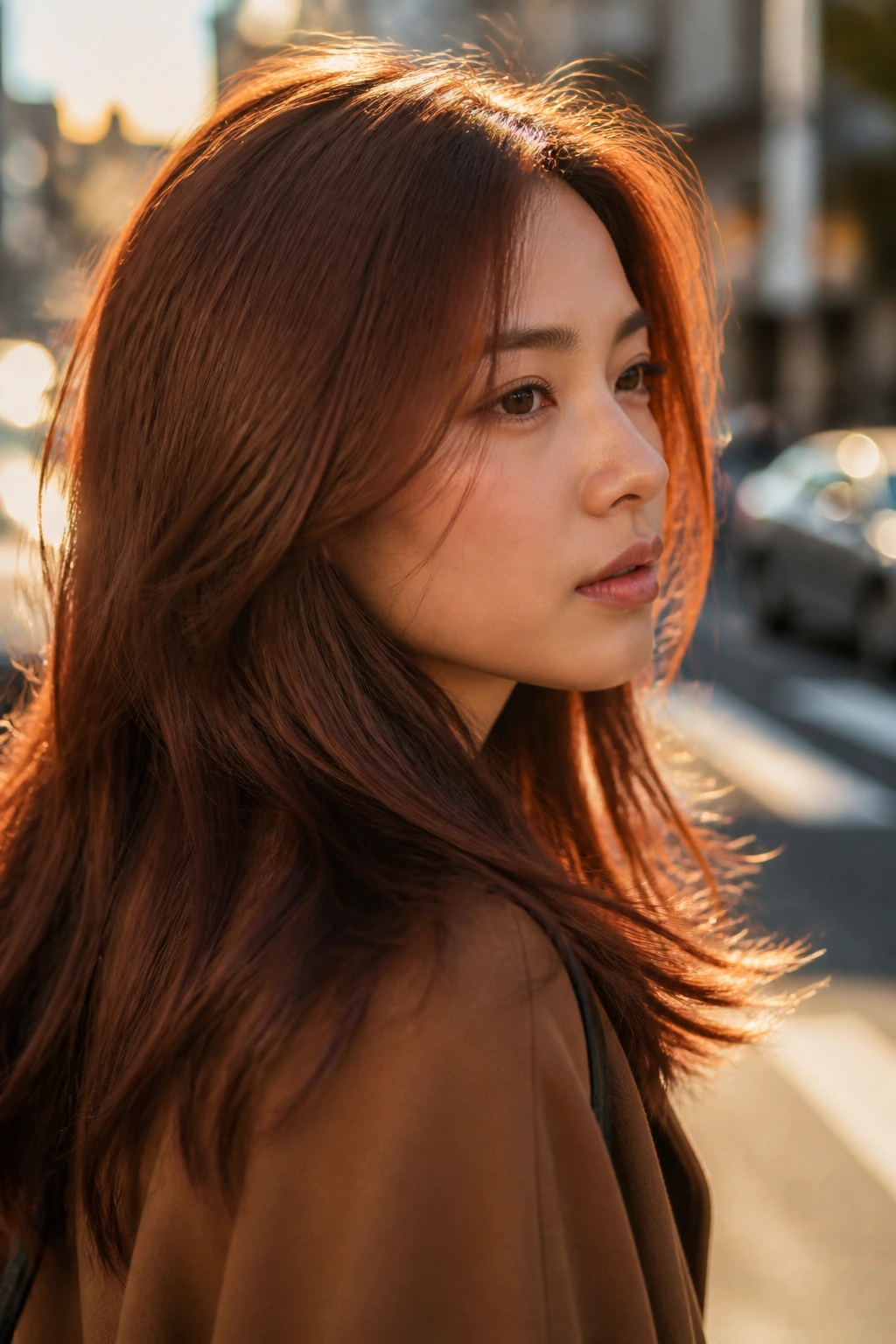
Warm cinnamon brown closes the list because it’s one of the most wearable warm shades you can put on darker hair. It has enough red and spice to feel lively, but it stops short of copper’s brightness and auburn’s depth.
If ash shades have been bothering you because they feel cold against your skin, cinnamon brown is the easy answer. It brings warmth back without crossing into brass. That line matters. Brass looks accidental. Cinnamon looks chosen.
This color works well with layered cuts, blowouts, and medium-length styles, mostly because the movement helps the warm tones shimmer instead of sitting flat. On very long hair, it can look rich and glossy, especially if the ends are kept healthy and trimmed.
A good cinnamon brown usually has a brown base with subtle red-gold reflect, then a gloss that keeps the warmth smooth. If the color turns too orange, the formula needs more brown. If it turns too red, it loses the cinnamon feel.
One practical thing: this is a shade that can age gracefully if the haircut stays clean. Split ends make warm tones look fuzzy. Clean ends make them look polished.
Final Thoughts
The smartest Asian hair color trends for women are the ones that fit the hair you already have instead of pretending it came from somewhere else. Dark bases can handle a lot, but they usually look best when the formula respects depth, shine, and grow-out.
If you want low fuss, lean toward blue-black, espresso, mushroom brown, or mocha melt. If you want movement, caramel balayage, honey bronde, and money pieces do a lot with a little. And if you want something bolder, cherry cola, burgundy plum, smoky lilac, and peachy beige pink each give you a different kind of edge.
Bring photos. Better yet, bring two — one shot in daylight and one under indoor light. Dark hair changes more than people expect once it’s colored, and the difference between “nice” and “exactly right” usually comes down to undertone, placement, and how much upkeep you’re willing to live with.
