



An oval face can wear a bob better than almost any other shape, but that does not mean every bob behaves the same way. Layered bobs for oval faces can sharpen cheekbones, soften a long chin, open up the jawline, or make the neck look longer, all depending on where the weight sits and how much movement the cut has through the ends.
That’s the part a lot of people miss. Oval doesn’t mean “anything goes.” A bob that lands too high can make the face feel stretched. A bob that puffs out at the sides can widen the middle in a way you may not want. The sweet spot is shape control, not just “short hair with some layers.”
I like bob haircuts best when they look deliberate in motion. You turn your head, and the shape still makes sense. You tuck one side behind your ear, and the cut gets better, not worse. That is what separates a decent bob from one you keep wearing again and again.
1. Chin-Length Layered Bob for Oval Faces

A chin-length layered bob is the cleanest place to start if you want something that feels fresh but not fussy. The shortest pieces land right around the jaw, which gives an oval face a little structure without crowding the features. It’s especially nice if your hair falls flat and you want the cut to do some of the work.
Why It Flatters an Oval Face
This length puts the eye right where the face has the most shape. The chin gets a bit more presence, the cheeks look a touch more lifted, and the neck stays open. That matters. A chin-length bob can look boxy if it’s cut too blunt, so the layers need to be soft and light, not choppy for the sake of it.
The best version usually has a slight bend through the ends and a little lift at the crown. If the ends are too heavy, the whole cut feels sleepy. If the top is too short, it can start looking like a mushroom. Nobody wants that.
- Best on fine to medium hair
- Ask for soft internal layers, not a heavily thinned-out finish
- A 1.25-inch round brush gives the easiest bend
- Works well with a center part or a soft off-center part
- Trim every 6 to 8 weeks if you want the shape to stay crisp
My favorite tip: keep the perimeter clean and let the movement live inside the cut. That gives you shape without losing the neat bob line.
2. Soft French Layered Bob for Oval Faces

The French bob has attitude, but the layered version is easier to wear. On an oval face, the trick is keeping the length slightly below the cheekbone and cutting the layers so they break up the shape instead of stiffening it. Shorter fringe, soft sides, a little air at the ends. That’s the formula.
What makes this cut work is the balance between polish and looseness. It looks best when it does not look like you spent an hour forcing it into place. If your hair has a natural wave, this bob can be a dream because the layers wake up on their own. Straight hair still works, but it needs a quick pass with a flat brush or a round brush so the ends do not sit too flat.
A lot of people think the French bob has to be severe. It doesn’t. The softer version is more useful, honestly, because it doesn’t fight the face. It just frames it.
The styling move is easy: a small amount of mousse at the roots, rough-dry until about 80 percent dry, then tuck the front pieces under with a 1-inch iron or a brush. The result should feel breezy, not overworked.
3. Collarbone Layered Lob for Oval Faces
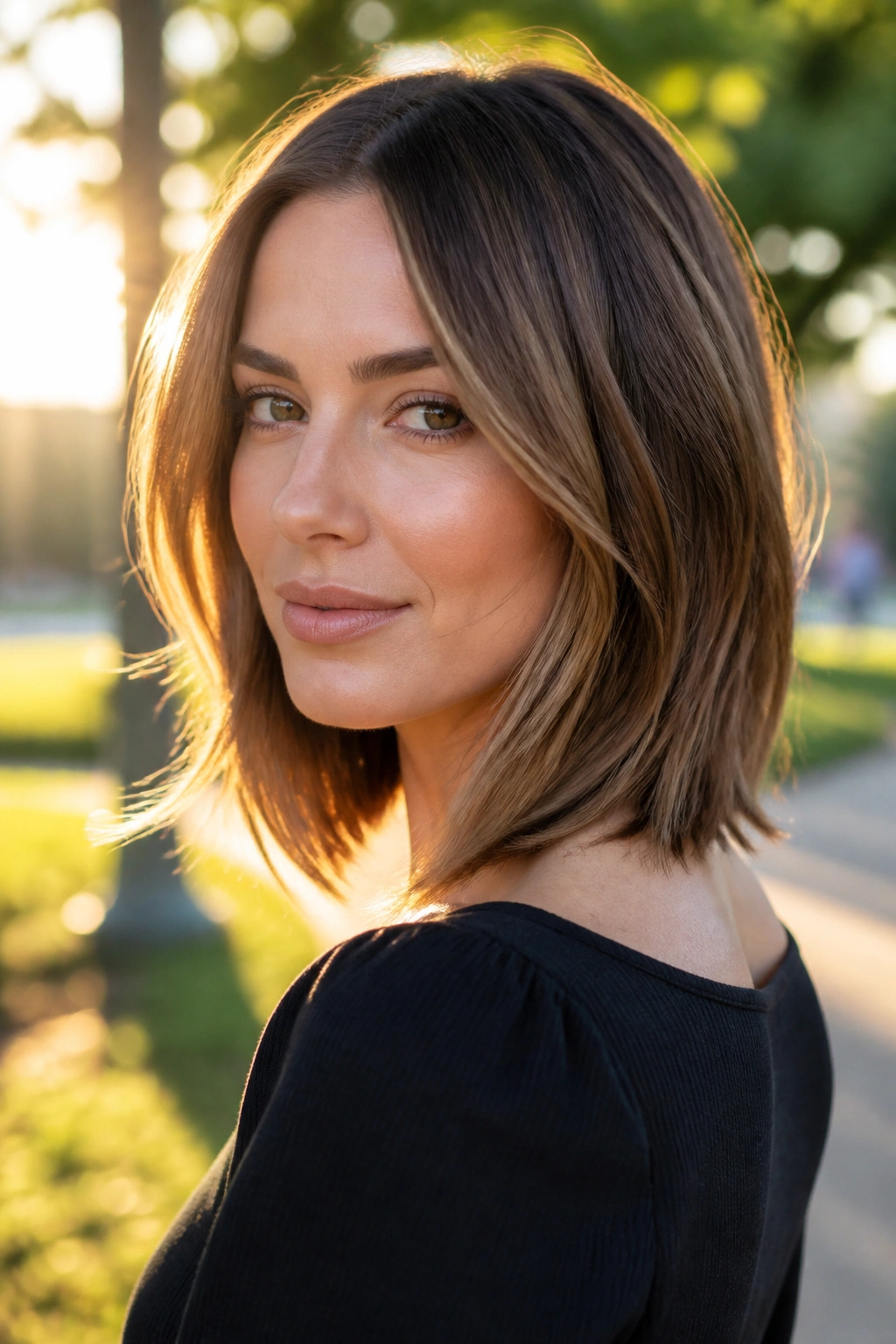
Why does the collarbone lob keep showing up on people with oval faces? Because it gives length without dragging the face downward. The cut lands below the jaw, so it keeps your features from feeling crowded, but the layers stop it from turning into a flat curtain of hair.
That in-between length is useful if you want shape but are nervous about going too short. It also plays well with most textures. Fine hair gets a little air. Thick hair gets some relief from bulk. Wavy hair gets a natural swing that looks better on day two than day one, which is always a nice surprise.
How to Ask for It
Tell your stylist you want the length at or just below the collarbone, with long layers starting around the cheekbone or mouth. You do not want short interior layers that blow the shape apart. The goal is a smooth, moving lob, not a stepped cut that feels choppy from the back.
A center part gives the cleanest oval-face effect, but a soft side part works too if you want a little asymmetry. Keep the ends blunt enough to hold the line. Too much thinning here can make the cut look wispy in a bad way, especially if your hair is fine.
This is one of those haircuts that looks expensive even when it’s not styled much. That’s the appeal.
4. Rounded Layered Bob with Tucked Ends

You know that moment when you tuck one side behind your ear and suddenly the whole haircut looks smarter? That is where the rounded layered bob shines. It has a curved silhouette through the sides and back, so it hugs the face instead of flaring out.
On an oval face, that rounded line softens the edges without hiding them. The effect is gentle, but not dull. If you have medium to thick hair, this shape can be a really good fit because it controls the width through the sides while leaving enough movement at the ends.
- Ask for a rounded outline with softly graduated layers
- Works well if your hair tends to grow out into a triangle
- A paddle brush or large round brush helps keep the curve smooth
- Tucked-behind-the-ear styling shows off the jawline
- Best when the layers are blended, not chunked
This cut can look a little plain if it is left too heavy at the bottom. A few well-placed interior layers change that fast. They stop the bob from sitting like a helmet and let the shape curve around the face the way it should.
I’d choose this one if you like neat hair that still moves.
5. Angled Layered Bob with Face-Framing Pieces

A slight angle makes a bob feel sharper immediately. Shorter in the back, longer in the front, and a few face-framing pieces that land near the jaw or collarbone — that’s the outline that gives an oval face a bit more edge.
This cut is especially good if you want the face to look a touch more sculpted. The forward angle draws the eye downward and forward, which can make the chin look more defined. It also gives straight hair something to do. Without that angle, straight hair can go limp fast. With it, the shape holds even on a low-effort day.
The face-framing pieces matter more than people think. If they’re too short, they can widen the cheeks. If they’re too long, the angle disappears. The sweet spot is usually somewhere between the lip and the collarbone, depending on how much length you’re keeping.
I like this bob on someone who wants the haircut to do the talking. It looks polished with a blowout, but it also works with a flat iron bend at the ends. You do not need huge volume here. You need clean lines and a little movement.
6. Shaggy Layered Bob with Piecey Texture
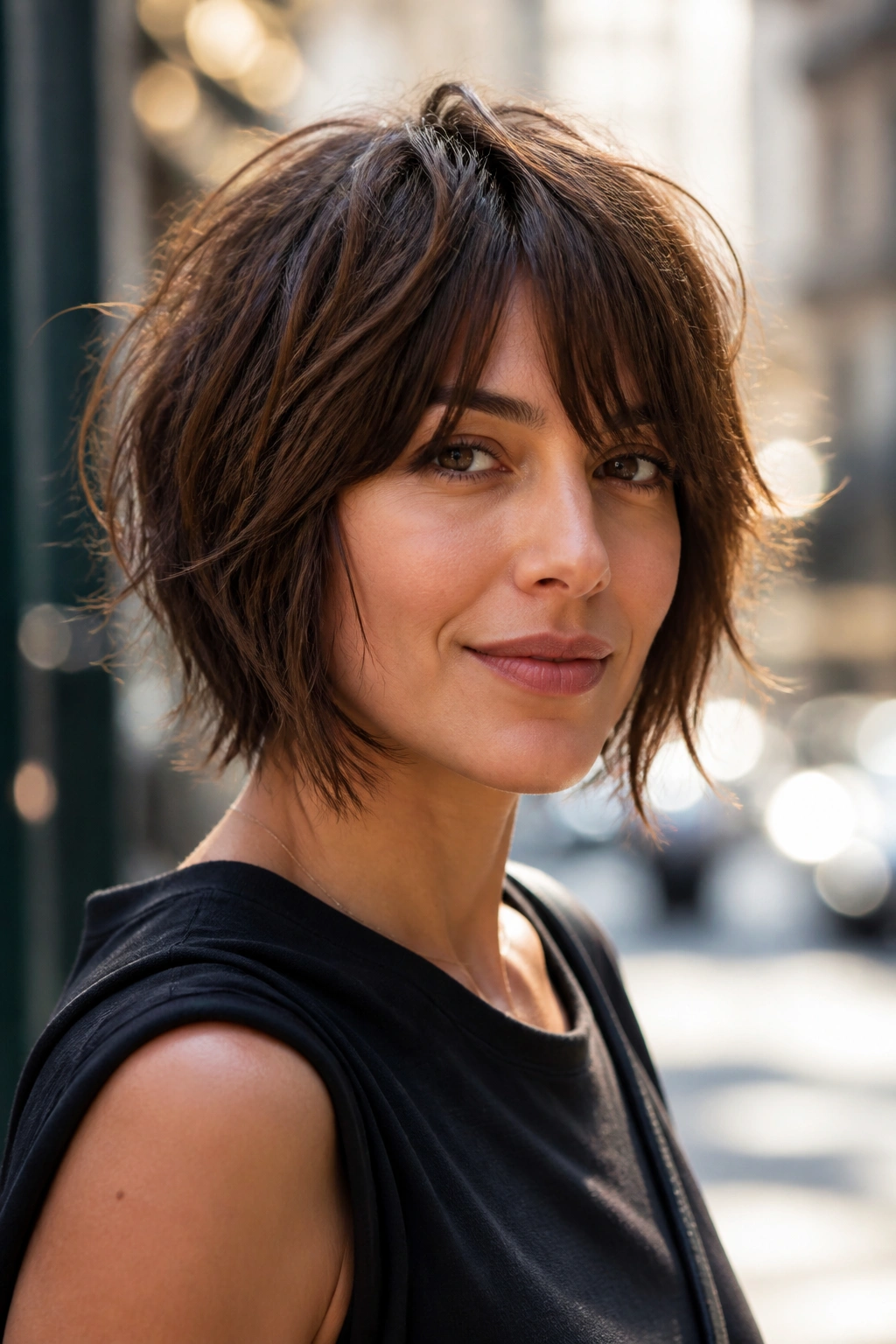
A shaggy bob is the opposite of precious. That’s exactly why it works. On an oval face, the uneven layers make the cut feel lighter around the cheeks and more relaxed through the jaw, which is useful if you do not want a tidy, formal bob.
This version is best if your hair has wave or texture already. The pieces separate nicely, and the layers keep the shape from turning into a triangle. If you have thick hair, this can take off some of the bulk in a way that feels intentional. If your hair is fine, you need a lighter hand. Too much thinning and the ends start to look stringy.
Unlike a blunt bob, the shaggy version does not depend on perfect styling. It looks better with a little mess. That’s the point. A pea-sized amount of styling cream or a spritz of texture spray can be enough. Scrunch, twist a few front pieces, and leave some ends imperfect.
This is the cut I’d choose for someone who wants movement more than precision. It feels cool without trying too hard, and that matters.
7. Stacked Layered Bob with Crown Lift

Flat at the crown? A stacked bob fixes that problem fast. The shorter layers in back build lift right where the head starts to curve, so the whole shape gets a little more height and a lot more body.
Why the Shape Works
Oval faces usually handle crown volume well because the face already has balanced proportions. A stacked bob uses that to its advantage. It adds structure from the back, then lets the front stay softer so the face does not get overpowered. The result is tidy, compact, and a bit stronger-looking than a soft lob.
- Best on straight to slightly wavy hair
- Ask for graduated layers at the nape
- Keep the front pieces long enough to avoid a bubble shape
- Works well with a volumizing spray at the roots
- Needs a trim about every 6 weeks to keep the stack clean
One rule: do not let the back get too short if you want the cut to stay modern. Too much stacking can make the shape feel dated fast. A subtle stack gives you lift without the hard wedge effect.
This is a smart bob if you like neat hair, but not flat hair.
8. Curtain-Bang Layered Bob
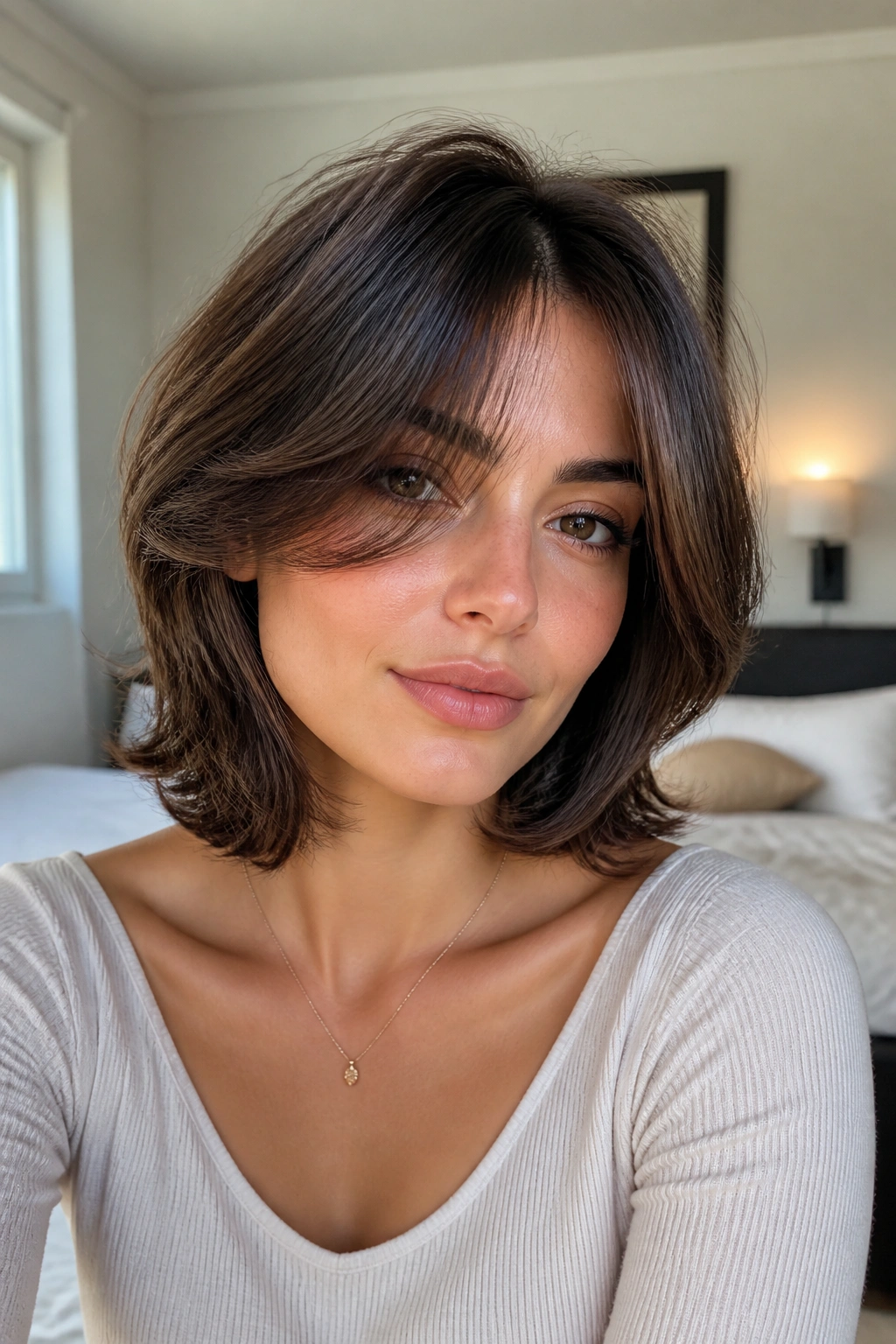
Curtain bangs can rescue a bob that feels too open at the front. On an oval face, they split the difference nicely: some forehead coverage, some cheekbone show, and enough softness around the eyes to keep the whole cut from looking severe.
The best thing about this pairing is the way the bangs melt into the layers. Instead of feeling like a separate feature, they become part of the haircut. That matters because an oval face can handle fringe, but not all fringe types behave the same way. Heavy straight bangs can shorten the face in a blunt way. Curtain bangs keep the length visible.
Styling takes a little attention at the front. Blow-dry the bangs away from the face first, then sweep them back down with your fingers so they fall in a soft bend. A round brush helps, but I would not overthink it. Too much round-brush work and the bangs start to look overdone by noon.
This is one of the best layered bob options if you want the haircut to feel a little romantic. Not sweet. Romantic. There’s a difference.
9. Side-Part Layered Bob for Oval Faces

A side part can change a bob faster than a full cut change. It shifts the weight, adds lift on one side, and gives an oval face a little asymmetry, which can be more interesting than a centered line.
Why does that matter? Because oval faces can sometimes look too symmetrical if the hair is parted dead center and cut too evenly. A side part breaks that up. It brings one eye into focus, opens the cheekbone on the higher side, and keeps the shape from feeling too neat.
How to Keep It from Collapsing
The part itself is only half the story. You need enough root support for the lift to last. A light root spray or mousse at the crown helps, then clip the higher side up while it cools after blow-drying. That little step makes a bigger difference than people expect.
- Best for fine hair that falls flat
- Use a tail comb to set the part cleanly
- Dry the roots in the opposite direction first for extra lift
- Keep the layers soft so the part does not split the shape in half
- Works on both straight and wavy textures
The side-part bob is not flashy. It is smarter than flashy. That’s why it keeps showing up.
10. Razor-Cut Layered Bob

If your hair feels heavy even after a trim, a razor-cut layered bob can be a relief. The razor removes bulk in a softer way than scissors alone, and the ends taper out with more movement. On an oval face, that loose edge prevents the haircut from feeling too hard or blocky.
You do need the right hair type for this. Medium to thick hair usually takes to razor cutting well, especially if it has some bend. Very fragile or overly frizzy hair can get pushed too far by a razor, which leaves the ends rough. That’s the catch. It’s a useful tool, not a magic one.
- Best on straight, wavy, or dense hair
- Ask for razor work mainly through the mid-lengths and ends
- Avoid over-thinning near the crown if your hair is fine
- Style with a light cream or air-dry balm
- Great if you want softness instead of a blunt edge
A good razor bob should look light, not shredded. There’s a difference. The outline still needs to hold together when the hair moves, or the whole cut starts to look tired. I’d pick this for someone who wants a softer edge without losing shape.
11. Curly Layered Bob
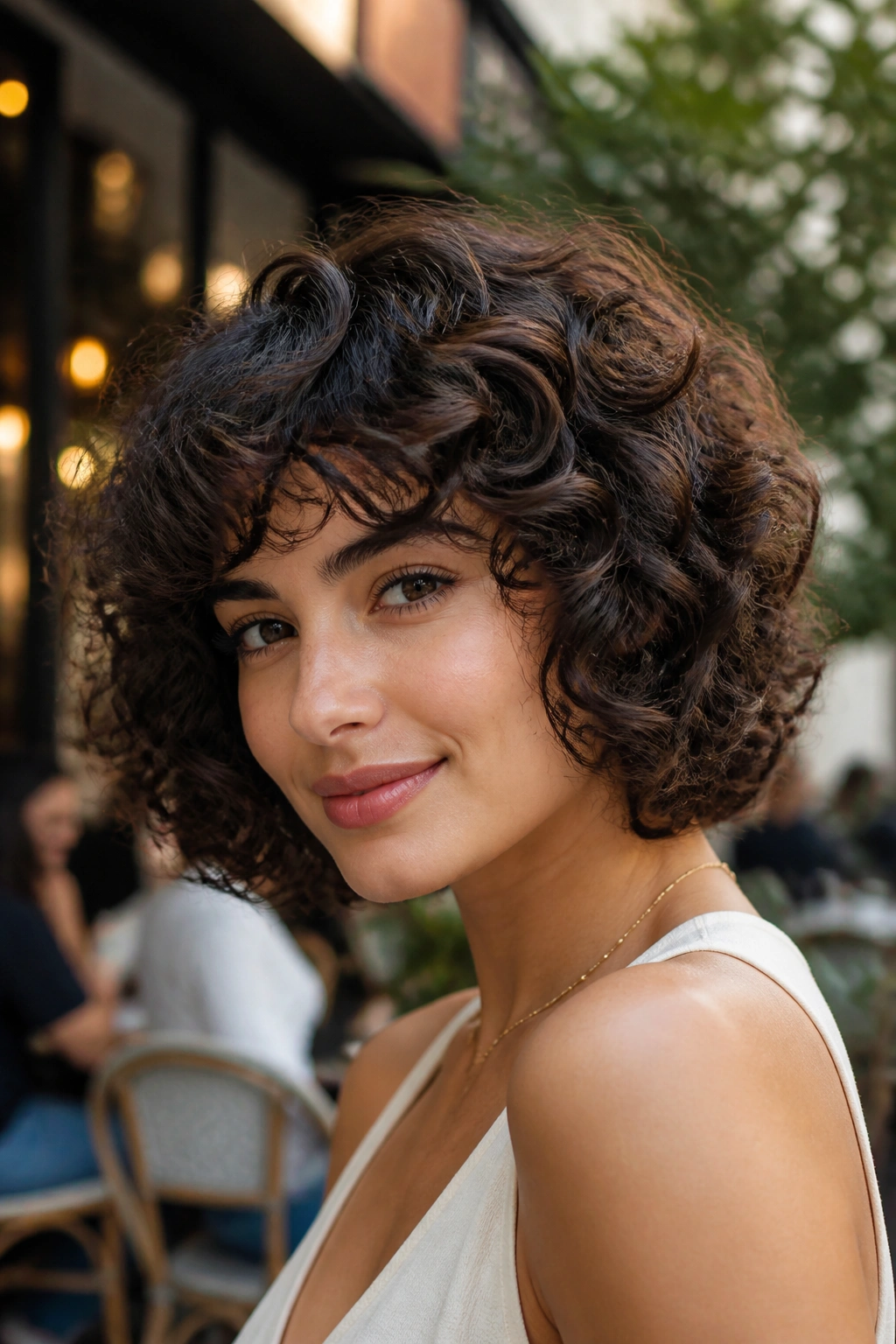
Curly hair and bob cuts can be a mess or a dream. The difference is layering. For an oval face, a curly layered bob works because it keeps the curls from stacking too much width at the sides and helps the shape sit where it should.
The cut has to respect the curl pattern. A dry cut, or at least a curl-by-curl finish, usually gives the best result because curls spring up in uneven ways. If the layers are too short at the top, the silhouette can balloon. If they’re too long, the curls lose their shape and the bob turns flat at the ends. It’s a narrow line, but worth it.
Humidity changes everything, so I like this cut with a plan. Use a leave-in conditioner, scrunch in a curl cream, and diffuse until the roots are set but the ends still feel soft. Don’t crush the curls with a towel. That roughness shows.
What I like most here is how flattering it is from every angle. The curls create movement near the jaw and cheeks, but the layers keep the overall outline neat enough to read as a bob, not a triangle.
12. Sleek Layered Bob with Polished Ends
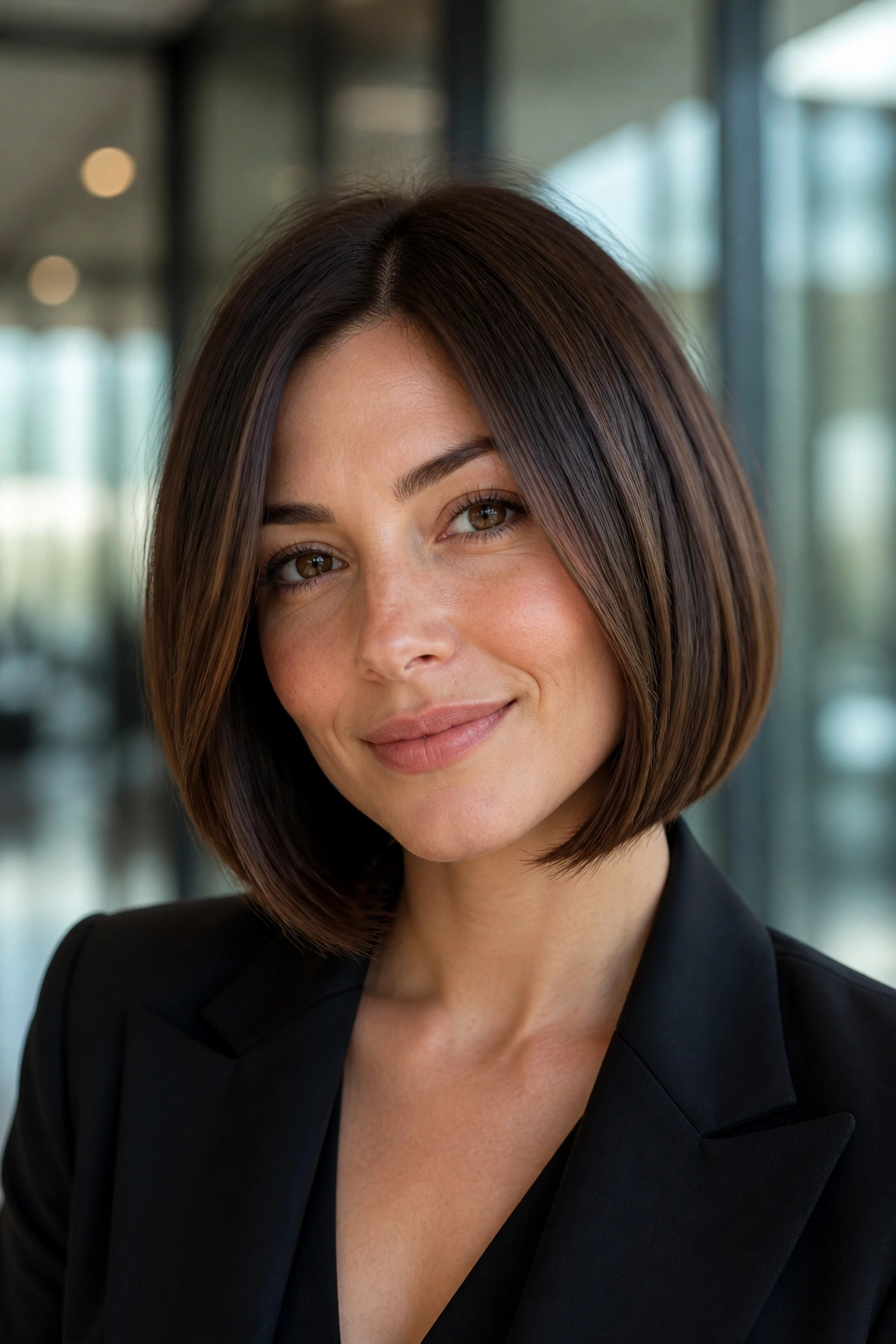
Not every layered bob needs to look airy. A sleek version can be just as flattering on an oval face, especially if you like cleaner lines and a more controlled finish. The layers are still there, but they hide inside the shape instead of breaking it apart.
This works best when the hair is naturally straight or easily smoothed. The cut should skim the jaw or sit just below it, with subtle layering that keeps the ends from looking heavy. I like this version when someone wants a bob that looks tidy in the office and still holds up at night without much fuss.
The styling is straightforward: blow-dry with a flat brush, use a light heat protectant, then bend the ends under just a touch with a flat iron if needed. You do not need a glass-hair finish. You need clean. Too much shine spray can make the cut look greasy, which is a fast way to ruin a good bob.
Compared with a shag or razor cut, this one feels more exact. That’s the appeal. It doesn’t ask for a lot. It just needs precision.
13. Feathered Layered Bob for Oval Faces

A feathered bob gives you softness without losing shape. The ends are lightly cut and lightly moved, so the haircut does not sit in one solid block. On an oval face, that helps the features stay open while the hair still frames the jaw and neck.
What Makes It Different
Feathering is about reducing heaviness in the right places. The layers are usually longer and gentler than in a shag, which makes this a better fit for people who want movement but do not want a piecey finish. It works especially well on medium-density hair that tends to look bulky at the ends.
- Best for medium to thick hair
- Ask for soft feathering through the perimeter
- Keep the top layers long enough to preserve the bob shape
- Style with a large round brush or a blowout brush
- Avoid heavy oils near the roots
The haircut can look dated if the feathering is too obvious, so the blending has to be quiet. That’s the whole point. The movement should show up when you turn your head, not scream from across the room.
If you like hair that feels light but still looks finished, this is a strong choice.
14. Inverted Layered Bob for Oval Faces

A slightly inverted bob brings drama without needing a ton of length. The back sits shorter, the front stays longer, and the whole shape angles forward in a way that gives an oval face a sharper outline. It is not soft in the same way a French bob is soft. It has edge.
That forward sweep can be especially nice if your features are balanced and you want the haircut to add some visual weight near the jaw. It gives the front pieces room to move while keeping the back tidy and close to the neck. If your hair naturally puffs at the nape, this shape also helps pull that back in.
The key is moderation. A very steep inversion can feel too severe. A gentle one looks modern and easier to wear. I prefer the subtle version because it still has movement when you tuck one side behind your ear or wear a side part.
This is a good pick if you want your bob to look intentional from every angle. It has structure, but it does not feel stiff when it is cut well.
15. Grow-Out Layered Bob
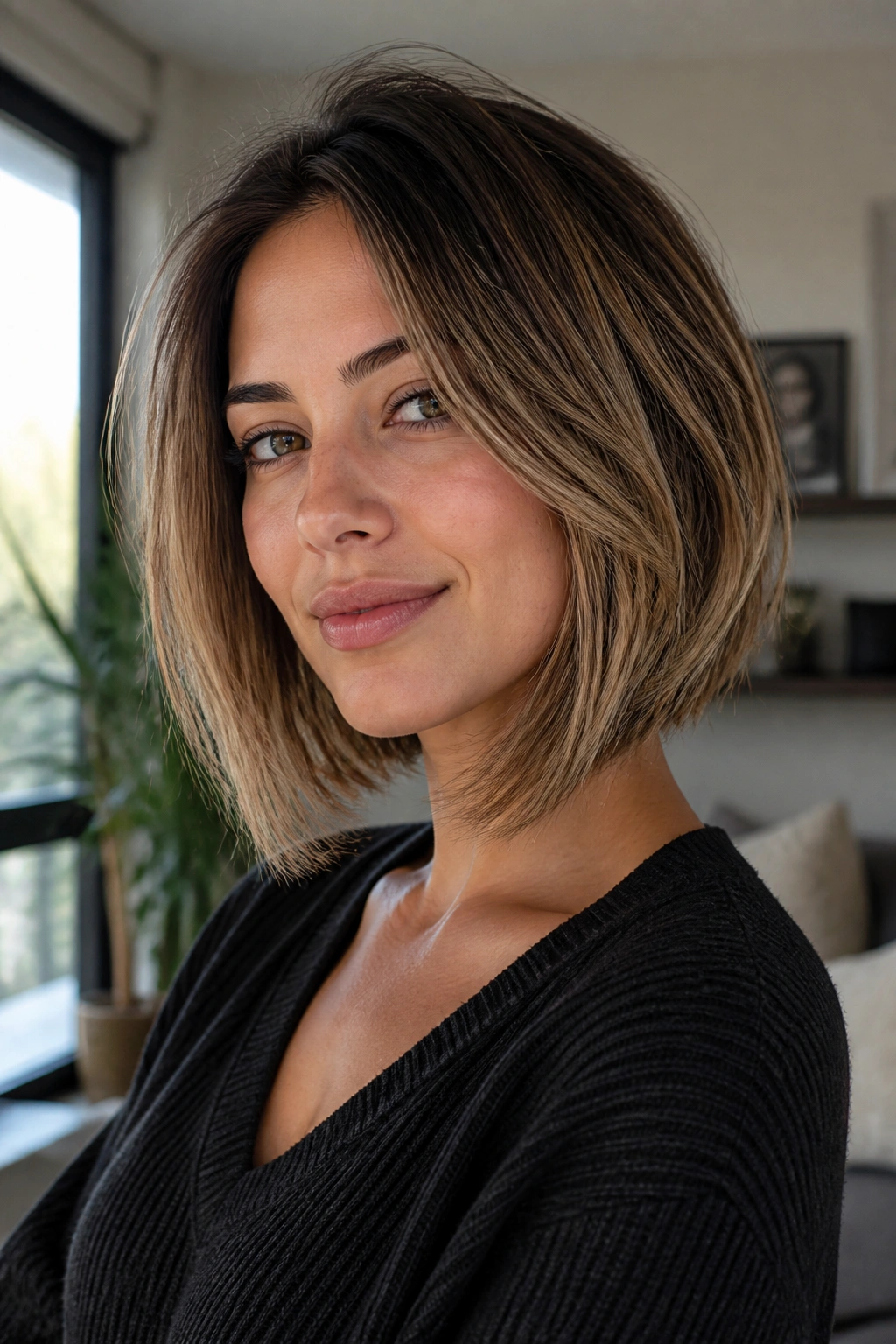
A good grow-out bob saves you from that awkward stage where every mirror starts to annoy you. This version keeps enough layering to stay shaped for weeks, but not so much that the cut collapses the minute it loses a little sharpness. On an oval face, that matters because the balance of the cut stays readable even as the length shifts.
I like this one for people who want a bob but do not want to babysit it. Keep the layers longer, the perimeter soft, and the front pieces slightly below the chin or collarbone. That gives you room to breathe. It also means you can push it behind the ears, clip it back, or let it fall loose without the style falling apart.
A few habits make the grow-out easier:
- Book trims every 8 to 10 weeks instead of waiting too long
- Use a light styling cream on the ends so they don’t fray
- Blow-dry the roots first if your hair goes flat quickly
- Let the front pieces stay a touch longer than the back
- Don’t over-layer fine hair, or it will lose shape too soon
This is the bob I’d pick for someone who wants movement, shape, and a little forgiveness. Not every haircut has to be precious. Some just need to keep working while life gets busy.
