



The best curly bob haircuts do one thing well: they work with the curl pattern instead of fighting it. That sounds obvious until you’ve seen a bob cut like straight hair, then watched it puff at the sides, collapse at the crown, and shrink into something shorter than the client expected.
Curly hair changes shape as it dries. It changes again once products settle. A curl that lands at the jaw in the chair can sit an inch or two higher by the time it’s fully dry, and that shrinkage is the difference between a crisp bob and a weird half-grown shape. The cut has to account for that from the start.
What makes a curly bob look good is not just length. It’s the balance between perimeter, layers, weight removal, and where the front pieces fall when the hair moves. A blunt line can be gorgeous on one head and dead wrong on another. A layered shape can look airy and modern or thin and choppy, depending on where those layers start.
These 20 curly bob haircuts for curly hair are all about shape, not guesswork. Some are soft and easy. Some lean sharp. Some are better for thick spirals, some for fine waves, and some exist because bangs needed somewhere to go.
1. Chin-Length Curly Bob
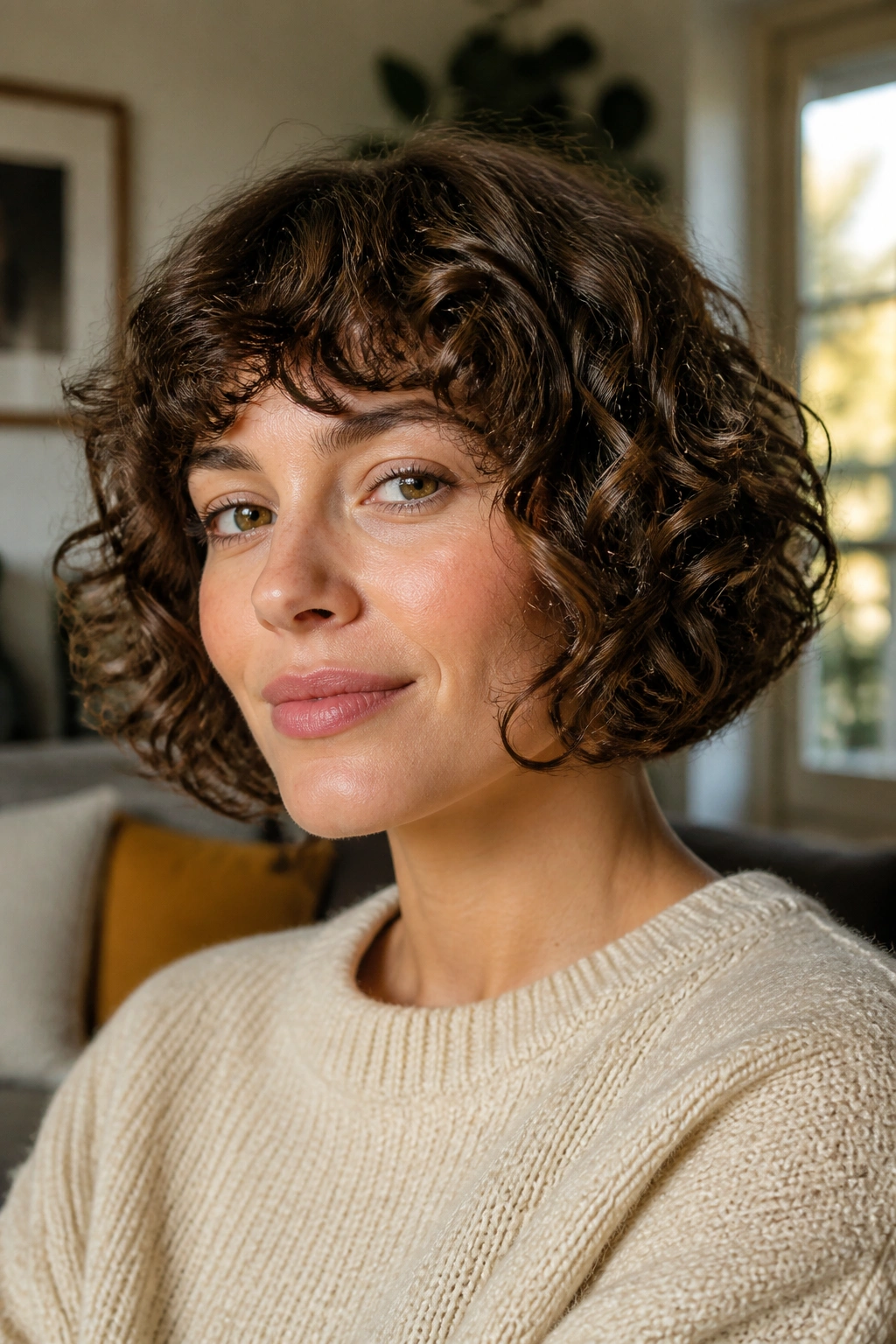
Chin length is the cleanest place to start if you want a bob that still reads as a bob once the curls do their shrinking act. It gives the shape enough presence to look intentional, but not so much length that the style drags.
Why This Length Works
A chin-length curly bob keeps the curl pattern visible around the face, which matters more than people think. If the cut lands too low, the weight pulls the curl down and the whole style can feel sleepy. Too short, and you can get puffiness around the temples unless the curl pattern is tight and cooperative.
Ask for the longest pieces to hit the chin when dry, not wet. That single detail saves a lot of disappointment.
- Keep the perimeter soft, not razor sharp.
- Leave a little room at the nape so the neckline does not bulk up.
- Dry-cutting helps the stylist read the real length.
- A diffuser on low heat keeps the curl clumps from breaking apart.
Best for: 2C to 3B curls, and anyone who wants a bob that still feels polished without being stiff.
2. Layered Curly Bob
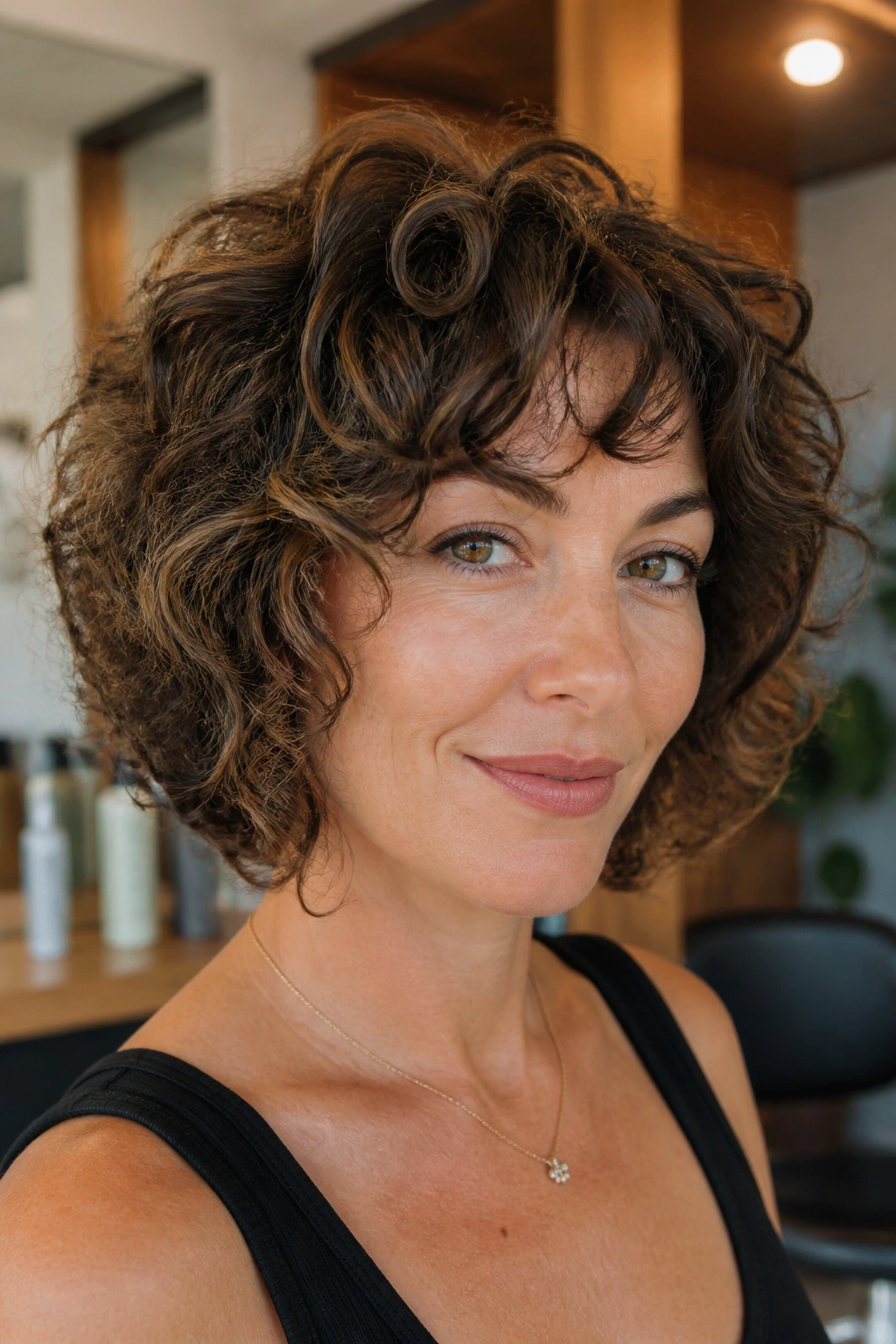
Layers are the difference between a curly bob with shape and a curly bob that turns into a triangle by lunchtime. I’m a fan of layers here, but only when they’re placed with purpose. Random layers are a mess. Thoughtful layers are the whole haircut.
A layered curly bob removes bulk where the hair needs to move and keeps weight where the style needs a line. That matters most on thick curls, dense waves, and anyone whose hair mushrooms out at the sides. The trick is not to thin everything out. The trick is to let the top breathe while the bottom still holds a shape.
Keep the shortest layers away from the widest part of the head unless the goal is extra lift. Otherwise, the bob can end up looking frizzy instead of full. A good layered cut should move when you turn your head, not shiver apart into pieces.
A lot of curly-haired people ask for “less volume” when what they actually want is better volume distribution. Layers do that. Poor ones do not.
3. Rounded Curly Bob
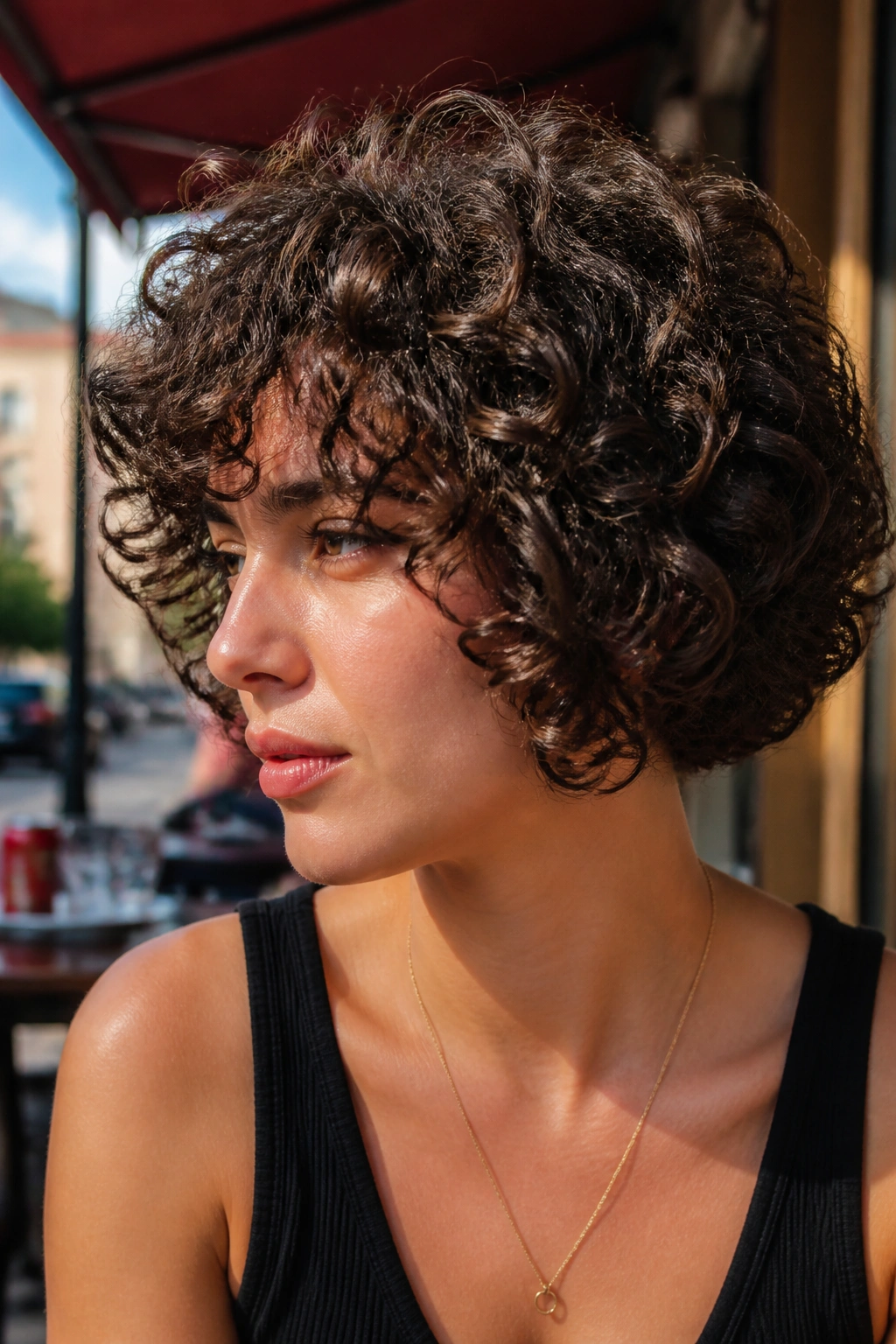
Want a bob that looks soft from every angle? Rounded is the move. This shape follows the natural curve of curls and builds a dome-like silhouette instead of a boxy edge.
Best Curl Patterns for This Shape
Rounded curly bobs shine on hair that already has a springy, compact pattern. Think 3A through 3C, and even some dense 2C waves that puff up when they dry. The goal is fullness at the sides and a gentle taper near the jaw, not a hard shelf.
What to Ask For
- A curved perimeter that sits slightly shorter in the back.
- Layering that supports the round shape without breaking it into chunks.
- A cut that keeps the widest part of the bob around the cheek and jaw.
- Soft point cutting at the ends so the outline does not look heavy.
This cut can be a little fussy if the hair is extremely thick and coarse. Still, when it lands well, it gives the curls a plush, almost cloud-like shape that feels deliberate instead of bulky.
4. Side-Part Curly Bob
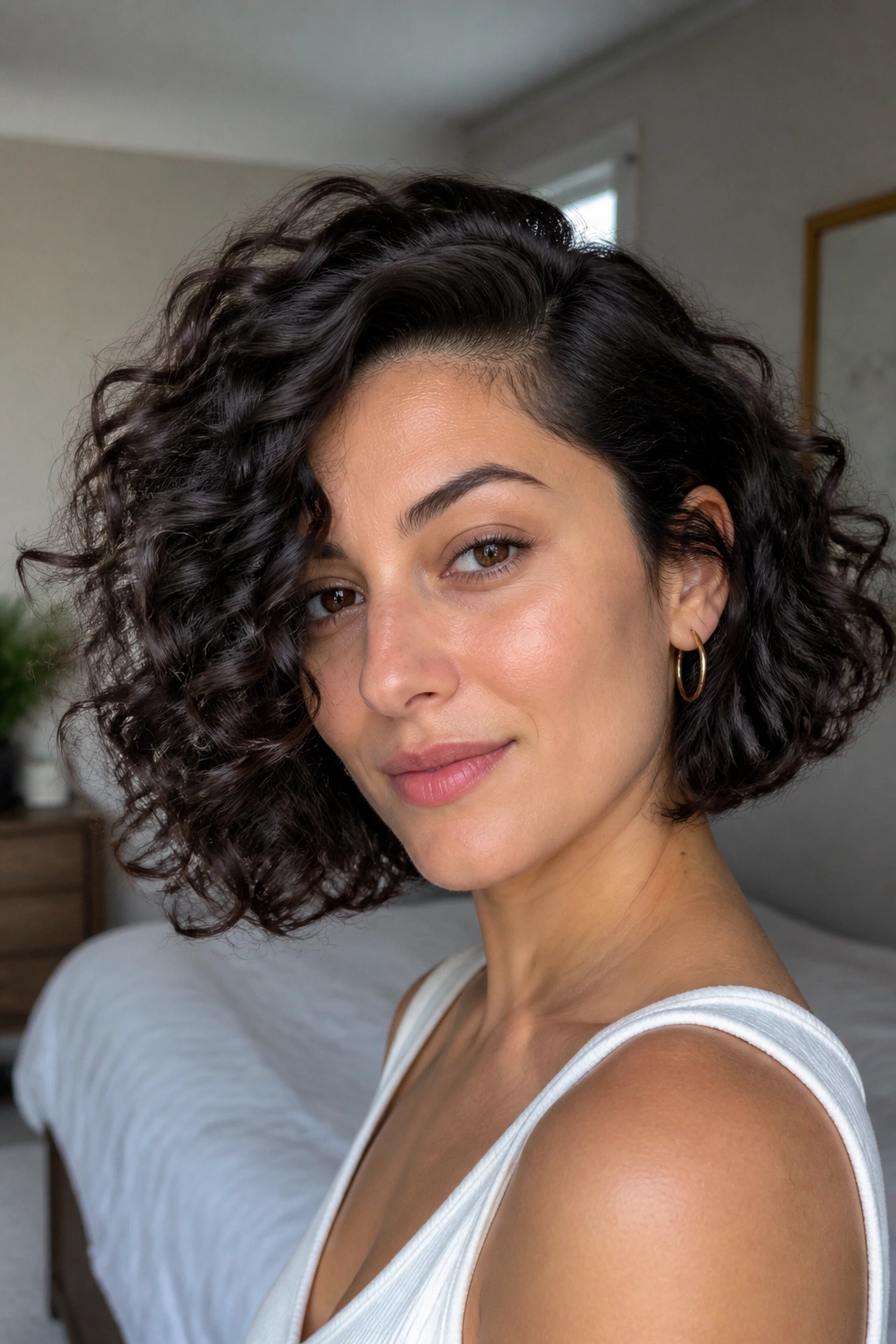
A deep side part can rescue a bob that feels flat on top or too symmetrical for its own good. One small shift at the root changes the whole face frame.
If one side of your curls always collapses first, this cut helps. The part creates natural lift on the heavier side and gives the bob a little swing without needing a ton of layers. It also softens strong cheekbones and can take some of the width out of round faces.
The part works best when the cut is made with the eventual part in mind. That means the stylist should know where you wear it most of the time, because curls are stubborn about memory. If you move the part later, the shape can still work, but the balance may feel different.
A side-part curly bob usually needs just a touch of root lift at styling time. Clip the crown while the hair is damp, or diffuse with the head tipped to the heavier side. Small effort. Big payoff.
5. Curly Bob with Curtain Bangs
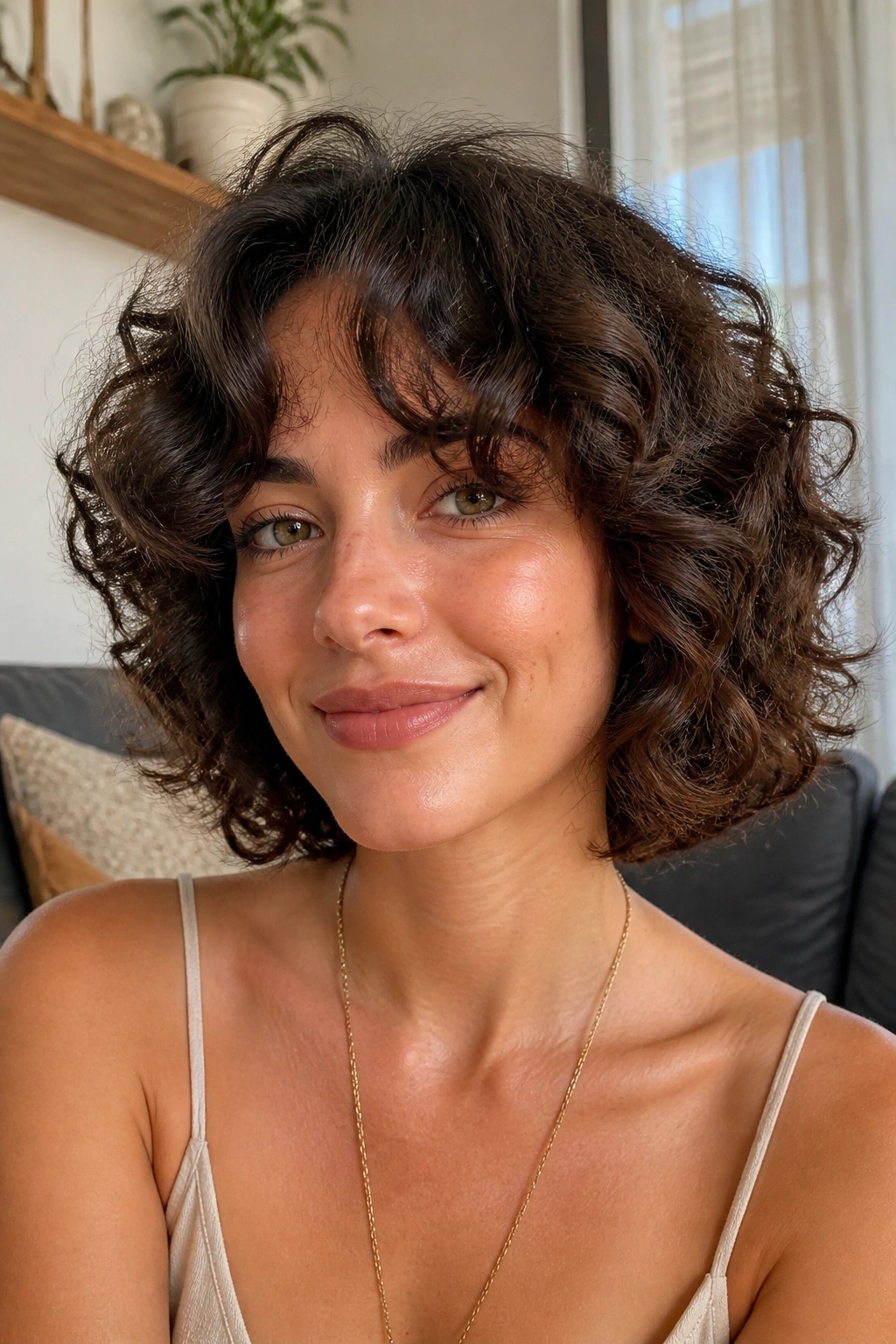
Curtain bangs on curly hair are one of those things people fear until they see them done well. Then they wonder why they waited so long.
The key is length. Curly curtain bangs should usually start longer than straight ones, because curls bounce up after the cut. If they sit at the cheekbone when wet, they may land higher once dry, and that can be lovely or annoying depending on your face shape and curl spring.
I like this pairing on longer faces, oval faces, and anyone who wants the bob to feel a little softer at the front. The bangs blend into the sides, which keeps the haircut from looking too severe. That blend matters. Hard bangs with a curly bob can look cool, but they can also turn the whole style into a maintenance project.
The best version keeps the fringe loose enough to move. Not wispy in a flimsy way. Just open enough that the curls can fall naturally instead of sitting like a curtain rod.
6. Shaggy Curly Bob
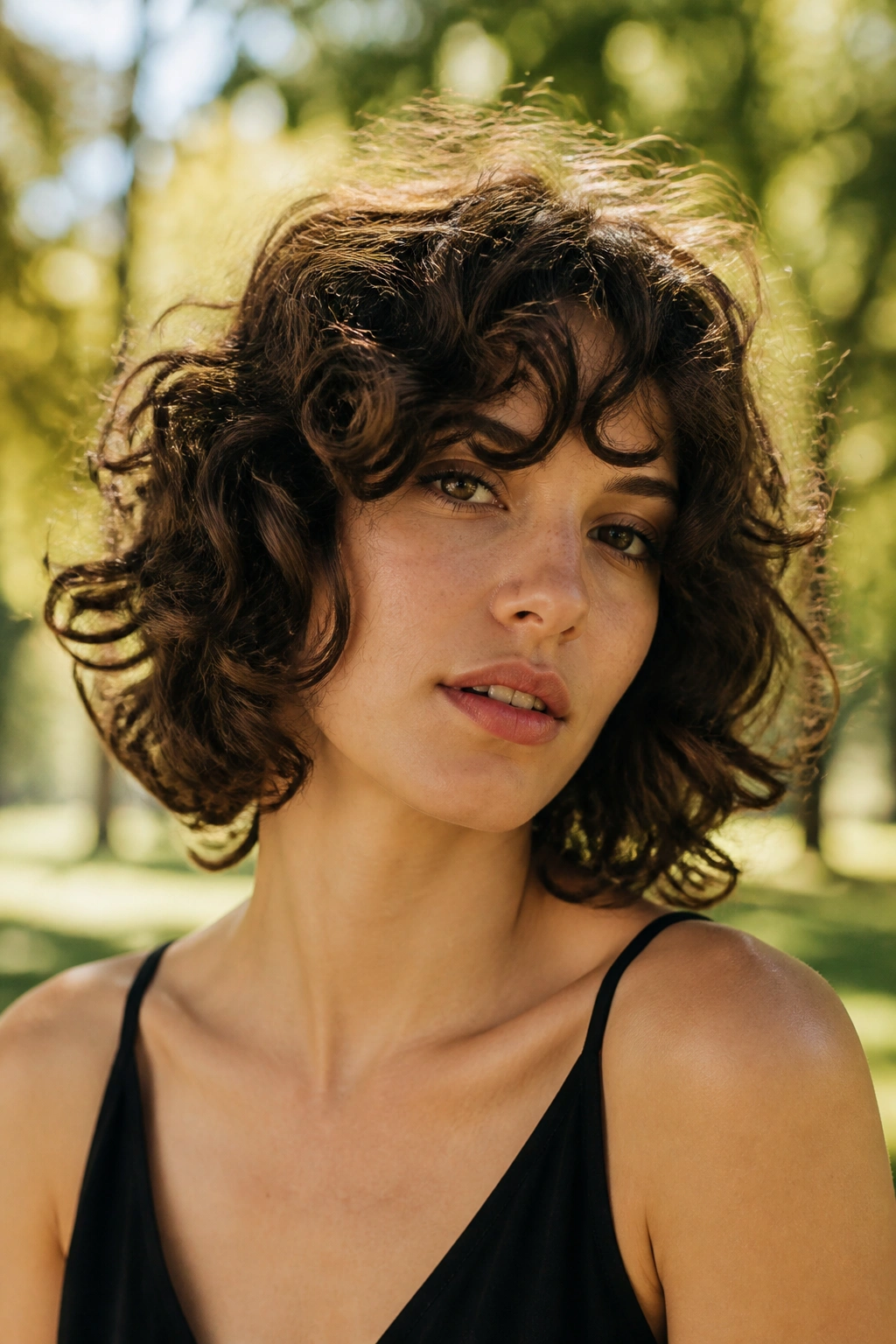
A shaggy curly bob is what happens when you stop asking curls to behave like a neat little helmet. It’s looser, airier, and a lot more forgiving on days when the weather or the humidity decides to be rude.
What Makes It Different
Unlike a blunt bob, the shaggy version depends on internal layers and face-framing pieces that break up the outline. That gives the curl pattern more freedom, which is useful if your hair is thick, coarse, or slightly unpredictable in the back. The shape should feel lived-in, not sloppy.
Who It Flatters
- Loose curls that need movement more than structure.
- Dense hair that balloons when it’s all one length.
- People who like a little mess in the finish.
- Waves that look better with texture than with clean lines.
This is a haircut that looks better when you stop overthinking it. A light mousse, a diffuser, and a scrunch is usually enough. If you keep touching it, it frizzes. If you leave it alone, the shape shows up.
7. Blunt Curly Bob
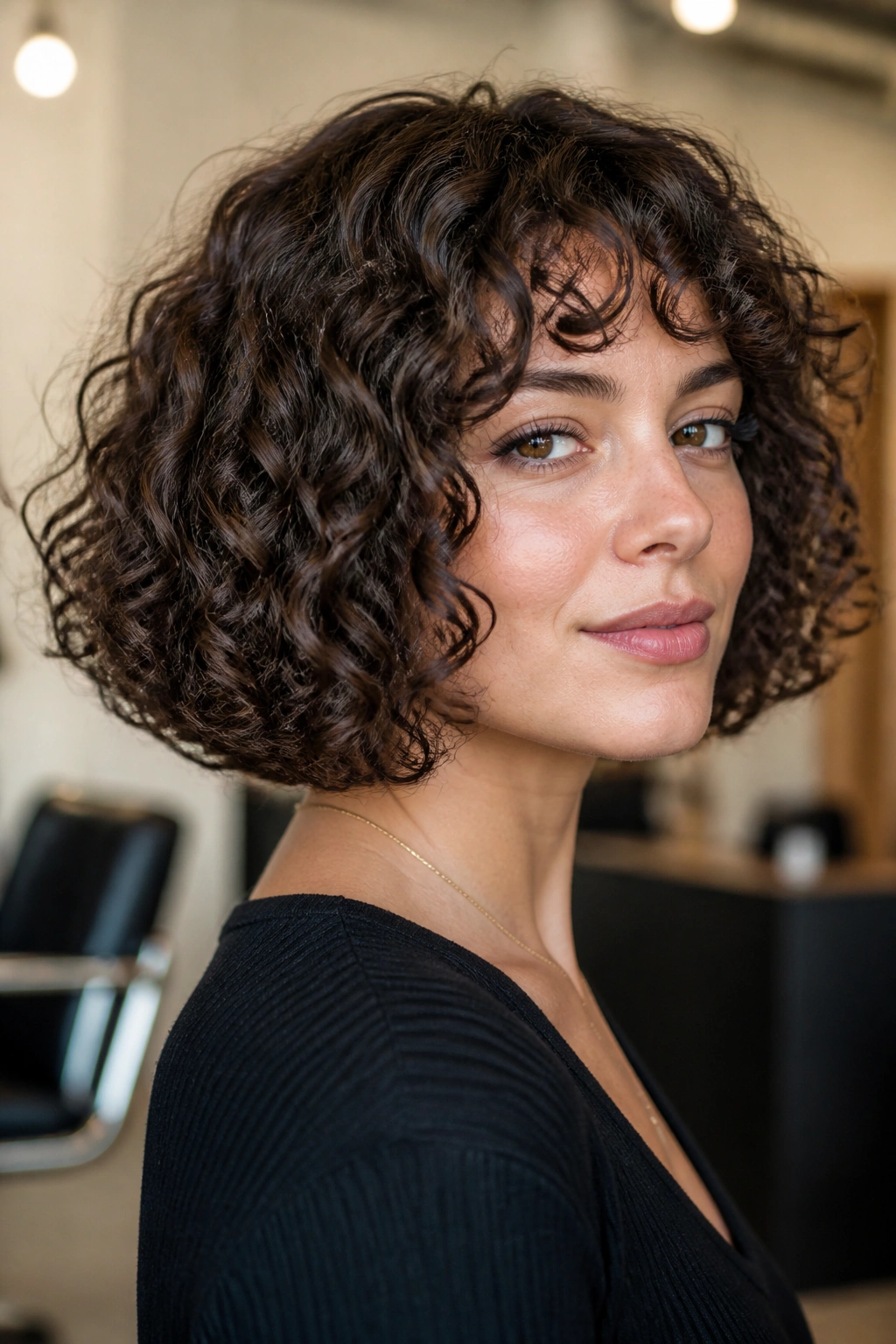
A blunt curly bob is a strong choice, and I mean that in the literal sense. The perimeter line does the talking. No fluff. No chaos. Just a crisp edge with curls sitting on top of it.
That kind of cut works best when the hair is dense enough to support a solid shape. Fine curls can wear it too, but they need careful handling so the ends do not look see-through. On thick hair, though, a blunt bob can feel almost architectural. It gives the curls a frame and makes the overall mass look cleaner.
The catch is that a blunt line reveals bad cutting fast. If the perimeter is uneven, the whole style shows it. If the curl pattern is extremely loose, the blunt edge can disappear unless the hair is styled with enough definition. You want the bob to hold a line even as the curls move.
This is one of those cuts that rewards precision and punishes guesswork. Worth it, though.
8. Inverted Curly Bob
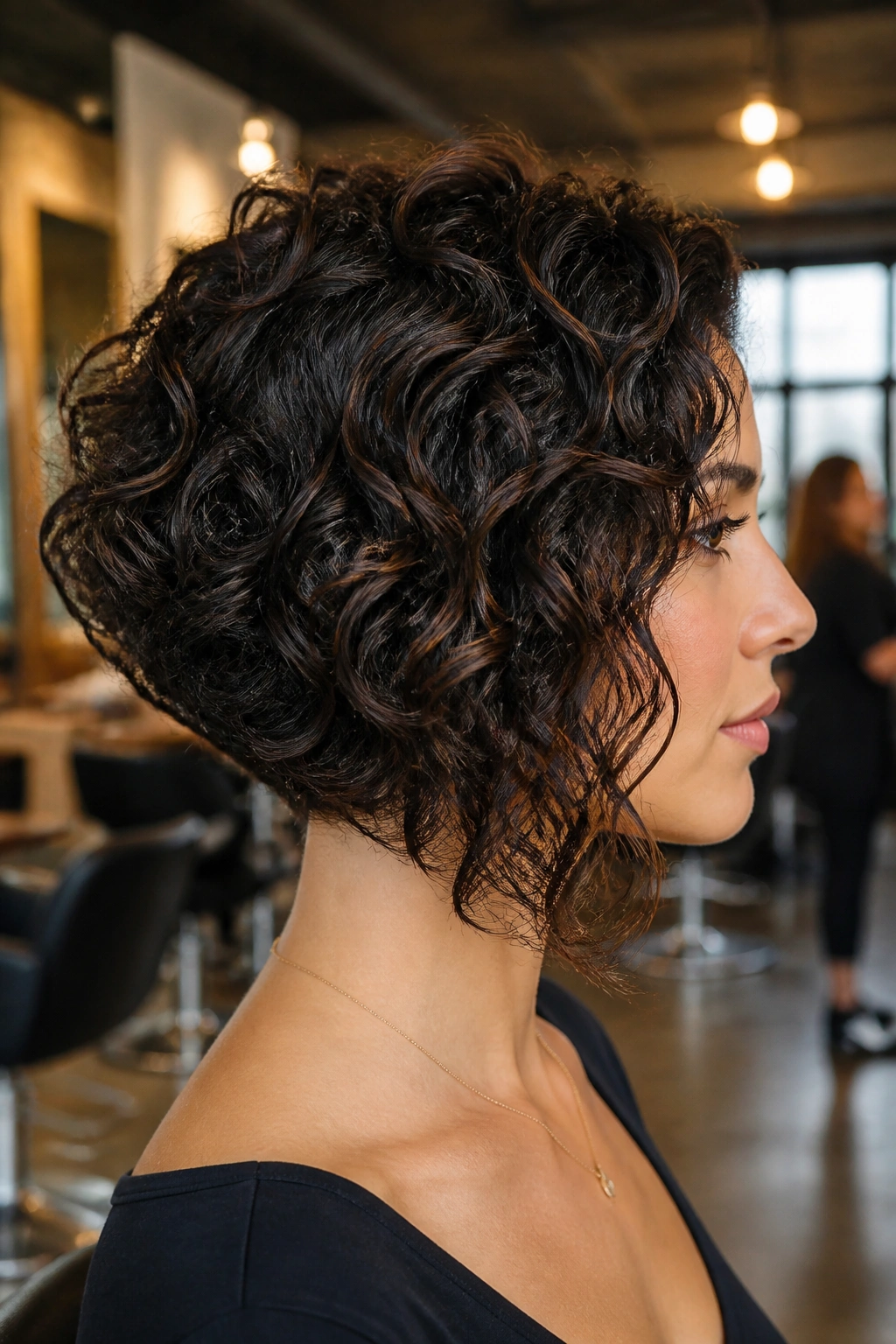
An inverted curly bob is shorter in the back and longer toward the front, and that shift can be a lifesaver if your curls collapse at the neckline or feel heavy around the jaw.
The shape adds lift where curls often need it most. The back stacks up a little, the front softens the face, and the whole haircut ends up with a forward lean that feels energetic. It is especially useful for thick curls that lose shape when everything sits at one length.
But there’s a line here. Go too dramatic and the cut can look dated or overly sharp. Keep the angle gentle and the result feels modern and wearable. That softer version also grows out better, which matters because curly hair does not always announce a trim deadline in a polite way.
If your neck gets hot under thick hair, this cut can also feel lighter. That sounds minor. It is not.
9. Stacked Curly Bob
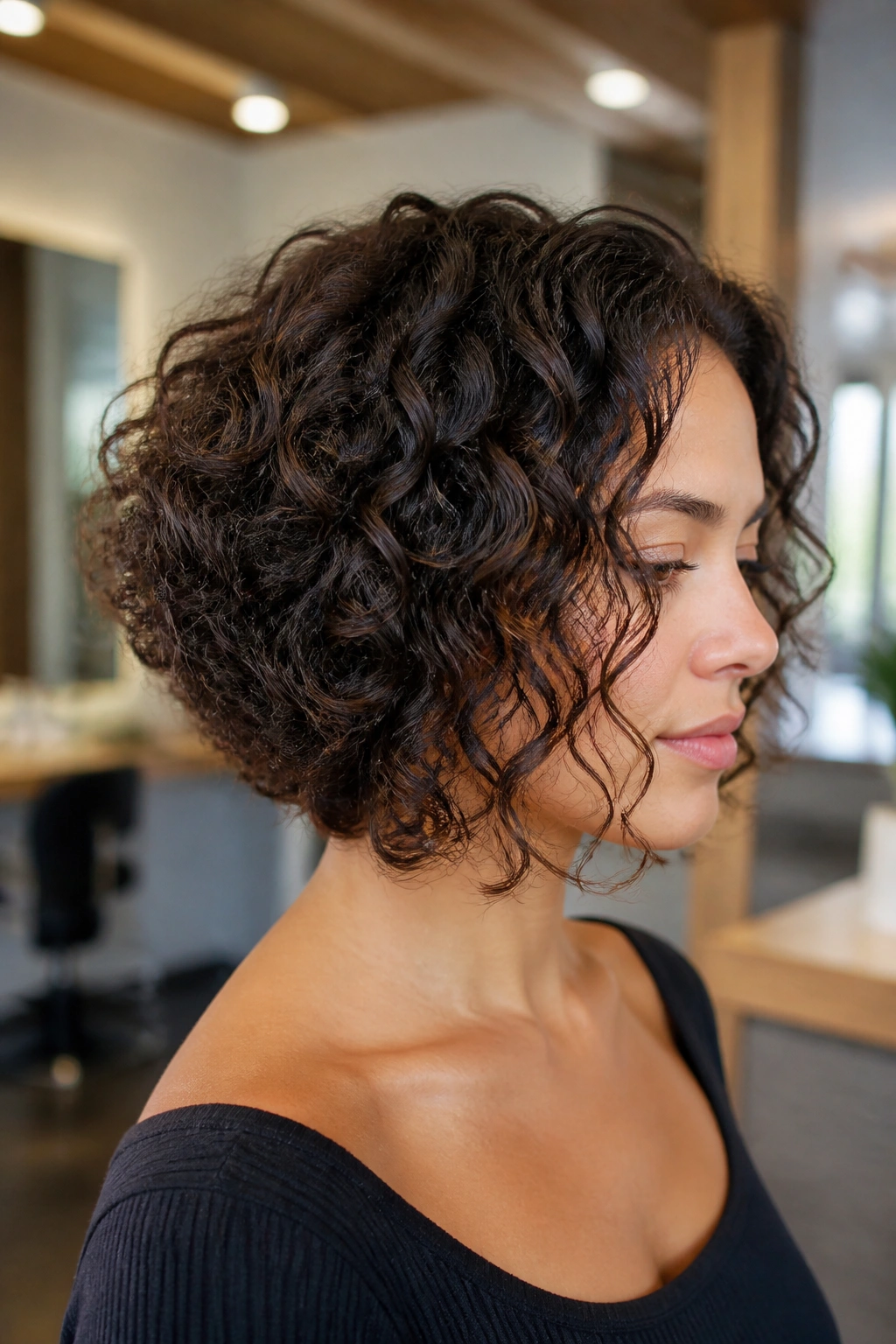
Picture a bob that seems to lift itself from the back. That’s the stacked curly bob, and it can be excellent for anyone whose hair lies flat at the crown or droops at the nape.
The stacking happens in the back layers, where the curls are cut to build height and roundness. This creates volume without having to overload the top with short pieces. The front can stay calmer while the back does the heavy lifting.
Where the Stacking Should Sit
- At the nape, not halfway up the head.
- High enough to create lift, low enough to stay wearable.
- Softly blended so the haircut does not look stepped or choppy.
- Paired with a perimeter that still feels clean around the sides.
This cut loves thick curls, especially when the hair tends to flatten against the head. It can also help shorter curl types that need more body in the back. If you’ve ever felt like your curls look great from the front and limp from behind, this is the shape to look at.
10. Asymmetrical Curly Bob

A little imbalance can be a good thing. In a curly bob, asymmetry gives the cut movement before you even style it.
One side sits longer than the other, usually by an inch or two, and that tiny difference changes how the curls land around the jaw. It can sharpen a round face, add interest to a simple outfit, and stop the haircut from feeling too sweet. Straight hair and curly hair handle asymmetry differently, though. On curls, the shape should stay soft enough that it reads as intentional, not uneven by accident.
I like asymmetrical bobs on people who wear one side tucked behind the ear or who naturally favor one part. The cut feels alive when the hair moves. It can feel a little too edgy if the curl pattern is extremely tight and springy, so the angle should be modest unless you want a stronger visual.
A one-inch difference is often enough. More than that starts to take over.
11. French Curly Bob
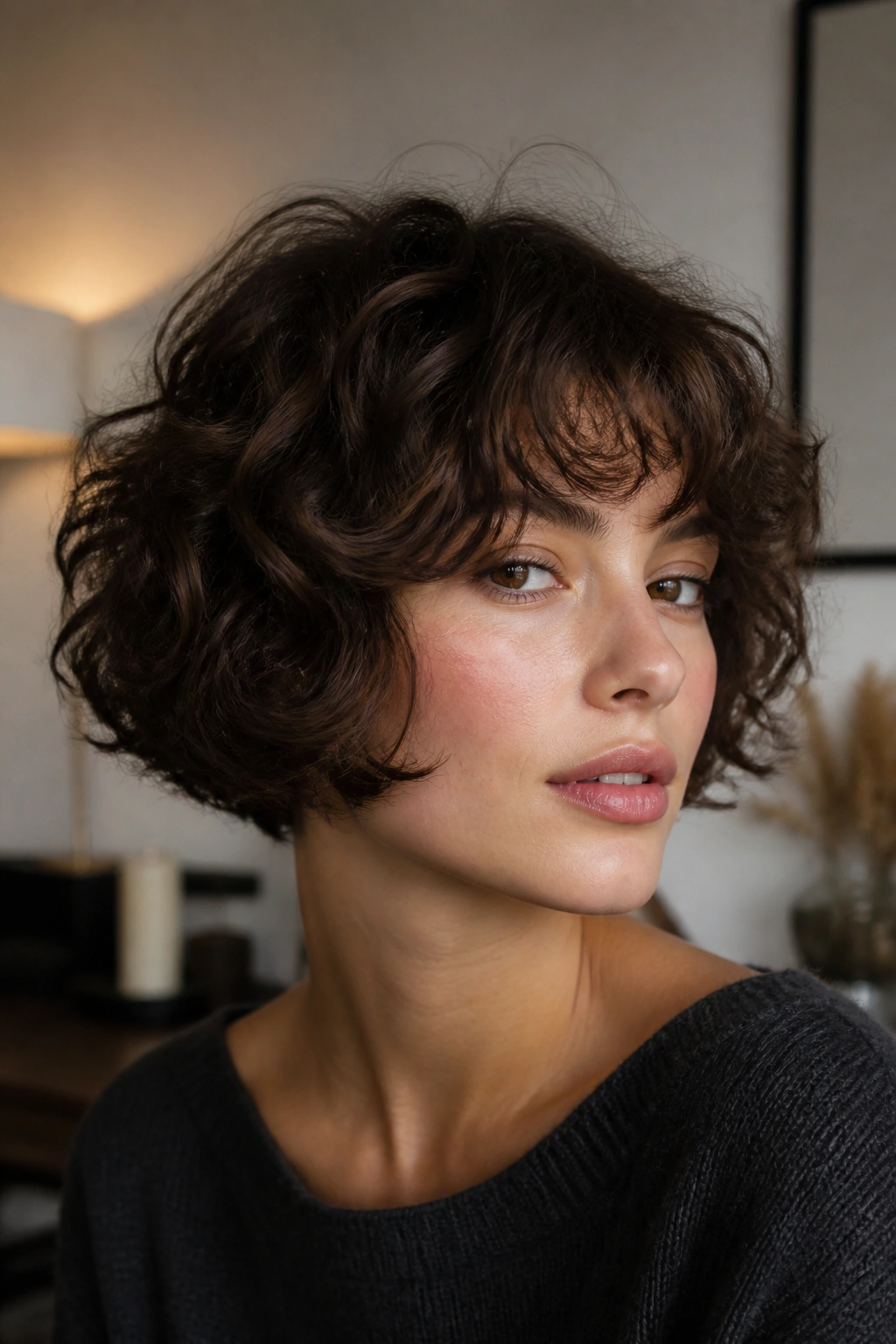
Can a curly bob look chic without trying too hard? Yes. The French bob answer is basically yes with a smirk.
This version sits shorter, usually around the cheekbone to jawline, and often includes a fringe or a soft front piece that falls naturally. On curls, it works best when the shape is not over-layered. The point is to let the natural bounce of the hair do the work, so the cut should feel spare and slightly undone rather than overbuilt.
How to Ask For It
- Keep the length short enough to show the neck.
- Leave the front pieces a touch longer if you want softness.
- Avoid too much thinning near the crown.
- Cut the fringe longer than you think, then adjust after drying.
A French curly bob is a choice. It’s not the easiest one, and that is part of the charm. It looks best when the curls are healthy and the ends are tidy. If your hair likes to puff, the shorter length can help it feel more controlled, which is a pleasant surprise.
12. Face-Framing Curly Bob
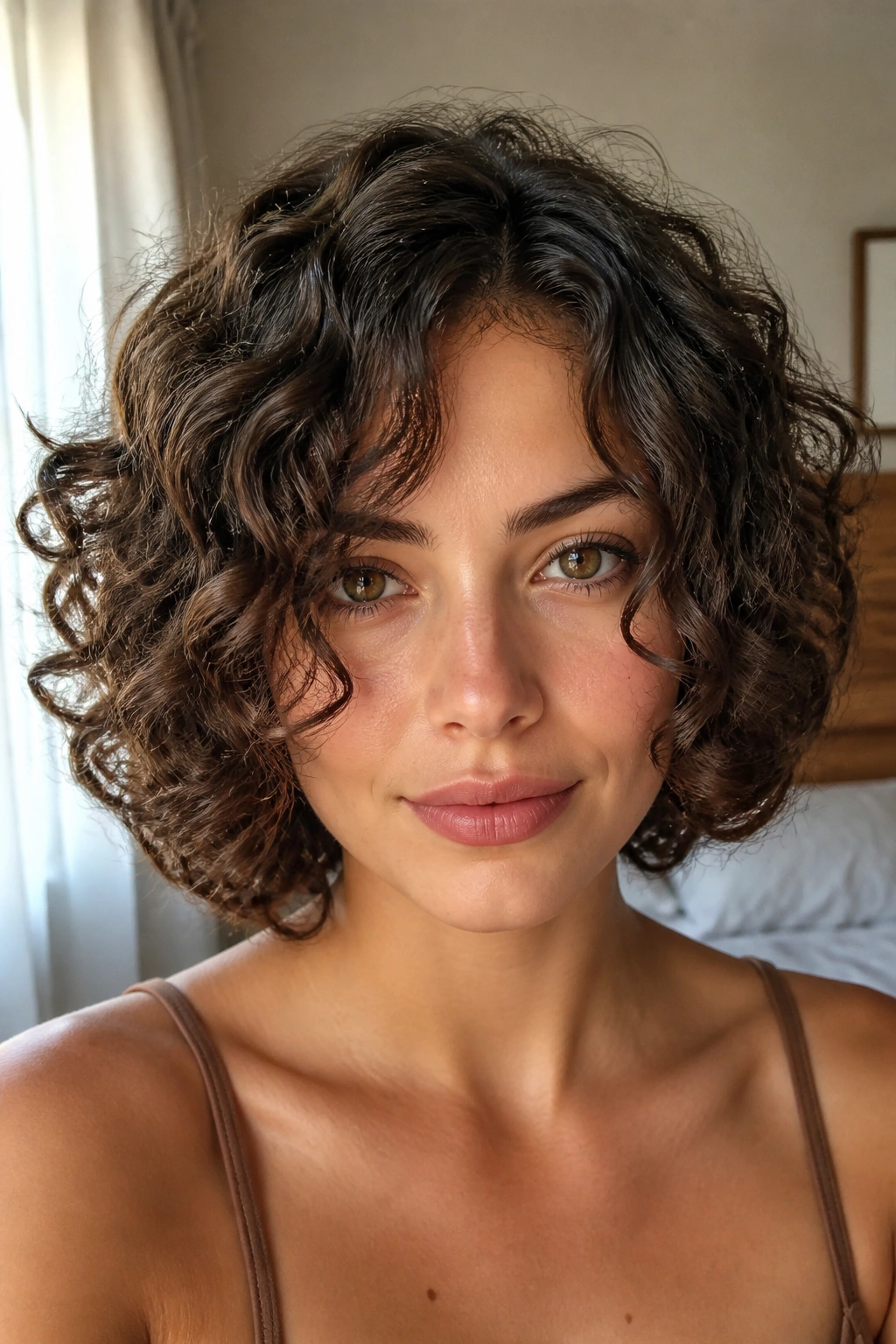
Some bob cuts put all the action at the bottom. This one puts it around the face, where the curls can soften the jaw and pull attention upward.
Face-framing layers start around the chin or lip line and drift into the rest of the bob instead of sitting like a separate haircut. That makes the style easier to wear on square faces, stronger jawlines, and curls that need a little break around the cheeks. It’s also handy if the hair feels too heavy across the front when all one length.
The best version does not chop the front to pieces. It grazes. That’s a different thing. You want the front curls to move away from the cheeks, not stand in front of them like a curtain.
This cut is a quiet fix for a lot of common curly-bob complaints: too much width, too little softness, or that awkward feeling of hair sitting too flat beside the face. Sometimes the answer is not more layers overall. Sometimes it’s just better placement.
13. Curly Bob with Micro Bangs
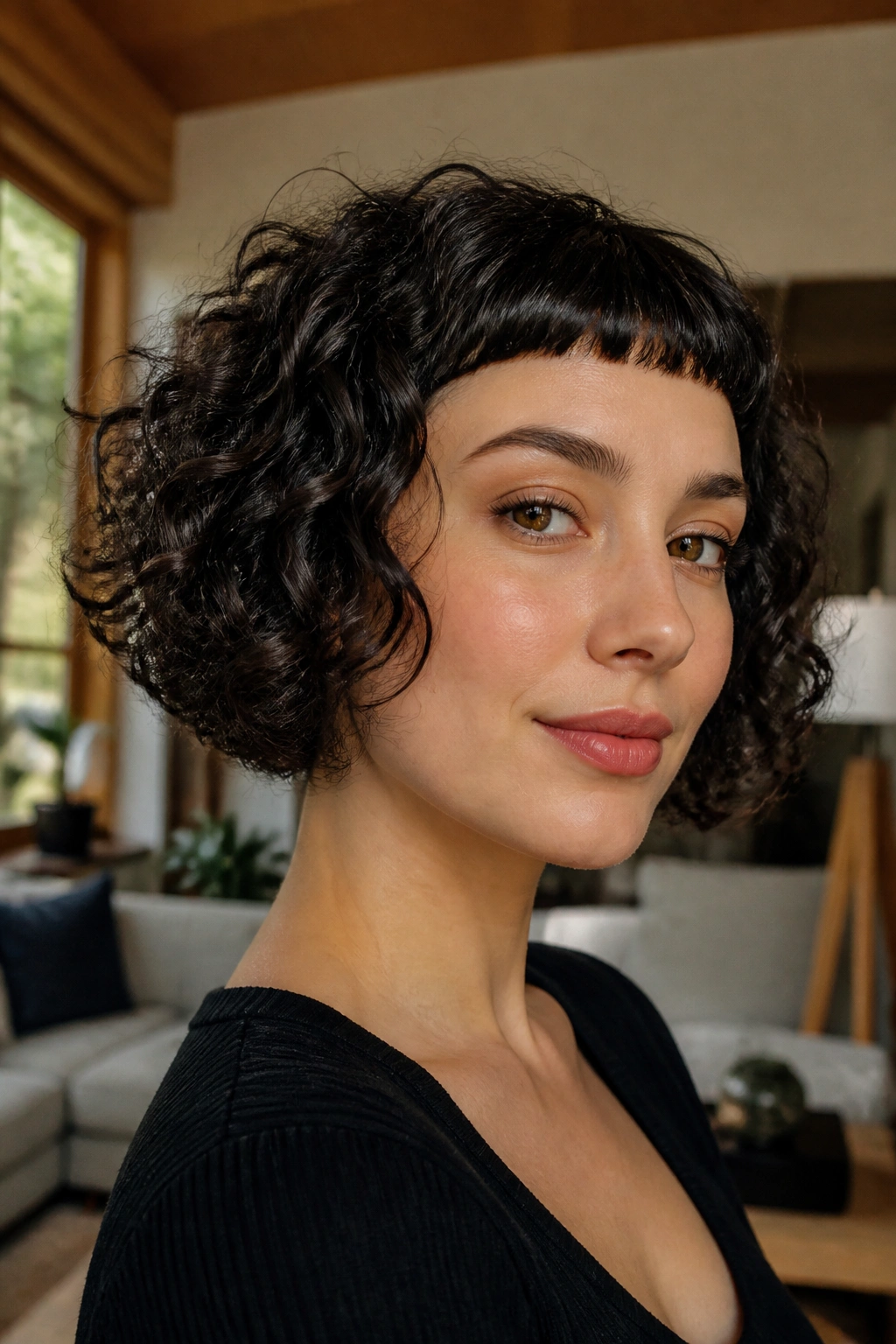
Micro bangs on curls are not for the timid. They’re short, sharp, and a little dramatic, which is exactly why they work when the rest of the bob stays simple.
The trick is knowing that curly bangs spring up. A fringe that looks long enough in the chair may end up much shorter once it dries. So the cut has to allow for shrinkage from the very first snip, or the result can tip into cartoon territory fast. That is not the look.
This style works best when the bob itself is clean and the bangs are the star. If both the bob and the fringe are fighting for attention, the shape gets noisy. But if the cut is balanced, the micro bangs create a neat contrast against the soft body of the curls.
It suits people who want edge without a huge styling routine. It does ask for upkeep, though. Short bangs need more regular shaping than most curly bob haircuts, and there’s no way around that.
14. A-Line Curly Bob
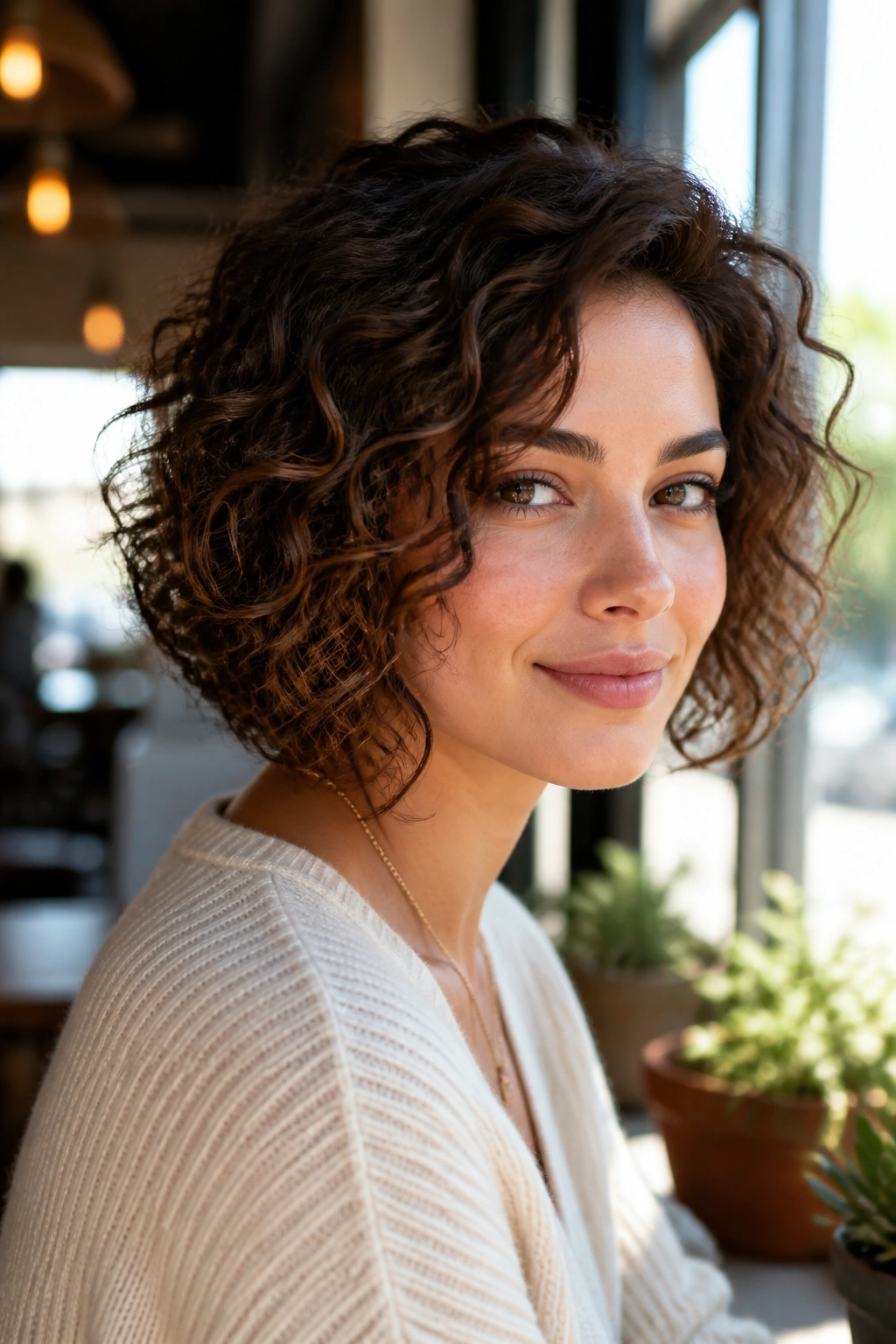
An A-line curly bob is a little gentler than an inverted shape. The front is longer than the back, but the angle is softer and less dramatic, which makes the cut easier to wear day to day.
That front length helps curls frame the face without piling too much bulk under the chin. It also gives the style room to grow, which is one of the underrated joys of a good bob. If you’re not ready for a sharp line but still want shape, this is a smart middle ground.
I like this cut on people who want movement without the stacked-back look. It feels clean. Not severe. The curls can hang forward, swing a little, and still keep a defined outline.
The angle should be visible but not aggressive. If the front is too long, the bob starts to feel like an awkward lob. If it’s too short, the graceful slope disappears. The sweet spot is a clean difference, usually around one to two inches between back and front.
15. Tapered Curly Bob
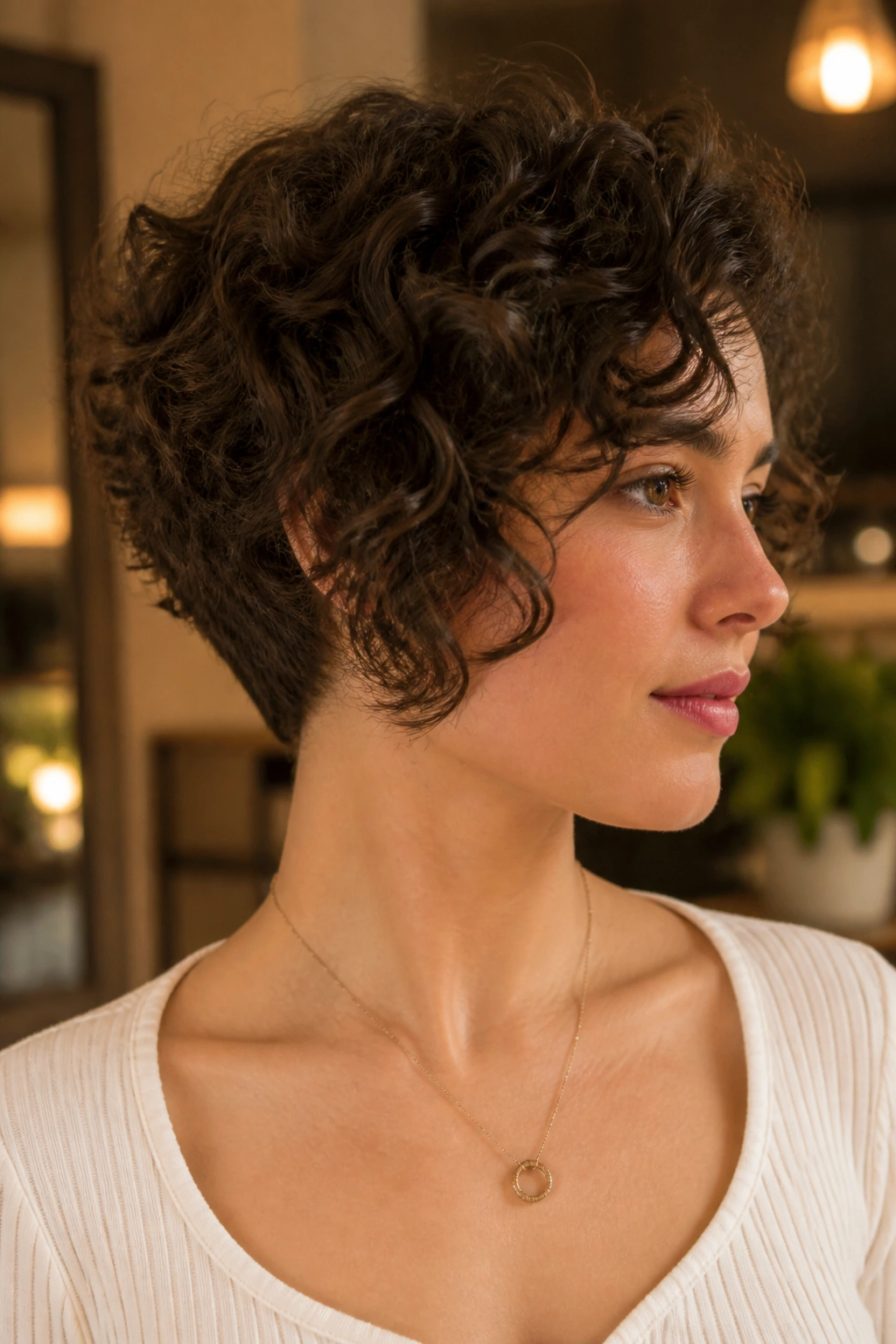
Thick curls need somewhere to go, and a tapered bob gives them that space without turning the silhouette into a puff ball. The neckline narrows, the top stays fuller, and the whole haircut feels lighter at the base.
Why Thick Curls Love It
A taper removes bulk from the nape where thick hair tends to collect heat and weight. That helps the bob sit closer to the head and keeps the back from ballooning. On dense textures, the effect can be dramatic in a good way. The haircut suddenly looks shaped instead of stuffed.
Good Things to Ask For
- Taper the nape, not the entire head.
- Keep the crown long enough to preserve curl pattern.
- Blend the sides so the taper doesn’t create a hard corner.
- Use point cutting on the ends if the perimeter feels too blocky.
This is not the best choice if you want a super round, plush shape. It is a strong pick if you want your curls to feel lighter and more controlled. Thick hair especially benefits from this. So does anyone tired of the back of their neck feeling buried.
16. Collarbone-Length Curly Bob
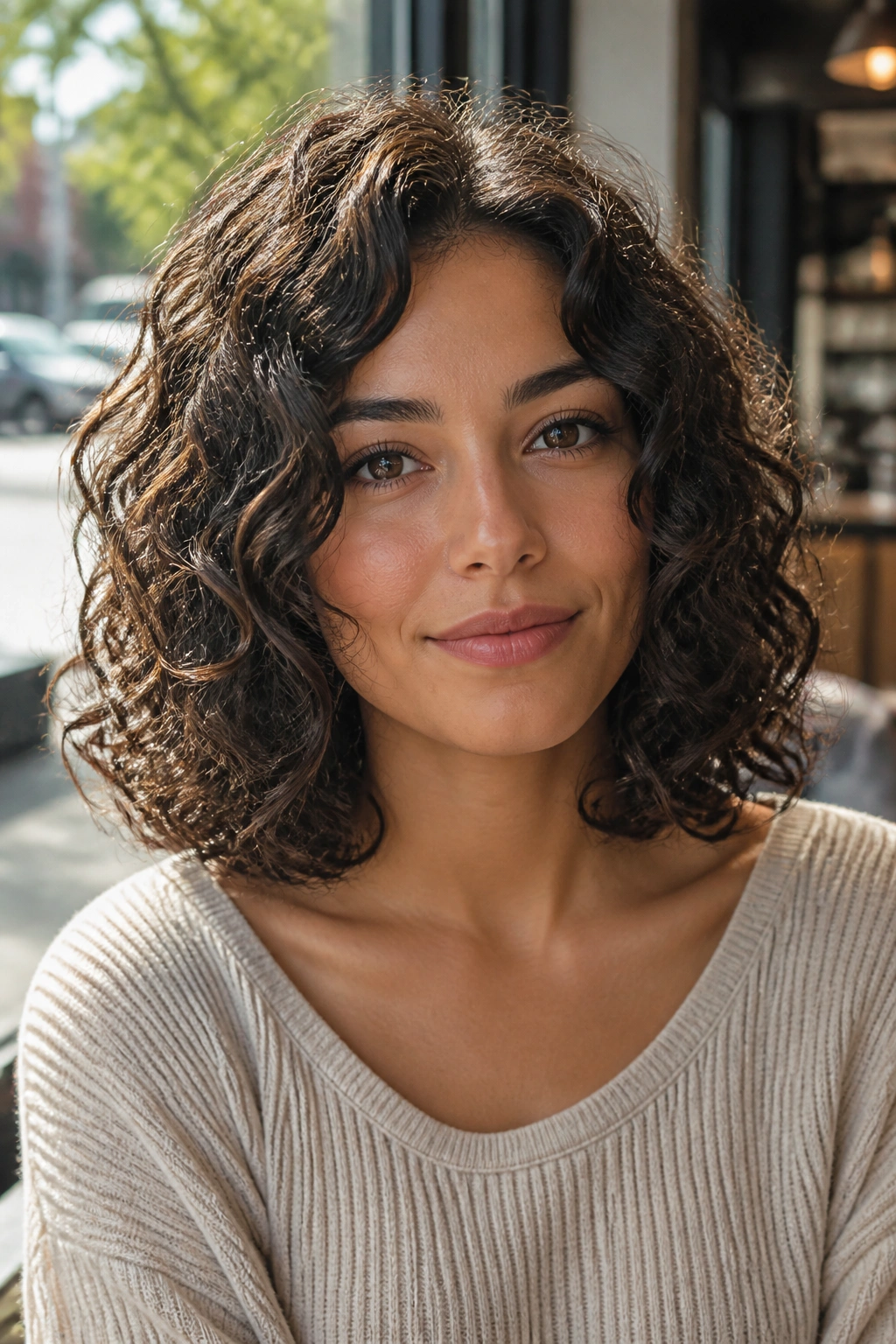
Not every bob needs to be short enough to announce itself from across the room. A collarbone-length curly bob sits in that comfortable middle zone where the cut still feels like a bob, but the curls have more room to settle.
This is the style for cautious cutters and anyone who has been burned by shrinkage before. The extra length gives you margin. If the curls spring up more than expected, the haircut still looks intentional. If they fall heavier, you still have movement. That flexibility matters more than people admit.
The shape also grows out in a kinder way than shorter bobs. A couple of months later, it often just reads as a fuller bob or a tidy lob. That makes maintenance less stressful.
I’d call this the safest curly bob on the list. Not boring. Safe in the sense that it gives you options when the curls decide to have opinions.
17. Curly Bob with an Undercut Nape
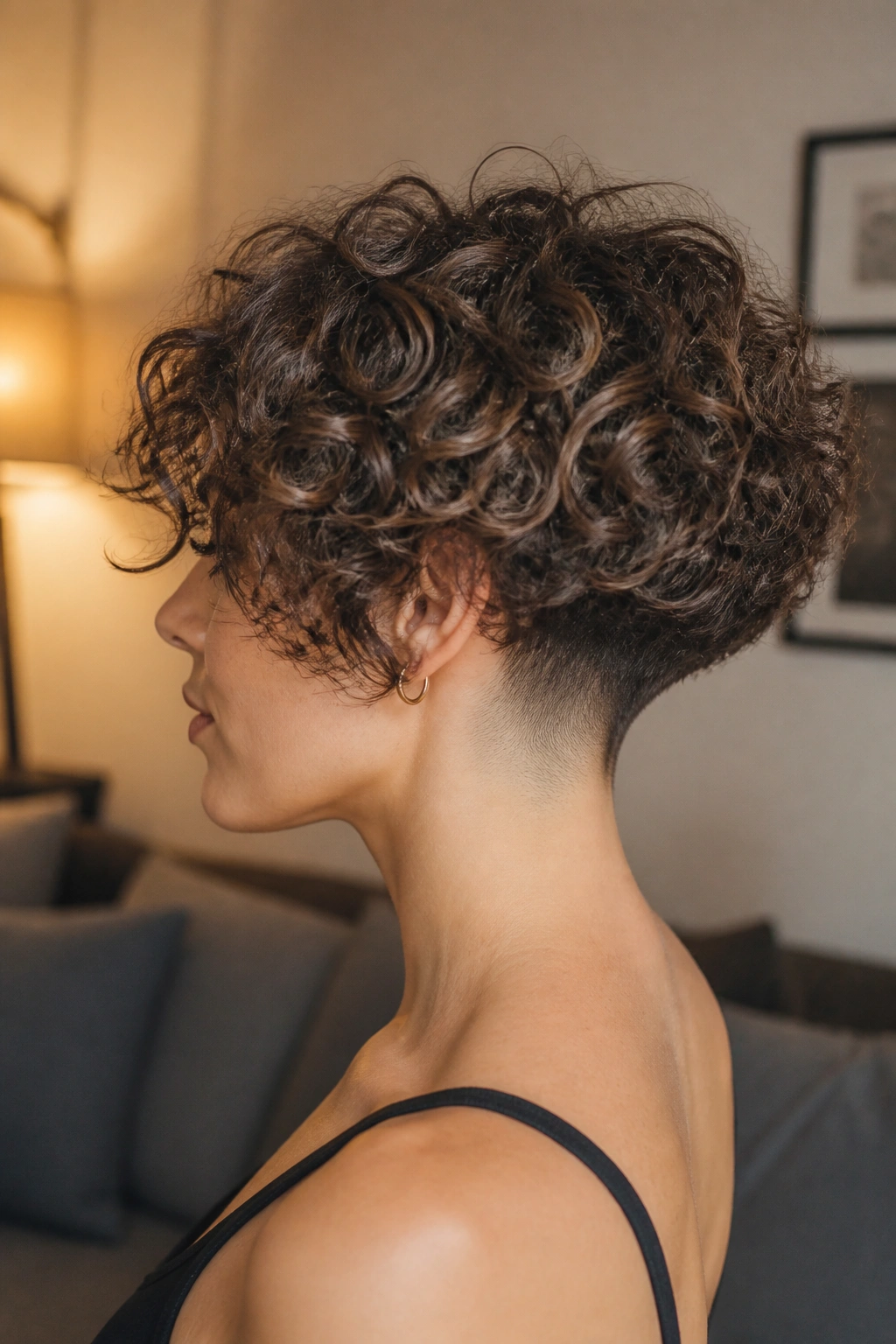
If your curls feel hot, heavy, and stubborn at the neck, an undercut nape can be a relief. The top keeps its fullness. The lower layers lose some bulk where nobody sees much anyway.
This is a practical cut masquerading as a style choice. The hidden undercut removes weight from the underside of the bob, which helps the curls sit better and dry faster. On thick hair, that can make a real difference in how the haircut moves. It can also stop the nape from puffing outward into a triangle once the hair grows a little.
A Few Things to Keep in Mind
- The undercut should be hidden by the top layers.
- The top curls need enough length to cover the shaved section.
- Maintenance usually means trimming the undercut every few weeks.
- The cut works best when the stylist checks how the curls fall dry.
This is a good pick for dense 3B to 4C hair, especially if you like a neat neckline but still want a full bob shape.
18. Italian Curly Bob
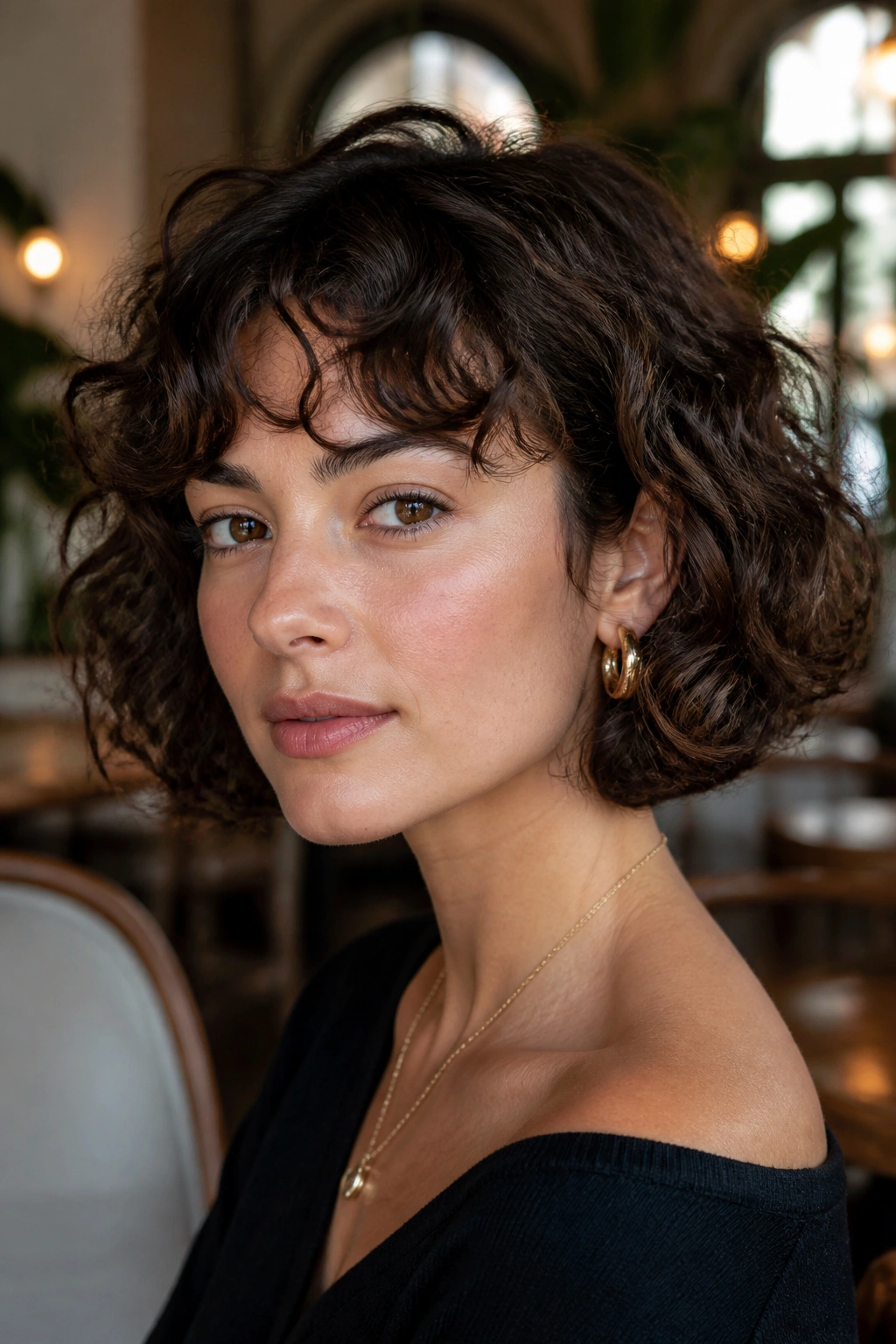
The Italian bob has a little softness in the line and a little luxury in the feel. On curls, that translates into a bob that looks expensive without looking overworked.
What makes it different is the easy shape. It usually sits somewhere around the jaw or just below, with enough fullness to feel lush but not so many layers that it turns shaggy. The perimeter stays noticeable, and the curls settle into a smooth, rounded body. I like this style for hair that has decent density but doesn’t want a lot of internal carving.
It’s a smart choice if you want polish without stiffness. The haircut should look like the curls landed there on purpose, not like they were forced into a mold. That means the edges need to be tidy, the layers subtle, and the styling light. A small amount of cream, a little gel at the ends, and a diffuser pass are usually enough.
This is one of the easier curly bob haircuts to wear to dinner and to the grocery store. Same haircut. Different shoes. Still works.
19. Bubble Curly Bob
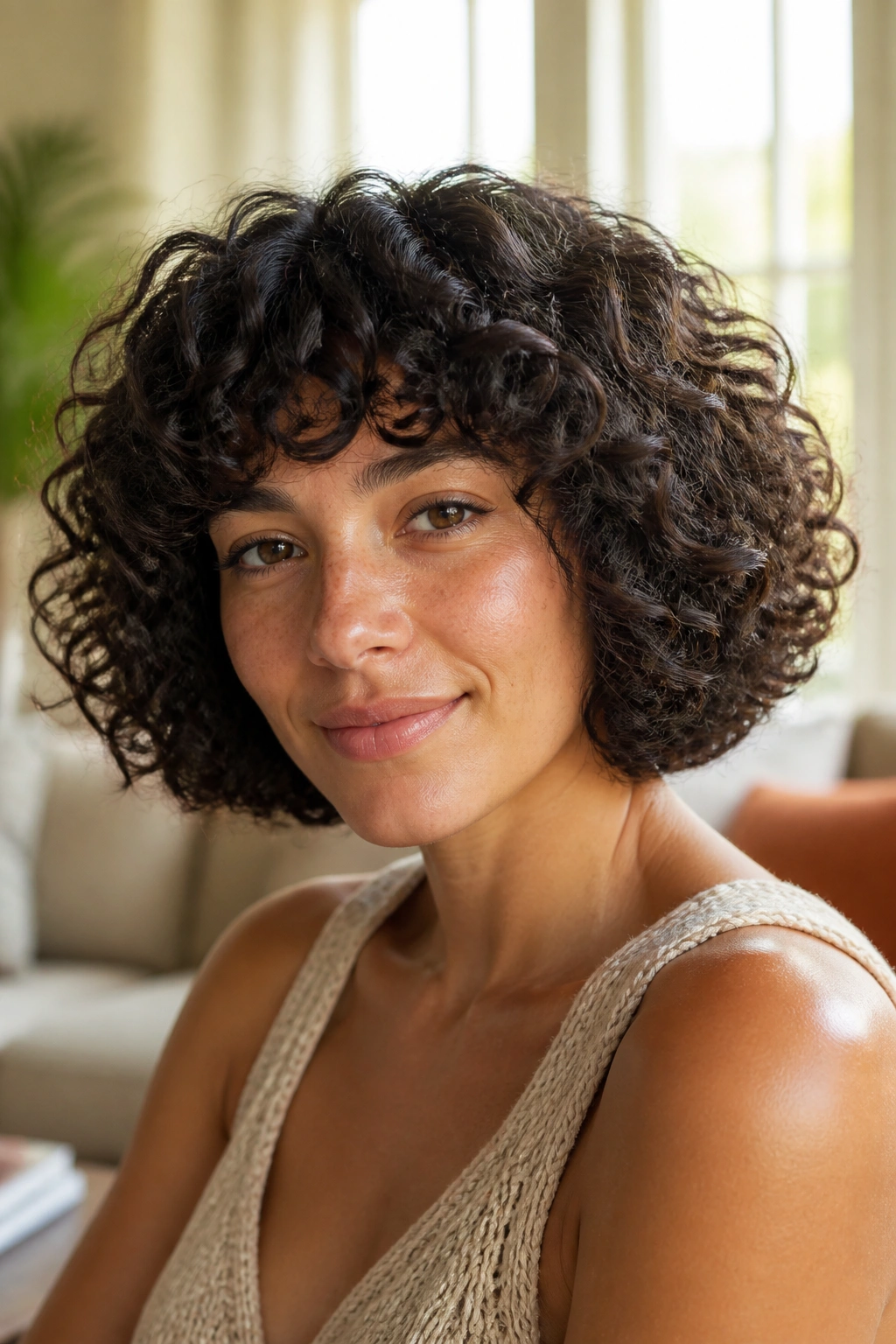
A bubble curly bob is rounded, plush, and a little playful. The silhouette expands outward and then curves back in, which gives the haircut a soft, buoyant look that suits curls especially well.
Why Dense Curls Like It
Dense curls can swallow a skinny haircut. The bubble shape prevents that by keeping the outline full through the middle and gently cinched at the edges. It’s not a flat shape. It’s a shape with air in it, which is exactly what makes it feel alive rather than heavy.
What to Watch For
- The layers should support the roundness, not chop through it.
- The ends need enough weight to keep the shape from frizzing out.
- Very fine curls may lose the bubble effect unless styled carefully.
- A bit of root lift helps the curve show up instead of collapsing.
This style is fun in person because it moves with the head. It’s also one of the more flattering choices for anyone who likes a statement bob without the hard lines of a blunt cut.
20. Grow-Out Friendly Curly Bob
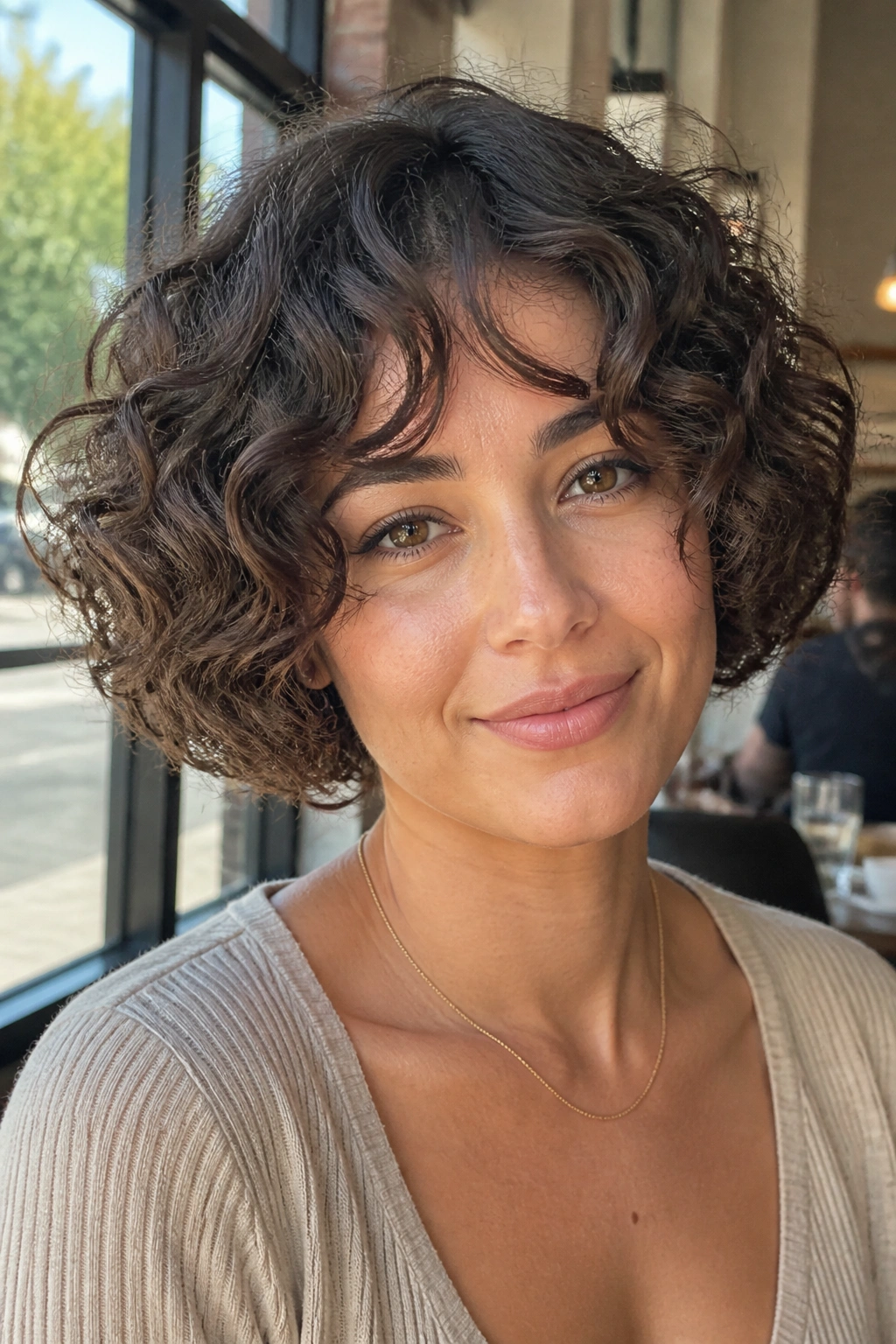
The smartest curly bob is the one that still makes sense six weeks later. Maybe eight. Maybe longer if the curls are forgiving and the trim schedule slips.
A grow-out friendly bob usually sits a little longer than the shortest versions, with soft layers that can stretch as the hair grows. It’s the haircut for people who want shape without living in the salon chair. The outline should stay recognizable even as the curls relax, which means the stylist has to avoid anything too precise or too chopped.
I like this option for busy people, but also for cautious ones. Short curly cuts can be fabulous, yet they can feel fragile if every millimeter matters. A grow-out friendly version gives you room to breathe. It can start as a neat bob and drift toward a lob without turning messy.
If you want one cut from this list that plays nicely with real life, this is probably it. The curls still get shape. You still get length. And the haircut doesn’t punish you for missing a trim by a week or two.
